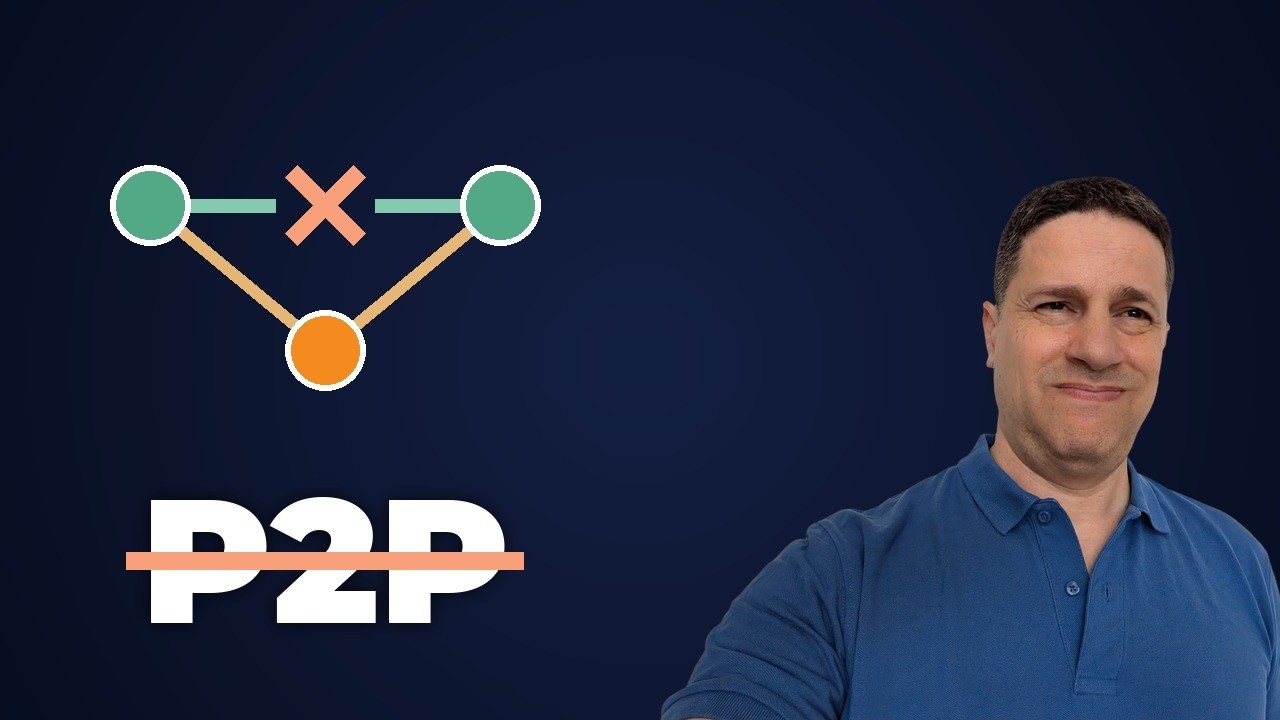
Short technical conversation (two speakers) about when to use an MCU (Multipoint Control Unit) in modern WebRTC applications. Key points: an MCU acts as a mixer to combine multiple input streams into one decoded output (often followed by transcoding); common uses include PSTN gateways (mix audio and send using G.711), bridging proprietary video systems that accept a single stream, recording meetings for near-real-time availability, and live streaming to platforms like YouTube Live or Twitch which requires transcoding and protocol handling.
Questions this video answers
G.711
Chapters
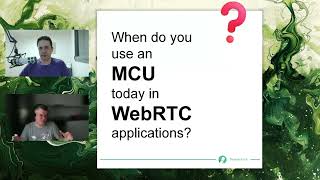
When do you use an MCU? Today in WebRTC applications.
So a MCU is a multi point control unit. And the way we use it commonly these days is more like a mixer. So anytime you need to mix several input streams to a single output stream, you use that. That means you're dealing with decoded media. And then maybe you transcode again. And an example for that would be PSTN gateway. That takes all the participants in the call, mixes their audio, sends it to the PSTN using G711 as a different codec. The other example would be an interrupt gateway between some proprietary video system and Web3C, which means you need to take what Web3 gives you, maybe multiple participants, multiple streams. And these other solutions typically limit themselves to one stream. So you need to give them one mixed stream to work with.
Then there is the panel one of recording. I want to just record the meeting and have that thing available a second later, which is what streamyard does for us in the recordings that we do for these Q and A's.
Yes, that is one way to do recording. You can also do offline recording, but that typically doesn't use an mcu.
Yeah, and then you can say, well, I'm doing the recording, but I can do it in live streaming over YouTube live or Twitch or whatever, which is essentially recording just live. And then again, we need an MCU for that.
Yes. Which will do the transcoding and the handling of the different protocols on both endpoints.