BizBooks Episode 20: Tyler Cowen
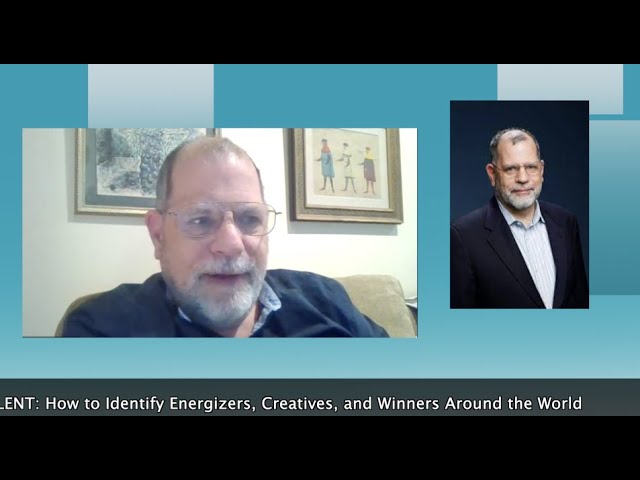
In this BizBooks interview, economist Tyler Cowen discusses his book Talent: How to Identify Energizers, Creatives, and Winners Around the World and the practical systems he runs to find and nurture talent. Cowen explains the low‑overhead, single‑decision grant model of his philanthropic arm, Emergent Ventures, and how it contrasts with traditional, bureaucratic foundations. He defines the three talent archetypes – Energizers (high‑energy doers), Creatives (idea generators), and Winners (people who consistently succeed) – and argues that energy often outweighs IQ in predicting performance. The conversation moves to interview methodology: the importance of being trustworthy, conversational, and avoiding premature judgments; the value of durability and sturdiness; the role of personality traits such as insecure overachiever, adhesiveness, and the Five‑Factor Model; and how to adapt interview settings (in‑person, Zoom, outdoor) to observe authentic behavior. Cowen critiques AI‑driven interview tools (HireVue, Maya), noting current hype and limited reliability, while acknowledging future potential. He stresses the need for diverse interview panels, gender and cultural matching, and the impact of legal constraints. The interview also covers how to attract talent (social‑network reputation, showcasing purpose), evaluating ROI versus human contribution, and using vivid domains like sports, beauty, and gaming to illustrate talent identification. Cowen shares concrete interview questions, explains how to interpret unconventional answers, and offers guidance for interviewing across generations and for handling divergent personal opinions. Throughout, he weaves personal anecdotes, lessons from mistakes, and the collaborative process of co‑authoring the book with Daniel Gross.
Chapters
Hey everybody, welcome back to another episode of BizBooks. My name is Gene Marks and this is our show that we speak to great business books authors, uh, what I've learned from them and what you can learn from them as well. Today we are talking to Tyler Cowen, who is the author of Talent: How to Identify Energizers, Creatives, and Winners Around the World. Tyler Cowen is an economist. He also co-wrote this book with Daniel Gross. Tyler, we're going to talk about Daniel in a minute, but first let me— I describe you as an economist, but perhaps you can elaborate on what you do for a living.
I also direct a nonprofit called the Mercatus Center, which has over 200 employees, and I run a philanthropic program called Emergent Ventures, which looks for talent around the world and gives grants typically, but not always, to young people who show great promise. So talent search is a big part of my everyday life, as is the case with Daniel, my co-author.
Got it. You know, it's funny because I was going to literally ask you the same question, like, hey, you're an economist, what do you know about searching for talent? But clearly you've had a lot of experience in doing that. And Emergent Ventures as well. Today we're recording this on July 5th. I just got your email this morning with more awards that you've been giving out. Can you speak a little bit about what Emergent Ventures does?
Emergent Ventures has now given out about 180 awards, plus another 70 or so for Emergent Ventures India, which is India only. Uh, we are pioneering the notion of very low overhead philanthropy, so we take overhead of 2%. And there is only one layer of no. There's no bureaucracy. There's, in essence, a page and a half application form. The person who reads them is me. Uh, I chat with people, a decision is made. I may consult with others, but there is no consensus. There is no committee. It is one person's judgment, and I am willing to take chances. So it's a belief that our foundation world has become too bureaucratic and that it needs to be changed.
Yeah, that's great. The, um, the, the fund as well that you manage, or the awards that you give, it's not necessarily driven by profit. I can tell there's a lot of social, social, uh, justice involved in your decisions, correct?
Correct. And we just give away the money. We're not taking equity or anything, so it's a pure grant.
Great. All right, let's talk about Daniel. Uh, he is your co-author on this. Um, tell us a little bit about him, please.
Daniel is much younger than I am. He is now 30, I believe, uh, born in Israel, a highly successful investor and venture capitalist. He did his first startup, I think, at age 18. He ran machine learning at Apple, was the youngest partner ever at Y Combinator, and now is investing in doing VC on his own. Daniel is a force of nature and is very much someone to be reckoned with.
Yeah, it sounds that way. And how did you get to know Daniel, and why did you both decide to write this book?
It was a San Francisco dinner one night. It was organized by Marc Andreessen, and Daniel and I were both there. We didn't know about each other beforehand, but somehow we hit it off and had a sense we were sort of intellectual partners in some way. And later we met up for some meals, you know, spent some time together and realized we both had an interest in this topic. And he was this fantastic sort of storehouse of Silicon Valley knowledge. I'm a person who's written quite a few books and have spent my life doing talent evaluation. So we thought, well, this is a good collaboration.
And what was the process, Tyler, for writing this? How long did it take?
It took several years. Daniel and I set up a WhatsApp channel and discussed these issues basically every day or close to every day. We did several trips together. I visited him numerous times and just, we, you know, put the pieces together, kept on writing, and then at some point you're done.
Yeah, I've never co-written a book with anyone and I'm wondering, like, do you guys each take a chapter on your own that you write and then the other one edits or revises it, or do you literally collaborate chapter by chapter?
You know, it worked great with Daniel, but mostly I advise people against co-writing books. It maybe succeeds a quarter of the time. You know, Daniel and I have very different specialties, so I did more of the literal typing than he did. But I think in a lot of chapters he contributed more than half of the ideas. But the person responsible for turning it into typed text. That was me.
Got it. Okay. Um, Tyler, who is the audience for this book? Is it managers and business owners and executives, or is it prospective and current employees, or all the above?
Well, I think it's everyone. So obviously, if you're hiring and looking for talent, you'll want to read this book. But if you are looking to be hired, For one thing, you want to learn how the game works. You want to be able to figure out what your own talents are. The book helps you do that. But also, you want talented bosses, right? If you're— if you end up with loser bosses, that's not good for your career. So you're judging the people hiring you as much as they're judging you. So anyone who is involved in projects, it can be jobs, but it can be scholarships, co-authorships for that matter. I think one of my great acts of talent search was to realize Daniel would be an amazing co-author. Successful though he was, maybe it wasn't obvious to the world that Daniel should be a co-author, but here we are. So almost everyone this book is intended for.
Fair enough. So the subtitle of this book says, "How to Identify Energizers, Creators," creatives, sorry, "and Winners Around the World." Let's get some definitions down. Okay, so how do you define an Energizer, Tyler?
We focus on the book on people who bring new ideas to their work. That can happen at many levels. It's not just the startup person. It's not just the CEO. It can be someone who's your personal assistant. So that is most workers. But that said, you know, most of the book does not focus on people say, selling coffee at Starbucks. That is important, but for the most part, you just want conscientiousness in jobs like that. That is, they will master a known routine and stick to it faithfully and be pleasant enough with the customers. We do talk about that. It's just there. The recipe is relatively simple compared to a lot of other jobs, which is where we put most of our time.
Okay, uh, how does that compare to a creative?
Creative are people who bring new things about. But again, it doesn't have to be Thomas Edison or Einstein. There are people, the people when I do my podcast that I work with, my production assistant, the people who tape me, they give me suggestions all the time. They have ideas for new guests. They are creative. So helping you to see the creative element in everyone you're working with is part of this book.
And finally, winners, is that a combination of the two?
Please repeat that.
Winners, is that a combination of the two? Is that like—
Well, winners are people who succeed. So, you know, there's a certain amount of, I wouldn't call it hyperbole in book subtitles, but you want to get across the notion that the book will help you actually do better. So that means hiring winners.
Fair enough. Okay. So, and tell me if I've got this correct so that I've got your definitions down. The Energizers are people that are doers and do it with a level of energy, obviously, but it can be trusted in finishing and accomplishing tasks. Creatives are the ones that bring new ideas to projects and to companies. And Winners are people that succeed in everything they do, or in most things they do. Okay.
And we all say, we stress the importance of energy in this book. It's often more important than IQ.
Yeah. And I'm going to get back to that as well, because I think the energized of the world are the ones that so many of us are in search for, which really, it's okay. You have a whole section on interviews. And I have to tell you this, you know, that section interviewed me the most. Tyler, I run a 10-person company outside of Philadelphia. And I've been doing this for about 25 years. And I feel as if I am like the worst judge of people in the world. I am so bad at doing interviews, mainly because I seem like I like everybody. And I almost feel as if when I'm interviewing somebody that I'm just going to, you know, I'm sure this guy will be fine. You know what I mean? Or this young lady seems very apt. I think that she'll do a good job. I'm just sort of the wrong person. When I really dug into your chapter on interviews, you really lay out some specific instructions on interviewing. So I would love some personal consultation right now about doing an interview. Okay. Sure. You talk about people that, for me, is the interview. I need to be trusted and also need to be trustworthy as well. And I was hoping that you could expand on that for me. And my audience what you mean by that.
Well, let me first say that while I don't know you, I'm pretty sure you're a great interviewer on the basis of this. And also, if your company has been around for that long, you cannot be the world's worst judge of talent, right? Those two facts are inconsistent.
I've made a lot of mistakes.
Well, we all have, but I suspect things are going at the very least okay for you, possibly very well. But I think the single most important thing in the interview is to be trustworthy and then be conversational.
Okay.
So human beings, even ones who are not the most brilliant in the world, they are very good at sniffing out hypocrites and phonies. Almost everyone is awesomely designed to pick out the phonies. So to actually be real and authentic, to actually care about the people you're talking to, the venture under consideration, Those are the main things, and if it's an HR team, you want an HR team that has those qualities. And then you want to get people out of prep. Prep is significant. If the person hasn't prepared at all, you probably don't want to hire them. But for most jobs, most people have prepared, and you want to see what else they can do, what else they can tell you. So there's a lot of routine questions like, well, tell us about a mistake you made at your last job. That basically everyone is ready for. You're only testing for prep, and you're getting a somewhat phony answer. It's probably not a lie, but it's a bit tailored to sound just like the optimal level of mistake, enough that the person is self-reflective, but not so bad that they're going to be a total screw-up. You're not really getting at any truth.
When I'm doing an interview, I have a hard time with research. This interview, for example, there's so much about you online. There are plenty of podcasts to listen to. I can do a little bit of a— quite a lot, actually— of research about you. So I kind of know who I'm talking to and can formulate my approach and my questions. But if I'm interviewing just somebody for a job, I mean, you basically have just a resume on them. And I'm curious, what do you do when you're trying to get— I mean, do you go cold into an interview when you're meeting somebody? Or do you spend some time doing research beforehand?
Well, usually I do research, or maybe someone else is doing the research for me. But you know, lately I've been experimenting with doing some totally cold interviews, not even Googling the name. I'm not saying I recommend this, but having tried it a number of times, I'm not convinced it's worse. That if the thing you want to do is get the person talking about the substance of what they will be doing, and that will depend on the job, but say, "I'm an economist," just to get the person talking about economics, not reciting the little speech they've prepared, but ask them a basic question like, "What's a country whose economy you admire and why?" Like, they're not really prepped for that, but you hope if they're an economist, they've thought about that in some way. Just get them talking, converse with them, see what's going on upstairs, see how much they know, their level of detail, their passion, their involvement, the energy in their answers. To simply talk about the substance of what matters for the job, I find to be the best thing. Don't let them recite their talking points.
You know, I find one of the many weaknesses I have when I interview people, and I'm like this when I meet people as well, is I, I tend to evaluate or make judgments about people way too prematurely, you know. And I don't know if you feel the same way I do, but if you've lived, you've lived on earth long enough you've met enough people where you can kind of stereotype people when you first meet them, you know, different types of personalities and who they are based on your experiences. But I don't think that's a really good way to be when you're doing an interview. And I'm kind of wondering what you do to avoid stereotyping people when you interview somebody, not letting your own bias or your prejudgment get in the way of giving this person an objective conversation?
Well, I try to look for the persistence and durability of the person. So there are people who maybe don't seem brilliant at first, but if they stick at what they're doing for many years or even decades, uh, and they compound their learning over time, they will do extremely well. Now, you could say this is another bias of mine, but if there's evidence of durability, I will take that over first impressions. Most of the time.
Tyler, when you interview somebody, tell me about the process that you have. For example, you mentioned in your book, you talk about changing the physical setting of the interview, maybe having it outside of an office. So I'd love you to expand on that a little bit. But also, you do normally have a team of people that interview a potential candidate. And how does that work with you?
Well, lately, as you know, more and more interviews are Zoom.
Yeah.
So the idea that you change the physical setting, that's useful when you can do it, but it just applies less. But what you want to see is the person interacting in actual life. And if you're, you know, having a meal out or somehow interacting with other people in a spontaneous way where those people are not the ones the person is trying to please, You just see what they're like, like, you know, are they kind? Are they considerate? Do they understand the situation very well? So just actual substantive interactions are what you hope to witness. But if you're doing a Zoom call, again, typically that is not an option, but you want the person to be relaxed and see you as someone who cares about the substance of the matter at hand. And someone who truly wants to talk about that substance, to learn something from the person being interviewed, and to communicate that in a real rather than phony way is what I try to do in the interview. And that will depend on the job. There's plenty of interviews I do that are group, in which case my role, you know, on average is less, and there's plenty I do where I'm the only person, or it can be both at different stages.
You mentioned about interviewing online, and obviously you have a section of this in your book as well. And I'd love you to share your thoughts with myself and with our audience about interviewing online. For example, this interview that we're having right now, it's all very nice, but, and again, maybe that's a generational thing, but it's never as good as when you're face-to-face with someone. And I'm wondering what sort of accommodations you make. For that?
Well, I wouldn't say it's never as good. I would say on average it is worse, but there are many cases where you get more information. So there's a lot of evidence, for instance, that many women prefer the online interview. They are interrupted less. They may feel more secure. There's some sort of distance. Uh, certain kinds of physical charisma matter less. Now those can be advantages or disadvantages. But if it just has to be online, which is often the case, right, take advantage of that, you know, try to learn more. So a lot of individuals, you will learn more online, I'm convinced. I would not say the majority, but at least 10 or 20%, and play into that strength. Help people feel relaxed and take the distance as a bit of an advantage so people maybe will open up some more.
You talk about going meta. What does that mean?
Going meta is when you ask a person about the process or the interview itself. So if you ask a candidate, "What do you think is a good job interview question?" That's going meta. So you're asking them, "How do you think about this process?" Now, for some jobs, that's not a useful question, but for a lot of jobs it is. You get a sense of how they process social interactions. What are their priorities? What do they want to know about other people? It's really a lot of different jobs where you would like to know that information.
I'm just firing away. As you can tell, I prepared all these in advance, and I'm glad that you're just rapid-firing your answers back to me. You know, I talk about, and I've written about, different types of technologies that are being used in the interviewing process. And I'm curious to get your thoughts. There's a few. I don't know if you've heard of HireVue or Maya. They use, you know, AI to evaluate somebody that is answering questions through like, you know, like a webcam, like now. It's looking at facial tics. It's evaluating voice, you know, your voice intonation. It's looking at your expression and it's giving you a report. On how that interviewee did. And I'm curious to know, first of all, if you're familiar with some of these, which I assume that you are, and what your thoughts are on some of these new, you know, AI-based interviewing technologies that are out there. I have a lot of clients that are looking into them.
I think there's a great deal of hype. Over time, I believe some of them will be useful. Daniel is himself an expert on AI and machine learning. But our general take is this: whatever happens in AI changes so rapidly that we don't feel, you know, we can teach it in the form of a book. So we just say, here's this area, yes, it can be important, but we're going to teach you like how to optimize your own performance, not that of the machine. But I would still say, you know, 2022, most of that stuff in my opinion doesn't work. It is not a substitute for good individual judgment. But over time, of course, it is going to get better.
Yeah, I think it will be, and I— you're right, it is a bit— the technology itself is very young, and a lot of people say that it helps, you know, reduce bias in the interview process, but of course we ignore the fact that the developers that made this AI also have their own inherent biases. So it, you know, they're still in the up in the air. So would you use a tool like this now in 2022 as part of your interview process, or I get the feeling that you would probably wait a little bit for them to become a little bit more mature.
I do not do it. There's also an issue how the job candidate perceives it. So if they feel they're being recorded and measured, I think for many people they're less likely to come either to interview or to want to be hired. So you could do it and not tell them. I don't like that either. So I prefer the open notion of, well, this is not recorded, I'm just talking to you. What you see is what you get. This is the process. There's no secret, no trick. And I think that does better attracting talent in many cases.
When you go into an interview, Tyler Cowen, obviously, if you're interviewing for a position, you're going to have a number of different job candidates. And your job is to choose the one that you think is best for the job. Do you have like a specific objective for each interview? If you can follow my— you know, like, if you're going to interview somebody, when you're done, do you say to yourself, 60 minutes from now, I want to make sure I'm walking away with this information about the candidate? Is that how you approach an interview?
Very often, and especially with Emergent Ventures, which is the philanthropic arm that I direct, there's plenty of people where I'm talking— even before I talk to them, It's just obvious from their application that they're super, super smart. And the thing I want to know is, can their proposed project really make the world a better place? And that's harder to assess. It's clear they're very talented, but if their project has no chance of mattering, I'm not going to support them, even if they're excellent, A+, would make a good hire for someone else. So a lot of interviews I go into it with, like, I don't need to kind of test how smart they are or how much they know about particular areas. I need to see, can they articulate why this is really going to matter? And a lot of them can't, probably because it doesn't. But of course, many of them can.
We talked earlier about having like sort of a team approach. Do you mostly feel confident in your own abilities to, to make that call that this person would be the right person for a position? Or do you feel that it's usually a better approach to have more than one person involved in the process?
It really depends on the job. So if we're hiring someone to be on our tech team, which is— I wouldn't say it's routine work, but it's the sort of job a lot of different people can do it. I don't think I'm especially good at figuring out those people, and to have the other people on the tech team interview them I think is in general better than for me to try to butt my nose in and think I know everything. So typically I wouldn't be involved in that at all, and I would say that's for the better. And the question, like, can they work with the other people on the tech team is of paramount importance, and the other people clearly can judge that better than I can.
Yeah, fair enough. You know, there, there's been a lot of controversy over the past couple years, um, in Hollywood, in the acting profession, where people feel that if there's a role in a movie that's LGBTQ, it should be played by an LGBTQ person, you know, or something similar to that. And I'm wondering if you feel in any way that that translates into the interview process. In other words, do you think that, is there, a better interviewer depending on the candidate? You and I are both middle-aged white guys. If you are looking to hire a young person who's Black or Asian or might come from a different part of the world or a different culture, different gender, different whatever, do you— is it ever a consideration for you to say, you know, we might want to have somebody who's not a white middle-aged guy interview this person? Because it might, you know, it would relax the candidate that much more, or might, you know, reveal that much more about the candidate?
Oh, very often. So I mentioned before, we have Emergent Ventures India, which is all candidates from India, and that's run by an Indian woman who is obviously from India and has an Indian accent. She speaks several Indian regional languages in addition to English and Hindi. And that works better than if I would do it. That's not the only reason why. She's just very knowledgeable about India, but I think it's partly because she's Indian. People relax more, they relate to her more. So it's extremely important, I think, in general, to generalize a bit, but women and men on average see different things in candidates. And to get women involved in your hiring process, if they're not there already, is just extremely useful. I mean, most of the world does this somewhat, but I still feel we don't do it enough.
Okay, in that same— we're going to get off the interview soon, I promise, but I just had too many questions about it, and, you know, your answers to me are extremely helpful to me personally. You give examples of interesting and good interview questions that you might want to consider I made some notes of them. For example, what's the farthest you've ever been from another human? What's something weird or unusual you did early on in life? What's a story one of your references might tell me when I call them? If I was the perfect Netflix, what type of movie would I recommend for you and why? Those are— they're interesting questions. But I have to admit, like, if I were to ask these questions of a candidate, I'm not sure I would know what to do with the answer. You know, what would I do with these answers? How would I, how would I, you know, what would these answers tell me?
Well, it depends on the job you're hiring for, but I think you're looking for a level of detail in an answer. You're looking for passionate commitment to something. So you want to ask them about a thing they care about. If they don't watch Netflix, don't ask them about Netflix, right?
Right.
And you're looking for How engaged are they in something where it's not exactly what they expected? Now again, if it's the cashier at Starbucks, there's no reason to ask those questions. But if it's a job where the unexpected will come up, you do want to see how the person engages with the unexpected. And do they automatically on their own process their own experiences with a lot of detail, a lot of involvement, a lot of passion? That's what you're looking for.
You know, it's funny, you know, your approach to interviewing is you're, you're looking at the person. I mean, this whole conversation that we're having, the whole section of this book that you write on interviewing, you, you, it's never really about the person technically being able to do the job. It's almost as if you assume it. And I was talking to one guy, I was at a conference a couple months ago, it was like a Windows and Doors conference. And this guy said to me that, you know, I never have a problem finding people because I'm always looking when I go out to eat, when I'm at stores, you know, when I'm, you know, I see young people. I can, with selling windows and doors, I could teach anybody how to do that. I can't teach them how to be, you know, an energizer, how to be, you know, a good employee, how to show up to work on time, how to have the right attitude. And it almost seems as if, your approach to interviewing is not technical in nature, but more personality in nature. Does that make sense to you? And can you expand on that?
Absolutely. And again, it's because you're looking for the energizers, the creatives, and the winners. If it's the Starbucks cashier, you can be a lot more modest in what you try to get out of the interview. You know, do they know mathematics? Are they going to show up for work in the morning? Will they smile at the customers? But that's more straightforward. But these other qualities, I don't know if people are born with them or they just learn them at young ages because they're in a good family setting. But a lot of them you can't teach that much. You can improve on strengths that are already there a lot, but you can't create them out of nothing in people. And so you need to see, does the person have them?
Yep. And what happens if you come across that candidate that really does have clearly has the technical capability but doesn't have the qualities of an energizer or a creator or, you know, a potential winner, but still has that technical ability for, say, that technical job that you're looking for? Do you still eliminate that person outright?
You hire them. There are large numbers of jobs that they will be great for. But keep in mind, any hire you make, the person is also an option, like, on future promotions. So if you're talking to someone who will like forever be like a B+ quality programmer, you might be happy to hire them. But if that's all they're ever going to be, never be a manager, never do a startup, whatever, well, okay, but you should know that. And they're a lower priority than someone who might have more upward potential too.
All of this stuff has come from many years of interviewing people, so I'm assuming that a lot of the advice that you're giving in this book are probably based on mistakes that you've made over the course of time.
Yes, and keep in mind this is also an iteration between Daniel and me where we sort of find the common ground we agree upon.
Um, one final question on interviews and then we'll move on, and this has been great. Um, you ask this question, you have this question that you like to ask potential candidates: what is one mainstream or consensus view that you wholeheartedly agree with? And you, you write in your book that it's one question that you particularly like, and I'd love if you can share why you particularly like that question.
You're letting the person place himself or herself, like, where are you located in the world? What values are important to you? Again, it may not matter for every job, but in particular, like, if I'm looking to fund someone maybe who's starting a nonprofit.
Mm-hmm.
I want to know, how do they fit into the world as they see themselves? Like, what issue is it out there that matters to you? But I'm not looking to get them to say something that will get them canceled or irritate other people. I'm saying, like, what part of the mainstream do you agree with and fit into? Like, help me place you. It's a very cooperative question. Uh, it tries to be as non-threatening as possible, and it gives the person a chance to volunteer where they see themselves in the world.
You know, you've been doing this for a number of years. I, I lied to you. I said I had one more question. I actually— that was my last question, but I actually have one more question and we can finalize on interviews. Is that, uh, you have been doing this for a number of years. Uh, obviously the, the, um, landscape that you have to navigate, the legal, uh, landscape for doing interviews, um, has changed a lot. I am sure since you first started.
A lot, even in the last 2, 3 years, it's changed.
Tell me about that a little bit. And the reason why I want to be even more specific is that when you read the HR books, Tyler, and you get the advice from people about interviewing, it's always like, stick to the resume. How does this apply to the job? A lot of the questions that you ask, you can borderline on it becoming potentially personal or somebody revealing something that might be private that they didn't intend to reveal, you know? And I'm wondering how you navigate that and what your thoughts are in this sort of more regulatory environment.
You have to vary with context. I would say never do anything that breaks the law, but at the same time, realize your own HR department has its own incentives. And most HR departments are too conservative. I would stress the broader point that everything in life is a kind of interview, and forget about when the person shows up for a capital I interview, just your interactions with people. You're talking to them about stuff. It's not an interview in the legal sense or in the institutional sense, but in some broader sense, it is an interview. And if you want to simply take this advice as how to behave in those settings to figure out who it is you might want to have come in for the literal interview, that's enough. And if you get to the literal interview and then you're completely regulated in some way, I mean, by all means, follow those laws and regulations. There's no gain to be had in breaking those, but there are still opportunities to figure out who is it out there we want to hire.
Okay. All right. Enough with interviews. We've covered that. You've got two large sections of your book that talks about personality traits. You talk about, you have a section on the basic personality traits and then what you call more exotic concepts. And I thought we would dig into that a little bit as well. And again, this sounds like— you said that Daniel's younger than you. So this seems like this comes from, again, years of dealing with people You, you talk about the Five Factor Model, and I wonder if you can explain what that is.
Well, it's a model of personality developed by psychologists. I think it's broadly useful, but basically we tell people not to take it too seriously. So you see this when people like describe themselves, well, I'm an INTJ, or I'm a this, I'm a that, right? I'm not saying those distinctions are meaningless, but a lot of them are context dependent. Or they maybe depend on incentives or whom it is you're working with. So we try to nudge people a bit away from overly formalizing or crystallizing, like this essentialist notion of personality, like, I'm an introvert. Like me, Tyler Cowen, I consider myself an introvert, but I'm also a public speaker on a very frequent basis. Like, does that make me an extrovert? You can debate that, but at some point that, that debate isn't that useful. So you're looking for people who can vary somewhat depending on context, I think is the more important point. People who can be agreeable when they need to be, disagreeable when they need to be. Being neurotic can be highly useful. It's one of those personality traits. It sounds negative, but if you are in fact a social justice warrior A lot of the most successful ones are highly neurotic. They're bothered by the world and they react negatively and feel a need to do something about it. And they're a pain in the butt often, but they can be successful. So our main point is to think about personality traits contextually and not overly essentialize other people or even yourself.
Yeah, a lot of people do try to pigeonhole candidates into one thing, like, oh, this person's a Type A personality, or like you said, this person's an introvert or an extrovert. There are a lot of blurred lines to all of that. None of us are just one thing and not the other. It sort of depends on the circumstances. Tyler, what is sturdiness?
Sturdiness is the ability to keep on going in the face of adversity. And again, it depends on the job. If it's just you need a programmer for a week, sturdiness probably doesn't matter. But someone who, over the course of many years or decades, will always be there for your company or institution, that's of great value. So I'm a big fan of sturdiness for many kinds of jobs.
Is there any way to know that when you first meet somebody? I mean, or when you're interviewing somebody?
I don't think you know it off the bat. If the person has a track record, I would look at the track record. And put that way above whatever your personal impressions might be. This is getting back to your earlier, earlier point about judging too quickly. But very young people, of course, they don't have those track records. Sometimes I'm interviewing 16, 17-year-olds, but you still want to, like, ask them for accounts of how things have gone for them working on their projects and look for some clues of sturdiness. Much harder to tell, though. If I had one wish, you know, in my interviews, it would be the wish to be able to judge durability and sturdiness better in very young people. That would improve my outcomes the most if I could do that better. It's very hard.
Okay, I appreciate you recognizing that. How about insecure overachiever? What do you mean by that?
People for whom it's never good enough. That can be a strength or a weakness. It can motivate them to do more, be a perfectionist, always work harder. But there are jobs where actually you can't afford a perfectionist. There are in my profession economic perfectionists who take like 6, 7, 8 years to write a paper, never finish it. It's never good enough. That doesn't work for them the way things are set up. So it's a category to look for, can be a strength or a weakness. We're just telling the reader, be aware of this category.
And finally, adhesiveness is another personality trait. Can you explain what you mean by that?
Adhesiveness. How you like stick with other people. Are you like, they used to call it a glue guy. Now it's like a glue person, which is better. Do you hold the other people together on the team? I would say it's another one of those. It's very hard to tell at first. Don't fool yourself into thinking you've got it figured out, but keep it in the back of your mind and see if you are picking up clues that the person is very good at that or not.
You know, a lot of these personality traits, actually most of them, as you're— as you lay them out, we talked about sturdiness, insecure overachievers, adhesiveness. There are a bunch of others. Which for you, if you're watching this, you know, this conversation, you can, you can get it all in Tyler's book. But it, none of these things, like you said earlier, Tyler, you can't judge this like initially. These all seem to be personality traits that you're going to be using over time as you evaluate your, your work for promotions.
People you've had for 2, 3 years, do you promote them? Well, you have a lot more data, right? And it's not based on the interview. It's based on your working with them for 2 or 3 years.
And it's interesting because people, when you first look at this book and you see the word talent and how to recognize, you know, the Energizers and, you know, the winners of the world, it's, it's not an initial thing that you're doing here. This book is really intended towards people that want to grow and develop their workforce, their employees. Employees over time.
Right.
Knowing these personality traits is, is going to help you do that, correct?
Correct.
Got it.
And just being aware of them. So again, it's a big mistake to think you can always figure it out or even figure it out most of the time. But if these are in the back of your mind as relevant categories, and they help you assemble a bigger picture, and you're aware of your own fallibility, but simply are knowing what questions to ask yourself, like, what is it I don't know about this person? Simply to know that you don't know the durability is highly useful, and you only get to that point if you're aware of the category.
Fair enough. You have a whole chapter on— that's entitled The Search for Talent in Beauty, Sports, and Gaming, and I'm wondering why, why you chose that. What is, what is that? What's the benefit to the reader of understanding that?
I think there are some areas of life where the search for talent is just more obvious and more open, and one of those would be sports. And for one thing, like, almost everyone knows something about sports. Sports so obviously is all about the search for talent. So to use some examples, say, from sports, I just think illustrates some of the points more clearly than, uh, you know, if you talk about the market for plumbers. Well, your plumber should be talented, yes, But it's not as open and as widely discussed as, say, like, you know, LeBron James in sports. So that's why we pick those areas. We just think they're more evident and more vivid.
Okay, fair enough. And you also have another chapter about convincing talent to join your cause. How do you do that?
Well, we may write a whole other book on this, and this is the shortest chapter in the book.
Yeah.
So we don't pretend to have solved the problem. Problem. But I think the first thing to do is to have invested in your social networks, your online networks, so that talented people come to you, and they come to you with the impression that they might want to work with you. And most groups underinvest in doing that because on any single day it never seems that important. It's never a fire you have to put out. But over time, your image with the rest of the world really, really matters. Like, who is it that will recommend you to the talented people? So if you treat talent as just about, well, I'm sitting in my chair, I pick the best of 3 candidates, you've already failed. The biggest question is, how do you get the best people to show up possibly wanting to work with you?
Um, I am a CPA, so I know a lot of a lot of colleagues in my profession tend to evaluate employees sometimes differently than others. We're numbers people. And I'm curious how you feel about some of us that tend to look at employees as assets and whether or not they're going to deliver to me return on investment. Do you view your employees that way when you're evaluating prospective and even a current employee, do you ever quantify them into whether or not they're providing ROI for your business?
Yes, but I— you have to think of them as more than ROI. They ought to feel you genuinely care about their human contribution to what you're doing, um, and that should be sincere. You'll attract more and better talent that way. So you can't keep on people who are just, you know, destroying revenue for you or alienating coworkers and doing nothing of value. But that said, if you simply think of these people as numbers, uh, that's a pretty low ceiling on who it is you can attract. And even if you look, you know, to go back to sports, you said, well, why talk about sports? You see a lot of examples in the history of sports where players want to work or play for particular teams because they feel they'll be treated a certain way. Not just, well, how many fans does Michael Jordan bring in the gate, but like, what does he do for the, like, image of Chicago, long-run history of the team, motivating other players, right? And so on.
Okay, so I subscribe to your newsletter. Marginal Revolution, which I receive, um, I think it's just a few times a week, but it's not daily. I, I, I don't see it coming out, but I read it every single time and I love it. And it is basically, I don't know what we would say, what, you know, half a dozen to a dozen links to stories, essays, things that are written that are of interest to you. And I'm wondering, Tyler, if you If you ever decide to retire, and you, which I hope you don't.
I won't.
Good.
Not unless I have to, yeah.
But let's assume, and you were going to hire somebody to take over Marginal Revolution, which I think seems like it's your baby, like you enjoy that very much. What would you look for in that candidate? How would you evaluate that candidate?
Well, my co-blogger, Alex Tabarrok, is about 10 years younger than I am. So the key question would be, can the person get along with Alex? And the main person deciding that would be Alex, but I also know Alex and he would call upon me for help because in some ways I'm a better judge of some of those things than he is. On Marginal Revolution, I would just say the part we email out is a little sporadic, but if you just visit the site marginalrevolution.com, there's 5 posts every day. We don't mail all of them every day because people don't want 5 emails from us a day. But there's plenty more than just the one you get for those of you who want it. And it's free, and there's no ads, no nothing. You can just visit it, uh, and we hope enjoy.
Okay, well, unsolicited, I want you to know I'm too lazy to visit the site every day, so feel free to email more than once a day. It's fine by me as a subscriber.
But that's why we have the dual— you can like get emailed to you less or visit for more, and you can, you know, switch as is appropriate for you.
Wasn't even aware that that existed, so I'm going to have to look into that because I do look forward to that email. Um, you cite— being an economist and you're a data-driven person, you cite numerous studies in this book, and I'm curious if you can think of one or two that were the most thought-provoking or influential.
That IQ matters less than I had thought at first.
Tell me why. You found that so thought-provoking.
Well, most smart people think smarts really matter because they see that their own success has depended upon their own smarts. And that, like, on average is true, but it's actually a fallacy to then conclude you should just be hiring other smart people. That if you look at data on how IQ and productivity correlate, it's far weaker than you would think. Just to cite one study, there was a study of CEOs in Sweden where there's like perfect IQ data for everyone. And for a large company, the median Swedish CEO is at the 83rd percentile of intelligence. Now that's clearly above average, 83rd percentile. It's like on a scale of 1 to 100, they're 83. But like, they're not just the top geniuses of Sweden. They're people who are purposive, they can synthesize their knowledge, they can motivate others, they have charisma, you know, whatever, depending on the sector in question. They're not the geniuses. They're the people who are smart enough but have all these other wonderful, amazing qualities. And for that to sink in took me really quite a while.
You know, it's funny because, you know, we operate in different worlds. Like, we have— I have 600 clients in my firm, and they're mostly small and mid-sized businesses. They are family-owned, B2B type of businesses, many very successful. And I can't tell you, I mean, a handful maybe are run by people that went to Ivy League universities or ones that I would consider anecdotally to have high IQs. There's a lot of other factors that go into becoming at least a successful business person, let alone a manager. So that study itself does not surprise me whatsoever. Were there any other studies that caught your attention, or was that the one that really, really sort of was the most provoking?
That would be the most, but another one that caught my attention, uh, it is easier to pick out smart men by looking at them than it is to pick out smart women. So if you're interviewing women—
that's fascinating—
like, don't be too confident about your own judgment. Like, there's more that you don't see.
And I wonder if that—
It makes sense also, because I think for whatever misguided social reasons, many smart women either cover it up or don't emphasize it in the same way that smart men might. So be especially careful with women not to miss the really best hires.
And, you know, I wonder if that dovetails into our, you know, point made earlier about, you know, different people of different genders or cultures interviewing each other. I wonder if that applies to women. When they interview other women versus men who interview women.
Yes, women are better at it also. That's another fact in the book, as best we can tell, and it's a reason to have women on your interviewing teams. I mean, you should already anyway, right? But if you don't, or to have more, absolutely.
Okay, a couple more questions. Um, we talked about different types of people that you're interviewing. Um, give me your thoughts, Tyler, on if you're sitting across the table from someone who's a Gen Z versus somebody who is like you call a late bloomer or a retiree. These are different types of people that you're looking at. And I'm wondering how you would approach younger prospects, prospective candidates versus older prospective candidates.
I try to be very neutral in those regards. So if you start by judging the generation, That to me is a bit of a danger sign. People like, oh, all the millennials are neurotic, or they're all this way. I'm not sure. I mean, you can debate that, but at the end of the day, you want to be open to the individuals who are not the generalization and find them. So when I'm speaking with like very young people, I try to talk with them as I would with like the smartest, best established, oldest people. Just for them to feel like I'm going to take them seriously. I'm not sure if I achieve that perfectly, but that's something I try to ignore.
I guess that goes back to you being trusted and trustworthy and being viewed that way.
And young people are so sensitive to being kind of patronized.
Yeah.
Like, oh, I'm going to talk to you like a 16-year-old. And again, I try not to do that at all.
Got it. Fair enough. Final question, Tyler. So you're interviewing a great candidate. She's got all the qualities that you need. She, you know, is— you feel she has high potential to be a winner, you know, overall very successful person. But she thinks the White Album is the worst album the Beatles have ever made. How do you handle that?
Well, that's not my view, but I actually think it's a defensible view. So the mere fact that she had the opinion would suggest to me she had thought about it. When you want to get people talking about things, you don't want to look for agreement, right? You want to look for detail and involvement, and that would show both of those. So for me, that would be a big plus, even though it's not my personal view.
Fair enough. The book is called Talent: How to Identify Energizers, Creatives, and Winners Around the World. Tyler Cowen is the author along with his co-author Daniel Gross. Tyler, thank you so much for this conversation. I learned a lot. Great book, and I appreciate your time.
Jean, thank you.
You've been watching and listening to BizBooks. My name is Jean Marx. Tune in again in another couple weeks and we'll be back with another great author of another great business book. We will see you then. Take care.
More from Tyler


#413: Tyler Cowen on Rationality, COVID-19, Talismans, and Life on the Margins





Tyler Cowen on Never Crying at Art, Why Rap is Dead, and Quitting Writing Books (w/ Nabeel Qureshi)


AI, Job Loss, Fertility Crisis and the Death of Careerism | ft. Tyler Cowen | PGX Ideas #4
