CDE Conversations with Tyler Cowen
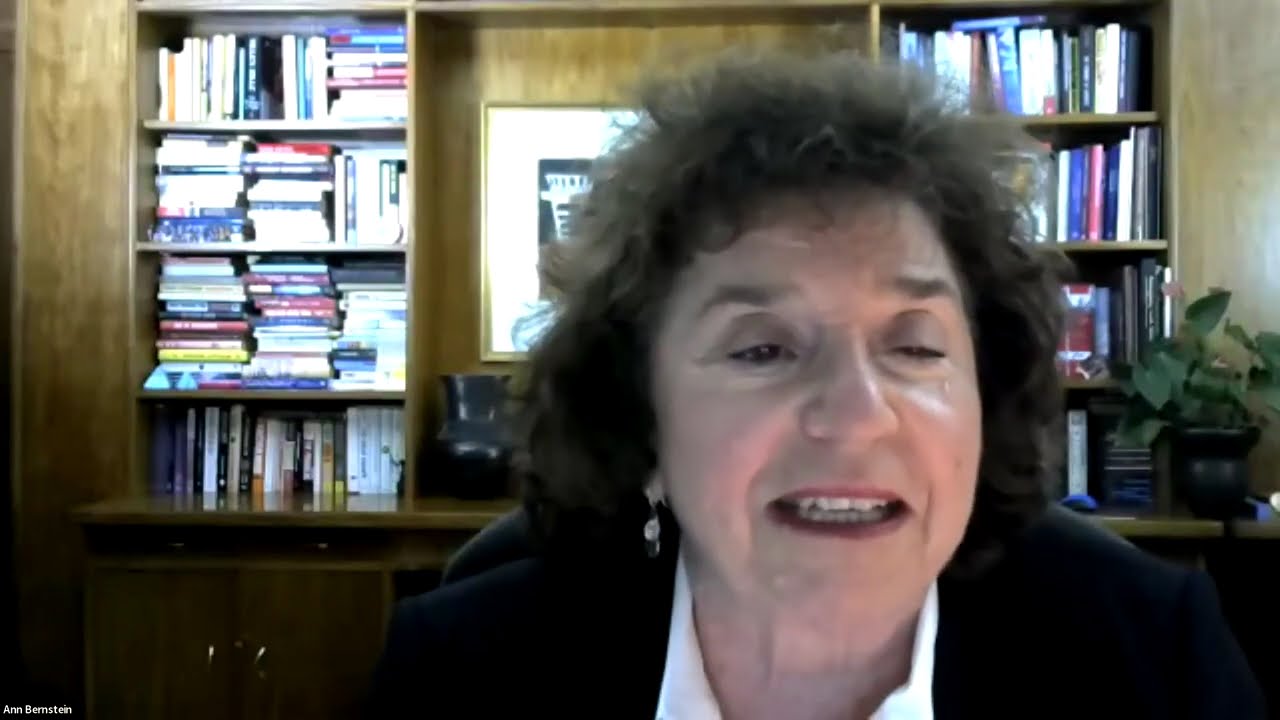
Tyler Cowen discusses South Africa's economic challenges and what drives long-run growth: human capital, national ambition, and institutions. He ranks war as the biggest global threat, argues the Great Stagnation ended around 2020 with AI and biomedicine breakthroughs, and warns that AI's concentration between the U.S. and China will give the winner outsized power over the Global South.
Chapters
Good afternoon, everybody, and welcome to CDE Virtual. It's my great pleasure to introduce our guest today. Tyler Cowen is one of the most interesting and productive people I have ever met. He's an economist, an author, and a leading public intellectual. He is one of the most important economists of his generation, one of the first people to write a now world-famous blog called Marginal Revolution, and the host of the popular and always fascinating podcast series Conversations with Tyler Cowen. Tyler Cowen is an economist who has written many books, best-selling books in the United States. They range from The Great Stagnation, Average Is Over, Big Business: A Love Letter to an American Antihero, as well as a book on one of his favorite topics, An Economist Eats Lunch. And today he launches a new book as well. He is also a professor at George Mason University, where he serves as chairman and faculty director of the Mercatus Center, a leading research institution on market-oriented public policy. Tyler, welcome. You have now spent some time in South Africa, and different visits. What do you— what is the lesson or the insight that you've gained from actually visiting the country that you didn't know before?
I now believe there's such a thing as South African profundity. So I travel to many countries, I talk to many people, and for the most part they share a set of common concerns. If you live in South Africa Very typically, you have your own problems to worry about. If you go to the used bookstore, there's different books on the shelf. You have a very different media environment. You're obviously at the bottom of the African continent, and thought there is just rich and subtle and interesting, and people just don't want to talk about Donald Trump in a way that to me is remarkably refreshing. And this convinced me I need to go back again soon. That would be my first and immediate impression. But of course, I have many others.
Give us one or two other insights you've learned about the country.
Well, on the profundity, one thing I would say, I recorded a podcast with Johnny Steinberg a few months ago, and that's now online. He's a South African. And I think in that podcast, he reflected this sense of intellectual depth that I had in so many of my other conversations. But another thing that was obvious to me, keeping in mind I was only in the Cape Town region, but it's just far safer, or can be far safer, than what most Americans expect. So I have many friends, well-traveled people, maybe they've been to 50 countries or more, and they thought I was crazy to go. I took my wife, my sister, my sister's partner. They all had a great time. We were properly careful. I understand the the differences spatially where the crime rates are high, where the crime rates are low. But the notion that you can go there and do it in a quite safe way, very, very few people in my country have a sense of at all. So there's this massive public relations problem. People literally thought, you know, I would step out of the airplane and somehow be knifed or who— or worse yet.
Well, we look forward to welcoming you Welcome to Johannesburg and your impressions of Johannesburg. But you're absolutely right about the variability of the crime situation and that it's better than most foreigners think from sensational press coverage. Let me move on. You've spent much of your career arguing that long-run economic growth is the central moral obligation of policy. What in your view are the non-negotiable preconditions for sustained economic growth?
Well, human capital is by far the most important factor. You can have a poorly run country, but if it has decent human capital, it will still be fairly well off. South Africa, of course, has a very high variance in its human capital due to malfunctioning education systems. And just a quite unusual history, if we would call it that. So, good institutions matter, but actually often a bit less than economists like to think. And I think above all else, does the country truly, really want to succeed? So right now India is growing at a pretty rapid clip. They have so many bad laws, so many bad policies, interventionism, protectionism, often of the worst kinds. 20 years to get a case through the legal system. But they're growing at 6 to 8% because in the sense of making it a priority, a significant chunk of the population of India truly wants to succeed and grow. And that's actually pretty scarce around the world.
Ja, lots of talk, ja, but not the commitment that we need. If you had to rank these issues for a country like South Africa, middle-income developing country, Which matters most: state capacity, social trust, energy reliability, human capital, or openness to markets? You've ranked talent or human capital as your number one, but what are your others?
Well, I don't know that there's such a thing as another country like South Africa. As you probably know, your Gini coefficient is about equal to the Gini coefficient of the world as a whole. This induces you all to think deep and profound thoughts that are different from what, say, people in Denmark are thinking. But it just makes the place very, very difficult to govern. So you could say, well, state capacity, especially at the provincial level, is often quite weak. But maybe in a sense that's begging the question, like, how can you build better state capacity when the levels of development across the country are so varied? I don't have any good answer to that question. In part, I would like to go back to think about it more and see more. I saw the wealthier parts of South Africa, of course. Stellenbosch was incredible. It reminded me of Sonoma, California. In fact, I don't know that I've— I mean, I don't mean for this to sound rude. I don't know that I've seen a city that white in the last 30 years anywhere.
Stellenbosch. Yes.
Yes.
Well, that's why you've got to come to the real South Africa and Johannesburg. And we'll—
but it's all the real South Africa, right?
The Cape isn't really. It's very different, very different history. Far fewer Black South Africans, um, for all sorts of historic reasons. But so that gives you a very different flavor. But Tyler, tell us a bit more. I know you've written a book on talent Talk to us a bit more on why you think it's worth thinking about talent and why it's so important for a country.
Most enterprises I found in my life, talent is more scarce than money. If you have some talent, maybe you can earn revenue or raise money. But if you don't have talent, you just end up stuck. Now, potentially there's talent everywhere. And you see in really many, many areas, literature, music, the visual arts. South Africa has an incredible talent record, but there seem to be so many barriers to entrepreneurship and commercial activity in South Africa. The talent in that area to me still seems quite stifled.
Mm, absolutely. Now, you've written that post-apartheid South Africa has underperformed economically and that inequality has not fallen as many hoped. I agree with that. What do you think South Africa has most misunderstood about the transition in 1994 to a democracy?
You know, maybe I should be asking you. I can give you my naïve sense as a distant foreigner. So if I read 19th century South African history before you're a republic, it's as if there's at least 4 countries in South Africa. With their own rail systems, postal systems. It's crazy, right? So there was not then nation building. And then because of segregation and then more formally apartheid in 1948, uh, there never was true nation building. So maybe the nation building enterprise is just getting underway and people thought so much of South Africa as a country and maybe it's, it's just not yet. And that will just take longer, much longer than people had expected. Now, I don't know how well you all already have had thoughts like that, so I'm not saying you've underrated them, but I'm just saying that's the thought that occurred to me. Immaturity of nation-building in South Africa. And you see it spatially, even in, you know, the Western Cape region. You can go, I think, less than 10 kilometers from from Stellenbosch to that very large township, and you would never ever know you're in the same nation unless you know.
That's true. It's the case for a number of countries, I think. I'm thinking of Kenya in some respects, but South Africa is most exaggerated. But nation-building is an interesting topic. We do struggle to have a common view, although that's become much, much better over the last 30 years. There's just been a survey on this which shows how many South Africans across all our divides want the same things, believe in the same things, and we do become a very passionate nation when our sports teams start to win. So there are good signs to build on, but not yet enough, I think.
Nation building came first to rugby, you could say, right?
Absolutely, absolutely. So if you were looking ahead from what you know, and I understand it's, well, it's more than most people, but it's limited. If you were thinking of the next 10 years and you were asked to give advice to the South African government, what would be your top 3 things to get right?
Well, first I would say I need to visit more. But it does seem, again, from a great distance, the mining companies could be much, much better managed, just as the electricity sector has greatly improved. You could do the same with a lot of other large enterprises in South Africa. Trade union privileges seem to keep a lot of people out of jobs. The way the country, from what I've seen, is spatially carved up seems highly inefficient and not conducive to segregation. So simple things like transport time to get from a township to a job. I don't know how to fix that problem, but I read a World Bank estimate that said, you know, so much of the net wage paid is eaten up by transport time, and this leads to very low labor force participation. Uh, the education system, I don't know how to fix that with simple reforms. It just seems it could be much better. And then, and here I mean especially outside of Cape Town, a lot of the provincial governments just are not nearly as good as they could be. And so often the way in which people live under government, as in the United States, it's your state, your county, your city, and not what's in Washington. And those could be much, much better. But again, I don't have some list of simple reforms. They seem like very complicated things to achieve with a lot of back and forth. An iteration, and you always hit new bottlenecks and you work around them. And then finally, finally, finally, things end up much better after quite a bit of hard work.
That's true. Reform is a difficult job on all the topics you've raised. That's sort of the heart of CDE's— what we try and work on, which we could talk about at another time. Let me move to more general issues. Around the world, what do you think are the biggest threats to development over the next generation? Demographic decline, state incapacity, deglobalization, climate change, war, or something else entirely? How do you see that?
I think clearly it's war. This is one reason why I've become more optimistic about Latin America. For all of its problems, uh, the region is not threatened by major wars. The Middle East is in the midst of one right now. Parts of Asia seem highly vulnerable due to China, Taiwan, North Korea. Uh, I don't have any predictions. It just seems, uh, success there is not guaranteed. A great deal of Central Africa is either at war or experiencing some kind of civil war. Uh, this gives you some modest optimism about South Africa. You're really not going to be threatened by your neighbors. There's no plausible scenario where your neighbors, or even an outsider, comes along and tries to crush you. So I think in relative terms, uh, yeah, that makes me more bullish because war is always the danger in human history. We've had this oddly quiescent period with maybe 40, 50 years where war even more, a bit more. War has not been that extreme, and that's the historical outlier.
Some people say that one of the biggest spurs for a country to develop and to really focus on growth is to have neighbors or sort of the threat of neighbors to attack you, which we don't have. Is that not a disadvantage in some ways? To get a—
that's a disadvantage. But keep in mind, half of the countries don't win, right? So it's an advantage if you're threatened and you always win. The United States, at least domestically, its territory, we always win, right? No one's going to take us over, and we've grown quite well. We're quite wealthy. Uh, so your location, you know, on net, it's clearly a disadvantage because of the gravity equation, that it's hard to trade with more distant countries. But still, international security is worth a whole lot, and you all have it.
Certainly at the moment it feels like that. Now, you once said one of the world's top problems— you said the world's top problems include nuclear risk, bio risk, climate change, demographics, and our own general stupidity. Which of you— which of those worries you the most today, and which do elites most underestimate in your view?
It depends on the country, but I think in significant parts of the world, the risk of nuclear weapons being used is quite a bit higher than many people realize. Obviously not a risk in Africa, or certainly not South Africa. Demographic decline is one of the biggest problems, but it's very, very slow moving. It won't be a problem in any of our lifetimes. But it could be a problem 120 years from now. If what families really want is on average just to have one kid, it's our biggest problem, and I don't know how to fix it. You can't, you know, force people to have kids. Birth subsidies don't seem to work. But still, global population hasn't peaked yet. A world with only 4 billion people is fine, provided it just doesn't keep on, keep on, keep on getting smaller. But what can we do about that now? Basically nothing. So I'm led back to war as the main problem. And of course, our own stupidity, you know, thinking most of all about my own country.
I'll get to that. Yes. So when you published the book The Great Stagnation in 2011, You were essentially telling Americans that they've been coasting on their previous achievements, consuming the free fruits of past innovation and mistaking that for ongoing progress. 15 years on, and with AI now accelerating, do you think that stagnation was a temporary plateau for America, or is it really a warning about something more structural that AI doesn't actually fix.
I think our Great Stagnation was very temporary. In my opinion, it ended in 2020 when we had effective mRNA vaccines that saved millions of lives during COVID That was a major breakthrough. We're seeing a lot of breakthroughs with malaria vaccines, protection against dengue, truly getting rid of HIV/AIDS. Immunology treatments against cancer. The biomedical field has done phenomenally well. So much of our economy is still quite stagnant. You look at construction and construction costs, that's a nightmare. It's just getting worse. But biomedicine and AI are going incredibly well. And I would say for 5, 6 years now, the great stagnation in America has been over.
Hmm.
And this will be great for Africa, all of Africa, because disease burden I view as having been really a central, maybe the central problem for African development. Spreading everything, getting it to people, treating them, getting vaccines, whatever is required, will take decades. But I think the hard fix of solving the problems stands before us right now. And there will be a full African generation. I don't just mean South Africa, but in any country you can operate in where children will not grow up with major disease burden. That will be phenomenal.
So are you a fan of the World Health Organization, or are markets going to be able to spread these phenomenal innovations to Africa? What's your view?
Well, I don't think either. The WHO is highly imperfect. It can do useful things for countries that don't have enough money to have their own decent public health authorities. But the private sector can't do it either. What we see in poorer countries of the world is just the ongoing growth of a native technocracy. People often who studied abroad or know a lot about public health or economics, and they work in their own countries and they solve problems. Mix of private and public sector. And that's gone so well in so many parts of the world. That is one of the great unexpected developments that few people saw, say, 30, 40 years ago. And it's just gone, you know, way past projections and not just in a few countries, but I would say, you know, in most countries not enmeshed in major wars, it's gone very, very well and will only go better yet.
Okay, I'm going to move to steal an innovation that you do in your podcasts and ask Tyler Cowen to respond quite quickly to a series of questions about topics on whether they're underrated or overrated. So Tyler, if I can start with the Chinese growth model, underrated, overrated?
Well, it's overrated for the rest of the world. No one else really can do it, it seems. And it requires a Chinese Communist Party that, whatever its huge and immense failings may be along the dimension of liberties, has done very well with infrastructure and economic growth. So Ethiopia, in fact, cannot copy it. And it's sui generis, great for China, uh, but other places need to find other paths. And you just cannot in manufacturing compete with China at that scale. So it's not a path for other countries, not usually.
And are you a pessimist or optimist on the Chinese sort of growth for the next 10, 20 years?
Well, I would say I'm both. I think the top 5% of their economy will do incredibly well, and that may be what matters for the world. But they're in a deflationary environment. They've lost a lot of growth in the normal economy. The real estate bubble has burst. There's no picking up the pieces from the mess and resuming growth. And I think that will remain as well. So it will be very dual-tier. They'll grow into increasing inequality. They'll produce many wonderful things for the rest of the world. But they're not just going to keep on growing at 5% across the board. When you see that number, it's mostly a fiction. But will they, say, dominate global markets for electric vehicles? And for some parts of biomedicine, absolutely, it's happening already.
And the challenge of getting old, those countries' population getting old at a lower level of income than many rich countries, what do you think of that?
I don't think that will be a problem for them for a long time. So in China, people typically retire quite early, so they could boost labor force participation just by having people work till age 65. Now, eventually their aging will be a huge problem. But again, that's pretty far off. In the next 20 years, it's very manageable for China. Hmm.
Okay. Next topic, the impact of corruption on development. What's your view? Underrated? Overrated?
I think corruption is usually not as bad as people think. So the United States in the 19th century was quite corrupt.— it grew pretty well. China is remarkably corrupt. It's been growing phenomenally well. United States today is becoming more corrupt. I think that's very bad, but it's not clear it's hurting our economic growth. That said, there do seem to be some countries where corruption is a major problem, and I would draw a distinction between corruption where politicians can earn more money by getting things done— that's often how China works— Build a bridge, skim some off the top, you have an incentive to build a bridge, right? But a place like the Philippines, where corruption really is a major problem, you hold things up and multiple bureaucrats or agencies or interest groups have to be paid off before a thing can happen at all. So when you're looking at a country, ask which kind of corruption is it: skimming off the top when something gets done, or being a holdout and requiring a payment before anything can get done? It's the latter cases where corruption is terrible.
What about the internet? Overrated? Underrated?
Say the question again.
The internet. The internet.
The internet. Again, it's both overrated and underrated. Keep in mind, the internet is what gave birth to artificial intelligence, which will transform everything in our world. And in that sense, the internet, I would say Annette is way underrated. No internet, you don't have AI.
Hmm. How about fast food?
Well, it depends on the country. If you're in Mexico, the best food is fast food. It's street food. And, you know, you might buy tacos at a stand for a very low price. And it's amazing. If you're in South Africa, at least Cape Town, my sense was the best food is simply in the fancy restaurants. It's not the case in every country. And they're not slow, but they're not remarkably fast. So I don't think fast food in South Africa looked that good to me. I didn't try any, but I love fast food in Southeast Asia and in much of Latin America. But South Africa, I would say go fancy.
How about sport? Underrated, overrated, being a fan, participating in sports? How do you think about that?
It's very important to be connected to at least one major sport. It gives you something to talk about with a lot of other people. It puts you in touch with another important sector of the economy. Uh, one hopes your sport transcends class or racial distinctions in particular ways. That just gives you insight into new and different areas. And sport is a form of drama. It's like the theater, except it's for real, and it has some of the best stories we humans are creating. So I think sports pretty great. I wish I had more time for more of it. My sport is professional basketball.
Ah, like—
but I grew up with baseball, which now to me has just become boring. Basketball I'm quite a fan of.
I once went to my only baseball game in America when I was a student there, and in the middle of this rather boring few hours, I thought, the entire crowd started cheering.. And when I asked my friends, what did I miss? They said, oh no, we just won the basketball championship. So that's why everyone's cheering. So I'm with you on that. My last underrated, overrated is America.
Right now it's underrated. We have a highly controversial leader who I feel has made some very bad decisions, but let's put that aside. Countries, for the most part, are not about their leaders. They're about their people. And America is a place where ambition remains remarkably high. If you come here as an immigrant, in spite of what you may read in the media, you will be treated quite well in virtually all cases and made to feel very welcome. And assimilation is relatively easy, and there's plenty of money-earning opportunities. So at the current moment, It is definitely underrated, but for obvious reasons, right?
Okay, well, let's move back to other kinds of questions. You wrote this year that the Davos crowd, after the World Economic Forum there in January, got the world wrong again in 2026. Why did you say that? What is— what's your argument?
Well, the Davos crowd is the establishment, right? So they're always talking about what happened a year or two ago. They're not out there ahead predicting new things. If you look at people who have been in the forefront of, say, predicting developments in artificial intelligence, it's mostly not the Davos crowd. It's a bunch of weird people, many of whom lived in or near San Francisco. And are quite far from Davos networks, but they were working on it or knew people who were, and they did a better job. So the more rapidly the world is changing, I would say the less you should trust predictions from anyone and the broader a variety of information sources you need to sample. And that's going to hurt Davos. They're very backward-looking. Oh, here's our program for the year to come. It's whatever it's like has been in the Financial Times for the last few years. There's nothing wrong with that. Those are issues we should talk about, but it feels sluggish to me. Hmm.
What are other times where Davos has got it wrong, sort of in previous years, in your view?
Well, the very head of Davos, the Klaus guy, he's now quite disgraced, right? So I don't know anything about the internal organization of the World Economic Forum, But it doesn't seem very good. They had these very large MeToo problems. There's just all this ongoing talk about inclusivity as a mantra. It doesn't actually seem inclusive at all. You know, people who, when they get there, they say it's all about the private parties, but they'll invite whoever they need to invite to be called inclusive. So anything at that scale, it just becomes bureaucratized and develops a certain kind of phoniness. I don't really hold that against them. Maybe it's inevitable, but it's not impressive either. You'd do much better going to South Africa and just talking to random smart people if you're looking to learn about the world. That's the main point I would make. Not only South Africa, but just one place to pick one out at random.
Interesting. So one of the points you made about Davos was that a lot of people were saying that globalization is kind of coming, screeching to a halt, or being derailed, mainly by Trump, or however they saw it, and that there were new forms of globalization taking place, there are new trade deals actually being done by middle-income countries. What do you think this all means, dealing with the Trump phenomenon and trade, and for It's cool. It's not enormous countries, more middle-sized countries.
Well, there's this new trade deal with the EU and Latin America. That's pretty great. The EU dealing with India. You know, I'm against the Trump tariffs. I think those tariffs should be zero. But right now they're 10 to 15%. It's just not the end of the world. It's not good for South Africa. It's not really good for the United States. But the world will get through that one. And, you know, the real globalizations that are going on are internal to China and India doing their own nation-building, tying their own regions much more tightly together. And that's massive in scope. It doesn't have to be cross-national. And people don't report much on that at all. And that's gone remarkably well in both of those places.
Hmm.
Africa is more complicated. It's still so hard, like, just to fly around Africa. Well, you can go through Addis. Sometimes you wonder, do I need to go back up to London or, you know, to Dubai? That won't be fixed soon. But just transport within Africa, you see globalization actually proceeding. Like, you maybe can go through Addis, but it's slow and painful, and it just could be much, much better.
No, I agree, that's great. So let's talk about President Trump. You've been skeptical of the idea that his popularity can be reduced to economic pain alone. You know what people said, you know, it's the grocery prices. What, in your view, do educated elites still fail to understand about why so many Americans find Trump and the MAGA movement appealing. How do you see this?
Well, it's really not about economic pain. US has had a very good growth rate, and wealthier people on average are often quite willing to vote for President Trump 3 times in many cases. The real thing going on is a large chunk of America hates the progressive left. Trump is opposed to the progressive left. I would say the progressive left in my country actually is terrible and people don't want it. So the progressive left should essentially disband and move to the center and do what Matt Yglesias, Ezra Klein, Derek Thompson, many other people are telling them to do. There's a lot of really good centrist Democratic governors. One of them should run for president and win. Uh, that would be wonderful. Pretty simple. But if, if the Democratic Party is the progressive left, they're never going to do that well. Mm.
And what do you think about— people would push back and say, well, one of the problems in America is this unbelievably rich 1% who are very not ashamed to display their wealth and their kind of entitlement, that this really is very bad for a society. What do you think of that?
I think it's great for America if we're the place where you can come and be a billionaire and be proud of it and show off your wealth and, and do whatever. We attract more billionaires. Uh, the most important, the most valuable companies in the world are basically— they're not just American, they're all from California. I think like the top 7 or 8. Uh, someone did a study like the 10 most important scientific discoveries of the last 10 years. Uh, they're all from the United States. If you have the most important companies and the most important science, you're doing something right in a pretty big way, in spite of all the other stupidities we're subjecting ourselves to. And actually, Trump has not stopped that from happening.
What do you think of nationalism? And globalization. How do you see the two interacting? I've had many, I think, rather stupid conversations with people who want a world government, and then you ask them, well, how will you have democracy if we do that? So, you know, there's this tension, and Danny Rodrik talks about it, between globalization and democracy. What do you think?
Well, they can go together very well. It depends on the nation. You go to Denmark, there's a lot of nationalism in Denmark. Uh, they also have some wonderful global companies like Novo Nordisk and Maersk for shipping. And they have reasonably close to free trade. And, you know, they're a great diplomatic partner of many other countries. Denmark, Sweden, Norway, they've all been huge successes. And they're not afraid to be proud of their own societies. Now, if you go to Russia, which is conducting this destructive war against Ukraine, their nationalism is pretty terrible. So nationalism is a mixed bag, but there's certainly plenty of versions of it out there that work very well, and we should be proud of those, not ashamed of them. Hmm. Hmm.
You once said that most presidents in America don't influence— don't influence the economy much. And claimed that while Trump had been up to his own tomfoolery, he hadn't really damaged or managed to screw up the economy in the first term. What do you feel now, 1.5 years into his second term, and the economy?
Well, he's working harder to damage it. I'm somewhat amazed he hasn't succeeded. You know, the courts reined him in on the tariffs. I don't know how the Iranian war will develop, but the US, because of domestic production and a lot of natural gas and some other advances, including in solar power, we're relatively well insulated against oil price shocks. I worry much more about South Korea, Japan, some other countries. So, so far we're still on track. Labor market continues to slow down. I don't think that's because of Trump. It was already happening under Biden. There's some chance of a recession for that reason. Uh, but man, the lesson I take away is the US economy is more robust than I even had thought. That's comforting, but it's also discomforting because it means politicians know they can get away with a lot of nonsense and they push things to the limit and sometimes beyond. So I worry too.
So you disagree with Niall Ferguson that a recession is now almost inevitable? Because of the war in the Middle East.
Yes, I think maybe there's like a 30-35% chance. That's pretty high. It's bad, right? But I don't see why it's inevitable. People have been saying it's inevitable for years. They said it was inevitable when we had the disinflation from COVID inflation. It didn't happen then. Again, I find this somewhat of a mystery as an economist, but I'm impressed that it hasn't come and I'm not convinced it will.
Okay, I hope you're right. Let's move to AI, a topic you've thought a lot about and that you think is very important. So you've taken a line that is both, you might say, bullish and tempered. Big effects from AI, but not necessarily instant macro transformation. What do you think the strongest case against you would be, um, on other side, you might say.
Well, there's some chance AI gives us this super rapid rate of economic transformation, that it becomes self-improving in a recursive manner so quickly that it just explodes into absolute brilliance and solves all kinds of problems for us internal to the AI. And then we go off and we live to 110 and you know, we have green energy within 10 years and we do all kinds of wonderful things very quickly. I actually believe all that will happen. I just don't think in the next 10 years, over many decades. But it could be I'm just underestimating the pace of change. And when I talk to people I know in the labs, they all think I'm too conservative. And typically their view is it will be a lot quicker than what I think it will be. In my view, the bottlenecks of government regulation, human institutions, larger companies, nonprofits, stagnant universities are not going away, and they will slow down the pace of AI improvement quite a bit. So I still think I'm right, but of course I could be wrong.
So how do you see this working out? If you have a continually self-improving AI, what happens first? A boom in productivity? A crisis in white-collar labor markets? Or a political backlash against the pace of change?
You probably get all of those simultaneously, but what we're starting to see happen is you can found a great company with only a few people and you just don't have to hire that many people. So there'll be many more new projects and those projects will create jobs external to the small companies that direct them. In South Africa in particular, when I was in rural South Africa on safari, I went around to some people and I said, hey, do you know ChatGPT? And they'd say, what's that? And I would download AI for them as an app. And they were extremely impressed. One guy said to me, you know, if I had had this, I might have learned something in school. He was a safari guide. He knew a lot about the animals already from Zimbabwe. And he just saw how much quick, how much more quickly he could learn so much more about the animals, the birds, the plant life using AI, including the photograph, You take the photo, you ask what's going on in this picture. So he was stunned. And when I was in rural Ghana about 6 months ago, I did the same thing. I'm like spreading the gospel of AI to people who didn't have it. I think there's so much low-hanging fruit. You'll have, you know, a goat farmer in rural Ghana and there'll be some rash on the goat and he'll take a photo of the rash and he'll ask ChatGPT, do I need to take the goats to the doctor? And it will tell him. And the economic gains for that are very significant, and those will arrive pretty rapidly because those parts of the economy, they're not so bureaucratized or locked in. And people right now, medical advice, legal advice, business advice, so often they're so close to zero in rural Africa. Uh, we need to get the apps out there. Even the free versions, they're pretty good. The paid versions are much better. It's worth paying $2,400 a year for the best stuff. All of you on this call should do it. That's the most important thing I'll say, the only important thing I'll say. But the free versions for people who don't have much, huge advance.
So Tyler, whenever I ask people about the internet and now you on AI, more sort of sophisticated, and I ask for practical examples, they give me rural examples connecting people, you know, the price of— you're a rural farmer, you can learn the price of something and you don't get sort of cheated by the middleman, or your example about the goat and what disease it has. So what are more urban examples? What are kind of more sophisticated examples of the benefits of all of this in your view?
I live a suburban life, but you could say it's close to urban. So if I'm signing a contract, I don't need to hire legal advice. GPT Pro does a wonderful job for me. I would say it's like a 95th percentile quality lawyer, not the best lawyer in the world, but better than what I would end up being able to find or pay for. We have a dog. When the dog has a rash, we take a photo. It's like the goat. Do we need to take the dog to the vet? GPT tells us. It saves us some vet trips. If I want to learn about a topic, including South Africa, most of what I do is querying large language models, again, the better paid versions, not the free version. And I learn about South Africa, I would say 3 to 5x more quickly than if I had to order a lot of books, which cost money. They take time to arrive. They're slower to read. They're not focused toward what's of interest to me. Now, is that, is that going to result in economic output? I'm not sure, but I learn a lot more and I learn it more cheaply. And the whole world is already drenched in this if people are using the good models.
Okay.
But in the biosciences, they're going to come up or they're already coming up with many new ideas for new molecules, new compounds, new cures, new vaccines. All those have to be tested. It's a slow process. But if you're a young person, you know, I think you'll live to age 97 and die of old age. The things that kill people today will not kill you, and a lot of that will be because of AI.
Okay.
But if you're my age at 64, I don't know if you'll see that. You might just die when you thought you were going to die. The rest of you, like, buckle your seat belts and don't go bungee jumping. There's a lot more at stake than you thought.
Is it going to matter that, I don't know, America and maybe China are going to be producing the AI models and the rest of us are going to be customers of that? Does that better for the global south, do you think?
A great deal. You'll be beholden to one of those countries or the other. You'll have to make a choice. For South Africa in particular, this seems to me a very difficult choice. If you're in Latin America, you'll probably choose the United States, whether you're entirely happy about that or not. Uh, but South Africa, most of Africa is up for grabs. And the country that indirectly, whatever, controls your AI system data centers will have a lot of leverage over you. And just through soft power, you know, if you're the nation of Peru and United States AI runs your treasury, central bank, education system, healthcare system, and gives advice to your ministers, you're still Peru, but it's very different. Your country will be much, much better run, even with AI systems of today, forget about progress 5 years later. But what's left of Peru? Countries will all have to deal with this in their own ways. It won't be comfortable. The countries that do best will kind of fake it and pretend not much has changed, but actually become in their decision-making just much more American/Western. It's going to be a major, major cultural and political issue. And places will do best by ignoring it, not by facing it head-on. Once you start arguing about it, things will go poorly. Like the Peruvian Central Bank should be run by an American or maybe Chinese AI system.
Hmm.
But the risk in a lot of African nations, the American AI might be better or a better relationship to have, but China will bribe your leaders to incorporate Chinese systems. And that in the longer run could be much more insidious and also lower quality. China pretends they don't care about your form of government, and in a way, in the moment, they don't care. They just want to do business with you. But in the long run, I have great worries about those arrangements.
Well, and I think the Belt and Road Initiative has shown your worries are valid in many respects.
The US is not easy either. Let me make that clear.
No, no. Big country.
Patriotic American, but it's no basket of fruit with us either. We don't have many things. And with Trump, it's gotten much worse. I don't know how that will evolve, but it's going to be tough. There'll be the super valuable thing where you're much more dependent on the outside world and whether you can just open source it and do it all yourself. Maybe some countries can, but in Africa, for the most part, that's going to be a no.
Hmm.
Hmm.
Well, South Africa could keep its talent and bring some back. Maybe we can do that. But I want to move on to a different topic. You've thought a lot about growth and poverty, and a lot of people— so I want to ask you about the relationship. Should South Africa go for growth, and that will be the best way of dealing with inequality in our society, or do we focus on inequality first and then go for growth. There's a big debate in the country about this. How do you see these issues?
Maybe I would frame it all differently. So I think in most countries, inequality will go up no matter what you do. It's just the nature of economic growth in a globalized world. If you can sell your product to everyone, the wealthy people will just be much wealthier. Than when the world was more closed. And with AI, you'll have a lot more people becoming billionaires who start companies with like 7 employees, don't have to dilute very much, don't have to raise that much capital, and you'll have many more billionaires, especially in and near Cape Town and Joburg. Uh, that's more inequality. So the real question is, can you elevate people at the income bottom? And I think you can, including with AI.. But you could elevate them quite a bit. Probably your inequality still will rise. South Africa in particular, let's say your mining goes very well and those institutions all get their acts in order. Income from mining is not usually that equally distributed. It can be a net plus for South Africa in a pretty big way. It can trickle down through state services, other mechanisms. But the, you know, growing demand for hardware to serve AI will boost mining. Rare earths, South Africa could be in a great position there, but that will increase inequality too. So you just want to focus on raising the bottom. Inequality is going up no matter what you do.
Okay.
Um, but if people at the bottom are like 3x richer and some parts of the country have more billionaires, that's actually fine. I would say that's your choice. Do you want that, or do you want to stay where you are? You know, up to you all, not me, but I would say go for it.
I agree with you. Uh, let's move to your book on big business and your views on big business. Now, this is a particularly hot topic in South Africa, but I— why do you think big business in America and in general is a good thing. Why? Why? I don't want to get into argument of why so many people don't like big business, but why do you feel so positive about large corporations?
It's higher productivity. It's more likely to export. It's more innovative. It pays higher wages. The most reliable relationships in my entire life I have, I guess, with Amazon and Walmart. It doesn't mean you have to like every big business. So there's plenty of things big business does that I don't like, or I don't consume it. Some of it is negative social externalities. If we're going to truly move to green energy, big business will be doing that for us. Just putting, you know, solar panels on your roof, it's good, but we're going to have to do it at a much, much greater scale, and that will be big business too.
Do you think tech companies are too big in America?
Well, you could talk about particular companies, but the AI companies are not big enough. They've gotten pretty big. They're going to get much bigger yet. I think that will be a very good thing for most of the world. Uh, there's certainly plenty of things from tech I don't much care for, and I don't do them. Uh, You know, like there's different kinds of, you could call it semi-addictive behavior. Right now in the US, sports gambling is the big issue. I believe it's a big issue in South Africa. You could blame some big companies for that in part. I don't know how to fix it. I do think some improvement is needed. We've gotten ourselves into a bad place. And that would be something you could blame small business too, but also blame big business for.
Do you have thoughts on our— well, the way in which large companies, particularly the tech companies, got in line behind Mr. Trump in the second— in his second term, came to his inauguration, have spoken out in favor of it. Were you surprised by this? Why is this happening? Is this a bad thing? Was— what, what's going on?
It didn't surprise me at all. Keep in mind, most of the tech companies, and indeed most companies in California, still are not supporters of Donald Trump. So it gets a lot of publicity because a few very well-known people, Elon Musk, Marc Andreessen, are explicit supporters of Trump. Peter Thiel was the first time around. That gets exaggerated and blown out of proportion. Uh, but big tech overall, uh, has done a lot to support Democratic candidates in terms of donations, other ways of support, using data to target voters. So I just think the basic picture is a misconception. And of course, uh, Mr. Beast, you're going to find people on both sides. Don't be surprised. And a lot of CEOs, they'll just support whoever's in power. That's always been the case in American history. You could say it's bad, but at some point you've just got to say it's how things are. Of course it's bad. So let's the rest of us try to vote for better people.
Mr. Bezos and the Washington Post. Did that surprise you?
No, not at all. What should surprise me? He has a lot of money. I don't know Jeff Bezos at all, but it's hard to spend that much money and to try a newspaper. I think the experiment has failed both commercially and in terms of influence, but to him. I mean, it's maybe it's rounding error. I don't know. I don't know how much he spent or lost, but it doesn't change his quality of life. Maybe it does in the sense people abuse him more, but the lost money doesn't.
Okay, let me move. We're starting to run out of time, unfortunately. Um, I want to move to one of your favorite topics, food. Uh, Very briefly, why are shopping malls great places to eat?
Well, in the United States, what I call strip malls, open-air shopping malls that are just laid out in a straight line, have a lot of restaurants run by immigrants that pay relatively low rent because the mall itself is not very glamorous. And the best Chinese food, Mexican food, Indian food, Pakistani food in the US typically would be in these strip malls. Keeping in mind most Americans are suburban, we're less strictly urbanized than say Western Europe or the Netherlands would be. So it depends where you're at, but where I live, I'm just going to these not very glamorous strip malls all the time and eating very, very well.
Hmm. Is that because of—
really not how most of the world works, but where I live, yes.
Okay. Let me come to my Last question about— which is about food, that there are a lot of people who think that it's better for the environment and better for the planet to go to the store in their city which has locally sourced food. They don't— this is— they feel better for this, but they tell you it's economically better and better for the environment. What is your view on this?
Well, if you live in the Arizona desert, you might end up pretty hungry. Uh, there's no particular environmental advantage to trying to eat locally when people have studied this. Transportation is part of the energy cost of food, but the incentive of markets is to lower energy costs and transportation costs. And it's fine to eat food from many different places, and very often you have to. And, you know, if you really want to support green energy. There's plenty we should all be doing, my country included, in the realm of policy to encourage better batteries, nuclear power, possibly nuclear fusion, and of course solar energy. Wind is great for Namibia. I'm not sure it'll work for the US. Don't know about South Africa. And, uh, we can do that. That's just a lot more fruitful of a path than obsessing over where your tomato or piece of asparagus came from.
Well, thank you very much. I think the audience today will agree with a journalist who once said that conversations with Tyler, or reading his blog, involve many different references from German morality to high-frequency trading, college basketball, Congolese music, Beijing food, Indonesian traffic jockeys. I'm not sure what that is. And more. Anything where there is a market. Um, I hope everybody's found this as interesting as I have. Tyler, thank you so much for taking the time to be on this platform. This has been fantastic, and I recommend that everybody reads his new book and goes to his blog and listens to his podcasts. So thank you very much. Thanks for being with us, Tyler. Thank you.
My pleasure, and I hope to see at least some of you in Joburg.
Yes, I'm waiting for it. I have a dinner party all ready for you. Thanks everybody, I'm going to close this session.
Take care, bye. Thank you.
More from Tyler


#413: Tyler Cowen on Rationality, COVID-19, Talismans, and Life on the Margins





Tyler Cowen on Never Crying at Art, Why Rap is Dead, and Quitting Writing Books (w/ Nabeel Qureshi)


AI, Job Loss, Fertility Crisis and the Death of Careerism | ft. Tyler Cowen | PGX Ideas #4
