Dani Rodrik and Tyler Cowen on Economics Rules
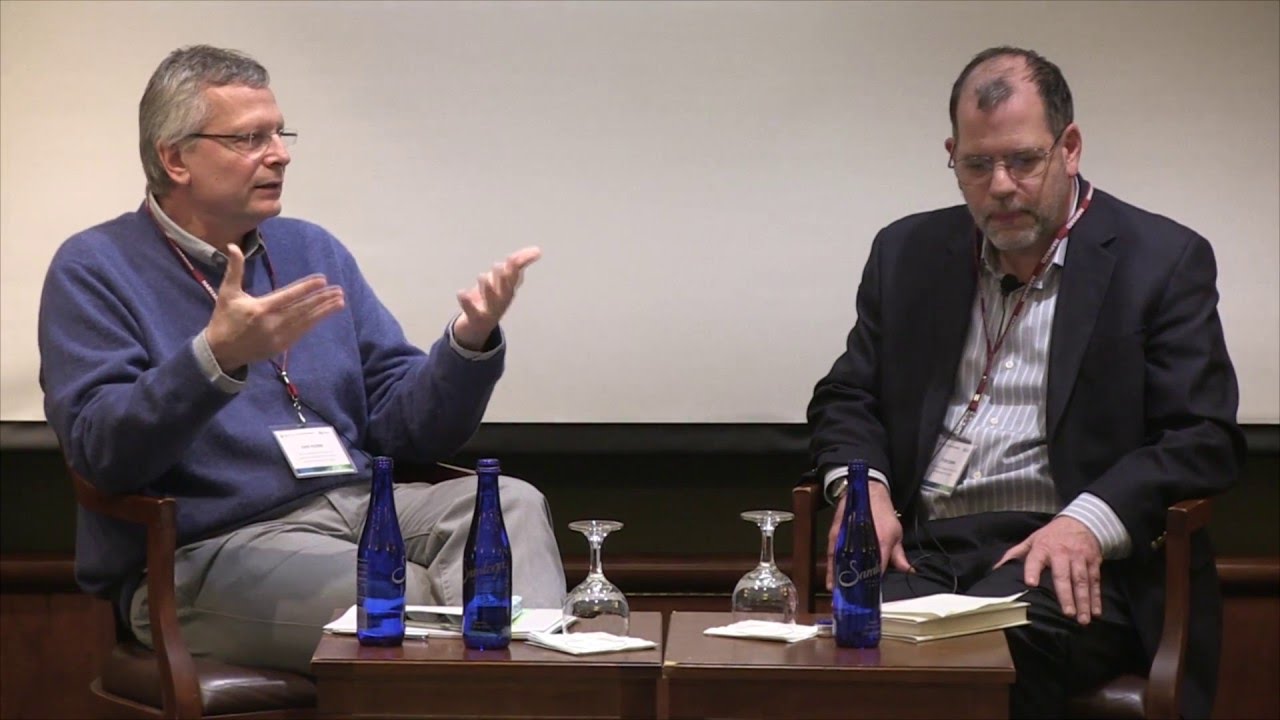
In this 2016 interview, Tyler Cowen introduces Dani Rodrik’s book Economics Rules and uses a series of concrete policy questions to draw out Rodrik’s methodological perspective. Rodrik explains that economics should be syncretic: the science of building abstract models and the art of choosing the right one for a given problem. He applies this to trade policy, arguing that while comparative advantage remains valid, political economy and social backlash now require a re‑thinking of trade rules, allowing limited protection to preserve social cohesion. The conversation moves to the place of other social sciences, with Rodrik emphasizing the complementary insights of anthropology and sociology while defending the value of stylized economic models. He discusses randomized controlled trials (RCTs), noting their usefulness but stressing that their interpretation is always model‑dependent. Rodrik critiques the arrogance of economists who over‑confidently assume a single correct model and highlights the importance of ideas in shaping interests and the stability of liberal democracy. He expresses skepticism about vague cultural explanations, preferring precise concepts like trust that can be framed either as equilibrium behavior or preference‑based. The interview also touches on Rodrik’s “Ten Commandments” for economists, especially the warning against substituting economists’ values for the public’s. Finally, Rodrik calls for a reform in economics education: teaching students how to select among multiple models rather than searching for a universal theory. The discussion ends with Rodrik outlining his future research on ideas, media, and persuasion in politics.
Chapters
Let me start by reading my own blurb for Daini's book. Quote: The best economists make the best methodologists, and Daini Roderick is both. His Economics Rules is the single best source for explaining the strengths and weaknesses of economics to an outside audience. This book has now been out about a year. It's still selling remarkably well. It's written at a deep philosophical level, but it's also found an audience amongst the general public, and it was named by the Financial Times as one of the very best books of 2015. So I'm here to help have a chat with Professor Roderick about the book, and I find it easiest to understand economic method through the lens of concrete problems. So I'm gonna give a stance of yours on a concrete problem, and maybe you can work us through how you think about it, given what's in the book. So yesterday on Project Syndicate, you wrote a great piece on trade where you argued that we should create more policy space for both wealthy countries and emerging economies so that they had some alternatives to pure free trade. Now, as you know, this puts you as a bit of an outlier in the profession, maybe not as much as you used to be. More people are agreeing with you. But I would maintain your views on trade in some deep way stem from your views on method. And how would you explain to someone how using the methods outlined in this book you might have gotten to your views on trade?
First, I wanted to thank Tyler Cowen for taking this on and coming here to do this. He's been a big supporter of the book, so I appreciate that. And, you know, it's always a good idea to have as your interlocutor somebody who's written a blurb for the book. So that sort of limits the kinds of things that you could potentially say about the book. Sort of in the, you know, in the positive side of the spectrum. But Tyler, you're asking an interesting question. So this little essay was written in a bit of a peak because there's all these discussions now about, you know, whether the argument that we need to think about trade policy in the advanced countries also from the lens of what is happening to the middle class in, let's say, in the United States, whether that's at odds with helping alleviate global poverty.
Right.
That if you're trying to protect the incomes of the middle class in the United States, does that mean that you're also hurting the prospects of poor people who can sort of improve their livelihood through exports and so forth? And the argument in my short essay was that there need not be any incompatibility between those two. That intelligent global trade regime could simultaneously enlarge and should enlarge policy space both for the developing countries insofar as they wanted to use that policy space for intelligent trade and industrial policies to restructure their economies, pursue many of the kinds of policies that in fact people in this meeting have been talking about, as well as create some room for the advanced countries. Now, let me now relate this to sort of the book. And I think the argument, key argument in the book is that we should be syncretic in the way that we approach the world. That there isn't a single model. There is not a single framework. And there's a nice quote from Keynes, which I was not aware of. And in fact, had I been aware of this quote, I might not have written the book because it actually summarizes in one sentence much better than I could the whole point of the book. And the quote from Keynes is this, that he says, economics is the science of thinking in terms of models joined to the art of figuring out which models to apply. In the contemporary world. So the science part is in terms of thinking about these models and their implications, the rigor, the causality, the channels. And the craft or the art part is figuring out which one to apply. So I think the syncretism is here is sort of looking at the world economy today, sort of the trade regime, and figuring out which is the right model that fits the world today the best. In the 1950s and '60s when there was— the world was highly protected, you might have said that really the main constraint on the prosperous development of the world economy was these very high trade barriers. So then it really made sense to think that the way to proceed is with this kind of, you know, GATT mindset where countries get together and they're essentially trading off market access. They're exchanging market access. I reduce my trade barriers in return for you reducing yours. Now, of course, from an economic standpoint, this makes no sense because in principle, you know, everybody should reduce their trade barriers regardless. You don't need this kind of thing. But that was a, you know, that worked really well for a while. And my argument is now that the world, the world has changed, that the main constraint on the prosperous evolution of the world economy is not that there are barriers that are too high, that are government-imposed barriers that are too high, but that given how globalized the world economy has become, that there is a genuine danger of social backlash that's going to actually threaten a return to protectionism, widespread and quite indiscriminate protectionism. And therefore, we need to figure out how to amend those rules in a way that's going to make the pursuit of social and economic objectives more consistent with a free trade regime. And that might sometimes entail accepting a certain amount of protection. So it's a very long-winded answer to your question. And I apologize for that. But the basic point is that if you're— It's okay to think that, you know, the basic model of trade is right. It's okay to think that comparative advantage is right. But you also have to think, you know, think about political economy. You have to think about, okay, sort of what are the costs of protection when tariffs are 3% as opposed to when they are 25%. So all of these things are going to lead you in a very different kinds of direction. So I end up in a very different point now than, let's say, where I would have ended up if it were in the 1950s and '60s. '60s.
So you're referring to some political science considerations, and of course we're all here at the Kennedy School where different disciplines come together, and that raises the question of how do all those pieces fit together. Now just in my personal view, economics is in a sense subordinate to anthropology. That the fundamental question which economics has a hard time answering is how do people interpret an incentive? When is it temporary? When is it permanent? When are you actually being offered good reputation or not? And to figure that out, it's a matter of social context, and it gets us rather quickly to anthropology and sociology. They're the queens of the social sciences, and we're subordinate. Now, I don't think that's exactly your view, but being here at the Kennedy School and dealing with all the disciplines at the same time, how do you see the different social sciences as fitting together? And is economics at the top or the bottom of that pyramid?
You know, it's interesting. As you know, I just returned to the Kennedy School after 2 years spent at the Institute for Advanced Study in Princeton, which is the interdisciplinary place par excellence. And the Kennedy School being interdisciplinary, I thought I liked interdisciplinarity a lot. And I thought I would maybe take it one step further. I think some people are not hearing you, maybe. Is this better? Okay, all right, sorry, my apologies. I also realize that my back is turned to a lot of people over there. And when I left for the Institute for Advanced Study, I would have said that that my view of economics was, you know, I was a critic. You know, you would not have thought of me as somebody who would write a book that by and large defends economics and the economic method. And then I did consort with a lot of anthropologists and sociologists, and that was very useful. But I think those interactions also allowed me to see some of the strengths of economics. And I think that, and again, what I emphasize in the book are these, the economist discipline of thinking in terms of highly abstract and stylized models. And that might seem like, you know, something that, you know, is rather, you know, unhelpful. And in fact, many of the anthropologists and sociologists that I interacted with, you know, thought that in fact, you know, economists were just— you know, their way of approaching social reality was way too simplistic, that, you know, the world is too complex for these kinds of frameworks. And one of the stories that I quote in the book, which I think makes the point extremely well, is a is actually a one-paragraph short story by Jorge Luis Borges. And it's called "On Exactitude in the Sciences." And Borges talks about a distant land where sort of cartographers, mapmakers, have become so obsessed with accurate maps that they make bigger and bigger and more and more detailed maps. So that you have a map that's of the city becomes as large as sort of— map of the country becomes as large as the size of a city. And even then, they're not satisfied. They draw a map that's sort of one-to-one. So they have these huge maps, one-to-one of the whole country. The point is to get every detail right. And of course, the story ends by saying that generations later, all these maps are found scattered in the sands of the desert because subsequent generations had absolutely no use for these maps because they didn't have any use whatsoever. And I think, you know, the advantage, the real strength that economics and economists have is in being able to sort of develop these highly stylized abstract maps. But then you also need, you know, different map depending on, you know, what you're doing. If you're going to be taking your bike, you know, you'll need a bike map. If you're taking the subway, you're going to need a subway map. If you're going to, you know, drive across the country, you're going to need a highway map. So that's the part, the Keynes, you know, sort of art of choosing the right kind of a model. And that's what we actually do very poorly. And that's where I think anthropologists and sociologists have a lot of gripe with us, and I think legitimately so. But my gripe with a lot of the work in anthropology, particularly sort of critical anthropology and interpretive work, is that you can never tell what the argument is because this notion of abstracting and simplifying and thinking, being very clear about the causal argument, that's actually frowned on because the world is too complex.
So we're up here in Cambridge, or rather I'm up here, you live here. But when I come to Cambridge and I think about development economics, I tend to start thinking about randomized control trials, or RCTs, which have gone a long way here. And the question of how important those are, has development economics moved into a new and scientific era? And I worry a bit about questions of transferability and context and also scale. And whether they distract us from political economy. But what's your take on them? Should we all be out there doing RCTs and neglecting the older methods of development economics, or where do they fit into the scheme of your book also?
Well, I see RCTs as a very important, significant tool in the arsenal of tools that we have. I think there was a time when, you know, RCTs were being oversold. I think sort of You know, we've been— we're moving away from that. But I think there are questions that RCTs can answer. But even those questions that they can answer, and this is a point that's not often understood, is that they're all highly model-specific. So inevitably, whenever we think we've answered a question with an RCT, inevitably we're applying a model. And there are many different models that would yield very different kinds of views. So, let me just to give an example. Suppose you do an RCT of a conditional cash transfer program and you figure out that thanks to this program more children are in school. Now by the standard of RCTs, what you have just shown that the intervention has worked and now the RCT has shown that it's worked. But how do you interpret exactly this result? Result. One model of the world is that basically there was no economic or social reason for more children to be in school because the returns to education are very low to begin with. In that model, just because there are more children in school doesn't mean that you've actually helped these— you know, sort of done something that's socially useful. Yes, families are keeping their children in school because that's the only way they can get their money. It would have been far better off just to give them a cash grant without any conditionality whatsoever. In another model of the world, the returns to education are high, but parents are not internalizing those values. And that would be a second model. The third model would be returns to education are low, but there are broad political and social gains from having more educated people. Notions of citizenship and so forth. So all these models have very different implications about how we would interpret. And so the notion that through an RCT you're actually able to show whether something works or not, you have to filter it through different types of models before you actually understood— before you can understand what you have actually shown as being work. And in fact, if it is good in some normative sense, makes sense or not. And that's even before we get to what you mentioned, which is the issues of generalizability, the question of external validity, the fact that it worked here, will it work also there. So those are issues that are, I think, also widely understood now. But I mean, you know, I think we should understand this is— none of this is to say that RCTs are not useful. I think they're extremely useful. But I think there was a time that we put way too much emphasis on them, and we exaggerated how much we would actually learn just from the RCTs as well. Just one final point on this, I think many— some of the people, sometimes you will hear them say that thanks to RCTs we don't need any theory anymore.
Correct.
And I think, you know, I think the example that how, you know, the interpretation of RCTs is highly model-specific specific, I think shows why that argument is actually quite wrong. That every time you're interpreting an RCT result for any useful result, I think you're filtering that result through some theoretical frame. And the moment you understand that, then you should also be open to the fact that unless you've explicitly tested in the RCT against one of those frames against another, you're accepting jointly a variety of models or a family of models and not just one of them.
Be willing on this one to be as subjective as possible. What is it about the economics profession which bugs you the most? If you're a natural contrarian and let's say we—
I think the arrogance. I mean, I think the arrogance. I think there is an arrogance that derives from— and again, since this is about the book, I'm just going to relate everything to my book, which is that an arrogance that comes from over-certainty that we have the right model. And I think that's— and I would be much less of a critic if I felt that, you know, that there was less misleading consensus on things. I didn't put that very well, but—
I understand, yeah. Now, two of your most recent papers, they're both 2016 on your homepage, and what's striking to me is this new direction you're going in, which is to try to incorporate ideas into economics and into political economy but using traditional tools of economics. So in one of them you ask what to me is a key question: how is it that liberal democracy ever is liberal? Because today in the world, as you point out, we now have more democracies than not, but most of those democracies are only partly liberal at best. And it seems in a way the question is, why is any democracy ever liberal at all, given a kind of free rider problem in fighting for the interests of small minority ethnic religious groups whatever the case may be. And how would you say you think about that and how would you put that in terms of the framework of your book? How did, you know, your methods lead you to that question and the answer you give?
Well, you know, the paper on ideas is really about— is to push back against the notion that everything in the world, every policy is tightly determined by vested interests. I think sort of our standard model of political economy and economics and much of the social sciences is that we have these very powerful groups. They could be lobbies, firms, trade unions, financial interests, and they are able to determine interest, determine outcome. Now I have no trouble with the argument that power is unevenly distributed and the more powerful have a bigger say on what the policy outcomes are going to be. However, my disagreement is with the notion that, you know, sort of how those powerful groups actually define what their interests are. And there you see a lot of what sociologists and political scientists and anthropologists would call social construction. That is that, that, you know, the notion of, you know, who we are and what is it that we're trying to maximize. I mean, that's a socially constructed notion about self-identity. The notion about, you know, whether our interests— suppose you're a firm, you know, is your interest better served by pushing for trade protection or are you better served by pushing for a more open trade regime? More innovation, more investment in your workers. And the answer to those is highly model-specific. So depending on sort of what underlying worldview, underlying view of the world you have about how the world works, you're going to be defining your interests very differently. So there are ideas about who you are, ideas about how the world works are fundamental in determining what your interest is. And I think the way that this feeds into this discussion about liberal democracy is that, so, you know, I mean, my conclusion about how liberal democracy, despite this, you know, difficulty of achieving it, how liberal democracy ends up sticking is first, you know, that there are— and this would be the interest-based argument— that there are some relatively narrow sort of set of structural circumstances where it might be in the interest of different groups to maintain liberal democracy. For example, if you have a society that's, that's divided in a number of different ways by ethnicity, language, ideology, and not any, any one of them has the prospect of winning over because because it's not a big enough part of society. Then there might be modus vivendi, sort of live and let live kind of an equilibrium where groups basically say, I'm going to, you know, I'm going to respect your rights in return for you respecting my rights. Because, you know, that's a good strategy for me because I don't have a— even if I'm in power now, there's no way I can remain in power forever, and therefore that makes sense. But the other one, and I think that's And that's where the ideas notion comes in. I think the reason that liberal democracy has been so weak in the rest of the world compared to Western Europe, and this might be something we very well question given where Western Europe is going, is that there was an ideational transformation in Western Europe before the structural transformation that led to liberal democracy. In other words, liberalism is a way of thinking about how to organize societies predates democracy. So when in Britain in the 19th century unions and others were really pushing for expanding the franchise, you know, they were fighting the liberals because the liberals said, no, we are for the rule of law and, you know, freedom of speech and so forth. But that doesn't mean that the masses really know what's in their best interest. It's really the elite who should rule. And, you know, even, you know, John Stuart Mill sort of would basically say, okay, maybe liberal democracy is okay for Britain, but certainly it's not okay for the Russians or the Indians. You know, let the, you know, the East India Company rule where he worked, you know, rule India. But the fact that liberalism as an ideational construct already predates the spread of electoral democracy essentially in the West placed constraints on sort of whether democracy could turn into sort of plebiscitary regimes or not. And that is something we don't have in the rest of the world.
Let me try two questions where at least possibly I might disagree with you a bit. Though maybe you can talk me out of the disagreement. Since our first chat, which by the way is online, I started wondering whether I think you're too reluctant to assign culture a role in explanatory theories. So if I think, "Well, why is Costa Rica safer than most of the rest of Central America? Why do different regions of Turkey, or for that matter America, have differing levels of prosperity?" The policies aren't always that different, and it's very hard for me to avoid cultural explanations, but I sense you resist those quite strongly. And for someone who's written books on the idea of many nations, many recipes, but then to be skeptical of cultural explanations, I'm curious on what your take on this would be and whether you can talk me back into agreeing with you.
Yeah, I mean, you know, culture is a term that's used so differently in different settings. So part of my reticence is that I don't know exactly what people say when they're talking about culture. And there might be some definitions of culture that makes it virtually indistinguishable from what others would call institutions or norms.
Let's say it's who settled a particular area and what modes of interacting with each other, what trust level did they bring there. It seems a bit more like culture than like institutions.
Well, I mean, take something like trust. So there are at least two different ways in which you can think of what trust is. Trust could be sort of the type of behavior people exhibit on the equilibrium path of a repeated game. So in this case, it's not that some people are more trustworthy than others, all people are the same, but given the nature of the game, that it's an equilibrium for everybody in this game to behave in a trustworthy way. Now, trust, I think, in that sense, I think has no cultural connotation whatsoever, even though ex post we might define it as, people are very trusty in this culture, but we're just defining how they're behaving because it's their equilibrium strategy. Those same people, take them out of that game and put it somewhere else, they're going to behave in a very different way. So that's sort of a little bit like the taxi drivers. The Egyptian taxi driver drives very differently in Cairo than he drives in Boston. It's not necessarily because he's more aggressive, but he understands that the nature of the game, or rules of people understand the nature— well, Boston is a bad example, right, given driving in sort of— but you see what I mean. Then the second notion of trust is a property of your preferences, a property of your utility function, that you trust certain people because they are co-ethnics, or you trust certain people because they are your neighbors. And so it's a property. Now, I think again, the fact that people have preferences for certain types of other people that they view as closer to them and so forth, I mean, that's— there's nothing inherently objectionable to that. But I'm just in favor of just unpacking these concepts and understanding exactly what they're pointing to, because the danger and the reason that I often I'm skeptical about things like trust, or for that matter, institutions, is that there's always this notion that, oh, it's culture, and therefore it's not changeable. Or it's institutions, and therefore it was already determined 4 centuries ago. And I don't see that at all. I mean, I see these are things that could be stable for quite certain— quite a bit of time, but they could change very quickly. I mean, just like we have these— examples of norm cascades and other things that, you know, sort of behavior that's accepted behavior for, you know, centuries can change very quickly in a period of decades, for example. And so these things change. And so sometimes these terms like culture and institutions hide more than they reveal.
Toward the end of your book is one of the best parts. You have Ten Commandments for Economists and Ten Commandments for Non-Economists. Of course that makes 20. I agree with 19 of them. Let me ask you about the one where I'm not so convinced, and again maybe you can bring me around. So you wrote for The Economist, quote, substituting your values for the public's is an abuse of your expertise. And here's my worry— if you disagree with this, well, I would put it differently. Here's my worry: if you think about economic tools such as a kind of analytical egalitarianism where all people all people have something similar in common and all people within a conception of welfare economics count as the same. And also the Pareto principle, that if everyone's better off— there's some presumption in economics in that direction, however strong or weak you may think it is. And my sense is the general public doesn't agree with any of that. Now maybe they're right and we're wrong, but I suppose I fear that if we do economics at all with any kind of advice, like there is in your trade piece, You can't avoid the Pareto principle, but that is to some extent subbing in your judgments, which I'm gonna side with you, but you are subbing in your judgments for those of the public. Would you agree or not? You see what I'm saying?
Maybe I might see with a little bit more exchange, but let me explain a little bit why I think that's important. And let me do it in the context of the example that we started out with, which is trade. Every economist, if a journalist calls them up, is free trade good for a country? I think 95% of people, 95% of economists, maybe 98% of economists will say trade is good for a country. Now, the funny thing is that if a graduate student asks that question in a graduate trade theory course, You know, the teacher, the professor will say, "Hmm, what do you mean what's good for the country?" Because let's think it through for a little bit. What is it that we know about how trade works? Well, in most of our models of trade, you know, some people are going to be worse off, some people are going to be better off. Now if markets are working okay, we can also say that the aggregate pie will be larger. OK, so this is what, you know, the economics tells us. Now, what can I say? What can I conclude from this about whether the country as a whole has been better off? I need to be trading off now, you know, the losses of some people against the gains of others. And that's what I mean about making that implicit judgment by an economist, because I would maintain that if we ask, you know, Eran here, just ask the question, Suppose I take, you know, I propose the following change: that Robert loses $2 and James gains $3. Are you in favor of this change? Now, when I do this with my students, they don't know how to answer. They understand that the size of the pie is larger by $1, but they want to know more about exactly what happened. Because they want to know who Robert is, who James is. Is Robert poor? Is James rich? They might give a different answer than if the others wasn't. And they also care about procedural fairness. Is the reason that James is $3 richer and Robert $2 poorer, maybe James cheated, and that's sort of how Robert got poor. Now that would be very different. The size of the pie is larger still., but we would evaluate that outcome very differently. So I think when an economist just completely disregarding these issues about, you know, the identities of the gainers and losers and disregarding issues of procedural and distributive justice, I think then they are, you know, sort of imposing their own values when they sort of say against really what the fine points of their own science, easily say that the country as a whole is better off. Now, that doesn't mean, Tyler, that in our role as sort of writers of op-eds and columns, then of course we are just— those columns are imbued with our own preferences. But to the extent to the extent that we can, we should be clear that this is not what economic science says, but this is economic science plus my own values. And I hope that my writing is clear of that.
Last question from me before we get to your questions. Now again, we're here at the Kennedy School. You've come back. Even 2 years at Princeton could not keep you away. We can just start this question with the premise that this is the best public policy school in the whole world. But economics is about life at the margin. So if there were one thing in, in the curriculum or education or something that you could alter so that the system would produce more Dani Rodrik or more economics of the type you talk about in your book, Economics Rules, with respect to the Kennedy School, what would be one thing you would like to change? Or maybe even more generally, in the education of people, something specific in the curriculum to get things to turn out more the way your book says they should?
Well, you know, I think I would repeat Keynes's dictum basically at least once every week because I think, you know, and this is an important point. I don't think it's a point so much in the way that we teach economics in the Kennedy School, but it's a fundamental problem in the way that economics is taught in graduate school or to undergraduates in general, because economics— the philosophy of science that economists have internalized is a very old-fashioned 19th century philosophy of science, which is that it comes from classical Newtonian physics, that basically economics is a science whereby you have one theory, you test it, if it's rejected, You have another one. If it's, you know, confirmed, you refine it and so forth. But it's always the search for one universal best-fitting theory. And that's what the purpose of economics is, to arrive at the truth, the model. And I think the one thing that we need to do in the teaching is to say that the richness and the real contribution of economics is to actually teach students that there are many different models, that there are as many models as we have potentially contexts. And each one of these models have a germ of truth. And what we need to do is teach students something we never do, except for implicitly, which is to teach them when they need to apply the competitive model, when they need to apply the duopoly model, when they need to apply the asymmetric information model, when do they need to apply the model, the dynamic intertemporal model, and figuring out which is the model that's going to be the most relevant given the problem they're dealing with. It's remarkable. We actually never, never teach students how to do that. And the reason we don't do that, because our internalized philosophy is that one of them is going to be right. And there's only one of them that's right.
Before we get to Q&A, a big hand for Danny Rodrik. The procedure is this: mics will be brought around. Put up your hand, I will call on you, and we will get you the mic. Questions for our speaker? Hi, Dani. I haven't read your book.
But listening to you, you said that you are not afraid, but you think that we might have a new wave of protectionism. You also said that even though trade is good for the global economy, of the country or the region, the political economy, it's more important in order to evaluate the political consequences of trade. So my question is, because it surprises me that in this campaign, the US presidential campaign, trade has become the bad word. Nobody wants to talk about trade. Donald Trump is, saying all the bad words about trade. Hillary Clinton doesn't want to talk about trade, even though the Clinton era was NAFTA and all that. So in your opinion, what happened in the US with trade, and why are politicians so afraid of talking about it? Well, I think what happened, Ana Julia, in trade is we have now 30 years, 3 decades of rising inequality and stagnant median wages. And eventually, I think, sort of the unease about that at least some of this is trade-related, I think that sort of has caught up. And I think what also has happened intellectually is that the intellectual consensus that none of this— in the '90s, in the 1990s, the intellectual consensus was that none of the rise in inequality had to do with trade. It was all technology. I think that consensus is no longer there. I thought most economists would still They would still say that technology is most of it, but they would also say, actually, there's a lot of things that is going on that we can't explain with technology. There's fairly good evidence now that trade also has been implicated in some of these adverse labor market impacts. And there's a whole complex of things of which globalization is one. And I think in a way, we're paying the price for— or I should say mainstream politicians, the middle of the political spectrum, is paying the price for having poo-pooed those concerns over globalization for such a long time. Now, I think that this backlash is happening at a time when I think, in a way, the advanced countries have already paid most of the cost to begin with because, you know, those jobs and the industrial jobs and blue-collar jobs in the United States are not going to come back one way or another. So in a way, you know, that, you know, it's not that you can return back to 1985 in any way, but still I think these things take time to become politically more salient. I mean, trade, as you know, has never been very popular in the United States. It's not that popular opinion about trade has become much more negative, it's just that the issues have become so much more salient. They become politically salient, and I think it's become much more difficult for, you know, sort of the middle, the, you know, sort of the establishment political groups to be able to sort of, you know, say with a straight face that globalization has nothing to do with this anymore, and this is something that they used to do 10 years ago, now it's, I think, has become impossible. So my reading of it is that if we had paid more attention to these things, I don't want to blow my own horn. In 1997, I published a book called "Has Globalization Gone Too Far?" One thing I can say is that that book came way too early. If I had published this maybe now, it would be— but I was basically saying, look, there are some trade flows that are highly problematic from the standpoint of social norms and concerns about distributive justice in the developed countries. That is probably a very small minority of overall trade, but because we economists and other intellectuals, sort of polite people, never made that distinction, I think we allowed the bulk of trade to be tarred with the same negative brush, and I think that's partly our responsibility.
Next question. Yes, sir. No?
I want to maybe refute a little bit what you responded to, Anatolia. The— as it's very easy to be mad at economists because people don't understand, but if you look at maybe the main reason for the madness or the inquietness, if you can call it, from the two sides of the is the question of inequality, which is a result from political, you know, taxation, monetary, and so on, rather than the trade. If you take, split the causes for the problem, trade is the easiest, as you said before. US was never really, you know, open for that because isolationist was, is still probably in some corners, culture-wise, maybe, as you said, is very prominent. But I think it is an excuse for the people who don't understand to get on the barricades and say trade rather than the inequality, which, as Ana Julia said again, Trump is kind of fomenting the inequality. So one way to get away from, you know, that way is blame the trade. Yeah, I mean, I think, you know, I would distinguish between sort of, you know, the causes of inequality and then the remedies. You know, on the remedy side, I think that there is very little that trade policy can do to actually remedy the inequality situation. And from, you know, from a political and looking forward kind of a perspective, that's the only thing that matters. I mean, I don't think you can rewrite NAFTA and TPP as much as you want. I don't think it's going to have much effect on US inequality. Inequality. And I think, you know, the issues there are going to be much more about, you know, system of taxation, sort of, you know, portable, you know, benefits and health and other benefits, better social insurance, greater progressivity in taxation. So a whole bunch of things that are really, you know, countries ought to do and are not directly trade. But I think the sense in which trade is implicated is because, you know, economists kept on saying for decades that, look, don't worry about all these job dislocations, don't worry about the job consequences of trade, because there will be other jobs being created somewhere else and these will be sort of temporary at best. And I think our best studies right now studies by David Autor and others show surprisingly that the job loss part surely was there, but the job creation part didn't happen. So as long as, as much as even a decade after the initial China shock, the communities where had been adversely affected were still not creating enough jobs. To absorb people who had been displaced. And so those were real impact on those commodities, which the economics profession basically had pooh-poohed by saying, don't worry, these things either will get new jobs or there will be enough mobility in any case that labor mobility will take care of it. And these things, for whatever reason, and we don't quite understand why labor mobility wasn't higher, but the labor markets didn't respond, labor and product markets didn't respond in quite the dynamic way that we thought that they would. So we can't— in a causal sense, we can't completely, you know, sort of, you know, clear trade.
Next question. Yes.
To continue on the trade question, when you asked the $2, $3 question, you said clearly the whole pie got bigger. When we discuss the trade question, you don't— I don't, at least, I'm not aware of economists talking about what was the result on global growth. And we take pride in a billion people coming out of poverty in the last decade or whatever the right numbers are. How does— when we talk about trade, why— what would you— how would you include global growth if you ran the world economy and talked about trade rules? No, great question. In fact, that's— That was the, that was the subject of my short piece, that column that Tyler started us with. I think when you think about the trade regime, you obviously, you know, want to ensure that it's going to be a trade regime that's going to be sufficiently open, that's going to enable future Chinas. Because clearly, you know, of that nearly billion people who lifted themselves, you know, from from absolute poverty. 500,000 of them were, were actually from, uh, from China. So that was it, that, you know, that, that was a big deal. And export-led growth was a big part of that. So, but, you know, the thing that the ex— the thing that, that we learned from that experience is a somewhat, um, it's a nuanced picture. It's not really a picture of, you know, that developing countries simply opened themselves up to trade and therefore they grew. It was a very mixed strategy. China, of course, protected its economy, did a lot of things that it would not they've been able to do if it had been— if the WTO had existed and it had been part of the WTO in the 1980s and then later in the 1990s. So many of the trade rules that we are now imposing on the developing countries in TPP and the WTO in the name of free trade are actually things that are narrowing their own policy space in terms of doing the kinds of things that are important for their own economic transformation. So that's point number one, which is that yes, you can think of trade rules that are going to be simultaneously beneficial to the North and the South. And let's not kid ourselves that, you know, that WTO or the TPP today really are finely tuned to serve the needs of growth in the developing countries. They are really very much a mixed blessing for them. The second Part is that, that, that how open does the world economy need to be in order to generate future Chinas? And you have to remember that the bulk of China's growth, and before that, if you go to, you know, the growth experience of South Korea or Taiwan or Singapore and Hong Kong, before that to Japan, all of these incredible growth takes up and experiences with poverty reduction took place during a period when the world economy was nowhere near as open as it is now. The world was nowhere near as globalized and as connected. So I think I take for an example is that what's really important is to have a moderately open world economy where people are happy with the rules. It's sort of sustainable rather than sort of pushing on that sort of, you know, the last, you know, barrier or the last transactions cost that, you know, multinationals and banks and and others don't like, because I think that gets us relatively few benefits in terms of reducing economic transactions costs, opens up lots of problems in terms of issues of equity, distribution, fairness, and so forth.
30 seconds left. Can you tell us, what are you going to do next?
I have to go to my office and write some recommendation letters.
Intellectually.
So I am very much interested in pursuing this research on ideas, on sort of the ideational basis of policies. Because I think there is some work in economics in terms of persuasion and the role of the media and media bias and how it changes politics. But I think the whole notion of— ideas as a whole, which is odd because of course as economists and academics we are in the business of promoting ideas and generating ideas, but we don't have them in our models. So I think that's, you know, sort of doing more work in that domain is what I'm interested in.
Danny, thank you very much.
More from Tyler


#413: Tyler Cowen on Rationality, COVID-19, Talismans, and Life on the Margins





Tyler Cowen on Never Crying at Art, Why Rap is Dead, and Quitting Writing Books (w/ Nabeel Qureshi)


AI, Job Loss, Fertility Crisis and the Death of Careerism | ft. Tyler Cowen | PGX Ideas #4
