Economics vs Philosophy with Tyler Cowen
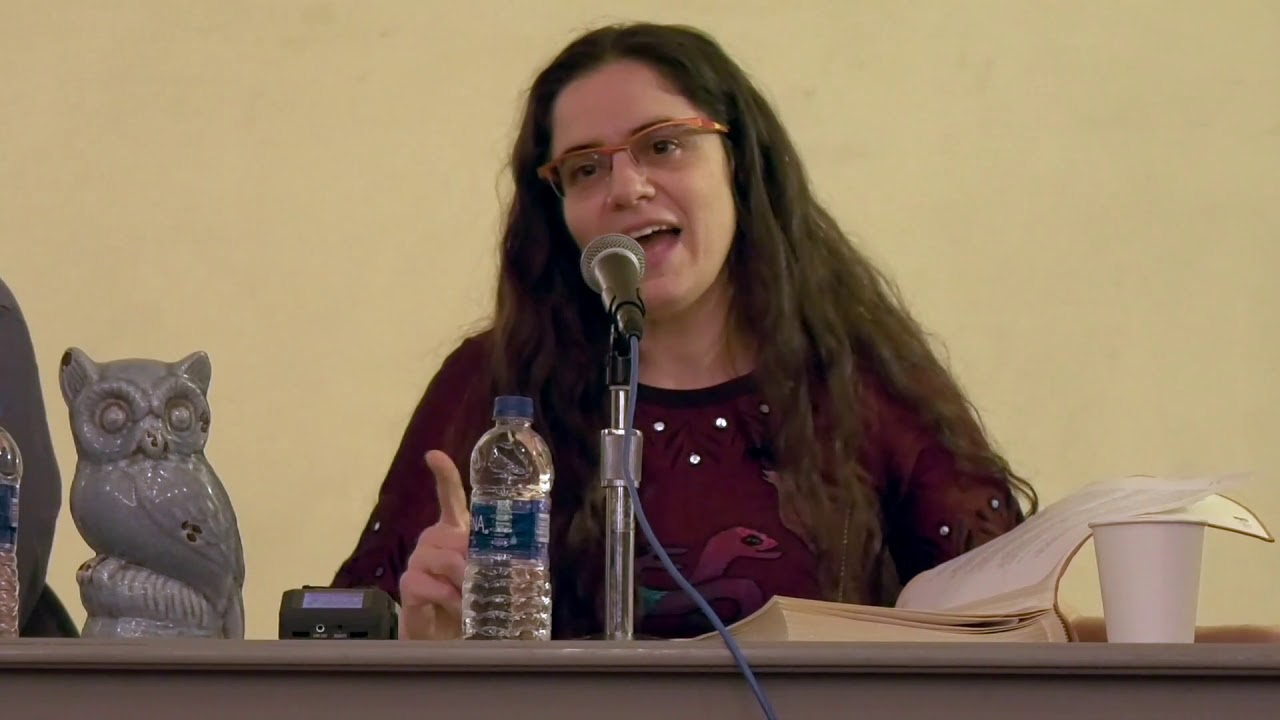
In this on‑stage conversation, economist Tyler Cowen and philosopher Agnes Callard explore the uneasy border between economics and philosophy. Cowen argues that many economic ideas—such as the expressive value of choice, the moral calculus of valuing lives, and the role of incentives—have deep philosophical roots, citing George Akerlof, Gary Becker, and Adam Smith. He stresses that while economists often treat these concepts as purely technical, they are fundamentally normative and hard to test empirically. The dialogue moves to the historical overlap of moral philosophy and economics (e.g., Adam Smith’s Wealth of Nations as a response to Plato) and questions whether modern economists should be more philosophically literate. Cowen critiques the current academic climate: ever‑longer papers, heightened specialization, and a bias toward Type II error that stifles creativity. He proposes a solution based on “mega‑generalists” who bridge disciplines, arguing that a few broadly trained scholars could counteract the trend toward hyper‑specialization. Throughout, the speakers touch on related themes—mortality, the moral limits of pricing, charitable giving, and the growth imperative—illustrating how philosophical reflection can enrich economic analysis and vice‑versa.
Chapters
Hey everyone! Ha! Woo! You came to attention there very quickly. Hello! Hello philosophers and future philosophers. I'm Agnes Callard. I teach in the philosophy department and I'm the director of undergraduate studies. And before we get started, actually just a few announcements. So, if you somehow didn't sign in at the very beginning, please do that, like, when you leave. And you can leave at any time. We're gonna go for 3 hours. But you don't need to stay. It's not a class. You can stay as long as you like. You can get up, go get hot chocolate. There's hot chocolate on the, on my left and cookies on the right back there if you didn't get them. And just a little preview of coming attractions in the spring quarter. We have 2 Night Owls events coming. One of them is on war and violence with Chris Blattman, and the other one is on the meaning of death. So we're gonna watch the movie The Seventh Seal, Ingmar Bergman's movie The Seventh Seal, have dinner, and talk about the meaning of death with Dan Morgan from Cinema and Media Studies. So you can check out those on our website. And— Let's see, anything else? For this event, some of you know there was a kind of study group. So maybe like 20 students and I met in the evenings and read econ articles together. It was really fun. And we're— I'm going to do one of those for the war and violence one. If you're interested in participating, like on your way out there'll be a sign-up sheet. Okay, and just a few thanks. I want to thank the college and the Becker Friedman Institute for financial support for this event. And my co-conspirators Rory Hanlon. Where's Rory? Rory? I don't see him. And William Weaver. William is back there at the signing table. Thank you, William. So, when somebody asks me, like, how, say I go somewhere to give a talk and they ask me how do I want to be introduced, I always say, use as few words as possible and say them as quickly as possible. Because it actually really sucks being introduced. You're kind of sitting there, and like a lot of people are staring at you, and you just have to absorb the stares. Like, if you're talking, you can concentrate on what you're saying, right? So I found out like, I don't know, a month or so ago that Tyler feels the same way about being introduced. So I was going to give him this really short introduction. But then I remembered two things. So one of them is that while I hate being introduced, I actually love introducing people. The other one is that neither Tyler nor I are strict Kantians, so here is my long introduction. So Tyler Cowen is an economics professor at George Mason University. He's written a ton of articles and lots of books on a big variety of topics. How many books? I think like more than 15 and fewer than 20 books about. And I have— If I had to summarize all of them in 2 sentences, I haven't read all of them, but I'm pretty confident in this extrapolation. So here's my 2-sentence summary of all of Tyler's books. The world you're living in has a bunch of problems, but they're not the ones you think they are. And most things are or are going to get better in most ways. That's sort of his worldview, as I see it. OK, so Tyler does a lot of other stuff besides write books. He's been maintaining a blog for 15 years, Marginal Revolution. And if there's some topic or person you're interested in and you just put it in the search engine of his blog, the chances that something will come up are really good. It's kind of like an alternative Wikipedia. And if you come up empty, you can always email him and like, Maybe he'll add an entry. I would say that he knows something about most things. Except maybe geology. So, like, all of human knowledge minus geology. But to be a little more specific, he definitely has some areas of specialization. Economics. But also music, art, literature. Maybe, like, most of all, travel. To give you a sense of it, because I think maybe this is like the achievement he might be most proud of. So if we took like two giant maps of the world, right, and we put them on that wall right there, and all of us together put pins everywhere we've been, and then Tyler took the other map— well, there's a reason we're doing economics versus philosophy instead of that, let's just say. Um, so Even when Tyler's at home, he sort of travels the world in a different way. He's co-produced an online series of videos about economics, sort of basic principles in economics. It's translated into a lot of languages, so all people around the world can learn about economics for free. He has a podcast, Conversations with Tyler, where he interviews food writers, athletes, journalists, philosophers, scientists, contrarians of every stripe. You could sort of see it as an illustration of the principle Tyler can talk to anyone about anything. You might think that's because he's well-rounded and he knows about a lot of different things, but if that were true, that would be less interesting for our purposes because we want to talk to an economist, right? And what's exciting about Tyler is that he— it is all economics for him. He sort of sees economics everywhere, so he can help us see it and then we can destroy it. Tyler Cowen. Sorry, getting ahead of myself there. Okay, back to the intro. So most recently he started a kind of pop-up philanthropy project called Emergent Ventures where rich people give him money and then he gives it away to people like you if you have big ideas about what you might want to do with it. So look it up and apply. On top of that he has like 120,000 Twitter followers and not only that he even kind of induces people to join Twitter, like me. I joined Twitter, I was kind of inspired by Tyler. So he's kind of like a— I don't know if there's a term for it— like a Twitter vampire. Okay, so I think it should be pretty clear what all of this adds up to, right? Every time and place and culture is gonna have its idiosyncratic form of crusader. Tyler is one for the online era. He's a global internet superhero. We're delighted to have you here. And this concludes the part of the evening in which I'm nice. Thanks. OK. So here's how this is going to work. I'm going to ask Tyler a bunch of questions. He might ask me questions. I don't know. For a while. And then I'll open it up to you. My first question, so this morning the New York Times front page headline was that like 8 people died in the Midwest from the cold. And I thought, oh, that's sad. This terrible polar vortex has— what a bad thing. It caused these 8 people to die. But then I thought, well, wait a minute. That's how I usually think about it. Let me try to think about it like an economist. I thought, well, what about all the people who didn't die because of the car trips they didn't take because they stayed in their houses? But then I thought, well, but what about all the businesses that were closed and all the money that was lost from sales that didn't happen? But then I thought, yeah, but what if this kind of brief shock to the economic system actually overall somehow improves improves our economic situation. And it's at that point that I feel like my mind is getting a bit lost, and I just want to go back to my first thought and be like, it's sad that those 8 people died. And so what I want to know is, is there a resting place for that kind of economic thought? And if not, does it have a hazard of detaching us from our humanity?
Let me first say I'm very proud that today we have with us Agnes Gellin Coward, who is professor of philosophy at the University of Chicago and was recently profiled with her work in New Yorker magazine quite prominently by Joshua Rothman. Agnes also has studied ancient history at Berkeley. Her best-known book is Aspiration, published by Oxford University Press. She is also known as having been a guest on the podcast series Conversations with Tyler Cowen. And there is much more I could say about her, but tonight I feel ever so slightly Kantian.
Tyler Cowen.
So I'll address the question. I would start off by thinking about the incentives of media. So media live from clicks now more than ever before, and what encourages people to click through is negative news. So there's a general negative bias in media. So people who consume a lot of media, they think that crime rates are very high, even when they're low or falling. They may not be low or falling in every part of Chicago, but in most of the United States they are quite low and have been falling for decades. So if the article says 8 have died because of the cold, first realize probably there's a negative news bias in that headline, but also ask the economic question. Well, 8 relative to what margin? How many people would have died anyway? Which is what Agnes is getting at. Offhand, as a matter of theory, we don't know. But of course, the net number of deaths is unlikely to be 8. What 8 means is that there are 8 deaths which can be attributed to cold under the condition that if a fact-checker were to call up— and they do not, let me tell you, they do not— that someone would say, "Oh, this person died because of the cold." So the next thing we might do as an economist is try to figure out the net impact on human lives of the level of temperature. Cowen's second law says there's a literature on everything, and there are in fact papers. Do more people die when it is hot or when it is cold? It depends, of course, on the margin. If it were 140°F, I think more people probably would die from the heat. But as I understand these pieces, it seems to be the case that more people die when it's cold out, that a lot of circulatory problems— like, people have heart attacks shoveling the snow, basically.. And it's better for human life in the short run when it's somewhat warmer. So some number of people probably did die in the causal sense. And then I look at the philosopher. What's causality? Oh my goodness. We can come back to that very tricky question. But some people probably did die because of the cold. That's what I would say as an economist. But don't believe everything you read either.
I feel like you didn't answer my question. So my question was about how how my initial reaction to this story was one of kind of empathy and sadness. And maybe that's a big part of why there's a negative bias, because when bad things happen, we feel like we actually ought to react to them with a negative emotion, where there maybe isn't—
it is—
maybe it isn't so necessary to react to good things that happen, but we maybe might think we have like a kind of moral or human obligation And my worry is that the whole line of thinking that you just produced alienates me from my inclination to have that human reaction.
You should think more about people dying in other countries. So when people die due to net weather effects or air pollution effects in the United States, on average, those tend to be people who are older. If you go to a country such as Eritrea,— and you look at life expectancy figures, per capita income figures, child mortality, deaths from malaria. I think on net we are too sensitized to matters which are geographically or demographically or intellectually close to us, and we are too desensitized to that which is far from us. This is a long-standing theme, as you know, David Hume, Adam Smith. My goodness, all those people could perish in a flood in China, was noted in the 18th century, and you care more about having a little scratch on your finger. So I think the bias that we have is how we allocate our empathy, and we're allocating it for largely selfish reasons. Economics can help explain some of that. So the question is not being alienated or not, but we only have a limited capacity for some emotions. And it seems to me we have a classic externalities problem where people have selfish reasons for caring about what's close to them, and the net effect is we neglect that which is far, including far in time. So we'll end up, say, undervaluing climate change for the same reason as a risk.
What is economics?
Economics is a bit of an art. It's a bit of a science. It is better understood sociologically and anthropology rather than in terms of its essence. Economics is, in short, what economists do.
How— if we try to think about—
I'm not an economist.
If we think about— right. So let's think about what you do, the object now. How important is human freedom to the subject matter that you study?
People have very different notions of human freedom. So there's a longstanding distinction between negative freedom and positive freedom. But I would say in its core or pure form, economics is at least trying to be value-free. And some of it is a series of comparative static propositions. Well, if the price of tomatoes goes up, I will buy fewer tomatoes, at least under some conditions. If my income goes up, I will eat out more often at restaurants. And then you try to make the propositions successively more interesting, but as they become non-trivial, you're not so sure if they are true. And then you go out and look at data and find out to what extent are these propositions true. By no means is that all of what economics is, but that's a part of the core that we might try to teach in, say, Econ 101 or intermediate. So we don't, for the most part, talk about human freedom in basic core economics. There is a branch of economics which overlaps with philosophy, which talks a great deal about human freedom.
Say we're trying to understand like a particular interaction, right? So you're talking about buying tomatoes, right?
Right.
So how can we tell whether you're buying tomatoes or whether you just handed over some money and somebody else gave you some tomatoes?
I think there are some cases where we genuinely cannot tell. So economics does best in predicting when the notion of price is fairly unambiguous. And if you walk into Whole Foods and you buy some tomatoes and hand over your money and they hand over the tomatoes, there are a series of laws and customs and there's even surveillance by closed-circuit TV to make sure that more or less that's exactly what happens. But I like to tell the story when my daughter was younger and still living at home, I paid her to do the dishes. And I thought I was paying her, but she didn't do the dishes anymore. I'd say, "Jana, is "if you do the dishes, I'll pay you some money." She was like, "Eh." I realized she had a deeper model in her mind where I had a threshold amount of money I was going to give her in any case, whether or not she did the dishes. And I wasn't actually paying her to do the dishes, I was re-describing my payment in a way that would make her worse off and I hope me better off. And she saw through to that economic game more quickly than I did. So I think When price is poorly defined, predictions of economics do much worse.
But in that case, it's that she could see that whether you gave her the money, it didn't depend on what she did in the short run.
Maybe, but in the longer run, yes. So if we're planning her college fund, we think, well, so much money has to be in there, right? So parents often support their children in threshold fashions. And they don't round down to each dollar, to each cent. So their attempts to incentivize their children in the meantime with small rewards tend not to work. They may be better not commodifying the activity, not saying this is about money, saying it's about a particular nature of a relationship— obedience to your parents, just general willingness to cooperate. Maybe you're better off trading favors with your children than trading money with them for all of those reasons. So a deeper economic model Again, it's going to get quite muddy and ambiguous, but you can start seeing like what might be the cross-sectional variation here. If it's not your kid, if it's someone washing dishes in a restaurant, how do you get them to do it? You pay them, right? Then it really works pretty well. You don't pay them, they're not going to show up.
When don't incentives matter?
Incentives matter less when demand and supply curves are what we call inelastic. So if you take someone, for instance, who is a diabetic— I actually haven't read this literature, but I would presume the demand curve for insulin might be somewhat more inelastic than other demand curves. And if the price of insulin goes up, maybe they will do more or less the same thing, just pay more money. Elasticity depends on numerous factors, the most obvious of which is short-term versus long-term. Elasticities tend to be greater in the long term and Incentives matter more in the long term. There are a whole bunch of short-term problems where price changes don't seem to matter much. People are kind of locked in by habit or planning horizons, but in the medium to long term, again, you see the action starting to show itself.
So you— a minute ago you talked about the sort of the deeper market like that you— that your daughter saw through.
Sure.
Yeah.
Much more quickly than I did.
Yeah. So are there ever just situations that shouldn't be modeled using the idea of a market? Like, one thing you might think is sometimes I have to give something up and then I'm going to get something else, but I shouldn't understand that as a trade or an exchange. I might even have sort of a moral obligation not to understand it as a trade or exchange. Maybe the clearest-cut case, which wouldn't be a strong moral obligation, might be gifts, right? So like, you know, if I give you a gift for your birthday and you give me a gift for my birthday, like, it may be that like this practice of gift-giving that we have, it wouldn't continue if we didn't both give each other gifts, but there's just an important sense in which my gift to you, I'm not like selling you that for the gift you give me, right? I just view it as like, I give you something, done, finished. You give me something, thank you. I have a feeling of like some kind of sacrifice, a willing sacrifice with respect to the gift I give you. And then the gift you give me, I feel gratitude, right? And those aren't feelings that I could feel if I understood this, I think, as any kind of market transaction. Does that seem wrong?
Here we have a philosopher asking the economist about should or shouldn't. This is quite remarkable. I don't know if I can address the should or shouldn't question, but I would note, while I agree with much of what you said, there's a deeper level at which economic incentives still operate. So there's a famous paper called The Strategic Bequest Motive by Andrei Shleifer and two or three co-authors, Rob Vishny at University of Chicago.. And it turns out that there's evidence that when parents decide bequests to their children, the bequest is larger if the children visit them more and write them more letters. They actually found a dataset on this. Remarkable, right? Again, we're back to Cowen's Second Law: a literature on everything. Gifts are supposedly unconditional, but I predict as an economist there are relatively few relationships where a birthday gift is given only one way. For 10 or 15 years running, that there are bans of exchange and if there's no reciprocity. So maybe I would proceed by asking the question, when there's reciprocity, when might it make sense within a logic of exchange that what is demanded is quite precise? So when I go to Whole Foods, the price of the tomatoes, it's exactly this. If I hand over more, they give it back. If I hand over less, I'm not allowed to leave the store unless it's maybe a penny.. And then there are other kinds of exchanges where you deliberately widen the band. So if it's gift-giving, it's like, well, I'll give you a gift every year. If you give me a gift every other year, send me a Christmas card, holiday card every other year, well, that's okay. But at some point the reciprocity breaks down. And then try to think through what kind of model might give us cross-sectional predictions as to when those bounds should be very tight and as to when they should be broader. And then test that model. Now that literature I haven't read, so I don't know what economics tells us there, but that's how I would think about it as an economist without being able to really solve the should or shouldn't of it.
Well, I was asking about the depth issue, that as you were saying, there's like, you know, a deeper level on which you had— your daughter could see this market. And I was looking, is there some deeper level on which there is is in fact a market between us with birthday gifts, right? And it seems to me that the mere fact of reciprocity doesn't suggest that that is the right way for us to think about what's— or let's say, we won't be very good friends if we think about it that way. And being friends is part of what it is to give gifts, right? So it, like, it's not fitting to the kind of thing that we're doing to think about it that way. I mean, does that— I guess it's the question of alienation again, right? So like, does thinking about our gift-giving practices, if I think about that from an economic point of view, does that alienate me from our friendship?
There are papers on the economics of self-deception. If you're trading with people, you may do better if they think you are not calculating very exactly. And maybe the way for them to get this impression is if in actual fact you are not calculating very exactly. So people who have the reputation as being pure maximizers, and indeed who are pure maximizers, it's probably harder for them to have friendships, healthy relationships, marriages, whatever, you know, run businesses. So partly as a biological matter, I suspect, but also as a kind of subconscious strategy, we evolve not to be transparent to ourselves to make reciprocal decisions across very gross margins, to have results which in some ways actually look like calculation without us knowing it is calculation. Keep in mind, I interviewed you at my university. Here you are interviewing me at your university. I'm not suggesting either of us thought— I didn't think, well, if I interview Agnes, she'll have me into the University of Chicago. And you didn't think, well, by having Tyler here, it's like, well, returning the favor for him interviewing me at his. But nonetheless, it's remarkable how reciprocity operates with this power. And you can understand that better with economic models.
Let me read you— I want to read you a quote. Hold on, let me find it. So this is from Thorsten Veblen. This is the guy who came up with that phrase conspicuous consumption. He writes, businessmen habitually aspire to accumulate wealth in excess of the limits of practicable consumption. And the wealth so accumulated is not intended to be converted by a final transaction of purchase into consumable goods or sensations of consumption. I was discussing this with— this passage with my students, and one of the students told me that one of her economics professors has a Hermès bag So I don't know if you've heard of this kind of, it's like extremely, extremely expensive, like tens of thousands of dollars bag that he brings to class. It's actually a women's bag, but, and comes to class with like, you know, extremely fancy, very expensive clothes. And is kind of projecting, I guess, like wealth and success by doing this. Why do people do that?
Why do people project wealth and success?
And also, why do they accumulate wealth in— that is not intended to be converted into consumable goods or sensations of consumption?
I've seen estimates that the net wealth of Jeff Bezos is over $130 billion. Soon to be divided by 2, by the way. I suspect he has no plans to spend that much, but rather what he enjoys most of all is building one of the world's greatest companies. This to me is quite a rational desire. It doesn't map exactly onto what I want to do with my life, but I find it quite explicable and something that might be quite thrilling for someone to do. And if I look at the number of books I buy from Amazon or the cheeses I buy from Whole Foods, it's remarkable how much of my money Jeff Bezos gets. And the notion that you might value that way of almost communicating with someone and that the money you earn is a kind of signal and reflection of that and you value the money without necessarily having extreme consumption habits where you, you know, spend down the $65 billion or whatever it will end up being.— to me that makes much more sense than Veblen gives it credit for. Now, why do people have these bags and the like? It's maybe to signal to their friends that they're doing well and to try to attract more powerful social allies and be in more popular social circles. I'm not suggesting this is necessarily a conscious calculating move. You may be worse at it if you are self-conscious about it, but nonetheless many people act in this manner. And in underlying terms, as my colleague Robin Hanson has argued at length, it's probably about signaling.
So if the money— like, wealth is a kind of sign of success, right? Among other things. Could it be that one of the reasons why people want to accumulate wealth, it's a little bit like why people want to get high SAT scores? Scores like the SAT is supposed to be— it's supposed to be a measure like of how smart you are, how well prepared you are, right? But then as soon as you get some measure like that, people then— that measure becomes a target, right? And then people— and so could it be that like some of what goes on with the desirability of wealth is that that measure has become a target for people?
I find it remarkable how many people work so hard for some social goods which are partly illusory, and they're working on my behalf to rack up points. So we've gamified a lot of social activities including running businesses. And maybe there are actually cheaper ways to hand out those points, but society is structured that you have to work pretty hard at being successful to get the points. Ah, that's great for all of us. That would be a very simple economics invisible hand model. Sometimes handing out the points is cheaper than paying people, right?
Is it good for them?
It depends who they are. So if they have studied philosophy and they're properly self-reflective, they can ask themselves questions like, is my business actually doing the world good? Am I maintaining healthy relationships while I'm running the business? And then it can be very good for them. Uh, I know many wealthy people who are quite happy and fulfilled and have rich lives. I know some wealthy people who are not. So simply winning the game, I don't think is good for you, but it's quite possible to win the game and have a total outcome that's very fulfilling and good for broader society.
I want to ask you about the difference between prices and sanctions. So if Say we have some— well, sometimes you have to pay in order to get to do something, so that has a price. And sometimes people make you pay for what you did. That's like a sanction. You're punished, right? And one way to think— one way that I've read that economists think about this difference Tyler Cowen is that we can— we tend to price some activity when we have pretty good information about what the costs of that activity are. And we tend to impose a sanction when we're not sure what the costs are exactly, but we're sure that it's bad. That is, it's socially, we have, it's like undesirable. So like murder or something. We don't know exactly what the cost is, but we know it's wrong. So take that way of distinguishing between a price and a sanction, right? Where a sanction is kind of a legal idea, right? You did something wrong, you're being punished, so you have to pay money. As a punishment. Why, assuming, and maybe you disagree, assuming that that way of thinking about the information of prices, the information relativity of whether we impose a price or a sanction is correct, why in the case of sanctions do we care about the person's intent?
Well, let's take the case of murder, which you brought up. As you know, in most legal systems, the penalties for deliberate, premeditated, planned murders are higher than, say, the penalties for manslaughter. So if you think of this in terms of a liability framework, as has been developed here at University of Chicago in the law school indeed by Richard Epstein and by Ronald Coase, there are good reasons why if something happens as an accident, you might want to penalize it less than if it is planned deliberately in terms of how the incentives will lead to less of that behavior in the future. But I think it runs deeper than that. So if you imagine an imaginary setting where instead of being sent to jail for murder— that's a kind of penalty or sanction— you would just have to pay a price. Like you shop in Whole Foods, some cheeses cost a very high amount. Well, murder, that's really expensive. But economics has told us a human life is worth $4 million. So if you're willing to pay 6, have your way. First of all, that would mean some billionaires could in essence murder for free since they wouldn't feel the loss of the money. But it's also sending out a symbol about how your society values human life, and it would be telling people there's in essence a non-egalitarian treatment of rights and who is protected by the rule of law and who is not. And I think the medium and long-term consequences of saying human life is just about money, very wealthy people should be able to murder without really feeling any loss of consumption or any loss of life standing. That would be corrosive to broader political institutions in such a way where we prefer the sanction, something like jail time, rather than, "Oh, just do it for $7 million." Should we put a price on human life? It's always context-dependent. So let's say you're called into the Pentagon and the Pentagon wants advice. The Pentagon says, "Well, we could spend another $10 billion. It would make our aircraft carriers safer. Should we do it?" You're going to either say yes or no or leave the room screaming or laughing or something, but they're going to call someone else in. So some answer will be given. You might start by asking them, "Well, how many lives do you expect this will save?" And if they tell you, "Well, 'We think it'll save the life of one sailor every 100 years.' Almost certainly the correct answer is no, do not spend the $10 billion, because I could tell you other ways of spending the $10 billion, smoke detectors being quite cheap and pretty effective, that would save many more lives than one. On the other hand, if they tell you that saving $10 billion— spending $10 billion will save a million lives, it's almost certainly a good idea. So we do value human lives every time we make a decision, but that said, there's something to be said for those decisions, while not being secret, not always framed explicitly as, here's how we all trade off lives against dollars, because then people in some ways start thinking social institutions are not entirely legitimate. People in the Navy are like, what, my life is only worth fill in the blank? And I worked so hard and I fought to defend my nation and I spent all that time in a nuclear sub under the water and it almost drove me crazy, and they're only willing to spend $4 million to save me? Surely I'm worth 4.3. It's not the conversation you want to have. So there's an almost Straussian level of split meaning where there's some consideration of life valuations at the technocratic level. Yes, it seeps into public discourse, but you need plenty of institutions stacked on top of that which go out of their way not to treat human lives only as something mattering in terms of money.
So Both with this answer and in the earlier answer that you gave me about not, like, not being transparent to yourself or not performing certain kinds of calculations about, you know, trade-offs and reciprocation, it sounds to me like thinking like an economist means not being totally straight with yourself all the time. Like, well, look, there's, we should in some contexts say that a human life is worth $4 million, but we shouldn't say that too loud or in too many contexts because people will get upset about it. Or we do have this kind of exchange between us where you're noticing maybe the value of the gift that I gave you, and I'm noticing the value of the gift you gave me. But we kind of don't think too hard about it, or don't focus on it, or we're better off if we don't perform the calculations ourselves. Like, does— is it that economics sees human beings as sort of fundamentally self-deceived or opaque to themselves?
I would stress that all societies in human history have failed to satisfy what Rawls called the publicity condition. Don't blame this on we economists. Just as an anthropological observation, if you're asking like, what's the group of people most willing to be square with you about like the terms of a friendship or reciprocity, I think like by far and away it's economists. So we're not perfect, but as a set of humans, maybe we even err on the side of not being opaque enough if you just want to do empirics on economists themselves. But I agree this is a moral issue. I just don't think it's in any way unique to the science of economics.
Well, I guess in philosophy, I never find— so I never find myself talking the way you were talking. Like, I just think, well, look, either it is or isn't okay to think that a human life has a certain kind of to put a price on a human life. And, you know, maybe human lives are, have a kind of value that can be, should be understood as having a dignity rather than a price. And now you might come back at me and say—
That's where the self-deception comes in, right?
So you might say that I'm self-deceived, but I don't say it. As a philosopher, you at least, you get to at least feel straight with yourself, let's say. And maybe economists, I don't know, could the fact that they speak at these two levels, that they're adept at speaking at these two levels, maybe that partly explains why they're good at being straight with people? Like they're, they're familiar, they're sort of intimately familiar with their own self-deceptions.
I think economists and philosophers have a great deal in common on this point. I would just note you could have bought like a bigger and safer car, uh, for your whole family. And at some point we all don't spend more money on the safety of our family and we stop at different points. So we're making these judgments. We can tell ourselves, I don't put a dollar value on in human life, but we all are making the decisions that the people in the Pentagon are making, right? So let's try to understand it better rather than just saying it's not there. Here's what I would say economists and philosophers have in common. I made up a list. You tell me what you think of my list, okay? Okay. It doesn't mean we don't have big differences, but let's start with what's in common. First point is kind of rude, but I think it's true. Economists and philosophers, even within academia, really have above-average IQs. By quite a bit. And this binds us together. I'm serious. And there's data on scores. Scores are not an exact measure of IQ, but I feel there's good evidence for this point. Both intellectually and as personality types, we both tend to be highly analytical relative to many other parts of academic life or many other jobs. Economics is quite unified. There's something called the logic of choice, logic of microeconomics. Economics, preferences, constraints, incentives. Philosophy, I think, is probably less unified, but you've mostly all read a common set of books, and there's a particular way of conducting discourse that is common to most, maybe not all philosophers, that gives you a unity that maybe sociologists wouldn't have as much. We're also two fields where you can say something counterintuitive without being screamed out of the room There's also a fair amount of latitude to be politically incorrect. And if you have an analytical argument to back it up, you might get away with it or even persuade people. That's my like cheat sheet on what we have in common. Now, what do you think?
So I think that economists have more power than philosophers.
Well, that's getting to what we don't have in common. That's coming up, right?
Well, they— economists often take themselves to be in a position to give advice at a pretty high level, right, as to like how the country should be run or how like large decisions that affect a large number of people should be made. And philosophers don't tend to see themselves as being in that position. And what's weird about that is that you actually, you alluded to this, I was gonna say admitted, but alluded to is the more nicer way to put it, to this fact earlier that economics tends to be value neutral. Philosophy tends to not be value neutral. I almost wrote my dissertation on why plagiarism isn't morally wrong. Counterintuitive views you can try to defend in philosophy. Not morally neutral, right? So isn't that, like, there's an odd almost like, I don't know, not parallelism, but it's like the philosophers have, or at least claim to have, have some kind of grounding in morals or ethics. Like they, here's a quote from James Buchanan, "By general agreement, the economist has little or no business teaching morals or ethics, and no justification for building his theories on," oh, I'm gonna skip that part, it doesn't matter, okay. Just no teaching morals or ethics, okay. So we're the ones who know about morality, at least we think we do a little bit, and you guys don't. And so why are you the ones with all the power?
Let me move on to what is wrong with economics. And it's funny that you mentioned inside James Buchanan, because Buchanan was my colleague for about 20 years until he died. He was a Nobel laureate, so he was a major figure in my department. And Jim Buchanan was about the most moralizing human being I have ever met. Note I chose my words very carefully. I said the core of economics attempts to be value-free. Economists themselves are awful. They moralize all the time. They don't understand ethics. They don't understand the normative. They don't understand, even at a naive level, metaethics. They've hardly read any ethics. They will moralize on Twitter. They will moralize when they speak to governments. They think the economic model has some moral significance, which in my view it actually doesn't. Or like, it might if you argued for it with a lot of work in some cases, but it doesn't per se have any automaticity to it in the moral sense. So people who— as a set of people who understand their own moral biases, economists are among the very worst groups in the world. And this is just a terrible fact about us, and it's true for more than 90% of economists. It's probably more true for more powerful economists. The other thing I would say about us is whenever we talk about philosophy of science, you should automatically dismiss us. We don't know what we're talking about. We tend to be naive falsificationists, or at least say we are. Economics isn't actually done that way. Maybe like a few have read Popper, but we know almost nothing about philosophy of science. We talk as if we're qualified to say things about philosophy of science because we practice economics. That does give us some kind of knowledge, actually, but it doesn't mean what we say about philosophy of science makes sense. It almost always doesn't. So in two major areas of philosophy people who are economists are a mix of like nonsensical, terrible, not making any sense, and harmful. Do you agree?
Well, I have to refute everything you say, Tyler. So that was really clever. I guess I want to know why. Let me put forward a hypothesis.
Why of what?
Why they're terrible. Forget the philosophy of science thing, of this terrible moralizing, right? So suppose as an economist you didn't do any of that moralizing, but you did still put yourself at the, you know, you offered up your services to say the government, like where, you know, just tell me what you want maximized and I'll show you how to do it, right? I'm not gonna tell you what's good good or bad, I'm just gonna, you tell me what result you wanna achieve and I'll tell you what you have to do in order to achieve it, right? And I'm not gonna assess the ends at all, right, I'm gonna stick within my purview. There's something, there'd be something kind of humiliating about that, like you're sort of, your mind would become a tool for the use of others, right? For good or evil, you don't know which.
We're worse than that, but continue.
Well, and so in, in place of that, what you might get is a very— here's, here's something that I feel like maybe I sense among economists is like a lot of like conventionalism. So like, um, conventional morality, I guess I would say, because you need some kind of, you need some kind of moral or ethical view, right? To be promoting, to be, if you're going to be advising and saying, here's what we ought to do, using words like ought and should, like how I use them. And but if you haven't actually reflected on the ethical system, you're just going to absorb whatever's around you. You're going to kind of fill in that void, right, with convention.
So, but it's self-serving convention, so it's worse than what you're saying.
Why is it self-serving?
Well, economists are somewhat factional or partisan, at least often powerful economists are, and they will tend to inject some moral values into the discussion. They're a mix of conventional, but they're conventional to a tribe. So it's both partisan and conventional at the same time. So I think you're overrating us, if I may invoke that well-known concept.
Suppose that people didn't die, so we are all going to live forever. Okay, there are going to be no more people. These are just, you know, the people that are alive now are the people that will always live. How would that affect— so you're a big fan of economic growth, properly understood, sustainable economic growth within the constraints of human rights. Suppose that— so would you be just as much of a fan of economic growth, more of a fan of it in that, in that world, in the world in which none of us ever die?
Can we get to what's wrong with philosophers now? No, to answer your question, I would be less of a fan of economic growth because I think human civilization has at least some chance of supporting a much, much larger number of people and being fundamentally transformed into something far more wondrous than it is. And if it's just the same set of us sad sacks here in the room living forever, I doubt if that will ever happen. I still think a wealthier society on average would be better, but I would be really much less enthusiastic about growth.
I see. So part of your interest in growth is this idea that there could be this really radically new kind of civilization? Or is it just the more people?
Both more people and higher quality of lives and more creativity, more diversity, more fulfillment.
Why couldn't we have that? I mean, except for the more people part, the more creativity, more fulfillment. Like, why can't we achieve that?
Well, maybe there's a chance of pharmaceuticals or genetic reengineering doing that, but human lives have a particular particular kind of structure and depending on what you do, but creativity peaks at some age, then openness declines and we get stuck. So in mathematics maybe that happens relatively early or in chess. In philosophy it actually happens later in life, but it happens to everyone. And if we're all just growing older, I worry about a very stultified society where not much changes.
Let me read you a quote. This is by you actually and pointed my— directed my attention to this quote from Bruno Latour. This gets us back to the topic of what is wrong with philosophers, since you wanted to—
I have a list.
Oh, okay. Well, let me read you the quote first, you can agree or disagree, and then you can give me your list. I've always found that philo— so Bruno Latour, this is— someone posted this on Twitter, but I have always found that philosophy in America has become something like golf. A highly skilled, highly competitive outdoor activity, but somewhat boring for the public to watch and of no relevance whatsoever.
It's related to my list.
Okay, go ahead. So let me hear the list.
There's 3 points, but rather than me running through all 3, let's take them one by one. Uh, the first is I don't think philosophers have succeeded very well in integrating themselves into real-world processes where they get useful feedback to be on learning loops. So if I think of economists, and again, I recognize not always for the better, but they work for governments, they work for the Fed, they work on Wall Street, more and more work for tech companies, they're in academia, they work on aid projects, they work for multilaterals. And there's a feedback and learning loops which are very, very powerful. When I think like where do philosophers interact with the so-called real world, I see a lot of that biomedical ethics. I see much, much less of it in other areas. I do see a good and useful trend in philosophy to have areas like, say, philosophy of physics, where the person doing it actually knows a lot about physics. That's great, but just from my distanced vantage point, I don't actually see people doing physics coming to the philosophers asking them for help. And that to me says something. So too many of you are outside of learning loops where data and feedback are making it better and better at a pretty rapid rate. That's my first criticism of philosophers. Would you respond?
Um, I guess all the philosophers I know are pretty much constantly talking about philosophy to other people, often to their students, but also to their friends. And so, but maybe what you mean is philosophers don't talk enough to non-philosophers. That's what you mean by the real world, the non-philosophers?
Data and actual feedback. It could come from philosophers or non-philosophers.
Well, that is feedback. Conversations are feedback. I think philosophers get tons and tons of feedback.
But conversations haven't gotten that much better over time. So there's something about, say, engineering that has progressed quite rapidly and some other areas of life like teaching arithmetic to 7-year-olds. Until the internet, it didn't progress much for a long period of time. And economics has on its side a bunch of processes which have progressed pretty rapidly, like measurement and numbers and math and stats. And what philosophy has— you can still read Plato and learn things, right? And that's amazing, but it's part of my worry.
So you want philosophy, you want us to be doing philosophy Faster?
I don't know if there's a way to get there. It may just be you're stuck. But it's my worry.
So do you also feel that way about, like, say, looking at paintings or something? Like, that people should learn to do it faster?
Quite possibly, yes.
Like, is it true of everything that it's better if you do it faster?
No, not everything. But I think we should recognize there are some areas subject to what economists call the cost disease, and it's hard to do them much better very quickly. Teaching would be an example. Again, the internet probably is changing that, but up until the internet, teaching was a fixed technology. And then there are other things we do, like say building bridges and cars, that progressed very rapidly for long periods of time. And to realize, you know, each has its limitations. So I'm very willing to admit that feedback from data limits economists in some ways, but I also think the absence of a lot of feedback from data and solving real-world problems or failing to solve them limits philosophers in a number of ways. So I'll admit the criticism can be symmetric, but we're only doing them one at a time, and that's my first criticism.
Okay, let me hear the second one.
Okay, second one. This I'm not even sure it's a criticism, it's an observation. I'm on both sides of this one. Philosophers tend to specialize in long chains of argumentation with plenty of back and forth, parts of arguments, side arguments. It's very striking to me, a lot of philosophy journals, you look at the articles, they don't have abstracts. I'm not saying they should, but they often don't. Economics, never the case. There's a long argument and then you get long critiques And my goodness, like you submit articles to philosophy journals, some of your referee reports— I've gotten some of these— they're astounding. Or like Derek Parfit, he would give people comments on a manuscript that could be longer than the manuscript itself.
So a lot of feedback.
I have split— I have split loyalties here. But a lot of economists, when they see long chains of argumentation, they suspect you're on the wrong track, that you should be able to figure out more quickly on what empirical variables does this question depend upon, and the conversation should collapse more quickly into a conversation about some empirical literature relative to what you see in philosophy. That is a difference. I'm not at all saying economists get it just right. But often, sometimes, occasionally, rarely, I'm a little bit frustrated with philosophy for this reason.
So let me begin by making a distinction.
This will be a long argument.
So, so you make two points about philosophy. One of them is that we use long chains of argumentation, and the other is that we don't try to quickly get down to the empirical. The second one, I think it's true, and I think it's often not a problem, but sometimes a problem. My own view about when, like, philosophers reason often from their intuitions. They say, well, look, here's how things seem to me, right? That's a starting point. And that can be quite dangerous because your intuitions can be shaped in ways that are invisible to you by idiosyncrasies of yourself. I've had this happen to me many times. And if you sort of looking at like data about how other people think about it, or even sometimes just reading novels or something like that, can sort of jolt you out of that. So that's a place where I think contact with the empirical can be really useful to philosophers. It can temper our, and kind of shape the intuitions that we reason with. And to the extent that we don't do that enough and we rely too quickly on those intuitions, I think that is a problem. So, sorry, I started by saying that I think that's not a problem, but it is sometimes a problem and that's how it's a problem. So I just sort of agree. The first thing about the long chains of argument, that's, I think it's completely right that that's indicating something wrong, it's that all arguments should be short. Aristotle said they should have two premises. Every argument has to have just two premises because an argument is a putting together of two thoughts into one to create a new thing. That's Aristotle's definition of a syllogism, right? And he came up with this idea that you could take thoughts independent, like thoughts that are different from one another, and put them together and get a new thought that's not identical to any of the earlier two, but it's new, but it follows from the first two. That wasn't an empirical idea. It was a theory about how to put thoughts together. And you know, that was Aristotle's logic comes out of that. And modern logic is not the same as Aristotle's logic, but it's also a theory of how to put thoughts together, how to reason. Now, when you have like a ton of premises, like a lot of you in the room have been in my classes where I'm laying out like an argument, say from the Phaedo or something, the final argument in the Phaedo for the immortality of the soul. I can never do that one with less than like 8 premises. And that just means that I don't really understand the argument. If I really understood the argument, I would sort of know exactly where to focus on and there would just be 2 premises. But it's hard 'cause there's a lot of details and It's hard to figure out what's important. So I think when you see those long arguments, those are philosophers struggling with not yet having simplified the idea. It's just true that we, that's for us like a goal to simplify it to that point. But we usually can't do it.
My third criticism, and on this one again, I'm very, very willing to admit and may indeed emphasize it cuts both ways. It reflects some very important virtues of philosophy and flaws of economists. If I look at the world of economics as it's communicated to what you might call popular educated audiences on blogs, on Twitter, through journalism, that world is mostly controlled by reputable economists. Now, by entering that world, those economists have in some ways made themselves stupid. Or often more partisan, and I would stress, not just admit, but stress the drawbacks of that process. But nonetheless, by comparison, when I look at the world of philosophy, and I should note, you are an exception to this, but I see the people who have resonance as communicators, the people who have influence, almost entirely they are not professional philosophers, So you have given up control of your field really to amateurs. Now they may be interesting amateurs, they may be brilliant, they may be stupid, we can get to that. But if I just go around the country and travel and meet with people, which I do really a lot, the people I'm asked about who are philosophical, I'm always asked like, "What do you think of the rationality community?" Mostly not professional philosophers, some are connected to it. I'm asked, what do I think of effective altruism? William MacAskill at Oxford, he's one of the founders. He is a very good professional philosopher, but it's mostly not professionals. What do I think of the intellectual dark web, of Jordan Peterson? What do I think of Silicon Valley treatments of the Stoics? Maybe Ayn Rand, though that's a bit older. I could go on and on and on, like maybe Peter Singer comes up at number 9, but he Even he's a professional philosopher, like analytically he's not always that respected by other philosophers at the highest levels. So amateurs have taken control of your stuff and again I get that what is left is in some ways better, smarter, purer, but nonetheless that is still a criticism I think that philosophy as we know it in the academy, it is losing out very very badly in the competitive struggle of ideas.
Is it that everybody else is losing out because they don't get our awesome stuff?
Yes, of course. But that means we're losing out too.
Yeah, so I am— you said I'm a little bit of an exception.
You're on Twitter.
And I'm on Twitter. And not only that, not only that, but I just agreed recently to write— I'm writing— I'm going to write a column in this magazine called The Point, and I wrote my first one, but my second one, so it's a sort of public philosophy column, my second one is going to be called Against Public Philosophy. And I told Tyler this earlier and he's like, wait, isn't that the thing that you're doing in the column? Yes, it's the thing I'm doing in the column. So I think public philosophy is an okay thing, like a pretty good thing, and we should do some of it. But I also think that there's a kind of trend that I'm seeing, like I see it on Twitter because there's a lot of sort of public philosophy stuff that gets tossed around on Twitter, people, you know, it's a kind of venue for that. That as though that kind of philosophy where I'm sort of preaching I'm writing this column, no one's gonna really reply to the column, it's not gonna be a conversation, there's not gonna be a question period after the column. I just kind of preach and I write in kind of like pretty English that is fun to read. That's not all that philosophy can and should be. It's something, maybe it should be part of the time, but Um, but if I were to do that a lot of the time, I think I would become filled with a sense of my own knowledge and wisdom, uh, in a way that would make me a terrible philosopher.
Would you like to do a comparison of economists and philosophers? And I'll name a trait, most of these taken from Five-Factor Personality Theory. And we each say how we view economists and philosophers with respect to that trait. Are you game?
I'm willing to start.
Okay. First trait, which is not in Five Factor Theory, but I would cite the word boring. I would say economists are more boring than philosophers. Agree or disagree? We're more narrow. More of us do things like enjoy coffee college sports. I don't, please. We're more boring.
In, in, in, you're not talking about in academic writing? Just, or just to meet, the full sense of all things. Like if I was gonna meet an economist versus meeting a philosopher, which would be more interesting?
Who is more boring? I say we're more boring. We're more obsessed with money. We're narrower. We read fewer books. I'm tossing you a—
I know.
You hesitate.
I'm thinking about every philosopher I've ever met and whether or not they're boring. I'm trying to do this empirically.
See, I'm converting her just the way you did.
I guess I just don't know is my answer. I don't know who's more boring. We can go on to the next trait.
The 5 traits of 5-factor personality theory. Extroversion. To me, it seems both economists and philosophers tend to be relatively introverted. I'll more or less call that one a tie.
I mean, they both regularly speak in front of large groups of people like we're doing right now. Are we introverted?
You know, this will get us into philosophical issues. I sometimes say introverts make the best extroverts. So the people who don't get nervous when they're doing public speaking are often the introverts, because they're almost putting on a kind of mask. It's almost like a bit of an act, and they don't feel that like they are out there, and they do it and perform. And I think, uh, people who are analytical and who are academic, uh, they tend to be somewhat introverted. The economists and philosophers I've known on average fit this description roughly equally. That's my judgment, but it's subjective.
Well, if it's the kind of introvert that makes a good extrovert, then I think I agree.
Okay, disagreeableness, which is a technical term, right, related to its Webster's meaning. But disagreeableness, I would say philosophers are more disagreeable than economists. They're less likely to conform. It's related to something you said a few minutes ago. We're more conventional economists, you're less so.
Yes, I agree.
Partly because we earn more money. You're selecting for disagreeableness by the philosophy degree itself. No, I think being disagreeable is a good thing on net, at most margins. That's not an insult. Don't think Webster disagreeable, think Five-Factor Personality Theory disagreeable. Disagreeable. It's a way of being a nonconformist.
I, yeah, I know, I agree. I think that we—
No, you're not supposed to agree. You're supposed to be—
I think that we are, I think that we're very aware of conventions and the arbitrariness of conventions. And that's a big theme in philosophy. I mean, some, there are certain philosophers who were just obsessed with that, like Wittgenstein was just obsessed with like just the arbitrariness of like which word is used for which thing and the ways that we do things. It kind of, where that fact, the conventional facts just seem to sort of make, when you look at them, the whole world seems to collapse because they're not real. And philosophers are really bothered by that. And so I don't know whether that makes them less conventional though in other— like they're less conventional in their thinking about philosophy. I don't know whether that makes them less conventional in how they live their lives or something like that.
I don't have the data, just a prediction. Conscientiousness. I think economists are on average more conscientious. They're paid more, they're more used to working regularly. I've known more philosophers who just like every now and then do something great. That's my call. Economists are more conscientious. It may be related to us being more boring too. I get that.
Do you think that economists— I think that's right. It seems to me that one virtue that economists think of as really important, and I think you think of it as important, is prudence. A self-restraint. Like you wrote a column recently about how Americans should be saving more money, right? Yeah. And I wonder whether economists— what kind of space they make for the virtue of courage.
Courage is not a concept which comes easily to my discipline. We're very good savers. We actually have an outstanding track record as investors, at the very least. The less informed ones of us know to just buy and hold a diversified portfolio. It would be interesting to write an empirical paper on the courage of economists, but I do think we're somewhat conventional and probably on average lacking in courage. The next feature— you can say more. Do we go on to the next feature?
Go on, go on, go on.
Because there's two more.
We got to turn it over. Yeah.
Neuroticism. Again, this is the five-factor meaning, not exactly the same as the Webster meaning, but I think philosophers are definitely more neurotic than economists. And some of this can be good, so when they see social injustice, maybe they're more bothered. But neuroticism being a kind of negative valence of emotion, which is perhaps omitted too frequently, economists as a group I find are very live and let live and really quite low in neuroticism. Neuroticism. So that prize I give to your friends, the philosophers.
Wait, so it's— the neuroticism is good?
Well, it's good and bad, right?
Okay.
But you're more— you're all more neurotic than we are.
Okay.
Okay. And then finally, openness. Openness to new experience. I think philosophers are somewhat more open than economists are. This gets back to economists being more conventional and maybe also being paid more?
I don't know, like I live in a pretty small world, like a pretty few spaces that I go between, like on this campus. I do a lot of the same things, I spend hours and hours and hours and hours in my in my office, and I listen to songs sometimes like 20, 30 times in a row. So I do a lot of repetitive things like that where I don't seem to be very open to new experiences, but maybe I'm atypical and other philosophers are more open. I don't know about that. I wanna ask you one final question.
Sure.
You could think of an economy as like a giant computer that we're all part of, right? And like it's running this big program and no one could run it on their own, but it needs this distinctive kind of processing power that's not like a computer, it's like a brain where the, you know, the program is like these exchanges that we have, right? So it's like, you know, I'm like buying something from the grocer and he's getting the money and there are all these transactions that are happening, right? And they can only be running on these funny things, brains. Maybe because freedom and choice are important, maybe for other reasons. Now, what I wonder is like, so the internet has made all that much easier and faster, right? So we can now interact with other nodes in the system at the speed of thought, really, rather than at the speed of like, you know, going walking to the store, right? And so these transactions that we have with one another, these economic transactions, are now more digital. Could it be that speeding up those transactions is like the primary value of the internet?
I have a somewhat idiosyncratic view on this. I like to say we've overrated what the internet has done for us so far, and maybe underrated what it will do for us in the future. So I think the primary beneficiaries of the internet are people, I call them infophores, who in fact can handle a faster transmission speed for information. That is not most people. For many people, the internet is replacing network television with Facebook, and that is an improvement, but it is not a fundamental change. The binding constraint is so often on the attention side. But if you are someone who voraciously consumes information and has niche interests, the internet makes you much, much, much much better off, including finding the people you can hang out with who are unusual in the way you are unusual. So the internet has been super non-egalitarian, but the main beneficiaries are not the wealthy per se. They're like the information addicts, which is probably a pretty high proportion of the people in this room, and it certainly will be almost 100% of anyone who watches this video online, like This is one of the things the internet gives you. I think it's striking the internet has not made many physical processes more efficient. So if you date the onset of the modern internet to the late 1990s, since that time economic growth rates have been slower, productivity growth rates have been slower. So I think the changes of the internet we're actually still just seeing. What we tend to do is have an institution like higher ed and we tack the internet on top, like, oh, I'll email my professor. That's fine, very convenient. What we're not doing is building from the internet first and putting the rest of the organization surrounding the internet and related means of processing information. And eventually we will get there, it will just take longer than we think. So that's addressing, if not entirely answering your question.
So basically things are going to get better in most ways.
Exactly. And the ways in which they're are not better or not always the ways you had thought at first.
Okay. All right, let's open it up for questions. And Rory is gonna keep an eye on you and take the questions so that he can, yeah.
And thank you very much, Agnes.
Thanks, Al. So there's the topic that a discipline covers, and then there's the culture of the discipline. And my question is around how the ideas of discipline influence the culture and the way that discourse is conducted in that discipline. So like, I found that it's very rare of economists to be concerned with like morality and dignity and whatever, and then they almost treat each other with like less like morality and dignity than all of those things. Like, if you've ever been to like a job talk in Sai, it's like a jungle. It's like horrible. And then it's like those studies where like you prime somebody with a screensaver of like money that's floating around, and then they're less generous to their lab partner after they've been primed with the money on the screensaver. And I'm wondering if like economists are like constantly primed by the money on the screensaver, you know? And so I'm just— I'm really interested in this because like I study both things. And walking across the street was just like a very disorienting experience because I felt like philosophy was like this really safe place where I could disagree with people and not have it be like personally like hurtful, you know? And then I would walk back over there to Sai and it would be personally hurtful again, you know? So I'm wondering like whether you have notice that, like what your take on that is.
And this goes for both of you as well.
So we just— so the question is, why are economists so mean? Tyler Cowen.
I would first note that if you were to rate schools in economics in order of meanness, I'm not saying it's correct. In my lifetime, I've presented two seminars at Chicago. One of them, the audience was very tough, the other time it was not. But in terms of external reputation, Chicago is considered by far the meanest. So keep that in mind. There's one paper which shows— doesn't prove— that when students study economics, they come away behaving more selfishly. I don't know that this has been replicated. A lot of papers testing that kind of proposition have failed to replicate, but certainly it is possibly the case. Sociologically, I find economists actually quite easy to work with. They understand the idea of gains from trade and cooperation better than do most academics. They're very willing to delegate authority. They understand risk, they understand contracts. And if you want to have a cooperative group to get something done, I would way rather work with economists than other groups. But I think it's quite possibly true that we're more selfish and more objectifying and in some ways meaner, but I definitely think we're also more cooperative. So I want to see all that replicated, but I suspect there's something to a number of these tendencies, but don't extrapolate just from Chicago. This is like home of the meanies. No, we won't both answer all of them. Okay.
So the topic of today's talk is the bang for your soul. And so if I were deciding between going into economy economy or philosophy, how would you each make a case for your field and how it would make for you a good life? And also define what you mean by good life.
Awesome question.
Thanks, Noor. Can I start?
Of course. You may start.
OK. So philosophy is about what a good life is. So insofar as leading a good life is not independent of trying to understand what that is and trying to— insofar as you want to lead your own good life rather than sort of what most people take to be a good life, philosophy gives you a way of doing that. It allows you to to kind of appropriate and make your own concepts like good and morality and ought and should, words that we all have to use. And I think that economists have to do more of like delegating that labor to other people in the sense of being more conventional, right? And being like, well, other people have figured it out. Here's like how one should act. And so I'm not gonna worry about that. So I think that if your conception of a good life sort of crucially involves taking that kind of ownership over your own values and morals and goals, then philosophy's for you.
I would just note that we in economics already have enough competition, and if people decide not to give us more, That is absolutely their privilege. But one other thing I would say, politically, culturally, economics is in some ways more diverse than philosophy. So of all the fields of academia, philosophy is close to being one of the more left-wing. I think anthropology measures as the most left-wing. Economics is very close to being the most— you could call it right-wing, though many economists are libertarians. It depends on your point of view. Economics is still like 80% Democrat, 20% Republican. Remarkable that that's the most right-wing. But I actually think in terms of diversity and tolerance and not taking for granted that on some issues everyone thinks the same way. Economics is better than most other parts of academia. May or may not be a benefit from your point of view, but it's at least a consideration.
Um, I'll go into this a little bit, but after doing a cost-benefit analysis, what would be more beneficial than a college student taking a philosophy class or philosophy I feel like I would be benefited a lot by taking an economics class. And I think that, I mean, I think if we're just talking about the two of us, I think it's very clear that it would be me because I know a lot less economics than Tyler knows philosophy. But that's just because of where we're starting from. If you pick the average, just average economist, average philosopher, I guess I would think the economist would benefit more.
If you're asking this question from a cost-benefit point of view, I say you need the philosophy class.
Okay, so I ask this at the risk of sounding like a really bad person, but—
Bring it on.
Come on, these are the two fields that will let you be counterintuitive and politically incorrect.
So in this study group, we brought up the idea of climate change and how it might be a good idea to invest in the happiness of future generations by doing what we can to protect the climate now so they aren't living underwater and having this awful life. That seems like an intuitive kind of nice idea, but like, again, at the risk of sounding like a bad person, I feel like that's kind of irrational. Like, why should we care about people who live 500 years in the future, who we don't know, no one's even conceived of them yet, like they don't exist even in anyone's consciousness? Why should we care about that or invest in their future instead of just maximizing our own utility.
I'm not an expert in the field of climate science, but my understanding of the relevant knowledge is that the time horizon for climactic changes will be much sooner than 500 years. Some people even suggest the vortex out there, whatever it's called— you know, it's not that cold tonight actually, but it was yesterday— uh, maybe due to climate change happening now. So it seems, again, as an outsider, but just from what Others tell me, whom I meet who are experts, that there could be very serious costs over the next 10 to 20 years. So it's not even about the distant future. But that said, my latest book, Stubborn Attachments, has a long discussion of why well-being of the distant future we should not downgrade. Uh, imagine that we would go back to antiquity, and if you take the logic of compound return seriously, It would say that, you know, Cleopatra not having a small itch on her finger could be worth more than a few million lives today if you discount at a normal market interest rate. Being at times an intuitionist in philosophy, I find that very difficult to accept. I think there are a series of steps we could take that would be better both for us and for the more distant future that would give us a higher growth path for GDP in a way that was sustainable and could be done in a balanced budget fashion. So that would be like a carbon tax with other changes in economic policy, which would speed up our ability to address climate change. It won't get rid of it, but I think that and moving more to nuclear power, deregulating the use of wind power, moving back to hydroelectric, and making a number of other changes, one of them being just eat less meat, could do really quite a bit right now and make the world a better place more generally.
Hold on, I just kind of want to repeat part of Caroline's question. So suppose I just don't care about people living 1,000 years from now. I'm just indifferent to the well-being of those people. What are you going to say to make me change my mind?
I don't view myself as a persuader first and foremost, but I'm very influenced by Tom— Thomas Nagel and what he's written about there being an objective and a subjective perspective, and that a good normative argument has to somehow fuse the two. And if someone takes a purely subjective perspective, well, I just don't care about X, as in some of the Socratic dialogues, I'm not sure I really have a very strong counter. If I can't get them to be at least partly interested in the more objective interpersonal intersubjective comparison perspective. So in, uh, this is what I've heard mostly in economics.
There's like a positive versus normative, this, this, uh, distinction where like positive is like how do you solve a particular problem? Normative is more like what problems should we be solving?
So let's say you choose the education education of like the next president of the United States? Would you rather have them be someone who's good at positive solution or positive thinking, like they know macroeconomic theory very well, optimal taxation theory, all this stuff, versus someone who's like very good at normative thinking, what kind of world should we have, or someone who's very well-versed in ethics?
Which of those do you think is more valuable, uh, in like a leader of the world?
I find it very hard to predict the quality of forthcoming presidents. One of our best educated and most qualified presidents of all time was Woodrow Wilson. In my opinion, one of our worst— World War I, racist, many other bad policies, forced collectivization of the economy. One of our smartest and probably our most experienced president of all time was Richard M. Nixon. He actually did many good things but did many, many bad things. And that assessment is maybe hard to make, but there's certainly plenty to object to. There. Jimmy Carter, one of our smartest presidents, again, mixed record, plenty of negatives there. So, I don't really think it's about the education. It's something about how a particular set of qualities, pieces of knowledge, and personality types mesh with a historical moment in a way where manipulating the education side actually has pretty low returns. So going back to Plato's Republic, it seems to me the whole notion of philosopher kings is a misunderstanding of how the philosophy of history really works.
Agnes? Well, the philosopher kings are ruling over a very strange society, right? So Plato didn't just say, oh, let's put the philosophers in charge of us. He said, like, first let's get rid of the institution of the family, right? That's one of the steps, at least for the Guardians, right? So you might almost read The Republic as like a story of like how weird society would have to be in order for it to make sense for philosophers to rule. As you've heard, I'm already like half half against public philosophy. So I, I don't know that I want to defend the idea of philosophers ruling.
Ulysses S. Grant and Abraham Lincoln would be two examples of presidents who did some pretty good things who are not obviously qualified in terms of education. So think of it as a kind of multiplicative model. Many different things have to come together, and in that kind of model, measuring the marginal product of any single thing is very hard to do.
Totally. This is just a really simple question, but so would you both agree that money has only instrumental values? That is, money only has value insofar as you can spend it on things in the future, or it can be like converted, as you said, to actual goods. So if you would agree with that, in what way is it not irrational for like Jeff Bezos to sit on his millions and play with die without ever sending them.
There's a few words in there, I'm not sure how we're defining them. Most of all, irrational. Uh, second, the question of what is right and wrong. So on Twitter, Ian Bremmer just put up a list of different billionaires and what percent of their money they've given away to charity, and Bill Gates is by far number one on the list. This is highly admirable of Gates, and I absolutely feel that more billionaires should be more like Bill Gates. Whether irrational is the correct word to use, what you mean by instrumental value, uh, that's a little trickier. But I will reiterate my claim. I think it's perfectly rational to work really hard wanting to become a billionaire, even if you only spend 1% of it. The notion that building your empire is the right thing to do and fun and glorious, and you also maybe can do a good job giving away to charity, and you will enjoy that in and find it rewarding, that to me at least is in principle highly rational. Just of course a lot of billionaires don't do that.
I think if the money is your end, it's irrational. But if you have other ends and the money just comes along with it, it's not.
So throughout this night, you've been talking about how markets and other economic systems of incentive can deceive people and like make them act in ways for reasons they're not really aware of. Or you talked about how there's like benefits of self-deception. So in a sense, these systems really cause a gap between reality and appearances. And in some big sense, it's the job of economics to figure out what's actually going on here. Is it good that there is this gap? And like, would a just society be would there be economics in a Justice Act?
There's a lot packed in there. I would say economic forces eliminate a lot of harmful self-deception. So if you're running a business and you think your profits are high when you're losing money, well, that experiment is going to end pretty quickly, and probably it should. So, you know, disaggregate, disaggregate, disaggregate, aggregate, disaggregate. I think on that, but not in every case, market economies tend to encourage relatively beneficial forms of self-deception. And self-deception far predates markets. I wouldn't blame it on markets. It's an interesting question, like, what's the worst kind of self-deception that a market might encourage? That would be worth thinking about. It could be that we have something like a kind of barter market, like in dating. So, you know, you use Tinder, and Tinder has systems that it won't show you people who are, in their opinion, too good for you and will always reject you. So you kind of self-deceive into thinking a lot of people will swipe the correct way on you, and that's because they're showing you people like in your league, as they— as it's measured that way. Maybe there's something wrong with that, but again, compare it to the alternative. Definitive, hard to say.
A couple of weeks ago on Marginal Revolution, you posted a link to a Google Sheet of prediction markets, and one that really caught my eye was one of assassinations, and I noticed that it was discontinued because it was considered unethical, and so I was wondering, how do—
why are assassinations considered unethical?
Is assassinating markets unethical? How do we measure if predictive markets are unethical? And how does this fit in with your principle of growth versus principle of growth plus human rights?
Is that a question for me?
Definitely a question for you, Tyler.
There's the risk with assassination markets that you will put a bet in the market and then kill someone to win the bet. I'm not sure how great a danger that is. I've— since we haven't had these markets, it's hard to know, but it seems like a risk. And it also seems to me the information you would get from an assassination market is not very reliable unless the would-be assassin himself or herself is doing the betting, in which case you're back to the risk being high. So if it's just other people trying to blindly guess who will be assassinated, I don't think you're learning much from the market. And there's some risk you'll encourage wrongdoing. Now, it's an interesting question, like, do assassination markets really make that worse? You could right now buy put options on a company and assassinate the CEO, or just try to ruin the product, like tamper, put some poison in the Whole Foods, you know, container, whatever, and watch the shares drop and collect your money. Now, to some extent, maybe that's more traceable, or your uncle does it, or you do it you know, foreign markets with crypto and complicated issues. But there are a surprising number of ways to make money off people dying, and we don't see it happening very much. So it's at least possible that risk of assassination markets is overblown. But look, politics is risk-averse. You need approval to offer markets to the public. Are regulators going to give their approval for that? Uh, obviously not. And I don't really think it's going to happen except possibly in some anonymized form where people are paying with crypto assets and we don't know who's trading there and it's outside the scope of all regulation. But then you're back to it just not being very liquid and telling you much. And so I don't know, I don't think it's a very important market. I don't really mind that we don't have it. That answered the first part of your question, but you know, that's some of it.
I actually had a question— that I wanted to ask you, the more general version is, why are prediction markets important?
Prediction markets are very often the best way of knowing what's going to happen. So the Super Bowl is on Sunday, right? I believe so. Maybe we need a prediction market in that. But who's going to win? The best way to find out is just to look at the betting odds. Who's going to win a particular political office? The best way of finding that out is to look at the betting odds. Now, what we would like, but don't entirely have, is a series of markets that give us information about more important things. But these markets tell us about the weather, they give us a sense of political risk, how business cycles are developing. All that is valuable knowledge. Many people have had the goal of extending the set of these markets so they could tell us about many more things, but for reasons we economists don't understand very well at all, The liquidity in these markets is actually quite scarce. It's very hard to get a new market up and running and sustainable. And so we're left with markets for some very basic things, prediction markets for things which are entertaining, like who will win Best Picture at the Oscars. There's a market for that. I mean, fine, no, no cost there, but hard to see a huge social benefit either. It's just something people do for fun. Uh, that's why they're important. They ought to be more important, but for some reason it It's very hard to get there.
So it seems like if we are able to be rigorous about questions that are within economics properly, we should be able to be rigorous about things that are near economics, like for instance the theory of management. And yet it seems like the theory of management sort of sucks. It seems very platitudinous. It's a lot of like, you know, here's how you motivate your workers. Here's the attitude that you should bring into the workplace.
Why is that?
Whose fault is that? And why is it that it feels like whatever we take to be the rigor of economics doesn't seem to have gotten there?
You want to leave this one to me too?
Yes, definitely.
First, I would say, even though this event is billed as Economics vs. Philosophy, I'm not actually that keen on any of these demarcations. So what's economics?— ought to be loose. It's become much looser over time. We've had a bunch of non-economists win the Economics Nobel Prize. We intersect much more with psychology, behavioral work, sociology than we used to. Why is management so bad? I think here there's a distinction between what is useful knowledge and what can be written down well. So when you talk to good managers about management I find I learn a lot. There's a lot which is known, but it has to be presented in the kind of context-specific way, often in a very human form, that does not translate well to the written page. So management books and articles typically are terrible or just empty or full of clichés, but I don't think that means management knowledge is always so bankrupt. I once made a related point with anthropology. A lot of books on anthropology are boring for an outsider because you don't know I don't know enough about the culture to grasp the fine points, but anthropological knowledge is extremely sophisticated and you often— you cannot judge every field by what is in writing. It's another thing economics and philosophy have in common, that you can actually judge those fields pretty well by what's written down, you know, for better or worse. But don't think that holds for everything, it doesn't.
So I'd like to return to the Pentagon example. So like you said, it would be a good idea to spend— or it wouldn't be a good idea to spend $10 million for one life, but it would be $10 million for 70 million lives, that sort of thing. So like first, I'm kind of wondering how many lives do we need to save in order for them to be worth $10 million? But like admittedly, I know that like this question might be impossible to answer in general, especially since you had said we have to bear in mind context. So more importantly, I'm wondering, How might an economist attempt to answer such a question? And how would a philosopher address that sort of question? And is one way better than the other?
I wrote my dissertation on this question, actually, way back when. I don't think economics can tell you exactly how much a human life is worth. There are plenty of studies— what people are willing to spend to save their own lives. Viewed as a stochastic problem. So you can measure the value of risk reduction. It's then philosophically debatable whether that tells you how much a life is worth when it will be taken with certainty. And it may matter whether it is an anonymous life, like, oh, someone will die of cancer because of this pollution, or an identified life, like, oh, you know, this little girl fell down the well, how much should we spend to get her out? I actually think we should spend much more to save of identifiable lives in a number of circumstances, maybe not all. But the amount of money people will spend to limit risk reduction for themselves, when you turn that into a value for a single life, it's about $4 to $6 million. So there is an entire army of economic consultants who go around to governments and they say, "You should spend $4 to $6 million to save a life." In my opinion, that, that's wrong. I think it's kind of empirically wrong. I think context matters so much when you do the actual measurements. I also think it's morally wrong. I don't think how much people are willing to spend is the only factor. There ought to be various philosophical adjustments applied to those numbers, again depending on context. So that's a good example where I think economists, when they confront normative issues, just get things terribly, horribly wrong. But like the number we come up with it's some number of millions. You know, for a lot of decisions, it's at least giving you bounds. Like, yes, spend a nickel to save a life. If it's $10 billion, just realize you could spend it some other way and save a lot more lives. If it's a billion dollars, it's still true. So you get some broad bands. How tightly the bands apply depend on how much your social decisions are transitive. If you don't spend the money there, will you in fact spend it, say, on smoking that factors to save lives some other cheaper way. A lot of questions rolled up into that. Economics on its own is not very good at answering those questions. Philosophy on its own also is not. It's a great example where you need the two to come together and then like maybe you get somewhere, but in any case, wherever you get, it's probably the best you're going to do.
So I did not write my dissertation on this question and I haven't thought about it very much. But I'm starting to think more about it. So I guess I would favor an approach to the problem that doesn't ever place any monetary value on human lives. And I have kind of, let's say, a hope that that's a possible way of thinking about the problem. And here are two, let's say, let's say, tools that I would use, right? Because of course you do have to make choices and there are trade-offs and all of that, right? So here's one, is that sometimes one way we can think about a problem like say, should we cancel school today, right? It's very cold and, you know, people might be injured or die if they try to go outside of their classes. Like I had this thought, I thought I had a class that I was agonizing over whether I should cancel, and I had our final session of our study group, and I really tried to think of ways of avoiding it, and then I was like, no, I have a moral obligation to my students to make sure they don't die in the cold. And so, but that's the way I thought about it. So I thought about it as like an obligation. And so there's a question, what do we owe people? Like how much safety do we owe people, right? That's something that can change over time, I think. Like, I think we now think we owe people more safety, just even in terms of like slippery steps and things like that, right, than maybe we thought 20, 30, 50 years ago. I guess my hope is that we can deliberate about what kinds of safety we owe people in a variety of circumstances without saying their lives are worth such and such an amount of money. So that's one. One tool. The other tool would be, even in cases where we sort of, we have to in some sense do the math, it might be possible to think about it in the way that I was talking about gift giving. That is, sometimes you have to lose some money and you're going to get something, but you shouldn't necessarily see that as a purchase, right? So like, I think I, when I give Tyler a birthday present, I'm not purchasing the present that he gives me later. If you think about like, I don't know, the old like Temple Judaism or something where like the, you know, priests in the temple couldn't earn money, right? And like people were supposed to give some money, but they're not paying for, they're not paying for things like being cleansed of blood guilt, right? That would just be wrong. I mean, later you do get, indulgences and all that, right? And that's problematic. But the thought is like, it might be wrong to think that you're paying, buying those things. It might be better to think you're giving up some money and you're getting something, and those are separable. So those might be two tools that I would try to apply so as to try to make some of these decisions without ever having to say that a human life is worth a certain amount of money.
I'd like to revisit the other, I guess, the criticism on real-world feedback. Just two simple questions.
How would a person trained in philosophy improve that situation?
And then two, how might a person in economics avoid a situation where the real-world feedback that they get sort of leads to some kind of negative outcome?
I'm not sure I want to avoid the situation. That is, the— sorry, getting real-world feedback. I think it might be— sorry, maybe it may be—
maybe I misspoke.
Improve the situation.
But by improve, you mean get more real-world feedback. Yeah, I don't know that I want that. So I think that, like, if anything, maybe I just want to make the world more philosophical and not make me more world-like.
Next question.
No, you didn't answer your part.
Well, the way economists can avoid it, I think, first of all, is by investing investing in having the right peer group up front, to have peers who will speak the truth to you if you're doing something wrong. I think economics in the last 2, 3 years has done some good things moving toward a stronger and stricter professional code of ethics. I think there's a lot more we could do. In the final analysis, will that like really stop the bad guys? Probably not, but a lot of people do things that are wrong, and those people are not like the bad guys. And a code of ethics might help them. This is a general question: when is it wrong to consult with the government? I've met with people, you know, from many different governments. I've never been invited to a government where I really had qualms about doing that. I could imagine that I could be, and I genuinely don't know where I would draw the line there. Maybe I would try asking some of my philosopher friends.
Friends. So there's another question about engagement with the real world. So broadly, there are subfields in economics and philosophy— economics of religion and philosophy of religion. Do you think those are subfields where philosophy actually has a much better connection to the real world than economics can?
I think of economics of religion and philosophy philosophy of religion are very much as complements and not as substitutes. So philosophy of religion is quite interesting, but it doesn't seem to me it's good at asking why are rabbis paid more than priests, why do some churches go bankrupt, even issues like, well, if you're religious, how does that affect your health, and how do we separate out the causal relationship from the correlation. It's the kind of question economists now are working on. And philosophy just is not going to be good at doing those things. So it seems to me if we carve up the territory properly, which more or less I think we've done, we each have big comparative advantages in what we're doing. That to me is a relationship that seems pretty healthy and it's moving along pretty well. Economics is a big beast, so the bigger it gets, the greater the variance of its parts. So simply with time, you can find more parts which are too mathematized. That's true. So you can say it's becoming too mathematized, and you're not wrong. But I think at its core, there's actually more interest in a lot of techniques which are not so super technical, and it's possible to do very well-known forms of empirical work which are actually relatively straightforward and simple. Steve Levitt at Chicago would be a classic example of someone who, in terms of frontier econometrics, is not publishing in Econometrica but has done some massively influential pieces of empirical work that are pretty easy to understand. So I think on net, the center of economics has moved away from theory, is It's become more intelligible, it's become more intuitive, less big think, maybe too much small think, more proprietary data sets, common sense is valued more now than I think it was 20 or 30 years ago. Mostly good shifts. On the empirical side, I'm not a huge critic of my profession. I think it's in pretty good shape. We get some other things badly wrong, as I mentioned, but a lot of things we get right.
I think we spent a lot of tonight talking about philosophy and economics, and opportunity costs, someone mentioned earlier. But I guess my question is, how do you read a book? When you read Macbeth, do you analyze him in terms of incentive models and opportunity costs, or do you realize that this is an individual with feelings and existential questions you can't answer in economics? Models. I think literature offers an interesting lens because things aren't fixed, they don't, they can't really be proved. You can't go into the world, you can't go into the marketplace in Macbeth and ask these things, it's frozen in time. And in a way it's gotten more objective because we're not participants in it. So how do you read literature? What do you think of that? Like, uh, when you read a book, or do you just not read books?
Can I just sort of like add something to the question? I'm not gonna answer it. But so one thing that I was struck by, that we were all struck by in the study group, is that like the economic way of thinking about a situation of choice is to sort of try to think about it in more general terms as like something people do regularly or something like that. Like to say, look, this isn't so idiosyncratic, it isn't just happening it isn't, it's a kind of, there's a kind of generalizing of something like a decision as falling under a type. And you might think that literature, one thing that's distinctive about it is that you really focus in on the particularity of say a choice, right? And an action and a person. So that may be one way of getting at like, how does an economist face up to that?
I've actually recently started a paper on how an economist might read Homer's Odyssey. It's not very far along, but at some point it will pop up on Marginal Revolution. Every spring— well, now— I teach a literature course, Law and Literature, in my law school, and I've never taught Macbeth, but I've taught a lot of Shakespeare. I think I view Shakespeare as maybe the single smartest human mind about human beings. So putting aside Newton or Einstein, our deepest thinker— there is actually a lot of economics in Shakespeare, maybe less so in Macbeth. There's some public choice in Macbeth. You read Merchant of Venice, there's a lot more economics. I think you can become a better economist by reading literature. It gives you a richer sense of context, fleshes out human motivation, gives you a sense of how behavioral factors, idiosyncrasies might matter. I think a lot of fictional works you can understand somewhat better by knowing economics. A lot not, but if you know like social psychology, cognitive psychology, and some economics, and you read Proust, does it make more sense? Absolutely. A lot of science fiction is like very, very economics-like, that there's a kind of model about how society works. Knowing some economics can be very useful there. A lot of Dickens makes a lot more sense if you know economic history and economic theory. So there are some synergies, but I think it's very important if you're an economist to really steep yourself deeply and thoroughly in the humanities. And it— reading Shakespeare frequently and deeply is one of the very, very best ways of doing that. That's partly why I decided to teach this literature course, which I think I've now taught for 16 years.
Yeah, um, so my parents both work, uh, in public health, and they constantly complain about how, like, no one cares about their research because they do all this thinking, they come up with these ideas, and they're like, the world would be healthier if we did XYZ, and then nobody cares. Um, so my question is more for you, Professor Cowen. Like, is The fact of it being used broadly, is that indicative of a field's worth? Because economics is used by a lot more people, and given the fact that someone like an economist can say, "Oh yeah, based on like a pretty simple moral calculus, I think that working for a regime that kills millions of people is bad," and they don't need philosophers to tell them that, why— like, I— I guess like given that there's so much more like useful value produced out of economics, like how do you respond to that?
Good.
So I think it's related to Noor's question actually about defending philosophy and I'm not sure whether all value has to be understood in terms of promoting human welfare. I'm not sure about that, that is. It's actually a hard philosophical question. And I read a paper recently in which the author was arguing that like certain things, like say philosophy or art, are not valuable because they make our lives better. Rather, they make our lives better because they're valuable. So they can't be sort of like measured in terms of our welfare or satisfaction. You could say our level of welfare satisfaction can be measured in terms of whether it includes them. I'm not sure whether I agree with that. That's one philosopher, thinking about this kind of problem, right? But it at least seems to me to be worth keeping in mind as a conceptual possibility that something like maximizing and aggregating welfare is only one way to think about value. And it's maybe a way that you're inclined to think about value if you don't want to think a lot about what value is, but you kind of want a system to plug into. It's like a good system to plug into, right? That's why I say it's related to the thing I said to Noor, which is like, but so one thing you might want to do is find a system that's pretty plausible, plug into that, and then, and then you can start maximizing. Another thing you might want to do is try to understand what value is and what it would be to live a good life. And philosophers, I think, are pretty selfish in that we just want to know those things. And I'm not— I don't want to say that we're not interested in helping people, but maybe we're not interested in like a certain kind of help, right? That is, we want to help people who also help us, like our students, right? Where when you're teaching them and they're asking you questions, you're also understanding the thing better. That's a particular kind of helping. Right? There's a particular kind of relationship there. And there's another kind of helping that you can do where you're helping people who are really far away who you're never going to get to know, and you're giving them necessary but not sufficient conditions on happiness. And I think it's okay that there are people who do different kinds of helping.
Can I try answering that even though it's for you?
Yeah.
As an economist, I always want to say disaggregate, disaggregate, disaggregate. So there's biomedical ethics. I don't actually personally know how much it helps people, but it's there. It has a big role in the real world. We're probably going to need it a lot more. So the question of what should we allow from genetic engineering, it won't just be shaped by philosophers, but it could be one of the very biggest, most important questions before us. And philosophers should and maybe will have a big voice in it. Business ethics is a field where philosophy, in my view, has not done very well and not been influential. But I could imagine a world where that would be different. I would like to see such a world. Then it would have really a bigger impact. But just the general notion, what's special about life in the West is we have a particular tradition— Greek, Roman, Christian, Judaic, whatever, the Enlightenment, whatever else you put into the mix. And that that's arguably the single most important thing we have. So the notion that you would hire a set of people whose main job is just to keep on reexamining and updating what that tradition means, and that actually is highly useful even though we never see the use, that both symbolically and practically speaking, if we stopped hiring people people to think at the deepest level, what do all those things— what are they actually about? It could just be we'd be shooting ourselves in the foot in a massive way. And when we have them around, they look kind of like, hey, what are you doing? But like, compared to the world when they're not there, maybe it's pretty awesome. Yeah.
Um, so also on like how to value things, um, so I just want to bring up a specific context, um, thinking video games, premium games, so Farmville, Candy Crush. And so the way they're like free-to-play at first, but then you have to pay to download more content and features. And it strikes me that like an economist would say, well, people choose to— no one's forcing you, like download Candy Crush now or else. It's your own choice. Whereas I think the philosopher might pronounce some sort of judgment on if this is or is not a good use of your time and money. And so I want to ask if economists are too inclined to say that because someone chooses to download Candy Crush, there's sort of nothing we can say about if that's good or bad. And if there's a way for philosophers to pass judgment for even useful judgment on that, or like, this is sort of hopeless as a cause for philosophers to influence people?
Oh, that's for you, Agnes.
I'm just gonna say that there's actually a kind of really interesting paradox here that David's pointing out, which is that philosophers have all this, like, you know, I don't know, they've done all this work to try to have moral theories and to be in a position to moralize, but they don't actually moralize very much, right? I mean, they don't go out in public and say, it's immoral to download Candy Crush, or don't download Candy Crush, right? They're not, there isn't that much public philosophy. And then economists, right, who have no place making these sorts of judgments are the ones making them. So in the sense that they're not, You know, they don't take themselves as a matter of professional competence to be in possession of ethical principles. They have ethical principles, but they're not, that's not as a professional matter, right? They're not, that's not an expertise. And so it's interesting that like, that distribution is interesting and kind of paradoxical. And I wonder, I mean, you know, I don't know, the most moralizing moralist of all time was maybe Immanuel Kant, right? And then in the second, I think it's the big, it's been like a long time since I read it, but I think it's the beginning of the second part of the Groundwork. He says like, and he's already talked to you all about how like, you know, you can't ever tell a lie even if there's a murderer at the door, all that kind of stuff, right? So, but so you already have a taste of his like very rigoristic and demanding ethical system. And he basically tells you that you can never judge anyone. You can never morally assess any other person because you don't really know their motives. In fact, you can't really assess yourself because you can never know that you were following the moral law from duty rather than from some kind of incentive. And those kinds of, those forms of self-knowledge are basically You know, they're too subject to self-deception. Kant thinks— Kant thinks you have to do the right thing, you have to follow the moral law, but judging people, including yourself, is just incredibly hard, right? So maybe philosophers are still, um, we've, we've inherited that. Either we've inherited it, or it's just there's something in, um, there's something in the philosophical approach to a situation or problem or whatever where We see like we, we are, we're just not gonna jump to the conclusion. That's the problem. We, we take a million steps to the conclusion instead of jumping to it, right? And moralizing usually involves kind of making that jump that philosophers are unwilling to make.
I would, I can't address those specific games because I don't know them, but there is some work in economics that has looked at harmful addictions and there are striking demographic features where one part of the United States population has many fewer harmful addictions than in the past. I think education is the single best predictor, but not the only. And another part of the US prediction— the US population seems to have more harmful addictions than in the past. So the economic contribution there maybe would be to figure out empirically what is predicting a greater resilience against harmful addictions. Again, not knowing if this addiction is harmful or not. And then through public policy, trying to address how much of that is causal, and then to the extent it's causal, how can we spread more of the positive features to more of the population. Uh, in general, it's not clear to me that gamification is a bad thing. It may help us educate people much better. I suspect we're learning a lot from computer games and video games. Uh, it's hardly something I know much about, But very often my sympathies are with gamification, not against it.
So first of all, I just thank you both for being here. This is a great event. I had a different question before, but I was really interested by this discussion about like things being intrinsically valuable besides welfare. And I was wondering if you could expand on that and like how that could be.
I can send you the paper. It's not my— it's just a paper I read like a couple days ago. Susan Wolf is the author. Here's one way, here's a way that like G.E. Moore thought about that. He said, well, do the following thought experiment. Just imagine a world with nothing in it, okay? And then stick something in there like a chair or something and then think like, is that better, right? So like imagine a world with nothing in it and then now put like a chair in there and then is that better? Is that better? And you might think, no, not really. I mean, that's my intuition. You have to ask your, this is an intuitive question, right? And then now you can ask like, well, what about if there was like a work of art there? I think it's not obvious. In fact, it's not, if just the work of art without anyone to appreciate it, it's not obvious to me that it's not worse. But you can try the test, I guess, with a bunch of different, different things and then try to think about like what else do you need to put in, right? In order to construct some value. How much do we need to stick into the story to get value? And, you know, Moore thought at any rate that this is a kind of test for what is intrinsically valuable. That if just adding it to a world makes that world more valuable then that thing is intrinsically valuable. So that's one philosopher's approach to this sort of problem. I guess I personally don't think it's great because it's not, it leaves unclear the relations when you have to add more than one thing. Like suppose that in order to make the work of art valuable, you have to add a person in there. It's still not obvious that the work of art is only valuable instrumentally to contribute to the person's welfare. It works less well when you have to put more things. It doesn't tell you about the relationship between the things in the world. We have to add more than one thing, basically. But off the top of my head, that's the thing that occurred to me to add to it.
I would stress two points in response to that. First, how we measure human welfare is quite ambiguous. And I think a lot of the ambiguities are conceptual and not just practical. So the very notion of human welfare requires that we, at some point, bring in some external values which are themselves not reducible to human welfare. I'm not sure I always know what those values are, but if someone says, "Well, all that matters is that which relates to human welfare and external values can't matter," the concept of human welfare is probably in some way parasitic on some external values. I think also the economic modeling technique of social choice theory Choice theory is useful for thinking through some issues of aesthetics. So probably, I think, if there's only a painting and no sentient beings in the universe, the painting has no value. But that doesn't mean if there are sentient beings, the value of the painting is reducible to its welfare effects for those beings. I suspect that is not the case. The relationship there is not an additive one, that something greater is added And the aesthetic in that situation takes on some value, not just reducible to the preference of the— preferences of the individuals.
What have been the best or most thoughtful criticisms of your— of both of your respective motions and books?
Best criticism of mine is from her, and it's online. Google, uh, my book is called Stubborn Attachments. Google Stubborn attachments at the gallery. Fantastic essay. It was even featured on the browser. So how can I not give you that answer?
Best critic. So my, my, there haven't been that many criticisms like published of my book, but let's see, there was one recently I guess I would say my best criticism, I've received so many great criticisms, but they don't tend to be, they haven't mostly been written criticisms of my work. Mostly the good criticisms that I get are when I give a talk or something, and then people in the audience ask questions, and then I can't answer them, and then I know that there's a problem. Or I think I can answer it, but then later it eats away at me. So that one of those criticisms produced my book actually. I was giving a talk that was based on my dissertation at MIT and a grad student, and it was a theory of weakness of will that I was putting forward. And a grad student asked, just gave this counterexample of a case of weakness of will that did not fit my model. And I was, of course my response was like, no, no, no, I can make it work, I can make it work. And then, you know, I said that and then she came back and then I'm like, yeah, but, you know, and I put a bunch of caveats and a bunch of, I was like, I was really trying, I was really fighting. And, but then I knew I hadn't really answered it. So I emailed her and I'm like, okay, here's my better answer. And she writes back like, she's still just right. Eventually, I mean, it took me like weeks to realize she was just right and I was wrong. And she'd refuted my theory because it was not a good theory of weakness of will. There were just cases of weakness of will that it didn't capture and there were cases of non-weakness of will that it did. And what I then, the thing was my theory was still good somehow. It seemed still good to me even though it was not a good theory about the thing it was supposed to be a theory of. And so what I did was actually switch the topic of my theory. Like I kept the theory but just shifted it over onto a a different object, and that object was aspiration, and that made me realize that I had been, I had been trying to talk about something without knowing that I was trying to talk about it. I wouldn't have realized that if I hadn't gotten that criticism, so I would say that's the best criticism in relation to my book, though it's not yet a criticism of the book.
This is for Professor Tyler Cowen. I was wondering if you could elaborate on your being sort of against public philosophy, because when you said you were against it, you said you were against it because, like, you don't like the idea of, like, sounding preachy to the public or something. And I'm wondering if you would support, like, a form of public philosophy that was more of an open discussion between as many people as possible.
Kind of like this?
Like this, where people were as informed as possible Maybe like, maybe there was a big Twitter page where like you got all the readings to do and then everyone, millions of people could have a discussion at the same time.
Would you support that?
Maybe. I think that the best thing that I do for public philosophy is being director of undergraduate studies, actually. I think that's my best role as a public philosopher. And it's because like, it's because I can be close to the good that I'm doing. And I think in philosophy it's very hard to do good from far away. Unlike, it's not that kind of philanthropy. It's not the kind of philanthropy that works at a really big distance. But now, distance is much harder concept when we have the internet, right? You know, one worry about, like say, Twitter, is that it's a very inegalitarian space in the sense that people have different numbers of followers. And that actually really affects how people interact with one another. And you might think, well, I mean, when I interact with my students, I'm not like on par with them 'cause I'm the teacher. But oddly there's a really egalitarian quality, I think, to a classroom that is very hard to replicate in other circum— and not only to a classroom, but like even to an environment like this. Like we don't even, We just don't appreciate, we're not even like, we so swim in egalitarian waters here that we don't even like feel it. But I think when you give a talk, like anyone can just speak up and if they have a good point, like I have to respond to it. And like that, you know, the woman who made this objection to my like paper, I would never have thought like, you know, at the time like, well, you're only a graduate student, I'm a professor or something. Like no, that, that sort of thing just doesn't matter at all. But it's actually really hard. There's a— you need to put a lot of work into creating an environment in which that doesn't matter. And that's one of the things the university is.
As an economist, you know, I often draw the distinction between talk and action. So this is a public event. I'm glad it's a public event. There's a camera here, not my doing. I'm happy the camera's here, and whoever put the camera here, I would say, is for public philosophy. So we could investigate, you know, in the coming weeks, who put the camera here, who organized the event. I'm not really sure. But I think the public out there is hungry, and they are hungry for much smarter material than virtually anyone had ever imagined. It doesn't mean that all of it will be smart. And someone is going to fill that void. I would like to see it be philosophers much more than is the case now. And I would just strongly, heartily, with the fullest of my enthusiasms, applaud whoever it might have been who organized this event, put the camera here, will release the video with some great amount of distance to that person, wherever you may be. I say bravo.
I have a question for Professor Cowen. You made a distinction earlier between the value neutrality of economics at its core and the non-value neutrality of what I think you characterize as all economists, or at least most of them.
Most.
Most. And I wonder what you think the value of such a distinction is? Because, for example, students who get master's degrees in public policy learn how to do cost-benefit analysis. And the way that's usually done in, like, many papers these days is that you kind of add up the costs and the benefits, you compare these two numbers. But it's only recently that economists have begun to think more about things like distributional effects. And I guess, like, what I'm asking is that there's always a value judgment in what what economists believe is a valuable question to study. And this is especially salient recently, now that the profession is having like a reckoning with gender discrimination in the profession. I think that there's a time earlier that many economists would think that either there's like insufficient evidence to show that economists tend to be sexist, like even within the profession, uh, or they would say that it's just like not an interesting question. And it seems to me like the claim that economics is not is more often used as a bludgeoning tool to kind of dismiss those sorts of concerns. And yet economists seem to like really cling to that idea, maybe mostly for that reason. And I wonder what the value of that distinction is.
I agree with all of that. I would stress the coming of interest and concerns of distribution. That's a very old thing. It's not recent. We've always struggled with that. Economics is is best understood as a bunch of value-laden people making a lot of normative mistakes. But that said, if someone insists to you, well, the proposition, the price of tomatoes goes up, people buy fewer tomatoes, that is value-free. So there— one has to recognize there's a value-free core, or people just think you don't understand what economics is. But again, our public behavior is pretty bad, and we cite the value freedom of that core as a defense of that, and that's almost always wrong. I agree.
Can I just ask you about that, the claim you just made about how it's value free to say if the price of tomatoes go up, people buy fewer tomatoes. So I mean, it seems to me that the basic principle there is that people are optimizing in a certain way, right? So they're they want the good and they want more of it if they can have more. And to the extent that you see people not doing what seems bad for them, you are inclined to think, well, maybe I've misunderstood this situation, maybe there is a Is there a hidden good here? Or maybe they're self-deceived or something like that. You have to start to invoke more theory, right? To understand why people do things where they don't seem to be getting more of the good. But that idea that like the idea that everyone desires the good, I mean that dates back to at least Socrates, right? A lot of the Socratic dialogues. And I don't see it as value neutral. I see it as a claim about the value orientation of human beings.
Gary Becker, who before he passed away taught here for many decades, he published a paper, I think in 1961, more or less showing that downward sloping demand curves would be the regularity even in a world where people were irrational. Because if your demand curve sloped upwards, you would exhaust your budget constraint and you would get to the point where it had to slope downwards. Now you could argue how a priori an argument is that, but I don't think you need value judgments about people doing the right or wrong thing to say if the price of tomatoes goes up, dot, dot, dot, whatever effects you're going to predict. There may be an empirical presupposition, presupposition that people value something. But again, that's a factual claim. It could be factually wrong. I don't think it is a value-laden claim itself. So I do want to hold on to the value-neutral nature of the core while basically granting the broader points you're making.
I mean, maybe it's not so much a value claim as something like a basic principle of something like action theory. Where to see what people are doing as buying, right, as opposed to something more incoherent, like throwing away money, you might say, right? And to see them as making choices is to see those choices as rationalizable, at least from their point of view, in terms of something that seems in some way good to them.
Some kind of anthropology is needed. But one thing striking to me you know, as the decades have passed, is how rare the unusual results turn out to be. So sometimes you'll hear it said, well, there are some goods when the price goes up, people buy more of them because it's a status good to have paid more. And that is logically entirely coherent, but it's very, very hard to find such cases. Even backward-bending labor supply curves, which are fully consistent with all theory— well, you're paid so much, you wage, you end up working less. Uh, it's not nearly as easy to find as you would think, though there are some cases of it. So the strict brute first-order substitution effect with time and more empirical studies has actually ended up looking more convincing than we used to think a few decades ago.
Um, so how can we use economics and philosophy to make think about whether plugging in Robert Nozick's experience machine would be a good idea. It seems to me like at least on the surface that, you know, the economist would say yes, we should plug it in because it maximizes utility, and the philosopher would say no, we shouldn't plug it in because, you know, there's more to life than just utility, whether it's authenticity or, you know, maybe Danny Kahneman would say it's about maximizing maximizing our satisfaction as opposed to our happiness. So is this just a really damning hypothetical for economists? How should I think about this?
Well, in first-order group economics, the simplest form, utility is ordinal utility. So if most people want to do it, which was Nozick's postulate, then it doesn't maximize their utility. Maybe proctologus. I'm not sure most people don't want to do it. I think the better approach is to ask at what margin. So if I'm 83 years old and dying of terminal cancer, and I'm told that they can slow down time for me, and I'll get 300 years of the experience machine, I mean, I'm gung-ho to do that. So, at some margins it makes a lot of sense, and I think people will do it. So, the younger you are, the less likely you are to want to do it. It, it's not real life. But, uh, don't assume it's always a mistake to plug into the experience machine. A correct theory ought to tell you when it makes sense, when it doesn't. Economics, by focusing us on the margin, it won't give you a complete normative theory, but at least you can begin to address whether or not, rather than just, no way, that's awful, it's not real, right? You go see movies, they're 2, 3 hours long, they're getting longer. 3View17 minutes, my goodness, people are more plugging into the experience machine. So you can actually use economics to treat this as a marginal choice.
So I don't actually think philosophers would just say don't plug into it. I think philosophers say, ooh, that's an interesting question. And then they want an argument for why you should or shouldn't plug into it. When I present this to my students, here's one way that I present the, at least the case for not plugging into it. Imagine that like you had a best friend, right? Since you were a young child, you had a best friend and, you know, this person grew up with you and you were very close to them and And now, like, as a matter of fact, this person has always hated you, but when they were a child, their parents were paid to like sort of make them hang out with you. And then as they got older, like they were paid themselves to pretend to be your friend, basically. They were really good actors, so they were sort of convincing. And the question is, like, the thought of discovering that is so horrifying, right? That this person you thought was your friend was not your friend. I guess harnessing that horror is a way to get a grip on what's problematic about being experience machine. And then you might ask, well, at what margin? So let's say you could just make that friend when you were old, like at the age of 70, there could be this person who pretends to be your friend. And I don't know, it might matter, like your level of cognitive decline or something at that point. Cause like maybe you're, you're 70 or 80 and you're living in a nursing home and you, actually do have like false beliefs about like whether people in the nursing home are like your close friends as opposed to being paid to take care of you, right? So I actually think, I think cognitive decline makes a big difference here. But setting aside cognitive decline, assuming like say I'm 80 and I'm like cognitively totally fine, would I want, because I only have a few years left, would I then want, you know, it to be the case that unbeknownst to me there was somebody who pretended to be my friend? I just think I would never want that.
Excuse me. It might be just a kind of narrow, but like, let's just say economists focus more on the, like, money and cost-benefit of the, like, side whatsoever. And maybe philosophers will focus more on the so-called value, or like more moral value, or whatsoever. Uh, it's, it's a question for both sides. So I'm interested in how would an economist view the benefit of philosophical values, and how would a philosopher view the philosophical, philosophical value of the money and like cost-benefit, which economists are always obsessed. It's like, how do you view each other's work from your own, uh, yeah.
So maybe I'll start and say, um, so I, I really didn't know much about economics before like our study group, and one of the papers that we read, um, was put forward this, this theory, it's called the Coase Theorem. It says that, you know, if say you and I are in a position where we are in conflict over some, say some resource. So one example is like, I'm a confectioner and I have loud equipment and you're a doctor. And you have an office next door. And so my loud banging is preventing you from doing your medical practice, right? And then there's a question, well, who has the right to do, right? So, so do I have the right to operate my equipment or do you have the right to silence in your office? And like, as you know, the way I was inclined to think about this was, well, the court has to determine who has the right, right? So what Coase argues in this paper is like, actually it doesn't matter. Matter who has the right because whoever can make more use of the factor of production, which I guess here is sort of the space, is gonna pay off the other person, right? So like suppose I have the right, but you can make so much money doing your medical practice that you'll say, yeah, but I'll just give you some of my money to let me run it, right? It'll be worth it to you if you can make more than I can make. And so the, Essentially, the distribution of the resource is going to be efficient. It's going to go to the person who can use it better no matter what the courts say about who has the right. OK, so that just blew my mind when I read that paper. Like, it's amazing. It's an amazing— to me, it's an amazing result. If you think about it, once you start thinking about it in the abstract, it's like, OK, all it really says is that like people will sort of negotiate in a way that makes everybody better off, I mean, on some abstract level. But that was just, wasn't a way that I had of thinking about the question about mutual harm. You know, it was sort of just an amazingly, I don't know, detached and kind of enlightening way of thinking about that kind of transaction. And kind of pushed me away from, let's say, a legalistic way that I would have thought about it otherwise. So that's just an example of something where I feel like I think differently about a certain kind of interaction because I've read something in economics.
One thing I've gotten from philosophy is just an understanding of how badly wrong economists tend to go on normative issues. What an economist might say about ethics is just to cite an equity-efficiency trade-off and not even appreciate there might be other normative issues to consider, which is just a primitive mistake and probably not understanding either equity or efficiency very well. So I read a good deal in philosophy, most of all in the area of ethics, just to try to improve how I would use my economics. And it's a very hard thing to do. I think philosophers themselves would tell you they have not figured out ethics. But just like the best argument for economics is to talk to someone who doesn't know any, the best argument for philosophy, in particular ethics, is to talk to someone who's never studied any. And once you view it in those terms, like, what would it be like if you took this knowledge away, it seems pretty obvious to me that it's valuable.
Um, so I had a question. We've been talking about ethics and morality. I kind of have a question about our legal— like the legality of certain economic decisions or markets in terms of our federal law dictates that whether directly or indirectly you can't set up a system that kills someone or psychologically or physically harms them, and whether that's direct murder or hiring an assassin or locking them in a room and letting starvation take care of them. If you were to premeditatively set up a system, and when we change, we have the capacity to change our status quo, so each time we keep the status quo we're creating a new system. If we were to create a system that leads to tons of Americans Americans suffering from starvation or from lack of clean water or from lack of access to healthcare, which currently is the case, is that not illegal according to our current legal system?
That's a philosopher's question. I don't think it's illegal to have people who end up of dying because of bad institutions. It may be unwise or wrong, but it seems to me quite far from illegal. And various levels of courts have ruled on the fact that America allows people to die through various ways. And when I say die, die sooner than they otherwise would die, right? They're all gonna die. It seems to me that's very clearly legal. But maybe I misunderstood the question.
Yeah, I mean, I guess one distinction to bring in would be like an expected versus an intended effect. So like if we outlawed motorcycles, there would be fewer deaths, right? And we don't do that and we do it, we don't do it in the knowledge, like in the expectation that these people will die. But that's not the same thing as intended. Intending for people to die. And so like, what's like— and of course there's the issue of negligence, right? So that's, that's where it gets— right. So that distinction isn't going to take care of everything. But just because there's negligence, it doesn't follow that there aren't like simply expected but unintended effects, right? And so in, in, in some, like, that's going to cover some territory, I think. And it It seems to me it's gonna cover most of the cases that you're thinking of. But again, I think it's going to, how much liability, say, the government has or something like that, may be relative to time and place and resources, right? There's a question of what we owe people, how much safety, how much wellbeing, how much protection we owe people. And so if you think about, well, look, we owe them this much and we're not doing it, then that's gonna be negligence. Questions?
Okay, so I think my question concerns exactly how rivalrous economics and philosophy really are. So I like to think they're rather complementary, but are there any kind of dramatic inconsistencies or major points of contention that you see in, I guess, the methodologies of economics and philosophy, and then maybe particularly around notions of value. And I think maybe an emerging question of this is how is it that economics isn't simply a kind of subsection of philosophy?
Maybe everything is. I think that like maybe Tyler and I have quite different approaches to this problem. Like Tyler wants to make peace and I want to make war. And I think that he's more successful than I am, like he has been more successful in this conversation in making peace than I have been in making war. So maybe that's like an indication that they're not as incompatible as I would like them to be. Because it would be wonderful if there were an enemy and then we could fight them. And then we could learn so much because that's how philosophers learn is by trying to refute people. And often we learn by trying to refute other philosophers. Other philosophers, but Tyler has been encouraging me to branch out. So I'm, you know, trying to refute an economist. But it's actually really interesting that people don't, I don't know, they don't tend to want to fight. They don't tend to want to frame things in a way in which a fight will be the natural way to structure the interaction, right? And perhaps just because that's the wrong way to frame it. Like perhaps that, you know, like the philosophy of religion point that Tyler made where it's like, well look, the economists are asking one question, the philosophers are asking another question. And it's like, it'll be quite a lot of work to somehow move that conversation into, yeah, but you guys are asking the wrong question and this is the right question. This is the question you have to ask. You're not allowed to ask your question, right? That's what we would have to do. And I guess I would be skeptical I'm sort of prepared to do that, but it would almost be like, well, in a philosophy class I would do it. In a philosophy class I would defend that these are the questions we have to— they're not just questions we're asking because we happen to be in a philosophy class. They're the right questions to be asking. Yeah, I don't know. There's some rambles on that.
I tend to be a philosophical nominalist. So when you say economics, philosophy, those are not ontological entities. It's not like you know, Godzilla and Mothra and King Kong, where they're fighting or they're friends. I so often prefer the anthropological approach, and I tend to see anthropology as a— one of the more fundamental disciplines. What are economists actually like? You can measure that. What are philosophers actually like? You know, I actually gave my accounts of where we're similar, where we're different. I don't know that anyone has written papers measuring those things, but I think you could. It would be interesting to me personally at least. The sociological differences are the ones important for understanding what's actually going on, I would want to say.
Would you cooperate or defect in a prisoner's dilemma?
I'm curious. What?
I cooperate. Asking what you would do is like, uh, it's like that Kantian question, right?
I'm a one-boxer for the Newcomb paradox, and some people have even argued this is isomorphic, for background information.
I guess I think that I can imagine thinking about my situation in two different ways. I can imagine thinking about it from the point of view of like immediate self-interest, right? Which would, I think, lead me to the outcome that will be worse for me and my partner, right? So that is, I think, a kind of like selfish sort of myopic maximization of utility, thinking to myself, well, look, whatever he does, I'll be better off if I do X, right? And then that's one way I could think about it, or I could I think like, look, let me not think about this in terms of utility at all. Let me just think about it in terms of moral principle. What ought I to do morally? And there I think we'd end up in the situation that's better for both of us. So, and I think there I'm not thinking about utility or welfare at all. I'm just thinking about a principle and acting in accordance with the principle. The question for me is which of those two modes of thought I would be employing in that situation. And I think I've noticed in my own life that I sometimes employ the one mode of thought and I sometimes employ the other, and it depends on contingent features of the circumstance that make that form of thought seem appropriate. And so I think I just don't know enough to know which of those two ways I would be thinking about about the problem.
Okay, okay. One of the objections that was raised to philosophy is that it's unclear if historically it's made progress in any concrete way, or even if it's making progress right now. My question is, do you think that it is the case that philosophy has or hasn't made progress, or that it's reached some sort of fundamental barrier? And if it is the case, indicates that it can't progress any further, how big of a problem is that for philosophy as an academic discipline and for the perception of philosophy and what it means to belong in the real world?
So one thing I can report is that I don't seem to make progress in thinking about that question. I think about it a lot, and I kind of bounce back and forth, and sometimes I'm like, we've made tons of progress, human rights. I think that is philosophical progress. And but a lot of the, what I would call the progress of philosophy is more like philosophy filtering in and trickling down into a whole bunch of different areas of human life such that those categories and concepts and judgments become second nature to people and they don't even realize that it came from philosophy. And I mean, that can, that can, they can inform other disciplines or it can just inform from like ordinary intuitions. Like the way that we talk about things and their properties, it's just indebted to Aristotle in deep ways that none of us ever think about. And so there's a way in which we make progress because of philosophy, right? But if you think about, has philosophy made progress in the sense that like, do we still need to read Aristotle and try to understand what is the basis of a distinction between a thing and its properties? Like today I taught a class, in which we talked about the difference between a mere property, like a quality of something like being blue or hot, and then a property like the form where that's what it is to be the thing, and that the significance of that distinction. And I don't think we're done trying to understand it. I think we are still grappling with that distinction even though it has trickled down into our minds. So that, you know, the world has made progress because of philosophy. I think that, I think that philosophers don't ever seem to get beyond, get to a point of thinking where it's no longer relevant to them to think about even the most initial and basic ways of putting our problems. Maybe some of that is just that we have to keep starting over with new people, like, and because philosophy involves a kind of, appropriating of everything for yourself, such that you have to really understand it on your own terms and you can't delegate any of it. It's like a— it's like pressing the restart button. And so I feel very differently about the prospects of humanity if we could all live like a whole lot, like hundreds or thousands of years longer. I don't think— I guess I worry less that we would be stuck in a rut, or maybe some of us would, but I think it would actually offer like incredible philosophical opportunities because we can just do philosophy for a lot longer inside of one mind.
I would stress optimistically, and the number of people, many more people today understand Plato, Shakespeare, you pick it, than ever before in human history. That's huge progress. But also to go back to my nominalism, just ask the simple question. Can human beings in virtually all fields of endeavor ask better questions today than they could 50 years ago? Obviously, overwhelmingly yes, and that has to mean a huge win for philosophy, whether or not it's all under that academic department.
Yeah, so building on the, like, public-private philosophy and stuff like that, It seems like this is for both of you. For economists, there's a good spread between academia, public, and private in terms of their work, but for philosophy, it's more concentrated in academia. Do either of you think there would ever be a fitting role for groups of philosophers to work either in government or private spheres?
One issue there is who are we calling philosophers? Like Tyler gave a list of people, you know, Jordan Peterson, Intellectual Dark Web, effective altruism, like where you could call them, some of them are professional philosophers and maybe more of them would call themselves philosophers. There's a real question about who gets called a philosopher. And like, so one thing about philosophy like that you may have noticed if you're a philosophy major is that we have, we're maybe alone among the, departments in how strict we are about counting a course taught in another department as credit for your major. Namely, we never ever do it. We just won't, even if it's like in some sense obviously philosophy class, we won't do it, right? So we're like very heavily credentialized, right? You might wonder why. And the answer is that like we can't be policing who are the philosophers and who aren't. And so we just have to use use what's taught in our department as being, well, we're just gonna call that philosophy and that's what gives you credit for a philosophy major. And anything else in the university may well be philosophy, but we're not gonna put ourselves in the position of judging whether it is or isn't, right? And like I noticed in a previous lifetime, I was a classicist and classicists are much less that way. Like they don't care, like they don't care as much like that you got a certain degree or whatever in classics. Classics because they can just test you on the languages or whatever. And then they know that you know what you have to know to be a classicist, right? And philosophy, it's just a lot harder to do that. So it's a lot harder to say who the philosophers are. And certainly there are going to be some groups of people willing to call themselves philosophers who want to do that. But then if you wanna ask, well, what about academic philosophers, right? You know, like are we gonna get people in universities who have PhDs in philosophy and who are like, like on tenure track and have tenure, whatever, are you gonna get those people to do this? That's gonna be harder because they already have jobs and their jobs contain like value systems of what it is to succeed in their world, right? And the thing you're describing doesn't fit that well in that. It wouldn't make them feel like they were a success at what they're doing. So it might be hard to get them to do it. Maybe you could get some. That's just a question about motivation. Whether it would be good or not, I'm like inclined to think in terms of would it be good for them? And my thought is like probably not, but would it be good for the world? I think I just don't know.
If Kierkegaard came along today and submitted Either/Or as his doctoral dissertation, I asked this question in Michigan. I was in Ann Arbor a week ago. I asked the philosophers there, would it be approved? They said, no, if that were his admission essay, we wouldn't even let him study here. So it's possible philosophy is applying a filter which is too strict, undercutting its own greatest previous achievements. If you ask the question, who's the most influential philosopher today? I'll give you my answer, then I'll ask Agnes. But you know, it might be Peter Thiel. Peter Thiel was an undergraduate major in philosophy. He studied with René Girard at Stanford. When Mark Zuckerberg came along with Facebook, Peter basically was the guy who funded him. He said, "I read René Girard, I know about mimetic desire, this is gonna be a big hit. I'm gonna give money to fund Facebook." Facebook takes off. That's influence. That's philosophy. Whether you like it or not, Peter Gertieal right now may well be the most influential philosopher in America. For that, in addition to other reasons. But Agnes, you tell us, who is the most influential philosopher both within academia and for the general public?
I'm just going to answer one. So I think maybe, maybe someone like Nigel Warburton, who is a big champion of the public philosophy that I feel conflicted about. So he's somebody who is spreading the idea of philosophy and of philosophy being beneficial to everyone and of philosophers operating outside the academy, often in ways that I find questionable. But he's spreading that more than anyone else is. And so like like my son listened to an audio tape of the history of Western philosophy that was like done by him, right? 'Cause that's the philosophy that my son has encountered. I think a lot of people, if they're gonna encounter philosophy, will be through him. So I think he's hugely influential.
Gary.
I think relatively late in his career, Gary Becker was big on the idea of consistent utility functions, talked about how maybe the only way we get an extended utility function is to view all of life as a continuing choice as what— about what person you're going to be. So I'm curious how you think that fits into current economics and philosophy, that idea of all of life is a choice of what person you're going to be.
The idea that there's an expressive value to choice, but also comes from George Akerlof, but it's a much, much older idea actually coming from philosophy. I think it could help integrate economics and political science and charitable giving and voting behavior and a lot of consumption behavior that's not obviously about just feeding yourself or buying a car. So I'm a fan of that general approach. I think it's often hard to make it testable empirically. That it either doesn't have any specific content or you give it too much specific content and then you're not testing the idea itself, you're just testing some very narrow auxiliary hypothesis. But I think Becker was on the right track. He was one of the smartest economists of the 20th century, and mostly I think we all ought to do more work in that area.
Economists used to be more philosophical.
Adam Smith wrote his book on moral philosophy. Professor Cowen just published a book on moral philosophy. But most modern economists are kind of naive philosophically. Should they be trying to be more like Adam Smith, or is the division of labor good here? Gene Fama wrote a book on moral philosophy.
Oh wait, hold on. Can I rephrase? Suppose that Adam Smith Adam Smith tried to submit his works for getting an economics PhD, would he get one?
I would take Adam Smith into my graduate program and give him a stipend. This gets back to what's economics and what's philosophy. Most of Wealth of Nations is a work of history, actually, or it's a kind of human humanitarian work or even a theory of politics, a theory of what a nation can be. A lot of it I read as a response to Plato and Plato's Republic. It's an alternative view of how the pieces should be arranged. I would give that work a PhD in philosophy now for sure. The best parts in economics have been replicated and wouldn't be new, so we couldn't give it a PhD in economics. I don't think Gene Fama should write on moral philosophy, he's more or less retired anyway. I do think, you know, principal economist should be much broader, I strongly believe that, and I put a lot of effort into trying to achieve that end. But that said, the combination of rising salaries, stronger pressures for specialization, just the demand that papers be much longer. It used to be the average journal paper you'd submit like 17 pages, now it's 40. Very, very commonly there are working papers 80, 90 pages. You send it to the AER and they cut down what they publish, but you've basically written an 80-page paper. I think we're not properly balancing, you know, Type I versus Type II error. There are fewer explicit errors, but in some ways we're less creative. Creative, and we have overshot on that. And in both economics and philosophy, I'd rather have more open environments where you didn't have to do so much to respond to all the referees, and we were more willing to let mistakes get published, but we'd also have more advances and maybe more breadth. But I don't, I don't really see the clock going backwards. I think what's happening is you get so much specialization, it's opening up these huge gates holes for kind of mega generalists. And I'm one of them, that's how I've made my career. And the more and more those people specialize, like part of me is lecturing them, "Don't do that, don't do that." And the other part of me is saying, "Yeah, you know, let me keep my monopoly, this is great." So that's how I think it stands. We're going to fix the problem by having a few more mega generalists with very broad audiences. Rather than reversing this irreversible trend.
Um, I, I don't know whether I would have accepted Kierkegaard into my grad program, but I think maybe, like, I've thought we should accept people on basis of some weird writing samples.
Accept or let them finish?
I meant, well, you said accept into the grad program, right?
Yes. Philosophy with a funnier notion of progress and originality, I think you should let him finish with Either/Or, whereas I don't think we can let Adam Smith finish with the now no longer original Wealth of Nations.
Yeah, I mean, Kierkegaard and I would have, if he had been my graduate student, we would have had some hard conversations about Socrates, because I think he's really wrong on Socrates. So the work wouldn't have been the same, I would hope. I think in philosophy there's a really big problem and I don't know how to think about it, which is that the increase of specialization means that people can't talk to each other that well anymore. And in economics that might not matter, but in philosophy it matters a lot. Somehow in philosophy it's just really important that everybody be able to, that there be a community of people who can all talk to each other. And in a way we're more interested in that than we are in talking to the outside world. Maybe the increase of public philosophy kind of corresponds to the sort of downfall of philosophy as a community of people who can talk to each other. Maybe that's the part of it. You're making me think that's like, that's what part of what bothers me about it is like, it's a sign of that. It's like I should be talking to other philosophers, but there's so many other philosophers who just really have no interest in like any of the things that I work on. And you know, so we're, but we're supposed to be in the same field and like it's not just that in philosophy. It's supposed to be a certain kind of community. So, but I have no idea how you fix that problem, how you create something where you can still have a conversation when there's so many more people and there's such a pressure to, yes, to specialize because you have to be adding something. You have to be publishing. You have to be adding some new thing. And the way that goes is through specialization. Should we stop? Yeah, let's stop there because we're past our time. Thank you guys so much. Thank you for sticking around.
More from Tyler


#413: Tyler Cowen on Rationality, COVID-19, Talismans, and Life on the Margins





Tyler Cowen on Never Crying at Art, Why Rap is Dead, and Quitting Writing Books (w/ Nabeel Qureshi)


AI, Job Loss, Fertility Crisis and the Death of Careerism | ft. Tyler Cowen | PGX Ideas #4
