Jhumpa Lahiri on Writing, Translation, and Crossing Between Cultures | Conversations with Tyler
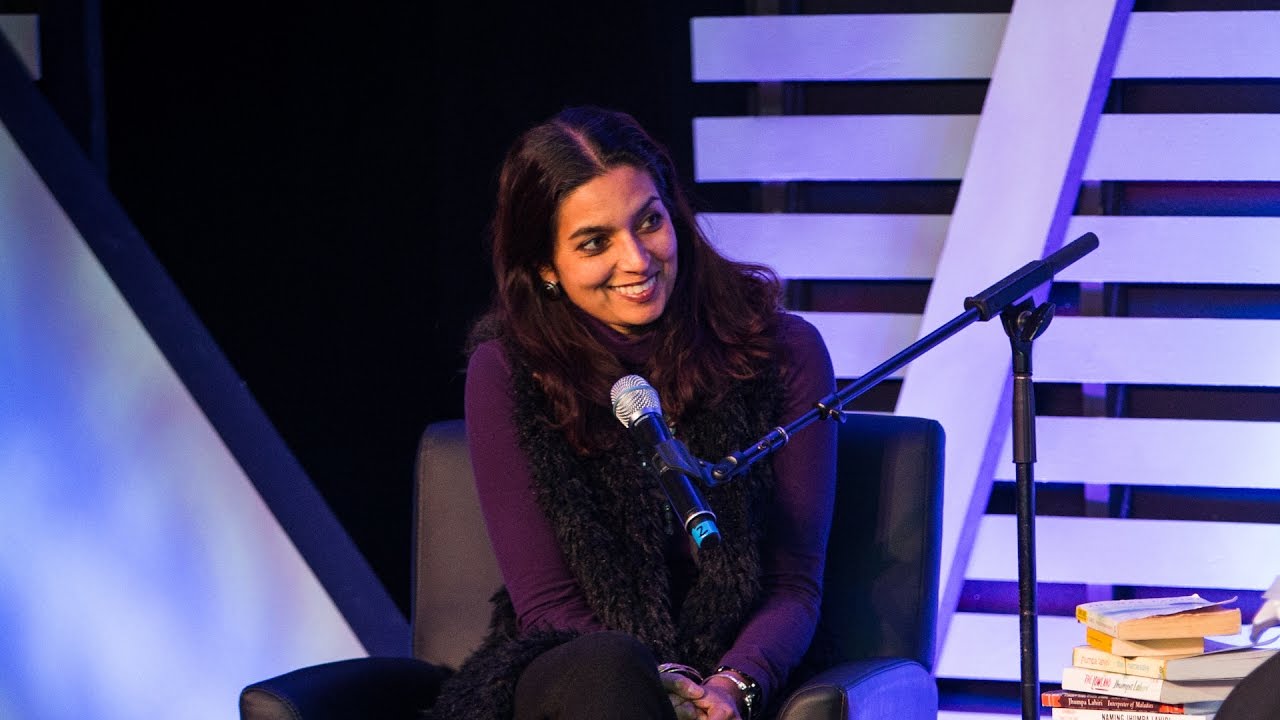
In this extensive interview, host Tyler Cowen converses with author Jhumpa Lahiri about the many layers of her personal and literary life. Lahiri reflects on her uneasy relationship with Rhode Island, the place of her childhood, and how writing the State‑by‑State essay allowed her to name it directly in her later novel The Lowland. She recounts the formative books she read as a teenager—Dostoevsky, Tolstoy, Hawthorne, The Great Gatsby, and Hardy—and explains how she reads classic works such as The Scarlet Letter and Tess of the d'Urbervilles through an immigrant lens. The discussion moves to her graduate work on Renaissance architecture, especially Palladianism, and how the language of space informed her later interest in translation. Lahiri describes translation as the most intimate form of reading, linking it to the "interpreter of maladies" motif that recurs in her fiction. She details her recent immersion in Italian literature, naming Lalla Romano, Cesare Pavese, and Agota Kristof, and shares the challenges of translating Italian works into English. The conversation then shifts to her essay The Clothing of Books, where she critiques the disconnect between a book’s cover and its interior, compares uniform cover designs across countries, and reflects on how covers shape authorial identity. Lahiri speaks passionately about Calcutta’s cultural vitality, the Bengali intellectual tradition, and Tagore’s personal significance. She comments on the ongoing mystery surrounding Elena Ferrante’s anonymity, noting differing cultural reactions in Italy versus the United States. The interview also explores the experience of writing in multiple languages, the sense of a split self, and how writing in Italian offers a fresh point of view. Lahiri observes that her recent work has grown darker, influenced by Hardy, and discusses the emotional weight of loss in her stories. She explains her writing process—relentless revision, avoidance of sentimentality, and the balance between restraint and economy. Finally, she announces upcoming projects: translating Domenico Starnone’s novel Lacci and composing short stories in Italian.
Chapters
Thank you for coming. Now, you've written a great deal about, in some ways, not having a native country, not having a language of your own that's clearly yours, or even a culture. Having read or reread all of your work and surrounding works, and if I think, you know, how do I frame you? I would say I think of you as a Rhode Islander. Because that's where you grew up. You were born in England but came here when you were 3, grew up in Rhode Island. How would you react to that?
Uncomfortably. I mean, now, with all due respect, no, I mean, it's true. It's— well, first of all, thank you all very much for coming and for your warm welcome. It is true that I lived there. Well, let's see, how long did I live there? From the age of 3 to 18.
Right.
So 15 years.
And you went to Barnard at 18, right?
I did.
Yes.
And so then I, I think I lived for as long in New York as I did in Rhode Island. But of course, one's childhood is is one's childhood and is formative, and in a way that later experiences are not. So, yes, I mean, it is a part of who I am, absolutely. But I don't feel— I mean, I've always had a very uneasy relationship with the place, and You know, you mentioned the essay in State by State, one of these books that have been kindly assembled here. It's such a lovely display, really. I'm so touched. But I was asked to write about Rhode Island in this anthology called State by State, which invited a number of authors to write about their home state or a state with that they had some sort of connection to in any case. And so I chose Rhode Island. I mean, I was asked to write about Rhode Island. I said yes, but partly it was to get over this sense of discomfort about your very opening.
Did it work?
Well, I mean, I think what was helpful about it is that it opened up the setting of the Lowland, which is set, you know, in part in Rhode Island, but it's the first of my books in which I can actually mention Rhode Island by its name. Whereas the other books, the preceding books, are set in these sort of fake Rhode Island/Massachusetts kind of, you know, this area, this terrain that it really is Rhode Island, you know, just to boil it down. But I couldn't mention it. I couldn't name it as such. And I think that's telling. It was saying something, the fact that in the earlier books I was, you know, I was writing about the ocean. I was writing about this kind of, you know, small campus, little town, and describing these settings that I knew very well, the settings I had grown up in. But I couldn't come out and say that it was Rhode Island, and I kept calling it some suburb of Boston. And, you know, so I think the writing of that piece unlocked something. And then in The Lowland, They're in Rhode Island, and I don't pretend anymore.
We'll get to your most recent work, but one of the things I like the most about everything you've done is I always get the sense you're trying to work out some problem for yourself and also for us. But I'd like to survey your whole writing life and just start with the question, when you were young, when you were, say, 15 years old, what was your favorite novel and why?
Well, I think I had started reading Russian literature around that age. I had some friends, or my family had friends with some, you know, one of the daughters, they had 3 daughters. One of them was a little bit older. She was already in college. And so when I would visit them, I would see these big volumes of Dostoevsky and Tolstoy on her desk, these Norton Critical Editions. And they were really appealing to me. And so I think I tried to kind of rise to another level of reading. And so that's my— that's probably what I was reading a lot of. I loved Hawthorne even then. So I was in 10th grade. When I was 15. I read "The Great Gatsby" that year. And then the following year, I was introduced to Hardy, who has become so important to me as well. So it was in high school that I encountered, fortunately, certain authors who have stayed with me for all of this time and who continue to inspire me.
One of the things I've liked about just comments you've dropped is the way you read, say, Scarlet Letter as actually a novel of immigrants, that maybe the characters wouldn't have behaved that way in a quote-unquote home country. Even a lot of Hardy, especially Tess, a favorite of yours, you can read as a kind of immigrant novel.
Sure.
Coming from the countryside, moving somewhere quite strange. And to use that as a lens for interpreting what otherwise might seem like strange character behaviors but reading them through you is actually very rewarding, sort of through your eyes, through your fiction. Does that make sense to you at all?
Yes. I mean, I think what I'm responding to is the sense of displacement in those authors and in almost any author. I mean, even, you know, Willa Cather, you can read this way. Homer, you can read this way. So many authors you can read this way, which is why I think some years ago I was asked this question. By the New York Times Book Review about, you know, what was my problem with immigrant literature, and I made a kind of maybe cheeky remark about how I didn't believe in it. But this is— it wasn't being cheeky, it was just being— it was just saying what I felt was true, which is that this is something I've responded to in literature from the very beginning. And if I didn't have this response to literature, then, you know, these writers wouldn't have fed and inspired me the way they did, because there would have been a quote-unquote barrier between their experiences and their times and mine. And that shouldn't be the case, right? That's not what literature does. Literature does the opposite, and it allows us to cross over those boundaries in a beautiful way, in a magical way.
Now, if I can trust the internet, you have 3 master's degrees in creative writing, comparative literature, and English. And for one of your degrees, you translated 6 Bengali short stories by Ashapurnadevi, who's a Bengali writer, maybe the most famous woman writer or even writer in Bengal for much of the 20th century. What connects you to her, and so what problem were you trying to solve by engaging in her work?
Well, I knew about her through my mother, who's a devoted a great reader of Ashapuna Devi's work and talked about her a lot. I mean, it's interesting, you know, I mean, my mother read a lot, but she didn't really read in English very much at all. I mean, but she read in Bengali. And I remember the effort of, you know, going to Calcutta, ordering the books. My mother, the list she would give my uncle who had the connections with all the booksellers on College Street in Calcutta, which is like the book kind of district, and the drama of this, you know, going and ordering all the books from the publishers and waiting and bringing them back, you know, in the brick shop, piling them, the whole thing, and then bringing them back to the United States. You know, I saw what it meant to her, you know, and I saw, I mean, as with everything, with trying to get the right ingredients, what have you, but the literature, was, you know, I could see that those books simply weren't available here, and they were in some sense, you know, her lifeline. Anyway, so she would talk about these— she would talk about the work of this particular author among others, and I was struck by the things she described, you know, a very prolific author of short stories and novels. Of some very incisive short stories about kind of domestic life and sort of classified unfairly, I think, as a writer for women, which I don't think she is at all. I think she has a much more universal power and vision. Anyway, in graduate school, I was taking this translation workshop. And so the assignment, at some point I was asked to translate something, and I thought, well, what can I do here? And, you know, I had studied Latin and ancient Greek a little bit, and I had some French, and then I had Bengali as my you know, first language. But you didn't read Bengali characters. But I couldn't read it, and I still really can't. And I couldn't write in it either, and I still really can't. And yet I worked around this obvious obstacle, and I asked my mother to read a number of these stories out loud and I taped her. And then I listened to them and, you know, kept playing them back, playing them back. And I translated in this way. And I can read enough. I mean, painful, painstakingly, slowly, but I can— I have, you know, it's not completely incomprehensible to me so that I could then also go back in addition to the tapes, the, you know, the— I could also look at the text and sort of see how things were structured, where the breaks were, etc., etc. And I even caught my mother a couple of times. She kind of skipped, you know, a paragraph here and there, and I would call her up and say, what about this part where she's describing, you know? So it was a really interesting project, and I But that's how it started.
There's something about how she sets her stories in architectural space always that reminds me of your writings. When you have a scene, you describe a home very often, or the place in advance. And that's imposing a structure on the scene. And that's in her. Do you get that from her?
Well, I think I wrote— in the commentary I wrote to the thesis, if I'm not mistaken— this was a lifetime ago. I think that was part of the lens I brought to my reading, to my critical reading of the stories, was that she was a writer very attuned to space, to physical space. And so I must have been affected by this in some sense. And then my doctoral dissertation kind of built on this in that I wrote about Jacobean English drama and where it was set, specifically often in a corrupt Italian palazzo. And so what that meant. So I think as a reader of literature, when I was a student of literature, I was very attuned to where things were set and why and what it meant, you know, to have that, you know, that literal architecture being an element of narrative.
Now we're at George Mason University, and George Mason, the man, he lived in a place called Gunston Hall, and that's one of the best-known examples of Palladian architecture in Virginia, even the whole Atlantic seaboard. So you did a PhD dissertation on Renaissance studies, and what is it about Palladianism and Palladio that drew your attention? What What's the magnet there for you?
Well, I mean, something's just, you know, now that you ask me, I'm thinking, okay, so what led me to this? One of the classes, again, that I was taking as a graduate student was a class, a seminar It was sort of a broad seminar with lots of different professors. Anyway, so there was this one professor named Roger Scruton who writes a lot about architecture.
I had a debate with him once on nature/friendship.
Yes, he's very—
I won.
Congratulations. Yeah, I mean, he's a very well-spoken man and with a broad range of interests— aesthetics, philosophy, architecture. Anyway, and he taught part of this class and talked about the language of architecture, Italian architecture in particular. And I just was really struck by the class, the idea of it, looking at space so carefully, these beautiful spaces, what they meant, the vocabulary implicit in architecture. So that was sort of step one, and then I went to Florence in this time, I went to Italy for the first time, I went to Florence with the, you know, and not only did it lead to this whole other sort of phase of my life, Italian, writing in Italian, but it was, I went with a special eye toward the architecture, looking at the places that I was seeing in slides, you know, as a grad student. In Boston and connecting to them for the first time, really experiencing them, those spaces for the first time. And then when I came, you know, then when I was reading these plays, I mean, I was always interested in where Shakespeare set his plays. I was interested in his use of Italy as a setting. And then that just sort of got me started thinking about what was the relationship of in Renaissance England, what was it all about, and what did Italy represent to England and to English artists, dramatists, and what was this choice all about? Why were they setting clearly kind of English political drama on foreign soil and what that meant.
And they're also afraid of Italy, right? It's a symbol of corruption.
It's a sort of a horror, love-horror kind of love-hate attraction attraction-repulsion, contradictory attitude, which I tried to unpack a little bit in the course of the dissertation.
So it's still working through some set of related problems in a way.
Yeah, and I think one thing that's always sort of in there is this idea of translation and bringing back and crossing over. I mean, one thing certainly that was happening in the Renaissance was that these, you know, people were literally traveling to Venice, to Florence, to Rome, and seeing this architecture, which is sort of, you know, born from that place, and then bringing those ideas back, translating the works of, you know, Vitruvius or Alberti or whomever, and then using those ideas to build, literally to build buildings in England. And then from there we have things here in the United States. So that also interested me.
To continue the whirlwind tour of your career, in preparing for this I reread Interpreter of Maladies, and this was the sense I had this time around, that one of your characters, Mr. Kapasi, who is the interpreter of maladies. So if people come to the doctor and they only speak Gujarati, he's able to translate that for the doctor and explain what the symptoms are. That in a sense, in the book, you view yourself, the author, as the interpreter of maladies. So people who are disconnected in different ways and you're the one doing the interpreting and he's at the center of the book and he's a stand-in for you. Is that just my imagination?
Probably not, but I don't think I was aware of it at the time. I mean, I think just yesterday I was talking in Princeton at a place called Dorothea's House, which is sort of dedicated to Italian American culture, so on. And we were talking about the most recent book. And talking about— at one point, I was talking about this idea of, you know, in antiquity, in Latin, the word for translator is interpreter. And I teach translation now. And, you know, I talk a lot to my students about translation being the most intimate form of reading and how there was a— there was there was the time when translating and interpreting and analyzing sort of were all one thing. And now there are translators and then there are people who look at books and analyze them and are scholars and et cetera. And it's not necessarily the same activity. And it strikes me because now many years— I mean, so I wrote Interpreter of Maladies. That was my first book. I called it that. I heard the title in this strange flash. And now, years later, years have gone by, and I'm now just setting out on a new phase of my creative life as a translator. And so I think it's all one continuum, but I just wasn't— one can't see, one can't realize these things in the moment. You have to— it's only looking back that you kind of see certain patterns.
Another thing that struck me about this book was how much it had in common with Elena Ferrante in some ways. And of course, this is at a time when you wouldn't have read her yet. But this notion of both feeling a need to set everything right for so many different people and being unable to, and that carrying a kind of sadness, and then interjected into the story always are books. So books both have this immense power, like everyone's reading them, everyone's looking to them for answers, and yet at the same time books are somehow impotent because they don't actually allow anyone to actually set everything right for parents or other sets of people. And she has a bit of that, and you have a bit of that, and of course it's completely independent, but your later fascination with her seems already to be an interpreter of maladies in some ways. Does that Make sense to you?
Well, I certainly recognize that in her work when I read her, and I wrote to her, I wrote some letters, I wrote two letters to her that were sort of public letters that I read in Rome some years ago in public, and maybe she was there or maybe she wasn't. In any case, she did write back to me. And I talked precisely about this. I talked about how she uses, how books are characters in her work. And I think her work in some sense is about reading and about language and literature and what it means on a very deep level, a very sophisticated level. I don't think my work is doing that at all, but I think about it a lot. And, you know, so I was very struck by that element of her work and, you know, this focus on characters who write, characters who become writers, you know, how— books shape and form us, and on the one hand, and how they, you know, betray us on the other hand, and can't really contain what life is. This sort of contradiction at heart.
Now, if you compare Interpreter of Maladies to your other short story collection, Unaccustomed Earth, do you think of the latter, more recent work, as being more about reconciliation and this greater all for children or families in at least some of the stories? Or do you think overall your fiction with time is moving in the direction of Hardy and becoming darker?
I think it's becoming darker, and I think that's usually the case as we get older, right? So I think that, and I I, that's my sense, and I feel that, you know, though I really try not to read a lot about what people say about my work, I also don't live in a vacuum in outer space, and so I sense, you know, reactions to certain things, right? And I think, You know, as the years have gone by and the books have evolved, the vision has become a little less forgiving, less tolerant, a little less bittersweet and more just maybe bitter. Great. You know, and that's fine. I mean, you know, I remember even with The Lowland, you know, I— and I don't think my editor would mind if I share this with you, but at one point she said, "Well, it's just really grim sometimes, you know, what goes on." And I— and we had, you know, we share a love of Hardy, and I just said, "Would you really have said that to Hardy?" And she didn't say anything else, you know.
But—
and so I published the book I wanted to publish. But a lot of people have said to me, "I just couldn't read the book, you know. It was just too heavy, too dark, too whatever, whatever." And they miss— they miss, I think, the sort of bittersweet quality of, say, a novel like The Namesake.
You bring up lowland. I'd like to ask you a few questions about Bengal. If someone's visiting India and they ask me for advice, I say you simply absolutely must go to Calcutta. If you— to the extent you feel the same way, how would you articulate why it is people ought to go visit Calcutta?
Because it's one of the most fascinating places on earth that is I mean, it's just a city that is like no other with a life, a cultural life, a history utterly its own and hard and beautiful. I mean, its beauty is not what one sort of conventional— people say, oh, well, is it a beautiful city?
Well, no.
I mean, yes, parts of it. It can be, yes, of course, but not in that conventional sense. And it's challenging on a whole host of levels. And I, of course, I don't know it as a tourist, right? Because my family's from there and I've never known it in any other way other than when I was very young where my grandparents lived and then my aunts and uncles, my cousins and so forth. So I have my own relationship to it. But, you know, it's like not knowing New York City in the American context. I mean, it's just its own thing, and it's so strong in its flavor and its power and its energy. So, you know, it has to be reckoned with, you know, I think.
And if I think of Indian economists, the two of the best known would be Amartya Sen and Abhijit Banerjee, and they're both Bengali, of course. Why does it seem that so much of the Indian intelligentsia comes from Calcutta or Bengal? What is it in the water, so to speak?
I don't know. I mean, I just— I know that there— I mean, I hate to make these kind of sweeping, generalized comments. I don't believe in them. But, you know, it's a city that believes in its poets, that is a— believes in its politics, believes in its— believes in humanity in some sense. And life is so extreme there in so many ways. People are put to the test, and you see life being put to the test constantly around you, and there's nothing you can really accept easily or take for granted about yourself or about the universe if you've been there. I mean, it's a jolt to your consciousness, but a fundamental one, an essential one, to shake us out of this whatever takes over if you protect yourself.
Now, if I were to take a superficial reading of Indian history, Earlier, Calcutta is the central capital for the British Empire in India, and you could argue that as the British left India since World War II, Calcutta has become significantly less central in some ways. Delhi and Mumbai seem to become more important. A, do you think that's true? And B, if it is true, do you think that actually in part accounts for why Calcutta has stayed so interesting, that loss of centrality or existing on the margins, you even have a nice Italian word for this.
Well, I think it's retained a certain character that the other big cities, you know, have a more kind of Western overlay at this point, you know. I mean, Calcutta is not far behind and it's changed radically from, you know, the city I knew when I was a young girl. And now I think with, you know, developments, globalization, what have you, you know, you have lots of development and all the 5-star hotels you could ever want and all the companies and banks and things and fancy roads and, you know, all of that stuff that back in the '70s, you know, Calcutta didn't have those things. And then the airport was, you know, distinctly not glamorous and any— all of these things, you know. So you felt, you know, okay, this is a different kind of experience, not designed for the tourist, not designed for the important person, you know, shall we say. But— and so now— so that has already changed and that distance is smaller, significantly smaller. But in some sense, you know, yes, I think it still retains its own particular flavor and energy because of this, maybe.
And how emotionally tied do you feel to the earlier history? So in 1905, Curzon partitions what is now West Bengal, Bengal, from what is now Bangladesh. And you can easily imagine some alternate history where that hadn't happened, and the way the national borders would have been divvied up would be quite different from what we see. Is that just abstract history to you, the way, you know, I might read about the English Renaissance, or is that something that has emotional oomph in your mind, in your heart, and you feel somehow torn as a Bengali that you've been separated from other Bengalis in some way? Or is it just not part of your connection to West Bengal?
Well, um, I mean, it's interesting. My relationship with Indian history is kind of in these two, two categories. In some sense, I mean, in some sense, you know, I didn't study any of it because I was raised here, right? And so India just wasn't on any map anywhere ever. And so there was that, you know, there was a sort of formal separation as a child growing up in this country when I was growing up. On the other hand, you know, I come from my family and I, because we would go back to Calcutta quite often and because my family and their friends, you know, talked a lot about their country, their city, history, events. So I was always aware at the same time of these incredibly traumatic events in Indian history and the partition. Most of all, what that meant particularly for my my father's family, the neighborhood that my father grew up in, which I describe in the lowland a little bit. I, you know, I was— I asked my parents when I was a young girl, you know, we— one of the stories in Interpreter of Maladies called "When Mr. Pirzada Comes to Dine" comes from a kind of vague memory of a man from Bangladesh, a scholar, who was living in Rhode Island in the 1970s during that civil war, and my curiosity about who he was and why he was there, and stories my parents told me. And then as I grew older, as I became more of a conscious, you know, person, teenager, wondering about things, I was going back to India, you know, I was slowly starting to fill in sort of pieces like, okay, so this is what happened and it happened this, it happened at this time and then this and this is what, you know, this meant this wave of people came and all of these people, you know, lived this thing. But on top of that, there's the residue, there's the emotional residue of what it's meant for certain people, either in my family or people that my family knows who remain deeply scarred by those events, and not only deeply scarred, but actively hostile, resentful toward, you know, for the case of my family, toward East Bengal and Muslims, for example. And so this was something that I, you know, I took in. And I still take in. And that uneasy relationship between Hindus and Muslims in Bengali culture, right, is still very alive today. And, you know, my daughter, her name is Nur, which is a Persian name. But, you know, there were people in my family who commented on that choice of name, thinking, well, you know, what does she think she's doing?
Because it's Persian.
Because it's associated with Muslims and et cetera, et cetera, and this kind of hatred, intolerance, prejudice, you know, that is what I'm saying is it's still, it's something that's still very much in my family's kitchen, in their dinner table. I mean, my parents are not like that at all, right? And they taught me to have, you know, to be free of these kinds of attitudes. But, you know, perhaps that's easier for me to say because I didn't experience the trauma of losing my family, losing their ancestral property, for example, you know, which some of their friends experienced. And therefore, even now in 2016, they're still saying, oh, but this horrible thing happened and we're still upset about it.
So what's your literary or maybe even also emotional relationship with the works of Tagore? So he's a towering giant in Bengali intellectual history. In your stories, every now and then someone's reading his poems. There's a lot of themes from him that are in your work, like home in the world, this odd mix of tensions between the cosmopolitan and the particular. He was even interested in book design. He was a kind of polymath. He studied many things, worked in different forms. Is that just parallel or an influence or—
Well, I mean, I think if you're Bengali, You just— he's like a member of your family in some sense. You know, I mean, he's a god. He's, you know, this pantheon-like place, right? He's not a god, he's a person. But, you know, for people— I mean, my parents, again, they aren't religious people, so they didn't give us a religious education, but they— they certainly taught us to respect the great minds and the great visionaries. And so Tagore is one of those, right? And the fact that he happens to be Bengali and won the Nobel Prize, well, you know, details. But, you know, I mean, my grandfather was a painter, my uncle was a painter. I grew up with portraits of Tagore all over our house. I have a portrait of him in my house painted by watercolor by my uncle. I have a beautiful photograph my mother dug up recently of— so my grandfather's brother was a press photographer, and he took the last— he took a picture of Tagore and his— at his last public, you know, the last time he spoke in public. And so I have this photograph that's just next to me when I'm writing. So I feel this kind of, you know, this constant presence, shall we say. Again, my limitation in not really being a fluent reader of Bengali is, you know, it is— it creates a situation. Does. I mean, I've read him mostly in translation. I've read fiction. I've read poetry. I grew up hearing all of the songs like 24 hours a day in my house. So, you know, but I don't— I'm not aware of any kind of conscious influence, if that's what you're asking. But again, what's conscious? What's unconscious?
Now, let's move to maybe what's my favorite book of yours. In other words, which I take to be your memoir of learning to engage with both reading Italian, dealing with Italian culture, and most of all, writing in Italian, a remarkably brave thing to do, and it comes off extremely well. I'm just gonna toss out the names of a few Italian writers, the lesser-known ones, and if you have a connection to them, tell us why you think they're interesting or how they've shaped you in some way. Feel free to pass on anyone, of course. Lalla Romano.
Okay. Well, I had never heard of her until I was living in Rome and I just was reading the paper one day and read an article about her. And it was interesting. I took a note. I took note of it. I took note of the name and I went to the bookshop And I said, I'd like to read this author. And they said, oh yeah, she's sort of hard to find, you know, kind of not that well distributed. Anyway, so I ordered some books and in fact, what I did, because it was so hard to find the books, I went through the person who wrote— this is Italy, right? Everybody knows everybody. So the person who wrote the article, I knew. So I said, you know, how do I get these books? And he said, well, what you need to do is you need to write to her husband who has all the books. You know, he has like a warehouse in his— in their house. I said, okay. So I wrote the husband. And so there was some back and forth and then he sent me a packet of books from Milano, from Milan, and they never made it to Rome. You know, happens.
They're still on a train somewhere. Yes.
So I waited, I waited for these books and they weren't coming. And then I said, listen, these books, I know you kindly sent them, but— and then one thing led to another and I was— I found myself in Milan, and again, I kind of reignited this interest, and he said, "Well, why don't you come over?" And then I went to her house, and I saw her house where she used to live, and we had a very interesting conversation. I saw her desk, I saw her things, I saw her paintings, and he gave me all of her books, like, you know, like a cart full of her books, and that was really exciting. But no, so I— and anyway, so I started reading her with great interest. She's an incredibly sort of modernist writer in some sense. Her language is incredible. Essential in its quality. She wrote an extraordinarily powerful book that I, you know, if there's, you know, life is long enough and there's time, I would like to translate called "Nei mari estremi." And it's a sort of two-part memoir of her, of losing her husband. And, you know, there's so many books now about grief and the loss of a loved one and what that means. But this was something that was written a long time ago before all these books became kind of part of our culture. So that's an amazing book of hers. She wrote a lot of interesting, very interesting novels.
She wrote about homecomings to places that don't exist anymore.
She did. And then one of the things that that also really struck me was at the end of her life, she was almost blind, and still the drive to write was so intense and constant. And so her husband, her second husband, you know, the one who survives her, was explaining that when she was in the final phase of her life and could barely see, You know, she had these enormous pieces of paper, basically, and would just sort of write a couple of words, a sentence or two a day, like this, and these very kind of— the words were just burning with life and with her need to express herself in spite of the disability. And these writings were collected in— in a book called The Last Diary, which I read. And there's one of her— they're almost like little fragments, epigrams, some of these little entries. And one of them says, in Italian, it says, "La mia cecità è un punto di vista," which means, "My blindness is a point of view." And I was really— I really marveled at that because I felt like it kind of explained, at least to me, the purpose of writing in Italian. Because of course she wasn't totally blind, she was partially blind. And I'm not totally blind in Italian either, but I feel kind of partially blind. Now, I don't want to compare myself to her because she had actually a physical, you know, issue with her eyesight, and she didn't choose that for herself, and she suffered for it, whereas my project is something that comes from me, and it's voluntary, but it is this kind of voluntary blindness, right?
But it's richer for you to read in Italian, and maybe even sometimes to write in Italian now, because the partial blindness gives you a new lens on all these problems you've been trying to come to terms with.
Well, it makes you look harder.
Yeah.
Right.
Another writer, Cesare Pavese.
Well, Pavese is huge. You know, he translated Moby Dick. And we were in Sicily a couple of years ago, and we were sailing around the Aeolian Islands, and we had this long conversation one day with our skipper. About how, according to him, Pavese's translation of Moby Dick surpasses the work of Melville.
And does it?
Well, I actually haven't read it yet. I would like to. I keep meaning to pick it up when I'm over there. But he was a colossal writer from Turin, that great literary city. Where you have Primo Levi, Natalia Ginzburg, Einaudi, the publishing house, you know, all concentrated in this part of Italy in the north over toward France. And Pavese wrote very much in the autobiographical vein and did things that, You know, again, I think now it's, "Oh, it's fashionable when the writer becomes a character," and, "Oh, we all write about ourselves," and there's a lot of memoir and things. But these are things that he was doing, you know, in— after World War II. You know, he had a tragic life. He suffered deeply. He committed suicide. He left behind an incredible sort of writer's notebook. The Man Who Fell in Love, that is an extraordinarily powerful work, you know, very, very dark, very, very true. And wrote lots of short stories as well as, you know, a series of kind of slim novels. And he worked really hard as a translator, not only his own translations, of many American authors, had a very rich relationship with the English language, but also sort of oversaw a lot of translation projects.
He writes like an American writer in some ways.
Well, he was influenced. I mean, this is what's interesting. He was influenced by reading and translating Melville, among others. And his Italian has a different energy as a result of that translation. And I think those translations and his relationship with English, and I think this is what's kind of missing in American literature right now in some sense. I mean, I feel like with the exception of poets, American poets who have devoted time and energy to other literatures, to translation, whether it's— Ezra Pound or other poets, W.S. Mermin, Mark Strand. I mean, you have examples of people who, who translate and make that part of their creative work, but relatively very few fiction writers stop to think about it or, or, or engage with it, you know. And so, but, but I think my, you know, knowledge now of Italian writers has opened up something because I think, you know, for me, I mean, I just finished translating my first novel from Italian and it has been such a formative experience for me and powerful and just deepened my awareness of what words are and literature and language and all of that. It's just been— I kind of can't believe it's taken me this long, you know, but I'm excited. And— but I think someone like Pavese was like, you know, blazed the way in some sense.
One of my wishes is that you someday give us a book on Italian fiction. Now, here's a writer, not Italian, but writing in another language, not the mother tongue, Agota Kristof.
Yes, amazing.
What's important?
You have her book there.
Yes.
Well, she is—
And that's a trilogy, right?
Yeah. She wrote this trilogy, and she wrote some other books too. So she was Hungarian and left during the invasion to— fled to Switzerland with her small kids, her husband, and her dictionaries, and writes about this in an amazing— little book called The Illiterate, Analfabeta. I read it in Italian. It must be called something else in French, Analfabète. But she taught herself how to write in French, and all of her literary work is in French. And I read her— I came to her in Italian, so I came to her in translation, but not in an English translation, an Italian translation. And my life was never the same after reading her. I mean, she's just one of those readers you just, you remain forever altered. Extraordinarily powerful, deep, profound, profound writer, dark and but very human, and just the kind of stuff that you don't, you know, find very easily. Anyway, but she is, you know, inspiring to me deeply because of her, because of this incredible effort she made her whole life to try to express herself in a learned language. Now, of course, the difference between her and myself is is that she— I think she always had a sort of antagonistic relationship with French, even though she went out of her way to learn it and to express herself in it because she was living in Switzerland and she felt that she couldn't really function as a writer without expressing herself in French. Whereas I've sort of gone out of my way to do this crazy thing that everyone discouraging— discourages me from doing, which is writing in Italian.
And you were fascinated with Italy way back when, right? For a long time.
Yeah, I mean, in a growing way. Yeah, yeah.
Now, your most recent book, The Clothing of Books, it's about book covers. So I once had a hypothesis about book covers, and I thought I would go to Borders Bookstore when it still existed and look at everything on the front table and try to ignore all other information I had about the book and simply buy the one whose cover appealed to me the most. And I wanted to see whether the publishing trade actually would do a good job of designing a cover so that it would match what I was looking for in a book. And I ended up buying Kate Christensen's The Great Man, which I thought was quite a good novel.
Okay.
And I only did that once, but I considered the experiment to be a success. So do you think, based on your study of book covers, Your own books aside, but are book covers assigned to books efficiently or is there something in the process that's gone wrong?
Well, I mean, I've never tried this experiment. I will, maybe.
It's hard to block out all the other information because you recognize names.
Sure.
Publishing houses, where they put it on the table.
Yeah.
But still, you can approximate it.
Yeah, I mean, I talk a little bit in this little essay about being drawn to certain books just because there's some allure, appeal, something I'm projecting, something the book is projecting, something I'm projecting onto the book, some relationship I want to have with the book because it's, I don't know, some landscape I want to find myself in someday, or I don't know, you know, I mean, if you think of a book as a mirror, right? And if you just sort of think, well, that's how I would like to look if I were a tree or if I were a whatever, you know, some image. But I, you know, no, the essay is really about the disconnect between what's on the outside and what's on the inside. Often and what that feels like from a writer's point of view, because it's both a disconnect and a source of— can be, at least for me, a source of real anguish because you can't really disconnect yourself from what you look like.
You know, you can try, but you can't really, you know, like when I read Accustomed Earth and if I try to think of it as a kind of song cycle, I try to put the COVID out of my mind because I know how the covers are done and assigned. And I figure, well, the COVID will mislead me because you didn't do it. But I find I can't put it out of my mind, even being aware of the entire process. And there's something about, you know, the floating tiara or crown or whatever it is. It leaves an imprint on my impression of the book, even though I know it's not by you.
It's this.
It's that. Oh, you have it on.
Yeah.
Yeah.
That's— I think that's what they they literally designed it after that.
Yeah. So it's a very pretty cover, but maybe it's too pretty?
I think. I'm not going to get in any trouble, any more trouble than I'm already in.
How do you feel about blurbs?
Well, I mean, I say what I feel about blurbs in the essay. You know, some of my publishers have been a little uncomfortable about publishing that sentence in my book, actually. Because I just say what I feel, and I think this is what one of the things about writing in Italian that people aren't prepared for is that I actually don't pretend anymore, and I try not to, you know, I'm not concerned about making everybody happy. But no, I mean, one of the things I say in the book, in this essay, is that I actually can't these books don't even— I mean, as much as I appreciate truly this lovely display that you made, but this isn't my book anymore. You know, this— once the COVID is on it, it's not my book. And again, I mean, having lived in Italy and having Italian writer friends, so many examples of novels there have covers chosen by the author. Imagine that. But, you know, but suddenly you have a whole, you know, you have the inside, you have the words, you have the pages that the author created, and you actually, you have an image that the author felt that they wanted, he or she wanted to represent visually what the book is saying. I mean, if I had that freedom, if I had that ability, I would be such a happy, you know, it would make making to going to museums even more exciting because I would always be thinking, oh, maybe, you know, maybe this, maybe that. You know, who knows, maybe an image could even inspire a book in that sense. If one had that ability to say, oh, you know what, I went to this show, this gallery the other day, and I saw this image and it was so beautiful. And I was thinking about it and this whole novel grew out of it or this whole collection of stories or whatever. These things can happen. They just don't happen here as much as I wish they did.
I brought a copy of a German book. It's by Rilke. The publisher is Reclam. The COVID is plain. It's just a color. And if you go to German bookstores, at least parts of them, they're actually organized by publishers. You probably know other countries in Europe sometimes.
Like in Italy too, in France.
And the books more or less all look the same. How do you feel about this system?
I love them.
So you would opt into this system?
Yeah. Well, I mean, I talk about that in the book. I mean, I talk the whole piece is a kind of meditation on the idea of wearing a uniform and dressing yourself and how these contradictory approaches to presenting oneself, what they mean.
It's like you have to make a statement about where you've decided to rest. On the identity question, and a cover forces your hand in a way you'd rather be hovering in this ambiguity.
Yeah, I mean, I prefer this kind of COVID because to me there's a protective quality to the lack of specificity and the belonging to the series, which is what Europe— I mean, in the US you have certain series as well. And in fact, I was thinking, I mean, I wrote the essay when I was in Rome and I was far away from my American library and my books and things. But now that I'm back here and I unpacked a lot of my books, I mean, there are certain presses here that have that aesthetic philosophy. You know, City Lights Books makes those beautiful little books of like my copy of Allen Ginsberg's Howl and et cetera. I mean, these are beautiful books. American books that all kind of looked the same, similar dimensions, have a kind of sober quality, a lot of emphasis on type. So I won't say that it doesn't happen here, but I think for like the average writer and the average publisher, it's a very different dialogue that's happening when it comes to putting a book— putting a cover onto a book. And, um, And so I think if I had to choose, I would choose the safety of the uniform because of course, I mean, the whole piece, the whole little essay, whatever, begins with the memory of being a child and being traumatized by having to dress myself because it just churned up so many problems and was a source of true anguish for me as a child to have to put on my to choose clothes and put them on. And this has economic ramifications, this has cultural ramifications, this has all sorts of ramifications because clothes are, you know, things we buy in stores and et cetera, et cetera. And so I had this sort of crazy, you know, envy, admiration, envy, obsession with my cousin's school uniforms in Calcutta because they were all the same, and they just put on what they had to wear to school every day, and it was the same thing. And I dreamed about that. I dreamed of being able to wake up in the United States and just putting on my blue skirt and my white shirt and my black shoes and going to school and nobody commenting on what I was wearing, because I was always so terrified because people were always commenting on what I was wearing. Either teasing me or whatever. And so in that sense, I think there's this kind of, where do you stand between wanting to express yourself and be free, and being afraid of that freedom, and being actually vulnerable to that freedom. I mean, I think America represents freedom with a big capital F, and it always has, and we hope it always will for the good. But there's also the danger of that in that, you know, I mean, even as a young girl in the '70s, as a kid, immigrant, you know, child of immigrants, I knew what it meant to shop in one store versus another store. I saw what the girls in my class were wearing, the kinds of shoes, the kinds of purses. I knew that my parents weren't taking me to those stores, that they thought that was a waste of money, and that we're not going to pay all of this $40 for Nike sneakers or whatever it is because it's a waste and you're going to grow out of them in 6 months, you know, whereas my other schoolmates had these things. And suddenly there was the gap between me and them reinforced by these things. And I think for a child, at least for me, these things were traumatizing, um, and I imagine for others as well.
Two last questions before we get to Q&A. I'll give them both to you together. First, what do you love most in Indian classical music? And second, what are you working on next?
Well, again, from my mother, I inherited, received, learned to appreciate Indian classical music, most of all sitar music, which she's always been passionate about in my family. My, all my uncles, my great uncles, my cousins. I mean, I come from a broad extended family, passionate enthusiasts of the sarod, mostly the instrument of Ali Akbar Khan and Amjad Ali Khan. And so I grew up my whole life listening to this very complex, beautiful music that is, you know, really has spoken to me. And just the other day I was in the Princeton Art Museum. There's a beautiful exhibit there right now, which it's not that far. I really do recommend a big collection of miniatures, two big rooms of extraordinary works, and one of the one of the whole chambers of this exhibit is dedicated to miniatures basically inspired by the raga cycles. And there was like some, there were headphones and I put them on and I was listening to one of them. And it's just a part of, that music is a part of me. And I really am very, it's sort of part of my formation. I think it's extraordinary.
And your next work?
Well, my next work. So I have two kind of things that are happening. One is, so I just translated this novel called Ties in English. It's Lacci is the Italian title by Domenico Starnone, who is my friend and whom I consider the finest Italian living author. And I just translated this novel. I'm just at the final stages and it will be out in March. I think it's an amazing novel. I read it 2 years ago when it was first published. I'm so grateful for the opportunity to have brought it into English. I'm really excited about it. And then, And on the other side, I am slowly, quietly writing some short, very short stories in Italian.
Jhumpa Lahiri, thank you very much. For questions, queue at the two mics. Please keep in mind these are questions, not statements. If you go on and on, I will cut you off and we will alternate mics.
Natasha. I was hoping you would ask about it, but— and I think everybody asks about it, and maybe it's not such an interesting question anymore, but it's interesting to me and I'm hoping you would answer. You mentioned that you really like Yelena Ferrante, and we all do too, at least most of us. And I wanted to hear your take on all this anonymity situation and whether you think right now, is it considered in Italy that everybody really knows who she is after all these articles which came out, or is it still a mystery? And just what's your take on the whole situation? Well, I think the whole situation is, you know, completely blown out of proportion and ridiculous. I know personally the person who has been accused of being Elena Ferrante, or she's actually the wife of Domenico Starnone. Who has also been, you know, accused, whatever the word is. I mean, it is like a trial though. I mean, and this is the absurd thing because whoever wrote those books did nothing wrong, and it's been treated almost as if it were a crime. And the nature of the article, the very violent article, inappropriate article that was published a couple of months ago, The language of that was very disturbing and offensive to me. Whoever wrote those books, the world is no better off knowing who the actual person is. And I think, you know, we've all completely lost perspective in that, you know, so many beautiful things have been created by mankind that we still go to look at and marvel at or read or whatever the case may be, and nobody's hung up on who exactly the person was and what their name was and when their— what their birthday is, or, you know, this whole cult of the individual and the individual's hand and signature behind what's being done. These are kind of recent concepts if you think about them. So, I mean, and again, people in Italy just, they don't care about this, you know. I mean, they have their own things, they have other things to think about and worry about at this point. So this whole Ferrante thing, you know, I mean, the article came out, you know, I exchanged some messages with my friends saying, you know, this is just disgusting and why and so unnecessary. And then everybody moved on, whereas I think here in America it's become— it's just going— it's just ongoing, and it never— it's just not dying. It's not— people aren't moving on and saying, you know, let's just either read the books or not read the books. But, you know, if someone goes out of their way to say, you know, I would like to write with anonymity, why that can't be respected in our culture is really a kind of, you know, mystifying interesting to me and also distressing in terms of what that means and the projection people have onto the idea of who the writer might be and the reasons and all of this speculation, which it could be a very simple, simple thing. You know, but it's become kind of contorted, I feel like, at least in the United States, maybe in England, I don't know. But it's not the same in Italy. People aren't really talking about it in the same way.
Next question.
Hello, Miss Lahiri. I admire your writing. I will start with this. So thank you for all your books. Thank you. I grew up in Poland, actually, and my first My first degree is from Gdańsk University. I'm bilingual, but I teach English here and I write in English. I'm a fiction writer. When I think about being bilingual, I feel like I'm inhabited— inhabiting two different types of personality. When I am in Polish, I'm a different person than when I'm in English. And I was wondering if you could talk a little bit about being bilingual and writing in Italian now. Do you feel like you are one person who inhabits sort of to different worlds, or you feel yourself splitting apart and sort of feeling that you are, depending on the language, a totally different sort of person? Well, I think anybody who is fortunate enough to have more than one language recognizes that, you know, I mean, some people go so far as to say if you know more than one language, you have more than one soul. And that's a very thoughtful way of thinking about it. But I think, you know, language represents, you know, kind of a very specific but vast universe, and each language represents that. And I think, you know, even before I learned Italian, I always grew up with two languages side by side, and maybe I didn't know them in exactly the right kind of the same level of proficiency. But, but they were both incredibly strong influences on who I was. So, you know, I always was, was, you know, divided in that sense. So I think that's true. And I can say For the Italian project, as I was saying, this idea of a new point of view that comes from a new language, and in addition, the sense of freedom that a learned language might provide you to just kind of set to the side a certain baggage that the long distance you traverse in another language might be in some sense holding you back from saying what you really need to say. So for example, I would never have written Another Words in English. I would never have written the Clothing of Books essay in English. So this is why the Italian is valuable to me. It's interesting.
Next question.
Hi, Jhumpa. So one thing I found really interesting about The Namesake was how you describe Gogol as kind of olive-toned and sort of being able to pass as Mediterranean sometimes. And I think that's really interesting, especially given the obvious tension between his kind of Indian identity and assimilating into American culture. And so was this a conscious decision to make him able to sort of pass as white? And if so, Can you speak to how this relates to your own experiences of colorism and passing? Well, I wasn't really thinking about those things. I think I'm now recalling maybe there's a moment in the book where someone says to him, oh, you could be Spanish or something. But I think that's more about projecting, not about who he is, but maybe how we project, what we, how we like to project kind of sameness onto other people, right? To make them more comfortable to us and to dilute the sense of difference. Maybe that's what it's really about, you know, just to go back to this book covers piece, there's a certain part of the essay in which I talk about the intolerance of foreign— my foreign publishers for the various book covers. So, you know, I mean, I remember showing my— one of my publishers, I'm not going to make specify anybody here, But I remember, I'll just say this, I was in Rome and the Italian cover of In Other Words, In Altre Parole, it had come out and one of my other publishers was visiting and I showed it to this person and I just remember the expression on, I mean, I was like, interesting, you know? And I think that is really what, is that the heart of the matter. It's just that refusal to recognize ourselves in the other, right? So if you have someone who has a kind of, you know, features that can, can be perceived as this or be perceived as that, I mean, you know, I mean, depending on where I go in the world, I'm mistaken for lots of things. You know, if I'm in Latin America, if I'm in India, if I'm in, you know, maybe some other places, and sometimes not. And sometimes I'm immediately identified as the other. But I think it's sort of more based on the context and not on the person. But I wasn't really thinking very deeply about it, to be honest with you. I think it was just one of those small details about other people's desire to render the same people who are who are actually different.
Next question. Excuse me.
One thing that I find so powerful about your work is that you not only understand the viewpoint of being a child of immigrants, but also your parents' viewpoint as well. And if you feel comfortable sharing, I'm wondering, to what extent have you spoken to your parents about the joys and challenges of the immigrant? Experience, or was that something that you more so inferred from your own observations? So you're asking if I asked my parents what it was like to be an immigrant? Mm-hmm. Did you ever have those, like, deep meaningful conversations about that experience, or did you feel like it was more so something that you observed? I was living that experience. That was my whole experience. That was my whole life. I mean, there was no moment where I wasn't aware that my parents came from a place that was very far away, where people spoke a different language and ate different food and wore different clothes and thought about the world in different ways, and that they were not there. You know, and that's my life. That's my whole life., and there's no part of my life that was any— anything else, you know. I mean, I— in every, every relationship I had, uh, that I made, that I created, that I forged outside of, you know, my, my family kind of base, was, was informed by that, that awareness, you know, that this is— these were the parents that had brought me into the world, and this is what their experience was. So no, I never sat, ever sat down and asked them what it was like because I was living it every single day and I saw the effects of what it means to live your life away from your point of reference, right? So, and this just goes so deep and so vast and so specific and so minute by minute, and that constant back and forth, you know, in one's being to kind of make sense and to be— I mean, it's like, again, the interpreter, you know, it's like being a simultaneous interpreter all the time. And I think that, of course, it's not ironic that my book is called The Interpreter of Maladies and involves this character who is literally interpreting simultaneous obviously for people because I feel like that's what— but that's not what I was necessarily doing for my parents. It was what I was doing for myself, you know.
Next question. Thank you.
Firstly, my compliments to both of you for such wonderful conversation. My question is more related to the journey of an author. Do you think compared to when you began writing, do you feel more inhibited or uninhibited as an author now? And what brings that about? Well, writing always scares me and intimidates me, and I've always felt that. And I think if I ever stopped feeling that, I probably shouldn't write anymore. I think now there's a kind of formal challenge of writing in a language that I don't have full control of. So that's intimidating and, you know, just very daunting. But I was talking to a group of students before this larger conversation about how even in English, I started out with that same trepidation. And in some sense, I don't want to lose touch with that, you know, that unease, because I think that's important. It's important to approach in that way, at least for me, you know, not to not feel totally comfortable and certainly not to feel confident because It's really more about an investigation, an experiment, a challenge, you know. And so these things cannot be undertaken in the spirit of, "Sure, I can do that," you know. You have to question it at every step, and you have to question what you're doing and how you're doing it and why you're doing it. So I believe that that's very important.
Next question.
Hi, I just want to start off by thanking you for Gogol's character, because there are very few authors that truly understand the Indian American immigrant narrative as well as you do. And my question is, of all the characters you've penned, which one do you see yourself most in, or is there one, and why? Thank you. Well, you know, I mean, there are pieces of me in some of various things I've written, aspects kind of concealed or jumbled together, rearranged, you know, so various characters, you know, So if I had to say, you know, they're shadings that I feel close to literally. But I think, as I say in the afterword to In Other Words, the most kind of explicitly autobiographical story I've ever written is the first story I wrote in Italian, which is called The Exchange, which is a very weird abstract story, but that came literally from an experience I had. And I wrote the story very quickly afterward based on that experience. And it was just sort of lifted from something that had happened to me. So in that sense, I feel very close to that character, needless to say, because I— I shared what happened, though there are certain invented details in that story as well. And I'm not— because it's fiction, it's not the truth. But Agota Kristof, if you really want to talk about this stuff and think about it, read Agota Kristof because she's just— she's a genius. She's like the oracle of all of this stuff. She really knows what it means to— to create out of life and that incredibly fluid, mysterious boundary between real life and art. Her work investigates it just head-on in a way that's, um, unforgettably powerful.
Last question. We have 3 minutes total. Yes.
Um, I have a couple of quick nuts and bolts questions about writing. And your process. Your prose is very much characterized by restraint and economy, and I'm curious what kind of writer you are. Are you a linear writer who gets it, you know, each sentence right before you move on to the next, or are you— do you overwrite and cut back mercilessly? And my other question is, you write often of nostalgia and longing, and I'm curious how you avoid sentimentality. Well, that's nice to hear. I'm glad that that's the case in your opinion. You know, I think I write about loss. I write less about nostalgia, I think. I mean, it's connected, of course. But that's really what the writing, you know, everything I've written has that at its core, the idea of loss. And as for how I write, I just, I mean, I don't know how I write, but I certainly am not, you know, I mean, I go through, you know, a million drafts and I'm constantly reworking everything. You know, the idea of writing a sentence that's, you know, that's all set to go and then moving on to the next one is— it's the opposite. Whatever the opposite of that is, that's how I work.
Jhumpa, thank you very much. Let's have a big round of applause.
More from Tyler


#413: Tyler Cowen on Rationality, COVID-19, Talismans, and Life on the Margins





Tyler Cowen on Never Crying at Art, Why Rap is Dead, and Quitting Writing Books (w/ Nabeel Qureshi)


AI, Job Loss, Fertility Crisis and the Death of Careerism | ft. Tyler Cowen | PGX Ideas #4
