Luigi Zingales on Italy, Google and Conglomeration, and Donald Trump | Conversations with Tyler
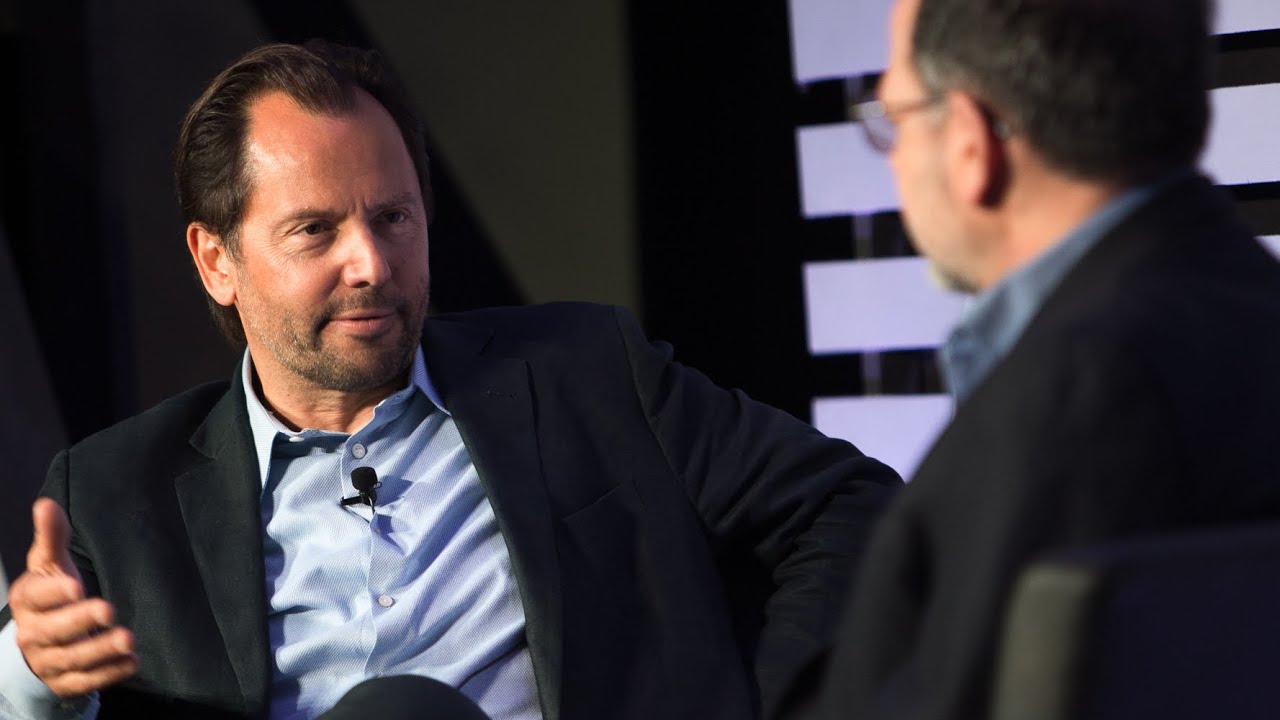
In this episode of Conversations with Tyler, host Tyler Cowen interviews economist Luigi Zingales, director of the Stigler Center at the University of Chicago. Zingales explains why Italy has experienced two decades of zero productivity growth, pointing to weak, corrupt institutions, high tax evasion, and a tax system that discourages scaling. He argues that historic cultural legacies (city‑state independence, medieval bishops) are long‑lasting, yet recent dynamics have erased the traditional north‑south divide, making the whole country resemble the historically poorer South. The discussion moves to the consequences of Italy’s reliance on small family firms, the difficulty of creating large, scalable enterprises, and the micro‑level example of Italian cafés that achieve high labor productivity through tight owner monitoring. Zingales links Italy’s demographic decline and low fertility to a shrinking pool of entrepreneurial successors, noting the rise of immigrant‑run businesses as a symptom of this gap. The conversation then turns to Italy’s public debt, arguing that the country will likely never fully repay it and that wealth‑to‑income ratios, not debt‑to‑income, better explain the fiscal picture. Zingales draws parallels between Italian crony capitalism and the United States, comparing Berlusconi to Donald Trump as media‑savvy, wealth‑based politicians who blur the line between private business and public office. He discusses Gordon Tullock’s “paradox” of low lobbying spend despite high stakes, offering a “Gordon‑Tyler paradox” explanation based on coordination problems among interest groups. Zingales offers assessments of various public figures (Angela Merkel, Pope Francis, etc.) and institutions (EU, Greek bailout), expressing cautious optimism about democratic deepening in Europe but warning of a possible north‑south split. He comments on the restructuring of Google into Alphabet, the role of financial markets in fostering entrepreneurship, and the limits of regulation driven by special interests. Behavioral‑economics experiments on impatience and procrastination are described, illustrating how salience drives people to demand immediate cash yet later neglect to cash it. Finally, he reflects on his future at the Stigler Center, emphasizing the importance of hiring the right people, and shares cultural observations about Italy’s secretaries versus managers. Overall, Zingales blends historical analysis, institutional economics, and cultural insight to diagnose Italy’s malaise, critique crony capitalism, and propose pathways for both Italy and broader Western economies.
Chapters
Luigi Zingales, my conversant, is one of the best and best-known economists both in the United States and in Europe. He's written 3 best-selling books, the most recent of which just came out in Italian. It's called "Europa o no? A Capitalism for the People," from 3 years ago, is in my view perhaps the best book on the current American economy and what's wrong with it and what should be done. And with Raghu Rajan, he has an earlier book, Saving Capitalism from the Capitalists. Luigi's contributions are far-ranging. He's been at the Graduate School of Business of University of Chicago for now, I think, 27 years. He is a major contributor to theory of the firm, politics, culture, governance. This is just a small sliver of the papers he has written in addition to the 3 books. He is now the director of the Stigler Center at the University of Chicago. Most of all in recent times, Luigi has been known for his biting critique of what we all sometimes call crony capitalism. There's more I could say, but let's get to the dialogue. Now I think of a lot of your work as bringing the ideas of culture and governance into economics. And there's a few major strands in your thought, and I want to explore a few of them. But since you're Italian, let's start with the question of Italy. If you look at the economic performance of Italy, it's— the country is just coming out of a triple-dip recession, right? Unemployment's about 12%. By some measures I've seen, per capita income is not higher than what it was 15 years ago, and they're over €2 trillion in debt. Some serious problems and a low birth rate. How do you see this playing itself out and what is the endgame? How pessimistic or optimistic are you?
I think that you said correctly, it's not just the fact we're coming out from a triple recession, it's the fact that Italy did not grow for the last 20 years. And in— there are a lot of things that don't go well in Italy, but when I left it 27 years ago, a lot of things were not working and Italy Italy was growing. In fact, in the period 1945 to 1995, Italy grew at a rate that was at least as good, if not better, than Europe and the United States, and especially in terms of productivity. And since 1995, Italy stopped growing in terms of productivity. And of course, if you don't grow in terms of productivity, you don't grow in terms of income per capita and so on and so forth. And the question of why, I think, is one of the most important question, not just for the future of Italy, but for the future of the Europe. Of Europe in general. And I, with a co-author, I have tried to analyze the various theories because one theory which is very popular, particularly in Italy, is that it's all fault of the euro. Because it is true that this sort of sudden stop happened roughly at the time Italy joined the euro. I don't think there is any evidence that that's the case in spite of the fact that there is very strong correlation temporally. I think that the sad reality is that the institutional deficit present in Italy are particularly severe as you approach the technological frontier. So if you have institution that don't work, that are corrupt, and et cetera, you can get by if the only thing you have to do is improve agriculture and produce t-shirts. And we've seen sort of Cambodia, not great institution, but they produce great t-shirts, and it works. Once you try to compete in the first league, when you try to be at the frontier of the technology, you need to have a relatively non-corrupt government, a system where people pay taxes, without too much tax evasion, but not too much taxes because otherwise they don't produce, and so on and so forth. And Italy has failed, in my view, to do that. And I think that the new government by Renzi is trying to do this. The jury is still out whether it will succeed.
When I hear other people speak about Italy, there's a certain tension as to how long these cultural effects last. So you read Robert Putnam, Things matter from hundreds of years ago. In some of your papers, it matters how many years a region had as an independent city-state. It matters whether— I think in the year 1000— whether you had a medieval bishop in your city. So those are very durable cultural effects. But I think back to being in Italy in the 1980s, mid-1980s, when it passed the UK in terms of per capita income. It was, in a sense, then at the European frontier. And still growing. And now it's not so much later, and what feels like the same culture seems to be giving very different results. And how's the way we make sense of that?
Two things. First of all, the distinction that Patnam makes and a lot of people make about the north and the south, I think in some sense is disappearing in Italy, but in the worst direction. So it's all Italy. Is looking more like the South. So the North, the northern people, and I come from the North, even if my grandfather came from the South, but I came from the North, and people in the North, when I go back home, they still feel like very proud that they're much better than people in the South. And I say, you know, when you're on the Titanic, being on the third deck or the first deck doesn't make a huge difference. Yeah, you are on the third deck is better than the first because you just sink a little bit later, but you still sink. And I think that There is this arrogance in the North that I don't think is fully justified because many of the bad practices of the South have been imported to the North. So the mafia used to be only in Sicily. Today it's present in Milan, it's present in Venice, it's present everywhere. So I think that that's— when we are questioning what has gotten worse, I think there is this component. And the second is The boom, what people did not fully realize, but the boom of Italy in the 1980s was a boom of a developing country that had a protected currency area. In a sense, we were playing the catch-up nation within Europe. And while everybody else in Europe was moving in more advanced sort of production and services, et cetera, they were leaving behind market space for us to capture the sort of less technological productions, and we did it with gusto. And so it was a boom in the '80s, but it was a boom in the wrong direction.
Let's say we go back to 1860. Was Verdi wrong? Say Italy had not become a single nation, there had been a north and a south, or even half a dozen or more nations competing against each other, or more of a Swiss model. Was the nationalist model for Italy a mistake?
This is a very hard question, but let me try to say that what I think was wrong is precipitating the unification without really a national culture. There was a small elite that felt Italian, But the rest of the population did not felt Italian. And so a number of accidents, including the heroism of the only Italian who actually was a military leader, Garibaldi, made unification possible against all odds. And he says, I'm sure that had you asked people in 1858, what are the chances that within 3 decades Italy get unified, they would say, One out of 100. And within 2 years was unified, most of it. So it was really a chance. But then, because this happened before there was like a national spirit, it turned out it was basically an annexation of the South by the North, in which the North imposed its laws to the South. And they were not good for the South. And one of the best Italian thinkers, and most unknown, is this guy Vincenzo Cuoco, who was part of the Neapolitan Revolution in 1799, and was actually convicted to death to participate in this revolution. This revolution, for people who are not familiar with Italian history, was a Jacobin Revolution trying to imitate what they were doing in Paris in Naples. And this revolution initially succeeded. And then a cardinal brought some troops from the south of very simple peasants that massacred sort of this— the Napolitans' elite and brought back the sort of the Ancien Régime. And then they, of course, went back and forth with Murat, et cetera. But the interesting thing about this guy is that after he was convicted to death and then got escaped, wrote a history about that revolution. And he's probably the only person who wrote a history of something that he lived in and gave an interpretation that is valid to this day. And his interpretation is you can't export other models in different context. The, uh, Napoleons who tried to copy France are silly because they don't understand the social, cultural, economic context of France at that time was completely different than the one of Naples. And he has this analogy, say, every place has its own clothes. And you are not gonna put like Finnish clothes to a Greek, or Greek clothes to a Finnish, because you're gonna either sort of sweat to death or sort of be freezing. So why do you want to impose the same rules to everybody? And Italy tried to do this, and the result was that in the south, a complete rejection of the northern model. So much so that there was a revolt that we in history called bandits, but in reality was a liberation front that just lost. And when you lose, you're always on the wrong side, and so it's called sort of bandits. But The North did not need this. The South had this revolt. And then they reached a compromise that was a compromise not unlike, I think, what happened in the South of the United States. It was for the worst of both sides. In a sense that the North side agreed with the big landowners of the South that we leave them in power in exchange for consensus. And they will retain their power in exchange for an army that defends their land against the revolt of the people. And that led the South to underdevelopment for years. In sense, very few people know that when Italy got unified, the income per capita of Sicily and the one of Emilia-Romagna around Bologna were the same. And today is almost double the one of Emilia-Romagna versus Sicily. So it's a huge sort of a, a sort of gap. Now, why I insist so much on this, because I think there is an analogy that most people don't fully appreciate between the Italian unification and the European unification. Europe got unified roughly in the same way. There was a small elite that felt European. Most people don't really feel European, but a small elite feel European. They speak the same language. Which happens to be English. Pretty soon, sort of, England will be out of the Europe, so to speak. But they feel part of the same nation. They talk, they go to the same meetings, et cetera, et cetera. And they're trying to force unification over sort of the desire of people. And the result, I think, is not working very well. And in the old days, you were sending sort of troops to maintain the South. Under order. Now you use the central bank or you use sort of a— but it's not that different. At the end of the day, what I fear is a desertification of the southern part of Europe similar to what happened in the southern part of Italy.
Like a deindustrialization. One of my favorite papers by you is your paper with Bruno Pellegrino. That's a great name for co-authoring a paper on Italy. And the way I read that paper is you're saying something like this. Italy right now doesn't have enough firms which could be 5 or 10 times larger than they currently are. And the global economy over the last 20 years has put greater emphasis on scaling up. The 1980s were much less about scaling up. You could do better with small to medium-sized enterprises in the 1980s. But now everything's about scaling up. You have Apple, you have Google. Kind of mega scale. So Italy more or less has stayed still. China has scaled up. And in the new world where scaling up is really what matters, Italy is left behind. And that's the fundamental productivity reason why even the Italian north hasn't in some ways done that well. Is that the way you think about it?
Absolutely. But it's not just the Apple of this world. It's also the Starbucks. So if there is one thing Italy is competitive on and is better than everybody else is food. And the fact that the major chain of coffee is not Italian is really hurtful. And it's just, I understand— no, I understand that Apple is an American product, okay? But when I arrived in this country 27 years ago, you were not really drinking coffee. You were drinking like a dark thing that tastes like, I don't say what because we're online, okay? So the culture of coffee did not exist here. And the culture of coffee and a café where you sort of sit and drink, et cetera, what Starbucks is, is an Italian or at most French culture. And why you were unable to export this? And this is my little explanation. If you go to an Italian coffee— by the way, the only country in the world where Starbucks has not arrived is Italy, OK? And so if you go to an Italian coffee shop, The productivity of the individual working there is 5 times the one of Starbucks. They do coffee, cappuccino, one after the other, no question asked. They understand 5 orders contemporaneously. You come here to the United States, you first go to the cashier, you have to repeat 5 times what you want, then another repeat 5 times to the one producing it, and then 5 times to the one delivering it. It's sort of, you say, "How can Starbucks compete?" And the answer is very simple, because the bar, the Italian café, are one shop, one establishment thing. If you go to a café, you're gonna find that at the register there is an old woman who is generally the owner. And she watches over everything. Why?
So you can't scale monitoring.
Exactly. But why? Because the model they're doing allows people to steal whatever they want, because you take money here, you use coffee all over the place, you have no monitoring of how much coffee is consumed, how much revenue I produce. If you don't have the lady checking you out throughout the day, at the end of the day, there's zero revenues and all cost, OK? In Starbucks, everything is computerized. So you know at the end of the day how many coffee you have to have, and how much— how much revenue you have to have, how much coffee you have consumed. You can actually order coffee online automatically because everything is centralized in Seattle. So you can scale it. So in the extreme agency problems of Italy, makes it difficult to scale firms. So either you have family firms in which you have all the employees that are part of the family, and it's not obvious that family does not steal, but still, less so.
At least they're stealing from themselves, right?
Exactly. At least there is some redistribution internally. Or at the end of the day, you can scale these things up. I think that's a huge problem.
Here's an article from Quartz. Let me read you the headline. Maybe you saw it from a few months ago. The most common surnames of new entrepreneurs in Italy are Hu, H-U, Chen, and Singh. And if you look at Milan, you have to go through 20 names, and at number 20 is the Italian name Colombo. For the most common or most frequent names of entrepreneurs. Is this sustainable culturally, or is this Italy's future? In essence, to be economically colonized the way parts of Southeast Asia have been by Chinese, Indian, Sikhs, whoever it may be, maybe Germans.
So, one friend of mine was saying that the demise of the Italian firm family structure is the demise of the Italian family. In a sense, When you used to have 7 kids, 1 out of 7 in the family was smart. You could find them, right? So you could transfer the family, the business within the family with a little bit of May-Talkerson selection. When you're down to 1 or 2 kids, the chances that 1 is an idiot and— it's pretty large. And so the result is that you can't really transfer the business within the family. And so that's the biggest problem of Italy is actually fertility, in my view. Because we don't have enough kids. And if you don't have enough kids, you don't have enough people to transfer. You don't have enough young people to be dynamic. So the Italian culture has a lot of defect, but the entrepreneurship culture was there, has been there, and still is there. But we don't have enough young people. And now what the Chinese are doing are taking over mostly sort of the bars, the restaurants, the small things initially, because those are the easy one to enter. And there are many and they are very dynamic. And so I think that that's exactly the Italian problem.
So paint a picture for me here of the endgame. 30 years from now, typical Italian family has 1.3 kids, debt-to-GDP ratio at least as reported at about 130%. Second highest in the eurozone after Greece. Productivity problems. 30 years from now, what do you predict? What are we going to see?
You know, it's difficult to predict, especially the future, right? I think that my view is— one thing I can predict fairly confidently is that we are not going to pay the debt. So there will be some form of—
External redistribution.
No, unfortunately, we missed the right moment. There was a moment in which 50% of the debt was owned by foreigners, and the Germans made sure that we bought it all back. That was part of the system. And now, I think, it's 70% owned by Italians, so it's mostly redistribution. But I think that it's very hard to imagine that we can sustain this level of debt. I think that the combination between lack of fertility, lack of productivity growth, and not particularly lawful immigration makes sort of demography being the number one consideration. And I've said this like 10 years ago. And of course, nobody wants to talk about these things, but it's inevitable.
Let me try giving you an optimistic case for Italy, and you tell me if you buy it or not. If you look at debt-to-income for Italy, it does look horrible, it is horrible. But if you look at debt-to-wealth of the Eurozone nations, the ratio of wealth-to-income in Italy is quite high, as you know. A very high percentage of Italian families simply own their houses outright. Private debt is pretty low, right? Traditionally, a lot of the banks have been in okay shape. So it could be, when you think about Italian debt relative to wealth, It's only an extraction or a political economy problem. Who is gonna pay? Who is gonna pick up the bill on the table of the restaurant? Of course, all the Italians are waiting, but when the time comes and things are truly desperate, Italy has often done best in desperate times, and the wealth is there to pay off the debt. Everyone's simply playing a postponing game. True or false?
I think it's false. The only thing that I agree is that Italians give the best in the worst times. I think that that's definitely the case. However, I'm surprised that you don't think there are significant deadweight costs of taxation and redistribution. And especially within a more mobile world, this is becoming very serious. You mentioned correctly houses. That's the only stuff that cannot run away, OK? People run away. Financial capital runs away. Houses don't run away.
Sure. OK?
So first of all, Italians are taxed very little on houses today. And the first decision that Renzi has made is to de-tax houses completely.
Yes, I know. OK?
So it's going completely in the wrong direction. OK? Why? Because it's extremely unpopular.
Of course.
If 70% of people own houses, then it's hard to tax houses. And honestly, if you were to do— a wealth tax on houses, the value of houses would go down because people are very illiquid, and so it would go down. Now, how can you tax a lot other stuff? Labor leaves. I'm an example of that. And unfortunately, there is an increasing number of people leaving. So when I left Italy, very few people were leaving at that time. Today, it's hard to find people of the younger generation not leaving. It's really sort of a major migration that, by the way, decrease the human capital, because now who are leaving? Italy is in the business of exporting high human capital people and importing low human capital people. So it's not a good trade, OK? And as long as you are in the European Union, even financial mobility is high. It's like saying— unfortunately, I always choose the wrong places, because I live in Illinois. Illinois Not that different from Italy.
Chicago.
Right, exactly. So in fact, I always say that the thing that makes me feel at home in Illinois is Chicago politics. And so if you try to fix the Illinois budget, et cetera, it's very hard to increase taxes because people move to Indiana or Michigan or Wisconsin in a second. Right? So we can discuss how big is the Laffer curve at the national level.. But at the state level, it's very elastic. And it used to be that in Italy was not the case, but what the European Union has done is to basically eliminate this bias. And people— I grew up in Veneto, which is not far from Austria and Slovenia. People move to Austria and Slovenia anytime. And why do you want to stay in Italy where you're taxed more, things work less well, et cetera, et cetera? So the elasticity is very large. And so if you try to catch up in that game, I think that you're gonna lose.
Let's try the United States for a while. A lot of us have been very struck by a piece you wrote in 2011. I think it was for City Journal. And this was a piece about Donald Trump. And you basically said in this piece, Donald Trump is for real, or could be for real. We should be very grateful that he has decided not to run for president. This is 2011, not 2015. Now, you're Italian, a quarter Sicilian, I'm told, and you've lived here now— not here, you've lived in Illinois for 27 years. But what is it you see about us that we don't? You know, you're kind of Tocqueville of Italy. A lot of your papers are on the United States. What's the insight into us that you get and we lack?
Let me start with the analogy between Trump and Berlusconi, because I think that they are very similar in every dimension. In a sense, they are both extremely good salesmen. They are both extremely wealthy and not afraid to show off their wealth. They are both obsessed with women. They are both obsessed with hair, or lack of hair for Berlusconi. They both profess themselves as free marketeers, but they both made their money in businesses that are the ultimate opposite of free markets. And this is real estate and gambling versus real estate and TV, that is basically a regulated utility in Italy. These are sort of a— you make money by having the right connection with government. So that's their version of free market. But they're both extremely good, and this is the success of Berlusconi and the success of Trump, in portraying themselves as friend of the people. Why? In part is because they speak at a very low level, so people identify with them. And they are happy to identify because even somebody that is So, sort of crass like Berlusconi can become rich. Maybe I can make it too. So that's a— self-identification is very important. But the most important thing that— and this is coming to my advantage— having seen what Berlusconi represented for Italy, I became much more concerned about what the United States are becoming. So my favorite line is that the great contribution of Berlusconi to humankind is that made things transparent. So Berlusconi is the integrated version of the US Congress. In what sense? In the US Congress, you have people that were lobbyists before, they become congressmen, and then they go back to lobby. But at least until they are congressmen or Secretary of Treasury, et cetera, they don't— are not employee of somebody. They are beholden to somebody because they come there, they go there, but at the moment there is a little bit of appearance of separation. Berlusconi did not even care about the appearance, OK? Everything was integrated. His own employee, so he ran a party with his own employee. He created the party. It was a fantastic, from a sort of strategic point of view, in 3 months he created the party. And he was sending his ad agent guy being the party leaders all over the place. The same people became then his member of parliament. The other were his personal lawyer, his personal something else, and so on. They became sort of member of parliament, ministries. So you had the minister of telecommunication that was the employee of Berlusconi deciding on rules on telecommunication that affected Berlusconi.
So are you saying that we here are more corrupt than we think? And that Berlusconi is a kind of mirror on us, and you have better access to that mirror, and so through that mirror you understand America and its crony capitalism in some ways better than we do?
Yes.
Okay. One thing that strikes me about the literature on corruption and rent-seeking and political influence is what is sometimes here called the Tullock paradox. Gordon Tullock, you know, worked in this building. And Tullock raised the question of, given how much is at stake in politics— in the US it's about 40% of GDP, in Europe it may be above 50% of GDP— Tullock was actually surprised in a way, relative to that, how little was spent on lobbying. So for him there's some kind of structural barrier story. But what's your take on the Tullock paradox? Why aren't we even more corrupt yet Given what percent of GDP in this country is allocated through mechanisms of a mix of force and democratic whatever you want to call it rather than voluntary exchange?
Yeah, first of all, let me spend a word to praise Gordon Tullock. I'm very sorry he passed away recently, and I'm even more sorry that he wasn't celebrated the way he deserved to be celebrated. In my view, he was an extremely insightful economist who made the point of There is not enough money in politics in 1972, if I'm not mistaken.
Long time ago, yes.
Long time ago. At a time where there was much less money in politics. So first of all, he got clearly the derivative right, because from 1972 to today, the amount of money in politics exploded. So I think he was very farsighted in understanding this. The second is, in my view, the reason why we don't see enough money is twofold. Number one, There is ideology. So you can't really pay everybody, but people have some preferences, especially when they're not paid a lot, for some position. And so that decreases the power of money. But the most important fact is that some people find it very easy to collect the money, which are vested interests. They organize because they're small. This is Mancur Olson. They organize much faster, they can collect the money. Faster. In the public at large, find it difficult to collect the money. So the paradox of Tyler— the way I like to describe the Gordon-Tyler paradox is the following. Imagine you have some lottery tickets in which, unlike most lottery in which the state gets most of it, is pure sort of actuarially fair. So you know that you are gonna buy, let's say, $5 trillion is the payoff, and you start to sell the tickets. You know that by buying all the tickets, for sure, you're going to get $5 trillion. So it seems that why the collective amount of tickets doesn't sell for $5 trillion?
Sure.
And that's basically what Tyler Cowen is saying. He's saying why, if we are purely cynical and we try to buy all the votes, if you buy all the votes in Congress and for president, You get to allocate a lot of goodies. So that value, the value of the votes collected, it should be at least the value of the rents you get on all the goodies you allocate. Which we can discuss how much it is, but it's on the order of trillions of dollars. OK? So the point is that the public at large is not able to coordinate and bid very much for those votes. So those votes sell cheap. Why they sell cheap? Because the party are not well organized. Now, since the time of Gordon Tullock to today, people got more and more organized, and so the price is going up. But there is way to go. If we don't do something, there is way to go and spend more. So I think that Gordon Tullock was absolutely right. But the interesting thing is that Gordon Tullock implicitly, because the type of game he designed for this, is a game in which there is a benefit for society to put some limits.
Sure.
And I actually enjoy in my book to pick a little bit on Robert Barrow, because Robert Barrow defends restrictions in basketball and baseball, but not in everywhere else in the United States. So I don't understand why in the United States the only thing that is really noncompetitive is sport. In Europe, the only thing that is really competitive is sport. In Italy, Soccer, you are the first division, the second division, you are promoted or demoted according to performance. You don't buy your way into the NFL or the major league, et cetera. Here you buy the franchise and once you're in, no matter how sort of incompetent you are, you stay there, which is completely un-American.
I'm very struck. by your early work on business firms and hierarchy. Some of this is written with Raghu. And the idea of introducing or reintroducing ideas of culture and governance and hierarchy into the business firm. And I wonder sometimes how much— is this an Italian perspective? I'm sure you know Luigi Barzini's analysis of the multiplicity of masks in Italy. And sometimes the outsiders who think it's so freewheeling overlook these significant elements of hierarchy. Now the question I want to ask you is, these recent New York Times articles about Amazon and how Amazon either treated or allegedly treated its employees. The woman, you know, took off a day to give birth to a child. The next day she was expected to come back in. All kinds of demands. People supposedly left the company me crying. A lot of hierarchy. Pay was pretty good. But given your analysis of the business firm and hierarchy, what's your take on this whole Amazon story? You think Amazon, those people are heroes, or this is inhumane, or we have the balance wrong? What do you say?
I think that probably we're going a bit too much in a certain direction. Take also Netflix. Apparently Netflix is sort of has this credo that we are a team, not a family. And like a team, we sort of set aside everybody who sort of is not up to being first team. And it works very well to motivate people. It's also quite sort of hard for many other people to work. And it's just, there is always the trade-off between incentive as some form of insurance. And if you eliminate every insurance, you have all incentives. The incentives are great, but people are not particularly happy. So you need to find the right trade-off.
Maybe it's how we get these scalable firms in the US that Italy is somewhat lacking, by being harsher in some ways.
I think that— I always said that the perfect world is a world in which you take the best things from Italy and the best things from the United States. My dream would be to live in Italy and walk in the The commuting is a bit complicated, but I think that you're absolutely right. I think that, you know, I come from a region in Italy where there are a lot of family firms. And what is extremely moving and depressing in this moment is in these firms, when they go bankrupt, the owners commit suicide. There is a pretty sort of large number of suicide today because unfortunately the business is not doing well. And sometimes they leave their life insurance to pay the salary of the employees. And then they commit suicide. That's a completely autogonist view of the firm, like really a family. And now, which one is better depends on a lot of things. In a sense, depends on how much is important to transfer knowledge within the family. Italian firms are specialized, or used to be specialized, in craftsmanship that is hard to teach unless you have a dedicated person transferring this. That's the reason why they were family firms, because you had the parents transfer to the kids. So a lot of the education in Italy is done in the family. One of the best things about Italians, for example, is that they sit down at dinner. You say, why is it so important? I thought that this was— everybody sits down at dinner with the family. I realized in America a lot of people don't sit down at dinner. Actually, when I grew up, we'd sit down at lunch and dinner. Today it's difficult because most people are not around at lunch. But there is a tradition of spending some time around the dinner table. And that's a place where you socialize, you learn, you transfer human capital. From the older generation to the younger generation. I think that this is one thing that is lacking in the United States that they can learn from Italy.
Now you've written on conglomerates. One of the recent business stories is that Google will turn itself into a kind of conglomerate. The parent firm will be called Alphabet. Google will be one division. Will this matter, and if so, how?
So I think it's not a bad idea for Google to separate the money-making machine from the rest.
Why?
Because when you don't see how much transfer takes place, you tend to overdo it. So I think it's a first step to do this separation so that you see from an accounting point of view who is making money and who is sort of investing money or wasting money, depending on the point of view.
Won't it lower innovation by imposing more accountability, or you think I think it's the opposite.
I think that if innovation were just throwing money at it, Greece would be the most innovative country in the world, right? So I think that money is a necessary condition, but sometimes it's not— actually, all the time it's not sufficient, and sometimes it's also counterproductive. I heard some young entrepreneurs saying, look, you don't want to get too much money early on because It distracts, it doesn't keep you focused, et cetera. So I think it's very important to find where to invest the money. This is why markets are so important, because we don't— we're not that good at it. I admit, I teach entrepreneurship, but if I were that good at picking the right investments, I would be a multi-billionaire, and I'm not. And it's a difficult business to do. That's where the market is useful. And so my fear is that Google, especially because the governance of Google resembles more the governance of Italian companies rather than the one of sort of American companies. There's not sort of a lot of floating voting stock. The power is concentrated in the hands of a few people. And as long as these few people are at the top of their game and they're smart and they are in the right sector at the right time, great. But as we all know, people age. World change and there will be a time in which they're not up to the game and they need to be replaced. And at that time, the temptation for them to waste a lot of money will be pretty strong.
Now, I'm gonna try an exercise here. You know, I know I'm the interviewer, but I have a somewhat speculative bent as well. So you've worked in a lot of different areas, and I'm gonna try to give my account of what I see as the underlying unities in your So you have these papers, many more, a true stack would be higher, and there's a lot of breadth there, but I think it is tied together, and I'll tell you how I see it as tied together, and you respond to that.
Okay, that sounds fantastic.
There's maybe 2 or 3 ways of thinking about what you've done. So a lot of your main papers, they're about corporations or politics. So I read you as taking some core areas of economics— and then pretty consistently suggesting that culture really matters and governance really matters, and doing that consistently for businesses and government. But there's another way, I, I think, of what you're doing. This is maybe more Italian. So take the Italian Marxist Antonio Gramsci, who wrote about hegemony and power and control. To me, you read like someone who read Gramsci at an early age was quite struck by it, maybe didn't agree with it, but you're taking all of his questions and re-asking them about control and hierarchy, but with real economics and with something like scientific method. So in both ways you're quite this Italian thinker. You know, I have this saying, you know, all thinkers are regional thinkers, you just have to figure out what the region is. So you're redoing Gramsci with economics, or you're redoing economics with culture and governance. And then there's this other Gramscian dimension to your thought that just as he thought— he once said, you know, "In the medium of the intellect, I am a pessimist. But when it comes to the medium of the will, I am an optimist." And there's this seesawing back and forth of the extreme pessimism and extreme optimism. And I see that in your work too. You're an Italian who came to the US with such high hopes. In many ways you love it, but in other ways you're deeply disappointed, and you keep on seeing the unities between US and Italy, corporations and government, and the practical pessimism of this state of affairs. And yet you're propelled to do something about it, you know, by writing, speaking, being a public figure, and so on. That would be like my 2-minute version of who you are, what you do, and What do you say to that?
It's fantastic. I wish I had thought about it. No, seriously, I think that is very true. By the way, the only thing that you probably miss is that this tension between the north and the south is also Gramsci. It's called a blocco storico. It's the bloc that ruled Italy for a long time, was this alliance between the northern elite and the southern elite. It was exactly Gramsci. So I think that, you know, intellectual tradition also of Chicago. Stigler, when he sort of invented regulatory capture, was borrowing from Marx. It's sort of right-wing Marxism, right?
You told me you're a quarter Sicilian. What's the part of your thought that's quarter Sicilian?
I have a huge sense of pride, which is not typical of my region. Is typical of Sicilians. My grandfather was in the military, but in his life he did 3 duels. Won them all, but— That was part of the culture of Sicily at the time. And what is interesting, it was a very interesting mechanism. If you are in the military and you are challenged to a duel, if you did it, you were punished. If you did not do it, you were demoted. Which is the right way to think. You don't want to encourage something like this, but you don't want to encourage people to be cowards. So it's, I thought it was a brilliant system. And so I think I have this element that goes back to my Sicilian roots.
Another Gramscian question, also an Italian question. In Europe, you're European, it seems to many of us there's some kind of line. And Gramsci asked, what's the difference between East East and West. And where in Europe would you draw that line, and what from culture, what from governance, all the different areas of your research, what determines that line, and why is, say, Macedonia in the situation it is right now, and southern France is not? It seems to have something to do with that line.
It's very interesting, because when I go to Istanbul, I find it, is part of Europe in every sense. At least part of my world. I don't know whether I belong to Europe or not. It's all relative. But Byzantium is so similar to Venice that it's impressive. And so I feel completely at home in Istanbul. It's a bit Venice, a bit Rome. So how can you be, sort of feel different? I've never been to Macedonia, so, but definitely when you go to Moscow, you feel feel it's a different world. So, it's interesting because my notion of culture is probably more Mediterranean than East-West. So, I feel fairly at home in the Mediterranean and I went actually to Iran before Obama reached the deal because I'm an Italian citizen so I could go to Iran without any And I was moved by how European, if you wanted, the Persian culture is very much linked to all the tradition in the Mediterranean. And so I don't feel it so much East. And by the way, Iranian people are super lovely people, and they're not anti-American. In fact, you find more anti-American in France than you find in Iran.
They haven't seen us for so long, right? I'm gonna try an exercise I did with Jeff Sachs. I'm gonna toss out a few terms, people's names, whatever, and just ask you, overrated or underrated? Mm-hmm. Okay? First one, campaign finance regulation. Overrated or underrated?
Actually, paradoxically overrated in the sense that capture takes a lot more subtle ways than just campaign financing. So it is an important consideration, but even if tomorrow we could fix that, I don't think we would have fixed the capture problem.
So overrated. Okay. Angela Merkel, overrated or underrated?
I think she's probably underrated. I'm impressed by her ability to, number one, run Europe for the interest of Germans in a very effective way. You should be impressed. She's elected by German people. She has no European constituency. And so she does her job as a politician extremely well. Now, doesn't correspond to the interest of the rest of the Europeans, but that's a different— but the other thing that I'm impressed is how she handled the immigrant sort of crisis. And we creating a positive feeling toward Germany that was absent in Europe. Taking, I think, the right approach. We want refugees because refugees are the best people. Not only is it a moral obligation to save people that escape extermination, it's also an economic consideration. These are the most talented, the most entrepreneurial, the most dynamic people in the world. We want to have them.
But given your work on the persistence of culture, can Germany and Merkel absorb 800,000 Syrians a year for 2 or 3 years. Do you think so?
I think that's an excellent question. I think that this is something that is not discussed enough about immigration, is the process of assimilation. And I think that it's important to try to get immigrants that are more similar so that they assimilate faster, precisely to avoid those fractures that we've seen in the French banlieues, in the suburbs of Paris, and so on and so So I think that probably 800,000 people are what, like, is less than 1% of Germany.
But it's close to 1%.
Yeah, it's close to 1%. I think in a year would be a lot. But depends on how fast they are in learning German. But they already have a pretty good Turkish population that is not perfectly integrated, but They made them win the World Cup. So I think they're pretty high up in the sort of national respect and prestige.
Pope Francis, overrated or underrated?
I have to say, I love Pope Francis. I think he's— it's hard to say he's underrated because everybody loves him. But not being a Catholic— I've been raised Catholic, but I'm not a practicing Catholic by any stretch of the imagination. And I've been known to be an anti-clerical all my life. And I've been an anti-clerical because I really thought that the problem of Italy was the church was there. And once, actually, I was discussing with a cardinal in Chicago. He said, "No, no, the problem is the other way around. It's the problem of the Vatican is the Vatican is in Italy." And I thought he was joking, but when they elected Pope Francis, I realized it was true.
Ooh.
First of all, Pope Francis was elected basically by Northern and Southern American Cardinals who are sick and tired of the Italian Mafia in the church. And they were sick and tired of why? Because they end up being sued here in the States and losing money in the States for responsibilities of the Vatican, and the Vatican did not chip in one dime. Not only that, it was wasting money with this IOR, Instituto Opere Religiose, that was a money laundering organization. Okay, this is something that should be dedicated to charity was a money laundering organization. And Pope Francis is changing all this. And my only hope is that he's not killed. Because I think that the chances of him being killed is not zero. But he's fantastic.
So Italy should elect someone from Argentina.
I wouldn't go as far as that. Look, I don't think Argentina has the monopoly of good leader like— and actually the tradition is not in that direction. I'm just saying Pope Francis is a fantastic leader, and I wish Italy had a leader like that.
A related question from some of your research. Is Christianity good for economic growth? And if we look at those border areas of Africa, does it matter much for their future economies if they go Christian or Muslim?
If I look at the data, I think that Muslim religion is not generally associated with good attitudes for capitalism, okay?
And— But Muslim traders do very well around the world, right?
Sure. I'm not saying that you can't be successful as being Muslim. What I'm saying, and I don't think that it is necessarily the Muslim religion per se, is the association of the way religion has been sort of practiced and diffused in countries that are mostly Muslim. But, you know, I might be wrong on that because I think Weber was wrong on the fact, on saying that sort of Catholicism is such a disaster. I think that in Catholic country, caught up fairly well. I think that some of the Protestant ethics is useful in the system, but I don't think is necessarily the major cause of retardation in development. So I think is something you want to think about, but I don't think is the major cause of underdevelopment around the world.
Lucchino Visconti, the Italian film director, overrated or underrated?
Underrated. I think he's fantastic. I think that the best movie ever is The Leopard, done by him.
And what's the social science lesson in this movie?
This story is a very sad story, but it's a very true story. It's the story of the northern troops arriving in Sicily and liberating Sicily, and the nobility there saying, we should change to remain the same. And so this ability of Italy which, by the way, I think has absorbed from the Catholic Church, who survived that long, is to change, not to change, to appear to change, to leave everything unchanged. And it's really a desperation, but the movie is wonderful. There is a Claudia Cardinale out of this world, and Bart Lancaster and Alain Delon, really a fantastic thing. And I show it to my wife, she thinks it's slow, because last 3 hours and and a half. It's not something that generally you have in Hollywood movies. But the quality of the scenes and the quality also of the silences is out of this world.
I once saw it on a big screen at American Film Institute. That was quite a help. Classic case where the movie was not worse than the book, you might say. Beppe Grillo—
I think it's actually one of the few cases. I never read a book first and then saw a movie that I thought that the movie was the same level of the book. I don't agree. I think they are the same level, which for me is the only case I can mention.
Pepe Grillo, is he actually funny?
Yes.
He is funny. So if I understood Italian, I would laugh.
Yeah, he does some foul jokes, but most sort of comedians have. I think that certainly more funny than Trump.
Is he funnier than you?
Definitely. I— no, look, there is one thing you have to realize about Beppe Grillo. First of all, he has a sort of degree in accounting, which first of all is not normal for a comedian. Accountants generally are not that funny. But second, makes him more qualified than most people to actually certainly most comedians, to read income statements and balance sheets. And he started, before he even was a politician, he started being kind of an agitator in shareholders' meetings and going to shareholders' meetings with one chair and started to ask questions and pose sort of problems in Italian corporate governance. And was very successful, at least, at raising the level of awareness. So in that sense, he did something very, very valuable.
No co-authors, no colleagues, but who's the most underrated living economist?
Ooh, this is— And why? This is a very, very difficult question. Who is the most— I would have said Gordon Tullock had he not just passed away. I think that— I think he was really underrated for what he did.
Around here, we'll grant you that. How would you say your opinions have changed in the last 7 to 10 years? An awful lot has happened in the world. The EU has not turned out the way a lot of people thought. There's a lot more opposition to migration. We've had a financial crisis. We may be on the verge, possibly, of another global recession because of China. Italy possibly or probably hasn't turned things around. So over the course of the last 10 years, how have your views changed? I don't mean on particulars, but at the conceptual level.
I think that I got much more interested in monetary problems. In a sense, I ironically, when I started, I started to study economics because I grew up in a country with a double-digit inflation, so I thought that that was a big problem. But then, by the time I became an economist, inflation was not an issue, and I thought that was not particularly interesting. Now all this issue of deflation, how to fight deflation, is deflation a problem, I think that are topics that 10 years ago I would be completely ignorant about, and now I'm fascinated by.
Now you think they're very important.
Yes.
You find it striking that the world's 3 main currencies all have interest rates of zero.
Yeah, it is striking. And I am torn because there is a part of me that say that the zero interest rate policy is a redistribution in the wrong direction. It's taking away from the people with a bank deposit and give it to sort of the guys who can easily engage in speculation, et cetera. So from a sort of a— From a moral point of view, I think the distribution goes in the wrong direction. On the other hand, I sort of have seen the European, the Eurozone fall slowly into deflation. For a sort of 6 months last year, we were in the deflation range. And this maybe is my Italian heart bleeding, but when you have a huge amount of debt and you start to have deflation, Ivan Fisher was right. The debt deflation spiral is pretty terrible. And that's probably the worst possible outcome. And I think that generals are famous to be prepared to fight the last war. And so are economists and central bankers. So the ECB has been set up to fight inflation. And so it's completely— no one prepare to think in those terms. In fact, I will raise this challenge because when the European leaders talk, they say that, "Oh, our objective is an inflation below but close to 2%." And I look for a statement of this type. If you look in the sort of webpage of the ECB, they say that they want inflation below 2%. So there's no close, it's below 2%, where inflation is measured as the Harmonics Price Index at the European level. And then they want every individual CPI of every country below but close to 2%. Now, if you have an average and every term must be below 2, even be close to 2, the average must be below 2 by definition. Probably by a lot.
I think so.
And so I think that the ECB has been designed basically to have deflation. And I don't think they're mentally prepared to how to deal in this situation. And I think that that's a big issue.
I'm also struck by some of your work on behavioral economics. I like very much the paper where you take some investors and instead of showing them a Visconti's The Leopard. You show them a horror movie and you see what happens to the risk premium. But there's another paper I want to ask you about. It's about impatience and procrastination. That is, it's often the case the same people who are very impatient then procrastinate. And you give the example of people who are very impatient to get a check. They'll even settle for a much smaller sum of money to get the check now. But then they get the check and they don't cash it or spend it or do anything with it. They get it and then they procrastinate. What's the underlying view or model of human behavior that causes impatience and procrastination to go together?
Oh, you're setting me for a very low standard, right? A model that in— I don't think I have a model that includes everything. And this is part of a larger experiment which to some extent is still undergoing where with a colleague at Northwestern. We sort of study an entire cohort of MBA students at Chicago, 550 people. And many experiments that are done around the world are done with undergrad, and most of them are the poorest undergrad because they're the ones that sort of desperately need money, so are generally art majors. So not really representative of business people. And so a lot of people in economics dismiss miss some of these results because they say, oh, these are the weird guys. They're not the one that will run big corporation, blah, blah, blah. So we started with a sample that hopefully will run big corporation, statistically has run big corporation. And what we find in many of the deviations that behavioral economics find are present in our sample. And so the particular experiment that Tyler is talking about is at the end of a bunch of games that won an amount of money that was going from $0 to $300. So some people were winning sort of a significant amount of money, $300. We offered them to delay the delivery by 2 weeks. And with the various interest rates, in some cases at 10% over 2 weeks. So 10% over 2 weeks over $300 is both percentage-wise huge, but even sort of nominal, $30 is sort of a Not trivial, at least for me. Maybe for my students it's more important. But, so these guys really give up receiving $30 over 2 weeks to get the check in the mail that day. However, this is the only clever thing we've done in that particular study is we follow when they cash that check. And on average was 2 weeks, but 10% never cash it. They lost it. So they are so eager to get the stuff. But then, and I think that if I had to give a sense, is the salience of this. So honestly, these people, everybody should have accepted delay payment, because we check, 90% of them were not maxed out on their credit card. So what it means receiving a gift in cash Actually, a check is not even a gift in check today over 2 weeks. Once you know you have received it, we think we were fairly credible as a faculty promising, so I think the credibility issue was not a major— if you know that you have won $300, you can go and spend it today on your credit card and get the check 2 weeks from now. The fact that you want to have it now, I think, is an interesting aspect about saliency. And the fact that once you have it, you relax and you forgot to check it, to cash it, is I think pretty interesting by itself.
Speaking of procrastination and impatience, what's your view on the future of the European Union? It seems to me it cannot fully integrate, because unlike with North and South Italy, there you actually have a fully integrated electorate, right? You have a single set of elections elections where you choose a national leader and everyone more or less accepts it. It's very hard for me to see that for Europe. So I suppose my expectation will be that the ties become weaker and weaker, Schengen falls away, there's not a fiscal union, the euro becomes a bit more like a currency board, national central banks keep certain kinds of liabilities. But what's your prediction for say 20 years from now, European integration More of it, less of it, and what's the underlying model?
So quoting Gramsci, let's first give sort of the pessimistic rational view is that there would be a breakup between the Northern Europe and the Southern Europe. The wishful thinking, or not the wishful thinking, it's too bad, is the optimism of, well, the desire to make a change, and that's what I think every sensible human beings should be working for is to try to actually make the European project a democratic process. Something that people actually will vote somebody that can decide something. Because we elect a parliament that is not the real power to appoint a prime minister, to appoint somebody, and nobody really responds to the European people.
Of course.
So I think that any injection of democracy is is what is most needed. And hopefully all the tension will emerge. If you want to be optimistic, like I want to be, the United States did not have an easy route. And as I said at the beginning, there was a lot of tension and there was a civil war. So in order to— hopefully in Europe we already fought the civil war too in the last century. So we don't want any more of that. But the fact that the process is not linear I think is inevitable. The fact that there are tensions and bumps is inevitable. The important thing is at least you see the right direction, and this is what sometimes I'm not so sure that everybody sees, and I think the right direction is more democracy.
Last question before we open up to the crowd. You're now director of the Stigler Center at Chicago, and you've studied organizations for your whole career. Given what you've learned, uh, We're here, of course, at the Mercatus Center hosting this event, but how will this shape what you will do with the Stigler Center as an economist?
So I think that the first thing is spend time in hiring the best possible people. I think that one thing that works well in university is that we spend a huge amount of time selecting faculty. It's a lot of what we do is listening to seminars, reading papers, refereeing papers, selecting the next generation. And what I've learned in various organizations is the best, most successful organizations are the ones that spend a huge amount of time sort of selecting the good people because it's very costly to fire. You don't wanna fire unless you have to. And once you get the right people in place, Organization wouldn't say run themselves, but almost. And if you don't have the right people in place, you spend a lot of time fixing the hiring mistakes.
There's now a little bit of time for questions. Please, questions, not statements. Go up to the mic. We will alternate how we call on you. How many minutes are left? 10 minutes? Okay. First, if you make a long statement, I'll just cut you off. This is for our guests to answer. First question, yes. Thank you very much for coming.
My name is David Willey. I'm a research assistant with the Mercatus Center. Part of our research is looking at the connection between the financial services industry and small business creation, and as you know, on a number of measures, small business creation is down, innovation seems to be down in the U.S. What, in your view, is the connection, if any, between the financial services industry and the problems in that industry and the decline in innovation, decline of new business creation in the U.S.?
Thank you.
So I think that the role that the financial sector has in promoting new businesses, innovation, and also small business is crucial, and that's Much of the first book with Wagyu was dedicated precisely to celebrate this role. Now, do they succeed always so well? And the answer is no, because there are some frictions. Ironically, there was a period, I don't think we're there anymore, but there was a period in which venture capitalists were so much flooded with money that they had to sort of dish out this money sufficiently fast that they had to shell it out in big pieces, so they were only financing more advanced companies because they couldn't find the time to actually shell it out in small pieces at a time. So it's very important that you have capital and the right people to do that. If I were to point out the major problem to financial innovation today in the United States, are not the financial system. In other countries, I I would think is financial system, Italy clearly the financial system, in the United States is not, is more sort of a patent policy and other form of bias to entry. One story that I tell in my book that really motivated me to write the book is when I got approached by some students that were trying to start a company and the first thing that they have devised was basically a lobbying plan., and I said if the first part of the business plan is a lobbying plan, then we have a problem in America.
Over here, question. Frank Mannheim, School of Government Policy and International Affairs, right here. I wonder if you have taken a look or compared the environmental regulatory policies in Europe with those in the United States, which are in quite a bit of debate right now and what your thoughts about the comparisons might be.
I'm sorry to disappoint you, but I have not looked at that. I think that your idea is extremely good to make the comparison to see also which lobbies are winning the game, because my bet is that the differences in regulation are driven entirely by who are the most influential groups across the board. So I was talking to some farmer in Italy, they were saying in regulation of how much— what it's called? Not copper. What you give on the vineyard to— there is a copper-based stuff that you put on the vineyard to prevent some diseases. There is some regulation. There is only one exemption in Europe and is for the plant, now escapes the name, where you make the beer because the Germans wanted to make sure that you could produce enough of that to produce the beer. So regulation unfortunately not just in the United States but also in Europe is driven by this special interest. So I think would be a very nice comparison to do.
Next question. Thank you.
My name is Alexander Skouris from the Atlas Network. I'm from I'm from Greece, so that's what I'm about to ask you about.
Please don't laugh.
I know that you have been following what's going on in Greece and in other European countries as well very closely. The question is very simple. Given the current— the new agreement that the European Union signed with Greece, is there anything or any underconditions you would see something good coming out of it? Second part, what can Greece can do in order to get out of the crisis if we forget about the debt negotiation, which we must assume that it's gonna take place somewhere sometime soon? Yes, so the big hope is that eventually there will be some debt forgiveness in some form that is not called debt forgiveness but is delay of payment to infinity. That is not amount of debt forgiveness. That's, you know, this is why politics is so hard because as an economist you call a spade a spade and if you sort of forgive in present value, is it that forgiveness? But in politics it's very different. So I think that that's the hope. And the big fear that I have is the political backlash that we have We've seen with the rise of Syriza, now Syriza has been sort of tamed and made part of the European elite. All of a sudden, all the newspapers in Europe are celebrating how great is Tsipras, the same guy that until yesterday was sort of a communist revolutionary, dangerous, now is sort of part of the European team. Why? Because he signed on the dotted line whatever they told him to sign. So, my frustration is I agree with a lot of the reforms that the European Union is imposing on Greece. I think that longer term would probably benefit Greece. But I am a democratic at heart and I think that the reforms, you should own them. They should not be imposed on you. And I think that inevitably the northern countries are trying to do with Greece what the northern Italy did with southern Italy. They're trying to not to fix Greece, but to minimize the problem for Europe. So nobody really in Brussels, except maybe the Greek representative, care about Greece and Greek people. They care about stability in the EU and getting that problem off their agenda. Exactly like in Turin, people did not care about people in Sicily. They care that the revolt would be sedated. And they did whatever it takes to sedate the revolt. Including, by the way, align with the mafia. One of the reason why The mafia is alive and well is because it was a method of control of Sicily that the northern army used very effectively. And the long-term costs are huge. Now, I'm not saying that the European Union is helping the Greek mafia, but I wouldn't sort of exclude it. I wouldn't exclude it. Also because the people that best can negotiate with the European Union in Greece are part of the Greek elite. The people who speak English, travel abroad, are part of the very elite that run the country up to now into the grounds. Corrupt, crony, and every negative thing that you wanna say. And why do you expect these guys all of a sudden to change just because they're blessed By the European Union? I don't think that that's the case. So I think that I thought that the so-called bailout of Greece in 2010 was a disaster, was really a bailout of French and German banks, sort of covered with the pretense of helping Greece. And I think that since then, we have not recovered from that mistake. So I think that that's a really sour spot in the European history and something that will weigh very heavily in the future.
We have time for just a final very quick question and quick answer. Next, please.
Hi, my name is Stephen Jones. I'm an MA fellow at Mercatus and I do have a quick question which is, in your little vignette at the beginning you noted that the café shop workers are so unbelievably productive. And I'm just wondering why you would want somebody to be that productive in a café. Is it because Italians value coffee that more or maybe labor regulations or something else entirely?
So we come back full circle to Italy. Luigi.
You actually raise an excellent point. My wife, who's American, walk into an auto grill in Italy and she's amazed by the fact that the guys He speaks perfect English. She said, "Much better than yours." And sort of she discovered that this guy has a university degree in English literature and he was serving coffee at the Autogrill. I think that that's pretty depressing. I think that that's maybe the reason why Italian cafes are so good is because sort of there are no other opportunities. Actually, I have this line, again comparing the United States and Italy. I notice that in Italy, on average, the personal assistants are great, are really fantastic. And managers are not that good. And so I said, "Wait a minute, why is that the case?" "Oh, obvious, because the market doesn't work." If you don't sort out the market, you can have some very talented people people doing jobs that generally don't require the talent, and you have unfortunately non-talented people doing jobs that require a lot of talent. So my favorite line that did not make me very popular in Italy, Italy is the country with the best secretaries and the worst managers.
On that, 3 announcements to close. First, big round of thanks for Luigi. Next, September 24th is Daini Roderick, and finally Luigi will be outside signing books. He has 3 books. Any book you bring, he will sign. Luigi, thank you again. A great honor and pleasure to have you.
My pleasure.
More from Tyler


#413: Tyler Cowen on Rationality, COVID-19, Talismans, and Life on the Margins





Tyler Cowen on Never Crying at Art, Why Rap is Dead, and Quitting Writing Books (w/ Nabeel Qureshi)


AI, Job Loss, Fertility Crisis and the Death of Careerism | ft. Tyler Cowen | PGX Ideas #4
