Stewart Brand on Starting Things and Staying Curious | Conversations with Tyler
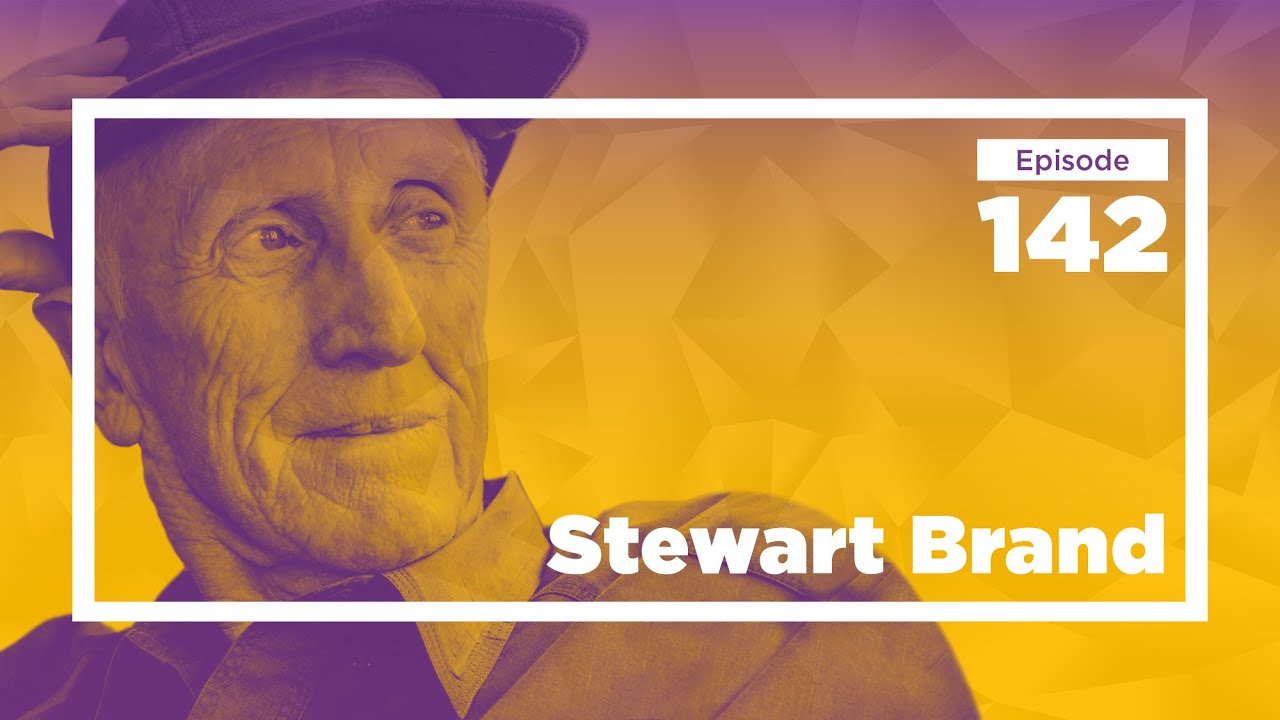
This content was created by Tyler Cowen. This content was uploaded by Tyler Cowen. This is a YouTube interview (Conversations with Tyler) titled "Stewart Brand on Starting Things and Staying Curious | Conversations with Tyler," uploaded/recorded on 2026-01-29. Host Tyler Cowen interviews Stewart Brand about his life and work — covering the Whole Earth Catalog, the San Francisco counterculture, cyberculture and early computing, psychedelics, Native American influences, the Long Now Foundation and the 10,000‑year clock, biotechnology and Revive & Restore, space/colonization skepticism, urban change in San Francisco, and questions of durability versus transient cultural projects. The excerpt is an English, episodic conversational interview between two named participants (Tyler Cowen and Stewart Brand) discussing historical, cultural, technological, and philosophical topics.
Chapters
Hello everyone, and welcome back to Conversations with Tyler. Today I'm chatting with Stewart Brand, and Stewart is an individual who is above all else an individual and who defies summary. But think of him as someone who was there early or there first in a multitude of movements, including cyberculture, psychedelics, the importance of Native Americans and their philosophy, The Whole Earth Catalog, the entire San Francisco scene, the Long Now Foundation and the notion of the importance of durability and the idea of maintenance, the idea of bringing back woolly mammoths to life, and much, much more. Stewart Brand, welcome.
Oh, thanks. It's a delight and an honor to be here.
Thinking back on your entire life, in which ways do you see yourself as a product of the Cold War?
I was in a town that was in Rockford, Illinois that was rated as number 7 on the list of the American cities to be destroyed by the Soviet Union with bombs because we built machine tools. They thought that was upstream of American industry and therefore blah, blah, blah. I was younger than 10. By then. So I had nightmares about wandering around in a destroyed Rockford where I was the only person left alive. So I had a certain built-in apprehension. Among things that led to, as you may remember, I think you're old enough to remember when the mushroom cloud of the atomic explosion was the symbol of human civilization at that point. That was the way global everything thought about itself, was the threat of nuclear annihilation. The photograph of the Earth from space that came along in '68 and '69, '70 from the Apollo program completely replaced that nuclear cloud with an image of a very hopeful-looking Earth. It's interesting because I realize now the Earth is being deployed. That photograph which was so hopeful and green and better than the mushroom cloud is now evoked a lot in context of climate change. Once again, it's a an image of a threat rather than a promise.
So am I correct in thinking of you of somehow taking the research environment of World War II, the notion of threat, but redeveloping the ideas of the computer and the network forum to put forward some more optimistic, also more decentralized vision of the future?
Yeah, I think there's some motivations for all of that, and I paid very close attention, as I started to pay attention to things, to the research library in electronics that was going on at MIT. And they were studying Shannon's version of information. They were studying how communications, electronic communications and then digital communications, were transforming humanity, basically. That was a set of premises. This was before we had Moore's Law, but I had a sense of a self-enhancing process that was going to not just change everything once, but change it many times. That's what exponentials do if they keep going. I rode that wave of an engineering understanding of civilization. That I have to this day.
And how is it that you became such a decentralist?
Oh, God, decentralist. That's interesting. You're right. Well, I mainly— I think you probably see this with the artists that you study. I got a degree in biology from Stanford. And then was going off to be an Army officer. But in the course of that, I started hanging out with artists and Bohemians in North Beach in San Francisco. This is the late '50s, early '60s. And so my first calling was as a professional photographer that then turned into a so-called creative photographer doing art. And I was doing multimedia with a group called USCO in New York. Basically took on the role as an artist in the world. That kind of stuck. So my media would change a lot. I would start nonprofits and sometimes businesses and various things. But it was always this not part of a hierarchical organization and not trying to build a hierarchical organization. It was basically enhancing creativity at the individual level. And so with the Whole Earth Catalog, that led to a kind of a lazy libertarianism that I later got over when I worked for Governor Brown of the State of California. But it was— and remember also I was a biologist. Evolution, Darwinian evolution is the most decentralized thing that you can imagine. It's way beyond the market economy as something that runs itself and is self-organizing at every level and at every scale. And so I haven't answered that question before, so answering it this time, I think I've talked myself into being a Darwinian.
What was the influence of Nikos Kazantzakis on your thought? The Greek author, Zorba the Greek, right?
Yeah, Zorba the Greek and Odysseus, the modern sequel, and so on, which I think I'm the only person who read. There was a strong, committed romanticism there. It was also clear in Ayn Rand. Who I also paid attention to for a while before the preposterousness of it all took over. But Kaczynski had this sort of commit everything to your theory of the world, even if it's wrong. And I got over that also because that way lies madness and also great destruction. But it was fun to go down that road with him. He's a beautiful writer and thinker.
In which ways is your thought drawing from America's pre-industrial past?
Well, I'm old enough to have actually lived with iceboxes. Ice is what kept refrigerators cold in Michigan in our summers. And we used outhouses. So to a certain extent, I'm just grounded in Midwestern forest living. But also I, for some reason, picked up a strong— through a writer named Kenneth Roberts— a strong identification with New England and kind of traditional New England. Buckminster Fuller later played right into that for me. All of that has a kind of grounded continuity. I was one of the three guns Midwesterners where I started with a BB gun and then got a pellet rifle and then a .22 and then a more serious rifle. Hunting and fishing were part of the world I was in. I didn't do much of either one, but that was who we were. You wanted to be a a good outdoorsman.
Alfred Hitchcock's Rear Window, how did it matter for you?
Oh God, well, you know, because of the name James Stewart and because he was kind of lanky and laconic, um, I identified with him. My older brother Mike, I figured, was Burt Lancaster, but I was James Stewart. And so, um, two movies that Stewart made were Rear Window, where he was, uh, with Grace Kelly and he was a photojournalist and that looked exciting and I later became a photojournalist. And then also he was in a movie called Broken Arrow, which was the first movie that was liberal about American Indians. It was really, really well written, well researched on Chiricahua Apache culture. James Stewart there is the guy who connects with Indians. And when I later married an Indian woman, Lois Jennings, we used to play scenes from that where she's watching him shaving and wondering what the hell he's doing because Indians don't shave. And we just played that stuff out. So James Stewart was a handy character to identify with for me.
And what do you think is the major intellectual influence from Native American or Indian perspectives on your thought? Is it the idea of maintenance? Something else?
Well, part of it is that— I mean, the surprise for me— I've been surprised a couple of times. I was surprised in Venice that it was basically an Asiatic town. I was surprised by the Indians I was photographing in Oregon in 1960. 3, I guess it was, that it was such a rich and active culture. This was not people in the past with feathers and teepees. This was people in the present. They were doing a wild horse roundup. They were cowboys, not, you know, cowboys and Indians together, and rather different cowboys than the ones I'd seen. The white cowboys tended to be very ferociously individualistic and competitive. And the Indian cowboys I saw were much, much more collaborative. And there was a gentleness, a constant humor, a welcome to people like me. So when I started hanging out, I was inspired by that experience to visit a lot of reservations. And just hang out with Indians. I eventually did a multimedia show called America Needs Indians. And that turned out to become a point of reference for the hippie subculture. And it was basically one subculture paying attention to another subculture for inspiration and sense of identity. So the Long Hair Convergence, as it was called, was a way for the older Indians, the long-haired gentlemen, and the younger Indians who were trying to decide who to be because they had a lot of choices, realizing that the continuity of their native culture was a really valuable thing, not something to feel bad about or to flee from. And that's played out very well. So Indians are in way better shape now than they were when I first started paying attention or when Marlon Brando did. Before I got to know Marlon, he was basically at every place that I went to before I was, hanging out with the Fish Indians in Washington, with the um, sort of revolutionary Indians in Oklahoma, and, uh, it was regarded with affection and respect by the Indians that I met.
Now, if I try to place you in the earlier part of your career, and if I compare you to Buckminster Fuller, Norbert Wiener, Gregory Bateson, what are the key variables where you disagree with them? How should I sum up intellectually, that difference?
I bought Norbert Wiener, I guess, first, and he's held up very well. Buckminster Fuller, the artists I was hanging out with were paying close attention to him and to Marshall McLuhan, and he was this amazing thinker who sort of revolutionized his whole behavior and his whole thought patterns around what he thought was a more productive way to behave and think in the world. The only person I know who's that radical with himself is Kevin Kelly, who occasionally takes an ocean and just goes all the way down just to see what's there. So Bucky only really changed himself once. But it was an impressive change. When I came across Gregory Bateson, he was sort of the corrective for Buckminster Fuller for me because Fuller was so totally an engineer, what Bateson would call a kind of an input/output approach to understanding and solving everything. Whereas Bateson was much more— he was aware that every system is basically self-referential to some degree, which that's the thing Fuller would never take on, and hierarchically organized at a very deep conceptual level, and that we are always immersed in the system that we think we're isolating something from. And so Gregory was wonderfully dubious about engineering solutions, about naïve intention, and went a little far in the mystical direction for me. And so there were later corrections for that for me. Because I'd kind of gone a mystical route back when I studied comparative religion at Stanford. And that turned out to be eventually nonproductive and I think counterproductive often if people go down a mystical or romantic route. But that was all stuff that I was kind of working through. And I got to know Fuller. I got to know Gregory Bateson very well. I never met Wiener, but I hung out later with people like Marvin Minsky and other part of the MIT intelligentsia who are really still my frame of reference.
So in 1968, the Whole Earth Catalog, you have the view that what the world needs is a photo of the Earth appearing to be one thing. What is the photo we need today?
Well, it's interesting is The various photos of Earth, and one of the things I learned early on is people fixed on basically two photographs: the Earthrise photograph with the moon in the foreground, which was powerful because you saw in one frame and in one frame of reference a dead planet and a living planet. And boy, the difference is striking, and you're glad that you're on the living planet. It sort of incites you to want to make sure that it stays living. And then there's the so-called Blue Marble where the photograph was taken with the sun behind the spaceship, behind the camera. And so you see there's no crescent, there's no gibbous Earth, it's just a big round Earth like people expect, which of course is the rarest photograph you can take. You have to be right in line with the sun to get that image. But there were thousands of other photographs of Earth. Soviets took some, we took countless ones, and eventually I found the drawer at NASA headquarters in Washington where they all are. I just paged through and picked out these amazing images and started using them in later Whole Earth catalogs. I think one of the one of the best things that's happened in this last century is that outside-the-planet perspective. And every astronaut comes back with stories of how amazing it was, even though they're trained for and prepared for being amazed. They are then really amazed by getting out there. The photograph is just a glimpse of how powerful it is to be off planet and see the planet as a whole. That I think will continue as we explore the rest of the solar system, mostly with robots, sometimes with humans. Lately, I don't think we're going to the stars, Tyler.
No.
I think it's too far. What do you think?
I don't think we are either. I think it's impossible.
Because of the distance.
Because— and the wear and tear on bodies, even if you freeze them. And, you know, physical space is not what is scarce. So why not Nevada? I like to say.
Okay, right. How about space colonies? Where are you on those?
Right outside the Earth, I think there will be some, but I've not for a long time been very optimistic about space as the future of progress. I just don't see what's the scarce input out there that we really need. So if you think, well, the Earth is so crowded, we must go elsewhere. But if you've lived in New Jersey or the Netherlands or, you know, South Korea, that hardly seems like an imperative.
Exactly. I think I share that. I think it'll be basically voluntary and of interest. It's, you know, science fiction can makes great use of the generation ships and so on. But Kim Stanley Robinson recently did a book called, I think, Aurora, where basically makes your point and my point that even if you get people out that far, the wear and tear on the social fabric, on the biology, on everything, you cannot isolate a very complex biological system like humans for that long and expect to get anywhere that's useful.
So what was the nature of your mother's interest in space and space colonies? She seemed almost obsessed with it.
Yeah, she was a Vassar girl who was a liberal in probably a not very liberal town in northern Illinois. She kind of fell in love with Wernher von Braun and the very early space stuff. And so she got all of the Willie Ley and the other kind of popular from Collier's and Saturday Evening Post magazines and books that came out at that time, lauding going to the moon and going to Mars. She loved all that stuff. And when later in life I got to know an astronaut named Rusty Schweickart, I took and we went to see the movie The Right Stuff. My mother and Rusty, this astronaut, went to that movie together. And that was a real connection for her to the dream.
Do you think the images of the Navy UFO videos will have cultural resonance? The way the image of a single whole Earth did.
Oh, I don't track on that at all. But evidently you do. What do you see there?
I see a very serious puzzle that our military and CIA cannot figure out at all. I suppose I think there's a modest chance it's an actual alien drone probe, probably not a very interesting drone probe, just sent out to follow us and then run away. I've given that 5 or 10% in my estimations, but I find it very puzzling. It forces me to think about our world a lot, that we could have multiple sensory sources of data measuring an object that moves very quickly, and we simply cannot figure out what it is. And it dates back to at least 2004, possibly much longer. So to simply say, oh, it's the China, or it's laser-induced plasma, a lot, a lot of explanations just don't quite seem to cut it.
Good. Well, it keeps some mystery in your life. There's things like that that I sort of just shrug and adopt a two-minded approach. It might be true. Is it something I can do anything about? Is it something that's going to affect me? If not, I'll just stay open to further news. But in the meantime, kind of shrug at it because One of the things you probably notice as you get older is you've seen a lot of illusions come and go. And I've seen a lot of the world is doomed illusions come and go. Y2K, oh my God, all the computers are going to stop because they don't know how to handle the year 2000 and stuff like that. On and on, peak oil and one thing after another. So I've become trying to encourage a certain sense of perspective and realism about when people say that the world is going to end because of this, that, or the other thing. Humanity's been around for a long time now. The world's been around for a long time now. Biology is incredibly resilient and robust. And I think the world-ending trope is just a waste of mind.
When you put out the Whole Earth Catalog, how much did you think about the font and style of the early editions?
Well, I was, you know, I stole everything. The typeface, the Windsor typeface I used on the Whole Earth Catalog, that has sort of become now the typeface of hippiedom apparently when I look at some of the nostalgia stuff. That was the L.L. Bean type font that they used. I admired— I was building on my father's interest in mail-order catalogs, and L.L. Bean was one of the ones we really liked. There was a straightforward New England honesty about it that I really appreciated. So you would have a leather belt in there for $2.25,. And the write-up on it instead of, you know, this will make you more of a man, just said this is a pretty good little leather belt, $2.25. And that kind of pragmatic clarity and succinctness I took as a model of how to review things in the Whole Earth Catalog.
You know what I think of when I see editions of that catalog. I wonder, how did you manage to typeset the whole thing?
Oh, well, a couple things made possible self-publishing a book that ambitious. And one of them was the IBM Selectric Composer. It was the golf ball striker where you could take one golf ball that had all of the letters on it in a particular size and font. Put on another one, italic or whatever. You could do very complex typesetting with basically a jumped-up electric typewriter. That let us do really good compositing right there in real time. Likewise, photography, getting halftones, there was a brand new device that would let you make halftones. Lots of times I just clipped stuff out of magazines and books and just pasted it down and then the paste-ups. We originally used beeswax in a big old frying pan, electric frying pan with melted beeswax and you just paste that on the back of something and slap it down on the page. That was how we laid it out.
How is it that the Whole Earth Catalog ended? It was a bestseller, had a big cultural impact, reached Steve Jobs. Why did it stop? You could have just sold the rights and sold out, right?
I fucked up. I— the original one was 64 pages and $5. The idea was each one would be bigger and cost less and be better. That went on. As you can imagine, we were doing this every 6 months. I didn't know about taking breaks or vacations or things like that, so I was bearing down pretty incessantly on this thing and getting it right and getting it better each time and all of that. I went down my own asymptotic black hole. One writer said, by the end of the Whole Earth Catalog, Stewart Brand was a wreck and I was a wreck. Rather than just retire and hand it over to somebody else, again, with an artist impulse, I wanted to see what happens if you take a full-blown success, and just stop it and see what happens. My turned-out wrong hypothesis was that others would immediately step into that very obvious opportunity in the market and fill it perhaps better. And in many different ways, that did not happen. But what did happen is as soon as I named the last Whole Earth Catalog, the last Whole Earth Catalog, That turned out to be the best possible marketing device I could ever have come up with. And calling something the last anything turns out to— if it's honest, which it was at the time, it gets people. And so that book became a bestseller. It became— got the National Book Award. It was a big deal. And in fact, two different Broadway producers got in touch with me saying that they wanted to do a Broadway play titled The Last Fuller's Catalogue. And with people playing volleyball between scenes and Paul Simon was going to write the lyrics and songs. I later asked Paul Simon if that was really true. He said, yeah, went away like things do. I was on a real downward slope. I had a marriage falling apart, my fault, and so I was a wreck for a few years.
Why aren't the top entrepreneurs of Silicon Valley more interested in the visual arts? You have been your entire life, but it seems they are not. Why is that?
I have no idea. Hippies in general were not very good on the visual arts except for comics, Robert Crumb and so on. We were terrific on music. I'm not no good on music at all, but I was trained as and then worked as a graphic photographer. I studied graphic design. I'd even studied magazine design back at Stanford and then took a bunch of classes afterwards at San Francisco State College and in the San Francisco Art Institute. I think the exception there is Steve Jobs, who had basically studied visual design somewhat at Reed College. When he became fascinated by design as design, that really played out with Apple. I'm glad I got Apple stock because I knew Steve Jobs.
So what do you think is missing in Silicon Valley because of this lack of interest in the visual arts, jobs aside?
Hmm. Well, you and I both know Patrick Collison, and I see Patrick as a kind of a— whenever anybody says something kind of disparaging about Silicon Valley and tech bros and so on, I think of Patrick and think, well, that's bullshit. Because he's sort of personally the one I know of the current set. I've had some people who got in touch and said admiring things like Marc Andreessen and Jack at Twitter and Chris Cox at Facebook. So I feel some personal connection there, but what I'm gibbering about here is I have no theory of Silicon Valley at all, Tyler. What's yours?
Well, Stripe Press books are beautiful. I would stress that. But maybe there's something about the engineering mindset that in some ways runs counter to the aesthetic mindset.
Well, that's interesting.
They may come together with psychedelics, but not in the arts.
Hmm, okay, I think I sort of buy that. And that would be a program for, I think, engineering, and you see a fair amount of it at MIT, of trying to keep their engineers from being too mentally siloed into just solving problems with numbers.
Now, you first took LSD, if I understand correctly, as part of a military experiment.
Probably military, but there was probably military money in it.
What led you to take that plunge? Someone said do this? It wasn't a known thing back then. Why did you do it? I wouldn't have done it.
Well, you know, I was young and careless. I was jumping out of airplanes and climbing things and doing all the dangerous stuff that you do when you're young and witless. But that one I think was an outgrowth of the Bay Area, Mid-Peninsula T-groups that developed the kind of confrontational personal interaction in group sessions that developed in the '50s at Stanford and in that area. And that led to a very transformational approach to ideas of human potential and so on. When Esalen Institute got started, I had already been doing seminars of my own with students from Stanford at Slates Hot Springs that later became Esalen. I got to be friends with Mike Murphy when he was— he and Richard Price were starting Esalen Institute. And so all of that human potential stuff was looking at religion, looking at meditation, looking at drugs. We were reading about Aldous Huxley and what he got from peyote, and I was hanging out with peyote Indians a lot, increasingly in the '60s. And so friends in the Stanford area said they were— and LSD was just starting to turn up. And it was still legal through the early '60s. And there was a so-called therapeutic model, which is now completely revived. It's interesting that it had to go through a long hiatus of that psychedelics can be useful as a method in significant personal therapy. The idea then was, remember before that, when psychoanalysis first came along, All the anthropologists felt they had to get psychoanalyzed. And this was sort of a similar thing that, okay, there's this new therapy and it's supposed to be used on sick people, but if it works for sick people, let's try it on healthy people to see if it makes them even healthier. And so that was kind of the theory we were going on. As it happened in that set and setting, as they said, of a of therapy, I basically flunked out. It was just a not very pleasant, long episode. But later on, I had personal LSD experiences that were transformative, including one that got me going on what a difference the photograph of the whole Earth would make.
As you know, San Francisco is a relatively small city. So why did it, and not Los Angeles, become the center of hippie culture?
That's a fair question. Los Angeles never had 49ers. Los Angeles never burned to the ground. San Francisco, the Phoenix City, they still say sometimes, has waves of boom and bust. It's not particularly infrastructural. Los Angeles is completely based on oil and then water infrastructure and major shipping even more than the Bay Area. There's a frivolousness that the Bay Area is good at. It has two universities of significance with Stanford and Cal. I mean, so does LA, but LA does not feel like a college intellectual world, whereas San Francisco somewhat does. Silicon Valley really is an outgrowth of the industrial park at Stanford that was invented by one guy. Then those things, as you know, take off economically, they feed themselves and then they become their own storm system. There's a lot of people like me from the Midwest who come to places like California. And one of the things that I sort of saw, because I spent time on the East Coast in prep school and then in New Jersey as a military officer and then a lot in New York as an artist. The sense I got is that people go to New York and LA to be successful. If you can make it in the Big Apple, you can make it anywhere, that sort of thing. Nobody says that about San Francisco. They never have, and I bet they never do. People go to San Francisco to be happy, by and large, and then that leads to this sort of devil-may-care creativity, which is actually good for business startups of certain kinds, especially ones that have a low threshold like anything digital or anything online. And so screwing around is not only possible but encouraged. And screwing around is the way you discover new useful things in the world, I think. So I knew by the time I graduated from Stanford that I wanted to stay in the Bay Area. I went away to be in the Army and then I came right back.
What was the creative peak of Jefferson Airplane?
I have no idea.
You didn't know them?
Well, no. Who I knew was the Grateful Dead pretty well. You know, the Trips Festival that I organized with the Merry Pranksters with Ken Kesey's group. Grateful Dead had just renamed themselves from the Warlocks, and they really took over the 3-day show that we did. People just wanted to dance their guts out all night long, and the Dead had the way to do that. All the other artistic stuff that I brought in there was sort of interesting, amusing frippery, but the Dead really won the day. That's how I got to know them early on and stayed somewhat in touch through the years.
What did you learn from David Crosby?
Not a thing. You know, I love the songs. We apparently had this conversation. I guess you've been reading John Markoff's biography.
Of course. Yes, it's a good book.
And what I remember is being shamefully out of it when I talked to David Crosby. People would show up at the Whole Earth Truck Store where we had this kind of retail outlet for Whole Earth Catalog stuff and want to chat with me. And like Philip Morrison, a fantastic book reviewer, Scientific American, showed up like that. And David Crosby showed up like that. I guess Hugh Romney must have brought him. So, wavy gravy. And Lost to me. Maybe David remembers the conversation.
What is it about the early days of San Francisco culture that most people still do not know?
Which early days? There's a lot of them.
Say the 1960s, hippie days.
I don't think people know the extent to which the mob took over. The first pornography, there was some really, really creative pornography coming out of basically hippie artists having a good time and turning the camera on. And then the whole dope culture, no hope without dope, everybody was selling or buying marijuana in these these other drugs from each other. Then one of the guys named Super Spade, his arms and legs cut off and his torso was hung out by Ocean Beach from a tree as a sort of knowledge of, well, those amateur days of drug sales are gone now and the big-time players are here in town and do not fuck with us. So that was the end of that. And everybody that had been selling dope and sort of learned a little bit of business from doing it then went into business, legitimate business, and they were good at it. And so hippies became basically very good commercial startup folks, partly because of that sequence of experiences.
Is Clint Eastwood's Dirty Harry a good movie?
I don't remember. Clint Eastwood is an incredible movie director, except for this last one.
You know, it shows San Francisco in, I think, 1971, and the city's supposed to be falling apart. Maybe in some ways it is, but what's striking to me is how much cleaner San Francisco was then than now, and also how few new buildings have been put in. It looks almost like the same city except for parts of downtown.
Well, that's interesting. You saw it again recently? Is that what happened?
About a year ago during pandemic, I gave it another watch.
Well, it was a good and I think respectable dialogue that was set in motion between a kind of conservative approach and a probably excessively liberal framing that was going on at the time in the Bay Area. And so "Make my day" became a kind of a conservative line.
Given your long history with San Francisco, do you think you see its current problems differently since you know so much of the past?
Hmm. I think I don't see them clearly enough. I think Patrick Collison has a lot more substantial to say on this issue because he's in the thick of it. He's got to figure out where his workers live and where his place of business is and so on. I think a major shift that occurred is the, to me, completely understandable retreat from Silicon Valley, from the Mid-Peninsula. I lived there when we were doing the Whole Earth Catalog. It's actually a horrible place to live compared to Marin County where I am now. Marin County being north of the Golden Gate. Silicon Valley being south of San Francisco. With Salesforce, with Twitter, with these various web-based organizations that moved into the city and built their headquarters there and tried to house all their workers there and so on. That is a disgust with suburban working and living and a seeking out of downtown. You've seen it in Seattle with Amazon, you know, staying in downtown Seattle and so on. And because I'd been thinking about, writing about, and researching about cities from about 1998 on, that all seemed completely sensible to me. Cities are highly centripetal. They attract talent, they attract all these things. Jeffrey West's book Scale and the studies going on at Santa Fe Institute on how cities accelerate everything and are the major economic engines of of any region or any culture they're in. If you're ambitious and talented, you're going to go to a town. And in the Bay Area, the town is San Francisco still.
Now in the last two decades, or maybe even a bit more, you've become very interested in this idea of the long view. There's the Long Now Foundation. Trying to take a very long-term perspective on things, this attempt to build a clock that will last for 10,000 years. Uh, but if I look at your own career, a lot of the most influential things you have done have been quite finite. So you ended the Whole Earth Catalog, the Merry Pranksters with Ken Kesey, right? That ended a long time ago. Uh, the online bulletin boards you were a part of, which were very important for the early years of the internet, those in their earlier form, those are gone. So why seek durability if your own influence has typically come through the supposedly transient?
Well, some of it's just getting older. And I developed when I was studying buildings and then later writing about civilization and this kind of pace layer Understanding that part of what makes a dynamically self-stabilizing and learning system is that some parts of anything complex and dynamic move very fast and some parts move very slow. We tend to pay attention to the fast parts like fashion and commerce and not pay attention to the really powerful parts. Like nature and culture. And once I sort of had that perspective, and plus I'd been a professional futurist for 20 years with the Global Business Network, where I saw that people doing scenarios would treat 25 years as a very long timeframe. Military, we did scenarios for, would sometimes go out 50 years. I thought, you know, that's considering the level of stuff going on, changes going on, it's understandable people would pay attention to the short term. But meanwhile, these basic dynamics of the really slow stuff is where the power is, calls for a reorientation of focus. And so when Danny Hillis, computer scientist at MIT, who I'd gotten to know at the Media Lab, wrote an email saying, I'd like to build a clock the scale of Stonehenge that keeps very long-term time and ticks once a century, bongs every 1,000 years. He sent that out to everybody he knew, but nobody responded but me. I responded and said, let's do it. I think because of the stuff I just mentioned, there's realizing Danny's framing of it was— this was all through the '80s and '90s, everybody referred to the future as the year 2000. And Danny was growing up during that time and he said, so for my entire life, the future has been getting shorter by 1 year per year. That does not seem like a healthy frame of mind for a civilization that wants to be healthy to have. And what could pop through that membrane of the year 2000. And so coming up with the idea of a very durable, basically perpetual motion machine of a clock. The clock, by the way, is not trying to be built, it is built. It's almost completed in Texas on Jeff Bezos's mountain range. It's not a perpetual motion machine in the sense that it takes a temperature difference on the very high mountain it's on between night and day and runs an air bladder that then provides energy that keeps the clock knowing what time it is for thousands of years.
Would the younger Stewart Brand, say in his 20s, be disappointed in the future that has come to pass?
Mixed bag. A whole lot of stuff developed fantastically, I think. As a biologist, I've loved seeing biotechnology finally relink with field biology, conservation biology. I'm involved in that doing co-founding Revive and Restore to use biotech for the help of conservation wildlife projects. That's played out pretty well. By and large, when I was optimistic about stuff, I turned out to be right, and when I was pessimistic about stuff, I turned out to be wrong. Often enough that it has kept optimism alive. And right now the political conundrum of the United States has me worried and I don't know what to do about it. And I can see that cyber war is going to play out in some ugly ways and already is to a large extent. And I don't see automatic solutions to either of those or ones that I can help with. Except that focusing on long-term frame, the long now, we describe it as the last 10,000 years and the next 10,000 years. So there's, you know, there's the now that is an hour long, the hour now that is 2 weeks long, the year in the middle of, and then there's the somewhat longer now that is 20,000 years long. And I think human civilization has earned and needs the perspective of that as a foundation for thinking about everything.
Do you look much to science fiction for ideas and inspiration or not?
Yeah, I mean, the new Neal Stephenson Termination Shock is brilliant in terms of really playing out the geoengineering schemes that are out there. Neil did fantastic research on it, better than most people I know, including many professionals. Likewise, Kim Stanley Robinson with the Ministry for the Future, Again, beautiful research on what overheating, wet bulb high temperatures can mean for human survival in places like India. Then playing that out in politically astute terms. This is some of the best thinking going on in society. Science fiction has always opened that door to thinking about the future in creative ways. Marvin Minsky, who I knew at MIT, was always quoting Isaac Asimov, and he just said, look, these are artists who thought about this stuff a lot, and I paid close attention. I feel the same.
How did your year working with California Governor Jerry Brown make you less libertarian. Hasn't California governance turned out to be a big mess?
No, I think California governance was and still is pretty damn good. What I learned is that the libertarians I knew, and they sort of clustered around the Whole Earth Catalog because in a sense the Whole Earth Catalog was saying, you know, this is right after Jack Kennedy said, "Ask not what your country can do for you." ask what you can do for your country. We sort of said, "That's not what your country can do for you, do it your damn self." And so there was a do-it-yourself thing that translated for many as a screw the government. And then the whole hippie period was counterculture and a lot of that was played out politically in the New Left and so on. Working in the governor's office in Sacramento and wearing a three-piece suit, one of the things we started was— that I started was a water atlas of California. Then the research that we set in motion from the governor's office to bring about this actually quite beautiful and somewhat influential book. California is a hydraulic civilization, as you know. We move our water around and that's what makes agriculture the main event here. It's what makes Los Angeles possible and so on and so forth. I saw the people at the Water Resources Department. I saw what they did all day. We would show up saying, look, we need some data on the Smith River, which is the only undammed river in California. What's the patterns of flow in that and how deep your records go? Somebody's deputy assistant would say, "We thought you'd never ask." They had been carefully keeping this data and trying to correlate it with things and keep it up to date in the various computer systems and so on for decades. The low-paid high-quality, selfless work that these folks were doing. And in the governor's office, you always knew who was a Republican, who was a Democrat, and why, and all this kind of stuff. Down in the departments, nobody knew and nobody cared. There were Republicans and Democrats scattered throughout the whole system, and it was part of the ethic of that part of government to just not be political in the divisive sense at all. And so I was seeing something that the libertarian folks I knew knew nothing about and were not the slightest bit interested in. They weren't actually interested. I think you're, as somewhat of a libertarian, are interested in how government works. Most of the ones I knew were not. And they were interested in how election works and they thought the absurdities that they saw in elections and electioneering was government, and it's not. And so I finally got the perspective of what is now vilified as the deep state. And the deep state, at least in California, is damned impressive. And so I came out being way less interested And who is the governor? I basically came out saying, well, Jerry's a good governor as near as I can tell. But then later Arnold Schwarzenegger was a pretty good governor. Reagan had been a pretty good governor. And the realization I had is Donald Duck could be governor and it wouldn't be the end of the state. Trump finally proved that you could have somebody as a president in that case who could be really destructive. And the deep state was not as successful as it usually is of working around it. But that's reflective of a whole bunch of other stuff going on that I do not comprehend, frankly.
Now, you've written a good deal about architecture. Do you view the forthcoming smart home as a blessing or a curse?
It's always been a curse. The Internet of Things is making stuff a lot more convenient and a lot more handy. But people have been banging away on making homes smart for decades and decades. I think that one of the things we'll be figuring out increasingly for the next few decades is, what things to hand over to robots and what things not to. There'll be lots of stuff that surprises us. It's just great that robots are doing that. Frankly, I love the autopilot on the Tesla I drive. I don't use it to get all the way from here to there. I use it so I don't have to pay close attention to traffic, just peripheral attention. The difference there is fantastic. But trying to get a whole bunch of things coordinated around shortcut convenience, that is kind of a long cut to finally program it all so it works. It kind of winds up like those remote clickers for television that have too many buttons and people finally learn the 3 buttons that do what they mainly want and pay no attention to the rest. And then the younger members of the family sort them all out and become adept at it. And then the next generation of excessive choices comes along and they don't know and they've got to ask their kids how the hell does this complex thing work. So I think there's a kind of an endless quest for complete handiness. And I think generally people who go for simplicity rather than robotized complexity in terms of personal living are happier.
And if we, in proper Hayekian fashion, want more of an organically evolving architecture, what can we do to get there?
Well, I wrote a whole book called How Buildings Learn. It's probably my best book and certainly most successful. It's now treated as a classic and taught in classes and so on. It's basically that a building is not something you finish, a building is something you start. The building is an ongoing process that is in perpetual dialogue with the users of the building and the uses of the building. And its standing in the real estate market and so on. Professional high-concept architecture is sort of allergic to all of that and they want to make a work of art or signature piece of something or other with the look of that particular architect. They hope that the function will work out. So the buildings that tend to go best are ones that are really durable, like the old brick factories of the East Coast, or some of the tilt-up concrete spaces, what I call low-road buildings. For example, at Stanford when I was there, there were temporary buildings left over from World War II, and at MIT, the Rad Lab, Building 20, was where most of the real— well, much of the real innovation that happened in curriculum, in science, in engineering happened in the trailers. It happened in Building 20. Because those were buildings that nobody cared about, you could do anything you wanted in there. You could adapt the building to whatever research you were doing. It was cheap. You can throw things together and have them fall apart and not care, or have them take over the world. Because you'd started cheap, you were able to get there without having to overinvest. Buildings that adapt well over time are basically built strong for certain reasons and then stay strong as the decades go by and the different uses go by. In the book, I wound up sorting out various things that have those qualities and things that don't. I had a chapter on maintenance because everything— buildings are sort of the most maintenance-needing and maintenance-defying things that we build. So there's a constant dialogue between keeping up with that and letting it go and then cycles of real estate value that go in and out and so on and so forth. I don't have a short answer to your question of what makes them more adaptable, but really looking at what buildings do over time sure helps.
Why does Japan fascinate you so much?
They're the most advanced material culture in the world, I think. You know, how to wrap 5 eggs and things like that are a matter of enormous interest in craft. And I'm paying attention to them now because my friend Kevin Kelly, who's traveled all over Asia and including all over Japan, he said he's looked and looked for a broken roof tile in Japan and he can't find it. There's an attention to detail of caring about the physical essence of stuff that the Japanese are surpassing at. On the other hand, there's a lot that's so screwed up in Japanese culture. The cities are a mess, the buildings, most of them are kind of haphazardly built. I first fell in love with Japanese architecture through a book written by Japanese Home and Its Surroundings, 1896, by a New Englander. And he just spelled out the traditional Japanese home and the genkan and the use of tatami mats. Relationship with the garden and the banjo and all that stuff, the bathroom. The aesthetic practicality of it just knocked me out. I actually got to stay in a house like that in Kyoto for a season one year and it was fantastic. Japanese craft at its best is just the best there is.
In what year will we bring back the woolly mammoth? What's your point estimate?
Certainly in this century, I think we'll have what looks like and acts like woolly mammoths back. I would like to see them back in large herds in the Siberian and in the northern Canadian steppes doing their old job of of eating the grass and therefore causing the grass— grazers make grass. And so the so-called mammoth steppe, which was once the world's largest biome reaching all the way across around the North Pole and the Arctic and subarctic, climatologically is much more stable. But mainly it was the Serengeti of the north. This was where You know, there were endless large animals and incredibly rich animal and vegetable ecosystem compared to what's there now. That's a case where humans, to some extent climate, but mainly humans got rid of all the megafauna by killing them and eating them. And that keeps happening. And as they come back, they will the way the elephants and rhinos and whatnot do in Africa. They will bring back the mosaic landscape that is drastically richer and by the way, much more stable in terms of climate.
And what's stopping us from doing this within the next, say, 20 years?
It might happen in the next 20 years. The outfit called Colossal has decided to put in serious commercial money with George Church at Harvard and others that are working on on bringing genes from the extinct mammals that we know what they are now because of paleogenetics and putting them into Asian elephant genomes and start bringing back the Arctic capability of the blood system and the thick hair and the rest of it that It makes it possible for elephants to not only survive but thrive in the far north. As it happens, Asian elephants already live in Canada and like to break through the ice in the pond to go swimming. They wouldn't make it through the long Arctic night, but they already like the cold. When you're big and massive, cold is not that harsh an event. So I think bringing grazers and megafauna back to the far north will be practical and beneficial. It's already going on at this place called Pleistocene Park in far northeastern Siberia.
To close, I have just a few questions about the Stewart-Brand production function. Are you ready?
Sure.
Now, you're well into your 80s, correct?
Correct, I'm 83.
So what is it you do to stay so sharp?
Pick parents with genes that make that possible. That's the main thing.
And what do you do after that?
And after that, frankly, I don't understand people who go quiescent intellectually as they get older. You know, as you get, in a way, getting older, you get more control of your time and you have more savvy on how to do things and how to to make things happen, who to call when you have a question, all that stuff. And so your ability to investigate stuff, and especially with the internet now, is going up all the time. And why would you let curiosity fade? And many don't. You've probably noticed that People you know in their 70s are different from people that you knew in their 70s when you were a little kid. When they kind of, you know, it was over, they were settling down to play golf or whatever it was. And probably a whole lot of people you know in their 70s and 80s are hard at it. In some cases, just hitting their stride. And that's a change that has occurred in my lifetime. That is a total treat. And as near as I can tell, that one is permanent. I think that's with us now. People will live longer and thrive longer. The healthspan is now being referred to instead of lifespan. And healthspan meaning how long you can be really engaged and productive and alive to things. I think that's very good in terms of long-term thinking because people who are older have a longer now. Their future may be getting shorter, but their past is personal and significantly long. They've seen a lot of stuff come and go and they've seen a lot of skills that possibly they had time to pick up that they can now deploy. And all of that makes at least the kind of intellectual life that we both seem to enjoy that much richer. And so long as your genes are supporting your brain cells and whatever other medications and stuff we can do, I mean, medically, it's possible for me to carry on in ways that would not have been impossible a century ago. So there you have it. We are living longer and we're finding ways to keep the human body and human brain functioning better, longer. So why would you not take advantage of that?
How has giving away money kept you creative?
I'm not that good at it. I've now gotten to know a number of philanthropists who are really good at it. And I know that I'm not. And at one point, there was a guy who was getting into philanthropy because he started eBay. And I said, you know, "If you like, I can try to find some good things that I know about that maybe you don't, that would be good to put your money into." And he said, "Sure, fine. Here's X amount of money. Go ahead and make good things happen." And I worked on it for about 6 months and just failed utterly. I was not good at that. So I would love to see a whole lot more really creative philanthropy. This is another thing that I think you and Patrick collison like you've done with your FAST grants can help move much more creative philanthropy. One of the things I've noticed all my life is that philanthropy should be the most creative thing going. It's got to be more creative than government, it's got to be more creative than anything that the commercial entities can do, and that it is not. Is just a waste because especially in America, we're the most philanthropic society in the world, and yet it's not as creative as it should be.
Last question: How do you decide what to pay attention to?
Well, it's a little different than Kevin Kelly's. When you get Kevin Kelly on, he'll tell you it's what he sees that nobody else is doing that only he can do. And then he'll pay attention to that and try to make something useful happen. I don't care as much about whether other people are doing something. What I'm looking for is things that will, in Gregory Bateson's terms, make circuit with the world. And you see some of this in software development where people talk about the minimum viable lovable product, and you start to get a user base that you can co-evolve with and develop your product so it's actually being useful to them. And Amazon talks about the minimum lovable product where it's not only useful, it's compelling. And that you don't let anything into the world unless it has this lovability or quality to it. I'm a little earlier in the process of— I'm just feeling around for things that feel like they're overlooked. The Whole Earth Catalog, do-it-yourself, was something that middle-aged gentlemen who'd retired is what they were doing in their garage and was kind of looked down on. Catalogs were kind of looked down on. And basically I just took those two things that were regarded with disdain and turned them into something that turned out to be powerful. Likewise, right now I'm focusing on maintenance, partly because I noticed in myself and everybody else a reluctance to think about maintenance because it's a chore, it's a nuisance, it's a problem. There's no kind of economic short-term value in it. And, and, and, and. And because with the Long Now Foundation, we're looking at becoming a long-term institution to sort of stay with the clock. That's based on noticing the difference between Stonehenge, Egyptian pyramids, and the Ise Shrine in Japan, where nobody knows the hell of what Stonehenge was really for. And we know a lot about pharaonic religion with the pyramids, but it's dead as a doornail. And yet Ise Shrine, expressing Shinto culture in Japan, is as alive today as it was 1,500 years ago, and it is the beating heart of Japanese culture. So what's the difference? And the difference is, I guess, maintenance. And it's institutionalizing. We've got a lot more respect for institutions and trying to understand their institutions. And Alexander Rose, the director of Long Now Foundation, is actively funding and pursuing the study of longevity in institutions, what actually makes it work. Which makes them earn their longevity and keep it in a changing world. Well, the whole concept of maintenance, I think, is in the thick of all of that. And so I'm spending all my time now in this room with all these books sorting out how to think about maintenance in general.
Stuart Brand, thank you very much.
Thank you, sir. That was fun.
More from Tyler


#413: Tyler Cowen on Rationality, COVID-19, Talismans, and Life on the Margins





Tyler Cowen on Never Crying at Art, Why Rap is Dead, and Quitting Writing Books (w/ Nabeel Qureshi)


AI, Job Loss, Fertility Crisis and the Death of Careerism | ft. Tyler Cowen | PGX Ideas #4
