The Economics of Academic Freedom with Niall Ferguson, Tyler Cowen, and John H. Cochrane
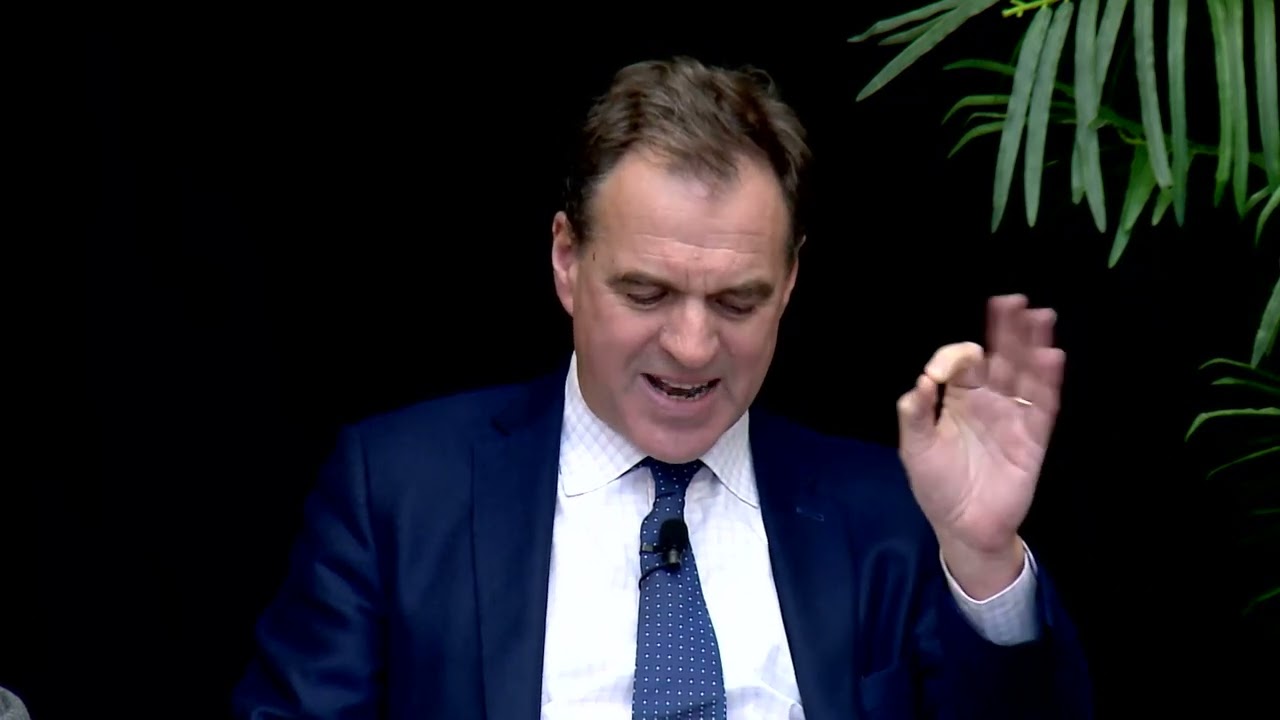
In a moderated panel, Niall Ferguson, Tyler Cowen, and John H. Cochrane examine why academic freedom has eroded in U.S. higher education and what economic forces drive the problem. Ferguson argues that universities were created as market‑free enclaves for deep, long‑term scholarship, but today they are dominated by a left‑leaning orthodoxy that forces conformity, inflates administrative bloat, and concentrates salary and grant‑making power in committees aligned with that orthodoxy. He proposes that true academic freedom requires new, financially independent institutions such as the University of Austin, and suggests structural reforms like a university‑level judicial branch to protect speech. Cowen contributes a pragmatic nine‑point “self‑improvement” guide for scholars, emphasizing niceness, dean relationships, working at state schools, fundraising, and leveraging the internet’s far greater free‑speech arena. Cochrane frames the issue in classic economic terms: higher education suffers from severe market protection (government subsidies, nonprofit status, lack of competition) that shields incumbents from competition and innovation. He argues that competition, not reform, is the engine of change and points to philanthropy, professional societies, and alternative think‑tank‑style institutions as possible venues for preserving freedom. The discussion also touches on the role of DEI and Title IX offices as de‑facto speech‑policing bodies, the myth of a “pendulum” swing back to the center, historical analogies (German universities, Stanford, Chicago), and the practical difficulty of altering hiring governance within large, department‑driven universities. The panel concludes that while American higher education remains world‑class, it faces a crisis of free inquiry that demands both internal innovation and external experimentation.
Chapters
We have a star-studded panel on the topic of the economics of academic freedom. Two senior fellows from the Hoover Institution, Neil Ferguson and John Cochran, who's also, of course, the co-organizer of the entire conference. And then seated at the far end from me is Tyler Cowen, a professor at George Mason University and the polymathic blogger at Marginal Revolution. We'll aim to have some short opening remarks in order that folks are listed in the program and hopefully have a spirited exchange among us as well. As the moderator, I'll take the chance to open up the conversation soon enough. And I just wanted to take the moderator privilege to put a few topics of conversation on the table that our panelists hopefully will address. Anyone who's read John Stuart Mill knows that he's introduced the idea of the marketplace of ideas, and a panel discussion on the economics of academic freedom hopefully will address questions about the marketplace and whether or not we have a marketplace failure in higher education. Why hasn't the marketplace and competition produced different outcomes than we currently see? Can we, apropos Jonathan Haidt's presentation this morning, think about the marketplace of ideas as a meaningful metaphor in an age of social media? Do we find that the much greater contributors to the provision of ideas and content in our online digitally mediated structures is tending toward truth? That seems rather dubious, so how ought we think about the marketplace's operation? And then I'm also curious to ask questions about the role of philanthropy and as an economic contributor to academic freedom. And I'll observe something quite commonsensical, The first Gilded Age produced philanthropists who were very interested in creating and experimenting with higher education. All kinds of universities were formed in that first Gilded Age, but contemporary philanthropists do not seem as interested in doing so, and I'm curious to ask, why is that? So we'll begin first with Neil Ferguson.
Well, thank you very much indeed, Rob, and thank you to John and Ivan for inviting me to this, uh, very paradoxical enterprise, a conference on academic freedom held on the campus of a university. That's contrarian. So first of all, let me make it clear that your framing of the problem must be wrong, because most people become academics precisely in order to escape from the market. The reason we become academics is so that we have time to do things that are essentially not viable in the marketplace, in my case, write enormously long books and think. So I became an academic because it was clear that the minute you leave university and enter the marketplace, you no longer have any time to think. And most of us want to be left alone to do our work, which is thinking, reading, producing research. And I wish I was doing that now. I wish I didn't have to come to a conference on academic freedom. I wish you'd just leave me alone to do my effing work. So, the whole notion of a marketplace is redundant here. The marketplace for ideas is where you go to sell trade books and write articles and do TV, and it's sink or swim out there. But in university, we're supposed to be protected from the market for a period of time, and that's what universities are. They've been deliberately designed enclaves outside the market system from their very inception in the medieval period, where scholars got to study and reproduce knowledge, transfer it to generations younger than them without market constraints. Part one. I'm gonna say 9 things, by the way. The second one is, if you want to engage in that activity that I've just described outside of the marketplace with the pleasures of study, that's the prerequisite for academic freedom, a job like that. But in order to have a job like that now, you increasingly have to conform to standards of intellectual orthodoxy or conformity, which are almost reminiscent of the 19th century university and earlier. Eric Kaufman is here somewhere. Eric, whom I gave the wrong dinner date to last night, mea culpa. Eric's work, just to give you a couple of examples, over 4 in 10 North American non-STEM academics would not hire a Trump supporter. 1 in 3 British academics would not hire a Brexit supporter. 40% of American social sciences and humanities academics under age 40 would support at least 1 of 4 hypothetical dismissal campaigns against a colleague. That's research that Eric published last year. 85% of liberal students, according to the Chaly Institute, would report a professor to the university if the professor said something that students found offensive. 1.46% of Harvard faculty, where I taught for 12 years, are conservatives. It's a quite small private dining room, because I've held that dinner. So, that's the problem. Now, it's conventional to argue, this is my third point, that the economic problems of universities are to do with the cost of administration. There are as many administrators as undergraduates at Yale. That's true. That kind of poses a threat to academic freedom if the money's being spent on a bureaucracy of meddling officials who see their role as being to police speech and behavior and hound the last 7 academics out of the faculty. But point 4, I think a more, much more serious problem is the way in which the resources to pay academic salaries, to confer research grants, and other essential forms of academic revenue are concentrated in the hands of committees dominated by the representatives of today's secular orthodoxy. That's a much bigger problem. Fifth point. The belief that there's some kind of pendulum in academic life, like we're in some big grandfather clock, and that this pendulum will somehow, of its own accord, swing back towards the political center, and presumably then swing towards the right, 'cause pendulums don't just stop in the middle. That's a total illusion. It's a complete illusion. The sustained ideological drift at the universities has been a 50-year project. You can see that. Stanley Rothman and co-authors had a paper way back that said 39% of the professoriate were left, described themselves as left in 1984. 72% did in 1999. And at Harvard, it's now like 98%. This is a sustained shift to the left. Mitchell Langworth's work's already been cited, but if you're in a field like history where the ratio of registered Democrats to Republicans is 17.4 to 1, you are in a domain in which the idea of academic freedom is only, in fact, available now to the card-carrying liberals and progressives. Conservatives can't have academic freedom because they can't get academic jobs. To be identified as a conservative, to have, in fact, the name Ferguson associated with you, is a kind of black spot, like something out of Robert Louis Stevenson. So graduate students who have the black spot have to seek employment elsewhere. You can't have academic freedom if you're not an academic.
Okay?
Number 6, the only possibility for increasing academic freedom must be the creation of new institutions. This follows logically from what I'm saying, that are not under the control of the custodians of the new orthodoxy. And that's why I've become involved in the foundation of the University of Austin, because there is no other way to do this. The existing institutions will not fix themselves, because why would an institution that is 98% to the left vote to change itself? That's not gonna happen. By the way, Joe Manchin, don't cast aspersions on the University of Austin, which you did, because Even the Chronicle of Higher Education couldn't really find anything negative to say about what we've achieved in the last 12 months, despite the, uh, extraordinarily negative press that greeted, uh, the launch of the project last year. And we are building a new university, and that new university will ultimately impact the existing universities because it will start to attract the best students by being an authentically free university, which does not engage in systematic political discrimination on the basis of a secular religion, progressivism. And I know it will work because the summer school that we launched and ran in June attracted fantastically good students who clearly relished the opportunity to be in a classroom where free thought, inquiry, and debate were not merely tolerated, but were the whole point of being there. So if you have a meritocratic institution that doesn't engage in political discrimination, it won't be long before your graduate programs at least begin to attract a significant amount of talent. And that's the way— I think that's the only way things get fixed. I'm nearly done. Academic freedom isn't just for professors. Students undergraduate and graduate are entitled to it. If 63% of students agree that the climate on their campus prevents them from saying things that they believe, which was the latest Heterodox Academy survey, there isn't academic freedom for students, which is another reason why we need new institutions that actually have academic freedom. Penultimate point. Economists— and I'm sitting next to two very distinguished economists— are always telling me that people respond to incentives. In fact, Jon says this on every episode of Goodfellas. But where exactly are the incentives today in academic life to engage in free thinking and discourse? I see only disincentives. There are only penalties for taking risk, for example, setting up a seminar, a conference on academic freedom, or for example, holding a series of free speech events. There are no rewards. There are only punishments. So why would you do it? So it might not be a bad idea, if we want to encourage academic freedom, to reward it. How about prizes for people who model academic freedom? How about that being the thing that people get honored for, rather than slavish conformism to an ideology which is in any case demonstrably dysfunctional whenever it's applied in the real world. Let me, let me add a 9th point. It's bad news. The only way, in fact, to have true academic freedom is to have financial independence. As long as academics are a salariat dependent on, actually by global standards, very generous salaries, They're never gonna have true academic freedom. Wage slaves don't really get that much freedom. When John Maynard Keynes got a fellowship for the first time at King's Cambridge, and I think of Keynes as somebody who engaged in real academic freedom and took risk in his career on multiple occasions, and came through intact. Well, his first stipend was £120 a year. That's 10,000 modern pounds, which is a relatively low amount even in British terms today. That would be considered at the lower end of British academic salaries. In 1919, he was offered 20,000 a year to join a bank as chairman. He declined that. But he was able to decline it because in a very short space of time, through speculation in the foreign exchange markets, He made £60,000, the equivalent of about 1 million, 1.5 million pounds. And from that point on, Keynes was financially independent. If you want to have academic freedom, that's what you have to do. It's as simple as that. The only person who really has academic freedom at this conference is Peter Thiel. That's all I have to say.
Thank you.
Tyler Cowen. That was great. Now you'll find out how much less literate real economists are than our friend who is an honorary economist. I won't— with the assigned topic of economics, it's tempting to say what's going on in economics. Unfortunately, we're much more political than STEM but not nearly as funny as the humanities. But it's getting politicized like everywhere else. Let's talk about how one thinks of academic freedom as an economist. But I wanna start a little bit political because I think it's important to recognize that we are a small part of a larger issue. There is a political/religious movement going on. A small 8% of the population wishes to take over power, but they can't do it by elections. So they do it by capturing the institutions of civil society, by which case in that way you can— and they desire authoritarian power to tell us what to do. And universities are kind of a key institution because they lead to other ones. But the institutions of the federal government, the philanthropies, you know, the administrative agencies are a very important thing to capture, the institutions of law and so forth. If you can capture that, you've got the rest. And it's a classic technique. It's important in such an endeavor to have apocalyptic nonsense that you make people repeat over and over again. The Soviets did this, the Maoists did this. And it's important to crack down. Why, I mean, I'm perfectly happy to anyone have critical theory all they want to. All I want is the right to talk about something else. But we can't be allowed to talk about something else. In such a movement. Let's turn to the economic question. Yes, what do economists know? Incentives and competition. Competition is the answer no matter what the question is to an economist. Now what we observe in other areas is that institutions do not get reformed, they get replaced. IBM didn't do— they actually started the personal computer, but then they ended up not doing it. Time and again, old institutions go away. The American car companies got cleaned by the Japanese. They didn't get reformed. So the natural answer for the economist is if these institutions are rotten, don't count on reforming them. But the key is the ability to have new institutions come in and compete. And this ought to be a great moment. If we are right, American universities are on a catastrophic self-imposed failure of their primary jobs of research and teaching. The quality of what comes out is already and will soon be destroyed. Well, that, you know, every destroyed institution is an opportunity. Where's Peter Thiel? You know, it's a venture capitalist dream to have something like that. And today is a moment of great opportunity Suppose you set up a university like, say, University of Austin, and you say to yourself, not just we're gonna be a safe space for classical liberals, but we're just gonna pursue excellence in all fields. We will hire lots of STEM people, and all we wanna do is get the absolute best. This is a great moment. There's a lot of best that are for sale. But the puzzle is that that is so rare. That seems like an opportunity, not just for new institutions, if you're competitive, if you're a number 25 school somewhere, why do all universities in the country have to be following down the trail that they're following down? Isn't there room for one of them? I would have thought a number 25 university that's competing to get up in the rankings would see this wonderful moment to be different from the others, but they seem not to do that. So that really is, to some sense, the economist's puzzle. What is— why isn't this happening faster? Well, as economists, we jump to there's protection. Yes, there's protection from competition. This is, in fact, when you look at higher education, it's by all metrics one of the least competitive industries around. The same top 5 names are the ones that were the top 5 names 100 years ago. It's hard to think of anything outside of banking and healthcare. Well, even those aren't quite as bad as higher education. You know, today we keep saying, oh, the tech companies are monopolies. And I always go, oh yeah, Netscape, AOL, Time Warner, and Yahoo, they've got a lock on this. Well, compared to that, higher education is nothing. Well, where is this protection? Well, there's a lot of— and you know, if we could get rid of that, I think the flowers would bloom. A lot of it, of course, is the involvement of the government. That is the elephant in the room. With the government's money, with the government subsidies, with the government's loans to your students, However, comes the, you know, the devil comes with his bargain. The Title IX kangaroo courts comes with the fundings. We are also protected by our nonprofit status. Now here Richard Lowry, who's a great, you can tell, finance economist, so I'm gonna translate a little bit. A normal company, when its costs are exploding, it has administrative bloat, and it's product is sharply declining in value, what happens is somebody comes in, buys up the shares, and then fires the management, cleans out the stuff, and gets us going again. You can't do that to university. Nonprofit status, among other things, protects you from the market, from corporate control and competition. So that's one of the— now I'd like to just get rid of nonprofit status, but we're a long way from that. Nonetheless, recognize that that is one of the main protections of competition. Competition on the top. Let's also recognize competition isn't as obvious as we would think. We believe in academic freedom, freedom of speech. We believe in the pursuit of excellence. Number one is the mission of the university. We believe in meritocracy in the university and in society widely. This is a very recent and rare idea for what a university does. For centuries, universities, they were there to indoctrinate the young into to the values of the old. They were organized by religion. The whole idea of a research university was some crazy Germans in the 19th century. The idea of making it meritocratic only came to American universities in the 1950s. In part, you know, the government wanted STEM because it realized the Russians were ahead and we couldn't just keep— so that's a rare flower and one that we have to recognize how rare that is and not obvious in many human societies. You know, having the right sort of people in the elite was more important than the smart sort of people. It has been a great— else economist, this has been a boom. Many estimates, who knows economic estimates, but a large fraction of our economic growth came from taking people who in the 1950s would have been really smart janitors or auto repairmen and getting them into universities. The women, blacks, minorities, Immigrants— well, you're not going to like everything I say, Peter. So you get to boo later on. But smart people who would have languished in other places came and were able to use their talents. We have a long way to go. As mentioned, though, there's a lot of people who live in the rural heartland, a lot of hillbilly elegy types, a lot of religious people, a lot of people who don't make the political litmus test to make it into universities. Who are smart and could come. We're throwing that away. Now, but why? What is the competition for the university? So for that golden moment, I'll say 1950s through 1990s, universities competed on their great research faculty and on their smart students. They don't do that anymore. Computer universities compete on their DEI offices. Why? Because their clients are government agencies and their clients are wealthy philanthropists who like that sort of thing. It's actually kind of remarkable that the philanthropists of an earlier age were so impressed. I mean, you all get these alumni magazines where they say, "Look at our laser spectroscopy lab." Why do I care about your laser spectroscopy lab? Stanford just got $1.6 billion for our School of Sustainability. That was not sold to the donors on the basis of its pure science. That was sold on the basis of, sorry, feel good about yourself. And that's how it always was. Rockefeller, you social climbed in the 1900s by starting a research-based university. You social— philanthropy is social climbing. You social climb now by starting something quite different. So in fact, you know, it's really strange of us to think that anybody wants what we want. And that's an economic lesson more generally. Growth is the hope that comes out of Pandora's box last, but nobody likes it. And that one thing that we think is important, there's actually very little constituency for it. So it's weird that they care. We have to make them care. But other people could— the other place where competition comes from, China. We have a fun discussion about China about every week. But the Chinese are building universities like crazy. And they just want STEM kids who know how to program AI. Now, maybe foreign competition will be good for us. Another good— Europe is another interesting question. Their universities are poor, and if we're gonna think about the economics of universities, the tremendous difference in salaries between here and there is interesting.
But they're being—
they're all basically government-funded, but as a result, a little bit less exposed to the things that are going on here. So quickly, quickly, I have to promise myself, solutions. What are we gonna do about it? I think we've overestimated here the persecution of individual faculty. The real danger is, to an economist, Bastiat, the things not seen, not the things actually seen. The research not done, the people driven out of academia, the knowledge not gained, the knowledge not challenged. And suing is— helps individual faculty, helps the environment., but isn't directly going to help that. Build alternative institutions, not just alternative universities. Build institutions that help us. I think the Federalist Society is a great example of a safe space that has been extraordinarily influential, given what we're going to— I think Ilya Shapiro is here going to tell us about legal education. The legal education is— given what's going on there, having that institution has been enormously useful. In the US, FIRE, AFA, you're all here, institutions to show what's happening at the Title IX kangaroo courts. We can fix our own institutions to some sense. Neil told me a great story which shocked me a while ago. He said, I was at Oxford. We were complaining about, as many of you complain about the quality of students being let in now. He says, I was at Oxford. We read all the undergraduate files.
What?
A full-tenured professor reading undergraduate admissions files? And Neil said, well, we never get dumb students because we only let in students that we think are smart. Well, what? Gosh, we could do that too. So, you know, get off our butts. Why have we outsourced admissions to staff? Staff who I know at Stanford who consciously say we are not looking for scholars, we are looking for activists. Oh great, you're 18 years old, you know all the answers already, and what you really need to do is go out in the streets and join Greta Thunberg and force her. How about you learn something first? Well, we could at least take over and then volunteer to serve on the committee. As Neil said, there's a lot of not wanting to get off our butts. Phil Graham came and told us— it was a Republican-Democrat joke, but it applies. He said the problem with Washington is that Democrats love government, so they're really good at it. Republicans hate government, so they're terrible at it. And when they get in power, they're completely incompetent at doing anything about it. Well, there's some sense to that. You know, people who have time on their hands love to play on these committees, but we could take over as well. Societies like this, however, we're not individuals. You need to know you're not alone. There's support in creating individual centers. We've talked about several. We can't take over a whole university, but you can create— Neil asked, where will research be done? Well, you can create centers. You can create think tanks. I think we will move— research in the university may be dying. Well, we will have alternative institutions that can support research and much more cheaply than the amazingly expensive university. Take your professional societies. I harp on this one because I'm annoyed at my professional society, but the professional societies and the journals are as much of a problem as the universities. Well, there's competing professional societies. Societies. One, you could complain to yours, as I regularly complain to the American Economics Association, but you could take over another one, or you could start a professional society that is dedicated to preserving academic freedom. We could measure. Measuring is important. Now, diversity is a poisonous word because it has— it's a classic Orwellian word that has turned into something that it did not mean. You, of course, all know where it came from. It was invented by the Supreme Court. When the Supreme Court said you can't do race-based admissions, they said, well, but you can do diversity. Aha, diversity. To the assault on the English language that now is referred to, people are referred to as a diverse person. You cannot, a person cannot be diverse unless they're schizophrenic. Oops, I hope schizophrenic isn't something you're not allowed to say anymore. But let us take it honestly. So we have a diversity website here at the university, and our Provost, Persis Drell, wrote a very nice— has a very nice piece from the Provost saying diversity means all kinds of diversity. It means diversity of political opinion. I won't quote it exactly, but I'll go on. It means diversity of background. It means socioeconomic diversity. It means diversity of religious belief, all those things. The rest of the diversity office and our diversity webpage doesn't do any of that sort of thing., but it could. And a simple stat— it's not hard to measure. We have measured Democrat to Republican ratios among faculty. One could do that in a university. One could ask students. And one could at least measure and then begin to be concerned with the surprising lack of diversity. I want more diversity. Even though I'm a confirmed atheist, I want to see more people of religious belief here. I want to see more Hillbilly Elegy types, at least before his conversion to something else. I wanna see more people from the heartland. I wanna see all those talented people from everywhere. And measurement is a place to go, a place to start. Because my real objection to the diversity, DEI stuff, has nothing to do with the racial aspect. We all know these are now political litmus tests. These are being the DEI statements. They're called diversity so that if you object to them, they'll call you a racist. The real— my real objection to them is that they are filters for a political monoculture, for obeying a political thing. And that's okay. Neil's telling me to shut up.
He's telling me to shut up.
I never tell you to shut up. Okay, let me just lastly, politics does matter and I want to discourage. So, you know, for example, the bans on critical race theory, I think, are profoundly not only bad, but counterproductive. The answer is just freedom. Let them say whatever they want to, just we have to have the freedom to answer. We don't have to win, we just have to survive. Ron DeSantis, bless his heart, getting rid of tenure is a terrible idea. And that was already mentioned, because then the same bureaucrats who are in charge can get rid of you quickly for your bad tweets. I'm a free market economist, I tend to not say good things about unions, Canada, we have seen that faculty unions have kept faculty's right to say what they want to. So bottom line, I saw the freedom sign and I was thinking, oh boy, I hope that doesn't mean we end up like William Wallace, our famous Scotsman, yelling freedom on the byre. But hopefully we can keep going and at least stay alive.
My understanding of the economic incentives is that freer speech in universities is not coming anytime soon, so I would like to give you Tyler Cowen's simple 9-point guide, "How to Improve Yourself," which oddly no one here has really talked much about. It's all about how to improve the world. First point: be nice. Just always be nice. It's good for your happiness also. Second point: Try to meet your dean. Deans really matter. But don't meet your dean to tell your dean how important you are. Deans are wise to that. Meet your dean to listen to your dean, whether or not you agree with the dean. Third point: work at a state school. You don't have to do this, but you have much freer speech at a state school. Now, I get the dollars and cents equation here. You are on average paid considerably less at a state school. As someone who's very pro-capitalist, it's fine by me if you prefer the money. But let's then just be honest about what we're all on about here. A lot of you are a bunch of people who would rather have less free speech and earn more money. That's fine. That's the same calculus that other people in the system are making. But you can get a lot more free speech by coming to George Mason. I'll do my best to get you hired. Fourth, try to raise some money for your school. I mean, some of you here are faculty, some of you listening are faculty. I mean, what's the polite way to put this, but some of you are parasites, right? And try not to be parasites. If you do it properly, you will actually have more free speech de facto if you're able to raise some money for your school. So I say do it, and it can be money for a program you believe in. Fifth point, and this is really important: leave, or at least redirect your energies. Consider the world today. Outside the university, you have more than 100x de facto free speech than you did before the internet. Not 30% more, not 2x more, 100x more. My de facto free speech I never could have had before the internet. So it's there now. You just— have to take it. And the relative influence of the internet compared to universities in driving ideas for the next generation, that's been an enormous shift away from the universities. So there's this incredible solution. You can even keep your tenured post if you want. So I would just say do it. I mean, in the universities, as I indicated before, we've lost the battle. Look around this room, the speakers, us, we are old in this room. And after the first session, the line at the bathrooms, the line for the men's bathroom was really long, and no line at the women's bathroom. Even at an NBA game you won't see that. Or if I go to an effective altruism conference, the positive energy I feel in the room from the young people is incredible. I don't feel that here. I really don't. I'm not blaming Any of you, not blaming Stanford, the organizers, but our cause is losing in the universities. Our cause is winning very dramatically in the world. So live in the world first and foremost. My next recommendation for some of you, be a right-winger. There's a lot more free speech on the right than on the left. To be clear, this is not for entirely good reasons. So I think— In some parts of the right, there are people there who believe what to me are unacceptable things. I do tolerate them, that's my basic temperament. I find it uncomfortable, but the net result is much more free speech on the right. Now, this is not true for everyone. If you're trying to get an assistant professor job in sociology, you're not gonna have more academic freedom by being on the right. But if you are Larry Summers, or dare I say Steven Pinker, who is here— What's that old children's song? Like, "Rover, red rover, let Johnny come over." Like, we embrace you. If you're a right-winger, they do not cancel Satan. The number of hard-left people who try to cancel Larry, Stephen, a bunch of others like you is enormous. If you were more like us sociologically, you would actually be a lot safer. So please, we'll do our best to make you feel entirely welcome and defend your free speech. Just realize not having total or even satisfactory free speech, it's nothing new. It's almost all of human history. It doesn't mean you should like it or accept it. Universities at their most potent, 19th century Germany, didn't have free speech. Again, work to improve it, but to keep your own sanity, just count the blessings you have. They're really quite incredible. Even if you're someone who is partly cancelled, So be optimistic. It will make you effective. It will attract more dynamic young people. Be more like the effective altruists in that way. So like, A, don't whine. B, don't whine about the whiners. And I know I'm whining about the whiners a bit here. But don't whine about the whiners about the whiners and so on. And now I have to stop at this point or it will just collapse into total self-contradiction. And the final point is just don't let the free speech crusade turn you into an opponent of free speech. And I see this many times. So I'm against all the canceling and the this and the that. Like, I know those stories. I'm on the side of, I think, almost everyone here. But I see and hear people all the time. They go overboard. And when people criticize them exercising their free speech, there's not a sufficient distinction drawn. I was struck by the first talk by John Haidt, whom I love and admire. But he closed his talk by saying, "You know, the real problem here is free speech. It's all this stuff that people were saying on social media between 2014 and 2016." Now, he's entitled to his opinion. We should take his opinion seriously. But it's stunning to me that our first big talk, our keynote speaker closes without even admitting it with an attack on free speech. So, like, be positive, be good, some of you be right-wing. And to the rest of you, thank you all for coming and listening.
All right. We got Tyler Cowen's recipe for a happy life right there. Let me invite the panelists to see before we go to questions if there's any exchange to be had up here. I feel a difference in disposition between this side of the stage and that side of the stage.
I love it. I just want to say There are more young people than you think. As an organizer, we talked to quite a few who said, I don't have tenure, I'm worried about my position here. So they're hiding, but they're there. So be even more hopeful.
All right, let's go to Clint.
Can I ask Neil a question? Please do. I'm struck by the NBA. Kyrie Irving endorses this antisemitic film. The NBA suspends him, right? It's not because of the government or title whatever, the wokies. It's a purely commercial decision. Now you're gonna have deans at Austin and they're gonna face cases of instructors or staff doing and saying bad things. Now I don't mind if you just copy the NBA, that's up to all of you, but how is it you with your deans are gonna do a better job than the NBA is doing with Kyrie Irving? NBA probably did the right thing in my opinion.
Yeah, well, that's it, isn't it? I mean, the problem is our governance system at universities, certainly private universities, almost certainly puts us in exactly the same position where, for reputational reasons, a professor who said the same things would find himself in the same situation. I wonder if there is a fundamental design flaw in the way that the way we have structured universities, so that decisions of that sort end up being made by committees of academics, usually under pressure from promoted academics who've become presidents or deans. It's interesting to me, and this is a point that I'm thinking a lot about in the case of the University of Austin, that universities typically have an executive branch, they have a legislative branch. The executive branch is the president and the bureaucracy, and the legislative branch is the tenured faculty, but there isn't actually ever a judicial branch. Now, the United States has been battling with the problem of free speech, what is hate speech and what is not, for more than a century. We actually have a pretty good body of law on these issues. And it seems to me that universities would be better served if they had their own judicial branch where the university had clear charter, a clear body of law, and that those kind of decisions were not taken by colleagues who just happened to be serving as deans. I think it's a structural problem that any university is going to be confronted by. And if we want to avoid simply being the NBA, I think we have to learn from the experience of the founding fathers. They created a judicial branch for a reason. And free speech thrived in the United States. For a reason, in a way that it did not thrive in Europe and elsewhere.
As long as we're back and forth, Tyler said something short and he needed to say it longer because he said this last night describing his students. And I also had a conversation with somebody else who teaches in a private college who said, oh my God, the quality of our students has gone catastrophically down. Tyler said last night, I get great students. They're first and second generation immigrants hardworking. Their cultural issue is, "Uh, we wear hijab at home. Should I wear hijab?" Their issue is not the issues here. There is a kind of diversity and a kind of amazing quality that shows up at a state school that doesn't show up at private universities.
I'm very happy to teach at George Mason University. It was once rated the second most diverse student body in the whole country. We don't have to make a particular effort to be there. We take a high percentage of those who apply. We have a lot of great students, a lot of not so great students. And that world is there for many or most of you to teach in. So I would urge at least some of you to seriously consider doing that with your lives. You will be more in touch with reality, among its other virtues.
All right, let's go to questions.
Questions?
I can't see who's got the mics. Please, go ahead.
One of the models that economists often use for higher education is that they're institutions designed to accumulate nonspecific human capital, things that a firm wouldn't want to waste its money on because you could just take it next door and sell it there. So they're not going to try to teach you that on-the-job training. But a university can teach it to you. You can take it wherever. And then the other sort of common model of higher ed is the Spence signaling model, where you show that you're— you show that you're— you have great aptitude for work and great capacity because you came in and ran the racecourse at Stanford or Harvard or someplace. And my intuition is that the latter model is the one that gets brooded more, and that the latter model is less consistent with the values of free speech. But I would be interested to know what our distinguished panel think about that.
The thing about the latter model is that I think it stops working if the universities are no longer producing graduates with the kind of skills that employers covet. And it seems to me there is now quite a meaningful delta between what elite employers are seeking and what is coming out of 4 years of elite education. And that's, I think, one of the soft underbellies of the system, that it's steadily becoming less meritocratic. It's becoming— it's producing people with skills that are more questionable, and there's skepticism. One hears it all the time, whether on Wall Street or in Silicon Valley, about exactly what the results of a 4-year elite education really are. But that's clearly one of the things that makes it hard for competition to thrive, because the brands— and this is another part of the story, surely— the brands are very strong, particularly when it comes to undergraduate degrees. And in order to get that brand, young people will tell almost any number of lies about themselves at the application stage. And the corrupt system of admissions that is normal in the United States, but not normal in the UK, allows their lies to become the keys to access. So I think the system, as you characterize it, is certainly in the second sense in some decline and vulnerable to an institution that offers the real thing. Meaningful signal to employers.
I was gonna say quickly, so STEM is the one place you learn something actually valuable in universities, and that's fairly recent and measurable. There's a third model, which is this is what lets you into the cultural elite, which I think what universities were up until 1930 or so. It's where you learn to hold your teacup properly and then move on. Now it's where you learn to catch woke speak so that you can go into the proper places. It culture— it puts you in this culture. That only holds in a fairly uncompetitive society. The uncompetitiveness of the university, the existence of this elite university where I tap you and then you can go on to a job at Goldman Sachs, demands a fairly uncompetitive society beyond it.
Putting aside wokeness and politics, I think I have a much more positive sense of America's top universities than the other panel members. It seems to me they're in extreme same demand throughout the entire world. It's miles and miles the best system. Only like Oxford and Cambridge are competition. Today's elites, who are like way to the left of where I am, but just, they're so much smarter than the elites when I was a kid. I mean, the elites back then were kind of dummies. And maybe now I disagree with them. They seem to know a lot more, they seem to be quicker, they're drawn from a much broader pool of talent around the world. India, China was not the case when I was a kid. Like, just the numbers game alone, they have to be much better and smarter. So I think we need to internalize that to understand what it is we're up against. Like, the current system— getting back to Rob's initial point— it is mostly working. If you think of it as a broke, bankrupt system that's only teaching people in a few areas, I think one badly misunderstands it.
Please.
So one of the problems with the fact that nobody else would come to this is we're all just agreeing with each other. I'm going to change this. Okay, so let me first correct you, John. A, the top 5 universities are not the same. Stanford was not on the list and it now is, and Yale was on the list and it isn't. Start number 1. IBM is a thriving organization. It didn't go out of business. Yahoo isn't thriving, but it's still in business. So the idea that you cannot change from within, I think you made the point it's very easy. Organizations can. So I'm going to fundamentally disagree with Niall on almost everything you said. Okay? It's slower. And I think part of the arrogance that you have that nothing can change is because for some reason human beings are not able to look at other cases where things have changed. They have to live through it themselves. Now, the Eastern Europeans in this room have lived through it, and I have lived through it, okay? And I will tell you, having lived through change, how quickly a population goes from certitude of one crazy idea to suddenly saying, oh, I never thought that, right? So the idea that I— that the— that the— that the— that the out— these academic institutions are lost, I think, is naive. They have crazy ideas, and there will come a time when that pendulum will swing back because some external force, maybe a nuclear war, for example— I'm not being— I'm not— that's some crisis to get people to think about, well, maybe we need to go back to science.
Sputnik.
But the problem that I have with that is it's a pendulum. We may find ourselves in the distant future where we're on the other side and there's no academic freedom for the woke ideas.
Well, let me just address this as an historian because it seems to me a very naive thing to draw an analogy with the end of apartheid and what clearly needs to happen in US universities. I said there is no such thing as a pendulum. A better analogy would in fact be a ski slope. Let me tell you another example. It's the case of Germany, which had the greatest universities in the world, really, from the early 1900s through to the 1920s. Won many more Nobel Prizes than the US universities. And nobody really, by the 1920s, disagreed that the German universities—Heidelberg, Tübingen, and the others—were the greatest universities in the world. There There was only one small problem, and that was that they lent to the right. Max Weber was not exactly a conservative, but when one reads some of Max Weber's writings, he seems, on nationalist questions, quite far to the right by our lights. But he was the Larry Summers of German academia, somebody who was considered liberal. The history of the German universities in the 1920s is very sobering to all of us who sit here in higher education feeling superior, because Nazism spread much more rapidly through the higher education system than almost any other walk of German life. Was there a pendulum in Germany? You just used a comical argument that a nuclear war might possibly change things. You know what had to change in Germany? Something very close to it, the total destruction in 1945 of the German Reich. Even then, the German universities continued to lean rightwards, even after 1945, and it wasn't until 1968 that that changed. So I think it's very dangerous to assume that there's a pendulum. Unfortunately, the history of higher education points in exactly the opposite direction. What it shows is that when institutions are captured by particular creeds, those creeds take total control.
Sorry, that's history. But a great discussion, thank you.
So, so Neil, first of all, I wish the University of Austin well, and I really hope it succeeds. I'm very skeptical. I don't think it actually will get to the point— it will succeed, you know, you can, you can build a university, you can start a university, that's fine, and you'll get students. The real success is when a student applies to both, say, Princeton and Austin and chooses to go to Austin— gets in both and chooses to go to Austin, not Princeton, or Stanford and Austin or Harvard. And my prediction is that that's not going to happen in any of our lifetimes. Even the younger ones here. So, because it's very hard, it's very hard. I mean, what John said is right. The change in rankings of universities happens very slowly. Now Jonathan was right that Stanford was not, Stanford has not always been in the upper reaches. But if you look at, I've looked at rankings back to the '20s, and Stanford is the only university that has monotonically increased in its ranking of any US universities. There are ones that have gone up and down and so forth and so on. So it's very hard to do. It's very hard to build a high reputation. University. So that makes me wonder— so now I'm shifting— that makes me wonder about John's question. Why isn't there a university that has just decided, we're going to do it differently. We're going to hire solely on the basis of quality. We're not going to let any kind of any political considerations come in. And I've heard, John, I've heard you ask that question several times. And it puzzles me. So I've tried to figure out what is the answer. And I think the answer— the only answer I can come up with is that universities are incredibly difficult entities to move. They're like supertankers, or worse than supertankers. And why is that? It's because the decisions in universities happen— think of the hiring decisions. You know, the president and the provost don't make the hiring decisions. I mean, they eventually approve them. Those are all made by departments and individual faculty. And there are a lot of departments, you know, 120 departments. How do you— so how do you get all the departments marching in that direction? How do you get them to buy on to that? I don't know the answer to that. I just don't know what can be done and why, for example— I won't use an example.
I won't use an example.
But why some university that is currently ranked 15th doesn't do that and say, I'm going, you know, I'm gonna take this university and in 10 years we're going to be in the top 10 or the top 5. I don't think, I don't see how you would do that if you were a president or a provost. I don't see how you would get your faculty to go along with it. So that's the only answer I can come up with, that that's why nobody's done it because nobody has that kind of control over the university.
Can I offer a couple of thoughts in response, very briefly? I mean, first of all, the fact that Stanford did it makes it perfectly plausible that the University of Austin could do it. And I think you're wrong. I think people will be choosing to come to the University of Austin over Princeton and Yale and Harvard and Stanford within 10 years. And the reason I think that that will happen is that there is There's so much dissatisfaction amongst young people today with the status quo. They are thoroughly fed up of the woke campus. And so we'll probably make the first inroads with graduate programs because there's lower risk to taking your second degree at a new institution, but that'll be where it breaks. People will be choosing our graduate program over the Harvard MBA within 5 years because it will be so much more attractive. The second point I would make is to understand the rampant conformism in higher education, you have to understand how the professions are formed. We have a paper that Manny Rincon-Cruz just did for the Hoover History Working Group. To an astonishing extent, over 150 years, the historical profession is formed by 5 departments or thereabouts. And within those departments, a tiny number of supervisors produce most of the people who then go on to become history professors. So there is rampant conformism It's inbuilt, and it's true in almost every field. Power laws govern the formation of the profession. And so there's institutionalized groupthink. It's also the case that any university that decided to gamble on being the non-work university that was an established university would be the target of ferocious attacks, as we were, by the media establishment. And that would be so terrifying to the trustees that they would immediately fire the president.
So, Neil, I, you know, notice I didn't say that the University of Austin can't eventually become, you know, a prestigious university. I said it wouldn't happen in our lifetimes. And, you know, Stanford, it took Stanford, depending on when you start counting, at the very least 75 years.
You don't need to say that it's going to be at the top of the rankings. Rankings, whatever the rankings are worth. Your metric was, will people be choosing it over Princeton? And the risk takers will start to do that. And I've seen what those students are like. They are the ones who would rather study in a free, dynamic, innovative campus than be forced to imbibe the stale fumes of wokeism at an established institution. That's all—
I think you underestimate— People were choosing Minerva over Ivy League schools in year 2. But my worry about Austin, and Minerva for that matter, is just how it scales. I can imagine there'll be one Austin, one Minerva, 5 other things, one-offs, but will there be 20, 30, 40 other schools? Well, we're gonna be U Austin but for Tennessee, but for Maine, but for Colorado. And that's less clear to me. But I'm convinced U Austin will get top students in year 1, year 2. None of this 5 years, 10 years. Years right away because Minerva did.
The University of Chicago, your alma mater, John, was once upon a time a startup where they were giving the first courses out of basically huts because they hadn't yet built the buildings. And in America then, to go back to a point that you very rightly made, the plutocrats had no hesitation about taking a chance on an entirely new institution. And of course, there was skepticism at the time. But you go back and you look at the early years of the University of Chicago. It's amazing how quickly they went from a building site to a first-class university. So we shouldn't forget that this is America. It's not England. You haven't become England yet. We're Oxford and Cambridge.
Come on. Let me also offer hope for Neil by combining the Stanford and Chicago models. Chicago did it with lots of money and being willing to hire Jews. And Stanford did it by focusing on STEM. And students understood this is the ticket to a great job in Silicon Valley. I think some of the reluctance to go to, say, Hillsdale is you're not clear that this is going to lead to a job. I think put those two things together and you may have the secret sauce.
All right. I think we've got time for one more question. I don't know where the— who has the mic? Over there?
Yeah. Thanks. I'm sorry it's the last question. This may be too small given the conversation you just had. But I'd like to respond to Tyler's point about your example of Kyrie Irving, and he was slapped down, and why wouldn't that happen at a university? And the answer is, of course, it would, as long as the parties that make the decisions are the centralized parties. You don't have any hope of true freedom of speech when it's offensive if the fate of the individual who's speaking is in the hands of the administrators. But that doesn't mean that it can't work. It just has to be made self-enforcing. In other words, if you have a right to freedom of speech, it has to be that you yourself, if you're deprived of it, can enforce it. You need— it has to be the analogy of an individual right which the individual can sue for to vindicate. You have to get the decision-making process out of the hands of out of the hands of the people with power and into the hands of the individuals. If you want academic freedom, I suggest what you need is a system where the people who are being subject to having their freedom interfered with have a course of action they can take to protect themselves. And that means you have the rules and they're enacted in a way that's legally actionable through a grievance procedure, through— it's better if it's through lawsuits. But for it to work, it has to be self-enforcing. You can't rely— we've proven you cannot rely on the central administrations to protect the rights of faculty.
I would have fired Kyrie Irving from Mercatus. I think the NBA waited too long to suspend him. Now Facebook, Meta, soon Twitter, they're setting up these courts of adjudication. I'm fine with that. I don't see they've made a huge difference They're for places where the central authorities literally don't want to make any decision, a kind of Zugzwang, to use the chess term. But for actual institutions, you wanna kick out some people. I'm all for that.
This is also not the issue.
The issue is John— That's the point. He would kick out the person. If you have freedom of speech, it means you don't have people with the power to kick them out. That's what freedom of speech is all about. And the only way that will work is if people with the power to kick the person out doesn't have it, and the individual who said something that's offensive and shouldn't be, as long as it's real speech, that's protected, that person can't be punished. The only way you're gonna have that be the case is the person has the power to protect himself.
But let me, this is not the central issue. John brought up the central issue. When you have departments that are 99.99 to 1, it's not about firing the last conservative 'cause he said something on Twitter. It's how do you get these people to not put a political litmus test in on who they hire, to, to put in some diversity of opinion, or just excellence from someone who has a strange point of view. That's the really hard part. And, and that, um, you know, it's not about the individual cancellations, it's about moving that huge battleship.
All right, we've reached the end of our time. I think, uh, at least my summary of this is that it's the best of times for American higher education, the envy of the world, and also the worst of times in other ways. And we need innovation and exploration and experimentation within and without. Would you please join me in thanking our panel?
More from Tyler


#413: Tyler Cowen on Rationality, COVID-19, Talismans, and Life on the Margins





Tyler Cowen on Never Crying at Art, Why Rap is Dead, and Quitting Writing Books (w/ Nabeel Qureshi)


AI, Job Loss, Fertility Crisis and the Death of Careerism | ft. Tyler Cowen | PGX Ideas #4
