Tyler Cowen on AI, Talent & Why the Future Belongs to Young Minds
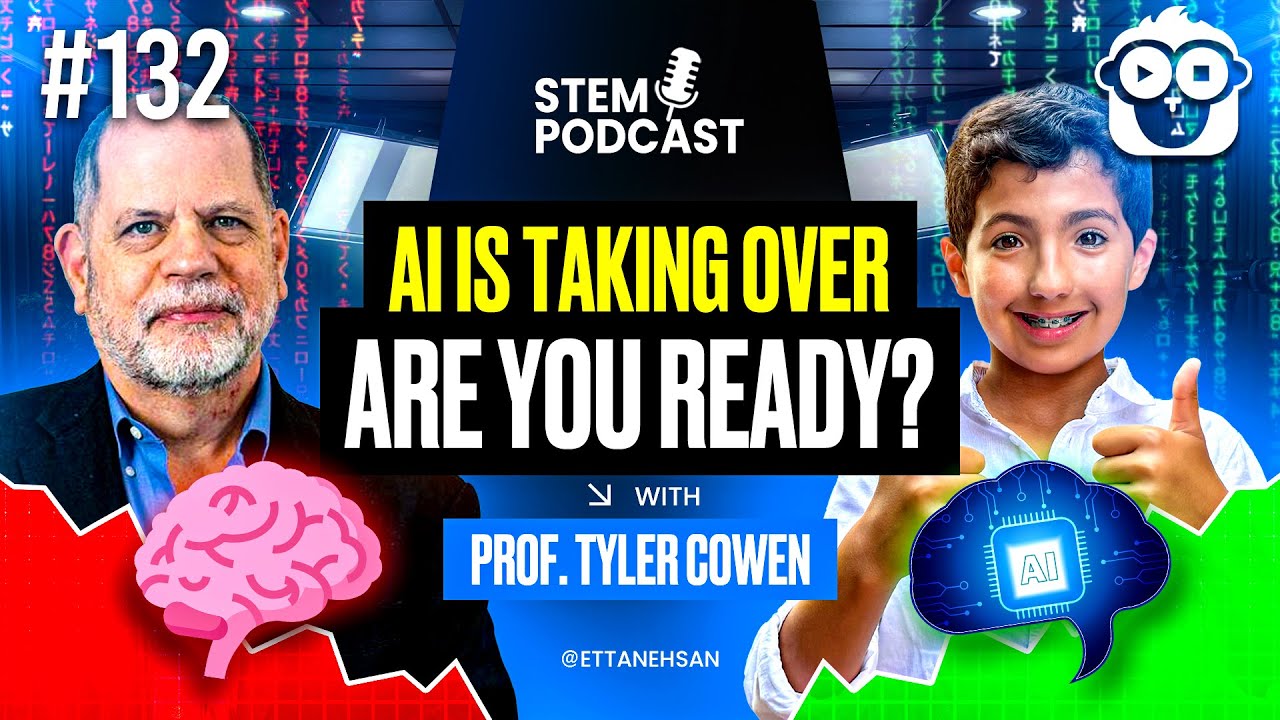
In this interview, economist and author Tyler Cowen discusses how artificial intelligence is reshaping the economy, society, and education. He argues that AI will end the "Great Stagnation" by accelerating scientific and biomedical breakthroughs, but it will also cause major labor market disruption, especially for the upper‑middle class whose office‑based jobs are most vulnerable. Cowen predicts a polarization where the lowest‑skill workers gain productivity aids and the highest‑skill workers leverage AI to build powerful organizations, while the middle may see only cheaper services. He links this shift to a decline in the "Complacent Class" and notes regional differences: the U.S. and much of the West have grown complacent, whereas places like the UAE and parts of Asia remain more dynamic. Cowen stresses the need for flexibility, lifelong learning, and early AI literacy in schools—suggesting students should even teach teachers. He also highlights biomedicine as a field poised for transformative breakthroughs, projecting life expectancy near 97 years. For young people, he advises proactive AI skill acquisition, adaptability, and openness to non‑linear career paths. The interview concludes with a call to subscribe to top AI models and take the coming changes seriously.
Chapters
What's up guys and welcome back to my channel. Today in this video we're going to be interviewing one of the brightest minds on the planet, Mr. Tyler Cowen. He is truly special because he is not only an economist, he is also a best-selling author, and he also is one of the most brightest and influential minds on the planet. He has written several books such as The Great Stagnation and even The Complete Sin Class. So without further ado, Let's get into this fascinating interview with Mr. Tyler Cowen.
Over the next 30 or 40 years, we will beat back the major maladies that kill people, and barring accidents, you can expect to live to 97.
Do you see that the world is more complacent nowadays after having AI's impact?
As a greater number of people lose their jobs to AI, people will respond I think it will happen pretty quickly. A lot will happen over the next 10 years. The best thing to do is take some initiative, learn AI, and be one of those people who manages a lot of AIs and integrates what they do. For many, many people, it's a worthwhile investment to subscribe to the very best models. I would have us teaching every student how to use AI, what the different models are, how they work.
So here, guys, we have the man himself, Mr. Tyler Cowen. And well, I'm just really excited to have him on the show, uh, one of the greatest thinkers of our days. And well, thank you, uh, for being here. Actually, you're one of the brightest minds on the planet. You're also an economist, and you're even an author for New York Times. What inspired you to do all of these amazing things?
Well, this answer will sound quite mundane, but first, I don't think I'm one of the brightest minds on the planet. Okay. And second, I don't think anything inspired me. I think I made a lot of short-term decisions. Opportunities were put in front of me. It seemed at the time like a good idea to do them, like write for the New York Times. And I did it. And one day to the other, none of it really felt all that different. Or that strange or unusual, and I just kept on going. So I think it's more a story of persistence than inspiration. That's how I view it.
Oh, so you just got in the moment. You were— okay, I see.
Got in the moment, kept on reading, kept on writing, would receive different offers, never really had a grand plan. There ended up being far more interest in what I was doing than I ever had expected would be possible. And I just thought, well, why not? And I'm still on that track, in fact. Like, we're doing this podcast. You asked me. I just thought, well, why not, right?
Yeah, why not? Okay.
What's my grand plan here? I don't have one.
Going with the flow. I like it.
Okay.
Okay. And so you have written several amazing books throughout the years, and you've talked about amazing things as well, such as the Great Stagnation. You've also talked about how nowadays people are way more, complacent and how in the West, uh, there has been barely any economic growth because of, well, no one is really willing to make any progressions nowadays. Do you think that AI is actually going to change things and what impact do you think AI is going to have on the world?
I do think AI has ended the Great Stagnation. I date this to several years ago. I think AI will transform most parts of our economy. In America, it hasn't quite done that yet, but you see it starting to happen. It's certainly happening in programming. So it will change education and government and, uh, the rate of progress in science and biomedicine. I think we'll see enormous progress over the next 20 to 30 years. So I'm very excited about that, but it will mean a lot of disruption, and the world you're born into will be very different from the world you have to live in later. That was not the case for me, but I think it will be the case for you.
Okay, I see. And so do you think modern society has become more afraid of risk to the point that it's actually slowed innovation and, like you used to say, stagnate?
Uh, mostly. I do think it depends where exactly you're talking about. So in my country, you know, in San Francisco, in the Bay Area, people take a lot of risk and have done that for a long time. But a lot of America became what I called complacent. I wrote a book called The Complacent Class, and they would move around less often, start fewer businesses, just get settled in, have really very nice lives, but, uh, not take that many chances. Now, I think that's been changing very recently. In part, just external risk has been thrust upon them to some extent, but I think there's also been the shift in cultural vibes. Okay. For the first time in a long time, people are seeing you can't just do nothing. The world really is changing. You have to adapt more. And this has become part of the internal psyche of the United States, at least some people. Now the world as a whole, I think a lot of the world hasn't reached that point yet. You know, Latin America, I think, is still pretty static, for instance.
Oh, okay.
UAE, I think, has had dynamic attitudes for quite a while. I don't think you all have been complacent for a long, long time since you've been a country. You've always realized, well, we need to do very well or we're just not going to be around.
Okay. I see.
Track record of like, what, 55 years of non-complacency. Congratulations. And you see the results of that.
All right. So you think that it depends on the area of the world, on the, on the region?
Yes, but most places have become pretty complacent. But China would be different. India different.
Of course.
UAE different. But Canada, Western Europe, Australia, New Zealand, yes, pretty complacent. Mm.
All right. And since we're talking about AI, do you think that AI will widen more, uh, the difference between higher skilled people and others?
No one knows. This is my intuition. Of course, we'll see. I think the people who are the very worst performers will get a big boost. Because now, for instance, AI can write a simple letter for them that will be clear and correct. And that helps them a great deal, whereas the very educated could write a letter all along. But at the same time, people at the very top who are both super skilled and good at managing AI, I think they will be able to build out pretty large organizations with only a few employees. And those companies or nonprofits or whatever they are, they'll be very powerful. So I think people at the bottom and people at the very top will benefit the most.
Oh, so you think that people in the middle, they will mostly not really benefit much from it, and they will just really be the same? And you're thinking that if it's from the bottom, well, good, it's going to help the people, uh, help people do daily tasks easier and things easier, But then you're saying that people at the top, they're gonna be able to use these skill, their skills plus AI to, well, make something which we consider big nowadays just as easy, just like way easier by the help of AI. So AI's like 100 coworkers, like in a way.
That's right. But most people will benefit. You know, we have to define what is the middle. So people in the middle will get much cheaper services. Cheaper medical diagnosis, cheaper information. But I don't know that it will change their lives in the way that it will for people at the bottom and people at the top. Again, this is all just intuition. I think it's hard to predict. We will see. Uh, but that's tended to be my idea. You can get free legal advice already. That's quite good. Uh, people at the top may have their own lawyers, but they need a lot more legal advice. People at the bottom would not get their own lawyers at all. Yeah, people in the middle, maybe they're just less likely to have legal issues to begin with.
Sure, I understand. Okay, so you're saying that high class— right, okay, so it's mostly going to affect high and low class?
I think so.
Okay, uh, and how can young people, well, prepare, uh, in the job market seeing how much AI is impacting the world? Well, let me—
doing podcasts with people who study AI and asking them questions about it would be one start. But I think just keeping current on the models, uh, keeping an open mind, having some notion you need to be flexible. You know, when I was young, you could make a very fixed career plan. Well, I'll be a doctor, I'll be a lawyer. For me, it was economist. And 40, 50 years later, the world would support the very same plan you had made. And I think that will go away. So flexibility will be critical.
Mm. So you think that the world, uh, of tomorrow is gonna be way more spontaneous and in the flow in a way.
People who can change their plans over the course of a 6-month period, I think will have a big advantage.
Hmm. All right. What fields outside of AI do you think could potentially have a future breakthrough?
Well, biomedicine, I would not say potentially. I think it's actual. So we had the mRNA vaccines, they saved millions of lives. We came up with those far more quickly than almost anyone was expecting. And I think, uh, over the next 30 or 40 years, we will beat back the major maladies that kill people. And barring accidents, you can expect to live to 97 or whatever age, you know, you'll die of old age at. That depends on your genes.
Hmm. Okay.
Congratulations. Buckle your seatbelt. Be careful.
Okay.
Don't ride in the helicopter.
Sure. So you're saying that in the future, you think that biomedicine is going to get to such a point where it's mostly going to be just about, yeah, like you said.
You probably will not die of cancer is one way of putting it. Now, it could be when you're 96 years old, some cancer comes to your body, you're not strong enough to fight it off. In a technical sense, you might have died of cancer, but mostly you'll be dying of old age.
All right, all right, sure.
So you also need to save more money. It's a burden in old age.
Yeah, yeah, okay, sure. And, um, how should we rethink education to better identify and develop talent? So how should we try to change— how should we think about it? Because as you're saying, AI has mostly impacted low and high class in the way that you think, and it has also impacted not that much, but it still has impacted, uh, middle class, as you say. How do you think that we should rethink education for better, better identify and develop top talent now that AI is coming into place?
Well, I think we need much more experimentation. Just for a start, I would have us teaching every student how to use AI, what the different models are, how they work. But the irony is this: at the current moment, the students know more about these things than most of their teachers. So maybe we need to invert the school and have the students instruct the teachers in what they know. So we've really screwed it up. We're very behind. And a lot of schools are pretty rigid. Some are quite flexible. That's great. But I'm not seeing that much progress overall. I see a lot of teachers worried about cheating and not so many constructive attempts to actually use the models.
Sure. So you're thinking that school— schools and the education system is way more undeveloped. So like the world has changed throughout the years. A lot of things has seen major advancements, but you're saying that school has barely budged in a way.
At least in the United States. Again, it's a big world. I read reports that Beijing instituted rules that all students will learn AI. So what you read and what happens for China can be two very different things.
Okay.
But I suspect there's a good chance Beijing will get some version of this. Sure. And that would be quite different from what I'm saying. That's what we need to do.
Okay. So you're also saying at the same time that you think that like, like we're talking about education system, you thinking that, uh, in schools they're looking out for the wrong things. Like, like you were saying with the example with teachers, they're looking more for cheating, but they're not trying to look for how to use AI, which they would call, well, cheating apps, uh, to the advantage of the user. Right. So it's kind of, yeah, it's pretty old-fashioned. So they're just trying to make, uh, education stay in the same spot.
Okay.
That's what you mean.
And this is common in not-for-profit structures, right? They are very conservative in the literal sense of the term.
All right, um, I had a question about, um, well, what do you think about the world? Do you think that, like, about the complete complacency? So you've been talking about a lot about complacency. I've heard you talk about a lot on podcasts, and I was just wondering Like, how do you think that the world is more complacent nowadays, uh, after having AI's impact? Like, in the future, you think the world's going to be more complacent or less complacent? And how do you think AI is going to actually impact the complacency of, well, people?
It's starting to shake people up. Now, this is in its very early stages, but as a greater number of people lose their jobs to AI or simply are required to learn new skills, which will actually be more common, uh, people will respond. And I— this is one reason why I think the era of the complacent class basically is over. But we're in the early stages. On a scale of 1 to 10, we're not even at 1, I would say. But I think it will happen pretty quickly. A lot will happen over the next 10 years.
But, um, in lower class, like you were saying, AI is taking a bunch of jobs and a bunch of, uh, employments. How do you think, and I suppose that that's usually happening in low class?
Well, I think the middle class or upper middle class is most vulnerable.
Oh.
The US economy, I think also in UAE, a lot of the poorer people, they have service jobs where you show up in person. Yeah. And you do something with your body, even if it's only greeting people at a restaurant.
Sure. Oh, I see.
Those jobs mostly are not going away, so they're somewhat more protected. But if you work at a screen and you're upper middle class and you're smart but not brilliant, those are maybe the biggest potential losers.
So you think that the upper middle class is most, uh, is the biggest target for AI in terms of losing jobs? Okay.
Well, how do you worry the most? Yes.
So how do you think upper middle class should react to this? Because what I'm trying to say is that there are a lot of jobs, right? And a lot of good-paying jobs are like these 9-to-5 jobs, office jobs on the computer, like you were saying. Uh, and since these are going to be replaced with AIs, how are these upper middle class people going to find jobs?
Well, the best thing to do is take some initiative, learn AI, and be one of those people who manages a lot of AIs and integrates what they do. Many, many people will do that. I don't think they all will. I think others will simply need to find new jobs, and it may not be the jobs they were expecting to have when they were a kid.
Hmm. Okay.
So if you were, say, a journalist or an accountant, you might just need to do something different.
All right. So you're saying that in the future you think that there's going to be no middle class and no maybe middle, but you're saying that there's not going to be really any upper middle, and mostly of the middle class is not really going to be existent. And you're saying that low class and the high class is going to be mostly what's left. And what I understand from you is that you're saying that in the future it's either gonna be that you're working in a job which cannot really be replaced by an AI, like those greeting jobs, or like those— like you was mentioning, those person-to-person jobs, um, or either you're gonna be the ones working with or even making these AIs in the higher class.
Yeah, I think a key question is how many people will be willing and able to learn how to work with the AIs, and I don't think we'll know the answer until we see it unfold. So my hope is that most of the upper middle class is elevated to just do much, much better. That's possible, but it's up to them.
Okay, so it's either work with it or fight it. Okay.
In fighting it, you're probably going to lose, so I would say work with it.
Yeah, sure. Okay. Yeah, I just had one final question for you for this amazing interview, and I was just wondering, what is your message to people watching? Like, what is your message to viewers?
Well, it really depends who you are. But since we're on the topic of AI, I would just say, for many, many people, it's a worthwhile investment to subscribe to the very best models, whatever those may be at a point in time, and learn them. I think for most people, that's a good idea. Now, not everyone can afford that, I understand, but do what you can and take it seriously. We've lived through this period of relative historical stasis for too long. It's very hard for people to emotionally internalize that there'll be a lot of change coming, and they truly will need to adapt. So I would stress that point.
All right, okay, okay, I understand. Uh, well, thank you for this amazing interview. Uh, I really enjoyed this with you, and I'm sure that a lot of people have learned a lot from it. And well, just thank you. Thanks for being here.
Thank you very much. Hope to meet you someday.
More from Tyler


#413: Tyler Cowen on Rationality, COVID-19, Talismans, and Life on the Margins





Tyler Cowen on Never Crying at Art, Why Rap is Dead, and Quitting Writing Books (w/ Nabeel Qureshi)


AI, Job Loss, Fertility Crisis and the Death of Careerism | ft. Tyler Cowen | PGX Ideas #4
