Tyler Cowen on Bach, Beethoven, John, and Paul
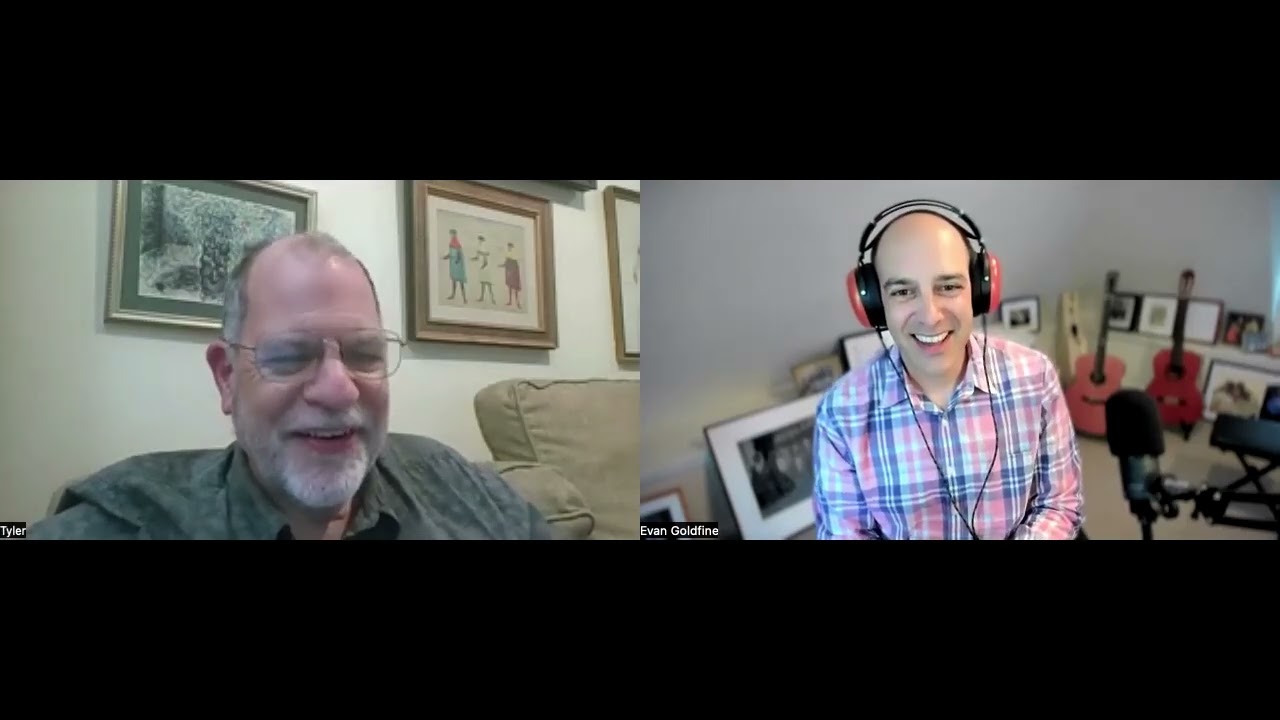
In this hour‑long episode of the A Year of Boff podcast, host Evan Goldfein interviews economist and public intellectual Tyler Cowen about his lifelong relationship with classical music, especially Bach, and his broader cultural tastes. The conversation begins with Cowen’s first exposure to Bach on public television and traces his journey from a teenage fascination with Beethoven to a later, deeper devotion to Bach. They discuss performance practice, favorite recordings, and the challenges of interpreting Bach’s works, comparing historic conductors such as Otto Klemperer, Carl Richter, and modern interpreters like Masaki Suzuki. The dialogue moves to the economics of music, exploring how incentives shaped Bach’s career, the role of technology in the evolution of orchestral and recording practices, and the current financial pressures facing classical musicians and streaming platforms. Cowen and Goldfein also touch on popular music, recommending deep‑cut Lennon‑McCartney tracks, debating why writing about music is harder than about other arts, and sharing personal habits like crossword puzzles and selective movie‑watching. The interview concludes with Cowen’s reflections on systemic financial risks, policy ideas for the Treasury, and a call to keep promoting Bach as a central cultural figure.
Chapters
Welcome to episode 3 of the podcast of A Year of Boff. My name's Evan Goldfein, and today I'm delighted to be talking to Tyler Cowen. Tyler's one of our foremost public intellectuals. He's an economist at Virginia's George Mason University and one of the original internet bloggers whose work continues into its third decade at Marginal Revolution. I think about money a lot, and Tyler has reshaped my thinking about economics. Especially around how economic growth leads to human flourishing, the importance of incentives, and how every economic decision has trade-offs. Tyler and I share a deep love of Bach and the Beatles, and we're both products of Bergen County, New Jersey, so maybe there was something in the water there. Tyler, welcome.
Happy to be here. Thank you, Evan.
Your earliest exposure to the music was seeing a Bach performance on public television. Could you talk about that?
Well, it wasn't exactly a performance, but I was watching William F. Buckley's Firing Line and, uh, on public TV. And they play the parts of the Brandenburg Concerto No. 2 as the show starts. And it just so happened that we had at home, I think, 3 classical records. And Brandenburg No. 2 was one of the 3. So I had it on the record and then I heard it on Buckley and it's like, oh, I know what this is. And so it was one of the 2 or 3 first classical pieces that I knew, maybe the first one. And I liked it, right? That's important.
And how did you start digging more?
Oh, it took a little bit longer. So we had a copy of Rimsky-Korsakov's Scheherazade and Tchaikovsky's The Pathétique Sixth Symphony. But I was so into classic rock and that was such an incredible time to have that interest. It wasn't until I was 18 or so that I started really becoming interested in classical music. I moved down to be an undergraduate at George Mason, so I started going to the Kennedy Center, and my first love really was Beethoven. I just kept on going to hear all the Beethoven and all the Brahms I could.
But somehow it flipped over to Bach.
Well, I don't know if I would say it flipped. Maybe they're on a par.
Sure.
Well, Bach, true love for Bach was 2 or 3 years later, but I would say until I was 40, I definitely was more interested in Beethoven than Bach. Right now, it would arguably be the opposite.
I'd say the same, although I probably got the Bach bug a little bit earlier just by playing classical guitar. Some of those Bach pieces are the cornerstones of that repertoire. And I think—
I did that too. You know, I played the Prelude, the transcribed cello sonatas, some, you know, parts of the violin sonatas and partitas. Different short bits from cantatas for guitar. It works pretty well, doesn't it? It works great.
And Beethoven does not. So—
No, nothing. None of it.
So there's a, there's a pleasure in being able to get deeper and deeper into it. And I found as I've gotten older and listening to these things, you know, of course the breadth in which I listened to it last year, but also going deeper and deeper into it, I find it's, uh, sort of an infinite well.
That's right. Oh, another early exposure I had around the time of Buckley. I had a Leo Kottke album called Mudlark, and he was mostly, you could say, a folk guitarist. And he did Beret on that album for guitar. And I just thought, well, I wanna play this. And in, you know, in due time I did. It's not that hard to play that piece at all.
Correct. And I love Leo Kottke. I've seen him many times in concert.
You hear?
And, um, what a, what an incredible American, uh, weirdo character. But also he performed the, uh, J.C. Joyce's Man's Desiring on the 6 and 12 string guitar.
That's right.
Which is just a beautiful, beautiful arrangement for steel string, not usually done on the steel string guitar. And I recommend everyone take a listen to that.
It's better than most classical guitarists, how he has some sort of feel for Bach, even though it would not count as traditional in any way.
Yeah, Bach can translate into folk music, uh, if it's in the right hands. You've called Bach the greatest achiever of all time. How did he do it?
We don't know. So there's plenty of records about Johann Sebastian Bach, uh, but what he really was like to me is quite a cipher. And I've read the major books on him by Gardner, Wolf, others. You can read about the records, different places he worked, tax records. But at the end of the day, he's the least easily graspable major composer. I feel Beethoven and Mozart, if I met them, they wouldn't fundamentally surprise me. Oh, you're Beethoven, you know. Bach, I don't know. It's, uh, that's part of the mystery and challenge, isn't it?
It's maddening. And, and also I, I've been left flat by a lot of the biographies also. I just find I don't, I'm not getting enough out of them to push me further.
Yeah, I'm not blaming the authors. They just have nothing to work with. And he's so consistent. You don't learn much about the variation. You said this yourself in your 37 propositions about Bach over time and styles. He's more or less always the same. And that too makes it harder.
Yes.
There's the opposite of the Beatles, right?
The opposite of the Beatles. But you know, I'd say that there is an extra little bit of depth. I think that Bach gets to towards the end of his life. I'm thinking of The Art of the Fugue in particular, but you know, I'd say this, his output from his teenage years up until that point, it's just remarkably consistent. And, you know, it doesn't really feel like very much of an early and late style as compared to others.
I agree with your general point, but sometimes I wonder if Art of the Fugue and Musical Offering are his greatest depth. I'm not convinced that's true. So something like the first partita or parts of Well-Tempered Clavier, uh, they sound less complex, but in a way they're more compelling. And the fact that there are so few good recordings of Art of the Fugue or Musical Offering, it could just mean they're so deep no human can do them. Uh, but maybe in a sense they're too far out there, and in that regard, less deep. I think about this pretty often.
I don't listen to them as much as the other pieces that you mentioned.
Exactly. Or even the Brandenburgs. Maybe those are his deepest works and his most accessible works.
He was a tunesmith as well, and he gets short shrift for his melodic mastery because the harmony and the counterpoint are so intricate.
What's also interesting to me, I mean, B Minor Mass, which of course, you know, it might be considered by many his greatest work, but just how much he threw it together. It's a bit like a Paul McCartney song, like, Uncle Albert, Admiral Halsey, where there are all these pieces and somehow it works. And you just wonder, like, what really went on with the other works where you don't know how it was built.
Right. And we'll never know. And we just have to—
It looks that way. Yeah. I don't think there's much more about Bach to be discovered.
Yeah.
AI or not.
Um, to that end, when you think about the B minor Mass, can we hear today Bach in the way that he intended it? And I'm not talking about period instruments. I'm thinking people who are listening to the B minor Mass, you know, they're sitting in a church and they're Lutherans in Leipzig. They're shivering. Life is much more precarious. They're hearing the loudest sounds that they've heard all year. Is the gap between us and them too large? What do we miss and what do we gain?
The gap is quite large. Now, what we gain obviously is that we're comfortable. We can put the music on pause. If we're in a concert hall, that's different, but that's so stagey. The people there, maybe they're old or they're Asian. Few of them really believe in God. There's just so many differences. But I think the biggest difference is all the music we've heard in the meantime, and you cannot erase that from your mind. So yeah, it's a completely different experience in my opinion.
Everyone is downstream from the Romantics, we've all heard Chopin. If you're going to be playing Bach on piano, you've also played Chopin. I'm wondering how you hear certain performances now because our current composers— I'm sorry, our current performers have been listening to all of his music all of their lives.
Well, if I listen to Otto Klemperer conduct B Minor Mass, which is a favorite of mine, it's sometimes called a bit heavy or elephantine, but it makes perfect sense to me because I know romantic music and Wagner and Beethoven, Brahms, And it just clicks. In many ways, I prefer the heavier versions of B minor mass. So when I hear Gardner or Herrewig or any number of other people who do it the earlier style, it sounds like a cleansing to me. Now, there's nothing wrong with that, but it's not how it was intended. That was simply how people heard it, but perhaps more radically so.
I prefer, some of my favorites are Carl Richter's performances, who, you know, a lot of that is, I guess, not of the current day that in terms of, he plays it very romantically, all of his cantatas. They're very drawn out. They sound like they could be coming from 18th and 19th century. And I prefer it. I kind of like how it fits in that mold, although I'm glad it's not the only way you can hear those pieces.
I don't like Richter as much as you do.
Tell me why.
I admire him for having been the first person to make Bach sound a certain way consistently, and he's very, very important historically. But I just think there's always someone after him who did it better. He's a bit like Toscanini for me. Very admirable, important, but I never want to listen to Toscanini. Really not any performance.
I loved Richter singers. Tell me who you prefer post-Richter in that vein.
Well, name, name a piece and I'll tell you maybe.
Oh, maybe for the cantatas or for, for the passions. You, you have different particular recordings of each of these, uh, these pieces I'm imagining. So, so what comes to mind of, of as favorites of yours?
Well, for St. Matthew's Passion, my, you know, Mørgens Røddicky, the old Danish conductor.
I don't know that one.
Did it very full-blown. Uh, that's an incredible recording. And then Otto Klemperer would be my two favorites, but even Peter Schreyer, which is not a top recording, but I think it's a bit better than Richter on St. Matthew's. And then you may or may not want to go the original instruments direction. Uh, but at least there's three I would take over Richter. So he's just not that useful to me. Now the cantatas are interesting. Because I think they're the worst served part of Bach's output in recorded music. And they're the ones that suffer the most from being yanked out of the church.
Yes.
I think most of them just don't do that well, either in a symphony orchestra hall or recorded. So they're more boring to the listener. I'm not saying they're worse. It's not, not the point, but it's tougher to come to terms with them. And there's so many. And they tend to blur together. Uh, I suppose the cantatas I like the most are the Suzuki's, which I think you don't like so much. Yeah. There's just something problematic about the whole exercise.
I agree. It took me a little while to get into it. And because that was so much of— it was about half of the material that I listened to and I was mostly unfamiliar with it. It was sort of a slog sometimes to get through them, but I kind of started to understand the rhythm of them a little bit more about how they paced each of the movements and how he orchestrated each of them. They all have their own particular kind of charms and flavors. There's a recording cycle that happened last year live in, um, in Germany by, uh, the conductor's name is Rademann, R-A-D-E-M-A-N-N. Very exciting performances, very live and gripping.
I've heard they're very good. Are they released on disc now?
They are not entirely yet. They're in— we're in the middle of 2025 right now. I think they're midway through the release of those, but I think about half of them have been released. They're all very strong, singing strong, and it's exciting. It reminds me a little bit of Carlos Kleiber's recordings, kind of excitement in the room.
Good.
Yeah.
Now maybe it's best with the cantatas just to keep on listening to them one after the other, which is counterintuitive. Normally you'd say, well, pick one aside or just listen to one movement, but just keep on going.
You got to immerse yourself. It reminds me of another question I wanted to ask you. So you famously, when you go see the movies, sometimes you'll pop in and leave after an hour and having had the flavor of it. How do you manage that?
I don't wait an hour. Wait an hour, I'm there.
Okay. So 15, 20 minutes, you get the gist of it.
20 minutes maybe.
Yeah. 20 minutes of a movie. So how does that play into your music listening, especially with serious music? Do you, Do you get a flavor and leave, or do repeats make you nuts? What's your, what's your consumption function on, on those pieces?
Well, there's a big difference. So I think you more or less know in advance what is good. So one belief I hold is that every composer considered to be great is indeed great. That the critical market for classical music is remarkably efficient. And the people who would be called the best— Bach, Beethoven, Mozart— they are the best. And it, you really just can't argue with that much. So someone like Schoenberg, who took me a while to appreciate, I knew he was the most important and best composer of atonal music, so I just kept on listening. I knew I'd get there. I did. And there's no uncertainty. Whereas a movie, you can read reviews, but it's like, you know more than the reviewers often. And if you don't like it, you don't like it. You don't, you don't usually have some historical reason for wanting to know what the movie's about. You would with some films like Citizen Kane, but say, that's great anyway. You can't go through life not knowing Citizen Kane. So you're rarely investing in knowledge of history in cinema.
So it's really just an aesthetic feel that you're getting and you're in the world of a particular film for 20 minutes and that feels like enough.
And I go to a lot of movies. So the ones I walk out of, I'm pretty sure about, they're not that marginal. They're typically just bad. And I don't look back. And it's not the case that 3 years later someone says, oh, did you see X? And I'm like, oh, I walked out of that. Should I rent, you know, watch it on streaming now? You know, probably not. Yeah, that's fine.
I don't watch a lot of movies because I, I think I'm walk out of most of them, and I don't have the discipline, I think, to just leave in the middle.
Movies, they're a bit like, they're not quite as efficient as classical music, but the critical market for classic movies is reasonably efficient. Not as efficient as the New York Times, but if you read serious cinematic criticism and just watched those movies, you'd be on very firm ground, I think.
You've written about celebrating societies that allow weirdos to flourish, and I think that One of our great weirdos in this space was Glenn Gould, perhaps the largest weirdo to become a celebrity in great music in the 20th century. Is it strange that his recordings have become the most famous ones?
The good ones are the best, and they make it impossible to hear other people do the same pieces. So I was just listening to the new Toccata recording. I think it's by Jonathan Ferrucci. And it's very good. Like on a scale of 1 to 10, maybe it's like a 9.1. At the end of the day, is it gonna replace Glenn Gould? I don't know. Now his bad recordings are like the worst Bach ever done.
Yeah.
Like "Cool Tempered Clavier," which Henry Oliver also hates. Mm-hmm. Uh, but something like Partita Number 1 or Partita Number 6, all the Partitas, uh, just untouchable. And you don't go anywhere else. So it's weird. And I also, the two Goldbergs, uh, English Suite in A Minor would be a peak by Gould. And unlike many people, I like it when he sings. I think that makes it better.
I don't mind it. Do you like Keith Jarrett? Do you listen to him at all?
I do. Uh, I like his Shostakovich. I don't prefer his Bach. It's in the, I'm surprised how good this is category. But I do listen to his Shostakovich, which is jazzier to begin with.
His French suites, I think, are excellent on harpsichord. And he actually came out with an album, well, it was, he recorded in the '80s and it was released a couple of years ago, um, of C.P.E. Bach, the Württemberg Sonatas, which were new to me. And that recording is extraordinary.
I like that.
I really, really like that one.
But you know, I actually prefer C.P.E. Bach on clavichord. And I don't like clavichord for Dad at all. Maybe I'm just inconsistent, but when it's a bit funky and coming out in spurts, I think it makes CPE's music more interesting and he needs that a bit. Do you know the Benjamin Allard set? It's like the complete keyboard works of Bach.
I have not listened to that.
Been coming out over the last 2 or 3 years. I think they're all out now. Uh, he does, you know, keyboards, harpsichord, a lot of clavichord. I think it's the closest you can get to hearing how it ought to sound while the quality of the performance is in the top tier. That said, they are never my favorite versions, which will typically just be with piano. Angela Hewitt being another one. Or Richter, or do you know Samuel Feinberg?
No.
Uh, you know, Well-Tempered Clavier, which I'm sure you love, his Volume 1 is better than Richter. It's soviet and dreamy. It's in the same direction as Richter, but that you should really listen to.
I will.
Quite special.
Yeah. Have you listened to, we're just going to trade names back and forth. Have you listened to Pierre Hantaï on harpsichord?
That's my favorite harpsichord version of the Goldbergs. I think he's very good. But I still mostly listen to those on piano.
I love his Well-Tempered Clavier too. That was a great discovery for me during this, uh, during this exercise for me.
He's my favorite Bach on harpsichord, I would say, definitely.
When you were talking about how Benjamin Eilert's, uh, playing how it ought to sound, can I press you on the word ought there? What did you mean?
It's the closest to how I think Bach sounded relative to what we can recreate today. The same feel, kinds of rhythms, motions, energies, instruments, in many cases, not all. So that makes them quite interesting. And again, the quality is very high. But at the end of the day, you learn that you want something that's not exactly quality or authenticity. You want something closer to Glenn Gould or Richter. I do, at least.
I, same with me. And I'd put Martha Argerich and the little bit of Bach that she recorded.
Absolutely.
Um, you know, she's— She's sweet.
By her. Yeah.
The best. The best.
That's right. And she's the best at many things.
She is. She is the best at many. She's threatening to come to New York in a couple years, but, um, yeah.
Isn't she 85 now? Someone just sent me a summer recording by her.
She rec— my friends who flew to Italy to see her just 'cause they, they wanted to catch her again while she was still playing. They said she's still got it.
Yeah.
Pretty amazing.
I'll listen to that recording soon.
Yeah. So you think, going back to Bach, the man, you've taught that incentives matter. This is something that those two words together have reshaped the, putting that at the forefront of economic thought for me. So, you know, what were Bach's incentives? You had a lot of, a big family, you know, you wrote that a lot of musicians are after some sort of fame or notoriety also. I'm not sure how much Bach actually received that in his lifetime relative to the amount of fame he might have gotten today. You know, a lot of these pieces were played once and, you know, cast off and never heard again. They're incredibly intricate. They lasted by the skin of their teeth through the ages. What was Bach's motivation to do so much? Or how can you, you know, if that was his incentive, what were his incentives?
To punch— well, first he was paid and he was quite a tough bargainer, as you can see in the correspondence. And multiple times he would leave one place for another. So he goes, what, from Arnstadt to Mühlhausen to Köthen to Leipzig, right? Is that the correct order?
That's from what I understand.
Yeah. And every, every time he's pissed off or he wants to do something different or there's more money, uh, or he didn't like the ruler. So he wanted, I think, the freedom to create and he wanted to be paid and he had all those kids to look after. And as you know, his first wife died and he's even writing a lot of music with her gone. And presumably to some extent Bach himself is looking after the kids. So it's an incredible story. The free, you know, the freedom and ability to create, but I, you know, a bit like Shakespeare, I think he suspected he would be more famous than it seemed. Because think about all the sheet music he got from Italy and France, from which come, you know, Italian suites, French suites. English suites broadly in those styles. Uh, I think he knew that trade would develop and that he could become quite well known. And I strongly suspect he thought of himself as the greatest musician ever to that date and knew he would someday be recognized as such. That's my hypothesis. Zero direct evidence, but it is what I believe.
Yeah. He seemed to have distilled the history of music into one point, and that was himself, and then changed everything afterwards. He's like a fulcrum point.
Yeah, Renaissance polyphony, everything is in there. Yeah. His precursors.
So I, you know, we're talking about music. I'm enjoying our conversation and I've enjoyed writing about my experience, but I find overall talking about great music to be less satisfying than talking about any other art form. So when I go through a museum with a friend, we can have so much to say to each other about what we're seeing. And after a play, I feel like I can, uh, speak about the words that we heard and the performances that we saw. With music, I can pretty effectively complain about what I didn't like, but I can't talk about, that was great. I was sitting next to you in a hall and we saw a great Bach performance together. Afterwards, I'd say that was wonderful. And there wouldn't be so much in it. And I, on my blog, I've been trying to get to this point a little bit. And I, I was wondering if you have an idea about what Gibbs about that phenomenon, or if you experience it that way.
I think one can do that more with popular music. That would be one point, especially studio popular music.
Mm-hmm.
Uh, but I largely accept your point. And you also argued elsewhere in something you wrote, there's not much good writing about music. And I partly agree with that. But if I had to give an example, I would say something like the memoirs of Berlioz. Which are not mostly about music, right? They're about Berlioz and they're about that period in history. Yet in some funny way, that is still writing about music. Hmm. Uh, and maybe that's what writing about music is, is filling in all the blank parts of the surrounding context. Or Arthur Rubinstein, you know, My Early Years. There's a lot of great books like that on the fringes of music, and maybe that's what we're looking for and the best we're gonna get. But with writing, you know, the new Ian Leslie book on John Lennon and Paul McCartney, that's wonderful.
Beautiful book.
And that book Revolution in Their Heads about the Beatles, that's an incredible book. So popular music, there's, it's easier to talk about and there's often better writing.
And that's a function of, uh, the popularity itself and also probably because the lyrics and offer something that we can respond to in a way that more relevant to our lives. The history is so close to us and maybe the people are actually still around.
That's right. Like few people can actually discuss how Bach's St. John's Passion revised the account of Christ relative to some of the other notions at his time. Yet it did, but it completely goes over everyone's head.
Right. The addressable market for that one's fairly small.
For now.
Right. Uh, I have a couple lightning round questions. So, uh, give me your best deep cut from, uh, Lennon and McCartney's solo catalogs.
When you say deep cut, what does that mean exactly?
I would say not, uh, one of their singles or hits.
Well, with Paul, so many are hits, but you know, my Sea Moon is a favorite of mine. I think that's 1974, but there's a second version of Sea Moon that he redid. With tighter orchestration that is only on the B-side of a CD single, and even to this day is not on Spotify, YouTube, or anywhere else. You cannot hear it unless you own that CD single. So that's the deepest Macca cut I know, and it's amazing. It's even better than the original Seaman.
And what about for John Lennon?
I think Mind Games is an underrated album. Most of it is very good. The production is imperfect. Maybe it ought to be. I think I'd actually prefer it right now to listen to Mind Games than Imagine, which is a little too polished and too precious or self-conscious or even pretentious. And then there's the nasty bits about Paul.
Mm-hmm.
Um, so, and you know, Meat City would be one. I know that, you know, but almost everything on Mind Games is quite good and it's not that well known other than the Mind Game song.
Right. That Mind Game song is, is terrific. I'll, I'll find it.
But a very deep cut, this one, I don't know if it's from Solo Lennon the Beatles, but John with only acoustic guitar doing Rock Island Line for about 2 minutes.
I, was that on one of the Anthology albums? It might have been.
I don't think so. I own it on an LP that I acquired maybe 40 years ago and I still have it and it blows me away. Just the Lennon voice. Killer.
I'll try to find it on YouTube and link it.
Try to find it.
Yeah, that might take me a little bit. Uh, I would go with, uh, Every Night for Paul McCartney off the first, uh, McCartney album, which I think is just a beautiful little tune.
I agree, but is that a deep cut? To me, that's quite famous. You know, the second live version where there's the deeper background chorus, in some ways I like that even more.
Yeah.
Yeah.
I love that first album. I mean, it's, it's so janky, but It's very lovable. That's a very—
It's a fantastic album.
Yeah.
A shame that it was so panned at the time.
What was, what is the greatest classical song cycle?
I suppose Die Winterreise. There's a lot by Brahms, but as a cycle, I'll say, yeah, Die Winterreise.
That's fair.
Lear first. Yeah.
I, I'm more charmed by, uh, Schumann's Frauenliebe und Leben.
That's good. Yeah.
I just find myself listening to those. I just, I love those guys, but yeah, I think in terms of the artistic depth, I would agree with Fitzgerald. Question for you. Crossword puzzles, waste of time. Are they engaging for you?
I don't do them. I did them for about 9 months in high school. Probably it was good for me. I learned things. If people just keep on doing them throughout their lives, I don't know, I guess it makes them happy. Probably they're not that ambitious in some big way, or they're super ambitious and that's their relaxation. It's a portfolio question.
I feel like I want to be told— I feel like I want to be told to stop doing them because they're a waste of time, but I'll take that as an endorsement. Okay, so tell me, besides— and you've talked about the risks of war— what financial systemic risks are you most concerned about right now?
Well, in the very short run, I'm not that worried. If you mean the next 5 years, uh, the fact that the banking system in the US in relative terms keeps on shrinking means that more and more is outside the deposit insurance umbrella. Mm-hmm. And things like private equity, which in this very moment really does seem well-capitalized enough that I'm not worried. But over time, there just are so many loose pieces with maturity mismatches And people will game those things off balance sheet or just take undue risks. And I think it will lead to another financial crisis. I have no prediction when.
Is it okay if they're not heavily levered?
Every institution has implicit leverage. And if you don't understand the implicit leverage in the institution you're thinking about, I would say you don't understand the institution. So yeah, right now they're not heavily levered. And again, it's fine. It's not going to happen next week. At the end of the day, it's a question of how long will it take before people forget the past? There, I just don't know.
Keeps happening.
Keeps happening.
Let's say you're— I throw you into the seat of the Secretary of the Treasury and you have a very powerful executive branch. What are the 2 or 3 things you'd want to do first?
Well, if I don't control Congress, I don't have a lot of power. But I think we need to restructure the trajectories of entitlements. First of all, Medicare. There were just some Medicaid cuts in the so-called big beautiful bill. And I would start with that and apply something Doge-like to Medicare Advantage and to the Pentagon and to a lot of unnecessary surgeries that we pay a lot of money for. But that all requires Congress. So if I'm just a Treasury, uh, I don't know. I guess I sell my memoirs.
Sounds good. Uh, give me a few other Bach recordings that are, uh, you, you frequently put on, uh, that have stayed with you for the years.
Well, you could name a piece. I, you know, there's these two new recordings. The guy's last name is Zimmermann of the violin sonatas and partitas, some of Bach's greatest works for me. And his account is incredible. And there's an Italian, Fabio Biondi. I think his came out the year before, but quite recent. Again, Solo Violin Works. Those are amazing. My classic favorite, I bet you'll say the same, but Nathan Milstein.
Sure.
Then if someone like wants to give you a hard time, they're like, which of the 3 versions? But actually there's 4. You know, the first mono one. I think it's the second. That's the classic best one, but you'd have to check on that. But the famous Deutsche Grammophon, Nathan Milstein is where you would go. But these new recordings are just as good. And I like to just keep on buying recordings of the solo violin works.
They're the best.
Those would be some picks, but you could try naming something. Maybe I just won't know.
Tell me about, well, you, you tend to, I'd say like what, when I know, I know you like the conducting of David Robertson and Masaki Suzuki. And, you know, and Boulez, these are sort of more crystalline and clear conductors and performers and a little less maybe playing with the tempo, stretching things out. They're sort of on the beat, I would say.
Sure.
Do you find that that characterization is true?
I agree with the characterization if there is a beat. Uh, in the case of Robertson, my favorite conductor of all time is Otto Klemperer, and he definitely stretches things out. Yeah. And he understood all music in an amazing way, and he actually lived in some version of the society that produced it, which I suspect is essential and really cannot be replicated. So his Bach, Mozart, Beethoven, everything, Wagner, Brückner, just incredible. Yeah. And he must have been such a mind. And unlike some great conductors, you know, there's no soiled spots on his record, so to speak. Yeah.
When I was choosing who to feature on my blog, who do I want to listen to, you know, I have Apple Music open, there's 50 different versions of each piece. I still chose some Nazis, you know, like I said, Wilhelm Bachhaus has an amazing Bach album. And he, he dined with the Führer and, you know, even though his, there's an asterisk next to his name, we have his record and it's complicated. I know Karajan had a real big career for his, you know, for 40 years after the, after World War II, maybe 50 years more.
Yeah.
Yeah.
Do you know what's the best recording of Beethoven's Ninth?
I am, some people would say Leonard Bernstein after the Berlin Wall fell.
I mean, I wish it were Wilhelm Furtwängler, Hitler's birthday in 1942, did it live. And that just so crackles. And I feel guilty listening to it, but I do think it's clearly the best.
It's tough.
It's tough. I know. Klemperer is one of the best. There's Piotr Navernstein, obviously you can side with. The recent Minnesota Orchestra recording of the Ninth, oddly enough, is one of the very best, I think. But Kurt Weingler, the atmosphere, there was something there.
So you're, you're feeling that at the live recording. So you're feeling the audience, you're, you're along with them.
And look, Hitler's watching. So you can bet they rehearsed a lot.
The audience did.
Incentives matter. You said that before.
Yes. What was the thing with Stalin? Who was gonna clap? Who was gonna stop clapping first? That there was gonna be no one who was gonna do it, uh, after the— Yeah. Uh, what else, Tyler?
Well, the cello suites. I don't think you've ever written— what are your—
I did.
I— Tell me then.
I featured Rostropovich, uh, who I—
Okay, that might be my top. That's a very, very good one. Yep.
I think Yo-Yo Ma's first set is excellent. Uh, I like Alisa Weilerstein, who is a contemporary, uh, player. She's fantastic. What else, uh, comes— and, you know, the originals from Qassals I think are important to hear, but nothing that I will put on very often. How about you?
The Qassals I find profound but painful. There's just too much scratching and the sound quality is poor. Yo-Yo Ma, I've heard do those live and that was amazing, A+. But each of his recordings I feel somehow does not project enough and I don't listen to them. I think I've only heard 2. What's he done, 3 or whatever?
Yeah, I think he has 3 now.
But I don't love any of them. The Bielzma, I'm glad it was done. It's perfect in its own way, but it's not what I want. The early Janusz Starker, and he has 2 recordings of the Bach, but the later stereo one. Heinrich Schiff is quite good. But, uh, Queyras, Q-U-E-Y-R-A-S, who now has 2 recordings. The first one is incredible. For me, it's the main rival to Rostropovich. The second one I don't like at all, but try that one. Do you know it at all?
I don't. I'll have to listen to that.
I think he's a Basque. He's from Spain. Very, very impressive. But there's a lot of great recordings of the Cello Suite.
I'll pitch two also adapted, one for viola from Kim Kashkashian on ECM Records. Excellent and very unusual record. The timbre of the viola is just shocking when you know those pieces really well. Also, one of the things that's cool about that album is that it starts with the second cello suite. So, you know, you normally do, do, do, do, do, do, do. And that's not how the record starts. You're just thrown in, you're out of order. So already you're off-kilter. So I recommend that one. And also Edgar Meyer, the bass, the acoustic bassist, great at bluegrass, also has a really lovely album of the cello suites adapted for acoustic bass.
Yes, that's good. There's another good viola version, but I can't remember who did it. Not a very famous person, but excellent.
Yeah.
And as we said before, they work well for guitar.
Yeah, yeah. I just interviewed one of my favorite guitarists named Jason Viejo for this. Wow, he's just fantastic and great to talk to about adapting, you know, because these weren't arranged They had, you have to move some of the things on instruments and you have to make some choices and sacrifices to adapt it to guitar. Um, and some people go overboard and how much, how much or little do you play certain notes? Uh, it's a real art form to be able to adapt to the 6-string.
My favorite Bach guitarist is the Uruguayan Eduardo Fernández. Hmm.
I don't know him and I've listened to a lot of these.
He's in his 70s now. He hardly plays around anymore, but I've seen him live. And there are recordings. He did all the lute suites. He's in general also excellent 20th century music. Now there's Segovia and Bream. I think for guitar, it's interesting. The very early recordings like Segovia and Bream, they've held up much better than say the very early cello recordings. I agree. Violin recordings. I'm not sure why. I think Segovia and Bream are still at the very top.
I think they were the two greatest instruments, I think players of those instruments in that era. And they were both pioneers of that instrument. And I think that, you know, in some ways, the people who started at the beginning of the recorded music era were thrown there. And we don't know what the great violinists and cellists of the 19th century sounded like. Maybe they were, you know, much better than the people who happened to have started recording in the 1940s.
So I think mostly they were worse. We can talk about this in a moment, but maybe with Segovia and Bream, it's that contact with the earlier world and realizing, because you're growing up when things like Debussy, Satie are still new. So there's some way in which all guitar music ought to be kind of acoustic ambient, almost like Brian Eno. And they understood that intuitively. And the fellow you mentioned, you know, V-I-E-A-U-X, how do you pronounce it?
Viejo.
He's technically great, but I don't feel he gets that. It's too straight-laced for me. Uh, and Fernández is a bit closer to the earlier tradition, just as Uruguayan culture is still a bit like, you know, in Buenos Aires and 20th century European culture. But here's why I think the early players are mostly worse. Though exciting, we do have a lot of recordings from the transitional era. So there's like Sauer playing the piano, Rosenbaum, you know, so many people. And I love hearing them once or twice, but I just don't think they're the best, even for Liszt.
Rachmaninoff is not my favorite Rachmaninoff player.
No, he's quite good, I think, and more even-keeled than you might have been expecting. I agree, not my favorite.
Yeah. Yeah. Well, one of the, one of the questions that came up on your post asking what to ask you today was asking about, were there many of these great artists on the level of Bach that we might not know about, uh, in the past? And maybe they just hit an era where they're not known, maybe not in classical music because that's sort of risen to the top, but in, in other genres, do you think that we may have missed some folks?
Well, certainly in what's called world music. So if you look at Pygmy vocal music, which is incredible, I don't think you would attribute it to individual composers, but the people who make it, you could say we still don't know who they are. So in earlier times, there must have been many musics like that, probably mostly collective, that are simply vanished and were amazing. Yeah. The instrumentation will be limited. I don't know. I don't feel there's so much lost in a way.
I feel like we're really blessed.
Yeah, and there's, you know, what little we know of very early medieval Roman, ancient Greek music, it might just not have been that good is my sense. They didn't know it wasn't that good.
How could they?
Because they didn't have Bob Dylan or whatever. Just the different pieces you need to produce a Bob Dylan. When you think about it, it places quite a burden on those earlier eras.
Could you speak up? I know you've written about this, about how economic growth and capitalism have led to the innovations that have led to the shifts in music that we've heard.
When I go to concerts today, it just strikes me what a remarkable technological innovation the acoustic symphony orchestra is. It's so loud. The pieces all fit together. The symphony is amazing. It just all works and it's perfect. And the main what it is, I mean, you can debate exactly when it was in place, but arguably middle of the 18th century, certainly by the early 19th century. And it's actually one of mankind's greatest technological achievements. Forget about liking the music. And that all had to gel so many pieces. You know, from these networks coming together. So without that, I mean, you don't have a Beethoven, Brahms, or whatever people did later. Bach himself was kind of always hoping for better technology, and keyboards improved a lot throughout his lifetime. He tried to improve orchestras. He had his own collegium, you know, mittekalem. Beethoven's always frustrated with the quality of his pianos. He wants bigger, better, more resonant sound. So technology really matters. In the 20th century, it's more obvious, like electric guitar. You also can have larger arenas that brings in more money, supports people in other ways. The recording studio in the 1990s, well, even '80s, you know, digital music in different ways. So yeah, technology is central to all of this.
And even downstream from that, the technology allows us to be able to speak today and become connoisseurs of these artists and hopefully some of the people listening today will start clicking on the recordings that we've spoken to, which helps put more money into the system and maybe encourages people to go and create more network effects by putting more money into artistic performances.
I do feel that right now there's something broken in the money loop. I think Ted Gioia is too pessimistic, but he does have a point that what you earn per stream is so low.
Yes.
So you and I talk about someone, someone goes to YouTube, to Spotify, that click is worth almost nothing. Now you might think they're more likely to see that person play live. I'm not sure that's the case. It's clearly the case in popular music. Mm-hmm. Uh, I don't think it's the case with performers of classical music. Most people are going to hear pieces or they're going to venues they know. They're not— the marginal listener is not usually going to hear the performer unless it's someone like a Yu Jiawang where it's celebrity value. And you and I saying, oh, I loved her forehand Stravinsky Rite of Spring piano, whatever that she did. That's not what gets people to go. It's the fact that she's a celebrity and she's excellent. Right. So I worry that the marginal incentives right now are in a somewhat bad place, but I don't know how to fix it.
What if we're pitching to the curators of these institutions?
You and I, that would be wonderful, but I'm not sure we are, or maybe to the donors, right?
Right.
So someone, you know, calls up the local symphony orchestra. Well, I'll put up $50,000 if you have Volodos in and play Bach and Brahms and Schubert, and then it happens. It's not that big a donation, but someone has to pay the fee. They probably just couldn't afford it flat out. And then the donor gets to have dinner with the guy. So it's a—
say it again.
Let's hope.
Let's hope. That would be great. Tyler, I'm going to wrap it up here and thank you again for your insights. You can find Tyler all over the internet. Go to Marginal Revolution, go to Emerging Ventures, go to the Free Press. Tyler, thank you again. And we'll be posting this soon.
My pleasure, Evan. And I would just repeat, I think Bach is one of the greatest humans and human creators of all time. And whatever you're doing with him, with the podcast and writings, keep it up. It's, in my view, something very, very important.
There's so many fancasts of different sorts of pop people. Why not the greatest artist of all time?
Exactly.
Thank you again.
Bye.
More from Tyler


#413: Tyler Cowen on Rationality, COVID-19, Talismans, and Life on the Margins





Tyler Cowen on Never Crying at Art, Why Rap is Dead, and Quitting Writing Books (w/ Nabeel Qureshi)


AI, Job Loss, Fertility Crisis and the Death of Careerism | ft. Tyler Cowen | PGX Ideas #4
