Tyler Cowen on Stubborn Attachments and Tyrone
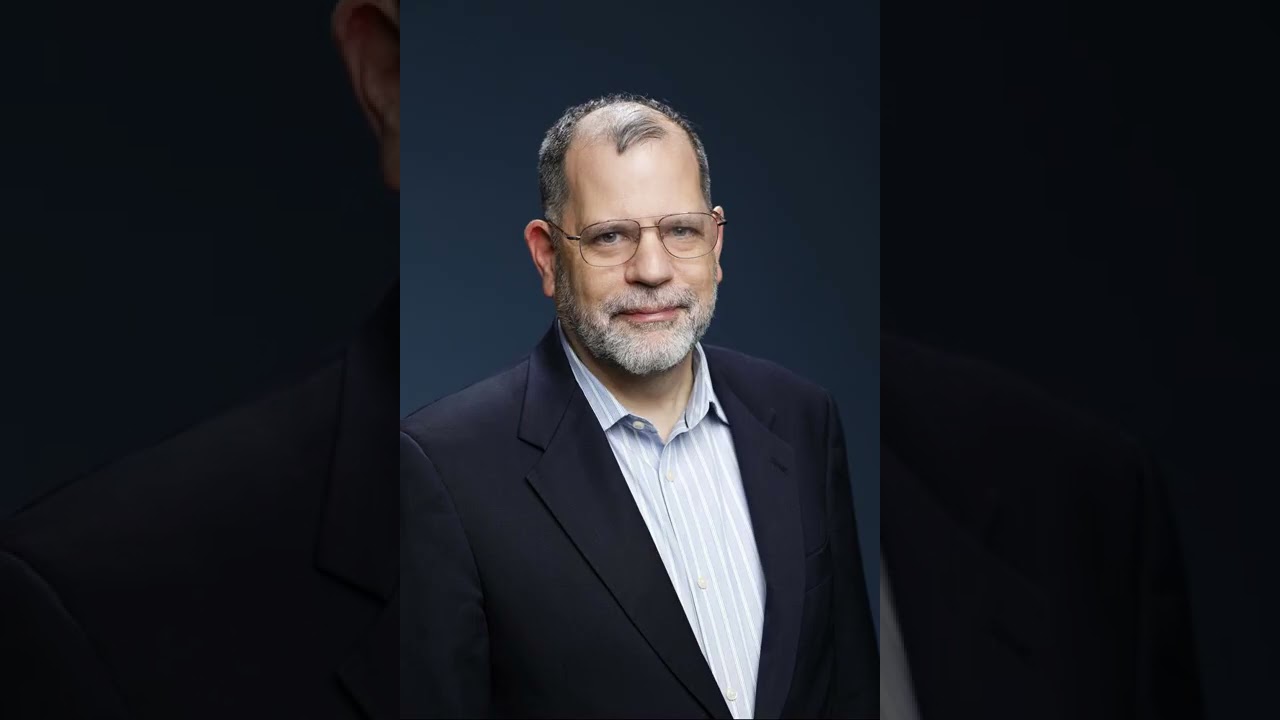
In this extensive interview, economist Tyler Cowen discusses his latest book Big Business: A Love Letter to an American Antihero and a wide range of related ideas. He defends big business against prevailing cultural hostility, arguing that many criticisms are overstated and that large firms often promote social cohesion, moral progress, and innovation. Cowen explores the role of an intellectual alter‑ego, "Tyrone," as a blunt‑speaking counterpoint, and reflects on how business interacts with personal identity, fame, and community ties. The conversation delves into historical perspectives (Montesquieu, Plato), the ethics of corporate behavior, CEO compensation, managerial quality, and the distinction between good‑cooperative and exploitative firms. Cowen highlights the importance of intangible capital, trust, and decentralized decision‑making for productivity, and contrasts the United States’ business environment with that of Europe, China, India, and other regions. He examines crony capitalism, national champions, the impact of technology on firms, the "financial dark matter" of multinational value, and re‑thinks the classic Coase‑Williamson definition of the firm. Throughout, the tone is conversational yet analytical, with Cowen expressing cautious optimism about business’s societal role while acknowledging genuine failures.
Chapters
My guest today is Tyler Cowen, professor of economics at George Mason University, blogger at MarginalRevolution.com, host of the Conversations with Tyler podcast, and author of numerous books, the most recent of which is Big Business: A Love Letter to an American Antihero, which we'll be covering today. Tyler, welcome back to the show.
My pleasure.
So the subtitle of your book kind of gives you away as fighting in big business's corner, but you also use an intellectual alter ego that in a lot of your work named Tyrone, and I think of Tyrone as a clear-thinking, North Central Jersey, working-class intellectual insurgent.
I love— That's what Tyler is.
Well, you're obviously pretty similar people. I love Tyrone. I love the Tyrone perspective, but I'm wondering if there's as much Tyrone in this book as you normally put in, and maybe there's not really a clear distinction or you're thinking about that explicitly. What does Tyrone think about big business?
I think Big Business is my most straightforward and didactic book.
Sure.
I set out to write it to make it almost deliberately unoriginal, but by the time I finished, I found no one else was saying what I was saying, and to me it sounded kind of fresh. So it's a look at the facts about big business and simply asking which of the criticisms are correct and which are incorrect. Many are correct, but overall I think people are far too down on big business relative to the reality. Now, how does Styron fit into the picture? It turns out there's an individual I'm funding through another program of mine called Emergent Ventures, and he has a project where he will be recording people and putting them on YouTube saying the opposite of what they really believe.
Interesting.
It's a kind of test to see, can you articulate the opposing point of view?
Of course, that's Bryan Kaplan's, uh, intellectual Turing test.
That's right, or ideological Turing test. So he came into this very room where we are And he recorded me giving the best possible critiques of big business, big tech in particular.
Cool.
But I've promised him exclusive rights on that story. Or rather, Tyler Cowen has.
Okay.
But I would just say this. If you think there's something weird about American life and American political life today, you ought to be worried about everything. And big business is such a significant part of society that Tyler Cowen would say it's hard to believe you can let big business off the hook entirely.
Right.
So if the world feels ugly and divided and stupider, maybe big business has to share part of that blame. That was part of what I said to this fellow Kyle Eschen, and I hope that video is up on YouTube soon.
Yeah, and then we'll put a link up to that. As I was kind of thinking about how you might answer that question, I was thinking to myself of who my equivalent Tyler Cowen would be. I grew up in a small town. Manufacturing and farming kind of part of the world in Ontario in Canada. And big business is a very distant thing in that kind of— you have the businesses that employ the people in the town and there's this kind of other world where let's say the smart kid down the street goes to some fancy college and he gets a job working at some company you've never heard of which is McKinsey or something, right? Imagine that. And so you kind of have— the feeling that I would have in those shoes would be maybe one of like kind of a mild resentment of the status differential perhaps of this person who thinks they're better than the rest of us and rejecting our community and our town and going off and doing this other thing. But at the same time, a little jealousy, right?
Yes.
And so there's a mixed feeling there of divorcing that as well from the consumer experience, which is also in some ways kind of ethically or morally benign. You're just buying things that you want, and if you don't want, you don't buy them. But for the most part, I feel like for a lot of people in the world, business might be because they don't have a huge presence in some towns, a repudiation of what goes on in those towns because the big business isn't there in kind of a way that you can observe and feel and see other than through the goods. What do you think?
That's real Alice Munro territory.
Okay, yeah.
Where you're from.
Yes.
But it's striking to me the way you relate the story. The resentment is toward the individual who is from the town and not toward the shareholders of the company.
That's right.
They're distant and really very hard to imagine. They're not visible.
You might even realize they don't exist, right? Right. To you, literally.
They could just be state pension funds, right? They probably are state pension funds. So I usually believe that most envy is local. It's the people you're connected to, you went to high school with, your brother-in-law, your colleague down the office. Did they get a bigger raise than you did? And I think with the internet, we're now switching or confusing what is local and what is global. So distant figures now feel local to the intelligentsia who are on Twitter. And they're more resentful. There are lower levels of trust. You interact with them all the time, if interact is the correct word. So you see some left-wing or right-wing economist on Twitter and you feel they're intellectually or morally bankrupt because you don't agree with them. You see their evasions, their partisanship. And I think we're losing trust in elites. This is related to Martin Gurri's hypothesis. For this reason, that the world was in a kind of equilibrium. You would resent the local and the distant you ended up ignoring. And now for a lot of American society or Canadian, the distant feels like the local and we're more full of resentment as a result.
Another thought that I was kind of thinking about was where business fits in, in kind of like what you— let's call them the social primitives, like what are the different relationships a person has. So you have, you know, your kids. That's one that's distinct from everything else. You have this sort of, you know, nuclear family which when you're an adult, it's much more of like a continuum I think from parents to siblings to sort of other people in your tribe, extended family. There's less of a distinction there. And then that's a community kind of feeling. And then you have other people from outside the town, people from far away that you don't know and don't talk to and don't don't relate to, maybe don't even know— they might not even exist.
Right.
Right. And business doesn't really fit into one of those categories. It's sort of something else. And I was struck by a quote that— or I don't think you just made reference to a quote, which I looked up later by Montesquieu, saying that commercial culture really changes how we view that other category.
That's right.
So what do you think about my little categorization of social primitives and this idea that business is kind of weird warping of the other?
Uh, that makes good sense to me. Business itself is trying to trick us. So if you go into a Target and you buy something, the cashier is told to smile and be nice to you. I'm not saying they always manage that, but in theory, that's how things work at the retail level. And that's triggering our emotions for the people we're friendly with. You come away with a positive feeling about the company, about the store, about your purchase. There's something illusory about that. Maybe the purchase was entirely fine, but you feel good about things. So business on one hand is hijacking that intuition, but it's also mobilizing the sense in you that this business is a kind of person to be judged like as a friend. And then it's always going to fall short because they don't care about you the way a friend cares about you. They have a pecuniary motive for caring about you. They may in fact be fine, upstanding people who want to keep a good reputation, but still you will judge them in a more personal way than actually is rational. And I feel this is a big reason why we're so often disappointed in business. It lets us down all of the time.
Mm-hmm. That reminds— in reading that section of the book, it reminded me actually of famous people. And it seems to me that famous people also live in this kind of weird category of sort of a relationship, sort of not. You know quite a lot about them.
Yes.
And you tend to, who knows, ascribe some qualities onto them which don't exist or do exist, and they play that up. They like that and that helps their fame in the tabloids. You wrote an entire book about fame.
What Price Fame?
Which I have right here.
Oh, great.
And I read. One of the things you don't do in that book is explicitly talk about what we get from famous people. What do you think about this connection between what a famous person is and how it represents to us and what businesses do? Is that something that's useful?
I think it's quite similar and many famous people are themselves businesses. So just last night I was at a big concert. The group playing was Queen.
Cool.
They're very famous with Adam Lambert. And Brian May was there talking to me like I'm his buddy, as if he and I have been together for years. Now in reality, I've been listening to Brian May and Queen since 1976, so it's not a completely crazy idea. Uh, it was a very good show, but had it been a mediocre show, I would have felt let down by a friend Yeah, but we use, say, musical groups, especially in the 1970s. A musical group would help you identify who you were.
Sure.
The kids who were like goth or alternative or deadhead. It was a kind of space where you would map your own desires and aspirations. So we use the famous for our own purposes in the same way that the famous use us for fame and money. Mm-hmm. Uh, there's something mutually parasitic about that. But at the end of the day, you know, you make a choice to go see Queen or not. It's not cheap, let me tell you. And, uh, you know, there are trade-offs. And do I feel right now that our society has too much celebrity fame? I don't, actually. Maybe in the 1980s there was too much mass stupid celebrity fame, uh, but I think we've moved to this new world of internet fame, which has its own problems, which I think is lack of trust, as we discussed a moment ago. But not too much celebrity culture.
Another parallel between your book on fame and the book on business is this idea of people wondering or worrying about moral degradation.
Yes.
I think you make the reference in both books. You definitely do in the book on fame, which Plato worried a lot about the moral degradation of seeking status, of fame, and of people— I don't remember exactly how it's put, but but not seeking truth, seeking something else. And Plato also hated commerce.
Of course.
Right? And so at least the enemies of his enemies.
And he hated literary fame as coming from, was coming from Homer, or orally recited fame. If you think about the 1980s, which I view as the era of the mega celebrity.
Yeah.
You have Madonna, Eddie Murphy.
Michael Jackson.
The earlier understanding of Michael Jackson, which was still quite weird.
Oh yeah.
What it's become, but. And you have conservative critics such as Allan Bloom seeing this and just feeling like the world has collapsed.
Yeah.
That this has somehow replaced a world of great books and serious movies. Now the past was never as wonderful as it's made out to be, but I do think mega-level celebrity was excessively stupid at that time. Mm-hmm. And there was something to that criticism.
And another really important point I think you make in the book is the historical context of fame. Now we have musicians and authors and entertainers, politicians, I suppose that's a carryover, but fame in the old days was much more militaristic.
That's right.
Darker, actually, more violent.
And that's the relevant alternative. So would I rather have Eddie Murphy and Sylvester Stallone, who does kill people in movies, of course, as opposed to Andrew Jackson, who killed a lot of Native Americans in real life? Well, I would. So, in my view, there is a kind of violent impulse in people. Commercial society, partly through its own stupidity, helps tame that somewhat. And things like violent movies, in part, they just keep us busy. So there was one study, it looked at when people go see violent movies, are they more or less likely to commit crimes? It turned out they're less likely, but the main effect was simply it took up a lot of their time. Not completely that it tamed them and made them pussycats. But nonetheless, there is something to a bread and circuses idea, and this is voluntary. It's not censorship or forced on people, but it is giving people something else to do, and that's become a bit underrated. And now what we do with the something else is a lot of time on our smartphones. We'll see how that works out, right? But that's quite a novel development. I think it will turn out to be one of the bigger developments of the last few centuries. In the last 10 years, you watch people walking around, almost everything they do is intermediated through the internet. Not everyone, but there's Google Maps, you read about the restaurant on Yelp, you text someone, whatever. That's a stunning innovation in human history. And it's very new, right? Less— basically 10 years old. And if the iPhone now is what, 11 years old? Well, there's a curve of enough people having smartphones, but we're there now.
Yeah. What are the ethics of business? So the, the— and I was thinking about this evolution of having, let's say, business replace— when we're talking about fame actually replacing the time we spend, but you also make some points in the book about— and I'm wondering about, again, this parallel perhaps between the evolution of our morality and our spending more time thinking about famous people, interacting with famous— their famous products and actually about whether or not business has an influence on the morality as well. Is there an equivalent of some sort in how we— whether it's changing how we think about what we value?
If we focus on contemporary America today, I see two main ethics of business. One is you build a big successful company, you care a great deal about your reputation, You may not be a better person than anyone else, but the market constrains you. You're very careful not to have negative publicity. You want to sell to as many customers as possible, so you encourage a notion of tolerance and diversity. You want to hire as much talent as possible, so you encourage a notion of inclusiveness. And this is mostly a very positive social force. And you make things, maybe you innovate, you give people jobs. That's a great deal. Then there's another kind of business where, in essence, people get together and they learn how to cooperate to screw over others.
Okay.
I don't think this is as common as is sometimes alleged, but there are many, many examples. Herbal supplements, penis enlargers, you can decide how much of legitimate commerce might fall under this rubric. And there, the ability of modernity to build so much cooperation becomes a negative because it's cooperation to screw other people over. Mm-hmm. It seems to me in contemporary America the first kind of good cooperative business is far more significant than the second, but we need to recognize both exist. Then maybe there's a third type which is sort of a basically honest business, but always you have parts of it at the margin looking to break various laws or at the margin not help a consumer or grab something they shouldn't. There's plenty of that too. I think often the owners are trying to constrain that, and it's the employees who are the fraudulent ones. There was a recent story trying to estimate when you have people deliver food to you, like Uber Eats and other food delivery services, how often does the driver take some of the food and just eat it? Yeah. People disagree as to the number, but the candidate estimate seemed pretty high to me.
Really?
Yeah.
Interesting. I couldn't imagine doing that myself, but I mean, I'm very far away from a food delivery person.
Some of it is that people may be hungry and they feel they can take a bite and no one will notice.
Yeah.
But some of it is a weird kind of exertion of power.
Yeah.
Or saying a kind of "F you" to the system. Yeah. Or just some wish to feel alive by doing something outside of the rules. And that's also part of human nature. It's not the same as dishonesty. It's something like in some way you need to recognize, and if not quite validate, come up with a way of tolerating a limited amount of it.
I wonder on that idea how much of that is a slippery slope, because once you kind of get a bit of a rush breaking rules, it seems to me that you might just break bigger and bigger ones.
And you need to break bigger and bigger ones.
Yeah, I suppose, yeah, yeah, yeah, to get the same high.
That's right.
For the most part though, I think that, and this is the point you make in the book, that organizations actually— it could be argued— impose or encourage moral progress, ethical progress. We make the point in the book about gay rights, for example, and organizations, and actually they can lead a lot of the rest of society in things that ultimately the rest of society does catch up with.
It made it feel normal to people, so when the Supreme Court ruled in favor of gay marriage, people are like, "Oh, big business had recognized this years ago. You know, maybe we should just get on with things and see this as a beneficial development, which is what happened.
Is that a necessary component of business? I'm thinking too, as I was reading that late 19th century, there was a lot of things, at least as legend has it, I haven't studied the period myself all that closely, but a lot of bad things were going on in businesses and exploitation of workers and that kind of thing led to the progressive movement. Was it different then or is there an even earlier period that was even worse and actually the kind of ethical progress of business has always been up and to the right?
I don't think tolerance is a necessary condition of business. I think you have ethnically or racially or religiously torn societies where in some cases business or some businesses decide to take one side rather than another. So like in Northern Ireland, you would have— still have, I believe— Protestant and Catholic funeral parlors, and this makes those divisions in turn more focal. That is a possible equilibrium. You see it in a number of historical cases. A lot of Jim Crow in the South was due to government laws, but a lot of it was due to business also. So in Los Angeles, government Jim Crow laws were not nearly as strong as in the South, but there was still a fair amount of business-enforced segregation. If you're asking me about America 2019, I think those cases are relatively rare and the positive cases are much more frequent. But again, my book is not an apology for business in all matters. It's saying let's look at the facts. The facts show there are plenty of cases where businesses are racially divisive. Northern Ireland, you know, one example there. But even there, it's a mixed set of effects because Northern Ireland becoming wealthier, the Republic of Ireland becoming wealthier, has led to a diminution of tension and violence. So it's not that in those cases the businesses are purely negative. It's just you see both effects.
Yeah.
Is that—
just out of general curiosity, is that something you see as— is it a very important— and maybe this ties into your last book as well— the improvement in economic well-being and wealth necessarily diminishes tensions and just makes people happier, and that's just going to happen, going to make places better like that?
I don't want to say necessarily. So I know the histories of England and the Dutch Republic and so on. But on the other hand, you need to recognize that in the early 19th century, the German city-states and principalities are not so wealthy. They're not wonderfully tolerant places, but they're better than what they ended up being, say, in 1939. And along the way, Germany becomes a nation-state. It's a lot more wealthier. It has the resources to do some terrible things. And that was driven by the Nazi Party, not by business. But nonetheless, you needed a commercialized society to carry out that particular kind of slaughter and intolerance. So, again, I think you always need to see both sides and look at the ledger and consider like when and where are you talking about.
One other, I think, area where ethics is probably an underappreciated point, and I'm so happy to see that you made it in the book, no doubt related to your work with a lot of tech startup firms and interacting with those people, is that ethics interacts with business by inspiring its people. That's right. And I've noticed this myself in hiring, retaining talent, and trying to build businesses where you only get the best people if they're inspired to join your firm. And inspiration often takes on a moral or ethical component to it.
And we're speaking here at the Mercatus Center where we have a lot of talent. We have a sense of being on a mission to improve discourse about economic topics.— that motivates people, it helps us attract talent. To the extent we become worse at that, it's harder to attract talent. And that's often overlooked in discussions of business ethics.
Yeah, it feels to me maybe that that is changing a bit. I don't know why I think that. Maybe I'm just becoming more aware of it as I get older, but I wonder how much business was mission-driven in the past. Any sense of that?
Well, it always has been, maybe less explicitly, but the Midwestern— let me just clear my throat here.
Yeah, sure. I have a bottle of water.
That'd be great, yeah.
But it's mine.
Hope that's okay that I took some.
Totally fine.
Okay, so did a podcast yesterday, podcast the day before. I think that's my problem.
Oh, you're talked out.
Samantha Power was yesterday.
Oh, cool.
But anyway, go back to the question.
Yeah. So the question is whether over time this— right now we're observing that at least with tech companies and other firms that there's an ethical mission or more— it's not always ethical or moral, but they tend to have undertones of that in order to inspire people. And I'm wondering if that's new.
There was a phenomenally strong sense of ethical mission American businesses, especially in the Midwest, throughout the 20th century. It was very modest. It wasn't always trumpeted. There, of course, was not an internet. But it was deeply internalized and very strongly felt. And it propelled this country to many great achievements. But I think this renewed sense of mission for employees, it stems from income inequality, oddly enough. So income inequality for labor is a sign that talent is quite scarce. For whatever reason.
Right.
And when talent is scarce, for one thing, talent's already earning a lot of money, and they want something other than money, and it's hard to attract people. So you build mission into the enterprise. I think there's a lot of cases where businesses may start approaching mission somewhat even cynically, like, oh, we just want, you know, to make more money.
Yeah.
But over time they do it, they start believing it, it becomes sincere.
Sure.
It's a kind of artificially manufactured true sincerity. Yeah. In the final equilibrium.
Well, if the weighted average of the sentiment of all the employees in a certain direction, the firm will move in that direction.
And over time, you'll attract bosses who are in accord with that, possibly even shareholders.
Yeah.
And this to me is really a striking development, but the link to income inequality I think is not typically recognized.
That's interesting. And are CEOs different then? Because if you have— if you need to have this mission for the firm to— so let's put to one side the cynical CEO or leader, do you have a different kind of CEO than you had in the past who can generate a mission or inspire people to follow a mission?
John Mackey at Whole Foods would be a good example of that. So many vegetarians and vegans are loyal to Whole Foods because it goes out of its way to give you those offerings.
Yep.
Even though the net effect of Whole Foods may be, well, people buy and consume more meat, right?
Right.
It's a very attractive supermarket. They have dry-aged beef. My local Safeway does not have dry-aged beef. I think there's a big difference between consumer-facing firms and business-to-business firms. And the consumer-facing firms have a whole series of public relations issues that business-to-business firms usually do not. And I think with the internet, you have, in a sense, more business-to-business customer-facing activity than you used to and reputations online and social media scandals or praise. That's made a big difference.
It's easier— I wonder, I think that's probably the case that it's easier actually to get access to the customers at scale now with the smartphone revolution as you're pointing out. You can publish an app, you can instantly connect with millions and millions of people, whereas before it was pretty hard to do that.
Or even if you're just a third-party seller on Amazon, you have 17 used books in your closet, and each one is worth $70, and you put them on Amazon, and that's your job number 4. You may not be reaching a whole lot of people, but that was not at all possible until recently.
Yeah, yeah. You speak in the book about the changes in CEO compensation, and so the question that you ask in the book and answer is whether CEOs are overpaid, and part of the answer includes a description of kind of how CEOship has changed. So maybe talk a bit about your thoughts on whether CEOs are overpaid?
Well, the main way CEOs are paid at the top level is with equity and options.
Yep.
Right. And that's to incentivize people. That makes perfect sense. But that means if the stock market does well, CEOs are paid more. And that's exactly what we see in the data. The stock market and CEO pay rise more or less in lockstep. I'm not in the book trying to argue that's necessarily moral. Right., but it's not mysterious. It's not based on ripping anyone off. It's a pretty natural process of supply, demand, and incentives. It's the main argument I make. I also point out being a good CEO is a lot harder than it used to be. You now need to do much more with government relations. You need to know much more about the law and lawsuits. The chance that you in some way manage or oversee a global supply chain is much higher than it used to be. The knowledge you need there, the expertise, the ability to ask probing questions, very hard to come by. Public relations, being on TV, interacting with social media, all of those are relatively new frontiers in American business that were not a concern as much, say, in 1955. Just knowing tech, almost every business interacts with tech.
Software.
Yeah. But most businesses are not themselves tech. So say you're running an oil company and you need to make tech decisions all of a sudden. I'm not saying you're choosing the technology, but again, you need to ask the right questions of the right people and understand the reports being given back to you. So there's been a significant upgrade in the skills required, and I think that's another reason why the pay has gone up.
I think managing technology is a distinct skill.
Yes.
It really is, and I published an episode I don't know when it's going to be published relative to this one, but I'm from the insurance industry, and the insurance industry has a very, very difficult relationship with technology. It's a necessary component, but a lot of firms really struggle with it. And I like to joke that the systems business— insurance policy management systems business— the customer satisfaction rate is zero. And I think that that is primarily because We haven't come to terms with how to actually manage a software project in any kind of— and I think that that's not an unusual thing. The unusual thing about the insurance business is that there are a lot of other barriers to entry that insulate the insurance industry from the attack of the software companies to displace them. And so the companies that aren't as good at it persist. And there's probably a lot of pockets of the economy that are going to be like that, where software— you know, Marc Andreessen, guest on your podcast— Tyler Cowen, I think a couple times, talks about it eating the world, and I think some of these parts of the economy are pretty— are going to be pretty hard to crack. And the result of that actually is quite a lot of pain for the people in the industries themselves because they don't have the right kind of organization to succeed.
The same is true of universities, which tend to be fairly bureaucratic, but they need more and better tech all the time. They don't have the cultural dynamic to necessarily be good at it. Think tanks, research centers, many nonprofits very similar issues. They're not at the point where they're choosing CEOs on the basis of how well do those people grasp tech, but you wonder if someday at some point more of them might get there.
Well, and something is true to the extent that companies that don't pursue it fail.
Yes. Right?
And so there'll be somebody else going to show up with a new company and a mission and better software and boot them out.
That's right.
Right? Well, you make reference quite a lot, and I really thought this was interesting, to some literature on managerial quality. Now, in this case, in talking about the difference, how much management quality matters to firms, and software isn't a part of this, maybe not yet to the survey that I could tell, but maybe talk a bit about Bloom's work and what you think of that.
Nicholas Bloom, John Van Reenen, and some other researchers have gone out— excuse me— Nicholas Bloom, John van Reenen, and some other researchers have gone out and tried to discover what are the determinants of why some firms are more productive than others. Even within a country, within a sector, it's pretty common for the higher productivity firms to be 2 or 3 times more productive than the lower productivity firms. It's a big difference, right? And that's with the same typically physical technologies at their disposal.
Yeah.
Yeah. And they find that trust And ability to delegate in a decentralized fashion and have a board— subordinates having the ability to make decisions without always getting permission is a common feature of high-productivity firms. And you find it much less so in low-trust environments and also low-trust countries where things are more rigid and stratified. And if you want something done, it just doesn't happen because there are all these bottlenecks and permission isn't granted. And the people who are the bottlenecks, they don't really know much about the individual cases, and everything gets frozen up. Everyone becomes frustrated. The level of trust falls all the more. Yep. And to build in that culture into a company at so many different decision nodes that you have trust, a reasonable degree of decentralization, but still actual controls against fraud and the like, it's just very, very hard to do. And it's one of the things about the contemporary world of big business we as Americans often take for granted. But it's really quite miraculous. And what good companies do, you know, Walmart, Amazon, what they have achieved, to me it's just phenomenal and underappreciated.
Is that something that you've had an experience with yourself? Have you— I mean, organizational structure of your world is a little bit different than it is for most, but is that something that happens in academia? Does management matter in academia?
Management matters a great deal. It affects who are the people you hire. And again, we're at Mercatus. It's a research center. We have more than 150 employees. That's far from enormous, but I actually think 50 employees is a kind of breakthrough point. When you pass 50, you enter some new world that is strange and mysterious where not everything is right before your eyes. And maybe 150 is more like 100,000 than it is like 20.
Yeah.
And one faces that all the time, that things happen in a decentralized fashion. And you need to have a good culture and good incentives built in, and those complementing each other in your choice of personnel fitting into the same culture and incentives. Again, it's never easy.
It amazes me how actually, and in my career as a manager of people, which I am, how hard it is to create continuous cohesion, social cohesion, among people. And one of the parts about your book that I was so happy to see it, I was looking for it. I would have asked you all about it on the podcast if you didn't say it. But how much actually more cohesive corporate life, business life is than home life.
Yes.
I mean, it's hard to maintain good relationships with people.
It is.
And if you're thrust into, let's say, a family with somebody you don't like, it's not going to go well.
Or even if it's someone you do like or love, that in some ways raises the stakes, and it makes certain kinds of cooperation harder because there's so much on the line. And one thing business does for us, it gives us another sphere of life that is somewhat of a respite and an escape even, and just a balancing and a diversification. And that too is often neglected.
And coming back to Montesquieu's quote where it makes the observation that commercial life promotes social cohesion. Now, I believe his observation was about day-to-day life outside of business. And I wonder whether— I don't— what do you think? Do you think he was talking about— is it that— so two possibilities could work. One, because we trade with each other and we interact with a shopkeeper we don't know and we can buy things and that goes pretty well, that's going to change how I think about people generally. Or, I go to work every day and I work with these people and it goes very well and that's kind of a more intimate rea— uh, um, interactions that also is pretty benign and that kind of adjusts my default mode of interaction with people generally. I don't think he was going for the second one, but I think that's pretty important too.
When it comes to Montesquieu in particular, I think he was highly influenced by the French religious wars of the 16th century and conflicts which came even after that, running up through his own time. And I think he was in essence saying, we can simply have civil peace through commerce. You know, we're not going to kill each other. We will be a nation and you will wake up in the morning and not be afraid that someone will come to kill you because of your belief in God, or maybe lack thereof. And we now take that for granted, but again, throughout much of human history, that has been up for grabs. And it does seem commerce has had a role in that. But again, businesses simply wanting a stable environment and the ability to make profit will, at the margin, want religious tolerance in most cases, under most configurations of, you know, a reasonable equilibrium rather than taking, you know, one side in the religious wars.
Do you feel like the life inside of a well-functioning company, will it influence your life outside of it?
It ought to. So you learn more about cooperating, you interact with other smart people. Just the notion of making sure everyone is on the same page, you have to learn that again, again, and again every day. Even if you're very successful or you're CEO, you never have to stop learning that. That to me is one of the most striking features about any business, how much you're never done learning, the need to keep everyone on the same page. And surely that's valuable experience for home life. It's hard to prove, but it would be shocking to me if it weren't. I also like to think people take some of their home life successes into the workplace, like how to listen, how to compromise, when to just admit you're wrong. Maybe you're right, and just even if you don't admit you're wrong, don't insist that you're right all the time. Yeah, useful lesson in both spheres of life, in my view.
I think all the time about actually how difficult it is to effectively manage conflict in individuals. And what I see a— I don't know what the right way to put it is. It's almost an unfortunate necessity that you have to have empathy in those situations. Because you see literature sometimes or see— maybe it's just dumb ideas posted around out there that CEOs are psychopaths.
Yes. That paper was retracted, by the way. No one knows it.
That's right. I get part of that sentiment. And man, it would be easier to deal with complaints and this person said this and I want more money and to just actually not care about somebody's feelings would certainly lessen the burden on the manager in question across the table from that person. The problem is, though that would be easier on the manager, it would be much harder on the people.
Sure.
And the people need something much more than simply an answer. Although, you can see how the hardened kind of old school, they call it, manager who's just a bit of an asshole could emerge. Because engaging emotionally with people is real hard work, like really hard work. And being able to do that while at the same time delivering difficult messages.
Yes, setting expectations.
Yeah, resetting them.
Companies need to develop methods where not every interaction is emotionally exhausting. But counterintuitively, the way they often do that is to have some particular interactions which are emotionally exhausting. Mm-hmm.
Yeah.
You know, the difficult meeting where you tell someone what they need to do better or— where they stand, or does someone come to you with a problem and emotional energy is scarce, and it's scarce in the corporation as well.
So, I'm going to come down to my first Straussian reading of this book.
Good.
I've got a few of these to get through. Hopefully we get to them all. So, one of them is that actually business is not just an important part of part of our life, but it's an essential component of real social cohesion. You know, I wonder how much of, you know, keeping up with a few different comments and points in the book. I mean, there's a Montesquieu quote talking about commercial culture. There's this idea that businesses are more highly functional in terms of interrelational and how families often fall apart. I mean, my experience with families is they're all messed up. Like every single family I've ever seen or heard or come across, they're always people who, you know, don't get along and they're they are far below any threshold of functionality that would work in a business. And so business winds up being a necessary part to actually a functional society from a social standpoint.
Yes.
What do you think about that reading?
Is that even a Straussian reading?
I don't know. You don't mention it.
You don't—
well, what you don't say in the book is you don't say if we didn't have business, everything would fall apart. And so it's more of a description of kind of what's going on as opposed to a prognosis of of what the social implications would be of a deteriorating business environment outside of business.
Yes. I would say this about my book. It's not really a comparative analysis of, say, business versus socialism or business versus communism. And there, of course, I'm neither a socialist nor a communist. It's more like a field guide to birds. It's a series of facts.
Right.
So you can look up a topic and just see, like, what are the facts on this topic? And some of them actually reflect poorly on business. But again, I think relative to what people believe about the birds, America's big companies, the reality is more positive. But I'm not trying to compare it to some other way we might do things. And I think a number of the readers have misunderstood that side of the book. It's a birds manual.
Yeah, but there— I mean, so the Straussian part then is that there's an implicit threat where, you know, you might be saying all birds are, you know, I'm not sure how to map the metaphor, so I'm not even going to bother trying. But if we got rid of this thing that I'm describing here, it's a big deal. And maybe that's not all that deep of a reading, but I think that there's— in the backlash of business, you're describing a lot of components of why business is good. But I think there's a social influence that business has, which is bigger than any one of the component parts, I guess is what I'm getting at.
That's right. I think that's true. And I think there's the broader question, should we give big business in America higher or lower status?
Okay, yeah.
And just recently I saw that Tucker Carlson was giving a talk to a conservative group, and the title of the talk was Big Business Is the Enemy of Your Family. Now, I didn't hear the talk, but I have a sense of what he might have argued. I hear Bernie Sanders, Elizabeth Warren, again, making anti-business comments. Donald Trump is more complex, but he's very willing to go after CEOs or businesses that do not support him. He can be quite negative about— it's the personalization of what business is, which maybe is more dangerous than people who attack it on a more abstract level. So it seems to me we have become too cynical and untrusting of business in a way that will backfire. And the goal of my book is to give big business higher status in American society as distinct from some policy change. So like, I actually think we might have cut the corporate income tax rate too low to 21%. You know, maybe I would have cut it to 24% instead. So you can read my book and agree with everything in there and still think in some ways maybe we should treat business more harshly. You could say, oh, Tyler wrote this great book about business. Business is strong and productive and wonderful. You know, it can stand a bit more regulation on climate change. May or may not be true, but it would not be an illogical inference from my arguments.
One thing, too, that is important about business and comes out in the book is how different it is here in the United States than it is elsewhere. And you're talking about political bashing of business. I imagine that happens a lot more elsewhere, but you're kind of actually tying back in the findings from the Bloom paper, or papers perhaps, is that it really is better here.
Yes.
And should we be worried about turning into a different country of some sort?
You know, a Pakistani friend of mine had a very perceptive comment. He said, Tyler, I love your book, but I'm worried about how they will read it in China. They will read it as a defense of the large state-owned enterprises, which is what they should be moving away from, he added. And that's true. That may be, in fact, the reading in China, and that would be a mistake. But I'm struck, if you look at, say, French top businesses, that all of them started before the late 1970s. There are no new businesses on that French list. Other countries, the record may be more positive. In Europe, Asia, obviously, they're either very new Or they're a new rebirth of something very old, but in essence they're like a new business. And that's not the case in the United States.
Why not?
Some of it is our facility in tech. We have less labor regulation. We have a much larger home market, stronger work ethic, very different sense of what people should aspire to. Maybe that would be the reason number one.
It seems to me a healthier— by healthier, in some ways, I actually a bit more indifferent relationship between large firms and government, where a lot of— it seems to me there's a lot more protectionism in smaller countries.
Correct.
And one of the things I was wondering about is whether this relationship between business-friendly and larger and business— I mean, I have to make a distinction, I suppose, between market-friendly and business-friendly, right? When the market's good, because the market is what generates these businesses. But being business-friendly could mean coddling the business, protecting the business. That's not actually good for the market or for consumers.
The idea of national champions is harmful.
Yes.
And I think in so many smaller countries, you've had the political leaders and the business leaders, they all went to the same high school. They know each other. Right. There's something incestuous there. You look at the United States. It's so large. So Mark Zuckerberg's upbringing and the upbringing of the major politicians in Washington, They're really almost completely unconnected. Now I think Zuckerberg and Kushner, they both went to Harvard, not in the same year, but like sort of around the same time. Not that there's no connections, but even within the elite, for the most part, people did not grow up knowing each other. And you compare that to, you know, say Austria or most other European countries. France is highly centered in Paris. Very different story. You have more centers of independent thought, creativity. There's less of a sense of we're just gonna sit down at a table and work out some arrangement here because we already know and trust each other.
What percent of the— so actually I'll ask the question first. Is there a gap on, I call it, a per capita incidence of big business between America and the rest and other countries in the world?
America and China now stand out for having very large companies, globally successful, Chinese are starting to become globally successful. That will continue. And everyone else is far, far behind.
Okay.
I suspect in due time India will join that club and it will be 3. Yep. The most successful German companies are at great danger from Chinese competition. They are, if anything, in defensive mode. And I don't see any European nation remotely in the same league. The notion that the number one contender is United Kingdom, maybe soon to be Great Britain, maybe soon to be England, doing Brexit. Good for them, but the fact that they're next in line for global fame is highly worrying for the rest of the world.
How about Asia? Japan, South Korea, Singapore?
Again, they have— it differs country by country. Japan has a serious shortage of creative new firms comparable to Toyota or the old Sony, which is now actually mainly an insurance company, I believe. South Korea has strong recent performers, but they are far too concentrated in their leading, you know, chaebol conglomerates. So they are vulnerable but have a great recent track record, and Samsung is a phenomenal exporter. My car is a Hyundai, and so on. Singapore is doing it by importing multinationals. That's worked well for them, and they're very small. It's probably their optimal strategy. So I would just say country by country, but Japan's champions are stagnant and South Korea's are only a few, and it's, I think, 50 million people in South Korea. Their ability to diversify is probably going to be somewhat limited for a while to come. Their population may even be shrinking. They have, I believe, the lowest birth rate in the world right now, or close to it. It's like not— it's half of replacement.
That kind of— I mean, you're sort of bringing it up pretty succinctly there, but that was my second reading of the book, which is this is a very American book.
Absolutely.
And that's kind of depressing where it seems to me if you're anywhere else in the world, and we can talk about China in a second, you're thinking to yourself, "Well, that's great that big business is good, but what is that going to be for me? Like, what does that mean for me in Switzerland or Poland or Ghana or something?" —right? It's not. It's kind of— it's depressing.
It's a very patriotic book. That's one of the Straussian readings. Maybe it's even thumbing its nose a bit at foreigners. But I think an implied message is be friendlier to your multinational enterprises. They can do a great deal for your nation as they have done in many countries around the world, most obviously Singapore, but much of East Asia including parts of China. And embrace this. India is the country that probably needs that lesson more than any other. They're one of the most hostile to outside business, including American big business.
Is it simply policy or is there something else about being large that allows the growth of big business?
I think the policy and the other features of being large are the same fact described in two different ways. So India has a longstanding history of in some ways allowing in foreign, quote unquote, invaders, but then turning them into something Indian. But because of that history, because of the history of colonialism, they are very prickly about open signs of foreign business like say Walmart simply having retail stores with the Walmart sign on the store big and obvious the way that in Mexico no one really worries about. So everything is cumbersome in India and they have so many religions, states, languages, different customs, castes. That it's a society of multiplicity and diversity in any case. And American business is not really built for that particular kind of diversity. It's built for large markets that you can move into very rapidly. Whereas you take Mexico, well, there are multiple languages, but Spanish is a kind of ruling language for commerce in different parts of Mexico. I mean, the state governments differ a great deal in terms of rules of law and how they treat their drug gangs and so on. But there is a kind of Mexican business model you can just put into Mexico and let it rip. And Walmart has done that. And India will never be like that.
It doesn't have a cohesive domestic market. It seems to me that that's an important part. You can rely on your domestic market with no barriers to trade internally. Correct. That allows you to get big. And the export-driven model was maybe a bit of repudiation of that 20 years ago, but since then has been seen— not Not very good for big business anyway. And so new, new businesses have turned up.
It's stunning to me how quickly China has built a coherent internal market. 15 years ago, there was a saying that it's easier for Shanghai to sell to Africa than to Beijing. It's clearly not true right now, although they're doing great in Africa, to be clear. But the extent to which Chinese big business has made China a single internal market— again, Tibet and the Northwest aside— has been one of the most impressive things about Chinese economic growth, in addition to just rising wages, GDP, and all that movement into the cities. Everyone knows that story, but the internal market becoming a single thing has just been astonishing and positive.
So how about an analysis of China compared to America and maybe other places, the idea of crony capitalism, which is discussed in the book and obviously rejected in the book. We're going to come to that as well, but I'm curious about whether crony capitalism exists anywhere.— and the form that people are worried about, that business controls the government. It seems to me that the reverse is actually what tends to happen. Is there such a thing as actual crony capitalism as it exists in the minds of its— I don't know, I guess its proponents. Not proponents, but its warriors.
Well, there's a lot of different countries in the world, and I'm reluctant to make any claims about all of them. If you look, say, at China, it seems to me the state-owned enterprises more and more over time are becoming a truly dominant interest group behind the Communist Party itself, which of course is in charge. And they are somewhat close to the classic model of crony capitalism. If you look, say, at Russia— I don't feel I understand their political economy very well, but it's sometimes remarked Russia has a whole bunch of billionaires and no millionaires, and that's unhealthy. And the oligarchs and Putin interact in some mysterious fashion. Or I think they're more worried about him than he is about them. Yeah. But in some way, they constrain what he does and what happens there. A lot of Western Europe is more crony capitalist, I think, than the United States. We have a tradition of populism and also federalism. Being stronger in the US means often it's the most negative state about big business that gets its way for the whole nation. So I would just say there's a lot of diversity. You need to look at every single case, but especially for the United States, the pure model of crony capitalism, I think, is far overrated. Business is really not running the show. Maybe, you know, the healthcare sector would be our worst case of that. So if you look at hospitals and what people call Big Pharma, on a wide range of issues, they have too much influence, and that makes many things much too expensive for American healthcare consumers. And that's somewhat the model of crony capitalism. Not true for most other American sectors, but again, I always say look for the cross-sectional variation. Yeah.
And healthcare at least is mediated through a populist sentiment, which is we want more healthcare.
We want more. We don't want to pay for it. We don't want to wait for it. And then you have these suppliers who are happy to take the money, and that toxic interaction And then Americans in general, they just spend more on consumption than anywhere else in the world I know of, certainly more than Western Europe. And our healthcare expenditures being higher are roughly in proportion to our consumption expenditures being higher on a lot of things, even like snowmobiles. Mm-hmm.
How about finance? Wall Street, also another section in the book. The criticism of finance that I found most compelling though I don't completely buy it, but it is little— you do make the observation that the revolving door between Wall Street and government— does finance have a different kind of crony capitalism?
I think finance is again quite different. To me, what's special about finance is first, we have deposit insurance. Second, we probably should have deposit insurance, but that means there's a bailout waiting at the end of the story no matter what. You may not like it, but it's— a fact for now. That means ex ante, if you do a bailout— again, you may not like that either, but you're choosing to bail out early or late. There's not an option of no bailout. Mm-hmm. And people haven't faced that reality. So you can criticize the ex ante bailouts for being unfair. Of course they were unfair. Should mortgage holders have received debt relief? You could make that argument. But at the end of the day, the ex ante bailout saves you a lot of money on the ex post bailout. And by the way, 1929 didn't go that well either. So the outcomes there will never be fair. There'll always be a kind of crony capitalist outcome, but actually mediated through the populist demand to keep your checking account intact. Yep. And I view that more as the citizenry getting its way. People want deposit insurance. That's fine. But you end up as a hostage, and the financial sector is its own hostage, and they are remarkably good at using their position as a hostage to say, "Look, if you don't help us, this will be terrible for you." Yeah. And I think, again, the criticisms there are largely correct. The broader context is not understood, and the broader benefits of our financial system are rarely articulated. So they're not wrecking our world. American finance is pretty good actually at reallocating capital to new and growing sectors, probably the best financial sector in the world for that particular activity. It's not the best financial sector in the world for, say, making payments. We're quite behind. Yeah. Whether it's retail payments or making a bank transfer, we have a lot to learn even from Western Europe and have had so for a long time. Hmm.
What is the financial dark matter hypothesis?
As you all know, there's a big debate about the trade deficit, right? America's running a large trade deficit, a trade deficit from China. But to some extent, and we don't know how much, that is offset by the fact that American multinationals in Europe and other places, they're more productive than other companies. So we're earning back some of that trade deficit, not in the form of monetary flows, but the value of those companies, of those outlets, of those chains. Is quite high, and we're not sure how much. Here's like an example to make that concrete. Let's say China totally opened up to Facebook and Google and the other American tech companies. Those are services, right? We're not going to export something that gets put on a boat, but you can imagine a Facebook branch in China that would in essence sell ads to Chinese people. It would be in Chinese economic statistics those bought and sold ads. But it would mean Facebook is a more valuable company and there's unobserved net asset value there that America as a whole is in some way enjoying. That's dark matter. People disagree how big it is. It's bigger than zero for sure. It makes our trade deficit less of a problem. Japan as a nation likely has significant dark matter. So their fiscal situation, some of the numbers, they look quite dire. I'm not saying there's no problem, but when you count in Japanese dark matter, there's at least a stronger case for optimism, and you start understanding why it is markets are willing to lend to the Japanese government at near-zero rates of interest. Their net asset position is much better than, say, the flows of their budget deficit are looking.
In the conversation about dark matter in the book, which I thought was such an interesting idea, I wasn't aware of the literature from, as you mentioned, in the mid-2000s on it. But you make mention of an incredibly important idea which only pops up here in the book, which I think is a big one, that of intangible capital. Yes. And so really, a really important part of business life generally and about building great businesses. And another way of putting it is the reason why the American firms overseas do better than the domestic firms there is they have more intangible capital. Here we're tying in again the Bloom's papers on tangible— important part of tangible capital being management expertise.
And expertise in using information technology.
That's right. And software. And I'm sure you've— you're— I mean, I know because you pointed out to me through your blog of the literature on intangible capital as it's come out. Um, book by, uh, uh, Westlake and what was the other author? I forgot the other author, but Capitalism Without Capital. Correct. Great book. It is a great book where they talk a lot about how the intangible capital is a bigger part of business today. And I'm wondering what— the part of that book that I found least convincing was their observations on managerial quality. And Bloom's paper, I think, actually helps fill that gap for me, where it's just, I think, stronger evidence a little bit on how manager— I mean, in the original research on Capitalism Without Capital, they reference some studies, and I've forgotten the names of the authors there, but their main piece of evidence for managerial improvement in managerial productivity was spending on consultants or something like that.
I would almost view that as a negative.
Yeah, maybe, right, but that's right, and I kind of had a similar reaction. Where I see where they're going with it though, obviously, because there's an urge there, we want to improve on this, so we're going to pay people to help us. Get better at things. And I think that the competitiveness— this kind of ties back to this idea of America being kind of special here, where there's a competitiveness that firms here can sustain that other firms in other societies really, really can't. And it does kind of come down to intangible capital. Do you agree with that?
I agree with that. It's very hard to study intangible capital. Because we don't have good ways of measuring it. We have tautological ways. You can look at companies that seem to have few physical assets and see their market valuation, but I'm not sure that will be predictively useful. Hmm. So I think some key issues in industrial organization, they're just harder to test. I think there's something about American business culture that is special and longstanding, and it may even tie into American notions of religion. And also being a nation of immigrants, uh, but that's speculation. I think also the ability of other countries to compete on the grounds of using information technology, they're probably catching up to the United States. The paper on that by Bloom and others is now a number of years old, and, uh, I don't feel we're losing any ground. It's great if other countries are catching up to us. It's good for everyone. Even the European Union, the best Western European companies, they're quite impressive in terms of productivity, even if they're old. They've managed to stay competitive. And why is that? There seems to be something special about European cultural capital that I find people underrate when they talk about Euro-sclerosis, high youth unemployment. All that's true, high debt, but the companies have something special that's intangible capital. It comes from this long-standing heritage of European civilization, and it's an underrated strength of the EU that is present in these stocks, but you don't see in the flows.
I'm happy you brought the idea there because as I was reading this and, and waiting for intangible capital to pop up in the book, I, it kind of occurred to me that this is actually might be a Straussian reading of your entire body of work, which is a study of different kinds of intangible capital. If you think about— and I've read a few of your books now, I don't think I've gotten to all of them— but often it's about an observation of something intangible, usually a social kind of phenomenon, as it influences economic life and economic activity. And obviously economic— the economy is a bunch of people. Yes. And so there's a lot of society embedded in the economy, but we measure a certain amount of it, but quite a lot of it is important too. That's sociology, psychology. But the part where I think that you come in is it's actually economy as well. What do you think about my Straussian reading of Tyler Cowen?
Well, I fully agree, but it's not even a Straussian reading because I have one book, Creative Destruction, which makes this point explicit when it talks about ethos, which is the central idea in that book. So I think you're completely on target, but I'll plead non-Straussianism there.
Okay, fine. That's no problem. Let's close on actually talking about the definition of the firm, and this is another part where intangible capital didn't emerge in what you were discussing. You disagree with the standard, or at least you differ a little bit in the standard reading of what a firm is, although maybe you've changed your mind and once did agree with the traditional definition.
I once agreed with Coase and Williamson, and now I don't.
And what is Coase and Williamson's view of the firm?
Ronald Coase has a famous 1937 article, a long time ago. Oliver Williamson did his work in the '70s, but they argue that the essence of a firm is to reduce transactions costs. So if there's something you wanna buy, some way you want to deal with people, by bringing it into your firm you will make those costs lower. Now I would agree that is often the case, but it seems to me there are significant and indeed essential parts of firms that raise transactions costs, not lower them. There may be other benefits from doing so, but I give the following simple comparison. Say you want to buy a new computer. What is easier, doing one click on Amazon and having it delivered— that's outside the firm— or working through the purchasing department of the business you happen to be in and getting them to send a new computer to your office? Now, we all know the former is easier. May not be cheaper, but it has lower transactions costs. And once you see that as a regularly recurring choice, I view a business as a clump or collection of assets that make sense to be together for legal, reputational, and ethos reasons. But a big part of that clump is going to mean higher transactions costs, just as families can be higher transactions costs than just going out with your friends, but they bring you higher rewards. But to just say, oh, you want to spend time with people and you create a family to lower your transactions costs, it's not how it works. Like many things are easier in your family. Oh, can you scratch my back? Probably easier question to ask a spouse than a friend. But there's so much about a family that's a lot of bargaining and inconvenience. And I think view the firm in the same way. It's both raising and lowering transactions costs. The essence of a firm is something else. It's why you collect all these assets together.
I think of in my firm when we buy a computer, and this is something I deal with all the time. Where it is, one, way more— we pick a different model than you would pick for reasons that the firm has. I guess the IT department, they know what they're doing. I'm not criticizing them for listening to this. But I just— I don't perceive— I don't understand what their priorities are.
And it may not be what you want, right?
Right, right. But it's got the security software on it. It's got certain ports and things that they need to be able to access. There's— often it's a software difference, but there's some hardware differences too. To. And so this comes back to this idea of intangible capital. I mean, embedded in the firm, there's these policies and procedures, right, that exist to ensure that I don't screw up on behalf of the firm, and I delegate that thinking to somebody else. Now, it would be cheaper for me to go out and buy something, I guess. It would satisfy my needs, but I don't know all of the firm's needs that sit behind me, and so there's this kind of— We have this set of practices that— I mean, some people make a decision on it, but not everybody knows the whole thing. So this is accumulation of behaviors, I suppose, that nobody's created, but that exists and is pretty productive or achieves the aims of the firm. That's right.
The habits and rituals and practices, it's not a simple —simply correct definition of the firm, but it's a better starting point than transactions costs. Yeah.
We'll close. Where can we get the book, Tyler? Anything else you want to say about the book?
Big Business: A Love Letter to an American Antihero. You can buy it through any number of big businesses: Amazon, Barnes Noble, independent booksellers, which might be small or mid-sized businesses. There are many other places. You can use Google, Bing, other search engines. To tell you how to get the book. And thank you all for listening, and thank you, David, for being actually my favorite interviewer of me.
Thank you very much, Tyler. Appreciate your time.
More from Tyler


#413: Tyler Cowen on Rationality, COVID-19, Talismans, and Life on the Margins





Tyler Cowen on Never Crying at Art, Why Rap is Dead, and Quitting Writing Books (w/ Nabeel Qureshi)


AI, Job Loss, Fertility Crisis and the Death of Careerism | ft. Tyler Cowen | PGX Ideas #4
