Tyler Cowen - On why NJ Creates & Exports Human Capital (NJ Exit Interviews Podcast Episode 2)
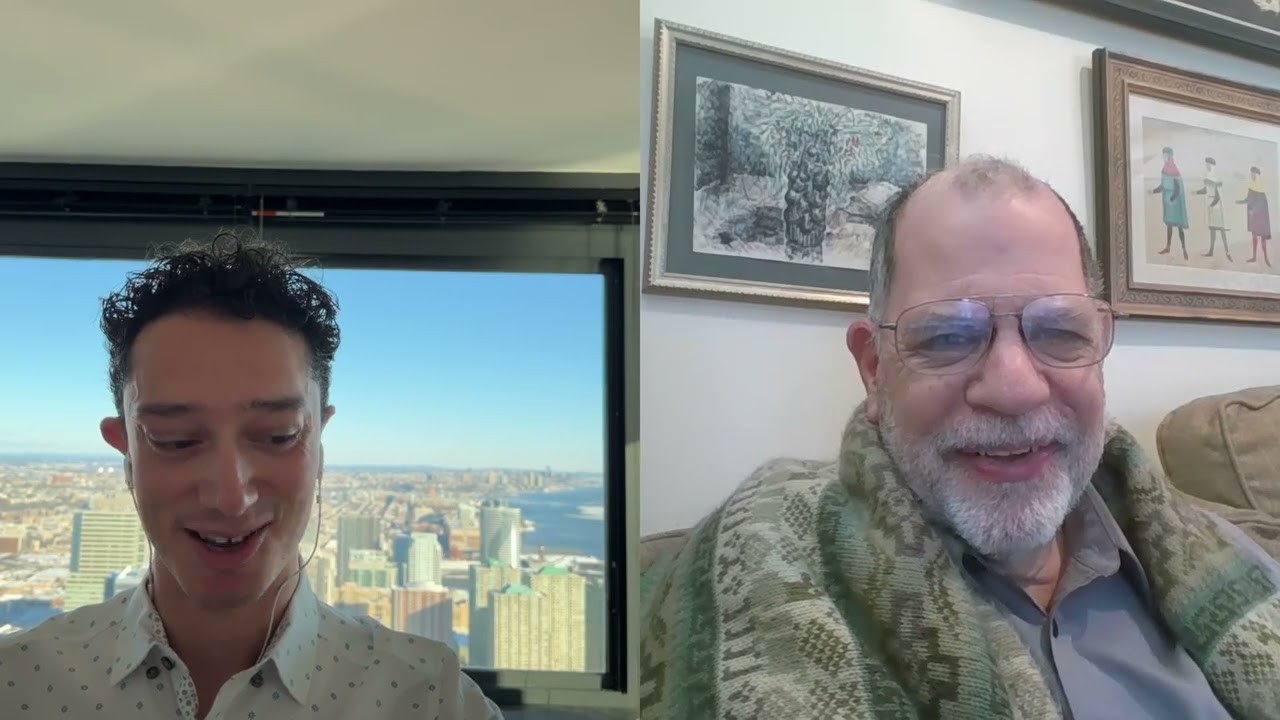
Economist Tyler Cowen grew up in Kearny, Hillsdale, and Rivervale and explains why New Jersey exports so much human capital. He credits the state's extreme town-by-town variation, proximity to New York and Philadelphia, and dense development that creates natural experiments for understanding how geography shapes identity and opportunity.
Chapters
Welcome to New Jersey Exit Interviews, the podcast all about New Jersey, America's greatest state. Today I'm super pleased to be with Tyler Cowen, who's an economist, polymath, and philosopher at George Mason University. He's on his way to becoming the world's first information trillionaire, that is, if he's not already there. And of course, he's from the great New Jersey. He was born into an originally working-class Irish-American family in Kearney, Hudson County, but mostly grew up in Bergen County's Hillsdale. So Tyler, thank you so much for being here. Good morning.
Happy to be here. And since you call this Exit Interviews, I should note my exit was 168.
There you go. Love that. So in a recent— not so recent, but in an episode of your podcast with Michael Nielsen, you mentioned that you think Amritsar, India is the best place to go to think about religion. That Jerusalem is a great place to go to think and learn about tension. So in that spirit, I wanted to ask you to fill in the blank. New Jersey is the best place to go to think about—
Politics and economics. So I grew up in Bergen County. What's so interesting about the history of northern New Jersey is that you could say it has a fractal political history. So especially in the 1890s, there was this movement called boroughitis. Where things would fragment and polities would break away and become independent towns. So you have many small independent towns next to each other. So you observe so much variation in a small area and you grow up seeing this. It's quite obvious even at the county level. Bergen County was one of the original counties of New Jersey and Hudson County split away from it. So you just have these secessions going on all the time and then ethnic clusterings. So it's just a fantastic place to grow up to become a social scientist.
Makes a lot of sense. So as you just said, I see how that leads to lots of great learning opportunities or kind of mini natural experiments almost. But there is some cost, right, in terms of inefficient public services or maybe high property tax. So do you think, are those costs worth the benefits?
Well, I haven't lived in New Jersey in a long time. When I lived there, I left, I suppose, in 1979 or 1980. It was considered a low-tax state, especially compared to New York City and New York State. So the New Jersey I knew did not have that problem, and it attracted a lot of business for that reason. Now, what's the biggest drawback of growing up in New Jersey? Well, in some ways it's ugly. But that also means for the rest of your life, everywhere else will seem to be beautiful. So I'm not sure it's a drawback. It's an exporter of human capital, and that tells you that it breeds a lot of smarts and ambition in people. And that's great. What's the drawback? I don't see it.
That makes sense. Can you tell us a little bit more about Hillsdale and the towns near it? I think I read that you said Riverville sometimes had some, I think, wuss kids was the words. So, can you tell us a little bit about where you grew up and the towns bordering it?
Well, the town of Rivervale shared a high school with my town of Hillsdale, which was quite small, very northern. Think of something, you know, 40 minutes or 35 minutes northwest of the George Washington Bridge, just to place this for other people. Now, I talked before about this borough-itis tendency. Rivervale, in fact, split off from Hillsdale and became its own thing. I believe that was very early in the 20th century. So Rivervale and Hillsdale ended up being quite different. Rivervale was wealthier. It had more space. It had nicer homes. It was more of a, a golf course sort of place. It was greener. Keep in mind, a central important element in the history of Hillsdale was the coming of the train line and the train station. And that was as early as the mid-19th century, I think around 1850. So that connected Hillsdale to New York and Hillsdale to a lot of jobs, to a lot of industry. New York, you know, earlier was this huge manufacturing powerhouse. So Hillsdale had long been the grittier town, I think most of all because of what later became the Erie Lackawanna train line running through Hillsdale. And we felt so sorry for those Rivervale people. They weren't near a downtown they could walk to or bike to. They didn't have a downtown. Now you want to talk about disadvantages of growing up in New Jersey, well, there aren't any. But there are huge disadvantages to growing up in Rivervale, New Jersey, right? So I think it bred, you know, a softer person, you could say. They're nice folk. I, I've had many good friends from there. But at the end of the day, even though they're adjacent towns, it's just not the same thing. And you could feel this in the high school, like people knew this.
Yeah, I definitely, in my high school experience, people would always talk about the towns one town over, like, oh, those kids are weird, they're from, in my case, Hamilton. I was from Ewing. Hamilton is weird, you know, and Lawrenceville is soft, maybe something like that.
So that's where you grew up? Yeah, Lawrenceville I think of as quite a wuss town, like very wealthy prep school kind of place, very smart people who aspire to go to Princeton. If I might rub that in. Uh, yeah, that's Lawrenceville from my point of view. Now keep in mind, Hillsdale has this other adjacent town called Westwood, and Westwood was larger, you could say a bit tougher and grittier. It had a real commercial district, not just a downtown. It had a record store, so I always had to ride my bike to Westwood when I wanted to buy a new record, which was pretty often. So Westwood stood over Hillsdale, and they looked down on us, probably with some justice. I don't even think they ever thought about Rivervale people.
Yeah, there you go. See, I grew up, uh, Ewing, New Jersey, so we bordered Lawrence, Lawrenceville, uh, Hamilton, Trenton, Hopewell, and then the Delaware River and Yardley on the other side.
Um, I'd love for someone to write a book, the history of rivers in New Jersey and how they shape the state. So there's the Passaic, Hackensack, and Hudson Rivers near where I grew up and lived. New Jerseyans just ignore them, you know. Everything's car-centered. They treat it as something to drive over. There's that famous scene in The Sopranos, the opening credits. Tony's, you know, in the car on the bridge. It's over some body of water. Like, no one there knows which body of water it is, but they're very important in the history of northern New Jersey.
For sure, for sure. I definitely, um, I grew up sometimes going to the reenactment of Washington crossing the Delaware, so I think of New Jersey as very related to rivers. Now, were both your parents from New Jersey?
Of course they were. Kearney, they went to the same high school. They were the smartest, they tell me, people from their high school, and they married each other, which is maybe not always the best algorithm, but it was quite common back then. And Kearney, which is in Hudson County, long-standing industrial town with a very strong Scots-Irish background. Kearney is quite distinct. There's a lot we could say about Kearney, uh, but it was very working class and fairly poor, I guess not relative to the rest of the country, but it never had the upper middle class feel that Hillsdale did. And that's where I was born, is Kearney, and I think the first 3 years of my life I spent there.
Okay, but definitely shaped your parents and then I guess through them, you. I take the train. I took a finance job in New York and I gave up my car, which I miss dearly, especially now that I'm no longer in my finance job in New York. But I would take the train from Jersey City, where I am now, to Newark Penn Station and the PATH train. And I'd look out at Kearney, I believe, unless I'm confusing it with another town. And I'd always like— I've never been there, so I want to go explore.
It has one of the most interesting histories of any northern New Jersey town. You know, it originally was based on a copper mine and supposedly it had the first really operative steam engine in the United States. This is early on, you know, in the 18th century. So it has industrial roots from the beginning. Later became Scots-Irish. As early as the 1890s, soccer was a huge thing in Kearney. In a way where it was not in the rest of the country or even the rest of New Jersey. And Kearney has had very strong soccer teams since then. I don't know if they still do, but soccer plays this big role in the town. There were multiple fish and chips restaurants. There were all these bars you could see. You know, when I was younger, we'd go back, visit Kearney, visit relatives, and there'd be signs to raise money for the IRA. And that was done quite openly and without shame. And again, Kearney, just a fascinating place. I think now it's a lot of Peruvians, Latinos, some Lusophone types like Cape Verde, Brazil. It's really a very different town than what I was born into.
Yeah, I know, definitely. I spent some time in the New Jersey National Guard, and a lot of the people I served with— I was enlisted, not an officer— A lot of the people I served with were Peruvian, a lot living in Toms River, and I became pretty close with a lot of them and was introduced to some amazing food. Ended up going to Peru a few times. So New Jersey's Peruvian population is a true treasure, I think.
That's right. Also in Paterson, I think. Yeah. Very good kind of lower price point Peruvian food throughout different parts of northern New Jersey.
Definitely. So we have Kearney, then Hillsdale, then briefly you were in Massachusetts.
Is that— Fall River. My father did Chamber of Commerce work. At first he tried to run a pet store and that went broke in Kearney. I don't have direct memories of this, but when I guess he was 30, I would have been around 3. We were totally broke. So although he later earned much better, my history a bit straddles you know, coming from a poor family and coming from a well-to-do family. But he had this offer to direct the Chamber of Commerce in Fall River, which was not a tiny place, uh, and had this textiles and manufacturing background. And he decided it would be good if he took it. So we were there for 3 or 4 years— 3 years, I think.
Now, do you think the time there shaped your, your thinking, your personality, or was that more just a a detour before you get back on the Turnpike?
Well, I think oddly Fall River was one of the parts of New England that felt a lot like New Jersey, so it contributed to the New Jersey-ness of me, but it didn't counteract it. It sort of packed it in. But I think at ages, you know, 3 or 4 to 7, you're not being formed as much as you will be a little bit later on, so It had this notion of there were homes that were close enough to the downtown where you could walk to the downtown, and that is a classic feature of much of northern New Jersey that is very good for children, in my opinion. It's hard to scale. We've moved somewhat away from it as places have grown, but both Hillsdale, where we lived, and Fall River, where we lived, and certainly Kearney, for all three of those, that was possible. So I never felt that the suburbs were isolating me. It's one reason I think I've always been sympathetic to suburbs, because I lived in three very good ones.
And you would, uh, would you walk to the downtown? Would you ride a bike?
It would depend exactly where I would go. Uh, I would say I would walk more often than ride a bike, but I rode the bike plenty of times. But say when I had jobs downtown, which I did as a teen, I don't remember why, but I didn't ride the bike. Sometimes I'd— later on I'd drive, but it was just easy to walk. Uh, your bike was a bit of a pain. You had to lock it. It could be stolen. Uh, walking was fine, and you'd see things along the way. So New Jersey can be a great walking state, at least in its northern parts. This is not well appreciated.
I agree. Um, I think you've written somewhat about your time working at grocery stores. Uh, in high school and the things you've learned. So could you talk a little bit about that?
Well, I think one problem with mental health for young people, especially young males in America today, is we don't have enough teenagers working. It gives you a sense of responsibility. You're accountable. People are watching. You have to work with others. Very basic things. But if you haven't had a job before, there are things you probably need to learn. So I learned what it was like to have a boss, to have to show up on time, when you could go home, that if something wasn't finished, I actually had to stay a bit late, and so on. The idea that you wanted to scramble to be assigned, you know, when you would be paid more for overtime, uh, that might be, say, on a weekend. Uh, you just learned the world. So, and the notion of this competition, you would see the supermarket you worked for, which was Stop and Shop, and before that Valley Fair, They just didn't make that much money because they faced a lot of competition. An extremely simple point. But again, when you're a kid, to see that vividly before your eyes, I think that's pretty valuable.
100%. And then I think you've said that your time in high school, you had a small group of great friends, a lot of them intellectual, and your mom thought about sending you to a better school or a private school. And you actually pushed back against that, thinking that you wanted the space to do your own thing. Uh, is that about right?
That's correct. She wanted to send me to Dwight Morrow School. I wouldn't say she wanted— she was willing to do it. That was supposedly a much better school. I would have had to go on a bus. They would have probably given me all this homework, which would have been terrible. And the schools I went to, I could walk to them. Both grammar school and high school. Again, the compact nature of these New Jersey towns was a big advantage. So I'd be home pretty quickly. I could just start reading or playing chess, depending on which years you're talking about. And I saw no reason to give that up. And in high school, you know, two of my best friends have become economists. One is Randall Kroszner, who teaches at University of Chicago. He's very well known. He was on the Fed Board of Governors. And the other is Daniel Klein, who's a colleague of mine at George Mason, currently working on Adam Smith and well known for a number of things. He was the first person, I think, to really measure and catalog the imbalances of, say, Democrats versus Republicans in American academia. Those are really seminal pieces.
Lots of great economists from New Jersey. We have Friedman and Tyler Cowen.
Alan Krueger, I think, was from New Jersey. There's so many. Yeah, but you lose— there's so many you lose track of it, right? Because this exporting human capital thing.
Yeah. Now, what do you think is behind that exporting? Why, why does— why don't more high human capital people stay in New Jersey?
Well, I think it's fairly simple. So we're sandwiched between these two major cities, New York City most of all by far, but then Philadelphia, which is still one of America's largest cities. And in earlier times was, relatively speaking, more important than it is now. So that got you exposed to a lot of things and opportunities and ideas and art museums and whatever. So it would stimulate your interest, but if you really wanted to do things, unless you went right to work at Princeton or earlier, it could have been Bell Labs, you had to leave the state. So it just was set up so perfectly to export human capital. Everything was arranged that way, like you'd get the inputs But to actually get the good jobs, you had to go somewhere else.
Yeah, that makes sense. I know, you know, right after college, a lot of— I was in the Army for a bit, so I'm older. A lot of my friends went right into Manhattan. I took the Manhattan job but chose to live here in Jersey City. And part of that was, you know, I'm in a relationship, so I live with my girlfriend. So we wanted a little bit more space. And I wanted to look into the city. I felt maybe that— I don't know if it's New Jersey rebelliousness, but I thought, New Jersey gets looked down on so much, I want to look down on New York. And that's the kind of crazy New Jersey story of why I ended up here.
But I think you're an exception in this regard. So I'm sure you know the movie On the Waterfront, where there's the looming skyline of New York City for the New Jerseyans. And they're intimidated by it. They're impressed by it. They resent it a bit. But it's a draw and a pull. I'd love to see the numbers, but my guess is if you grew up in New Jersey, you're actually more likely to move, say, to Manhattan or Brooklyn, and less likely to do the Jersey City-Hoboken thing. That— the Jersey City-Hoboken thing is for sane people who've been other places and can't take Manhattan, and they don't feel it's second class to live on the other side of the river the way a New Jersey person might. Do you think that's true or not?
Oh, I think that's true. I think that in a weird way I wanted to be here because I knew it was second class. I wanted to be a little bit earthy and rebellious, I think is terms you use describing New Jersey. I don't know if that's rational or if that's emotional or it's I wanted a cool place at a better price.
But Hoboken is not that anymore, right? It's really a satellite of New York City once they put in the train. And there's an earlier Hoboken. That was quite genuine and earthy, right? Which is, in a way, the only Hoboken I've ever known.
Oh, no, that's 100% true. Hoboken is extremely nice. Even, I mean, Jersey City is, at least the parts of it by the waterfront, have been really, really, you know, all these new gleaming towers, great transit access.
Very indie.
Yes, very indie. Yes, the outgoing mayor.
New Jersey City was once the center of New Jersey machine politics. You know, it was ruled by partly mobs, but not even just mobs, just like party machine for decades. You'd have like the same mayors, it would be corrupt. And Jersey City, again, epicenter of that, and it's so improved itself since those times.
Yeah, no, it's quite amazing. I'm curious if, you know, you talk a lot about suburbs. Recent conversation with Dan Wang where you very strongly defended the American suburb. So you live— I'm kind of jumping all over the place chronologically, but currently you live in the Washington, D.C. area.
Please, let's not call it that. I live in Northern Virginia.
Sure, Northern Virginia.
Thank you.
How do you kind of compare and contrast New Jersey suburbs with Northern Virginia suburbs?
Well, I think for kids, New Jersey suburbs of my time were much better. Again, this point about walking and/or biking. Virginia suburbs, uh, there are not easy ways to do either of those. There are not many places you could live. Like, there are some homes that if you live near Route 123 in Vienna, you could walk to many different shops, but for the most part, that option is ruled out. But if you're an adult and you're not doing kid-like things, probably Northern Virginia is better. It's better governed, uh, it's less congested, though it has its own congestion. I think it probably is somewhat better food, but they're broadly similar types of experiences. But if you're in Northern Virginia, you want to get into Washington, that's typically pretty easy. If you're in New Jersey and you want to get in and out of Manhattan, it's not that easy, and that's a huge difference, and it militates in favor of Northern Virginia, even though Manhattan is many, many times better than Washington, D.C. to visit.
Sure. So then in terms of maybe taking—
Ease of life, Northern Virginia is better.
Makes sense. Do you think— is that maybe not a policy failure, but is that a situation that with a reasonable chance of implementation, New Jersey could fix it. The PATH is running more frequently into transit. They're trying to build this tunnel that we'll see if it gets built or not. So if you fix the transit or make the transit better, does that just increase New Jersey's value?
Well, real estate prices would go up for sure. I think it would be much better for the world and better for Manhattan and better for idea generation in Manhattan But I don't feel it would improve New Jersey. It probably would make New Jersey more boring. Maybe boringness is undersupplied at current margins, but I don't feel it would be a better state aesthetically.
Would it be more boring because it would just be more of a commuter town, or why would it be more boring?
More of a commuter town, many more high-rises and condos clustered near the river, more vertical. People would leave them, they'd have high-paying jobs, you know, at Jane Street or something, and that's again all great for the world, but I don't see— and you'd have these big capital gains for people who are currently in New Jersey, again, good for them, but aesthetically you're just making the state less interesting and less distinct. Sure, sure.
I know you've written about the Victorian homes in Ocean Grove, so is that an example of a very New Jersey aesthetic, or we could talk about the shore more generally, but the shore is a very important concept here.
So like the whole question, what is Northern New Jersey, maybe we should get at. But for someone like me from Hillsdale, which is pretty close to the New York state border, hardly any of New Jersey is Northern New Jersey. Like I would say the line is at Woodbridge where the Turnpike and the Parkway intersect, and below that is all like Southern New Jersey. That's a radical view, but it's the one I hold.
You don't believe in Central Jersey?
Not much. Morris-something, Morristown, what do they call it? You know, there's things in there. I guess nominally they'd be Central Jersey, but they're not real New Jersey. But the shore towns, most of them really belong to Northern New Jersey culturally, even though they're quite far south. You look at Asbury Park on a map and you're shocked how far south it is. And it has great Puerto Rican food, and you're like, how did this happen? But in fact, it all makes sense when you really think through the geography, the economic geography.
Definitely.
So anyway, Ocean Grove has wonderful architecture. Everyone should visit it. I think they still close things on Sundays. It's like a dry town, or at least it used to be. Uh, just fantastic homes all over, very walkable, right on the water. I haven't been there in, I would guess, 15 years. But again, it's an excellent day trip from many places in the Northeast or Mid-Atlantic seaboard. You've been there, right?
Oh, for sure.
What struck you?
So I'm trying to recall. So when I did this teen travel camp, and we'd go to different shore towns throughout the week. It was great. It was a municipal thing. What struck me? So this is not an Ocean Grove answer, but it's— I always remember being struck by the lake in Spring Lake, which seems, I guess, obvious based on the name.
Yeah, that's the nicest of the towns, by the way, Spring Lake. Not touristically the most interesting for architecture, but just if you had to put yourself somewhere that also had real shops, it would be Spring Lake.
Definitely. I think we went— we went to Island Beach State Park a lot, which is kind of cheating because then you didn't get the town, you just got the beach, not the shore, maybe. I have to give that more thought. I need to have a better answer there.
You know, when my sister and I were young, we hated going to Ocean Grove, and we got our parents to stop taking us there. We just thought it was boring, which it is, right? We're like, oh, can we go to— first it was Point Pleasant, then it was Seaside Heights, which is now like a nightmare, right? Just awful. Yeah, but we were much keener to go to a place with an active boardwalk and other young people. And to us, Ocean Grove was like a funeral home or something. I think we even called it that once.
Sounds right. So on regional thinking in general, is there anybody that's not a regional thinker? If you grew up moving around way too much, are you then just an amalgamation of the fractured regions of your childhood, or what happens there?
Well, one would need more context to say. But if you move every 2 years, I don't think you're a mix of the bundle. Usually you're shaped by moving every 2 years, but it will depend somewhat where you've been. You know, if you're living in the Middle East as opposed to moving around New Jersey and Connecticut, it's going to matter a lot. So I would say look at context, but you only have room for so much regional thought because regions in a way contradict each other, right? So, there's plenty of Army brats, and where they end up is basically determined by military bases, and you meet plenty of them. I think they have a lot in common with each other, and you don't need to sit down and ask them in detail, "Which bases was your dad sent to or your mom sent to?" It's like, "You're an Army brat," and they know that, and that's how I think of it.
That makes sense. Do you think— so within New Jersey, as you've said, and I totally agree that to places with real gravitational pull, New York to the north and Philadelphia to the south. Do you think the people in New Jersey, they're thinking, what would be the differences between somebody, let's say like you, who grew up with the New York City skyline looming, and somebody that was maybe in Cherry Hill or closer to Philadelphia?
Well, it's funny, you know, I was talking to Jennifer Zambone about this recently. She's from New Jersey. A lot of New Jersey people at Mercatus, I might add. And Jennifer was saying a lot of New Jerseyans, they kind of actually regard Philadelphia as belonging to them. I agree with that. Like, we're not quite a satellite of it. Like, why don't you think about maybe you're a satellite of us?
It's very interesting.
Uh, so that's one big difference. But no one would say that about New York City or Manhattan. And Philadelphia, it's been ailing for a long time. You don't really necessarily go there to hang out. There's things there you might do or see. Uh, it's actually a wonderful city, great to visit, but it doesn't like impress you when you just show up. Partly you might be a bit horrified. So I think that changes the whole slant, and you're still like sitting around wondering, well, how long is that train trip to Manhattan anyway? And it's not actually that long, as you very well know. From where you come from.
That is true.
And that's still in some ways the greater attractor, but Philly's there too. So Cherry Hill's a great part of New Jersey. Was it Haddonfield is around there? A lot of excellent towns.
Yeah, you know, they're, um, maybe also not what they used to be, but I have, uh, high school friends that moved to like Bordentown, Burlington, and kind of the appeal there— a lot of them work for the state, so you can get to Trenton pretty easily. And you have, you know, kind of a walkable, nice downtown, and it's just really cheap, and it can be very charming, very charming towns.
Yeah, and you're near so many wonderful things. I don't just mean those two cities, but you want to get to Washington, to Boston, other parts of Pennsylvania, it's all right there. That it is in some ways like the best parts of Western Europe, I don't feel is sufficiently appreciated. Like Northern New Jersey, it evolved a bit like Italian city-states, in a funny way. And then the broader environment, it's like you're, you're living in Basel, Switzerland or something. So much is around you and you can just spend your whole life exploring it.
That's very interesting. So not maybe in terms of the geographic access, although maybe we can't separate the two, but would you say there is a country in Europe or anywhere else that most reminds you of New Jersey, say culturally, attitudinally?
Well, there is, and I mean, this is a real stretch, but you're— if you're making me pick one, there are parts of the Netherlands— by the way, Bergen County comes from Bergen in the Netherlands— uh, where it's densely populated, you can walk to the downtown, the homes can be of a certain sort, and some of this is actually eastern Netherlands. In a funny way, when I first saw it, I thought a bit, this is like New Jersey. Now there's no mafia, there's like so many other differences, not many Italian Americans there, but yeah, I definitely had that thought when I first went to Netherlands.
Very interesting. Do you think—
I think I've heard bodies of water, of course, also just like the Key Rivers in northern New Jersey.
So yeah, yeah, you know, I've heard you mention that your philosophy or life outlook is somewhat Humean, so a lot of the passion plays a role. Do you think New Jersey is Humean, or you think that's not quite right?
Well, it's Humean plus, like it might also be Machiavellian, right? Is the Mafia Humean? Well, that's a complicated question. So I think it's more brutal maybe than Humean, but yeah, Humean plus.
Okay, interesting. On some literature questions, you wrote that Stephen Crane is from the state but somehow doesn't count in my eyes as a New Jerseyan. Why is that?
Well, as you know, he died very young, so he could have done much more, but the key work he wrote, which I think of as more important than the short fiction, though they're both quite good, is about the Civil War, and New Jersey's a Revolutionary War state, not a Civil War state, so you don't connect him with New Jersey that readily. Makes sense. Not intended as a criticism, but just as an observation. It's like you have to remind yourself he's from New Jersey. You don't really have to remind yourself that Vince Lombardi is from New Jersey.
True, true. Why do you prefer Norman Mailer over Philip Roth?
Philip Roth might be the better and more serious writer, but to me Mailer is more creative. I get tired of Philip Roth. I feel a bit, I grew up with all that, do I need to read about it now? I think like the first half of Executioner's Song by Mailer is quite fantastic. It's also not about New Jersey. His whole history with Jack Henry Abbott is very interesting. His book on the astronauts and the moon, the Chicago riots of the late '60s. He was very versatile, and I think he's become quite underrated, partly because he was such a bad guy. Like he stabbed his wife with a penknife. And on purpose, it seems, not some kind of accident that his hand slipped when— whatever. Uh, but yeah, very, very fertile and creative mind, even though he's super flawed and can be like stupid or in poor taste or your eyes roll. But I don't go back and reread Philip Roth. It doesn't interest me. But he's quite a good writer. If someone says, oh, I love Philip Roth, I just think a bit, well, maybe you're not from New Jersey, right? Which is fine.
William Carlos Williams, I think you wrote that he is your favorite poet from New Jersey, so I have two questions. A few of your favorite poems, and I guess this is separate from your favorite from New Jersey, but does he feel very New Jersey to you, the poems, the poetry?
Well, he's very Paterson, New Jersey, right? But we need to disaggregate here. It's been too long since I've read him to tell you favorite poems. But I quite enjoyed it. Uh, I'm not sure the poems were super New Jersey, the ones I read, uh, but he definitely counts. Patterson is really hardcore. You know, we call it the heartland, like you're from New Jersey, you're not from the heartland. He was from the heartland, being Patterson. Patterson Falls, by the way, is one of the better New Jersey sites. Recommended if you've never seen it. And then eat the Peruvian food afterwards.
There you go. Exactly. So I've heard you mention that— this isn't really an AI— it's still a New Jersey question more than an AI question, but I've heard you mention, you know, people ask you investment advice related to AI, and you say high-quality land. So relative to, let's say, not the rest of the— not relative to Wyoming, but well, relative to Connecticut, how high quality is New Jersey's land, or is that too— you have to zoom in more to specific areas?
I think you have to zoom in more, but I would also say this: when I wrote about high-quality land as a good investment, that was some while ago, and I've become a little more skeptical because fertility rates in the US have plummeted by more than I expected when I wrote that. I think it's still probably correct, but I would say I've been downgrading my earlier view a bit for some obvious reasons. It does seem that because of AI, there's a lot of clustering, that being near other very smart humans is becoming worth more rather than less. But the question of in how many specific places will that kick in, if someone asked me, well, does that hold for Atlanta? I would just be quite agnostic, even though that sort of in principle is pretty high-quality land. I would say I've been having some doubts lately.
Do you think— New Jersey's very suburban, suburban. Do you think that as self-driving cars become more accepted and common, will that raise the status of the suburbs? Because it's even easier now to— you can sleep while you're waiting in traffic to get through the Holland Tunnel or something.
I think we need to disaggregate the suburbs here. So the parts of New Jersey where I'm from, I think in the short run will have serious problems because so often the roads connecting the towns have only one lane in each direction. In Northern Virginia, they virtually always have two lanes. Now, when it's one lane and you add driverless cars or vehicles, unless you have congestion pricing, I think a lot of things will just get clogged up, and that won't work well at first until we have congestion pricing. And that's a big difference. Now, if you're talking South Jersey, or what some of you call Central Jersey, things are more spread out. There's not so much a traffic problem in most of it, and driverless cars in those quote-unquote suburbs will just be big advantages. And you can even, you know, do something like take them into Manhattan or take them to the ferry place or whatever and work or read, check your email on the way. So very asymmetric effects. For that reason.
So those, let's say, Central Jersey, Southern Jersey suburbs, are they more like Northern Virginia suburbs?
I don't go to them often. Uh, they seem not big enough and not important enough, but in the sense that they have more space than true Northern New Jersey, yes. I mean, Cherry Hill would be much more like Northern Virginia, but if you're like really in the center of this so-called Central Jersey thing I don't know, you're just— I don't really know where you are. You know, you're in the Pine Barrens, maybe. Do you know the famous Soprano episode about the Pine Barrens?
I haven't. I saw— I had, embarrassingly, I haven't seen— at least I've seen only a few episodes of The Sopranos, which I need to fix.
Pine Barrens episode, you can watch it standalone without knowing any plot leading up to it, and it's one of the best hours of TV or even drama ever shot. It's incredible. But you have to watch, what, all, is it 7 seasons of The Sopranos?
No, for sure.
It never gets bad.
Yeah, I'm excited.
And I don't like most TV, and I don't like most TV serials, but Sopranos is really pretty incredible.
Um, I want to read, you know, Satriale's, it's in Kearney.
It's close to where I was born, very close.
There you go. Okay, wow.
Was in Kearney, it's not there anymore.
Yeah, I think I'm going to, of course, watch it. But almost what you said about Philip Roth, not that I— my dad is not a mobster, but I grew up. So my mom is Jewish, my dad is Italian Catholic, which I feel like is a very New Jersey combination. Absolutely. Super New Jersey. So I feel like sometimes I'd get the Sopranos vibe from Christmas dinner or something. It'd be, it'd be spot on.
But But, you know, it's also about non-mob families. That's part of the profundity of Sopranos, is forcing you to ask, what are actually the differences? And when I said before New Jersey's Machiavellian, that's one of the things I meant.
So Chris Arnade, I hope I'm pronouncing that right.
Arnade, actually. I got that wrong too.
Thank you. Who is famous for walking around lots of places around the world. He wrote not too long ago about his walking in New Jersey. And he said, "Driving into Jersey, I began regretting my decision. New Jersey's pockets of Manhattan's density, but with LA's reliance on cars. So it's in a quantum superposition of the two. And that means it has two outcomes or two different realities. For people who like it, that reality contains the best of both: Manhattan's localized variety with LA's space and freedom." and for those who don't, it contains the worst— Manhattan's crowding with LA's traffic. How— what's your reaction to that analysis?
Well, I think he's correct, but he also needs the larger frame. If you're walking in New Jersey, some other mistake has been made. But the point I made earlier, that if we made more of the New Jersey near New York City like Jersey City, it would be aesthetically less appealing, I think he's capturing that exactly, and he's completely correct.
Makes sense.
But if you set out your mission to be walking, I would say that's not sufficiently flexible to take in the wonders and glories of the Garden State.
For sure, for sure. Which you think would also be true about Northern Virginia. You need a, need a car, you need to, to drive.
Uh, not only drive, but partly drive, yes. And same with New Jersey. You want to do a lot of walking for sure, but punctuated by driving.
Got it. I've heard you talk about maybe a divergence in the governance quality in different U.S. states, with the example being, you know, California is maybe not run very well, and lots of states in the Southeast have been— being run increasingly well. Where do you think New Jersey fits into that?
Well, it moved from way back when being a low-tax state to being a high-tax fiscally troubled state, and it's worse run. So it's not that attractive to live there anymore in one sense. Obviously real estate prices are still high, the value of being near Manhattan and so on, that's only gone up. But the state has taken its locational rents and squandered a lot of them on bad governance and high taxes. Yeah, but look, you have to squander them somehow or everyone would live in New Jersey, and that's not stable, is it? Brian Kaplan might think so, but no, he's wrong.
Well, we're the, as you know, the country's most densely populated state, so we're at least in some sense used to the density. But so you've written, again, I'm always coming back to suburbs, that kind of, I think, growth viable suburbs are super important for the United States. So Is there a way to grow suburbs maybe gently in density while maintaining the benefits of a suburb, or what is a growth viable suburb?
Well, most suburbs are growth viable. I mean, the simple point that if you look at the data, Americans on net have been moving to the suburbs for a long period of time. Even if you think too many are moving in because not all externalities are internalized Like, the average return to living in the suburbs is higher, and it's why people move there. And we have so many writers on urbanism— a word I don't like— who live in like 3 or 4 cities: New York, typically Brooklyn, maybe Washington, somewhere in California. And their perspectives are so skewed, and they've always aspired to live in those places, and they just don't know America very well, I feel. They don't go to all the other states. They don't spend enough time in the suburbs. They often don't have cars. Can you imagine writing about America not having a car? That blows my mind. So, uh, the whole discourse seems biased. So part of my advocacy of the suburbs is just a bit of irritation at how biased a lot of the other writings are, and I want to counteract that. But I think in an ideal world, I wouldn't really praise the suburbs. I'd mostly be telling people to get into the cities more, which I did as a kid. I'd go all the time. I'd take the bus, the 11A, to New York City from Hillsdale, and that was so formative to my life. And that's what I really want to see people do more of.
Yeah, I think that's the first time I went into New York with a— it must have been the first time I went into New York as like a sentient being. I think I was 13 and I went with a cousin lived in Brooklyn, and we rode our bikes across the Brooklyn Bridge, and I think we went to MoMA, and it was just, it was an eye-opening experience, like a very profound experience. And you've written about going to see concerts, going to the MoMA.
So I saw Paul McCartney at Madison Square Garden in the mid-'70s, and I went on my own. That was incredible. And when I was younger, my dad would drive me to see Knicks games. Like, I'd see Willis Reed, Dave DeBusschere, Bill Bradley. Phenomenal stuff to see as a kid. And it's not just like, oh, in retrospect you realize— no, at the time, like maybe I was 8, I knew, and 9 years old, I'm seeing something amazing. This is historically important. When they put up like World Trade Center, went right in to see it. In 1976 for the bicentennial, all the ships, I went in to see that. The transport was all messed up, so I had to walk from the George Washington Bridge all the way down to Battery Park, which was an incredible walk to do on that day. And I made it to see all the ships. But yeah, so you just can see and take in so much history, and you know it at the time for sure.
Now, is that—
and you can't really do that in New Jersey, right? Which, like, in any year is pretty static. There's nothing in New Jersey like, oh, this year they put up the World Trade Center. There just isn't.
It's true. So I guess the function of that is to get exposure to high culture, maybe a raising of ambition.
Smart people, bookstores. New Jersey was never great for bookstores, even though it's a human capital exporter. You'd have to drive to some half-assed mall in Paramus and the store would still be mediocre. Now there was a Borders era in northern New Jersey for a while, but that ended and it's back to not so great. And It's always been not so great. And this is, of course, pre-Amazon. So there's a big reason why I went into New York later on was to buy books and just look for them.
Now, in regard to talent and motivation, so if we think about all those great things that New York City provides to a young, ambitious, smart person in New Jersey, I guess if there's somebody from Minnesota who comes to New York, for a weekend. Is it almost the thing about, you know, you don't care about the richest man in the world, you care about your brother-in-law? Is it for New Jersey, it's, it's so close, it's, it's achievable, it's like there, where if you're from Ohio, it's a little bit more distant, more foreign?
I don't know. And you say Minnesota, right? There's Minneapolis and there's everywhere else in Minnesota. I'm not sure I understand their perspective on very well. But I think what's become a thing in Manhattan is people from the Midwest moving there and feeling comfortable living there. And that's not something I grew up with. It was more you might be horrified, you might see great things and you'd wonder if it was worth it. But there's all these Ohio people, they walk around, they like live in Lower Manhattan, they have good jobs, and they just think it's great. Maybe that's the internet doing a kind of smoothing. It's that crime is much lower, you know, the filth, the drug problems are much less. I guess those would be some obvious factors, but it's evolved into something I don't really understand. So I don't know what the Minnesotans think when they get off the boat, so to speak.
Now you said when you were young and playing chess in New York, you didn't get mugged, but you ran away from people that were bent on mugging you. So crime in the '70s in New York really was quite terrible.
That's right. And, you know, my mother let me go. In retrospect, I'm amazed she did. I think she didn't know how bad it was. So I'd get off the bus, I'd have to walk through Times Square, which was a terrible area. You'd walk past prostitutes of the least salubrious sort, people shooting up. I think oddly there was enough illegal commerce there. It wasn't that dangerous, but you could even get mugged on the Upper East Side. I was in some arcade once playing like one of those silly games with one of my chess friends, John Riddell, and these people, they were going to roll us— that I think was the term back then— and they were gathering in a group. And John, who lived in the Bronx, grew up in the Bronx, he was very streetwise. He's like, Tyler, we got to get the heck out of here. And he, he and I just ran and took off, and they chased us. And that was fun. Like, I think it's important to have some of that in your adolescence, though it comes at some cost, but you end up wiser earlier in age when you have to go through some of that. And maybe we're not at the optimal point at the current moment.
Totally fair. I think, um, this is an NAI question related to state government, government in general. You know, it seems like there's a lot of government tasks, like I imagine some parts of procurement where you have to write the, you know, the request for proposal and then you go through the bids and it's a lot of data entry. Seems like tasks that AI will be very good at doing. It seems, my guess would be that states implement these tools at varying rates, so there's backlash that's maybe bigger in, you know, New Jersey than Utah or something. Do you see— is there any hope that the government will actually become much more efficient using AI, or is that a pipe dream?
I think it will first become much less efficient because people will use AI to abuse systems of filing complaints, filing lawsuits, comments on regulations written by AIs that are, you know, quite good comments. And government eventually will fight back and respond and use AI to process that flood. But it will take government much longer to respond. And we're about to enter this era where a whole bunch of things break, would be my guess.
Sure.
Now, if you're talking about Singapore, UAE, you know, maybe the governments there will be just quick enough that it will go quite smoothly. But I certainly would not expect that for New Jersey, which, as far as I can tell, is not yet an AI-pilled locale.
Seems right. Do you think that over time, maybe a lot of time, that some of the governance problems with a place like California, maybe a place like New Jersey, will AI be good in that it raises the bar for everybody? Will California become better governed?
Maybe in some long run, but if you think of the problems, say in California in particular, it's the voters, right? So, just throwing AI into the mix when the voters want bad things, I'm not sure that fixes the problem. Some particular functions will be streamlined and improved, but how will it affect the voters? I don't know.
That makes sense. Do you ever plan to leave Northern Virginia? Would you ever come back to Jersey? Would you ever go to California?
I can't see a scenario where I come back to New Jersey. It's colder.
It's true.
And I'm not sure what the advantage would be. I can see a scenario, unlikely, highly unlikely, but I can understand why I might choose to live in New York City, especially if when I'm much older and wanting to get around by walking more, say.
That makes sense.
But California, I could imagine reasons, but again, I, I don't think it's likely. But New York City and California are the only two places, or, or London, I could imagine going to, and they're all unlikely, but at least there are clear reasons why I might So you came, you went to UC Irvine, you know, right after, I believe, your PhD program.
You said there was almost a culture shock, that you very much missed the East Coast, the kind of megalopolis between DC and Washington. Would that be less salient now? Are things more smoothed to be similar, or would you think, would that still be a problem if you went to California?
I haven't been there in a long time. At the time, I felt people didn't really have a sense of humor. My colleagues did, but the people there in general— now maybe they felt I didn't have a sense of humor. I was also young male, unmarried. It was hard for me to imagine I would marry or marry well out there, and I was too far from Los Angeles, which I still love. I don't think all these different parts of America in general are converging on being similar. I know that's this time-honored trope, but I really don't believe it. Some parts are, but not in general. So what Orange County is like right now, I don't know, but I would not per se expect cultural convergence, though I'm sure it's not the Orange County I lived in, which was some mix of right-wing and libertarian and still growing at a very rapid clip. And it was like the alternative to Los Angeles. I, I suspect That's mostly changed. Got it.
Now, again, forgive me for jumping around so much chronologically, but I believe right after high school, your first year of college, you spent at Rutgers in an Austrian economics program.
That's right. This is Newark Rutgers, to be clear. Please.
Okay. So did you live in Newark, or you mean—
No, I lived at home and drove every day from Hillsdale to Newark, which was fun, but it did become exhausting. It was one reason for leaving. And I didn't want to live in Newark. For a while, I was actually planning on living in Kearney, which is right next to Newark, and doing the Kearney-Newark commute. Yeah, but part of me ultimately rebelled against that. It's just, it's like, Tyler, it's time to move on in life, not to move back to Kearney. And then Northern Virginia and George Mason came along, and I leapt at that opportunity.
There you go. And yeah, and you've—
other than my own human capital. Yeah.
Is there anything about your time in Germany that made you look at New Jersey differently, or?
Well, so much. I mean, so, so much. That's really shaped my views on so many things. But this is, I think, 1984. So, I wasn't living in New Jersey, but living there was still such a fresh memory, and I was back very often to see my folks, to see friends. So, I still felt part of New Jersey. And you go to southern Germany, Freiburg in particular, it's so clean and well-ordered that when I went back over Christmas break, I flew into— probably would have been Newark Airport, I'm not sure— and I saw New York City, I saw New Jersey, I was shocked at how I perceived it anew, like, this is a bit of a dump. It hadn't occurred to me in that way before. So you go to Virginia, like Virginia, yes, it's cleaner, it's quote-unquote nicer, there's more trees, and you sort of feel you've entered the countryside, but it doesn't induce you to think that where you're from is a dump. But Germany did to some extent. Now, that dump impression, it didn't stay so negative, you know, you rejigger and triangulate to some new broader Hegelian understanding of it all. But yeah, that shocked me when I first returned to New Jersey and New York. Again, this is the mid-'80s, after being in southern Germany, and I would say mid-'80s were kind of peak for Germany. Germany now is much dirtier than it was then.
Do you feel that Princeton is very New Jersey? I think that we might have the most— out of all the states, I think New Jersey kids are the single largest group. Does that feel very New Jersey to you?
Absolutely.
Okay.
And around it is very New Jersey. Again, it's a different Jersey. You're sneaking in some parts of northern Jersey, but without the density, and with much higher income and educational standards and prep schools. But it's not just southern Jersey, right? You know that. You could explain that better than I can.
Definitely.
It's—
I think Princeton is, is, is special. Yeah, it's its own place, but it is very New Jersey in a certain way, and I think that so many kids, including me, grew up with it kind of as this almost like the New York City skyline, but maybe internal, which is interesting. It was— it's always looming, right? If you're a smart kid in New Jersey, I think you mentioned that you had guidance counselors saying, "Oh, you're crazy. Why not apply to Princeton?" So I think it does function something like that. So why didn't you apply to Princeton? Why not follow the guidance counselor's advice?
Well, let me first say about Princeton, it has the walkability of the town, which outsiders think is because of Princeton University, but it's not. It's a general feature of much of New Jersey that Princeton also has. Important for understanding Princeton. And the Princeton area has all this Revolutionary War history, which also makes it quite New Jersey.
Yeah.
But I felt that at Princeton, I mean, the main thing was most other schools I'd have to live in a dorm. And I hated that notion that I would be at the mercy of people, their loud music, their smoking, their drugs, their whatever. That was such a nightmare. I couldn't stand the notion. I admit this might have been irrational on my part, but it's turned out pretty well. And then not wanting to have work all the time— I'm not sure that in fact is how Princeton was like then. I'm not genuinely not sure, but I just thought living on my own, I would enjoy life more and could get more real work done. There probably was some huge error at the time, but again, it's worked out, right?
It's worked out very well. So I think that, you know, the whole conversation we've been circling, but I want to ask very directly, if you had to say what New Jersey or New Jersey culture was in, you know, I mean, as much time as you want, as short or as long as you want to go, what is New Jersey culture?
Location-dependent would be my one word, if I'm allowed a hyphen. No, I think that's more than in most other places. Town by town, it would so vary. It got all of us thinking, where do these differences come from? And again, that's social science. You are drenched in social science the moment you are born into New Jersey. I really want to stress this point.
Yeah, I think that's beautiful, a beautiful way to end. Uh, Tyler Cowen, thank you so much for this exploration of New Jersey, and I hope we can talk again sometime.
David, thank you. Great to chat with a fellow New Jerseyan.
Thanks.
More from Tyler


#413: Tyler Cowen on Rationality, COVID-19, Talismans, and Life on the Margins





Tyler Cowen on Never Crying at Art, Why Rap is Dead, and Quitting Writing Books (w/ Nabeel Qureshi)


AI, Job Loss, Fertility Crisis and the Death of Careerism | ft. Tyler Cowen | PGX Ideas #4
