Tyler Cowen: Satoshi Identity, UFOs, Esoteric Jesus
In this extensive American Alchemy‑style interview recorded on January 29, 2026, economist Tyler Cowen and host Jesse Michels discuss a wide array of contemporary and historical topics. Cowen argues that social media, especially TikTok, is more pro‑social than most intellectuals claim, noting its role in rapid information diffusion and its impact on attention and lookism. He defends big business, citing its pandemic‑era performance and the need for a nuanced view beyond anti‑monopoly rhetoric. The conversation turns to cryptocurrency and Web3, where Cowen expresses cautious optimism about talent and innovation but worries about intermediary consolidation and the potential recentralization of crypto. He revisits his evolving hypothesis that Craig Wright’s team may be Satoshi Nakamoto, acknowledging the lack of conclusive evidence while outlining the puzzle of the missing private key. Cowen then shifts to the Gospels, praising Sarah Rudin’s translation for preserving the texts’ radical, esoteric character and likening Jesus to a heretical thinker. He critiques modern interpretations of Jesus and connects this to Straussian ideas about hidden meanings. The discussion moves to China’s demographic and political challenges, the handling of Omicron, and the plausibility of lab‑origin theories, with Cowen expressing a balanced, probabilistic stance. UFO/UAP phenomena are examined; Cowen reports credible reports from high‑clearance sources, stresses the need for open‑mindedness, and notes the sociological implications of such anomalies. Geopolitical concerns about Taiwan and Ukraine are explored, with Cowen predicting possible Chinese coercive actions on Taiwan within a decade. The interview also delves into generational effects, talent theory (a multiplicative model of eight essential abilities), and Cowen’s upcoming book “Talent” co‑authored with Daniel Gross. He reflects on intellectual influences, highlighting Ayn Rand’s emphasis on producers’ status, John Stuart Mill’s liberalism, and Mill’s lesser‑known ideas on taxation and voting reform. Finally, Cowen shares personal anecdotes about the Beatles, especially Paul McCartney’s managerial genius, and his mixed optimism/pessimism about future technological and geopolitical trends.
Chapters
I'm more pro-social media than almost any other intellectual I know. I remember, well, the days of the Vietnam War. The idea that you have these three networks and they hand down truth, I mean, that sucked.
My next guest is one of the smartest, most autodidactic, fun people to talk to in the world.
In earlier times, you had to shut up because there was nowhere to go.
He's an economist, columnist for Bloomberg Opinion, blogger at Marginal Revolution, and professor at George Mason University. He's a notorious speed reader, a polymath, and the host of my third favorite podcast after American Alchemy and The Portal, of course, called Conversations with Tyler.
Just that it's even possible that Russia might invade Ukraine.
Yeah.
That to me is like quite a bad sign.
Both Tyler and I attended Michael Solanas' Heretikon, a conference in Miami with some wild ideas and thinkers. Tyler in some ways was the heretic among heretics as a generally rational, optimistic person. As many of you know if you watch this show, I'm a bit more conspiratorial and skeptical of conventional narratives. In this conversation, we discuss the current crypto climate. We even speculate on who Satoshi might be. We discuss Jesus, the gospels, and his esoteric teachings, China, TikTok, Russia, Ukraine, the Beatles, and of course, UFOs. Let's talk about UFOs for a second.
Sure.
Please enjoy this raw, long-form version of American Alchemy with the great Tyler Cowen.
Different parts of the brain have different activities.
But you know that, don't you? Maybe you should interview me. He wrote an article for Bloomberg saying economists should be worried about TikTok. Why should they be worried about TikTok?
Well, that was a kind of a tongue-in-cheek article. I wanted to get economists to take TikTok more seriously. By one metric, it's the number one website in the world. Yes, there's a lot of economics on TikTok. I'd love to see some people, yeah, like come to me or to Teal Foundation or elsewhere, like, I'd love to be a great economist thinker on TikTok, like, could you help me?
Yeah.
And I wanted to stimulate this.
Yeah, there was, um, a pro, uh, nuclear energy influencer here named Isabel Bomicki. Yeah, and she's like this beautiful model. She just talks about nuclear energy, but she does it in these very sort of short-form entertaining ways on TikTok. If we push the closure back by a decade, it will help the state decarbonize faster.
There should be more people doing things like that, is my view.
Yeah, have you tried to get on TikTok and make videos?
Well, I watch, but I think I'm not the right demographic, not the right look. Yeah, I think I have a high energy level, but I don't have the right kind of high energy level for TikTok.
See, but does that not worry you, all, uh, McLuhan, medium being the message, that inherent to the format of TikTok is it just, it's just so compressed and it's hard to get super substantive things across?
Well, it worries me, but keep in mind, like, network television is not compressed and it was still hard to get substantive things across, right? So it's comparative. You have all this choice now. I suspect smarter stuff will be on YouTube than TikTok. And I guess this conversation, this is going to be on YouTube and not TikTok, right? We've way run over the TikTok limit. Like, that's okay. It might be people get ideas from YouTube, but they get something else from TikTok. I'm not even sure what that something else is.
Yeah.
Like their emotional energy every morning. Recently I asked some undergrads, like, what do you use TikTok for? And I meant this in kind of a deep sense. And I was surprised at the answers. Like, 4 people in a row said, I use it to save time. I used to go to Netflix and watch some long piece of crap, and now I just go to TikTok, and then I'm done in a few minutes. I'm not saying it's a universal answer. I'm just saying I wouldn't have thought of that, right? And what the net impact of TikTok really is, it's more something I want people to study and think about.
What was a brilliant insight, because it, it's the most frictionless place in terms of uploading content. It takes— it's doesn't take long to make content that could do incredibly well.
Yeah.
And then there's no sort of like incumbency advantage. So like you could go viral at any time. So if you're somebody who's new to the platform, you don't feel this sort of learned helplessness or like I'm fighting some crazy uphill battle. That's right. Which is interesting. That incentivizes tons of uploads. And then on the consumer side, you're going through these, these videos so quickly that the AI is just going to get so much better. That's right. And so it's pretty masterful just strategically.
Yes. I suspect TikTok makes lookism stronger. I'm not sure how we should feel about that.
Yeah.
But you evaluate videos by how the person looks, right?
Yes.
Yes. Again, you have to think counterintuitively, not just assume this is definitely bad, definitely good. It's striking to me how many very heavy people do well on TikTok. Yeah. Again, I'm not sure if that's bad or good.
Yeah, yeah, yeah.
How it affects gender norms, I don't know. But I'd just like to see much more discourse on that.
I think it does make lookism stronger, and maybe we have, you know, the equivalent of Nixon sweating in the JFK debate or whatever, you know, on TikTok somehow, and I was with an influencer, this guy named Jake Paul, who's— he's now doing a bunch of boxing stuff, and he was telling me, "I want to be vice president, and my brother wants to be president," and I would have said 10 years ago if I had this conversation with him— I've known him for a while— I would have said, "You are insane. You're crazy. There's no way," and And now, I'm like, you know what, man?
But vice president, that's a weird ambition.
It is weird. Well, he thinks of himself as the more controversial, kind of right-leaning guy. And he thinks his brother's a little more diplomatic and political. So I don't know. That's how it worked out.
Like, I'd way rather be Secretary of State, if I had that ambition at all, than vice president.
VP is a pretty powerless symbolic—
Now, you might become president. But then you might as well have that as your ambition. Like, what if someone said— to be Deputy Assistant Secretary for Transportation is my ambition.
Right.
That's weirdly truncated, right?
It is weirdly truncated.
It's almost as if the economy has its own sovereignty.
You know, the corporations are like, are like, so that we don't want to mess with their rights to run things as they like. You wrote a book defending big business that came out in 2019 in a world where Lina Khan and Tim Wu and John Tepper and Matt Stoller, all these people talking about, you know, breaking up monopolies. Um, what, what compelled you to write that book?
I just saw so much public discourse that was so terrible around big business, just obvious fallacies being repeated, circulated on Twitter, everywhere, uh, and there was no book rebutting those. And I thought, well, it's incumbent on me to write that book because no one else was doing it. And I think that book held up very well, especially during the pandemic where big business kind of saved us, right? And I don't just mean the vaccines, food delivery, many different ways, you know, the rise of Zoom, big business held up when government collapsed or was dysfunctional.
Yeah, I think about, you know, if I didn't have Amazon, right when the pandemic hit, I don't know what I would've done. But I do make a distinction between, there's something about the social media thing which sours it for all the other big business or something and feels fundamentally distinct. Do you sort of put them in a separate category? Facebook?
People expressing themselves is a good thing. I'm more pro-social media than almost any other intellectual I know.
Wow. Why is that?
They spread information.
Yeah.
They can make you much, much smarter. I do get they don't do that to everyone.
Yeah.
Our ability to fight the pandemic, like researchers communicating on Twitter was a big, big thing.
Yeah.
Or WhatsApp.
Well, that feels like maybe an average is over argument or something where It's like most people are getting dumber on social media, and then there's like some right tail that, that is getting smarter because of the better dissemination of information or something.
But keep in mind, I remember well the days of the Vietnam War, uh, where it was very, very late in the war that many Americans opposed it. That war wouldn't like last a week on Twitter, right? Sure. So the idea you have these three networks and they hand down truth, I mean, that sucked, right? So is what we have now worse? I think it's It's a very complicated question. But overall, I would say I prefer it.
Do you not feel like it has a somewhat of a repressive or panopticon effect, though? If you're a young person growing up, you just see everyone who says anything mildly interesting, they say one wrong thing, they get canceled. And then you think to yourself, I should just shut up and not say anything.
That's an issue. But in earlier times, you had to shut up because there was nowhere to go.
Right. But this is like you have the Borg in your brain or something. The latency is just so low in terms of the public conversation just being in your head. It's like a town square in your head, which I don't know if that feels healthy.
There's a lot of Thiel Fellows. You probably know more of them than I do. A lot of them are on Twitter. I don't know all their histories. But my guess would be it's done them more good than harm, like as a group of people.
That's probably right.
What we're really seeing with cryptocurrency is the creation of a new financial system or economy. Ethereum can be used to build financial applications that are fully trustworthy and transparent because they run on the blockchain.
I'm not like, oh, fuck, like I'm looking at my bank and there are no bananas here.
Right.
What do you make of the Web3 stuff? I think there's a, you know, it's easy to have a cynical take, but, you know, maybe it turns into something. Are you optimistic?
It's striking to me how much talent is behind it. And one should take that very seriously. So I've become progressively more bullish on it. But at the same time, if I sort of write down all the intermediaries you have to go through right now to do something, it seems daunting. And I fear the final result will be a consolidation of intermediaries, but a recentralization of crypto once again. Right. And that still might be better for people in the world, but it's a little dystopian in some other ways.
Totally. Well, even now, I mean, most people are buying crypto through Coinbase, which is a completely mainstream institution.
Nothing against that.
Yeah.
But at the end of the day, you wonder, like, where exactly is the revolution, right? Right. The idea of the Balaji— well, there's some new version of Twitter out there and they can't kick anyone off. That just seems to me less likely.
Yeah. Yeah.
Than it has.
The Gil Scott-Heron— the revolution will not be televised, but will be played out by Andreessen Horowitz and Stripe. I don't know if that makes—
or it won't be a revolution. It will be televised, but it won't be a revolution.
The way in which I think it is somewhat revolutionary is if you're a young person in this country and you think inflation is impending— and you have a way better sense than me as to whether it actually is impending— but you think inflation is impending, you think you're losing 6% a year if you keep your money in a savings account, you probably feel like you have to move up the risk stack. And so the S&P 500 might become your de facto savings account just to maintain your net worth.. And then Bitcoin becomes all of a sudden like a blue chip stock. And then almost, you know, NFTs and altcoins become your venture play. And so it's like, you know, to keep up, you have to buy Shiba Inu coin. And in certain kind of cosmopolitan places to buy a house, you need to buy Shiba Inu coin if you're, if you're a young person. And so that's another interesting sort of dynamic. And the more we print money, obviously, the more maybe inflation you get. And then, and then it sort of progressively increases this whole, this whole trend.
It worries me over time, though. Crypto seems to have become a highly cyclical asset. Early crypto, early Bitcoin is often countercyclical like gold was some while ago, but, you know, may not be anymore either. It's a recent inflation report which has higher inflation maybe people had expected. Crypto went down a lot. It went down more than the dollar did. Right. So I don't think it's a good inflation hedge like real estate might be. Stocks are not a great inflation hedge.
Yeah.
So maybe it's this thing like it'll be televised, but it won't be a revolution. Like people buy more homes. That's like our future. Okay, I can deal with that. But it's so 1950s, right?
Right. Well, we've had a historic asset run-up since 2009, the advent of Bitcoin. And so, yeah, I think it's an important question. You know, is it high beta equities or is it, you know, somehow super tied to inflation, and I think it is at this point high beta equities. You look at the average Bitcoin holder now, and I don't think it's this super ideological libertarian. I think it's this profit-motivated, you know, equity speculator.
It's supposedly 13 or 14% of the American public, right, has held or traded in Bitcoin. So it, it has to be a very broad group. But the nice thing about homes is if push comes to shove, you can live in them and enjoy them.
Yeah.
And in that sense, they're like hobbies. I say cheap hobbies are the ultimate countercyclical asset. And maybe the plausible scenario, if you're a pessimist, is just everything goes down in value and it's the money you spent well. That's your countercyclical asset, right?
Okay, that, that's very interesting.
So spend your money well, spend your money well and develop your tastes well, right?
Right. And do you have a sense of how maybe the Web3 or crypto thing sort of plays out? Do you think it sputters out or turns into something real? Because I agree with you. I think the pro argument is you have all this great talent, earnest, right, you know, really smart people. And then the, the anti-argument is it's hard for me to even imagine clear kind of use cases. Like, it feels like what we're— what's being done now is very self-referential. Like, it's, it's— you have a centralized exchange that has a take rate on a bunch of other things that are kind of vaporware that don't really do anything, right?
So the easiest thing for me to make a simple case for is DeFi.
Mm-hmm.
So you think of me right now, I I just have too much money in my checking account and I earn zero on it. And I'm sure a lot of other people are in that position. So the notion that I would gladly lend out 3%, 5% of that to, say, poorer countries with higher rates of return, microcredit or something. I'm earning zero, they're paying 50 to 100% a year. It would be weird to think that software can in no way intermediate that gap. And I would take a lot more risk to get a crack at just like earning 4% a year. So I think something like that will happen. At first it will be radical, it won't be that regulated or well regulated. There'll be various crackups, as like dot-com boom, the railroads, like in all of history, good things involve some bad stuff along the way. And then it will evolve into some more mainstream version of DeFi. Maybe it will end up like a better money market fund, which is like fine, great, good for me, but not that exciting in the long run because it'll be centralized. And a bunch of big providers, and it will be better than what we have now and a permanent part of the landscape, but kind of like buying a house or something.
Yeah, got it.
That would be my modally most likely forecast.
Makes sense. Do you have a view on who Satoshi Nakamoto might be?
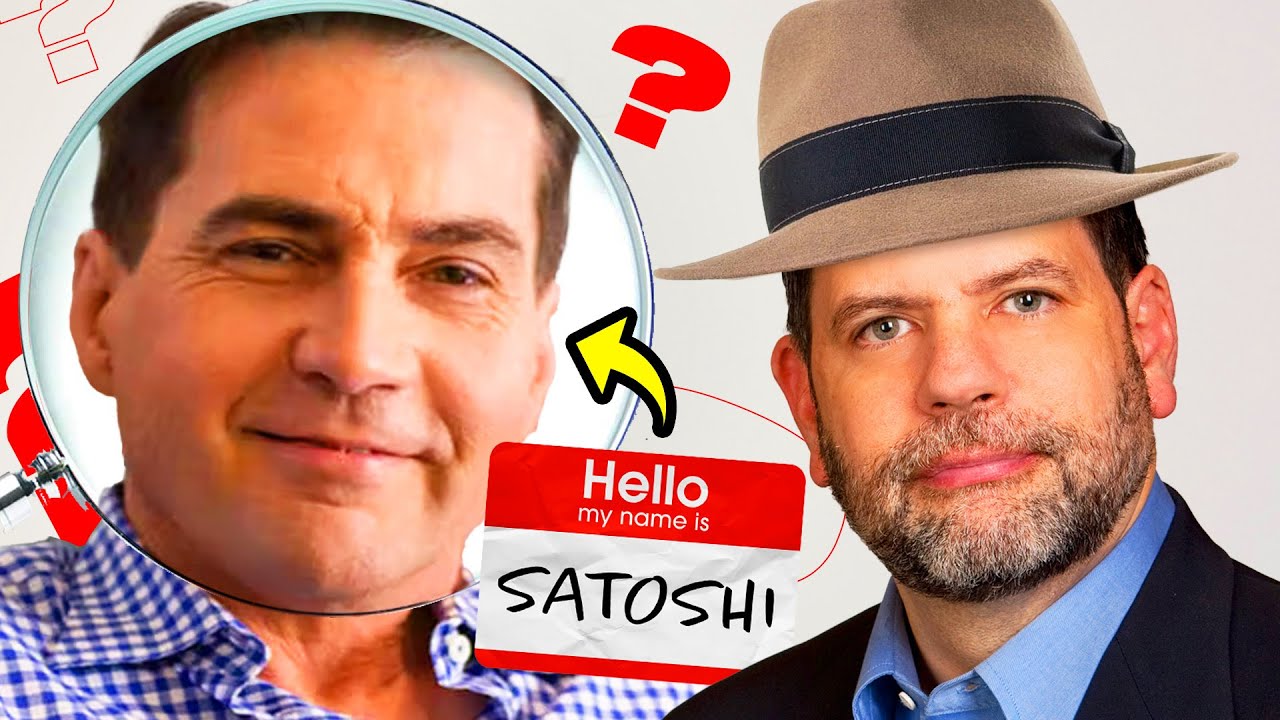
I've updated my views on this, but this is super tentative. I don't consider myself an advocate for the hypothesis, but it's a hypothesis I used to really just dismiss. And now it seems to me the modally most likely outcome, though it still might be below 50%, and that is to think that Craig Wright and a bunch of people surrounding him are Satoshi. So you're going to show me that Satoshi Nakamoto is you?
Yes.
And he wasn't, you know, the genius mastermind. That seems quite obvious.
You're right.
Uh, many people have alleged he's a fraudster. I'm not sure what they all mean by that word. But it does seem there was a team of people surrounding him.
Yeah.
And there was a court case, and there's a lot of evidence that something was going on early. Like, let's say I tried to sue you. Oh, I'm Satoshi and you took my Bitcoin. Like, I couldn't— even in our totally screwed up legal system, I couldn't get that anywhere near to a real court case today, right?
Yeah.
It'd be like, who are you? What's your evidence?
Right.
And there was just a major court case settled in December related to Craig Wright and who did what or who took what from whom. And I don't think there's any conclusive evidence that I know of. But like, he says he's Satoshi, he says it was a team, there was other people around him. Yeah, there was an actual court case. Yeah, uh, like something went wrong with the passwords or the access or whatever. I don't know what. I'm not saying it's true, I'm just saying it's gone from the 'I dismissed it' category to Gee, like, this is a real hypothesis. Yeah. If you put aside, like, the reasons why you don't want to believe it.
Yeah.
Like, there is some evidence. And some of the puzzles, like, well, where is Satoshi? Why doesn't he or she come forward? Why isn't the money being spent? Like, it has potential answers to the main puzzles. Interesting.
I always— to me, he always felt like a decoy. But it's like, yeah, I mean, maybe he lost the private key to the genesis block. I always like the Vitalik sort of retort, which is like, if he's Satoshi, why doesn't he just produce the key? He had the opportunity to make a signature from the first Bitcoin block. Instead, he's taken this path where he's wrote this big long blog post with 200 lines. It's so confusing that even Jack Kaminsky said it's too confusing. And then if he needs the— he definitely needs the money.
Yeah.
And so, you know, he should be able to take from it. But maybe he lost the private key.
Yeah, it would have to be something like that.
Yeah.
He lost it, it was taken from him, it was somehow a team thing to begin with, they all had part of it, they can't agree. I don't know, again, I understand there's a lot of holes in this. It just seems to be more of an explanation than a lot of the other stuff. And to cite the kind of 2 or 3 people early in the e-money stuff, like that's a leading alternative, but there's like so little concrete. Like, oh, was it Hal Finney, was it Szabo? I'm not saying it wasn't. Like, those are clearly contending hypotheses, but there's nothing concrete other than they were interested in the topic at that time, which like clearly counts.
And then you'd have to think, right, that like the NSA knows who Satoshi is.
I doubt it.
You don't think so?
I don't think so. But there's so much they don't know.
But it's such a matter of, um, you know, national security.
I don't think they see that. They might be wrong. I think they see it as an obscure puzzle.
Interesting.
And I don't know that it is a matter of national security. Like, they might not be wrong. Like, how it works might be security important. But say it was Hal Finney, and the CIA learns it was Hal Finney, or they knew. What do they do different? They allocate more spies to Tunisia? Life there is going to go on. There's bureaucracy.
I think the former conspiracy, which now just seems less and less credible, was that China somehow controlled the mining. And the reason that that's less credible is because they just banned mining. And so it was that China controlled possibly over 51% of the ledger. Maybe they didn't do it in a centralized way, but through Bitmain, which is a Chinese company, maybe in a decentralized way they did. And that just seems, if anything, they just seem to be skewing Bitcoin more and more. And so—
Yeah, that's national security relevant, although that now has totally changed, of course.
Right. But what I'm saying is that if you were to try to do some triple bank shot, like with Didi, the Uber equivalent in China, it's like they got all this institutional US money, and then they cracked down on Didi. And so it's sort of like, you know, You get the capital in and then you screw the market cap or whatever. And maybe something like that could have happened with Bitcoin, but it feels like that's less and less possible because they're banning all of the possible— you can't invest in crypto now in China without serious impediments. And then you definitely can't mine.
And they're cracking down on their own firms too. It's not just foreign capital.
Right. Shifting gears from Web3 and crypto to God. I was asking you what you were reading before this. And you said The Gospels by Sarah Rudin.
That's correct.
What motivated you to read this book?
Hers is a translation of the Gospels unlike any other that I know of. So most translations that we Americans, say, read, not reading the Greek of that time, they're designed to be kind of Sunday school friendly, very chatty, very narratively based, easy to read. They read like most of the rest of the New Testament. But the Gospels are these super radical documents. And the events in them are so strange. And this translation allows the true strangeness of the text, the events, to come through. And I think it's a radical, revelatory, in the literal sense, book that everyone should read who cares about anything. And you don't have to be religious. I'm not a religious person myself, but I found it's one of the biggest wakenings up of any book I've read in the last 10 years. Again, I'm not an expert in the original source language, but I've read reviews. It does seem correct, like this is one good version of how the Gospels are supposed to read. They're supposed to shock you with their strangeness, and in this translation by Sarah Rudin, they do.
Wow, I really have to get on it.
But it's much harder to read than what you're used to. Keep that in mind.
Yeah.
But that's exactly why it's important.
Well, that feels right.
Yeah, it's like the heretikon version of the Gospels, you could say, because Jesus was ultimate heretic of his time.
Ultimate heretic.
And you read the other translations, it doesn't feel that way because it's been so successful. Interesting. There's a marketing ploy, right?
Yeah. The Greek word mysteria. He was supposed to speak sort of in mysteries, and I think even philosophers like John Locke would say he would intentionally mislead. There are people now who think he was very sort of Straussian in his communication.
I think Straussianism has risen greatly in status, and correctly, because we see that even in our so-called free society with a lot of free speech, you can't always say what you think. And this has become so obvious. So people used to make fun of the idea, they're like, "Oh, the 17th century thinker, he can't say what he thinks, like, come on. Adam Smith couldn't say what he thinks, come on." But now it's like, of course, that probably was true for so many of these people. So in that sense, I think Straussianism is totally vindicated. But keep in mind, Jesus was a speaker willing to be killed for his beliefs. And the simple take that, "Oh, he hid it because he was afraid of being canceled," that doesn't seem to fit the story, right? That he wanted to produce complex messages of multiple dimensions that would resonate in many different places across many different periods of time, I'm pretty sure that's true.
Yeah.
So that's a kind of Straussian, but I wouldn't jam him into the, oh, like Adam Smith was afraid they'd take his university post away from him kind of framework, because Jesus clearly took on a lot more risk.
You just wrote an article recently for Bloomberg saying that China's development plan shows cracks. You want to explain that?
Well, huge cracks. It's gone really quite well for a long time. And it surprised me for how long it's kept on running. I was definitely wrong about that. You had a lot of people like Danny Rodrik say, "Oh, the Washington Consensus was wrong. It's all about the Chinese development model." Well, which was the country that did the best copying the Chinese development model? It was Ethiopia. What happened to them? Their state got too powerful, was seen as too threatening. They basically had a major civil war. Their future economic growth very much up for grabs, probably a negative outlook. China, huge fertility issues. It's not clear how they can fix them.
Yeah.
Like, all their muscles are good at doing is state-based solutions for a lot of things, and state-based solutions don't always work. So now there's Omicron, right? They're trying to bottle up Omicron. Tianjin, Xi'an, imprisoning millions of people. They have like armies of millions of people enforcing these restrictions. I don't think that will work. And their vaccines don't seem to be good enough, right? So I think China's in for a very rough extended period.
Yeah, yeah. Well, especially with how transmissible Omicron is. I mean, clearly they were, they were good at shutting things down initially, right?
Incredibly good.
But I think, I think Omicron might make things a lot, a lot harder. What do you think about, I guess, Omicron generally? Do you think— I guess the optimistic take would be that it's the natural vaccine vaccine for everybody or something. I was speaking with somebody here, and this is sort of a heretical viewpoint, but he thought that Omicron doesn't make sense in the phylogenetic tree of, you know, what we had seen in terms of the evolution of the virus. And so, you know, he thought maybe it was bioengineered or something 2 years ago, and, you know, and it is the natural vaccine that was let out sort of strategically. You think that's a crazy conspiracy?
Well, I think it's unlikely. I, I've read some of the pieces arguing for lab origin of Omicron.
Yes.
I don't feel I'm able to judge them directly. Same. But I'm not seeing the signs that it's a thing that might be true.
Yeah.
In, in the way where with the original COVID-19 virus, uh, I was never convinced of lab leak theories, but they seemed more likely that they could be true. And they might be true, right? And there's kind of evidence that doesn't go away. Yeah, we're not sure. I would say we shouldn't be sure.
What's your— do you have like a, you know, percentage split on the likelihood of lab leak?
I've gone from like 20-80 to 50-50 to like 30-70, maybe now to 40-60.
Okay, it's possible.
I'm not sure we'll ever know. I'm not even sure how much it matters. Like, Chinese had bad lab practices versus Chinese had bad wet market practices. Yeah, I'm not saying there's no difference.
I'm 80— I'm 90/10 lab leak.
I think that's too high.
Really?
Yeah.
Well, if you look at the data, it's like two-thirds of the original cases, um, you know, didn't have any wet market exposure. Uh, COVID is one spike protein away from SARS. They've been studying, you know, SARS, uh, at the Wuhan Institute of Virology for a very long time. Look at this EcoHealth Alliance submission to DARPA, which was rejected, and then probably put in the Wuhan Institute of Virology under the auspices of the NIH. And then just the fact that the outbreak is in the place that they're, that they're studying this, they're studying this with bats, it just— and then, and then, and then, yeah, all the bad safety marks on this specific lab.
I would say I take the hypothesis very seriously, but for kind of emotionally fraught issues, it's very easy for us to talk ourselves into hypotheses. And our ability to figure things out in general, yeah, I just see is often not that high. I still don't know who was behind JFK. Maybe it was lone gunman, maybe more complicated than that. I can see why people think it's more complicated. I don't dismiss that. I'm just not sure. And people have been studying that for decades.
Yeah, yeah, yeah.
So I kind of look at it in that framework, like we still don't know. There's no JFK hypothesis. I would put it 90-10 on any side of the debate.
You'd put it 90-10 on JFK that there is a conspiracy?
No, I wouldn't. I don't know.
Come on.
Really? Yeah, really don't know.
But yeah, but so I don't know either.
We're not trained evolutionarily to find patterns in things.
I fully agree with you.
To look for intent.
I would never— I'm not— I think pre-crystallizing your knowledge artificially is bad.
Yeah.
But in terms of the mainstream narrative being wrong, I think you can be a little more sure. And I think on the JFK stuff—
There's not much in the way of deathbed confessions. There was one in the Miami Herald earlier this year. It nudged me a bit, but maybe I'm at 50-50. On JFK conspiracies, which, like, it's pretty high, but I'm just not sure.
I'll admit there, that is sort of the best counter-argument. And then there's the magic bullet, the brain autopsy, the, uh, the fact that, you know, the CIA probably had it out for him. Like, there are all these sort of other possible narratives.
But, and I suspect if it's a conspiracy, it's not like a very dramatic, satisfying conspiracy, right? There's like Cuba, there's Soviet Union, right? They might have done whatever. Like, okay, but those are like very flat conspiracy theories in a way. That's what I'm inclined to think if I go the conspiracy route. Oh my gosh, who is he?
Let's talk about UFOs for a second.
Sure.
Because that's a topic when I listen to your podcast pretty religiously, and when you talked about it, I think it was the first time it was with John Brennan. That's right. The former CIA director.
But I wrote a column about it in 2017 before it was like a thing.
Oh, I didn't know that. I mean, it's a fascinating topic. I mean, it's one of these things where we were talking earlier, you put the probability of it being extraterrestrial at like 5% to 10% or something. And then you have to look at the— even if it's a tenth of the likelihood of being true, it changes everything if it is.
Sure. And the alternative hypotheses are also super weird. One thing I've learned over the last year, I've heard from a whole bunch of people Totally separate sources with like very, very high security clearances, and I mean very high.
Yeah.
And they all swear it's a real phenomenon. They're not saying it's aliens. They typically don't think it's aliens.
Yeah.
But the idea that there's some like Mick West video out there, that it's an illusion or the camera shook, or—
Right.
There's like evidence from satellite, you know, radar, visual sightings, temperature readings. It's all totally consistent. And the people involved understand something is happening, and it's just the serious people don't doubt that anymore.
It's corroborated across multiple sensors. And then you have all sorts of fighter pilots where the culture in the Navy and the Air Force is generally not to, you know, wave your hand and say, look at this special weird thing that happened to me.
It's more embarrassing.
Humility. You're embarrassed. Yeah, exactly.
What drug did you take this morning?
You're risking ostracization.
And so Yeah, that doesn't mean it's aliens. Like, sometimes I get worried, the people who really push this stuff, they use a kind of argument from elimination. They're like, "Here's why it can't be the Chinese, here's why it can't be the Russians, here's why it's not psyops, therefore it's got to be aliens." I think the argument from elimination sometimes is very dangerous, that if you can't really span the possibilities mentally, you shouldn't so much engage in argument from elimination.
Totally. And it could be this— non-Copernican, Earth-based thing that we just are not— you know, we see 400 to 700 nanometers of the electromagnetic wave spectrum. You know, our everyday epistemologies has to be collapsed in order for it to be adaptive.
Yeah.
And so maybe these things are sort of interstitial and we don't generally see them, but they sort of— they're weakly entangled with reality. They pop in every once in a while. I have no idea.
When I say it's 5 to 10%, that's less a kind of Bayesian betting odds and just a way of signaling, like, this is very far from being established, but you ought to take it seriously.
Yeah.
It's how I think of it.
Yeah. I think that's right. Well, even if they're not extraterrestrial, but they're displaying properties that everybody talks about new engineering. It's not new engineering. It's new physics. It's like you're breaking laws of conservation momentum.— you know, the transmedium travel. These things would require metamaterials that we don't currently have with properties that, you know, we have never seen planes exhibit. It's pretty interesting.
And just where they are, like a lot are off the coast of San Diego. So, like the Russians just have subs under there and from the sub the thing comes up? Right. And like, why— whoever has these things, if they're just someone's domestic military stuff, why isn't that country way more aggressive?
Yeah.
You know, we're going to take this and F you, and you know, here's our thing and just give it to us.
I think that's right.
You don't see behavior remotely like that. So I don't know, I just think people ought to think about it more and keep a very open mind, not become advocates for a particular hypothesis.
Yeah, these things are seen in times of greater social breakdown. And so there was actually a record number of sightings in 2020, and they have this element of recursive unsolvability. They're just ultimately these very ephemeral, hard to explain sort of— it's called the phenomena for a reason. And so there's a way in which they actually spark greater distrust in institutions because people look to the skies and they say, you know, what the hell are these things?
And then mainstream government media, of course, can't explain it for them, right?
They cannot. Yeah, exactly. Which, yeah, makes you think there's an authority maybe above the terrestrial one that we're sort of obeying right now.
Just like the sociology of, you know, they now don't want to call them UFOs anymore, but just seeing how people process the reports to me is also highly interesting.
How so?
When like truly new possibilities come along, yes, how do we deal with it? How do different people deal with it? What kinds of moves do they make to dismiss it? Or yeah, how many, what kinds of people latch on to something specific like way too quickly? Become advocates for some hypothesis.
Well, you can often guess where somebody maps on to how they react. It's almost like a good Rorschach test or something.
And it's like crypto, like Satoshi. That's like really a new idea, right? And we don't have that many like truly new ideas. Things we think are new ideas, like half of them are on John Stuart Mill or somewhere else, right? But like Satoshi, it's not clear when we start the UFOs thing, right? But that's like a very new thing, whatever it is.
Yeah.
And you don't get that many very new things to study sociologically. They're all going to be interesting.
I agree. And I think there's this important question of why now on the timing. So even if it's not extraterrestrial, why does the government seem to be talking about this more? And the Occam's razor explanation is it's bursting at the seams and they're trying to get in front of it. —of a narrative.
That's what I believe. So many service people were on the verge of saying, "I can't not tell anyone what I saw." And that version of how it happens, no matter what you think the actual phenomenon is, but that's worse for the government than what they're doing.
We're also— talk about how many sensors we're putting in the sky. Like, that's definitely on some exponential curve. Yeah. And so, yeah, we're going to probably encounter these things much more.
There's rumors you hear, like, are we setting traps for them? Are we trying to beckon them?
With nuclear material? I have no idea.
To me, that stuff is not at all reliable in the way that the core observations are reliable. But look, once you start thinking about it, questions like that come up. If you're in these so-called war rooms, someone's going to bring it up.
Yeah, there's a founder here at Heretikon who maybe is one of the most heretical thinkers here. He's trying to reverse engineer UFOs with quantum computing. What's to say that what we're observing now today with UAPs aren't just materials, more advanced materials than we have access to today, whose emergent properties we just can't model with today's physicists and mathematics, right? But imagine if you have a computer that's doing it, a quantum computer. And so he has a startup around that, which I am not in a place to vet, but I find amazing. And maybe, you know, it gets to the sociological point.
Yes. Different ways people process it. Yes.
Do you have a dream guest for Conversations with Tyler?
Well, no one I will get, right? Well, a lot of people in music— Paul McCartney.
Yeah, why can't you get Paul McCartney? You get Paul McCartney.
We've reached out to like them. Does Paul McCartney even see it? Like, and he's what, he's 78, 79 now? I don't think it will happen. Okay. And there's so much Paul McCartney out there at this point. Sure. Like even for me.
Yeah, but that would be fun for me to watch you have a conversation. That would be very unique.
It would be fun. And I would just ask him about different B-sides he did in 1974. None of this, what was it like with John Lennon and the Beatles, which is at current margins a total snooze fest, right? Yeah. Like it's a super interesting story.
What B-sides in 1974 would you ask him about?
Well, "Sea Moon" is my favorite. Okay. And how it's rooted in Jamaican reggae and Sam and the Pharaohs and what the lyrics really mean and what he had in mind. And why he recut it as like on that CD he issued in the mid-'90s. He redid "Sea Moon" but with tighter orchestration. Oh, cool. Why the difference? And that's like all we would talk about, stuff like that.
So he's your favorite Beatle, not, not Lennon?
Oh, it's not even close. Wow. Paul is the one who knew how all the pieces fit together. Yeah. Now kind of as a talent, John is in some ways equal or even superior to Paul. Like "Strawberry Fields" has something maybe no Paul song does. Yeah. You have to see that Paul mobilized John in a way where John could never have mobilized Paul. Interesting. Why do you say that? If you watch the Let It Be movie, Get Back it's called, it's fantastically interesting, like 8 hours. It's amazing how interesting it is. And you see what a genius Paul is as a manager, organizer, inspirer, just making sure the work always gets done. Like in every company, you need some people like that. And John just sits there. And he's kind of strung out on heroin. George whines a lot. Like, Paul made the whole thing work. It's just so obvious.
They almost got their, like, 10,000 hours in, to use a Gladwellian frame or whatever, with the Munich strip club where they would— Hamburg, you mean. Yeah, sorry, Hamburg strip club.
Yeah, Rieferbraun stuff.
They would just play for, what, every day for a really long period of time, right?
But here's the way in which I think Gladwell is wrong. So Paul becomes one of the greatest masters of the recording studio. Now, he has George Martin helping him. But even George Martin, he was not doing that kind of studio work, which had not existed until the Beatles and a few others started doing it. So, like, the sort of playing of the instruments, clearly the 10,000-hour rule, they get to be very good. Writing songs, it's less clear. Well, Paul's been doing it like since 1956, okay. But the Beatles sound, creating that in the studio, and they would have like a few months or maybe even a few weeks. And pull it all together. And Paul, who's like not at all educated, doesn't properly read music, becomes like the world's greatest master of the recording studio. That's a phenomenal story that is not really 10,000 hours based.
Interesting. How would you, if you were to revise the 10,000 hours rule yourself, do you have sort of another frame that you like? I often like multiplicative stories.
Now I have a new book coming out, the title's just Talent. Partly inspired by Peter Thiel, and it's co-authored with venture capitalist Daniel Gross. That's due out May 10th. But for top performers, it's often the multiplicative model. Like there's 7 or 8 things you need to be tops at, like world-class, and you need all of them. And if you're missing one, you fail.
And that sort of— why is it called multiplicative?
They all multiply together. Like say Beethoven had all the talents he had, but he was lazy. Like you just don't get a Beethoven then. Right. So you look at people, you have an overall impression, you're kind of— maybe you're very impressed by them, but you have to ask a little more rigorously, do they have each quality they need? Yes. And that's one way to think about talent. That's interesting. And Paul was the Beatle who had each of the qualities. John didn't. He had some of the qualities better than Paul. Yeah. Like for setting a song with words, John's much better than Paul. Paul has a lot of like good enough but not great lyrics that John improves. Right. This becomes a problem with wings and so on. So John's much better at that. But just like managing the team, getting the thing done, having the drive— yeah, Paul's the Beatle with that.
Well, yeah, he does, he does feel like he has more business acumen. And John, yeah, John just felt like an iconoclast, like he had— true artist, just, uh, and almost a modern, modern heretic or something, like almost like a Jesus-like character.
Would have been a great Thiel fellow but needed a co-founder.
And he had a co-founder, and he had a great co-founder. Yeah, and it worked out. Yeah, good startup.
But I think you shouldn't feel comfortable supporting people until you see their flaws, is one way to put it. And if you don't see their flaws, you don't understand them. Now, it's a matter of degree, of course. Like, Paul McCartney has his flaws, and some of them are actually evident pretty early, and you can grasp those and still see this guy's a great bet. You see John's flaws, like he's lazy, and you realize he might be a great bet, but you need to work around it. Yes. So we're always looking for strengths, to look for flaws but embrace the flaws. Yes. At least potentially.
And to have the imagination of how could this work, because your priors are never going to be perfect. That's right.
Yeah. And if you're too swayed by your overall positive impression— again, this is for top performers, not for like cashiers— yeah, you're going to miss out on the point of the multiplicative model. Like, you have to be good at all these things.
Do you think that the, the boomer regime is sort of dying off. It feels like it just keeps going. Do you think that in some ways COVID was this watershed moment and younger generations might start to shine a little bit more, or the economic headwinds are just too strong for young people in this country?
Well, literally those boomer people, I'm one of them, like we're gonna die, right? But I think Peter and I differ on this. He sees different generations as an important predictor of something. I'm not sure I can express his view, I tend to see that as much less of an important category than he does. You think they're just artificial demarcation lines? Like, they must mean something because peer effects are strong and you grow up with a different history. There's a lot of evidence what you've grown up with shapes how you think. I grew up kind of moon landing era, was very impressed by that. Like, I'm pretty sure that's mattered for how I think and what I've written. Yeah, but I think a lot of people overrate it. Yeah, and I don't see like the really clear evidence it's as important. As a lot of people think. And the diversity within a generation is super important. And there's some process that elevates some from that generation and puts down others. And I'm not sure I know what that process is, but that might be much more important than like which generation it is. Right, right.
Speaking of the moon landing, um, it feels like the venture environment is very frothy right now, but it makes me a little more optimistic in terms of pulling off real moonshots, because you can funnel a lot of money towards things that previously would have, you know, gone unfunded or been looked at a little more skeptically, especially sort of atoms-based, you know.
Yeah, I'm very optimistic. Look at biomedicine, and I don't just mean the vaccines we started off talking about. Yeah, areas like malaria, dengue, sickle cell anemia seem to be a lot of progress. Longevity research, Maybe that's hard to predict. It's now taken seriously. Crypto, Web 3.0. Again, maybe that's very hard to predict, but just how much talent has been attracted. Yeah. Even if you think it will all fail, I think you ought to see that as a very positive sign. That's awesome that all these people are willing to drop everything and devote their lives to some stuff that if you just told people, you know, 15 years ago, they would just say you are like blanking insane. Mm-hmm. But like, here it is and there's Dogecoin and whatever, like Whatever negative result Dogecoin may have, I think it's a positive sign.
Right. I might disagree slightly in that I think non-escapist IT should be emphasized, and all IT that's a substitute for the real world should be de-emphasized, and that software should mainly be around to complement hardware. It shouldn't be sort of an end unto itself. That might be how we get there.
Like, maybe the real thing of crypto is it allocates capital better. Like, that's kind of the DeFi story, right? I'm not sure that's true, right? But to get there in these weird roundabout ways, yeah, is maybe how we have to do it.
You really are an optimist, which, which is, which is awesome.
Yeah, but I've been a temporary pessimist, and there's still like big things I'm pessimistic about.
Yeah, like what are you most—
like global geopolitical order, right? Taiwan, Ukraine. I'm not saying I have a particular prediction for the immediate future. Yeah. But a bunch of those things seem worse than they used to.
Right. I mean, do you think China will move on Taiwan in the near term, or Russia will move on Ukraine in the near term?
My intuition is China would do something kind of drastic with Taiwan in the next 10 years. Yeah. I don't think their vision is a big invasion and bombing of cities. But somehow trying to take it over with a very direct blockade or taking small islands or moving against somewhere else first, or— like, it's very possible. That to me is like quite a bad sign.
Does that show a crack in the kind of American neoliberal world order? It's a crack in something.
Maybe it's more a crack in the EU. Russia, of course, moved against Georgia 2008, moved against, you know, Crimea, part of Ukraine in what, 2014? So those cracks were already there. And like, what stopped those from being worse? I'm not sure. But maybe that's where the crack is. It may not be a crack in America. Right.
Who are your biggest intellectual influences? Well, it's always your parents, right?
Unless you're an orphan. So you've got to start there. Just economics as a science. Austrian School of Economics. What I would call the better part of Ayn Rand.
How do you describe that, the better part?
Some of my friends now are rereading Atlas Shrugged, which I haven't read in a long time, but sociologically it's brilliant. It so captures the moment. Totally. Like these people, oh, the moderna, the evil billionaires, you know, profiteering off the vaccines, or the bad parts of political correctness. It's like so much in Ayn Rand. Yeah. But look, a lot of her philosophy I think is totally wrong. I think her sense of altruism is very poorly defined. Like true altruism I think is good, not evil. Her epistemology, the actual philosophy, it seems to me like pretty much wrong, or like not even wrong. So there's a lot against her, she seems like she was kind of a lunatic, treated people very badly, but in some core way, did she get right the disease of our time? I think she nailed that way, way, way more thoroughly than anyone else ever has, and she did it so early, it's incredible. But this idea, the part of Rand that influenced me the most was In her book, Capitalism: The Unknown Ideal, the idea simply that people who produce things are the people who should have high status. Yes. It's by far her biggest influence on me, and my own book on big business is like my update of her in a way. Mm-hmm. And that to me seems really quite true. Yes. Derek Thompson had a very good piece in The Atlantic. He's like way more to the left than I am, kind of a progressive. He says we need like abundance to make progressivism work. Mm-hmm. Like we need for things to operate well and stuff to be produced. And Ezra Klein has been pushing this, and that to me seems like such an important idea, and she's kind of the source of that.
Mm-hmm. Interesting. So you think she's had a profound and underrated intellectual influence across the board? Absolutely.
And there's plenty of pieces like, oh, the influence of Rand, that way overstate her influence in some kind of stupid conspiratorial way. Mm-hmm. Like, oh, Alan Greenspan ran the Fed and he did this and that led to whatever.
They were part of a group together, right?
Part of a group together.
They were called called The Collective, which is kind of ironic.
I know, that's funny. I don't know how much she influenced Greenspan as head of the Fed. I just don't know. Yeah, but I think her real influence is having diagnosed a lot of like the current modern disease. The idea that people who produce things, who build things, yeah, like really need to have high status. Yes.
Are there any other Prussian writers that sort of described today, sort of prognosticated today? Somewhat accurately?
Well, I would say like in the last year, John Stuart Mill has influenced me the most. How so? I think his version of liberalism holds up very well. Yeah. It's less— it's much less left-wing than people think. Uh-huh.
Why do you say that?
Like, you read Mill on taxation. Yeah. And he says, well, you know, the two things we should tax is like land and consumption. You may or may not exactly agree, but he says like tax rate on capital should be zero. Yeah. Like, that's not what the socialist says. People think Mill became the socialist who sold out classical liberalism. Don't think that was really true. He was anti-slavery in the right way. I think great on women's rights in a wonderful way. You read On the Subjection of Women, much better than what feminism today is producing, I think, intellectually. And kind of on every issue, he seems to get it right. His essay, it's just called Civilization. The stagnation thesis, he's one of the first people to come up with it, and he comes up with actually the best version. Interesting. And how in richer societies people become complacent, they stop taking a lot of risks. This is going to be like the big problem of capitalism, and it's all in this essay called Civilization. It's online, hardly anyone knows it. And he also has a theory, like what you should do to engineer social change. I'm not sure this theory is correct. What is the theory? But no one talks about it. He says you need to look at what are like the actual Monopoly points. Yeah. And he says like the two things that can work are electing people to Parliament or Prime Minister or running like a really important media outlet. Interesting. And again, I'm not saying it's true. Yeah. But if you think of like the strategy discussions you've been in on, what people say, like it seems so advanced for the middle of the 19th century. And he has like a model for it and he thought it through. And like these are the things that if you do, no one else can copy easily. It's very kind of zero to one-ish.
That's pretty amazing.
Yeah, I didn't know that at all. His whole notion of, you know, how voting systems should be run, which again, I'm not sure I agree with, but he says there's a real problem in democracy and you want to have multi-seat constituencies where people do ranked preferential voting. Oh, interesting. And you solve by algorithm. Yeah. Which a New York City mayoral race has done. It's done in— it's been done in Ireland, parts of Australia. A lot of people are actually into this as an idea for electoral reform. And for Mill, it was, among other things, a way to get around polarization. People feel more closely tied to their representatives. There's someone who represents you who's sort of not too far from what you think. So it's sort of true participatory democracy in a way. Again, not saying I'm persuaded. I don't know. But like, I take it very seriously. And I see now a lot of people are rediscovering these preferential voting systems. When you say preferential voting? Well, the idea that instead of first past the post with two parties, You have a district, you have a bunch of candidates running, you rank, you know, 6 of them like best to worst, and there's different ways you can run the exact algorithm.
Okay.
From the district, you have like 2 or 3 selected, okay, depending on how many votes you get from what rank from the different people. Yeah, yeah, yeah. So you would have like from San Francisco maybe your right-wing representative, yeah, who reflected a minority, but real minority, of the version of right-wing thought you get in San Francisco, right? I gotta go back and read Mill. Considerations on Representative Government is his book on voting systems. Cool.
Well, I don't know where to go from here. I really appreciate your time, Tyler. Oh, my pleasure.
Yeah, I've had a great time at Hereticon. I hope you all do this again. Yeah, absolutely.
I hope it's an annual thing too. All right, well, thanks so much for doing this, Tyler. My pleasure. Take care. All right.
More from Tyler


#413: Tyler Cowen on Rationality, COVID-19, Talismans, and Life on the Margins





Tyler Cowen on Never Crying at Art, Why Rap is Dead, and Quitting Writing Books (w/ Nabeel Qureshi)


AI, Job Loss, Fertility Crisis and the Death of Careerism | ft. Tyler Cowen | PGX Ideas #4
