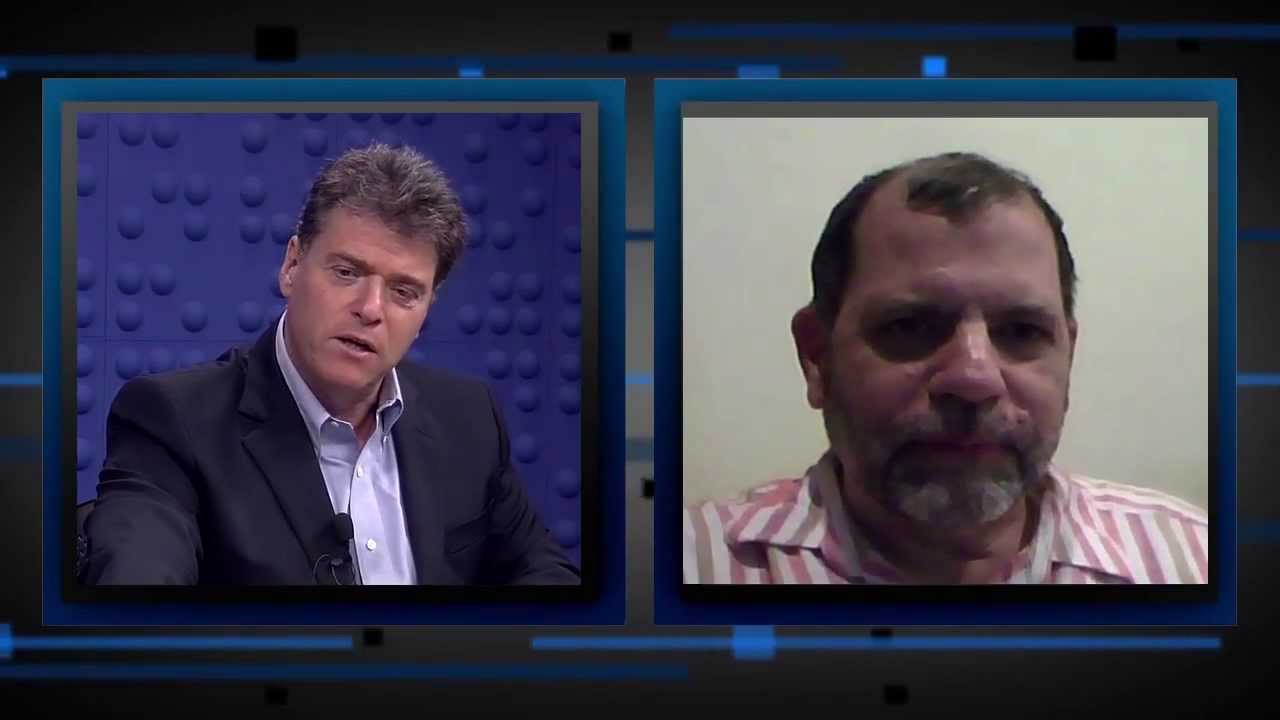
In a TechCrunch TV interview, economist and author Tyler Cowen discusses the central thesis of his upcoming book Average Is Over. He argues that powerful smart machines will reshape the economy, creating a divide between those who collaborate with machines and those who compete against them. Cowen emphasizes that the new dominant business will be marketing—specifically the ability to capture attention and motivate people—because technology alone cannot understand human psychology. He uses the evolution of chess, especially the rise of "freestyle" chess where humans team with computers, as an analogy for future labor markets where success depends on knowing when to defer to machines. Cowen identifies education and healthcare as sectors ripe for disruption through cheaper delivery and the integration of apps and behavioral nudges. He sees the internet as the platform but predicts a decentralized ecosystem rather than a new monopoly like Google or Facebook, though he believes new "Googles" will emerge. The interview also touches on the importance of algorithm management, persuasive marketing, and the potential for natural‑language interfaces to broaden creative participation. Cowen concludes with an optimistic outlook for the next twenty years, contrasting his view with that of more pessimistic peers such as Peter Thiel.
Chapters
One of the world's leading economists says average is over. Tyler Cowen is renowned as a Wall Street Journal columnist, leading economist, and thinker about the impact of technology on our economy, particularly digital technology. He says average is over. It's the title of his new book. It's bound to be a bestseller. It's out next week. Tyler, welcome to TechCrunch TV.
Hello.
So Tyler, average is over. What does that mean?
Think of this as a new age of very powerful smart machines. There's a simple question: are those machines augmenting your productivity, or do you have to compete against them? If you have to compete against them, probably your income will be falling. But if they're working on your side, we'll have many more people who go beyond the middle class and who really become quite wealthy.
Tyler, fortunately at TechCrunch, I think most people are actually on the side of technology, but your book is interesting in the sense that it makes marketing central to our new economy. But you have a very interesting definition of what marketing will mean in the age of the smart machine.
It's really going to be about motivation and grabbing people's attention. So that's one thing that computers or software don't do very well is understand the very human element. So if you look at Mark Zuckerberg and Facebook, of course he was a tech genius or is a tech genius. But the real key part is how he understood psychology and how he grabbed people's attention. So the more wealth there is in the world— well, time doesn't go up as much as wealth does. There are only 24 hours in a day. So it's the people who have that special skill grabbing your attention who will be the economic winners of the future.
A lot of people, Tyler, are worried that machines are taking over. You say that that isn't true. In your future, the value is in team play between machines and entrepreneurs. Talk to me about that opportunity.
Well, first of all, machines will eliminate a lot of jobs, but keep in mind they make costs much lower. So a lot of goods and services will become much, much cheaper. Education is one example. That's part of how we will stay in charge. There will also be a new class of wealthy human beings, and those are exactly the people who can figure out what are my skills and how do those skills fit together with what machines are doing.
I don't get the sense, Tyler, that this new world that you're imagining has a dominant business yet. Is that fair? Are we at the very beginnings of this real business revolution in terms of technology?
Well, the easier it is to produce a lot of things very cheaply or even for free, the more the dominant business will be what I call marketing— getting a hold of people's notice, getting them motivated. I think another dominant business will be what I call either making people feel very good or feel bad. So getting them to be more conscientious, getting them to be more disciplined. It doesn't sound like a business, but those are actually the growth areas of the future. If you look at medicine, a lot of the problems, they're not about inventing new drugs. It's about getting people to take and follow the instructions for the drugs we already have.
I get the sense, Tyler, that we don't have a platform, though, for the world you're describing. Perhaps platforms like Uber are beginning, but, uh, there is a huge opportunity, isn't there, to become the platform for this new age?
Well, I think the platform is largely the internet, and, and that is there, so to speak. Do I think there's room for something like a Google or Facebook, a new medium for all, for where all this happens? I think it will happen in decentralized form rather than us seeing some kind of new monopoly.
So you don't see a central player in this new evolution of the digital economy?
Well, not one that's on its way right now, no.
Where are the real business opportunities then for entrepreneurs? Where would you see this world really offering massive, massively exciting opportunities? Is it in education, healthcare, energy?
Education and healthcare. Energy is a business opportunity, but in a sense that's already there. People are already running after that one. Uh, and I think being able to integrate things like apps and text messages with human psychology, that is taking tech innovations and figuring out how can we use this innovation to get people actually motivated to do what it says they should do.
Tyler, you were, and you continue to be, a, a pretty good chess player. I think you played for the US when you were younger. A lot of the book is about chess. Why is chess so important in terms of understanding the future of technology?
Chess is one area where computers and artificial intelligence have done quite well relatively rapidly. So we can look at chess to see the different stages of how job markets will evolve. So in recent times, there's been a new form of chess. It's called freestyle. It's where you team up with the computer and you and the computer together try to figure out what the best move is. Now, the computer does most of the thinking. The room for the human being is to make a judgment when the computer's different programs disagree. And the humans who are best at this are not the best chess players, but the humans actually who are most skeptical of their ability to figure something out better than the machine. It's a kind of paradigm for how a lot of labor markets will be evolving, to know when you should defer to the machine.
I find that fascinating, and I don't find many things fascinating. This idea that the smartest people in business in the future will be the ones who know how to manage machines. So you're not a dystopian, you're not a Huxley, and you don't believe that the machines are taking over. The real challenge is managing the machines, making them more intelligent, and recognizing our own limitations in terms of intelligence, but also the limitations of machines.
Managing yourself. So imagine in the future you have something like a smartphone in your pocket and you're out on a date and it sends you a little message. It's been recording your pulse, your heartbeat. It says, "Kiss her now." And you don't feel like kissing her now, but the smartphone is buzzing and it's basically telling you, "Kiss her now." Do you do it? The people who are willing to listen will over time win a lot more prizes than the people who are stubborn and kind of luddites with respect to their smartphones. Or they'll say, don't buy that bread, you'll be in the supermarket, you threw it out the last 3 times in a row. So who will listen to their machines will be key.
Well, Tyler, in your book you reveal that you met your latest wife on the internet through a dating site. Did you kiss her now? Did you, did you listen to the machine?
I didn't have any machine back then telling me what to do.
So presumably then we can work without machines to get girlfriends and, and, and that sort of thing.
Sure, that's been the course of human history, uh, but it just— as internet dating has led to a great number of marriages, including my own, uh, machines and algorithms in the world of internet dating, they already help you pick people. Uh, the question is, who's willing to listen and how good will they become?
So it's the managers of the algorithm— these are the guys who are going to have the power, these are the guys who are going to be able to establish the new business models of the future.
But not just the managers. It's those people who can convince you persuasively that you should listen to their algorithm. And that's quite an intangible skill because once you have algorithms at all, you'll have a lot of them over time. They'll be competitively produced. But who has that marketing plan to get you to care? That's the really tough part. And that's where I think the money will be.
Where is Google in this economy? Do they, Do they understand this, or do they see the algorithm as an autonomous agent?
I think Google sees the algorithm as an autonomous agent. I don't see any reason why they need to go away, but they're in a sense an old business. They'll be like the General Motors of this world. General Motors is still with us. They still produce a lot of cars. That's great. But Google has never really been about human psychology.
So again, coming back to my main point, there is an opportunity. If Google and perhaps presumably Facebook as well are the GMs in this economy, there needs to be a new Google.
New Googles, I think, absolutely.
I'm intrigued, Tyler, that you believe that there will be new Googles. You don't believe that this new digital economy lends itself to monopolies and that there can be a multitude of players? In the new economy?
I think a lot more people will be able to work with tech in the future. So for instance, right now if you want to interact with tech, very often you need to program something. And that, that may be easy for most TechCrunch people, uh, but it's hard for most other people. But imagine computers that just a bit better understand natural language, and rather than having to program the computer, you simply talk to it. And it programs itself, or someone in India programs it for you. So the, to the extent we can interact with our devices simply by talking to them, this will open up a lot more creative power for individuals whom we do not think of as technically adept. And that's a big change, that's been undervalued.
Tyler, I think your book's gonna be extremely influential. Peter Thiel's book's coming out early next year. I know you're a friend of Thiel, I presume you played you played chess against him. Did you beat him, by the way?
I've never played chess with Peter. We've always vowed we will do it.
Uh, it will probably break the relationship, right? But I'm getting the sense that Thiel is actually more of a pessimist than you.
He's very much a pessimist. I think there will be waves of future breakthroughs involving smart machines and also human motivation and using the internet to connect all these devices and with us. That's the next big thing. And it's on its way in the next 20 years.
One word answer, Tyler. Are you pessimistic or optimistic about the future?
Optimistic.
Tyler Cowen, optimistic. Average is Over. You need to read this book. Thanks, Tyler, very much. I think your work and this book in particular is really stimulating. And I think it will set off a number of light bulbs in the heads of entrepreneurs. Thanks so much for appearing on TechCrunch TV.