We are woefully unprepared for the next 25 years | Tyler Cowen
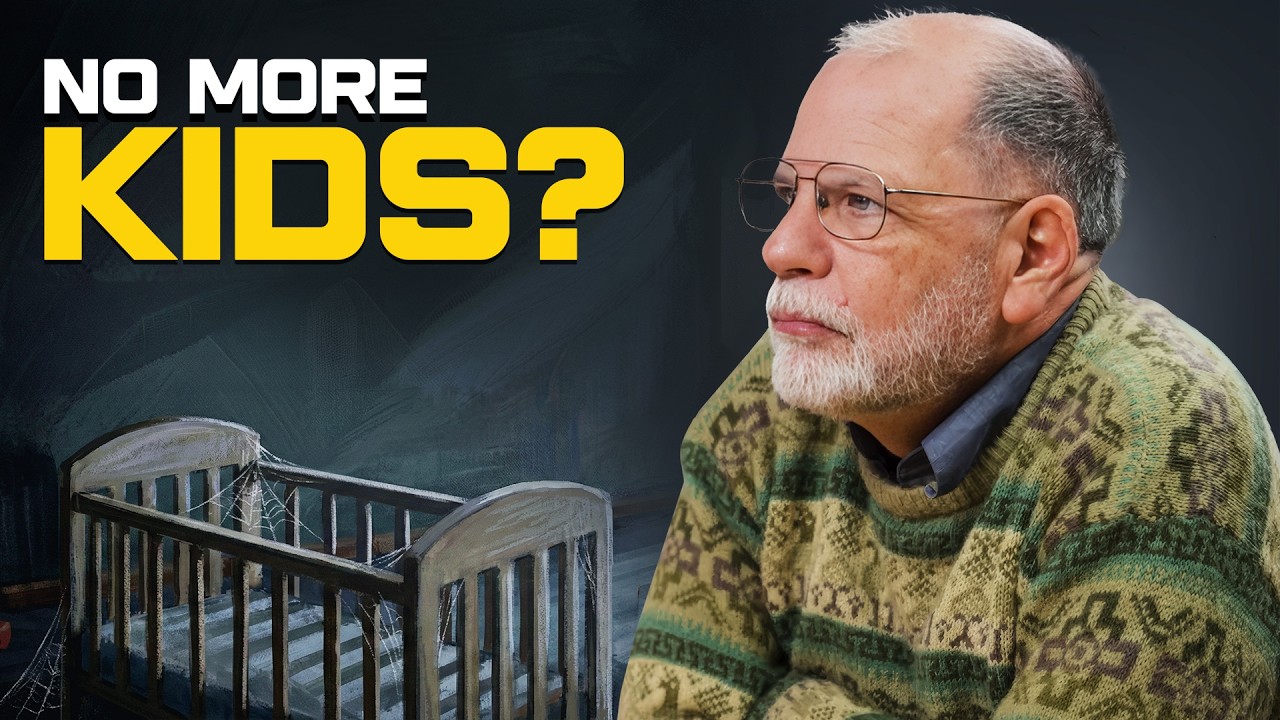
Economist Tyler Cowen warns that falling birth rates, aging populations, and rising healthcare costs will strain pension systems and consume up to 30% of GDP. He sees AI productivity gains as partial relief but expects future conflicts to resemble World War I's indecisive stalemate rather than decisive outcomes, and predicts AI governance will increasingly bypass democratic institutions.
Chapters
Well, first we want to try to model why birth rates have fallen so much, so rapidly, and in so many different places. Ultimately, it's about the spread of birth control.
Marc Andreessen did say that the last professional role left will be the venture capitalist.
The lastest may be the oldest profession, right? Future conflicts are probably more like World War I than World War II. Like, are we really going to decisively defeat Russia in anything ever? There might be mind-altering substances that would help older people in some ways be young again, like Viagra for the mind.
When you think about 2050, what do you think the world is gonna look like?
I think this will be the fastest of all the technological revolutions. But technological progress means you trade in one set of problems for another. And that's the future.
You're a man who needs no introduction. Tyler Cowen, professor of economics at George Mason University. Really, really delighted to have you with us today. You've had many guests on your show over the years, Ross Douthat recently, who've kind of alluded to different challenges caused by demographic change. Ross views it as an extinction event. How are you thinking about it as you look into the future?
Well, first we want to try to model why birth rates have fallen so much, so rapidly, and in so many different places. So put aside Israel for the time. It's pretty much every country I can think about, rich or poor. That makes it harder to explain, not easier. The best attempt I have, which maybe is not very good, is to think that ultimately it's about the spread of birth control. Now I'm well aware of the fact that there's been decent birth control since the 1960s in many places, or less good birth control for much, much longer than that. But nonetheless, one thing I've learned studying social science is there can be really many effects that just take much longer than you think, longer than any plausible theory might suggest. So there's a cause and then there's an effect. It can come decades later. It's an ongoing puzzle why it takes so long. But the best theory I have is simply that with birth control, most women don't want that many kids. And if that's your underlying theory, it's a very difficult problem to overcome. So maybe extinction event is an exaggeration. That will take quite a few generations. And just predicting anything so many generations that far out is impossible. But still, it's a matter of great concern to me. Because I don't think birth subsidies have been effective. So Hungary has spent up to 5% of its GDP with birth subsidies. It boosted the birth rate for a while. Now they're back down, I think, to 1.6 and falling again. So what are we going to do? I don't know.
You've spoken about this before on birth subsidies. And, you know, one of the things I think humanity is very good at is like solving problems that will kill us quickly. And something we're very bad at is solving problems that kill us slowly. Birth rate decline is one of those slow things that the solutions, even if we put them in place now, we'll still have to deal with this inverted population pyramid for some period of time. When do you think, or do you think, we cross a chasm where governments start treating this, you know, less like, say, climate change and more like COVID?
I don't see why voters would want that. You may have some autocracies that take that plunge, but as David Hume pointed out, autocracies are also dependent on public opinion, and the autocrats themselves don't personally have to worry about this problem. So that also makes it harder. Another thing making it harder is that at least some of the world's problems— to exaggerate— but they're solved by the United States. Now, the United States of all countries can attract high-quality immigrants better than anywhere else, you being one of them. From Dublin, Ireland. So we could have, you know, our current, what, 1.6 TFR, and we're still fine 'cause we'll take in people from other places and most of them assimilate pretty well. So it's not very urgent for us. So is it, well, you know, is Belgium gonna solve this problem or, you know, that just seems less convincing. So I don't really see how it's all gonna run, frankly. I'm not worried about the inverted pyramid per se. I'd say I'm worried a bit, but I think with artificial intelligence, it will be enough of a productivity boost. It won't bankrupt us. I'm just worried that there will be many fewer people over time converging on some terrible asymptote. And just fewer people is worse than more people and less innovative, right? Julian Simon, people are the ultimate resource.
Well, no. Yeah. So this, um, you We've always had a majority young society, and in our lifetime, we'll have this transition to majority old society. When you make this kind of like transition and it impacts so many different areas of life, do you really still believe that we can use, like technology can solve our way out of it? The productivity gains will make enough of a difference to like keep the economy as innovative and dynamic as it has been?
Solve is never quite the word, but the older people in this room, and I guess that's only me, we have the luxury of having seen what old people were like in the 1960s and '70s, and mostly they were a wreck. So, so many people would be shot by 60. And now there are many 80-year-olds who are more dynamic than a typical 60-year-old might have been, say, in 1972. So that will somewhat help keep us more more or equally dynamic. So there are countervailing trends which are quite positive. There might be, you could call them mind-altering substances that would help older people in some ways be young again, like Viagra for the mind. I'm not predicting that. I'm just saying there's a lot of variables here, and I think we'll have recourse to many interventions that will help keep things going at an acceptable level.
What do you think of the political changes though, if that is true. So, you know, most of the current social contract was designed that if you made it to 65, you had done really well, and now is the time to lay down tools and retire. If people are living these much longer, call it like healthspan-driven lives, can the current social contract and political structure hold? How do you think that actually holds up?
Well, we're always rewriting the social contract, right, with or without this problem. So Can we rewrite it to deal with this? You know, that's a probably. I would say France right now is running the experiment you laid out in advance, just like Japan in advance is showing us what an aging society is like. So, so many French people, they seem to get 25 years of retirement. And France now, you wouldn't call it a fiscal crisis, but things are quite tight. They could get much worse. And there's this perpetual distinction between income and wealth. Can France dig into its wealth in a politically sustainable way to support so many retirements so long for so many old people? I don't know enough to say, but I think it's logically possible. It doesn't mean they'll manage to do it. Or could France improve how it takes in immigrants to get more higher quality, more productive, younger immigrants, even though aging is now happening almost everywhere? Well, that's at least possible. France is a pretty desirable place to go. There's a lot of former French colonies where people have various sorts of ties. So there are methods of recourse, and we'll see how well they go. I suppose, I think France will eke through would be my best expectation.
Well, you've been one of the sort of loudest voices around being like pro-immigration and maybe call it like this sort of shift amongst, say, conservatism towards anti-immigrant rhetoric. We're in a period where it feels the political will of the population is to limit immigration. Do you think that that will just not sustain as the challenges around aging populations, say, with like lack of home carers, lack of, say, nursing, the cost of delivery of healthcare? What do you think could change the current political conversation around immigration given it's swung so far to be opposed?
I think it depends a great deal which country you're talking about. So for the US, like, A, immigration has gone better. B, we can attract more high-quality immigrants whenever we want to. Just make it easier to get an O-1. Not the only way. Reform H-1B. A lot of things we could do. And when immigrants come here, they assimilate better. And unless you live in a border area, I think most Americans do not feel they're losing their country. Even if they think immigration is too high. It's a very different feeling from what you might find in parts of Sweden or the Netherlands, which are smaller populations, a more rapid shift. They don't have a long history of being what we might call a melting pot here, and people feel they're losing their country and they're willing to do a lot to stop that. I don't think the USA is in that position. So I think within 10 years we'll be bidding for immigrants. We'll be much more selective, use more market mechanisms, use it to raise revenue. Trump already is taking steps in that direction, though the price is too high and the criteria, I think, are wrong. But it's just showing we'll sell admission, so to speak, at the gate, and that will help solve our fiscal problems. And I think U.S. will stay a nation of immigrants. The ultimate problem will be a drying up of people to come here, both because of lower birth rates elsewhere and a bunch of other countries are likely to improve. So for a while, we were taking the highest number of migrants from China that overpassed Mexico. I don't think that's the future for a number of reasons. One is just China's done better, right? So probably India, Africa would be the next waves. We'll see.
Yeah. No, I mean, as someone who's gone through the O-1 to now EB-1 process from visa to green card, yeah, the US system, there are many problems. Parts of it that are arcane, but if you come with a set of skills that the US wants you to have, you can definitely find your way here.
And even the Trump people have not gone after that.
If you take this kind of viewpoint of we're entering a more competitive global market for talent, and particularly young people, maybe the next wave of sort of like targeted immigration is in these young hubs in Africa, India, and the Middle East. Take the economic model for the US over the last like obviously Bretton Woods, like you, a prosperous world was a prosperous America. Global trade generally has massively benefited US companies. There's an argument that the reason the US spent a lot of money on USAID and other humanitarian programs was to keep the rest of the world from becoming so bad that people would all try to flood to the US. If the rest of the world becomes kind of like more shit. Do you think there's a new doctrine where countries care less about what their trading partner— how their trading partners are doing and just focus on their own supremacy?
I think the world's always operated on that basis, if I understand your point correctly. Now, you mentioned some sources of immigrants. I think some of them are quite complicated for the US. So Africa has and will have a lot of talent, but the US has a history of race relations where that might be a complicated decision. Southeast Asia maybe would be an easier sell. But most of all, Latin America— distance, ties. There's already, what, 35 million Spanish speakers in this country. They're almost entirely Christian. Even though those countries have low birth rates, there's plenty of people down there, so to speak. And a lot of the future will be that. We're now in the midst of this Trump initiative to reshape The whole New World, whether you like that set of policies or not, it's recognizing distance really matters and our future is dealing with those countries. And I agree with that premise at the very least.
Mm.
So I don't think we're going to say to Algeria, the gates are open. You know, you've all been oppressed. Come over. We'll be greeting you at the Statue of Liberty. It's probably fine, but it seems to me that makes people nervous once you say Algeria. —and it would not be my prediction.
Take Brazil or Argentina or Chile. Is the US benefited more acutely from those economies being strong, or is it best empowered by their smartest people continuing to move to the US and those countries remaining in sort of like not being able to quite break out and become those stronger trading partners for the US?
I think we're better off if those countries develop more And the dream of the Trump administration is they become the new Europe for us. That to me seems unrealistic, but they could do much better. Brazil in particular could do much better. A lot of those countries grow at 1 or 2%, or Mexico is not so far from stagnation altogether. There's no reason why that should be inevitable. They need policy changes, but they're not crazy utopian policy changes. And Mexico, for instance, has an immediate past where it grew at 2% and a past longer ago, the postwar era, where it grew at 5 to 7%. And maybe that's not possible again. But to think Mexico could grow at 3% again is not utopian. And if Mexico, Brazil, Colombia— again, has often a pretty decent growth record in the past— that they start doing better, entirely possible, probably even likely. Argentina, again, major reforms. They may not last. I know the long history. The problems are not solved. Milei's great, but after him, maybe the deluge. But still, there's just so many countries and they're somewhat independent in what they do. And I think a number more will be like Panama and Dominican Republic, and that will be good for us in the US.
If you think about this sort of like line of thinking amongst younger, to bring sort of AI into the conversation, younger, forward-thinking, we are about to enter this like abundance takeoff. When you think about those loud voices saying we're going to solve all of our problems, we don't need to worry about them right now, and your point of view is that these people maybe haven't seen how technologies, how long it takes technologies to really diffuse into the economy. You just think that's like not a credible point of view, or, you know, will robotics ease a lot of this demographic problems? Will AI enable the cost of healthcare to rapidly decline? How do you sort of balance those two points of view?
Well, all those things are true, or what I would say. But technological progress means you trade in one set of problems for another. So I can readily imagine that within 50 years, we've beaten back most diseases and everyone dies of old age or accidents. So say you live to 97. That's great, right? Dying at 78 was not so wonderful, and that's a problem. Well, you're still going to die, but we've sort of solved it as much as we can. But at the same time, you have many more years to spend on healthcare. So the cost of healthcare might be lower, but that doesn't mean we spend less on healthcare. We'll just spend more and more. And I think ultimately it's easier to patch up people's bodies than their minds because the brain is so complex. So even if we fix dementia, Alzheimer's, we're still going to end up with worlds where you have a lot of old people who are not sharp enough and they'll need to be taken care of. And some of them will live to be 105, and that will be a massive expenditure. And some of it will be robots. But having to pay for that and just deal with it socially— oh, is it your grandkids, your great-grandkids, your great-great-grandkids who worry about you, or no one gives a damn, or the state has to grow? I don't know. But That's the new problem we're likely to get, and it won't be easy. But again, you'd prefer it to dying at 78, right?
As would I. Yeah. Well, this is like, you know, right now so much of healthcare spending is concentrated on the last couple of years of someone's life already. And there's always going to be a last couple of years.
Yeah.
And that, you know, you look at like the NHS or programs that have been single-payer where they've come under, you know, there are budgets and people work in quality life years. As this part of the healthcare budget becomes so vast, do you think in the US there will be similar pushback against, like, controlled spending on people's end of life? Like, do you move to a more hospice-style care system, or do you think the current care system is just so entrenched and there's so much money to be made in end-of-life care that we're not going to change?
I think the US will just keep on spending We'll spend more, eventually 30% of GDP or higher. I think now it's at about 18%. We won't regret this. A lot of the other things we might want to buy will be cheaper also, which is partly due to AI, other forms of progress. It'll be weird to have an economy so focused around healthcare because people are never that happy when they deal with healthcare. It's a market where at the end of the day you die, right? So how happy can you be? Or you're in pain or you lose a loved one. So maybe people will resent the system more because healthcare is inherently problematic, even when it extends your life another 20, 30 years. And I just think insofar as we— whatever rate at which we create more wealth, we're going to spend it largely on healthcare. And these other countries, they will see single-payer systems are not feasible. You cannot really pull all this along with taxes, and they will do this in the private market on the side. And in terms of rates of growth, in relative terms, they will de facto privatize their systems without ever explicitly privatizing them in the sense of there being a newspaper headline like, oh, Britain sells off the state hospitals. They're probably not going to do that, but more and more people will spend more privately. And if you have to fly to Dubai, whatever, you'll do it. And that's the future. We won't be as well off as we thought, but again, we'll live longer and maybe be in less pain.
Is that a less exciting world than the world that you've grown up in?
To me, it's less exciting. But again, for the people who are born into it and expect it, they might just regard what was my world the way I would think about Victorian England. So— you have to be very careful in applying your own perspective. So like, some of your perspective might be objective, but other parts are not. And you need to keep both of those thoughts in mind at the same time and just realize they both have some validity. I'm not thrilled about everyone just being 96. And insofar as we need to raise taxes, to raise taxes on late-stage healthcare would be one of my recommendations. I'd rather do that than say raise taxes on fun. But again, people not of my generation may feel very differently.
You know, one of the very common conversations in the sort of AI maximalist world right now is that you must accumulate capital now before it's too late, as we're entering a period of time where the balance of power will tilt in that direction. We're also seeing, like, corporate power probably reaching, like, one of the largest scales it's had. But this sort of balance of power, if I take what you're saying to be true of everyone is going to live longer, this capital and in democracies, the voting power will sit amongst this like much older cohort of people. Sure. Will they just continue to vote for policies that continue to further disenfranchise the young or further disenfranchise labor? Well, they're selfish.
I mean, you're talking about the future. I would say this is the present. When you look at in this country who actually votes, This is not Australia where everyone is supposed to vote. And older voters, I think they're in a way more cynical and less ideological. So they're willing to sell their vote to whoever they think will help them the most. Whereas a lot of young people, I mean, you're here in New York, there's like these leftists, they're not going to vote for Trump. I don't care what Trump promises them, right? Or like the right-wing griper types, they're not going to flip. So the older voters, have extreme power now. So this is disadvantageous from my point of view, but we're already living with it. And the fact that we can already live with it suggests it's a livable equilibrium, even though I don't myself like it. That's interesting.
So you think this is a— I read a book recently, The Great Leveler, around sort of the role of like political violence over years where you have this inequality.
Walter Scheidel. Yeah, yeah. Great book, yes.
Between capital and labor, be it like French Revolution, more recently Russian Revolution. Do we reach a point where people's basic needs are met to a high enough level that we won't see political violence from an imbalance like that between young and old? Like, is this equilibrium something that is stable? And like, why, why would it be something that's stable when historically these equilibriums tend to eventually break?
I don't know what basic needs means, as a side observation, but I would say this: when I look at civil unrest in history, I think I'm mostly a Tocquevillian. So violence, civil unrest, protest, it's very high in the latter part of the 1960s, early '70s. That's felt to be a very prosperous time with a growing strong middle class. So whatever predicts political violence, I don't think it's hard times per se. I do think the future, I would say the present has so much surveillance. That there won't be much systematic political violence in the high-tech countries. I think political assassination has already made a big comeback, and that's bad. Surveillance cannot quite prevent that, at least not yet. And we'll see more political violence through that channel. But I don't know how much it will matter in shifting, like, macro aggregate policy outcomes. It'll make our politics feel very ugly.
So do you think we're, We're in this, you know, the gerontocracy is the idea like that we will continue to be ruled by the old. That's right. And we are already. And we are.
And look at our candidates, Biden, Trump, like how old are they? You know, that's a sign of something. And Harris was younger, but it was a kind of accident that she ended up in that position, right?
And when, if you take away the like old-young axis and look more at this sort of like state-corporate axis, like, even if it takes a long period of time to diffuse the benefits across wider society, it will create an enormous amount of wealth in the hands of like a relatively small group of people.
I don't think it will be in the hands of the small group. I think it will be a lot of wealth for everyone. Now, the small group will be much wealthier. You'll have many more mega billionaires or even just normal people when an IPO hits from an AI company a generation or two from now. You'll have a lot more people maybe worth what we would now describe as $10 billion.
If you look across particularly US history, every time an industry has become extremely powerful, there has been some kind of check, like maybe going back to the '20s and the banking industry. Do you think there's a universe where the state sees their power moving or superseding itself? And is there a desire to check that?
I think the AI and tech companies and the US government will be married more and more. Mm-hmm. Neither will check the other. They'll each expand the power of the other. If you look at US history more generally, I don't think it's a history of checking corporate power. You have nominal checks every now and then, which maybe slap someone around a bit, but it keeps on growing. Like, okay, banking has been shrinking for other reasons, but you look at private equity firms, they're much larger, say, than banking was in the '20s, or the biggest firms today, the Magnificent Seven or Eight, or wherever you want to draw the boundary. Does Netflix belong or whatever? But it just keeps on going. So I don't think our history is one of checks, really. You do things because interest groups flip or different parties in power and you push a few back and push a few ahead. But the big stuff gets bigger, and actually that's fine. There's not any other way to have it. You're a big growing country, so your big stuff will get bigger. I think it's gone great.
Well, do you think if we map that out, like maybe taking more of a futurist point of view on it, like if you look at science fiction, like, you know, be it in Starship Troopers, it's more of a militaristic society, but be it in something like Alien or Altered Carbon, it's more of a corporatist society where these like transplanetary corporations effectively are the states of the future. If you map out your kind of like future direction of travel of the state and corporate power will continue to enhance each other, do you think again, this is— is this an equilibrium that stays on forever, or not forever?
But I think for this foreseeable future, I don't see what stops it. GDP will be larger. You can just say we'll get all of the above. Now, I don't actually think we'll settle other planets, but whether it's ocean or upper atmosphere or satellite belt, I can imagine parts of the world where the de facto government is corporate. Absolutely. It wouldn't surprise me. But it wouldn't be at the expense of current governments. There'd be some kind of alliance or something. So maybe we use upper atmosphere, you know, for solar power. It's beamed down to Earth. That's actually a pretty high risk in military terms. So the government is part of it and the companies and the government end up as much stronger. Maybe there's some point at which that snaps, but better prediction is just that it keeps on growing and that it happens.
But do you, it's funny, this is maybe a bit of a sidebar, but I know you said— We can do sidebars.
I love it. We are sidebars.
But you believe that there is life on the moon on the moons of Saturn, if I'm—
I would bet, I don't know, 60/40 yes. 60/40 yes. But not life like us. Yeah. It might be little shrimpy things or even just something like bacteria, but correct. Maybe Jupiter also.
It's interesting, part of the whole reason for doing this series was we wanted to bring like a kind of positive, like futurist conversation out into the open. And what makes you say you don't think we'll try to settle other planets?
I think speed is difficult, and the human body cannot survive very well on other planets, other moons, or in outer space. So will we send robots to communicate with the little shrimpy things on the moons of Saturn? Absolutely. And if I'm around then, I'll be dying to see, you know, what's there. But I'm not sure how much that will matter. Odds are, if you look at the history of life on Earth, most of the time, super intelligent life such as humans was not on Earth. Yeah. So probably on the moons of Saturn, if they have life, it won't be super intelligent. And you can watch your new documentaries on BBC, you know, the little shrimpy things swimming around, whatever they do, and kids will grow up with it and it'll just be like, "Oh, we discovered, you know, a rhinoceros in Africa," which was a big deal. Everyone in Europe got excited. They put one on a boat and all that. But at the end of the day, Maybe it was not a major event in world history.
That's interesting because, you know, one of the big conversations from a philosophical point of view in, like, why should we explore the universe is obviously the Fermi Paradox, right? Where if we were to discover either we're exceedingly rare or there's some barrier that we've not yet hit, maybe we're all just going to wipe ourselves out before we get that far. But that's often sort of put forward as, like, this is a good reason as to why we should spend money on exploring the solar system to figure out if this paradox is true.
Yeah, I agree with that reason. I'm just not sure it will change practical life that much, but I'm all for it. Sign me up. I'll pay more tax for it.
In a way, it may impact practical life. I saw a tweet recently where someone basically was like, you know, this may be a controversial opinion, but I don't want technology to make progress from where we're at today.
It's not that controversial. I didn't—
yeah, I didn't think it's the same.
It's, uh, every generation feels that way, though they won't admit it.
With a lot of AI right now, it's very easy to kind of denigrate it as slop. We're maybe not talking about the healthcare benefits, we're talking more about the more time sucked in staring at a screen. What do you think are the practical things technologists can do to make change that, that direction of public perception?
Well, mainly what they have done is trick people. So the Apollo program was a big trick. It was not intended as a trick. I'm pretty sure almost everyone behind it was quite sincere that it would lead to whatever. It was actually vague all along, but everyone was truly excited back then. I even remember those times, but it didn't lead to what we were promised at all. And you see that when you compare science fiction over time. So I think the norm is new technology comes and people are tricked. Again, it doesn't have to be a sinister, devious, conspiracy-laden thing, but in fact they're tricked and then it happens anyway. And then we clean up the mess and deal with it and move on to the next set of improving set of problems. And that's what I think it will be with AI as well.
What is the trick with AI?
You know, it's the old paradox. When you add grains of sugar to your coffee, every extra grain is fine, or it may even taste better, but at some point you've just added too many grains. So that's the way it is with change. People use ChatGPT, it diagnoses your dog. Do I need to take the dog to the vet? What's with this rash? You take the photo, you ask GPT, you get a great answer. Everyone's happy. They're not actually going to be happy at all the changes it will bring. And here I'm talking about positive ones. I'm not saying, oh, it's going to kill us all. People just don't like change that much. So they'll be sold on the immediate concrete things and end up seeing things happen where they feel there's too much change. 'cause it will devalue their human capital and we'll adjust and get over it and move on to the next set of tricks. That's my forecast. No, no, it's a good— It's manageable.
It's, when you think about that, it's funny using the people don't like change, but also people are bad at long-term planning. Yeah. You've kind of spoken before about how faith is kind of a key requirement in terms of being able to plan over the long term. Right. How do you bring that into the idea of policymakers? How do you bring that for technologists of like, here is, this is a truth of humanity that you have to take into account if you want people to look beyond just like the next 12, 18 months? I don't know.
I think things will get pushed through for myopic reasons, like we have to outrace China, which might even be true, to be clear, but it's a somewhat myopic reason, and that will be the selling point. You know, I've read a lot of texts from the early days of the Industrial Revolution. Adam Smith is one of them, but there's many others. And a lot of people are for what's going on. They understand we'll be richer, maybe healthier. They do see the downsides, but they have pretty decent perspective. But no one from then understood you'd have this like second order fossil fuel revolution, say the 1880s, where just things explode and the world is very much different And whether or not they would have liked that, you can debate, but they just didn't see it at all. So we're probably in a somewhat analogous position. I would say that second industrial revolution was the more important one. It was a very good thing, even with climate change as a big problem, but it really built the modern world. And with something like AI or any advance, there's probably some second-order version of it that's coming in our equivalent of 1880 that we just don't see. And it will be wonderful for us, but if you told us, we'd be terrified. So, like, how should you feel about the myopia? I think as an intellectual, you should be willing to talk about it openly and honestly. But at the end of the day, I think the myopia still will rule, and I'm not in a big panic about that.
People who say you're going to automate all jobs don't realize that you can't automate fake jobs. And there are a lot of jobs that we have created Some would argue for like to give this sort of bourgeoisie class. It'll have many morphic jobs.
I'm looking forward to this.
And we'll have, 'cause this, you know, this, one of my favorite lines from a Googler was, it's like, look, you could fire 90% of the headcount and retain 90% of the revenue, but you can't do that because then you are a monopoly and you don't have enough political capital from enough people who you've employed and made wealthy that allow you to continue operating your business. Do you think the same dynamic holds for AI? We will create these jobs because we have to out of almost political necessity?
I do think we'll have more fake jobs just because we'll be able to afford it and they make us feel good. But we'll have plenty more just regular, real, non-fake jobs, taking care of the elderly, for instance, whatever that involves. If we go to nuclear power, As we do things in the upper atmosphere or parts of space, as we terraform different parts of the Earth, as we teach other countries how to integrate AI into their institutions. Ton of jobs in that area. Not everyone will want to move overseas, but there'll be so many opportunities with that. So I'm not at all pessimistic on the jobs front. Like most economists, I would agree that There's always new jobs as long as there's scarcity. And if there's not scarcity, you can celebrate other things. But there's scarcity for a long, long time to come.
Do you think that those kind of jobs will always endure, or which industries do you think are most under threat?
Well, I think anything where you have startups is important. Fake jobs cannot last that long. So you look at programming, there are still fake jobs in programming. But basically AI is going to win and you might need to work with the AI, but AI will do most of the work. And that's already the case. It just needs to spread a bit more. Then you have other sectors like, say, universities. There are some startups, but they're not significant. That might change, but I don't think it will change soon. And there you can multiply all kinds of nonsense. And we've already done that, like even pre-AI. So why can't we do some more? We can. Like how many assistant deans have been hired in the last 15 years? My goodness, talk about fake jobs. And again, that has nothing to do with AI. So yeah, there'll be plenty more fake jobs and plenty more real jobs. But the key question is, can startups have a significant impact on the area? And then they just outcompete the places with a lot of fake jobs. And that is a lot of the economy, but it's a lot of the economy where it doesn't happen also.
Where do you think it doesn't happen at all?
Well, higher ed is the easiest example. So like, U Austin is a new school, Minerva is a new school. Their enrollments are tiny. I think a U Austin class is like 100 people. As a percent, the new schools, I'm pretty sure they would be below 1% or certainly below 2%. So that's easiest example. So quote unquote government is a little tricky because you can't have new agencies. They're not really startups, but There's sort of a competition for funds, but governments, for the most part, I would say fake jobs are not going away anytime soon, if ever. Nonprofits, you do have plenty of entry, but it seems to me the entry is often bad for whatever reason, rather than being truly efficient startups. So I would think in the nonprofit sector, with all this wealth also, you'll have fake jobs for a very long time to come and probably many more of them.
When you think about, like, the current sort of global order and how things are changing very quickly, be it with the US kind of refocusing again on the Americas, the UN effectively being deadlocked since 2014, do you think there will be a place for multilateral international organization? Do you think we will maintain the UN for appearance's sake, or do you think there comes a world where those institutions, be it the UN, be it NATO, get reset in this kind of new world?
Well, both of those. So it depends on the institution, but take the UN. As your remarks indicated, it's been quite ineffective for a long time, but there's parts of it that do things, and some of those things are useful, and it's still a forum where people can talk. So you look at something like when UNESCO designates something as a World Heritage Site, I don't know how much that costs. I doubt if it costs that much. I'm sure it's super wasteful and full of political rent-seeking. But at the end of the day, there's some modest value in it. It attracts tourists. It may protect the site from government depredations. I'm not sure the forces to destroy all that are strong enough that they'll do it. So the UN will survive. NATO probably will morph into something quite different, but survive on paper. That will really depend on the US. IMF is going strong, I think. How many programs have they had with Pakistan? I don't see that one going away. World Bank seems weaker in relative terms, more displaced by private capital markets. But again, I don't think it will vanish. It will be much smaller. And especially China, again, already phasing out a lot of its borrowing from the World Bank and saying that World's biggest surplus country is borrowing from the World Bank where they don't even like have a very high quota and vote. It just was not an equilibrium to begin with. So that will be much smaller, much less important. So it depends on the institution.
Hmm. One of the dangers you've kind of viewed from new technology trends is the potential for war and conflict. Most of the institutions we're talking about exist because of the conflict. Of the early 1900s and the efforts by the US in order to prevent those conflicts and set up a more multilateral global order. What are the things we should be considering to— I agree with, I think the UN as a place for just people to talk is important by keeping channels open, has obviously been, going back to the Cuban Missile Crisis, been a very key mechanism of defusing test tensions before they escalate.
But it creates other tensions, to be clear. Like, it's very marginally useful, but still, I don't think it'll go away. And you teach school kids about it. We need something we can teach the school kids about that makes us sound serious.
What do you think we need to do to avoid conflict, like major conflict over the next 25 years? Or do you think it can be avoided?
I just think there'll be more festering conflicts. So consider the difference between World War I and World War II. World War II was very decisively settled. That's quite rare in history. And you had a clear small number of victors that largely agreed, and US, UK set things up. Didn't happen after World War I. Yeah, there was a League of Nations. It didn't work. It collapsed again. Future conflicts are probably more like World War I than World War II. Yeah. There's too many nuclear weapons out there, for one thing. Like, are we really going to decisively defeat Russia in anything ever? Who knows? But I wouldn't count on it. I'm very struck by this recent conflict between Thailand and Cambodia, which is a nothingburger. But I think people are making a mistake by ignoring it. What it's showing us is that two countries can find it worthwhile to conduct a nothingburger war every now and then, a few weeks. And it's never really over. It never really escalates. It just goes on. And I think we'll just see more of that. East Africa feels quite dangerous at the moment.
Armenia, Azerbaijan.
Things like that. And they'll just multiply and not quite be— some of them will be settled, but as a whole, they won't be settled. And they won't give birth to the new UN, the new Bretton Woods, the new whatever. I don't think so. The AIs will build their own institutions. Right.
Let's wish him luck. Well, I don't— did you ever, um, there's a sci-fi series, The Culture series by Ian F. Glenn, where, yeah, where there comes a point where it's not quite humanity, but society hands over. They decide that the AI are just better at governance and we just want to enjoy our lives, so you run society. It feels like the biggest catalyst for a new type of governance in the next 25 years is probably going to come from AI. And I feel I've had this conversation with a few people around where they're like, "Oh, AI is gonna make decisions on investment, AI is gonna make decisions on hiring." And it was someone who had gone to Harvard and I was like, "Oh, well, what if the AI made decisions on Harvard admissions and said that you shouldn't get in?" And they were like, "Well, well, no, of course I would get in." Like the AI would still make that decision What do you think is the— there's a pushback between like humanity's desire for like agency and control, even if imperfect, versus this view that AI will be a more infallible decision maker and it will be able to produce better outcomes, be it from a societal point of view and a business point of view.
It won't matter whether or not people accept it. If they don't accept it, it will happen by trick. There'll be a human actor on the surface who will do Harvard admissions or whatever, but actually they'll delegate it to the AI and there'll be a fake job, someone who gets you the AI-written letter but pretends it's from a human and they'll say you're admitted, you're rejected, and you won't know. And we'll evolve into that. Maybe 40 years later, everyone will accept it's all the AIs, but it will happen by trick.
And do you think the first AI CEOs will be by trick? It will be human faces?
We may have some already. They may not even be good, right? They could be companies that are going to go under and you shouldn't fund in your role as VC. But I bet we have some right now where people have already outsourced their important decision-making to ChatGPT. Yeah, absolutely. Just like my wife and I do with, should we take the dog to the vet?
It's not a company, but it's outsourced to The AI, if, if you believe that to be true, that people will outsource more and more their decision-making over time, these AI are effectively going to decide the composition of humanity. If people are saying, should I date this person, should I not date this person, should we have 2 kids, should we have 4 kids, what's the moral imperative of those companies to tell those models, to give those models the point of view to say take pronatalist policies. If we're going to hand over so much decision-making power to the models, when do governments start prescribing policies on the models to pass downstream advice through to their citizens?
I don't know. Advice is a tricky thing. Like, a lot of people write me or ask me for advice, and I don't doubt they want to hear from me, but a lot of what they want is simply the feeling of having tried everything. Or maybe someone seen as having some authority will validate what they want to do anyway. I don't feel my advice is that influential. I can think of some cases where it has been. Like, I have a friend, I said, "Oh, don't sell your second house," and they didn't sell it and they're happy and they spend time in that city now. But how much sway the AIs will have, I don't think it will be that big a thing over, say, fertility. You have to raise the kid. You might love that, you might hate it, but it will just be another aunt whispering in your ear.
Another person around the table.
Yeah, which is fine. And I think it will be wise. I like the current opinions of the AIs in general. I'm not looking to massage them that much further, but as they get smarter, they'll have more say and they'll understand. They already do understand the case for natalism. You know, let them figure it out.
One last kind of area to end on, Tyler. Like you've been a 10-year-old looking forward, you've been a 35-year-old looking forward. I think you got a lot of the discourse in AI right now of how everything is going to change is coming from young people who haven't lived through technology adoption cycles. When you think about 2050, you look 25 years out, what do you hope that world of 2050 looks like?
So typically everyone asks me about 10 years out, and I don't know that that will be so different, but you're asking 25 years out, and I suspect that will be— I think this will be the fastest of all the technological revolutions, at least in recent world history, of any of them. So significant parts of our economies will be done and run by AIs. That's a big difference. And the composition of jobs will be changed a great deal. And just our own conception of ourselves, what makes us human, how do we relate to God or gods, I think will be quite different. I don't necessarily have concrete predictions. I can tell you my greatest concern is simply this: even if all the effects are positive, when you introduce big changes into a world that is used to stasis, it's very disorienting for people and they dislike it or even hate it. And that's my biggest concern, is just how people will deal with it. And again, that's even assuming away whatever concrete problems might arise from AI. But that's my biggest concern. I don't know it will in every way go so well. We're used to things being the same. Like, I'm a university professor. I started on that path when I was 14. I had a given set of expectations. And up until now, which is 50 years later, what I expected and what I got is kind of exactly the same. And that age is over. The generation coming now after that will not have, should not have that expectation for most jobs. And I had it and it turned out to be validated. The nature of my job might be different in 5 years, but I'm telling you, I'm teaching again this spring. It's just not that different. And there you go.
When you meet people who are having kids today, it's not necessarily sound advice to prepare them that they should want to go to college one day.
No, very likely they should, if only as a dating service and for fun and to stay away from potentially bad peer groups. But what college will mean will be very different, and it will be about networking. And you'll have to need to learn adaptability maybe more than particular skills. Luis Garacano had this very good online essay. He said, seek out the messy jobs. They will last the longest. But how do you learn in college how to do a messy job? It's easier to learn how to do a straightforward, simple job, but those are the ones that get automated the easiest also. I have a messy job, by the way.
I'll be fine. You do? You've got a podcast, blogging. Well, no. Well, Marc Andreessen did say that the last professional role left will be the venture capitalist.
I don't agree with that, but it's still a messy job. Oh my God. It'll be in the latter quarter, but not the last.
So go out and seek. The last is maybe the oldest profession, right? Oh yeah. This is, I mean, yeah, entertainment, definitely. I don't know if, I feel like people are always going to go seek more human side of things in that world. But no, thank you so much, Tyler. This was so interesting. My pleasure. Thanks for joining us on the first Forecast 2050.
More from Tyler


#413: Tyler Cowen on Rationality, COVID-19, Talismans, and Life on the Margins





Tyler Cowen on Never Crying at Art, Why Rap is Dead, and Quitting Writing Books (w/ Nabeel Qureshi)


AI, Job Loss, Fertility Crisis and the Death of Careerism | ft. Tyler Cowen | PGX Ideas #4
