Young Voices Forum: On Talent with Tyler Cowen
Economist Tyler Cowen argues that talent is mostly cultivated through deliberate practice, daily habits, and high-quality mentors. He emphasizes curiosity as a hiring signal, recommends forming small peer groups for daily feedback, and advocates for school choice and open immigration to improve talent allocation.
Chapters
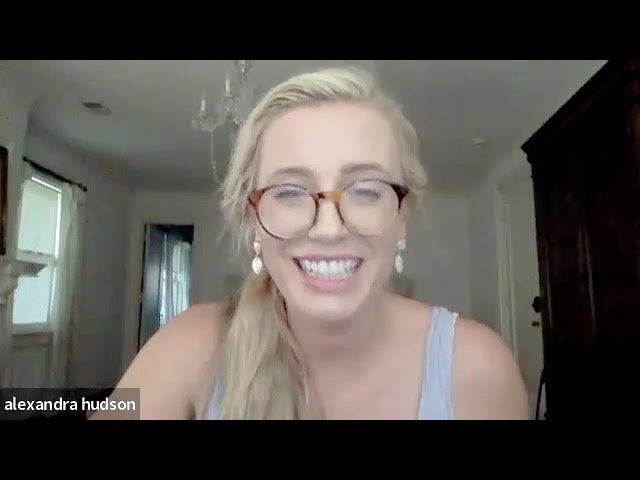
All right, hi everybody, uh, thank you so much for attending. I am Emma Ayers, I'm the Director of Programs at Young Voices. We're so excited to hear from Tyler Cowen today about his, his book, but I just wanted to open up by sharing a little bit about what Young Voices is for those of you who don't know, which is totally fine, welcome. So Young Voices is a nonprofit PR agency and professional development company. We work with policy-oriented folks under the age of 35. Essentially, our target audience is young people with ideas that generally go against the main, which everybody somewhat interested in. And we want to help those folks who might otherwise struggle to break into mainstream commentary do exactly that. So it's people who— people work in all sorts of different policy buckets. Who want to wade into general commentary to explain the things that they believe in a way that makes it easy to understand, right? But we've had a lot of success. We've been around for about 9 years. And because of that, we've been able to work with all sorts of different outlets and TV and broadcast stations. We work with places like Fox News, USA Today, National Review, Wall Street Journal, Washington Post. And essentially our whole point is to spread the ideas of freedom from a pretty— the mouths of a pretty rare source, millennials and Gen Z. So that's why we love hearing folks like Tyler, because he is a clear example of kind of what we're hoping to train these young people to be able to do eventually in their careers. So we are so excited that you guys are here. I want to go ahead and introduce Alexandra Hudson, who is going to be interviewing Tyler today. She is an award-winning author, journalist, speaker, and storyteller. She earned a master's degree in social policy at the London School of Economics as a Rotary Scholar, and she served at the local and federal levels of government. Alexandria is very accomplished in terms of her writing. I know, I used to edit her. She writes for places like the Wall Street Journal, USA Today, Time Magazine, Politico Magazine, Newsweek, other places. But she is also the founder and curator of Civic Renaissance, a newsletter and intellectual community of nearly 100,000 people dedicated to intellectual and cultural renewal. So she's got a book coming out, and you guys should purchase it when it does, called The Soulless Ability. It's being published by St. Martin's Press in 2023. So furthermore, she's also a professor at Indiana University, and she's producing a course for The Teaching Company. It's tens of millions of consumers around the world called Storytelling and the Human Condition. Lexie, thank you so much for being here and helping us out here. I'm going to give it away to you.
My pleasure. Thank you, Emma. Thank you to Casey. I just want to take a moment and thank Young Voices. They were integral, an integral part of my story and my journey in getting my book deal and then just improving my bylines and just the support and friendship and community. It's invaluable. So thank you. To each of you for, for your mission and for your heart for nurturing a new generation of thought leaders and intellectuals. And thank you to my wonderful friend and longtime mentor Tyler Cowen for being such a great role model to people like me and my husband. The story of how I met Tyler really quickly, I was working at the US Department of Education, and we were looking at rolling back a regulation and we're going to do a regulatory impact analysis to say, okay, what would the impact be if we were to make this change. Someone said, okay, we need an economist. And I said, okay, I know an economist, like my husband loves this guy, Tyler Cowen. And so I just emailed him out of the blue, and I asked him if he could help us and, and he's like, that's not really something that I do. But here are some other names. And we started talking and got to know each other that way. And we've had a wonderful meal at a really divey Thai place. And he's just been a great, a great friend and mentor for several years now. And someone I look up to and admire as someone who does the kind of work and cares about the kind of ideas that I think that I want for my life. And I think other, other people, other young aspiring thought leaders should be inspired by and drawn to his example. So Tyler, thank you for being here. And for sharing some of your afternoon with us today.
Thank you for the kind words, Alexandra, and good to see you all.
So I'll introduce Tyler and share a little bit about his book. We're talking about his book Talent. We share the same publishing house, St. Martin's Press. So glad to be supporting not just a friend, but also a fellow author. And in addition to that, we're— Young Voices is generously purchasing and giving away, I think, 10 or 15 of Tyler's titles. So if you would like to be selected for one of these titles, Tyler's new book on talent, Emma will post our social media handles in the chat. And throughout this conversation, just be tweeting and tagging us and sharing things that you are enjoying listening to and learning about from Tyler. He's a wellspring of wisdom and information. And so I'm sure you'll have no end of insights to share about. So that's how you win the contest. But I'll go ahead and introduce Tyler. And then we'll dive into a conversation and then leave about 30 minutes at the end of our conversation for questions from you. So if something we say sparks a question in your mind, feel free to drop that in the chat. And then we'll pivot to that near the end of the conversation. So Tyler is the Holbert L. Harris Chair of Economics at George Mason University and serves as chairman and faculty director of the Mercatus Center at George Mason University. With colleague Alex Tabarrok, Cowen is the author of the popular economics blog Marginal Revolution and co-founder of the online educational platform Marginal Revolution University. A dedicated writer and communicator of economic ideas. Cowen is the author of several bestselling books and is widely published in academic journals and the popular media. Cowen's latest book is Talent: How to Identify Energizers, Creators, and Winners Around the World. He writes a column for Bloomberg View, has contributed extensively to national publications such as The New York Times, Wall Street Journal Money, and serves on the advisory boards of Wilson Quarterly and American Interest. His research has been published in the American Economic Review, the Journal of Political Economy, Ethics, and Philosophy in Public Affairs. Cowen is the host of Conversations with Tyler, one of the best podcasts out there, and a popular podcast series featuring today's most underrated thinkers in a wide— and wide-ranging exploration of their work, their world, and everything in between. Include David Brooks, Malcolm Gladwell, and Kareem Abdul-Jabbar. In 2011, Bloomberg Businessweek profiled Cowen as America's hottest economist after his ebook, The Great Stagnation, appeared twice on the New York Times ebook bestselling list. Columnist David Brooks called it the most debated nonfiction book of the year— of the year so far. Foreign Policy named it named Cowen one of 2011's top 100 global thinkers, and an Economist survey counted him one of the most influential thinkers of the last decade. So with that, if your appetite and interest in this conversation isn't wet enough, Tyler, welcome and thank you. And we're excited to talk about talent today. So your book and your interest in this topic of talent is also one that Young Voices is interested in as an organization. Their mission-oriented, their mission, is to identify talented young thinkers and writers and creators and commentators and to kind of cultivate their abilities to help them more effective communicators and leaders in the classical liberal space and in the realm of public discourse. So what do you think? Is it a chicken and the egg syndrome or what comes first? Not syndrome, but what comes first? Is talent innate or cultivated and what matters more to identifying talent, the talent that's already there, or the effort you're willing to put into it?
Well, most people have considerable talent. It's both innate and cultivated. So they were born with something, but they really did a lot to enhance it. If all you end up with is what you're born with, you could be brilliant, but you're still not going to go very far. So I tend to favor looking for the cultivated side. One of my favorite questions I like to ask people, I say, what is it you do to practice your craft that is akin to how a classical pianist might practice by playing scales on the piano? And just see what people's answers are. It's remarkable how many people have never quite thought about that question before. But I think just by becoming more self-consciously aware of your own practice habits, the acquired part of your talent, you can enhance really a good deal. And it's not actually necessarily harder work. It might be, but it will make a lot of your life easier as well.
So to you, the cultivated side matters more than the innate, that the amount of effort you're willing to put into nurturing the raw horsepower that you were born with. So what are some of your habits to nurture what innate talents you were given? What are your kind of habits of the mind practice? How do you keep sharp and growing?
Well, I'm among other things a writer and a podcaster, so I try to write literally every single day of the year. I'd say there's 5 to 10 days in a year where I don't get to write at all. It might have to do with a board meeting or a long plane flight, so there are some days, but if it's my birthday, if it's Christmas, if it's Sunday, I mean, I'm out there writing. So you will just get better if you do that. And in terms of podcasting, uh, part of the vision behind my podcast was that it's simply possible to prepare much more for a guest than what most other people do. So for many of my guests, I've prepped for them literally for months. I did a podcast with Roy Foster, the historian of Ireland, and just spent 4 or 5 months reading about the history of Ireland. So I would be ready to speak with him. And it sounds crazy in a way, but I think, you know, at some margin people notice and you can offer them a product that no one else is offering.
I think that's a common insight I hear from my husband, who's an avid listener to your podcast, Tyler, is that you often come to the dialogue having done an enormous amount of metabolizing and reading of thought and ideas, and you often come across knowing more about the subject matter than the supposed expert that you're interviewing on the subject matter, which is a great trait. I'm sure that many people, if they have good character, are flattered. They're not embarrassed about being stumped by you and your questions, but they're flattered that you took the time to dive into their subject matter. So Tyler Cowen—
When I interviewed Malcolm Gladwell, I tracked down what someone wrote in his high school yearbook. And I asked him about that. Even he had forgotten. It was entirely positive, to be clear.
But, uh, Michael, sorry, thank you. Um, so you are intellectually omnivorous, Tyler, and you're omnicompetent and omni-talented.
I'm not omnicompetent. That's totally wrong. I have never—
You do a lot of things, and you do them really well. You are a podcaster, you're a writer, you are a grantmaker, you're, you know, you're a father, you're a mentor, you wear a lot of hats. How do you— for the people on this call, many of them might be dabbling in different, you know, subject areas, or even kind of fields, or career paths. How can they decide how their interests and talents intersect to like where to invest their time, where to cultivate, where to kind of focus and nurture. Not everyone can be omnicompetent and omni-talented. So how, what are, what's like a framework that you could offer people on this call that are kind of at this pivotal point trying to decide where to invest, where to focus their energy and time?
Well, a lot of good advice, most good advice is context-specific. But I can give you two pieces of general advice that I think apply to almost everyone, and including myself, at all ages. Uh, the first is just to have mentors and have really good mentors and always be trying to have more mentors and better mentors. And your mentors can be younger than you. They don't have to be older or more senior or more famous. So just invest heavily in mentors. And when you have further questions, I don't mean that you should slavishly listen to what they say, but you have someone you can ask. And the other general piece of advice, I call it the small group theory. You want to have a small group of broadly peers who have roughly similar interests as you do, but maybe not exactly the same, and you're in touch with them almost every day. Maybe it's through WhatsApp or Twitter or you meet up, or you all go to the same school, whatever it's going to be, but you're in touch with them very regularly. You talk through problems, you work through problems, you learn from them, and they're another place you can go when you need very specific context-laden pieces of advice. And so the small groups and the mentors, I think they're still underrated by at least 95% of people.
The small groups in the West? Sorry, what was that?
The mentors.
Oh, the mentors.
Small group of peers.
Yeah.
You know, on any given day, it doesn't feel that imperative, but in fact, it could be the most important thing you do, or operating along those two dimensions.
That's a great point. And that, that community, that diverse community, and also access to really qualified mentors— I just want to commend that's something that Young Voices really focuses on as they try and cultivate it, this, this talent pipeline. They know that both those are important. That's a big part of who they are. It's kind of embedded in their organization. So Thanks, Casey, Emma, and team for that. So in your book, Tyler, you said that your favorite interview question is, "What tabs are open in your browser right now?" So my favorite variation of that question that I go to in— I don't interview many people, but for just conversations is, "What are you reading right now?" or "What's your favorite thing that you've learned recently?" And both Both those questions kind of intersect at curiosity. Why do you think— you're a very curious person, and why is curiosity something that you value in others and especially is especially important to a potential candidate for a role?
I like to ask people about their open browser tabs because it tells you how they spend their time. It shows you what they're really interested in, what their passions are. You also learn how they collect and process information. And that's important data for a lot of potential jobs or rewards that you might be giving them. So it's a— you're getting a very general sense of how involved are they with things, with how much detail can they talk about their open browser tabs, with how much enthusiasm. And it's very open-ended. You're not trying to snoop. If they have something personal open, I mean, they can just not mention it. If you are talking with someone and you learn their great passion is sports statistics at a highly technical level, I promise you that will show up in their browser tabs, and that's interesting.
Hmm, yes. So related to that, you like, as you just mentioned, you'd like to ask that question because it shows how people spend their time, and you presumably it's a good thing when people are covering new intellectual territory and have a disposition towards learning and which keeps their mind sharp, and you also commend and let you mention that you like to identify people who are self-directed in that way, which you think is more important than being able to just take orders from a boss and carry out orders well. Why is that? And then also, how can that be nurtured? How can that internal motivation be cultivated or brought out either, you know, from an institutional level, if leadership wants to nurture that, and also from a personal level.
At the institutional level, I think you want to help your people organize into small groups where the most self-motivated teach each other what they know and spur each other on to be increasingly self-motivated. If you're a leader, most of all you lead by example, so you'd better be self-motivated yourself. If you're not, you know, most of what you do is likely to fall on deaf ears. People may improve on their own, but they're not improving because of you. They're improving in spite of you. So, you know, start by looking at yourself, like what can you do to self-improve? And that's usually the best place to be, and other people will notice it.
Just a quick note to those in our audience, we have several books of Tyler's to give away. His new book on talent just published by St. Martin's Press. And if you would like to be entered to win a copy, please just share about what you're enjoying learning from Tyler during this conversation and share on social media and tag us. I think our handles are in the chat, or maybe they can be reshared quickly. And we want to hear that you're, you're engaged and enjoying this and learning this. And also keep the questions coming if you have questions that you want to ask Tyler. We'll be turning to questions in about 10-15 minutes. So Tyler, a lot of the people on this call admire you as a public intellectual. You're someone who has a voice and a platform and whose ideas people, people care about. People care what you have to say. You're a tastemaker. People want to read what you're reading as well. There are a lot of people who have an audience but don't have much to say. And, and conversely, there are a lot of people who have interesting ideas but no audience. How do people become the kind of person who has something worth saying to— is worth saying, but also has people to share their ideas with?
Well, again, a lot of the good advice there will be context-specific. So I would start with your mentors and your small groups.
Yeah.
But I think for a lot of questions like that, like in the public intellectual realm, people should not calculate too much. You want to start with what you really care about because that's where you will be most motivated. And like, okay, maybe that won't work for you. Not everyone can make a go of this. But if you're suppressing what it is you most care about, the chance you will succeed almost certainly is lower. So I like to start by looking at the, you know, hand of cards a person has been dealt, so to speak. And what they care about. Uh, there's one person I've been supporting through Emergent Ventures. He's from the Barbados, and his main interest is the role of China in the Caribbean, which I'd never really thought of before. It's somewhat obscure. It is actually quite important, and I think he's on a route to being really quite successful. And I never tried to talk him out of, you know, doing the role of China in the Caribbean. He knows an incredible amount about it. He cares about it. It's not the only thing he does, but you could call it his intellectual base. His career is hardly over, but I think it would have been a mistake for me or anyone else to try to talk him out of that.
Hmm.
One point on curiosity that I think is helpful, you know, how we were talking about this a little bit ago in our private Civic Renaissance conversation, Tyler, You know, how to become curious. I think the most interesting people are the most curious people, but some people might wonder, how do I become more curious? And I think you're a great example in this way, Tyler, is just to start. Just pick up something that interests you and start. And often that leads to, you know, down a Wikipedia rabbit hole, or books, you know, lead to other books, and just to keep learning. And the more you know, the more you want to know and want want to learn. I think that's an important way to just, to just start somewhere and let that, let that process be iterative. Dana Gioia, who I know you've had on your podcast, Tyler, and who I think we— my husband and I just visited him and his lovely wife in Sonoma at their beautiful home last weekend, and he spoke very fondly of his conversation with you on his podcast. But in his book, his sort of intellectual memoir called Studying with Miss Bishop, he makes this great point about curiosity and institutions, how the best form of learning is self-driven and individual-driven and led by his curiosity. He said that he was raised in a very poor, low-income family, but was surrounded by books and just devoured them. No one told him to. He just loved that and self-taught different languages. And you coined a new title for him, an information billionaire, that apparently he has never lived down. His family absolutely adores. Adores that line. But I think it's so true. And he makes this great point that institutions are almost antithetical to curiosity because the moment you try and define or box something in or create more of it, it crushes the initiative. And it's kind of very— maybe another conversation we have, Casey, is with Russ Roberts. This is his favorite topic, that the most important things in life can't be quantified, can't be defined, can't be reduced to words or an equation. But what do you think that, that the idea that, you know, Young Voices is an institution, George Mason is an institution, Emergent Venture is an institution, although one with a very low bureaucratic threshold, as we were talking about. But how do you— how can curiosity and that— the talent that comes from that, that self-perpetuating upward cycle of cultivating talent, be nurtured within institutions, if institutions are kind of antithetical to that?
Well, the one way to be more curious is just to hang around other curious people. That's a good ready-made answer for a lot of questions. How can I be more X?
Yes, whatever.
Hang around other people like X. It won't work for height. It doesn't work for everything, but it's mostly good advice. But I would also say this: don't be afraid to put down the book you picked up, or don't be afraid to walk out of the movie. Or if you started something and it's not right for you, I mean, just drop it and try the next thing. And there's a lot of people, oh, if I start this whole 600-page book, I have to finish it. They end up paralyzed. They start neither the 600 nor the 200-page book. I just say, like, start whatever— playing a musical instrument, learning how to draw, uh, going to a sporting event, whatever. Just, like, do it. And be very willing to walk out. And you'll just try a lot more things that way. And I think you'll actually have a higher hit rate for successes. You won't end up sort of paralyzed by this fear of being locked in. You'll find what you really love more readily.
Do you think you— do you finish more books or put down more books?
I put down more books by a ratio of at least 5 to 1.
Wow.
But I'm not saying they're all bad books. A lot are "Good books, but not for me." "A lot are good books, but I really just needed this one chapter," and so on. I mean, maybe half of them are bad books, but there's plenty of reasons not to finish a perfectly good book.
That's fair. That's fair. Okay, we'll be moving to questions in about 5 or so minutes, so please continue to put your questions in the chat. And again, if you want to win a copy of Tyler's book, share about this dialogue on social media using the handles in at the very top of the chat. So here's a question, Tyler, about state capacity libertarianism. How can libertarianism evolve to meet the modern challenge— to meet modern challenges? Or how do you see libertarians being most effective in the policy conversations of the future?
I mean, that's such a big question. You know, I wrote this essay the beginning of 2020 on what I called state capacity libertarianism.. And in that short piece, I tried to marry what I would call my love for capitalism, but also the belief there were some tasks government has to do. Protecting us against a pandemic would be one. National defense would be another. Supporting science, you know, I think it was a good idea we sent a man to the moon. But I do favor a pretty strictly limited government. Some people would say, I'm not a libertarian, I want too much government. To me, that, that's a kind of semantic point, but it's very important that what government does, it does well, rather than trying to do too many things. So what I called state capacity libertarianism was my effort to marry a belief in wanting government to do a small number of things quite well, uh, with still believing in basic liberties, free speech, very much a capitalist democratic world order. You know, belief in what the United States stands for, belief in our Constitution. And that was just my term. You know, when I wrote it, I was kind of giggling. It's like, well, this sounds so silly and so many syllables, like no one will ever use it. But it's caught on somewhat. It's really surprised me. It's like a thing now.
It is a thing. It is. So you talk about— you talk in your book about how some unorthodox questions that tech companies have asked in job interviews have now become orthodox, such as Peter Thiel's, what important truth, uh, do few people agree with you on? So what are some newer questions that you would like to have become more orthodox to help screen for the best talent?
Well, earlier, before you mentioned my question, what are your open browser tabs, which I still like as a question, but it's becoming too known. Like I've started interviews with people and they just say, "These are my open browser tabs," before I say anything. You know, I think they were being honest. That's fine. It worked fine. But at some point, you know, people— some people start trying to manipulate you and they come in too prepared with their answers. And the answer is designed to impress you rather than it being the actual truth. One of the good features of the initial question is no one was expecting it. And it's just very hard to lie. Like, the only way you can answer to that is to say, actually, what are your open browser tabs? Uh, but again, questions can be ruined over time if too many people are expecting them. Another one I like to ask people— this is really only for leadership positions, it's not a good general question— but if someone wants to be like a CEO, a director, start their own company, I'll just say 'How ambitious are you?' And it sounds a little bit absurd, like, well, of course they're going to lie. Hmm. But people are not very good at lying in response to that question, I found. And the ambitious people seem to have, like, good, detailed, passionate answers. And the people who are trying to bluff their way through, their answer falls apart pretty quickly. So I still like that question.
I want to share something Tyler said in our conversation just prior to this one that might be an encouragement to many on this call. It, like, as a creator, I'm constantly thinking to myself, you know, is what I'm doing worthwhile? And this sort of imposter syndrome Tyler actually has a really high view of. He said, if you don't suffer from imposter syndrome, you're not ambitious enough. So those of you on this call that might suffer from imposter syndrome or just wondering if what you're writing is any good or if what you're doing with your time is worth worthwhile. That's okay. Keep pushing yourself. Tyler sees it as a good thing. I'm taking encouragement from that. So thank you. Thank you, Tyler. I have a quick question, Tyler, about your philosophy of interviewing. You're both someone who interviews an enormous amount of people, but you also get interviewed a lot. And you have a very unique style of interviewing people on your podcast. It's very different from, say, Russ Roberts's podcast Econ Talks. Yours is you know, just grilling you, you're on the hot seat, and I'm going to ask you as much as I can in this allotted time that we have, just get as much and extract as much information as possible from your mind. Russ Roberts is much more soft and conversational. And they're very different. Both, I would say, have pros and cons. And I'm curious how you came to your style of interviewing. And how does that fit into your philosophy of interviewing?
Well, I just did what comes naturally. It was not some big plan about the best way to do it. Russ is so chatty and humane, uh, and I'm not. So if people are with me, I'm not a conversationalist in that sense. I don't make small talk. I don't sit down and tell people stories and do like the warm fireside chat thing. It's very like down to business. What are we going to talk about? Here are my questions. What do you want to know? And it was getting back to this point I said before, like starting with the cards you've been dealt. Yeah, that's how I've been. So, okay, I'm going to make this into a style and double down on it. And I could never do what Russ does. Uh, great for him that he pulls it off so well. And, uh, you know, we've evolved to be, I would say, in a way, increasingly different with our styles.
It's true. And I think people are drawn to you differently and go to you for different things, knowing that they're going to get different things out of, out of your conversations. You could have the same interview with the same person, and people could listen to both of those and, and come away with equally as, um, and learn different things, I'm sure, because I think your styles get at different things and access different maybe aspects of the person's repertoire, ouvre, mind.
I also don't ask many follow-up questions. It's like one different question after another. A lot of people, if you ask them a follow-up question, they just repeat what they already said, right? That's unfortunate, but why give them a chance to do that? Keep them moving. Right.
So last question before we'll pivot to Q&A. So again, feel free to get your questions in the chat, and we'll— we're looking forward to hearing from you and incorporating your voice into this dialogue. Young Voices, Tyler, has a large network of young policy writers. You write in your book about the importance of persistence and practice in writing. What advice do you have along those lines that you would give an amateur writer on how to develop their craft? Without overstating your knowledge.
I'm going to sound like a broken record player here, but say get your writing mentors.
Yeah.
And get your small group of other writers. And you will need more specific pieces of advice than that, but they will give them to you. I also agree basically with Hemingway's point. He said something like, "No one knows how to write. There are only people who know how to rewrite." So if after your first draft or even your third draft you feel like an imposter, I would say awesome, keep on going, uh, and see how good it gets. The first draft is always terrible.
I, I have some advice on that question, and that is, yeah, I, I like to— no writing is ever wasted, so just, just write and write and write constantly. I like to journal in the morning, so that kind of just helps me clarify my thoughts, organize my day, get negativity out. And I like to have some rituals of stillness just so I can start my day with intention and productivity and not in reactive mode. And even if you write an op-ed or a piece, an essay that is rejected, A, writing, the creative act, is objectively worthwhile. You have made yourself a better writer. A, by just performing the craft of writing, but B, there's also a likelihood that you can repurpose that for something in the future as well. But just take encouragement, I think, that you have made yourself a better writer by just engaging in the craft itself. You've clarified your own thinking. And there's also the possibility that you can— there are so many times where I've repurposed essays. I probably have more unpublished work on my desktop. I know I have more unpublished work in my desktop and in my journals than published work.. And many, much of that will never see the light of day, but it helped me clarify my thoughts and thinking and future projects and where I want to go with my work. So it's not wasted. So take encouragement from that. It's not just because it doesn't see the public light that it's wasted. Would you agree, Tyler?
Strongly agree. It's like the maxim, don't be afraid to start a book and not finish it. Don't be afraid to start some writing and not finish it or not use it. It's all of value. Keep on going. I've written hundreds, maybe thousands of pages that I've never used. I don't even think anymore, like, was it good? Was it better? Was it worse? It's like, let's write again, you know, tomorrow.
Excellent. Well, wonderful. I think I'll turn it over to Emma who can help sift through and navigate the Q&A section. And again, just, just really quickly, if you would like to win a copy of Tyler's book Talent, tag us on social media. Tell us what you're enjoying learning from Tyler. And enjoying this dialogue. And thanks again to each of you for joining us today.
Tyler, I'm going to take Zoom moderator's privilege here.
Great.
My own question. What is the book that has most changed your mind about something?
Oh, book. I mean, I think first of all, events change people's minds more than books. But I would say the books that formed my views the most I read when I was 13 and 14 years old, and they would be what I would call classical liberal economics: Milton Friedman, Hayek, some Ayn Rand. And those had the biggest influence on me, like, of all books ever. But, you know, I've changed my mind on really a lot of things, but it tends to be what happens in the world that has changed my mind. So say Russia invading Ukraine, I would say I'm not sure exactly what we should do, but it's made me see that kind of issue as a much bigger danger, you know, than I thought a few years ago, you know, not some book I read.
Yeah, that, that answers my question beautifully. Thank you. All right, moving on from me to other people. So we have a question from Elisa Medrano. That I think is relevant. She asks, does the way a naturally talented or untalented child is raised significantly influence their level of achievement in adulthood?
You know, I'm no expert on raising children, to be clear. My basic personal philosophy is to treat your child with respect as much as you can, as much as you possibly can. And one reason to do that is simply that it's good for you, and you will end up smarter and more efficacious and a better person. I don't have some deeply worked out theory as to will it make a big difference or not. It seems to me the downside shouldn't be too high, and it's just the better way to treat people. So treat the child with respect. It doesn't mean no firm discipline. But talk to them like a very, very smart person that they are, and lead by example, and let them see you be curious or do what you're doing. And again, I don't have a lot of data on what works, what doesn't at the systemic level. It just seems like the right way to be, and kind of if you're on this call to begin with, probably your natural inclination is in those directions, and you're going to do better trying to do well with your natural inclinations rather than make yourself into some kind of parent you were never meant to be. Like, maybe there are some kids where it's better for them if you, like, spank them twice a week. I don't know. But, like, that's not me. I'm just not going to do it.
All right. We've got another from Richard Pashi. Forgive me if I I mispronounce your last name. As a general statement, do you think that the Stoic idea that the obstacle is the way is a validated example of the way to success?
Could you repeat that, please?
Sure. As a general statement, Richard asks, do you think that the Stoic idea that the obstacle is the way is a validated example of the way to success?
Yeah, I think Stoicism is a wonderful philosophy when combined with some other non-Stoic philosophy. So if someone is consistently Stoic, I feel they're not going to do enough, that they will go too interior and build methods of being happy that don't vary much with their level of success. That may even be the way to go for some people, but I'm, I'm way too restless to do that. So I view the value of Stoicism as taking people who are kind of antsy and irritable and builders, and at the margin giving them the freedom not to be so upset by their obstacles and frustrations. And then I see Stoicism as being a very high value. So the answer to that question, as stated, I would want to know what's the initial margin you're at. And I don't actually want too many people to be totally Stoic. I think we'll end up with a much worse society. But the successful people I know, most of them at the margin, probably should be more Stoic. And in that sense, I too am a Stoic.
All right, transitioning from something to something a little bit more technical about interviewing. Jason Reed asked, how can managers and recruiters spot nurtured talent in a job interview?
Well, I don't know if the interview itself helps you nurture talent much. I think you want to signal to them that you as a boss care about nurturing talent. And one thing most people are very good at is just sniffing out phonies. So in the interview, not being a phony and actually being trustworthy is your best tactic for getting the person to reveal true information about themselves. That will help you help them. And you helping them can involve either you hiring them or you not hiring them. But again, rather than trying to calculate everything, just you actually being trustworthy is my main advice for so many, you know, how do I approach this interview kind of question. And take your actual trustworthy people in your institution and have them do more of the interviewing if you're not already doing that.
All right. We have another question from Timothy Howard. He asks, there is a limited amount of time in the day. What is your model for how you decide what to read to prepare for your podcast? For the Roy Foster podcast, it seemed you just read everything.
Well, my model of time allocation is do the most important thing early in the morning. Maybe it's not possible for every person with every job, but for many people it's possible, and I strongly recommend it. And I've had people tell me it doesn't work for them. I guess I'm kind of dogmatic on this. I still think they ought to try it a bit more rather than, oh, I do my best work at 10:30 PM or 2 AM, or I don't know. I've seen cases where it works, but I'm still a bit of a skeptic. And I think most people should be packing their most important tasks into early in the morning. And then on like, what do I read and when? I really want to be reading what I want to read. I'll just read it much better. So to be kind of selfish and capricious and self-indulgent, I find works pretty well for me. And like my podcast guests, if I don't want to read about what they do, I don't invite them. Like it's up to me. And maybe not everyone's in that position, but it like works very simply. It's the people I want to speak to. And if I don't want to speak to you, like what's my reason for doing this? I won't do it.
Yeah, it's pretty straightforward. I mean, I have a sort of follow-up question. It sounds like you, I mean, you mainly stick to nonfiction. Do you have any sort of goalpost for yourself in terms of what you read, if you read fiction?
No, I read a lot of fiction, and I just ordered the new Maggie O'Brien book. She wrote Hamnet, published that 2 or 3 years ago. I forget the title of the new one. It's about the Medici in Renaissance Florence, but I think it's arriving on my doorstep September 6th, and I'm very much looking forward to it. So I'm a big believer in reading fiction. It gives you a greater depth to your vision of the human condition and just what other people are like. I'm going to read the new Orhan Pamuk book on plagues that's due out in October. I'm a big fan of his.
Do you read a lot of modern fiction or do you try to read classical as well?
A mix of both. So I've been reading Mary Gaitskill lately. She's a still-living American writer. I'm doing a podcast with her because I want to talk with her. I'm very impressed by her work and her insight into human beings. Mare is a very good novel of hers, came out maybe 5 or 6 years ago. Her kind of novella about the cat is excellent. So that's another current writer I would recommend. But I love to read at this point, reread the classics also.
Totally understand that. I'm gonna quit being self-indulgent and switch to something that's not fiction. This is from Joe Huang asking about a food question, which you know quite a bit about. He said he's consistently impressed with your knowledge of geopolitics and rural culture. How do you think international trends in the next 5 to 15 years will change America's ethnic food scene?
Well, I think we were on two tracks with American food domestically. One was more and more Chinese food, regional Chinese cuisines, and that, that trend has been stopped in its tracks by recent events in China. So that no longer seems to be as true as it was seeming. So several years ago, before COVID the country sending the most immigrants to us was China. It's less clear that will be the future looking forward. There have been problems in Mexico, so Mexican migration had been drying up. You might have thought, well, Mexican food, it will always be there. It won't have a great future. It'll be more Americanized. But in fact, Mexico has been having some serious troubles. The flow of Mexican migrants to the north has increased again, so I think our food future in the US is looking more Mexican and less Chinese than I would have forecast as recently as 3 or 4 years ago, and they both have to do with geopolitical developments, neither good, I might add, but it's a reality.
All right, fascinating. Non-food related, this is a question from Anders Behi. He said, in your book, you write about matching personality traits to Can you expound on what the scientific research has uncovered in that area? Second question: should personality tests be used in one's career development?
You know, I think personality tests are useful if you otherwise don't know anything about personality, uh, but the people who use them typically overrate them. So I would say I spend more time talking people out of them than talking people into them. The top performers I see usually as people who transcend the distinctions in your personality test. So just like to ask a simple question: are you an introvert or an extrovert? Uh, myself, I would definitely be called an introvert, but I spend my life going around giving talks. There's something obviously extroverted about that. So can I really just say I'm an introvert? Like I have a podcast, I do this, I do that. There's like an element of performing to all of it. So rather than trying to classify everyone, you want to look for people who embody opposites in either very good ways or maybe very bad ways. And, uh, that's better than classifying people with the personality test. Or another example would be the personality trait of agreeableness. Like, you want to hire people who are agreeable or people who are not agreeable? Well, look at Steve Jobs. He could really be pretty tough on his employees, but at the same time, he was very charismatic and he got them to work together. So he too, like, embodied this dialectic of opposites. And for top performers, that understanding, I think, is more useful than just trying to classify them.
All right, moving on from personality to religion. I have a question from Grace Fedelec. She says she's a big fan of yours. She says you are a professing atheist but understand that Judeo-Christian values are important to society. What is your opinion on the cut flower theory that a society that benefits from religious morality but does not practice will eventually become immoral?
I would describe myself as a non-believer rather than an atheist. So there's not any specific account I believe in. But if you look at the accounts given by atheists, Richard Dawkins or, you know, string theory, I don't believe in those either. So maybe you could say I'm an agnostic, but since I don't believe in anything particular, I prefer the term non-believer. Now, will societies cut off from religion go rotten? Uh, it seems to me that is an experiment we are conducting. Maybe ahead of us would be Japan and Sweden, which are really not very religious places, but I don't see that they've gone rotten. There might be many things there I disagree with, but you wouldn't say, well, their social order is collapsing because they're not religious. America maybe is in a more vulnerable position that we rely more on religiosity. So I think that worry is more likely to be true in this country. Than in a lot of other places. So I very much would like to see in America more people be more explicitly religious. I think it would be a good thing. But am I deeply worried about Japan? Uh, no, I'm not.
What, uh, what would you just define rotten as when it comes to society?
High levels of disorder, uh, high levels of drug and substance abuse, high murder rate, high rate of abusing children, a high rate of children born outside of marriage or traditional partnerships. On many of those, this country is really not doing very well, and I think some of the reason is decline of religion— by no means the only reason— but like, go to Utah, it's in much better shape on those variables than most of the rest of this country. So Yeah, I think America is uniquely vulnerable to the loss of organized religion. I'm not sure why, but that's what I see in the data. You go to Japan, it's still a zero-crime society except for a few weird gangsters, like running numbers or something. But, you know, you could walk around Tokyo at 3 AM and be totally safe. You could leave your wallet somewhere, someone would bring it back to you, and so on. And that's maybe the least religious society in the world.
Um, we have another question from Thomas Irwin. He says, your book Stubborn Attachments is one of my favorites. What is the relationship between the moral imperative long-run economic growth and talent spotting/cultivating? What are policies that can juice growth by increasing talent spotting and cultivation? And what is the low-hanging fruit and how to improve that? That was a lot of questions in one, so if you need me to repeat, feel free.
Well, most of social wealth is in the form of human capital or talent, right? So there was one estimate, I don't know how seriously to take it, but that the world, I think, has $550 trillion worth of human capital. I don't know how good a number that is, but it's a lot, right? You don't get to a number that big easily. It also seems to me in all societies, but even in America, which is like a relatively well-functioning capitalist system, that we misallocate talent and there are too many people who don't have their aspirations raised early enough. Now, in terms of policy changes, you know, I definitely would prefer much more school choice in this country at K-12 levels. I'm not sure how much it will help but I definitely think it would help. Higher education is a more complicated story, but it seems to me it's become a huge bureaucratized mess. It's harder to reform in a way, but we could do much better at it than we're doing. And then immigration policy, we could do a much better job on. There's a lot of very talented people who would love to work in this country, and they don't always get the chance.. So those would be some immediate policy measures that I would favor.
A similar question about your book, this one from Esther. It's— he says— she says, a while back you wrote The Complacent Class and a number of societal problems associated with the culture of complacency. If you had to reassess your observations from that book, is there anything you'd modify?
More true than I realized at the time, and it really scares me. That's what I would modify. And I had some, I think, some very good predictions in that book. So, like the resurgence of riots related to race. When I wrote the book, it was far from obvious that would happen. And, you know, within 2 years of the book being published, in fact, it happened on a pretty large scale. So, the book has come too true, I would say.
We have another recent question from Robert Humphreys. Isn't the fact that many young people in Western societies are not having kids an indication of lack of faith or perhaps even interest in the future?
Probably. So I think in the United States, our number is down to 1.7. In South Korea, I believe it's at 0.9, which is stunningly low, right? Other parts of the world, it varies, but even India, which was like the poster child— forgive the pun— for overpopulation, even in India, it's at about 2.0. It's at replacement in India, and except for 2 or 3 poor populous states, most Indian states are at 1.6, 1.7, and this is a country with per capita income of, what, $2,000 or a bit more? Uh, I don't know all the reasons why it's happened. I would say I think in America the decline of religion has been a factor. I'm not sure how much it's a factor globally. So India is still a very religious country, very religious, uh, and most of their states are down to 1.7 like we are. So I don't think it's like a monocausal reason why birth rates have fallen., but it seems to me it's a reason, again, with the United States being the special case where religion matters more than in many other places.
Um, we have another question, um, a little more technical about libertarian world. Um, what is the general sense of talent in libertarian policy world, and how can our network do better at identifying empowering new talent that will actually be effective?
I think we have a talent crisis right now in the libertarian world. If I think back, you know, to when I was young, there were many fewer libertarians, but in some ways it attracted more talent. It was like the new fresh thing. And there's a lot of libertarian programs that run a lot of people through them, and like a pretty high percentage of those people are talented. But at some level of like core inspiration, it's not where I see the emotional energies in society right now. And like, if I go to an Effective Altruism meeting, which is not really my view, but I have the sense of excitement there, and I don't at most libertarian gatherings. And that's really a market shift from earlier times. And I think we should take that very seriously as a true crisis.. And the mere fact that you can add up, oh, like, you know, 78 people were on my call and 33 of them go to really good schools, and these people are doing that. I think that's missing the point. There is some kind of talent crisis in libertarianism.
Why do you think they've lost passion?
Some of it is just like aging of a movement. It's hard to keep the passion. But I think we've seen a bunch of recent issues that, whether you agree or not, at least superficially, to uninformed people, do not look like they have libertarian solutions. One would be climate change, another would be pandemic. And I get that not all of you on this call will see these issues the same way. I'm not trying to judge what's like the right answer, or like whether libertarianism can do well with them. But I just think it— The problem, say, the 1970s— well, there were too many nationalized companies and inflation was too high and the top tax rate could have been 90%. And a libertarian comes along, it's just super easy to see how it applies. And libertarians, in fact, did win many of those battles. Or like, communism is terrible, we need to get rid of communism, and so on. Like, that was super easy and intuitive. And right now the world is not running that way.
That makes sense. All right, I want to be— I want to be mindful of time, but I'll ask one more question. You point out in the book that IQ is not the greatest determining factor for success— what a relief— what other qualities have you found, or what is the main quality that you found that is common among successful people?
I think inspiration, belief in what you're doing, Actually believing in things, in something, which again could be religion, but typically is not only religion. Sturdiness, sticking at it, wanting to cooperate, embodying dialectical opposites in a useful way, understanding hierarchies at the place you work and how you ought to climb them and which ones you ought to be climbing and which you ought to be ignoring. Those would be some answers off the top of my head.
All right, well, thank you so much, Tyler. I appreciate you going through all that. That was such effective answers to rapid-fire questions.
Um, I appreciate you all listening. Thank you, Emma, for your work on this. Thank you, Alexandra. Uh, hope to— some of you out there I know I've met, in fact, but the rest, uh, hope to meet you someday.
Thank you, Tyler, uh, for your time and for your, um, being a great role model. For aspiring writers and thinkers. And thank you to Casey, and to Emma, and the whole Young Voices team for all you do, for your investment in people and in ideas that matter. We're grateful for you, and for, again, for helping facilitate this event. And thanks to each of you for joining us today. I always learn so much from Tyler. I hope and know that you did as well. Um, so looking forward to next time, Tyler. I always love our conversations, so thank you.
Take care.
Thank you so much.
Bye.
More from Tyler


#413: Tyler Cowen on Rationality, COVID-19, Talismans, and Life on the Margins





Tyler Cowen on Never Crying at Art, Why Rap is Dead, and Quitting Writing Books (w/ Nabeel Qureshi)


AI, Job Loss, Fertility Crisis and the Death of Careerism | ft. Tyler Cowen | PGX Ideas #4
