The Reality Transurfing Podcast 002 Transurfing isn't new with Dr. Salah Al Rashed 1
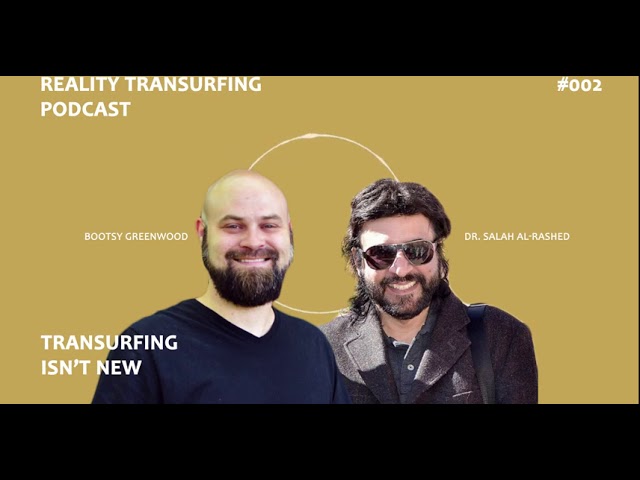
In this episode of the Reality Transurfing Podcast, host Bootsy Greenwood and co‑host (Speaker C) interview Dr. Salah Al‑Rashed, the Arab‑language translator of Vadim Zeland’s Reality Transurfing and founder of the International Association of Personal Development (IAPD). Dr. Al‑Rashed recounts how he discovered Transurfing, the painstaking Russian‑to‑Arabic translation process with Zeland, and the creation of a five‑volume Arabic edition. He describes the launch of interactive webinars, the training of over 20 certified Transurfing trainers across the MENA region, and the establishment of the “Salam” intention‑sending groups. The conversation expands to his broader personal‑development work: bestselling Arabic self‑help books (over 3 million copies sold), a network of seminars in 21 MENA countries, collaborations with global figures (Lynne McTaggart, Masaru Emoto, Eric Pearl), and large‑scale intention projects for the United States and other nations. Dr. Al‑Rashed explains his philosophy of “change within,” the distinction between governments and nations, and his efforts advising governments (UAE, Qatar, Saudi Arabia, Kuwait) on reforms, women’s rights, and judicial systems—all offered pro‑bono. He also discusses the rise of positive psychology, the shift from problem‑focused to health‑focused approaches, and the role of media, social platforms, and the IAPD in spreading these ideas. Throughout, he emphasizes the importance of personal choice, avoiding forced belief systems, and fostering peace, love, and inner development across cultures.
Chapters
And if we try to fill our minds with silly things and with disputes, then we will not have a place for the big things that are important to us in our life. Love is very important. Peace is very important. Inner peace, this is very important. Our health is very important. But if I'm in disputes all the time and fights all the time, I'm gonna lose my health. I'm gonna hate and lose love. And then it's not going to be peaceful.
Welcome to the Reality Transurfing Podcast, brought to you by Transurfing TV. I'm your host, Bootsy Greenwood, and today I am joined with Dr. Salah Al-Rashed. He is responsible for the Arab translation of Reality Transurfing and has an institute in the Middle East where he teaches personal development. It's the International Association of Personal development. Salah has studied all kinds of psychology, clinical psychology, and positive psychology, and he joins me to talk about his work and his affiliations with Transurfing and Vadim Zeland's work. Hello, Salah. How are you today?
Doing excellent. Thank you.
It's a pleasure to have you on. I know you're doing a lot of incredible work in the Middle East as well as just all over the world. So thank you so much for taking the time to speak with us today.
I know you are doing also great work, so thank you also.
Thank you so much. Well, I know that there's, uh, there's like even, even maybe controversy about teaching about these topics there, um, which is amazing. I know you're— so you're, you're doing really, really just pushing these ideas in a place where there's a lot of, you know, religious people. I'm from the South in America. Here in the South, there's a lot of religious people as well. Mostly Christian fundamentalists, but I think that there are some similarities, you know, just as far as like dealing with the ideology.
Yeah, well, you know, religion in the Middle East is not an issue really. It's— and religious people are not a problem. It's just the extremist ideas behind it that causes the, the problem. So there is no problem with religion, any religion, and there is no problem with the religious people, any religious people, but The issue is with when the extremism tries to explain everything in their own world, like there is only one reality, which, you know, it's not. You know, there are all people's— all people have different realities. So that's the only issue there. Otherwise, you know, things are okay.
Yeah, that's exactly— that's exactly right. Yeah, that's how it is here. There are people who are just, you know, most they have— they were religious, they're Christians, you know, they go to church, all that. But there are some very extreme beliefs here too, and that's the stuff that really— it's a— it's the extreme sides of the pendulum that keep it swinging.
That's right. Yeah.
But how did you discover Transurfing?
Well, I think my first interaction with it is reading the book. I, you know, I read a lot of books, so when, when I, when I go to bookstores in America or England, I pick up many books. And that book, just, I saw the book one time and then I thought, wow, that's a good idea. Although the bookstore that time, they did not sell it because they only had older copy. When I went on the internet, they weren't selling it. So I bought the first book for about, I think, $120. You know, the book is only worth like, today it's sold in Kindle for $1, and I bought it for $120, you know. But then I thought, wow, I mean, that's, you know, he, Vadim, is an excellent summarizer of ideas. He puts it in a very nice and clear way. Then I wrote to him that, telling him, you know, what we are doing in the Middle East and that we have an academy there that runs many programs and seminars. And he really replied back, and this started a good relationship with Vadim Zeland, which I later invited him to Kuwait, and he stayed at my home, and, you know, we did very good work together. And then we did the Arabic translation, we did with him, and I revised it from the beginning to the end. And actually, I referred him back and forth until we got it to be the the excellent translation for Arabic right now. It's one of the best translations because we actually almost wrote so many things again, just me and Vadim, until we got it into the— working with the mentality of the Middle East, as I would say, you know. So, so then when once we did the translation, that actually really boosted the work so much in the region. Then later, of course, I was— yeah, later we were given the chance to teach it in, in the Middle East. So I looked for instructors to do that, and that's where I found René Garcia, which— an excellent instructor, understanding the material very well. And so I got her to come and teach the course. We, we started broadcasting from UK to about 9 cities in the Middle East, so, and getting people to to, to do what we call an interactive webinar. That's just a new technology, probably very soon it will come to the world. But it's an interactive webinar, which means a huge screen where you see everybody in front of you from different cities in the world, and then talk to them and they talk to you. And so we did a few courses in Transurfing there. That's the short story about it.
Yeah, that's amazing. Um, I'm sure it's a lot of work to translate a book, especially one that's, that's so, so sort of metaphysical and dealing with topics that are so esoteric. Um, yes, can you talk a little bit about that? You said you kind of went back and forth with Vadim.
Yeah, I mean, took— yeah, this is one of the longest translations we did. We translated many books, many bestseller books, like for Lynne McTaggart, Eric Pearl, uh, Masaru Emoto, uh, Roger Callahan and many others. We did translations, you know, we've been doing this for and publishing bestseller books for about 10 years now. But when we did the Transurfing, first of all, Vadim insisted that it is done from the Russian language, not for us. So I don't speak Russian, so I had to go through when we formed a committee of translators from Russian to Arabic, but I had to revise it by reading the English. So I'd be reading the English and then checking the Arabic, which is translated from Russian, you know. And then when I don't understand the word or a sentence, I would send it to Vadim. I say, you know, there's something wrong there that it doesn't fit. And he's, well, yeah, it should be this or that. Then I change it and then interacted with him by saying, you know, like, you know, this word would not do —good in the Middle East, so is it possible to change it? And at times, usually he would say, "Yeah, yeah, that's okay." But at times he would say, "No, that would change the meaning," and so on. And so, yeah, we would try to put it as simple as possible, but I mean, it took a lot of work to revise it. It took a lot of my time to just revise the book. Now it's good because we got the 5 volumes in one book, and it's a huge volume book, but I mean, right now it's done very nicely and very well. Now, having said this, I don't want to complain, but could I say something a little bit negative? Is that okay? Of course, of course. The company he deals with, which is in Russia, really, this— they did not do a good job. We've spent almost a year and a half working with this book, and we revised it for a long time. We printed it in the best way to print and so colorful and so good papers and so on. And we printed so many thousands of copies. But then 2 years later, they just went and agreed with another company, you know, which I was bitter because right now we're not doing any more editions of Transurfing because, you know, we've done so much effort and work. And that actually stopped our work with continuing to do the translation for the book. That includes, of course, Tafti, which we're— right now we would not be interested because it wastes a lot of effort that we're doing. Other than that, I mean, Vadim is an excellent person, has a very good, great personality, and I've been close to him, and I know he represents the words that he says, and right now his word or his knowledge is really spreading all around, you know.
It's really exciting. It's a super exciting time because when I, when I discovered the book, I was blown away. I mean, I've been waiting for that book for a very long time. And I too actually reached out to the first publisher of the book, which was a UK publisher, I believe. And then now it's changed. Yeah. And they were sad that they lost the rights to it. Because I was trying to get permission to read the book, you know, and like, I never really heard back from the current publisher, but I did hear back from them. And they were a UK publisher. It's like, I can't remember the name of the company, but, um, yeah, but yeah, I can, I can see how, you know, how that could be kind of tricky.
Um, I mean, the new translation in English, it's, it's actually much better than the older one, you know. It has been, has been. Do you agree with that?
I mean, yeah, it's gotten a lot better. But no, it's, uh, it's, it's funny to, to read it now because it is— the translations, it is way better than it was before.
Yeah. Yes, yes, yeah. And also he emitted the— he took much wording that just a repeat, you know, and so on. So the new edition in English, I think it's excellent. And the one in Kindle right now, it's cheap and it is excellent translation, so everybody should get it.
Absolutely. That's the cool— that's a really cool part of about all of this. And what we're all trying to do is just really get these ideas out to the public, to the masses. And that seems to be the priority, not making money. Yes. Yeah. And that's awesome. Yeah. Can you—
making money, making money is okay. Yeah, there's nothing wrong with making money. Just, yeah, just not making money on people's back. Exactly. Yeah, yeah.
The priority is, is like he says in the book, you know, to, to do your goal and then the money comes as a result of doing the goal. So that's fine. I think that's just, that's the best advice, uh, I've ever had regarding that. Um, but yeah, nothing wrong with making money, of course. But yeah, it's really amazing to be able to share these ideas and, and to speak with people such as yourself and everyone who's in the community. Because like, you know, part of me, I've read this book, you know, and I want to tell my friends about it, and they look at me kind of weird, you know. So it's like, hey, I'm not crazy, right? And then, uh, and then I get to talk to people and, and, you know, who confirm my believe, who, you know, have read the book and they're like, yeah, you're not crazy. You're exactly right. And so maybe we all are a little crazy, but at least we're not crazy alone.
Yeah. If we are all crazy, it'll be okay.
Yeah, that's right. What was it like working with Vadim and having him in your home?
I'm curious. Well, Vadim is a very simple, open energy person if you get close to him because, you know, you know his way. He's just, he He does not interact with the public, and he doesn't lecture, he doesn't go to public places. He has an idea behind this, but once you're close to him, and I know Rene has been, so once you're close to him, you feel comfortable. He came with his wife, and I was with my wife, and he came at home and sat with us, and the family had lunch together and we discussed many ideas, you know. And he's, although he is very strict on healthy diets, yet when we bought all kinds of Arab food, because that's the Arab hospitality, he actually ate almost anything that we bought. We gave him all the offer, you know, to eat either the healthy or the unhealthy. We didn't know what he would eat, but I guess he being a Russian and, you know, there is an old connection between the Russians and the Arabs, so he knew that this is like, you know, if they offer you something, so you gotta eat. So he ate almost everything, and we felt sorry because maybe we messed up his diet. But yeah, he's an open person. When you talk about politics, you know, he talks about politics. When you talk about social life, he talks about social life. I took him to the scientific And this is one of the strange— I'll tell you a strange story. You know, we took him to the scientific center in Kuwait, which is a very landmark place. It's a beautiful place in Kuwait and a huge scientific center. And they were showing the 3D film. Once he knew that this was an American film, he would not go in. He said, I'm not going. I said, why? He thought that all Hollywood is just a lie, you know. We told him that's just a 3D show, but he refused. He wouldn't, you know. He didn't want to. We just took him somewhere else where we showed him the sharks and the other things. So everybody's got a strong view somewhere with political issues.
Well, I think he's probably pretty right about the Hollywood thing. I mean, that's definitely— if there's like— If there's some cabal of people trying to promote ideas, it's definitely coming through Hollywood, you know, like it's at least on this continent. And so I totally understand that. Yeah, yeah.
Well, he had a strong— we just felt that was too strong, you know.
Fair enough. It's only a film, you know. That's so funny though.
Yeah, but I took him around Kuwait and showed him, you know, the positive side of Kuwait. It's— this is when I— when people come to see our our environment. This is what we really right now— we are a big community right now that, you know, are spreading love, peace, and entire enlightenment. And when I showed him this side, he just— he thought, wow, I mean, that's a great work. And he said something very nice, and he recorded something for us and wrote something. And this actually happened before with Lynne McTaggart when she came to Kuwait. I also showed her the same. And then with Masaru Emoto, if you know him, the This is a very famous Japanese guy who passed away a few years ago, but he's famous for doing the experiments with the water. It's just when, you know, you speak to water, it just records the memory there. And so he catches up the crystals of the water, and it will tell you that if it's, you know, you're saying something nice or bad, or your energy is good or bad. So he did excellent experiments. When he came to Kuwait, I invited him. As he was leaving in the airport, tears came from his eyes and he started saying, wow, I mean, you're like a huge community. I really want to tell you that you have a responsibility to spread peace all over the world. And he was talking, crying, and I thought, hey, please, please, I only showed you the positive side. You have not seen the other side. You've seen only the good sides. So with Zeeland also, we did the same thing. We showed him all the good things that, you know, the work that's been going like You know, we always criticize Kuwait, and I'm a big criticizer of my— of our government and of the country, how it's going on. But when it comes to reality, you know, there is also lots of good, you know, on that side of the world also. And when they come there, I just show them the other side, so when they go back, they know that it's not just what the media tells. You know, we have much greater things to contribute than just some extremists trying to do the work.
There. Absolutely. Yeah, I think we're all a little bit under false, you know, ideas of what other countries are like because of our own media and all our countries. Yeah. Can you talk about that? That's actually really interesting. What, as far as like the government and the establishment and stuff, these are interesting issues that we all kind of have to think about as Transurfers. How do you— how do you kind of How do you balance that?
Balance meaning the work there?
Yeah, the work there and speaking about the government or talking to people about those kind of ideas.
People also don't understand how the Middle East works. It's really, you know, from a country to a country is a huge difference. So for example, if you go to the Emirates, you know, people love to go to the Emirates because, you know, they see Dubai and they see Abu Dhabi. It's just like you know, nice place, it's a tourist place. So people love the idea to see that side of it, but that's also the positive side, you know. Like in Kuwait, for example, we might not have things like Dubai and Abu Dhabi, but for example, Kuwait has a very historical and long-term parliament that actually formed in 1932 and established in reality with a constitution in 1960. 1963. And since then, the Parliament actually leads the country. It has the power. We're not led by a sheikh or by a leader or by a president. Of course, he does have the power, like in America the president does have power, but he does not control more than a third of the power with his government, which is the same in Kuwait, you know. Now that, of course, gives us much freedom. It gives us— so I could criticize. I have a program on TV, and it criticizes all the actions of the government every week. Almost I say something bad about the government, which, you know, I think they are a lazy government. They could do much better, you know. But I can't say this in other countries in the Middle East, you see. That's— and not only I can't say this in the country, I can't even say anything about them. Even in my country, it is a very sensitive subject. So you gotta understand, you know, every country has its own. So it's not just one Middle East. It's like, you know, you're saying, well, America is— and you mean by America, South America America and North America. No, it doesn't mean, you know, it's just a huge difference. It is even a huge difference between the states, not only, you know. So, so that people gotta understand this, every country's got the beautiful side and it's got also the negative side. Like in America, for example, I'm, you know, I'm a big lover of America and I've studied there and spent so much of my life there. So I do love that side. And people when they say, why do you always say nice things about America? America's got a lot of negative 'Things, the politics, the government, whatever.' And I say, 'Of course, you know, there's, there's so much negative things about it, but it is a great country. It is leading the civilization right now.' You know, it is a self-reforming country. No matter what happens in America, there are people inside that are— that's what the self-reforming system does. It will solve itself. So we might get a bad president or a bad government or bad policies here or there, but it fixes itself with time because You can't control the whole country, and people are free there, so they make their own free decisions. And so with time, they come again to balance. So if they go imbalanced, they go to balance again. I'm not saying right now it's going imbalanced, but I'm saying whenever it does, it will balance again. I love the idea of societies like that, you know, when they are open, they're criticizing themselves, you know. And this is a very big good sign. I tell our Arab guys, it is not good if you always say nice things about your government. That does not show that you're democratic. Actually, it's just that you're hypocritical. Okay, so that's not democratic. If you ask 10 Americans, how do you feel about your government, probably 9 of them would say they feel bad about the government. If you ask 10 British people, 10 English people, about how they feel about their government, probably 10 of them will criticize the government. That doesn't mean that's not a democratic country. It's a beautiful democratic country, whether it's UK or America, but the government is different from country, okay? People are different from the state. So we gotta make that difference. So whatever bad country there in the Middle East, the people are good and nice. Governments might not be, you know, they're going through an era right now that's not so good. But when you gotta make a difference between the country, which you should love, and You know, if I'm from Syria or if I'm from Lebanon or if I'm from Egypt, I would love my country no matter what the government is, because government is not the country, okay? It's just holding an authority right now which might be kicked off later or changed or for any other reasons. So I think the Middle East is mainly misunderstood by generalization. You know, it's just generalizing. Like for example, if you go to the Middle East, you probably would be so much you would see so much hospitalization there. People are kind, and then they would invite you to their homes. They would serve you lunch and dinner and a coffee and, you know, sweets and whatever. They do this to all guests that come to the country. So when you go back, you would feel— and then you listen to the news and you say, oh, you know, who are those people they're talking about? Well, it is a 1%, probably less even. That are not so great, you know, and they're making a lot of noises around the world. But as an American, you know, as Americans, or as English, or Westerners in general, you know, they should not judge people by the small numbers and listen to those big, you know, voices. They scream all the time. But if we scream all the time, people listen to us. But with time, they get annoyed. And that's why, you know, the work slowly and surely is much better than screaming. That's what we do actually in our work there. It's just we, we just work peacefully and slowly and continue to do that. So that instead of screaming, that's also— yeah, and that's what creates change in the long term. Because, you know, we could do a revolution or fight or whatever, okay, it might create a change, but that does not last. Because if we're not ready inside, you know, if we don't know our choices right, then reality will not, you know, it will just reflect what we have inside. So we got to be ready inside. That's why change always starts within. It doesn't start outside.
That's really good. That's an excellent differentiation too between the government and the country as well. That's That's really, really good. And I absolutely agree. As it— like he says in the book, you know, we talk about the layer of our world, and that's what we need to each focus on as individuals. And then that's how the world starts to change shape, I think. Oh yes. Can you talk a little bit about your institute, uh, over there?
Well, well, I started with a small center for my specialty because that's my studies really. I did clinical psychology. So when I I started a very small center, which is more of a clinic than a center. But then slowly I started writing books, and my books became the bestseller books. Actually, I've sold more books than any Arab in the history of the Arabs to do with, you know, human development or personal development. Of course, there are religious books that I've sold more, but in that field, nobody has sold more than us, you know. We've at least the legal issues, the legal copies that we've sold have exceeded the 3 million copies. So my books became bestsellers. They were actually, then this actually made a lot of revenue to start some other work, and so we started other work, and which is we've done right now more than 500 seminars maybe in the last few years. We work in 21 countries in the Middle East and North Africa, which is called the Arab world. The Arab world is really the Middle East. And then we have North Africa, which is Egypt, Morocco, Libya, Tunisia, Algeria, and these countries also considered. They call it MENA. MENA is Middle East and North Africa. That's the Arab world. So we work in almost all these countries, including the disturbed countries. We used not to work. We used to say if there's a war, we don't work there. But now we do. So we are in Iraq, we are in Yemen, Yemen, we are in Syria, and we are in Libya. So you can find some of our guys working there. And the mission that all the work is towards peace, towards love, and towards enlightenment. The way we use this is by doing programs, seminars, reading books. We have something called Salam Group. The word Salam means peace.. And these are groups and they meet weekly and every week they meet they just take a walk for about half an hour or so, then sit down together and make an intention. We call it an intention sending. So we sit down and send an intention. And we've done actually few intentions for America. So when, when you had troubles few times like the hurricane you had in the South, we did also an intention for America. Sometimes we choose a country, sometimes, sometimes we We choose a general goal, sometimes we choose a personal goal, and sometimes we choose it for Syria or for Yemen and so on. We were joined later by Lynne McTaggart also. Lynne McTaggart is very famous. She does the intentions for 4 years. She started much before us, and she does this in the whole world. I mean, everybody, and we joined her. Thousands of people from the Middle East joined. Thousands of people from America. And then we did the intention for September 11th, which— and I made— I came into the TV and I made an apology for being an Arab that did not do the right job to cause America that much harm. If we did our job well, we couldn't have— we could have prevented this earlier, but we let our guys and boys and children wander around and get the wrong ideas. And then when they did something really bad, so we apologized. I apologize for all the Americans for what happened. From, you know, we have responsibility for this. And then Lynn also apologized for that. Their reaction was overreaction, actually, taking two countries, you know, combining two countries, killing thousands of people also. And so there was an apology from the Arab side, an apology from the American side, and this got got good publicity and got so many hundreds, maybe thousands of Americans and Arabs to get together and get to know each other and see the other side. And in the end, we are all human beings. It's just these divisions of nationalities and races and ethnics and whatever should have made us— it should make us more beautiful, not divide us. Yeah, this is a variety. Variety is something good, but Differences makes us good, not makes us apart, you know. So it's got— those people got invested in this idea of seeing the differences until they started seeing differences in everything, even in their own country. Like those who see— those who are prejudiced, they're not just prejudiced against other religion or other race, they become also prejudiced inside their own community also, against their neighbors. And then, then it gets against their family members, and it gets to be even against yourself, which is, you know, I'm against my hand which is not doing this, or against my leg which is not doing that, you know. And it becomes this, because if I'm fighting outside, this will also be a fight in my environment and later also inside. So what makes us different actually is a variety. Which makes us more beautiful. That's why I see Kuwait and America have the same similarities, because there really, really, there isn't an original Kuwaiti. You know, they all immigrated from somewhere. Same with America, there isn't really an original American, you know, except of course the Native Americans. You know, other than the Native, which we also have in Kuwait, which we would call them the native tribes, you know. But other than that, it's everybody just immigrated to the country. So there isn't a real American. It's just like we're all together form America, or we're all together for Kuwait, or we all together form the world. So, you know, we can— we all come from the world. We don't come from other planets, although some people do claim that, but we all come from the same planet. So we should respect, you know, each other. And, and that's what our mission goes, you know, working with. And now, right now, we have work in 21 countries and I have headquarters. I'm speaking to you right now from the studio in UK, which is the broadcasting studio, and we have a company also in Bosnia which, which does work there. We have our trip coming in August. We do 3 trips a year, take the very good enlightened people and go to Sri Lanka, Malaysia, India, Bosnia, Shamsheikh, and other places. You know, I've been to so many places. This is our 29th trip we're doing, so we do 3 trips a year. This time we have Eric Pearl, and from America we've had all trainers from, from everywhere. So now we have the trips, we have the Salaam groups, we have the broadcasting seminars and webinars, and we have the International Academy for Personal Development. Thousands of people are in this academy and Thousands of people have graduated already and they are being very effective in their society. Today when I go into the TV— 20 years ago I did the first TV program and it was the only TV program that talks about personal development. Today we have at least 3 or 4 programs in every channel talking, talking about personal development. My radio program was the only radio program that talks about personal development about 21 years ago. Now we have 3 or 4 programs a day in each radio channel. So it is spreading and it will be effective, and we are now seeing the results of what we have done years ago.
That's fantastic. I, I'm amazed to hear that you guys are doing that much and traveling that far. Uh, that's awesome. What, uh, Are you teaching in like several languages as well as you're going? Are you going with translators?
We're focusing on the Arabic and targeting the Arab world right now. This is where, you know, it needs much work, at least from us, from our side. So when we bring trainers from America or England or China or Russia, wherever from, we do the Arabic translation, yes.
Okay.
And the International Association of Personal Development Yeah, well, yeah, we do it in Arabic right now, but we are thinking of going to English. But you see, in the English you have many, right, who could provide such— I think it's—
I think you're absolutely right. It's, it's so important to focus on our commonality. Like you said, that diversity is, is a gift. We're all different. That's a beautiful thing. If we were all the same, it would be just be so boring and annoying. Um, and I think that people are figuring that out. That's something that when you touch someone's heart, they, I think, realize that it's very— it's an innate thing, you know. So you worked with Rene as well?
Yeah, we— I mean, we invited Rene to the— to come to UK and broadcast to the region. So we did the Transurfing course, which was like an introductory course. But when I saw that Rene is so good in the material, I just told her maybe we should go further and teach some people to teach the material because it's a huge region there and we cannot go to each city like from Algeria to Saudi Arabia. It's just 20, 21 countries and we— and there in every country there are so many cities. So if we're gonna go teach the material there, it's gonna take us like maybe 30 years just to reach few cities. But we did with this way when I made that studio in UK and made it a beautiful place with a huge screen. And now when Renee came here and she— and then we had, we call them Smart Way training groups. Okay, they also have a huge screen there in Dubai and Abu Dhabi and Kuwait and Riyadh in Jeddah, in Cairo, in Casablanca, Algeria, Tunisia, and other cities. They are there with a huge screen, also microphone and cameras, and we're here doing this kind of interactive webinar. So we did, after the introductory course, then we did the advanced course, and then we took a few people, about, I think, 30 or 40 people, and trained them to be trainers in Transurfing. And so there are— right now in the Middle East, we have, I think, over 20 Transurfing trainers. They're certified trainers, and they can teach the material that we know. We tested them, and so we know they understand what they're doing. So Renee did a great job, you know. She just came here and taught the material, not only just taught it to people but actually made teachers to teach that material in the region.
Yeah, that's awesome. So you're able to reach a lot of people through these online webinars.
Um, how did you— I'm able to reach a lot of people even with, you know, with Facebook and Twitter. Uh, we have, you know, really, and our clients are different from other clients, but I have over 600,000 people. So just right now on my phone and Telegram, there is over 80,000 people. I could send a message now and it would reach 80,000 people in a few minutes. So yeah, we can reach people very easily. When I write something on Twitter, it's, uh, next week it will be written by other people and spoken in the news, and probably governments also steal some of my words and talk about, which is good, you know. I have no problem, that's fine, you know. We hold the slogan, I've always hold the slogan, "Change within," and stuff, you know. And I had the slogan, "Where change starts within." And then Dubai, about 12 years ago, we had it 20 years ago, 12 years ago, they made all the Ministry of Interior in the region, and then their slogan was, "Change starts within," which was good, you know, because although— And this happens actually weekly, and we make fun about it, because I'll be speaking Twitter or in the radio, And then the ministry cap in Kuwait would be saying the same words that I have mentioned. Now, that was years ago. That was not taken easily. But now this seems really nice, you know, when we say something and we do something, and then governments 3 or 4 years later, they started saying it, and then 6 or 7 years later, people start saying it, and then of course 15 years later, the religious people start saying it. It comes step by step, but that's good that the governments right now are listening. And I've made so many programs for the governments, and I don't take money from the governments. I keep myself always in the side where I don't get affected. So, but I have done a lot of work for the governments, all free of charge. That includes the government of Emirates, which is for Dubai. I did the program We did for them the Summer Program of the Mind, which still runs 15 years later. I did the program for the Guantanamo guys that came from Guantanamo, and our governments didn't know what to do with those people. So I gave them the program of what to do, and I presented it to Qatar. That was the time the Emir was actually the prime minister, the crown prince, and right now he's leading the country. But I gave him the whole plan of what to do, which they actually worked with it. And the Guantanamo guys right now are not very negative people in the society. It doesn't mean that they are proactive, but at least they shouldn't be proactive anyway. So, but they're good, you know, that they did my program that I gave to them with Saudi Arabia. I gave them to the King Abdullah was the leader then and gave them a huge program about how to reform the juridical system in Saudi Arabia. And how to uplift the status of women. And of course they did both. Right now Saudi Arabia is so much improved, especially in the status of women. You know, it has really improved in the last 2 or 3 years. And also the juridical system is much better than what it used to be. It used to be just a religious hocus-pocus, but right now it's really a system, and it's become a real system of, you know, judges and courts and so on. So yeah, we did affect the governments there, and our governments, when they're affected there, they do affect the society because we are still tribal societies. We're not yet in the level of democratic societies. I speak of democracy, and other probably thinkers and philosophers and practical people do speak about it, but we speak theory more than practice. When we come to the land there, we are really tribals. You know, we still work on a tribe mind. You know, we need the leader to do something for us. You know, if people there see something wrong goes in the country, they all scream, "Come on, leader, do something!" And if they want to do a revolution, they revolt against the leader. They don't understand it's not the leader. You know, it's the system, it's the thinking, it's the concept. It's not the leader. Leader is not an issue. You bring a good system, bring a bad leader, you still have a good country. You bring a good leader and a bad system, you still have a bad country. That doesn't make the change. So we are still working, but we are affecting the governments, and of course the governments are affecting the people right now. And so the people then later start changing, and that's how countries change. And I hope. I have a positive future outlook for the Middle East. It's going to take time, but we are the past of Europe, but we're speeding. Europe took about 400 years to change. We're probably going to take another 40 or 50, maybe 100 years, but we will come in terms where we have these beautiful countries that are not led by tribe. That's awesome.
Yeah, you're doing some amazing, amazing work over there. That's, that's fantastic. I mean, changing people's mindsets is, you know, not easy, not easy to do. But I think you're doing it the right way. You know, you guys are leading by example, you have good intentions, you're even laying out intentions for other countries and other people, which is incredibly selfless. And then you come from a psychology background. And doing all this development, human personal development kind of stuff. And that fits in so well with Transurfing. It's really cool to see, to see you using that model. Well, was that, was that transformative in your work when you discovered Transurfing and the ideas in that book?
Well, it's actually what it did, it just got so many ideas around and got them in like in one side. There are, I mean, Transurfing is not really a new idea, it's not really a new method, it's just a collected method, you know, where it collected many things here and there and gave it to you in a nice way. Transurfing also does not necessarily tell you that, you know, this is a cult and come and follow us. Right. It just, it just says that this is— there are many realities, there are many possibilities, okay? Or he would call it the space of variation, okay? You have much variations and choices. You make your choice, but that choice would be your reality. Now, do not force it on other people, you know, because other people might like the reality that they're in, which might be good for them at that time. So it gives— it's saying that, okay, you have all the choices, okay? You make your own choice. Let other people make their own choices. That's actually— that's why we're really, really— we're not changing minds there. We're just presenting to the people the idea that they have the choice to change their mind if they want to. Yes, they have the choice to stay on the same mind if they want to. That's up to them. It's just to not force other people also not to change their mind if they wanted to. So they were representing the idea that we don't have to follow, all of us, one religious idea or one political idea. We all have choices, and let all the people make, make their choices. So Transurfing comes with this easy idea. Another really aspect good which I like about Transurfing It's when, in terms of, I come from a psychological background, so psychology always is looking on the past, you know, trying to search the past and try to solve these issues, because we have this concept that the past actually is making the present right now. So it is accumulated actions that have formed our present. However, Transurfing would say, okay, you don't need to look at the past or start fixing things. Just go choose whatever you want and focus on it and continue. Don't— you do not need to fix things. Actually, that idea itself, when I, when I got convinced by it, and you know, I've had it before but now I could see it clearly, I've stopped so many seminars and training that had to do with solving traumas, searching in the past. And so we just went into a new era which says, you know, we're not going to fix anything. You know, we're just focusing right now like we do now. We say, okay, we're gonna talk about peace, and so we don't have to get into what happened in the past about war. Okay, we're gonna, we're gonna talk about love, but so we don't have to get about how they hated us and we hated them in the past. You know, we're just now gonna focus on loving. And what about if they still don't love us? That's okay. You know, they can choose their own way to hate us or, you know, not to be peaceful with us. That's fine. But we are going to focus on peace, we are going to focus on love, we are going to focus on enlightenment or development. So that would be our choice. Now this is a great idea of Transurfing, which is really choosing and then just focusing on what you chose, instead of just fixing, fixing, and solving, and solving. Now when you go in Twitter, for example, in the Arab world there, you would see lots of arguments. Everybody is trying to convince convince everybody else of their own political issue. Like governments right now, they're fighting all the time trying to convince everybody that those governments are bad or this government is good or whatever. But there, that when we do that, we just go into disputes all the time. We lose, you know, what we want. When we focus on what we— when we focus on what we don't want, we lose what we want. Because our mind has a certain capacity of focusing. So if we focus on something bad, we don't have place for something good. And if we try to fill our minds with silly things and with disputes, then we will not have a place for the big things that are important to us in our life. Love is very important. Peace is very important. Inner peace, this is very important. Our health is very important. But if I'm in disputes all the time and fights all the time, I'm going to lose my health. I'm going to hate and lose love. And then it's not going to be peaceful. So that's, that's a nice way of Transurfing teaching you that there is a space of variations and then it is your choice to make the choice. And then it's you make your choice, leave others make their choice.
Yeah, that's awesome. Yeah, that's, that's, that's, that's a great takeaway. It's like this is not really anything new. It's repackaged. But I think that's so important. I've heard people say, you know, where attention goes, energy flows. And that tends to be what happens is if we focus on a lot of negative things, then we're going to see more negative things. And if we focus on more positive— that's the sort of quantum element, as opposed to the Transurfing. It's so cool to hear you talk about it, how it relates to psychology as well. That's amazing.
Yeah, there was just one more thing to add. It's just, you know, there is a revolutionary now going on in psychology which is called the positive psychology. It was started by Martin Seligman from the University of Pennsylvania, but now it's spreading and actually became a major right now, so people can major in it. And it's called positive psychology because psychology is just negative psychology. That's what we— like I did 13 years of study is just studying problems and issues. But, you know, I've studied abnormal psychology, I studied all the problems in psychology. But positive psychology focuses on the other side, like we need today to focus on positive health, for example, instead. But medical health is not positive health. A medical doctor does not know anything about health. That's not his issue. He knows about diseases. He doesn't know about health. That's a different story, okay? So if you have a disease, you go to a medical doctor. But if you need health, you don't go to a medical doctor because he will not know. And you don't ask a medical doctor about health. You don't ask a psychologist about happiness. He does not know, okay? He knows about issues and problems. But with positive psychology, which is a very revolutionary now subject, it's going the other side. Like, like, they study happiness, they study family interactions, communication. So these are the real subjects about psychology. So why do we study psychology? It's because really we want to get into these higher values like inner peace, like happiness, and so on. So that, that, that's— I think it's a revolutionary step, and I, and I hope many sciences will go that way, including health, which is now a turn. Like in our clients. We have hundreds of doctors with us. We issue What Doctors Don't Tell You, a newsletter, and it's a magazine actually. It's in English by Lynne McTaggart and Brian Hubbard, but in Arabic we also translate the Arabic edition. And so we have all doctors reading it and all doctors working on it. Actually, the writers are all medical doctors. This is a change. Now, this is a great change that, you know, medical doctors are coming to health psychologists are coming to happiness. Politicians now are coming to really work for the country. They didn't. They used to be working for the party. Most of them still do. But today we have politicians who are trying to work for the country, which is a new concept. Politicians don't work for the country. You got to understand. But now we have politicians who want to work for the country, for the people. So there is a huge change coming. Thank you, you know, for having me, dude.
It's my pleasure. Oh my gosh. Yeah, like, I really enjoyed speaking with you today, and I know a lot of people are going to enjoy this, this taping. So thank you so much for taking the time. Thank you for your work. Absolutely. It's my pleasure to do it. Salah Al-Rashed, coming all the way from the UK. You can check him out on Twitter, Salah S. Al-Rashed. On Twitter, as well as the International Association of Personal Development in Kuwait, all over the place. And I'll of course link, link links to you in the show notes so people can just click and go and find your work. Thank you so much for everything that you're doing. Thank you. I'm— it's, it's, it's super, super amazing to be able to talk to you today, and, and I really appreciate it. I hope we get to meet in person.
We will.
Thank you very much. It's my pleasure. Thank you so much. Bye-bye. Bye-bye, sir.
Bye-bye. That concludes this episode of the Reality Transurfing Podcast. Big thanks to Salah for taking the time to speak with us. Really appreciate it. Be sure to check him out on Twitter as well as Telegram, and I'll be linking to the International Association of Personal Development in the show notes.
I hope you guys got a lot out of it.
That was an awesome awesome episode, and we're really, really excited. We're just gonna keep on truckin'. Be sure to rate the podcast on whatever platform you're listening to, share it on all the social medias, and you know, if you are interested in learning Transurfing, click the link in the, in the description here: 20day.transurfing.us/getstarted. That will put you on the free 20-day email offer Autoresponder, and you can start learning these concepts immediately. Thanks everyone so very much for listening to this episode. And if you want to support production of the podcast, you can do so by going to patreon.com/bootsygreenwood. Thanks again, everybody. We really appreciate it. Have a good one out there and happy surfing.
More from clarissa



Complete interview compiled part ( 1+2)#vadimzeland #vadimzelandinterview #transurfing



Chapter 7 - A Tale of Practical Reality Transurfing | Audiobook by Renée Garcia🐉

Chapter 5+6 | A Tale of Practical Reality Transurfing By Renee Garcia & Lucy Cultrera

CHAPTER 4 | A Tale of Practical Reality Transurfing by Renee Garcia & Lucy Cultrera

CHAPTER 3 | A Tale of Practical Reality Transurfing By Renee Garcia & Lucy Cultrera

CHAPTER 2 | PENDULUMS A Tale of Practical Reality Transurfing By Renee Garcia & Lucy Cultrera

CHAPTER 1 - A Tale of Practical Reality Transurfing By Renee Garcia & Lucy Cultrera