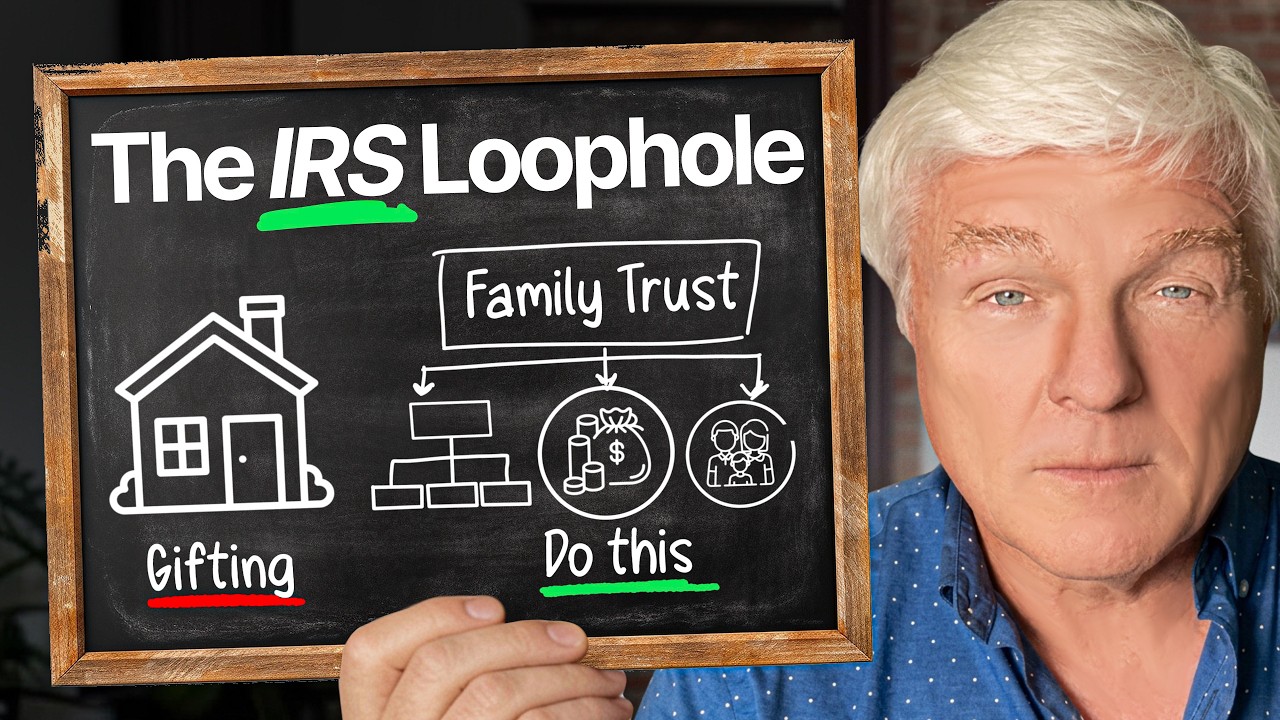
In this instructional video, attorney Jerry Taylor explains why transferring a home to your children while you’re alive is usually a costly mistake. He outlines four major drawbacks: (1) the capital‑gains tax burden that heirs face because the original cost basis is retained, (2) the five‑year Medicaid look‑back that can disqualify you from long‑term‑care benefits, (3) exposure of the home to the children’s creditors, lawsuits, or divorce settlements, and (4) the loss of other estate‑planning protections. Taylor then presents two primary, tax‑efficient ways to pass a house: (a) a revocable living trust, which keeps you in control, provides a step‑up in basis, avoids probate, and can protect the asset from Medicaid penalties and creditors when structured properly; and (b) a Transfer‑on‑Death (TOD) deed (also called a beneficiary or ladybird deed), a simpler, low‑cost option for single‑property estates in states that allow it. He walks through the practical steps for each method—locating the current deed, preparing the appropriate transfer deed (quitclaim or warranty), recording it with the county, and handling notarization and possible witness requirements. Finally, he stresses that the house is only one piece of an estate, urging viewers to also address powers of attorney, retirement account beneficiaries, medical directives, and other documents to keep the entire estate out of probate. The video ends with a call to action to join a free live workshop for a full estate‑planning roadmap.
Chapters
If you're thinking about putting your house in your kids' names to keep things simple, stop, please. It's one of the most expensive mistakes that you can make, and I see families lose hundreds of thousands of dollars to it every single year. Just last year, a woman walked into my office. She was holding a $180,000 tax bill, all because her dad signed his house over to her instead of doing it the right way. So unless you want a 6-figure tax bill as well, be sure to stick with me to the end of this video. Okay? Because I'm going to walk you through the 4 lessons and the 4 reasons gifting your house backfires almost every time and exactly what you should do instead. So let's get into it. Okay. Why gifting your house to your kids backfires? Well, the first reason is the capital gains tax that your kids will get hit with the moment they try to sell that piece of property. When you gift your house while you're alive, your kids inherit what's called your cost basis, which is what you originally paid for that home back in 1992 or whenever. So if you bought your house 30 years ago for $80,000 and now it's worth $500,000, the minute your kids sell it, they're going to owe capital gains tax on that entire $420,000 difference. Which can run them $60,000 to $100,000 in taxes that they never saw coming. But if your kids inherited that same house from you, instead of receiving it as a gift, the cost basis resets to whatever the house is worth on the day that you die, which is called a step-up in basis. And that just means that in that same example, if your kids inherited the house at $500,000 and they sold it for $500,000, their capital gains tax would then be zero just based on whether you gifted it or they inherited it. And I've seen families save $80,000 or more in capital gains tax just by holding onto the house and letting their kids inherit it instead of gifting it to them during their lifetime. Same house, same family, completely different tax outcome, folks. Second reason is the 5-year Medicaid lookback. If you ever need long-term care, you know, like a nursing home, or in some states, assisted living. Medicaid is what most middle-class families end up relying on to pay for it because nursing homes in this country cost, you know, they can cost $7,000, $8,000 to $12,000 a month. But the catch is when you apply for Medicaid, they look back 5 years with a fine-tooth comb at every transfer of assets you made. And if you gave your house to your kids in that 5-year period of time, Medicaid treats it just like you still own it and it disqualifies you from coverage for a penalty period. So what that means is you're going to have to pay back the value of that house until you be able to qualify for Medicaid benefits. That's called a penalty period. And once all that is paid in, then they qualify you for the benefits. So the house that you gave away to protect it ends up being the thing that has to be sold to pay for the nursing home. Reason 3: That's your kids' creditors and potential divorces that will become your house's problem and your problem. The minute you sign that house over to your kids, it legally belongs to them, which means now that house is exposed to anything that happens to your kid during their lifetime. If your son gets sued for whatever reason, the house can be pulled into the lawsuit. If he files for bankruptcy, uh, the court can force the house to be sold to pay off any debts. Same thing applies if your daughter goes through a divorce. The house can get split up in the divorce settlement and you might find yourself dealing with her ex-husband owning half the home you've lived in for 40 years. That sounds crazy, but it happens. The right ways to pass your house on. Now, the first option is a revocable living trust, and that is the gold standard for almost every family I work with. A revocable living trust is a legal structure that holds your assets while you're alive and tells the world exactly what happens to those assets when you die. You are still in complete control of everything while you're living. So you can sell the house if you want to, you can refinance it, change beneficiaries, or you can pull the house back out of the trust if you, if that's what you desire to do. The trust does not change your day-to-day life. One bit. You can think of a trust just sort of like a giant lockbox with your name on it. You put all your stuff in that lockbox, your house, your savings. You make that lockbox the beneficiary of your retirement accounts. You put all your important stuff inside and you keep the only key while you're alive, but you also leave instructions taped to the lid that say exactly who gets what when something happens to you. So my point is, the moment you pass away, the trust solves every problem we talked about earlier automatically. Your kids get that step-up in basis, so when they sell the house, they own little or nothing in capital gains tax. The house skips probate court entirely, so your family does not have to wait for that 9 to 18 months to inherit that house. And if you create an irrevocable trust and you put your home in there, there's no Medicaid lookback issued if it's in there for 5 years or longer. There's no penalty period if you needed that care in your final years. And the best part of a revocable trust is while you're alive, the house is still in your name through the trust, so all your property tax exemptions, they're going to stay intact. Homestead intact. Now, the second way to pass your house on the right way is a transfer on death deed. Now, some states call that a ladybird deed or a beneficiary deed. This one is a lot simpler than a trust, uh, and it works well if your house is really the only big thing that you're trying to pass on to your kids. You just file a simple form with your local land records office that handles, you know, the property records, and on that form you name whoever you want to inherit the house. It works sort of like a trust. You stay in full control while you're alive,, and when you pass away, the house goes straight to whoever that you named, again, with no probate court and no delay. So now the question would be, which one is the right one for you? If your house is pretty much your only big asset, your family situation is straightforward, and I mean absolutely straightforward, and your state allows transfer on death deeds, because some do not, then the TOD deed is a great option for some people. It's quick to set up, doesn't cost very much. But if you have multiple properties, retirement accounts, minor grandchildren that you want to provide for, or let's say you got a child with special needs, in those situations, the revocable living trust is going to be the better choice almost every single time because it lets you build in protections that a TODD just simply cannot, like keeping the house out of your kids' divorces and away from their creditors after you pass away. And right here, by the way, before I walk you through how to actually do all this yourself, if you'd rather be walked through the right way to protect your home and all your other assets, I'm running a free live workshop and it has helped hundreds of families keep their loved ones out of probate court completely. And the link to register for the workshop is the first one in the description, to this video. All right, so let's keep going. How to set this up the right way. Now, if you decided a trust is the right call, the first thing you need to do is find your current deed. This is the document that proves that you own the house, probably got it at closing. If you can't find it in your file, you can request a copy from your local land records office, probate court, or a county recorder, and there may be a small fee associated with it, or you can probably do it online. And then you prepare a new deed that moves the house out of your personal name and into the name of your trust. This is just typically a 1 or 2-page legal document that says, you know, that you, the homeowner, are transferring ownership of the property to your trust. The exact type of deed that you need depends on your state. Some states use what's called a quitclaim deed. That's what we do here in Alabama, and others would require a warranty deed. So this is the one step where I recommend either using a service that's set up to handle your specific state's requirements or working with somebody like me to make sure that it's done right. Because if anything is off, even something as small as missing, you know, a letter or something in the property description, the county can reject the transfer and you'll have to start all over. Now you take that new deed to your county land records office and record it. Some counties call it the Registrar of Deeds, some call it the Recorder of Deeds, but it's the same office. They do the same thing. There's usually a small recording fee, typically between $20 to $100 depending on your state. In Alabama, it's a little more than that, but once it's recorded, your house is officially in the trust and it is protected. If you're going to do the Transfer on Death Deed instead, the steps are pretty similar, really. It's just a little easier to do. You fill out your state's specific Transfer on Death Deed form. Which names you as the current owner and your kids or whoever your heirs are as the beneficiaries after you die. Then you sign that in front of a notary. And in some states, you might also need witnesses to watch you do that. After that, you record the deed at your county land records office, just like you would with a trust transfer deed, quitclaim deed, or warranty deed. The whole process usually takes less than an hour, usually costs under $100, but in some states it will cost more. Now, there is one last important thing I want to make sure to her that you know, whether you go with a trust or a transfer on death deed, that just takes care of the house. You've still got a lot of other stuff in your estate that needs to be handled also. Things like your powers of attorney, the way your other assets are titled, uh, the beneficiaries listed on your retirement accounts, your medical directives, all of that stuff needs to be set up correctly. And on some of those things, if you get them wrong, your family can still end up in probate court. Fighting over everything else that's in the estate. Even if the house transfer was perfect. I've seen families do everything right with the house and they still lose months and tens of thousands of dollars because they missed one of those other documents that I just mentioned to you. So if you want to make sure that you keep your loved ones out of probate court, click the first link in the description. To sign up for my free live workshop. I will go through the entire process start to finish, and you'll learn just how to set up your full plan in 30 to 60 days. If you've never done any of this before, and you'll walk away with a real comprehensive estate plan that actually will protect your family. So again, click the first link in the description to register. And if you want to learn how to put everything into a trust, then check out this next video right over here. Okay. All right. See you soon.