Bisexual In A Straight Relationship - Being Bi
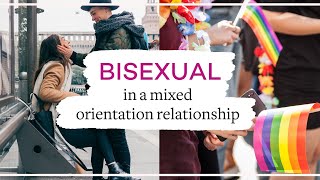
Vanessa and Xander Marin discuss why calling a relationship between a bisexual and straight person 'heterosexual' erases bisexual identity. They cover how to talk with your partner about it, what being an ally looks like, and whether monogamy has to mean giving up that part of yourself.
Chapters
I can't start a video. We wanted to round out Pride Month with a discussion about a topic that you don't hear about all the time. What do you do if you identify as bisexual, but you find yourself in what outwardly appears to be a heterosexual relationship? A 2013 Pew Research center study found that of people who identify as bisexual and in relationship, 84% of them are in a relationship with somebody of the opposite sex. So they appear to be in a heterosexual relationship. We'll get back to a little bit of a note about that language in a minute.
So that's like bi woman with a man or bi man with a woman.
Exactly. So there can be a lot of issues that come up when you're bisexual, but you're in this relationship that seems to other people to be a heterosexual relationship. So today we wanted to make a video that specifically addresses this situation.
So if you're brand new to our channel, then hello, we are Vanessa and Xander Marin. Vanessa here's a sex therapist, and we've been together for 13 years.
And we are here to give you the tools, tips, and techniques that you need to create a truly extraordinary relationship. Inside of the bedroom and out. So if that sounds interesting to you. Yeah, go ahead and hit that subscribe button right now.
Great. So according to a UCLA study, 50% of LGBTQIA people identify as bisexual.
It's a huge percentage.
Yeah, I imagine bisexual, among other things as well. But despite bisexuality being so common, people who are bisexual are far less likely than their strictly gay or lesbian counterparts to come out as bisexual. And so that. That is from a 2013 Pew Research center study. So this can lead to years and years of staying quiet about what feels like a really crucial part of your own identity. So when we were doing the research for this video, we found countless anecdotes from people who hid their bisexuality from their partners for years or are still hiding it from their partners. And we really want to try to help change this trend.
So let's talk about how to thrive as a bisexual person in a straight relationship. So first, let's get back around to talking about that language. A lot of people will say that these are heterosexual relationships because there's one man and one woman in it. But that kind of language actually erases the identity of the bisexual person. So we've learned to refer to these kinds of relationships as mixed orientation relationships. That way, you're making it clear that it's not a straight relationship, even though there's a man and a woman in it. Like that Person who identifies as bisexual, they still get to have that bisexual identity. Right. Regardless of the specific gender of the person that they happen to be dating at that point in time.
Yeah. So in this case, it's a person who's bisexual and a person who's straight. Hence mixed orientation.
Exactly. You're breaking it down for me.
Yes.
Super, super, super simple language. So what are the problems with being in a mixed orientation relationship? So the main one, kind of going back to what we just said about language there, is that a lot of people who are bi and in these relationships that see seem to be straight to the outside world. It can feel like you're not fully being able to be true to your identity. Like, your bi ness is invisible, because in a lot of ways it is. Right. So it's really important for both you and your partner to honor and acknowledge your bisexual identity. You don't become a straight person just because you're in a relationship with someone of the opposite sex. You are still a bisexual person. So talking to your partner about how you feel, being open and honest about your experience, this is really crucial. It's important for both you and your partner to acknowledge and honor your bi identity. Like, you want to be able to bring all of yourself to your relationship and have your partner see and love and honor all of you. So, of course, that brings up the question, what do you do if you haven't told your partner that you're bisexual? So we think that this is a really big topic that deserves its own entire video. So we can't give it complete justice here. But we did want to go over a couple of quick tips for anybody who's just starting to think about this question of, like, ooh, yeah, maybe I should have this conversation with my partner. So the first is to make space for a proper conversation. So tell your partner you have something important that you want to talk about. Carve out some time out of your schedule so you can really sit and have this important conversation uninterrupted.
Yeah. Make sure you do it. Not, like, right before you go to dinner, right before you got to take the kids to soccer practice. Like, make sure there's space and time.
Yeah. Then second, you can share it in the same sort of language that I was just talking about a minute ago, like, telling your partner that you want to be able to share all of yourself with your partner. You want them to really know who you are. So it's this sense of, you know, really in, like, true intimacy, like, having all of yourself be seen by your partner. Partner. I would also kind of gear yourself up to just acknowledge, like, this is something that deserves to be shared with your partner. It might feel a little intimidating or scary, especially if you've never told anyone this before, but you deserve to be fully seen by your partner. And then finally, I do want to acknowledge, you know, bisexuality is something that a lot of people, unfortunately, are still very confused by. It's really not that confusing, but unfortunately, a lot of people are. And so sometimes partners can take their partner's bisexuality as like, oh, well, maybe my partner isn't fully attracted to me, or, I'm not enough for my partner. You can try to preface this by just giving your partner that reassurance of, hey, just because I'm attracted to multiple kinds of people, that doesn't mean that you aren't enough for me. I want you to know this has nothing to do with you or our relationship. This is about me and my truth and me wanting to share that with you because you're someone that I care about. All right? So again, that is obviously a very incomplete guide to coming out to your partner, but we just wanted to share. Share a few tips. So what if you already are out with your partner? In that case, we just want to say, don't forget to continue celebrating and honoring your identity so you can celebrate your queerness however you want. But, for example, maybe it's something like staying active with LGBTQIA rights groups or watching LGBTQ films or volunteering with organizations in your community. Whatever it is that makes you feel like you're still connected, connected to that part of your identity.
All right, so what can straight partners of bisexual people do to be better allies to their bisexual partners? So a couple tips. First, affirm your partner's identity as a bisexual person. I think, you know, affirm it to them when they come out to you or, you know, from the very beginning of your relationship, if you. You're entering the relationship knowing they're bisexual, but also do it on an ongoing basis, I think, you know, it's part of someone's identity, so you don't want it to just kind of be, you know, lost over time. And if they do want to talk about it, make sure that they know that you are there for them, that you're always there to listen and try to better understand their experiences. Also, actively participate in the LGBTQIA community with your partner if that's something that they want you to do. It can feel really good to, you know, for your partner, for both of you to be doing it. Rather than it being like, oh, this is only a part of my partner's life. It has nothing to do with me, because you're in a partnership also. Another thing to keep in mind is that bisexual partners often can be really objectified as overtly sexual or lustful. And bi women in particular, unfortunately, are really fetishized in porn and in the media. So it's really extra important that straight male partners especially, especially don't just see their bisexual partner's identity as this kind of fantasy to be used for their own enjoyment, like they are a real person just like anyone else. And, you know, this stuff in the media and whatnot is, is separate. It's not about your partner. So, you know, at the end of the day, I think a lot of this just comes back to respect and understanding of each partner's identity. So, you know, make sure that you're regularly communicating about your partner's experience. Ask them if there's anything you can do to make them feel comfortable and just be there to share their identity with them.
All right, so now we want to cover another circumstance that can crop up. What do you do if you find yourself feeling curious about your bisexuality but you're in a committed relationship? So because there are so many bisexual people who don't fully come out as bisexual, I. Until they've been with a partner for a while, there are a lot of bisexual people who may not have ever experimented with same sex partners even though they are attracted to them. So again, we just want to clarify, like, there is this stereotype of bisexual people as being, like, hypersexual and that kind of stuff. We're not talking about that. We're not saying bisexual people just, like, cannot be satiated, but we are talking about the reality that this is this whole aspect of your identity that you may not ever have experienced, explored, but now you find yourself in this committed relationship and sort of feeling like, oh, you know what? What do I do here? So the first step would be to have a conversation with your partner about your shared expectations and boundaries in a relationship. So one of the questions that you might want to ask each other is like, is monogamy a shared value for us? So we definitely don't want to make the assumption that every single couple values monogamy or wants to have a monogamous relationship. There are plenty of people, people who don't, and that's perfectly valid. So, you know, maybe your partner might be open to letting you experiment. There might be certain guidelines or, you know, boundaries that you guys could set around that experimentation. But there may be plenty of relationships that can happily make space for you being able to explore your bisexual identity. There might also be, you know, things like opening up the relationship so both of you are free to explore your identity. Maybe you come out to your partner as bisexual and they actually end up coming out to you as bisexual.
Oh, I was just gonna say that too. Yeah. I think a lot of us just really default to monogamy in our society without really questioning. Is that something that we are really wanting to explicitly sign up for on an ongoing basis? So it is okay to have these discussions over time. It's not like you've said you want that once and your preference is not allowed to ever change.
Yeah, we also want to say, you know, being bisexual and in a committed relationship, it doesn't mean that you have have to open up the relationship in order to fully express your sexuality. So maybe things like, you know, just spending more time with other mixed orientation couples or engaging more in the LGBTQIA community could feel good to you, like going to more events together. Maybe it's even things like watching porn together, you know, watching more bisexual or lesbian or gay porn that could feel, you know, intriguing to you guys too. So we're not saying that any of these things are going to take away that curiosity, but maybe it's just a way to. To feel like you're at least engaging with that aspect of your identity, even if you're not physically taking action with it.
Yeah, I think it can be really good to just explore these ideas of things that you can do, because a lot of us just quickly go to this black and white thinking of, oh, I never explored this stuff. Oh, shoot. Well, the only way I could ever do that is if I was in an open relationship, which can't happen because we've totally signed up for monogamy or, or the only other way is like, we would have to break up. And so it's easy in that context to forget about these other options that we have available to us.
Yeah. And finally, I just want to say, like, it's okay to feel a sense of grief if you are in a long term committed relationship. You're thinking, you know what? This is my person. Monogamy is important to me. I'm not going to explore my bisexual identity. There's a sense of grief that comes along with that, and it is perfect, perfectly okay for you to mourn that. It doesn't mean you're not with the right person, you're not in the right relationship, you're doubting anything. It just means like this is a very real and important part of my identity that I'm never going to explore and I'm choosing that. I'm okay with that decision and I still feel a sense of grief around it.
And your straight partner may very well be able to relate on that with just the sense of grief being in a committed long term relationship that they won't get to explain floor with any other partners.
Yeah.
Again, that's something that all of us think about sometimes and it is okay to grieve that and that's something we can all relate with each other on.
Yeah. So at the end of the day, there truly is no right way to do relationships. There are so many healthy relationships that look completely different from what we've been taught to believe the right way is. So we hope you feel empowered to live your truth, whatever the hell that truth may be.
Happy Pride so that wraps up our video on being bisexual in a mixed orientation relationship. If you like this video, please give it a like Please hit that red button to subscribe to our channel. And while you're at it, hit the notification icon so you keep getting notified as soon as we post more.
And we have a free gift for you if you've ever been curious to know how often you should be having.
Sex, whether you're bi or not.
Yes, this is one of the most frequent questions that we get asked from people of all orientations, but the answer might be a little bit different than what you're expecting. So we have a free guide all about discovering the magic amount of sex that every couple should be having.
Go get it.
We'll include a link to that guide down in the description box below. Thanks so much for watching.
We'll see you next time.
More from Vanessa

Fantasizing about someone you know? Your brain isn’t betraying you, I promise! #marriagetips

If your initiation strategy looks a little like this, we made something for you.



If you’ve been feeling a little lackluster, pick one of these and try integrating it into your life!

Are you still doing THIS in your relationship? #marriagetips #relationshipgoals


Are you a fan of toys, but wondering if it's been affecting your ability to O without one?

To wake… or not to wake… that is the question 😴 #relationshipquestions #relationship #marriagetips

Is your socks life spontaneous? 👀 This is what we have to say... #relationships #marriagetips
