EPISODE 101: Is Gaming Hurting Your Relationship? Part 1 Of “I Love You But I Don’t Like You”
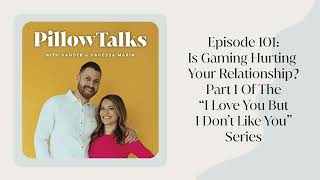
Vanessa and Xander Marin explore how gaming affects relationships. In their listener survey, 40% said gaming hurt their relationship, 40% saw no impact, and 17% called it complicated. They offer concrete steps: name specific grievances, schedule a calm talk, and set boundaries like chores-first or no-gaming nights.
Questions this video answers
EPISODE 101: Is Gaming Hurting Your Relationship? Part 1 Of 'I Love You But I Don’t Like You'
April 27, 2023
40%
6%
40%
Chapters
If you're the non gaming partner, like, you very well may need to have some boundaries around your own hobbies. So I think if you approach it in this way of like, yeah, how do we make space for both of these things? Then that can feel like a much better conversation rather than a, you're a gamer and I hate gaming. And let's make some rules about your gaming. Hello and welcome to the Pillow Talks podcast. We're your hosts, Vanessa and Xander Marin. I'm a sex therapist with over years.
Of experience and I'm just a regular dude. We share the ups and downs in our relationship while giving you step by step techniques for improving yours.
Make sure you subscribe for your weekly double date full of totally doable sex tips, practical relationship advice, hilarious and honest stories of what really goes on behind closed bedroom doors, and so much more. It's the sex education you wish you'd had. Thanks to Storyworth for sponsoring Pillow Talks. Give all the moms in your life a meaningful gift. You'll both cherish for years. StoryWorth and save $10 on your first purchase when you go to StoryWorth.comPillow today we are talking about gaming. Xander, you were showing me a reel like two nights ago about a game, a video game and its theme song. So I think today you have to come up with a Pillow Talks theme song. Like, if Pillow Talks was a game, what would the little music in the background be?
Oh, God, this is so hard because. So the problem here is that you have now cued me to think about that reel that I sent you, which was GoldenEye. Yeah, it was a joke about N64 GoldenEye. And like, it's like, oh, yeah, like, oh, like let's just come up with, you know, some mellow, some mellow pause music. And then the guy's like, here, I got it. How about this? And it's like super intense and they're like bobbing their head and like really feeling it. It was pretty, pretty funny. But now the problem is the only thing I can think of is the goldeneye game theme music.
Give it a shot. Pillow Talk.
How do we. How does our. How does our little jingle, our little song go?
Oh, God, I don't know.
Oh, man, Vanessa doesn't even know. Well, I'm just thinking of like a little 8 bit version of that. Like.
Follow Vanessa and Xander in their journey, their quest. Yes.
Fun, healthy sex tips.
Okay, so today we're talking about gaming, but I want to tell you a little bit of the backstory of this.
Episode because it's Like a whole theme that we're going to keep doing. Yeah.
So we originally had the idea to do this episode called I love you but I don't like you. I all about how do you navigate those tricky moments in relationships where it's like, you still love your partner? We're not talking about breaking up, getting a divorce, anything like that. But you have those seasons of life. Or maybe it's even just specific moments where you're like, I just do not like you.
I really don't like you right now.
Yeah. So to be honest, we were thinking it was gonna be more along those lines of, like, just little moments where we don't like each other. But we put up research questions on Instagram. We said, we're going to do this episode about I love you, but I don't like you. Tell us about some moments where you have loved but not liked your partner.
And we got so many various moments.
Oh, we got so many responses, but they were a lot bigger and heavier than we were thinking. We were kind of going into it thinking a little bit more like, minor annoyances. Like, it might even be kind of a funny episode of like, my partner always drops the laundry right next to the bin, that kind of thing. But there were some really big responses that came up. And so. So we thought, okay, wait, we gotta go in a different direction with this episode. And we actually had the idea to turn this into a series, the I love you but I don't like you series, and talk about specific themes that came up in your responses to that question. So we decided that the first edition of this series would be the gaming episode because there were so many responses to that original question that were all about gaming. The frustrations, the annoyances, the tough seasons that gaming is causing in your relationships. And it's also a topic that people have asked us to do for a very long time, like, please can you talk about this? So it just felt like a great fit for the first edition of this. But definitely make sure to come on over to Instagram. We are at Vanessa and Xander, Xander with an X. And let us know what other editions you would like to see. What's the theme that comes up for you around I love you, but I do not like you right now. So we're gonna get into gaming. We put up a who fresh set of research questions once we decided to go down this direction. And 40% of our audience said that their partner's gaming habits have negatively impacted their relationship. So we did this poll specifically for people where at least one of the partners games in the relationship. But that's a lot. I mean, almost half of couples where gaming is involved, it's causing issues. And we'll get into a few more statistics in a moment. So. So today we're gonna talk about the impacts that gaming can have on your relationship and most importantly, how to move past it so you can get back into the I love you and I like you stage.
But before we get into all that, we are going to answer another question, which is, do you love us and do you like us? In this week's review of the week? I haven't looked at it yet.
Wow.
We'll see. Do they love us and like us? So helpful to hear honest talk about societally taboo things. Okay, we're on the right track here. Oh, great. I've. I've. Oh, wait, wait. Sorry. I thought, I thought so. It says I love, but the O in love is a heart. And I initially read that as like they were inserting a heart as like an apostrophe. So it's like I've. No, no, I love with a heart. So, okay, great, we've checked off love. But do they like us? We'll see. I love listening to Vanessa and Xander break down so many different aspects of relationships and intimacy. They dove into everything from common societal discussions to things people are nervous to speak about. It's helped me so much when talking to my partner and given me a ton to think about personally and making sure I'm confident in what I want. And I'm asking for must listen. Clap, clap. I would say it's a love, light, love like situation.
You really committed to that theme, didn't you?
You know, I went for it. Gotta go all in, right?
Well, thank you so much for leaving this review. It goes so far in helping the podcast grow and reach new couples. So we really appreciate you helping us grow the podcast even more. We couldn't do it without you guys and we do this giveaway every week as a way of saying thank you for taking the time to leave a review. So here's how it works. Go over to Apple Podcasts, scroll down to the bottom of the main Pillow Talks page and you'll find the reviews section. You can leave a little review there and once you do, you are entered into our giveaway every single week going forward. And if you hear your review read in the podcast, shoot us an email@infoemtherapy.com let us know the username that you left the review with and you will get your choice of one of four of Our masterclasses. So for free. As our way of saying thank you. All right, let's get into it. So I think first what we need to do is talk a little bit about our experiences with and perspectives about gaming. Because I think you and I are coming into this with a bit of a bias.
Yeah.
Fair to say.
Well, I mean, or you could just say we each have our own inherent biases. Like, you know, you always have. It's hard to not have some form of bias, but we each have our own experience with this and therefore our own biases. So.
So we both were not allowed to play video games growing up, so we never had, like, a ton of experience with them.
Yeah. So for some reason, I was allowed to have a Game Boy at one point in time, but that was like, after there were like, you know, like in the N64 era, it was like, okay, you can have a Game boy. It's like 2D. It's like, not really. Yeah, there's nothing realistic.
We had an old school, like Nintendo, but we didn't get it until I was a lot later in age.
Once that day, it probably costs like 20 bucks to buy or something.
And we have not really gamed that much together. I did buy you an N64 as a Valentine's Day present one year.
Yeah, that was an amazing gift.
Yeah, we played like, Mario Kart.
That was the only game. That was the only game we had. This is the only game really worth playing.
We played Mario Kart. I think Mario Kart is fun. And I can play like, maybe three races. And then I'm done, and I'm like, okay, that was fun. Now I'm done with this.
Yeah, I mean, I can play Mario Kart a bit longer than Vanessa can. But, you know, I do recall in the N64, you. You had a good time. You know, it's like a fun social thing to do. Sadly, that was my apartment in San Francisco. It got broken into once over Thanksgiving, and they stole the N64. They left my roommate's brand new Xbox sitting right there, and they took my N64. I'm like, you can't sell this for very much money. Like, this Xbox was probably like 400 bucks. Who knows what happened there. That was sad. So my. My other experience with that is, yeah, I wasn't allowed to play games as a kid. So my experience, once I got old enough where, you know, like college or whatever, you know, once I was over 18 and making my own decisions, for me, I felt like behind the curve with video games. Like, I absolutely could have been like, all right, I'm gonna do all the stuff I wasn't allowed to do, or like, I'm gonna buy a gaming system for me. But like, my experience was like, you know, I could play like N64 because I'd go over to kids houses when I was younger and like, play Mario Kart, and I was good at that. But like, at that point when I was like 18, I remember like, one of my friends had an Xbox and like, I'd play Halo with him sometimes. And I was so bad because I had never played before. It was like. It was like the technology had passed me by and I was like. I was like, well, if. The only way I'm going to really have fun with this is if I really dedicate a lot of time to this. And I was in college and I was like, having fun doing things. It was just like, it didn't make sense to start gaming. It felt like I was too late.
Yeah, right.
And like, I couldn't really play new video games with people because I wasn't good at them. I, like, didn't have the muscle memory. It was just like. It was like, eh, it's not really worth it. I mean, honestly, I bought a. I bought a switch right before the pandemic started because I was like, hey, you know, this will be fine. I'm going to. I'm going to, you know, get myself something nice. But like, I tried to play Zelda and it took so long to get out of the training part of it. And like, I didn't play for long enough chunks of time together. I couldn't remember, like, what all the moves were.
Yeah.
And I, like, played for like, I got out of the training thing and started playing the game and was so bored. I was just like, I can't remember all the moves. I don't want to go back to that training thing. It took forever. Screw it.
Yeah, I just like, for me again, Mario Kart is fun. I can play it for a short bit of time. It's. It can feel very social. Like, I like being like a fun level of competitive with each other. Like, I'm going to get you at the red shell kind of thing. But it just. I tire of it quickly. And when we were doing the research for this episode and reading over people's responses, it really helped me realize that I have a lot of judgments about gaming. I think that I have. It's. To be brutally honest, like, it's always been something that has felt unattractive to me. Like, I was like, I could never date a gamer if a partner was, like, super into gaming. It's just. And, you know, watching you with your switch, like, I was just like, I don't want to have sex with you when I watch you play that.
Yeah, I could tell that you weren't into it. And that definitely, like, factored into my own decisions. Every time I thought about playing, it would kind of be this calculus of, like, oh, am I. You know, is this a good time to choose to play? Or, like, you know, I'd be like, oh, maybe I better wait till, like, Vanessa's out at an appointment or something so that, like, I'm not, like, distracting, you know, like. Yeah, because, yeah, every time you'd walk through the living room and I'm playing, I'll be like, oh, she's not really. She's not really into this. Yeah. At all. And so it's just like, it's not really worth doing it that much.
So there are a couple of things that come up for me about it. One is, I think what feels unattractive to me is it's like, it's such a solo activity. Like, the way that people's eyes can just glaze over and they get so lost in the gaming. Like, it feels very. I don't know, it's just not an attractive thing to me. But what I realized reading over these responses is a lot of people were pointing out, like, you know, gaming is a hobby, just like any other hobby. Like, we get lost in our hobbies, and why should gaming be treated differently? And that did make me really pause and think, that's absolutely right. I totally have hobbies that I get lost in. I mean, even, like, reading a book, you get very lost in. And even, like, this is a weird comparison because, like, social media or, like, being on my phone isn't a hobby, but it's the exact same kind of thing. It's that, like, looking at a phone and getting lost in it and having no connection to the people around you. Like, it's the exact same thing. So this did help me realize some of my biases around gaming and start to shift my perspective. So I'm grateful to you guys for. There is also one other wrinkle of this that we'll get back to in a little bit, which is the violent aspect of gaming. I realized that I had a judgment feeling, like, the vast majority of games are very violent. And I also was able to realize through doing this research, like, there are a lot of games, you know, like Mario Kart and Animal Crossing. And what was that, like, that cooking game that we played, like, one time?
Oh, God, I can't remember.
Overcooked. You know, it's like there are lots of other fun games that have nothing to do with violence, so I needed to remind myself of that. But I think there is something that feels uncomfortable for me about somebody spending hours of time, like, killing people in a fantasy land. And of course, there are a lot of really problematic video games where, like, you beat up women and there's like, you know, there's violence and misogyny and all sorts of creepy stuff. So it's like that aspect of it still makes me uncomfortable. But I needed to remember, like, that's not the only type of video game that exists.
Oh, yeah. I mean, that's. I haven't even really thought about the whole violence of video games thing in a while because I don't really play them. I remember when we were maybe teenagers, that was a super hot topic, right? Yeah.
It doesn't make kids grow up.
Yeah. But I think, you know, one of the things back then was it was like, okay, well, these games aren't really that realistic. Like, it's, you know, N64. It's kind of like a cartoon. But nowadays, man.
Oh, yeah.
These video. These new video game systems are so lifelike. It's like watching a movie. So, you know, back then it was kind of like, okay, yeah, I get the argument for it, but also it's like, pretty unrealistic. And I think we're living in a different era now, for sure.
Okay, so that's. That's just a little bit about our biases coming into this. And we just wanted to share that with you guys because it does shape our perspective in the episode. But I hope we've also made it clear that we really took a look at the research and what you guys were sharing with us and tried to open our minds. And I think that we did do a good job of doing that. So when we put up a poll on Instagram, that number that I referenced earlier, like, that 40% of people said that their partner's gaming habits have a negatively impacted their relationship. We also wanted to be fair in that poll. So the other options that we gave were it has a positive impact. So 6% of people said a positive impact.
Probably those 6% are maybe playing together.
Playing together? Yeah, couples who, like, play together, it feels like a good way to blow off steam together. 40% said it had no impact. So just as many people who said it had a negative Impact said no impact. And then we had 17% of people said, it's complicated. So let's talk about the frustrations and the challenges that can come up around gaming. So we did try to be careful with our question for this one as well. We said, if gaming causes negative consequences in your relationship, let us know. So we were making space for the fact that it might not be for everybody, but if gaming causes no negative consequences in your relationship, you're probably not going to listen to this episode. So that's why we didn't really go into all the positive ones. But let's share the biggest frustrations and challenges. So one of the huge categories that the responses fell into was quality time. So many partners of gamers said that gaming impacts the quality time that they're able to spend together. And in particular, a lot of people said they lonely. That was the most common theme across all of the responses that we got. I feel lonely. And I think we've talked about this before. Like, there's really nothing worse than feeling lonely in a relationship. It's like it almost feels worse than feeling lonely. Not in a relationship.
Yeah, because you're. Well, because you're like, well, I'm in a relationship to not feel lonely. Right. Like, that's a common theme when we're single. It's like, you know, okay, I'm having fun, I'm single. This is great. But then when. When you start feeling like I want to be in a relationship, it's usually you want to be in a relationship because you don't want to feel as lonely anymore. Right.
So, yeah. And not that it's our relationship's responsibility to keep us, you know, company 24 7. And we're never supposed to be lonely, but I think most people have had experience of that feeling of like, we just feel so disconnected. You know, we're not spending any time together.
Especially because one of the very common themes we heard from people is that when their partner games, it's not just for an hour or two here and there, that it's usually like four to six or more hours at a time, like all happening at once. And so I think that's like a huge differentiating factor between other hobbies. Like, you know, it's like, yeah, often we do things separate from each other, but it's like we do a little here or a little there, or it's like, oh, once a week I go fishing day or one. You know, once a week I go do this, you know, big long hike with my friend or something. Like that it's not like, you know, most of the time for most people. It's not like I'm going on a six hour hike five days a week with my buddies.
Yeah, I mean that was a very common theme. People said, my partner spends so much time every single day gaming. Like it's not just an hour here and there, it's like four to five hours. Other people said that they feel like their partner prioritizes gaming over them. So one person said, I feel like they give more time and attention to games and to online friends than to me. Another person said, I feel like they always put gaming first. It also really has a big impact on quality time at the end of the night. That was another very common theme. So one person wrote, we used to chat and connect at the end of the night, but now all they do is game. Somebody else said, my partner games in bed so I have to fall asleep to it. And a third person said, I always go to bed alone and they stay up gaming. Then they wake me up when they finally come in in at 3 or 4am so that's a lot of. I mean, yeah, it's like the, the volume of gaming and the way that it can get in the way of these super special moments. Like we just had that episode about bedtime, you know, nighttime stuff a few weeks ago about how that can be one of the most important connecting times for a couple is like having that intimacy before bed or in bed.
Yeah. And another thought that just came to my mind as I was hearing all these things is that also for the most part most people who game are like gaming on the tv. Right. And not like the tv, the TV on the, on the TV there on the tv on the television. And that takes up a lot of physical space in your house. Usually like it's pretty, it. I imagine most people, it's like sort of a front and center thing. It's not like, oh, it's just like happening in this room and you're not really aware of it. It's like be, you know, I imagine most people, it's like, God, it's like capitalizing a lot of attention and space and energy in the house. And so it's very, it's not, it's different in a way from my partner left to go on a hike or you keep using that example to go on an all day hike with some friends. They're not here, you know. Oh, I know they're out there doing something nice with their friends versus oh, they're here. But they're not here. You know, they're here, but they're, like, focused on this thing. And that's. I think that's kind of the challenge is needing to recognize that it's, It's. It is a bit different from another actually activity where it's like, oh, I'm leaving to go somewhere. I'm, you know, you. You get like, all the space and the energy of the house. It's almost, you know, it's kind of like energy vampire. Ish. Like, oh, I'm here, but I'm not here for you. And I'm taking up all this space and time and noise and all of that stuff that's challenging. Another example of the way that gaming can kind of get in the way of quality time or sort of capitalize on the. The space in your own space is thinking about it like this. It's. I. I think it's. It's kind of akin to, like, if you are in a band and your band practices at your house, let's say. Let's say your partner is in a band and they, you know, they practice for, like, four hours at your house. Like, that takes up a lot of space and energy. Right. Like, it would be totally within your rights as a partner to be like, hey, you know, like, it would be great if you guys could practice, like, elsewhere. And so I think that maybe that's something that we're not so aware of when it comes to gaming because you might be like, oh, well, I'm wearing headphones and like, I'm whatever, you know, not really. No one else can really see or hear what I'm doing, but it's like, you're right there. I think it's. It's obvious what's happening.
Yeah. So you're kind of coming up with, like, a new category here that I think is a valid one we didn't really think about before. But that. That idea of taking up space. So not only is it, like, it's cutting into the quality time that we could spend together, the connection that we have together, but it's also, yeah, taking up a lot of energy. And I think that's something that I've experienced before, like, being around people who are gaming, like, they are very sucked into it, but, like, they can get really intense, like, yelling at the screen. The sounds of gaming are really intense too. And like.
Well, now, like, multiplayer stuff, you're, like, talking in the microphone to your screen. Yeah.
You're talking to people. You're hearing the sounds of, like, things blowing up or gun shooting. So, you know, I think that there are a lot more conversations these days about parents and overstimulation. Like sensory overload. Like that's a huge sensory overload. If you're like, I'm just in my house like trying to do my own de stressing things or, you know, take care of stuff, and I'm hearing this just constant barrage of noise.
It's like, it's like an example that we, we are highly familiar with from the era that we grew up in. It's like, like secondhand smoke.
Oh, wow.
Yeah.
Dating us, these babies over here. Yeah.
Oh yeah. But I mean, it's just like that, it's like, oh, well, it's like I'm not the one, I'm not the one smoking, but like I'm still being exposed to the, you know, the remnants, the, the smoke. And you know, there are their own impacts on me that are maybe even different from the impacts on the smoker. I feel like that was the whole thing with secondhand smoke, is that like it's more dangerous or who knows? No one talks about that anymore because barely anyone smokes in the US Anymore.
Secondhand effects of video gaming. Oh boy. Okay, moving along. Another category that came up was mental load and responsibilities. So very similar to this idea of quality time. Like a lot of people referenced, my partner spends so much time gaming that they are slacking on household family responsibilities. So some people were saying, you know, my partner, it's like they don't have any space to even consider the mental load. And definitely a huge, huge number of people talking about the actual execution of tasks. Like, my partner doesn't hold up their end of the bargain. They're not doing their responsibilities, they spend all their time gaming. And so everything else is left to me.
Now I think I want to stop you right there because I'm sure that there are going to be a lot of people listening who maybe, you know, who are gamers who might feel a little defensive and be like, oh no, it's like, you know, it's not the game, it's not the gaming that is killing my productivity. You know, it's easy to get into defensive territory and start to try to pick this one apart of like, oh, well, you know, it's not the games that are preventing me from doing these tasks or it's like, it's more, you know, it's not clear what the tasks are. My partner isn't happy when I do them. But I think the important thing to recognize is that if you are in the midst of any type of struggle in your household around, like mental load, around what tasks are getting done. If there's a, if there's just an, you know, a weird energy between the two of you about like it's feeling like, you know, you are struggling to do certain things that you're responsible for. I think it's important to recognize that if you then throw in a whole nother layer of gaming, for example, of like you're spending X number of hours doing this, it is going to be very, very difficult for your partner to disconnect the two and be like, oh, okay, well, well, the gaming is totally separate from the chores and the responsibilities. So I think that as much as you might want to feel defensive or you know, try to say that it's a different issue, I think it's important to recognize like if you want to get, if you want to get into a better place, my recommendation would be take a pause on the gaming, cut that out of it so that there's not that association for your partner to make with it and focus on getting a handle on the chores, on the mental load, getting that stuff all figured out. Then you can think about how do I reincorporate the gaming stuff that I want to do in a healthy way to actually show that it's really, that the issue is not connected, Recognize what it looks like for your partner. Hey, you're struggling with these tasks and you're also spending X number of hours doing this other thing. So. So yeah, if that's your struggle, I would highly recommend just taking a pause, get the household stuff under control and.
We'Ll link to our mental load workbook in the show notes as well. We have a guide that's 25 bucks. It really helps you walk through like making a specific plan for this. Before we go any further, let's tell you a little bit more about Storyworth. We are really excited to be partnering with Storyworth because as is the case with anyone who wants to be a podcast sponsor, we insist on trying out the thing before we agree to recommend it. It's really important to us to like actually have that experience. So Storyworth initially reached out to us almost a year ago to be a podcast sponsor. And if you've never heard of them, basically how it works is that you sign up your loved one and every week they email them a thought provoking question and you can choose the question. They have this huge online bank of questions, your loved one answers. And then at the end of this year, Storyworth compiles all the questions or all the answers, the any photos that your loved one wants to include and they create this beautiful keepsake book that the whole family can share for generations. So we signed both my parents up for this and we are coming to the end of the year, a whole year of doing Storyworth and it has been so sweet and touching and wonderful. Like they really enjoyed. Sent them questions that I think they had never really considered. I know my parents very well. We like talk all the, hang out with them all the time. I feel like I know their stories but I would see. So as the person who signed them up, I got to see the story worth prompts come through and I got to choose them and all of that. So there were a lot of questions that I never would have thought to ask. Like one of them was what did you have a car growing up? And for that one I was like, I don't know if I really like care about that answer but I sent it through and then my mom had this wild story about her first car and like all these interesting experiences she'd had in it. It was like, wow, I never would have even really thought to ask her that. So StoryWorth is offering $10 off your first purchase at storyworth.compillow I just have really been enjoying seeing my parents do this. They've really been enjoying it and I'm so excited to get to the end of the year and see this book that they've created. Something that me and my siblings will just get to cherish for years and years to come. It's just, just, it's really special and it's a very meaningful gift. So if you are looking to give the moms in your life a meaningful gift, you'll both cherish for years, check out Storyworth right now. For a limited time. You'll save $10 on your first purchase when you go to storyworth.com pillow that's S-T-O-R-Y W-O-R-T-H.com pillow to save $10 on your first purchase. The next category of responses mentioned parenting. So similar to like the responsibilities around the house. But we wanted to pull this one out specifically because so many people mentioned it. Like one person wrote they ignore our toddler when gaming because they get so sucked in. Another person said, when our one year old is awake and dad is gaming while mom is on baby duty, I feel like I'm parenting alone.
Yeah. So I mean obviously this is a bad situation if it's like directly impacting that load of like who is responsible who's actually parenting or just like it's quality time that you could both be available for your kid. And so I imagine that this one also really feeds into a lot of the other stuff that we heard of, like, oh, well, my partner, you know, games in the middle of the night. Because it's like, you know, people are like, okay, well all right, you know, I'm a parent, I can't do it during the day. And that's tricky. It's a domino effect. It's like, okay, fine, well I won't do that. So then I will do it another time. And then that has other impact pack. So I won't get into my suggestions. We'll save that for the end. But I think that's an interesting one to remember because at first I'm like, God, like why are people just playing in the middle of the night?
Like, that's seems the only time that.
Seems to be done. But then it's like, okay, well that's the only time available. So I'm interested to carry that one out a little later on.
Okay. And finally we had a couple of miscellaneous responses that we thought were interesting and wanted to read. The first was somebody said it's kind of a turn off to see my partner playing video games. It makes them seem like a kid to me. So we're gonna loop back to this one later when we get into our tips. And then there was also this theme of emotional escapism. Like a lot of people were struggling with feeling like their partner wasn't handling their emotions in a healthy way. They were turning to video games to relieve everything. And I think there is a particular dynamic here when we're talking about men playing video games. You know, we have talked before. We actually have a podcast episode about it that I would definitely recommend going back and listening to. That is episode 80, Be a Man and talk about your feelings. In that episode, we talk all about how men are given really crappy socialization about dealing with their emotions. And so video gaming can be. Video gaming. Wow, that sounds so old. Gaming.
Video gaming.
Gaming for a lot of people is a way that they process and manage their emotions. And it might not be the healthiest thing for a lot of people. So.
Oh yeah. So it's like, oh, like I am feeling anger, but I not sure how to identify that. So I'm gonna go play a really violent game as a way to kind of like, you know, process that anger or, or play it out in real life or fake real life.
One woman shared. I was in a Long term relationship with someone who definitely used video games as an escape from everything, including our relationship. I would come back to our bed from the bathroom after a rare moment of physical intimacy and not even be dressed yet, and he would already be back at his computer. It felt extremely lonely, like I was living alone, like I was always interrupting something to have a moment or talk or be together. Our relationship ended for a lot of reasons, but his inability to put effort into our relationship the same way he put effort into his computer was a huge factor. So I think that covers a lot of the categories that we have discussed.
Oh yeah. I mean that, that brought me back to the quality time one even where, you know. Yeah, that, that's sort of that effort thing because it's like, it's like, yeah, if you are seeing your partner like kind of ever present in your home gaming, it's like you're seeing them put a lot of effort, a lot of passion into this thing that they are doing. And if you are not seeing them put that same level of effort or passion into your relationship, into parenting your kids, into doing the chores, you know, or whatever, into doing their job, starts ringing alarm bells, right? You're like, wait, something, something is wrong here. It feels like they are prioritizing this other thing that is not necessary for survival. It's kind of like an extra add on a fun thing that you can do. So it's like, whoa, like something feels really off. And then, yeah, of course you feel super alone. Especially if it's like, yeah, they're choosing that over me.
Yeah, I mean, that idea of like coming back from the bathroom and your partner's already at the computer, like that just that that's a dagger, right?
Oh, God, I feel so sad thinking about that.
So then we turned the tables and we wanted to talk to gamers about their habits again. We were really trying to like, move away from our own biases and try to come from a place of like, listening and curiosity. So we put up a question on Instagram and we said, like, if you're a gamer, what do you wish your partner understood about your gaming habits? So we wanted to give the gamers a chance that. Speak up. So there were three big themes that emerged in their responses. The first one was this idea that I kind of mentioned earlier that it's just a hobby, just like any other hobby, and that it's simple. But it was a big light bulb moment for me reading over this. Like, one person wrote, video games are like books people play to be immersed. No one gets Mad about books, though. And that was such a great comparison of, you know, books are immersive as well. Like, I can totally lose myself in a book. I can be, like, very lost. And, you know, just in that world. So why do we need to, like, look at video games with a level of judgment that, you know, I don't. I think it's pretty safe to say people don't judge other people for reading books.
Yeah, no, I mean, I don't know how you were when you were a kid with books. I know my cousin, for example, he would get so immersed in books that, you know, I was through his teenage years that, like, I mean, I, like, my aunt, like, his mom would basically physically tell. It would be like, hey, if you need to get his attention, you actually have to physically touch him. It's the only way that he, like, he. He can't hear you when he's reading. And like, yeah, like, that definitely happens to people. And it's like, well, yeah. I mean, is. Is that problematic that you become so immersed in something? It's like, it's hard to. With, like, a book. It's like, it's hard to make that judgment of, oh, well, that must be a problem because you can't hear what's going on in the outside world. But with video games, then it's like, well, God. God, is that problematic? So, yeah, it's like, is that fair to. To. To make that judgment on one but not the other?
Another person said, my partner is always watching things I don't like. How is me gaming any different than that? And similarly, a different person said, the criticism feels hypocritical when my partner spends way more time on Instagram. So it's sort of.
That's fair. That's. That's fair. If it truly is. You know, if we're talking about equivalent times, I do think, you know, well.
I mean, I think the basic idea here is, like, we don't need to like each other'. Like, it's healthy to have different hobbies. You know, I don't love surfing, and that's okay. Like, it's healthy that you get to have your own time. You do that. And I don't judge you for enjoying surfing. Obviously, any hobby can become problematic. If you were surfing for six hours a day, every single day, and, like, never here with me or having any quality time, yes, that would be a problem. But I think the basic nugget that these quotes are pointing out is, you know, it goes both ways. Like, I don't really like your Hobby or. I don't like the way that you choose to spend your time, and that can be okay. Instead of us, I mean, we don't want to send the message of, like, everybody just judge your partner and they should judge you right back. That's the solution. But. But I think if we can try to recognize, like, it's okay for us to not like the way that our partner spends all of their time, that's okay.
Okay. Yeah. Yeah. Well, I mean, one other person said, this is like my gym time or any other activity, but it's not treated the same. Yeah, I mean, that. That's an interesting one. It's an interesting one. I mean, my first thought when you started talking about surfing was, I'm like, yeah, well, I am. I. You know, I do spend a lot of time surfing. And. But the reality with surfing is that it's like, doubles as. It's a hobby. It's also like an exercise.
It's like meditation.
It's, you know, it's meditative. It's being out in nature. It's like, It's. For me, it's checking a lot of boxes that other people might do all those things individually. You know, someone might be like, oh, I spend half an hour meditating every morning. I go to the gym for an hour. I go, you know, on a walk for an hour or something like that. And for me, I'm like, oh, well, you know, that kind of fills my cup in all those areas all at once. And, you know, I don't know. I don't know. I don't play enough video games to know, like, is that the same thing?
But a tip that I just added to our tip.
But, you know, hey, if. If it's like. If it's like, VR and you're doing, like, the. Oh, my God, what's that?
We beat Saber.
Oh, yeah. Hey, if you're doing two hours of Beat Saber a day, like, I'm guessing you're fit, because that is hard. Sorry, I just came in. I just came in hard with. With the swearing. I don't think I. I've sworn the whole episode. I was just talking to a friend yesterday about how he wants to swear less. So I'm a little more aware of it coming out of. Coming out of my mouth. But, yeah, I mean, I think that. Yes, there's There are definitely some. Some shades of video games. Is it like. Yeah. Is it an active game? Am I, you know, is it good for my body versus am I just sitting on the couch playing Call of Duty? Sorry to all the Call of Duty people. I just called you out.
Well, hold on a second here. I'm actually going to come to gamer's defense because.
Let's do it.
Okay. Yes, it is good for us to have hobbies and spend our time doing things that are healthy for us and good for us. But like, does every waking moment of life need to be spent doing something productive or healthy? Like, no, absolutely not.
Not at all. But then I think this gets back to reasonable boundaries of sort of time limits. Because I think this is a great argument. If you're like, if you're like, like, even if you're like, I spend an hour, seven days a week gaming, I totally get this argument of, hey, you know, it's like my gym time. Like, it's just, it's just a me time thing. Where I think this argument starts to get sketchy is if it's like, I'm going to stay up all night, you know, I'm going to stay up all night playing with all my friends and like, not get to bed till 4am and then I'm going to be super tired the next day. I'm not going to be able to, you know, show up the same way for my kids. I'm not really, I'm like, I'm going to forget to do some tasks, asks that kind of thing. Or like, you know, I'm gonna, you know, I'm gonna be like on the couch instead of, you know, playing games, instead of being with my partner the, the rest of the night and having any connection. That's where that starts to get a little tenuous. Because I mean, the same, we hear the same thing about the gym from people. It's like, you know, there, there are points where, you know, too much gym time can be problematic. It's like, hey, my partner goes to the gym for three hours every single day, right when I want to be cooking dinner and like having family time.
Yeah, healthy.
And that gets problematic too. Like, even things that are healthy can get problematic. So it's just, it's a, it's a matter of shades. Like, this is a great argument. I'm totally with you on this one. If you're keeping it within a reasonable timeframe and it's not, you know, impacting other people and impacting you.
Okay, the next category of responses from gamers was stress release. And this was actually the most common response. People just said, like, it's just an outlet for stress. It's a way for me to unplug and clear my mind. Someone Said so that I can offer my partner a more focused and present me. Another person said, it isn't the same as any other leisure activity. It's a different kind of relaxation and stimulates a part of my brain like nothing else. And there have also been some really interesting MRI studies that have been done on men and women. They weren't done on any non binary people, unfortunately, but on men and women during gaming sessions. Found that the brains of men get more activated than women while playing. And the last category of responses mentioned connection. So a lot of people, and again, a lot of men, this kind of going back to that whole emotional processing and stuff. A lot of men said, it's one of the few ways I have to connect with friends. So let's talk for just a minute about the violence aspect of video games before we move into the tip. So we were kind of talking about this a bit before that. There can be a big difference between Animal Crossing and Call of Duty.
Look at you calling out these video games.
I know.
Do you even know what Animal Crossing is about.
You?
I don't either. I've never played it in my life. I think I've been in situations. I've been in situations where I could have watched somebody play Animal Crossing.
There's nothing worse than watching somebody play video games.
And I was just like, no, I'll go in the other room.
Like, not fun. I would guess you're making them cross something like a river. Is it like Oregon Trail? That. That is a game that I used to play, Oregon Trail. Does that count as a video game?
Oh, yeah. On the. On. On the floppy disk. And the old.
Hell, yeah.
Oh, my God.
The Apple IIe computer dysentery. And the whole party died.
Oh, yeah. And you had to, like, blow. Yeah, you had to, like, blow on the floppy disk. Sometimes when you stuck the floppy disk in the computer, like, wouldn't come on. That was the original, like, blow in the console thing.
So maybe it's like that you're like trying to get across the river with your animals.
Yeah, it could be. Yeah. Let us know. Let us know what animal. Can you give us the most concise description of animal crossing possible without actually showing you playing it?
Please. So we did a little bit of research and we found that 85% of video games do involve some type of violence. And like Xander was saying earlier, this was a very hot and continues to be a very hot and button issue. Like, does playing violent video games lead to somebody acting out and being more violent? And this has been studied a lot. There's really nothing conclusive still that points to this. So it's all just one big freaking murky territory. But I think for me, I just go back to what I was saying earlier. Like, to me, it just, there is something uncomfortable for me about violent video games. Like, I don't even like to watch movies and TV shows that are super violent. Like, I think we have become decent, desensitized to seeing somebody just like blow up or get shot. Like, that's a really big deal. Somebody is dying. That is someone's mother, father, daughter, son. That's their last day on earth. Like, I get that these are movies and they're video games. They're not actually real people. But like, I don't know, to me there's something like, I just wouldn't, I wouldn't feel comfortable with you spending multiple hours a day, every day, like, pretending that you're killing people. I just, it just feels off to me.
Yeah, I mean, I think that there is, there is a difference. And again, it's not, it's not like saying one is okay and the other is not okay. There's, there are a lot of shades of gray in this. But I do think there is a difference between just watching a movie or TV show, say like watching something that is violent versus participating in something that is violent. And I'm not saying it's, I'm not saying, oh yeah, like carte blanche to just watch all the violent TV shows constantly. But I think that there is, is, there is a bit of a, there's a bit of a choice in watching them. I'm. Okay, I am, I'm choosing to watch this violent show. I know this, I know this is unrealistic. And yeah. And also, yeah, I do choose something. I think. You know what, I don't want to watch that. This is getting really bloody.
Like Game of Thrones.
Yeah. Like, I don't want to watch this part where they cut the heads off of each other or, or whatever. But I do think that, you know, watching something you kind of go into and going, okay, I know that this is, I know this is not real and, and blah, blah, blah. And of course with video games you can do the same thing. I know this is just a video game, but I do think that they're. You're adding on an additional layer of stimulation which is you are doing it yourself. You are playing it out. I just think that there's a bottom line difference in the level of participation versus I'm choosing to watch this thing. I'm not involved in it at all. Versus I am choosing to watch. Watch something that is directed by what I am doing. Like, I am shooting people and creating an outcome.
Yeah. And I think for me, there's a real discomfort with, like, misogyny that's in it as well. Like, where's that. What's that game?
Grand Theft Auto.
Yes, exactly.
Is that still a big game or. I mean, that's been a game forever.
But yeah, I mean, there was always stuff about like, you're trying to, like, beat up women, and it just was gross and creepy, and I. I don't like that. And I would. Yeah, I wouldn't feel com. Even if you were telling me, like, it's a stress release and it's a way I connect with my friends, and it's just a. Like, I'd be like, no, I'm sorry. That just, like, doesn't feel healthy or okay to me.
Well, I mean, it's. It's kind of like if you were like, oh, well, the way I connect with my friends is we. Is we.
We degrade women.
We degrade women together, but we're not doing it to their face. We are just talking about it together. And we know it's just locker room talk. Oh, God. Yeah. That, like, that doesn't, like. You know, I don't think that. I think that that that was an excuse that was valid for a long time, and it's not anymore.
And this is actually something that's come up for us completely separate from gaming. Like, you have shared with me conversations that you've had, like, in your guys chat, like, text chat that you guys have, where I'm like, that's not okay. The way that you guys are talking about women is not okay. And, like, you and I have had conversations about you, like, saying something. So it's like, this is a. It's not just a video game thing. It's also just. Yeah. A broader thing. So we're basically with this little section of the podcast here, just opening up a big fat can of worms, and we have no concrete answers for you other than we are uncomfortable.
Well, hey, the real question is because you said 85% of games, approximately, have some type of violence. Does. Does Mario Kart fall into that category? I'm guessing it does because you shoot each other with shells. No one d you. There's bombs. You fought you. You go.
You do have, like, lives, though. And yeah, you are, like, shooting the shells at each other and making each other spin.
Yeah. I mean, in battle mode, you are killing each other. But in race, you can't, you know, in the race, you can't die. That little hook guy comes, picks you back up, he saves your ass every single time.
To me, it doesn't feel like a violent video game, but I, I do see that they are. There could be some gray area there.
Yeah, well, I mean, that's always been my thing of like, you know, Nintendo stuff. It seems like the Nintendo vibe in general is like, it's like good graphics but, like, not realistic. Whereas, like, Xbox and PlayStation stuff, it's like, let's make games that look like real life. So, you know. Yeah. If you play the latest Mario Kart, it does not look like you're racing a real car. Like, they've gone to great pains to make it look as unrealistic as possible, but who knows?
All right, let's move into the tips. So what do you do if gaming is causing issues in your relationship? So I think the first step that I would start with is to examine your own judgments about gaming. So this is coming from my perspective as somebody who's realizing they have had a lot of judgments about gaming. A lot of them have been very unfair. So for me, it's been really useful doing this episode to be able to take. Take that step back and realize, like, ah, I had some unfair judgments. And I think a lot of people, if you're not a gamer as well, like, you probably have some of your own judgments. So take a little bit of time to think about that. And on the flip side, for the partner who is the gamer, to take a little bit of time to examine your relationship with gaming, like, does it feel genuinely healthy to you? Like, sure, it might feel like a stress release, but there are lots of things that feel like stress release that aren't really healthy. So does it actually feel healthy to you? Do you feel like you have a healthy relationship with gaming?
Yeah. Or it's, you know, the thing that I think of is like, you know, do you. Yeah, maybe it feels like a relief in the moment as you're playing, but then you stop and the question is, do you feel like, do you feel like, oh, great, cool, now I can just go off and do whatever I need to do without thinking about gaming at all. Or are you like, like kind of secretly wishing, oh, I wish I was still. Like, oh, I wish I was still playing. I wish I didn't have to go to bed because it's 4am now or. Or whatever. And that's maybe a good indication that it's like, it's kind of maybe gotten under your skin a little more than you may have given it credit for. It's like every waking hour you're thinking, okay, when can I. Like, when can I get back to the game?
Yeah. At the very least, I would say, do you have other hobbies or habits. Habits in your life that can feel good for you? Like, I, I think you could probably get into a dangerous territory if gaming is the only stress relief that you.
Have, or you're choosing it over other options available, like, oh, yeah, like, I'm not gonna go on that hike with my, with my friends this weekend because of this gaming event. Or I don't know.
Okay, so if you are the partner who is feeling frustrated by your partner's gaming habits, your next step is to get really clear on, on the specifics of what's bothering you. So it's very easy to just say like, oh, I hate your gaming, it's so annoying, or it's getting in the way. But that's not gonna help you have a productive conversation with your partner about it. You have to get clear on, like, what exactly is bothering you and what would you like to see change? And this is another tip that I kind of learned in the process of going through this episode. Like, I just had that overall judgment of, like, I don't know if I could really date a gamer, but I hadn't drilled into what other specifics that come up for me. Yeah, this has been useful for me.
Yeah. And I can imagine that this is a challenging dynamic that comes up with a lot of people is that, yeah, it's like, for one partner, it is frustrating. And the other partner, the gaming partner, knows that. They know there's some tension around this. But my partner's never been able to clearly state, like, why it is that they don't like, like my gaming or you know, what it is specifically that's frustrating them. And so when you, in the absence of any specific, like, hey, this is, this is bothering me because of xyz, it's really easy for you to just turn that into, oh, well, they're being unreasonable or like, or like, this is bullshit because, you know, it's just a bias or they don't understand or something like that. So that's why I think it's so powerful. I know it can feel challenging to actually have to think of a specific. Like, this is frustrating to me because it takes up a lot of space in my house and I can't get away from it. But I think if you're able to describe it in those clear terms, it's so much easier for the gaming partner to hear and not just pass that off as, oh, well, that's just. That's just like a thing. Or like, they just don't. They just don't understand me.
Exactly. Next tip is one that we give pretty much anytime there's something tense that you need to discuss, talk about it separately in a quiet moment. Not when things are tense when you're in the middle of an argument. Like, you got to set aside some time to talk about your game separately.
You don't mean separate, like, like talk about it with different people. You mean talk about it together, but in a separate, separate moment.
Yeah, when you're not arguing about gaming. Next, we want you to hear each other out. So share your experiences. What are the benefits that gaming gives you? What are the frustrations that it's causing? Hear each other out and make space for both of your feelings. This is a classic example of an and situation. We always talk about how two things can be true at the same time. One partner's experience doesn't invalidate the other. So make space for those feelings then. The main tip that we really have for you is to create boundaries around gaming. So we asked our Instagram audience if you currently have any boundaries. 30% said that they do, 47% said that they don't, and 23% said that they wished they had some boundaries in place. So this was actually something that we talked about with our team because we have some team members who are gamers themselves or in relationships with gamers. And the boundaries conversation was the most useful conversation that we had about this. So they, yeah, they talked about using boundaries to create. Create both the room for your partner to unwind, to have a hobby, to have the stress release, but also make sure it's not impacting your relationship and your family.
Yeah, I mean, I think the, the real key here is that we're not talking about just imposing boundaries on the gaming partner, because I think then that that creates sort of like a, a parent, child type of arrangement or like, you know, it. It creates an implicit judgment on, on you're doing something bad and we have to limit what you're doing. We're talking about boundaries for each, for each partner. Like, so that each partner gets what they want. So having fair boundaries so that the gaming partner gets to feel fulfilled and gets to do what they want to do. And those same boundaries are meant to protect the other partner so that they are able to get what they need out of the relationship in terms of quality time, in terms of parenting, in terms of terms of mental load, in terms of bedtime or whatever it is. I think that's, that's so much the key that it's like it's a 5050 thing. Those, the boundaries are as much for the non gaming partner as they are for the gaming partner.
Exactly. Yeah. So it could be a broader conversation about how do we make the room for our hobbies and for our relationship. And if you're the non gaming partner, like you very well may need to have some boundaries around, around your own hobbies. So I think if you approach it in this way of like, yeah, how do we make space for both of these things, then that can feel like a much better conversation rather than a, you're a gamer and I hate gaming and let's make some rules about your gaming. So broader conversation. But for example, like here are some of the boundaries that you might want to create. Like do we want to make sure that certain responsibilities are accounted for before gaming or before any sort of engaging in hobbies? So maybe there are specific household chores, maybe they're parenting things. Obviously this is going to be different for every couple and every family, but maybe there's like certain days or times of the day that it just really doesn't work. So kind of having that conversation of what needs to be done first, what needs to be prioritized over gaming. And I think you can also approach this conversation from the standpoint of like, look, our lives are real, really full and busy. We have a lot of stuff on our plate. So like, how do we make sure we're making space for everything and really prioritizing the things that are the most important.
And I think here the just the really important thing is like for the person who is the gamer is like this is, this is a chance to really take some ownership like over those things. And like I think the, the key here is to not look at it like, oh God, I can't do the thing I really want to do until I do these dumb chores. Like if, if that's your mindset around it, then well one, like that's just a straight up childish mindset that's like, that's like, you know, that you, you're creating a like mother child or like parent child dynamic of like, oh, I don't really want to be doing this but, but I guess I have to. And yeah, like if that's the way you're thinking about it, it's gonna be a messed up dynamic in your Relationship, no matter what. I think if you can get to the point place of, hey, these are the things that I get to do to support our family. These things are the most important thing in maintaining my household and maintaining my relationship in, you know, helping my kids out and, you know, so, like, these are, these are things that I get to own that I do. And once I do those things, then I get to start thinking about what are some extra things that I get to do to make me feel good or to have my time or whatever. It's going to be so much healthier. Yeah.
Another tip is to think specifically about when you want to have your quality time. So a lot of people mentioned bedtime and this is a great opportunity to have a little guideline around here. So maybe you guys decide, hey, we're always going to go to bed together at the same time or we're going to spend an hour around bedtime together. That way you're making the space for you guys to have sex, to cuddle, to watch tv, to talk about your days, whatever it is that you're like prioritizing that and then maybe your partner can game after that or something like that.
I think, yeah, it's so powerful just calling this out because I think so many of us never talk about this and then we get these ideas or we get these expectations just based on what we see in movies, on tv, what we hear about other couples doing of, oh, well, it should just be assumed that we get ready for bed together. Or it should just be assumed that, oh, around bedtime is when we would be having sex. Sex or whatever. And then you can get into these places, you know, many months or many years down the road where those expectations that you never actually set as clear expectations start to be missed and you're feeling like, oh, God, well, like, you know, why aren't, why aren't we ever having time before bed? Or like, my partner must really hate me or whatever. And it's like in reality, you guys just, you never talked about those things, like, call them, call them out. Because the reality is for some people, you may, it may not feel like, oh, that hour around bedtime is the time that I get the most connection out of hanging out. You know, it might be like, oh, actually I would much rather have an hour together in the morning or whatever. So just talk about what is it like for each of you and yeah, what are the expectations. I think it's so powerful to don't just skip that and assume that we all have the same expectations.
Another option could be to have specific no gaming days. So maybe it's something like one day during the week. Maybe it's the weekend. Again, this is going to be totally different depending on your family relationship, your schedules. But it can be useful to have certain days that you just know gaming is off the table. One of our team members mentioned they have a rule where holidays and birthdays are no gaming days. And I'm like, oh, that makes a lot of sense. That's very simple. I think that's a great boundary to have in place.
Yeah. And actually, this is really interesting with the last one about expectations is like, as much as you might feel like, God, it should just be. It should not even be a question that you're not going to game, like, on our son's birthday or on Christmas Day or something. I can imagine there's that temptation of, like, I shouldn't even need to ask for that because it seems so common sense. But I mean, here's the thing. Just talk about it, set the rules, and then, like, you don't. You don't have to talk about it again after that. But I think it's just. It's so important to. To just get it out there. Like, what. What is it that you're assuming are, you know, kind of like, no nonsense, no gaming days? And then, yeah, I think for the. For the gaming partner, it's like. Like it's an opportunity for you to really start to value those days. Hey, this is, you know, this is a family day. And that's the most important thing to me, rather than, oh, this is the day where my partner told me I'm not allowed to game. Like, if that's your perspective, it's just not, like, it's not gonna work.
Yeah. I think there's also something to be said about really focusing on being present with your partner. Like, if you guys have really great quality time where you feel connected to each other, you truly feel present with each other, PR. Prioritized by each other, you're gonna have so much more patience overall for each other's hobbies. It's if you're spending a ton of time on the hobbies and no actual quality time together, that it's very easy to blame the hobbies. And one final boundary that one of our team members mentioned was having the ability to just ask your partner not to game at a certain time or a certain day. Like she was saying, you know, sometimes I'll just have days or moments of where, like, I just need my partner to be present and there with Me and I ask for that. So I think that's always fine to ask for again, it's all about the tone and the delivery. It's not a like you're always gaming. I just want two seconds of your time. It's like, hey, I'm having a day today. I would really love for us to just be able to be present with each other. Would you mind not gaming today or would you mind not gaming until later? Whatever it is, but like just being able to communicate that with each other. I thought that was really helpful to be able to do.
Yeah. And I also imagine that this, this, you know, it could be that hey, we are, we are allowed to ask for exceptions in either direction to whatever the rules are that we create because we understand that sometimes there are gray area situations that come up. So yeah, like it might be like Vanessa just said where it's like, you know, the non gaming partner is allowed to say, hey, you know what, like today I just really, I just really need you and I would love to have your full attention and have you not do any gaming today. And I could also see a situation where you know, okay, I don't know, this is where my limited knowledge of gaming is really showing. But say, you know, you're the gaming partner and there's you know, some like big like multiplayer social fun event, some special thing that you want to have the opportunity to be involved in and it's happening on a day or a time that is typically like a non gaming thing. Like yeah, like you know, ask, ask if your partner's open to you know, making an exception on that day or switching it up like oh, we're going to swap days or, or something like that. Like I know, you know, when it comes to surfing like you know, I don't surf when we have like work things happening or whatever. There's typically a time that I'm always home by and every now and then you know, I might ask for an exception. Hey, there's, it's going to be, it's going to be super, super. It's been flat for weeks and we have a huge sweat well coming and I'm you know wondering like, you know, if we'd be open to us changing this meeting or something so that I can have a little more time.
We have a guideline that you go surfing once on weekends and spend one morning on weekends home.
Yes.
And like that's another area where sometimes you ask for exceptions here too. So yeah, it's just being able to talk about this openly and navigate things together as a team. All right, well, that is our episode about gaming. We hope this has been useful. It's been a new topic for us to talk about.
Yeah. How do we do?
We've learned a lot. We've learned a lot. So let us know what you thought. Come over to Instagram, Vanessa and Xander with an X. Let us know what else you want to see covered in our I love you but I don't like you series. And we will link the mental load workbook in the show notes. That was the guide that we mentioned earlier about how to make sure that you are truly being teammates with all your responsibilities and the mental load of those responsibilities. And we are also going to link a free guide that we have, the simple daily check in. This is a really straightforward, very easy way for couples to create a moment of connection every day. It's very fun. It's easy to do. It's free. Just go download it. Downloaded it. Just go download it. It will be in the show notes.
It will be downloaded after you have gone to that page and downloaded. Did it?
Yes, exactly.
That's what you were trying to say.
Sure.
All right, well, that's it for today's episode of Pillow Talks. Thank you so much for listening. Join us again next week when we tackle the weirdest intercourse tips you've ever heard. And yes, we'll be trying them.
Oh, we. We gotta try them. We gotta get on that.
We better do it.
Gotta better stop recording right now.
We gotta go do some Go, girl. It.
More from Vanessa

Fantasizing about someone you know? Your brain isn’t betraying you, I promise! #marriagetips

If your initiation strategy looks a little like this, we made something for you.



If you’ve been feeling a little lackluster, pick one of these and try integrating it into your life!

Are you still doing THIS in your relationship? #marriagetips #relationshipgoals


Are you a fan of toys, but wondering if it's been affecting your ability to O without one?

To wake… or not to wake… that is the question 😴 #relationshipquestions #relationship #marriagetips

Is your socks life spontaneous? 👀 This is what we have to say... #relationships #marriagetips
