EPISODE 66: The True Story Of How We Built A Sex Therapy Business
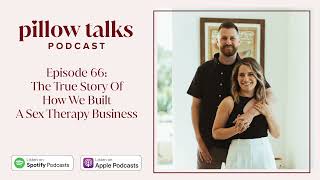
YouTube podcast episode (EPISODE 66) in which Vanessa and Xander Marin recount building their sex-therapy business: Vanessa's path from Brown (human sexuality) → grad school → licensed psychotherapy; early pivot from clinical hours to online courses after a car accident and back pain; initial courses (Pleasure Principle, then Finishing School focused on female orgasm); trial-and-error early launches (teleconference signups, paid talks that flopped); growth via writing (Bustle) and SEO; move to Berlin (then back to LA in 2017); Xander transitioned from unpaid ops help to operations lead (built revenue trackers, email systems); team hiring (sister, brother, others), creation of company values and generous HR benefits (unlimited time off, profit sharing, health benefits, 401k match); social media growth (Instagram ~10k in early 2020 → ~273k two years later) enabling smaller "bite-sized" products and scaling to 19 offerings; Vanessa largely stepped away from one-on-one therapy to focus on courses; business positively impacted their relationship and sex life; upcoming book 'Sex Talks' (Simon & Schuster) available for pre-order, official release Feb 7; other planned products (butt-focused course), retreats, and possible training for other sex therapists/business owners.
Chapters
I'm endlessly fascinated by all things sex and relationships, and I could make a new course, like, every week, honestly. So I just get excited and I love being able to provide resources, and there still, like, aren't very many people doing what we do, and so we need these resources. Hello and welcome to the Pillow Talks podcast. We're your hosts, Vanessa and Xander Marin. I'm a sex Therapist with over 20.
Years of experience, and I'm just a regular dude. We share the ups and downs in our relationship while giving you step by step techniques for improving yours.
Make sure you subscribe for your weekly double date full of totally doable sex tips, practical relationship advice, hilarious and honest stories of what really goes on behind closed bedroom doors, and so much more. It's the sex education you wish you'd had. Okay, babe, no funny business in the intro today because we have to get down to business. We do the business of helping people.
The business of the sex therapy business. We're gonna give you the business about the business of the sex therapy business.
That helps people do the business that helps you.
Yeah. Get down to business. Cause it's business time.
Today's episode is one that I didn't think we'd ever be really doing, to be honest.
Really?
Yeah, I didn't. I don't know. I guess this is like the same sort of hang up I have about the ask us anything episodes that I've seen.
People just aren't really that interested in me or us.
I really know. It's funny. It makes it sound like I have this complex, but, like, nobody likes me. I really don't. I just didn't think that people would want to hear, like, a detailed history of how we built this business. But we've gotten the request to do this so many times that we thought, okay, you know what, let's do a whole podcast episode about, like, how this all got started, how we built it up to what it is and where it's going in the future. So that's our plan for today?
Yeah, I mean, I think it's really. It's interesting because this isn't like your. This isn't like your typical business, so to speak. There aren't a lot of us out here doing this. And so I think people see that and go, how did you do this? How did you go from, you know, nothing to where you are now? How did you get. How did you get trained? How did you build a team? How do you work together as a.
Husband and wife and not want to kill each other? So we'll be getting into all of that today, but first we want to thank our new sponsor, Birch. Birch makes mattresses that are stylish, comfortable, and most importantly, environmentally conscious. They're non toxic, Matt. Are made right here in America. They're crafted with natural and organic materials that have been sustainably sourced. And Birch is giving you $400 off all of their mattresses and two free eco rest pillows@birchliving.com pillow all right, but.
Before we do any of that, we are going to give you some more business which is the review of the week, the most relatable savior for your relationship.
Savior.
Wow. Which one of us is the savior?
I think the podc.
Oh, okay, cool. The podcast. Great. Cool. Guys, you've seriously done so much for us without even knowing it. I love this podcast so much. You both and your community do an incredible job articulating the issues, concerns, struggles and challenges of deep relationships and make it so accessible and easy to work on. Cannot thank you enough.
Oh, well, we cannot thank you enough for this delightful review. Reviews go so far in helping the podcast grow and helping us reach new couples and help save other relationships.
Oh, yes.
So we really appreciate you taking the time to leave a review on Apple Podcasts. And we do this really cool weekly giveaway every week where if you're featured as the review of the week, you can send us a DM on Instagram. Ennessamoran Therapy. Ask us a question and we'll give you a personalized mini coaching session right then and there. We'll send you a nice detailed voice message back with all of our best tips, tricks and advice. So it's just our way of saying thank you for helping us grow this podcast. All right, so let's get into it. And I guess we should go all the way back to the beginning.
Yeah. How the heck did we get here? And who are we anyway?
It all started February 13, 1984, in a small. No, I'm just kidding. We're not going all the way back. Okay, so people always want to know, like, where did my initial interest in sex therapy come from? It really started with my parents attempt at giving me the talk. I was about 11 or 12 and we were in our minivan. We were cruising home from family dinner at grandma's house every Thursday. And my mom looked at me in the rearview mirror. She was driving and she said, if you have any questions about, you know, sex, you can ask us. And I really knew in that moment that although they were saying that I could ask questions, what they were really Saying was, please, for the love of God, do not ask us anything. We don't want to talk about it. This is not an okay topic to talk about.
And.
And I remember just feeling so struck in that moment because I did have a lot of questions about sex. I was learning things from friends on the playground. I had actually very recently made a bet for $1 with my friend Nikki about how many holes a woman had down there. Nikki was a guy. He said three, and I said, no, there were two.
Nikki was ahead of his time.
Yeah.
And I. Nikki, really knew. He had a great sex talk with his parents, I'm sure.
So I was wrong. I lost a whole dollar. That was a lot as a kid. So bottom line, I had a lot of questions, and I had close relationships with both of my parents. There weren't really any other topics that they ever shied away from talking about with me. And so I just felt so confused about, like, why can't we talk about this? Why is it so embarrassing?
Yeah. And it must have actually seemed even bigger to you because, like, I know the relationship you have with your parents, it's so close and so open. And, I mean, your mom is very outspoken on so many topics. So it must have been extra weird ye to see, like, this must be really serious. It's not just like, oh, she's embarrassed. It's like, she's not embarrassed about anything, and she's embarrassed about this. So this must be so serious.
Yeah. So I had no idea that sex therapy existed as a career, But I just kept coming back to that moment, and especially as I got older, as I started becoming sexually active and just, you know, still having those questions and not having anyone to turn to and feeling kind of lost and confused. And so I think it wasn't until I was, like, 17 or 18, 18, that I started saying, like, I wanted to work with sex in one way or another. I decided I wanted to go to Brown University because they had, at the time, what was one of, like, I think, two or three programs in human sexuality for undergrad.
You were the only one to go through it, right?
I was the only one in my class, yes. But I think. And the year before and after. But I remember I did start telling a few people, like, I want to do something with sex, like be a sex educator or sex therapist. And I got some really, really weird looks. So I pivoted and I said, I want to be an ob gyn. I thought that was kind of like, the safe choice. Yeah, I was like a doctor. You know, everybody Thinks that's like such a big deal. And I just felt like, yeah, well, I'll just, you know, I'll just do this instead and maybe I can help people work with sex more from a medical lens. So initially I'll just kind of breeze through, like what my education was. But I did get an undergraduate in human sexuality from Brown. I also double majored in human sexuality and I took the whole like pre med track because I really thought I was going to go to med school. But while I was studying, like, my human sexuality classes were so fun, but all the pre med ones were miserable. Like, I'd always been a really good student, but I sucked at physics and chemistry and all this crap.
Oh, I remember. I remember that feeling from college in general where it was like, high school was pretty easy for me. I did well in a lot of classes. There were actually a couple warning signs. Like I didn't do so great in physics or maybe in like AP Chem or something like that. But I kind of chalked it up to like, oh, I just didn't really study at all. And then I got to college and it was like, oh, I am just straight up bad at a lot of things. Like, it was a slap in the face.
It was a big slap in the face. The worst slap in the face. That was after graduating when I took the MCAT and I did horribly on it. I bombed it. And I'm, I was a really good test taker at the time. So I just was so confused by that. But that was kind of the final straw for my medical career. I was like, this is a sign. It's a really big, screaming, glaring sign that the medical school path is not the path for me.
Yeah, the universe is like, get back on track, girl.
It was like I just had started saying this because it felt like the more acceptable thing to say. And I never really was that interested in being a doctor. I just like, had said it so many times. I felt like I was supposed to at that point.
This is what happens when we do things for other people. Right. Like, you know, we're too worried about what other people are going to say or what they're going to think. So we kind of moderate, like how we feel or what we want to say or what we want to do.
Yep.
It tends not to end very well for us, I don't think when we just totally conform to other people's perspectives or what we think they're going to want.
Yes. And when we don't pay attention to the more subtle signs that Life or the universe is trying to send our way, then sometimes it just. Just smashes us over the head with a really big realization. So that's what happened to me. So I took a little bit of time off. I was really fumbling around thinking, like, okay, how the heck do I create this career then? Because at the time, and this is still true, there is no defined career path to become a sex therapist. No, a lot of people don't realize this. Like, the term sex therapy is not regulated, so anybody can really say that they're a sex therapist.
Oh, wait, so I can be a sex therapist?
You could. I mean, you're not going to get in trouble with anyone for calling yourself that. It's just not ethical. Oh, so, okay, so no, you're not gonna do it.
Screw this. Screw this just regular dude thing. I can just be a regular sex therapist.
A regular sex therapist.
I'm a regular male sex therapist.
That doesn't sound creepy at all.
All right, fine. I'm not a sex therapist. Just kidding.
So, yeah, I was really floundering for a couple of years. And funny enough, that's when you and I met.
Yeah.
Is in those years, I was working a shitty job in, like, marketing. Not. I mean, I was kind of a glorified office receptionist, basically trying to figure it all out.
Yeah, it was funny because I didn't. You know, when we met, you were. Yeah. You were just sort of right in the middle of taking it easy. Like, I think you were. You were. I found out later you were kind of recovering from the shock of the MCATs.
Yeah, and changing my decision, you know, changing the whole path of my life.
Yeah. I mean, and I thought you were just like, really chill and relaxed. I didn't really get to see. I didn't get to see, like, academic study powerhouse, genius. Vanessa for a year or two, I want to say.
I mean, it was really tough for me. Like you were saying, like, I was a superstar in high school. Like, I was the top of my class. I did the best in everything. And then going to college and being mediocre at best was pretty tough for me. And then bombing the MCAT so hard was really, really tough. So I needed a couple of years off to kind of recover. And honestly, I'm. This is a little hard to admit, but, like, I feel like if I hadn't met you, I might have floundered around for a lot longer than I would like to think. Because when I met you, it felt like. And this is funny now, but, like, it really felt like you had your shit together, you had this impressive job, you were making a ton of. And it seemed like you had this, like, very defined, you know, idea of where you were going and what you were doing.
Oh, so you're saying I was a catch?
You didn't seem like a catch. And it was, it was a big kick in my butt to be like, okay, I gotta get it together, Vanessa. So I realized I wanted to get this foundation in therapy. I was like, look, sex is such a sensitive issue for people to talk about. Like, I want to be a therapist and be able to have that foundation to help people, like, talk about it and work through their stuff that comes up. So I went back to grad school, got my master's in psychology, and then worked towards getting my license and becoming a licensed psychotherapist in California. And so after that, I started seeing clients kind of one on one in a traditional psychotherapy setting of, like, people would come in, we'd talk about their issue, I'd give them, you know, education and tips and advice and all of that kind of stuff. And so that was going really well for a few years. And I started to realize, like, God, I am talking about the same thing over and over and over again.
It's just like a rough, emotional career, right? Like, in order to be successful, you need as many clients as possible. You got to fill up as many of those hourly time slots as possible. And I remember you also were kind of just getting exhausted some days.
Oh, yeah.
Oh, my God. Like, if you see four or five clients in a day, that's like, very exhausting.
Yeah, I mean, four or five for sure. But I was seeing like six, seven, eight, sometimes even nine. So it was a lot. And my practice was full. So I kept thinking like, like, how do I work with more people? How do I share this message? These, you know, this information on a bigger, broader scale, how do I serve more people? And so then I had another one of those, like, interesting life moments.
Universe is like, hey, I got the answer for you, but I'm not gonna.
Like, you're not in a really shitty way.
You're not gonna like it, but it's gonna turn out for the best.
So the turning point for me, I got rear ended in a really bad.
Car accident coming back to visit me at work. Working at Google at the time, I think you came with a friend you had come to visit before. But back then it was like, oh, we're gonna go to the Google campus. Like, it was this cool. I mean, Google was still growing a lot Then it was, like, not nearly as big as it is now.
I mean, I was just interested in free lunch.
Yeah, I think you were bringing. You were, like, bringing a friend and, like, came for lunch and. Yeah, and like, you were coming back and I got a crazed phone call from you.
Oh, yeah. I mean, it was a bad accident and I had wild adrenaline afterwards. Like, my friend and I were laughing at hysterically, and then we started crying and then we were laughing again. Like, it was intense. Essentially what happened was I had really crippling back pain and the pain was the worst when I was sitting. So I'm like, what the fuck do I do? My job is sitting for like eight hours a day. How am I supposed to do this when I'm in so much pain? That was like a real wake up call for me of like, okay, I've already been kind of marinating on this. How do I work with more people? And, like, now I literally cannot do my job in the way that I was doing it. So what do I do? And in a funny little twist of fate, I have been looking for, like, massage therapists and, you know, physical therapists, all kinds of stuff, like, people to help me out with my back pain. And I found somebody who on the side was an online business coach. And she was the first person, like, in the middle of a massage trying to help me out with my back pain. And she was the first person to suggest, like, why don't you do an online course?
That's so funny, because I'm thinking about, like, every time I've gotten a massage. And, like, I don't think I would be very receptive to, like, communicate, like, talking about, like, business advice in the middle of the massage. Like, oh, God, like, shut up.
I'm always chatty. Whenever I have some sort of, like, service that's being done to me, I'm always taught, like, how are you? How'd you get into this? So, yeah, but that was the first spark of the idea. And it just really hit me in the moment of, like, oh, my gosh, that's such a good idea. Because not only are online courses just, you know, convenient, and they were just starting to, like, pick up in popularity at the time. But also because sex is such a sensitive issue. And, like, a lot of people, even though my practice was full at the time, like, people would always tell me, like, this is really freaking hard to do to, like, come into an office, talk face to face with a total stranger, just share the most intimate details of my life.
Like, you gotta go sit In a waiting room if, you know, you're a.
Couple minutes early seeing people that I might know, you know.
So it's like, yeah, San Francisco's not that big.
Yeah. We were in. Yeah. In San Francisco at the time. Yeah. It just, it really struck me of like, this is perfect. Like, I can give people the information, the resources, all these techniques that I've been developing over the years. And I can do it in a way that's more convenient, that's private. That's cheaper too, because like, you know, going one on one for therapy like every single week, that's very expensive. And so I could do it in a much more cost effective way.
Yeah. And I remember you also coming to me and being like, there are some very serious trends amongst my clients. Like, there are a couple issues where it's like 50% of all my clients are talking about these, like two to three issues.
Yeah. The most popular one at the time was female orgasm. I had a ton of women. Again, this was in San Francisco. So my practice was like, at least 50% were these like, very impressive, successful, modern feminist women who were like, I've got my shit together, but I cannot figure out this whole orgasm thing. And like, I don't understand how I'm not able to figure this out, you know? And so I was teaching orgasm, like over and over and over again and really like getting a chance to test out and refine all of these strategies. So when I first went to create an online course, like, that was the first thing that came to my mind. I've got this whole, you know, at that point I basically had all these notes that I'd kind of put together of like my orgasm prescription basically whenever a new client came in. And I was like, I have a course here. But I was afraid to make that because there's some like, lingering sex negativity or fear within me where I was like, oh, people aren't going to want to buy an orgasm course. So I pivoted and I was like, let me do something that's like kind of the same thing but a little bit different. And I think the first. Oh, I'm remembering it was called the pleasure principle.
Yes.
I was like, let's do it. Like, it's more about pleasure, but not specifically about orgasm.
And it wasn't even necessarily just about sexual pleasure. Like, I remember there was a. There was a pretty strong focus on sort of like pleasure within your life, like doing what feels good to you. And maybe it was also like, because you were seeing a lot of you Know a lot of these women who are working like, like 80 hours a week, totally kicking ass in the corporate world, but sacrificing themselves and their own desires and needs in order to be successful in the business world. And so I think it was. You were like trying to get into their pants. Haha. So to speak, through like. Oh, like, you know, kind of like get. Get your life under control, get like time management, get boundaries under control and then. And then see if the rest follows.
Yeah, yeah. It was all about like bringing pleasure into every aspect of your day. So I was really exc. About this first course. I worked super hard to like put it all together. I was having to learn everything, like completely on my own. Like at that point I had a very rudimentary website that had like my contact information and like I do therapy, you know.
Yeah, like your basic therapist website.
Super basic. And so I had to learn everything for the very first time, like how to build a course website, how to make graphics for it, how to get like password protection, recording the audio, you know, figuring out how to. Yeah. How to even make the course in the first place. And it was really freaking hard. I think, like, I think it's just important to acknowledge this because if you look at the business that we've built now, like, it looks very sophisticated and fancy and we've got all this great stuff and I'm like, we, we were just bootstrapped it, you know, like, oh, for so long. It was very janky for a very long time. And it was really just me learning everything by trial and error. Like, try something doesn't look right. I gotta do it again. I've gotta Google how to do it. Let me look up some YouTube videos about other people. Let me. You know, I go through this thing and there's a mistake. So I learned not to do that next time. Like, it was very. A very intense learning process. I mean, there is no like, like now there are courses about how to build an online business and like start from the ground up. But at the time there was really like, not much.
Oh yeah.
How to do all this stuff.
Yeah. I mean, it's really interesting to hear you say that because it brings me back to that era of time in our relationship. And I was just like, I was in my own world, working at Google then and you know, going through my own struggles with trying to figure out like, is this what I want to do for my career? Do I want to be in the corporate world forever? I'm feeling really unhappy and I think I just wasn't really that aware of everything that was going on for you. Like, you were. You were doing your therapy thing. Yeah. I mean, it's just interesting here you. You talk about all that kind of, like the struggle and the trial and error and, you know, like, I obviously, like, knew some of what was happening, but, you know, at that point in time, I had no idea I would ever be at all associated with anything that you're doing that you. You were just my. You were just my wife. We were married at the time. Right. Wife or fiance, at very least when this was happening.
I was your wife at the time.
Yeah. You know, it's like, oh, well, this is just my wife and her career and yet doesn't really have anything to do with me. So I kind of feel like maybe I wasn't the most. Most supportive husband back then, but, you know, I went through my own.
Yeah.
My own learning process.
There you were knee deep in all kinds of corporate shit and working too hard and getting yourself pretty worked up. I mean, it was not a. Yeah, it was not one of the best times for us. Like, there was a lot going on at the time. But, yeah, that was. That was the very first course I remember doing. I think I set up, like, a free call that I did. People had to, like, call in with this, like, free teleconference line, you know, and I kind of talked.
Oh, my God, I remember that.
Yeah.
Yeah. This was before. I don't think Zoom existed.
I don't think so. No, no. Yeah, people. I, like, got people to sign up online, and it was like, you call 1-800- and, like, key in the conference code line, and then you join this, like, free call that I did live in the evening one day with, like, you know, let me talk you through why you should be thinking about pleasure more often. And then here's the course. You can sign up for it. It was, like, a massive course. I think it was. I mean, it was like, many months. And I don't remember how much it cost initially. Maybe it was like $500 or something like that. I think I got, like, four people to sign up for. It was. It was not a raging success. Absolutely not. But I, you know, got those four people. People through it.
Hell, yeah.
I learned, you know, I learned what their feedback was, and I very quickly realized, like, I made a course that's way too big, and it's not what people actually want. Like, they do want the stuff about orgasm.
Oh, yeah. I mean, it's so funny when you start out doing stuff like this. Like, I know this is how it was for you. I know this is how it is for a lot of people that, you know, get into the sort of like course industry at first. You think the way that I'm going to sell this course is by making it as big and complicated, time intensive as possible. Right? Like, I want, I want someone who's looking at it to be like, oh man, I'm really getting a lot for my money here. But the reality is nobody actually wants to be like, oh hell yeah, I'm getting a six month course. I have to do two hours a day for six months. Like, oh my God, that sounds horrible.
Yeah, I always wanted to over deliver and I still do, but I've learned more effective ways of doing it now. So yeah, I pivoted quickly and I realized, okay, I need a different course. And that's where finishing school was born. So that's the oldest of the courses that we currently offer. Finishing school is still in existence. It's gone through a lot of revamps and improvements. But that was the second course that I ever made where it was much more specifically focused on female orgasm.
So it's the course that you, you should have done first.
It's the course I should have done first to help give women all of the tools that they need to have orgasms on their own and with a partner whenever they want one. So I was really excited about that course. But even with that, like it took a long time for that to take off. It wasn't wildly successful overnight. Like there weren't people, you know, breaking down my website trying to get into.
It, like banging on the door.
It really took time. I mean, I think one other funny story I have from those early days is I remember I got my first invitation to speak at an event and I, and I was so excited about it. The person who put it on, I'm pretty sure I had to pay to speak. It was one of those things, like I was so excited at first, like, oh my God, I got invited to.
Speak and I got to pay to give my pitch.
And then, yeah, I should have realized, like having to pay to give a speech was probably not the greatest thing. But there are a lot of promises about this event. Like there are going to be hundreds of women there. They're all ready to buy whatever you offer. Like once you give them your speech, they're just going to be falling over themselves to buy your stuff. This woman who was putting on the event got me really excited about how many people I was going to get to Sign up for finishing school after the talk. And so I remember I invited my sister and my aunt. I asked them to come and man my booth in the back because there was just going to be so much demand for my courses after I gave this speech. And so I gave my speech. It went over really well. It was actually a great speech. I helped, I gave a lot of exercises and stuff like that. And so then I ran to the back to help with the influx of people who were signing up. Not a single person signed up. So that was one of the most embarrassing moments in my career because it was like I'd invited two other people to help me out and like, train them with like, how to take the credit card payments and get them signed up. And all of a sudden not a single person signed up. So, you know, that was. Those were tough times.
So, I mean, the moral of the story is everyone listening. It hasn't always been easy. I wouldn't say it's ever EAS easy, but I think that especially in this, you know, in the day and age we are in of social media and people that sell courses and our coaches and stuff, it often from the outside looks really easy and really effervient.
Money in your sleep.
Yeah. And also it's. It's like, it's like these people just, oh, they came out of nowhere like, oh, a couple months ago they weren't doing anything and now they're making millions of dollars. And it's like. Yeah. I mean, mean, it looks that way from the outside sometimes, but very often, like, we've been working on this in various forms.
Yeah.
Various mediums, like for a very long time. Yeah. And I think for anyone that's trying to do something similar, like, don't give up. Don't give up after, you know, one or two challenging moments. Like, there's gonna be a lot of challenging moments and there's gonna be a lot of successful moments, but it takes time.
Before we go any further, we wanted to tell you a little bit more about our new podcast sponsor, Birch. So as you. We recently moved, so we've been in the market for a new mattress and it's really important to us to find an organic mattress. I mean, this is something that we learned relatively recently that, like, the materials that your mattress is made out of really matter. I mean, there's a lot of off gassing that can happen. There are a lot of harmful materials that often get used, and your mattress is something that you're spending a lot of time on. Right. So we have been on the market for a high quality mattress. And we're so excited that Birch approached us to be sponsored by. So we had to try the mattress out before we recommended it to you guys. And we have been really happy with it. It's super comfortable. It's great, like resting easy, knowing that it's made from organic fair trade cotton, organic wool, natural latex. And there's even 100 night risk free trial because obviously mattresses are very personal. You got to try it out for sleeping, for other activities. Make sure it's the right one for you so you can try it out. If you don't like it, you can get, get a full refund. The mattresses are shipped directly from their manufacturing facility right to your door. It's really easy and convenient. And best of all, Birch is giving $400 off all mattresses and two free Eco Rest pillows at birchliving.com pillow. That's $400 off and two Eco Rest pillows for free. Sleep better with Birch. You can go to birchliving.com pillow to check it out. Yeah, I think the best gift that I ever gave to myself was persistence. I won't lie. Like, it sucked to have failures like that. It was embarrassing, it was hard. But I just really believed in what I was doing. I believed it was important. And I really did truly believe that I was going to be successful at some point. And so I just kept picking myself up, wiping myself off, brushing yourself off, off, brushing, brushing yourself off. That just sounds weird, but brush yourself off.
Try again.
Sing again. I brushed myself off and I just kept going. And that's, you know, why we still have a business to this day. So despite, like things not going that well, like it was still enough money to sustain us, I think I was actually still making more money than I was, was working one on one as a therapist.
And you were, you were slowly like you were winding down that one on one work. Like you were still seeing some clients. I think like you have.
I was kind of like half and half.
Yeah, you had, you had, you had income coming in from seeing some clients and doing some writing and stuff like that. At least from my perspective, like from the outside writing.
I forgot about the writing.
Yeah, yeah. From my perspective on the outside, it never felt like this big risky thing like, oh, I'm gonna drop everything and start making courses. It was sort of like, I'm doing what I can. Like in terms of I'm doing what I can with my original career. It's less than I could before. And I guess also I was I kind of thought, well, well, maybe her back pain is going to get better eventually. And, you know, she'll always have the ability to have a full psychotherapy practice again. So you were, you know, in my perspective, it was like, okay, you were just doing as much as you could on the side while you recovered from this accident. And, you know, and you were playing around with trying to get this course thing going. And, you know, it took a while, but slowly that started making the same amount of income as, like, your kind of regular practice. And then eventually it started making more.
Yeah, so with the writing thing, I totally forgot that, you know. So I had been doing writing related to sex for a really long time. Like, since I was 18. I did it for the Brown University's, like, newspaper. I had a weekly column there. So I'm not even sure why they reached out to me in the first place, but I had somebody reach out from Bustle. And this was when Bustle was first starting. It was like just a couple months old, and they wanted to have somebody write sex articles for them. And so I signed on to work with Bustle. I did a weekly article with them. I think we moved up to twice or even three times a week. Pretty soon after that, I made $50 an article. It was a lot of fun, but it was a great way to like, get my out there to get like, so many, you know. Yeah, there were so many pieces on Bustle that, like, had my name on them and I got to, like, link back to my website. So that was a big role in helping me grow. But eventually, you know, we reached this period where I had transitioned to seeing the majority of my clients online so that I could, like, stand and not be sitting in an office and was doing the online courses. Xander and I had been in San Francisco for almost 10 years at that point and really wanted to try something different. So that was when we decided to move to Berlin. And I decided, like, I'm gonna go fully online. Like, I'm not gonna see people in person anymore.
And it was also when I decided, fuck this corporate job. I'm gonna quit. I'm not gonna have a plan. That was really hard for me. I mean, like, I. I knew for a long time that just what I was doing wasn't lighting me up inside. It wasn't like a long term thing. And that I just. I just knew that I needed to quit. Like, something inside me just knew that, that. But it was so hard for me. I had this identity built up as, like, I was the provider of our Family. I was the guy who had my shit together amongst all my college friends. Like, I was the guy that had, like, held down a job the longest and was, you know, I had bought a condo in San Francisco and all of this stuff. And so it petrified me, the idea of quitting without a plan. But Vanessa here. Vanessa was like, you know what? You took care of me when I went to grad school. Let me take care of you while you take a year or two off to figure out what it is that you want to do. And so we. We moved to Berlin. It was. It was a pretty good situation. Like, we were able to rent our place out in San Francisco. We moved to Berlin. You know, it wasn't like the cost.
Of living was sort of living was.
Was so much cheaper at the time. Yeah. And so it gave me some space to figure out. Figure things out. I mean, that ended up being its own challenge for me because all of a sudden I was confronted with, oh, my God, I'm actually not doing anything. I'm not contributing anything to our relationship. That freaked me out a lot. And I had a year or two of struggle before Vanessa stepped in and offered me a couple projects.
Okay, so that's a big question that we always get is like, how did you get involved with the business? So you were not my first hire? No, my first hire was my brother to help me, like, way back in the day with some finishing school stuff. Some fulfillment. Some fulfillment. But, yeah. What did. How did you first get involved? What was your first project?
Well, the funny thing about this was that actually I. I was an unpaid employee of our. Of our company for actually, for a really long time. I think until we moved back to the US I never. Never got paid.
Don't tell the government.
I never got paid. But no, I mean, I was. Was just consulting for sex? No, my first project was actually. I think it was like, right when we moved to Berlin. I built Vanessa a little, like, spreadsheet and Google sheets to help her track all of her clients and how much money she was making. At that point, I think you were seeing people who are paying you in different currencies and stuff. And so it was like, so that we could keep track of all the revenue and convert the currencies into dollars. And I think it was also so that we could. We had to pay, like, that value. You added tax in the eu. That was a whole nightmare. Oh, my God. Yeah. So I built you a little tracker, and then maybe like six months later or something, you were starting to sell more Courses. I think you were like, building up an email list and you had, like, you had a kind of like, basic email automation service that you were using.
Very basic.
Yeah, it was very. Yeah. And you were like, you know, I think there's the opportunity to sell a lot more courses if we have something a little more sophisticated where we can actually send, like, series of emails to, you know, people that are indicating interest in this course or that course or whatever. And so you asked me if I would kind of like, manage the implementation of a. Of a real email marketing marketing system. Right?
Yeah. And that was. Yeah, that was really like the first big project that you took on. And so you took over being basically like the operations chief, operations officer. Like, you handled everything from the back end so that I could focus on getting more sophisticated with, like, the courses and the free content that I was creating. So that was like a huge step for me. And we also hired my sister. She was like our first real employee to help us out with like, kind of basic marketing and social media tasks.
And customer service.
Yeah, customer service. And so that was huge for me of like, you know, going from doing literally everything, like every single piece of the business to now having my sister's help with, you know, answering emails, with putting together social media, which I hated at the time. Which we will come back to that.
Yeah, our social was. You don't really want to see what it was. We all also had our own kind of like mental blockages around social media at the time. So we were really just like, we. At that time, we were really reliant on, like, Google search traffic. Like, it was. It was kind of like Vanessa had written a ton of articles. So, like, when people searched for things in Google, like, our website came up pretty highly and that was kind of like how we found people or how people found us. And yeah, we were not doing much on social. Not like, not like taking today.
Yeah. So I, Yeah, it was so exciting for me to just have so much more space opened up for me to just focus on courses and like, content creation. And I was really proud of myself for having learned all of the, like, every single thing, you know, how to do, every role in the business. But it felt so good to hand it off to you and to my sister to, like, take care of those pieces. So around that time, we moved from Berlin back to la. We always, you know, knew we needed to get back to California at some point.
This was like, 2017.
Yeah, 2017. And that really started, like, the next few years of creating more and more courses like really building up the website and starting to build up our team.
Yeah, I mean, that was. I mean, I think that the move to LA kind of came at a time where we were starting to look at the numbers and it was like, oh, this is a real business we're making thinking, you know, we're basically, we've replaced the income that we used to have from like your psychotherapy practice and my Google job. And that was like, oh, okay, like we can live in la, you know, we don't. But in Berlin it was sort of like, okay, well we can like rent our place out in San Francisco and we can live here because cost of living is really low. And it was like, oh, no, like, this is a real business. We can kind of like live where we want. We don't need to be totally bootstrapped anymore.
So, yeah, so we slowly started hiring our team over the years and then that became a really, really exciting point in the business for us because we got to focus on company culture, on like, you know, it's not just the three of us this little. We used to joke we were like the family sex therapy business. So it's not just us anymore. Now we're adding all of these non family people and we got to really think about, like, what is the kind of business that we want to have? Like, what kind of people do we want on our team? How do we want to all interact together? How do we treat them? So I think that was one of the most valuable things that we ever did for the business was you and I sitting down together and really mapping out, like, what are our core values and how do we ensure that we are creating a business that like walks the walk, not just talks the talk with these values. So we have a document. I have it up in front of me right now. It's like four pages that really outlines like, who we are and what we do. I'm not going to read the whole thing, but we have six core values that we share with our team. So I'll just read you what the six are, but not all of the details about each. But our values are we're open, honest and vulnerable internally and externally. We work with intentionality. We strive for growth. We approach our business with curiosity and creativity. We believe in the importance of diversity, equity and inclusivity. And last but certainly not least, we have fun. So this is a document that like everybody on our team has and you know, we regularly reference back and like, we make a lot of business decisions on, like, let's go back and look at the values. Is this in alignment with how we want to lead the business?
And we also look at the values too. Like if something feels out of alignment or we want to make an update or an adjustment, like we do that as a team.
Yeah, it's like a living, breathing document. Another thing that became really important to us was kind of like our HR policies. So we talk about this on Instagram a fair amount. Maybe when we release this episode we'll do like another round of questions. Because I don't want to. We could spend been like I could do a whole episode talking about how I believe employers should treat employees. But we have a lot of great policies, like unlimited time off, we pay our employees generous wages. We do profit sharing. With every single launch that we do, we give like they're in control of how we funnel donations to charity. We give a portion of our profits every single month to charity. They get stipends to share with friends for our courses. They get free access to all of our courses. Like full health benefits, 401k matching. Like we do a lot of stuff for our employees and that's become so important to us to like take really good care of our people.
Yeah, I mean it feels really good to be able to do that because I know at least Vanessa maybe hasn't been in the corporate world quite as much as I have. You, you had a couple years there a little bit.
I did not get anywhere near those kind. I got terrible benefits.
Yeah, you didn't.
And I felt, felt like, I felt like I was treated like a cog in the machine, not like a human being. So that was a big motivator for me of like, I never want my employees to feel like this.
Yeah. And I mean, and then for me on the flip side, I had worked, I worked, you know, two places, one with pretty decent benefits and then at Google with really excellent benefits. And there's just, there's really something to be said for knowing that you're going to be taken care of if shit hits the fan. Like knowing that in a, in a worst case scenario, like your health plan is going to kick in. I mean like I had a health scare right at the end of my time at Google where I had a growth that I discovered in my thigh and I had a two pound, what ended up being non cancer as totally benign growth taken out of my thigh. Like I had to go on medical leave, short term disability, you know, it was probably like a $15,000 surgery and you know, I just paid the out of pocket max for My, My health plan. And that was it. And, you know, we're not going to get into discussing the healthcare system in the US but it's just important to us that, you know that we know that our employees are taken care of if the worst is going to happen. And I think that just, it takes a huge load off of you if you're working for someone. Like, hey, you know, like, this is just one last thing I need to worry about. And that's, that's what we want to be able to do. We want people who are excited to work for us and feel like, you know, they can. They can actually give 100% in any given moment because they don't have this added burden of, like, you know, worrying about health or what happens if this happens or what happens if whatever. So, yeah, it's nice to be able to do that.
Yeah. I mean, I think for both of us, it's not, you know, a lot of times we hear questions from other small business owners of, like, how do you do this? Like, how do you pay them that much? And why. Why would you do that? Like, like, it's so scary to take on that responsibility. And, like, it undoubtedly is. And we did have, like, you know, 2020 was a tough year for our business. Like, you know, we got out and we were fine. But, like, it was, you know, there were times it was a little bit scary, like so many other small businesses. But I think for us, it's like, it feels good to have that kind of responsibility for other people and to like, to, to take good care of them. Feels good to, to us.
Yeah. I think another way to look at it, like, if you're, if you're a small business owner or you're thinking about hiring a team and you're not sure, like, you know, how you're going to manage paying for the benefits or whatever. It is something that. That's really. This feeling that's kind of started to solidify in me more recently is like, if you are stuck focusing on, like, oh, my God, can I afford to pay that extra, like, thousand or two thousand dollars here for this health plan for my employee? Like, you're, you're stuck playing small. Like, you're focused on that incremental smaller amount, like, oh, how. How am I going to afford this? And you're stuck in this mindset that is where you're stuck in, like, okay, this is what my business is making right now, and this is all I can afford to pay versus, like, okay, if I say, you know what? I'm not going to worry about the health benefits because I know that's the right thing to do. And instead, instead, like, let me focus on the bigger picture. Like, what is going to, you know, what's going to make me like 20,000 more dollars in my business instead of 2,000 more dollars. And I think that's a really powerful thing. Like, for us, we've kind of just been like, okay, you know what, we're not going to sweat these small things and instead, let's focus that energy on like, what's the new product that's really going to like blow things out of the water. Water or, you know, double our revenue instead of like, oh, what's that, like 2% that's gonna help pay for this benefit or that benefit? Yeah.
So, okay. The next big phase that I think we should talk about was that Xander finally got involved in the content side of things with me around 2020. So for years before that, I just had this feeling and I kept bugging him over and over again of like, we, will you talk about some of this stuff with me? Like, as a couple, we've own ups and downs. We've gone through X, Y and Z. Like, I would like for us to be able to share our stories and like present content as a couple. And Xander kept telling me, like, well, I, you know, I don't have the training that you do. I haven't been doing this for all this time. Like, I don't have the degrees and the licenses. Like, I don't have anything to say. And I just kept at it because I knew, somehow I knew that that was like the key to the next level of our business. And finally, yeah, around 2020, I managed to convince you I finally gave in.
I mean, I was dealing with a lot of imposter syndrome. Like, you know, I was taking care of the operational parts of the business, but. And I was involved here or there. Like, I think sometimes, like you had me on for like one coaching call on finishing school occasionally. It was sort of like, you know, oh, like, ask what a guy thinks about, about female orgasm related stuff. And like, people were really excited by it, but I just kind of felt like an imposter. Like, oh, well, I didn't, I didn't build this business. I'm just like, I'm participating in Vanessa's business. I don't have any training. Oh, I'm really good at spreadsheets. But that's, that's what I got paid the big bucks for back in the day. Like, I don't have Any real value to bring. And yeah, I mean, I don't really know what changed exactly. I think I just finally got started more and more in, in smaller, more manageable things. And I think Vanessa was really good with just sharing little strategic bits of positive feedback from others that we would get on social here and there. It built up my confidence a lot.
And I also have to give a little shout out to our friend Amy Kiefer, because she was one of the first people to really push us to show up more on Instagram.
Yeah, thanks Amy.
Yeah, she like had us do a takeaway of her account. She introduced us to a lot of her friends and she was really like, she had a feeling about it too and she pushed us to do it. And so, yeah, I think that, you know, around the beginning of 2020 we had like about 10,000 followers on Instagram. And so now, you know, two years later, we have 273 as of this morning, I think.
Thousand?
Yeah, thousand.
So just to be really clear, it's been a percentage exhibit has dropped from 10,000 to all of that. We lost 73.
Thanks Amy.
Horrible business advice.
No, I mean that's massive growth in like, you know, two years time. 10,000 to 275, you know, three. Like it's really, really big.
So yeah, that's like I'm just trying to do the math in my head. That's over 20x. My God. I guess I've never even thought about it.
Yeah, it's pretty wild perspective. Yeah. And so Instagram really changed our business too, that we could just show up more regularly, we share information like more casually, we could share more personal stories. Yeah, totally changed the game for us.
Yeah, I mean, not only that, but because of our growth on Instagram, I think that we, it freed us up to, to focus on different types of products. Like when we were smaller and we were just, you know, like had a smaller email list and not really any social, like we were mostly selling large, more comprehensive, higher price point courses because we had tested things out of like, okay, like what if we sell something that's $99 versus something that's $500 versus something that's $1,000. And you know, back in that 10k and less social days, we really struggled to sell enough lower price point products to make it worthwhile at all for us. And then all of a sudden as we started growing on Instagram, people were way more interested in bite sized courses and guides and how to stuff. And all of a sudden it was like, oh, we were just Having more fun, like creating. Creating more exciting, fun stuff like the 30 day sex challenge and the Sex Position Playbook Foreplay guide.
Dirty Talk guy.
Yeah. And, like, we just. We never thought that we would be able to do something like that. Yeah, like, we were. We never even had those ideas because we were just focused on. Okay. The way that we run this business is we sell these big, huge courses that take a ton of time to make. They're really hard to sell. You have to do these big elaborate events to get people excited about them. And now all of a sudden, it's like, oh, we just get to kind of show up as us and talk about what it is that we do, what we have, and how it's going to help you. And that's that.
One of the questions that we kept getting over and over again was, how did you find the courage to share your personal life as a couple? So if you follow us on Instagram, you know that we share a lot of people, personal stories, and I think that where that courage came from was just a realization of how important these kinds of conversations are. Like, that it's so rare for us to talk about sex openly and honestly. It has been, like, since the dawn of time, pretty much. And I think that we just realize, like, it's so valuable for us to share that. Like, yeah, sometimes it does feel scary or overwhelming or like, oh, my God, are we really gonna put that out there to 273,000 people? But it just. It feels so worth it. And when we get feedback from you about, oh, my God, that story that you shared, that's me too. I feel less alone in that now. Or I don't feel like I'm broken anymore. Or I use that tip that you guys talked about and it really worked for me. It just makes it all worth it. So you give us the continued courage to keep showing up and keep sharing this kind of stuff. So let's talk a little bit about the current status of the business. We got a bunch of questions about that. But, yeah, I was actually just. I pulled up our website because I was like, okay, current status of the business. How many things do we even offer right now? Okay, so can you guess? How many things do you think we have? How many courses and products and guides do we have right now on the website?
I'm. The way that you're asking that question is probably more than I'm going to guess. We, I don't know, we talk about this internally. Like, arguably, we probably sell too many different things.
We just get excited 15. 19. Yeah, there's 19 things on the website.
Wowzy. Wowza. Wow. I was gonna say wowza and wowee.
Well, it's because we've built up such a team that I get to just really focus on creating stuff even more so now. And so it's, you know, I just, I've gone. I've gone wild.
Oh. I mean, yeah, I. I remember the days when it was just you and me and like, we got to a point, you know, where I started, started doing all the operational stuff so Vanessa could do the content. And then the problem we ran into was that Vanessa could churn out content faster than I could handle all the back end things. Because, you know, for every one piece of content, there's like 10 different things you need to do on the back end. Like, you know, like, oh, it's gotta be hosted. You have to have an opt in for, you gotta have a cart for, you gotta have a sales page, gotta. There's all these things. And like, and I was like, oh my God, you have to slow down. Like, I can, I can't. I can't put all the infrastructure together for this product or that product or that free guide or whatever. And so, yeah, having a team and more of a system in place for how we churn this stuff out is so key.
I just, I'm endlessly fascinated by all things sex and relationships and I could make a new course like every week, honestly. So I just get excited and I love being able to provide resources and. And there still, like, aren't very many people doing what we do and so we need these resources. So I just get so fired up by that. But one of the questions that we got is, do I still offer one on one coaching or therapy? And the answer to that is no. I transitioned away from that kind of. Last year was a big transition year for me. And this year, like, there's really very, very little that I do. I have one client who I've seen for a very long time that I will continue to see, but other than that, like, I'm. I'm not taking any new clients. I'm just focusing on the online courses, which has been a lot of fun for me. I'll never say never. Like, I do love working with people one on one and I might go back to that at some point, but for right now, like, the courses just feel so exciting to me.
All right, so this brings us to another question that a lot of people ask. We probably got this like every week from people in one way or another, but People want to know. It feels like we're always on social media. How do we manage work life balance?
Well, okay, first thing is that we are always on social media because we generally always.
I'm putting that in quotes because not technically all.
No, I mean, we show up on social media every single day.
Yes.
And a huge part of that is because we really enjoy it. Like, it feels very fun to us. Of course, there are days where it's like, you know, it feels more like work than others, but for the most part, like, it feels very fun and playful and exciting to us. We love connecting with our community there. Like, you guys are really engaged with us, especially on Instagram, So we like doing that, and we'll continue doing that as long as we enjoy it. So what we do is, like, we really think of ourselves basically as working seven days a week, like, on Instagram specifically. And so to take that into account, like, we work fewer hours during the week. And I think that, you know, for both of us, work life balance has always been very important. Like, as passionate as we are about this business, we also want to have lives outside of it, and we want to have days that are full of, like, relaxation and spaciousness. We know we do our best work in that kind of space, too. So we've both put a lot of effort into. And this is a value that we share with the team, too. About, you know, we're not looking to make you force your nose to the grindstone from nine to five. Is that right?
Yeah, nose to the grindstone is right. I don't know if anyone scare him. That is force, you know.
Well, we. We give our team the ability to, like, work flexible hours, and we pose it as, like, there's a job for you to do with, like, certain tasks and responsibilities. Do it in the time that it takes you to do it. But we don't, you know, we don't need you working 40 hours a week. So, yes, we are on Instagram during the weekends, but we work fewer hours during the week to, like, kind of take that into account. Okay, so let me ask you this last question. How has the business affected our relationship and sex life?
Very good question.
Or another way that people ask this is just talking about sex all day make you not want to have sex with each other?
Nope, it does. Doesn't. Surprise. Shocker. I mean, that. That's why we. I mean, that's like, a huge reason why we show up on social every day to try to normalize talking about sex. Because it turns out that the more you Talk about sex. The more likely you are to do it, the more fun your sex life is going to feel. The safer things feel. You feel comfortable with each other. This business has impacted our relationship and sex life in such a positive way. And honestly, like, it became even more positive after I started getting involved in doing the content. Like just being able to talk about it with you on a daily basis. Yeah, I mean, I'm not gonna lie. Sometimes, sometimes even in the middle of the day, we'll be talking about something, the mood will strike. And hey, we have flexible working hours, so, you know, we clock out. No, I'm just kidding. We don't clock anything.
Just each other.
I think I got. Clocking means hitting. I mean, I hit that, I hit that.
The good kind of hitting. This is terrible. This is taking a turn.
But yes, sometimes we even do it in the middle of the day.
We do afternoon delight. I mean, I'll say for myself, yeah, it definitely, like, going into business with your partner is not something I would recommend for everybody. It definitely takes. Takes like a certain kind of relationship, namely that we can spend a lot of time with each other without getting sick of each other. That helps a lot. But you know, for me, it's just been like such a joy to be able to share this with you. I've learned so much about myself, about love and sex. I've learned so much about our relationship. Like, we've been able to grow in ways that I never dreamed possible.
Oh, yeah.
You know, and yeah, just being able to try things out, like, you know, we learn new things, stuff, and we get to try it out together. It's always fun and just, you know, really being able to, like, see the impact that we're having on people, the impact that we're making on the world together is a really special thing. So it's had a hugely, hugely positive impact on our relationship and our sex life.
All right, so we're kicking ass and taking names. Vanessa. But what's. What about the future? What's the future hold?
Well, the first big thing coming up for us is the release of our book Sex Talks. It's available for pre order now. We'll put the link to that in the show notes. But we wrote a book together for Simon and Schuster. We're super excited about it.
Yeah, I mean, it's about talking about sex. Just like I was saying, you know, like, we. If there's one thing that we want to help people with, I think it's really just the talk. Just fucking talk about it.
Just fuck and Talk about it?
Yeah, just.
Just talk and then fuck about it.
Fuck about it. Ye. That's the second book. Just talk and fuck about it.
So yeah, it really goes back to that first conversation with my parents. I just wanted to have a conversation with them. And that's the heart of what we help people do now is talk about sex. So sex talks available for pre order now and it will be officially released on February 7th. So we are very excited about that. Oh yeah, we have of course tons of new ideas for got guides and courses. Maybe I'll do a little spoiler alert that our next one coming up is going to be butt stuff. Oh, but stuff. I'm excited about it but we have tons of other ideas. If there's something that you would love to see, you can always DM us on Instagram @VanessaMarin therapy and then I'll give you a little sneak peek at.
Some, maybe a little further out things.
Yeah, some surprises, some stuff that's part of our like three to five year plan. But we've definitely thought about training other people to become sex therapists to use our methods. We've talked about doing business training, which is a huge surprise for us. Like we've realized along the way of building our own small business that we actually have this surprising passion for helping other small businesses too. So we've thought about training people how to do do Instagram, all of our Instagram secrets and you know, building up businesses in a challenging space like sex. It's, you know, a lot of the rules, traditional business advice like just doesn't work for a business in a sensitive area like sex. So we've, you know, had a lot of experiment, a lot of trial and error. We've learned a lot. So actually that's another thing. If you're interested in small business training, definitely hit us up on Instagram anessamarintherapy and let us know.
Yeah, the louder you are, the more likely it is to happen sooner.
So just yell at us. How is someone supposed to be louder? You want them to send us a voice? A voice note?
No, I mean like the louder you are. Like, like, you know, you tell us, you tell all your friends, you get all your friends to tell us. Like the more, you know, the more buzz there is around it, the more likely it is to happen sooner. That's all I'm saying.
And one last thing is we definitely have retreats on our radar doing like couples retreats. So there's a lot of logistics to look into and work out out. But I think it'd be really fun to just like get to take some couples, go to a beautiful location together and do some really fun exercises to help you develop an extraordinary sex life and relationship. So those are some things coming down the pipeline. We will again put links to the book in the show notes for this episode. If you want to pre order that we're going to be giving away lots of fun stuff for people who pre order too.
Oh yeah.
And we'll also pop a link to all 19 of our courses. Right now we've got something for everybody at every price point. Things like the foreplay guides, the sex position playbook, our sex and connection challenges, finishing school, the OG that started it all. Except for the pleasure principle.
Except for the pleasure principles.
RIP rip. What else? We have stuff about being more confident in the bedroom, knowing what you want, initiating sex stuff as little as $19. So we'll put a link to check all of that out in the the show notes.
Well, that's all for today's episode of Pillow Talks. Thank you so much for listening. Join us again next week when we give you our hot takes on controversial sex and relationship questions. It'll be a hot one.
I was really stopping myself from doing another, like, yes.
Okay.
Yes. We'll see you next week for hot takes.
More from Vanessa

Fantasizing about someone you know? Your brain isn’t betraying you, I promise! #marriagetips

If your initiation strategy looks a little like this, we made something for you.



If you’ve been feeling a little lackluster, pick one of these and try integrating it into your life!

Are you still doing THIS in your relationship? #marriagetips #relationshipgoals


Are you a fan of toys, but wondering if it's been affecting your ability to O without one?

To wake… or not to wake… that is the question 😴 #relationshipquestions #relationship #marriagetips

Is your socks life spontaneous? 👀 This is what we have to say... #relationships #marriagetips
