Episode 87: Sex Talks: Sharing All The Secrets Behind Writing Our First Book
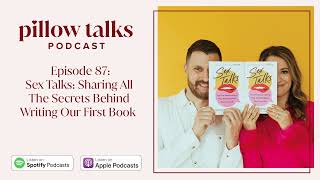
Vanessa and Xander Marin, hosts of Pillow Talks, walk through writing and publishing their book Sex Talks: The Five Conversations That Will Transform Your Love Life. They drafted a 104-page proposal with agent Wendy Sherman, narrowed 16 conversations down to five, and sold it to Simon & Schuster. The audiobook was recorded in a closet studio, and John Gottman wrote the blurb.
Questions this video answers
Sex Talks: The Five Conversations That Will Transform Your Love Life.
Simon & Schuster; available February 7 (year given in episode: 2023 release mentioned).
104 pages.
Original: 16 conversations; Final book: 5 conversations.
Rochelle (Rachelle) Fredson.
Chapters
Sex Talks gives you the sex education you wish you'd had, the reassurance that you're normal and not alone, and the tried and tested tools you need to create the sex life you deserve.
Shut up and take my money.
Hello and welcome to the Pillow Talks podcast. We're your hosts, Vanessa and Xander Marin. I'm a sex therapist with over 20 years of experience.
And I'm just a regular dude. We share the ups and downs in our relationship relationship. While giving you step by step techniques for improving yours.
Make sure you subscribe for your weekly double date full of totally doable sex tips, practical relationship advice, hilarious and honest stories of what really goes on behind closed bedroom doors, and so much more. It's the sex education you wish you'd had. We've got a good news, bad news situation for today's podcast episode.
Uh oh. We don't usually start like this.
Good news is we wrote a book.
Wow.
Bad news is there are no songs about books for you to sing to kick off this episode.
Really? There's no songs about books? I feel like there must be.
I mean, I guess it's not a very sexy topic to sing about. Like, what are you gonna sing about a book?
Reading Rainbow Song. It's in a book. Reading Rainbow.
You still don't know the lyrics? Try it again.
I have no idea. It's something. It's in a book. It's Reading Rainbow.
If you had to write a song about our journey of writing a book, what would one lyric be?
It was a long slow burn.
No, you would have to sing it though.
A burn so worth it.
Sing it though.
It was a long slow burn. But a burn. That was worth it.
Is it a country song?
Sure.
Sex Talks. The country song?
Yeah.
The number one country hit by Xander Marin. Wow. Thanks to Rocket Money for supporting Pillow Talks. Rocket Money will quickly and easily identify your subscriptions for you. So you can stop paying for the ones you don't want. Stop throwing your money away, cancel unwanted subscriptions and manage your expenses the easy way by going to rocketmoney.com pillow and thanks to Cozy Earth for supporting Pillow Talks. Cozy Earth gave us an exclusive offer for Pillow Talks listeners. 35% off site wide when you use the code Pillow Talks. Okay, well, thank you for kicking us off with that. So, yeah, if you have not heard us talk about this by now, you probably have. Let's be real. But we wrote a frickin book.
Hell yeah, we did.
I'm really excited about it and it's.
Coming out real soon.
Yes. Sex Talks the five conversations that will transform your love life is being published by Simon and Schuster and it will be available February 7th. Oh, so close.
I thought you were gonna say OMG.
I mean that's February 7th. OMG. And oh, so close. And oh, an early birthday present for me.
Oh, hell yeah.
Because my birthday is the 13th. So today we are gonna take you on a wild journey. The ups and downs, the heartache, the tears, the exhilaration, the joy of writing sex talks.
But if you're ready to pick up sex talks right now before even listening to this, which, which hey, you might be, you might be like, you know what, it's time that I just preorder the book. You can go do that atsex talks book.com and maybe later in the episode we'll give you a little more detail on all the good stuff that you got. I was trying to say good and get great. All the great free stuff that you are going to get in addition to just the book. When you pre order the hardcover, actually you're going to get way more than, way more in value than just the.
Price of over $100.
Yeah, like, yeah, many multiples of value. We are, we're. It's probably a money losing thing that.
We are doing for sure.
But it's all for the sake of the book. So go to sex talks book dot com. Sex talks. That's talks, plural. Sex talks, book dot com.
Look at you making a transition and doing a little pitch for the book that we didn't even plan to do. Right there.
Oh yeah, baby.
You know we are going to talk about all the freebies that you get. But I just had an idea for a new one.
Oh boy.
Maybe if somebody, if they like or bulk order, do a bulk order, like 10 or 15 or 20 or more books, something like that. Like for your book club, you order a whole round of them. You can get a custom song by Xander Marin. Oh, like you're one sentence.
So like you're putting me on cameo now? Yeah, what you're saying. Wow. I mean I'm like, I'm like athletes celebrity on cameo.
Z list. Yeah. I mean I think there would be some people who would do that to get a custom song by you.
I don't know. Might have to be 100 bucks.
I mean that's very valuable if you order 100.
If you want to order 100 bucks, I'll write you a whole fucking song.
A whole song. Will you dance to it too? For a hundred books? That's a lot of books.
Sure.
Okay. A Hundred books.
Yeah. Okay. If you're serious about this and want to. Want to do this, let's chat.
I'm just dying imagine because we would, in order to do that, we would have to, like, do some sort of special order with Simon and Schuster. Like, they would have to coordinate it. And I'm just dying, like imagining calling them and feeling like, guys, yeah, we need traded a custom song and dance for a hundred dollar or one hundred book bulk order.
Yeah. Be like, okay, can we get some pricing for a 100 book order?
You'll get a discount if you. I think if you order in bulk, you can.
I don't know. It's totally out of our hands.
We'll find out. Okay, so let's walk you through the timeline of Sex talks.
Yeah. How did we get to this?
Twists and turns?
How did we get to a point where Xander is selling cameos for a book? Because that sounds like a good story.
So to kick us off, let me just read the description of the book. We worked on this description for a very long time. Really wanted to get it right.
This is the back of the book, right? Like you're just literally reading the back of the book to people.
Why is it so hard to talk about sex even with the person who regularly sees you naked? You know, communication is important in a relationship, but you just don't know where or how to get started with such a sensitive subject. Maybe you've never talked about sex at all and just the thought of it is already making your palms sweat or you're feeling so disconnected from your partner that sex is the last thing on your mind. Maybe you're too scared to be honest about what you really want or you have no freaking clue what you want, so you're not sure how you could even tell your partner anything helpful. Sex Talks is here to change that. Together, sex therapist Vanessa Marin and her husband Zander show you that the best thing you can do for your sex life doesn't even involve taking off your clothes. Sex Talks guides you through the five essential conversations every couple needs to have to create an extraordinary sex life. Acknowledgment, AKA sex is a thing and we have it. Connection, AKA what do we need to feel connected to each other? Desire, AKA what do we each need to get turned on. Pleasure, AKA what do we each need to feel good? Exploration, AKA what should we try next? With gripping storytelling that ranges from tear jerking to laugh out loud funny. And an intimate peek at what really goes on behind other couples closed bedroom doors, Vanessa and Xander share their successful Advice that has already helped hundreds of thousands. Sex Talks gives you the sex education you wish you'd had, the reassurance that you're normal and not alone, and the tried and tested tools you need to create the sex life you deserve.
Shut up and take my money.
I got into my audiobook voice a little bit for that one.
That was good. You guys are getting a free preview.
I'm excited about the book. That sounds good, doesn't it?
Sounds real good.
I want to read it. Okay, so I will say the timeline for Sex Talks probably goes back to about 1988 or 1989. Little Vanessa spending way too much time in the Santa Barbara Public Library. I can. I can, like, smell the Santa Barbara Public Library right now. The scent of being in the stacks. I was such a huge bookworm. Like, enormous bookworm. I did spend an embarrassing amount of time in the public library. Know my parents were there, but, like, alone.
Are you sure they didn't just, like, drop you off and they're like, great date night. Library, library.
When I got older, they did. They just dropped me off, and I would be. Just be there for hours, and then they'd come pick me up. I don't know what they would do, but I love reading, and I loved the public library.
Talk about free babysitting. God.
Chaucer's bookstore in Santa Barbara. That was my other haunt. But, you know, I couldn't buy as many books as I could read, so the public library was usually the better bet.
A bit more cost effective.
Yeah. So I was such an enormous bookworm. Just being able to get lost in books and, like, go into a different worlds and learn so many things. Like, I read weird books about anything and everything. I went through a weird period where I got, like, into. I read about, like, crime stuff and how you solve murders. That was, like, older, you know, when I got a little bit older. But, you know, I. Birds, like birds in Africa. Let me read all the books about it.
Wow. What a nerd.
I was. I mean, I'm not denying that at all. So I loved books. I just loved, like, reading them, holding them, cracking open the spine of a book for the first time.
Oh.
Oh, my God. And so, yeah, very early on, I just had this dream, like, one day, I want to see my name on a book. How cool would that be to see my name on a book that I wrote?
Well, if you want to see Vanessa's reaction when she did finally see her name on a book, we have it in a reel somewhere on our Instagram. We might Have.
We have it in. We have a sex talks highlight on our account.
We'll have to put a link. We'll put a link in the show notes to that specific highlight. And in there is a video of us getting. Receiving the box of advanced reader copies, which are the copies of the book that go out to reviewers, influencers, etc. People that you want to read the book so that they can, you know, partner with you to help publicize the book. And Vanessa, seeing her name on the book, there were a couple tears. It was a joyous occasion.
So I knew I wanted to write a book from very early on. And it really, you know, wasn't until I started pursuing this career that I realized, like, oh, I can write a book about sex. That'll be the thing that I write about. And so I've had this idea in my head. You know, I started this business. Gosh, 24. Well, I started seeing clients in 2013 in my own private practice. And so I just had this idea in the back of my head of, someday I'll write a book. Someday I'll write a book. Someday I'll write a book.
Yeah, it was. I mean, my recollection is that it was. I always knew that you were going to at some point, but it was sort of. It was always like, yeah, when the time is right, I will do it. And I never imagined that it would be. That it would be so. I don't know, so, like, well, intertwined with our business. I kind of thought it would be like, oh, Vanessa's gonna, like, take a hiatus from whatever the hell she's doing to write this book. Like, I had a different idea of how it was gonna go, I guess.
Yeah. So we made the decision to really, like, pull the trigger and start trying to do this around the end of 2020, which, to be totally honest, was, like, one of the worst times of my entire life. Like, 2020 was a rough year for most of us. We were going through a lot of stuff, and it had just, you know, it'd been a hard year in the business. There was just a lot going on. And I don't. Honestly, looking back now, I cannot fathom why that felt like the right time to get started on this process. Maybe. I don't know. Maybe I just wanted something, like, good and exciting to be going on.
Yeah. Like, something different to do something different.
Yeah. I mean, it. You know, it was a tough year for the business. Like, we. Yeah, it was just a tough year. And so there was, like, a bit of space to take on a big project like that. So I really am truly baffled, looking back, thinking about, like, why did we decide to go for it at that point? But we did around the end of 2020, I think.
Some other stuff. It had been. It had been a challenging year. 2020 had been a really challenging year. I mean, just, you know, in the sake of full transparency for our business, 2020 was not a profitable year. In fact, we lost a bit of money. We were able to make our payroll. We were able to pay ourselves sort of like a minimal. Like a living wage. But beyond that, our business took a loss after, you know, a couple profitable years before that. So it was.
We'd been on a good trajectory. We felt like we were growing, and we were finally starting to gain some traction. And then 2020 was like, whoa, we were going backwards.
Yeah.
Which is the case for pretty much all small businesses at that time.
Yeah. No, I mean, the interesting thing is that the pandemic did transform our business, and it did end up being, you know, it did end up supercharging our business as well. But it wasn't until later in the pandemic that everything changed for us. In the beginning stages of the pandemic, like, in 2020, nobody really wanted to buy our courses, it seemed like, because, you know, I think people went into lockdowns in the pandemic being, like, okay, cool, so we're going to be, like, at home for a couple of weeks, working from home, living together, you know, but. But we got to watch our expenses because, like, the economy is going down the drain, and, like, we gotta be careful. So, you know, spending money on something like sex, which seems extraneous or extra, was totally off the table. And then I think it was towards the end of 2020, honestly, that people were like, oh, this is a real thing that isn't going away. And, like, maybe we're going to be working from home forever. You know, I can't. Like, forever things may not just go back to the way that they were overnight anymore. And then people were, like, settling in for. Oh, we have all kinds of relationship issues, and it's. It's time to start investing in ourselves. So we were starting to see. I think when you started thinking about writing the book, we were starting to see some exciting things happening in our business, and we were starting to see some growth in social and, like, you know, some cool opportunities. And so I think it's. It felt like a scary time, but also an exciting time to start.
So what ended up happening was I did a podcast interview With a woman. I was on her podcast and we were just chit chatting after the interview and she was asking me what kind of projects I wanted to work on in 2021. And I mentioned that I wanted to write a book. And she said, oh my gosh, I have to put you in with Rochelle Fredson. She's a book proposal coach. She worked with me on putting together my book proposal and I was able to sell it to a publisher. She's incredible. You have to talk to her. So at the time, I was just barely had started, you know, researching what does the process look like to actually write a book? I barely even understood what a book proposal was.
So it's not like you just spend a year writing a book and then send it around to a couple people immediately gets published.
No. So I, I realized like, okay, this, okay, I've got to figure out this whole proposal thing. So I started poking around at Rachelle's website and looking at what she does and how she helps. And at first my thought was like, I could do this on my own. I think I can just google what to put in a proposal, how to make a good proposal. Like, I think I can do this on my own. And that especially came up when I was looking at the prices of what her services cost. We ended up hopping on a call and I just, I really liked her and we hit it off really well. She was already giving me ideas. The wheels started turning, but it was just a really, really scary idea to invest so much money into doing this proposal when it was like that wasn't any guarantee that the book was going to get published. She was very transparent about that. Like Xander said, we were coming off a tough year. So the idea of making this is one of the biggest investments that we'd ever made in our business. So the idea of making such a big one at such a tricky time when I was having this feeling of like, I think I could do it on my own, you know, it was really terrifying.
Yeah, especially it's an investment in something that, you know, best case scenario is not going to pay off for a couple of years. It's, you know, it's not like, oh, let's invest, you know, some amount of money in ads or something like that.
Yeah.
Where it's like, oh, we're going to pay for the ads and then we, you know, we bring people in to buy our stuff or something like that. Like, it was like a very long term investment.
So I do want to be clear though. Rochelle Fredson is worth every frickin Penny. So I did decide to take that leap of faith. I signed up for a coaching package with her to, like, walk through all the steps of the proposal process.
Who. Who encouraged you?
You did.
Who encouraged you?
I will. I'll give you credit. I'll give you credit. I was really, really scared to do it. And you were like, you should do it.
And who encouraged you to do the. The one on one with her instead of the package?
Yeah, at the time, she had a couple of different options. And Xander. Xander really believed in it. And you were willing to make that investment in it and, like, take that leap of faith. I was a lot more scared and I. I might not have done it if it hadn't been for. For the ways that you really encouraged and pushed me. And so, yeah, you were.
You were super scared. You were super scared, and you're in hesitant. I understand why. It was a scary. It was a scary time. I mean, I think this is one of those situations where I think just being in a loving partnership is so important, like having a partner that goes to bat for you and believes in you. And sometimes it's hard to make those investments in ourselves individually without having someone else on our team rooting for us.
Oh, yeah, absolutely. So Rachelle and I started working together, and what's really cool about her is she used to work for one of the major publishers.
She's quite senior.
Yeah, she was on that other end of seeing the proposals come in. So she was able to give me all this insider information on, like, here's what the publishers are looking for. Because I came to our first, like, meeting with probably 20 different ideas of books that I could write. And she was able to just be so laser focused. And by the end of that first session, we decided, okay, this is going to be a book about communication. And honestly, I. I think that was Rochelle's idea because she had started following me on Instagram and she's like, this is this really cool thing that you do is that you're talking about sex so openly. You're talking about it with your husband. There's all these conversations about it. Like, I think that's the key. Like, she was really the one who. Who found, like, this is the thing.
Yeah, I mean, I think so. You. Sometimes you need. You need a third party. You need someone that's completely detached from your own brain or your own history of, like, this is what we've been doing for the past five years to be able to really call out what you're actually doing. I think we Didn't. We didn't really see what we were doing in the same way that she did. And that's because we just, you know, we kind of have our own blinders on of, like, oh, well, this is. This is how we've been doing things forever. You know, we didn't really. We didn't really put any value in, like, how we're showing up on social and, like, the types of conversations that we were helping people get started, we were like, oh, well, we have to do social, because that's, like, what a successful business does. And then it was. It was so valuable to hear from someone else being like, no, like, this is what you are actually helping people do. And that really helped us believe in ourselves and be like, oh, wait, we're not just doing this thing because we have to. Like, we're actually making a huge difference. And she was able to say, like, hey, like, I've. I have used this stuff, like, these tips that you give me myself, and it's totally transformed my own relationship. Like, it was so valuable to get that. Like, I think that even you just working with her totally transformed our own confidence in our business.
Oh, yeah.
In what we're doing. Like, we would not be on the trajectory that we are now. We wouldn't be doing stuff like this podcast if it weren't for, you know, if it weren't for you going through this and really starting to see the value of what we actually do.
And that's why I say Rachelle Fredson was worth every freaking penny.
Oh, yeah. Even after that very first session, I.
Think I was like, one session was worth the. The entire price that I paid for this. Okay, so Rochelle and I worked together, and we wrote the book proposal for Pillow Talks. It was not Sex talks. That was not the title of the book. It was pillow talks. 16 conversations to have with your partner that will transform your sex life and create true intimacy in and out of the bedroom.
Oh, it's so. It's so funny going back and hearing these, you know, these old. So, you know, title and subtitle. Because this was before we. This was before we started the podcast, right? Yeah, it was, for sure. Yeah.
We had the name Pillow Talks, and we're like, I love Pillow Talks. It's so cute. It's just, like, so sweet. It captures that energy that we want to bring into it. But, yeah, we thought this was going to be the book, and we were thinking of the podcast around the same time and thinking, oh, we can have them be the same name. So it's Kind of like Pillow Talks becomes our brand.
And also I'm just going to leave this here for you guys listening along. Keep in mind, remember that. That subtitle that we had, the six. The six. The 16 conversations. No, no, no, I'm not going to roast you. Okay. We were all in on this. No, I think, I just, I just think it's. It's really interesting how the idea changes over time. So. So keep in mind initially was that Pillow Talks, you know, the 16 conversations. We'll get back.
We have talked before about how we're bad at naming things. I in particular am bad at naming things. I always go for these mega long, like ultra descriptive titles.
Oh, yeah. Well, I mean, also at the time, I think you were, you were not thinking that this was necessarily going to be like a pop culture book. That it was. That it was going to be more of. In the, in the sex book space and it was going to have this long, long title. But I don't know, I'm just saying keep remembering the 16 conversations. We'll get back to. To that and how that changed and why that's important.
So the interesting thing about the proposal is it's so much longer than I ever thought it was going to be. I'm looking at it right now. It is 104 pages.
Yeah, I mean, it's basically.
It's like, it's like a quarter.
It's like a quarter of the book. Because included in the proposal are a number of sample chapters.
Yeah. So there are a lot of things that you have to go into in a proposal. You have to give like a whole overview of the book, your bio. You need to talk about who the target audience is. Who do you think is going to read this book? And you even have to compare it to other books that are in the same kind of space. Like, what's different about your book? What's going to make it stand out? Why would a publisher want it when you know this other book already exists? You have to come up with a marketing and promotion plan. Like, how are you going to make this book successful? Who do you know? What can you do? What favors can you call in? What are you willing to do? Are you willing to make ridiculous offers of people? If you pre order, you get all this free stuff that loses money for your business, but you're willing to do it for the book. And then you have to do summaries of every single chapter. So there are 16. 16 conversations, plus an introduction, plus in a little outro.
So like on basically an Outline for every chapter?
Yeah, an outline for every chapter and then actual sample chapters. So I wrote four sample chapters for this, like, fully written out. And this is just the proposal.
So after you were done, I was like, oh, great. Well, basically, like, we're done. Yeah, Well, I edited everything for Vanessa because I'm. I'm actually. I'm a pretty good editor. I'll toot my horn. I'm good at. I'm really good at grammar and sentence construction, and I'm not very good at starting with a blank page. In fact, I'm really bad at that. Or I not really bad. I shouldn't say that. I struggle. I struggle with starting with a blank page, whereas Vanessa doesn't. But I do really well, and I have something that I can react to and. And kind of mold a bit. And so I remember Vanessa finished the proposal. I had read through it all, given a ton of feedback. We felt so good about it. I'm like, hell, yeah. Like, a quarter of the book is already written. Like, we got this.
Oh, no, we did not. So another thing that emerged in the proposal process, I honestly can't remember if it was my idea or Rachelle's idea originally, but we started talking about the idea of bringing Xander into the book because Rachelle was definitely pointing out, like, you guys are doing this really cool thing on Instagram that it's the two of you talking together as a real life couple. So one of us had the idea of, like, what if we have Xander just do these little sections in the book, and originally they were called Xander's Take, or.
No, no, no, it was Xander's Corner.
Then in. In the final proposal, it was Xander's Take.
Yeah, we. We changed, I think, in the book. Right? It does say.
It says in the book itself, it's the other half.
Oh, yeah, it's the other half. It's. I can't remember. We've been through a lot of iterations, but originally we kind of jokingly called it Xander's Corner.
So the next step in the process was looking for an agent who would be willing to represent us. And this is another thing I didn't really realize about the process. Like, you have to have an agent who serves as your go between with the publisher. So we interviewed a couple of different people. That was another great thing that Rachelle did is she was able to make us connections with agents. And we had conversations with two of them. Wendy Sherman, who ended up becoming our agent, and one other person. And. And this other person that we interviewed was really, really Nervous about taking us on. And it was just like, look, I want to be transparent with you guys. Like, sex books are hard to sell. They don't sell very many copies. They're not very successful. Like, there's a lot of, A lot of headache around trying to sell a book like this.
Yeah, I think she'd been burned. Yeah, she'd been burned in the past, like, you know, with another sex book that she really loved. She felt really passionate about and you know, she struggled to sell. I don't, I can't remember if she struggled to sell it or she did sell it, but then it didn't do very well. And. Yeah, and it was, yeah, that was a, it was a challenging energy of like, oh, she's like, I, you know, I want to do this so bad. I love this book, but I'm scared.
Yeah. I appreciated her honesty so much and it was a wake up call for us. I mean, obviously we knew there were going to be challenges, but just hearing somebody say like, this is. It's really hard to make a successful sex book was like, it was, it was hard and sad.
Yeah.
So we ended up deciding to go with Wendy because Wendy was just, she was so excited about the book and so confident about it and just, it felt like she really got us right from the get go. So we just really vibed with her right from the get go. It felt like such a natural, easy fit. So we went ahead with Wende. And so the next step was Wendy then taking the proposal and showing it to the major publisher. So there are five major publishers. Like in the US there are some smaller publishers, but like, you know, most people want to be with one of the big five. So Wendy had all of her contacts at different publishers and she was basically shopping the book out. Hey, let me show you this proposal. It's amazing. I think you need to read it. And so really, like publishers will not look at a proposal unless you have an agent.
Yeah, especially. Yeah, especially unless you have like a big name agent who they know and recognize. Like, it's. I imagine it's the same in Hollywood when it comes to movie, you know, screenplays or TV shows and stuff like that. Like, it's just, it's a, it's a challenging, It's a challenging place. Yeah, a lot of competition.
So Wendy worked real, real hard for us and we ended up with two different publishing houses. Two of the top five were interested in buying sex talk. So this was very lucky. Like, a lot. This doesn't happen like a lot of proposals, just straight up, don't get sold. Or, you know, if they do, maybe there's one publisher that's interested in you, or it's one of the not top five, you know, so we got super lucky. This is very, very exciting for us. And so then it came down to us having to talk to two different editors. So each of the two public publishing houses that was interested in the book, there was an editor that we would be working with who would be our editor. So it kind of this, like, it's this funny feeling each other out process because they're deciding if they want to buy the book, and you're deciding if you want to sell it to them. So it's like this. It's this interesting dance that you're doing with each other.
Yeah, well, it's. And it's like you are trying to decide, do you want to sell the book to them and do you want to work with that person? And so there's a weird. There's a weird kind of play between they're offering you different amounts of money, and it's like. And it's like, well, do you.
Money comes into it? Then it got extra tricky because we liked both editors that we spoke to.
Yeah. So it's like, do you want to go with, you know, the better offer or the person that you feel more comfortable working with? Like, how do you balance that? That's weird.
And I think that the editors were also trying to share with us ideas that they had for the book, for promoting it, for, like, shaping the book and how to pitch the book. And I think they're probably being really conscious of not giving away, too. Like, they want to show you we have really good ideas. We can make this book even better. But they probably don't want to show you too much in case you don't p pick them. And then you're kind of, like, taking their ideas, going to another publisher. So it's a very tricky dance. And I'm really glad that we had Wendy on our side helping us navigate it. And she was also very transparent with us about who she recommended us going with, like, who she thought was the better fit for the book. Rachelle gave feedback, too. And so ultimately, we felt very confident and clear in our decision that we wanted to go with Simon and Schuster and our editor, Michelle Herrera Mulligan. So the cool thing about Michelle is that she came from the magazine world. She worked at Cosmo for a really long time, which I've shared before. Like, Cosmo was my early sex education. Like, I found a stack of Cosmo magazines that the college kids, college girls who lived next door had, like, thrown out into their cycling. I squirreled them away into my room at, like, I don't know, maybe I was about 10 years old, and I read all those articles, and it was just fascinating to me. That was really one of my early experiences of becoming so fascinated by sex. So Michelle came from that world, but she was also one of the people who was working really hard to change the vibe at Cosmo of, like, you know, Cosmo had a reputation for having a lot of. I mean, honestly, let me just be totally blind here. Like, a lot of crappy content. They have a lot of body shaming stuff and a lot of, like, just weird sex tips.
Yeah, I mean, this was like, late. Like, late 90s, early 2000s. There was just lots of, like, ugh, gotta get rid of that belly fat and, like, put a donut over his dick and eat it off. Like, that's gonna be sexy.
I share some of my favorite tips in the book. So she, you know, was really working to make the content more progressive, more inclusive, but she still had that magazine editor's brain of, like, how do you pitch something in the most. Like, in the punchiest, most digest? So she was sharing some really cool ideas in those meetings with us. And what I really appreciated about her is she brought this attention to diversity and inclusivity, you know, calling out certain ways in the book that we could make it more inclusive. And I just really appreciated, like, her sensitivity, her thoughtfulness, her diversity herself, you know, and so it just felt like a very, very good fit with the book. So we picked Simon and Schuster. Wendy went to bat doing the negotiations for us, and we sold the proposal to Simon and Schuster. So how it works is they give you an advance, which is an amount of money that you basically like. You get it before the book comes out, but you get it in installments.
Yeah, they call it in advance. You get some of it in advance.
Some of it in advance.
You get, like, half of it. We've gotten. I think we've gotten two out of four payments at this point. I think we got the third quarter of it, what, once on February 7th? On February 7th. And then we get the final quarter, maybe like a month after, sometime later. So it's. Yeah. Not advance at all.
So we get that money, but then basically we have to make up for it in sales. So, like, once the book starts getting sold, we don't make any money immediately. We're, like, kind of paying back the advance.
Yeah, we make Back the advance.
It's like we got a loan from them kind of.
Yeah, yeah. Part of, you know, they sell you on the advance and then, you know, negotiating specific royalties that you get for each type of sale, whether it's hard cover, later when they produce a soft cover or paperback, whatever you call soft cover, paperback. Like you got a different royalty amount. Yeah, you, you get a certain, you get a certain amount for like every Kindle sale, for every audiobook sale, etc. And so, yeah, we, we rack up those royalties, but we don't get any of them until we make back the advance. And what we learned is that most people, most people don't do that.
Yeah, most people don't make back the advance and most books don't make very much money. This was something that really surprised me again, especially being such a huge bookworm and just thinking like, well, doesn't everybody, like, buy a hundred books?
Yeah. Where it's like, oh, it's like, oh, it's obviously a success if it's in the bookstore.
Yeah. And it's actually not. But it's not. Yeah. What. Oh, God, there's some wild statistic, like the average book makes. Makes $500. Like it's nothing, you know, and so our advance, we got a generous advance, you know, compared to what other books are getting sold for. But it wasn't, you know, that much money. It wasn't that much. And especially when you're breaking it up and, and getting it over the span of, you know, one to two years.
Well, yeah, it's especially not that much money if your plan, if all you are doing is writing the book like we, we fortunately are. We're running, already running a business. In addition to writing, we're running a profitable business. So we weren't depending on that advance to survive, but many authors, you know, people who are, Whose profession is just being an author, like you are using that advance to live on for the period of time it takes you to write the book. And then, and then we'll talk about this. The whole process of getting it published, which takes a whole lot longer after you write it before it gets released, when you would potentially start, you know, making. Having the option to make back the advance and then maybe make more royalties in the future. So it's a. I mean, I have so much more appreciation for the challenges of, of just being a pure author where, like, that's your, that's your source of income. It's. It's challenging. It's. It's not easy unless you're really, really Big and famous and, you know.
Yeah, I mean, if you're like a Stephen King, you're fine, you're doing fine, you're making a shit ton of money. But, yeah, most authors make very little. And yeah, even on the book itself, you know, we make a couple of dollars for every book sold, but yeah, at best. Yeah, at best. So it's just books are not a huge money maker at all. So that was, you know, just really interesting to learn. So once we sold the book to Simon and Schuster, we kind of. Of took some time to regroup with Michelle and look over the book again, talk about what we wanted it to look like. So Michelle had a big idea, a.
Kind of scary one.
She said, 16 conversations is bananas.
No one wants to do 16 of anything.
No one wants to. Can you make it five? And I said, no, I cannot. Ma'. Am. Ma'.
Am.
All 16 of those are very important. I cannot cut them down to five. That's wild. I cannot do that. But she. And, you know, she was very respectful, and it was always like, this is your book. It's, you know, ultimately what you want to do. We will support it. But I really think that this book should be five. Five conversations. Five feels manageable. It feels easy. And she kind of walked me through the conversations and showed me, like, what if you combined these topics? Like, it's so much more powerful when you talk about these together rather than dividing them all out.
Yeah. So instead of, like, in very tactical individual conversations, it's five broad categories of types of conversations that. That you should have.
But there were certain topics that we just ended up straight up cutting out of the book. And it was.
We gotta say something for number two. Right?
Yeah. I mean, there was like, I'll give you one example. Chapter 14, Vibrators and Lube and butt plugs. Oh, my.
Oh, my.
That chapter got canceled. There is no more talk about vibrators in the book. Well, I mean, there's more. Probably they're mentioned, but there's not a whole.
Sure, I can hear about vibrators and butt plugs. The word vibrators in the book somewhere, probably more than once.
Yes. So it was a really interesting conversation. But we did ultimately realize, like, yeah, you're right. I think five conversations. And we realized as well, when you boil it down to five, there can be this kind of fun self identification element of it too. Like, ooh, which of the five are weak? Like, which of the five conversations are we really struggling with the most? Or like, would be most beneficial for us to have Rather than like, if it's 16, you're not like, oh, yeah, that chapter about butt plugs. That's me. That's really me.
Changed my life.
Yeah. So we narrowed it down and the title changed. Michelle was like, I really think this book needs to have the word sex in it. We were initially going into it thinking, like, pillow talks. Like, don't, don't be too aggressive with it. Having sex in it. Because we want people to feel comfortable. You know, they're on the train reading it in public. You know, like, we didn't want people to, to feel embarrassed taking this book out and trying to read it in public. But Michelle convinced us, like, no, Sex Talks is the better name. It's, it's. We should just lead with it.
Yeah, normal, Normalize talking about sex. Don't beat around the bush. Don't beat around the pillow.
And we trimmed down that long ass subtitle and we had another huge debate there that I honestly, I'm still not completely sure where I land on this one. So we changed the subtitle to the five conversations that will transform your love life. I did not like love life.
No, she did not.
I did not. I thought I was like, you know what? Love life, to me, that feels like I'm in my early 20s and I'm like, having brunch with my girlfriends and like, let's talk about our love life. Or even younger, like 17, you know, like, let's talk about our love life. I thought it should be your sex life. But then I was like, well, we have sex talks. You don't want to have sex life. Also in the subtitle, I like.
So I like love life.
You like love life.
I do like love life. And because I think love life is a bit more inclusive of stuff just beyond sex. And the. Because the book is, is about more than just sex. It's about, it's about how your sex life contributes to your relationship. And, you know, it's a more holistic thing. And so I like love life because, you know, sex life is obviously included in your love life, but within your love life is also like the level of connection that you feel, the quality of the conversations that you have, the dates that you go on, all kinds of stuff. So I felt like, you know, after I got, you know, some convincing from. From Michelle, I really, I came around to love life. I think it's a. I think is a good term versus saying like your sex life and relationship or something.
Well, I maybe like your relationship. I think just relationship could have worked so we're curious to hear what you think. Do you like love life? Let us know. Come to Instagram. Vanessa and Xander and DM us.
I mean, the real question is, how are we ever going to know what was the right decision?
We can't. Before we go any further, let's tell you a little bit more about Rocket Money. If one of your New Year's goals is to manage your budget better and save money, then who wouldn't want that? First of all, of course, then definitely check out Rocket Money. Rocket Money, formerly known as True Bill, is a personal finance app that finds and cancels your unwanted subscriptions, monitors your spending, and helps you lower your bills all in one place. Rocket Money gave us this statistic. Over 80% of people have subscriptions that they forgot about.
We are part of that 80%.
Yes. We have definitely paid for subscriptions for things that we did not use for a very long time. I think. I think last week we told you about a subscription we were paying for for over a year.
I mean, it seems like a good, like, oh, I'm gonna use it in a couple months. And then a couple months go by, and it's gonna be a couple more months, and then a year's gone by and you spent hundreds of dollars on something you're not using.
Or another one that comes up for me a lot. Is that like free trial? But you have to give your credit card, and you try to remind yourself to cancel if you don't like it before the 30 days or whatever it is. But then you don't, and you get charged for it over and over again. So. So Rocket Money makes canceling subscriptions as easy as the click of a button. All you have to do is find the subscriptions that you don't want. You press cancel, and Rocket Money will cancel it for you so you don't have to call customer service. Wait online. Go through the whole rigmarole while they try to convince you not to cancel. The worst rigamarole.
Yeah, the rigamarole.
That's the worst. That's a mom word. I don't know where that came from. Stop throwing your money away. Cancel unwanted subscriptions and manage your expenses the easy way by going to RocketMoney. That's RocketMoney.com pillow RocketMoney.com pillow and let's tell you a little bit more about Cozy Earth. So we have tried out two sheet sets from Cozy Earth.
They have quickly become the only sheet sets that we use.
They are so wonderful. They're very soft. Immediately coming out of the package. But once you get like three to four washes in, it's like game changer level. It's really. I mean I remember when this happened for us, the crucial turning point. And I remember getting into bed and just thinking, I have never felt sheets this soft in my entire life. And we were just about to hit that crucial point with our second set. So I'm very excited for that.
Oh yeah. I mean like not even like fancy hotel sheets. Like these are the best.
Oh absolutely. They're also temperature regulating so they keep you cool and comfortable all night long. They have a, a 10 year warranty on all of their products. And most importantly, 100 night sleep test. So you can try it out for 100 nights. If you don't love it as much as we do, then you can get a full refund. So that's an incredibly generous return policy. 100 entire nights of sleep. So if you want to check Cozy Earth out, they gave us a very generous discount code as well. I don't think we've ever had a discount code this high before.
Yeah, this is a, this is a great deal. Just they delivered. Cozy Earth is stepping up and knocking it out of the park here.
You can get 35% off site wide when you use the code. Pillow talks@cozy earth.com the next step was writing the frickin thing. So that, that was a real interesting moment of like oh, it's basically done. We wrote this long ass proposal. We got the whole thing.
Yeah, because oh no, because it felt like oh well, you know you have that outline of everything, every chapter which was quite thorough even though it wasn't fully written. And we had like four chapters already written. But then it was like oh well, we changed from 16 to 5. And so some of the stuff that's already written just doesn't really fit, doesn't apply anymore. It's gotta be totally reworked. We don't really have an outline for all the other chapters now. And that was a. Oh, oh crap moment.
Yeah. And the other oh crap moment was we were already starting to look ahead to when do we want to release the book. And February just felt like such a no brainer.
Yeah, Valentine's Day.
Valentine's Day. This has to be a Valentine's Day book. And that was by this point the whole process that we've outlined so far took so long. So by the time we sold it, I needed to write the book in four months. Typically they give authors six months with this kind of like wink, wink, nudge, nudge. We know you're gonna take longer. You're gonna ask us for extensions, and we'll do it. So a lot of authors stretch longer than that, but this was, like, four months. There is no wiggle room. And I was very confident. I was like, I'm a fast writer. I can do it no problem. I even sold that as part of, like, when we were selling it, you know, shopping around to publishers. I was like, I can turn this around as fast as you guys need.
Oh, yeah. Vanessa is. I mean, I gotta give her credit. She is so fast. Fast at writing. It blows. It blows my mind.
And I thought I was like, four months. That is, I could write it in a month. I probably write it in two weeks if I wanted to.
Well, I'm glad. I'm glad you didn't commit to that.
Oh, my God. So I was very confident about four months, but holy, that was so hard. It was so hard. And I. It's like I had all the content already. I had the outlines, I had all the thoughts. But you cannot describe the process of writing a book unless you have written a book yourself. You just cannot understand what a beast it turns into and how hard it is to, like, there's so many thoughts, so many ideas. How do you organize it? And it's this constant, like, thinking about, well, I want to have stories in this, but now there are too many stories. And I need to talk about this topic, but I don't want it to feel dry. And. And, well, I talked about this at the beginning, and I need to loop back around to this, like, maybe halfway through. It's like, it's so much. And our business was starting to pick up steam in 2021 as well. And, like, realizing, like, you know, we're busy with other stuff, and I'm trying to, like, squeeze, you know, so it's not like I could just go check off and go to some remote cabin in the woods and just write it and do nothing else for four months.
Yeah, we were working. We were hiring people. Like, hiring people takes a lot of time and energy.
And we were even growing, too. Like, I wrote the book. I wrote it in Costa Rica on my birthday trip. I worked on it in the Maldives when we went on our anniversary trip. Like, I brought this fucking book with me all over the place. So I wrote it in those four months, and then we went through the editing process.
Oh, and we moved in the middle of all that.
Oh, don't worry. We're coming back to that.
Okay, good.
So I finished writing, and I'm like, I Did it. I wrote the book. Now Michelle's just gonna come in and, like, fix my grammar here and there, but I'm done.
Oh, and I wrote my sections too, but mine, Mine were pretty easy because they're. You'll see when you get the book. I mean, it's a couple paragraphs in each chapter, so I was able to get mine done. I was a little scared about mine just because I don't. I'm scared of the blank page.
But we'll come back to that in a minute too.
But I got mine done too.
You did.
So I helped you out a lot.
Done. You helped me out a lot. And then I started getting edits back from Michelle and I had another oh, shit moment.
A slight nervous breakdown.
Oh, for. Yeah, for sure. So Michelle is a great editor and had a lot more to say than just, oh, you know, the grammar is a little off right here.
Like, wasn't it just, oh, this is. Is perfect. Let's just clean up the grammar and turn it in.
There were huge changes like that were. Yeah. Enormous conceptual changes of, you know, moving things around and removing stuff and adding stuff. And so it was this. Yeah. Just a shocker of how much I remember. I will never forget, like, getting her version back and it's all redlined, you know, with all these comments in red everywhere. And I was like, like, it really activated, like, my inner perfectionist. I was like, I remember thinking to myself, like, I thought I turned in an A book and I'm getting it back and this is a C book. And it. I felt like, embarrassed, to be honest. I mean, and she was very kind about her feedback. It was never like, this book is really bad. Vanessa.
I think she also kind of warned you about it. She was like, most, most first time.
Authors freak out about.
I freak out about this. So, like, definitely, you know, don't, you know, she. She wrote. So she had all the. All the edits in the document, but she wrote a separate letter basically summarizing kind of like what it all was. And she's like, you know, this can be really hard to read the first time you go through this process.
Yeah.
I think you were like, oh, no, it's gonna be fine. It's gonna be fine.
I know. I was like, I'm gonna turn in a great book.
And then it was like, holy as.
Yeah. And so that was very, very difficult. Yeah. I actually just pulled up that letter that you were referencing. It's a four page letter that was included on top of all the edits that she sent with like, four pages of like, this could be better. This could be better. I really think you could go deeper on this.
Well, it's interesting that you just worded it that way. This could be better. This could be better. I doubt that's what she actually said.
No, I mean that. That was the overall vibe of it. Like, here's how this could be improved, you know, and. And in some places there were. She was challenging me of like, you know, you've kind of talked about this on the surface level, but this is such a, like, a deep issue that comes up for people. There's so much pain around it. Like, I want you to, like, get into those deeper layer of emotions. Like, it was kind of like therapy in some ways. Like, you know, I was wanting to sort of dance at the surface with, like, ah, here's some fun stuff to talk about. And she was like, no, let's like, really get at the heart of the matter here. Like, how is this coming up for people? What kind of pain and emotion is coming up? You know, so it was in the end, when I look back at it now, I'm like, oh, this book is so much better than, you know, than I ever thought it could be. It really does. Like, it walks this line of being very, very deep and emotional, but also lighthearted and funn and readable. It's not, like, impractical. Yeah. And so I'm so grateful for the edits that she had, but it was also, like, very, very challenging going through that process, like, dealing with my own perfectionism, figuring out, like, how to see these concepts in a different way, how to keep putting myself back into the mind of, like, a reader reading it for the first time. And also just trying to navigate this balance for myself, of letting in feedback, but also staying true to what I thought was too. So one great example of how this came up was there's a section at the end of each of the five conversations called Navigating Conversational Pitfalls. And I walk through, like, I basically say, hey, I've helped couples go through these conversations. I know the ways that they can go wrong. So I will share, like, a short story of like, oh, I tried to bring this up with my husband, but he got upset for this reason. What do I do? And then I would give my advice, like in a paragraph afterwards, like, here's how to, you know, even prevent that situation from happening. But if it does, here's exactly what to say. And I remember Michelle didn't love those sections initially. She's like, this reads a little Bit choppy that you're giving, like, the question from this kind of vague, unknown person, and then you're responding to them. Like, it kind of feels like a little bit of an advice column.
Yeah, well, I mean, it goes from, you know, a book that is, you know, you're flowing through the chapter to then, like a listicle kind of thing. If this, then that.
So I. I actually changed it. I. I initially, like, changed it, and I was like, okay, let me try it this way. So I wrote it out more in, like, that flowy book format rather than like, question and response. And I didn't like it. I was like, no, I. There's something that I really like about it. Feeling kind of advice column. It, like, brings in different perspectives. It's like. Like, it feels a little bit fresh after this long chapter about the conversation. And so I pushed really hard. And Michelle was great at saying, like, hey, it's your book. You know, this is my opinion. If you feel really strongly, we will keep these sections. And those sections stayed in there. And so we are having our team read the book right now. And multiple people have said those are their favorite sections. So I'm like, yeah, I was right about these sections. So I'm excited that people are liking that. So there were multiple rounds of edits, like the deep, more conceptual edits, and then there were the line by line, like, copy edits. And those all had, like, those were all multiple rounds, multiple rounds of conceptual edits, multiple rounds of the copy edit. And then there were multiple rounds of the design. So they laid out what the book was going to look like on actual, actual page by page. And we had to go through page by page, like, reading everything. Oh, I mean, I've probably read this book 20 times.
Well, and for us, it's one. And for us, the design was a little more complicated than someone maybe writing like a fiction novel or something like that, where it's just the same layout and same design throughout the whole book. We have different sections. Like, like, my little parts are formatted differently. So it's sort like. Of, like, called out. We have other little things, exercises and prompts and whatnot that are called out differently. And so they are. They have a different background color, they have a different formatting so that it's clear that this is a. Like, you could skip over this section if it's not for you or something like that. And so there was a lot of detail to go through. And like, okay, does this call this out enough? Does this offset this from the rest of the Book enough is. Is it formatted the same way in every place that it exists?
And even things like picking fonts and little design elements like, that was wild having to do that. And what was really challenging for me about that whole review stage was that we did so many rounds of it, and it was me looking at it, you looking at it, Michelle looking at it, two separate copy editors at Simon and Schuster looking at it, the design person looking at it it. And still, every single time, we found new things.
Oh, yeah. I mean, I feel like every time. I feel like every time I've read a book, I always will find, like, a typo or, like, something formatted incorrectly. And. And I had this thing of, like, okay, well, in our book, we won't have any of those. It's gonna be perfect.
No, it's for sure gonna have typos.
It's for sure gonna have something somewhere. So, hey, maybe we should, like, give a bonus. Bonus. A bonus something. A prize to whoever.
Please don't tell me the typos. I don't know.
Don't tell Vanessa the typos.
You can tell Xander. So the next step was the design of the COVID So this was another really cool stage of the process because they sent us, I think, five illustrators. Like, they sent us their Instagram handles so we could look at work that they've done.
It was like, we've worked with these people before. We're super comfortable with them. What do you think?
And so we got to pick the illustrator that we liked the best. So we went with this illustrator named Ben Wiseman, and he sent us back mock ups of a couple of different cover designs. And we were obsessed with the designs, like, and it was very, very hard to choose which one we wanted. So there were three options that he gave us. One was, like, two.
It was.
I think it was my idea originally. It was like, two faces kind of in profile. It's like that thing that's like, oh, is it two faces or is it a vase? It was kind of that kind of vibe. Yeah. Two faces looking at each other.
It was like two colors. Like the. Like, the face is one color and then the middle is another color.
Yeah. The second option was two pillows. And the pillows were made to look like comment bubbles, like.
Oh, like thought or conversation bubbles, like in a comic.
And then the third one was the COVID of the book now, which is these two overlapping circles with a mouth in the middle. And I really liked the pillow one. I was like, this is so cute. But as soon as we saw those Circles with the lips. It was game over.
Yeah. I mean, the COVID If we had gone with Pillow Talks as the title, then maybe, you know, the pillow thing would have been pretty. Pretty cool. But the other thing that we were trying to think of, which is not something we ever really considered until we started looking at these, was how is this gonna look when it's on the shelves? How is this gonna look one year from now? How is this gonna look 5, 10, 20 years from now as a cover design? And, like, what is gonna. How is it gonna age? Is this a more timeless design? Is this a more trendy design? And all of a sudden you're starting to think, like, oh, like, this is, you know, this. This book is like a. A permanent thing. And, you know, you have to assume that it's gonna be super successful and it's gonna be, you know, people. It's gonna be selling for years and years. And, like, what's this gonna look like on the shelves ten years from now? And I.
It's a lot.
It's a lot.
Especially when it came into the fonts too. Like, picking the specific fonts.
Yeah. Because I think there were some font. There were some that we really liked that felt very trendy, and it was like, oh, this is gonna look amazing right now. But it just kind of feels like in a couple of years, it's maybe gonna lose some of that oomph.
Yeah. Unfortunately, we were working with Patrick Sullivan on Simon and Schuster's team, who was really instrumental in helping us, like, come up with that final cover design. So I'm just. I'm thrilled. I feel like it's an iconic cover. I just. I love it. So the next step of the process was then getting people to write the blurbs for the book. So whenever you buy a book, you know, like, on the back, it's like, this book is so great. Buy it says Stephen King or whatever.
So, spoiler alert. We did not.
We did not get even King.
We didn't even. You know what? We didn't even reach out to Stephen King. Was that a mistake?
So it was very nerve wracking because you have to send the book out to people. You have to identify, like, who do you want to blurb the book? You have to send it out to them and just hope that they have the time to read it. Like, that's a huge ask.
It's a tall order.
Can you read this entire book quickly and. And say something nice about it? And so we sent it out to a ton of people. I'll be honest. Like some of the people that I really would have loved to blurb it. Like, no response from them. And I get it. It is a tall ask.
And hey, I mean, someday people are going to be sending you books to blurb.
Maybe I'm gonna say yes, because I know how sensitive and vulnerable it feels to be on the other end of that. But we got a major, major blurb.
A heavy hitter.
I'll never forget. I was in the bathroom. Xander comes running into the bathroom. I was like, washing my face or something and he. He comes running into the bathroom and he's like, did you just see this email from Michelle? And I said, no, I didn't. And he said, do you know who just offered to blurb our book? John Gottman.
Not only did he offer, he sent the blurb, and it was already sent the blurb.
I fell onto the ground and started hyperventilating. Because John Gahman is. I mean, he's somebody I look up to so much. We quoted him in the book because he's so freaking influential.
Yeah, pretty sure we quoted him multiple times. Multiple times, yeah, because I did all the citations and he's in there a couple times.
So, yeah, just knowing that John Gottman read my book and liked my book, it's mind blowing to me. So that was one of the coolest parts. Next came the audiobook. So we were not guaranteed that we were going to be able to do an audiobook that was not in our contract. Simon and Schuster was like, you know, we'll see how the pre sales go. If you get enough pre orders, then we'll might, we might think about doing an audiobook. So we, you know, if you're in our Instagram community or on our email list, you saw some of those early pushes that we did of like, we know the book's like six months away at this point, but like, please, can you pre order it? And you guys came in so strong for us. I think the first time that we posted about it, the next day we were like number two in the sex and sexuality list. And you guys came out just in droves. We kept watching the numbers, like ticking up and up and up, which was so cool. I think at a certain point I was looking at the Amazon, like all. All books, like out of all of the books, what. Where were we? And you know, usually we were at like 26,000 or something like that. And when the book came out and you guys did all the pre orders and that first initial call to action that we had for you, we got up to number 80. Out of all books on Amazon that day, we were number 80, which is damn bananas. Like, absolutely bananas. We got on the movers and shakers list. We made it to Barnes and Noble, like, number one. It was just. It's been wild. And so Simon and Schuster saw that and got excited and they said, okay, we're doing the audiobook.
Hell, yeah.
The audiobook is only coming out because of you guys, so thank you so much for that. So, for the audiobook, I gotta give Xander all the credit here because usually you would record in a studio. You'd go into a recording studio.
Studio.
You're there for, like, eight hours. And that just sounded blowing out, your voice, brutal to both of us. And they're like, I don't even know if there are recording studios in Santa Barbara that we could have. I mean, I'm sure there's some.
I'm pretty sure there are. I think there are a lot of famous musicians who live here and prefer to record here over Ellen.
But we were like. Like, is there any way we can just do this at home? And so Xander turned our closet into a mini recording studio.
And I did it with curtain rods and moving blankets.
Yes. So we also have pictures of this in the Sex Talks highlight on. On our Instagram account. But it was. It looked. I mean, it didn't look good, but.
No, it looked horrible.
Our audiobook engineer, Erica Glenn, said that the sound was amazing because of the way that he was able to, like, get that. Get everything set up.
You just want to have, you know, a bunch of moving blankets that damp it, you know, that absorb a lot of sound. So there's not a lot of, you know, echo or, you know, reflection of the sound. And so we kind of hung things up over our closets so that these moving blankets were, you know, just formed a little box around it, and you.
Had to keep it exactly in place. Like, we couldn't move it. We had a table there with an attachment for the microphone. You could not move it because you needed the sound to be consistent throughout all of the sessions. And so our closet was a disaster for two months.
I can't believe we lived like that.
I can't either. We just got it back.
We just got it back, and it's been a revelation.
Oh, my God, we have a closet again. So we. Originally, Erica told me that I needed to block off 35 hours to do the audiobook. And so we started scheduling sessions, and I had had another heart attack.
Well, because I think the thing is, is you're. You don't think about, okay, how long is it going to take to do an audiobook? It's like, oh, well, of course I want them to do an audiobook. And. And then you're just like, well. And it only would make sense for me to be the one reading it. Not like hiring a voice actor or something like that. Without doing the math in your head of like, oh, well, how long does it take? Because you probably think of, okay, if I sat down and read this book, look furiously from COVID to cover, like, I'd be done with it. Like, in, I don't know, two hours or something less. You don't really think of.
That's fast. So, yeah, I was freaking out. You know, we were scheduling these blocks of five hours at a time. We're bumping up against Thanksgiving, against Christmas. We're realizing, like, we really gotta rush to get this done in time. And fortunately, though, we did the first session. And because of my experience recording Pillow Talks, the podcast, I think I was really good at recording the audiobook. So it ended up going much faster. I think in the end it was maybe 12 hours split into, I think, like, four or five different sessions. Yeah, you ended one session, which I was so jealous of.
Oh, and I only used, like, half of it, too. My parts are short. They're short, but very meaningful.
Recording an audiobook is so weird. So you have to do it very slow. I'm used to talking pretty fast on this podcast. I feel like people probably even listen to it still at, like, 1.25 speed.
Yeah. I listen to everything.
You have to talk so slow. You have to enunciate every single word. You have to read exactly word for word. So I would be reading over sentences.
There's a type.
Yeah. I would be thinking like, oh, I wish I could have edited this sentence. I actually don't like this sentence. Why did I make that dumb joke? You can't change it. So the perfectionism got stirred up again for me of that first recording session. I was like, this book is so bad. It's so bad. Everybody's gonna hate it. Nobody's gonna want to buy it. This book is so bad. Unfortunately, Erica was an angel. I could not say enough great things about working with her. And she really gave me a lot of reassurance of the. Of, like, the book is great. Don't worry. This happens to every author. Like, it's. You'll. You will realize once we get a couple more sessions in, you'll start liking it again. And I did, fortunately. And then I was like, okay. This is a really good book. And Xander and I were really insistent on wanting to read the audiobook ourselves because it's such a personal book. We were like, we can't have some random voice actor do it. Like, we have to read it. So we did it. We got an extra payment for the audiobook, which is very small for the amount of hours that it took. That it could have taken.
Yeah. As an hourly rate, it was pretty minimal.
Oh, boy. Not good. And you. Yeah. It's also exhausting. I had to focus so much. I was out of breath. I had to focus so much on trying to regulate my breathing because you don't, you know, in the.
You can't breathe into the mite. It's not like. And then she. I mean, I'm sure it's gonna sound.
This podcast. You guys hear us like. Like, taking breaths and, like, maybe making weird noises with our mouths sometimes or any sort of clicking in the background. Like, you cannot have that in an audiobook.
Yeah. In a podcast, it's more. It's more like a conversation. Like. Like, we're talking to you. It's not, you know. No. The expectation is not that you are in this sound booth and you don't hear anything ever. Like, there's two of us in a room, and we make noise when we're in a room talking to each other. But, yeah, when you're doing a book, it is not. It's not like that. Like, you're. It. You kind of. You break the. The mystery of it all, so to speak. You know, if, like, there's some weird click in the background randomly.
Yeah, it was totally exhausting. I stood the whole time as well. Normally people sit, but I was like, I get really uncomfortable sitting for that long. So I stood, and my whole body would just ache after the sessions. But it was very fun working with Erica, and she gave me a lot of great feedback about. About parts of the book that she liked. And we had these great conversations as we were recording it, so it ended up being really fun.
Her partner is also a surfer, and so they got. They bonded and then got to roast me and him as well, about our weird, you know, surfer things that we say and do and how we hang our wetsuit up and all that good stuff.
So the final step in our timeline so far, we still have more steps to come. We'll probably have to do a part two of this podcast, but. But right now, the step that we are in is promoting the book. So another surprise to us, we had to hire an outside Publicist, because Simon and Schuster, we have a publicist with them and they are working very hard to do as much as they can for the book and they also have a lot of other books that they're trying to work on as well. So we got the advice that it was just really beneficial to also bring in another publicist to just have more, more hands on deck, trying to do the best that we could.
Yeah, I mean the reality is, Vanessa mentioned this before, is that books, you know, not every book is a raging success and like for the publisher they're, they're not able to, to treat like every single book in the way, you know that like we would do it ourselves. Like they have a lot of books and not all of them are going to be be successful, you know, in the wash. They end up coming out ahead because they do have a couple really successful books. But you know, the advice to the, to the authors is like yeah, you can always hire outside help, you know, if you really want to double down on, on yourselves. And we absolutely did. That's what, that's what we've been doing this whole time and it has been working out for us.
So we hired Sandy Mendelsohn and she and her team have just been doing some great things for the book. We can't really say anything at this point in time that we are recording, but we have some really big publicity appearances coming up that we're very excited about and we're just willing to do whatever we can do to make Sex Talks a success.
I mean I think we learned that so early on in just like investing in that book proposal coaching. It was like, oh, when we invest in this there isn't a meter immediate payoff and you know, it's not an immediate financial payoff but an immediate payoff in terms of seeing, oh, we are able to have a way more successful proposal. We are able to you know, get a better editor, a better publisher, we all that stuff.
Okay, so speaking of promoting it, why don't you share what we are doing? This terrible business decision, money losing decision that we are making because we believe so much in Sex Talks and we want it to be a success.
So the reason that we're doing this whole pre order campaign is because we've learned some other stuff about the book world that we didn't know about which is that you need to have as many pre sales as possible because all those pre sales hit the charts, so to speak, on day one when the book is released. And so your best shot for making bestseller lists and getting more national attention is to have really big numbers in that first week that the book is released. And so if you are able to get on some bestseller lists, if you're able to, you know, gather some more national attention, you have a better chance of just getting more people to want to buy your book, getting your book in front of more people. And that's really what our main goal is. This book is going to be so life changing for so many people, but we need for them to be able to, to know that it exists and be able to see it and get excited about it. So that's basically why we are trying to sell as many pre orders as possible. And so because we know it's annoying to say, hey, buy this book that you're not going to get for some amount of time, we wanted to make it super worth your while. So what we are doing right now is if you pre order the hardcover of the book@sextalksbook.com we are giving you a massive money losing bonus package. For us, not for you, money losing for us. It is, it's great for you. But yeah, what we're doing is we're giving you our Dirty Talk 101 guide which you could buy on our website for $69 right now we are giving you our sexual bucket list which you could buy on the website for $19. And then our how to know what you want in the bedroom masterclass, which you can also get that for $19. So that right there is $107 worth of stuff that you could buy on our website right now, but we are giving to you for absolutely free. Like the moment you pre order. So you go over to sextalksbook.com you got a link to the retailer of your choice, you pre order the book, you come right back to that page, go to step two, there's a little form you fill out where you give a couple details about your purchase and then we do a quick check on that on the back end and then a couple minutes later you are going to get all those freebies in your email for free immediately. Oh yeah. And you're also going to get our how to talk about sex for the first time if you never have before guide so that you have something that you could get started talking about right away. You don't even have to wait for the book to come out out. You're also going to get a digital workbook that goes along with the book. You know, oftentimes workbooks will come out with books, but it'll Maybe be like a year later, and then you have to pay for it. We got you with a free workbook that you're going to have as soon as the book is released. And then finally, you'll also get a free ticket to our virtual book launch event, which will happen probably about a month after the book comes out, because we want to give time for people to actually read the book and get excited about chatting with us about, you know, your takeaways from the book, your questions from the book, and all that good stuff.
All right, well, that wraps up our journey with sex talks. We're still in the middle of this journey, so maybe we will do a part two where we talk about the release, the press that we do, what the reception's going to be like, because we don't know.
Yeah, you know, it's all happening in February, so part two will. Maybe it'll be a February to remember or something like that.
But we just want to say thank you again. I mean, this community has been so supportive of the book. If you look at that highlight on Instagram, there are stories dating back to, like, the very beginning of this process, and. And we've shared all along the way, like, how supportive, how kind you guys have been. You've been our biggest cheerleaders. It just. It feels like this book is something that we're doing together. It's like. Like it's so much more than us. It's so much more than a book. It really feels like there's a movement that's. That's, you know, brewing behind this, and we're just so excited to see how it's going to impact your life, what it's going to be like for you to have these conversations, to learn these things about yourself, to grow more intimacy with your partner, to have more love, more orgasms. It's just. I honestly, like, can't even put into words how excited I am and how meaningful this feels. It just.
Just.
It's a dream come true in so many ways. And we're just really, really appreciative of you guys for being along with us every step of the way. And we cannot wait to see where we take this all together.
Yeah. Seriously. Thank you so much from the bottom of my heart as well. And with that, that's it for today's episode of Pillow Talks. Thank you so much for listening. Join us again next week when we answer the question, are Vanessa and I still child free by choice?
Okay, thanks.
More from Vanessa

Fantasizing about someone you know? Your brain isn’t betraying you, I promise! #marriagetips

If your initiation strategy looks a little like this, we made something for you.



If you’ve been feeling a little lackluster, pick one of these and try integrating it into your life!

Are you still doing THIS in your relationship? #marriagetips #relationshipgoals


Are you a fan of toys, but wondering if it's been affecting your ability to O without one?

To wake… or not to wake… that is the question 😴 #relationshipquestions #relationship #marriagetips

Is your socks life spontaneous? 👀 This is what we have to say... #relationships #marriagetips
