What Are Gender Pronouns, And Why Are They Important
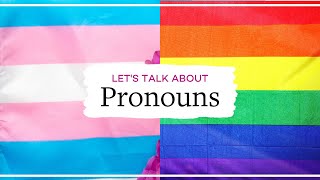
YouTube video by Vanessa and Xander Marin explaining what pronouns are, why they matter, and practical ways to use them. The hosts define pronouns, distinguish sex (biological) from gender (socially constructed), mention intersex prevalence (~1–2%), describe cisgender/transgender/non-binary identities, summarize benefits of asking/using correct pronouns (respect, inclusion, mental-health benefits), and give tips for incorporating pronouns into everyday life (ask, share in email/Instagram profile, be willing to make mistakes and learn).
Chapters
I can't start a video. So Instagram recently rolled out a brand new feature that allows users to add their preferred pronouns directly to their profile. So we are very excited about this rollout because we think it's a really inclusive decision for Instagram to make. It's a huge win for the LGBTQIA community. But. But there are a lot of people who don't really understand, like, what is the deal with pronouns? Why are they so important? And especially now, as we're starting to have these more nuanced conversations about it. So today, we want to share with you everything that you need to know about using pronouns.
So if you're new here, then, hi. We are Vanessa and Xander Marin. Vanessa's a sex therapist, and we've been together for 13 years.
And our channel is all about giving you the tools, tips, and techniques that you need to create an extraordinary relationship inside of the bedroom and out. So if you're interested in that, just go ahead and hit that subscribe button.
Yeah, smash that. Subscribe.
I know you hear that all the time when you're watching videos, but seriously, it really does help our account grow. So we appreciate that extra little click.
Yeah. So let's get into it. What exactly is the deal with pronouns, and why are they so important? So, first of all, let's start with answering, what are pronouns? So, pronouns are the words that most people use to refer to other people when they're talking about them. They're a really useful way to replace the nouns sent, such as names, so that you're not repeating things. So, for example, here's something that I would not say. Vanessa went upstairs to grab Vanessa's laptop. Vanessa wanted to buy Vanessa some new shoes. That just sounds silly, right? So what I'd say instead is, Vanessa went upstairs to grab her laptop. She wanted to buy herself some new shoes.
All right, so then a lot of people will ask us, like, all right, but isn't this just male and female? Like, what's the big deal here? So to explain that, we first have to talk about the difference between sex and gender. So a lot of people use these words interchangeably, but they actually mean very different things. So sex refers to biological differences, the most obvious of which is the genitals that we are born with. So a male would be born with a penis, A woman would be born with a vulva. But it's actually a bit more complicated than that.
Just when you thought it was easy.
Did you know that around 1 to 2% of the population in the US is born with ambiguous Genitals, which means that just from looking at a baby that's just been born, you can't really tell if it's male or female. So what ends up happening is that the doctor who has just delivered that baby decides which one they think it's closest to, and they will put that on the birth certificate. We don't really have any other distinctions now. It's even more complicated than that, too. There are also some people who are born intersex, which means they have, like, combinations of both sets of genitals. So even sex itself, even though it's supposed to be biology, it's not really this straightforward black or white, male or female, really obvious thing.
Yeah, 2% is a lot. That means that you may not even know it, but you probably know a couple people.
Definitely. Yeah, definitely. So gender, on the other hand, is even more complicated to describe. But gender refers more to the societally constructed roles and behaviors that we create, basically, like, how does our society think of masculine or feminine, male or female? So they're two very different things.
So most people do identify with the sex that they were assigned at birth, but not everyone. So take me, for example. Example, I do identify with the sex I was assigned at birth. When I popped out, the doctor took a look at my penis and put male on my birth certificate. And I identify personally, socially as a man. So that's totally fine with me. And that's what's called cisgender. So my gender identity matches the sex that I was assigned at birth, and so I happily use the pronouns he, him, and his.
And I am also cisgender. I relate to the sex that I was born with as well, and I identify with the pronouns, pronouns she, her, and hers. So let's get this ball rolling here and leave us a comment down below. Let us know what are your preferred pronouns? Yeah, okay. So Xander and I just explained that our gender identities do match the sex that we were assigned at birth, but for a lot of other people, that is not the case. So, for example, a transgender person, the sex that they were assigned at birth does not match up with the gender that they know themselves to be. So, for example, they may have been born with male genitalia, and they have male on their birth certificate, but they know themselves to be a woman, and they would prefer to refer to themselves as she, her, and hers because they're a woman and they get to decide. There are also non binary people who don't identify with being either male or female. They don't like to see gender as this Binary, like black or white, one or the other. They think of gender more as a spectrum. Some people identify with multiple genders. So the bottom line is that only the person themselves can determine what their gender identity is. And that can also change over time too.
So why are pronouns so important? So if you're cisgender, it's likely that you've never thought that much about your pronouns before, because you don't really have to. But asking for and using proper pronouns has so many wonderful benefits that we want to talk about today.
So the first is that it really de centers the cisgender experience. So we tend to look at cisge as like, the norm, the default. But we don't think that it should be that way. Just because there are more of us doesn't mean that our experience is more valid than other people's. So as cisgender people, if we practice using our pronouns, asking other people for their pronouns, just actively sharing our own, it makes it much more like, common and easier for everyone to do it. It kind of becomes this default thing that instead of just assuming pronouns, we're asking for them. So it doesn't put the pressure just on non binary people or trans people to have to be the only ones who are being active about asking for and sharing pronouns.
Yeah. And it sends a really clear and clear message that you understand and you respect that there can be experiences that are different from your own.
It shows respect, support, and solidarity for people of all genders and identities. So it's just a really simple way that you can be an ally and.
Yeah, and it helps other people feel comfortable with their external experience and their own gender identity.
And it also creates and contributes to a much more inclusive environment where we just recognize all people's experiences as valid.
Yeah. And in general, it just makes people happier. So One study in 2016 found that affirming a person's pronouns, and in extension their gender, lowers depression and raises self esteem. So finally, we just want to say that pronouns are useful tools, but it's really important to remember that some people may use different pronouns in different situations, and some people may not use pronouns at all.
Okay, so let's talk a little bit more about how to start incorporating pronouns into your daily life. So the first thing is it's really important to never assume a person's pronouns based on their name or how they look or anything like that. And this is a tricky one because I think most of us have spent our entire lives just assuming other people, people's pronouns.
Yeah, it just kind of goes Naturally in our minds, like, without thinking about it.
Yeah. I mean, there are random things like, oh, does that person have long hair? They're a female. Are they wearing a pink shirt? They're probably a female. You know, we make all these, like, really fast assumptions about that, but we think it's important to break that habit and stop making that assumption. Because when we do make that assumption, we send this message that the only way for you to have your gender identity confirmed by other people, it's like you have to learn, look a certain way, you have to have long hair, you have to wear pink, you have to have a beard, you know, whatever it is. And so, you know, that's just not a great situation to have where people, like, have to fit into certain roles in order to be seen as the gender they know themselves to be. So instead of making assumptions, it can be really great that, you know, when you meet somebody or you're emailing with somebody or whatever it is, just ask for what their preferred pronouns are. And it can be literally as simple as that. Hey, what are your preferred pronouns?
Yeah, and here are mine. Or put them in your email signature.
Oh, yeah, you can just start with it, too. Hey, just so you know, my preferred pronouns are X, Y, and Z. What are yours? So that's why we like this Instagram feature so much, because it makes sharing your pronouns feel like the default. Like, it's just right there in your profile. It's right next to your name. So go ahead and update your profile. This is a super quick and simple way that you can start using pronouns. And finally, we just want to say, like, you don't have to be perfect at this. Like, you're gonna mess up at it. You're gonna feel awkward, you're gonna stumble over your words. You probably are gonna assume someone's gender identity and get it wrong.
Or you may forget someone's preferred pronouns and get them wrong. And that's gonna happen.
Yeah. So we don't want to send this message, like, you have to be perfect at this, but it really is worth each and every one of us making a continual effort to. To get better at this. So I think if you just come at it, you know, having the best of intentions, really wanting to see and respect other people and acknowledge them for who they know themselves to be, then that is really as good as you can do. So don't let this fear of, like, oh, God, I have to get it perfect. I don't want to screw it up. Don't let that get in the way of you starting to use pronouns more in your life?
All right, so that wraps up our video on pronouns. If you like this video, please, like, give us a like. Hit the red button to subscribe to our YouTube channel and then click that notification icon so you can keep getting more of these videos as soon as we post them.
And we have a free gift for you. If you are looking to improve your sex life but have never really talked about sex with your partner before, we know this can be really intimidating. So we have a free guide for you called how to start talking about sex with your partner, even if you never have before. So we'll walk you through exactly how to get the conversation going so that you feel positive it doesn't feel intimidating. We have step by step, step, step by step steps for you to follow and scripts that you can literally just copy word for word. So we will put the link to download that in the description box below. Thanks for watching and we'll see you next time.
I don't know why I put mail in quotes or air quotes. That was weird. Let me start that over.
I'm a male.
I know. It's like, oh, this is.
I'm a male too.
More from Vanessa

Fantasizing about someone you know? Your brain isn’t betraying you, I promise! #marriagetips

If your initiation strategy looks a little like this, we made something for you.



If you’ve been feeling a little lackluster, pick one of these and try integrating it into your life!

Are you still doing THIS in your relationship? #marriagetips #relationshipgoals


Are you a fan of toys, but wondering if it's been affecting your ability to O without one?

To wake… or not to wake… that is the question 😴 #relationshipquestions #relationship #marriagetips

Is your socks life spontaneous? 👀 This is what we have to say... #relationships #marriagetips
