Building a Global VC firm & Learnings From Indian Founders | Vinny Pujji, left lane Capital

Vinny Pujji, managing partner of Left Lane Capital, explains how the firm applies enterprise-software principles to consumer businesses, targeting Series A-C deals of $4M to $80M across 60% North America, 30% Europe, and 10% rest of world. He shares what he looks for in Indian founders—intensity and grit—and portfolio wins like Chargebee and BharatPe.
Chapters
I feel really lucky that I joined that firm at that time because I think today Insight's about 500 people and it's one of the biggest firms in the industry. And I got an opportunity to open up India as a geography. And as part of that as well, the first iteration of Leftlane came to be. 0.5 was called Insight Next, and we were told to go find things that were earlier.
What's been the biggest learnings for you through working with the founders in India?
Well, India is India. India means that you're surrounded by thousands and millions and actually over a billion people. And that means that there's inherent filtration systems and sandpaper that's made you into what you are. The entrepreneurs in India are, I think, a different breed. And I love working with founders in India.
Being a global firm gives you an edge.
I would say, why do you want to go so wide? You're spreading yourself too thin. You have to have a serious reason to win. I invested in Chargebee. We had real reason to win. We had done billing investments, we'd done software investments. We were a relevant partner. I think we see something that other people don't see. And that was, you know, a company that was $3, $4 million in revenue at the time. We've been investing in Europe for 13 years. I think the first one he found was Trivago in Europe. and then Delivery Hero and HelloFresh and so on and say, hey, there's 80 unicorns in Germany. We've backed 10 of them historically, and all 10 of them are LPs in our fund. You're actually the Goldilocks who's best of both worlds.
Today we had Vinny Pujji on the pod. Vinny is the managing partner at Left Lane Capital. Left Lane Capital is a global venture capital firm that invests in high-growth internet and consumer technology companies. Some of their notable investments are GoStudent, Jackpot, Build Rewards, and many more. Before LeftLane, Vinny was at Insight Partners where he led Insight's investments in India. During our conversation, we covered how did Vinny get into the world of venture capital, what was the founding story of LeftLane Capital, what went behind building LeftLane Capital, what was the hardest thing about building LeftLane Capital. What led him to start investing in India? Biggest learnings from working with founders in India? Why is he super bullish on India? And we got to know him outside of work as well. His relationship with health, what's making him smile lately, and much more. Now I bring you Vinny. All right, Vinny, excited to have you on the 1947 Rise podcast. Welcome to the show.
Thanks for having me, man. I'm excited to chat.
Vinny, you run a fund called Left Lane Capital. I think the last one you raised was about $1.4 billion. You're fairly a very, very young team, could be one of the youngest teams to raise that large of funds. And it's just been 4, 4 and a half years. and you invest globally, not just in the US, and you've been investing in India. So maybe to start with, let's talk about, you know, how did you get into the world of investing and then the founding story of Left Lane Capital?
Perfect. And you'll get it through the founding story, but I feel the need to quickly underline or correct one thing, which is I never say or let anybody else say that I run a fund. You know, we have an amazing team here. I have 3 amazing partners here, and I definitely couldn't do anything like this on my own. But on the story of how I got into investing, it was really through a firm called Insight Partners. So I had actually at one point dropped out of UPenn undergrad. I was doing a dual degree program there, but, you know, usually just say I went to Wharton. I knew I was going to be an entrepreneur. My sister-in-law, Payal, had started ClassPass. My brother, Jesse, had also gone to Wharton and started a few companies, which he sold a number of now. And I kind of knew I was going to be an entrepreneur. So after my sophomore year, I'd started a business with some friends and we dropped out of school and we were running that business. It was the first business was a tutoring company. And it was a good— it was a great business. It was a profitable business. And my parents sat me down as if I was addicted to drugs and had a serious intervention with me and basically said, hey, you need to go back to school or we're disowning you, which I'm sure you can imagine that conversation. But it ultimately led me to the path that I'm on now, which is I was recruited first as a summer intern into Insight Partners, which for much of the industry was really the school of venture capital and growth equity. And today more Even private equity. And I feel really lucky that I joined that firm at that time because I think today Insight's about 500 people and it's one of the biggest firms in the industry. And many people know the reputation. At the time I joined, that wasn't the case. We were 60 people. I got to meet my now partners there. And it was a firm that did 25, 30 investments a year. And at the same time, even though they'd been around for 15+ years at the time, they were really entrepreneurial still. And a lot of their peers were former bankers and they didn't have that same entrepreneurial culture. These guys, these guys were, were and are entrepreneurs. And so I, I got an opportunity to open up India as a geography that Insight was investing in. with great investments like, you know, the first one being Chargebee and after that invested in BharatPe. But, you know, I never would have had that opportunity without that entrepreneurial culture that they have built. And as part of that as well, the first iteration of Leftlane came to be. So Leftlane 0.5 was called InsightNext. And we were a separate team. We sat in a separate part of the office. We reported to a subset of the investment committee. And we were told to go find things that were earlier than a typical Insight investment. So we were mostly doing Series A, maybe latest B investments, and it was into more internet and consumer tech companies. Now, I still mostly did small business and prosumer software as part of that, but we also did things like Calm and The Farmer's Dog and a wide range of internet companies ranging from physical subscriptions to digital subscriptions to marketplace businesses. to SMB software and what I would call corporate consumer software. And as a part of that effort, we invested in, I don't know, it must have been around 30 companies and it went really well. And in 2019, we negotiated with Insight. And again, it's, I think entrepreneur to entrepreneur, there is respect and they kind of got that, okay, we want to build this business because we had a vision and we saw an opportunity in the market, just like any entrepreneur. And we were excited by a lot of things, but I would say we were most excited by the feedback we were getting from founders. So the returns are great and, you know, you have to have good returns to raise big funds, but ultimately founders were coming back to us saying, hey, nobody else is exactly doing what you're doing in the market. And when we heard that enough times, we said, okay, this needs to be a dedicated fund. We've stumbled into product-market fit. and a gap in the market. And so that's what gave us the confidence to ultimately go and raise Left Lane Fund 1. And of course, myself and the other partners were all former Insight. And so we had a lot of DNA in common and had worked together on many, many deals before.
Got it. Vinny, you said, you know, we found product-market fit where founders were telling you, hey, there's something that you're doing not many people are doing out there. What is that really specifically?
So about 15 years ago, I think the shift that happened in the market is that the majority of the tech investing market became an enterprise software investing VC landscape, let's call it. And that's not by mistake. VCs all did the same math 10, 15 years ago. And they said, okay, I made these e-com investments, these hardware investments, these software investments, et cetera. And it seems like these ones are outperforming, they're growing at scale, they have better downside protection, because even when it goes wrong, I can kind of sell it to someone. I think I want to focus on this.
Mm-hmm.
And especially Insight coming from the DNA of being more growth equity, enterprise software is a perfect fit for their business model. Now, I'm very happy that we grew up in an enterprise software-focused practice, because what does enterprise software really mean? Why is it such a good business model? It's high margin. Hopefully it's high retention. It's asset light. We took those principles and we said, what else looks like enterprise software? What else is a need-to-have utility, but for any audience? And so we would invest in something like The Farmer's Dog. People are like, you made a pet food investment?
Yeah.
I said, hey, this is high margin, high retention, absolute utility to someone. And they consider their pet their kid. And so how could you find something better than that? And we wanted to find things that were effectively taking those 3 principles to maybe a little bit more mass market. And I mentioned things like Chargebee, but Chargebee at the time of investment, it was serving really small customers, mostly developers paying on average $2,000 a year. Now, even though they've more than 10x that average customer value, And they've gone upmarket. At the time, they had thousands of small companies, small developers using this product, and it was an absolute pivotal need to have, but it didn't fit the bar of an enterprise software investment. They lost 30+% of customers every year, right? They were churning, they were trying to figure it out. But what I could see is that for the 70% of people who were using it, it was an absolute need to have.
Got it. And Vinny, maybe we can talk about the portfolio construction that Left Lane Capital has, what stages you come in, what kind of check sizes, and you invest globally. How did you arrive to that portfolio construction and thesis?
Yeah, so this was all honestly a lack of innovation on our part. This is what we were doing. When we were a little ninja squad at Insight Partners. And we took that same portfolio construction philosophy, stages of investment, and we copied right. Because if something's not broken, you know, why bother fixing it? And so we're about 60% North America, 30% Europe, 10% rest of world. Rest of world obviously includes places like India. It also includes Brazil. Israel and Mexico as recent examples. And obviously I spend an outsized amount of my time in India. We have other team members who spend a lot of their time in Brazil, et cetera, because we also don't like to be considered tourists in a place.
Yeah.
And it's nice to have longevity there and real friendships and real network, et cetera. And the check range is huge for us, $4 or $5 million on the low end, $70, $80 million on the high end. So really wide range. And the unique thing about our strategy is we really believe in sort of a farming system where most of our investments are Series As, but we will double and triple down on those companies over time. And we keep significant reserves for it. And we feel comfortable running that strategy because we were trained and grew up as growth equity investors. I mean, my first deals that I did were private equity deals. They were take privates to public companies, et cetera. So I feel very comfortable with growth equity underwriting. and even private equity underwriting. But when we see some peers who grew up as seed stage investors raising $500 million growth opportunity funds and not staffing them appropriately, we're like, you know, that doesn't really make sense.
Yeah.
But we feel very comfortable. And I'm obviously very biased in saying this, but we feel very comfortable underwriting certainly a Series B, but also even a Series C or D. We do usually take our foot off the gas as the company gets a little bit later stage, but we want to own a lot of these companies when possible.
Yeah, got it. And when you said, you know, 60% of your capital goes into North America, 30% Europe, and 10% rest of the world, meaning you're, you know, you're a global firm. Do you think being a global firm gives you an edge? If so, how does it give you an edge?
You know what? If I was on the left lane board and I was giving advice, I would say, why do you want to go so wide? You're spreading yourself too thin. And the same thing I would say to a portfolio company, hey, have you really mastered your core? Have you gone deep? And now you need to go wide. That's what I would tell a portfolio company. And the interesting thing is when you start in a geography, You have to have a serious reason to win. So our team never has and likely never will invest in China because there are a lot of really smart people focused on that region. There's a lot of idiosyncrasies and we're not familiar. We have no reason to win. That's not because we haven't been pitched a lot of investments in China. And that's not because we haven't seen our peers make a killing investing in that region historically.
Right.
Sometimes we've kicked ourselves and said, what are we thinking? You know, why Why haven't we touched this geography? We just had no reason to win.
Yeah.
When we went and in a previous life invested in Chargebee, we had real reason to win. We had done billing investments, we'd done software investments, we were a relevant partner. And so we didn't feel like, hey, you know, we're getting the short end of the stick. Of course, the local VCs know the company, but we think we see something that other people don't see. And that was, you know, a company was $3, $4 million in revenue at the time. And obviously they've scaled quite a bit. So we're proud of ones like that. But we always need a significant reason to win. And over time, what we earn is longevity in a place. So we've been investing in Europe for 13 years. And when I say we, it's the royal we, because that's my partner Harley, who was leading investments like I think the first one he found was Trivago in Europe and then Delivery Hero and HelloFresh and so on. But when you can go to a founder in Germany and say, hey, there's 80 unicorns in Germany, we've backed 10 of them historically and all 10 of them are LPs in our fund.
Yeah.
You're not suddenly playing from behind. You're not playing catch-up in an ecosystem. You're actually the Goldilocks who's best of both worlds because You're not a foreign fund who's just in town for the weekend and you're never going to be back. And you're also not a local firm that doesn't necessarily have the same network and connections and sort of cachet that the local founder is looking for. So we don't want to make founders have to make a hard choice. We want to be the best of both worlds. And by the way, we do have a large and growing office in London.
Yeah, yeah, got it. Vinny, you know, from outside, Typically, it looks all amazing and all that. Been building for the last 4, 4 and a half years, raised a couple of funds successfully. If you reflect back, what's been the hardest thing for you? Or it could be for the fund together in terms of building the fund.
Everything's hard, man. Right. It's like starting any company. I didn't realize that. I thought somehow firms are different from normal companies because you just slap a bunch of people together and it just works. So you don't have to figure out the culture and how people communicate and principles and what you don't care about, et cetera. And I was so naive there. Even though I'd run a business before, I was completely naive there. And it sounds hypocritical because I advise companies for a living, but I would have been so shocked at my own expectations coming into this. We thought we're hotshots, we've done this before. We didn't realize how spoiled we were working at an existing firm like Insight Partners. But that's also a huge gift to us because we'd all worked in a firm, seen it scale from having no people in investor relations and much, much smaller fund sizes to being 5, 6x the fund size and Very sophisticated team and reporting, et cetera, et cetera. And so we were inspired by that, and that's what we've done. And so we just, after the first 6 months where we kind of said, huh, that's interesting, I just sent someone an email with some materials, but they didn't reply back, hey, this is received, I'll have you, you know, an analysis in 3 hours. They just didn't respond to me. Why didn't they do that?
Mm-hmm.
Well, that's not because they're a bad person or anything like that. That's because we don't have the culture, the tone, the rhythm, the cadence, everything else. And so to me, the hardest thing to build was the sort of culture and expectations and all that, the soft stuff within the firm. I think we've done a great job of hiring people and now we have best-in-class training programs, et cetera. But I kind of just assumed it was going to magically happen. And it all took a lot of— doing. And you know what, a lot of peers that I respect on the VC and growth side, they just choose to never do that.
Mm-hmm.
They stay small. They're 3, 4, 5 people. They're extremely smart. They hustle, they evaluate their own deals. And I have nothing but respect for that model. It's not our model, right? We want to see 8,000, 9,000 companies a year and speak with them and really go deep and boil the ocean a little bit. But But grass is always greener, right? I have a lot of respect for people who say, I don't like managing people, I don't like building systems, culture, processes, I just want to go be an investor. And that's perfectly fine too. But we did it a very different way and honestly a much more challenging way in my opinion.
Yeah, yeah. I think Jeff Morris, he runs a fund called Chapter One, and he tweeted saying, you know, for emerging fund managers, because they have to raise funds themselves, it's actually a blessing because when you're fundraising, then you really realize, you know, how difficult it is. And through that, you become more relatable and empathetical towards the founder later on that you're dealing with.
Definitely.
And that made a lot of sense to me personally. And Vinny, you know, you've been investing for the last decade or more, and I'm sure it's been a journey for you. Do you remember, you know, an instance or an inflection point in your investing career that just changed your trajectory as an investor?
I do. And by the way, I agree with your earlier statement on empathy. I mean, we did well over 1,000 LP pitches and the first 6, 7 months I wish I could take back because we didn't know how to pitch and our tone was all wrong. And, you know, it was just like a company pitching for the first time. On the question of when did I feel a career shift, there's the funny answer, which is when I stopped playing foosball in the office and goofing off with my friends, I felt a real shift. And then there's the real answer of when I was gifted an incredible opportunity, which was to helping build out this fund within the fund at Insight 8 years ago. Because I was on a pretty normal analyst and then associate, senior associate, et cetera track. And suddenly I got put into turbocharge mode where already at Insight, I would argue that you get 3 times the experience per year of anybody else in the industry because the expectation and the norm is that you're speaking with 700 or 800 companies a year and the throughput is incredible. So as a junior investment professional, I don't think there's any better training ground other than Left Lane, of course, now. But the switch that was made is suddenly anything that fit a certain type of deal went through me and I was the follow-up call.
Mm-hmm.
For probably 1,500 companies a year. And it really forced me to learn how to prioritize certain companies, quickly pass and respectfully pass on certain companies because I didn't have time or, you know, I just didn't have the calendar space to maybe schedule a follow-up. So I would give really direct feedback to founders 20 minutes into a call. And 99% of the time I heard, gosh, no one's ever done that. Thank you for being Honest and frank with me, and so it just it forced me to get better because suddenly I had twice the load on my back. But then I was also learning at twice the pace. Yeah, and and I'm always appreciative to that opportunity that I got because I don't think it was deserving or anything else. It was just you know it popped up.
Yeah, yeah. I couldn't resist but notice Bharat Pay QR code in the back. Which brings me to India. As you were mentioning earlier that, you know, you kind of launched or opened up India market for Insight. And your, I would assume your first investment was Chargebee and then you did BharatPe. Through the Left Lane Capital, you've done a good health company and recently AstroTalk. While you were building, you know, that roadmap towards India, Vinny, I think at the time, early days in India, you would come to India and funds would literally, you know, come up with the Excel sheet and market deals to you. And then over time, of course, they realize, hey, you know, why are we giving away our best deals?
Exactly.
We should be raising bigger funds and just doubling down on it. And that's really an evolution. So Vinny, maybe let's distill it down. How did your relationship to investing in India start? How has it evolved over time? And maybe we can talk about your last or the latest investment, which is AstroTalk.
So I'm very appreciative of certain friends at certain firms who were extremely welcoming to me in 2017, 2016, 2017, when I first started spending time in India. And there was a real shift in, let's call it 2019, as they all raised much bigger funds and stopped delivering me handpicked deals. And I have to say that even though I made some great investments, In, call it 2017, I could have been blindfolded with my hands tied behind my back and I would have made great investments in that year because that cohort of founders and the opportunities that they chose, et cetera, et cetera. I mean, I passed on dozens of good companies just because I was limited. I couldn't make 10 investments a year, but I wish I had because that was just an incredible time and cohort and people were just boomeranging. boomeranging back to India and starting big companies with big visions. It was a really special time. And I feel lucky that I got to go there once a quarter during those few years.
Yeah.
Now then, in my opinion, in 2019, these funds raised the biggest funds they'd ever raised. They started doing growth investing, which they didn't have a history of doing. And in my opinion, the market overheated. Now, some of that just happens because you have finite opportunities. People raise big funds, but they actually don't feel comfortable doing growth investing. So they do growth-sized checks into venture-sized companies.
Yeah.
And part of the reason why we are global is so that we can be nimble across geographies. Our first, I don't know how many, but European investments were German. And then if you look at the next 10, most of them were not German. That's not because we don't love German companies. It's because that local German funds raised big growth funds, and it became inexcusable for them to miss out on the top opportunities. So they would pay really high valuations to make sure that they, they, they got those. We've seen the same thing happen in Israel. Now we've seen everything sort of come back to earth. But at the time when multiples were twice as high in Bangalore as they were in New York City, I was absolutely not active in India. So 2019, 2020, 2021, I wanted to, but I didn't spend any time in India. And 2022, I started spending time again. And I'm really happy that I did because, man, when you don't go to a place, and this is really because of COVID but when you don't go to a place for 4 years and then you come back, wow, is a place like India aggressive, right? 5%, 10% a year growth compounded. I mean, I felt like I came back to a different country. And now that I've started coming back more, it's very clear to me that this is an ultra-important ecosystem that we cannot afford to not be a part of. Right. It's very impressive what we've seen. Now, at this point, I've completely forgotten your question, so I'll stop talking.
Yeah, yeah, yeah. No, and it makes sense, you know, what you just mentioned. I think 2019, 2020, 2021, I didn't know the number that the multiples in India were 2x of what the multiples were in New York. That's insane. But Vinny, recently or in the last 1 or 2 years, you've invested through Left Lane Capital. One was Good Health Company and the recent one is AstroTalk. Maybe let's talk about AstroTalk. How did that investment opportunity come about?
Yep. And we've actually got one more closing. It just hasn't announced yet. So yeah, we're doing a lot more, I'd say. AstroTalk actually came from an analyst. An analyst on our team using our tools surfaced the company. And this is the beauty of the system that we built. That analyst was just a few months into his job and he surfaced the team. One of our great senior associates on the team helped sort of quarterback things and we ran at the opportunity. And when we see local VCs or the, in the US, I would say the coastal elite sort of turn their nose up at something and say, oh, this is backwards, or this is for the common person, or this isn't interesting to me. I want to talk about my— cool longevity tracker thing and all this other trendy stuff I'm doing. We usually put the car in park and we stop and we say, hold on, what's being overlooked here? The normal, typical average person is being overlooked here. And in this case, their faith, their need to talk to someone. To a certain extent, when I actually read the contents of the conversation, their need for therapy, Is being overlooked. And so we decided to go deep, and we went really, really deep on this thing. And what we saw is a really nice base of power users who were working across a base of astrologers with really high trust, talking about really important things in their life. What am I going to study? Am I going to change majors? Am I going to break up with this person? I'm having issues in my marriage, so on and so forth. And this is high-trust stuff. It's not It's not frivolous. It's not like playing a video game once and never coming back. And when we saw that type of usage, and then when we saw what the company had built, both in technology but also in human sort of policing, making sure this is staying really, really guarded against any nefarious activity, and what they meant to their supply base, because this is a managed marketplace, to their supply base, they're incredibly important. These are people—
Mm-hmm.
earning 2, 3 times what they might have earned before working through an online platform from the convenience of their home. This is the promise of the internet. So we got really excited about what this business was doing, so much so that we said, you know what, even though our friends on the ground who we absolutely trust have sort of gossiped with each other and said, oh, you know, we don't think this is the trendy thing of the future, We think they're wrong. We think that this is a core part of the human experience. And this company is the first one to build real market share and at an incredible scale, by the way, for typical people to come onto the internet and serve this very human need. And that is one of the best examples of our fund thesis playing out in the real world.
Yeah. And Vinny, you know, starting from Chargebee to now, you know, a few portfolio companies in Deflane Capital, what's been the biggest learnings for you through working with the founders in India? And maybe you can feel free to compare it to other geographies.
Yeah. So, the joke that I used to make, and maybe I'm allowed to make this joke, is that the Indian entrepreneur would tell you that they're going to hit $10 million in revenue next year and they'd hit $5 million. And it'd sort of still be a win because they only did $1 million in revenue this year, but they always tell you a higher number. And the US entrepreneur would tell you they were going to hit $7 million, you know, and they'd hit $4 million, which is still pretty good, a little bit less of an exaggeration. And the German entrepreneur would tell you, hey, I'm going to hit $5 million, and then they'd hit $6 million because they're always going to be much more conservative. Now, the truth is, Thanks to true globalization, especially in our tech community, I would actually say those diversions, that divergence has ended. The culture of entrepreneurs across the world has become similar, but India is India. India means that you're surrounded by thousands and millions and actually over a billion people. And that means that there's inherent filtration systems and sandpaper that's made you into what you are. And The entrepreneurs in India are, I think, a different breed. And I love working with founders in India because, you know, you'd be speaking with a founder in the US and they're like, oh, you know, I can't really get through to this person. I'm still working on it. I've been working on it for a few weeks. You're like, all right, well, let me try to make some introductions for you and help you out. And then you speak with a founder in India and they're like, yeah, I hired 300 new feet-on-the-street salespeople today. And I went ahead and poached this guy from this company by showing up to his house, et cetera, et cetera. And just the level of intensity, ferocity, need to succeed was completely different as a baseline. Now there's people as exceptions on both sides. And again, I think there's been a lot of convergence, but historically speaking, I've just been really wowed by the entrepreneurs in India, by the sheer grit they have and the Again, the need to succeed because need to succeed means as an investor, we have alignment, right? And it's also something I think culturally we really understand, right? Success is sort of not an option. And I'm not saying it's good for our work-life balance. It's very anti-European. French people would laugh at me if they hear this, but that's our culture. And when it's in the entrepreneurial lens, it's an incredible thing to watch.
Yeah. And Vinny, you mentioned India is a market that we cannot ignore, and hence you've been spending more time here. Let's say a founder in India looking to reach out to Left Lane Capital, what needs to be true for them to get funded by Vinny and the team at Left Lane Capital?
So we, the most common reason for passing on something for us is it's a little bit too early. And a little bit too early usually means there's not significant revenue traction, but significant is purposely vague because we've made investments that are $500,000 USD in annual revenues, right? But they're growing quickly. They're serving thousands of customers. So we have a lot of data points. If someone comes to me, I don't care if they have $100 million in revenue. If someone comes to me and they say, I have 5 customers, I don't know how to evaluate that company. I'm not smart enough. I'm not a vertical and a domain expert. I just can't make that investment. So whether you have $1 million in revenue or $100 million, we can't make investments with 5, 10 customers. If you come to me and you say, hey, I'm $1 million in revenue, the average customer pays me $1,000 a year. So I have 1,000 customers and, you know, I acquire them in 0 to 24 hours. Then I know I have enough data on your acquisition funnel, on your product usage, etc., that I can do early growth style investing because we consider ourselves to be early growth investors. And really what that means is we want the venture upside with the growth equity downside. And historically, that's exactly what we've developed— delivered.
Got it. No, looking forward to seeing you more and more in action in India, Vinny, with this. We'll transition into our final part.
Let's do it.
What's been making you smile lately?
My daughter. I have a 15-month-old daughter. And that's, you know, you don't, you don't, you think you're better than, or you just don't really believe all the classic things. Oh, it goes too fast. Oh, you've never felt love like that. All that stuff. And yeah, it's all true. I mean, I've never felt love toward anyone or anything like that. And I've also never received love like that other than maybe when I was A baby, and that's—I mean, sure, there's other things there, but suddenly that puts life into quite a bit of perspective.
Yeah, yeah, yeah. Love it. And Vinny, you seem to be seem to be in shape. And and what's your relationship with health? You know what?
Also thanks to her. Right when she was born, maybe a month or two before she was born, I said, "You know what? I need to get serious." about my health because I grew up in that American generation on 100% processed food. I ate Pop-Tarts and Toaster Strudels and Kraft mac and cheese and Bagel Bites and everything was processed.
Yeah.
And, that's what I wanted, right? And, I think I was the 3rd kid, so my parents were just sick of parenting. So, they said, hey, just eat whatever you want. And, And so I always ate terrible food. I ate fast food. I wasn't in the gym consistently. And I said, you know what? This is, this is just wrong. And very much thanks to my wife, who's the opposite of me, always eats healthy homemade food, always in the gym, et cetera. But I said, I'm drawing a line in the sand. And the way I did that, by the way, was lowering the bar because I was such a perfectionist. I used to say, wait a minute, I don't have an hour block for the gym today. I can't go. And then my streak would end. But I just changed it to say, every time I say I'm going to get it in, I'm going to get it in. I have 10 minutes. I'm going to go to that gym, swing around a kettlebell, and be drenched in sweat after 10 minutes.
Yeah.
And now I can say, hey, you know what? I lift 4 times a week. I play tennis once a week. I do other stuff outside of that. I eat 5 meals a day. I eat actually 3,500 calories and 200 grams of protein a day, and I've never felt better in my life. I get sick maybe once a year and I'm feeling my best now.
Yeah, no. And totally agree with you on it's really about just doing it. In that example, if you don't have 1 hour, maybe 15, 20 minutes. That's what I typically do if I'm traveling. Even if I have 25 minutes, for me it's like, okay, I got the workout in. Now I'm not feeling anxiety anymore that I didn't go to the gym completely because for me it's been because of the sports, I mean, you know better than I do, right?
Like, you're a serious athlete.
How's tennis going for you?
Tennis is good. I wish I could play it 2, 3 times a week, but in New York City it's hard. And honestly, it's just hard with life in general. If I could get back to a place where I was playing 2, 3 times a week, I'd feel really good. I just played last night and I got completely spanked, but it was fun. And the problem is when you don't play often enough, it takes 45 minutes for you to get warm. And then in New York, it's so hard to get a court, then you only have 15 minutes of good play left. It's a game that there are a few things in life where I use this word, but I just feel joy the entire time. I just feel so happy when I'm playing.
Yeah, because you're just— for some people, I have a friend, for him, it's literally meditation, meaning When he's playing tennis, it's just he's only thinking about the next shot, which is pretty cool. For me, swimming becomes that of a meditation activity. Vinny, you love traveling and you were in India recently. What was like your most favorite thing, whether it could be a place that you visited or even restaurant you visited?
I gotta be honest, this last trip was 2 and a half days.
Yeah.
And it was 3 cities in 2 and a half days. So it was really, really packed. My answer with India is always the food. I miss the food every day that I'm not there. I miss the food. And so I have to say it was, it always is and always will be the food. Probably the highlight was we had a 2-hour drive in just terrible, typical Mumbai traffic. And we stopped halfway through and we got some kathi rolls and then we got back on the road. But that was probably the highlight for me.
Yeah, love it. So Vinny, we know you as an investor. What do your friends know you for? Who are you outside of work?
I am someone who probably loves human interaction a little bit too much. And I just say that in the way that I'm like a dog. Like, if someone's talking to me, my tail is wagging. And so I am very fortunate. I feel very happy every single day. I feel like I found the right thing for me to do professionally. And so they know me as someone who's ultra, ultra social, constantly making new friends, but I've actually had the same core group of friends for 20 years now.
Yeah.
And I expect that we'll all still be close friends in 20 years. So I love doing group trips with friends and all this stuff. Probably the opposite end of the spectrum or the other side of what they'd say is I'm also someone who never bites their tongue, right? So, you know, someone brings around a significant other who they've been dating for 6, 7 months, And I'll be pretty direct with them and say, hey, I really didn't like this person. I think, I think they're bad for these reasons. And don't get me wrong, that's gotten me into trouble. But I think, yeah, be who you're going to be. Just be consistent. Because really where you get into trouble long term is if you switch your personality around. They know that they're going to get that from me. And so they're not offended or surprised by it. And in fact, when I say something positive, they know that I really mean it. I'm not just being polite.
Yes.
Whether it's what they're wearing that day or some other life decision. And so we've got an incredibly honest relationship, and I hope to have that with everybody, because if your relationship is not honest, then what even is it?
Yeah. And I think you picked up a very important point. As long as you're consistent, people will in fact respect you for who you are. And thank you so much, Vinny. I really appreciate you for coming on the pod. It was fun.
It's super fun. I appreciate it.
More from Vinny
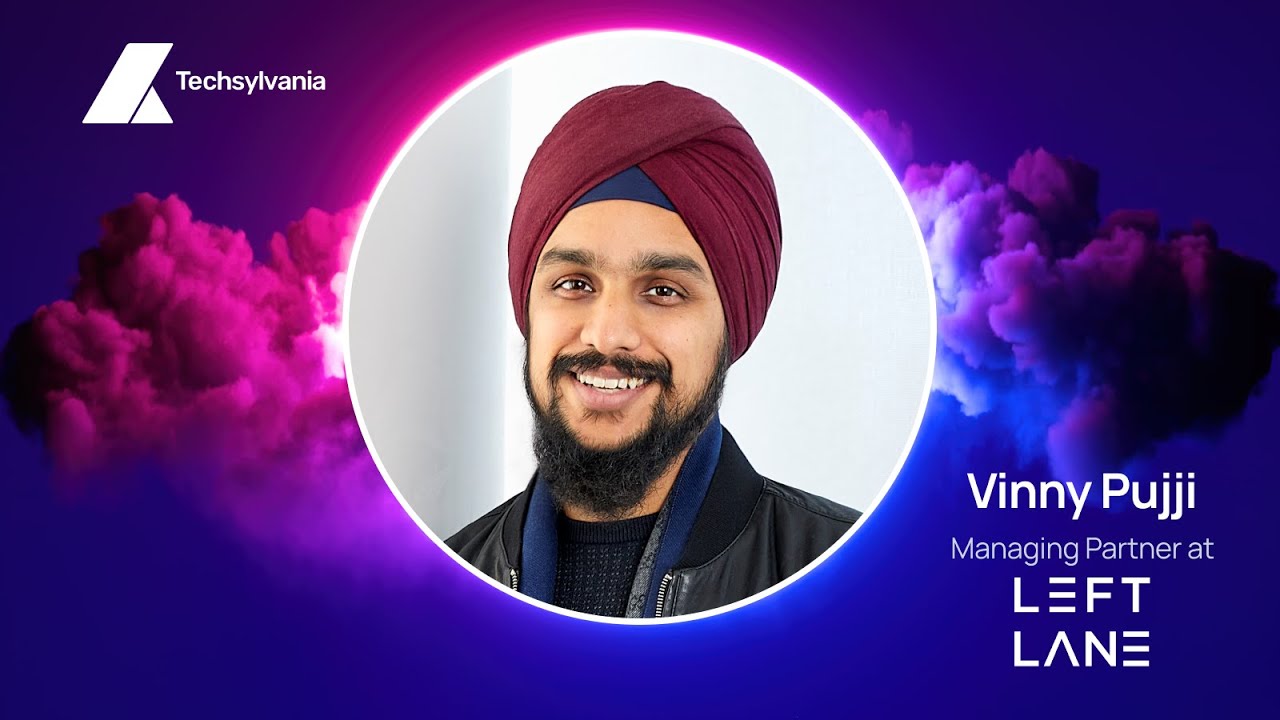
Conversation w/ Vinny Pujji (Left Lane) - Scaling and Fundraising for Marketplace, Consumer

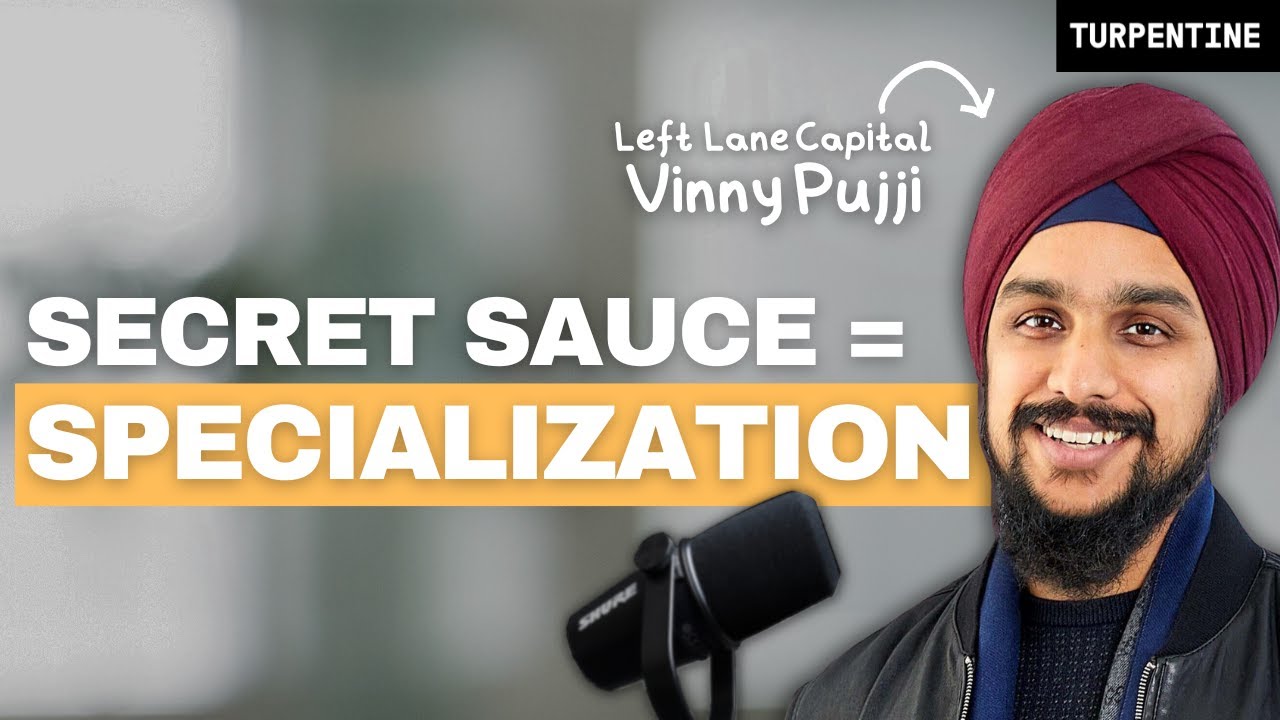
Vinny Pujji on Leveraging 3rd Order Analysis to Pick Winners for Left Lane Capital