Conversation w/ Vinny Pujji (Left Lane) - Scaling and Fundraising for Marketplace, Consumer
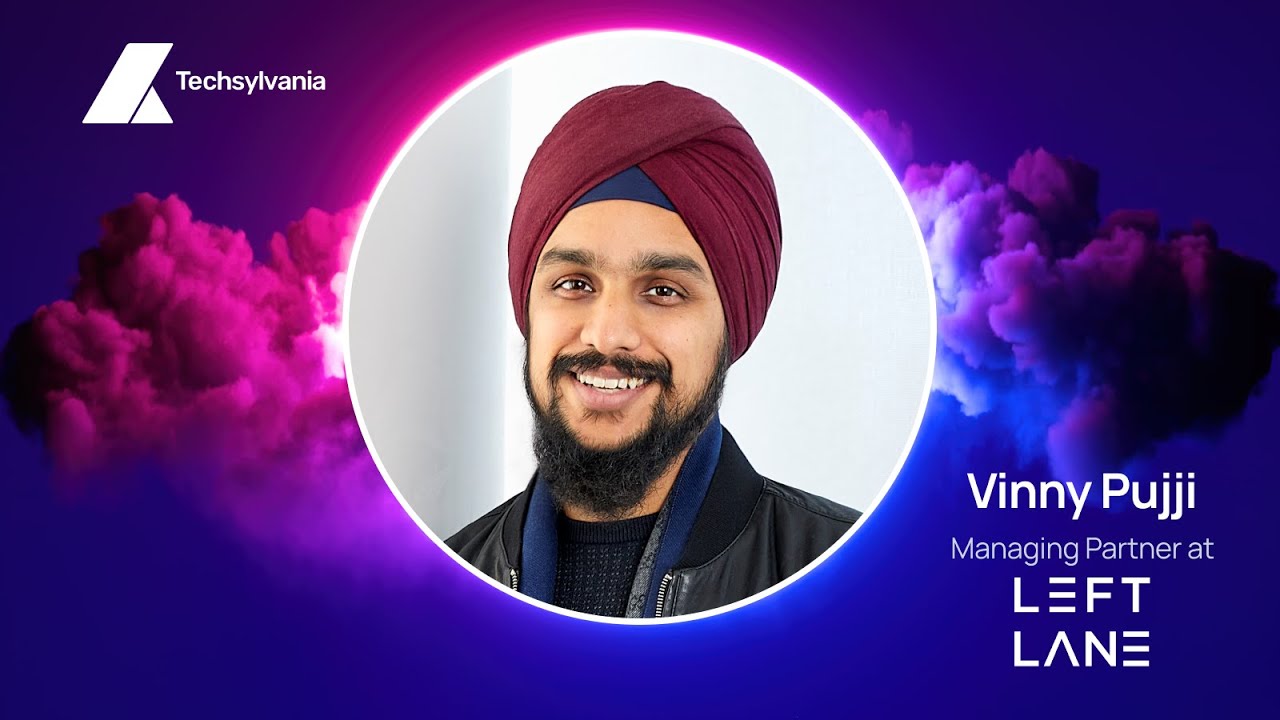
In a Techsylvania fireside chat, Vinny Pujji, co‑founder of Left Lane Capital, discusses his personal background, the formation of Left Lane, and his philosophy on scaling consumer‑focused businesses. He emphasizes the importance of choosing the right investors—operators with integrity, low ego, and strong communication—over merely raising capital. Vinny outlines how Left Lane emerged from Insight Partners’ “Insight Next” team, leveraging product‑led, performance‑marketing growth to back companies like HelloFresh, Chargebee, and Truebill, and scaling checks from millions to hundreds of millions. He analyses the current VC environment, noting $600 bn of global dry‑powder, the rise of down‑rounds, and the shift toward profitability and unit‑economics. He shares practical tactics for customer acquisition beyond Facebook, such as out‑of‑home advertising, rigorous attribution, and lifecycle/CRM focus, illustrated by the Truebill case study. Finally, Vinny offers advice on expanding to the U.S., stressing deep focus in the home market, hiring local leadership, and tailoring go‑to‑market strategies, citing HelloFresh’s success and N26/GoStudent’s challenges. The conversation ends with a light‑hearted debate on hip‑hop legends.
Chapters
It's another particular honor to welcome a longtime friend of us. As you can see, like, many people have been connected to Techsylvania for, for, for a long, long time, and Corey Reed has been a long-term friend, advisor, and providing, like, many of his amazing connections and himself and their time to support us at Taxylvania. So with that, I want to give a particularly warm welcome to Corey and Vinny Pujji, uh, on their next Fireside Chat. Please welcome them on stage for an exciting chat.
So thanks everybody for being here today. We're very excited for you to get to know Vinny a little bit better and learn from him, as I have through conversations over the last few years. And also thanks to all of you guys for spending your money and your really valuable time to be here. And then finally, thank you to the Techsylvania team who for 10 years have been bringing people together for a really cool learning environment and for inspiration. So thanks to everybody.
Thank you.
So, many of you guys are founders or thinking about being founders someday or working at startups, right? And there's 2 primary methods to scale in my opinion. So, I'll simplify it a little bit, right? You can raise capital or you can bootstrap. And both are viable paths, right? They're very different. And when you raise capital, it allows you, of course, to expand your scale more quickly, your network more quickly, and ideally your revenue and profitability, right? So, who here is married? Raise their hand. Okay. Okay. So, that's a pretty important event, right? It's a pretty important commitment. It's till death do you part, your whole life. And some people believe it even transcends this life. But I want to suggest today that who you raise capital from and bring onto your cap table is potentially more important than who you marry. Now, here's why. If the marriage isn't working out, what happens? You get divorced.
Not ideal.
But you can do it. But you can't do that with your capital partners. They can divorce you over time through the secondary market, but you can't really them. So, who you have on your cap table is of paramount importance. And in my opinion, through my experience in my career of raising a lot of capital, there are certain things that really matter to me, right? So one is I want someone who ideally is experienced as an operator and an investor, not just an asset manager after business school. That's something that's really important to me. Also for creative engagement, right? Because You don't just want— you guys have heard the term dumb money, right? You don't just want dumb money. You want somebody who's been there, who's going to dive in and really be creative with you. You want a communicator, a very productive communicator, isn't going to sugarcoat things because there's plenty of stuff, as you all know, that doesn't go right. Sometimes when you're in the detail of that art and you're not stepping back to look at it, You're not seeing it, but they are. So their ability to communicate candidly with you and productively really matters. The other thing is no ego, right? Sometimes we as entrepreneurs and investors get an ego, and that's sad because at the end of the day, it blunts our ability to learn. So, and then integrity is critical, but of course, at the end of the day, what you want is a partner. So in my opinion, All of what I just went through that's important sums up Vinny. So Vinny's a wicked smart guy and got started with a couple of really great degrees from really killer schools in the US and then went to work with a company called Amrush, right?
Ampush.
Ampush. Going off the notes, huh? So with Ampush, where he scaled performance marketing, for lots of different companies, including Udemy, which is a huge company, Dollar Shave, which you may have heard of, and Walgreens and some other ones, right? From there, he then went to Insight Venture Partners, which is a huge firm in the US, where he was initially focused on essentially buying other companies, a lot of M&A, but while there pivoted to the growth investment stage. And then in 2019, with sort of that perfect profile as an operator and an investor with lots of success on both sides of that spreadsheet, founded a firm, co-founded a firm, Left Lane Capital, which is a venture private equity firm based in Brooklyn, New York. That was in 2019 with now $2 billion-plus assets under management and investments in 60 companies worldwide. So that's pretty stellar scale for 4 years, Vinny. Congratulations and welcome. Thank you again for being here.
Thank you. Thank you for the wonderful introduction. I appreciate you lying on my behalf, telling everyone I'm great.
It wasn't— it's true. It's true. So, Vinny, you know, entrepreneurs, of which you are, you're an entrepreneur and an investor, are pretty fascinating people, right? But you're way more than Left Lane Capital. You're way more than Ampush. You're way more than Insight. So talk to us a little bit about who you are and what inspires you in life.
I think that the thing that ultimately sets my goals in the back of my head, that inspires me, that gets me out of bed in the morning to work hard, is probably the same as a lot of people like me. I don't want to disappoint my parents. And, you know, that's half a joke, but at the end of the day, when you look at what really motivates someone, And you strip out, okay, but you have enough money to live. Okay, that's fine. Okay, but you have enough cars to drive. Okay, that's fine. What's still really driving them? What made up their DNA? What gave them that perfect level of curiosity, anxiety, fear, joy, inspiration, all those things? I do think it comes from the family. And I was really, really lucky to have parents who immigrated to the U.S. at a very young age, who did not allow us to take anything for granted growing up. My dad was an entrepreneur. He ran a lot of businesses. He failed a lot of businesses. And I got to see those ups and downs. And despite that, most of my generation of the family is entrepreneurial as well. So my brother Jesse actually started that company Ampush, and he started and sold many other companies over the years.
Very cool.
And he's blazed his own path. My sister-in-law Payal started a company called ClassPass, which she sold about a year ago. And, you know, I got to start my businesses over the years, but I think just having someone from the outset, and for me, I had a— it was a duality that worked of a mom who said, you're the best thing ever. No matter what you do, you're the best at it, and it's great.
That's a good mom.
And a dad who said the opposite. He was like, I don't understand why you're not better. And of course, you know, there's therapy, and there's scars, and all that other stuff, and we can go down that road, but I actually think that yin and yang, that good cop, bad cop, dynamic with— combined with not taking anything for granted and having a really high bar set for yourself, which you then take and you keep setting it higher and higher and higher, is ultimately what drives the vast majority of people.
Yeah, that's great. Thanks. So I just saw some videos of a darling little 5-month-old girl that belongs to Vinny, and my bet is that she's in the nucleus as well.
I think so.
Yeah. So talk to us a little bit about Left Lane. What was the impetus for starting Left Lane? And what's the meaning you all are trying to make there?
So we had started a separate team while we were at Insight Partners. And Insight over the years went from when I joined a $3 billion fund and 50, 60 people to then being a $5 billion fund, a $6 billion fund, a $10 billion fund, a $12 billion fund. Their last fund's $20 billion. And that's all in the last decade. The growth is staggering. And I'm incredibly lucky to have been part of and witnessed that growth from 50 to 500 people, from $5 to $50 billion AUM. What happened was the firm started focusing more and more on later stage growth and private equity. And I did a lot of those late stage growth and private equity deals. I thought they were interesting, but I had previously worked on scaling internet companies. And I saw how quickly the internet was changing real industries, the way we educate ourselves, the way we feed ourselves, the way we feed our pets, the way we entertain ourselves in the evening, and all the like. Now, that's obvious today, I think. 10+ years ago, it wasn't as obvious. Because really what I'm describing right now are internet utilities. 7 years ago, we started a team at Insight Partners that we called Insight Next. We didn't realize that it was predictive. We were just a separate team, separate pipeline meeting, separate investment committee. And we invested in everything from physical stuff, like HelloFresh and Freshly and The Farmer's Dog.
Cool.
To digital subscriptions like Calm and Blinkist and Facetune, to fintech companies from N26 to Chargebee, and a lot of prosumer and self-serve software companies as well. What we found is that these businesses, one, could be built from anywhere. So as long as you had access to Wi-Fi and a credit card, you could build an internet company and sell it all across the world. And the nice thing about that was the second feature, which are fast feedback loops. So typically with an enterprise-to-enterprise software company, you are raising capital, takes you about 6 months to scale the sales team, takes that sales team about 6 months to build their pipeline, and as early as a year from the time of investment, you see, is it starting to work? Is it starting to pay off?
So true.
For us, we're typically putting our money into product-led, marketing-led growth strategies. And we're seeing in 2, 3 months after investment, is this working well? So what would we do? We had a big fund behind us. We would position build in our winners. So we would go from Chargebee being a $14 million check to a $150 million check. We would go from HelloFresh being a $20 million check to a $200 million check. And we would ultimately gain billions in cap gains when these companies would exit, which moved the needle for such large mega funds.
Mm-hmm.
Now we felt proud of that, but we were this tiny little forgotten team team in the corner of the office. At the same time, we were winning 90% of term sheets that we would put down. We said, we feel like we have product market fit because founders keep coming to us and saying, hey, nobody's ever pulled my 50 million row raw usage file, correlated usage patterns to expected retention rates, and connected us with a bunch of other internet or mobile subscription entrepreneurs. And we said, OK, we've heard this one too many times. We're outperforming the mothership. Clearly this needs to be its own strategy. Clearly we have our own product market fit. So we negotiated with Insight in 2019. We carved that team out. Left Lane Fund 1 was a completely separate fund we raised on our own. Took us forever. We thought we were hotshots, but we ultimately raised $630 million for Fund 1, and then we raised $1.4 billion for Fund 2. And now we're a team of 35 people split between Brooklyn and London.
Wow, awesome. Congratulations.
Thank you.
So through, through that journey, Right. Going back to the Insight days, you sort of participated in a market acceleration.
Yep.
And we've seen some deceleration.
Oh, yeah.
Maybe talk to us a little bit, you know, March '22 on, right, what you're seeing. And, and, and do you think— I mean, is it as dire as the media makes it out to be? Is it worse? How do you think it looks in the future for lots of great people out here in the capital-raising environment?
It is—
Totally unfiltered.
It is very, very fascinating because here's what you're seeing. Globally in VC, and let's just talk about the VC market for these purposes, there's almost $600 billion of undeployed dry powder globally, and about half of that is in the US. That's way more than it's historically been. Even if you look at the 10-year average, there's significantly more dry powder than there ever was. When you hear about all these funds struggling to raise their fund, for the vast majority of them, those are funds that either were born or massively changed their strategy, increased their fund size in the last few years.
Right.
And so of course they're struggling to raise their fund. The people who've been raising $500 million funds for 20 years now are not struggling to raise their fund, is the reality. Now, it's important to note that dynamic because over the next 5 years, what's gonna happen is that the LPs that invested in all these funds are gonna have scars, and LPs tend to be backward-looking, and they're gonna allocate less capital to the asset class. So more over the next 5 years, that amount of dry powder is probably gonna go down, not up. But in this unique time, there is a lot of dry powder. And so what you see is very specific types of companies. Of course, the topic du jour and for a while is gonna be AI. AI companies are back to raising at 100, 200, 300 times revenue for the top companies. And the reason why is people are just shaking with the amount of capital that's sitting underneath them and they want to deploy it. There are certain other strategies that people are pursuing and raising a lot of capital against, like credit strategies or structured equity strategies and other things like that, where people believe that there's opportunities. But for the vast majority of companies, What they have to decide is, can I stay a venture-backable business? And I say decide because typically VCs at Series A, B, and even C are looking at 100% plus growth. And newly they're looking for really profitable unit economics, and sometimes they're even looking for profitability.
Hmm.
Now the result is that those later stages at B, certainly C and D, There's a tremendous bid-ask delta still because companies' last rounds might have been at a $2 billion valuation. The market says they're worth $1 billion. After a year of getting beat up, the CEO says, OK, fine, maybe I am worth $1 billion, but I have $100 million on my balance sheet, so why would I raise a down round?
Sure.
So for the best companies, there's a bid-ask delta. For the medium companies, they've now had to lower their growth rate. They are thinking about raising capital, and what's happening is that they're raising down rounds. And 6 months ago it was like, oh my gosh, it's actually happening. Today nobody cares if you raise a down round. It's completely normal and healthy and fine. And everybody says, as a matter of fact, everybody was overvalued in '20 and '21.
Yeah.
And the important thing for you to do as a CEO, and this is what I tell the CEOs that I work with, it's not your job to control the market. I can't control the market. None of the people I know can control the market. It's your job to raise capital when you need to at market terms from the best possible investors. And when they really accept that, I'd say that they're liberated and they are able to raise capital.
Yeah.
Now, for the third bucket of companies, they're either burning too much money or they have to lower their growth rate in cutting their burn to a point where they're not venture-backable.
Yep.
And the reality is when we used to see, I don't know what the number is, 5%, 10% of companies a year fail, we are seeing that rate double if not triple. A lot of companies are going under, and that's the reality.
One of the subtexts I heard as you went through those 3 different buckets is a CEO, and this is for all of you out there, right? A CEO or a founder who is responsive to the market around them and doesn't hang on to that valuation. And, you know, the faster you do that, I think the higher probability of success, right? Especially now at the front end of that, it's always viewed poorly. But as you get into it, it's, look, this is the market, we get it, let's go.
Right. And that's easy for some CEOs who created their identity and their company culture based on what we stand for, what we're doing for customers, how do we work here. But it's really hard for the CEOs who created their company culture on, we just win, and our valuation always goes up, and look, nothing ever bad happened. You know, that CEO's having a tough time right now.
Cuckoo. Yeah. So we've only got about 6 minutes left. There's a couple of things I want to make sure we hit. So you talked early on about scaling enterprise versus scaling consumer-focused, right? And you guys are primarily consumer-focused. at Left Lane. So, you know, so many that are doing the consumer focus rely heavily on Facebook, on Google, and Facebook can make a tweak to the algorithm that throttles the whole company overnight type of thing, right?
Yep.
So how do you think about that? You've been in that seat, right? How do you think about that? But how do you think about other more creative ways as well to acquire customers at scale? Without going down that road.
I'll give you a few examples. So I was the independent director at a company called Truebill, which sold to Rocket Mortgage about a year and a half ago, actually right before the market crash, for $1.5 billion. It was started by 3 founders who made over $200 million each. Those 3 founders are brothers, funny enough, which is an amazing family win.
That's amazing.
They're great people. And they started the company exactly 5 years before they sold it. In a standing start, they went from 0 to over $100 million in revenue. And they 3x'd every single year like clockwork. Now how did they do that? When I started working with the company, they were 2 years in. They were about $5 million in ARR, and 90% of spend was Facebook. The board said— I said, hey, we know it's working, but let's figure out how to get some leverage here.
Mm-hmm.
Let's get some diversification on the top of funnel, And then let's figure out what levers we have to pull on revenue per user and conversion rate to make sure we can keep scaling. Now to the team's credit, they did it better than I've ever seen anyone do it. And I'll give you a couple other examples. But one, by the time they exited, they were down to 50% of traffic from Facebook. Still a lot.
Mm-hmm.
But Facebook and Instagram being 50% for them was a win. The next biggest after that was out of home. It was billboards, trucks wrapped in Truebill paint and stuff like that. And not something I would have thought of. But what they did is they created an attribution model that actually worked where they would deploy these out-of-home strategies in a city and then measure the conversions in the city and say, okay, that worked, that worked. They never had this brand marketing mindset. And the brand marketing mindset is inherently a lazy one. They go, we're putting money into this. We think it's going to work, but we're not going to measure it.
OK?
Deal? No deal.
Right.
Right? They had a performance marketing mindset even as they did what are typically brand building activities. That means when they turned on TV, when they turned on OTT on the streaming platforms, they ultimately still had this performance marketing mindset and kept to a 1-year payback period on their sales and marketing spend. Now when we look at the other side of what they did, they also 4x'd their conversion rates from 10% to 40% of installs who ultimately became subscribers. And they did that by taking someone from the growth team and saying, it's no longer your job to grow. Now lifecycle marketing and CRM marketing is your job. Figure out how to get more of these users revenue generating. And just by taking someone and repurposing them—
Mm-hmm.
Suddenly they found all this low-hanging fruit. Oh, we don't email fast enough. Oh, these people are churning, but we're not even trying to reactivate them. Oh, these people are our best users, and we're not monetizing them more. And magically, this company was able to keep scaling while taking sales and marketing spend from $100K a month to $10 million a month by the time they exited.
So just good user engagement. Understand your user, engage with your user.
And specifically making it someone's job.
Right, yeah. That's great. Okay, so 2 more questions. We've got a short amount of time. So you talked earlier about there being roughly $600 million in dry powder, 50%—
Billion.
Oh yeah, yes, billion. 50% of which is in the US. So that makes that on paper very attractive for expansion or relocation, etc. Anytime I'm in the EU, I hear that a lot. when I'm in India, when I'm in China— China less, India, right? We got to get to the US. I just finished a consulting engagement with a company there who was trying to expand to the US. But there are some real risks and there are opportunities. Can you give us some advice on the best way— it seems a little reductive, but just some thoughts on how to do that right, and also maybe how to make the decision not to do it?
Yeah. It's extremely tempting. We have examples in the portfolio of companies like HelloFresh that came to the US when Blue Apron was making a big splash, acquiring all the coastal users. And what did HelloFresh have to do? Out of need, they had to go to the center of the country. And they invested in the center of the country, and they grew quietly. And ultimately Blue Apron stumbled a bit, and now HelloFresh is a $7 billion annual revenue company, the majority of which is in this new market for them, the US. And they also have Australia, and of course they have their home market of Europe.
Mm-hmm.
Now, one key is their home market of Europe was a profitable market for all those years. They dominated their home market. And I think that if you're just doing okay in your home market, but you think that you could be doing better, and with a little bit more focus that could be a profitable high-growth market for you, it's probably too early for you to go open another market. Because focus is key and you have to go deep before you go wide. Now assuming that that's the case, then the question is, okay, how do I get to the US and how do I start making it work? We have portfolio companies, like a former portfolio company N26 or a current portfolio company GoStudent. Maybe it's a coincidence, but founders are Austrian in both cases, aggressive as heck, have raised hundreds of millions of capital, and they came to the US. with a bang. They put $20, $30 million into the market. They never moved there themselves. They didn't change their language too much.
Yeah.
It was, it was a similar language that they used here. And ultimately it didn't work, and both of them had to retreat from the US. I think that the lesson learned there, and I'm sure there are exceptions to this, but the lesson learned there is unless you have truly unlimited balance sheet, you need to do it in a more humble way. I think a founder needs to come out and you need to hire someone on the leadership team that's a local. Someone who knows how to talk the talk, walk the walk. A lot of the time founders from Central and Eastern Europe will come to the US and they won't be able to sell because they're just very matter of fact. We were speaking about that. I won't pick on him, but I was chatting with a founder about this just last night on my way from the airport. And it's so important that you hire that person who just won't shut up, painfully extroverted, boisterous when they talk.
Yeah.
And that's necessary to sell in the more enterprise B2B space. In the case of more growth marketing, again, it's important to hire people who have scaled campaigns in the local market because, you know what, the competition is no joke in the US. For N26, they tried to compete with a debit card in the US market. a market that loves credit cards, a market that's dominated by points, and has the highest debt rates, and therefore the highest willingness to pay to acquire these users? No chance. And it never— it was never going to work. But anyway, that's a long thread that we could talk about for 30 minutes.
Well, but to double-click on that, anybody that is thinking about raising, and anybody that is thinking about expanding to the US, you've got an operator, an investor, and somebody who's had a ton of experience. with that expansion, really valuable. So, I know the time's up and I can feel Philip staring at me. Is he?
He is.
Yeah, okay.
He's nervously standing behind you.
So, one more question. It's a 2-parter. So, for all of you out there, who's a fan of hip-hop or rap? Come on, more hands. There we go. Okay. So—
That's like a fourth.
Vinny may or may not have some skills in that regard. So, we're going to put you on I'm not going to ask you to freestyle for us, but I am going to ask you to go on record and settle the great debate. Greatest of all time, Biggie, Tupac, or Nas?
To me, it's Tupac.
Pac?
Yeah. And I love Biggie, and I love Nas.
Yeah. Everyone agree? Pac? All right. All right. I met Pac the night he died, an hour before he died.
No way.
Yeah, I hung out with him.
Wow, what a note to end on. Are you gonna drop the mic?
I had nothing to do with it. Thank you very much, Vinny. You're amazing.
Thank you.
More from Vinny

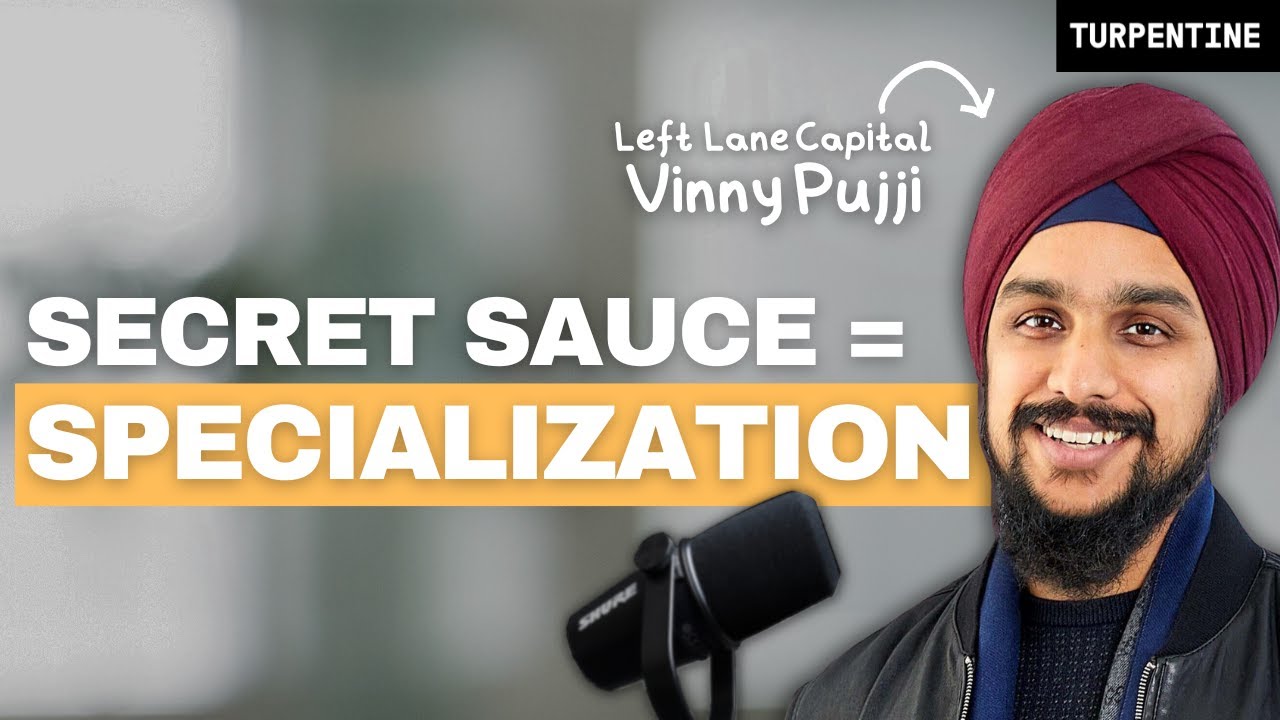
Vinny Pujji on Leveraging 3rd Order Analysis to Pick Winners for Left Lane Capital

Building a Global VC firm & Learnings From Indian Founders | Vinny Pujji, left lane Capital