❌ 10 essential winter motorhome jobs you MUST NOT forget
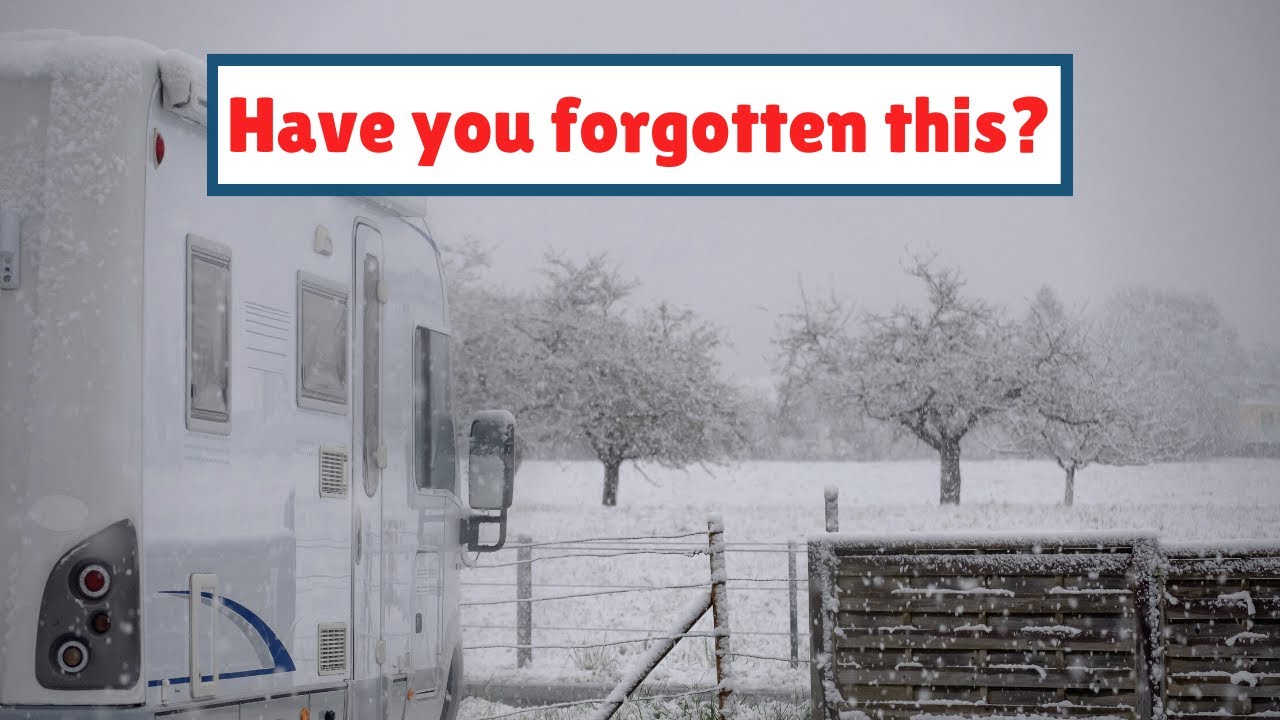
Kathryn Bird runs through ten winter maintenance tasks for motorhomes left sitting idle. Start the engine regularly, check tyre pressure and battery charge, lubricate the tow hitch, and rinse off road salt after drives. Skipping these jobs can leave you with stuck gearboxes, dead batteries, and mould when spring arrives.
Chapters
Not using your motorhome much during winter? You can't just leave it for 5 months without any checks. Here are 10 things you need to do while your van is in storage or not being used very much to make sure that it's perfectly okay when you want to use it again. Hey, I'm Kat, and welcome to Wandering Bird, where we share tips for motorhoming and road trips. Before I start this video, for everyone who was asking for Gerald update, there has been no sign of Gerald. The chocolate is still in the trap. The trap has not been set off. I think Gerald might have left the building. I think, I think we're safe. I can't see him anywhere else. I have checked the engine bay and the wiring all seems fine, so I think we might be a Gerald-free zone. Now I know plenty of people don't use their motorhomes much at the moment, and I don't blame you. It's freaking cold at the moment, but I do want to make sure that you keep your van looked after. Don't forget that most motorhomes and campervans are built on the same chassis as work vans. They're not designed to be left for months on end without any sort of love and care and attention. So here are some things to check even when you're not using your van, just to make sure that they are ticking over and that everything is still fine when you come to spring and want to go off on adventures. Now, things to do on a fairly regular basis, and by fairly regular, I mean every other week or every other month at most. And the first thing to do is obviously check that the van's all right. If you haven't got the van parked on your driveway or outside your house, then pop to the storage unit, pop to wherever you've got it stored, and make sure that it's still there firstly, but also make sure that everything's okay, that nobody's caused any damage, The weather hasn't caused any damage to it. Just give it a quick visual inspection both inside and outside and make sure that there is nothing wrong. Whilst you're doing that, pay particular attention for signs of mould, for signs of damp. Those things, if you leave them even for a few weeks, can get really, really difficult to fix. So the sooner you spot them, the sooner you can go and get them fixed. Whilst you are looking around for mould and damp, this is a really good time to open windows, open hatches, get some fresh air in. I know it's cold, but the more air you can get in, the less mould and condensation you're going to get inside your vehicle. So that's It's also a really good time to get some ventilation in and just freshen up the air inside it. Next, start the engine. Now, ideally, you want to start your engine and take it for a drive, a good 20-30 minute drive if you possibly can. That will allow the vehicle battery to recharge from starting the engine, but also just get everything a little bit warmed up and get it all moving. If you can't do that, start the engine and then rev it once it warms in like 1 minute intervals, but that's not very good for the engine, so I don't recommend you do that. Driving it is much better. It also keeps the wheels turning and all the Cogs. I'm not a mechanic. I'm not going to start naming parts of a van, but it keeps that whole system rolling if you can actually take it for a drive. Whilst we're talking about wheels and tyres, tyres do not like being stood on one spot for a long period of time. You're going to do some damage to them. One thing you can do if you are going to store your vehicle and you haven't got tyre chock things is to actually increase the pressure on your tyres, but do remember to decrease the pressure before you drive it again. But increasing the pressure while it's been stored can actually help it a little bit. But again, if you take it for a drive, the likelihood of you parking it back on the exact same spot is Very, very low, which means that those tyres are going to get a little bit of roll and it's not going to be so bad when they are left for a couple of months. Whilst we're on the subject of tyres, if you're one of these people who have still got a spare tyre casing, usually underneath your van— not very many vans have them nowadays, but a few still do— and if you have got one, make sure that you regularly open the actual casing because the lock can corrode. And unfortunately, that means that when you do need your spare tyre that's locked inside the casing, you actually can't get into it because it's all corroded and rusted. So make sure that you are regularly opening that and checking it. Now, after you've taken the van for a drive, try and leave the gearbox in neutral. Now, some people say don't leave the handbrake on, and I totally get why, because it can jam and it can stick. But of course, if you don't leave the handbrake on, the vehicle is likely to roll. So please do whatever makes your vehicle safe. If you can leave it in neutral, you're not on a hill or something, then perfect. I have to say, I do tend to leave my van both in gear and with the handbrake on, so I break this rule all the time. But I also am driving my van more frequently, and I don't leave it for months on end. But if you are doing that, just come put it in neutral, give it a wiggle around, and again, you're driving it, you're keeping the gearbox from sticking up and you're stopping the handbrake from sticking up. So it does help it if you can drive it every other week or so. Now, when you're driving the motorhome, one thing to do if you've got air conditioning in your cab is to turn the air conditioning on. I know it's winter, I know it's cold, I know that's the last thing in the world you want to do, but if you can keep the air conditioning ticked over, it will make it a little bit easier in the summer when it's boiling hot and you want to use it again. It's also a really good time to find out that it's not working, so you've got time to fix it before you need it for real. Now, I briefly mentioned tyre chocks or tyre savers, I think they're called, but one thing you can do again when you've parked back up again is put tyre covers on, and this protects not just the actual bits of the tyre but the rubber from rotting in the sunlight because we still do get sun in winter and that can cause damage to the actual structure of the tyre. So tyre covers can be really useful for this. Don't wrap them in some sort of plastic bag or bin bag or something like that because that can cause condensation inside the tyre Or inside the wheel, and that can cause its own problems. So don't do that. Get proper tyre covers which are breathable. Now, if you've got a caravan or you've got a tow hitch and you've got some sort of connection, make sure that you check that connection, 13-pin plug, make sure there's no signs of corrosion or rust or any other damage, and make that all nice and clean. And one thing you can do is put a little bit of petroleum jelly on the connectors just to make sure it doesn't get any water in or anything like that. But again, make sure you clear it off and that it's all safe to use before you use it properly. Now batteries are one of the biggest things that go wrong over winter because even when they're just sitting there and nothing is using them, they discharge. It's like sort of evaporation. It's not evaporation, but I always imagine it like that. It just sort of magically disappears. Now the biggest culprit of this is normally the leisure battery. So some people can disconnect your leisure battery. You can take it home. You can keep it topped up, trickle charge it, however you want to do it at home. If you don't know how to do that, please get professional advice so that you are doing it safely. And do remember, of course, when you reconnect your leisure battery, you're going to have to turn everything else back on. However, if you try You can do this with your vehicle battery, or if your leisure battery is the one that powers your tracker or your alarm or anything like that, if you disconnect that, that whole system is going to be broken, so nothing will work. So if you do have an alarm or a tracker, I've got a Moving Intelligence, what used to be Phantom tracker on mine, so I can't disconnect my vehicle battery because obviously the whole process wouldn't work then. So in that case, the vehicle battery can be at risk of damage as well. And especially if you've got a cover on your motorhome, you'll find that obviously they're getting no top-up because the solar panel isn't bringing any power into the batteries, and it can really Bring the batteries down. I had my van covered for a couple of weeks and I found at the end of that, my vehicle battery was really, really low. My leisure battery, now that I've gone to lithium, was fantastic, but my vehicle battery was really poor. That's something to be really mindful of. If you aren't disconnecting your batteries and you've got a cover on, make sure they get some sort of charge again by driving it as much as you can. And of course, if you are taking your vehicle out and driving it, one of the downsides, if it's been icy, is that you've got salt and grit all over the roads. That can actually be quite corrosive to your vehicle. So if you do take it out for a drive on roads that have been salted or Make sure you give it a good brush or even a wash down before you store it away again so that it doesn't get any further damage or corrosion done to it. If you want to learn more about what van life in winter is really like, this is the video to watch. I hope you found that useful. If you've got any other tips, please do drop them below so other people can benefit from your knowledge, and I'll see you on the next video. Take care. Bye. Bye.










