🚌 🔴 Don't Know Where to Start? Start HERE
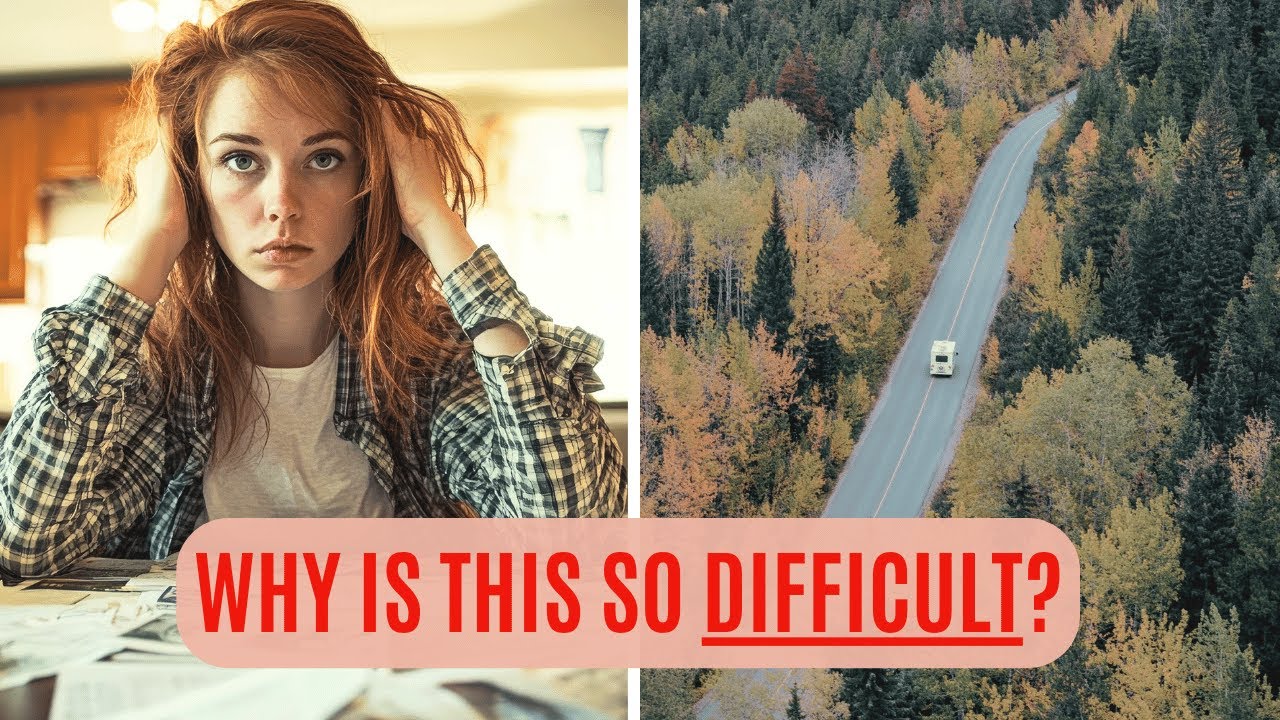
Kat Bird breaks down five planning mistakes that overwhelm first-time motorhome travelers: unclear trip goals, disorganized notes, over-scheduling, decision paralysis, and poor communication with travel partners. She recommends WilderTrips software to organize routes and suggests starting with a 2-3 hour drive to build confidence.
Chapters
If you would rather organize your garage or tidy your sock drawer rather than plan your next road trip, this video is for you. I get so many people who tell me how much they love motorhoming and campervanning, but planning and deciding where they're going to go on their next adventure just makes them want to pull their hair out and they find it completely overwhelming. So I'm actually putting together a little mini series. This is video number 1 of that, and today we're going to be talking about 5 of the biggest mistakes that you can make when you're planning your road trip and how to avoid them. Before I dive in, if you're new here, hi and welcome. My name is Kat, and I am here to help motorhomers and campervanners make the most out of their time on the road, especially those who want to go and explore some incredible places but don't quite know where to start. Ready? Let's dive in. So mistake number 1 is not putting even a little bit of thought into your trip. Now, you're watching this video, I'm guessing you're not one of these people, but if you hang out in Facebook groups or forums long enough, you will see the people like, I just go with my wallet and my passport and we turn up where we go and we enjoy it. Wonderful, but which direction do you point the motorhome when you head out of your driveway? Like, there has to be a little bit of thought and planning, and if the idea of thinking about it now when you're at home is overwhelming to you, you do not want to have that kind of level of stress when you are out on the road. So there are a few things to Think about when you are actually planning your trip right at the very, very beginning. Now, if you have a commitment to be somewhere— somebody's wedding or a birthday, or you want to be at a specific event or festival or whatever— then that's really obvious. That's your destination, and you've got the time frame that you have to be there for. Actually, that makes things a lot easier. But for most of us, that's not how we travel. For most of us, we get 2 weeks off over the Easter holidays, or I've got 10 days leave left that I can take. Where should we go? And that's where things can get a little bit more complicated, because when you can literally go anywhere in your motorhome or your campervan, then how do you narrow it down? So the first thing to think about is the kind of holiday that you want to have. Do you like sitting by a beautiful beach for a few days and just want to relax and enjoy the scenery? Do you want to stay in one area near a town or a specific location and enjoy that and see that in a lot of detail? Do you want to drive a specific route like the NC500 or the Romantic Road in Germany? There are lots of different factors this, and it can be really challenging when you're traveling with more than one person. Another reason to travel solo. But when there is you and your partner, spouse, whatever, it can actually be quite difficult. There are other factors to consider as well, like kids and if you travel with dogs, but we will talk about them later. But the first thing is to be actually honest about the type of trip you have. Now, I do this all the time, probably without even thinking about it anymore because I've done it so often. But like, between the 2 group trips that I did last year. So in September and October, I did 2 almost back-to-back group trips through Germany and Austria, and I had about 5 days off. Now initially, my plan was to relax and chill and gather myself between the 2 group trips. What actually happened was I drove about 1,000 miles through Austria and then through the Dolomites because the weather was absolutely gorgeous, and I had this fantastic opportunity to go and do that. I wanted to drive Grossglockner, but unfortunately that was all covered in snow, so I couldn't. But the Dolomites Stunning. But initially, initially, my plan was to have a bit of a relaxing time, maybe find a campsite or a nice aire or 2 aires that I could then chill out for a couple of days on each and just recover and have some fun and enjoy myself, but without driving miles and miles and miles, because the group trips can be quite a lot of driving and a lot of interacting. So I wanted to relax between the two, and that was my goal. Now, There have been other trips where I've driven all the way up to the top of Norway and back, and I didn't really have a set timescale, but I was like, I don't want to take 6 months to do this, so I will get up there and get back as much or as quickly as I can without driving, you know, 10-hour days, because obviously I was doing it on my own. I needed to manage myself and my energy and all the rest of the stuff, and I did it in about 7 weeks. But that was as much as I planned— getting to the top of Norway, to Nordkapp, and back again was the plan, and that is perfectly okay, but you do need at least a little bit of an outline. Now, if you are traveling with somebody who wants to go and drive to Croatia and back in a week, and you're like, I just want to go and sit by a beach and read a book, that can be a tricky situation. I'm not gonna lie, and we've had a couple of people on the group trips while I'm talking about what they're going to do afterwards or helping them plan out their next trip or whatever, and they, they come to some sort of argument, can be quite challenging. So one tip that I will give you is either one of you plans like 3 or 4 days and then the other one is in control, so it's not all down to just one person to plan it. Or if, like, for example, somebody really wants to go to Croatia and it's impossible to do anything else during your break, then they get that holiday, they plan it all out, and then you get the next one and you get to do what you want to do, and you make it sort of tit for tat. Which is fair. Whilst you're on that subject, it's really important to gauge how far you want to go each day and how many hours driving you want to do versus how much exploring you want to do. And that's quite a big topic. We're actually going to dive into that in the next video in this series, so make sure you're subscribed so you can follow along for that. But it is really important to have a conversation about your expectations for the trip if you're traveling with more than just yourself. The next mistake is trying to plan an entire trip either using like bits of paper or notepads or having 27 tabs open, and it just becomes overwhelming because you've got so much information that is everywhere that trying to sit down and actually organize it becomes— it's a mission all in itself. Now I use a brilliant bit of software called WilderTrips. I will leave the information below. It is completely free to start off and use it if you've never tried it before. I Highly recommend it. I used to use Google Maps, and I love Google Maps. Wilder Trips is so much better and easier. You can move things around; it's great. Now, how I use the software might be slightly different to how other people use it, but what I tend to do is once I have decided on a rough plan or a rough destination, I will Google things to do in let's say Munich. We're going down to Munich for the week, and things to do around the area, things to do in southern Germany, things to do. So I will get a list of places or activities that I could do in that area, and then I plot those all onto Wilder Trips, and I then use that software to move it around day to day. And Wilder Trips will actually tell me estimated driving time between places. From there, I can look at where the places are, and I can start looking for campsites, and I can start looking for airs, or perhaps places to stay, or other things to do, and that's a really good base. So I tend to pick for a week, I'd probably pick maybe 5 things, which gives me a little bit of wiggle room. Another really important thing to do, don't plan everything out by the hour. You'll be exhausted by the time you come back, and then you'll need another holiday to recover from that holiday. So give yourself a couple of days of just relaxing or chilling or seeing what you find when you are out there. So you've got about 5 things to do in about a week, then you've got, of course, driving and stuff to get there, and that will give you a really good baseline for your trip. Now, another mistake that I see people make is just this fear of getting it wrong, which is completely understandable when you've never done something before, but some people are so worried about, well, what if I pick a bad campsite? What if I pick a bad route? What if I know the road is shut. What if something goes wrong? That they have this fear, this paralysis, which stops them actually moving forward. If that is you, and there's absolutely no shame in that at all, but if that's you, if the thought of, oh my goodness, what if it goes wrong, I can't deal with it, this is what I want you to do. I want you to pick one area that is within 2 to 3 hours drive of wherever you keep your motorhome. That's it. Now, if you happen to live on the south coast of the UK and you're happy to go across into France or perhaps even into Belgium, then brilliant. If you're happy to drive through the UK, but the thought of going too far into Europe is what's paralyzing you, then just go a couple of hours across the border into France or Belgium, pick one place, one campsite, and stop. Now, that in itself is going to feel a little bit daunting, and that's okay. You're broadening your horizons. Quite literally. But that journey, which seems so simple, will teach you so much, and it will help you build your confidence. And you can even, if you have time and you don't have to nip back, you could even plan your campsite for perhaps 2 or 3 days, and then give yourself 2 or 3 days to go somewhere else once you're there and you're confident and you understand about driving on the other side of the road and all these other things. But start small. If the thought of going across to Europe is what is stopping you going on another road trip, go somewhere in the UK. We have so many incredible places in the UK to explore. The big takeaway from this is to just go, to plan something and just go, because the more you get out there, the more you will build your knowledge, your confidence, your experience, and then you'll be able to take the next step and the next step. I did not get my first motorhome and drive up to the top of Norway and back. That would be insane. I didn't have the knowledge. I didn't have the confidence. I certainly, when I was driving on my own, had to relearn how to do everything as a solo traveller compared to when I was travelling as a couple. So it's absolutely okay to be anxious and a bit nervous, but you do have to start somewhere. And I highly recommend that you plan something in to be able to start that journey. Now, in the next video, I'm going to walk you through how to plan your driving days, how far to go, and all of that. Good stuff. But I also want to tell you about the free road trip planning workshop that I'm doing at the end of this month. I'll leave all the details for it in the notes. You do have to register if you want to come and join me, but that's going to walk you through in much more detail how to plan your trips, how to figure out where to go, how to make it a lot less stressful, all of that good stuff. So like I say, all of the details for that will be in the notes. If you happen to be watching this 2, 3, 4 months after I'm filming, the replay will be available for you. Again, the link for that will be in the notes. I hope to see you there. But like I said, this is part 1 of the little mini series. Part 2 will be coming out very shortly, so make sure you're subscribed to the channel so that you can catch that. If it's already out when you're watching this, I'll put it here for you. All right, see you on the next video. Take care, bye!










