😱 Motorhome Wild Parking - Get Over the Fear
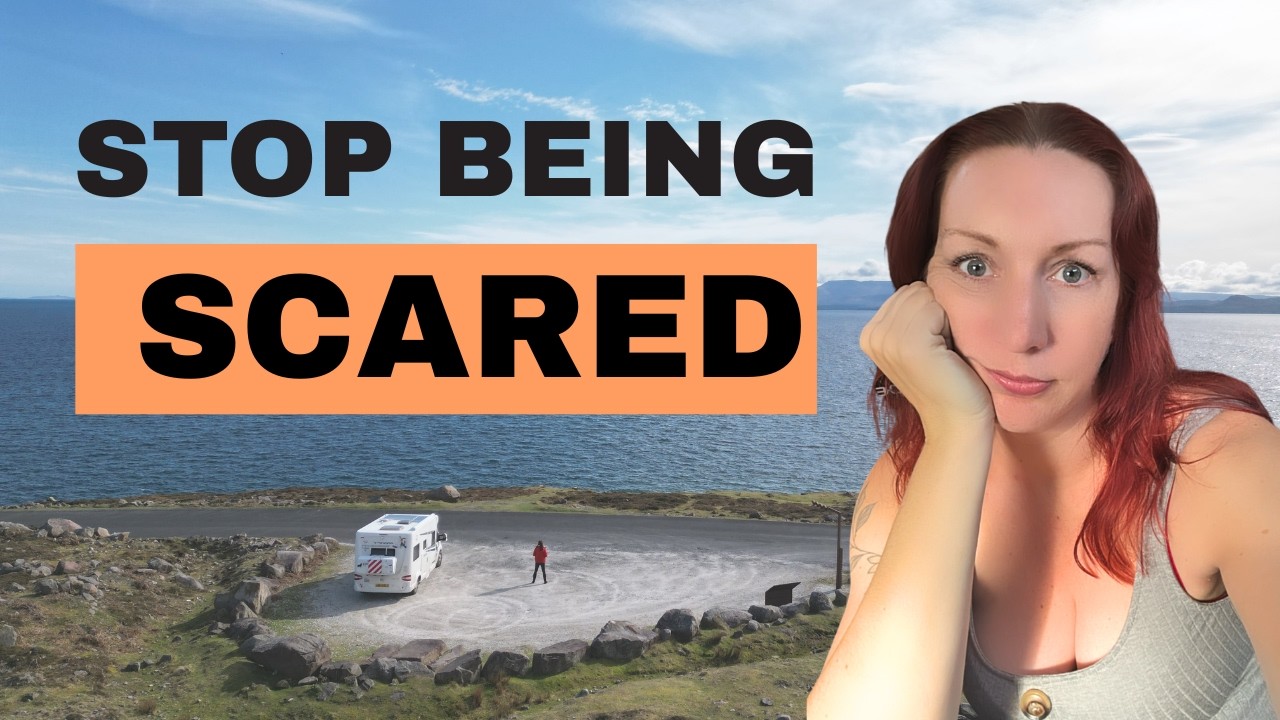
Kathryn Bird and her companion share how they overcame the fear of wild motorhome parking through experience and preparation. They recommend apps like Park4Night, arriving before dark, and checking satellite imagery, plus safety tools like door locks and cameras. Start small with approved stops and build confidence gradually.
Chapters
The first time I stayed off-grid or wild parking on my own in my motorhome, I was terrified. The first time I ever went wild parking at all, I was with my ex-husband, and we literally spent the whole night waking up to every sound, convinced we were either going to get knocked on or murdered in our sleep or something crazy like that. It sounds ridiculous now because we then woke up at 7 o'clock in the morning and we're like, Oh, okay. It was really anticlimactic. And then when I started motorhoming on my own, I had to go through the whole fear and, oh my goodness, I'm going to be murdered again, all by myself.
I can't remember where my first park-up was. I know the first one ever was in Scotland because we drove all the way up to Scotland and didn't have anywhere planned to stay for the night. And I couldn't wrap my head around that concept at all. Like, We've got no campsite.
Where are we going?
Where are we even heading for?
It was really weird.
So I had kind of got through that hurdle before I started traveling on my own, and I think the first place I stayed off-grid was in the Peak District near to the Wark near Luddeschurch.
I believe that they have now unfortunately blocked off all that parking or made it no overnight parking, but at the time that I was there, it was a brilliant park-up.
I was completely on my own.
It was Pitch black, and I had to let Mac out for his evening wee, and I spent the whole walk going, if you're here to murder me, can you just get on with it please? The anticipation is killing me. Like, literally, I'm just talking to a potential person who's out in the dark with me. But that was my very first park-up on my own, and yes, it was quite scary.
And I had somebody come and approach me at a show who said that he really wants to try wild parking, And spend more time off-grid, but his wife just absolutely will not, refuse to do it. And I'll be honest, it made me a bit frustrated because he was so, oh, she's just really chicken and she just can't do it and she's really frustrating and all this kind of stuff. I want to be really clear here. If, if the idea of staying off-grid makes you so completely petrified and it just will ruin a trip for you, don't do it. Don't, don't do it. However, I will also say that you have to kind of go through that fear to come out the other side, and this whole world opens up in front of you then with places that you can stay, options that you've got, even approved places like a pub stopover or an aire in France or even a campsite that doesn't have an electric hookup. If you know how to stay stay off-grid, your whole motorhoming life gets so, so much easier. So I wanted to share a few little tips to build your confidence and also just make it easier to find and, and stay safe. I am going to go way more in depth on these in my Wild and Off-Grid Parking Workshop, which is happening at the end of July, and it is going to be practical advice on things to do to set up your vehicle and what you need to know, but there's There's also going to be some mindset and sort of emotional stuff on there, like getting through the fear, making sure that you can stay safe, assessing like a park-up and whether you think it's nice or not nice, and what you do if you think it's not nice. So if you are a little bit nervous or it's not something you've done before, that is completely okay. And if you want to come to this workshop, it is completely free. There are limited spaces because Zoom puts a limit on the amount of people I can have in the room, so you do need to sign up and register For the spot. That also means that I can then send you the link, but it will hopefully build your confidence so that you will at least be able to try it. Now, if you try it and don't like it, then you don't like it. That's absolutely fine. But it's one of those things that you have to do 2 or 3 nights every now and then. I still get this thing with Mac where we're parked up in the middle of nowhere somewhere, and he will sit bolt upright in the middle of the night and listen intently.
So by this point, my adrenaline has spiked and I'm sitting bolt upright going, what have you heard, dog?
I can't hear a thing. And then we'll do this for a minute or two and you sort of—
your blood pressure's rising and your adrenaline's rising and you're expecting an attack at any moment.
And then the dog will just turn around 17 times and go back to sleep.
But my adrenaline is still rising and my blood pressure's going and my heartbeat's going. I'm like, what the heck was that?
So things like outdoor cameras and stuff can really, really help with that, but it still happens every And then I still get a little bit of fear or whatever, so I do tend to use Aires or approved stopovers more when I'm traveling on my own, and that might be what you do. That might be you adapt your motorhoming based on where you are. Like Norway, very safe, amazing. I stayed off-grid pretty much every night up there. It was incredible. Whereas if I'm near a town or a city, I tend to feel more vulnerable when I'm around bigger urban areas because there's more people around, so I will then tend to either use a campsite or an aire or something like that. That. So, that is one of the ways that you can build your confidence because the more that you do this, the more that you will feel confident.
It's like anything, the more you do it, the better you feel about it.
Another thing that I highly recommend that you do is to research the place that you're going to stay properly. Now, I use Park4Night or Search4Sites to find places, and when I'm looking for places, I will always look for Things that have got photos. So if a place doesn't have any photos, I won't stay there. And then when I'm looking at the photos, I'm looking at the surrounding areas. I'm looking to see if there's any tire marks from boy racers or any of those kind of things. I'm also looking at the reviews. If anyone says locals drove past at 2 o'clock honking their horns, then I try and avoid those kind of places. And one thing I do, I don't see enough people talking about this, but a lot of the time I will go on to Google Maps or Apple Maps and look at the satellite features and actually look— Oh, that's a good idea. At the spot on satellite, so you can kind of see what the approach might be like. You can see if it's down a really dodgy little lane or something like this. Now admittedly, because I'm traveling a lot on my own and I don't always book these stops or plan these stops days in advance, I often tend to drive most of the day and then I'll stop and find a place. So I don't always do this, but a lot of the time I will try and see what it looks like from a satellite point view, bearing in mind, of course, that the satellite images can be several years old and things could have changed. But it's another way that you can sort of see what the area is like and what it might be like to actually stay there. Then, of course, when you arrive, you have this sort of gut feeling about a place, and we all have it. Not all of us listen to it, and the few times that I haven't listened to mine, I have lived to regret it. So there are people who have turned up in the middle of the night, there are things that just It just didn't feel right.
We ended up camping in a dogging spot and I had to—
had our 14—
I think she was 14 or 13-year-old daughter was in there and we obviously put up all of the windows whilst we were trying to get the van ready and sort of driving out and she was like, what's going on? What's going on? Like, do not open that window. We're like driving out. They didn't bother us, they didn't affect us at all, but yeah, it wasn't a situation that we wanted our daughter or indeed ourselves To be anywhere around. So these things do happen.
They are part of staying off-grid.
If the thought of that happening to you is just, ah, I couldn't do it, then just stay at approved stops.
Stay at pubs, stay at Aires, stay on campsites. You don't have to stay out in the middle of the wild to be a real van lifer. Yeah, don't be, don't be afraid to move on. It's one of the reasons that I try and always arrive at a place before it gets too dark, so you can assess an area, you can see who else is parked around you. A couple of times I have pulled up at spots and people who are already parked there, I thought, I don't want to spend my night next to you, so I have moved on and found somewhere else. So that is not a failure, that's not bad planning on your part, that is just the way it is. So be prepared to move on and don't leave it too late. So another thing that really helped my confidence was having a plan of action of what if this happens, what if this happens, what if this happens, and The biggest thing that is going to affect you when you are staying off-grid or whatever is somebody else coming and interfering with the van. Now, they could be standing outside throwing insults, they could be trying to get into your vehicle. That has never happened. We have had one occasion where people have come to try and damage the van. That was in Wales, of all places, and it was a group of teenage kids that we videoed Throwing their rubbish out of their boy racer car all over the car park. It was appalling. And I videoed them doing it. They got really annoyed at us, and then they came back at 2 o'clock in the morning. I'm guessing they were trying to slash our tyres or do something equally delightful. And the unfortunate thing is they had this boy racer car.
You could hear them literally coming about 2 miles away. It woke us up and we were like, oh great, okay. So by the time they arrived, we were wide awake, dressed, and ready to Say hello.
But that is literally, I think, the worst thing that's ever happened. And then there was another one again in Scotland. So in Europe I've had no problems at all. In Scotland, group of teenage kids thinking they were all that parked up outside the approved motorhome area where we have all paid to stay with their music blaring.
Nobody else bothered to get out and say anything to them, so I stormed out in my nightwear, which was perhaps quite terrifying for them. And then I had some jumped-up little Scottish teenager going, oh, we don't understand English.
They left too. I gave them, gave them a piece of my mind. You do need to sort of think through your— what are the worst-case scenarios? And the best thing that you can do if you are staying anywhere that isn't a proper campsite or an aire is have your motorhome ready to go. So I don't ever put my external silver screen on. I don't ever put outdoor chocks or anything on, I don't have anything outdoors that I might then need to go outside to remove in order to be able to drive off. Because my best line of defense, if there is somebody outside of my vehicle, whether they're just being abusive or aggressive or trying to get in or whatever, is to drive. So always park facing out, always know where your keys are, don't leave them in the ignition, use only internal screens and things, and always know where your shoes are. So I keep my motorhome clean so it is ready to drive. So I will do all the washing up and putting everything away or whatever before I go to sleep. I don't drink when I'm off-grid or wild parking ever, and if you're the kind of person that's like, well, I like a drink, that's fine, go to a campsite or an aire or something like that. But I always, always recommend that people are ready to drive and legal to drive, so I don't drink when I am staying off-grid. And then if and when anything like a load of doggers or people turn up, you are just ready to drive. Ideally, if you are going to be staying off-grid, particularly if you're female and you're on your own, you want a vehicle that allows you to get from your sleeping area to your driving area without having to go outside. So if you have got the sliding door or whatever in your campervan, is there a way that you can create a path or something, even if you don't use it most of the time, so that if you are in that situation you can safely get into the driving seat and just drive and go. I don't do the whole wrapping your seatbelt 7,000 times round or locking your chairs in the wrong position or anything like that. You can do something like that when you're not in the vehicle, but if you're in the vehicle staying overnight, then yeah, I definitely recommend not doing that. The other thing I have done which makes me feel a lot better is I have got an external habitation door lock. That's one of the weakest places on your motorhome, and I've got that fitted that I can lock it from the Inside. Now, not everybody has got one of those that can be fitted. It's something to do with the frame on the door or something. So if you can get one that only locks from the outside, then lock that before you go to sleep, and that way if you need to, you can still drive, that door will still be locked, it's all good. So those are a few of the things that I do to try and make me feel safer whilst I am traveling. The other thing I do is I have my location shared with friends and family. I use Polarsteps, which I have just for friends and family. I also have got my location shared with my other half, or if we're both traveling, another family member, so that they can see where we are just in case something ever happens. And I don't ever share my real live location on social media. That's another safety point for you. Like I say, it's one of those things you've got to go through it rather than round it. You're never going to wake up one day and be like, oh yeah, I feel amazingly confident And I will never feel nervous about this again. You have to go and do it. Make your first park-up intentionally boring. Make it somewhere where you know you're allowed to stay, so at a pub stopover or something where you know it's okay to stay, and then you will slowly build up your confidence to be able to stay in places like Aires or in the middle of forests, like these forest stay-the-night schemes that they've got up in Scotland, but also down in England now they're trialling them at a few locations. If you want to know more about those locations, then this video will help. And don't forget, if you do want more tips on wild parking and staying off-grid, make sure you sign up for the workshop before it goes so you can join me live. I hope you found that video helpful. If you did, a thumbs up is always very much appreciated, and I'll see you on the next video. Take care, bye!










