👉 MOTORHOMERS: Do you know this? (Motorhome tips for beginners)
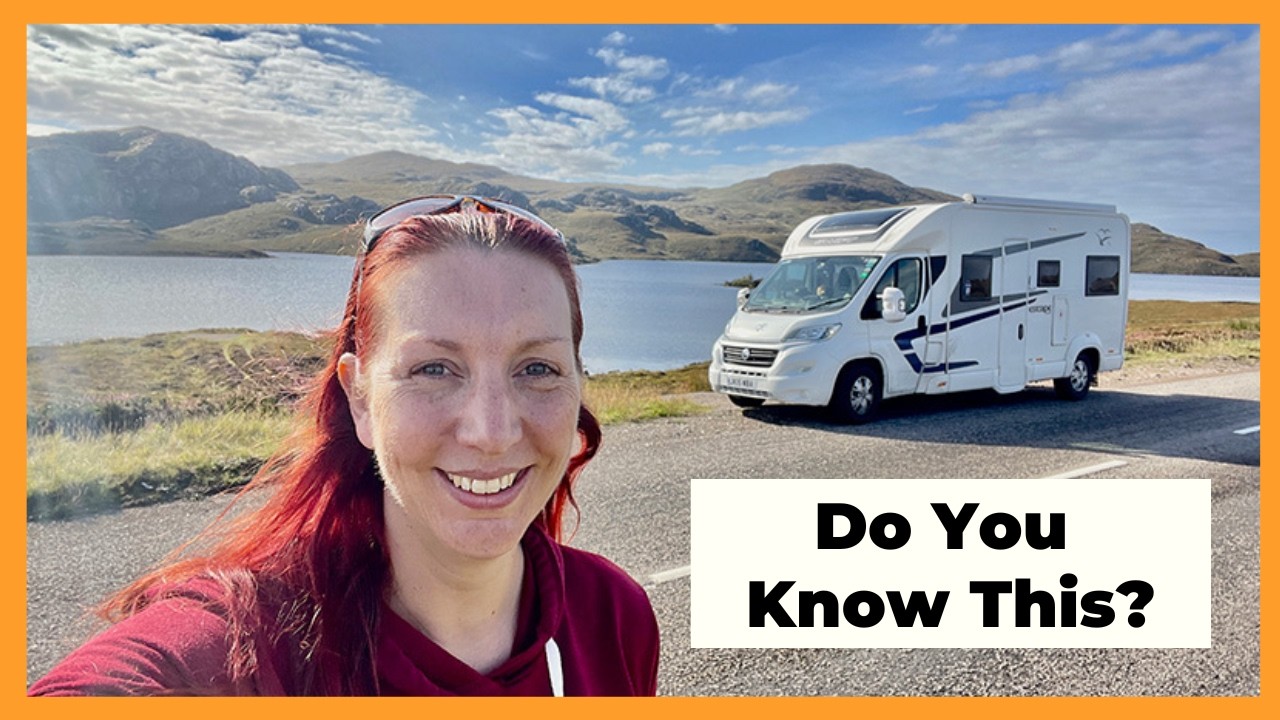
In this solo Q&A video, former air‑traffic controller‑turned‑travel‑blogger Kathryn Bird answers a series of beginner motorhome questions submitted by her email list. She covers recent legal changes (Spain no longer requires V16 flashing beacons for non‑residents), how to locate Aires, CL and CS sites in the UK (including CAMPR, club sites, and booking apps), navigating clean‑air zones across Europe and obtaining Crit'Air stickers, accessing TV abroad using VPNs versus aerials, the necessity and solo‑use of levelling ramps, the pros and cons of refillable versus exchangeable LPG bottles for Europe and Morocco, the current status of UK pet passports, and choosing between lithium batteries, solar panels, EcoFlow power stations and inverters for off‑grid power. Throughout she shares personal experiences, links to resources, and promotes her Wandering Motorhome Club and email list for further support. The video ends with a brief sign‑off and a promise to share Antarctica footage on social media.
Chapters
Hello from Antarctica! Well, sort of. Obviously I'm not in Antarctica at this exact moment whilst I am filming this, but when you are watching it, I am going to be in Antarctica. I'm going to be off-grid for about 3 weeks. I might be able to post some things on my Facebook and on Instagram, so if you do want to see cute pictures of penguins and where we are and all that kind of stuff, make sure that you check out those channels. I'll leave the links in the notes for you. But whilst I'm away, I wanted to send something out on the channel, and I'm gonna do one of my Q&A videos. If you are new to the channel, hello and welcome. I'm Kat and I quit my job back in 2018. I used to be an air traffic controller and I quit that to go motorhoming around the UK and Europe, and I've been lucky enough to be able to be a full-time travel blogger pretty much ever since. So I am doing a lot of Q&As answering your questions. Those come from people on my email list, so if you would like to get your question answered in the next Q&A video that I do, join my email list The link is in the notes. It also gives you free access to our resource library where you can get itineraries and checklists and all of that good stuff, all for free. So if you join that up and then you can reply to any of my emails, ask your question, and I will answer it for you in the next Q&A. Right, I literally have got about 20 minutes because life is insane at the moment trying to get sorted and get this recorded before I need to get everything else going before I go away. So I'm gonna answer as many questions as I possibly can. And I'm going to try and do this all in one take so I don't have to waste time editing it. So bear with me whilst I look at my screen to actually see what the questions are, and let's dive into this one. So the first thing, really, really important update. Ian asked a question about, do you have any recommendations for the flashing B16 beacon that we need for Spain? Stop. Very, very recently ago, the Spanish government actually changed the law, which is so frustrating because myself and plenty of other experts in the motorhome industry have been telling you that you need this thing even if you're not a Spanish resident, and now the law has changed. So I am pleased to say that unless you are a Spanish resident or driving a Spanish registered vehicle, you don't legally need to have one of these V16 beacons. So visitors to the country don't need to carry them. Now, if you haven't got a clue what I'm talking about, but a V16 beacon is actually a really fantastic device, and it is a Beacon that instead of having to put out a warning triangle and walk back down the road 40, 45 metres— apparently something like 50 people a year die on Spanish roads alone just by going to put out these warning triangles, which is a terrifying stat— so obviously they're trying to reduce that and make it safer for people who are broken down, so they've come up with these beacons that you can activate. Now obviously on a car you put it on the roof, on a motorhome I would suggest just putting it just behind it, but it alerts People, and it's a lot better visibility, and it means you don't have to walk all the way back down the road. So I actually think they're a really, really good device. But for now, if you are visiting Spain, you do not legally need to carry one of these. You can carry on using your warning triangle as you did before. But like I say, I still think they are a really good thing to have, and I've left the link for the one that I recommend in the notes for you. Next question: how do you find Aires in the UK? Now, this is a really good question. So I talk a lot about Aires across France and across Europe, but in the UK, sadly, we do not have the same network that the rest of Europe do. That doesn't mean that there aren't any, and in fact there are some. There is a really good campaign called CAMPR, which is the Campaign for Real Aires in the UK, and I will leave the link to their Facebook group in the notes as well, and they've got a map of aires that have been set up. Now, for me personally in the UK, because I'm a member of the Caravan and Motorhome Club and the Camping and Caravaning Club. I actually like to use their small sites, which are max of five pitches. They're called CL or CS sites, and it's the reason that I'm a member of both clubs because those small sites are basically the same as airs, but often have things like electric hookup, and they're roughly fifteen, maybe twenty pounds for the night. So a lot cheaper than a big all singing, all dancing campsite would be. So in the UK, we're lucky enough to have a lot of those big network of those. There's also a really good website called clbooking.co.uk. UK, I think it is, and that doesn't show you every CL site in the UK, but the ones that have signed up to it, it means that you can actually search for specific dates because normally these places are on farms or they are being run by other businesses and those people don't have a reception and a phone that are just waiting for your call to book the CL site, which means that you've got to wait for the farmer to be done with whatever they're doing or for them to get back to you, so it can be frustrating if you're trying to book things last minute. So the CL booking site generally means you can find out if places have got space, and some of them you can even book directly online, which I think is so clever. So yeah, I recommend using that, but the Campaign for Real Aires have actually got a map of some of the other Aires that have come up around the UK, and I think it might include Ireland as well, so I will leave the link for that so that that's how you can find the Aires around the UK, but do not expect them to be as plentiful. The other apps that are worth using— Search 4 Sites are fantastic for finding these kind of places all around the UK, and again I use them for Ireland as well. You can also use Park4Night for Ireland and the UK. There's not quite as many on there as there are on Search 4 Sites because Search 4 Sites is a British company, so they have a lot more Brits that are using it for the UK, but that's how you find them. How do you find out about clean air regulations? This question came from Paul, and there is a fantastic website that shows you where any of these clean air zones, which are popping up all over Europe— there used to be just a few, and now basically most big cities either have one or are getting one in the near future. So the website that I always use is called urbanaccessregulations.eu, and that is a fantastic resource, free, to be able to find out which cities have got these rules and restrictions in place and also what you need to do to enter them if you want to. Now don't forget, if you're traveling in a motorhome or even a larger campervan, you probably don't want to drive your vehicle into a big city, which means that you can probably park outside of the zone and don't even need to worry about all the fines or whatever you might need to enter one of them and just use public transport to get in there, which is better for everybody. However, in places like France and Germany, you can actually just get one— or the Criter sticker for France, and that covers all of the zones. Now, it doesn't mean you can access all of the zones all the time, but you just need one sticker which will then tell you what your legalities are for each zone. So if you're a category 4 or whatever it might be, then that will tell you what you can and cannot do in every single zone. I have gone website— oh no, I haven't. I have done videos all about how you get a Crit'Air sticker for France and also how you get the German ones. I will try and put them up here if I can figure about how you do that. If not, I'll leave the links for them in the notes, and it literally walks you through step by step. Be very, very careful which website you use. Again, on those videos I've told you the exact websites to use because there are a lot of scam— they're not scam, you will still get your Critter Sticker, but you'll pay a heck of a lot more. Some people are charging like €50 or €100 for one of these things, and they don't. They cost— I think mine cost me like €5.95, and that included the postage, that they're very, very low cost. So if you are touring in France specifically, but Germany or any of those countries you might be traveling through, it's worth getting one of these stickers. But that's how I find out where the zones are. How do you get TV when traveling in Europe? Another really good question. Now, I don't actually watch a lot of live TV. In fact, I think the only thing I watch live are the Winter Olympics, which are on right now, and also things like Formula 1. I'm a big sports girl, but I don't tend to watch a lot of live television, so it does make it a little bit easier for me because I watch either catch-up or I'm watching things like Netflix or Amazon Prime. I can watch all of those online, which means I don't need a TV aerial and a TV signal, so I just tend to use my laptop. I've got the apps on my laptop, and then I use something called a VPN, which stands for something clever, something Virtual proximity. I can't remember exactly what it stands for. It doesn't matter. Basically, what a VPN does is it tells the internet where you are that you're actually in another place in the world. So, for example, if I'm touring in Spain or Italy or France, I can turn on my VPN, and I use—I've actually used two. One is called NordVPN, and one is called ExpressVPN. Don't use two at the same time; just one is fine. But both of those work really, really well when you are touring in Europe. So get whichever one of those has got a better. Deal on at the moment, install that on your device, like on your laptop or on your iPad, and then you turn it on. You say you're in London, England, or wherever you want to be in the UK, assuming you want to watch UK catch-up like BBC iPlayer or the UK Netflix, and then you open the app. Make sure you open the app after you've turned the VPN on, and then you can watch it. It's really, really straightforward. Now, some campsite Wi-Fi will mess up your VPN, so you do need to have— in order for this to work really well, you need to have either your own SIM card in the device, like if you've got an iPad, get one that's got a SIM card in it, or make sure that you're connected to, say, your phone, but you'll need to put the VPN on your phone as well so that you're not connected to a Wi-Fi that knows it's in Spain, and then you'll say, no, I'm not, I'm in London, like the Wi-Fi, no, no, no, you're definitely connected to me and I'm in Spain. So you need to make sure that you are on a device that you can switch and it will work with that VPN. And then I literally will go onto the apps and watch whatever I want. If you want to watch actual live TV, you can do some of that using streaming. Like, I know on the BBC you can watch some of the channels live, but A, it takes a lot more fiddling around, and also you might need a proper aerial on your roof. You can get these ones that you can detach so you don't have to drill through your roof or anything if you don't already have one fitted permanently, but they are a lot more fiddly and I've never had particularly good success with them, although admittedly I haven't put a lot of effort into trying because I decided it just wasn't worth the effort for me. But if you are going to do that and you've got a TV mounted in your motorhome, then yes, you will need some sort of aerial that links to that TV, and then hopefully you can get it all tuned up to the channel that you want. But like I say, that is a lot more hit and miss So I prefer using the app version. Do you really need levelling ramps or are they optional and how do you use them if you are a solo traveller? This is such a good question. Okay, so the first thing is I highly recommend that you take levelling ramps with you and if you've got a motorhome, make sure you get the big jumbo ones. Even if you've got what I would call a standard size motorhome, 6.5, 7 metres, mine's 6.8 metres, getting the big jumbo— again, I'll leave the link to the ones that I Now, I travel on my own 80% of the time. I don't use leveling blocks very often, like very rarely, because they are such a faff to put on or use by yourself, but on the few times that I need them, you really need them, which is why I recommend getting the jumbo ones. There is this myth— this is not a myth— but if— unless— people say unless you're really 100% level and you have to use, you know, the The level on your phone and things to check that you're totally level, otherwise your fridge won't work on gas. It's rubbish. Like, I've slept on small slopes and slightly off-kilter. I'm lucky that I've got a transverse bed so I can put my head at either end, and honestly, I would rather sleep on a very slight slope than have to worry about faffing around with levelling blocks. I also never ever use levelling blocks or the outside silver screen when I am wild parking or off-grid in the middle of nowhere because my safest line of defence should anything happen or anyone approach the vehicle is just to drive. And of course if you're on levelling blocks or you've got some sort of outside screen or anything like that, that then is going to be an issue and then I would have to get outside of the motorhome on my own, which makes me very vulnerable. So I don't ever use them when I'm in that sort of situation. So the only time I ever really use them is on camp Most campsites are fairly level. Not all, I'll accept, not all, but most of them have fairly level pitches, so that's why I don't use them very often, and the fridge works absolutely fine with a very small slope. However, there are of course some places where the slope is enormous, or if you go somewhere like Norway and you are allowed to off-grid everywhere and you have very, very few safety concerns, then yeah, you can absolutely use the levelling blocks. The way that I do it is you park up. I always go forward onto them. It's a heck of a lot easier than trying to reverse. So park up, get the blocks out, put them in front of the tyre, and you need to assess, like, so if one side needs to go up slightly more than the other, then you have to adjust, like, the distance away, and you need to assess where that's going to be for each particular block. And then you have to go very slowly— this is a good clutch control exercise— up, and there's normally 3 ramps, and I try and get it on the second one. It doesn't work perfectly. I have several times gone up and over, and if you're going to do that, do not turn the wheel because I've seen people get the blocks stuck. So make sure you keep your wheel straight, and that way if you do drive over, you can just stop, put on your handbrake— very important— and then retrieve the block and try again. Yes, it's embarrassing. Yes, people have laughed and watched, and you are the centre of attention for a little while, but if you need to put them out, you need to put them out. And occasionally, if someone is on the pitch you can ask them, and that is helpful when you are on your own, but like I say, very rarely will I do that, very rarely. Exchangeable or refillable gas bottles for Europe? Now, I had a lovely one-on-one call with a lady called Zelda recently, she's fab, and she's heading off to Spain and then down into Morocco on her own. I don't do a lot of one-on-one calls, but occasionally if people ask me if they can do them, then I will squish them in. And she was talking about this, and it's a really, really excellent point because she's going into Spain for a few weeks, but then she's going into Morocco. It does actually change what I recommend. Now, in my motorhomes, I have had full refillable systems, so I don't have any exchangeable gas bottles at all in my van, with the exception of the barbecue, of course. But it's all a refillable system in my actual main motorhome, and I've had that since 2019, and it's been absolutely fine. Yes, some stationed in the UK are closing down, but also a lot of motorhome, like, depots and things are actually setting up their own LPG stations. So there are other ones coming in. Have a look on the mylpg.eu app, and also it's got a website version as well, and you can see where the nearest stations are to you. So unless you live somewhere like the Outer Hebrides, which only has one station, or like the very north of Scotland, which doesn't have a single LPG station anywhere near it, then I recommend getting a refillable system if you're going to be using your motorhome a lot, and particularly if you're going to be going into Europe a lot because it's a heck of a lot easier to find LPG and refill over there. Make sure you get an external filler fitted into your motorhome. It does make it a heck of a lot easier to do, and also you are getting countries like Spain and Italy who are getting a bit funny about people who are filling up internal bottles So yeah, make sure you've got external filling point of your refillable system, but otherwise it's a really, really simple system. I do recommend getting a proper gas-approved person to do that. You'll also need a certificate or some sort of sign-off for your insurance. You need to make sure you let your insurance know that you've had that fitted. However, if you're going to Morocco, Morocco doesn't have any LPG, and Finland have very few LPG points. As well, so if you are going to be going to countries like that, you're going to need to find a way. Now one way that you can do it is have your if you've got a refillable system like I have fitted, leave one of the bottles at home and then just have the exchangeable bottle on the other side. But you do need to remember that the UK system, the pigtail, so the hose that connects your motorhome to the actual bottle, doesn't fit all of the other bottles in Europe. I believe there are four different types, so the UK and then three different fittings. For Europe, and if you are going to have exchangeable bottles, you're going to need to carry those different pigtails. I also don't know which pigtail Morocco uses, so that's something to research before you go. And if you go and do that, you need to remember that if you go and say you need to buy a bottle whilst you are in France, you're going to have to pay the deposit, you're going to have to sign a contract and do all the other stuff like you would if you were getting a bottle in the UK, but then of course you're going to have to abandon that French bottle when you hit Spain or wherever you're going next because the Spanish don't want a French bottle, so you'll abandon that and then you have to start the process and pay the deposit and do all that over again. So it can be a really expensive way to tour Europe if you're going to be spending a lot of time in Europe. If you're just going for a week or two and you go once or maybe twice a year, it probably isn't worth fitting a refillable system, in which case just figure out how to get full gas bottles before you go into Europe and that should last you a couple of weeks weeks in the summer easily. I think 6 kilograms lasts me about 3 weeks when I just use it for the fridge or for cooking. In the winter when the heating is on, 6 kilograms will last me about 4, maybe 5 days because the heating takes an awful lot of gas, one of the reasons I am considering moving to diesel heating, but that's a future video for a future time once I've actually done some more research and figured out if it's the right move for me, but yeah, if you are planning on going somewhere like Morocco then Definitely, you need some way of fitting an exchangeable bottle into your system so that you can actually get gas whilst you're over there in Morocco. Cat, is it true that pet passports are back? So last year, 2025, Keir Starmer himself announced that he had done a deal that pet passports were coming back. He couldn't give a date. There has been no date. There has been no update, and in fact, if anything, there have now been rumblings. But that hasn't happened, that isn't gonna happen, and pet passports are not coming back for people in the UK. So at the moment there is no update. You will need to still get your animal health certificate. If you want to know a full run-through of exactly what you need to do when you are leaving the UK and going into Europe, or indeed into the Republic of Ireland, then you need to watch this video. But yes, at the moment there is no There's no update on the pet passport system, and it's looking less and less hopeful as every month goes by. We will keep our fingers crossed, but no, at the moment, plan your trip as if it's not coming in and just accept that you're gonna have to do the animal health certificate. Oh, I like this one! What do you think is more important: lithium solar or an EcoFlow or inverter? That is a huge question. I will give you a brief summary. I've done quite a few videos about the system. System that I've got in my motorhome. So if you go into the YouTube channel and just type battery or power or something, it should come up for you. But what I've got in my van is I've got a lithium battery, I've got 2 solar panels which link into my lithium leisure battery and also top up my engine battery. Not all motorhomes have a way of topping up the engine battery from being plugged into the mains, which is frustrating, so make sure if you do have like a solar panel that it can top up both, and then also I've got an inverter, and the inverter will recharge my EcoFlow, which is like a separate portable battery, and that charges that and also can charge up anything else like my laptop or whatever whilst I am driving. So they are all slightly different systems, they all work together. If I was only going to get one and you're going into, say, Europe quite a lot, solar panel makes a lot of sense because that will help you re-top up your leisure battery and, like I say, top up the engine battery if it's all properly fitted as well. So that is really worth doing. However, if you're spending a lot of time in the UK, it rains a lot if you hadn't noticed. So for that, then it is probably worth getting something like a lithium battery fitted if you're mostly going to be UK-based or indeed going to be using your van a lot. It has been game-changing for how long I can stay off-grid, how many days I can stay in a place before I need to move, because obviously driving recharges the batteries. So yeah, I can now spend several days off-grid in one spot and not worry about my battery power, which has just been amazing. So if that's you, I would go lithium because it means you can use all of that available battery power before needing to worry about topping up and stuff. And also it's a lot less finicky about being drained below 50% and then it kills the battery. Lithium doesn't work like that, so you've got a lot more robustness in the system, but I would also always now have an inverter. No matter what kind of battery you've got, I would have an inverter. Mine is 2,000 watts and I don't use it to run any big appliances. If I do want to run anything massive, I prefer— I don't really do that. I occasionally will run the air fryer off my bigger EcoFlow, but otherwise things like hair dryer and stuff I don't really use All of that much. So 2,000 watts, it's absolutely fine for me, and the way I use it, like I say, is when I'm driving, I then will plug in things like my EcoFlow or any other devices that need charging, and they get topped up whilst I'm driving. So the, the engine power is actually re-topping up my leisure battery, and it's also running the inverter. The inverter runs off my leisure battery. So all of those systems are really good, but like I say, those would be my priorities based where you're planning on touring most. Right, that is all I have got time for. I hope that you found those useful. Like I say, if you do want to get your question answered, there are 2 ways that you can do that. The first way is to join the Wandering Motorhome Club. I do live Q&As every single month just for club members where we jump on Zoom, they ask me their questions, they can pre-submit them if they can't attend live, and I can talk through them in as much detail as needed so that it's really helpful. for them. So if you're not already a club member, you can absolutely join that. I've also just released the latest group trip to France. Club members always, always get first priority access to these group trips. So if you want to become a club member for the next group trip— I'm pretty sure the France trip will have sold out by the time this video goes live— but if you want to know about the next group trip that we do, then do become a member. You get to hear about all of those things first. But if not, then you can always join my email list and then you can reply to any of the emails, ask me a question, I put them all in a big long list and then the next time I sit down to do a video like that I can record it for you. Like I say, if you do want to see any of the Antarctica footage I will hopefully be sharing that on my social media channels and I'll see you when I get back. Take care, bye!










