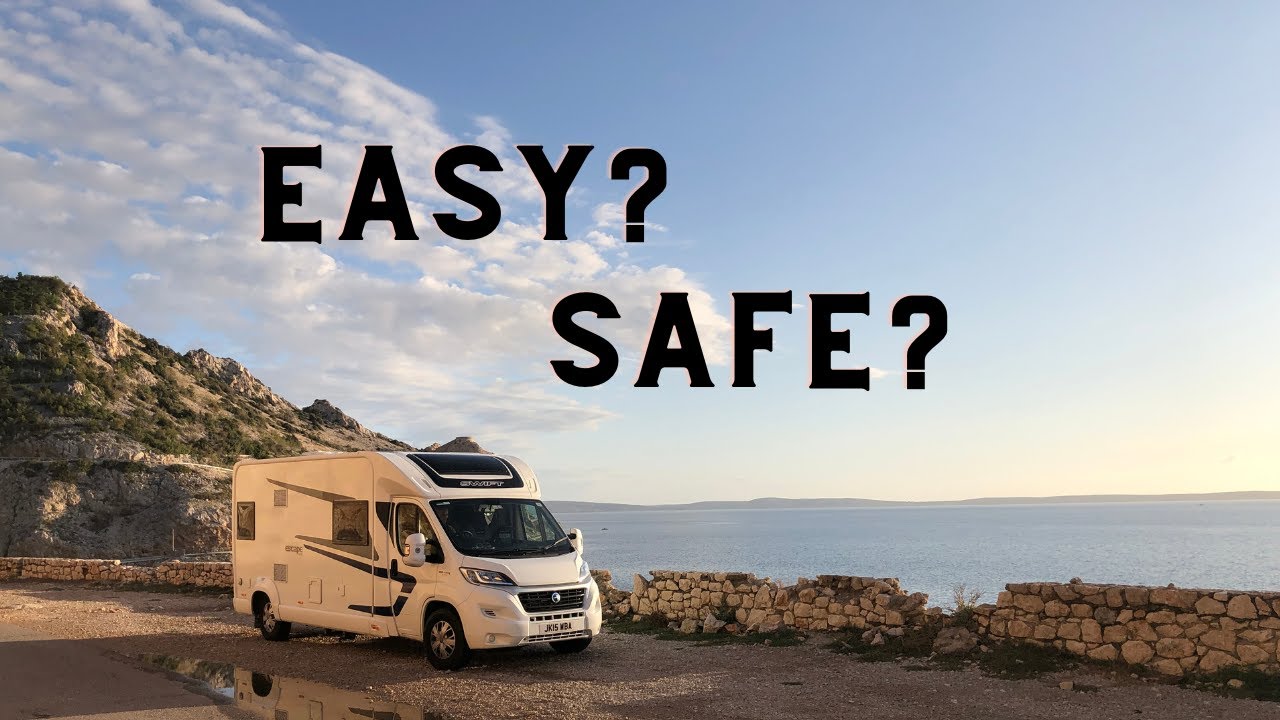
In this YouTube vlog, Kat Bird of Wandering Bird walks viewers through the myriad options for overnight stays while touring Europe in a motorhome or campervan. She begins with traditional campsites, explaining how to locate them via the Park4Night app and PitchUp website, the importance of booking in peak season, and the cost‑saving ACSI camping‑card scheme. She then introduces the network of approved overnight parking areas—"aires" in France and "sostas" in Italy—detailing how they operate on a first‑come‑first‑served basis, the typical fees, available services, and how to find them using Park4Night. The video covers the newer Camping Car Park scheme, which lets members reserve short‑stay spots at former aires for added certainty. Wild or off‑grid parking is discussed next, with emphasis on legal restrictions (e.g., national parks), the "leave no trace" ethic, and practical tips for finding suitable locations. Kat highlights hosted parking schemes such as France Passion and Brit Stops, where spending money at a local business grants free overnight parking. She reviews the digital tools she relies on—Park4Night, Search4Sites, and CamperContact—explaining each app’s strengths, especially for filtering by vehicle length. The criteria she uses to evaluate any spot are outlined: presence of photos, recent and consistent reviews, visible amenities (electric, waste, water), Wi‑Fi/phone signal, and personal gut feeling. Safety advice includes arriving early, having backup options, and trusting instincts. The video concludes with a teaser for a follow‑up episode on essential gear, a free downloadable checklist, and an upcoming webinar on touring Europe. Throughout, Kat’s tone is conversational, supportive, and enthusiastic, aiming to empower solo motorhome travelers to feel confident navigating Europe’s diverse overnight‑stay landscape.
Chapters
If finding places to stay is one of your major concerns for touring Europe with your motorhome or campervan, this video is for you. I know many people, myself included, feel overwhelmed when first road tripping in Europe, especially when it comes to campsites, aires, approved overnight spots, and wild parking. In this video, I'll break down the various options, pros and cons for each, and how to make the best use of them. If you're new here, welcome! Hi, I'm Kat from the motorhome travel website Wandering Bird, And I'm here to help motorhome and campervan owners who want to take their vehicle to new places and countries, but are confused by the various options. Until today. So, let's get into it. So, let's work through this little list that I've got. So, at the top, campsites. Campsites work exactly the same way as they do in the UK. Campsites are fairly easy to find. There are a couple of ways that I find them. The first is using the app Park4Night, and that's with the number 4, and you can find campsites on there, you can find details So you can find websites. There's loads of information you can actually get on the Park4Night app, but I tend to find if you go through to the campsite website, you'll obviously find more information about their facilities and whether they're dog-friendly and all of this kind of thing, which is quite important to know. If you are traveling in the middle of peak season, high summer, and you want a campsite that's near a beach, that's got a kids club, that's got a surf school, that's got incredible swimming pools or a decent restaurant, or if you've Want what I would say a popular campsite in the middle of the popular time, absolutely book it up in advance, especially if you're going somewhere like, say, the Italian lakes that is insanely busy in July and August, and the likelihood of you getting a decent spot if you just turn up is not that high. So yeah, if you're traveling in the busy times to a busy area, absolutely. Or if there's a campsite you definitely want to— perhaps you're meeting friends there, or it's a place you want to go back to or something— then yeah, absolutely book it up, and that way you know for sure that you have got your spot. However, if you're traveling out of the peak season or you don't mind so much about where you go, you want to go to a rough area, but most places have got more than one campsite, especially around a busy town or city, then if you're a little bit more flexible, prepared to come inland a bit or away from the most popular touristy areas, then you could absolutely find a campsite even in the peak of high summer. You can find places that have got availability for you. There is a website that I've used in the past called PitchUp, and they actually have got campsites in Europe. I use them all the time in the UK, but they do have some campsites in Europe. They don't have every campsite on there because obviously the campsite has to sign up to PitchUp, and I'm assuming they give them some form of permission for using the services. But you can find campsites in there that have got availability if you really need to use it. The other thing I recommend you do if you are able to travel outside of the school holidays is get a scheme called the— I call it ACSI. People laugh at me. They call it It's spelled ACSI, so that's what I'm gonna call it. And basically, if you go on the ACSI website, you can find something called a camping card. And the camping card is this scheme where a load of campsites from all over the place have actually got together and they've said, well, if they are part of your scheme and they come to stay on the campsite, we'll give them a discount. And the discounts can be as much as 40% for the night. It's a lot of money to save. So if you are traveling a lot, out of peak time, then yeah, I would definitely get an ACSI camping card. That will really help you. Now, the thing that I love about touring in Europe with a motorhome or a campervan is the flexibility that they offer. Now, Europeans like motorhomers, they like campervanners, they want to encourage them to visit their towns and their villages and even their cities and get you into the area. So rather than sticking you a billion miles away where it's impossible to get anywhere from that, they have created a network of approved overnight parking places, which are called Aires in France, they're called Sostas in Italy, and they're the same thing. You can find them all over Europe, and the way that these Aires work— so you can't book them in advance, you can find out where they are and you can head in that direction, but if it's all full when you get there, it's literally first come, first served, so you would then need to move on to find another one. And some of them are free, which is brilliant, and I've stayed at some fantastic ones all over Europe actually, which Absolutely free, it's brilliant. Some of them, and most of them I would say now, have got a small charge anywhere from €5 to €15 for the night, so a heck of a lot cheaper than a big campsite. Not many of them have got electric hookup, although a few that I've used do, and a few of them have got services but not all, and by services I mean places to empty your grey waste, which is more common. Some, I would say the majority, have probably got somewhere to empty your grey waste. And then somewhere to empty your toilet, which if they do have it will probably be for an additional charge, so top tip is to keep your €1 and €2 coins because you'll possibly need them, and then the other service obviously is to get fresh water. So normally if they have a toilet, they'll have put in a fresh water drinking tap, so it will be a full services, and again if you use the app Park4Night, you can find out exactly where these aires are, you can see if they're free or if they're paid, and you can see what the reviews are like, you can see some photos, and it's really useful to be able to get an idea of what the place is like and if you want to head that way to see if you can stay there. Now, if the idea of just driving to somewhere several hours away and not knowing if you are going to get a spot there is too intimidating for you, which I can understand— I've done it enough now that I know I'll always find somewhere, But I do remember at the beginning, the concept of that was so alien to us being from the UK and not really having this network that it was just daunting. So if that is too daunting, there is a new-ish scheme now called the Camping Car Park Scheme, which I highly recommend you become a member of if you want to book spaces up in advance. With the Camping Car Park, what they have done is some of the local Aires, they've decided that they can't afford to keep them going. They don't want to keep them going anymore, but they still want them there. So they've sold that land to the Camping Car Park scheme and Camping Car Park, they've basically turned them into a network of CS and CL sites like we've got here. So they're small, there's always a charge on them because obviously you have to pay to book your space, but you can turn up knowing that you've reserved a spot for that for the night. Now, as far as I know, you can still only stay for 1 to 3 nights maximum. There might be a few dotted around where perhaps they've made it longer, But the idea is still that they are aires that you can keep moving around, are not somewhere that you would stay for a week and have a holiday. It is an overnight parking spot or a short-term spot, not like a week-long resort. But that's the Camping Car Park Scheme, and that is really worth knowing about if you want a bit more security. And if you want absolutely no security whatsoever and want the freedom to basically stay pretty much wherever you like, then you will be into wild parking, staying off-grid, all of that kind of stuff, and you'll be pleased to know that Europe, because they have got so much more space than the UK, and also because they're a little bit more geared up and welcoming towards motorhoming and campervanners than we are in the UK, wild parking is a lot more tolerated. That does not mean that you can park up wherever the heck you like. There are definitely some restrictions. So obvious ones are places like national parks. So places like the Dolomites in Italy, it's almost impossible to wild park overnight because the rangers come around. There are very few places places that don't have no overnight parking signs on there. So all in all, that's one of the hardest places we've ever been that you can't stay off-grid. But there are places that you can stay overnight, like there were some pubs or restaurants and places where you could stay in their car park and stuff. So there are other alternatives, and again, we use Park4Night to find those. But if you don't want to stay in a national park and you don't want to stay right on a beachfront and you're happy to stay inland in perhaps like woodland areas and Certainly much less crowded areas, there are loads of places that you can stay. Now, there are lots of rules that apply to wild parking, but the biggest one is obviously don't leave any mess behind you, don't leave any trace, don't cause any nuisance, and I highly recommend not getting any gear out because that then becomes camping rather than parking. So don't get your awning out, don't get your chairs out, don't do all the camping activities Stay in your van, arrive late, leave early the next morning, and nobody will care as long as you haven't parked somewhere that's got a big no overnight parking sign on it. They do notice and they will report you, but that's wild parking, and it is a brilliant way, especially if you go somewhere like Norway and Sweden where I've been fairly recently, and they actually have laws that allow you to go touring and staying in a huge range of locations. The freedom of that is fantastic. I love it. It's one of my favorite things about touring around Europe. If you like wine, visiting vineyards, doing wine tours, doing farmers markets, shops, restaurants, pubs— there was a chocolate farm in France— there is a fantastic scheme called France Passion. And indeed, most of the other countries across Europe have also got similar schemes like the Brit Stops that we have in the UK. And these are a collection of different Companies and businesses which have signed up to— let's use France Passion as an example. So they've signed up to France Passion, and they're located all around France, obviously, and they say, well, if you come and you go on a wine tasting tour, or you have a meal in our restaurant, or you shop at our farmers market, or whatever they are, if you spend money with them, you can stay for free overnight in our car park. Very, very few of them have got facilities. It's Basically just a car park, but if you're gonna go do all this stuff anyway, you might as well stay for free, especially if your van is set up to be off-grid, so you don't need electric hookup and you go at a time when you don't need water or emptying your toilet or any of that stuff, then you've got a huge amount of flexibility and you can save a lot of money because the money that you would spend towards a campsite can then go towards one of these wine tasting tours or another bottle or 5. So that's a really good way of balancing what you're going over there to do anyway. And saving some money. Now, one thing I do want to talk about is how you stay safe when you're using Aire, and particularly when you're using wild park-ups. So there are a few things that I do when I'm choosing a place, and I tend to, again, find these places using the Park4Night app. I do use Search4Sites, but I tend to use Search4Sites in the UK because Search4Sites is British-based. So there's a lot of Brits using it, which is brilliant for the UK, but for sheer volume of numbers, Park4Night, which is European, has many more European people using it, so you get a much bigger range of reviews and spots and everything else. There's also another app that I have used before called CamperContact, and that's brilliant, particularly if you've got a larger vehicle. So I used to tour with a motorhome that was just under 8 metres long with a 2-metre bike trailer on the back, so it was about 10 metres long. And when you're trying to find spots, particularly aires that are long enough, because most aires I would say is 7, 7.5 metres, the majority of the parking spots. So if you're much longer than that, you probably get away with being about 8 metres, but any longer than that you can't. So CamperContact allows you to narrow down the places that are suitable for you with the length of your vehicle, which is brilliant. So those are the ways that I find these places. And then how I pick them is based on a couple of criteria. So the first thing I look for is photos. If there are no photos of the spot, I dismiss it immediately. I don't even bother. The second thing I then look for is an overall rating. So I look to see how many people have stayed and if it's sort of got a consistent rating or not, because something that happens quite a lot is you get people A really, really good spot that has then got a no overnight parking thing on. So you can look at a point, a place, and go, oh, it's got 5 stars, that's brilliant. But actually, it has got 20-odd reviews where it was really good, 5 stars, but the last reviews are all 1 star saying you can't stay here anymore. So I have a quick flick through the reviews and just see what they say. I also look on the photos for any signs of, like, boy racer skid marks and all that kind of stuff. And then especially if I'm going on a weekend, Friday night into the weekend, I tend to avoid those because I don't want a load of hassle. And then I also look because I'm on my laptop all the time. I work from the road. I do all this other stuff. I look for Wi-Fi signal or any comment about Wi-Fi phone signal. Now I've got a Starlink now, which does make things a little bit easier, but I still tend to look just to make sure that I've got a phone signal and things, especially when I'm camping Camping on my own, I don't like to stay out in the middle of nowhere without any phone signal or anything like that. So that's what I look for. And then when I get to a place, you get a gut feeling about a place. Now, not all of us are attuned to this, and it's something that I have noticed way more the more I travel on my own, is being far more attuned to my gut instincts. So I listen to them, and if I'm not happy with the place when I've turned up and Maybe it's covered in rubbish, or maybe there's some shady people. There was a place in Slovenia that we pulled up with, and it just looked dodgy, and there were some really interesting characters around, and I thought, I don't want to stay here. So I didn't. I moved on, find somewhere else. And that's one of the reasons I try not to arrive really, really late in the evening, because that way you have got time to go and find somewhere else. And also, when I'm looking for a spot, I do have a look around To see how many other places— I may not look into all of them individually, but yeah, I always try and look and make sure there are other options if that doesn't work out. And don't forget, you don't have to use Aires, and you certainly don't have to wild park. If the thought of that makes you uncomfortable, go find a campsite, go find a restaurant and ask to stay in their car park. There are loads of other options that you can do that don't have to make you anxious. and nervous and everything else, and you can slowly build up your confidence. But those are the types of places that you can expect to find when you are touring in Europe. What we're going to cover next is the gear that you need, both the legal boring stuff that you've got to have, but also some of the stuff that will make your life so much easier, and a few things that people think you need to carry and you really, really don't. So I'm going to put that out in the next video. Don't forget that you can download the free checklist of everything you need, and I'm also doing a webinar all about touring in Europe. That's going to be in a couple of weeks' time, unless you're watching this after it's been and gone, in which case you can get access to the replay, but I will put all the details for that in the notes for you, and you can join me on that live if you would like to. Right, that's all for me. I hope you found that useful, and I'll see you on the next video. Take care. Bye.