Inside a Luxury Italian Shirting Factory
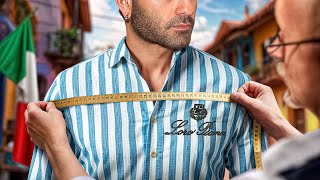
PM Fashion Group's Abruzzo factory makes luxury shirts one at a time using software for patterns and hand-sewn details. Each shirt takes ten minutes, with silk sourced from a micro-chain of 13 factories around Lake Como. The team is expanding into overshirts and jacket-shirts while keeping the handcraft that defines the work.
Chapters
My name is PM Fashion Group. This is a manufacturing company based in Abruzzo, that is a region situated in the center of Italy. We specialize in made-to-measure men's shirts. Raiza is our pattern maker, so the process All the structuralization starts from here.
And what kind of software is she working on right now?
CreaSolution. Lorenzo is our product manager.
So he takes all the inputs from the pattern maker, finds the right fabric, and then packages it all together to get ready for production. So let's go to production. It comes from the pattern maker over there. Automatic cutting table. So this is probably for the larger production. And then over here, the second system. Right now she's cutting up linen, a very complicated fabric to work with, naturally. Is this sample or made to measure?
Made to measure.
This is a made to measure piece.
This one is an example for what is— we have to cut it by hand.
A general theme you'll see in a lot of these factory tours, silk is pretty much one of the hardest fabrics you'll ever have to work with. It's very, very challenging. It's because it's so thin and it moves around so much on the sewing machine. This is particularly insane, and here's why. The placket over here lines up perfectly with the left part of the torso, so you can see that actually the design overlaps exactly. This is like god-tier pattern-making work. So a lot of shirts demand that you have a fused collar in order to create structure. This is when they bond two fabrics and they put it on the inside of the collar. You don't see it. These pieces of adhesive are now glued to the fabric. Panel represents the collar, right? And now they're structured. This piece of fabric goes on top, it covers it up. You never even knew it was there in the first place. What is your minimum order quantity?
One piece.
One piece, because it's made to measure. Yes, naturally. And when you do ready-to-wear production, how many pieces could you do?
50.
Yeah, depends on the model, but, uh, usually we don't have So she starts by assembling the collars.
This is the very first step in the production process. In this particular case, there is no fusing for the collars. All of the excess fabric is being cut over here with this machine. That point in the collar, it's created on this machine. So they're inserting that little hole, create the shape, and now it's going to be pointed when they flip it inside out. Right away, she advances to ironing. Everything needs to be ironed at every single step, and the reason they do that is to make the sewing job much cleaner and much easier. Right where the pointed collar is, she's actually ironing along that edge. This is going to make it so it's much easier to sew that. And now she's doing the cuffs, same process. So once again, trimming all of the excess fabric, cleaning up all of those loose threads. So right now, ironing out all the cuffs, making sure they lay perfectly flat so that they're much easier to be sewn. It's very important to iron in between each step especially when you're producing at such a luxury level.
Now we make the stitching.
Over here, they're attaching the torso to the sleeve. This is the armhole. This fabric is so delicate that they have to do part of it by hand because the machine would move around too much. And they're going to do it for parts of the armhole. The shoulder is going to be done with the machine, but the armhole is going to be done by hand. It's infinitely more comfortable and it's more form-fitting when you separate the sewing on the sleeve from the sewing on the armhole. So what she's doing right here is she's attaching the collars and the cuffs to the body of the shirt. So the collar goes down, and now she's gonna place it so that it lines up exactly with the torso of the shirt. In this step of the process, she does all of the closing of the shirt. So they're doing the sleeves and they're doing the torsos along the sides. You'll see that right now she's working on the sleeves. In this particular case, it's a linen shirt. Once again, another challenging fabric to work with. In industrial manufacturing, mass manufacturing, what they typically do with shirts is they'll do the hem all in one shot at the very end of making the shirt. It'll be one consistent line of sewing because that's what's most efficient. In this particular case, every single segment here, they do the hem individually. It's because it leaves a much more elegant finish, and they're able to add these pieces for closure. And it falls in line with what they do here, which is luxury garments. So right now she's making the buttonholes for the shirt. Natural process. They have this machine that does it, and then afterwards those holes are going to be opened up by hand. So she's using the pen to label where all of the buttons are going to be sewn. What she just did is she folded both plackets together, so now she knows that the middle of the buttonholes is exactly where the button should go. And then she takes the pen and she goes in the middle of each buttonhole On the other side of that buttonhole is the other placket. That mark indicates exactly where the button should go. It's in the middle of the buttonhole. When you make the buttons on the buttonhole machine, what happens is it's actually much stiffer. When you're using it by hand, it's a little bit more loose. It has a bit more movement. It's more natural. It shapes to your body better. The true mother of pearl button is made by manually stamping a button out of the shell of the actual mother of pearl, and you can see it right here.
Ah, perché la cosa bella è che da diverse nazioni del mondo ci continuano a scegliere, ci continuano a gratificare, ci dicono che facciamo un buon prodotto e quindi questo è una cosa che ci dà sempre forza per migliorarci e continuare.
So now we're on a different shirt. There's a few different shirts going on in this production line at the same time. They're still working very efficiently. So right now they're doing the front pocket. This is going over the left panel of the torso. And she follows down the line very precisely. And this is what the finished product looks like, which once again follows the sewing line.
I was saying that now we are working, we are making shirts with silk. How you can see, the tailor had to pay more attention because it's more difficult to work.
Very delicate.
Yes, yes, yes.
So it's a lot more time demanding to make a shirt like this out of pure silk. In this case, pure silk from Como. All of these seamstresses are working on a bunch of different things at once, but the output quality is consistently the same, which means that they're all very well trained to do every single task. These are true master seamstresses. So right now she's working with silk. Before we saw her working with denim. Before that she was working with linen, cotton, and so on. So in this case, the silk they're using is from Lake Como. Lake Como produces some of the best silk in all of Italy. They have a micro supply chain there for silk composed of 13 factories called Filodoro, which means the golden thread.
All'interno del nostro team, azienda, abbiamo anche delle persone che si occupano di stile. E quindi insieme alle persone che si occupano di stile facciamo ricerca per trovare anche nuovi modelli poi da proporre ai nostri clienti. In questo periodo dove la camicia classica è un po' meno richiesta. Allora stiamo proponendo nuovi modelli, dalle overshirt, jacket shirt, polo shirt. Quindi il mondo della camicia si è allargato con nuovi modelli.
Napoli shoulder.
This is the Napoli shoulder. It's intentional. This looks like it's right out of Shakespeare. Over here it's a quality control step. Right now she's going around the shirt and she's trimming all of the loose threads. You'll notice that she does this in a specific order, so she always starts from the collar first and then she works her way around the shirt.
Ah, quanto tempo?
10 minutes?
10 minutes per shirt?
10 minutes per shirt? 10 minutes per shirt?
10 minutes per shirt?
Shut up. This is a checklist where I control the quality and the measurements. If cuffs, collar, sleeves, if everything is— She has this sheet over here, which is a standardized checking sheet for every single shirt that they do. And she has this sheet over here, which is the tech pack they've essentially created for the shirt that they're making. And then she has the actual shirt and she has a measuring tape. Between these 4 elements, she's basically able to check in full if the garment lines up with what they expected to make. Wow, I've never seen this device. You seen this? Get a load of this. This is so turbo. Collar stays in. To further hold the shape of the collar, she puts the plastic in, collar goes down, the machine stamps it, she puts the paper because this is how they're packaging it for this client, and she puts a cardboard mold, and she starts the form. Wow, that's a shirt ready to kill. Oh, it's camisiera artigianale. Mario, Marco, this is one of the best shirting factories I've ever been in. Ciao, grazie mille, grazie mille.










