Shift Podcast with Will Lasry | SEASON 1 - EPISODE 2
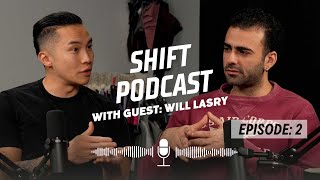
Will Lasry, founder of Glass Factory, explains how to find reliable apparel manufacturers. He films factories worldwide and publishes their specs, machinery, and contacts so brands can vet partners. The conversation covers regional strengths: China's ecosystem, Vietnam's growth, Bangladesh's scale, and why negotiating volume and building factory relationships beats chasing the lowest price.
Chapters
Welcome and muel! For those who don't know and joining us for the first time, I'm Joe. I'm the CEO of SHEFASHION GROUP. This is Will Larsy. He is the owner of Glass Factory.
Thank you for having me, man.
Will, you want to kind of tell us a little bit more about yourself and how you got here today?
How I got here today was by meeting up with you in China at Canton Fair, which was pretty crazy. The first time we met was on the other side of the world, which which is really cool.
It was in the middle of the most chaotic trade show, and I would say in the world, the most chaotic.
Like, yeah, so like some context, like Canton Fair, it's 220 football fields worth of vendors. Yeah, broken down into 3 weeks, and the third week when we were both there, it's all apparel and textiles, and there's just a lot of people yelling at you. Yeah, I want to make your stuff. Why do you go to Canton, by the way? If—
well, for us it was a little bit of just going to China to film our new series that we're showing for on the manufacturing side. You know, our entire plan with the filming is to show every single step from conceptualization of a product to prototyping, sampling, to melting the plastic to make the yarn, all the way to like shipping the goods, which we would do here in Chicago. So that was a big content plan. And then for Canton Fair, it's just see what's new and available. Like, at these trade shows, people are showing their best and brightest and all their newest innovations. So it's always cool to see these things and always to see like what new suppliers have moved up, what new suppliers are really kind of focused and dialed into their craft. Because you always have to look for these things, even if you have a long-standing partnership. You know, sometimes people get complacent with their factories and their businesses. At the end of the day, factories factories are live businesses, and unless people are continually reinvesting in them, sometimes they'll go downhill, sometimes they're getting bigger, but you gotta always look for new factories. I think we, out of like the thousands of vendors, we may have walked away with like 30 possible factories to work with. That's not bad.
30 is good.
Oh, but we were powering. Yeah, yeah, yeah.
You're walking all day long.
I think, how many steps? I think we did like 100,000 steps over the course of those 4 days. Kind of pedal back to us meeting, right? We obviously connected on social media.
Yes.
Yo, how did you kind of get started? Like, what brought you into the world of fashion?
Okay, early story. I started designing products when I was really young, maybe when I was 12 years old. I was always drawing things. 80% of it was like sneakers and clothes, but I loved designing things. And I always had this idea that one day I would have a clothing brand, but I was waiting for the right idea. And in maybe 2016, 2017, we had this idea to make a clothing brand entirely based on events in pop culture. So like when Elon threw the rock and shattered the glass on the Cybertruck.
Oh yeah.
We thought that was like a big event in pop culture. So we made a t-shirt called the Cybertruck t-shirt, which had an embroidered Cybertruck with the glass shattered. Oh, that's actually funny. Yeah. Yeah. Yeah. Yeah. And then like when, like for example, like, uh, everyone was, you know, working, doing school from home and working from home during COVID We made this whole drop called the Digital Diploma Hoodie because everyone was like in a hoodie at home, doing their school from home as opposed to going to school and doing things in person. So it was always based around events in pop culture. So had all these ideas, all of these product designs I wanted to bring to life. Every time I tried to make a product for my brand, every time without fail, I would order a sample from some random vendor on Alibaba and it would come back. Quality was horrendous, like terrible, like loose threads everywhere. Fabric sucked. Not wearable. The fit was off, everything. And ultimately I realized If I wanna make these really great products that I have in mind, I need to shift my focus from design into manufacturing.
Absolutely.
So I started getting really deep into the engineering and manufacturing, and I started finding all these factories. I was really hunting for the right factories to make product. And I had all of these friends who had clothing brands as well. And for them, they also had the same problem where they weren't able to find great factories. So I realized, you know, I had this problem of not finding factories. My friends with clothing brands have this problem. There's probably a lot of other brand owners out there that have this same issue. And now every single brand out there, every single brand, like even the really big brands, you know, that you think are like seamlessly succeeding. If you think like a Nike or whatever, they're having tons of manufacturing problems too. Right? So it goes from the mass companies all the way to the small ones. Right. And, you know, I thought to myself, there's probably a lot of these brands out there that can really use the help of factories. And I had all these factories built up as resources. So I started making videos about where brands produce their stuff, um, with the goal of helping brand owners find better resources. And that kind of took off organically. Yeah. Because I think a lot of people were really able to use the value and no one was giving it away on the internet. Everybody was obsessed with obsessed with gatekeeping, um, the factories that they used. But I kind of just believed in this world where the best designers and the best storytellers win, not the ones, not the brands that have the best factories and that, that are gatekeeping them. Right. Like I think everybody should have access to these great factories. That led me into making all those videos and it led me into starting, um, Glass Factory. My current startup goal is to make manufacturing transparent across every single industry and the niche that we're starting in is premium and luxury apparel. And the way we do that is by traveling the world, filming factories, actually visiting, speaking to the manufacturers, really, really going in deep, seeing the products they've made for these brands, what their minimum order quantities are, documenting the contact information, interviewing the factory owners, and sometimes the staff as well, really giving this very clear, well-documented scope on what's going on inside these factories. So that brand owners have a much easier time being able to trust a partner for production. Right. And this is just one of those things where it's such an old industry and genuinely everyone is out to get you. Like, that's really what I believe. Like, I think everyone is out to get you in this industry. You could be working with an agent in China for 5 years and that agent is secretly, you know, working with the factory to screw you on price, you know? So there's always somebody kind of out to get you in this industry, which It shouldn't scare you away. I don't say that to scare you away. But it's more to speak to the fact that like vetting is just so important. 'Cause it's the only way to avoid that.
Yeah, I think everyone wants to be a designer. Everyone wants to be the Virgil Abloh. Everyone wants to be the Jerry Lorenzo. But if you don't have solid product, there's no sustainability in a brand like that. You look like Antisocial Social Club. Garbage product. And I don't think they still have a lot of cultural relevance anymore. But you look at, Brands like, you look at every big fashion house, you can charge a premium price point. And as long as your product is, you know, for the most part really good, that's how you're gonna be able to have sustainability in terms of a brand. For sure.
I mean, a lot of brands are getting away also with really shit product.
And but for how long?
I mean, like, yes, that's true. But like, that's what you do, right? Like when you go and you break down all the garments and you say what the real cost is, What are you doing? You're saying, well, this brand is very popular, but is the product really worthwhile? You know, are you really—
Yeah, and I think that's what I think a lot of my audience is finding very interesting. It's some products from cheaper brands are really well done, but I think even when, you know, we did a great segment yesterday, watch out for that, on CP Company and Stone Island, and it's— we're gauging it on the price point. If those price points for those things, for those hoodies were like $100, oh my God. I think we would tell everybody to run and buy them.
Go and buy, yeah, buy 200 of them right away.
So it's all relative to ultimately what the brands pay. But you know, getting back on that topic of being a designer, you need to have the people behind you to support and create the right product.
Yes, 100%.
And I think that's what's really cool about the Glass Factory side is like, it's not just a factory listing with some numbers that are made up. You're actually going to visit factories and like, just to speak on that too, there's cost of you traveling there and filming, right? Same thing for us, like when we work with new factories, we send a third-party audit. It's $2,000 for us to even audit a factory and we might not even end up using them. But if you don't inspect what you expect, You can't really expect to get a solid product at the end of the day. You can't expect to have customers come back because they're really happy with what you're making.
You have to inspect. What kind of questions should you be asking somebody, like at a trade show or in general, that says they represent a factory? What kind of questions should you be asking them to see if they're legitimate?
So first thing I always go in is, like, you know, you give them the look like, You know, with like a look of skepticism. Diego's seen me do this a lot of times. He's like, "Do you actually make this?" And then like once you get into that, then sometimes you'll be like, "Okay, no, no, no." But I always ask, you know, how many fabric inspection stations do you have? How many flatlock machines do you have? How many sergers? How many different types of machinery? Because based off of that, for our clients, I can kind of extrapolate what's the production capacity. I always ask how many people are there in the sample room. If they— some factories don't have sample rooms, I'm like, okay, if you don't have a sample room, you're not putting out a lot of samples. Therefore, I'm probably not gonna get good samples from you, and you're probably not dealing with a lot of clients. So sample room size is big. You know, some people, they have 200 people in their sample room. It's like, okay, well, what does that mean? That means they're either using the sample room to do small production runs, so they're set up to do small productions. And they pump out a lot of samples. You know, how many pattern masters do they have? How much experience does the pattern master have? What does the pattern master have experience in? You know, if I take a guy who's been making t-shirts for 25 years, probably gonna make me a really fucking good t-shirt. But if I ask him to make me a dress, you know, he might be a pattern master, but if he hasn't made a dress in 20, 30 years, like, he's not gonna be able to execute on it.
It's a different story.
Completely different story. And you know, you have to be conservative, like how the fabric's gonna drape, how it's gonna fit on you. So being able to ask those things, you know, what regions are they in, what kind of payment terms they'll do, and then say, can I visit you? You know, they say you can visit you, it's like, is this your factory that I'm gonna be visiting, or are you gonna take me somewhere else? Because, you know, I also said this to you too, like when I first started manufacturing like almost a decade ago, some factories I visited, I was like bright-eyed and bushy-tailed, I'm like, oh, it's so big! And now I go back and I'm like, oh, it's not as big as I remember.
Yeah, yeah, there's some big factories out there.
Oh yeah, there's like, we, you know, we're sampling some factories in Bangladesh and they're like small cities, legitimately the size of small cities because they have so many workers to produce these things. I think this is actually a great topic to talk about too, is the quality of product and manufacturing, because I think a lot of people believe you go China, you're getting poor quality product.
Oh yeah. The stigmas.
And this is not true.
I, this, it's such a huge problem, honestly. Like I think, I think that this whole conception that consumers have created now where they look inside, they look at the care label and they see made in China and all of a sudden they're like, I don't wanna buy it. It's so backwards because there's good China and there's bad China. That's really what it comes down to. Right? Like, China puts out, I think it's like 28% of the world's product comes out of China. It's insane. Right. It's a lot of product. Okay. But there's great factories that make unbelievable product. There are some things I would rather make in China than make in Italy, you know what I mean?
Oh yeah.
Because there's just, they have the machinery, they have the expertise that you just can't get in these other countries. Right.
Mm-hmm.
If I'm doing anything tape seaming, like those complex Gorp jackets, like there's some factories in China that are unbelievable, the laser cutting machines and everything. You can't come close.
Close.
So I find people should not be so quick to judge made in China. And there's some factors in China that are very expensive to produce that as well. Right.
It's all about managing your expectations for what product you want. If you wanna create a solid product, if you go to a factory and ask them, how low can I make it for? They'll use the, and you know, that's their, that's the bar that you set for them. They will find the cheapest yarn. They'll find the cheapest fabric. They'll find the cheapest things because that is That's the mission you gave them.
That's— you're leading with the wrong question when you go in and you lead with price.
Yeah.
And in general, when you're speaking to a factory, I found what's been the most effective is if you actually want to make 5,000 units of something, you tell them you want to make 2,000. And then you negotiate on quantity. That's how you get your price back. So if they quote you out at $10 for 2,000, but you want to pay $8, you say, I want to make 5,000, can we do $8? $28. And so you started off with a lower quantity. All of a sudden you have leverage when you say you want to produce more.
Say you're a designer, you've created this design. What do you want this design to be? Do you want it to be designed and fit your consumers as intended?
Yes.
Or do you want this design to be completely butchered because you've just tried to get the price as low as possible?
Absolutely.
You know, I've worked with factories where if you're looking to create something really high quality, you say high quality and just expect it's going to cost more because The yarn costs more, the fabric costs more, the labor costs more. It just costs more to produce this garment. And be okay with that. And that's how you get a really awesome product at the end of the day.
Absolutely.
Yeah, I think it's— you don't want to get ripped off, 100%. And you know, I've just been manufacturing clothing for so long, I kind of know what things should price— like, what things should cost to make. But trying to not squeeze your manufacturing partners is such such an important thing.
And it's, you know, you know, I think people lose sight of the fact that the factories are people too. Like people literally lose sight of the fact that they're not just robots that answer your simple questions of how much things cost. Like these are humans with families and lives. You can bring them gifts. They'll give you samples for free when you take good care of them. You know, if it's Chinese New Year, wish them a happy new year. Be considerate. Think about them. Like there's a whole side to that where I think people completely miss that mark. And I think it's also, you know, speaking of being a great designer, if you want to be a Virgil and you want to be a Jerry Lorenzo and you want to be one of these guys in today's world, I think that your knowledge on manufacturing should supersede your knowledge on design. You need to know, you know, if you're going in and you're trying to make a hoodie, you need to know everything about the yarn that you're trying to get. You need to know everything about the washing process, everything about the dyeing process, Everything about the different types of operating machines that you're gonna be using. Okay, I want flatlock here. Why do I want flatlock? Because when I wash the garment, it's gonna shrink this way. If you have that kind of knowledge and you're designing with that kind of knowledge in mind, and you have the factory in mind that can do that execution, all of a sudden the quality of your product is gonna increase tenfold, right?
Absolutely. It goes with mastering any craft, right? Right? You look at LeBron, you look at Jordan, it's not like they just show up to a game, you know, they master their craft. If you're gonna be a designer, you master everything to do with what you're trying to make because people are buying those designs and they're not just buying your ideas, they're buying, you know, something you've created. So being able to have that knowledge of what goes into making that cake is so important. And like you said, I think a lot of people just, they just wanna draw. That's it.
They just wanna check that box. They just wanna draw, they wanna put pretty colors or a big oversized print on something with a Y2K graphic and you know, that's fine. And then send your Stone Island hoodie to go be copied. But you're never gonna get what Stone Island makes that way.
Never.
Not even close.
'Cause you don't even know what to look out for. I think a lot of people start brands like this where they send stuff in to just copy it. And make sure you can copy a pattern. But wait, do you know what that fabric is? Is the partner factory that you're working with, that you're sending this to, do they have people that are capable of knowing what that fabric is? Yeah, absolutely. Do they have people that are knowledgeable enough to know what kind of yarn the, you know, 100, we even said this the other day, like 100 GSM, there's a million ways to get there. Oh yeah. The knowledge to actually know exactly, and it's about saving time too. If you know what you're looking out for when you get these samples, you're saving time. You don't have to go through a million samples of like, it's not right. And that happens all the time. People go back to factories, it's not right. Why is it not right? Right? It's like getting down to that granular knowledge is so important.
Yeah. I remember getting samples back when I didn't have the knowledge and I'd just be like, Everything is off about this, but I have no idea how to start giving direction. Exactly. That's like, you know, like you need to have those moments in order to like really make something great.
Yeah, because then it's just clear instructions, and then you can also say like, if you know what you're looking out for, you also know like, okay, this is so far off the mark. Either A, I didn't communicate what I wanted properly. Yeah, so when you're working overseas, there is going to be a language barrier. There's going to be stuff lost in translation all the time. Or the factory just doesn't care that you partner with, or the factory just doesn't know how to execute on what you're partnering with. And I know we talked about this before too, is the fact that people try to manufacture everything of all garment types with one factory.
Oh, it's crazy. Never do that. Never do that. If you are a brand that wants to do your sports division, do activewear, and then do your knitwear for your hoodies and your t-shirts and your sweatpant program, And then do sneakers. Well, that's a lot of different machinery for everything, you know?
Exactly. That's just— Lots of different skill sets.
It's like there's a lot of different knowledge that goes into each of those segments. So it's really about finding factories that are specialized in what they do.
Yeah. Let's talk about that a little bit more. 'Cause you know, you've done a lot of deep diving on brands and where they're made typically from What you found so far, on average, like depending on the brand, I assume the larger the brand, the more mature their supplier relationships are. But like how many suppliers do you see a lot of brands working with?
It's hard to even tell for a lot of these brands because there's just too many.
Yeah.
You know, like making the statement, oh, Nike makes their stuff here. Like if I do that for—
Okay, Nike, Nike is— Nike is— That's a different beast. They'll make it.
But even like, even like, okay, if I take a Skims and I'm like, okay, well Skims makes their stuff here, right? Like that is not the singular factory Skims uses and it's not the singular factory you can get into, you know?
Yeah.
There's probably 20 other factories in that network.
Yeah.
Um, but you know, it's, it's, it's really just on a brand by brand basis. It depends how much different product they offer. So like Skims, what's easier with them is they are more concentrated in their offering. I know that now they're doing men's, but earlier on, let's say before they launched their men's line, I knew that they were doing primarily a lot of their activewear at this factory called Eurotex in Turkey, for example. So, you look at a brand like that, they want to have a consistent quality standard for those kinds of fabrics, like the very spandex, nylon types of fabrics, so they're gonna probably stick to that one supplier to do large majority of the products across that chain. The second they offer something new, like if Skims were to get into lingerie, for example, you can't go and make it with that same factory. You gotta go to a different factory for that.
Yeah. And I think that's what a lot of people, they assume too. They hear like Nike, first of all, this whole thing like, you know, Nike and like slave labor. I'm like, I think I remember that from like the '90s and like early 2000s in terms of like news, and I think it's just stuck with a lot of people. But there's so much compliance that you need these days, you know, BSCI, CEDX, you know, WRAP certifications to— there's too much risk for factories to be, uh, you know, working with a lot of like child labor stuff. Does it happen still? Maybe, probably.
There's shit that happens, to be honest. There's like— I've seen some pretty fucked up shit.
Yeah.
But for the most part, like brands like Nike, like stuff like that, like they really are on top of their stuff. And especially after those cases, like what happened in the '90s that came out, like they have entire teams dedicated to auditing everything constantly and overseeing.
100%. Like I know like some of these larger brands, it's like twice a year they'll audit factories. And you know, that means like someone just showing up and inspecting everything. Um, but yeah, I'm totally agreeing in terms of working with factories that just specialize in what they do. You're able to execute a significantly better product. Some brands, depending on, like a brand like Lululemon, they're manufacturing product in specific regions for specific regions because you're looking at duty tariffs and you're looking at—
Absolutely, wow.
Same with all these things.
Yes. This stuff adds up a lot over time. Yes, yes. Very, very, very good points that Joe just made. Like a lot of brands, right? They have to be strategic. Lululemon is selling their product all over the world now. It's not just a North American phenomenon anymore. So it's like, if we know that our product has to enter so-and-so countries, we can strategically ship fabrics here and here and have the cutting and sewing for that done there. And the cutting and sewing for that done there so that our product from Dubai comes from Sri Lanka. And our product for Canada comes from China through the Vancouver port. And then that's like, first of all, logistically faster, tariffs and duties are much lower. And tariffs and duties, like it could be extremely significant, right?
Oh yeah. For specific product, even like backpacks. I don't know if you remember the dude, but like some of these are like closer to like 40+ percentage for producing backpacks in China because they have anti-dumping. There's a lot of duties and tariffs on synthetics, especially cottons as well, coming from China, which is why a lot of people are moving their manufacturing bases out of China for clothing, which is a whole topic on itself. Yes, that is a whole topic. We'll dive into that. But yeah, these mature supply chains, there's just so many people that you need to manage stuff like this. I think tips for brands that are starting out is You can find these efficiencies later on, but don't try to start doing these without the experience of being able to audit other regions. I just did something the other day from Cuts Clothing, and it was made in Vietnam. It's probably one of the worst quality stuff I've reviewed on the show. Wow. But I can, you know, having worked with so many brands, I can understand the thought process there. You know, get out of China, let's manufacture in a different region. Vietnam makes great stuff.
They have, they have some good factories.
You just need to manage your expectations. But this one particular product we got, it was just horrible. Really? Because yeah, I can empathize for a brand because that's a decision you need to make as a brand owner because you do need to make money at the end of the day for your brand to grow. But unless you're going to be able to know of what your, Inspecting, you know, just trying to get the cheaper price in another region's not the solution.
Yeah. I mean, that's like a, we're seeing that shift a lot now. Like a lot of brands are basically leaving China and going to Southeast Asia. And now a lot of brands are leaving Southeast Asia and actually going to Central America and South America. That's like, that's kind of like the big mass production regional shifts that we're seeing.
Yeah.
It's difficult, like shifting countries And then like managing expectations and having like a big customer base that expects a certain quality, it's a death sentence.
There's so much more coordination that needs to be done. You know, kind of going back on the topic of China, the reason why China's so good at manufacturing is because every single thing that you need to make your stuff is in the same town.
Yes, yes, yes.
If you're making a t-shirt, the thread supplier's in the same town, the dye house is in the same town, everything you need to make it is there. You know, if you ever have to— for people who buy like expensive European appliances like Miele coffee machines or whatever, if something breaks, it's weeks to get a part for it because you got to get it from Italy. There's only special suppliers actually carry it. Like, you would never be able to build a large manufacturing base with timelines that long.
Never.
So with China, they're just able to execute things so much quicker. But I'm seeing this issue with China now, you're seeing it too as well probably, is China's getting expensive to make stuff.
Very expensive.
Very expensive. And youth don't wanna work in garment factories anymore, they wanna work in the electric car factory. Crazy electric cars in China. That's another topic on its own. But from all the factories we visited, I don't know if you saw the ones you did as well, everyone's like 35, 5+ that's working in these factories. They're all aging.
They're getting older for sure.
Yeah. And I think for garments, you're going to have to start looking in other regions eventually because it's going to go the way of very specialized things. You know, to make t-shirts, China's slowly becoming not that country anymore. But you want to make really good technical leggings and sports bras, like you can get the products there.
Yeah.
Yeah, yeah. And South America is a very interesting exploration as well because I know you have a trip planned up there as well.
Yes, yes. I really don't know how it's gonna go. I think it's just like, it's a feet on the ground, like, first dive into what's going on in South America. Hopefully there's some really interesting stuff, right? But I'm working with the government of Colombia and like, they've basically told us like Okay, these are the 3 biggest factories, they're producing for a lot of these big brands, and this is the kind of mass production that's going on. And these countries are really fast developing, so there's obviously a lot of problems in terms of production, but maybe it's things that can be fixed within the next 10 years, and if that's the case, whoever the first movers are, who are able to establish themselves, are going to make a killing, and you know, that's— Like the perfect example is like what Stone Island did with Made in Romania, right? Like we didn't know a lot of people were making product in Romania, but I'm seeing Romania more and more on tags now. And it seems like Stone Island made that move a few years ago, which gives them, you know, a big advantage because they were able to set up their expertise and inject their, you know, ideologies and their ways of making garments into these early stage factories, grow with the factories, and now have something amazing. Probably develop stuff at very good prices, and quality's great.
And I think that brings a really good topic on that growing with your manufacturing partners.
Yes.
We talked deeply about this yesterday about if you're always hunting for the low— again, it comes back to dating. If you're always hunting for the lowest price, you're never gonna be able to build a long-lasting relationship and have somebody understand your wants and desires as a brand. It's, for the brands we work with, and the factories we work with, like I said yesterday, we've had such long relationships, I'm like, buy this piece of machinery, because I want you to start doing this testing. And this is now a requirement to work with Shift. And they buy it, because we have a long-standing relationship, they know where we're going, and what we stand for, and they know that if they wanna be a part of this journey, they wanna be on this train, you gotta get on the train. And you can't do that if you're just hopping around looking for different factories.
You're 100% right.
And it's, uh, so I know like with you, with Glass Factory, a lot of the relationships you are building is trying to build those relationships.
For sure. It's, uh, it's really been one of the most difficult balances ever because I'm essentially walking into these factories. I'm trying to convince the factories to give me money in exchange for for my services, which is filming.
Mm-hmm.
And they have never done that before. Factories are used to taking your money and giving them your, uh, giving you back clothes that they made, right? Their services. But essentially trying to walk in here, convince them that they should show the brands they work with on camera, convince them that I have a large customer base to funnel over to them. Through my following and so on, and convince them that everything's gonna be okay. And in the long run, you will get a lot more customers this way. And you have some factories that bite and others that don't. And that's really what's been challenging. Like, I'm really trying to, like, 90% of my job is a sales job. You know, it's really just calling these factories and selling them and telling them, This is the future, like, it's gonna be okay, transparency is a good thing, you know? And that's what changed, that's why change is so difficult. So it's been really tough to do that with Glass Factory, really, really challenging.
So what has some of the kind of early feedback been with some of the manufacturing partners?
I try to provide instant value, so like typically, if I go in to film a factory, once I really see what they're capable of, I have a much better idea of who would be a good fit for them as customers. And I kind of have a list of customers that I can plug into these factories. And now we're doing production for a few brands as well. Early feedback is I get into these factories, I convince them to get filmed, and I plug in manufacturing to them right away so they get instant value so that they're hooked. Um, so early feedback's been good.
You already realize you are basically like Hitch for like clothing manufacturing.
Yes.
You are, you're the matchmaker.
Will Smith. Yes, man. It's really what I'm trying to do.
Yeah.
It's so, so challenging, man. My, my day-to-day is, it could be really, really difficult. And especially when I'm traveling, like there's no way of predicting what's going on. You know, when I went to China, I had one factory locked in for a factory tour.
One. You were there, how many, we were there for a long time. How many weeks were—
One month.
Yeah.
One month in China booked. And no plan, no strategy, one factory locked in, a lot of emails that went out. A lot of people I was just trying to touch and make feel a certain way to let me come and film and open their doors to me. And we worked so damn hard, day in, day out. We'd do a factory tour, then at night be up emailing all these factories, trying to communicate with them. And finally we got through to a second factory. Third factory, and we managed to film 5 different factories, which was just the biggest blessing. But it's so challenging. And to anyone hearing this, anyone hearing this spiel, if you have a factory, you think it's premium, you think it's really great, and you want it filmed, and you want great exposure, and you want to be part of a new movement of transparency, please reach out to me. Email me at will@glassfactory.info. I want to do more factory tours. I want to make it more transparent. I really want to help people manufacture better products, you know. If you're a small brand starting off, right?
Yeah.
And you have your initial designs, you want to make your first product.
Blanks.
That's— what's your advice? It's blanks?
So depends. Okay. So like we work with some clients where they're starting a clothing brand, but their budget's a quarter million dollars. And we develop Hey, you know, this is what we're gonna be able to achieve. This is what your first, second, third, fourth launch is. So I think a lot of people, they start a clothing brand, it's everything focused on the first launch, and let's say it does well, and then they have nothing. So we work with our larger budget partners to plan that first year. And it's like, for these people, they're going in two feet. There's no turning back. It's sink or swim. It's sink or swim, and their audience jumps in with them because they feel they're committed to the product as well. I would say for brands on the smaller end, if you are working a 9-to-5 job and you're curious about clothing and you wanna get into it, I'm 100% about blanks. It's significantly less risk.
Why?
Because one, you don't have to chance having an entire manufacturing base all fucked up. Yeah. Two, it allows you to really test the product. I think when you're first launching a brand, people have never touched your product before. They don't know the quality. They're buying into the brand either because of you or what it symbolizes. So I think that, and again, if someone's not willing to buy a t-shirt from you, they're not gonna buy a fucking $200 jacket. They're not gonna buy, you know, a really technical thing. T-shirt is the entry level of what people are willing to buy into a brand. So I think it's significantly less risk. You can work with manufacturing partners locally. You can restock quicker. And once you at least know that people are willing to buy that first shirt, you know, if you can at least sell 10 shirts, 25 shirts, you maybe got something starting to go there. Then you can start taking the risk to go overseas. But that being said, you need to make it on a really quality blank because there are so many shit blanks out there. Even that is a whole topic on itself.
Yes.
What's your ethos on it?
I think blanks are important to start because there's so much to making clothes to learn, and having to learn cut and sew as another thing when you're just starting off is just another barrier that's gonna make your life a lot a lot more difficult because the second you're getting into cutting and sewing, you're talking about learning about patterns. You're talking about learning about fabrics, dyeing, washing, so many other elements. When in reality there's 18 billion clothing brands out there, especially during COVID I don't know what happened, but 10 clothing brands came out every hour. Right. So the most important thing you truly need to compete on is attention. And all of your focus, in my opinion, should be going purely into marketing, right? It should, because if you're a clothing brand that's starting off, you're essentially a marketing agency that just so happens to be selling clothes. That's my philosophy, right? So don't worry about focusing on the product.
Get the brand right.
Get the brand right. What is your why? Why does your brand exist? Why do I need to buy another t-shirt right now? What is your story? Give me your why, right? Starts with why. Simon Sinek. Like you need to know your reason to exist and that's why people will buy into your product. And the other question I would ask a brand, okay, a lot of brands decide to be clothing brands right away, but why are you a clothing brand? Maybe there's a better product you should be selling. If I think about my friend Will, he has an amazing page where he interviews people called Sprout. And you know, it's all about figuring out how to make, uh, how to live a more fulfilling life.
Mm-hmm.
Right? So for him, his initial idea was to take his logo and put it on a t-shirt. And the guy has like over half a million followers on Instagram. He puts out the t-shirt, um, and it doesn't sell very well, but his audience is huge. So you're like, why wouldn't it sell very well? And it's because the product wasn't aligned with the audience. Exactly. But when he turned around and he made a journal, that was all about improving your life and documenting every single day what's going on. It was a hit. Like everybody's buying this journal right now. It's a wonderful journal and it's because the product is so much better aligned with who he is and what his brand is. Right? So I ask people, think deeply about the products you're making because I feel like everybody who makes merch or who makes a clothing brand always defaults to clothing. It's always t-shirts and hoodies. And I get that everybody wears t-shirts and hoodies, but no one needs another t-shirt and hoodie. So think about what product you can make that maybe makes more sense for who you are and what your brand is. Knowing your story is— it's so important because all the time I get people come up to me, they're like, oh, like, I want to do like— I want to launch a brand that's like Louis Vuitton quality but like cheaper. And I'm just like, I get that all the time, and I'm just like Well, bro, like that's not how this works. Like that's first of all, that there's no story for the consumer there. People buy into LV because they want to associate themselves to that name and that label and what that lifestyle means. Secondly, you're not going to be able to get the quality because if you're already leading with this, it means you don't know anything about manufacturing. You don't know anything about the yards they're using or anything like that. Right? So that's not a brand story. You know, a brand story is, We are a small skate team from this tiny city and there's no one talking about skateboarding in our city. So we're going to make videos about skating and we're going to make clothes that surround that culture. And we're going to make cultural references in our graphic designs for that city's culture. And then maybe other cities that are nearby are going to start talking about it. And then maybe it's going to be about the entire state soon. And then maybe eventually it'll be about, it'll be about the world and skating all over the world for these small skate teams. And that like a story like Supreme, 100%. That's a real brand story. There's a reason it exists. People can relate to it. People can buy into it. And there's a niche. They're targeting skaters. They're not targeting anyone else. Maybe people other than skaters are going to end up wearing it, Supreme, but that's going to happen eventually. Maybe people other than construction workers are going to end up wearing Carhartt, Kanye, but that's going to happen later. But always focus on your niche first. Know who your audience is, know who you're selling to, know exactly what kind of product to sell to them. And that's how you're gonna succeed.
I couldn't agree more. I've seen this brand called Dark Sports, and I see their content, like, they are so nailing the community aspect of, this is who we're for, we're for like the misfits of fitness. And people come to the brand because when you're wearing a brand, you're telling the world a little bit about you without actually having to verbally communicate that.
Yes.
What would be like, One brand that you are absolutely in love with right now?
Mischief, uh, New York-based brand. They basically take all kinds of events in pop culture, or they create elements out of nowhere in pop culture and make these drops around them. So for example, they made this microscopic-sized Louis Vuitton bag that they sold for like $30,000 or something. They made— I'm sure a lot of people have seen these— the big red boots, uh, like the ones that look like the Astro Boy boots.
WD-40. Yeah. A cologne.
WD-40 cologne. Like all of these, you know, a brick of money that's blurred on top, like blurred yen, blurred US dollar, whatever. All these genius moments, but they really know how to execute from start to finish. Right? Like they had this whole popup in South Korea where you would put your card into an ATM machine and you would get ranked according to how much money you have in your bank account. And so everybody, like the number one highest ranker would be like the winner or whatever. So they have like these museums that they would set up, like these pop-ups that are just so on brand for what they're doing, you know, making the shoe with Lil Nas X with actual human blood in them. Like these things that really make you think twice. And every single part of their brand is very well connected, which is so important. So it's not just the products. If you go on their, on their website, the website experience is insane. Like, you could tell that the user experience just makes you wanna scroll forever. And it's the way they tell these stories on the website, the way they do the content on social media, the way they make the products, the people they choose to give to, right? The more eccentric, the more crazy people, the more outlier people of society. Like, it's all very related to their brand story, and it just reinforces everything much better. So, their ability to communicate to the world from a branding perspective, Top notch. That's a masterclass right there.
Yeah, to be able to sell literally whatever and people gravitate to that brand, that's when you know you've nailed the psychology behind belongingness and creating something that people want to be a part of. I think for me, like, one brand I absolutely love and it's kind of like blowing up now is Gentle Monster.
Oh yeah, cool.
It's a Korean sunglass brand.
Yes.
And if you go to, Diego actually and I went to one of the stores, any store you go to, they're just so unique. There's so much, it's an experience. Like, you know, there'll be a robotic head with eyes that follow you in one store. There'll be like a wooden sailing ship with flying wings in another store. It creates such a, I would say such a pull in terms of, I'm like, the in-store experience is so unique that I'm constantly— every time I travel and I'm around a Gentle Monster, I have to go to it because I gotta see what they just put out. Because they also nailed solid quality product. The sunglasses they make are really high quality. So you merge high quality with the desire of, you know, what do these stores represent? They represent a company that's very innovative. They represent a company that's that knows they're coloring out of the lines. And for me at least, that's such a pull. And that's the whole thing with marketing, right? If they had the same product in a store, just on shelves, I probably would've never even gone into the company. But I think this is what brands need to do these days. You need to spend a little more to make it not just transactional. You need to spend a little more, whether it's creating these experiences, experiences online. You know, Mischief does this great in terms of— I know they gave like a free car away.
Yeah, yeah.
You know, creating the community, these experiences out there. But you need to create opportunities for your people to come and feel like, yo, yes, this is, this is me. This, this brand represents a part of what I'm trying to portray out to the world.
It's, it's just community building opportunities. And the biggest thing is having people people want to associate themselves to your brand, right? Like women who wear Lululemon in Vancouver, like they want to be wearing Lululemon. It has to be Lululemon because Lululemon's from Vancouver and you know, they're very into yoga and this is their lifestyle. So they have to associate to that and they want that brand logo there. Like you need to build a brand and you need to build opportunities for people to really associate themselves to you because they want to, not because they're forced to.
For those who are watching who want to create a brand, let's say they are in high school, say they just graduated high school and they want to start the journey. Let's kind of give them, you know, what that roadmap could look like.
So basically, if you want to start a brand, you have no knowledge on how to make clothes, how do you proceed?
Yeah. Okay. And, you know, what could their next be? I think it'd be interesting of like what could their next few years look like from seedling to kind of global brand?
Nice. Okay. So I'd say my biggest piece of advice is that you don't actually need to make clothes right away. So first step is definitely finding what kind of brand you want to make and kind of trying to figure out your story as well. I don't expect people to know their story out the cuff. Sometimes it's very difficult. But to just have a general direction is good. And as you make the clothes, your story will become more clear. From there, start designing and show your friends the designs as mockups on shirts and see what they like. Get a lot of feedback, you know? 'Cause you're probably a one-person team to start with, so you need to get a lot of real-world feedback from people who really give you their opinion of what they think before you go and you produce something.
Yeah, you need to, you need to create that Doing that starts creating that little bit of community. And to really touch on what you kind of said again about the initial ideas, if you don't get feedback, like, there's so many. I know you're getting hit up with these all the time where it's, my brand is called The Hustle and it's for hustlers.
Yeah, yeah, yeah, I get that a lot, I get that a lot.
Or like, 9 to 5, 24/7. I, I appreciate the, the grind hustle, but that's not enough of a community. That is so generic. And it's—
everyone's hustling about a million different things, right? So it's like you have to have more of a focus for sure. So having a clear story and a focus, or at least trying to get to one and starting in that direction, very important. Making designs, showing your friends mockups, but not only showing your friends, showing the internet, creating content around that. And content doesn't mean videos that go on Instagram or TikTok, although it probably does a lot of the time. What it could also mean is content in the form of, I don't know, graffiti on the side of a building, a poster all over that's going up all over your city, you know, getting into an old newspaper ad because you want to target people who read newspapers. It's for older people, this brand.
I don't know.
Right? So figuring out who your target audience is and creating content that's going to target those people around that.
Yeah.
Once—
yeah, go ahead, go ahead. No, I very much agree in terms of getting outside of Instagram and just TikTok. When you look at these social media platforms, they are digital versions of communities.
Yes.
So, you know, there's people that are on TikTok, there's people on Instagram, there's still a shitload of people on Facebook.
Yep.
And there's a lot of people that aren't on any of these platforms. And if you're creating a pickleball, pickleball brand for seniors, maybe TikTok or Instagram is not the right platform. Maybe you got to go to these pickleball courts where you actually can find the people that your brand is for.
Or old person's homes or whatever, but you find a way to target them better and position your advertising where they're going to see it, right?
Mm-hmm.
So super important. I think from there, once you have a lot of real-world feedback, go and make a sample. If it's a streetwear brand, make a sample with a blank t-shirt. Okay.
So on the blank topic. Yeah, well, what do you— I've, I've, I've seen a lot of blanks and I've seen a lot of blanks that are marketed really well. Yes, just horrible when you actually look at it, right?
But I mean, it's also like, you know, it depends who you're targeting. Like if, like an LA Apparel blank t-shirt, for example, right? Really popular choice. Quality is okay. But people really love the fit and the different garment dyed colors they have to offer. So it'll sell your product better. So as an initial decision, it might make a lot of sense for you, you know? I think it's about choosing the blank that makes sense for your brand based on what your brand's trying to be. You know, House of Blanks, Rupa Knitting Mills has, you know, a blank service. You can get the same blank as Supreme. It's a little bit longer, this one, but it's not bad. Blank Spy 13 Studios, friend of mine, good blanks brand as well, you know, for like that more heavyweight oversized hoodie, like 450 GSM, which I know people really like the heavy GSM stuff.
We talked about this, like at some point it's just, it's just why, like you're just wearing a blanket at that point and it's just I think people are in this whole thing of the heavier GSM, the better. Oh, stop it. Well, Yeezy did the double-lined fleece and that was like crazy heavy. You know, it's like cool in a certain aspect, but I don't want to be wearing a blanket everywhere I'm going.
No, it's crazy. You sweat like, like so much in that. So it's not even wearable at a certain point, I find. And I prefer lighter weight things. You know, this crew neck I'm wearing right now is made in Japan. This crew neck is from the year 1990. And it's still, or like the early 2000s, and it's still great and it's thin.
Very unique ribbing.
Right?
Yeah.
Unique ribbing, amazing, amazing terry on the inside that's worn in nicely and it's going to last forever because it's the right fabric. Anyways, make a choice that makes sense for you. I'm also working very low-key on the side on making blanks in Japan. The first ever blanks made in Japan.
Yeah.
Something I haven't spoken about much, but I'll speak about here. So that could be an option to add into the mix eventually for people because there aren't really any commercially accessible blanks made in Japan.
Yeah. So building off with a blank, the next stage is starting once you got enough volume. The next stage is starting to look at a little more custom.
Yeah, exactly. So you make your samples, you start teasing the samples on however you want to promote it. You sell that product. In production runs, so you make a mass production of all those blank t-shirts with prints on them or hoodies or whatever it is. And all of a sudden, your designs are really great, you have a community, people like your brand, and you're now able to order 150, 200 items per style per drop. So your brand has grown significantly. Where do you go from here?
Yeah, I think now you, it's all about risk. This is another topic in itself. When you're running a clothing brand, you have to not only be designer, you have to be a business person that understands margins, understands what it costs, your cost of goods sold, understands what is it gonna take for you to grow your brand from zero to $100 million. You need enough profit to get to the point where you can even elicit investors. But it's all about risk tolerance. Once you can get to the point where you can sell 100 shirts, it's time to look overseas. Your blank, the base shirt that you're going to be making, is probably going to be cheaper than the blanks you're buying, unless you're buying like Gildan tubular knits. Please don't build your brand on Gildan tubular knits. They're just, they don't fit on anyone well. Yeah, but once you get to that point, and I also, again, I'm not harping on blanks because there's massive brands built just on blanks.
Absolutely.
And there's nothing wrong with going that route. But once you understand and you're happy with taking that risk, start to explore overseas.
Yes.
You know, what regions would you suggest? I know Portugal is a great region for lower volumes.
Yeah, I think Portugal is really like the classic answer here because they're the only ones who can really like handle that low MOQ. Like a lot of these brands want to do 150 units per style. Like, you can go to Portugal and do that, you know. There's nowhere else you can really do that unless you go to Italy, which is just a death sentence. You're paying $150 a hoodie for your quantities that are nothing, and your customer will not buy that, probably.
Which is why Italian sportswear brands such as CP Company and store are making some products in Italy.
Exactly. And they're charging $700 for them, and they have the customer base to buy buy that and they're probably not making a lot of it and they have a big customer base. So just something to think about. But Portugal's an option. You can make a hoodie or a t-shirt out there. A t-shirt might cost you like $20, a hoodie costs you $45, something like that. It's getting a lot more expensive there, but it is a good option. Production times are decent. It's not China, but it's pretty good. Um, I would say obviously USA, another very common option. A lot of people like to make things in the US and It can be part of your branding, part of your identity that everything we do is made in the US. There are tons of factories in Los Angeles. Yep. LA, there's so many factories there. I have a whole list of factories and it's, it's all available on my socials. You can go check that out, but all of these LA factories basically listed out, um, where a lot of big brands produce. I know some factories where Yeezy is producing, Nocta, Mike Amiri, Rude, Balenciaga was doing some samples at one point, and now Balenciaga is doing most of their stuff in Portugal. So these are good options for streetwear brands, right?
I think that's just a very interesting topic to touch on. When you're starting out a brand and you find a factory that does make for like Nocta and Yeezy, if you're going there and say, I want you to make my $25 shirt for as cheap as possible, And they're used to producing really high quality products for big brands. Manage your expectations, manage how you—
You're in the wrong factory basically.
Yeah, find the right factory for your size of company. And understand like, we have people like messaging us like all the time. I wanna make 40 shirts for $7. And then making like very like, aggressive demands.
It's just like, it's just like, do you understand the economics of that? Like 40 shirts for $7, like buddy, it's $280 of revenue.
Like what is the top line revenue?
Yeah. What's the factory gonna walk away with? $4? Like, I don't, I don't understand. Like, and that goes for any project, right? Like if, if you're trying to make 50 units in a factory from scratch and you're trying to get a price of $15, right? Which is a realistic scenario, like $20 for the t-shirt. It's $1,000 of top-line revenue.
And in this day and age, it's nothing. Nothing.
The factory has to run all of its machines. It has to have operators. It has to tune all the machines to do what you want to do. It has to make custom screens for your screen print that it's only going to use 50 times for the 50 t-shirts. You know, there's so many things that go into that. Any factory that's taking on that project, I would think twice. Probably don't know what's going on inside that factory, but I can't imagine it's great. So Really?
So I'm just thinking something you're doing in order.
Yeah. And the other thing I'll say is if a factory does make for Yeezy and it does make for Balenciaga, whatever it is, like understand that they're producing like 500 units per style at a bare minimum for these kinds of brands. Right. And those brands have relationships with the factories where 500 is acceptable. If you're coming in and trying to place 150 on a first order, And there's no guarantee you're gonna sell out, there's no guarantee you're gonna reorder in 2 months and all of that.
There's no guarantee you'll be able to pay for the final product.
It's exactly, it's very difficult for the factory to say yes to that.
For us, we try to at least do at least 300 pieces per style, or per style per color. But we're able to leverage our factory network saying, you know, we're producing half a million pieces, you're gonna do this order.
Yeah, exactly. You have to— that's exactly it. Like, that happens to me all the time, right? Like, I'm doing an order right now for somebody for 100,000 hoodies, and the only reason I'm able to get that person to process a 300 per style order is because I have that 100,000 hoodie order that's pending, right? So I'm not saying that you need to have 100,000 order pending to have that success, but I think it's really important to find a factory that fits for your needs, and Portugal has a lot of that. For starting out brands, especially in the streetwear space.
So Portugal and US, I think Portugal is great if you're in the EU. Obviously, you're not going to have to deal with any duties. Let's just say US for a lot of LA brands, or LA for a lot of US brands, it's going to cost more to produce in LA, but again, less risk.
Yeah, less risk, no tariffs, no import duties, communication's very good. A lot of transparency. You could take legal action if there's any problems. Like there's all of those other things that are on your side. And you know, being super fixated on margin when you're just starting off and you're in that early stages of the brand is maybe the wrong thing to fixate on. I would figure out less how to reduce the price from factories and more how to increase the price that you charge customers. That's what your mindset should be. And that's how you should be marketing because, or else you're gonna be nickel and diming with people and you're gonna be putting a lot of energy into something that's It's, you know, a battle that's really an uphill battle. So the other thing I'll say is when you're reaching out and making these initial relationships with these small minimum factories, it's not just about the product you're producing. It's about the vision. Like you should be getting on a call with these factories and showing them a deck of where you're trying to go with your brand. Or showing them, you know, just pitching them the direction, you know, think about it as them trying to invest in your business because quite frankly, it's what what they're doing. They're gonna put their time into making this order, and I promise you, this 150-piece order they're doing for you is not making them much money. They're doing it because they're taking a risk on you. So make them feel good about that risk, and maybe they'll bend their lines a little bit more, and maybe that 150 MOQ will turn into an 80-piece MOQ because, you know, they like you.
Sell the vision, sell the, the journey you're gonna take on with this factor because again, they're going on a journey with you, they're building a relationship, and that's how you're able to kind of get to that upper level. Absolutely. So if we're looking at the next stage after that, so after you have 150, you know, let's say you're now producing in the thousands, I think that's when you start looking for regions that become a lot more economically feasible for your brand.
Yes, yes.
So you can have more retained earnings to grow your brand. And I've had a lot of lessons over the year, which is why I'm like, I have the right systems in place, I have the right people in place to be able to execute on what our clients are trying to look for and do. But it's so important to have the right people to execute on that vision and know what to look for to get you the product that you're looking for at the end of the day at the price point you're looking for.
Absolutely.
Because if you're just going overseas and trusting a random factory to make you something for Or if you're a 1,000+ product, your brand's somewhat established now. There's so much risk of your customers not being happy, them just flaming you because the product's trash, because you're not looking out for the right things. It goes back to vetting the factories again, like you said.
Vetting, vetting heavily. I mean, that's, yeah, you're really getting into the factories when you're in the 1,000+. A piece of advice I would give, the most important part of having a clothing brand is your brand story. You need to know exactly why you exist and you need to know exactly who you're appealing to and how you're going to change the way they think about something. You know, if you do not have a clear brand story, you will never find the customer you're trying to sell to. You'll never actually be able to sell any product and you will fail. If you have a great brand story, people are going to buy into stories because people love stories and people will buy into your brand. Brand and make you successful.
100%.
That's it.
Brand, brand, brand.
Yeah, brand story.
It's everything. Well, thank you all for joining us. Thank you guys for watching. I hope you guys learned a lot today. Yeah, I think there was a lot of knowledge bombs dropped here. We're gonna cut this up into reels, but you know, it's, it's a fun journey to go on. It's hard, but those are successful. I hope you learned or those who can find success, I hope you're learning a lot from this.
For sure, yeah.
All right, till next time, guys. Take care.










