The Turkish Family Behind a Fashion Legacy
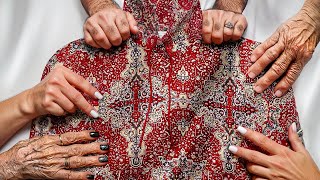
The video takes viewers inside a premium Turkish garment factory located five hours from Istanbul, showcasing its production capabilities, family heritage, and innovative practices. Host SPEAKER A walks through the facility with Adis Aydin (ITIM/ATeam) and other contributors, explaining the full workflow from fabric selection, marker making, and cutting to sewing, printing, embellishment, and final quality control. The discussion highlights the company’s service‑oriented philosophy, its broad client base ranging from startups to global brands, and the importance of long‑term relationships. Technical details such as marker layout for minimal fabric waste, hand‑cutting, pre‑sewing panel printing, and complex embellishments (rhinestones, embroidery, distressing) are demonstrated. Sustainability is emphasized through a dedicated R&D hub, zero‑waste design, hemp and organic‑cotton fabrics, and collaborations with the Technical University of Istanbul. The narrative also weaves personal stories about the founder’s humble village origins, family involvement, and cultural influences on design, underscoring values of humility, teamwork, and global identity. Overall, the video presents the factory as a highly adaptable, quality‑focused, and innovative partner in the fashion supply chain.
Chapters
We're currently inside Turkey, just 5 hours outside of Istanbul, at one of the most premium clothing factories in the world, producing for some of the best brands. And I'm with Adis Aydin inside of A*Team, and I'm going to show you why this factory is so good at what it does.
Let's go! As ITIM, I would think we're more of a service-oriented company. The way that I see it is we are good in this industry at what we do, and clients usually have some sort of problem that they need help with, and we kind of focus on how we can solve those problems. Doesn't matter, it's just me helping you guys, you know. So we'll do a little bit more than the average transactional We'll work with a variety of different clients, basically. So it could be anything from someone who just started out their brand and they're doing their first ever production run, all the way up to industry-leading companies. My brother does— he's working in the brand side of things.
It's all about finding these beauties also.
I did like— I'm here in the production side of things. I mean, it's a lot of responsibility. I really enjoy building something on top of what my family has already built. I think that's a very honorable thing to do. My dad always used to say, "You have to carry the flag higher." What I learned from my father after he passed, I mean, I learned from other people of them telling stories to me about him. He would positively leave something with them. It would sort of move them. I'd say it was tough, but for her, she had been in the industry with my dad. She was side by side working with my dad. Throughout his career as well. They were working all the time, so it was kind of like, I wouldn't say an easy step, but she already had the knowledge to be able to take it that one step further.
Turkish.
I was always really interested in going with my mother to stores when she wants to shop when I was very young. And I would always go pick up the clothes. "Oh, Mom, you should try this one. Oh, look, this piece is great." I was always like really interested in fabric and fashion. Use different Anatolian and the entire region's carpets. So these are actually Anatolian. Usually the best ideas come out when I do random stuff. I meet new people, that new person will introduce me to this person, and then they'll talk about, I don't know, punk culture, or they'll talk about like Anatolian rock. And then something in my mind tells me, Benji, this is very interesting. And I start connecting it with ideas that I have archived in my mind that don't make sense at all. And then slowly I start building like this imaginary world in my mind. I feel like a young kid that is like thinking that anything is possible. There's no limits. And I think, okay, this is a great idea. How about these colors? How about adding this influence? How about I dig deeper into this subculture? And it's all about like being like a DJ, you know, it's about beat matching and also the harmonic scale. So I see that in fashion the same. So you have a fabric, the fabric already tells you, okay, I want to become a jacket, or I want to be this, or I want to be that. But then you have the story. And then you have the subculture, then you have these muses in your mind, and somehow all of these don't make sense in the beginning, but on the journey it comes together and becomes something special. You can see this across the entire world because actually Proto-Turks, they migrated into Mexico, they migrated into US, but they also migrated across Europe. So whenever we see this pattern, it looks very universal, but there is a deeper story. Laban Jamman is all about the East, Near East, Middle East, and Far East, and conversation with the West. So my grandfather was a migrant worker in Germany in the '60s. So the topics of identity and diaspora are really like keen to me. So identity, especially today, I think in Europe, it's a very important subject. Being a migrant and also being a role model for other migrants to do good, to be a global citizen, and to also give back to the community.
So we're currently walking through where all the different fabrics are laid out, and this is where they determine what kind of pattern they're laying over the fabric and cut panels accordingly to sew together the garments that we all wear. In this particular case, they're laying out a sort of pink velour fabric over here. This looks like a rib, right? Yep.
So they're doing it by hand to be able to be more efficient.
So over here, what we have is called a marker. And essentially, the marker indicates exactly where they need to cut out all of the different panels of the fabric. Now there's a few things you need to account for here. If you look at the rib directionally, the rib always goes vertically. The key thing to note is that the way the marker is laid out is so that the direction of the fabric is always accounted for. In this case, what they're cutting out is collars and ribs, right? So if they're cutting out a rib, they want to make sure that those vertical lines are coming down on the sleeve. So they want to make sure that the direction of the fabric follows, that the vertical lines will go down when the garment is sewn together. And this is where the art of making a marker comes in, because you want to have the least fabric consumption possible. Fabric consumption is all the waste you have to cut around. In this case, if we look at this marker, we can notice that there's a bunch of different denotations on it. It indicates all of the different sizes when you grade the pattern. So for example, if you offer a size small, medium, large, extra large, double XL, you need to account for how many of each you're producing. More people are going to wear a size medium and large than there are people who are going to wear double XL. So we need to cut out less double XL rib pieces and more medium and large rib pieces.
We differ from other companies in the sense that we do a lot of variety. We do a lot of garments.
This is an insane level of work.
So we'll do anything from men's, women's, kids, we'll do outerwear.
So basically what we're seeing here is something that's going to be exposed on the outside of the pant.
Being extremely specialized in one area is not too beneficial for anyone because the industry keeps changing. So you'll see some factories that are really specialized and focused on one sort of type of client, you'll notice that since it's changing all the time, they might end up not being able to adapt to certain changes in the industry. I like to kind of dip my toes in whatever trend happens early on. So in case that niche takes on, I'll be one step ahead of the curve.
And if I pick it up at this stage, we'll notice This is pretty close to a finished t-shirt. Always working from the inside to the outside. This t-shirt is currently inside out. If I flip it, this is what the t-shirt should look like. And you'll know it because you'll see over here that there's the Les Benjamin logo. And because this factory is intelligent, they're printing on the panels before sewing. And this is much more strategic for a few reasons. Number 1, placement is much better. Quality control is much better. It's faster and it's cheaper to do it that way. And it guarantees that if they have a larger print, they can get right up to the edge before sewing the garment.
What's important for us and for me especially is building long-lasting relationships. And for that to happen, obviously someone who buys whatever they buy from us or receive some sort of service, they need to be satisfied with whatever they get. And, um, Just like I like receiving good service, I like to give good service as well.
So look at this, Ferdy Benjamin, of course, with a beautiful silicone print and really, really nice darting here on a super nice and soft French terry. This is beautiful.
A strong client relationship, I believe, is one who passes the test of time. Obviously, we've worked with a lot of clients for many, many years. And it goes back to good communication, being able to, you know, help solve each other's problems. When I'm struggling with something and let's say something happened in some sort of production run that we couldn't, you know, overcome, and time is of the essence and these products have to be shipped, you know, obviously if we have good relationships, sometimes we can tolerate each other, just as how some of my clients can be stuck in a certain unwanted situation sometimes, and I'll make sure our team does everything in their power to, you know, address their issues. I think it's just being able to, you know, rely on each other, have good communication.
So you're basically checking if this piece of fabric they cut from the panel is exactly to match to the size that it's supposed to be.
Yep, that's correct.
And so is it one of those pieces that's highlighted there? I guess it's that one, right?
Yes, it's size large, and there you'll have the order number, which client it is So you guys basically do this as a quality control measure.
You'll take a few pieces out of the batch and then check if it's exactly the right size and aligns well enough.
Basically, there could be a few mistakes or problems that could occur that we have to look out for. Could be due to the fabric. The fabric could shrink. Uh, in the pattern making, there might have been a mistake, but we have to just check before we go into production. Before we cut the rest of the fabric, we'll check all the all the fits of all the sizes. Everything is good, and then we'll move on to production, basically.
This is a really nice quality control measure, and I actually haven't seen it done like this in many factories, where they're cutting down to the panel and they're selecting, going through, ensuring that it matches the grade of the size, and from there having a lot more confidence when moving into sewing. And, you know, a sign of a very, very high-level factory is usually how many times they do quality control throughout the process. So seeing something like this so early on in the process of making your clothing gives you a lot of reassurance that it's actually going to come out exactly how you want it to fit. And that's entirely important.
The way we maintain quality control is we actually have a very rigid quality control system in place. So what does that mean? Before we receive the fabric, we'll have our quality control guys specifically for fabric go to the place where we're buying the fabric, see firsthand once it first goes into production, whether it's being knitted or woven. He'll check if there's some problems coming up in the beginning, and if there are, he'll tell them to adjust certain things. After that, once it's being dyed, same thing. First batch, someone will go and check it. So we try to minimize the amount of mistakes that happen at the end of the production process because Once everything is sewn on, we did a bunch of processes on it and it's in the final inspection. It doesn't matter, like, okay, you found it in final inspection, but like—
Preparation is really, really important because if you prep well, you'll get really strong results. This is where a factory shines and sets apart themselves from the rest. We're getting into the sewing and we're getting into the technique of how a garment is constructed. Just looking on my left here, look at the level of garment dye and wash. Occurred on a garment like this. Look how much distressing is here. It's insane. I mean, this is all done by hand. That's a ton, right? This is like all by hand. All of these prints are different processes, all water-based ink. Look at all of the spray, all of the color, all around the collar, on the front, huge prints on the back, prints on the sleeve, distressing on the rib as well. We're talking about a very high-grade French terry. This must weigh like 500, 600 GSM.
Yeah, it's 580 actually.
580?
Yep.
Holy shit.
On the heavier side, yeah.
You could paralyze someone with 580. Yeah, it's crazy. Tell me about your design department a bit because I think there's, you know, there's a lot of new people that are starting new brands and it's their first time ever communicating with factories, right? So how does your design department, or how does AITeam in general, just like help newer clients?
We'll try to hold their hand and guide them through the process. And the approach that we like is also sort of teaching them how the business works. We'll try to get them to do the decision that they want to do. We'll find the fabric for them. If the fabric doesn't work what they've imagined with this sort of process, that they imagine to put on it, because sometimes it happens where it's— they envision something and it's physically not constructible. And what do you do in that sense? You obviously, you try to find alternatives because you can't, you know, obviously. So we find the closest alternatives that are possible and we give them a few options. Look, this is the way we can go about it. This is a bit more feasible. This will look a little bit like this. We'll do a few mock-ups for them. We'll help them develop the pieces. We'll take our time. There's nothing— like, we don't rush people. We want to make sure that whatever you get is what you want.
So this looks insane. Yeah, this is all— okay, this is that Who Decides to Worry brand you were talking about, right?
That's correct. Wow.
So how many rhinestones are on this garment?
Uh, approximately, I think it should be between 16,000 and 20,000. Rhinestones on each garment.
Are you serious?
Yeah.
Is it a different screen for each color of rhinestone or it's one screen?
No, they have to do a few actually.
Really?
Yeah.
It's like one color, then another. Like here we have silver rhinestones, we have gold ones, orange, yellow, and so on.
What makes Aitem different is obviously, like I've mentioned, we have been doing a lot of different garments for a long time, which means that we have a a big web of suppliers in a lot of different aspects of the textile industry, and they're all vetted. I mean, we've been using them for a while, so we've used bad ones, we've come to know the good ones, and so we can source things very quickly. We're very adaptable. We adapt to new trends quickly. We have a big R&D department. We have a little innovation center in the building as well. We have our own design team. Taking on a lot of clients also means that you're doing a lot of new stuff sometimes that you haven't done before, which adds a lot to the company. We're always open to do new stuff, gets us excited. We don't take too many shortcuts when it comes to quality. I would say that's another big factor.
This is a very interesting kind of garment. And the reason why I'm noticing that over here you have a waffle-based fabric, right? Like a thermal with a print which looks like a DTG print. And then you have a full t-shirt sewn in with another print on top. Pretty complex garment, and I really like the execution on this water base. It's extremely clean. What did she just mark off over there? There's a purple sticker on the back of that shirt.
Oh, there is a little—
oh, there's a stain here. There is a stain. So they're going to try to get it out?
They're going to try to get it out, or they will have to put it aside and notify the customer. And no, we always over-manufacture anyway. So we have a little buffer in case there's some problems occurring, like in production. And if there is less quantities than he ordered, then we'll have to notify him and we'll try to fix this anyway.
And now she's moved on to different types of garments. She's doing a hoodie. There's an insane embroidery here, and she's doing quality control to check to make sure everything is where it should be. And I'm noticing that she kind of has this pattern. She always works in the same order. She's checking things one after another to make sure she doesn't miss any of the same two parts on different garments, right?
Yeah.
So over here, she's denoting it with a sticker, and that means what?
It's good to go.
It's past quality control.
Yes.
So it's off to her stand.
We have been doing a bunch of different garments for a while, but obviously we haven't done everything. We have to put it in the background.
Of course.
Sustainability is like the art of staying in balance. It means giving back, more back to the earth than you take. When creating a product, it's about thinking not only of the garment, but also that the hands that made it and the generations yet to come. It's the system you build also in your life, in your company, for the future is when your business would keep doing the right thing even if no one was watching us. Ananas leaves and pineapple. I am Rengin, Rengin Akkus. I work as the head of fabric research and development and design innovation. This lovely hoodie made of hemp and this Zip made of organic cotton.
Wow.
It's all sustainable.
I am Ceyza Candan. I am a faculty member at Technical University of Istanbul. I graduated from Textile Engineering Department of this very university. So I've been working at ITIM for nearly 1 year and it was very fruitful for me. In particular, I must say that. This is the very first project of ITIM Design Center. It's focusing on both sustainable design and sustainable process design. We are using zero-waste design of collections. At the same time, we are using organic cotton to make this clothing. So material and process, both are sustainable. And at the end of this project, the cutting waste has been reduced up to 5% from 12%. This one, it's a typical example of use of traditional clothes in modern collections. This is a very traditional clothes. We took it and we transferred this very fabric into modern garments, as you may see here. Also, together with the fabric supplier, some derivatives of this very fabric was— were also created and used in the collection. This collection involves The collaboration of two universities, ITIM, gave us the platform to realize this very project. And what is so special about the project is that first we kind of created our own accessories for the garments. This is quite valuable business because it increased the value added.
The fabric that we created, we developed for this project, it is a very special one— cotton, lycra, and hemp fiber fabric. It's the first developed like that form hemp fibers in that kind of fabric. And also we use the same fabric.
As far as ITIM is concerned, I may say that it's very, very collaborative actually, because ITIM always looks for innovative products, processes, etc. So to reach such objectives, It seeks through different stakeholders such as universities, research institutes, institutions. That's why I may say that it's quite collaborative.
My dad actually came from a village. He went to 3rd grade in his village, and he was one of the few people who went out to work in a neighboring country as a construction worker. He gathered some money, he came back to Turkey, and he got involved with one of his cousins who was getting himself involved in the textile industry. And he worked with him, he learned the business. They had some different visions for the company, so he ended up leaving and creating his own company. He ended up hiring a lot of his cousins, his brothers, took them from the village and put them in the company here. And that's why it was called AY Team from the start.
Bartsundegi Fabrikamnstadainn, British Standard, Ternkate Standard, Ternum Kontrolle, Planama Finanza, Unitime, Unanibsene Byrdan e Papilmesitchen, Gråsdaha, Saburo Manjasmianni, Sredj Istio, Sredj Nekadal, Zumbäks. Sor.
On such a card.
Global, we're, uh, uh, firm, is, is a liquid premium luxury, uh, segment. Uh, Week is over, so it's like Monday. Let's do it like this.
So what we'll do is, um, let me check if I'm able to do what they're asking for. I'll get back to you soon. Yeah. And, uh, if that's— I like navigating through problems. Problems occur all the time. I like learning more about this industry. There's so much to learn. It's incredible how much there is to learn because there's so many different little sub-industries inside the textile industry. Every garment is different. Every process applied to different fabric turns out a little bit different. You'll find a lot of people in this industry have also been in this industry for 40 years, 30 years, I don't know, they've been in this industry for a while. Because a lot of the newer generation don't really get into this business later on. There's quite a few, like, not too many numbers. I love going around asking people about their experience and learning from them.
Thank you.
Bye-bye.
One more thing that my mom taught me or wanted me to always know is to remain humble. And one of the quotes was, she told me, which I don't forget, is she says, always remember the most valuable possession you can have is your personality. We made a billion dollar deal. To always take care of your team and do well to your staff and everyone you work with. Because this entire operation is not feasible without any of or each individual that's here. I think in order to lead, you need to be really a part of your team and make sure everyone feels well, you take good care of them, you know, no one is treated unfairly. Assuming a bigger responsibility gave me a better direction in life, which I really enjoyed. And part of the motivation also comes from helping my mom.










