Which Blanks Brand has the BEST Value?
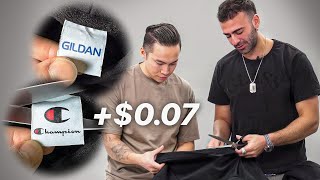
Will Larsy and Joe test seven hoodie blanks blind to find the best value. They measure fabric weight, shrinkage, stitch quality, and price across brands like Champion, Gildan, LA Apparel, and others. US and Canada-made blanks offer the best quality-to-price ratio for most brand builders.
Chapters
It's hard to say, like, look, the fabric here is absolutely terrible.
That really rough hand feel.
Despite the quality, like, my God, that is value.
Oh, what?
You're tricking yourself. Oh, this is just great. Which blanks should you be using for your brand? There's about 150 different blanks brands out there right now. It's impossible to know which one is the best. And today we have a bunch of them in front of us.
So the team actually took the labels off these. Will and I have no idea what brands these are.
So Joe and I are walking into this completely blind. All of the blanks have been debadged, the labels have been removed, so there's no indication of which brand they came from. It's completely objective and we're going to be rating them.
First one here, it's a heathered fleece hoodie, ribbed bottom.
It has like a nice, uh, fleece. Yeah, very nice Sherpa-like texture. On the inside. I know it's very sought after for a lot of people. Very plushy. It's interesting because I wonder how this is going to take to different prints, right? When you have a much plushier feel like this and a less rough surface, a less flat surface, it makes it harder to print on, right? The ink doesn't penetrate as evenly. Yeah, the neckline is, uh, it's a little bit taller here than it is here.
In terms of construction, very basic overlock seams. They put the COVID stitch for the hood.
This is a bit messy.
It's a little bit messy over here.
Yeah, it's a little bit messy. My assessment, like so far is what I'll say, I like the fabric here more than the construction, to be completely honest.
Yep.
I think it's a very, very soft fabric, really nice hand feel on the inside. It's really, really soft, which is very sought after for a lot of people when they're building a blank for a brand.
Based off of the pure white, I'm just going to be assuming it's a polyester fleece on the inside.
Okay.
They have bar tacked the pockets to reinforce them as well as fold-over cover stitch.
So why do they bar tack pockets?
So it is a high stitch per inch sewing technique that basically reinforces the areas of basically high tension or areas that might be susceptible to breakage. We've purchased blanks in the past where we got 10 of one style of hoodie and the black dye lot, a third of them were like greenish black and the rest of them were bluish black. So even within the same brand, depending on how tight their quality control is, you're going to find inconsistencies. And typically when it comes to blanks, not for every brand, but for a lot of parts, because it's such a high volume, low margin business, the room for quality control there is not going to be as tight as a direct brand. And some brands are just going to know that they're just volume and you're never going to go back and complain with them and you're just going to accept inconsistencies of product.
It's also just super common, right? You have to remember clothing, when you're talking about hoodies, it comes from cotton, a living, breathing thing. Overall, there's gonna be differences even down to the cotton, down to the yarn, there's gonna be subtle differences. And then when you get into the more complicated processes like dyeing and washing, you know, if the machine's temperature is a little bit too high, or if the dye is slightly different, or if it's not spread as evenly in one run, you get different results. You get skewed results, right?
Okay, so that's number 1. Yeah, we'll put it right in the middle for now.
Yeah, exactly. So this is hoodie number 2.
Ooh, rough hand feel.
Yeah, super rough hand feel.
So a large— like, everyone in streetwear wants to go heavier, heavier, and heavier. And like, a very easy way to go heavier is just use larger yarn. And you know, if you go larger yarn, often you can go cheaper yarn. So that's where you're getting a lot of this— like, a lot of people associate weight with quality, but then they've seen a lot of heavier hoodies have this rough hand feel, so then people want the rough hand feel. But you can also get it very heavy and be soft, and this is—
that's, that's super expensive to do if you want super heavy. Take a second here for all the brands out there that want to make, you know, a 650 GSM hoodie. Like, you're tricking yourself. A lot of the time you can achieve what you want to achieve with 400 GSM. It'll feel like a 600 GSM if the yarn is finer and if you wash it in a way where the fabric fluffs up a lot more, so that way it feels like a heavier hoodie. You don't want an actual 650 GSM hoodie a lot of the time because when you wash it, it's going to wash very badly. It's going to warp much more aggressively since you're using a much thicker yarn. So a lot of those hoodies that are made overseas use these very thick yarns in order to achieve that super high weight, but it's actually much lower quality.
So similar construction style. Oh, they didn't do the bar tacks here. The idea is if— yeah, that's what happens when you don't have a bar tack there. So it's— that's why it's so important to choose the right construction techniques for the durability of the garment, because that was significantly less effort than I assumed it to be.
Like, it's probably very, very easy water-based print, DTG, like anything you want to do, I think is going to come out super clean on something like this. Since it has such a rough surface, the ink is not going to penetrate as much. It's really going to sit on the top of the hoodie, and therefore the print is going to look much cleaner. Personally, this pisses me off, to be completely honest.
This is a law of pucker. So whenever you're sewing a seam to a ribbing, you're basically going to stretch it out. But where it's stretched out and the consistency of stretching out is going to be very dependent on the machinery they have. If they have a very— if they basically have a machine that attaches ribbing, it will stretch it out consistently. It'll feed it automatically, and the puckering will be very even across. When you see this where all the puckering is in one area, what happens? They stretched it, they sewed it, they let go, and then they re-grabbed it to stretch it again. Which is why all the puckering is in one very specific area.
But they also seem to be very aware that they're doing that. It's not even like— I think they're very aware because it's consistent on both sleeves the way it's been done. Oh shit, eh? Oh my God, man, this is bad. This is a stiffer, heavier fabric.
Yeah, exactly. I'm gonna put it as worse than this one, in my opinion.
I agree. This is number 3. Unfortunately, we know it's Champion.
I know it's gonna be Champion.
I don't know, I don't know if anyone else is bothering doing a reverse weave. What does reverse weave mean? You're talking about literally the direction of the weave. So instead of going vertically, on this hoodie it's horizontal.
But because of that, you now need to have these side panels because the fabric isn't going to be as stretchy in the vertical as it will in the horizontal, across the grain. So they need to include this. On the side so that you're able to actually get into the garment.
So they're using rib both on the hems and the cuffs and on the actual side panels as well here. I'll tell you right away, just initial thoughts, the construction on this hoodie, just looking at it top level before we really go into it, is much better than the other two hoodies we've looked at so far. From what I can see, the bar tacking, just the execution is extremely clean. It's very, very neat. Everything's sitting very flush.
A lot of brands, and it'll look like a flatlock on the surface, right? But a lot of brands, you'll feel the bulk of this. I think what they did is they overlocked it, they fold it over, and then they did a top stitch. So when you're ever doing a cover stitch, typically you're going to see the two lines from a lot of brands. You can actually have up to three, and it's just about which threads you actually remove from the machine. If you keep all of them on the surface level, it'll look like a flatlock, but based off the bulk and based off the back, I think they overlocked it and then they did the COVID stitch to make it look like a flatlock. Fairly low pile fleece but very smooth.
Like, it's intentional. Like, this is very, very clearly what they wanted, you know.
They're basically taking the ribbing from the, the bottom and the sleeves and they've used that for the rib panel on the side to allow a lot more stretch.
It's a different feel for the wearer. Like, it's just very, very different.
Very comfortable, I find.
But this hoodie, I would say it's like, in terms of roughness, it's in between these two.
Yep.
And in terms of printing, I think it's going to be very, very well adept to printing. Like, that's why you see all of those like collegiate hoodies are done on Champion. Yeah, I'm assuming this is Champion. I would say we're very, very highly—
yeah, and you'll see even here they have ribbing here, a lot less puckering.
Yeah, even here, that's what I was noticing on the sleeves here. It's much cleaner. The execution, you can tell they've been doing this for a long time, you know.
It's the process. Cover needle stitched, everything. Like, that's drawstring. This is the most generic drawstring and eyelets though. I think that's one thing that would be quite annoying for me.
Oh, they have a bar tack here.
Yeah, so you can't pull the drawstring out. Way cleaner here with this hood.
It depends what you want. Like, in terms of fit, I think it's going to be a little bit interesting, but in terms of construction, it's really good.
Thread here.
All said and done though, I think, uh, I think it does take first place for now.
Number 4. Okay, is this the Champion one? Very similar construction. The only— the big difference here is they've actually have another seam down the center for the ribbing. The ribbing is wider.
This is flatlock, or at least this is flatlock over here.
So typically you're going to see a lot of COVID needles, uh, over here. This would be a single needle stitch. This is a double needle, but the double needle typically for men's items, they'll be wider apart. Women's items, it'll be more narrow, but there's also a thread that goes across that most people just leave out completely. You'll see here So aesthetically, these look very similar, but here there's 1, 2, 3, 4 threads that run this way. 4-needle, 6-thread flatlock. So 1, 2, 3, 4 threads. The 5th thread runs across and the 6th thread is behind. This, you'll see 1, 2, 3. This is a 3-needle coverstitch. And you can also know because flatlocks are used to join fabrics together. You can't really run a flatlock because it is a what's called feed off the arm operation. You cannot actually flatlock in the middle of a fabric. So the only way this could be a flatlock is if this was a piece of fabric and this was a piece of fabric.
But visually also, just like the COVID stitch, it's like two— it's like an infinity logo if you want. Whereas with the flatlock, they're actually intertwined. So you could see visually it looks quite different.
I would say number 3 in terms of puckering is a little bit better, but not a huge difference though. Hood here, 3-panel hood. When it comes to hood design, you are trying to conform something that is flat around a round object. So a 1-panel hood would be the most difficult because it's, it's going to drape differently. By having a 3-panel hood, what you're allowing is the center panel— they've actually turned the grain of the fabric too— it's going to be the most stretch. This will be able to sit flat on your head and then the fabric will drape straight down. So it's going to sit a lot better on the hood. Does feel a little bit shallow, but we'll try that when we're doing the fitting.
Yeah, I see what you mean.
But overall, I think this is the intention of this. Feels like a more athletic, more performance, less of a super heavyweight. This is a hoodie that you can kind of wear day to day and do stuff with. The thread is a little rough for my liking. I do like how they continued the aesthetic around the hood. They tacked the drawstring.
The sewing job is very clean. Like, just flatlock just makes for really, really nice garments. It's just you have to have the time, the energy, and the machinery to actually make it. Every single one of these little operations, like making that decision to bar tack here and here, very subtle, takes a lot more time in production. Like, they need to completely change—
It's an additional step.
Yeah. It's an additional step, makes a big difference when you're producing blanks, right? Um, something that's done at such scale, so they really need to think about that decision. It's a tough decision. I'm going to put this in first place.
Okay.
Yeah, I'm going to put this in first place.
Number 5. 5. Very plush.
Yeah, so soft.
Very soft.
The softest hoodie I think we felt so far. Let's see, really judge it. Yeah, it's the softest hoodie we felt so far.
High pile. So like, as you go higher in pile, eventually you get to like polar fleece, Sherpa kind of aesthetic, but definitely the highest pile so far. Very plush. Cover needle stitch. Same kind of, uh, I would say stitching defects as the— this hoodie for the hood. Yeah, not as bad.
That was really bad. This one, I mean, listen, you, you have— you definitely have a few flaws here.
They did not do cover needle stitch around the hood. There's no drawstring for the hood as well.
It's actually very interesting if we start at the pocket. It's very interesting the way they did the bar tacking here, right? Because a lot of the other hoodies, it's horizontally, whereas here they did like a double needle stitch and then did it vertically.
I think like the whole aesthetic here is you'll see with the single needle here as well as the COVID stitch here it has almost like this piping effect. Yeah, around, around the shoulder seam, around the arm sleeve, around the arm cuff, around the bottom, around everywhere has this kind of like very plush voluminous aesthetic and feel to it.
Absolutely. It's very interesting because when you're working with a fabric this soft, the tension of the sewing machine is really going to affect the outcome, right? When you have a much stiffer fabric like what we assume to be the Champion one would say number 3, it has a lot more forgivingness when you're sewing, right? Because the machines, even if you pull a little bit harder or a bit softer, since the fabric is rougher, it stays more in place. Whereas this kind of fabric moves a lot more during the sewing process.
You'll see that right here.
Yeah, exactly.
The arm seam doesn't line up exactly compared to most of these other ones.
Yeah, so it lines up over here and not over here.
Um, it's not bad. Yeah, all these are pretty consistent.
This is a really good example.
So one thing we did notice here is the hood pocket, or sorry, the pocket over here.
The kangaroo pocket.
The kangaroo pocket.
Yeah.
Is shorter on this side than the right side, about half an inch. It's quite noticeable, I would say. I like the fabric, I like the design intention here, but because of the workmanship defects, I would rank this lower. I think this is where Again, we'll find out with brands here, but the brand versus manufacturer.
This one appears to be number 6.
Ruff, ruff, ruff, ruff, ruff. Okay, well, Garmin died.
Garmin died.
Or washed. Garmin washed. Well, you can always— ooh, you can always tell when we break it open.
I think this is Garmin died.
So initial thoughts. Very rough hand feel.
Super rough. Gonna be probably the best hoodie on this entire fleet for printing, I would say, is gonna be this one, would be my guess. Initial construction, like, it's problematic. Like, over here you can see that the sewing is actually getting overlapped here. It's super warped. Okay, so yeah, which is like just flat out noticeable. Um, on the sleeve, on the cuff, it's a little bit cleaner. Yeah, see, I don't like this. Uh, I really—
that's definitely the first one we've seen with This from the pocket, that's the seam allowance.
Yeah, yeah, it's not good.
And you can tell if a garment is garment dyed by basically pulling it apart at a seam and you'll see whether the— actually, I think what it is, it was dyed and then they mineral washed it after because it's darker in here. Okay, so I think it started off as like that brown and then they mineral washed it, which is going to give it that rougher hand feel. Yeah, this is a very long hood. I'm very curious. To see how this fits on you.
Yeah, this is, this is the Assassin's Creed hood, you know. When you talk about piece-dyed, you're basically saying that the actual pieces or the entire roll of fabric has been dyed beforehand, before any sort of cutting and sewing has begun, right? Then for garment dye, you take that same natural fabric that's at the base, you would cut it up into different panels, sew it all together so it'd be a full fully sewn hoodie that's in this natural color, and then that hoodie is put to be dyed. In the dyeing process, there's a little bit of shrinkage, so there's a lot more to account for when you're doing garment dye. Around the seams, it's going to collect less color than around the general body of the hoodie because it's going to get less exposure during the washing process. Whereas with piece dyeing, the entire roll of fabric is dyed, so it's even everywhere.
Yeah, so the dyeing process If you're going to be like Stone Island, a lot of it's garment dyed, and you'll notice near the seams it's pure white. What you're noticing here is it's darker near the seams, and then areas of like this at the end of the ribbing, it's whiter. That's how many it's going through a garment wash in terms of like a mineral wash, acid wash to remove color. Like aesthetically, this is the most fashion-forward color in a that palette out of all of them.
Of course.
It's very earth tone, like aesthetically it looks nice. It's also, other than the other one, this is actually tapered towards the body.
Yeah, it's true.
So it's gonna be a little more snug.
It's actually true. This is killing me, to be honest. Like I just can't unsee this. And maybe it's standing out a lot more because since it's a color, the thread has a lot more contrast. Yeah. And maybe with those kinds of imperfections on other hoodies, let's overlook it. To be fair, but it's not great. It's not great.
Like, this feels like a hoodie. This feels like a streetwear brand. I don't know, it might be before this one for me. We'll see after you put it on. We'll leave it here for now.
Yeah.
Do we have Gildan in this mix? It's already pilling. Feel it.
Lowkey, like, if we had Gildan in this mix, it'd be this.
It's pilling. Kill it. Yeah, it's already— this is our— comes— this is pre-pilled.
This might automatically feel like the cheapest hoodie we've looked at, but it might literally be the cheapest in cost as well.
So very thin, very thin fabric. The bottom ribbing, they didn't even bother pressing it. Very loose.
This is like just a disaster of a cuff.
Poly fleece on the inside. You can tell because it's not going to flint off as much. This is like generic drawstring.
The cuff doesn't actually line up here.
So if you think it's like an angle— is yours on an angle? Mine's on an angle.
Speed was the name of the game here, you know.
Whatever brand this is, they are counting like seconds. How many seconds can we cut off the production run?
Yeah, even here. So like tension of the sewing machine, right? So you have a double needle stitch here. You can see that some of the segments in the red are much shorter than ones towards the end, which means when they were sewing it, they went like this and then they pulled the fabric harder and then went like this, maybe sped up the machine. It wasn't even throughout. So what's going to happen is when you wash this hoodie, it's going to be real bad. This is like the— you have like, it's a one-day event, you know, and you made merch for the one-day event that they're going to wear that day, and then like it'll just end up in your closet 4 years later, you know.
I know where I'm coming this. Yeah, let's throw these on you. Yeah, let's see how they actually look and then see if we want to shuffle these up a bit.
Yeah, so as a disclaimer, these are all size large, so technically speaking, if, you know, the patterns were made well, they should all fit intentionally as they're supposed to. Obviously some are oversized or boxy or whatever it is, but the bottom line is they should just fit me. In any case, let's try them on.
All right, now we are going to take a look at the fits. Let's see how they look on you, then we'll maybe make some adjustments and move them up or down depending on how they fit. Let's start with hoodie number 7.
Yeah, okay, interesting. I'd say the sleeves are maybe a bit short, just a little bit longer would be nice.
I'll tell you my initial thoughts on the aesthetic. It's a very non-offensive generic hoodie.
Very dry, uneven fuzziness. The pilling is very noticeable, and this thing is like a lint roller, like it's a lint magnet. I just getting all these white fuzz balls and hairs all over this hoodie, which is very frustrating.
Also, one thing I noticed here which I didn't point out earlier, this is a tubular hoodie, so there's actually no side seams. Wow. Aesthetically, turn this aside here, because the hood construction. They basically take flat panel pieces and they just seam it down the center. You're getting this very pointed hood, like, uh, kind of like a wizard's cap. Um, and it looks pretty short.
This seam should be sitting a little bit lower if I want it to be more comfortable, but the shape of this hood is just a little bit weird. It's got that cult swag to it, but it's not for me. Okay, number 7 goes back on, likely staying at number 7. Next up, we have hoodie number 2. Okay, definitely feels a lot better in terms of fabric.
A lot more streetwear, a lot bigger, I would say. Yeah, you know, even with the pocket reattached here, you're a lot more voluminous. The workmanship is very obvious when you're putting it on for the arms, for the sleeves here.
Yeah, yeah, yeah.
How does the fabric feel?
Fabric feels much better.
Can you put the hood on?
Yeah, much better hood.
Better fitting hood.
Much better hood.
See, it's a little more rounded. So if we turn you here, I would say it could be a little short. Like it doesn't cover your full face, at least from one side. Or, oh, because the hood's over here, the hood's actually twisted. And because it's doing an overlap, you'll see how much face you can see over here versus over here. Do you see that in your peripheral?
Yes, I see it in my peripheral. Fabric-wise, it's a huge step up from the last one. I'm definitely much more comfortable in this hoodie. I'd be curious to see how it performs in the wash and the dry, to be completely honest, because when you have bad construction, that's when you see the largest effects. Yeah, in the shrinkage. Listen, it stays where it is for now. Hoodie number 2 is still in 6th place. Now, in 5th 5th place, we have Hoodie #1. Let's give this one a shot. Yeah, this one's much softer. Yeah, this is a lot more comfortable than the last hoodie as well. So we're getting more comfortable as we go. Very, very large armhole. This is like a very streetwear fit in terms of pattern.
I think the problem I have with this is because the armhole— this is like blending the right fabric with the right pattern. What I'm getting is like very loose up here, and then it's fairly fitted here. I think it's just, it's the aggressive taper because they have such a large armhole to the sleeve. It starts tapering off aggressively, which looks like, uh, it's like that chicken wing, like fat on the arm kind of aesthetic.
Too much. This to me is too much. So I'm taking off this hoodie because it's super hot. In terms of fit, I would say it was worse than that one. Yeah, this one was— this one had a little bit of a better fit. In terms of fabric, it's still a little bit superior, and construction, it's a bit superior.
I think we leave it where it is for now.
Yeah. Next up, we have hoodie number 6.
I think the body's a little wide here, the cross chest, which is leading to this.
To me, like, in my opinion, Now once again, this is very open to interpretation how you like your hoodies fitting. For me, this hoodie just fits wrong, flat out.
The cross chest is too big.
It's way too big. You have this huge overlap here. It's like you have to eliminate like an inch and a half on each side almost. So this is the biggest hood we've tried on so far.
This is like the kind of like Assassin's Creed aesthetic. This is gonna be preference. I think it might be a little bit too big to be honest. It feels very scratchy, this fabric. How is it on?
It does not feel that comfortable, to be honest. Having this hoodie on right now, like, might— it might get rearranged a little bit in the lineup. Taking it off, it's very hot.
Choosing a fabric like this for this aesthetic, I don't think is the right combination. The pattern should have been a little bit different for the front across chest, but I think we move this down one, if not two.
I think this gets moved down to second to last.
Number 5, it's in third place right now. Let's see what this looks like. You'll see with this fabric, because it's a lot more voluminous, you're getting a lot more of that Michelin Man. I'd say the cross chest could be improved a little bit here.
Could be a bit shorter. In terms of feel though, like just putting this hoodie on, it's the best feeling hoodie I've put on so far. Looking at the arm, it just flows nicely, you know, down to the cuffs.
Tapers properly. It doesn't aggressively taper, you know. Can I see the hood on?
Yeah. Yeah.
How's the hood feel? I think the hood length, you're not getting as much pulling. You see, I can still pull it over here a bit.
It's nice. This hood feels nice. This feels like, uh, this feels like American cotton because the, uh, the fiber is much longer. With Chinese, with Chinese cotton, it's much shorter. Um, I feel like this might be an American-made hoodie, but that's, that's just a guess. We'll find out.
Okay, so for now we're going to keep it in the same place.
Yeah, but it, it has good potential. All right. In second place, we have hoodie number 3. Okay, initial thoughts, um, fabric is a little bit rougher, but not in a bad way. Not in a bad way at all. Like, this is really just like, uh, what your preference is, because it's not uncomfortably rough at all. It's still very nice. The rib, the cuffs here are super tight.
Can you put the hood on?
Yes, I can. I think, I think the hood is probably like the cleanest fitting hood I've put on so far. It's sitting on my head really nicely, it's not pulling anywhere, and it feels like it's just right. There's not too much looseness.
This, and I think the first one, is just a very different aesthetic than the rest. I think it fits.
As a personal preference, I like cuffs that are a bit looser than this. It's just a little bit cozier, um, but the hoodie itself does feel very nice. It feels like a quality hoodie.
Take into account what we've known before in terms of construction difference, the quality of the construction. I don't know if the aesthetic difference is going to change the placement. That's just going to be a preference for, for you guys and your brand. Um, but I think for now we can leave it where it is.
We can leave it where it is. Like, construction is still very, very solid on this hoodie. We're going to keep this hoodie where it is. Back on the rack. Okay, final hoodie.
Final hoodie.
Hoodie number 4. Which was in first place. Initial thoughts. Okay. The, the cuffs are the first thing I automatically notice cuz anything that's tight to get onto my body is what I'm gonna feel first. These cuffs are a little bit looser than the last ones. I prefer that, but that's preference. The sleeves just are a little bit short, quite frankly. The hood I think is where we're gonna see the big difference. It's a 3-panel hood.
Yeah. So you'll see instantly the way the fabric direction of the hood is going to change. You'll see this conforms his head significantly better.
This is the best hood of any hoodie so far. Just like very, very clearly, like this, this is the standout hood.
I'd say their cross chest is probably still a little bit big on this one, so you're getting this kind of fold-over arm situation.
Honestly, everything is where it needs to be. It's a very well-constructed hoodie, and if you're going for something more athletic aesthetic, this is probably my pick.
Okay, so for now it's gonna stay where it is.
Yeah, Joe, this is what I'm thinking. Okay, you give me your thoughts. Okay, this hoodie and this hoodie, the one that was in front of me, the stars for the different aesthetic, they're the two strongest hoodies. Okay, I think this hoodie is overall just more expensive feeling. It has flatlock stitching, it has a few details which just puts this in another category. I have a feeling it's a lot more expensive. In any case, because of that, I would give it the street cred and I'd put it in first place. Okay, if you agree, you'll give me your take.
Oh, you're repositioning.
Okay, I would put this hoodie in second.
Yeah, you know what, I, I would be happy with that because I think these two are very similar aesthetics. If you're going to choose between this and this, lean into it, just go with this aesthetic and I think that's doing its thing also. That's doing its thing. Okay, next up, let's take some overhead shots of these and then we're going to wash test them, see if they shrink or not.
Yeah. So what we're going to do right now is cut out a round of fabric from each of these hoodies with the goal of figuring out what the true GSM of the hoodie is. GSM meaning grams per square meter. That'll inform us what the weight of the hoodie actually is. A lot of the times blanks brands will advertise that their hoodies are a certain weight, oftentimes more than what the actual weight turns out to be when you put it on a scale and you find out exactly how much it weighs. So let's start off with our lead contender right now. So this hoodie over here is hoodie number 4. I'm going to cut and put this little round down, and it's 419 grams per square meter. Now we're going to take all of these hoodies, put them in the washer and the dryer, and see how much they shrink.
We're back, we finished washing these. Now we are going to see what the weight of these are after washing and drying. If they haven't been pre-shrunk, they're going to tighten up a little bit, the weight's going to go a little bit up. If they lose a lot of fleece, the weight's going to come off. We're going to see what the weight is now, what it was before, and what it should have been.
So the way we did it is, because if we put tape in the wash it would have just gotten lost, we actually sewed on these labels that are denoting the numbers associated to each fabric, right? So it's fabric number 4. I'm going to zero this out, put it on the scale. 417.
I lost some weight.
Lost 2 grams.
What is it? Should— what it should have been?
400. So they gave us bonus weight.
Okay.
Wow. They were feeling generous.
So number 5, 430.
Mm. Okay.
So that's telling me it's actually losing a lot of its fleece in the wash. Even from new, it was off of its advertised weight.
Number 3 on the scale.
391. 391.
It's, uh, it's something. It's a little bit of loss there. Nothing crazy, but not ideal.
So next is number 1.
All right, let's do it. Put it on the scale. Oh, that, that's, that's a big difference. That's big. So it didn't, it didn't shrink much in the wash, but it has a big variation from what they're advertising.
Poor quality control.
Number 2. This one.
Okay.
All right. 494. It's the heaviest one we've gone so far. Wow, this one, this one is really killing it. That's, uh, so this is our best contender so far. Okay, number 6, 444. Oof.
Okay, okay, this is one of those things where like it comes out in the beginning kind of nice, but then after a few dates you're like, oh, what's going on here? Yeah, I think that's what happened.
I completely agree. I completely agree.
Okay, and good old Gildan.
Gildan, I mean It's got to be Gildan. If it's not Gildan, I don't know who's doing stuff like this.
292.
Okay, it's quite a bit over-advertised, but it's a better problem than being under, I guess. So right now we're going to pull them out and take a look at how much they shrank in the wash.
All right, we are now back. We've got the garments back on the rack in our previous order. Now we have some new information here. Let's take a look at this.
To be clear, what we did here is we took the advertised weight on the website and then we took what the actual weight was after wash, and that's what the difference in weight is. So if this was 400 before, it's 417 is what we got. So this is 17 GSM over what they advertised. For this one over here, which is hoodie number 1, minus 29. This was our biggest loser. It's pretty significant.
Yeah, so number 3 and 5 are in number 1 place for the amount it actually shrunk, which was very negligible.
Yeah.
That being said, from the factory, they are the most off. For second place for shrinkage, we have number 2. So this one didn't shrink that much.
This one's doing very well right now because this one only took on 3 GSM from what's advertised and it took it on. It didn't take it off, which is even better. And it has some of the best, like the least amount of shrinkage.
I would say what that tells me here is whatever company's making this, the fabric mill and the dye house is a lot better than the cut and sew.
That's exactly— it's spot on. It's like the fabric here is clearly very good, and actually we were commenting on this, like, softer. It's better after wash, like 100%.
And we wash these all without fabric softener.
Like, really, the small adjustment of adding bar tacks here and maybe just slightly better construction and pattern making, I think, would like bring this hoodie like skyrocketed to where it needs to go.
Number 3 in terms of shrinkage is our first place right now. This one. Yeah. In terms of most accurate. Okay. So this one's still pulling in quite strong, like stats-wise.
Yeah. Plus 17, which is not, it's still acceptable. And then it's didn't shrink too much.
And then fourth place for shrinkage, we have Number 1. Number 1.
That's over here. But it has a drastic drop.
So that, you know what, the shrinkage, the weight.
I think we're gonna bump this one down.
I think we're gonna bump that one down.
Bring this one up.
Yeah.
Okay.
This one they need to find a new fabric.
Yeah, the fabric needs to start over. And the fabric is the base, is the foundation. It's very hard without a good fabric.
5th place in terms of dimensions, or in terms of the worst, is Gildan.
Plus 21. I mean, it took on weight. You gotta give them some sort of respect for that, I guess. Technically speaking, you should not be happy about additional weight. Like, let's be clear, that is fact. Yeah, really what you want is exactly the weight that's advertised because people are expecting something, and some people don't like heavier stuff, contrary to popular belief. But it's better that it's overweight than underweight, for sure. Yeah.
And then the worst for shrinkage was this one.
Yeah, it's too much shrinkage. I'm doing it just because it's hard to say, like, look, the fabric here is absolutely terrible. Like, let's, let's just call it for what it is, you know? It's very, very much like— but, but I don't know the price of this yet.
Okay, I'm, I'm happy with this right now.
I'm happy too, but I think nothing could truly be determined until we know the prices of the garments.
Okay, we are back. So what do we got here? Well, I went through, I removed all the previous tags. What's underneath this black tape that I put is the prices. So underneath this black tape, remove, and you'll see the prices. $25 to $27. Okay.
Okay. It's not, it's not, it's not that expensive, honestly, for what I see blanks going for nowadays.
For a unique wash like that. Yeah.
You're getting a garment-dyed product.
Not bad.
It's not a bad price at all. Respectable. Okay, $10 to $13.
Yeah, that is actually so cheap.
Like, it's so cheap. Like, what? Like, despite the quality, like, my God, that is value, you know what I mean? Next one, $35 to $40. Okay, honestly, I agree with the move.
That's expensive. When you're using this as a blank, you're trying to build your brand off of this. This. You need enough money to do additional screen printing, embellishments, branding on top of this. That means your product cost is going to be $50, $60, and then now you have to retail this. This is going to be very difficult for a brand to start off at that price point.
It's super difficult.
Next one. Oh, what?
How much is it? Oh my God. No, that's such a shame. That's honestly big.
That's retail. You can go buy a hoodie from retail from somebody.
To be honest, I think it even goes here. At $64, you just can't build a brand. This is a retail hoodie, plain and simple. What do we have?
40 to 45. Okay, so this is like— this is the problem I have with both this one and right now what's in first place is it's very unique. It's not generic enough to make it your own. It's very clear that you're building off of this aesthetic. And as you grow and you— let's say you no longer using this blank, you have to remain within that Champion aesthetic.
So I'll tell you why I'm biased on this, okay? When I started my clothing brand, the first blanks I ever used were Champion blanks with the logo on the sleeve, okay? And the place I got the inspiration for that is when Virgil did his t-shirts with the Champion logo on the sleeve. It's like putting Vibram soles on your shoes. It's like putting Polartec on your clothing or Gore-Tex on your jackets. I find that, you know, even though the Champion logo isn't super high-end—
It helps lift the brand.
It does. And when you're trying to step into it at the beginning, especially something like reverse weave, that's something that people know will be certified quality. So all you're doing is associating your brand name to something that already has a standard set. So I'd say you could pivot from that.
Okay.
Just your next move has to be very, very calculated.
Let's leave it here for now till we get more information. This one. Okay.
Oh, that's good.
Not bad.
Like, this to me is the blank I see here which makes the most sense to build a streetwear brand from. It's just the softest fabric. It washed really nicely. It has a really, really big weight. It's clean, and the price point is doable to enter in and start building a brand. Look, to be fair, we did freak out at $35 to $40, and this is still $30 to $33.
But you know what? The workmanship is much better. The workmanship, the product, the fabric— it's gonna be a little bit more for this. I think the issue— this is actually cheaper than this, and this is a worse product.
32 to 35. It's very interesting. I don't even know, I don't even know what to say anymore.
You know what, I would say both of these, they're very different aesthetics. The brand that's gonna build a product off this is not the same brand that's gonna build a product off that.
I agree, but I just don't like— to me, this is kind of much more niche and much more challenging to probably build a brand off of. Yeah, it's an extremely recognizable customizable hoodie, and it's very, very unique as a blank. This is a little bit more of a blank canvas, quite literally, where you can do a lot more with it, and people won't necessarily trace it back to whatever brand this is. I think this is like so distinct, you know, like obviously it's very similar to what we assume is this Champion one over here, but that's about as far as it gets. I don't know anyone else who's doing reverse weave on the fabric with ribbing down the side besides Champion. And a 3-panel hood is really not a Blank's thing, you know what I'm saying? It's like very unique to what it does. Um, although it's amazing, it's a great feature.
Whoever did this like definitely cooked on it. Yeah, I would say, I would say that being said, yeah, it's gonna be harder to build a brand off this.
I would say, yeah, probably put that in first. I think we're locking in. Look, comment down below which brands you want to see next. And without further ado, Keyshawn, give us hoodie number 6.
In last place, number 6, we have the brand Threadless.
Okay, made in China. Okay, okay, interesting, interesting. Niche, niche brand.
Okay.
Okay.
Next, what number do we have here? Number 2. USSA, made in the USA, 100% cotton.
USA. Interesting.
The fabric here was great. I think in terms, it's a little rougher hand feel, but the weight was nice. The issue here was workmanship.
You know, the thing is, I know the guy who owns USSA.
Oh shit.
No, no, no, no, but it's okay. It's okay. There's no bias. Yeah, I know that he's a nerd, and I know that he nerded out on the fabric very clearly, and that's what we've assessed. You know, it's, it's just the construction that can use work, and I know that he's going to watch this video and genuinely take the feedback. So be on the lookout for USSA.
Okay, wait, pause. I'm actually going to switch these though, last minute. I've been— it's been, it's been sitting on me.
Gildan's going—
it's been sitting on me. I got—
is it Gildan? Is it Gildan? Give it to us.
Number 5.
Number 5.
Number 5, you are correct, it is Guilty. I, I think there is a place for this if you are trying to test the market and you're just getting started and you want to get your brand out there. Your risk at the end of the day is going to be very low compared to everything else here. Any business getting started, it's all about risk control and how much can you survive for before you basically go bankrupt or go belly up. This allows you to get something out there, getting started. You're going to tweak, and maybe not your first launch, but your second launch you'll be using something else, but you'll still gather data. I would not build a brand long-term off of this, but I think for the beginning, to gather data, to get started and get your feet wet, I think this is a great option.
I agree. If you don't have experience in making a brand, in building clothing and you're taking your first job, having an entry point of $13, you know how many screen prints you're gonna screw up when you start your brand?
Yeah.
Do you know how many labels you're gonna sew on wrong? And if you do that on a $64 to $80 hoodie as opposed to a $10 to $13 hoodie, right? No offense, USSA, just making the point. Like, this is gonna be a lot easier on you. You're gonna lose sleep over this, but this you can get over. You pull another hoodie out the box and you start fresh. And that is what happens when you start a brand. I can tell you from experience, from all of the people we've both consulted, there's so many mistakes that are made. And that is exactly why it could be a good product for a cheaper brand who wants to get started initially. I would not build a brand long-term with this, to be completely honest. It's not really a good quality product. At all, but it's a starting point.
Yeah, $35 to $40. What is this? Number 1, LA Apparel.
Oh, okay.
Made in USA.
Yeah, yeah, you got to give them the street cred. I mean, they're, you know, everyone knows LA Apparel. Um, it's, it's used by a lot of brands starting off. They have the made in the USA, they have the 100% cotton. The construction here was a bit of a blow to the chest. Um, they have like the bar tacking and all that, but it was the fit that was really weird, and it was also warped.
It's also the most off for weight. That being said, you can definitely build a brand more on this than this. Okay, so middle of the road.
Next is Champion. It's got to be Champion. All right, okay, all right, all right. Um, you know what I like with this product is that they've been making it for so long that it's, it's a formula, right? It's like going to one of those like heritage restaurants where you know exactly what you're going to get and it's not going to be any different anytime. Like, I think if we were to measure this thing on a consistency basis, so we took 100 of these hoodie versus 100 of these versus 100 of these, this one is most likely to have the least amount of variation. It's most likely to be the same for every single size medium black Champion reverse weave hoodie, you know. There's also the factor that by making it reverse weave, there's a lot more fabric consumption. There's no way around that. Maybe they figured out a way to lay it out on the marker now that they've done it so many times where it doesn't consume as much fabric, or they're doing it at such a scale that they have, you know, different places for cutting different parts of the hoodie. Um, but it's, it's a staple piece. Yeah, I will say for a made in China product, $40 to $45, it's fully expensive. You're paying for the—
you're paying $10, $15 for the branding right there.
I would say at $40 to $45, you would frankly—
you would have to advertise that you're using Champion.
You're obviously advertising you're making— you're using Champion. You're overpaying for this hoodie. I thought that Champion was made in the US for reverse weave. I think it is for some. If it's not for this one at this price point, in my opinion, it gets bumped out.
You know what, I think at this point in terms of branding. LA Apparel has— it's formerly American Apparel— it has its own branding.
Yeah.
Okay, next one, number 4, House of Blanks.
Oh, shout out to you, Amit, you're a G. I know you've done a factory tour, right?
I actually haven't seen his House of Blanks products though, so it was actually nice to review it.
Looks so good, seriously looks so good.
He's definitely nerded out on this. There's a lot of things that are very specific.
Who would do this? Who would put the 3-panel hood like this? It just puts a smile on my face. I'm very happy.
Made in Canada, that price point. I think that's a steal.
Literally no, like as Canadians, there are no other factories that are really doing stuff like this in Canada. There's very few. I'm not gonna say no others. There's very, very few, like less than 10. So this is wonderful to see. This is just great.
And just to show you, this is made in China, very similar construction. This has more detail in it. This is made in Canada, higher labor cost, and it scored better than this. So that just goes to show you how much you're paying for the Champion branding.
But just to be clear, you could make this in China as well.
Oh yeah, and that would be—
that'd be a lower price. But if made in Canada is important to you, you know, support North American labor. There you go.
Okay, last, coming in first place, Alex by Thirteen. Wow. Oh shit, I think this guy reached out to me.
Yep, it's very possible. I've done, I've done videos for him before too.
So I like—
shout out to Alex. That's, uh, okay, Thirteen Studios. Alex, he, he really— he built a brand first called Thirteen Studios that was like to be put on like celebrities and that other people wear. And then he made a blanks line. And funny enough, I think the 13 Studios products are made like overseas and he charges like $200 something for them. This is made in the US, if I'm not mistaken. You said made in the US, right? He's pricing them at $31 to $33. He's doing a good job. I don't know how the hell he's surviving because this brand has not been around for that long and manufacturing blanks at a small scale in LA.
Do you think he's making fabric in LA?
Yeah, he's making the fabric in LA and manufacturing at a small scale. I don't walk or run, this is what I will say. For this price, made in the USA, um, if that matters to you, this quality, I don't know how much longer you're gonna get that for.
Yeah, I, I like walked in blind with all these. I've heard of this guy, I think he's reached out. I don't do any collabs with with brands, but I think now that I know the product, it's pretty good.
It's very solid.
So in summary, Made in the US, Made in Canada are our best options. Price point-wise too, it's way more— in fact, like, this is just way too expensive. Yeah, I think these are two different aesthetics, two different options, and I think you would be happy building a brand off of either one of This has been a very interesting experiment.
Yeah, guys, please comment down below which blanks you want to see next. I know that we did not cover every single brand here. There's definitely a lot of others we left off of the table, but it does take a lot of time to do the test on each one. If you want Joe and I to do a part 2, please let us know which brands we should be doing it on. Let us know if you enjoyed the video, and I'm going to be putting up a full article about the full breakdown of these hoodies on Glass Factory's website soon, so stay tuned for that. And you know what, I'll put the link to every blank here in the description so you can go check it out for yourself and come to your own conclusions. We are not, you know, the overall experts by any means. We're just giving our informed opinions. Joe has really, really been doing this for a long time. He's very, very knowledgeable. So he breaks it down to the fiber. I do very much value your opinion, which is why I wanted to do this with you. But please go look into it for yourself, form your own opinion. That's it. Until next time, Joe, thank you so much for taking the time to make this video. Thank you for bringing these out.










