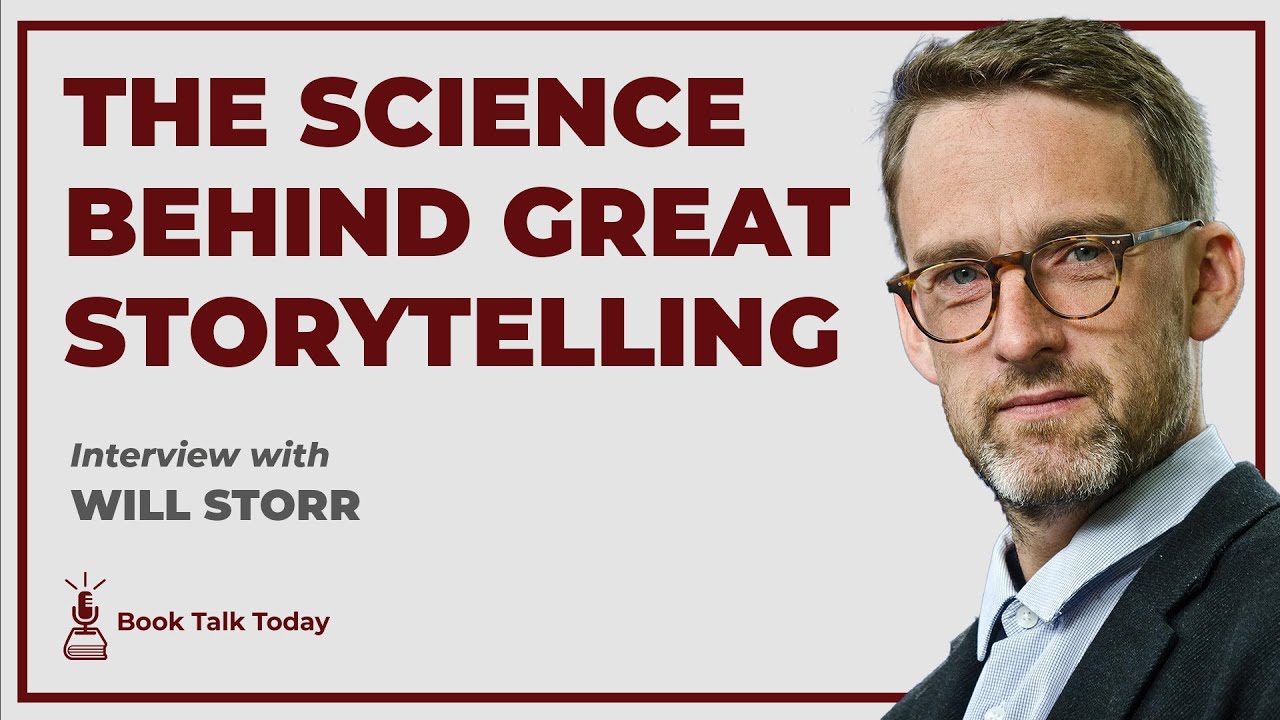
Smart People Podcast: Will Storr - The Status Game - On Human Life and How to Play It

In this episode of the Smart People Podcast, host Chris Stemp interviews author Will Storr about his book The Status Game: On Human Life and How to Play It. Storr defines status as the fundamental human need to feel valued, arguing that it drives virtually all behavior across history and species. He explains three primary status games – dominance (aggression and hierarchy), virtue (morality and conformity), and success (competence and achievement) – and shows how each manifests in personal life, institutions, and culture. Evolutionary evidence links status to survival benefits such as better food, safety, and mating opportunities, while modern research across 186 countries finds perceived status predicts happiness more strongly than income. The conversation explores how money, social media, and technological change have amplified status competition, turning platforms into “slot‑machine” status games that reward intermittent validation. Storr warns that status can be both the best and worst of humanity: it fuels civilization, science, and altruism, yet also drives conflict, corruption, and mental health crises. He discusses the mismatch between our Stone‑Age brains and today’s global, hyper‑connected environment, illustrating the impact on communities (e.g., post‑industrial mining towns) and generational shifts from virtue‑focused societies to neoliberal success‑driven cultures, and back toward virtue after the 2008 crisis. Practical advice includes diversifying status sources – combining work, hobbies, volunteering, and personal projects – to achieve emotional stability, and choosing status games that align with both personal enjoyment and innate talent. The episode also contains promotional segments for Sono Bello’s micro‑laser fat removal, U.S. Bank’s financial tools, and Chris Stemp’s new podcast The Week on Earth, plus standard podcast housekeeping.
Chapters
I'm Jenny, and this is my Sono Bello story. I've always fought my problem areas where the stubborn fat and inches accumulate, but after the stress of being a nurse and working through COVID, my problem areas became a bigger problem. That's when I decided enough. I'd known about Sono Bello, and as a nurse, I was fascinated by their micro laser fat removal where in one visit I could lose the extra fat and inches permanently. It was a great experience, and my problem areas aren't a problem anymore. I'd encourage anyone who struggles with stubborn fat and inches to go to Sono Bello.
Being a nurse, Jenny did her research, and the more she read about Sono Bello and their amazing micro laser fat removal technology, the more she was impressed. How in one visit she'd be free of the fat from her tummy, sides, back, and thighs, and it's not coming back. Live your best summer and experience micro laser fat removal for yourself, and right now you'll save $250. Schedule your visit at sonobello.com/save. That's sonobello.com/save.
Time to redo this basement?
Yeah! A home gym? Movie theater? Model train utopia?
Or yoga studio?
I'm flexible-ish.
Great!
I'll just use the U.S. Bank mobile app so we can plan it out.
Which way are you leaning? Setting a savings goal or applying for a home improvement loan?
I say we look at both options right here in the app.
Budget for a really good home gym. We deserve it.
Noted. Help for today, planning for tomorrow. That's what U.S. Bank is for. US Bank. We'll get there together. Equal housing lender, member FDIC.
Hey everyone, perhaps the biggest news since the start of Smart People Podcast. I am launching a new podcast. It's called The Week on Earth. It is produced by Peabody Award-winning producer Elise Louis, music done by a Grammy Award-winning musician, and hosted by me and my brother. It's unlike anything you've ever heard. And we're running a giveaway to all who subscribe. So listen to the intro coming up now and get more details and go follow The Week on Earth wherever you listen to podcasts. The podcast where we talk to smart people, but not necessarily done by smart people.
That is an awesome question.
This one goes down probably on one of my top 5.
Hey, I like nutrition.
I like to eat food. This is the coolest thing ever. We're gonna do this forever. I wish I paid more attention in that class. You know, I'm gonna be honest, I don't understand that. As a man, I just, I don't get it.
Welcome to smartpeoplepodcast.com.
Hello and welcome to Smart People Podcast, conversations that satisfy your curious mind. Chris Stemp here, so excited to have you. This week on the show, we're talking to Will Storr, an incredible writer, and we're talking specifically about his new book called The Status Game. On human life and how to play it. In short, the thesis of this book in this episode is that status is the primary driver of everything we do. And on its face, that idea might not shock you. It might— when you look at the animal kingdom, that makes sense. But how we define status, how it changes over time, how that impacts your behavior, and how you can utilize this to be happier is really useful knowledge and Will presents it to us in a very succinct way. So I can't wait to bring this one to you. I thoroughly enjoyed it. Now, transitioning a bit, I haven't been this excited in a long time. In fact, it's been 12 years since we last launched the podcast. Yes, I'm talking about Smart People Podcast, but your boy, Chris Stemp is launching a new podcast as we speak. It is called The Week on Earth. That podcast features a short section of weekly news regarding the climate, and then about a 20 to 30 minute in-depth, highly produced story on a specific environmental challenge. So for example, episode 1 is actually about toilet paper. Do you know the negative implications the toilet paper you use has on the environment and the simplest switches you can make to literally help save the world? And the podcast is expertly done. I brought on Peabody Award-winning producer Elise Louis, Grammy Award-winning musician Amy Eileen Wood, and a special co-host. So here's what I want you to do. Right now, pause this, go to your podcast player, preferably Apple if possible, because we're trying to rank, and follow The Week on Earth. In Apple, it's just the plus mark at the top right-hand corner when you search for it. Because we're trying to get the word out, we're doing a giveaway. All you have to do is follow the podcast in your podcast player, screenshot it, and email it to me at chris@smartpeoplepodcast.com. And you will be entered into the giveaway. The prizes are, we're giving away a Fire HD 8 Plus tablet, 32 gigs, new tablet, brand new, straight from Amazon. You'll get it. And we're giving away 2 brand new Fitbit Inspire 2 health and fitness trackers with 1 year of free Fitbit Premium. Okay. So we're giving away about $300 in stuff. And I bet we're going to get only like 100 submissions. So you do the math. It's pretty good odds for, A minute of your time. So follow or subscribe to the podcast wherever you listen, screenshot that you're doing that, email it to me at chris@smartpeoplepodcast.com. And the beginning of October, we will pick the winners and let you know who it is. Go steal your wife's phone, your kid's phone, subscribe, screenshot, email it to me. You can get 3, 4 submissions as long as they're different phones. chris@smartpeoplepodcast.com. Okay. Let's Let's get into the episode with Will Storr as we talk about his incredible new book, The Status Game: On Human Life and How to Play It. We're here to talk about your new book, The Status Game: On Human Life and How to Play It. Tell me why you decided to write about this idea of status and how you define status in the first place.
Okay, so I'll start with the definition. The definition is like, often when you talk about— we call it status in the UK, so we're gonna have that weird thing.
Ah, that's okay.
But when we talk about, you know, when people think about status, they often think about like being rich or famous. And when I'm saying, well, everybody cares about status, what I'm saying is everybody wants to be rich or famous. And that's not what it is. So it's just the feeling of being valued. You know, people need to feel valued. They need to feel the people that they share their lives with see them as a valuable person with skills and, you know, abilities and kind of virtue that they're kind of bringing to the table. And it's a fundamental human need. It's a universal. When we don't feel valued, we get depressed, we get ill. When we do feel valued, we feel like our lives are going well and we're thriving. So that's what we mean by status technically. It's the feeling of being valued. And I think I decided to write about it in the book because once I started reading up on it, I quickly began to realize it's such an important thing. It's so fundamental to human life on the personal level, on the macro huge society level, that it kind of started— it was one of the things we were you start wondering why there hasn't been a book about this already in this, you know, in this way. So it was like, yeah, I found it like a really exciting subject to write about because it was just so unbelievably important.
What you're saying is really status is the need to feel valued. Tell us about how you have arrived at the conclusion that this is a fundamental human need.
Well, it wasn't me that arrived at that conclusion, obviously. It was, um, it was lots and lots of psychologists anthropologists, people in academia. One study, for example, looked at people across tens of thousands of people across 186 countries around the world and found that the level of status that they felt they had in their communities was a stronger predictor of their happiness than money. So that's just one strand of it. There's another strand from our evolutionary history. You know, researchers find that even in pre-modern groups, the kind of groups we'd have been evolving in tens of thousands of years ago, the kind of groups have been when our brains were evolving, the more status that you earn in those groups, the more food you get, the safer your sleeping sites, the better the conditions of life become for your children, the greater your choice to access of mates. So it's this basic heuristic, it's this basic rule your subconscious brain knows and has known for at least tens of thousands of years, probably millions of years, and that is go for status. Because if you go for status, everything else gets better. You know, we share this with animals, of course, too. You know, animals are constantly jostling for, you know, rank and position. Hens peck at each other until their pecking order is established. So, you know, it's a very, very deep, ancient, and elemental rule that human brains and non-human animal brain knows too, which is, you know, if you go for status, everything gets better.
Yeah.
And when I learned about your book, this is what jumped out to me, right? Was, oh wait, I thought this was going to be about money and fame and all of that. And then my next question and what I wanted to say for you was, how did we get there? How did we get to making this idea of status synonymous with riches?
So, so our brains have evolved not to crave money because obviously money hasn't been around long enough to have that effect on our brains. It's evolved to crave status. And the interesting thing about status, human brains are so obsessed with it, we can use basically anything to count for status. Like, you know, if we're in a, in a lift In a hotel, we play a little status game. We're unconsciously judging how people are dressed, who's got the fanciest baggage. Even if somebody stands too close to us, we take that as an assault. It's like an insult. It's like a lack of respect. It's a knock on our status. So the brain can use anything to stand for status. The weird thing about status is it's not like a thing that exists in the world. You can't touch it. So it's not like, you know, so you can't count your status. So we're very chippy about it. How much status do I actually have? We're constantly measuring it. It's like psychologists talk about the brain has this what they call a status detection system that's even measuring things like the amount of eye contact you're receiving with numerical precision. So we're constantly, constantly kind of measuring our status. And of course, with the invention of money, that's a major thing. That's a big thing that we can play status games with, not only because it's a literal kind of counter, like we can count how much money we have versus the people around us. Also, we can buy stuff which symbolizes status with that money— better houses, better cars, better watches. So, you know, the invention of money was a massive accelerator in terms of the ways we play status games, just like the invention of social media has been a massive accelerator in the way we play status games.
What is the impact of the focus on status on us as humans?
What I believe is it's the best and the worst of us. It's the worst of us because, you know, when people feel that their status is threatened, they behave in terrible ways. And that's because that's what we are. That's what humans do. But also, it's the best of us. You know, we wouldn't have civilization without the craving for status. You know, we wouldn't, you know, we wouldn't have technology. We wouldn't have you know, clean water, we wouldn't have vaccinations. So, so, you know, one of the ways, one of the major ways that we measure our status is incompetence. Like in the Book of Gollum, success games, you play success games in which we compete to be the most competent people in the particular game we're playing. The best scientists, the best technologists, the best inventor of this, that, or the other. So, so that urge to be the best, to be better than him and her, is an incredibly constructive, powerful, and motivating thing. So when I say it's the best and the worst of us, I mean that literally.
Yeah.
Status is implicated in the Holocaust. I write about the Holocaust and in the terrible things that happened in the Soviet Union. But it's also implicated in the space race and the invention of the iPhone and the discovery of vaccinations and the fact that we're all living relatively normal lives in the middle of a COVID pandemic. So status is implicated in all that too.
What about the idea that status is only a measure of comparison? We've heard the studies of the biggest house in a poor neighborhood will make you feel happier than the smallest house in a rich neighborhood, right? Again, comparison. Does that naturally pit us against each other? The fact that we all crave status, which is only based on those around us in our tribe.
Yeah, in a sense it does. So the brain works in contest mode. It's constantly working in contest mode because status can only ever be relative. There isn't a ground zero for status. You know, it's not like a— you know, we play like board games, we play games, for example. And, you know, they gave us sports and Monopoly that they're using the status game mechanism. We're exploiting those same kind of neural mechanisms. And even in those games, there's a zero. You can have zero points and 100 points and there's a target. But real life isn't like that. You know, you're constant. Your level of status is constantly in flux. You can be feeling on top of the world at one minute and then somebody insults you in a supermarket or in the next minute and you're feeling down there again. You know, that's life. Up and down, up and down, up and down, up and down. So, so, yeah, it's, it's, it's, you know, it's a recognizable part of the human condition that we are in that constant roller coaster of feeling good about ourselves and bad about ourselves. And a lot of that is to do with the fact that, as you say, status is relative. When you look at research into suicide, you find that people who have sudden losses of status are highly vulnerable to suicidal ideation, but so are people who stay still whilst everybody else in their group accelerates. Those people also become more vulnerable to suicidal ideation. Yeah. So, you know, that's one of the kind of you know, in some ways unfortunate ramifications of the status game is that we are constantly comparing ourselves to the people around us. We can't help it. You know, it's automatic, it's unconscious, it never stops. So it's always going on and it has the power to make us feel amazing, but it also has the power to make us feel terrible.
Yeah.
No matter who we are, you know, Elon Musk, Elon Musk can be made to feel terrible. Beyoncé could feel terrible if they read the wrong thing about them or if they're insulted by somebody that they respect.
Right. As you were talking about it, it reminds me of potentially the goal of much of Eastern philosophy or meditation or Buddhism is to remove the craving for status from the human. Do you believe that to be true? Is it possible? And is that a decent goal to strive towards?
Okay. So it's not possible. Like it just isn't possible. I'm sure that if you really practice meditation, you will, you can kind of lessen your attachment to the need for status. I don't doubt that, but you cannot eradicate it. And in the book, I talk about a study of nearly 4,000 people in the Netherlands where they found people who specifically meditated to, I think the way they phrased it was remove attachment to ego needs. And they found that these people scored extremely high in what they called spiritual superiority. So when they got really good at meditating, they started to feel quite pleased with themselves. And actually, they started to feel quite superior to all those other people around them who didn't have the amazing insights that they had.
Right.
Into reality. And, you know, you're laughing. I was laughing when I read about the study. And it's funny because it's true. It's one of those ones where it's funny because it's true. We recognize it because it's totally human behavior. We can completely predict that about human beings. If they get good at something, no matter what it is, they're going to start feeling pleased with themselves and looking down at people slightly who aren't as good at it. that, that thing that they are, because, you know, that's the status game. So yeah, even when you zero in on people specifically who meditate to get rid of ego, um, you find that they are— that their meditation actually— I mean, the, the researcher in a paper said that what she found was the very opposite of enlightenment.
Well, and this is where I struggle, which is I recognize the need for this drive. It's the reason we're top of the food chain. We can't sit still. One of my favorite Buddhist quotes is, the hardest thing for a human to do is sit in a room by himself.
Right?
It's not how we're designed. But as all things are yin and yang in this world, I also find it to be the greatest source of pain.
Mm-hmm.
And so how can we live a better life, a more purposeful, authentic life Recognizing this inherent need for status will always be with us.
Yeah.
I mean, you make an interesting point about, you know, like it's a thought experiment, you could say, where what if mindfulness meditation did actually work and it was possible to eradicate the need for status from people's minds completely? And what if everybody just did this? Well, then progress would stop. It would be a total disaster for the human animal. if, if that was true, if, if, if the ambitions of the Buddhists, um, were realized and it became universal, it would be the end of progress. It would be a disaster. So, you know, it kind of weirdly— it's all— you can almost see the— like, I can totally understand it. And, you know, I've meditated in the past. I'll probably take it up again. I get it. You know, I, you know, I, as much as anybody else, especially as a writer, You know, the status game hurts me every day. It does. It's a cause of huge misery for me.
Yes.
Yeah, and lots of people. So I'm not here, you know, completely waving the flag for it, but it's also been some of my greatest moments too, you know, like being reviewed in the New York Times, you know, I think it's an amazing thing, you know. So, you know, it's the up and the down and Yeah, I completely sympathize with people who would want to rid themselves of it, but it would also be a catastrophe for us as people. And so the second part of your question was, how can we— how can we acknowledge its problems? Well, in the book, I talk about there's 3 basically different kinds of status game that humans play. There's the dominance game, which we've been playing since we were animals. So that's millions of years old, and that's threat, violence, When somebody forces you to attend to them in status, in deference, I should say, as if they're a high-status person, that's dominance. And that can be also about bullying. That can be kind of social media cancel mobbing, whatever. If someone's threatening you and forcing you to kind of be deferential to them, that's dominance. So that's the oldest form of status game. That's very animalistic. But humans are really good at playing these other 2 forms of status game, and that's virtue and success. So virtue games are one about morality, about, um, following the rules, knowing the rules, enforcing the rules, about belief, about do you believe, do you believe the things our tribe believes and how, how sincerely do you believe them. Those are kind of virtue games. So you can see religion, religion is a virtue game. Royalty in the UK is a virtue game. It's all about deference, it's all about knowing the rules. It's all about believing and acknowledging the magnificence of the Queen and these very flawed people. So they're virtue games. But there's also success games. That's the other way that we are valuable to other people is by being competent. And in the groups in which we evolved, you could win status by being the best storyteller, the best tuber finder, the best hunter, the best warrior. So to me, that is the best of human nature, the success games, these people who, um, pursue competence, um, to, you know, extreme ends and become amazing at what they do. Um, you know, so I think, I think that is the most, um, um, that, that's the most progressive, helpful, um, kind of wonderful form of status game, are these success games. And of course, like anything, it can go wrong. You know, you, you could see Amazon as a success game, Jeff Bezos. But also, you know, in lots of these corporate success games, there's a dearth of virtue. And actually, the workers end up being treated very badly, you know, people at Foxconn thrown out windows and so forth. So, so, so, you know, in the book, I talk about success virtue games, you know, games that are about competence, but have this kind of virtuous end. So you can say somebody running a marathon in aid of Breast cancer is playing. That's about success and virtue. It's a success virtue game. Somebody devoting their lives to finding a you know a vaccine for COVID is that that's that that's all about competence. They're being judged. They're being status has been awarded on how good their vaccine is. And that's that's what their game is. It's all about how good their vaccine is. But it has this enormous virtuous end. It's not all about who's going to be the who's going to have the most billion pounds in their bank and have one of those. cars that doors do that, right?
Right.
I'm going to be saving lives. So, so, so that's what I talk about in the book, that, you know, we should play success games, but also kind of success games have this kind of virtuous result at the end of them. They're the best. That's the best of human nature.
Running a business is a lot of work. Luckily, I've got a great partner.
Oh, why, thank you.
I meant US Bank.
I knew that.
US Bank Business Essentials is a huge help to us. Totally.
Their comprehensive point-of-sale system does it all.
Tracks inventory, manages schedules, customizes orders.
Plus all the regular banking stuff.
If only it could make coffee.
Nah, that's your job.
From point of sale to quick loans, we have many ways to make your business boom. That's what U.S. Bank is for. U.S. Bank. We'll get there together. Equal housing lender. Member FDIC.
Time to redo this basement?
Yeah.
A home gym, movie theater, model train utopia.
Or yoga studio?
I'm flexible.
Great. I'll just use the US Bank mobile app so we can plan it out.
Which way are you leaning? Setting a savings goal or applying for a home improvement loan?
I say we look at both options right here in the app.
Budget for a really good home gym. We deserve it.
Noted. Help for today, planning for tomorrow. That's what US Bank is for. US Bank. We'll get there together. Equal housing lender, member FDIC.
If we know we're going to play these status games, if we know it is the fundamental driver for our day-to-day actions. For the most part, I would imagine the best we can do is try to align what do we value, what do we enjoy to the status we want to achieve. And perhaps, yeah, where we go wrong and when people feel the, the, the worst of themselves is when they feel like the status they are chasing is in and of itself, not one that they enjoy or want to achieve.
Yeah.
Which is, I think, one of the biggest problems, especially in Western society, which is where we have determined the rules of the status game and not everybody wants to play on those specific rules.
That makes perfect sense. And, you know, I write about that in the book, about how there's this evolutionary mismatch, really. You know, we still have hunter-gatherer brains. We have Stone Age brains, right? The brains that we have haven't evolved very much, you know, that much since those days, and certainly not in terms of our cravings for status. So we've evolved to play small status games in relatively small groups of people. We haven't evolved to feel like we're competing with all of the world. We haven't evolved to play status games on the corporate level where we're not one of 25 people, perhaps, you know, in a mobile band. We're one of 25,000. So I'm convinced that a lot of the 21st century misery and alienation and hopelessness that we feel is because we feel it's much harder for us to feel of value in the modern world than it was back in the days of the tribe. Back in the days of the tribe, your tribe was the whole world. You were aware of other tribes, but your tribe, but your kind of patch of territory That was the world and you were the humans on it. And if you brought back a great kill as a warrior or if you had a great— found a great bounty of sweet potatoes, you were the hero. If you'd have told the tribe an amazing story and they loved it and were entertained around the campfire, you were the hero and your life, you felt like you were thriving. It's much harder to feel like that in the 21st century. And so there's a little anecdote that I tell in this, in the book, where, um, you know, years ago I went— I was reporting a story for The Guardian newspaper in the UK about— it was a profile of the, of Britain's best-paid male escort. And he came from a small, uh, small, um, village in Wales, and it was an old mining village. And, and so I went back to his village, um, to interview his parents and his old friends, his former friends. And we were walking around this town, it's called Armanford, and, um, this guy was— this young man is in his early 20s— was talking about the changes that's happened to Armanford. And he said, you know, in my sort of, you know, dad's era, the mines were open, people were really proud to work down the mines, down the pits. It was a great community, and, you know, um, there was huge pride. Um, and there were also all these local businesses, you know, there were— there was the butcher, the baker, the candlestick maker, you know. You know, if you weren't working down the mine, you owned a business, and that's a huge source of status. But what's happened is all the mines have closed down and the big supermarkets have come in. Tesco over here is a bit like Walmart in the States, huge big box retailer. So all the individual small businesses have closed down now. And he says, so now what do we do? And he said, back when you were working for your parents' butcher shop and you knew that one day you were going to own the butcher shop, you felt important. You felt your life had meaning and purpose. You just don't get that from working at the meat counter at Tesco's. You just don't. It's the same job technically, but you just don't get that. And that was a huge thing for me when he said that, because I'd never heard it expressed before. Because if you're thinking like an economist, you're thinking, well, they've all got jobs, they're butchers. But no, if you actually compare— yeah, if you compare their income, it might be the same. And if you compare technically their job, it's the same. but the level of status, the level of value that they take from doing that job is completely different. And, you know, of course, like in a lot of the poor communities in the US, you see lots of drug abuse, you see homelessness, you see, you know, the question was all about why did this guy escort leave Wales? And that was why, because there's just so much hopelessness there.
Right. Well, Will, can you solve it for me? Because what you just hit on, Unexpectedly, okay. What you just hit on is like one of the greatest sources of discontent I have. And many people I talk to, which is this, I want to live a decent life, right? I live in a high cost of living area. So in order to do that, I have to work. You know, there's a lot of options, but a common one is work at a job and it's got a lot of stress in it. And because in order to make the money, you have to have that.
Hmm.
And What many of us around here realize is we don't matter. We don't matter. Your company will write your job description before your family will write your obituary if you die. You know what I mean? And so how in this construct can we— we have not evolved to be like this.
Yeah.
We can't be the one who made the COVID vaccine. We just can't. Listen, if you're listening, you won't do that. Um, it's just odds. I don't know how then to give hope to anyone listening if we are in a world that almost makes it impossible to ever be content with our status.
Okay, so, so there are a few things to say about that. Like, I totally hear what you're saying, and I agree, but I think there are a few things that, that are going to give us a bit of optimism, a bit of hope.
Good.
The first thing is that your job doesn't have to be your only status game. And in fact, in the book, I recommend slightly hypocritically, but I recommend playing multiple games. And I recommend that not because I'm good at that myself, but because that's what the data suggests, is that people who have multiple sources of status are much happier and much more emotionally regulated. They have less highs and lows. They're much more stable. So play many games. Your job doesn't have to be your main status game. And of course, if you take no value from the job that you're doing, that's bad. There's going to be a certain amount of misery in your life, but that doesn't have to be your whole life. A hobby is a status game. A religion is a status game. Since I've written the book, I became very conscious that I only have one status game, and that's being a writer, which makes me very vulnerable to anything that goes wrong. freak out and it's like the end of the world. Right. Yeah. You get a bad review in the newspaper even though no one's read it, no one cares. So I've taken up cycling and I noticed that I was cycling, but as soon as I started logging my rides on an app and I could see my numbers, I started playing status games with myself. Well, I've done that this week, next weekend I'm going to do that. And I'm now looking forward to the weekends. I've got this other source of even though it's not a game with other people, it's like playing Sudoku. You're kind of playing it with yourself. That's another source of status. I'm also volunteering. I'm going to start volunteering at a national, well-known national charity. I've got an interview there on September 11th, and that's directly as a result of doing the research in this book because it's like, okay, so you're playing these success games with your writing. It's all about competence, but where's your virtue status? Like, I'm not a parent. And, you know, I had to ask myself, what do you do for anyone? And the answer was nothing. So I'm now going to start volunteering. And, you know, selfishly, the reason for that is because I need to kind of hedge. I want to diversify my sources of status. And of course, again, you know, like, I really passionately believe that we should stop seeing status as a negative thing because it does drive— you know, people want virtue status, and that's what drives The whole voluntary sector, charities compete with other charities to do the most, to be the most helpful. So that's status too. That's just virtue form of status. And so other people benefit from that. So yeah, your job doesn't have to be your only status game. And the final thing to say about that is that you should never feel that you're competing with the whole world because that's not true. You're competing with the people immediately around you. You're kind of playing a game with a subset of people. Again, that's how we evolved. In the tribe, everybody wasn't competing with everybody. There was a gender breakdown. Men would compete with men, women would compete with women. Within that, there was age. A 14-year-old wasn't competing with a 32-year-old. And there's specialisms as well. There's a warrior game and a hunter and a storyteller game and a sorcerer game and whatever. So we're always— and that's why somebody who's working as an office cleaner can be happy if they feel that they're a really good office cleaner and they're proud of the work that they do and they feel that actually I'm a better office cleaner than that person and that person and that person. If it was true that every office cleaner in the world felt that they were competing with Michelle Obama, they'd all just throw themselves out of the nearest window because it's just hopeless. But that's not how we went. Thankfully, that's not how the human brain is. We don't generally feel— I mean, super ambitious people do feel like they can compete with Elon Musk, and those people are either going to be really talented and really successful or really miserable.
Yeah.
99% of people don't feel like they can compete with Elon Musk. They've got people in their lives that they feel, oh, I want to be at least as good as that person. I want to be better than that person.
I know you talk about this and we have to, because it's so obvious today, which is social media. It became very apparent to me recently when I heard the statistic that the percentage of businesses that ever achieve $1 million in annual revenue is minuscule. Now, I don't remember the percentage, but it's something like 1% or less than 1, a 10th. I mean, it's tiny. My social media platform of preference these days is TikTok. I'm embarrassed to admit it, but I don't care what anybody says.
It's good.
And what I realized is my perception of success has skewed since watching it, because naturally my For You page is entrepreneurs, podcasters, business owners, all talking about how much money they make. Everyone, boom, boom, boom, million dollars, million dollars. And I'm going, Damn. I remember when $1 million was aspirational. Now it's like, if you're not 25 making $1 million, you're nothing. So how do we counter—
I'm 30.
Yeah, I know.
It's true.
It's true, Will. Do not go on TikTok. How do we counter the visibility we have to the world? Okay. Our tribe kind of digitally being expanded to 7 billion. plus the algorithms, which will feed us the things that bring out the worst in us, because that's what we'll watch. They know I'll watch how to strive to a million, right?
Yeah. So, so, you know, in the book I call, um, social media slot machine for status. I mean, you know, it's people who are into kind of the mechanics of social media, they understand the whole theory that drives it, which is, which is It's like a slot machine. Its rewards are inconsistent. So you might make a contribution to TikTok or Twitter or Instagram and get zero likes or lots of thumbs downs, or you might go amazing. So it's like a slot machine. But I think there's a missing piece to the slot machine theory, and that's like, okay, so you're gambling, but what are you gambling with? And the answer is you're gambling with status. Of course you're gambling with status. That's what you're doing when you're making Contributions to social media, and moreover, you know those three games that I talked about: the dominance game, the virtue game, success game. You know aggression, morality, and competence, and you know success—that's social media. You flick on any social media website, and and you'll see it's a combination of those three games being played. Is that you know that you've got your dominance in in the form of like you know cancel culture people, your political people pushing each other around. You've got your virtue people. you know, doing the politics and putting up quotes from the Dalai Lama or whatever, whatever, right? You know, wellness people are very much in the virtue space. You know, I, I've given up caffeine, I've given up everything, uh, except for water, whatever it might be.
Yeah.
And then of course there's competence, there's success. You know, there's look at my awards, look at my amazing holiday, look at my car. Um, that's social media. It's the 3 status games and it's people gambling constantly But every time you make a contribution, you're spinning that wheel again and you don't know what's gonna kind of, you know, happen next. So, so, so yeah, and I think, you know, you, you quite rightly point out that social media is really bad for us because— I mean, I write about this more in a previous book of mine called Selfie, which was about— well, it's about Western self-obsession, but, but about half the book is about social media. Um, you know, and, and in there I write about Perfectionist presentation, specifically especially on Instagram. You know when people are presenting these perfect lives, and you know this myth that we tell ourselves that oh, I don't care what other people think about me, which is completely untrue. You might feel that's true, but I promise you unconsciously you really do care about what other people think about you. You know we are always comparing ourselves to other people, and you know it. And I think that one of the toxic things about social media that makes people unhappy is that is that. is that when they do encounter— well, it's just like your description. When you're feeling like you're a pretty successful guy, justifiably, but then suddenly you're exposed to dude after dude after dude or person after person after person telling you that they've earned this million and that million and the other million. And of course, and because you're playing the status game and it's relative, that throws off your sense of value. Oh, I thought I was a valuable person, but it turns out I'm not. And so to me, that advocates that you're in a hostile environment and you should remove yourself from it because it's making you unhappy and it's actually skewing your reality. It's not real that most people are millionaires. It's not real that most people at 25 are earning $1 million. That's just the people that you are seeking out and speaking to. That's a subset of a subset of a subset of the human race. So you've created this kind of crazily competitive and harsh status game for yourself to play in. And what you're doing is you're exposing your, your subconscious status detection systems to some really dangerous data.
Yeah. I think that's really important for, for everybody to hear. I mean, social media can convince us, we know that it's not real, but it convince— can convince us that that is what matters. We can say, oh, that's not real. That's, it's a small subset, but I don't think to your point, our brain is able to truly interpret that. In fact, the thing you said is what resonates the most. It shapes reality. So now I'm going, man, I spend time on TikTok and I'm seeing millionaire after millionaire. Then I come on my podcast and I talk to successful, intelligent person after successful, intelligent person. Then I walk outside and I live in the county that has the highest median income in the country. And like, wow. Yeah. And, and I'm like, I'm screwed. And that's why I'm so messed up. I think what we just did is we solved all my Psychological problems, to say it well. But I say that tongue in cheek. You figured it out. I say it tongue in cheek because I truly fundamentally believe in what you're talking about. And I am of the belief that knowledge and understanding and self-awareness is the first and most important step towards living a better life. And this puts a name and a clarity to something that is so important to us that we can then focus on.
Yeah, I think that's right. I mean, and again, in Selfie, I write a lot about kind of the self-help movements, and the conclusion I came to was actually a lot of the time, if you want to improve yourself, it's not about changing who you are, it's about changing your environment, it's about changing what you expose yourself to. And I think what you describe is a kind of perfect case in point.
There's something I want to talk to you about here, which is you mentioned how social media really is the, is all 3, right? Uh, aggression, morality, competence, all of those. Do we consciously choose the status games that we want to play? And if so, what is it based on?
That's an excellent question. So your question precisely was, do we choose the games we want to play? And that word want is really important because that dictates the kind of games we'll end up playing. And it also dictates how good we're gonna be at those games, how high we're gonna climb. Like, it's really important that we play games that we want to play, that we feel drawn to and we feel we're gonna be good at. And a lot of that is down to our genes. You know, our preferences are heavily kind of, um, based in our particular genome, um, and that, that's the kind of accident of birth, you know. So, um, that, like, for me, I'm never going to be, um, um, uh, well, when I was young, I wanted to be a pop star. That's my first ambition when I was, you know, 12 and 13. I tried to play guitar.
No.
And I had zero, I had no talent whatsoever. I was terrible. I couldn't sing. I couldn't play. Like, like, I, like, you know, when I was 12, I worked out how to play Every Rose Has Its Thorn by Poison, and it remains at the age of 47 the only song I could play the guitar.
Yes, yes.
Yeah, it's terrible. It's embarrassing. So, so what I ended up doing is I was— I lived in a town where, um, there was a local venue and there was loads of cool local bands. They were the cool kids. And so I ended up writing about them. I started up a local magazine as I couldn't be a musician, writing about musicians. And that's how I ended up being a writer. I figured that, that ended up being something that I could do. And so, so, so, you know, um, that's genetic. I have no control over the fact my parents were musicians. So, you know, but, but for some reason I was terrible, awful. So, so, so, um, yeah, you know, that's, um, a lot of it is out of our control. And I think, I, I think one of the secrets, especially if you've got kids, is, is finding out what you and what your children enjoy doing and are quite good at. And don't worry about the money so much, especially when you're really young. Go for what you're quite good at and that you enjoy doing. Go for that thing that when you start doing it, you forget what the time is and suddenly you've missed your dinner. Those are the games which you should be playing. But of course, there is choice too. Like, I've chosen to volunteer for a charity because I, you know, I've, I, in a kind of rational way, have realized that there's a big chunk of my life missing, and that's the, the selfless part, the, the part that's good. And I think that becomes more important as you get older, I think, probably. Um, so, so, so of course you have, um, you know, you have, especially in the West, if you've got, you know, if you, if you're relatively well off in the West, we have sport for choice, we can, we can do hobbies. Um, but the wanting is really important. You've got to want it. Because if you don't want it, you're never going to be good at it. You're never going to earn status within that game.
Time to redo this basement?
Yeah! A home gym? Movie theater? Model train utopia?
Or yoga studio?
I'm flexible-ish.
Great! I'll just use the US Bank mobile app so we can plan it out.
Which way are you leaning? Setting a savings goal or applying for a home improvement loan?
I say we look at both options right here in the app.
Budget for a really good home gym. We deserve it.
Noted. Help for today, planning for tomorrow. That's what US Bank is for. US Bank, we'll get there together. Equal housing lender, member FDIC.
Right. I think you just provided the antidote for the myth of passion that I think gets perpetrated. So a lot of people will say, you know, find your passions, do your passions. And, and, and here's why you might be listening and say, wait, that, that is kind of what Will was talking about. I wanna add this slight corollary and see what you think. Knowing we're going to play a status game, pick the one that you not only enjoy, but feel like you have the best chance of succeeding in. And in that, by, by combining those 2, what you will do is you will fill your evolutionary need for status in a way that feels enjoyable. And I think the reason that distinction matters. Is because I know for myself early on, I didn't ask, what do I want? I asked what I was good at and what does society value? And that misses what I think is the most important part, which is, yeah, but what do you want? What do you care about? And that you will never be happy doing that thing, even if you achieve status in an area you don't value.
I think that's, yeah, that I would completely endorse that statement, Chris. Yeah. I think that's, that's absolutely right. You know, you, you've got to want it, but you've also got to be able to be good at it. You need to do both of those things and then you're going to start thriving. And it really is. I mean, if you think about some of the greatest moments that you've had outside the family that aren't involved with having children and all that stuff and getting married, it's generally the status games that you're playing. It's the victories that you've had. It's the graduation. It's the first deal you made. It's the first dollar you made. It's the first, the first, the first, the best, the best, the best. It's really important that we have those feelings that the world values us, that we have value to give to the world. And if we don't have that, it's an almost immediate path to anxiety, depression, even physically ill health if people feel That the world doesn't value. Right.
Wow. I'm curious, as we were talking about this, have, have the status games always remained the same or have they just modulated through the 3 you recommend? Like I would say right now it's very much that competence piece. So over time, have we placed more value on various status games?
Uh, excellent question. Yeah. So culturally things change in different cultures and things change across time. So, um, my analysis of the West, you know, because again in Selfie I write a lot about this too. If you think about the Industrial Revolution, before the Industrial Revolution, um, basically the whole world was mostly playing virtue games and dominance games. There's the Game of Thrones land, it's about kings, queens, wars, popes, religions. That's virtue and that's dominance. And yes, there's a bit of success, a bit of competence in terms of— you've got to do farming. There wasn't much innovation going on. There weren't— people just didn't really. And that's because we were heavily into our virtue games. People really had this very strong religious belief. And the idea was, you know, religious status game is essentially know your place, follow the rules, don't get too ambitious. Your reward is in the afterlife. You're going to go to heaven if you're good and hell if you're bad. That's a status game. Rewards, punishments, depending on how well you're following rules. It's a textbook status game religion. So that was the game that we played for generation after generation after generation after generation. Know your place, stay in your place, behave miserable, you know, or not. Like, or not, you know, if you felt like you were a good Catholic and you were going to go to heaven, you're probably really happy. So maybe not. Maybe that's too philosophical. But then the Industrial Revolution, that changed everything because suddenly success games became cool. And suddenly, you know, and what made the Industrial Revolution amazing was it was first a very small game played by kind of a narrow class of aristocrats, but then it spread out through Britain and then Europe and then America. And that was the game which was about finding new and useful knowledge. And there was a competition was born, who could find the best new and useful knowledge. And when somebody presented new knowledge, who could improve it, who could take that knowledge and improve it. And that became the Scientific Revolution, the scientific method. That became the Industrial Revolution, solving problems, solving problems, solving problems. And that becomes modernity. So ever since the Industrial Revolution, we've been playing success games much more than virtue games, you know, firstly in the West and now all around the world. So that's the broad sweep of history. And if you want to sort of kind of like hone in on the last, say, 100 years in the West, So I think, you know, the West, we're very individualist. We're much more kind of prone to playing success games than virtue games because we're more about the individual than the group. I think after the Second World War and the Great Depression in the 20th century, we were knocked into a bit more of a virtue state, much more collective. So if you think about what was going on in the world, in the West, in the UK, in America, you've got things like the New Deal in America, you've got a things like, which the equivalent in the UK was the welfare state, the National Health Service. We're all going to get together, we're going to think about the group. And out of that, you had collectively minded generations of people. You had the hippies in the '60s. It was all collective. Screw the man. We're not materialistic. Their parents were the kind of Revolutionary Road monkey-suited commuters. It was all very job for lifers. And then that all changed in the '80s, Reagan and Thatcher, the neoliberal revolution, because the economy started failing in the West. They had to find a new way of running the West. And so what happened was they changed the rules of the game. And what neoliberalism is essentially is we're going to increase competition wherever we can find it. We're going to get rid of all this collectivism. We're going to get rid of all the— as much state help as possible. We're going to lower taxes. We're going to just make everybody maximally competitive. And the incredible thing about neoliberalism is you see the extent to which it changed us as a people.
Wow.
In 1965, we were all smoking pot and saying, fuck the man, I don't want materialistic things, I'm happy to live in my teepee, you know, in Woodstock or whatever. 20 years later, greed is good, Wall Street era. 20 years, an absolute reversal in who we are as a Western person. And what changed in the middle of those years? Well, it's the economy, the rules of the game changed because Thatcher and Reagan brought in this neoliberal revolution. And so I think we've been in that neoliberal success game space from the '80s, '90s, 2000s. And I think something changed a little bit in 2008 with the global financial crisis. I think a new generation of young, educated Westerners, millennials and Gen Zs, were born who were much more skeptical about success games because of the financial crisis, because of recession, because actually they were finding it harder than their parents were to play these success games. Life was getting tougher. So what you see is, um, since 2008 is this move back into virtue games. And I think that when you're looking at the social justice movement, progressive activism, cancel culture, I think that's people who— if there were boomers and Gen Xs— would have been playing success games. But because that's really hard now, they're moving into the virtue space. So that's why I think we've seen the rise of this new political movements on the left, you know, and, and it's driving some of the— a lot of the polarization that we're seeing.
Wow, that, that's just incredible what you just said. I essentially— as the rules of the game change, our behavior will change to still achieve status, but we will do it maybe in the way with least resistance or the way that the game steers us.
If you change the rules of the games of life, you change the people. That's the creepy thing. Like, you really do. You know, there's actually a chapter in the book called Change the Game, Change the Player. You know, it's kind of sinister how vulnerable we are to change.
Yeah.
As soon as we find out— you see it in our generation, like say, say, um, say the MeToo movement. So the MeToo movement changed the virtue rules of the game in the UK, Canada, and America mainly. And suddenly the way that men treated women, the rules changed. And so men changed. And suddenly the, you know, the ways that we think and behave in 2022 are very different to the ways we thought and behaved in 2012 and, you know, 1992. We changed, our values changed, the way we— the way that, you know, I— the way that, you know, you talked about the authentic self. I'm slightly dubious about that concept because I know it's fluid, you know. So we changed as a people when the rules of the game changed. So, you know, you see it on the level of the corporation. If you put a bunch of otherwise well-meaning people into a company like Enron, which is a, you know, a corrupt, um, culture in which status is very hard to come by, they're going to start behaving in corrupt ways. They're going to change. There's an incredible paper that I talk about in the book written by an American, a New York lawyer, big, big name lawyer. He wrote this extraordinary paper, um, an address to young legal students who wanted to work at the big, big lawyer shops in, in New York. And he, he basically said, you're going to become corrupt because it happened to me and it happens to everybody who works for these companies. And then the reason for that is that, um, um, when you start as a lawyer, um, you're going to start competing on the basis of how much money you earn because people's wages are published in these legal periodicals. You're going to get invited to your partner's house at the weekend and you're going to be see, there's a massive, beautiful place up in the Hamptons, and you're going to go, wow, and you're going to be served martinis and this, that, and the other. He really paints the picture, and you're going to become obsessed about, how can I earn that much money? How can I compete with these people? But the problem with being a lawyer on that level is you're already working as hard as it's possible to work. You can't work any harder. Lawyers are miserable. They get divorced, they get addicted to alcohol and drugs. Like, you know, they live— they live— they're incredibly competitive people playing incredibly competitive status games. So the only way to compete is by becoming corrupt, is by billing for 3 hours when you've actually worked 2, is by accidentally losing these documents that were unhelpful to your case that you were supposed to show the judge. And, you know, and what gave that paper to me moral force was this guy who was then a judge saying, it happened to me, I did this. And it will happen to you, I promise you. There was some line in there where you're going to go from somebody who's over the moon about buying a $400 car stereo to somebody who feels infuriated and insulted by only getting a $400,000 bonus.
Yep.
You know, like, and so you've changed because the rules of your game have changed and it changes you. And, you know, we see this happening, you know, like that has the ring of truth to me.
It does. Well, and you know what strikes me is the first one you mentioned, dominance, aggression. Imagine if the government came out and said, look, we're overpopulated, so we can only support a third of the population and the rest are going to be kicked off the island or whatever. All of a sudden that becomes the status game that you want to play. Right? All of a sudden people are getting their guns and they're— I mean, you know, it's like almost overnight. So that is a terrifying concept.
Yeah. And you can imagine that people would, people would change.
Right. Like, you know, I care a little less about, you know, what my job title is and how big my arms are so I could strangle somebody. I mean, this is a little Hunger Games-esque, but I'm using The end of the spectrum to highlight what you're talking about, which is how we shift. And I really like how you walked up through like 1980, like you're right, what happened prior to and afterwards and all of those things. Well, it's a phenomenal concept and I love it because it adds, I think, some solid ground to a lot of things we feel around purpose and passion or around drive, around misery. Uh, around loneliness. Um, there's a lot there and it's because, as you said at the very beginning, it's the best in us and the worst in us, which is everything in life, right? It, it truly is. If it's worth doing, then the opposite is all often, usually, um, you know, the counter. So I know we're at time here. Um, I, I really enjoyed talking to you again. Um, the book here I got pulled up is The Status Game on Human Life and How to Play It. You know, tell us where you are, where we can follow you. You mentioned the book Selfie as well, which now I'm curious about. Uh, are you on Instagram and where can we find you?
I'm really on Twitter. Twitter. Yeah. @wstorr. Instagram is William Storr. Yeah. So, so, so obviously feel free to follow me there, but, but Twitter is where most of my work stuff We will.
We'll link to the Twitter, uh, Twitter page so we can learn more, and of course to the books. Will, really appreciate you being on. Excellent stuff.
Thanks, Chris. I had a great time talking. Thanks for having me on.
This week's guest was Will Storr. As always, it was hosted by Chris Stemp and edited by yours truly, Jon Rojas. Will's book The Status Game is available wherever books are sold. Onto the housekeeping items. As you heard in the intro, make sure you check out Chris's new podcast, The Week on Earth. Check it out at weekonearth.com. If you'd ever like to reach out to Smart People Podcast, email us at smartpeoplepodcast@gmail.com or message us on Twitter @smartpeoplepod. And if you If you want to stay up to date with all things Smart People Podcast, head over to the website smartpeoplepodcast.com and sign up for the newsletter. All right, that's it for us this week. Make sure you stay tuned because we've got a lot of great interviews coming up, and we'll see you all next episode.
Time to redo this basement?
Yeah.
A home gym? Movie theater? Model train utopia?
Or yoga studio?
I'm flexible-ish.
Great. I'll just use the U.S. Bank mobile app so we can plan it out.
Which way are you leaning?
Setting a savings goal or applying for a home improvement loan?
I say we look at both options right here in the app.
Budget for a really good home gym. We deserve it.
Noted. Help for today, planning for tomorrow. That's what U.S. Bank is for. U.S. Bank. We'll get there together. Equal housing lender. Member FDIC.
Running a business is a lot of work. Luckily, I've got a great partner.
Oh, why thank you.
I meant U.S. Bank.
I knew that.
U.S. Bank Business Essentials is a huge help to us.
Totally. Their comprehensive point-of-sale system does it all. Tracks inventory, manages schedules, customizes orders.
Plus all the regular banking stuff.
If only it could make coffee.
Nah, that's your job.
From point-of-sale to quick loans, we have many ways to make your business boom. That's what U.S. Bank is for. U.S. Bank. We'll get there together. Equal Housing Lender. Member FDIC.
More from Will





The Status Game: On Social Position and How We Use It: Interview with Will Storr