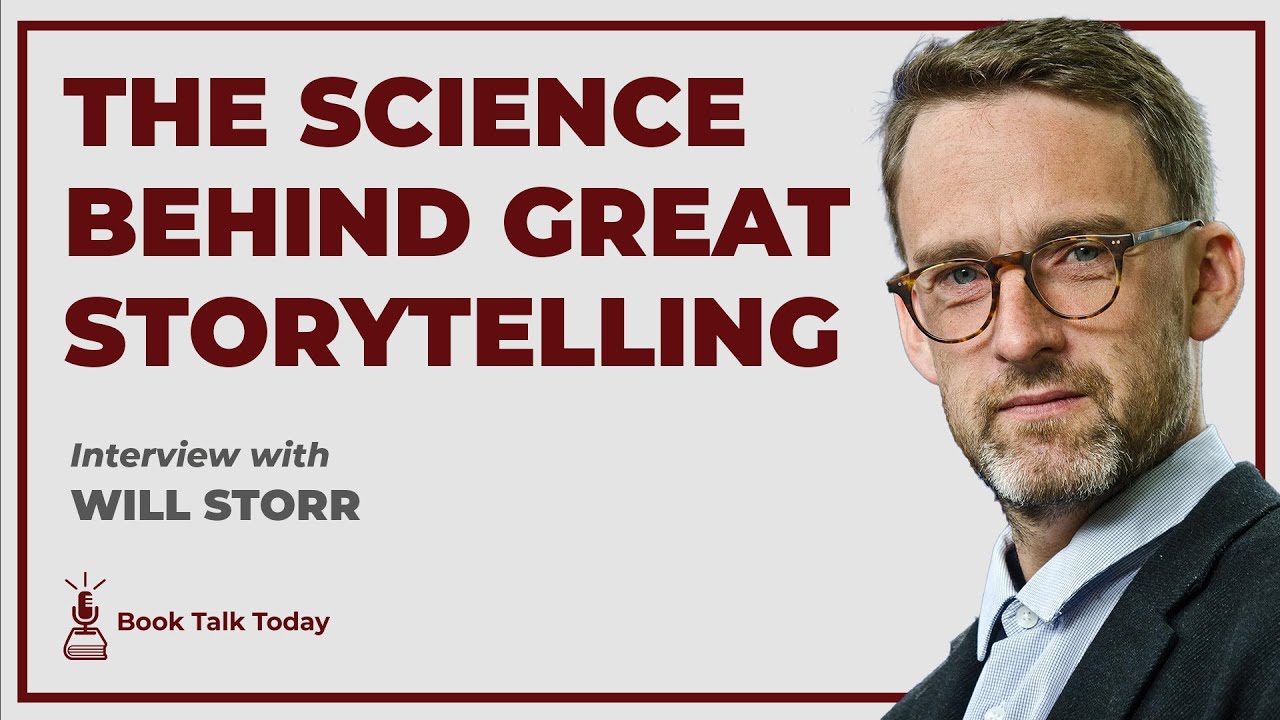
The Status Game: On Social Position and How We Use It: Interview with Will Storr

In this Book Talk Today interview, author Will Storr explains the central thesis of his new book The Status Game: humans are driven by two primal needs – connection and status. He argues that our conscious narratives are stories that mask the underlying reality of seeking status, which is pursued through two prestige games – virtue (moral, altruistic behavior) and success (competence, achievement) – and a third, coercive path of dominance. Storr traces the evolution of these games from tribal societies to modern institutions, illustrating them with historical examples such as the Nazis, Soviet communists, and religious cults, as well as contemporary phenomena like incel violence, anti‑vaccine groups, and social‑media dynamics. He describes how belief systems serve as gateways into status games, how groups manipulate rewards to retain members, and why people cling to irrational beliefs when those beliefs provide status. The conversation also covers the addictive nature of status on platforms like Twitter, likening it to a slot‑machine, and offers practical advice: maintain a hierarchy of status games, avoid over‑investing in a single game, and be wary of moral self‑elevation that fuels online antagonism. Storr concludes with recommendations for readers to diversify their status sources and to monitor the balance between judging others morally and improving one’s own moral conduct.
Chapters
You're listening to the Book Talk Today podcast, a podcast that inspires readers to obtain valuable insights to inform, educate, and improve lives. My name is Orhan Abdi. I'm an avid reader best known for the creation of the One Minute Book Review community, and I'm sitting down with authors to delve deeper into the books they have written to uncover the story behind the story. Hello everyone and welcome to another episode of the Book Talk Today podcast. Today we are welcoming back on the podcast Will Storr. Will is an award-winning writer and one of my personal favorites. He is the author of 5 acclaimed books including The Heretics, Selfie, and The Science of Storytelling. And today we'll be discussing his new book, The Status Game, on social position and how we use it. Will, it's a pleasure to have you back on.
Yeah, it's a pleasure to be back on. Thanks, Aaron. How you doing?
I'm very well, thank you. It's like we were mentioning, like I mentioned before we started, it feels like yesterday that we were speaking about your book, The Science of Storytelling, and it's so nice to have you back on to discuss your new book. And I think that the running theme throughout your last couple of books— I've read all of them now bar the supernatural one, so I need to get around to the supernatural one, but I've read all of them. from there. And it seems to be status to be a running theme throughout the last couple. And I think it's an interesting topic and it seemed like the right book to be next given the theme. So just speak about your research around status and why you think that the topic is really interesting in relation to human behavior.
Yeah, I think it's interesting because it's a fundamental kind of basic human driver. The way that we evolved as tribal animals is that we, you know, in order to function in the tribe, we have to have these kind of 2 drives. One is connection. We always want to feel, want to be connected to other people. But once we're connected, we don't, we're not really happy to kind of flap about on the lower rungs of the group. You know, we like to kind of rise, you know, we like to rise and sort of earn the esteem of the people that we're in the group with. And, you know, that's such a fundamental basic thing. Once you start seeing Seeing the world in terms of connection and status, you just see it everywhere. It's, you know, it's how humans do life. It's, you know, it's, it's sport, it's industry, it's politics, it's social media, you know, it's such a huge thing. So yeah, I thought it was about, you know, it's definitely a ripe subject for a book.
Where do you think the relationship is then between the storytelling aspects? I think at the beginning of the book you talk about the relationship between storytelling and status. Like, where is the relationship between the two?
So the way I see it is that, I mean, as everybody knows, that there are kind of two— there are two parts to our mind. There's the conscious and the subconscious. And our conscious experience of our lives in the world is a kind of radically simplified and very biased kind of tweaked thing. And it takes the form of a story. So, you know, the brain reorders reality in such a way that we're at the center of it. and everybody else is like supporting cast of characters, and our lives are these plots, you know, these fantastically interesting to us journeys that we're on to make our life better or the world better, or, you know, that's it. So, so the conscious experience takes the, um, takes the form of a story, and, you know, that's what I've been writing about for the last couple of books at least. But then that sort of begs the question, okay, if that's, if that's the illusion, what's the reality? What's actually the truth of of what we're up to. And as I said, you know, I think the truth is it's connection and status. We tell all these very flattering stories about why we do what we do, but it's very hard to kind of avoid the reality that most, a lot of what we do has status benefits attached to it that we often like to deny and think, oh, well, the real reason is because I'm just wonderful. But of course, even that, I'm wonderful, is a status claim.
Yeah.
You can't, I mean, you can't, It's so embedded in human life. You can't kind of separate anything out from it. You know, even the, you know, the most people that we would consider most selfless and wonderful and holy, they're famous, you know, and that's how we treat them. We raise them in status, you know, Mother Teresa and, uh, and, uh, you know, Gandhi and, um, uh, the Dalai Lama are superstars, you know, they're moral celebrities. Yeah.
Yeah. I know you talked about that as well in the book, and that was something that I thought as well, which was very interesting because obviously I come from a religious background. So when I think of status, I think of obviously religious speakers, and you reference some in the book as well. You talked about them, and I always thought that that is somewhat of a dichotomy sometimes when in religion specifically, specifically you almost think as the humble speaker, the humble person in front of God, yet individuals see themselves as somewhat Um, I, I almost think of like the Christian far right in the Deep South when they have these preachers and they stand up on stage and they do all this stuff. They, they are portraying that image of status. It's not just about, you know, that humble religious person. They want to get to the top of, of their, of their group or their clan.
Yeah, and it's, you know, and it's a deeply kind of subconscious thing as well, you know. But as you say, it's so embedded in, in— it's so embedded in the way humans experience life. That, that, you know, it just happens almost automatically. Well, not even almost, it happens automatically. So a religious person will claim to be humble and will begin saying things that other people find useful and interesting and gather around them and start raising them in status and deferring to them and offering them gifts. And, you know, especially, you know, I come from a Christian background and, and you see the, you know, the Catholic background and you see the status rewards that historically have been offered And even say popes and bishops and, you know, they could, I think, is it bishops or cardinals are called Your Grace, Your Grace, you know, it's so, uh, it's the status there is so, um, it's not even hiding itself when you're, when they're wearing their big golden hats and, you know, insisting on being referred to as Your Grace, you know. Yeah.
The guards. Yeah.
It's just what we do. It's, you know, it's easier to laugh at it, But it is just what people do. It's how humans organize existence. So, so yeah, the status game, these games we play for status, are— it defines human life.
So can you just talk about then the origins of some of the status games that we play? I know in, in the book you talk about like 2 prestige games, so virtue and success, and how they're, they're related to these games that we play with one another, and how that transferred from tribal elements of, of games, and, and how they were ranked in hierarchies, specifically in tribes, and how that moved to like more urban games where it came more about whether it be like we've seen religion or, you know, wealth. You know, there's different games that we can play, but in relation to the 2 prestige games of virtue and success specifically.
Yeah, so, so, so you've got to sort of understand, you know, where it all comes from. And as I said before, it comes from the fact that humans are apes who have worked out the secrets of working together, of cooperation. So some people, you know, Jonathan Haidt, who I know you're very familiar with, in Happiness Hypothesis he says that humans are part ape, part bee, you know, which is a really good way of thinking about it. We're so social, we're hyper-social apes. And so you've got to look at the mechanisms of how that sociality kind of works. You know, we have language unlike other apes, so we can, you know, we're really good at cooperation. But the cooperation happens, you in groups, in the form of groups. So we are driven to, you know, back in the day when we were evolving and this circuitry was evolving, we were driven to seek this connection and status. And the connection is about feeling accepted by the group, feeling, you know, that the people they want to cooperate with, and you're a cooperative person. But the status is about you know, how useful you are. So, you know, nature worked out— sort of evolution worked out for us this system whereby we'd be rewarded if we showed ourselves to be useful to the group. And there are 2 ways of being useful to the group, to the tribe. And the first way is by being virtuous, by being moral. So that can take the form of being generous with the stuff that you've picked or, you know, the prey that you've killed. It can be that you're very good at enforcing the rules or even following the rules of the tribe. You know, taking part in the rituals. It can be that you're courageous in fights and in, you know, in battle. It can be, you know, so being virtuous is one whole set of ways that we could earn status. So it defines all these games that we can play. And the other set of games is about competence. It's about being useful, you know, being a really talented hunter, a really talented sorcerer, or a honey finder, or, you know, all these myriad ways that you could actually be useful by being skillful at something. So that kind of defines 2 ways in the tribe that you could become prestigious: virtue and success. And, you know, it's no different today. If you look at the superstars of today, they're either there because they're virtuous, they're, you know, either religious superstars or political superstars, or, you know, in a way, royal groups, royal families play a virtue game. It's all about deference and conformity and all that. They're not good at anything, the royal family, are they? It's just all about deference and conformity and ritual. Or you can be successful. And I, you know, and in the book I argue that that's what defines the modern era, is that we worked out, is that for kind of generations and generations we were just playing mostly virtue games. It was mostly to do with deference to religion or royalty or, you know, local groups. And then, you know, post-Industrial Revolution, the success games took over, first in the West and increasingly around the world, and we started awarding status much more for competence. And, you know, that's a really fantastic thing. And I think that the main thing that I think about the virtue games is that it's easy to be cynical and it sounds like what I'm saying is, oh, well, people are so stupid. They say that they're being good, but all it is, they're just trying to boost themselves. But I think that's the wrong way of looking at it. And that comes from a place that we're used to being suspicious of staters. You know, really, you know, I came to sort of think that actually it's amazing that we evolved a system for rewarding other people for being virtuous, because that makes us virtuous, you know. So that makes us altruistic and generous and empathetic. And, you know, and so all of the good things that we think about, you know, we think about when we think about humans at their best, it's there. It's kind of powered by the status game. And that's, as you said, I think that's an incredible thing that we've evolved this. Yeah. System that we, that we're rewarded for being good like that. It's like Santa, Santa, you know, it's like a Santa Claus kind of thing where if you're good, you get, you get, you get prizes. And you do, you know, you do, you know, people love you when you're selfless and courageous.
I think in relation to success, I think it makes sense because competence— maybe it's obviously a, a certain way of thinking, it's a recent way of thinking in terms of competence being the, the way that you define status, but I think virtue or seeing virtue as a way of, of giving status is interesting because when you give virtue to someone, you're automatically putting yourself lower on the status pole. You're basically putting someone else higher and you're saying, look, I applaud you for being this because you're this virtue, but then it sort of puts you down the level at the same time. Or do you feel like it rises you up because you're attaching yourself to that person? Where do you think that relationship is?
Um, I, I don't— yeah, I don't think so. So that's one of the interesting kind of nuances, um, uh, about this. It is certainly true that when you know, somebody else is conspicuously celebrated, that relatively speaking we might move down a little bit. But I think, you know, the kind of healthiest status games are the ones that are small and the status is kind of more freely awarded. You know, if everybody is kind of awarding status relatively freely to everybody else, that's a really healthy group. Not all groups are like that. You know, when they become very when the hierarchy becomes very steep. You know, in the book I talk about organizations like Enron in which— so Enron had a— well, one of these companies that had what they called a rank and yank system where every employee was ranked in the top, I don't know, like 15% were amazing. And at the top, the bottom were at risk of being fired. So that creates this environment in which everybody is just in a fucking panic and just like, you know—
Terrified.
Terrified of being in that bottom 15%. But it doesn't have to be like that, you know. And as I say, I think you could have a very— and you do, you can have very healthy, optimistic, positive groups where people freely award status to one another without feeling that they're doing themselves down. I don't think that's necessarily true. I think, you know, I think in unhealthy groups that's true, but in healthy groups it isn't necessarily true.
You mean, you think it's more of a relationship between status? It's more of a conformity thing? in the sense of cooperation. So cooperation and status go hand in hand. You can't have an active, um, cooperative tribe and, and, uh, and not have status being freely awarded.
No. Well, I mean, you can, because there's a third way of, um, of earning status, as you'll know from the book. And, and the third way is, is unpleasant, and that's dominance. So, so, so, you know, um, Dominance is forcing status from people. So the thing about the 2 prestige games of virtue and success is people offer you that status. You know, you show yourself to be useful and people go, ah, you're great, I love that you did that, and they think more of you. And you go, ah, and that feels really good. And that's how that works. But dominance is the much more animalistic way. It's either physical force or the threat of force, the threat of reputation destruction or physical threat. And I think in, you know, in kind of tighter games like Enron, you know, these companies like that, or more radical religions or cults, there's always that threat of force. There's that dominance going on as well, where if you don't conform, Um, you'll be punished. So, so, so, so that's when, that's when things get really unpleasant. And of course, you know, I talk about that a lot in the book as well, about how dominance, um, uh, is this kind of part of human nature that is the, you know, that is unimaginably ancient. You know, it's, it's millions of years older than the prestige games, and, and it's an ineradicable part of us as well.
Yeah, the interesting thing is you reference a lot of different examples of that. In the book, whether it was Russia, Germany. Um, you, you also reference different sort of genocides, and I thought it was very interesting reading it because this idea of— in the book you say toxic morality, so in reference to genocide being like highly moralistic. Because when you think of genocide, you don't think of those people being moral, you just think of those people being evil, and they do their deeds because they are sort of satanic in their thoughts. But once you sort of dig down a bit, you start to understand that they believe what they're doing is right for themselves and the way they perceive the world. So it's very interesting because those dominance virtue games are carried out with justice and fairness, but obviously from an outlook— an outlooker, they'd think, how, how is that, how is that fairness, or how is that virtue in, in their actions?
Yeah, well, yeah, so, so every— each status game has its own internal set of rules. That, you know, part of connection is when you connect into a status game, whether it's a corporation or a religion or whatever it is, you kind of accept its rules of play, its ideas of what's true. And, you know, those rules and beliefs about— they'll generally be that your group, your game is better than your rivals, you deserve the status that you've got and your rivals don't. And, you know, and belief belief is a kind of prerequisite for connection. And that's why people can become so irrational. You know, I talk in the book about, you know, anti-vax beliefs and about how, you know, belief in that vaccines are harmful is a kind of prerequisite for kind of connection into those games. And so, you know, and I think that's where humans are at their most irrational. It's because, you know, there are certain classes of belief that nobody really argues about, like the length of the Mississippi River or whatever, or what boiling point is. But then there are other classes of belief that people argue endlessly about, and those classes of belief are the ones that people plug their sense of status into. You know, it's their identity as a person, it's connected to that belief. And so those are the beliefs that we kind of fight over. And I think what people don't realize when you're looking at these groups is that they sincerely believe them. You know, that's the ghost book that I wrote when I was in my 20s, and that was one of my big takeaways from hanging out with people who believe in ghosts, is that they're not making it up. Like, you know, they really believe it. And a few of them don't. A few of them are like quite cynical and they're doing it to make money. You know, they're saying, I'm a medium and I'm in touch with the dead. These people are so obvious. It's so obvious to spot the cynical ones because they're completely inconsistent. But most people actually believe it. And that's the thing about these anti-vaxxers, they really, really believe it. And I think that's one of the sort of big weak spots in human cognition is that it's much more important to our kind of subconscious minds that we accept the beliefs of our groups than it is that we actually understand what truth is. Doesn't really give a shit about what's true. What matters is that we earn connection and status, and if that means believing that vaccines are full of poison, then that's what you're going to believe. And you know, and that's why we see so many yes. And so you know, and that expands out to things like you know to to the most kind of extreme degrees in genocide. You know, people who commit genocides genuinely believe that their group is correct and right, and the group that they're kind of punishing. has unfairly challenged them and they need putting in their place. And it's this kind of awful, kind of moral theater that they engage in. So the Nazis, you know, believed that they were morally correct in doing what they were doing. They told a story in which the Jews were responsible for everything that was wrong with— that happened to them, and that they could only progress into the future if that problem was Finally solved.
Yeah, it was also the idea that every single time something didn't go according to plan, they sort of reworked the story to fit what they were looking for, which I thought was very interesting. Is things happened— like, one of the, one of the best stories and one of the funniest stories in the book I found was the way you talked about the human individual metamorphosis. I was reading that and I was laughing about the whole thing because I thought it was such a great example And the interesting thing that, that, that came from that story, I think it'd be good to talk about that a bit, but it was the interesting thing how low-status players invent fictitious games to make them appear to be high status. So perhaps you can talk about that in relation to the human individual metamorphosis, because I thought that was a great example and a great story.
We need connection and status like we need food and water. They're, you know, for our psychology, they are absolutely Essentials, and we will look to find them anywhere. And so, you know, when people are scratching their heads wondering why, you know, young men in low socioeconomic groups join radical religions or street gangs, that's the answer. Because they want status, and they're going to go to the place where it's on offer and believe what they want, what they're supposed to believe, and act how they want to act. And it's also the truth of cults. And what's really interesting about cults is that the kinds of people that are attracted cults are the kinds of people who have been rejected by the conventional games of everyday life. They can't get along in work, they can't get along in conventional religions, they're just alienated, alienated, and alienated. And they get to this stage of kind of desperation of thinking, well, I, you know, I just want— you just want connection and status. And one of the things that cults does is it offers an extremely precise way of doing it. Cults say basically I'm going to tell you exactly what to do and exactly who you need to be. And if you follow these rules precisely, you will, you know, gain incredible status. And, you know, and that's what cults do. They offer unbelievable, like, stupid rewards. And so in the case of Human Individual Metamorphosis, which is the '70s cult that I write about, it was literally that you're going to graduate to the level above human. So you're going to become superhuman, literally, and UFOs are going to come down and we're going to lead you on these UFOs. We're going to leave the Earth and that's what's going to happen. So, and they believed this. And so, you know, you join the cult and, you know, the level of precision was insane. You know, like to the— they would specify things like how much toothpaste you're allowed to put on your toothpaste. your toothbrush. Your vitamins had to be taken at 7:22 every day. Scrambled eggs had to be cooked until they were completely dry but not burnt. Like everything, they had these huge rule books which would define the most precise codes of behavior. Any individual— So one of the most striking qualities of cults is that they insist they're the only status game you're allowed to play. play. So that's why they ask you to cut yourself off from family, friends. They don't like you to get outside employment because your only source of status and connection can be the cult, and that's it. Yeah, you know, things like freedom of thought is banned. You know, you're not allowed to gossip, daydream. There was this kind of practice they did of holding up a— they called it a blank card to thought. So if one of the cult leaders said something that you didn't think was true, Before you even had the thought, that's not true, you'd stop the thought, you'd halt it so that you always believed what you were told to believe. And you got used to doing this. And this poor bastard who wrote this memoir that I kind of use as my main source for the book, you know, one of the things that was banned was sexual thought. You weren't allowed to have any sexual thought or practice. You weren't allowed to obviously masturbate. to the extent that you had to sleep with your hands above your waist at night in case you kind of did a, I don't know, a sleep wank or something.
I don't know what.
Yeah. And so, so he, you know, so he really struggled with this. And to the extent that, that when it— when the cult leader said, look, um, somebody, one of the members of the cult used to be a, a doctor's assistant and the doctor used to do, um, testicle removal. And she's just like, well, I reckon I can do that because I saw it, I saw it happen. And so they were like, okay, well, why don't we just have everyone, like all the men, they can have their nuts taken out. So that's what they did. And this guy was like, yeah, brilliant, you know, because if I have my nuts taken out, I won't have any sexual thoughts anymore. So they were going to do one as a tester and they kind of flipped a coin and he lost the coin toss. He's very annoyed. And his kind of rival had his balls taken out, but it didn't work. And he's nutsack swelled to the size of a basketball, and they had to be taken to hospital. And one of the things they did was, so they didn't get in trouble, in the room where they did the operation, they put a sign on the room saying Mexico, so they could honestly— they could say without lying to the, the, the people in the hospital, what hap— where did this happen? And they could say Mexico. He went to Mexico to get it done. Anyway, so the guy was healed, and, and he was all sorted out. And, and the, the guy, um, who was— became very jealous, and he wished he'd, um, had his, his nuts removed. Um, but anyway, he ended up just giving up, and he, he, he, the, the sexual kind of urge was so strong in him that he couldn't resist. And he ended up just saying, look, you know, he, he would say that he was so bottled up that, that he would just have spontaneous orgasms. So he ended up leaving the cult and was very upset when he found out that they, that they found a way of actually going to real Mexico and having this operation. And lots of the cult members had their testicles removed. And then they ended up voluntarily killing themselves because they thought that they were going to go to heaven to do this. Anyway, the point of all this is that we get it wrong when we think about cults traditionally. Like we get it wrong when we think about religion and genocide. We think, well, we think in terms of the story. And the story is always about heroes and villains. And people who commit genocide, they're just like, they're monsters. And people who join cults are brainwashed. And they're not monsters and they're not brainwashed. They're just people doing what brains are designed to do, and that's seeking connection and status. And, you know, the really interesting thing about Human Individual Metamorphosis, like all cults, is that they weren't forced or coerced to do anything. They were all there voluntarily. And the way he described it was like, it's like you say you want to be an astronaut, but I'm not going to follow the rules of NASA. It's like, it's crazy. We wanted to be in the cult. We wanted to ascend to the level above human. So we wanted to do everything that was told of us. And so, you know, and I think cults are really interesting because if you're thinking about it in terms of the status game, they're the purest status games there are, you know.
Mm-hmm.
And, you know, what happens when you think about human groups in terms of religions, corporations, sports teams. They're just cults, but they're looser and looser and looser and less and less conformist. Um, and, you know, and as you get— the further you get away from the cult, the healthier that status game becomes.
Yeah.
Yeah, that's it. Yeah, yeah, yeah, totally. And, and, and that's part of how the, the cult has their power, because, you know, you know, status is this fundamental human need. And, and if the only place you're getting your status is from the cult, then, then the threat of expulsion is, is a genuine catastrophic, um, threat. You know, one of the examples that I talk about this is during the Soviet Union. Um, and these poor people who completely signed onto the communist, you know, status game, um, who were then denounced for having done nothing. There was, they were just absolutely baffled by this because, because they completely bought the idea that the Communist Party were always right. And it was logically impossible for them to make a mistake. But, and they were completely loyal. But also the Communist Party was saying that they had been disloyal somehow. So they were just sort of in this mad state of, I must've done something, but I don't know what I've done. So, and so anyway, a lot of them end up confessing that they've done these terrible, you know, anti-party, anti-communist kind of acts, you know, betraying the revolution for various reasons. And, you know, it's a terrible situation, but it was almost easy for the people who really didn't like the Communist Party and hadn't bought into that game, who did have a bit of a guilty conscience, but the ones who didn't were just absolutely baffled. So yeah, again, people really believe this stuff. And it's hard to imagine when you're looking outside in. There's a sort of a common idea that Nobody was really communist. It was, it was just sort of forced upon them, but millions of people completely believed, um, you know, in the ideals of communism. Growing up, I was always fascinated by the experience of East Germany, of East Germany, who, you know, for the, for decades in the first half of the 20th century were Nazis, and then they flipped and became communists. And, you know, like, these are the same people. The people lived through both of those things, and lots of those people Like a huge number of those people believed in both of those ideas. They just flipped. And, and, you know, how can that be? Well, the reason— the answer is because brains are programmed to seek connection and status. And if you're— if the rewards are there, people will generally— generally pretty good at, at, you know, joining those games.
Yeah, in the book you gave a great example talking about the Germans in relation to the status game and the rewards, because I wasn't aware of how much rewards that they got actually to be part of the party and You get it, you just get so much. It was like benefits, like when you get to, when you apply for a job and you have a look at what the benefits have, like you get a car, you get health insurance, you get access to a gym membership. It's like, there's like this huge list of things you get if you join the Communist Party in Germany. I feel like the same thing when you're looking at a job and you can see, you know, they had hyperinflation, they had, you know, people were starving. So obviously, of course they would join the party because it's just, it was the sensible thing to do. Obviously, if you have a family that you have to look after as well and you've got immediate needs, of course you'd join.
That's right. And, you know, and it's the same. I mean, it's the same with the communists, you know, but, you know, the communists weren't particularly popular when they rose to power. The Nazis famously had less than 50% of the vote, but both, both of those groups earned, you know, general acceptance. And they did it because, you know, they offered status to people who bought onto it and they gave it to, you know, it worked. The Nazis were especially surprising to me when I, when I did the research on that because again, you know, when we're growing up, especially in the UK, we're sold the story of the Nazis and that's that Hitler was this monster and, you know, he somehow kind of hypnotized the Germans with his power of his oratory into believing monstrous things. And, you know, and this is obviously not true that Hitler was a monster because, you know, monsters fantasy. It's not actually real. And, you know, someone's speeches, oratory, can't, you know, you can't flip somebody from being normal into a Nazi with a speech. It doesn't work like that, you know. So, but what the story rejects and what the story seldom admits is that the Nazi Party offered major status and they supplied it too. You know, they really did. You know, under, you know, during the kind of Hitler's leadership, the economy completely turned around. But there was huge benefits to joining the Nazi Party. They were even putting on things like cruises, holidays, operas, you know, gave away theater tickets. There was these huge winter aid drives looking after the, you know, the needy. They had, there was sort of enormous, you know, far-sighted health and safety programmes. The Nazis were the first people to definitively find the link between lung cancer and smoking, and they were like a big anti-smoking programme. They innovated with things like the motorway system, you know, 35,000 people employed on that. So, you know, they didn't just walk the walk like Donald Trump. They actually they actually did what they said, they said they were going to do. They turned around.
Yeah.
They turned Germany around. And, um, at the time it was the Treaty of Versailles that was, there was this huge source of national humiliation for, for Germany. And he just smashed it to pieces. He just defied it, um, with, uh, with, with no apparent consequence from the West. And then that's why people went crazy for him is because people want status. And when the Nazis came to power, Germany had been completely humiliated. They were the most successful company in— country in continental Europe, perhaps all of Europe easily, before the First World War. They'd been completely humiliated again and again and again. And he turned it around in a matter of years. And that's why people went nuts for him, because he and his party gave them status on a massive level. So, and that's, and so that to me is a far more, um, uh, uh, believable explanation than that he was just this like monster that came along and hypnotized people with his magic eyes. You know, that's the story that we're brought up with and it's kind of, it's kind of nuts.
Yeah, it is kind of nuts.
I'm exaggerating a bit. It's not really, you know, it's not the whole story, but that is it. You know, people scratch their heads over how did it happen and, and, and, you know, the rise of the Nazis. How can we make sense of it? But when you understand the need for status, it's perfectly explicable.
It's also interesting in the fact that there's a lot of people talking about how Hitler was actually quite organized in the sense that to create a system like the Nazi system, you have to be incredibly organized. And he's not just an evil person doing evil things. He had this specific system, you know, specific vision of an Aryan race, and he put it into action. There was a system there. So there's there's some sect of people that believe that he actually was quite an organized individual. I'm clearly saying that obviously I'm not a supporter of his, but it's just interesting to view it from history to sense that he wasn't just evil for the sake of being evil. There was something there that was a bit deeper in the sense of, like you said, status and creating a race of individuals that had status.
Yeah, absolutely. And this idea of evil for the sake of being evil, that's the cartoon. That's That's the story. And there are people like that called psychopaths, you know, but Hitler wasn't a psychopath. He was a politician who his brain told this story about the world that was kind of fantasy about the source of Germany's humiliation, their lack of status. And it was a story that lots of Germans believed, and it's a story that he kind of sold to lots of Germans who didn't previously believe it. But we, you know, we all do this to a certain extent. You know, I do this, I'm sure you do this. It's human nature. When we feel that our status, our sense of status, has been unfairly diminished by another group, we weave these very toxic stories about that group, you know, very easily.
Yeah.
You know, um, that, and that's, that's, you've only got to look at Twitter and see, that's what Twitter is. It's full of people telling stories, um, that, that, that, that, that, that, that turns the person challenging their sense of status into a monster, into an evil demon, into a Hitler kind of character. And, and all that's really going on are these rival groups, you know, competing for status and, and, and, and, and, you know, and the story is, is what causes the damage. I mean, we, we— one of the, one of the sort of the big kind of light bulb moments for me in the book was, was when I was doing the research on, on the incel culture.
Yeah.
And, um, Elliot Rogers, the spree killer, um, whose, whose story I go into in some depth in an early chapter. Because, yeah, it happened to him and it happens to a lot of these, um, spree killers. You know, the, the guy in Plymouth recently, he seemed, from looking at his YouTube videos, it seemed He was a per— you know, it's full of status. People are up here and I'm down here. It's not fair. You know, whenever you see up and down, that's the status game. And Elliot Rogers was a classic case in point. And he was unusual because he left behind this 108,000-word autobiography, which was this really gruesome, but, you know, quite gripping memoir of his descent into depravity. He was, you know, at the one sort of point, a very narcissistic individual, but also brutally honest about himself, um, you know, spared no shame. And, and, um, but you see the madness that he fell into. He, he, he was, he was a person who was, who was certainly narcissistic. He thought he was wonderful and beautiful and gorgeous and sophisticated and all this stuff. But he, but he was routinely and regularly rejected by everyone, including young women. And in when he became adolescent, and this became a source of extreme distress to him, and he became kind of obsessed with this. You know, there's evidence that he was autistic, and I think this might have been— he's potentially been some— unfortunately, something he became very obsessed about, about why women don't find me attractive when I'm so beautiful. Um, and but his brain told this, like, extraordinarily terrible story about, um, that kind of turned his lack of status into the opposite, in which he was actually a chosen individual. And the story was essentially that women are responsible for everything wrong in the world because they, they always choose the stupid, thick, aggressive jock types to mate with. And so they have aggressive jock children, and aggressive jocks rule the world, and sophisticated, gorgeous men like me you know, left on the shelf. So that's what he decided, and that was his rationalization for his hatred towards women and, you know, jock-type men. And then he decided that this big insight was a sign of his greatness, and actually the future that he wanted, that he thought he wanted to happen, was in which he was in charge and that sex would be completely abolished. And women, most women would just be killed. They'd be just, you know, wiped out. And there would be a few women left that would be artificially inseminated in laboratories. And that's how the human race would keep going. Um, and you know, you listen to that and you think, well, this guy's obviously very mentally ill. That is about— That is about as misogynist as it's possible to get. And it's just the most grotesque, insane, extreme thing. to think. But then you look at the Nazis and you think, but that is exactly what the Nazis ended up thinking about the Jews, and they did it. They started wiping them out. So, so how crazy is Elliot Rodger? Uh, and, and, and, and, and how— and, you know, in, in the sense that he was an outlier. Uh, but why? I don't think— I don't think he— I mean, I think he was an outlier in the sense that he was, he, he, he, he was very narcissistic and, you know, possibly had this kind of slightly autistic obsession with pretty girls, and that makes him an outlier. But in terms of the fact that his brain was telling a convenient story which justified his lack of status and kind of turned toxic and turned into monsters his aggressors, I think that's human nature. It's human nature at its very worst, but it's human nature.
You see it everywhere all the time, just not The interesting thing in regards to what happened in Portsmouth the other week, because actually that was one of the things I wanted to mention, so thank you for bringing that up, was you mentioned this quote in the book and I thought it was a— I think it's an African proverb, trying to remember. I've noted it down somewhere and I want to get it right. The child who is not embraced by the village will burn it down to feel its warmth. And I thought it was a very chilling African proverb.
Yes.
Because I thought it was in relation to what happens with with incels, I thought, is the case. It's yours. You have told yourself this story. You have this lack of status. You've convinced yourself of this story that the world or the village is, is against you, and there's no way that you can be part of the village and be part of the society at large. And you've told yourself this story. You confine yourself to your basement and to your home, and you don't go out into the world, and you make up these grandeur of how you're better than everyone else Because you don't put yourself in those situations, and then the only thing left is just to see the world burn because that's the only way to have your perceived higher status. And I think it's a because I was trying to explain this to my mum because my mum and my brother had never heard of incels before that what happened in Portsmouth, and I had to try and explain to them what an incel was. The first thing was like, how do you know these things? And I'm like, I read a lot. This is just what I do. I read about incels in my spare time because. I'm just cool like that. But it's just, it's interesting because it's not, it's not as, it's not as simple as just saying that he was evil in the sense of he just wanted to go and go on a shooting spree. There is something a lot deeper and darker going on with those individuals in relation to status.
Yeah, that's right. You know, and in the book I basically write that the most dangerous people are kind of grandiose narcissistic people who have their status removed. Because if you're grandiose, if you're, you know, if you're on that narcissistic kind of spectrum, you feel completely entitled to a certain level of status, a high level of status, and you won't be able to cope with somebody disrespecting you or taking it down. So you're gonna, you're gonna respond, you know, very badly. And if you're male, it's even more dangerous because it massively heightens the chances that you're going to respond with physical violence. But, you know, women don't get off the hook either. You know, females use dominance too, but it's much more likely to be reputation destruction, you know, removing your prestige, removing, you know, any of your sources of prestige. And of course, we see that, that kind of defines this kind of dominance practice on social media. It's not physical violence on social media, it's reputational violence. And men and women are equally, you know, likely to engage in that kind of destruction.
And do you feel like it's becoming specifically more pernicious in the fact that you can never leave that group, especially online? Like, you're always tapped into that group, into that Reddit, into that subreddit, into that Twitter feed. Do you feel like it becomes even more pernicious because you can basically never leave it day in, day out?
Well, I think it becomes addictive because, um, I think it becomes pernicious when those groups become a significant source of status for you. And one of the stories I tell in the book is this young woman, Miranda Dinder, who was 18 years old, um, pregnant. All her friends were at college, so she's quite isolated. Um, and she had the misfortune to hire a midwife who encouraged her not to vaccinate 18-year-old kid. And she was like, what? That's mad. Um, what's all that about? And she sort of was researching it and, you know, joined this Facebook group and found that very quickly that, you know, she, she was vulnerable to that group because she was 18 years old and she was raised in a family of women and she loved, you know, she was attracted to strong, powerful women, um, in general. And this is what she found in this group.
And she—
so, so she immediately wanted to be like them. Um, you know, and, and she was encouraged and rewarded for, um, uh, you know, adopting their beliefs. And then once she'd adopted their beliefs, going out into the world to evangelize to friends and family and her doctor about how awful vaccines were. And, you know, and, and, and I think for, you know, for lots of people, um, you know, for people like Miranda, that can easily become your main source of status. I mean, if you don't feel like a particular statusful person in your everyday life, um, then it's very easy for social media to provide a source of status for you. That's, you know, look at the QAnon people. I mean, you know, on the day that they were invading the White House, they all felt like they were like Tom Cruise at the climax of an action-adventure movie. You know, they would have felt massively statusful. We're saving the world. You know, we're here, you know, we're taking the fight to the baddies. So they would have all felt massively statusful. And, you know, and so that's the drug, you know, that's the drug. And that's why it's hard to let go not only of the groups but, but of their beliefs, because letting go of the belief is letting go of our sense of status, which is incredibly important to us.
Is that why change is so difficult in relation to those groups, or leaving a group like that? Because your identity is so intertwined?
Yeah, that— I think that is right. Yeah, yeah, that is right. And I think the answer is, you know, that I think the best way of tackling those kinds of issues is giving people a way out that also includes, you know, a kind of alternative form of status. So for Miranda Dinder, what got her out of that was that she also had this idea, this other identity as somebody that loved science. And she was a big science nerd and she said she used to read science textbooks for fun when she was a kid. And so that was another sort, that was another kind of identity, kind of status identity that she had. She was in the game of science nerds and she started noticing in these forums that some of these people were saying stuff that was so obviously not true, like people are only gay because of vaccines. And that was what she's like, that's obviously not true. And so she had this, and when she started started to suspect that it was anti-scientific or it was dressed up as pro-scientific, the anti-vaccine thing. But these other claims started to kind of destroy that for her.
Yeah.
And I think if she didn't have this rival identity, she would have stayed stuck in that group, but it began conflicting with this other identity she had. So yeah, I think that's why diminishing people who belong to these groups always a mistake. You know, calling them stupid, um, it's just gonna make them dig in and defend themselves.
Yeah, you quote in the book actually, people who appear brainwashed have invested too much of their identity into a single game. So I think what you just said is in relation to that quote, is the fact that you need to play multiple games, because if one game seems to be not logical, it doesn't fit you anymore, you haven't invested your whole identity into it. similar to what we were saying earlier about the cult group, you know, it didn't fit into their— it didn't make sense anymore to them in the sense that one of the members died. So the whole idea of the UFO and being transformed into a higher being didn't work. So they just killed themselves because that was the only way for them to continue to play the game instead of going into another one.
Yeah, but yeah, that's right. And there's lots of— but I think more common is that there are ways that people, um, manage to update their beliefs in such a way that the general belief is protected. So, so what you'll find in lots of doomsday cults, um, is that, um, um, you know, people will say, oh, um, we know for a fact that the Earth is going to end on this day, and then the world doesn't end. So, so what do they do? They, they don't update their beliefs in the sense that they're wrong. They update their beliefs in the sense they say, oh, we've saved the world, you know, because if it wasn't for us, the world would have ended. Or they say, actually, it's on this other day, you know. So, yes, so there's lots of research. There's a book coming out just a week after mine called The Power of Us, which has similar subject matter. And that's got a very good section on how these doomsday cults, they don't, they don't, you know, let go of their beliefs. They just update them in a way that protects their identity.
Yeah.
So, and I think that the example that you gave is exactly right with the cult. That's what they did. And, you know, they said, oh well, the cult was led by this man and woman who called themselves T and Doe, and they were supposed to be both leading them onto the UFOs personally to go to the next level above human. And, um, And, um, one of them died of cancer, which kind of, which kind of went, you know, um, so, so yeah, so they updated their belief in such a way that actually you could, you could graduate dead. So let's just kill ourselves and we'll graduate. And they went, yeah, that's a great idea. And so that's what they did. They all, they all, um, they all did that. And the other thing I thought was fascinating about that was that, you know, you laugh, um, quite naturally at the human individual metamorphosis and this idea that they're going to be on the next level above human. But when you look at the, um, again, the Communists and the Nazis, the 2 big destructive movements of the 20th century, they had similar beliefs. You know, the Third Reich, uh, you know, the, the Nazis really believed that the Aryans were this super, you know, almost post-human race of, um, you know, humans, um, and, and the Third Reich was going to elevate them to even new heights. And that's exactly what, um, the Communists um, promised would be the result of world communism was that, was that, was that, you know, the general level of human would, would rise to the heights and we'd basically, everybody would be a genius. And, um, you know, so, so this is very common in, in these, in these status games which become very destructive is, is, is that, is that they work by promising like impossible levels of status. And that's the kind of a drug that, that, that, that pulls people in.
Yeah, it's a drug that keeps people going, keeps people motivated within the game. It's like a carrot in that sense because it keeps them within the system. You know, if they fail to deliver on that promise, then you lose people, don't you?
Yeah, you have to provide that status. And, you know, and that's what the Nazis did. You know, and again, the communists— what I thought was very interesting was that after After Stalin kind of went to war against the, you know, what he called the bourgeoisie, the intellectuals, and, and, you know, they were either killed or imprisoned or in the Gulag or, um, at the very least driven out of their jobs. He created millions of vacancies and all these kind of sort of slightly mediocre people ended up getting these great jobs. And suddenly, so, so, so, so what he created was this, was this incredibly loyal generation of people Who had been given university positions and, you know, positions in industry and the arts, which they didn't really deserve on the level of their competence. And so that's a massive motivating force to get you to believe in the communist idea, because it's like, wow, this probably, you know, like, you know, I'm a professor now. You know, I've only read 4 books. So yeah, you, you know, there's a that's a really good way of, uh, of getting people to sign on. If, if it genuinely, if they genuinely get status out of this, um, game that, that you're playing, um, then, um, then, then, you know, they're going to adopt your beliefs. I mean, one of my interests is in, I didn't write about it, never written about it before, but the Stasi I always found very interesting. And the Stasi in East Germany is another great example of that where, um, there's a really amazing book called Stasi Land by Anna Fundo. She went around meeting people that used to be in the Stasi. And so many of them, you know, really regretted the fall of the Berlin Wall and were, were, were kind of convinced that communism was going to come back and this is only a temporary thing. And they were still, you know, they were still completely bought that dream because the Stasi had offered them genuine status over other people and, and they didn't have it anymore. So they were in this kind of state of mourning, even though in all rational senses, you could see that Germany got so much better since, since unification, since the end of communism. You know, it's leading, it leads Europe again. Um, but, but, but they still, they still want the old days back because that's when they had their status.
Yeah. The same for me was when I, when I visited Iraq a couple of times, a lot of the individuals there wanted Saddam Hussein back. 'Cause when Saddam Hussein was there, they had status.
Wow.
They gave them power. They, They gave he gave money to certain types of people. They wanted that status back. They wanted the the the feeling of having him back. They wanted that level of solidity in the in the system. They wanted to have the money that they gave them specific. Obviously, it's not everyone, obviously. But there were certain types of people that need that level of yeah that access and and they feel bad. They don't care about the consequences for the individual. They obviously just care about their personal circumstances. But It is interesting how status plays such a way with the mind that you can forget about the crimes that an individual has committed just because of your own personal status in relation to other people.
Yeah, that's fascinating to hear you say that. Yeah, I mean, it's completely consistent, and, and you can see how easily the, the adoption of the kind of irrational beliefs comes very closely to that, because it's like, well, life was better when Saddam was here, and then actually, you know, he wasn't all bad because at least we had order then, at least the black fucking Americans weren't here telling us what to do.
Exactly.
And then, you know, and then it's just this— it's very easy to see how you end up being a defender of Saddam because, you know, as I've written in previous books, the brain is this kind of hero maker. It's, you know, if we've got a healthy brain, it's preoccupied with wanting to make us feel heroic. And if we, you know, and if you want Saddam back, but you're a good person, which is what people who aren't psychopaths think they are, then it means that you're going to have to find a way of believing that Saddam actually wasn't that bad, actually, if you think about it. You know, it's like in The Heretics when I, when I met these neo-Nazis who were— who ended up being Holocaust deniers. And so many of them, um, I found had parents who served as senior Nazis in the Second World War. And they were, they were wrestling with this belief that they, you know, that they loved their mums and dads, but, but, you know, Nazis are now synonymous for evil. So, so what does that mean? Well, it must mean— well, I know my dad was an amazing guy, so it must mean that all this is bullshit about the Holocaust. And that, you know, that's where they'd ended up getting to after a lifetime of, of, of rationalization. You know, they didn't want to feel less, less about themselves. They certainly didn't want to feel less about their parents.
No.
They wanted to feel proud of their parents. So they have to find a story to tell that, that, that supports that sense of pride.
Yeah, I found that absolutely fascinating because the, the cognitive dissonance there is very interesting for me because it's the idea that you believe that someone's inherently evil and you don't support them, but someone in your lineage or someone that you know supports them and you have an emotional attachment to them, and thus you create a story which protects them, which then basically makes you go down the road of re— rewriting history in a way that says, oh well, actually what they did was a good thing, or perhaps even go to the extent that it didn't happen, which is a whole other way of looking at history, saying, just denying it in, in, in general.
Yeah, yeah, yeah. As you say, they're literally rewriting history, you know, that's what they're doing. And, and then, and they latch on to people like David Irving, who, who has this kind of, you know, this kind of veneer of being some kind of a scholar because he used to be a highly regarded historian. So that's why they latch on to him, because he's telling us, just like the, um, the, you know, the Jussie Smollett and the, and the, the, the woman who claimed to have been gang raped in Esquire magazine. Um, I think it was Rolling Stone magazine, actually. I always get that wrong. It's Rolling Stone magazine. Um, you, you know, you, you, you latch on to people who tell stories that make you feel better about your, yeah, your, your, yourself and your beliefs and your group.
So where do we, where do we go here if we're playing the status game? Do we, do we exit the game? Do we subjugate ourselves to the rule of the game? Or is there any space to mediate and, and create our own? Do we have to, um, how do we manage the, the status game as, as individuals in this, uh, neo— neoliberal time? I know you gave a chapter to neoliberalism in the book, and I know you've done— you did the same in, uh, in Selfie as well. Um, it's a very interesting concept about how neoliberal self and status and status plays.
So where—
what do you want the individual reading this to take away and how they navigate the, the status game?
I suppose there's 2 big takeaways for me. The first one is to, is to, you know, this idea of, of making sure that you're playing a hierarchy of games, because you don't want to play just one game because then you're in a cult. You know, you don't want to be in a cult because, you know, if you, if all of your status connection depends on one game, it means that you're going to be massively incentivized to do everything they tell you and believe everything they tell you. But you also don't want to play loads of games equally because what you want is status. You want to feel, you know, if you feel like your life has meaning, you want to feel that you're of value to people, that people actually look to you and go, wow, you're pretty good. You know, whether that's a virtue thing or a competence And that takes effort, you know, that takes a bit of effort. So what you want to do is play a hierarchy of games where you've got, you know, one or two games that are really important to you and that you get, you know, a relatively good amount of status out of and you put time and effort into. And then a hierarchy of games kind of beneath that. So you've got this kind of shored-up kind of array of different games. Basically, don't be like me and be a writer and nothing else, because then you're really screwed. That's the first one. And the second one I think is just to be careful, just to be careful of your moral self, because morality is a game. And, you know, it's a really seductive game because it's a game that tells us that we are high status. You know, it's believed that the strongest bias, you know, we have in our, you know, irrational kind of belief we have in our brain is of our own moral status. We like to, you know, we're very good at, um, fooling ourselves about how morally good we and the people who are playing a game with are compared to other people. And I think that we can really run away with that, especially in the age of social media, where it's so easy to earn status by attacking rivals and boasting about ourselves. So I just think it's about being careful about morality. And the way I kind of write about it in the book is to kind of reduce your moral sphere. You know, like, how—
Yeah.
how much are you spending your time in your head or with other people morally judging other people versus how much are you thinking about yourself and am I doing it, you know, am I being the best me morally? And it's just about working, working that ratio, I think. So, so, so you're doing— so you're thinking more about your own moral worth and less about that of other people because it's so easy today, especially on the internet, to get some cheap status by attacking people and putting people down, um, to kind of have that kind of conscious sense of when you're doing that and trying to do that less.
Yeah, I think the difficulty is when it becomes habitual, as we— as you discussed many times in the book, and I think as many people can attest to when they, when they go down these roads, is once it becomes habitual and you use that as a way of— you just spend all your time on it. You know, you just have to stop yourself to get to that place.
Yeah. And it becomes addictive. It becomes addictive because, you know, it's so, um, you know, in the book I describe social media as a slot machine for status. You know, it's this idea that every time you're on, you do anything on social media, make any post, or even if you like something, or, you know, it's, uh, you're spinning that wheel and you're not sure what status you're going to get back. You might get massive status, loads of retweets and likes. You might get attacked, you might go down. So it's this addictive game that we're playing, and it's all about status, whether you're, you know, whether you're showing off about your humblebragging about your holiday, or you're attacking somebody, whether you're kind of Laurence Fox or Jameena Jamil attacking people for their moral beliefs. It's all, it's all a status game, you know, and, and it can easily become addictive. It's in the same way that junk food is addictive. You know, we've evolved to feel rewarded for seeking out sweet food because sweet food used to be really, really rare and you have to go to great effort to find it. And, you know, status used to— you know, we, we, we know we've evolved to seek status, but not in an environment where status is so easy to find as it is on social media. And social media has created this kind of game that's so easy to hack in order to get easy status. And so, so it's to treat social media like you treat Mars bars, you know. It's fun, but understand it. Understand that it's addictive and it's not good for you in in in in in you know certain quantities.
I've never heard someone liken social media to Mars bars, so you're the first for that one, Will. So I appreciate that. Definitely. Thank you. Thank you again, Will, for taking the time to discuss your book, The Status Game on Social. position and how we use it. I've got obviously the pre-published version. Yeah, the cover's different, I'm assuming.
Yeah.
When is it out again?
September 2nd.
September 2nd in bookstores and online. Where's the best place that individual can find you, Will, to stay in contact? Obviously, probably Twitter as well, although—
Yeah, having just slagged off social media, Twitter is @WillStorr. W-S-T-O-R-R. Yes. So that's the best place to do it because I'll just— that's for updates and whatnot. Yeah.
Perfect. Thank you, Will.
Cool. Cheers, Ian. I appreciate your time.
Thank you. Thank you for listening to this podcast. Don't forget to like, share, and subscribe for more content. Also visit our website, www.booktalktoday.com, to subscribe and download the latest edition of our magazine. Join our mailing list to receive the first issue for free to get a taste for the value-packed content that we are offering. BookTok Today, for readers by readers.
More from Will




Smart People Podcast: Will Storr - The Status Game - On Human Life and How to Play It