Are You a Hero or a CEO? Shifting Your Mindset for Growth with Steve Allred
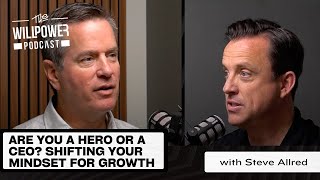
Episode of the Willpower podcast (host Will Humphreys) featuring coach and physical therapist Steve Allred. The conversation centers on the mindset shift from being a clinician/provider (the “hero” or healer mindset) to thinking and acting like a CEO/investor — delegating authority, building culture and vision, and balancing mindset work with financial and operational fundamentals to grow clinics. Practical topics covered include levels of delegation, using numbers (P&L, margins) to guide decisions, coaching and hiring, and the long-term goal of creating time freedom to invest in meaningful impact.
Chapters
Foreign.
Steve Allred is our very special guest today for the Willpower podcast. Guys, thank you for tuning in. Today's guest, we had the funnest time talking about the mindset shift that occurs from being like a provider to being someone who's focused on profits and patient outcomes. Steve Allred is a powerful physical therapist who went back to school and got his mba. You know how easy that is to go back to college. And he's leveraged both of these incredible skill sets to grow large companies, and now he's coaching smaller ones and smaller, meaning, you know, sub 50 million. So whether you have $500,000 a year or you're a practice that does 1 to 10 million, this is the guy for you. He knows how to take a P and L and make it entertaining. But today's topic is going to be a lot more deep than that. We're going to be talking about how to think differently so that we can open up our future and get the future we deserve. Enjoy the show. So, Steve, you are a master coach. You have been working. You're a physical therapist. You've been working with businesses for a long time. You have your mba. So. So you were talking about thinking like a CEO. So what's the problem? What are the main problems you see when you're coaching with clients in this particular capacity of thinking like a CEO?
We get stuck in being good at what we're at, staying where we're good and where we feel confident and validated. We have to push into the areas where we're not. And that's really hard because it's not about five steps.
Yeah.
About five tricks. It's about our mindset, and it's about somebody that says, here's a blind spot. And somebody's. You know, I was talking to two owners and they're. And he said, here's my blind spots. And his partner says, well, then how's it a blind spot?
If you can see it, how is it a blind spot?
Exactly. And so they shared each other's blind spots. And you could see, as one said, that hits hard, full stop.
Yes. Because they're in that place of, like, recognizing it's a weakness but choosing not to address it.
Yes.
So you're saying the reason they don't choose to address. We as owners don't choose to address our weaknesses is because we're getting validation in other ways that where we are capable and we don't address it.
It's hard enough. Business is hard enough. So why go into that area that just says you suck. But here's the thing we flipped around. I said, what if you became really, really good at sucking until you're not?
Yeah.
And they said, huh? They started thinking about that, and they realized, my job is to go into the areas where I suck and get really good at that and then move on to the next area.
Interesting. So there is probably an area of blind spots, I'm guessing, where people don't see that. They're not even aware of what they don't know. But what you're talking about is more of a mindset for people who, like, are almost subconsciously stuck because they're doing the things that validate them, but they're not doing the things that need to be addressed. Like, there's that constraint principle that all of our businesses have, one area of constraint that's the most valuable to be addressed, because if we address just that constraint versus the 30 that we see, everything else becomes easier or obsolete.
Let's take delegation. I've delegated a lot of different things, but the business is still stuck. Why? Because I feel so dang good when everybody comes to me and says, hey, Steve, how do you do this? When do you do this? Why do you do this? Can I do this? I'm at the center of attention. I've delegated tasks, but I'm refusing to delegate responsibility and authority because I just don't know how or I like the validation.
Guys, I want you to hear that, Rockstars. Steve just said, I like to delegate tasks, but not authority. What? I mean, that is such a profound statement, because we've all been guilty of that as owners, where we delegate things to people and we. We say out loud, and we feel at times consciously frustrated that they can't ever get it done. But there's a validation of being the person who's able to sweep down there and be a hero. And they're like, wow, you're so smart. Like, no, it's just whatever. And, you know, we go back to being frustrated about why we're stuck.
Yeah. And one of the best examples they get I got from somebody. I learned more from who I'm coaching.
Yeah.
Than anybody else. And he said, you know, I got to be the executive chef, and the sous chef brings me the plate. I approve it, and I said, go, send it out. And that totally flipped their mind because they realized that they were the bottle washer, the line cook, the sous chef, and the executive chef and trying to do it all. They were doing other people's jobs. And so what they did is Started to realize I've got to let go, I've got to give them the authority. And we talked about there's three levels of delegation in terms of responsibility, and that's. First one is what are the decisions somebody else can make? And they don't have to tell me about it. I don't need to know about it. Just make the decision, go. And if it goes wrong, debrief it. Make it within the context of our values and goals. I got your back. Second level is what are the decisions you can make? And then tell me about it afterwards and we'll debrief it. And if it's wrong or if it's not how I would really want it to be done, it's a learning opportunity and we're going to talk about it, we're going to learn and keep on going. And the third one is, what are the things you need to discuss with me before you make a decision so that we're on the same page? And I've. And I can support you in that. And then go make that decision. And the reality is you're going to have people that they all want to go in and consult with you first.
And the reason being is because they know what they consult with you and it's a mistake. It's not on them.
And you've trained them that way. You've trained them that way.
Yeah.
Okay. And we're therapists. What do we do? We get A pluses because heaven forbid we get an A minus heavy plus. So you teach them. Okay, you know what? Next time, why don't you make that decision and come talk to me afterwards and let's debrief it. And then when they get, when they get good at that and they trust themselves and you trust them, then you say, you know what, why don't you just make that decision? You don't need to tell me anymore. Just go, just run with it. And so you're bringing them through these layers of decision making authority so that they get comfortable and you're teaching them and you're pulling yourself out of it. And the best. This morning I was talking to one of your rock stars and she said, you know, I had a therapist that flipped their schedule. And I was like. And she said, do we have front office coverage? And her front office manager says, oh, yeah, we took care of that like weeks ago. And she was like, oh, this is the best.
Yeah, there's something that, that feeling of relief, Steve, over supersedes any sense of the hero mindset.
Yes.
Because that hero Mindset is like a validation of, oh, thank you, you're enough. But when we know we're enough and our job is helping other people be enough, we get something much better called time. And, like, freed attention spans to focus on what we want, really care about.
When I had a client that was going through this and, oh, my gosh, it was a knock down, drag out, fight to shift the mindset. And at one point I asked his office person, basically director of operations, I said, how long would it take to get him out of the office? She said, two weeks. It took us another six months working together.
Because of mindset. Because of mindset. And he didn't want to let go.
No, didn't. Didn't think he could. I've got to grind away.
If I don't do this, it fails. I'm not enough.
Exactly. And then what happened is one morning he's getting up, getting ready to go to the office. She calls him and says, hey, just want to let you know, we don't need you today. Stay home, please.
No way. That's amazing that they had. He had such a great leader and he was just in his own way to where she had to like, invite him to stay home.
In the next year, he doubled his profits and one and a half times his revenue because after he got out of it, he had the creativity to look at his business differently, lead his team. And here's the beauty of it. It allowed him to promote people and promotions bring raises and raises bring quality life standards changes for these people. So there, it's like everybody wins. And he's like, I'm working less. Is that okay? I'm like, I'm really happy.
Yeah.
Is that allowed? And so it's a change of mindset to where you're, you're, you're leading your people. You have to win the hearts and minds of your people behind your cause.
Yes.
And then they will build it faster than you ever could.
But they need a leader. The point is like, so here you said rock stars. I need you to pay close attention because this is. There's so many things Steve said right there that was so, so big for me in my journey when I was the PT with one location who was angry at my people because they were never doing the things the right way. And I was the hero. I was subconsciously. It wasn't conscious for me. No. I was subconsciously sabotaging my own environment. And it started with hiring. It was like. But when I started hiring better people, I think that's like the first Step.
Yeah, absolutely.
Because you really are in that trap if you don't know how to hire. But once you start. Once I started hiring good people, I was still stuck. And that was when it was 100% mindset. And for me, what really became big was recognizing what my job was. My job as an owner is to be in charge of the culture of the company and the vision. Culture and vision. People go, what do I even do? I remember I've worked with lots of people in the recruiting space, Steve, who get freed up, and they're like, what do I even do with my time now? Which is laughable for most people who are listening because they're like, I would kill for that. But that's literally what every single person I know goes. They go, what's my purpose? What am I supposed to do with my time? I'm like, you create the vision. You do the funnest part of a job. It's not the easiest, by the way.
Oh, no.
But creating a vision, focusing on building your people by stepping out, like you said, Steve and Rockstar, to pay close attention, by stepping in, not out of, into the CEO thinking mindset. In that hat, we free up all this space for people to progress, which is how we retain them and why they're so passionate about the vision. Because we always forget the concept of a leader. A leader is in motion, and people are following a leader. So if we aren't in motion, up the organization's org board, they are literally stuck the way we are. So when we're progressing and we do our jobs right, they progress with us. And that's how we retain and build a dream team. And then it's like, what do I do? Vision. And then the other thing is guilt. I don't know if you've ever seen clients with this. They have guilt when they're not super busy.
Absolutely.
Tell me about that.
It's impact. And see, here's the shift we're so focused on. I got 10,000 things I got to get done. Yeah, it's all about how much I get done. I do more than anybody else. I'm here first, I'm here, I stayed last. And it's about impact. You have to shift it. You have to ask the question, was I impactful today? I was super busy. I got a ton of stuff done. Did I make a difference? Was I impactful? When you start doing that, it changes what you focus on. I had a client that said, you know, every morning I go in and, you know, they had a small hobby farm, and Animals and things like that. And she said, I go in and I brush my horses. And it really grounds me for the rest of the day.
I said, that is some of the most important executive work you will do all day. Because when you are emotionally grounded, you lead differently, your people see you differently. And there you have to understand about leadership. And that is, we think, oh, I'm the leader. People are going to follow me.
I'm the boss now.
Trust me. They don't have to. They don't have to. You know, a phrase that I said is that leaders lead at the consent of those that are led. People who follow you are consenting to follow you. They're exercising a choice to follow you. And how you lead through the good times and the bad times is really critical. And this morning, as I was talking to somebody said, you know, my team is shifting. Where they're at is so much better than it was a year ago. It is 100% directly responsible or related to the fact I'm a better person. Yeah, I lead better, I show up better. And so that executive work is some of the work that you have to do. And you can't do it on the floor, you can't do it in the office. You've got to get out and away from it. And it's so. It's shifting it your perspective and realizing I have a totally different role than I did before when I'm right there with my therapists or with my office or my office is there, and it's a revolving door of people in and out, asking questions. You're holding your company back, and that's the shift. I'm working with people so that they become ten times more powerful. And their business, it unlocks their business.
It unlocks the freedom. So rock stars, I want to hit another point. I don't usually talk to the audience this much. Steve, this is because you're laying down so many valuable concepts that were mentally massive for me. One breakthrough I had in the current business structure that I have to parallel what you just said. I was, you know, working these. I've been working crazy hours starting my companies since I sold my PT practice. And I had this revelation that speaks to what you just said where I was starting to shift my calendar. So instead of going from, you know, six in the morning till about six at night, which is most days, I started opening up my calendar to where I would start a little before six and I would be done by three. And I changed what I did. You know, I would wake up and immediately after Some prayer, go straight to work. That's been big for me. I don't have a routine. I actually do most of my things just for me in the afternoon after three. But what I did do is meditation is really big for me. Meditation, you know, transcendental, where you're 20 minutes, no guided. I'm just sitting there for 20 minutes and I'm counting my breaths. And I let myself go do this because I saw some executives I wanted to be like. And that's the one thing they kept in their morning routine. So I wake up, pray, hit my. Hit my work. I work for an hour and a half and then I'll meditate. This, this one day I was meditating about these huge problems that I knew were going to take me months to solve. And in meditation. It's like being in the ocean. I was able to drop my consciousness now to the bottom part of the ocean where the biggest, bigger fish slash ideas are. And literally in a flash thought of a complete path on how to solve these two to three things. And then after the 20 minutes I woke, it kind of came back up. I was very refreshed and I had, I'm not kidding you, weeks of work visualized. And I wrote it all down. And I remember thinking that was the best work I did all day. Brushing the horse and grounding. It's different for everybody. That was what it was for me. How we get there and it's all about being present and like, you know, but like we forget. We. We think of work in healthcare as care, patient care.
Right.
We don't think of what real. I want everyone listening to stop thinking about work and start thinking about what moves the needle. Impact, impact production. What's. What's the most productive use of my time? The most productive use of the leader is envisioning the future is creating culture.
If I spend an entire week meditating and preparing, getting input on. On a presentation I'm going to do.
Yeah.
And I go into the office and it's an hour presentation. That's the only hour I spend in the. In the office. The rest of it I'm just preparing myself, getting myself in that present mind. And that hour changes the entire direction of the organization. Aligns people.
Yes.
Gets them on board of what we're doing. It will magnet we. The business magnifies everything we do.
Yeah.
And so you're wanting to magnify that lens in a way that moves it. You're going to either move it forward or you're going to move it backwards. But you're going to move it. And so if you have to prepare yourself for that magnification, then it's the best work you can do. Now, obviously, there's a lot more you have to do, but the point is, stop trying to outwork everybody else. As this badge of honor they want you. A good team is going to say, get out of here. Let us do our work. You go do the work that only you can do. That's only you as an entrepreneur, as an owner. And, you know, you and I were talking that it's really about getting comfortable, of pushing into the areas where we're not validated.
Right.
We don't feel comfortable. We don't feel safe, because that's where we have to take the company.
Right.
And human nature is we want to treat. I'm really good at insert whatever it is. And when times get tough, that's where we go to. And so we have. We have to just get comfortable and put in systems. Get somebody. I don't care who it is. If it's a coach, it's a coach. If it's a friend, it's a friend. If it's a mentor, it's a mentor. Get somebody that is not emotionally involved in what you're doing.
Right. Who keeps the eye on the prize with you.
Yes. You know.
About 2015, I had an opportunity to go climb Mount Rainier.
Oh, nice.
And through just some decisions we made, it was a group of friends that were going up, and the lead person who was going to be our guide had to take somebody back to camp. And the decision we made as a group, and I have to own this, because we said, okay, we're going to keep pushing forward. You go back, you catch up to us. And.
So I was lead on one of the ropes. I had three other people on it, and we're going up there. Perfect conditions, beautiful weather. We made it all the way to the top.
Wow.
But we had a guide behind us saying, you guys have no business being up here. And we're like, what are you talking about? So we're coming back down, and I'm watching these guides, and I'm realizing I made a thousand safety mistakes.
Going up because I didn't understand everything. I didn't see it right. And. And what I realized is that having a guide.
Maybe you don't need a guide. If weather conditions are perfect, the trail is perfect.
Right.
The temperatures are perfect. Everybody's great. You get up, you get down. Hey, pat ourselves on the back. But when was the last time business was perfect?
Right.
The Guides get you where you need to be. And in climbing is back to the car. You don't have to get to the top, you have to get back to the car. And they're watching you. If you get altitude sickness and it's little things.
Yes.
You're not putting on your puffy coat, you're not eating, you're not hydrating, they know that, okay. You're not thinking straight. And so they intervene. And so that's where you need a guide to help you through those times where you're not thinking clearly about what you're doing and so you start making mistakes.
Yeah, it's so great. In my journey, I've been very vocal about this and you've heard me talk about how I've never not had a coach in over 20 years. Um, and listen, I have a brother in law who has a the third largest pest control company in the country. He got most of the way there without coaching. But what I found later was that he was really good at hiring again and he hired basically experts inside his company to help him run and grow it. So there's really. Those are the two main paths. I see. But no one figures it out organically. You hire people who are. You learn how to hire so well that you hire experts who are basically coaches in a sense of departments.
Right.
And they grow you. But even then, I mean, at some point he still had to hire a cfo. And then he eventually got coaching. And so like the coaching, the reason I'm so addicted to coaching is because I'm lazy. I want to work. I want the maximum impact for the least amount of effort. That's the world I live in. So working with coaches, the right coaches in particular, makes a difference. Now I will say, Steve, I've never had a bad Coach. Had over 30 coaches. Some are way better than others, but just investing in that time with anyone made a difference. But here's what I tell people. To find the best coaches. I was actually speaking at the University of Idaho yesterday for their PT program and a student asked me how do I find the right coach or mentor again. And for clarification, a mentor is a free coach. Someone who's willing to work with you at no cost. I've had a few mentors or it can be someone you work with who mentors you. A coach is a paid relationship with someone who's guiding you up Mount Rainier of your business.
Right.
And so my two things come from the fact that either they've done the thing that I want to do or They've helped. They've proven that they've helped others do the thing that I want to do.
Yeah. You know, and that's interesting because I think we often, like we go to in our industry, and I've heard this a lot. Have you done this? Okay, I'll listen to you. There is a great way, wealth of knowledge outside of our industry.
Yes.
People who understand business in a way that we don't. And we need to adopt that mentality in this profession. We need to adopt good, solid business fundamentals.
Yeah.
We need to be able to innovate and think as problem solvers and not necessarily always as clinicians because, you know, there's been a lot of talk about Hinge Health and what they're doing.
The reality is review for the audience.
So Hinge Health is a digital platform that's really about.
Gosh, you know, just about engaging the patient in their care. They use algorithms for exercises and that sort of thing. And I'm sure they're going to go off into other, other areas that are solvable.
But the reality is the fact that Hinge Health is where it is today means that we are being disrupted.
Yeah.
Not that it's coming.
It's here.
It's here. And so we have to innovate and think differently than the way we've been doing in the past. And we can get those ideas from a lot of different places by looking them, whereby working with people who help us see the world differently. And that's, I think that's the key with a coach, is they can help you see the world differently.
Yes.
So you can make better decisions.
Right. In my current coach, right now was the biggest investment I've had. I only had one PT coach in my journey because mostly there weren't any PT coaches back then.
Right.
And so since that timeframe, obviously I'm outside of the industry. So, yeah, there's a lot more and there's a lot of really good options. But what's interesting about you, Steve, as a coach, is that we spent so much time at the beginning of this podcast talking about mindset and on paper, the people, I think, who'd want to work with you objectively, or at least probably many of the people who start working with you is because you have this MBA background, you have an actual, like, you know, tactical approach to business through numbers. I got to spend this weekend with Alex Hormozi, if you know who that is. And he's an incredible leader who is just all about facts and figures.
Yes.
He believes in mindset and all that. But the whole two days was like, data doesn't lie. Pull emotion out of it. Focus on the decisions, look at the constraint that the numbers tell you, monitor your numbers to grow it and that's how you scale. And he's scaled multiple hundred million dollar companies. And so for me, when I look at you, it's such a cool combination. But I want you to address to the audience, like, how do you approach coaching? When I know that for all your clients you're really big on foundational fundamental number training. Like, what does that look like? Between that and like the mindset piece.
You need both, because you can have all the right strategies, you can have everything all in place. And if you don't believe that you deserve it. You know, when we were at your.
Summit, the rock star summit.
Yeah.
You know, we had somebody, we had an individual who was at Olympic level competence but didn't believe that they, you know, that there was just the way.
They thought about it in their business.
Yes. And it impacted how they showed up and what decisions they made and how they held back. Okay, so mindset is critical, but at.
The same time, you got to know the tactics.
You got to know if you don't understand your profitability and how you get there, mindset isn't going to change it. If you don't understand how to look at your metrics, you know, people say, oh, I've got the metrics. Okay, so, so what? Tell me the story.
Yeah, well, they.
Tell me the numbers. I said, yeah, I know, I can read that. Tell me what they mean.
Yeah.
And you have to understand that behind every number you got people, you've got process. You got behaviors, attitudes and decisions. Those are the five things that you can impact.
Go over them again. So people, people.
Process. Process, behaviors, attitudes and decisions.
Interesting.
You can't. A metric is not. There's, there's nothing tangible about it. You can't go in there and like shape it, twist it, do something with it. But you, but you've got people who are running processes and they're either exhibiting the right behaviors or they're not, or they got the right attitude which leads them to their behaviors or decisions you've made. But it's the numbers that guide you of where you need to look and say, what is the issue?
Yeah, it drives me crazy because I see this very clearly. For me, I think I'm an expert coachee. I've been coached for so many decades and I've had so many tens of thousands of hours of coaching that I Am actually really defensive. When I hear any coach say, yeah, you've got it. It's all about learning the five most important steps. Or. Or it's all mindset. What I think people need to understand about coaching is that it's a intertwined organism that is a lot of both.
I will agree and argue that mindset supersedes skillset 10 times out of 10. But you can't mindset your way into learning what a P and L is. But on the opposite end of that, if I am only focused on learning what a P and L is, and I have zero desire to believe that I'm a leader and that I can use this effectively, then what's the point? Those two things have to come together. And so you're really big. I know. Is that where you. Where do you start with your clients?
Usually I start. I said, give me your balance sheet and give me your P. So you.
Start foundational, objective, foundational.
I need to know where are you? Because we can talk about growth, but if your owner's equity is in this negative six figures, that's going to constrain how you make decisions and what the priority is.
Yeah.
So. Because we got to get you out of that hole that you're in.
Right.
If you know, do you have even good books? Are your books clean?
How many of your clients have clean books, percentage wise?
Oh, well, now, Yeah.
I mean, not. Not after.
When I start with, yeah, many of them, I'm looking at it and saying, hey, let's think about.
So even your data that you're getting initially, the majority of. It's not even that clear.
Look, I've had some clients thinking that they're making 3%. We get good. We clean up their books, get them organized the way that they should, and they're making 12% profit margin. You make a different decision at 3% than you do at 12%.
Interesting.
And, you know, somebody was like, why are you so focused on this? Just work with me on this. And we really focused on what are the areas, how do you improve that? And then a big issue came up. I said, how'd you handle it? I said, this is the first time I wasn't stressed out. And I said, that is why we are focusing on that. Because now you can make different decisions and you can pursue your goals differently and you understand what levers you have to pull. And it's not just, I need more patience.
You know, if you're, if you're, if you. There's a formula to it.
There's multiple way you can. It all boils down to increasing income and decreasing revenue is how you. Or decreasing expenses. Expenses is how you make more profit. Like there's no other way. But there's multiple ways to influence those two variables.
And you have to understand which ones you're working on because your first one is your gross margin, your revenue minus your therapy cost. If that's not right and dialed in everything else. Yeah. It's too hard to make up because your rent is your rent and you need certain amount of staff and your billing cost is your billing cost. You're not going to change that.
No.
So it's understanding that and then being able to get down to it and be comfortable with numbers so that you embrace them. And then you start making different decisions because you're more confident, you're more calm. And then that's when mindset and that combination becomes a potent formula. And so that's. I work on those foundational things.
So it's not just, hey, we're going to work on mindset, but at the same time, I also recognize it plays into it. If you have limiting beliefs, I don't care how well you know your numbers, you're not making the decisions.
Yeah.
That you need to be. You're not showing up the way you need to show up. And therefore we have to tackle that belief set to unlock what you can do.
It's nice that you start with numbers, Steve, because it's like you're beginning in a very objective, non emotional place. But it tells the story where the mindset is causing, at its foundation, the problems that are resulting in the numbers and the audience. Rock stars. I want you to think about, like this as you're progressing as a leader. The way we can look at the balance between, you know, the mindset and the skill set is in this. In information leads to inspiration. So you start with information like, hey, here's the data, here's the block. So why is this like this? Why is this? And then you get to, well, I'm doing this. Then why are we. Why are you making those. Those actions? We start understanding motivational behavior. We start immediately tapping into mindset. And then from that place where people objectively see the reality. Reality is who, what, when, where, why, what is real. They. Instead of just being in this ethereal space of like counseling from a coaching perspective, you're looking at objective data, understanding the decisions that were made. And then we look at the why those decisions were made. Now we're in the mindset space, but people, I'm guessing, are More primed to address their mindset because they're looking at objective data as the con, like the cause and effect. Here's the effect of my mindset. They're more open objectively because it's no longer this judgment. It's like, okay, I want a different outcome. It's not personal. It's like, yeah, I want more margins. It's not about being burned out or being enough. It's like, okay, so why did I make that decision? Oh, because I'm a hero. That doesn't make sense logically. Why would I want to solve other people's problems when I could do have higher margins and work less? Then we pull that emotion where it should be.
Here's a powerful thing you talk about. I need more patients.
Yeah.
I need more patients. I gotta hire more therapists. If you're at, say, 5% margin, if you figure out, and you said, I want to make $10,000 more a year, take that $10,000 divided by 0.05, that's your profit margin. And that is going to tell you how much money, how much revenue you have to make to get that $10,000.
Yeah.
Okay. Make it easy, math. If it's 10% margin, you know, I want to make $10,000. I got to get $100,000 in revenue. You work on and understand the number so you understand your profitability and make the decisions that bring it up to 20%.
That just dropped down to 50%. $50,000 in revenue.
Right.
And in a time when it's hard to hire therapists, there is so much.
Profit opportunity that we're not tapping into because we don't understand what leads to profitability.
Right.
We're not digging into the numbers. So there's just a lot of opportunity there. And here's the other thing, and this is selfish. I want to know because, look, if I'm coaching you.
Sure.
And we don't objectively move the needle of your business, there will come a day when you say, I'm not making any more money.
Yeah.
Why am I spending all this money in coaching?
Seriously, at the end of the day.
Yeah.
In my mind, people want. I want to make more money and have more time. I want to sleep better at night.
Yeah.
I want to enjoy my business more. And that might mean.
Or at all. Or more money.
Hate it.
It just.
Exactly. You know, it's like this albatross. And so we've got to objectively set. What is the roi, what are we trying to get here? And are we moving the needle? Is it Making a difference. And if not, why not? What do we got to change? So there's a lot of different reasons why the numbers are important.
Yes.
And it is foundational.
It's amazing to think about how we go back. It's this dance between information and inspiration and mindset. Like, for me, one thing that you just hit upon, Steven, or I hope the rocks are really dialing in on this point, is that before we invest in coaching, I mean, most of the times when I used to coach more as my main source of income, people just knew they needed a coach and they were basing like, I need a coach. And I don't really understand the concept of it. And that's okay. That's most. That's usually where we start. But where I am now in my coaching, after all these decades of coaching and having built and sold multiple companies at this point, is that I now know how to maximize my ROI with coaching. It begins for me with knowing my vision really clear. So my current vision right now with Virtual Rockstar, I have many companies, but the main one is Virtual Rockstar. With my virtual assistants. I want 4,444 families out of poverty by the end of this decade. That's 4,444 employees. Families, families and 95% of which are single mothers. I am so driven by this metric because, yes, it equates to this large number. The number means nothing to me. It's. That number means money that I get to build more families with. That's what that means to me. And having that balance keeps me clear. So when I hired, I just actually engaged my coach on Monday for this next year. We start in September. And I won't tell you how much I paid because it was. I mean, you would believe me, but everyone in the audience wouldn't believe how much I paid in it. Because for me to get a coach who's been able to grow a company to that size, I am talking about a very different level coach. It's very. But those coaches know that I'm focused on a specific outcome, and that makes it easier to pick the right coach because I want to see people who can produce that vision. But I've also spent a year researching these coaches. I didn't just talk. So what? When we're starting out, I would say anyone is useful. But when we get to the point in the PT space, and I mean this very humbly, because you're not. Not just because you and I are friends, but you would be one of my top coaches. If I was a Physical therapist, and I had one to five locations, and I wanted to get out of hating my business, or if I wanted to scale it to 10, you would be my guy. And really, there's a few people at Practice Freedom I really like, but you're one of my favorites because you have that objective mindset information piece in a way that no one else has. And honestly, you're just really cool. But the idea being that honestly, because you kind of like the purple. I'm at a stage where if I don't want. We're both people who don't drink. But the phrase of, like, getting a beer with somebody, like, if I. If I don't want to hang out with that person, I don't want to work with them at all. At all. And a coach is a very cool experience because the most. The most meaningful work relationships I've ever built have been first with the teams, the dream teams. I've made second with my coaches. Like, those are the people that, like, I'll be at their funerals and they'll be at mine.
Yeah.
Because we were in the trenches fighting the battle, winning the fights, putting that flag in the ground, going, how did we do it? Holy crap, we're crazy enough to do this again.
Yeah. Well. And. And you're going to hear as a coach, or I hear somebody say, I've never shared that with anybody.
Yeah.
This is the only place I can talk like this because, look, I can't go home and say, oh, and I had a crappy day. I think I'm going to lose this business.
Yeah.
Okay. My home doesn't want to hear that message.
No, they do not.
My employees don't want to hear that message.
If anything, it causes problems that you have to put time and attention on.
Yeah, exactly. And so it's a place where you can show up and just be.
Yeah.
I don't care if it's a hot mess. I don't care if you're just celebrating whatever success it is, but it's a place where you can be. You know, you said something interesting, Will, is that you said, I'm building a company, so I need a totally different coach.
Yeah.
Well, you need to be a totally different Will. Exactly. Cannot run a business that's doing 4,000, 444 families out of poverty.
Exactly.
So you've got this journey where you have to step into things that you suck at until you're good at it.
Or learn to delegate out for. Yeah.
Yeah. And. And you. You have to grow into the leader that can Run that kind of a business.
Yes.
And that kind of a team and that kind of inspiration. And so somebody, you're, you're saying, I'm. Instead of doing it yourself the long way, the hard way, you're saying, I'm going to have somebody that's going to help me get there. A guide.
Yes.
Okay. To do it successfully. And, you know, it's, It's. We think about, oh, I get a guide to get to the summit. No, you don't. You get it to. So you end up in your end goal. And as I said earlier, in climbing, your end goal is always back home.
Yeah, man.
So it helps you because it's never perfect.
What a beautiful analogy that you just painted there. Because what I. What I'm excited about when we get to that 4,444 families is who I'm going to become in addition to those families. It's, it's. It's like I. What you said was so dead on. So much so that when I just engaged this coach on Monday, just before you and I met, you saw I was meeting with my leadership team. Yep. The conversation I was having with them, Steve, was I said, listen, we've got the path now because I don't have to have a coach to do there, but it would take me decades longer. And those families need my help now. And frankly, my kids need the CEO of that company to be the leader who he's going to become for their benefit, too. That's where balance comes in. That's a different discussion, but it's one of those where I told my team, I need to know that you guys are willing to change to because I am. What I said, literally before we walked in, I don't believe in coincidence. I said to them, I am not the leader. I said, I'm a leader to get us to 10 million. I'm a leader to get us to roughly 400 people. I can get us there now. I put enough decades of coaching into it where I can get us to there, and I've done that before. What I'm not is the person to 10x that. And for me, I said, are you guys willing to join? I said this. Are you willing to join me on this journey? But going back to our initial discussion, what that did for them is it creates two things. Who doesn't want to go to the A players want a company like that where they're going to be challenged, but they're also going to be compensated accordingly.
Sure.
What my exact words were, Steve, Like, I'm going to achieve this summit. I want you guys to come with me. It's going to be harder than anything else we've ever done. And I want to make sure that when we're on that summit, that you are there with me both in terms of who we've become and are compensated accordingly. I said it just like that, and immediately their eyes lit up. Not because of the money, but it's two sides of the same coin. It's the vision. And now I'm running their way that way. And I hope they'll stay with me. I'm sure these people will. But it's one of those where it's like I don't get to choose if they do that or not. But I minimize my risk by doing this than staying the same and fixing their problems. Like, it's just not even in the same realm of possibility.
Not everybody who joins you will finish with you. That's just a reality. There are some people, they have their bandwidth, you know, they have tolerance. I'm really good at working in small companies. I'm really good at working at large companies. Or I'm really willing to go from being good at working in a small company to working in a big company.
Yeah.
Because it's going to change. It's going to require everybody to change as you grow, or you're gonna have to find new people.
Right.
And so it's. You've invited and opened the door for people to choose to go with you.
Yes.
And you're going to choose those who do. You've chosen your team and says, I'm inviting you to go with me. And that's. That's a key thing.
Yeah.
Owners need to understand you're on a journey, and you and you alone get to choose who goes with you. And if you don't like the people who are on your bus, make a decision and change it. It's hard.
It's scary, especially when you like them.
Especially when you don't think you can hire anybody else.
Even bigger, because we stick with people that we tolerate or like, who are just able to do a baseline thing that we don't know how to replace.
But when you get people who are on board with you.
Yeah.
It changes everything. Changes your operations. It'll change your peace of mind. It'll change how you lead. It'll change how you enjoy your business. It changes everything. So I think right now, one of the biggest constraints and the biggest assets is can you hire the people you need and want to build whatever it is you're building?
Yes.
There's enough patience out there. There's enough business opportunity out there. There's enough of everything. Can you find the right people and bring them on board? And can. Can you present that vision? And that's what you did. You won over the hearts and minds of your people in just. That means say, this is where I'm going. Do you want to go with me? And when they're saying yes, that's powerful.
Yeah. And it's, you know, guess when that. Guess where that vision occurred. In a 20 minute meditation about a year ago. So, like the main thing that has probably dialed in my best people, there's all those things we talked about. Maybe the people who get us here aren't the people who get us there. But when people in my company, from my experience, are so committed to the vision and what's best for all, there will always be a home for them. It may not be the home that they initially wanted or dreamed they could be, because if they're not capable, that's a hard discussion. But there's always going to be somewhere in our company for people who are committed and doing the best that they can, period. But that big work, the work that is going to produce 10x, the outcome came from changing how I perceived about work. It was like, no, it's not about work. It's about what's productive and what's the impact. Like you say, well, meditation created impact. And it's like when we feed ourselves. So there's one thing I do want to hit really quick. I've been learning about this thing called a. It's called a healer mindset. It's an actual psychological term that I've seen psychologists discuss online. So this is an actual mindset you can test for. So psychologists will test people to see if they have a healer mindset. It is not for healthcare providers alone, but as the name implies, the vast majority of healthcare providers are in it. And I want you to look into this, Steve, because. And maybe we'll do another podcast on it.
Oh, that'd be great.
Because the healer mindset, it would be so, by the way, that would be so in tandem with what we're talking about, because we're talking about mindset and the thinking like a CEO. Well, the mindset that's getting in our way is the healer mindset because it's paralleled with people who don't, number one, set boundaries. That's like the number one defining weak. It's a very positive thing, by the way, wanting to heal others. But the thing they struggle with, by definition, is setting boundaries for themselves being. And it's very prone to a victimization mindset of people who are like, oh, man, no one's working as hard as me and no one can help me. And I don't even know how to help myself. And I'm so tired and I don't even have time to work out. And I, you know, all these things that I've been through and I've coached through. Yeah. Yes. So that healer mindset is such a big thing because when we put boundaries on it and we change how we think and I realize that I'm healing 4,444 families. And if I don't have the right team on the bus, I'm not healing, I'm hurting. And I'm going to hear. And by the way, I'm going to heal my. I'm going to help my team become their own healers. And that's my job. Not to heal them, but to help them heal themselves. Like, I mean, these. So I'm actually living within that. I am, by the way, in case you haven't caught. I took the test. I'm a strong healer mindset. So, like, for me, it's like I can actually thrive in that as a CEO. But I think in our industry, Steve, I thought about this with pts. It is the cancer unboundaried. Unboundaried healer mindset is the cancer to our healthcare provider, businesses, business owners.
When you combine the arrogance and this is mine. I did this. Yeah. The arrogance of I can help that person.
Yes.
I can heal that person. And to use your language.
Yeah.
And they don't want it. They have to want it. Then we can do something with it. But if it's unbounded, we just keep. We tolerate so much garbage to so.
Much as an industry showing up in our reimbursement.
Absolutely. Oh, don't even get me started there. That's a whole nother conversation.
But it begins that mindset that. Going back to this conversation, that healer mindset, no boundaries. Oh, okay, Medicare, you want to drop the okay. Like, we're just. We're victims. We're also like these pleasers. But. Yeah.
Yeah. And. And it wasn't until I finally said, I can't tolerate this money. And it was more of my.
The embarrassment I had in with my team because they're looking at me like, steve, yeah. Do something. Anything. I don't care what. Do something. And I'm like, okay, I finally have to do this because I didn't want to Deal with the difficulty, uncomfortableness of important conversations. That may be hard.
Right.
And then when that person finally left.
It changed the team. It changed the dynamic. And to 100% of this will every time. And everyone has to go through this. It's just a lesson you have to learn in this industry, I guess.
Yeah.
But every owner that has gone through this.
It'S like the knee replacement, and somebody says, why didn't I do that sooner? Yeah, much better. I'm so much happier. My stress levels have gone down. My team. I have team members that come up to me and said, thank you, or others who said, I've been waiting to see how long it would take you to make this decision. They're watching. They know it. You know it. But we're not willing to make those decisions. And sometimes it just takes somebody that holds a mirror up, a coach. A coach and says, okay, I want to. I want an email by Friday. Tell me that you made that decision. And you're like, ugh. But they do it. And then it's like, yeah, it's hard. It's uncomfortable. But they get back and say, everything's so much better.
You know what? It is. It's all hard. I think. Rock stars, I want you to hear this. It's all hard.
It's okay. It's all. It should be hard.
Like, even the good things are especially hard, but the hardness is no matter what we choose. Like, eating right. If I go workout and I'm putting myself in shape and I'm controlling my diet and I'm really religious about it, that's really hard. Not doing that is hard in the exact opposite way. Being stuck with my weight, not playing with my kids, going to the doctor, taking medication. So we pick our hard. And a coach just, like using this analogy of being. Getting into shape, that's what we do with coaches in business. They train us mentally. And so, like, it's a. It's a great analogy, because people who get into great shape, they've done studies, they show they think of themselves differently. So if my goal is to lose 10 pounds, I don't have a high probability of executing on it. When my goal is to become a runner, a swimmer, a triathlete, when I embody a transformation mentally, then I still need someone to say, here's the running program you have. It's both those things. Then I become successful exponentially, according to different research. And that's in the book, what's it called? Not Microhabits.
Atomic Habits.
Atomic Habits. Thank you. That's. That's that's what's in the book Atomic Habits. So same with coaching. If we can get into a coaches get with a coach that help us, we're exponentially more because we have accountability. So it's hard to have a coach pull out those things and show you that you. You're failing and you're not choosing to address it. But my gosh, is it so in my mind, so much harder to not have to go through those crucial conversations and face a mirror.
So transitioning from I'm a PT who owns a clinic.
Yes.
Business person who happens to be a PT or I'm an owner operator to I'm a CEO, these are all changes. And okay, here's where mindset is really important is because when I finally adopt that mindset that I'm a CEO.
It changes everything I do and how I see the world and how I see my team and what I'm focused on versus. And we could hammer all the right strategies. And until you make that shift, it's going to be resistance.
Yes.
But once you make that change, all those other things, the numbers, the strategies, everything like that, just become that much more powerful. So you have to have both to really accomplish what that dream is. And it's possible. I'm seeing it today. People say, oh, you know, I can't do it. This PT's, you know, whatever.
Yeah. They've tried everything they think they do. Yeah.
And the reality is people are doing it.
Practice owner is getting paid 70 bucks a visit. 30, 40% of his business was. Was an HMO. And it's like, oh, I can't drop this. What am I going to do so hard? And on and on and on. And finally we just said, just drop it. Drop the hmo.
Yes.
Well, what will they do it? I don't know. Why don't you just do it and find out? And so. And I.
There was more behind it, but. Yeah. But it came down to that simple of decision.
Take. Yes, take action. And when that contract termination went into effect, I get a email next week. It says my schedule's still full. Yeah. Next week I'm still here. Like it hasn't blown up. And so they're making a change. They took control back and said, we're not going to accept this kind of payment anymore because we value who we are and what we do. And I think that's something that we need to do more of in our industry is to value what we do. And if it means that we go out of network. Yeah, go out of network.
Totally you know, be bold. But like again, having a coach on the sidelines of the football team, helping us, guide us there, is so much better than being alone. And what's crazy is, you know, the. We need support entrepreneurs on two levels. We need, I believe, a mentor coach at all times. The best leaders in the world all have that, except for the ones at the very top of the chain. But even then, people like Steve Jobs, Jeff Bezos, they've all had coaches intermittently. But you also need that leadership team. You need that people underneath you who are strong and powerful. So when you get both of those things, you are unstoppable. Your only limitation is your capability of envisioning the future you want. If you have a strong leader, a mentor coach, you have a great leadership team underneath you. You're only limited by your vision.
That's an interesting thought, because we build businesses. Nine times out of 10, if you were to go look at any of the practice owners, most of them are just building from where they are.
Yeah. And just trying to survive spinning plates.
It gets bigger. Okay, I got to add a new therapy.
Pain avoidance versus proactive. Yeah.
So approach for the standpoint. Can I envision what it is that I want to create and create from that space?
Yes.
Create towards your vision. You know, create it mentally, create spiritually.
And then work towards that creation because you've already figured it out in your head, Right. And the more you work on that, the more clear it gets, the easier the actual building becomes because you've already done the hard work. You're just bringing it to life. So I love that you have a vision of 4,000, 444. You have a vision of what that's going to look like. And so now it's just a matter of going and creating it.
Yes.
With your team.
And that's why I was willing to flip the bill for this, this massive coach and dip into my savings and all the things, because I know, I know from my micro growth up to that 5 to 10 million mark of what it's like to do, all things are patterns. It's pattern recognition. So it's not that I know what it takes to get to 100 million, but I know the pattern of growth and the pattern for me, strong leadership team. Check. Now I've got the strong coach. Check. Let's rock and roll. Is it going to be hard? Absolutely. Everything's hard. Anyway, suck it up, go back to work. Like when I have the purpose and the vision clearly defined for myself, Steve and I have the right support with like a Steve Allred and a leadership team. Like, I do. I sleep at night, every night. Because at a certain point you do get to a point of financial wealth and accumulation to where you just no longer feel in scarcity. It would take a lot for me at this point because I built up layers of investments. But for me, it's like I don't even. I'm so focused. I'm able to focus now on the future to where it's like, okay, let's go. And it's gonna suck, but it'll be worth it. Versus this sucks. I don't know if it's ever gonna change. I never want to be in that place again.
Right.
This sucks. I don't know if it's ever gonna change. It's been years, decades. And I'm still. Maybe I'm marginally better, but never. The biggest thing I've learned in that process is to not invalidate myself and that it's okay that we all feel that way at times or a lot of times, but if we can see the path and get the right support, nothing is impossible.
You know, one of the approaches I take is that business. They have to create a operational integrity and financial clarity. That's the foundation. If you don't have those two things, start there. Totally start building your management systems, meaning how do I oversee billing and making sure that it gets done right properly.
Sure.
And then you have your leadership that oversees that, which allows you to step into that space of more time freedom. But then you, from there, you get into that investor role and say, where do I want to.
Investor role?
I'm an investor. I invest my time, my talents, my resources, my passions into things that are meaningful to me for the remainder of my life. To me, that's the pinnacle. Want to become that investor. I want to help people become that investor so that they can say what is meaningful to me. Sometimes it's going to be going on vacations.
Yeah.
Sometimes it's going to be flying to first class to Europe. Or it's going to be going to be creating opportunities that liberate 4,444 families from poverty. Because you can do that the rest of your life. Because you're now in a position where you have built this machine behind you where you can invest something that's meaningful. And I'll tell you, for me, that whole idea, I can do that until I'm 90 or I'm no longer competent to do anything.
Totally. I have a. I don't want to retire.
Exactly.
I want to I want to be so passionate and engaged in things because I've seen the heart of being stagnant. I don't want to be that hard.
And it gives you a reason to get up. It gives you a reason to live. And if we just keep going, you know, out here in Arizona, there's. There's this height called Flatiron.
Oh, yeah. Familiar with it? I've done it.
So I did that the first time when I moved here 12 years ago. I finished it and went back to bed for four hours because I was exhausted. It's 3,000ft elevation gain and three and a half miles.
Yeah.
If you think, oh, that's too hard. Things are too hard. I'm hiking down Flatiron, and it's. I mean, you're. It's almost like bouldering.
Just climbing.
You're climbing. Okay. One of the most exhausting things I've done. Up comes this gentleman, and he has this T shirt that says Flatiron Jim on it. I don't know if you know who Flat Iron Gin is. If you don't, go look him up. Okay. He's 91. He's 91. Hiking up a trail that.
Most people do it once is considered a bucket list.
And he's doing it all the time.
And he's doing it all the time. And literally the last bit, as you know, is about a 15, 20 foot climb straight up. You have to boulder up to get. And he does that. And I said, jim, how do you do this? And he says, you know, when in my 20s, I was a paratrooper, and I've never stopped.
Interesting.
I've never stopped. And so his attitude, he used. When I first met him, he had a T shirt that says 58 or on the front and on the back says 85. You choose. In his mindset, he's 58. And so we keep pursuing those things. We keep investing in that life, and getting into that spot gives us a Runway of meaningfulness that, you know, we can do that for as long as we want. We don't have to do it, you know, for 40, 60 hours a week. But we have something of meaning. And that's. To me, that's a pinnacle. That's where I want to see owners get to that investor level, to where they can say, okay, now what. What do I want? What's meaningful to me? What impact do I want to have on the world and the people around me? And to me, that's. That's just. That's the best.
Steve, this has been such a great Conversation, the mindset piece. I want to leave the rock stars with this idea of getting in the mirror, looking themselves in the eye and saying, I'm a leader, investor first. Yes, I am a physical therapist or whatever. Every title goes beyond that. On the business side, I mean, honestly, the first thought for me is son of God, husband, father, then investor leader. Because the investor leader part, they did studies to show that the best CEOs, the most successful CEOs in the country. I was actually at this event that really revealed this research. The mindset is that they see themselves as investors first. They vest their resources into solving constraints to accelerate growth. And so if we can look ourselves in the mirror, say that out loud even, and then say, I'm a PT second, and just realize that every time we sign our name, we put a pt, it's like, yeah, that's not the main thing I am, then I think we can open up the possibility of what, what's out there. Because as we've laid this out, I mean, I would want. I hope my kids will see this episode because this episode is all about mindset and understanding. The balance between mindset and tactical approaches support the main pieces for growth and success. But at the end of the day, it's about understanding that we're only as limited by our vision. When we hear that at the front end of this podcast, it would feel very foo fooey. But now when I, when I, when we say that, it feels very objective and tactical that we're literally only as limited by our vision. So thank you so much, Steve, for being on the show. It's been so great. If people wanted to get ahold of you afterwards, what did they do?
I'll give you a link they can, you know, if anybody just wants to talk to me, I'll give you a link they can schedule a time. We'll just talk. Whether you're interested in coaching or not, let's just talk because there's things that we can look at that'll help you and your business. And if in a half hour, an hour conversation I can help somebody move the needle, then it's worth it. So I'll give you that link that they can schedule.
Perfect. And yeah, yeah, I love that and just want to throw my two cents out there. If you're feeling even a little bit stuck out there, if you're not even sure he's not going to hard sell you into anything, he will serve you. And that's why he's been so successful, because he can help everybody, but he can only serve so many people, and those are your paid clients.
Right?
And so as you're out there, that's how you vet people too. As you're helping everyone, you're like, I don't know if that's a good alignment for me here and there, but at the end of the day, if you're not sure what to do, validate through me. Go to Steve. Steve, thank you for being on the show.
Well, thanks. It's a great pleasure.
Thank you so much for taking the time to listen to today's episode. As a thank you, I have a gift. In today's Show Notes, there's a link for you to join the Stress Free PT Newsletter. This is a comedy newsletter for anyone who works in health care. And of course we're going to have comedy bits. We're going to have inspirational stories, leadership tidbits. It's going to be a weekly newsletter just to lighten your week to help you do what you love with more passion. So click that link below and join that newsletter and we'll see you in our next episode.
More from Will





Highbar PT’s Blueprint for Culture, Brand & Growth With Michelle Collie and Dave Pavao

Highbar PT’s Blueprint for Culture, Brand & Growth With Michelle Collie and Dave Pavao




