Delegation Decoded: Freeing Up Your Time with Michelle Bambenek
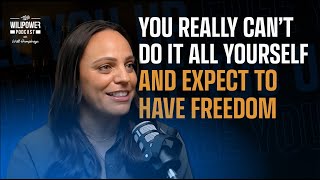
Michelle Bambenek explains the difference between delegation and dumping: delegation has explicit instructions and a clear end state, while dumping is vague and reactive. She covers why leaders hold back (pride, control, cost), the importance of explaining the why, and how to build accountability through shared metrics and ownership.
Chapters
Welcome back to another episode in our season of AI versus va. Today we have Michelle Bambinek, who is an expert at not only delegating to people, but helping other people learn to delegate to other people. Michelle has been on the show repeatedly and I'm so excited for you to listen to this powerful episode. It's going to teach you everything you wish you knew about delegation, everything you're doing right, and all the things you could be doing better to get you freed up. We, we're going to talk about VAs. We're going to talk about artificial intelligence and how the same techniques that successfully allow us to free ourself up with regular in state human beings are the same things that we're going to do with VAs overseas as well as artificial intelligence. It is a game changing episode. Let's jump in.
Well, Michelle, thank you so much for being back on Willpower. I'm so grateful that you chose to came back. I know most people know who you are, but why don't you introduce yourself again and really this time highlight your company. I don't think we've ever really talked about your company.
Well, I appreciate it. It's always nice to be back. I am the CEO of Rockstar Consulting. Rockstar Consulting is a company that really assists practice owners in the physical therapy space on really growing their teams and hiring, training and retaining their team members. And I'm primarily known for working with clinical directors and admin teams and really empowering them to build their practices and, and help offload the owners.
Yeah, you've been doing this for years now. I remember when we were partners in our old rehab, rehab company. How, you know, I just told you, you were like the clinic director Whisperer. Repeat listeners will remember that. But like now you've done it. Like how many people do you think you've. How many companies do you think you've helped over the last three years?
Oh, gosh, that's a good question. And it's one that I should probably go back and look at. But you know, when I look back at just seeing how impactful it is, it seems like millions. I mean, it seems like it's not enough. Right. You know, it's one of those things that, like, there's so much within our, in our space, in our industry that that is untapped, that I just feel like I'm scratching the surface. Although it's a number of people that I've been benefited by being able to aid and support, it's not enough.
You got a lot of people out there who are desperately trying to get help. Obviously, you know, you've helped dozens and dozens. And for today's episode, you know, we're in this AI versus V space of debating that. But really the global thing about this show with this new season and this rebrand is about freeing people up. So, you know, this is something you've helped, obviously other people do. You've done it for yourself.
Right?
What drives you with your current role as CEO of Rockstar Consulting? What is your passion? Like, why did you choose to go into that?
You know what? I really love empowering people. And it started with empowering myself to be a better version of myself on a day to day basis and being a leader in not only what I was able to provide my patients as a provider, but then I've always loved leadership. I've loved growing with people, I've loved growing teams. And this has just been like that springboard through my physical therapy career and just seeing how the beauty of a team and what it can do for not only each other and for a company and an organization, the way that it grows, but also how that extends to the patients and the community. And that's a bit of why I want to do and continue to do what I do is because I see so much of an ability to impact a greater number of people by empowering people in individual leadership. So you and I always talk about the. The primary purpose of a leader is to grow other leaders. And that's what I feel like I'm on this earth to do.
Yeah, man, it's so cool to watch it happen too. And obviously we've been connected now for a long time. We just had another work anniversary together a few weeks ago. How many years is that now?
14 years.
Come on. If hiring employees feels like dating apps full of ghosting and disappointment, you need to be at The Rockstar Summit March 6th through 8th, right here in sunny Arizona. This event is laser focused on one thing. Helping you recruit, train and retain top tier talent so your practice runs like a dream. Instead of a dumpster fire, you'll get proven systems, real world strategies and a community that gets it. Plus just enough fun to make it feel like a reward, not a retreat. So visit www.virtualrockstar.com events to secure your spot before we sell out. And we will sell out. See you in March, Rockstar. It's so interesting to see how we have the shared passion over building teams and how that's the solution ultimately for becoming free. But we're going to talk about lots of different Things today, rockstars, as you're listening because you know, Michelle is a delegation expert. So we're going to hit into that, but we're going to talk about how this delegation thing goes into virtual assistants and AI, but just concepts in general around how to delegate, how to get things off our plate. The difference maybe between delegation and dumping, all of those things. Let's start with that. Michelle, what do you think the difference is between delegation and dumping?
Delegation and dumping is very distinct in the fact that delegation is explicit with instructions and it is very spelled out on exactly what done looks like. So you're like painting done the exact product of the end in mind, like the ideal scene. What does it look like to have this completed activity process, you know, whatever that work is being done, you know, maybe system meeting, rhythm, whatever it is, it's actually outlined specifically. Dumping is a fly by, like, hey, I need you to do that. And it's like there's no deadline attached, there's no specifics. So people are left to assume kind of what that leader or that person that kind of did that fly by dumping, right, Is like asking of them, like, well, do they want it tomorrow, do they want it yesterday, do they want it next week? How much time do I have to do it? Am I spending a week on it? Is this two hours? Right? Like those are the types of things that are really helpful in like the delegation versus dumping phase. You know, Bernie Brown calls it painting it done. Like, like what does a done finished product look like? If you're asking for me to pull stats, is that bi weekly, is that monthly, is that year over year stats, things like that that are helpful in aiding our team members on what really is needed and wanted from them.
Yeah, that's a big separation there. And it's interesting because we still have to apply some of these things you talked about when working with artificial intelligence. ChatGPT is only as good as the prompts in this case, I would say the information that we would use in delegation to do that. So do you find that most of your clients when it comes to delegation, are they the ones who struggle with it? Is, is it just because it's never been taught to them before? Is it a style thing? Like, what do you think? Is it a mindset thing? Like, what do you think gets in the way of people who aren't successfully delegating, who are trying?
You know what? I think delegation is born out of a necessity and sometimes it's at the, the level to where it's now like an urgent need, and it becomes dumping. So I think, oh, like they're burned.
Out and they're just kind of like, hey, I can't do this anymore. John, you're on it.
I need it off my plate. Like, it's yours. Like, you've come in, I've hired my director, and now this is yours. When this director comes in and they're like, I don't even know what yours means. What does that even look like to me? And so this idea of having somebody come in, even for a pt, like you hire somebody, we get really excited about a new hire that's coming in. They may not even know the EMR. And we've got them stacked with like 12 patients, 18 patients a day. And it's like, I don't even know up from down or where the theraband is. Right. That's also a difficulty in making sure that we're setting our team up for success. So although, like, delegation is like an important and very necessary thing for leaders to do, if not done correctly, we err on the dumping. And I think it's because we wait too long to realize, like, what is it that I should own? What is it that I need off my plate? What is it that gives me joy and energy, and what is it that is pulling away from my, like, greatest capacity and driving this business forward? And who can I give this to?
Yeah, it feels like dumping is a reactive mechanism, is how you described it. When people are burned out versus delegation is a intentional proactive activity. Is that fair to say?
Yeah, very fair.
So why. Why do people wait?
So that's a really good question. And quite honestly, I think a number of things play into why people wait so long.
Yeah.
I think there is a pride thing that might run into it.
Like, no one can do it better than me.
No one can do it better than me. A control thing that also runs into that same vein. There might be a cost point, like, who is going to take this on? There might be an idea of like, I don't even know what this is. So how can I really effectively pass this?
How can you. How can you delegate something you don't understand?
Which is very true. And that's really a hard thing to do. So there's a number of different things that can lead to that.
Those are a few that come off the top of my head.
You know, one thing that I know, for me recently I was in charge of something at church, and for me at a company, I don't feel like. I feel like I've mastered delegation. At a company level. But I waited too long because I was just too afraid.
There you go.
I was too afraid. I was worried about like burning people out. And I don't know if that wasn't true for me as a leader back when we were partners at Rise Rehab as well, because back when I felt like the team wasn't quite the rockstar team that we ended up having, it was one of those where I was always worried about people quitting anyway, for sure. So I only would delegate when it was such burnout that I just needed help. And frankly, I was frustrated. I'd be in that energy of frustration and anger and I always wondered. And then it perpetuated the lie, which is that no one can do it better than me because I was only dumping it when I was at a burnout point. So for you to tell the audience how you understand this element because you and I were partners in a multi location private practice, tell me about a time when you were really feeling that overwhelm and how you finally realized that you had to do something about that.
Well, I think it was born really off the idea of seeing that through our relationship and realizing that there was this beauty of how we work together and this protection of each other. I think we all do this as leaders too. Of. I don't want to give that to them because they're overburdened. You mentioned this, right? Like, I'm just like, I don't want to lose them, I don't want to overburden them. So I'll take that. Well, if you're working closely with your partner and you're seeing that and you honor each other for the humanity that you bring, you start to realize, like, okay, like, I see you and you see me, well, what can I do to support you so that you can grow this bigger thing for us together?
Right? You take your piece, I take mine. We grow it together.
We grow it together. So it was like in this moment where, you know, this was before I had grown into my partnership level and I was a clinical director, I was like, my biggest ability to get there is to offload you so that I could get to a position where I was running the clinics and you were growing the practice.
So your beginning of that was really helping. So I didn't realize that, and this is very touching that the first step into like getting more control was to help offload me because of who you are.
That.
And I'm sure everyone's like, well, how do I hire a Michelle? And it's like, you Know, that's true. That, like, when you offloaded me, then I was able to support you better. And then we worked together to getting things off of your plate through this thing called delegation.
Absolutely.
So what would you say were some of the key, like, looking backwards at Rise Rehab, what would you say were some of the key things that. That you did to delegate to a team of, you know, of directors with multiple locations? Like, what were some of those things that you did successfully to delegate those duties? They didn't have.
Right.
They were on your plate.
Yeah, sure. Good question. First of all, it was outlining the ideal scene of the company as a whole. Where was it that we were going? Right. And in that moment, like, being able to realize, like, every single person has a component part within that. So having a strategy in place for everyone and knowing that every single one person is no more important than the other, and everybody has an equal ability to carry the load. And so that looked like accountability for every single team member across the board. And so.
So you. So you say accountability. What did that look like?
Yeah, that's a good question. So that looked reporting statistics, making sure that you are showing up to your shift on time, that you are honoring, you know, meeting times and meeting rhythms, and you were really just kind of supporting the team, the mission and purpose and values, and just living as a. As a member of the team as a whole. It's like, we're all marketers. We all have a play in making sure that we're getting team members busy and getting new patients in the door. So it was just like this lift that wasn't so heavy because everybody was a part of it.
Yeah.
And so that was a delegation of. Of an ownership to everybody. Not like ownership isn't doership, but there is one person that was in charge of making sure things were going right. But it didn't mean that everybody didn't have a responsibility to make sure things were going right.
Okay, that's a huge point. Let's double. Let's dig on that a little bit. Ownership isn't doership.
Right.
What does that look like? Like, give us an illustration. Examples.
Okay, so let's just say for a clinical director, we have a target for a company to hit a certain metric. Right. Knowing that every single metric is tied to humanity. Right. The people and the community that we get to impact. So you have a target operationally to hit X number of visits.
Yeah. And I like that you're highlighting this thing, Michelle, about, like, keeping. You said that at the beginning. What was the first step in delegation that you mentioned, it was like having a clear vision.
Yeah.
Like, if you don't have an overarching culture and vision. And so you mentioned that. Right. Going back to this example of a director clinic that you're working with together with that person that they know how that aligns with the end in mind. So that's a big piece of that always.
Right. Like why proceeds how always. If we don't have the why, it's next to impossible to be able to effectively delegate and get your team to actually back it up.
Maybe that's why people delegate and they don't feel like people aren't doing as good of a job is because they don't understand the why. I wonder.
No, I mean, that's a really good point. Right. Because I really like that. Say more.
No, I just think I'm just. I actually just said that because you said it. What I'll say about it, the way it landed for me when you said that was when we can. When we can delegate from a place of having it align with why it matters.
Yes.
Then people are more open to do it. Because for me, when I'm dumping and I'm just like, drive by dumping, as you call it, where it's like, I need you to do these five things.
Mm.
I'm in a position where I'm not, like, saying, hey, John, this is why I want. This is the. This is the task. Here's how it aligns with what we're doing, short or long term. Here's the why behind it. Here's why I am asking you to do it. And. And it's interesting because in the first episode of this season was with Lance Gross, and he could not say the word delegate. He was. He's. He has multiple companies. He took two weeks basically in the Bahamas and came back to no work.
Oh, nice.
So he's mastered delegation, but he couldn't say delegate. And I said, why do you. Why is that? And he goes, because it's not delegation. It's empowering others to progress. He goes, if I'm holding onto it. And that perspective and mind shift was so big. So, like, that would be a why versus a how. It's like, hey, instead of a problem being solved and who. Who's the unfortunate soul? It's like, hey, who's on the team that would benefit from learning how to figure this out for me or do the task itself?
Yeah.
So maybe that's why people aren't successful in delegating is because they don't Communicate that.
They don't communicate the why. Yeah. And working without a why or a purpose or even a target of which to achieve, it's kind of fruitless. Right?
Yeah.
So to continue the illustration, right. Like you have that purpose and that drive for that clinic and it's understanding that and realizing that every single team member has a component part to play in that. So it's having that clinical lead disseminate that information, cascade that down to each one of the. The team members of physical therapists. Physical therapists assistant. Showing the rehab coaches or the technicians and, and everybody how they play an impact in that and making sure that they have a statistic that's tied to it so that when they come to our team meeting and we're able to like show how we influenced that in a positive direction, that is the doership, not necessarily the ownership. Right. Like going to the owner. They're actually not the ones that are on the hook for the total visit count at the end of the week. Right. Even though they are reporting that and have their ownership piece to the clinical director.
Okay. So yeah. So the director would own the total visits.
Correct.
But he or she wouldn't own the total visits per person. That would be the pts owning that.
Owning that.
And so the owner would own what the gross and net income is that their stats. Okay. So they have. So everyone owns their stats. But tell me now about the. That relationship because now that we have different owners.
Sure.
I'm sure everyone listening rock stars can relate to someone saying, that's not my job.
Right.
So how does ownership and doership or accountability and responsibility related to each other?
Yeah. So accountability being the person that counts, the person that carries that statistic, that is the person that owns that area of work. That is the person that is going to have to answer to that. If that's an upstate or a down stat, doesn't mean people don't celebrate with them. And people aren't necessarily on a position of like having to answer to their component part of it if it doesn't go right. But just like we're not the janitors of, you know, our facility, if we see a piece of paper on the floor in the middle of our clinic, we don't walk over it. We pick that up. It is our responsibility to make sure that our, our facility is clean and presentable for our, for our company, for our clients, for our team members. Like it's a presentable thing. It's. It's doing right by the company. And that's our responsibility as team members who are purpose driven and value aligned that are working towards a uniform goal and target. And so there's just this uniformity of like, hey, if I can make your life easier, that concept of who's our customer. Right. If I can do anything and everything to assist you in your job, in making it better or easier, then I want to do that. Right?
Yeah.
And it's not at the expense of mine. Right. It's not like I'm bleeding out because I'm just going to like, serve others. But in serving and serving, you get that give and take from the concept of like give and take from Adam Grant. Right. Like, you give and give and you'll see that reciprocity come right back to you. And so the accountability and responsibility, I kind of went on a tangent, but.
It'S, it's a good one.
It's a good one. So accountability, you, you're the one that answers to that. But other people along your communication line are also responsible for making that go. Right.
Okay, so here's here. That's a great point. I love that analogy of picking over the, stepping over the paper and cleaning it up because.
More from Will





Highbar PT’s Blueprint for Culture, Brand & Growth With Michelle Collie and Dave Pavao

Highbar PT’s Blueprint for Culture, Brand & Growth With Michelle Collie and Dave Pavao




