Discovering the Real Value of Physical Therapy with Brandon Seigel
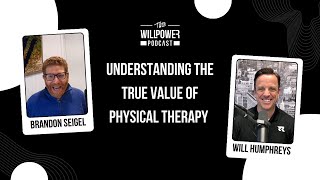
Brandon Siegel argues physical therapists undercharge because they don't know how to quantify their value. Most therapists should aim for around $225 per billable hour, but lack the financial literacy and business metrics to get there, letting insurers capture the profit instead.
Chapters
Rockstars. Welcome to the Willpower podcast. Our very special guest is Brandon Siegel. He's a bestselling author and internationally recognized private practice guru. And I want to validate that I don't just bring anyone on the show. These are people that I absolutely personally guarantee we'll provide you with maximum value. He's the president of WellnessWorks Management Partners. He has 20 years of leadership experience, but what he's known for is leadership, and his niche is more in the pediatric space. But everything we're going to talk about is applicable to the entire healthcare field. Today's message is all about value. Qualitative versus quantitative. Here's why this is important. The single greatest problem in our industry is that we don't occur to ourselves as doctors in our community and we don't charge what we're worth, which is why insurance companies take advantage of us, why it's hard to compensate our employees or for them to even make the money that they would want to make, because we're not about profitability. So he's going to help you understand the difference. And I would have all of your team members listen to today's episode. It's a masterclass on how to understand money and what you can do about it to start making more money and working less. Guys, enjoy the show. So, Brandon, do you believe that physical therapists understand their value?
I don't believe that physical therapists understand how to define their value. And I think as a result, what's happening is we're teaching therapists only how to create a qualitative value. We are not helping them discover the quantitative value. And I think that is the mistake in our current education system is that we don't spend enough time in literally breaking down the equivalency between qualitative value and quantitative value. So therapists are going to come out saying, I'm the best therapist. I am a manual therapist. I'm incredible, all this stuff. And then when I say, how much is that worth? They look like I have a gun. They're like.
And so literally, I think this is one of the biggest barriers, because how can I create a value proposition if I don't have a defined quantitative value that I put on myself?
So clarify that, please, for people who are going qualitative, quantitative, what is that distinction?
So qualitative means of we value the quality of care that I create, outcomes that you feel better after you've been with me. So I'm a great therapist because qualitatively will. You're out of pain. You feel Good, I've done my job. So you give yourself an A plus. Quantitative means that you're able to put a financial number on the value of what you just gave. So you, in your mind, will, if I were able to remove all pain from you for the next six months, what is the value of what you just received and how do you define that value proposition?
So that's like the money part of it. In other words, in terms of me. When you said that, right now we're talking with me having recently injured my rotator cuff and so I have to go to a physical therapist. And as you were talking, I was thinking about what if someone said to me confidently, oh, I can get that completely better. Right. In the next six weeks, but here's what you need to do. What number would I want or be willing to pay? And I guarantee it's higher than most pts would be willing to say.
Well, and I think part of the problem is we don't know how to showcase enough results to allow someone to find that financial value. And so one of the best experiences I ever had from full transparency is when my daughter was young, I took her to a physical therapist and an occupational therapist, who's both, and they actually did an evaluation in front of us and then they did treatment and they were able to Show Within a 90 minute process, a total change in function to, say, buy into our program. So I paid probably $1,500 for the eval and I was like, that's a lot, but let's see. And then they have me sold. I was like, you can't put a number on what this is because what you just showcased was not time, it was not action, it was results. And so if we're really as qualitatively good as we say we are, then why can't we financially value the value of what we're going to create for someone?
Yeah. What are the problems that come from us as an industry not understanding how to quantitatively define our value?
Well, and then, you know, so I told you this earlier, but I'm going to say it again for everyone is I went to a physical therapist today and private pay physical therapist now, kind of to give you some backstory, I was referred to a pelvic floor physical therapist from my doctor. But my wife, who's an occupational therapist, said, no, no, no, no, no, not yet. You're not ready for that and you're going to hate biofeedback. She was like, you're going to hate it, so you don't want that And I'm like, okay. And she's like, you're going to go to this physical therapist because everything in your body is so tight that it doesn't matter what a pelvic floor therapist does. You need this first in order for your muscles and whatnot. And I'm not a therapist, I'm a business guy. But I'm like, okay, yes, yes, honey, whatever you want. I show up to this therapist's office and he's quality wise, he's good. I liked what he had to do, but. But the experience had room for opportunity. And the biggest thing that I think with him was he is a really good clinician. His ability to take a good clinical approach and turn it into a value of experience where I walk away like, oh my God, I just spent the best investment of the day. This like made my day. And it really. He had the clinical skills to do it. He didn't know how to put it into that next gear. And what was sad was when we got to the checkout period where he's like, I'm like, how much do I owe you again? He'd already sent paperwork, I had already signed it, everything. And he said, you know, this is how much it costs. But since you and I stopped him, I said, look, I'm going to be a business coach right now. Don't cheapen your value if that's your price. For everyone else, don't treat me any different. And granted, he knew I'm in the industry and whatever I go, hold your own, buddy. You earned it, you own it. So it comes back to this idea of whether you're a practice owner or a therapist or whatever, you need to be able to own that value. And at the end of the day, we also know when someone's not worth their value. And so sometimes people also overplay their card. And so I bring this up because on the recruitment side, I always let them show me their cards before I show them. I'm a big believer in that. And a lot of. So I want to be clear. I set a magnet when I recruit that says this is what the job looks like, this is what the pay looks like, all those different things. But once they apply, they have to go through what I call the analysis of fit component. And when we are analyzing fit, it starts with what does the fuel that they require and where is that destination going to be based on that fuel, meaning physical therapist, how much they want to make, what does it. Are they doing 30 minute, 45 minutes, 60 minute, 40 minute visits? Do they need AIDS, do they not? Are they in a clinic? Are they in the home? All these different factors that we look at and how hard do they want to work? What does lifestyle look like for them? And that allows us to measure this. But when someone comes to you, will, and says, you know, I'm looking for. And I have this happen all the time. I'm looking for over six figures. And I'm looking to see about 25 patients a week. And I'm like, 25 minimum 25 goal. Because that's a whole different thing. I want to be clear, 25 delivered means that we're scheduling 30 to 35 just so that we. That's our minimum 25 seen to. You might be. I only want 25 scheduled. Well, now you've overplayed your hand. And so it comes down to. It's really easy to quickly identify when a therapist has no way to financially value themselves. And to me, this is the first thing we should learn in life. This is what we should be training our kids for. It doesn't matter whether you're a physical therapist, you're a landscaper, you're a pool man, a baseball coach, or whatever. You have to be able to know how to value yourself based on roi, based on the benefit that you're delivering. And so I bring it up because there are baseball coaches making more than physical therapists right now.
And that's the whole problem we're facing. We're realizing this discrepancy that exists in our industry. The way it looks more directly for students is where they come out of school with a student loan debt because the universities know how to value what they do, you know, and there's a whole debate on that. But, like, that's the. They understand that, hey, listen, for a doctorate level degree, you're going to have to pay $130,000 in money. Students are taking that on, and then they're going into a profession that doesn't know how to value itself. And the. Ironically, the educational institutions are perpetuating to the pts themselves how to undervalue themselves individually. So then you have these individuals and an institution to where people are leaving because they're in a position where they don't understand what they're worth. And to your point, if we knew what we were worth as pts, we would know how to charge appropriately for our patients. We would understand, as owners, how to recruit better because we know what we're worth. But this whole idea of understanding quantitatively what we're worth is driving the majority of all of our Problems. And that's why insurance companies are taking advantage is because, you know, we look at them as the big bad wolf. And I still think they kind of are, but at the end of the day, they're the ones who are taking advantage of just what we're willing to not understand about ourselves, which is what we should be charging in terms of visits, what we should be collecting in terms of cash.
Well, and in my opinion, at the end of the day, the value of ourself is based on, in my opinion, two drivers. One is the qualitative roi, meaning how much is that quality worth to you? So I want to get leather in a car, so it's going to cost me this much more because of quality of life. What's that qualitative value? So why did I go to a private pay person when my doctor referred me to being very transparent? A franchise PT clinic that was a mill. I could have gone through insurance, I could have had a $10 copay. And I opted to go full cash. And you're like, well, you can afford it. I go, no, it's how I value it. I'm not going to Italy, I'm not going on vacation. I'm not doing what I'm doing. I'm valuing it. So one is that component of I put a qualitative ROI on the care I'm going to get. But then the second variable, which is kind of understood is affordability. Can they afford what that qualitative ROI is? And what's happening is our industry is attracting more and more people that say, my goal is to serve those who are underserved and cannot afford quality services. But the problem is when someone, I go back to that book, the Giving Tree, what happens at the end of the day? The tree dies. Like, sorry if you haven't read it, but bottom line is the tree dies. So I bring it to everyone to say, don't devalue yourself where your tree is going to die. It's not your problem to solve their crisis. And I come back to whose problem is it to solve when they have big student loans? Is it your problem, Will, if all the therapists you hire have 60, 100, $150,000 student debt? Did you tell them to get that debt? No, no, no. At the end of the day, the two things I always say is, would you buy a home with a variable interest rate that goes up or down every year? And I bring that up because that's what we're doing with our salaries and our employees, is we hire someone who Accepts our job. And sometimes within three months, six months, 12 months, whatever, they're like, oh, I need more money. My cost of living went up or this or that. I'm like, you need to know what they value themselves at five years from now. You need to budget for where that balloon payment is going to be because it's going to catch you. And I guess one of the things kind of tying back to value I'm a big believer in is I'm like, whatever, I can pay you five years from now, I can pay you today. So would you rather me give you the value of today for today, or would you rather me slow play you so that you get your value today, five years from now?
Right. I love that. Well, and I think the big thing here is that when we are undervaluing ourselves, I don't think we understand that we are hurting the patients, the industry and ourselves. Because here's the thing I think most pts are thinking when they're devaluing themselves. First of all, I don't even think they're aware that they're doing it, but when they are, they justify it, at least. I used to to be like, well, the reason I'm not, you know, charging more for my services or whatever is because I'm not about the money. That's a common phrase in our industry. I'm not driven by money. However, there's a big difference between not being motivated by money and not understanding its impact in my world, like that giving tree, if I'm not, it's just a fuel. It's not good or bad inherently. Right. So when PTs oftentimes undervalue their services, they think they're doing something charitable. So explain the difference, Brandon. In that regard, when is charity appropriate versus what we're talking about, which is paying what is or charging what we are worth to our clients.
So my viewpoint on this is no margin, no mission, plain and simple. And in a world where everything's evolving, if we prioritize what I'm going to call patients, employees, other shareholders and not our business algorithm, we will not sustain what is to come. That is just a fact. And so the reason why consolidation is happening is not because people are getting great valuation and out in the last three years. The reason why consolidation is happening is because people with money are seeing that other people can't do a good enough job. And so how many people do you know when they get acquired by a private equity company within three years, that practice looks totally different than when it was acquired?
Everyone.
Okay. So my viewpoint is if you really don't want it to get to that level, prioritize your margin. And whatever you don't need, you can give away after the fact. So sustain what you have. Get your 15, 20, whatever your margin goal is, and then you can go and give back. And then you can say, I'm going to donate to this cause. And they do scholarships and in which those scholarships go to create accessibility. But the number one polarizing viewpoint right now is, am I here to create qualitative outcomes or am I here to create accessibility to outcomes? But they contradict each other. Qualitative outcomes and accessibility of outcomes contradict because qualitative costs more than accessibility.
Yes, it does. And I think that they think they're being kind and generous when they're making it accessible to all. But then how often do they struggle with patient compliance and attendance?
Well, and this is my other statement is why does. If. If you don't care about money, then why are you starting your own business? So even like. Like this therapist the other day, he said to me, he's like, look, honestly, my number one priority is just to give great care. And I got into this to give great care. I'm like, well, you couldn't have given good care at your previous employership? And he's like, well, no, I was giving great care. There I go, what's the difference? He's like, well, I want to make more money. I'm like, so own it. And I say that in this way of we prioritize baseball contracts, movie stars, et cetera. Do you think the Rock gives anything with the fact that he's making hundreds of millions of dollars to literally show up and say, do you know what the Rock is smelling or whatever his slogan is? And they say it this way, I don't understand why we can't get behind the idea that the cancer doctor should get a million dollars, the physical therapist should get why you're saving lives. Fortunately, I've never had one of my children in the nicu, but if I went to a parent and said, how much is it worth, this NICU to save your child? They would say, I will leverage every penny in my name to save my child. Somehow we've lost that value of what it represents, because I think we have this entitlement that it should just be there. But where in the world did we get this idea that it's. It's universally. And I'm not talking, like, political. I'm not talking, you know, universal health care and all that? What I'm talking is Is at the end of the day, we think that the best quality care should come for free. And I don't understand that mindset. What other industry has that.
Yeah, it's true, because in healthcare, we as a profession struggle with money overall. But no One, like the PTs and OTs, the PTOTs, SLPs in particular, are in a place where we are so confused about it that probably what some people, rock stars that are listening, heard what you just said, Brandon. Some of them probably started to feel uneasy about this idea of taking a family with a kid in the NICU and recognizing that they'd be willing to pay that money because the healthcare provider that we've been trained to be might hear that, like taking advantage. And what I think is important for the listeners and rockstars to understand is that there is a point of which you are taking advantage, and that's not the providers. I say this all the time, Brandon. I believe that every PTOT and SLP should make as much money as they want, meaning they could make lots of money, become incredibly wealthy, because it's only with the profitability that you can do things to turn it into charity. Like you can't, you can't give away what you don't have. And when you devalue your practice. We're not talking about overcharging, but we're recognizing is we so undercharge that charging a fair exchange feels like we're ripping people off because of the way we've been programmed.
Well, and it's interesting because if from my experience, and you may have different experience, when I've gone to places that have socialized medicine like Canada, the people actually value the private pay so much greater. It's this mindset of like, hey, no, I'm, I'm ready to pay whatever it takes to get what I need. But here it's like, well, why isn't my insurance covering it? And part of that is the premiums cost. So I do want to get back to your statement that I do agree that two of the variables, or we'll say ingredients, that's a better word, that are plaguing our industry right now are plain and simple, our health insurance system. Because they're making buckets and buckets and buckets and buckets and buckets of money and there's no regulation, it's kind of like that's an issue. And I think it's also.
The idea that I pay $10,000 a year and get $100,000 of health care benefits doesn't make sense. Comes Back to that growth. So the whole idea of insurance, they're betting on not giving you services is my point. The second thing that is plaguing our system is our health, is our college graduate programs. These programs are not preparing people for the real world. They are preparing people enough to have a licensure and enough to have enough debt to last a lifetime. And it's amazing because I remember when I. What the unit cost of school was when I went to undergrad and what it is now. It's like a thousand percent more. I'm not exactly.
It's insane.
It's insane. And. And I don't. I don't understand. There's a point in which the profession's not worth the cost of the degree.
I agree, and it's crazy.
There's a school, and I won't name who, but everyone here is going to know who I'm talking about. That this school, consistently, every therapist I interview comes out expecting over six figures. And I say, where did you find that out? My school. It's also a school that sells an OTPT degree. That makes no sense to me why someone would get both degrees because I. I can't get double the pay. Like, what's my benefit? I just studied. Now I'm an OT and a dpt.
And I'm sorry if you've bought into that program, but financially you're not worth more to me as an employer. Just plain and simple.
Same with any Alphabet of suit. Behind your name, there's this thought process of if I keep developing my qualitative value, somehow it's going to make sense quantitatively back on the back end. But you and I both know the quantitative value comes from knowing what you're worth at any level. So you can continue to add qualitative value, but if you're. If you're never going to develop your ability to understand your quantitative value, it doesn't matter. You're going as an employer. We're still getting paid the same because you're still under billing. That's the problem. We have a broken healthcare system combined with these educational components. I agree with you 1000% on that. But here's what's funny. When PTOTs and SLPs are undercharging for their services, they think they're helping the patient. Do you know. I know Brandon already knows this, but Rockstars. Do you know who is benefiting from that? The insurance companies. So here's. Here's a. You tell me who's overcharging, right? Last year, UnitedHealthcare in the physical therapy practices and OT practices I've consulted reimbursed anywhere between $50 to $70 a visit across the country. Last year, UnitedHealthcare made $284 billion.
Of profit. So when you are waving away co pays and like, helping the patient, like, lower their fee because you're making it more accessible, what you're doing is giving them more profits, and you're allowing the patient and you as the PT and the owner practice to bear that burden. So this might be a great message for PT owners to give to their PTs and OTs and SLPs and go, hey, listen, listen to this podcast, because at the end of the day, I don't think we're aware of that connection. That's what universities. If universities educate in that. Brandon, how cool would that be if universities were like, let's talk about how to develop you quantitatively more valuable, not just qualitatively.
I think fiscal literacy should be mandatory. I think understanding how to define your value and even just the project of I want you to pick your most prized possession qualitatively, that's the most meaningful to you. How would you quantitatively put that? Could you put a quantitative price on that? And I do think it's just. It's baffling to me that pts don't see that when they cheapen the quantitative value, they don't increase the qualitative value, they actually reduce it. And I give this example of Will and I are going to go out tonight and we're going to get a steak, and. And we go to that steakhouse, and the steakhouse says, hey, it's normally $59.95 for this steak, but we're giving it to you for 9.99 tonight. It's a special deal. If we decide to go in a week, bet later, and they're like, oh, it's 59.99, aren't you like, well, that was a $9.99 steak. Now you're telling me it's $59.99. Like, that doesn't make sense. Why am I paying five times the value? Well, that was a discount. People don't understand discounts as value. They understand discounts as representative of what that qualitative value is to you.
Wow. I agree with that. By the way, Alex Hormozi always says he never discounts his price. The price is the price, because the second you discount something, that becomes the understanding of what the value is. I had a coaching program that I won't promote here. But I had a coach tell me I was working with practice owners, and he told me when I was launching this, he said, hey, you need to charge. Let's start out at $2,000 for six months. And to me, that number felt insanely large. And he goes, no, no, I'm. I'm objectively assessing what I believe the exchange is. He goes, you're undervaluing it at $2,000, but it is your first group. He goes, we're actually going to raise that significantly after you get some social proof. So I started at 2000. After six months, he comes back to me and goes, now you're going to charge $8,500 for the same course. And I thought he was insane. And this is the PT in me. This is the educational system I came through. That was even though I owned a practice, this was how this showed up for me, for. In terms of quantitative valuation. So when I started to charge more, Brandon, you know what happened? Because, you know, this process, the quality of my clients got better. It was easier to sell. It wasn't harder to sell. It was actually easier to sell because when someone sees that you're pricing it high, they. There's an emotional experience for people who, like, only see that $59 steak is like, well, it must be insanely delicious. Right? And so, again, you. There's a lot of people out in the industry who are figuring this out in the B2B space, where there's coaches helping PT, practice owners who are really good at pricing it high and. And bringing the sizzle. But this. Their qualitative value isn't actually matching up to their quantitative, but they're actually doing pretty good because of that.
Yeah. Well, it's interesting you say this, because I had an experience about a year ago, and there's someone in the industry that charge. There's a couple people that charge $50,000 for their programs. And my wife was like, why don't you do that? I'm like, I can never sell anything at a $50,000 package. She's like, why? I'm like, because I'm. Call it spiritual. I'm spiritually not at a place where I put that value on myself, where I would pay myself for that. And I come back to, you have to be willing to buy what you're selling, and that's so important. So I can't tell you how many therapists I find they want these huge salaries when they're employees, and then when they become employers, they don't want to pay the salaries that they wanted I'm like, you were there. That's what you wanted. Yeah, but I was different. I'm like, there's no difference. It's the same thing. They don't know what I went through, and da, da, da, I go, that's not their life journey. But you have to recognize that you've been there. And I think. I think that the, what I call pain in the butt employees that become practice owners, they have the most challenging time because when they start to see other pain in the butt, therapists are like, how dare they? I'm like, you were the same.
They just see. They understand it. Like, when you own a practice, you get the money piece so fast. I would say that most donors quickly start understanding. It's the school of hard knocks that teaches them. This is what the quantitative impact is for you as the owner. And when you're an employee, especially when you come from our educational systems that we go through, Brandon, I think there's this idea of like, well, the owner must be killing it financially. They have no idea that if that owner was paid per hour for what they put into their business, they make way less than the people that work for them in most cases.
Well, and that's why for me, 95% of what I coach and work on is comp structures.
And.
And it comes down to full transparency. It comes down to we want to build a KPI list that they understand. So I say, what is the total people expense for that employee? Not just the wages. That's the emr. That's all these variables that go up and down that create affordability or in affordability related to that employee and how much revenue do they get of what they generate? And you'd be surprised. And so I'm like, hey, you get 40% of the revenue you generate. Like, oh, that sounds great. And then they're like, oh, I'm only getting $58 from UHC. I'm like, yeah, now you know the problem.
You know, so this is important, rockstars, for people to hear this, because Brandon is a clinical expert, which I don't use that term loosely. There's many businesses and coaching groups that are popping up that do not, in my opinion, match that. And I could. And here's why. Experts have either done it themselves or have shown that they can do it for others in a very reproducible way and oftentimes oversell themselves because they understand this quant. This is where, like, the coin is flipped. Where sometimes these quote unquote experts are quantitatively showing up as experts. But qualitatively aren't. And it's like people don't know the difference because they don't know what they don't know. So when I say that Brandon is an expert, I mean he is an expert. How do you help your clients establish this? Because you went through like the KPI piece and you mentioned this, this whole thing about compensation structures. But can you walk us through to some of your things that you help people do?
I have a lot of things I do, so I'm not going to bore you. You can Google me. But the bottom line is I would say a majority of people come to me when they're having trouble with their comp structure. And it all stems from several things. One is they don't understand their numbers. So the first thing we have to do is figure out their business algorithm. Their business algorithm is all of the data that makes up their output, if that makes sense. And so from a quantitative standpoint, what are your expenses versus income? How do you break it down? And how do you build an algorithm so that you're consistently creating the same pizza pie day in and day out? Okay, once we know that everything fits that, and then when I communicate it, I go to Will and I go, will, you're incredible. You're worth 10x of what the industry standard is. The reality is we're a vehicle of change. And in order for us to get to a destination, we have to have the right fuel that we can afford. Right now we're an insurance practice. This is our affordability. It's not based on value. It's not how I feel about you. Now, if you value yourself higher than what I'm offering, I totally understand that. And that's why I do a fit assessment to make sure your needs, wants and desires fully aligned for not just today, but for the next five years. And sometimes.
We will say that the quantitative logistics and needs of comp benefits, everything are not your driving force. And that's what we have to find out. What are the drivers and at what point are you going to feel full in gear? And I bring this up because I have full time therapists that have been working for me for over 20 years. And 20 years of retention is not easy. And people say, oh, you must pay the most. I go, no, I don't. Because what I know is every day you can get a greater dollar somewhere else. That's just the reality. And so what I recognize is that there's enough needs, wants and desires being exceeded because I'm an under promised over deliver Kind of guy that the consistency, reliability and value they see in my organization is greater than just a quantitative comp structure.
Isn't that interesting? Because that's where we can balance the quantitative and qualitative as owners with the people that we're hiring. But it starts with understanding the bare bones numbers is what you're saying, right? Where you go in there and you understand their business algorithm is how you put it, where you're going through the numbers, the nuts and bolts of what they've established, what their profit margins are. And then you layer that with these combinations of quantitative and qualitative numbers. And to your point, like when companies are only focusing on the quantitative is when they find themselves in a race to the bottom because they are, oh, they're charged, they're paying $75,000, I'm going to pay 80. Oh, they're paying 80,000, I'm paying 85. Versus understanding that value goes beyond money. And so it's an interesting problem because it seems almost flip flop from what we were talking about initially with pts, right? Pts are so focused on the qualitative, but they don't know how to quantify it. But as PT owners, they're so focused on that quantitative amount that they're not focusing on their qualitative exchange.
I will tell you though, there's a trend that I've seen in the last probably year and a half that's changing with new grads. And the change is I would rather make less and have a 32 hour full time job.
I've actually seen that recently in the coaching call before this people were talking about, one guy said this, and I'd never heard this before, he said 80% of his employees aren't full time.
So what's happening is different. People are defining full time differently. And I want to be clear, in the past it was 40 hours as full time, then it was 36. Became a trend. Well, now we're starting to see this idea of like, I'll show them, hey, 40 hours a week you get this, 32 hours a week, you get that. Which one do you want? They're like, I want the 32.
And so we're seeing that less people want to put in the 40 hours of time and into a job today. Which is so weird because when you think about it, we have 168 hours in a week. 168 hours and we're complaining about 40. It makes no sense to me and no other industry I see as dauntless. If you go work in the hospitality industry, do you think they're going to be like, oh, you get 32 hours a week? No, they're going to be like, you're going to work 50, you're going to work whatever it takes. You're going to work weekends, holidays. And what if your favorite restaurant just shut down? Because they're like, sorry, We've reached our 32 hours for the week. Like, it's a little bizarre for me, but I think I'm programmed a little different.
No, I'm the same way. I grew up in, actually, the hospitality industry. My dad owned a restaurant, so, like, nights, early mornings, weekends, everything was on the table, pun intended, to get working. And it's. You look at the PTs and they're just in this place of, I don't know, culturally, I don't have a lot to say about it. What are your thoughts why that trend is bubbling up so much?
So I'm going to tie it to our value piece. Okay. The people that are entering the workforce or in the workforce right now no longer have their bucket filled in the same capacity as they did 10, 15, 20 years ago by what they're doing. And I think as media and things have changed and reality TV and this lifestyle of I want to travel and I want to see museums and I want to go on private jets, like things that we never saw 20 years ago. Now, people's. Their whole value system has shifted. And the value system is saying, look, I don't want to just live to work. I want to work to live. And for me, being very transparent, I live to work. I love what I do. If you gave me all the money in the world, I would still work. I love it. It's like there's that cause and effect of being able to create change. I would go nuts if I just was on a golf course all day. Now, I know there's not people like me, but I also was that guy that was busting tables at 15 years old. I grew up middle class, had everything I ever needed. What you would consider like, rich Jewish kid. And I just was born with this grandfather that literally was like, brandon, nothing is given to you in life, regardless of the fact that you're being raised a little bit spoiled. You're going to work and learn. That product of. He was generation depression. So I literally was the only gringo kid bussing tables at a restaurant. And I remember five hours on my feet. I was tired, and they're like, bye, we're going to our next job. And it taught me that if I'm not able to grind and enjoy the grind. My life is going to be limited. And so the number one lesson I'm trying to teach my kids is to find one thing you can create and do for 60 hours a week and be fulfilled. Because if you love what you do, there's nothing that someone can take away from you.
I love that lesson, and I relate to that. I think there is a mindset shift around entrepreneurship, but I do believe that anyone can develop that mindset. But it comes from wanting, understanding what they value. And it's. I'm the very same way. I sold my practice. I'm not in a position where I have to work my 50 hours a week. I choose to out of passion. It's a passion drive for me. And what I find is I love creating possibility with people to the point where when I'm not doing that, I do like to relax from time to time. But it's. It's like the key thing is to find something that you're so excited and passionate about that it never feels like work. And I love that you said, learn to love the grind. Because I have found when I coach companies, I'm sure you've experienced this, but the company in New York that has the team that's producing, like, each therapist is seeing like 80 visits a week or more. They're maybe in sometimes equally or less burned out than the group in Alaska that's seeing less than 40 visits a week. So that tells the audience, rockstars. As you're listening to this, think about that. Why are they burning out? Like, it's because we keep choosing to talk about it, and it's like this message we keep beating as a drum when at the end of the day, back during the Depression, people loved to have the blessing to grind to make money. So, yeah, I love that you explained that. Because maybe what they're just valuing over the years is shifting around this work to live versus live to work well.
And I think that the grind fuels adrenaline for those that really love it. So to me, that grind, it gives me an adrenaline. It's like, oh, let's go.
And there's nothing more rewarding than leaving at the end of the day and knowing you left it all on the table. You know, like, it just. I put it all out there today. And I'm not saying, like, don't take breaks. Don't. I mean, again, 168 hours, I'm not telling you you need to do 100 of 168. But I'm also a Guy that I'm like, if you can't live off six hours of sleep, six hours is plenty. Like, I don't need more. Like, I'm happy you give me six. I can roll with that.
So I need a little bit more just for the audience who's going, what? Because you are a bit of a superhuman, Brandon, I know you well enough to know that, like, if his standard might feel a little impossible, because it is for most. But most people can do more than what they're able to do and love it. And if they could learn to love it, I guess it just depends on what they're being taught. Because at the end of the day, if I work at a company where everyone's acting burned out, I'm going to be burned out, whether it's 40 or 80 visits a week.
Totally. And I think it also comes down to when you're not working, where does your mind go? And I think that's a really interesting thing. So for me, when you listen to music or you listen to a book on tape or you listen to something, where does your mind go? What does it do? My mind is always creating. My mind is always like, oh, my gosh, this would be so cool. Hey, have I. And literally, it's just part of this piece where it's like, I want to take in the world. Have you ever been to a place that you've never seen before? You show up and you're just like, oh, my God, I'm in magic. And so this idea that you have to be grinding all the time in your clinic, I disagree with that. And I believe there's a world where you can justify taking three days, bringing your whole team to a new environment once a year, and getting them reset with inspiration. Because the minute you turn something different in your mind, I feel like all your particles just shift is the way I look at it.
It's true. Travel does that for people. And it doesn't have to be an exotic place. It can be somewhere just different and change. There's all these neuroscientists that are talking about brushing your teeth with the opposite hand or just doing things a little bit different because it complet restimulates your brain to be more present and to. To grow and adapt. But at the end of the day, we're all creators, and I love that piece of, like, where does our brains go when it's a positive place, a growth mindset, when we're not feeling like a victim or suppressed by the problems we face? Our brains organically create and so that idea of like leveraging that and then, but we can't going back to our concept of value, I just feel like as people are listening that I hope they understand that when they, when they can step into their power and charge what they're worth, it's profitability that unlocks possibility.
My point on that, just to piggyback on this value piece is.
No one should judge you based on the value you choose and you should not pick it because someone else tells you this is your value. Don't let others dictate your value. So even when I say the $50,000 thing, I'm envious that he sees his value as 50,000. I'm envious of it. At this point in my reality I can't value myself and call it self esteem, call it whatever, I'm an under promise over deliver person. And the idea of me creating $50,000 worth of value to someone is overwhelming to me. And when I say if I'm creating what I call as an exchange of $50,000 for me, it's like you better be able to create $85,000 to $150,000 of perceived value to justify that. So anyone that could do that, I actually envy them. So just because someone down the street is charging 225 and you're like that's ridiculous. You find your number but don't get stuck where you're valuing yourself based on what's around and what's available value yourself based on what you're willing to fight for and what that tipping point is. And tipping point is everything value is a product of. When that tipping point comes, you're like, I don't need it then.
So my question to you Brandon is what do you think PTS OTs should be charging if they were cash pay, what is the range of money that you would say to challenge them in terms of value? I know it's going to be variable based on what they're doing and all that because it's too hard to float through a single number for all things. But what would you say would be an interesting range for people who are listening to this to go, yeah, this is what an expert thinks that we should be charging cash pay wise for a PT visit.
So I'd rather put it into this perspective. I think that an optimum result is worth $225 per billable hour.
$225 per billable hour, Cash not discounted for optimum results.
Meaning that hey, if you said to me right now in 16 visits, I can get you 75% more functional than you are today. I'll drop 225 an hour for every visit. To get to that point, you got to be able to create an outcome. One of the issues is we're losing our value because we're believing in continuous care, which just means we keep treating until they discharge themselves. You have to have clear and defined value goals, not value based on pay as little as you can for as much. But literally, what is this worth to you? To me, to operate without pain is worth this. And I'm going to throw this out to the crowd. How much would you spend to ensure that you never have cancer in this lifetime?
All my money.
A lot of money, because I'm seeing it firsthand. With family, there is no dollar. So if you have a solution that truly changes the entire quality of life, why can't you value that at $225 an hour?
I agree with you 100% and I bet and I know there are people who charge more because it is. That was a very like fair. I don't even think that was cons. I don't think that was generous. I think that was conservative. In terms of what? Again, it depends on the condition and what we're treating. If someone's coming with a mild sprain who honestly could probably self rehab, that might be different than someone who's coming in with chronic back pain. And you're the expert, that can help break through. But at the end of the day, as people are listening, here's the numbers on that at what Brandon just said. To make a hundred thousand dollars a year if you were working for yourself with no overhead, if you're just like a hundred thousand dollars, that's eight and a half visits a week. So what if you did have some overhead? Great. Turn that to 10 and you're making six figures. Now what if you were seeing 20 visits a week and charging that amount? How much? I mean you're not even at one on one for an hour, which by the way, PT's coming out of school at least. I don't know about OTs and SLPs but PTS coming out of school or training that they have to do one on one for an hour because anything less than that sucks, which blows my mind. I would go crazy with boredom at one on one for an hour. But if I was able to see 20 visits a week and make $200,000 a year profit, that means I'm in a place where I'm only working one on one for an hour, for 20 hours a week. It's insane. It's like everything starts to reverse. If we started to step into our power and charge a little bit more of what we're worth, well.
And I'm going to throw one other perspective out. The average family of four spends almost $7,000 for a vacation to Disney. Whoa, $7,000. And that's like, that's that. So I come back to like, you go and you spend and all this stuff. And I look at it in this way, well, how many people average $50 or more for a check of food, whether it be family or whatnot? Like 100, whatever. Like when a coffee is five to seven dollars, how can we not justify 200? And I brought up the 225 because I'm an under promise over deliver. I want that 225. I want you to come back and say you should charge 275. That's always my goal is you could have charged more.
Yeah. And people, if they started stepping into their value, their clients would show up because they're like, obviously this guy. Part of what you guys are hearing, Rockstars as your owners and as your pts, I'd have your pts listen to today's episode. Is that the reason you're struggling with your patients and the reason they don't show up is because they don't perceive the value. One of the easiest ways we can help them understand and perceive our value is by charging what we're worth. If you already. This is assuming you can get the outcomes.
If you're.
If most of your patients are bringing you cookies, it's because you can get the outcome. So what if you could just start owning that and start charging what you're worth? It only would you get better, happier patients, ironically, they're not going to be upset that you're charging them more. And you might be going, well, what about the people who can't? Great. Once you have profitability, you'll have enough money to know other ways to support those populations. But for now, showing what we're worth only helps the patient, you and the industry. And I love, Brandon, that you're going into this. How can people get a hold of you, Brandon? Because I think there's. I would say this. You're one of those people. I absolutely validate. What if a PT owner wants to work with you and understand more about what you're talking about?
So easy. WellnessWorksMP.com is one of my companies. Also GrowthCodeConference.com, i've got a conference coming up in January. Will's going to be there and very excited. It's four days of learning. Everyone that has gone to this conference, honestly, they're like, it's an experience like no other. It is technically geared for pediatric private practices, but 99% is applicable to anyone. And the concept is just bringing people together with thought leaders, collaboration, and honestly pushing your mind to the break that is part of the growth code is how do I push you so hard that you're ready to just run through fire with me? And yeah, those are the ways to reach me.
Yeah, I want to validate the event. I'm so glad you brought it up because I was worried you wouldn't. But that event that I get the pleasure of speaking at has been told to me by people across the industry that do not BS me that it is the single greatest event in the physical therapy industry and occupational industry and in the speech industry. And so I initially reached out to you just being like, hey, man, how can I support it? Because I was deep down dreaming to speak at it. So the fact that I get to be a part of it is huge. So rockstars come visit Brandon and I at this event at the end of January. Can you give them the dates and the location?
Yeah. January 30th to February 2nd, it's going to be in Miami, Florida.
Come on.
Literally. Coral Gables, Florida. Beautiful from morning to night. We are in it to win it. And so growth codeconference.com I'll put that.
In the show notes as well. Brandon, it's been such an absolute pleasure to have you on the show. I have to have you back sometime.
Absolutely. Thank you.
Thank you so much for taking the time to listen to today's episode. As a thank you, I have a gift. In today's show notes, there's a link for you to join the stress free PT newsletter. This is a comedy newsletter for anyone who works in healthcare. And of course we're gonna have Comedy Bits. We're gonna have inspirational stories, Leadership Bits. It's gonna be a weekly newsletter just to lighten your week to help you do what you love with more passion. So click that link below and join that newsletter and we'll see you in our next episode.
More from Will





Highbar PT’s Blueprint for Culture, Brand & Growth With Michelle Collie and Dave Pavao

Highbar PT’s Blueprint for Culture, Brand & Growth With Michelle Collie and Dave Pavao




