Health Care Hero Jan 2021 - Dr. Rich Severin
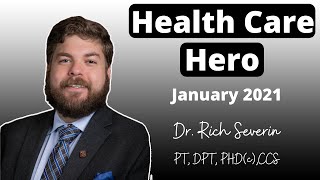
A recorded January 2021 YouTube interview (uploaded Jan 29, 2021) in which Will Humphreys presents Dr. Rich Severin as the Healthcare Hero (Jan 2021) and interviews him about his path into physical therapy, the mentors who shaped him, and his current roles (clinician, professor, researcher, influencer). Dr. Severin outlines a vision to reposition physical therapy as a "beacon of health" in communities — expanding beyond clinic‑focused musculoskeletal care toward health promotion (cardiometabolic risk, physical activity, sleep) — and identifies barriers: limited public awareness, uneven geographic/access distribution, financial/tuition burdens that reduce diversity, reimbursement limits that discourage addressing obesity/physical activity, and underuse of basic vitals in outpatient settings. He emphasizes mentorship, generosity, mastery, and community identity; practical resources mentioned include ptreviewer.com, social handles (PTReviewer / PT_reviewer variants) and MedBridge content. The interview closes with calls to "be a PT in the community," focus on mastery, and share joy and mentorship.
Questions this video answers
January 29, 2021 (video/upload date mentioned in metadata).
ptreviewer.com (PTReviewer).
PTReviewer (Facebook/Twitter) and Instagram handle reported as PT_reviewer; MedBridge author/code: 'ptreviewer' (one word).
He said he 'came to PT school in 2010.'
Chapters
Hi, providers. Welcome back to the channel. The January 2021 Healthcare Hero Award goes to Dr. Rich Severin. Dr. Rich Severin is an amazing physical therapist and hero because as you know, on this channel, we recognize the heroes who think a little bit differently than others, who are able to increase the impact on their communities, the industry at large, as well as their patients. And this man is a beautiful example of this award because what he has built has been done to serve others. He is someone who has learned from mentors, who is now mentoring a lot of different people in the various capacities. But he is incredibly humble about it. And so as we listen to him, I want you to focus on a couple of things here. He talks beautifully about a vision for physical therapy as well as the barriers that we must overcome to get there. And if as a new grad or a student, if I had heard that, I think it would have dramatically changed my perspective as well as help me discover what's possible. Remember, what we do on this channel is to help you increase your income, impact and freedom. But ultimately what we do is help you think differently so that you can discover what is possible. And this is a wonderful interview that I am so excited for you to listen to. And let's get to it right now.
Doctor Rich Severin with us here today at the Profitable Provider. Rich, how are you doing today?
Doing pretty good, man. I'm excited to be on here. It's, you know, just looking at the people you've interviewed on here and Heidi and other people, it's quite an honor to be on here and, you know, anytime to give your, share your thoughts or your voice with other people, it's always a privilege. Yeah.
You are the official. For those who didn't catch it from the thumbnail, Dr. Severin is the January 2021 Healthcare Hero Award winner. We are so grateful that you took some time to share with us some of the things that you have created, you have done. The reason we have created this award, the Healthcare Hero Award at the channel is because we want to highlight those brave men and women who have gone out into the profession who have made a greater impact through their service, through what they have created. Rich is no exception to that. What he has done has, you know, he's been created as a physical therapist, he's created himself as a professor. He's also a huge influencer. And what I have told him, and I will share this because we had a brief conversation beforehand, is that Dr. Severin is easily one of the most significant influencer to the rising generation of physical therapists. So, rich, congratulations. Thank you so much for accepting this award and for. For the viewers and people who don't know you, I'd love for you to introduce your background. Could you talk to us a little bit about. Let's start off with why you became a physical therapist and go from there.
Yeah, It's a very long story to that and.
Without getting too deep into the details, but I didn't even know what a physical therapist was really until.
My junior year of college. And like, I, you know, I grew up in a pretty rough. Rough beginnings or humble beginnings, rather, in Philadelphia. But I grew up in a major city. I played sports. I played sports through college and, you know, I had. I had some injuries. My brothers, you know, had some injuries, so. But we never saw a therapist for any of them. And I, only by happenstance encountered one. I was at Penn State as an undergrad, one of my athletes. So I started out in athletic training. Well, I started out in biology and then quickly realized I didn't want to work with drosophilia and do, like, stuff like that. I mean, I was doing some pretty, like. I mean, my work study job freshman year was in a plant pathology lab with my aunt and the PI who was there, Tim, doing like, I think we were doing apple research and citrus greening research, and I was doing cereal planting and mixes and stuff, simple solution mixes and stuff like that. But, you know, I was like, yeah, I don't think I really want to do this, like, for another three years. Like, I want to work with, like, humans. Like, I. I only knew, like, physician and surgeon. I didn't. And I knew about pharmacists, but, like, I don't want to do a pharmacist. And, you know, then I knew about athletic trainers because I was an athlete. But.
One of our athletes had to go. And like, the way Penn State works is you have this, like, probationary period when you're applying to the athletic training program. So I switched from biology to Kinese athletic training. And one of our athletes needed to get rehab and we went to a clinic and they were working with this therapist there by the name of John Miller. John Sayers. Miller or Sayers, John Miller called Jime. And they were doing. They're doing rehab. And I was like, this looks awesome. Like, who is this person? Is this an athletic trainer? Like, is this like a physician? Like, what is this? Like, no, that's a physical therapist. And I was like, oh, that's kind of cool. I kind of want to do that because they're doing like, you know, manipulation stuff and all kinds of cool stuff. And they were in, like, an office setting. They're moving around. I'm like, that looks taught a little bit. Had a PhD as well. I was like, this looks kind of cool. Like, you know, I could do this. And then so I switched out of athletic training because they wanted me to stop playing sports, stop working, and you could only do that. And they're like, the message, like, don't use athletic training. Stepping stone to another career. Like, I get that. Like, that's their department. But I was like, I don't want to be an athletic trainer. I did this to go to medical school anyway. So I switched over to.
The general movement science option, Applied to University of Miami with the plans of, like, staying in South Florida, working with athletes. And like, I had no, no plan on doing anything in cardio palm or living in. Where I live now in the Midwest.
Don't really like winter, to be honest with you. I don't like cold weather. But, you know, I had some very great mentors of mine down at the University of Miami. And Larry Caillen, who by chance came there that year that we took his therapeutic physiology course that showed to me that PTS did stuff with heart and sin lungs. And I was like, I didn't know. That was like something we did. And then I had Merrill Cohen, who was the first of three specialists in our profession, all three of which in cardio palm, that, like, that was cemented my interest. I also had some early mentorship from Patricia Tedrick at the University of Miami Hospital, who's also another ccs. So long story short, I had. It was just mentors and, you know, early experiences that guided my interests. And I, you know, of course, have had opportunities to pursue those interests. So that's kind of what led me to where I am. But I, you know, we can get into this about, you know, lack of awareness, because, like, I think we talk about this lack of a public awareness of our profession. Like, I can speak to that, right? Especially in certain demographics. I grew up in a mixed, mixed household and in an urban environment. Never saw PT until I went to college. Like, played sports, had had a back injury as a. As a college wrestler. You know, my brother had a broken. My brother broke. It's broken pretty much every bone in his body. But that exaggerated, exaggerated.
He constantly was injured.
Yeah, he was constantly injured. And it was all like, fractures. Like, weird. I think his guy spraying both his ankles at the same time. Like, amazing athlete. Just like I don't know how, but I'm kidding. But.
We never saw pt and, you know, it makes me think, like, yeah, like, we don't serve some communities as well as we probably could.
Yeah, it's so true. I love your journey because, you know what? Like many others, it's this journey of, like, discovery for physical therapists is. It's not like we go out. It's like, you grow up, and it's like, I want to be a lawyer, a doctor, or a physical therapist. You never hear that, because they don't even know. People are like, is it a massage therapy? People have these really bizarre concepts of what we do. And you went through that path in your way of discovery, and I loved how you discovered it. The second piece is the mentorship side. Like, you didn't say much about those names, but I felt the respect as you mentioned their names. You couldn't help but mention them because they obviously had a huge impact into who you are today. What were some of the core, like, concepts that. Not like, you know, not so much treating concepts, but what were some of the values that you learned from these mentors collectively?
Yeah. And I'd say, you know, as well, like, with my, you know, it was them. And then, you know, my mentors that I've had at the VA in Madison, Wisconsin, and Jim Carlson, you know, and Stacy Brixton, and then, of course, at UIC with Shane Phillips and Ross Rena and Aaron Kyle, you know, but. And Tracy Maynard, but the.
You know, the. Oh, Bart Morgan can't skip. But all of them. And I think that also speaks to a point that, like, it's. You know, you gotta. You're gonna have multiple people that influence you. Right. And you take a piece of all of them and. But I think. And they're all unique. All of them provide different, unique things that are. Have made huge influences and changes in my life and directed it and provided opportunities for me to direct it in a different way. But the core of it was they were knowledgeable, you know, incredibly knowledgeable about their.
Area of practice or profession, and they were passionate about it. Their energy, their enthusiasm for what they did was just.
Electric, contagious.
Wow.
And it rubbed off on you. You couldn't, you know, you couldn't not be interested in that topic when they were talking about it. And I try to try to emulate that, you know, in my. In my mentorship, in my education. And they were generous. That's probably the biggest thing. They're generous with their. Of their time, generous of their knowledge. You know, and their mentorship. I mean, Larry, or I call him Larry now. I could think. I can think of countless, countless times I would just hang out in his office just asking questions, and he would always just be willing to talk to me about them. And we led to an independent presentation we gave at CSM in addition to my research, stuff they had to do at students in Miami, and Same thing. I mean, all of them. I mean, there's so much. Was just. I mean, another bit of advice to students is just reaching out to people and asking, because I think a lot of that is just. You kind of have to take the initiative. But as someone who is in a mentorship role, in any capacity you have, I think those are the three biggest things is, you know, you gotta know what you're. Know what you're talking about. Like, that's pretty important. People can see through that pretty quickly.
Yeah.
And then, you know, and, you know, be passionate, you know, and then be generous. And I think there's. There can be, you know, maybe you don't have to necessarily be excellent, all three of those things, but maybe two out of three, you got to be passionate and generous. Like, that's probably the. Probably the core elements of this. All of them.
Yeah. I love. Man, this is gold. So here's the thing about what you're saying that I think is important for people who are watching and listening is that, you know, we are highlighting heroes, people who've done way more, who've been able to influence, and the journey is through discovery and mentorship. No one becomes a hero without the help of multiple heroes coming together to help educate, inspire all those things that were done, and you now are in a stage where you are now influencing others. So if there's a theme for today that I think is, like, the topic, it's about positive influence. It's something that obviously you've experienced as. As the mentee, and you're on the other end of it now. Can you talk a little bit about how you mentor in both your. Just talk about some of the things you're into, and I'll give the audience a little bit of a warning.
Rich is very humble around these things, so he's involved in so many things that we might dig a little bit here. But, yeah, talk to us about what you're doing professionally and then otherwise on social media, all the things that you're doing to help influence positively.
Yeah. You know, and I'd say the core mission for me is kind of what you put out into the world. Right. Kind of. Comes back to certain. To a certain degree, and what you've received, you need to put back out, right? So I've received, you know, from the time I was a little kid, right. I was. I received, you know, I mean, growing up, as I grew up in pretty. Pretty humble beginnings and, you know, opportunities were provided for me to. To do things that, you know, no way my family would have been able to afford or do or have access to us. So, you know, I learned early on that, you know, I became very grateful for those things and the. At a firsthand experience of the value and the impact you can make from being. From being generous, right. And be generous with your time. So that's a lot of what I try to do, you know, with mentoring people. Like one, like understanding, you know, realizing where someone needs. Where someone can go, right? Like, where they can go, you know, and then what. What I can do to help along that path. Because the way I view it, you know, it's.
Yeah. I never view.
And this was with any interaction, you know, that helping someone else be great, right? Or someone else just being great in the same field helps me too. We're all part of the same profession. Like, you know, someone. I know the old adage, right, in the Bible, like, he. For, you know, for him to increase, I must decrease. Like, that's true to some degree. But like, everyone. If one person's successful doesn't make you unsuccessful, right? And, you know, lending your expertise and being generous with your time and being committed to someone like that, that. That's good and that's good for everybody. So if you can help, help. And. Yeah, so that's a lot of what I. What I do. Like, I try to be. I mean, some people who, you know, will say, like, it's. It's kind of, you know.
How to phrase this? Like.
There'S thankful of, like, the. I guess the generosity. It almost seems like, you know, kind of over the top. But, like, you know, I go out of my way to, like, make sure people that, you know, are near to me and that I, you know, I care about that. You know, I do everything I can to help them along their way. Right? Because, I mean, teaching, for example, I have a few people that have, you know, have taught with me as adjuncts. And like, I've. Every year we have a plan. Like, all right, what's. You know, now that I have it, you know, core faculty positions, and I've been teaching for a while, I'm like, all right, like, let's get you. Let's get you to that level too. You know, let's give you a pathway to doing that. Let's see how you can take on a bigger role. And then, you know, when you're, whenever you're ready to apply, let's, let's strategize and get you in a position where you're, you're going to be successful. Don't have to do that, right. You know, and then again, I, you know, I, and with other things too, with research, just, you know, so, yeah, it all goes back to being generous and again, putting things back out that you'd like to have come back to you as well as, you know, emulating the things that you've, you've received that allowed you to be successful. Was it giving it, pay it forward, giving it back, whatever the cliche word is, right.
But what drives that for you? I mean, I get that sense of generosity. It's abundant that obviously you've had some experience receiving that. But like, I don't know, like, you just light up when you're talking about it. What is it that's driving you to pay it forward?
Feels good, man. I don't know, like, I don't know, like it's, it's the right thing to do, right? I mean, life's about trying to do the right thing as many times as you possibly can, right? And again, like, you know, I, I, I really believe, I mean, we can get down in the deep, the deep core missions of what drives me, but probably, you know, a little bit of the Catholic faith and, you know, your life through works, you know, and, you know, that's, that's an important thing, right? You know, great or grace through works, right? That's a big part of it. But I just think it's a, I just think it's, it's good to do good things, right? And like I said, like, it.
Someone else being successful from, you know, and me providing an opportunity for that, like, even though maybe I don't get like, you know, like I don't get like a check mark on my CV for it or something like that, but like that, if I realize someone, you know, could, could do really well if they were just connected to that person or if they, you know, if I could give them an opportunity to help teach or give them a little bit of guidance on, you know, how to align their infographics, right? Or a little bit of guidance on a publication, a little bit of guidance on here or there or just, just some encouragement, right? Like, that's, that's good. You're putting good out into the world, right. And like you live in the world, right? So.
You know, it serves you, it serves you to put it out there because you live in it and it's important to make sure that you. Yeah, totally.
You know, and I mean, maybe there's a, I don't know, like, you know, maybe there's, I mean, there's the ego side to it. Like you have a vision for how you want certain things to kind of look right in the world. And I'd like the world to look positive and again, those, you know, charitable and generous and so you try to sculpt the world into those things. Right. Like things that you value. And so, yeah, I mean, but yeah, it just feels good to help people. Right. That's kind of, I wouldn't, I don't think people do things they don't enjoy. Right. Or feel good about doing generally. But.
Yeah, it just, I have a vision for what I'd like the profession to be and everything that I can do to shape it or direct it in that way, I'm gonna try.
Right, well, let's get into that a little bit because, you know, as you were talking about, you know, what motivates you to do it. I love the simplicity and the power of just. It's the right thing to do. You told me before, you know, what we put out into the world is what we get back. Of course. But it's interesting because you have this vision and you are a significant influencer, right. You're a professor at multiple universities. You've created yourself.
In some social media spaces as an incredible influencer, but you've also referred to yourself as the anti influencer because it's not something that you like a lot of people. You're not out there looking to stand on your soapbox. So before we get into that whole comment, which I think I really want to talk into, let's talk about your vision. Where do you. Because physical therapy needs help right now. Where do you see us going?
Well, I will say I do get on soapboxes, I will say that. But the anti influencer thing is 100% true that I don't do things to gain a following, but my vision is.
In a broader sense that we really become a, a well recognized the public's. Because I think we have a pretty good. As much as people may say.
You know, I think we have a pretty good footing within healthcare. I think most healthcare professionals know who we are, know the value we provide. I would say that's still, I mean there's still sort of certain battleground things here or there, but I think that's more just that's power versus recognition. I think people understand what we can do. I think a lot of that's just holding onto power, but that's a whole separate ball of wax and how money influences things. But that's a whole separate thing. But I'd like to see us in a place where we have more autonomy, where we're a standalone recognized profession that does more.
That does more than just.
Focusing on rehabilitation, which is a core element of what we do. Getting more into health promotion.
But more or less being more of a pillar within our communities.
Supporting health. And that can look very different depending on how you approach it, but a.
Beacon within a community of health. And that's where I want us to be better recognized as. And initiatives that I'd like us to be more involved. And I think we are doing a better job of that now.
And then realizing which kind of goes within there, you know, from our training, whether it's within our training as, you know, entry level pts or not like that, you know, that we change the narrative because I think this exists too in our profession that if you're not treating patients full time or whatever arbitrary number of people get because people say like, I'm not in the clinic anymore. They're like, I still see patients like. And created the clinic that I operate in. So. Or clinical service that I operate within.
But that there's more to PT than just that. If you're doing. That's part of the special issue we just published or we had published about basic science and applied physiology that, you know, just a case example. My mentor here, my PhD mentor, Shane Phillips, does more work in basic science. He does stuff with like.
Dissected cannulized micro vessels. And I do more stuff with mechanistic work and respiratory physiology. And.
He would always joke that I don't even fuck a PT sometimes. And people would say that like, I don't go to PT school to work with mice or to work with cells or to do this stuff. Like it's got to have a direct. But I'm like, yup, you got a PT degree, right? You're also in a PT department. And like, if you're doing research and you got a pt, you're a pt. That's PT research, right? What you're doing, right? With the coaching and the billing, like that's still PT practice in my.
Yes.
And you know, even education, that's part of pt. And I think removing this Dichotomy of that or this view that PT is just.
In the clinic. It's not. It's just not. And I think that opens the. Because there's other things that you can do. If we limit ourselves just to the four walls of a clinic, and even a clinic doesn't have to be in the traditional sense, that we view it totally of evolving that to multiple different avenues, that's where the.
Higher opportunities for compensation or money making are.
Right.
Because there's other ways to make money as a pt. Product development. That's still part of being a pt.
You're training. And I tell my students this, that we don't give you. You're training through PT school. Yes. Guarantees you, you know, a spot if you graduate to take the licensure exam. Right. But it's not just a rubber stamp to practice. It's a. It's a way of reasoning. It's a foundation of knowledge that is applicable anywhere you want to use it. And there's a lot of places that could use your knowledge and expertise and beyond. Again, just the. Just the clinics. So that's my vision of. Of really encouraging that.
Yeah. So that's my vision.
You said it. I love the description of it, what you said in that phrase that, like, landed as maybe something we should put on a flag somewhere is a beacon in healthcare. Like, I love what that does. And then you went right into addressing some of the. One of the issues regarding the dichotomy that people perceive, like, what is it to be a pt? Even PT graduates, new students are thinking most of the time inpatient, outpatient. You know, in our last month's interview with Heidi Jananga, she hasn't treated a patient in forever and she's greatly. And she's still being in PT by solving problems in it. And like, you've done. And it's very similar to what you've done. You know, you're. I actually don't know if you're currently treating patients in addition to everything else. I'd be shocked if you were.
Wow. Same on Monday and Fridays. Yeah. How do you. Mine, like, ties into my research. Like, it's a separate clinic, but like bariatrics and stuff like that. So, I mean, that's. Yeah, that's my passion too, but.
Amazing.
Yeah. No, it's.
Yeah. You know, I mean, people would say, like, what is. Like, it's. What's the whole. Like, we have the banner image in there. It depends. Like, it's whatever you want it to be. Right. Like, you can go treat Patients. Cool. You can, like, go do research. Cool. You can go be a business person and, like, do things within health care, even in things that, like, maybe aren't. That aren't, like, specifically, like, adjacent or tangential to, like, pt. Like, you can do things like, I think, you know, I have colleagues there. Health policy.
Yeah.
Why. Why isn't that a bigger thing that impacts us? I'd love to see more PTs involved in governance, in health policy. Yeah, right. Like, why not?
Well, and it's. It speaks to us, thinking about ourselves from a place of.
We are equal to the rest of the members in the healthcare community. That's part of this is that sometimes, for whatever reason, culturally, we've adapted. This thought of, like, we're a referral that you send out to not a doctor in the community, and that really influences some of this lack of awareness.
I agree that, you know, those technician days are over, baby. Like, I mean, we're a profession. Like, I mean, I think that's where some of the resistance, some of the inertia, right. To these views is that we were, for a large part of our history, you know, a profession that was dictated. Right. Like, this is the order that you follow.
Right.
And I think a lot of professions are in that similar growing struggle, right? Nursing, to a certain degree, you know, physician's assistants are in that. They're in a pretty active fight with that now.
And even pharmacists, you know, that, you know, this is the prescription you follow, and you. You fill this prescription. But, you know, but, you know, we have a very working knowledge of what we do. And you can take a little bit more autonomy because we're no longer. We don't just, you know, right now, like you mentioned, it's not, you know.
What'S. What's old. What's the old script that you would get, you know, treat. Yeah, Evalon, treat. Or you have prescriptive treat, like ultrasound, heat, all that stuff. Like, yeah, it's like, well, all right, well, like, you decide what you're going to do. It's a referral. It's a consultation with a subspecialist.
You know, it's not a. Not a prescriptive thing.
Right. It's not like the family physician sends a patient to a cardiologist with, I want you to do an ekg, and I want to make sure that you do the following examinations. It's like, no. He's like, hey, you need to go see so and so, because they're great, and that's what we created. And maybe don't live up to as a profession. So is there any other problems that you see in the profession that, like, that are limiting us? You mentioned two things that I heard, like community awareness about who we are and what we do. But you also mentioned, of course, the idea that what defines physical therapists in terms of their professional opportunities to help the mission of physical therapy, not just the industry, but the mission of it to become a beacon in healthcare. You've mentioned. Is there anything else that you see as glaring problems that limit us from getting to that vision?
We can't talk about any of those things without getting into representation and the financial. The financial barrier, really, or financial constraints, you know, that. That's a big thing. Like I said, like, I grew up, you know, in a.
Urban environment, you know, low ses, low middle ses, and there were no PT clinics. You know, I think there was a. I think there was like a chiropractor, like, sort of. I don't know, maybe had a PT sort of there. I didn't know. I still don't even know what was there. Like, I grown up as a kid and, you know, and I mean. I mean a little bit of story, like my mom, you know, as a. As a high school.
High school or college, she had two accidents. She got a car accident. One in particular got a car accident. And she saw a chiropractor, I guess, with a chiropractor. I'm not sure how it was advertised. We learned it was a chiropractor. And she went for like a year. Never got really, you know, better. And, you know, that's just like, that's just the thing like, that always eats at me that, like. And I went back and looked at, like, how she was, the treatments she was given, which are completely bogus. Yeah, but. And you know, that. That's one of my missions too, is addressing that so people don't get taken advantage of. Because that does happen in certain communities. You get people, you know, that there isn't. There isn't good. There may be access to care, but the care is not good. Right. It's not good. And one that hurts that community big time because they're not getting the services that they deserve that are entitled to. And it hurts us, right. If we're PT in that space providing bad services or again, not going to those things of being genuine or generous and knowledgeable and passionate. Right. Like, and then because patients are. You've been in the business world, you own the clinic that you're. They're your biggest marketing tool.
Oh, yeah.
And that just, you know, that perseverates, that perpetuates, you know, the, the narrative about our profession. Right. And I think that's. There's a lot of that in, in not just pt. I don't want to, I don't want to just, you know, wrap us. It's what I know the best because I am a pt. But you know, it happens in other, other disciplines too that like you know, these community and sometimes no fault of the other provider, they're in an environment that does not allow them to be successful.
Right.
But you know, it's. Or as passionate. Right. Or generous or maybe doesn't attract most knowledgeable people and. Yeah. And it just leads to a situation where certain disparities are just there. And I think that's a big problem. And I don't think we talk about that enough. You know, we. It's interesting I post about this because I've seen this like I've been in the profession now. I came to PT school in 2010 and you know, you look at posts for where there are jobs, where there are high paying jobs, right. It's in very rural areas.
Or very rough urban areas. Right. The jobs in the cushy suburbs, the jobs in the metropolises let's get taken up and everyone wants. It was like, oh, the job market saturated. I'm like, it's not everywhere. Right? It's not everywhere. You know, and I think that's a bigger thing we need to talk about. Like how do we encourage people to get out into those communities? Because I have friends that said they work in like, you know, rural Oklahoma or Idaho. Like they've been trying to find someone to work here for like two years and you know, no one wants to move out there. And I think, you know, then the cost, like it's getting to a point, if it's not already at it, that the cost to be a pt it's almost not worth it in some degree, to some degree. And you know, I think, you know, I don't know where exactly the place to blame on. I don't think it's ever a single person. I think the federal government has some blame to, to take for that. Universities had some blame to take for that and our profession as a whole has some blame to take for that. You know, in trying to, you know, put a little bit more influence and saying, hey, like we're going to price ourselves out or price our. And then price out people from lower socioeconomic demographic or underrepresented minorities from pursuing our profession. Because you don't get the same. We don't get the same policies as physicians get for tuition reimbursement or we don't get paid the same and same even thing for nursing. If you look at, I think, demographics for nursing, way more diverse than pt, same thing for pta. Right. Because I grew up in that environment. If you grow up when you don't have a lot of money, you're not going to go to something you're very conscious about what's going to give you a good return pretty quickly. So I think those are big things, a representation where we're located and then, you know, the cost, like we gotta do something about that. And I also think that ties into changing who we are as a profession because, you know, people could, people could disagree with me about this until they're blue in the face. And I will stand firm on this, that if I think our profession.
Has over leveraged musculoskeletal care, I think we've over leveraged that. I think that's an important part. But the health promotion aspect has been severely under leveraged. Let me ask you this.
You worked in private practice and now here's me getting on one of my soapboxes. Right. But let's do it. You got.
You worked in outpatient practice. Right.
What would you say would be the percentage of individuals coming into your clinic, irrespective of diagnosis, that had some sort of cardiometabolic.
Impairment or health condition?
A large percentage.
Would you say it's rare that they wouldn't?
No, as a matter of fact, like, you know, it's almost when you're doing the medical history, it's like you start writing in htn, you know, hypertension, as soon as they show up because you're above a certain age, it's almost given that they're going to have some aspect of that.
Yeah. And if you look at the general population, you know, the population statistics for obesity and overweight.
Yeah.
66. You know, it's 66 to 70% overweight, obese, 40% obese. 20% of people meet the recommendations for physical activity, which is both resistance training and anaerobic exercise. And then you look at sleep, which. So the crazy thing is these things are incredibly common. Impaired sleep as well, which. That's also a big thing. These all affect a lot of the conditions you're seeing. And I'd even say. And I'd wait. And I've been on the record of saying this.
And there's people that would agree with me who are in more in that musculoskeletal, purely musculoskeletal space that a lot of especially chronic musculoskeletal pain is an output of some of those lifestyle factors that are being not addressed or under addressed or maybe out of balance.
If you're not active, if you're carrying too much adipose tissue, not eating well, you know, if you're not sleeping well, you know you're gonna have. You'll have more chronic issues and pains kind of within there especially.
Sure.
Especially with the sleep. And you know, as of right now, you as a PT for a referring diagnosis. And I know this because I work in bariatrics. What I do is I work with patients going into weight loss surgery and following weight loss surgery.
That I can't. An emitting diagnosis for me can't be obesity or a billing diagnosis. I can't bill with an ICD10 just for obesity or hypertension or even in medicine, physical activity isn't still something that's a broader issue. But.
If I could demonstrate some sort of muscle weakness or impairment, I can build for deconditioning or muscle weakness. But like.
If I think, you know, inactivity, if I think maybe obesity, you know, is contributing to some of their issues, I can't, I can't bill for that. I have to find, I have to do this rat race, you know, thing to figure out how I can get reimbursed for the services that I'm providing. They're benefiting my patient.
You know, and then because of that, I don't think we do enough because it's not a clear connection. We don't lean into that as much as we possibly could. And I don't think because of that, because of that, patients don't see us in that vein. And so if you want to talk about reimbursement, if we could address the cardiometabolic epidemic in this country, especially in certain demographics, that's where the money is. I mean, the AHA and the American Heart Association, American College of Cardiology and their revised guidelines that everyone got up in arms about because they changed the blood pressure cutoffs and they moved them from 140 to 130. And people like, oh, they're just kind of over medicalized and over prescribe people. I'm like one. Well, getting people enrolled in the medical system who have hypertension, even above 125 is a good thing because we know the predictive values of untoward events with hypertension. But within their guidelines, the first step for all of them, unless they had a significant risk factor for stroke was our heart attack was non prescriptive means. However you look across the country, there aren't enough cardiac rehab facilities. You can't get admitted for hypertension. You can't, but they can't go. And there's PT clinics everywhere and we're already seeing those patients for other things. But I can't build a goal for blood pressure, I can't build a goal for weight loss. I can't, I can't write a goal for sleep, I can't write a goal for physical activity.
Right.
Make sense of that. And I think, yeah. And that's where we could go big time as a profession. So, yeah, I really hope people are.
Listening to this because, you know, it's interesting. Again, the whole point of this, of us recognizing the heroes in our industry is because the heroes think differently. You know, like whatever else we do in terms of serving people, you know, Rich, it's like, you know, maybe we're helping them. In your world, you're helping them create a community on Facebook so they have someplace to learn and grow. In my world, I'm helping people increase income, impact, freedom. But regardless of that, who we are as people trying to influence is that we're trying to change how people think in our profession specifically. Because if we occur to ourselves differently, not some service that gets referred out to doctors in our communities, then we can discover what's possible. And people like you, who've been doing it so long so successfully, you are able to get a clear picture of what that vision could look like. And you just went down a whole descriptive piece around what we should be doing as a profession, which is helping healthcare not be reactive, but proactive. What would it look like if we had people saw us? First of all, we'd have to see ourselves this way and then we'd have to educate the community. But if people, and we saw ourselves as those influencing individuals just in that healthcare space, how would it look like to have people come to us once a year for a physical therapy examination as a checkup to be able to look at the muscular imbalances, the musculoskeletal systems, but also the cardiovascular and all these other related components that we could guide them back on? Our healthcare industry would be massive.
And the great thing is too.
Especially for our, especially for blood pressure, we've got prognostic data.
That suggests if you demonstrate post exercise hypotension in recovery, after you've rested after exercise, your prognosis for improving your blood Pressure with exercise is pretty good. And we're the only profession in healthcare that can systematically do that because we have bikes, we have all these, and our patients typically warm up on something, even our. Even at the eval. So we have the tools, we have the infrastructure. And I noticed, I published the research. We won an award for that paper that suggests this.
Along with that pair bro people, just to show that where we need to change things. Like, the vast majority of outpatient PDS don't even measure blood pressure and heart rate. So I think that's getting better, though. And I think that the Vitals and Revitals campaign helped with that and other different initiatives we've done to move that ball forward. But that's, you know, I think that all encompasses at least with my vision again, that beacon of health and hopefully with some of this, you know, apta House of Delegates, you know, member, you know, hopefully we can start. And there's other. It's not just me too. I mean, Mike Eisenhower, Patrick Verner, you know, Mark, you know, Lisa Todd, all those people have been really, you know, been big behind it. And I. And I think there's momentum now. And I think that. I think the newer generation is hungry for that. I think they. Because I think they come in with this again. We talk about the growing pains of moving toward. Away from the technician to the, you know, to the autonomous provider. And I think they come in with that mindset. And I mean, these, I guess I'll say kids, but I'm not much older than they are. But like, I mean, they're motivated, man. Like they're hungry. And.
I think that we've got some pretty exciting things on the horizon with what's coming up with this newer generation. For sure.
Well, you're a huge voice in that. And I just for me, as we look at moving forward and one of the things that I have seen you as is this voice for that next generation. I get that sense from you that, like, they are hungry. We can either feed them or starve them. If they starve to leave the profession, if we feed them, they can change the profession for us. So what's one or two? There's probably like a whole different interview. And I really would like to talk to you again. This has been fascinating as we wrap things up. What would you say is one or two key things that you would like the up and coming generation to know? Something that either they can do or something that they should think on to help shift healthcare towards the vision that you painted?
Yeah, so I have A pinned post on my Twitter. And I said this to my students as well, that. Be a pt. And this encompasses both of those things. Be a physical therapist in the community, not just the clinic. And that goes into everything in terms of changing who we are as an identity. And apologies. I talk. I talk with my hands like I'm Italian, so I don't know if I blocked the camera or not, but yeah, the. And I think that speaks to it. Right? Like, you know, and it's okay. You know, it's okay if you, if you, if you, if you view PT as just a job that you do when you're, when you're there, that's okay. But I'd like the. The broader profession to start viewing ourselves beyond just what we do within the corridors of a clinic. And again, even a clinic by itself can be different. So I'd say that's the biggest thing is let's change our view as to who we are not just within health care. Right. But who we are. Because I think physicians view themselves that way, I think lawyers view themselves that way in other professions that you are part of the community. And I think that's the biggest change.
And that's the biggest difference, I think, between when we talk about what is a true profession, we talk about the core values of altruism and all these different things. But I think the bigger, broader view is that you are an entity within a community. You're not just somebody who has a job that works at the, at the store. Right. Or works at the factory. Right. Those people are important, but, you know, their role was more of a citizen within that community. You are an entity. Right. You are a beacon of health. Right. You know, lawyers are beacon of the law. Justice, a police officers, same thing. You know, a clergyman. Right. You know, or clergy person. Sure. You know, or just clergy. I guess it's a technical term, but you know, those. You're an entity. You're a source of knowledge, and you need to be generous, you need to be passionate, you need to be knowledgeable. I think that's the bigger thing. And then.
In terms of advice for students, don't get enamored with being popular. Don't get enamored with getting a large following. And you and I talk about this. Get enamored with getting really good at what you do, and the rest kind of falls. Falls and like. And that's the same thing. Even with grades, like, don't worry so much about what's the whole thing we talk about in motor learning, like knowledge of was it Performance, knowledge of performance, Knowledge of whatever, Pete, whatever results versus performance thing. Knowledge of results, knowledge, performance.
You know, focus on mastery, focus on becoming knowledgeable. Because when you have that expertise, right, you know, that's really the whole evidence based practice thing, right? You know, people throw in the misnomer of, you know, experience experiences and it's expertise. That's the ability to take your patients value systems, existing knowledge and apply it to a narrative that's coherent and logical. And you only get good at doing that if you become, if you are dedicated, if you are even obsessed with mastery. And that makes it easier when you don't do on an exam. That makes it easier when you're following. If you really want to do that thing and be an influencer isn't where it is. It'll get there. It'll get there. But if you're really good at what you do and then people start to recognize you for that, that'll come.
And that's not to say that like having a big following, that having perfect grades, you know, aren't important. But you know, being obsessed with getting the most out of your education is probably the biggest thing when you're a student. And that's why you went, right, you went there to get expertise. You might as well get your, you know, get. Do that while you can. Because it's harder and harder to do when you're in the working world. Unless you're in academia. But even then you still need to seek out mentorship and constant refinement of practice. But yeah, be a PTA in the community, not just a clinic. And again, that's not to say that those things are. There's a dichotomy to that either.
And really be obsessed. And that could be with anything, right? Like, I mean, obviously when you're in school, while you're in school, but when you start getting into practice, like, you know, or whatever you want to do, like just go, go all in. Like go all in and the rest will kind of take care of itself. So that's, that's, those are the.
So I'd say, you know, I really hope students in particular and new graduates will listen to this. That whole bit right there, massive. If everyone would follow that, how different our profession would be. So, um, you know, Rich, I, I know this. I can't thank you enough. Your, your experience, your impact on our profession is exactly what we need. We need so much more of it. And I loved your, this mentality of like, we can all win together. It's not a competition. We're going to get there. If we mentor meant if we're mentors and mentees. If people wanted to get in touch with you for anything at all, what are some of the resources that you have out there for people to be able to. To grow, learn, develop that kind of thing? Yeah.
So, I mean, I guess it's clever, you know. You know, nine years ago when I created P2 Reviewer as an entity that I use to interact with people on social media. But you can Follow the website ptreviewer.com there's all the tourviewer. It's the same on Facebook and Twitter and then Instagram. It's PT underscore reviewer. I don't know how someone came up with that. Like, and it's not even you. I wish I could buy that page just to keep everything consistent.
It's the one thing that's not the same. It's like a thorn.
I know, it's so annoying. But yeah, those. And like, you know, I have stuff, you know, published work and then stuff on Medbridge if people are interested in that. Again, even my code on Medbridge is ptreviewer all one word. But the. Yeah, those resources and like I have a YouTube channel with stuff. But like, that's mainly just like lectures for my students. So like, you want to listen now I teach cardiopolyme or physiology. Like, go, go, go for it. And then cardiopolm. PT journal. I'll give a plug for that. It's a journal I'm an associate editor for. But the.
Yeah, and the other thing I'll also mention too is.
Share joy. Like be. Be. That's the thing that I think more people could do a better job of in general. And I think, you know, people, people, they first get. Get to know me. And I think this happened when I was in PT school. Like, I would get super excited. Like I would post things like, I'm gonna go dominate this exam, you know, or then I pass dominated this exam or like, and you know, I think initially it rubbed people the wrong way a little bit. But I think they soon realized, like, I'm not competing against anyone besides myself. And I'm, you know, I know how hard I worked. I know where I had to. Where I had what I had to do to be successful on this. Whatever I accomplished or a challenge or overcame. And I'm going to share that. I'm going to share the people that care about me. And you know, if you want to share joy, like, that's. That's good for everybody. Right? If everyone's a little bit more happy and sharing the positive things and lifting other people up. So, you know, work hard. But like, when you do well, like, be happy about it, man. Like, share joy. Like, you know, and people that care about you want to hear about it, you know, so that's my whole thing and it rubs off on people. It's contagious. And maybe that's, you know, I guess my, you know, mentality from playing sports. But like, yeah, you make a big play, you celebrate, man. Like, you know, and.
You know, and then generosity stuff too. Be willing to help people.
So, yeah, powerful words. You know, Rich, I can't thank you enough. And congratulations again for what you've created. And as we heard from you directly, if we want to influence our patients, the profession, our own personal worlds, it's going to come from a place, like you mentioned, of generosity, being willing to be menteed to learn from those great mentors. And that's obviously what we've done, is highlight a great mentor here. So find those mentors and then be willing to mentor others so that you can be that change in the industry and share joy along the way. So, Rich, thanks again.
Thanks so much, man. And yeah, keep up the great work with his podcast and channel.
Well, it's an honor for me, honestly. No one learns and grows more than me. So for all of you who are listening and watching, thanks for tuning in. I am confident that you will go to your day differently because you got to hear what Rich had to say. And so thanks again for tuning in. Until next time.
More from Will





Highbar PT’s Blueprint for Culture, Brand & Growth With Michelle Collie and Dave Pavao

Highbar PT’s Blueprint for Culture, Brand & Growth With Michelle Collie and Dave Pavao




