Healthcare Heroes (November 2020) - Magnolia Physical Therapy
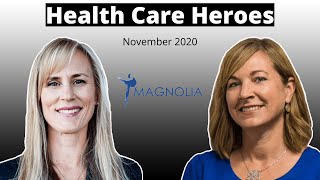
Interview (Nov 2020) on Will Humphreys' 'Healthcare Heroes' series awarding Beth Winkler and Lisa Taglauer (co-founders of Magnolia Physical Therapy) the inaugural Healthcare Hero Award. They describe founding Magnolia in 2005 (opening one month before Hurricane Katrina), growing to four clinics in the New Orleans area (about 800–900 patient visits/week pre-pandemic), and repeatedly recovering from major storms (Katrina, Zeta, Laura). They emphasize their complementary partnership, community volunteerism (church, disaster relief, Roots of Music fundraiser, Habitat women's build), and a new coaching initiative: a private Facebook group called "Next Level Coaching" to mentor female physical therapy entrepreneurs. They also recommend The E-Myth and (Lisa) Pour Your Heart Into It (Howard Schultz), and give practical advice about vision and coaching.
Questions this video answers
2005.
One month before Hurricane Katrina.
Four clinics.
About 800–900 patient visits per week.
"Next Level Coaching".
Chapters
Foreign.
Welcome back, providers, to a very special edition of the Profitable Provider. In today's episode, we're giving out our first ever Healthcare Hero Award. This is an award that we've created to highlight the brave men and women who are out there increasing their impact to their patients, their teams, their community and the industry at large. And the first ever winners of this award and is Beth Winkler and Lisa Taglauer of Magnolia Physical Therapy. They own a company in Louisiana and they have been a huge influence in my world as they have grown from adversity. They started their company in the middle of Hurricane Katrina and as we did this interview today, they were shut down because of Hurricane Ida. They are individuals who know how to overcome and they give most of their credit to their powerful partnership. So they are going to discuss the secret keys of creating a powerful partnership. They are also going to talk about how to overcome adversity. They're going to speak to entrepreneurship and healthcare and what their vision is for all of us as we grow and discover what's possible. So, without further ado, here's Beth and Lisa. Well, guys, I am so excited to have both of you here on the channel and to be the first ever winners of our Healthcare Hero Award. Thanks again for both of you making time. Would you guys mind introducing yourselves to the audience?
Yeah. I'm Beth Winkler, co owner and founder of Magnolia Physical Therapy in New Orleans, Louisiana.
And I am Lisa Taglauer. I am another co owner and founder and operate as a CFO of Magnolia Physical Therapy. Beth and I founded this company in 2005.
And Beth, you're a physical therapist and Lisa, you're a physical therapist assistant, correct?
That's correct.
Ladies, I am so excited for the audience to get to know you and to learn from you because there's so much that you've taught me over the years. So let's get started with people who want to know a little bit more basic information. So, guys, go into more detail about your practice, where it is currently, and what you guys are up to.
Yeah, so as Lisa mentioned, We started in 2005. We opened Magnolia Physical Therapy one month before Hurricane Katrina, which was kind of crazy, but it was really the foundation, I think, of where we are today because especially going through Covid time, you know, the COVID times now, it's like, you know, going. Moving your organization through a crisis. Right? So that was. We didn't know any better. We didn't know people would say, how'd your business do? And I'm like, I don't know. We Were only open a month. And it's kind of like ignorance is bliss. Right? So we just. We didn't have any patients right away, so we started doing home health. And it was really that whole recovery effort, I think, that allowed us to not be so close minded and just say, like, you know, okay, let's just have one practice and just be. Just be the two of us. It's like we really saw the possibility of how we could impact people in our community. So since then, we have opened four clinics in the local New Orleans area. So right before the pandemic, we were seeing about 800 to 900 patient visits a week.
Oh, wow.
With our four clinics. Yeah.
Amazing. So back during Hurricane Katrina here, you guys got together and said, hey, let's start a business.
Yeah. Yeah. Well, it was right before Hurricane Katrina. And the funny thing was is it was. We bought it from our old boss, so we weren't intending to do that. We, Lisa and I were about to put a deposit on this little tiny place. I don't know, looking back, I don't know how we could have even seen any pavements in there. But we were about to put a deposit that day, and I went to go drop off some home health notes at a company where it was across the hall from our old company. And our old boss was there and he said, hey, what are you doing here? You want your old job back? And I was like, no. And then he said, do you want a clinic? And I was like, maybe. And so his therapist had just quit. He didn't live in the city anymore, and he really needed to kind of unload the practice. He had a lease and he had equipment, he had patients. I mean, some of the patients I still knew.
So that was. I mean, that literally fell in our lap.
Wow. Well, you know, what I've learned about you two is that you've made your own luck throughout your career. So I can imagine what relationships you had to have developed with that individual for them to provide that with you. It's interesting that you bring up Hurricane Katrina, because right now, just last week, you guys had to shut down your practice because of another hurricane.
Yeah.
Lisa, why don't you talk a little bit into that?
Yeah. So this has been quite the year. I think everybody can probably agree with that statement. But it has been one of the most active hurricane seasons as well for the Gulf coast with, I think, if I'm not mistaken, nine named storms to hit the Gulf coast in this year.
Wow.
Which is, I don't. I can't remember the last year that that happened, but it's been quite some time. And so, yeah, we most recently were hit with Hurricane Zeta, which that tells, if people don't know, hurricanes are named throughout the Alphabet. So you start at A and hurricanes get names. A, B, C, D, E, F, G. So this one was Hurricane Zeta. So that tells you how many hurricanes there have been this season. So just a little history lesson for hurricane buffs out there. That hit last Wednesday.
It made landfall as they're debating on whether it was category two or three based on the wind speeds. The fortunate thing is it was a fast moving storm, so it was just really a wind event for us. There was no flooding as what happened in Hurricane Katrina. We're able to recover quite a bit better from this one. But the entire city pretty much lost power last week. So along with our four, we have one facility that kept power and another one that kept partial power. And then the other two have come back. Just one came back on Sunday and one got power today. As a matter of fact. As a matter of fact, we're working to reschedule all the patients for that clinic this week.
It's interesting because before we had made this agreement for you guys to be the first ever winners of this award, before all this happened, but before this happened. And this really illustrates to me and to people who are getting to know you that what makes you guys stand out as a leadership team is resilience. To me, you guys have been faced with trial and adversity time and time again, you know, starting with Hurricane Katrina. And now you're going through the whole list of Alphabet hurricanes over your experience, in addition to 2020 being what it has been for people. And I don't think a lot of people who are in the physical therapy or healthcare space in are looking at our environment as one of opportunity. And yet you guys are constantly finding the opportunity amongst all of these challenges. So what is it that is the secret sauce for magnolia? What is it that you guys do when it comes to these trials that has helped you become successful?
For me, I really do bring it back to Hurricane Katrina. I mean, it was one of those events that it was do or die, you know, I mean, if.
You didn't, you know, a lot of people didn't even rebuild their homes. They just gave up on the city and moved away. And it was like I found there were kind of two sets of people. The ones that didn't want to deal with it and the ones that loved the city so much and had so much passion that we're going to do whatever it took. And I think that's where Lisa and I stood, you know, and to come through after something like that, this Hurricane Zeta feels just like a little blip, you know, it's like, okay, we know what to do here, you know, but I mean, at some point you're like, okay, enough.
But, you know, I joke, yeah, our book's going to be from Katrina to Covid, you know, like all our.
Yeah, to Zeta.
But yeah, I really do attribute it to that. And it's how, you know, I think the combination of the two of us, you know, Lisa is very calm and she's very level headed when it comes to let's have a plan of action, you know, and then I get a little frazzled. But once I have a plan of action, it's like, I'm on a path and you better get out of my way or do you know what I mean? So I think we really complement each other in that way. So I think I boil it down to our partnership.
I'm getting chills, honestly, as you're talking, because I know you guys so well and, you know, it's hard out. For those of you who know you in any of the networks who've known you guys for years, it's hard to say one of your name, one of your names without the other person. It's like I rarely say Beth. I go Beth and Lisa. Right. It's just that they go together. And I don't want to paint, of course, like this idealistic vision, but I would say you guys do represent one of those models of a powerful partnership. You know, Lisa, from your perspective, what makes your partnership so powerful?
It's so funny you say that because we have just really inspected that of late. And, you know, kind of what makes our relationship, you know, work. And, you know, it's not always a bed of roses with our partnership, but there are a few solid things that we keep in, in our relationship, and one of those is consistent and regular communication. There's at least every two weeks. We weren't super, super great about it during COVID but we've rebounded and we have it back in pretty solid now. So every couple of weeks, sometimes it's three weeks and sometimes it's once a month, but there is a set time and it's three hours about. And there's 30 minutes of just kind of shooting the bull, you know, and 30 minutes of maybe some fires we have to put out and then a couple of hours of dreaming or talking about big Picture stuff. And I think that's so important for entrepreneurs to really devote that time to one another. If you have a partnership, devoting it to one another, where you can dream together and think big together, or even if you are on your own and you're a single owner.
You still need that time to dream and.
Think bigger because there's consistently fires that you have to put out every day, all day long. As an entrepreneur, we all know that. So I think that's one thing we keep in that we do really well. Another thing is I recognize where Beth is strong and I'm less strong and she recognizes the same in me. So I think that it was that complimentary thing that she just spoke about. I think we're very in tune to what each other's strengths and maybe weaknesses are. The other thing too is if, if I have a problem with Beth, I go to Beth. I don't go to my significant other. I don't talk to her about, you know, talk about her to any other person other than Beth. So if, if she's got a problem with me, she's going to come straight to me. So I think keeping that kind of communication in really open and honest communication is another thing that really helps our relationship a lot.
Wow, Beth, I have to hear what your thoughts are.
Oh, no, I totally, I'm like tearing up thinking about it. It's just. It really is. I just feel so lucky to, you know, have a partner like that, you know, like Lisa.
Well, you guys are honestly, I think about, you know, we look at superhero hero movies that have been so big for so long, right? And I think of like this healthcare hero award in highlighting people. And it's true. I think that part of what makes people powerful is, is how well they synergize with other people. And you two are a perfect example of that. You know, you're more like a Justice League. You have your individual strengths and then together you guys create, you know, your own. That's a little bit of a nerdy reference, like peeling back the layers of will. But ultimately, like, that is such an important part of how I have experienced you because when even though I can't say your names separately, I think of you individually and I know that together that you've been able to create that. And here's what I would want the, the viewers and people listening to this to know is that that has translated directly into a team of people that would take at least a non lethal bullet for you guys. You know, your culture, your company culture, the way your Team respond to you is something I've been privileged to know and to learn about. And that's been amazing to see. And then you take that and you mention it into how you impact the community. You know, Beth, you mentioned that earlier. You were talking about people. There's two types of people and there's that one type of person who's willing to like move forward because they love. You said something around loving the community. You know, you guys are in that Louisiana state. What do you love about your community?
I just love the people. I mean, everyone is so friendly here. It truly is. If you go anywhere else, it's, you know, not saying that other places are not as not friendly, but I mean, it's. You can't go down the street and not have someone say hello to you or good morning or how you doing or, you know, and it's just so culturally diverse too. I mean, you meet all different kinds of people. And that's one of the things I love about it because everybody kind of comes together for this love of the city and of food and it's, you know, you don't see anything else.
Love it. So what I'd love to hear more about some of the charitable initiatives that you guys have been involved in to support that community in New Orleans.
Yeah. So there's a few things that I think we each like to do separately from Magnolia that kind of help give back to our communities. Because that was kind of part of our vision too. Right. We wanted to be able to have a company that was, that was impactful enough to where we could then give back to the people that gave to us.
Right.
As we grew. So it's really interesting. That's a very awesome question. And you know, I spend a lot of time with my church. That's one place that I really kind of dive into when I think about volunteerism. And most recently, Beth and I have joined the board for an organization called Entrepreneurs Organization. And that is, for those of you who don't know, is an organization that is nationwide or global. Excuse me, It's a global organization that fosters mentors kind of the.
Entrepreneur, both on a professional basis and a personal basis. So here we're doing our little part locally here in Louisiana to be on that board and help to foster brand new entrepreneurs. Beth is the chair for the accelerator portion of Entrepreneur Organization, which are budding entrepreneurs and newer businesses who are smaller but trying to grow bigger. And then of course there's EO itself, which is comprised of businesses who are just trying to scale up and be better. So that's where we spend some time. We've spent some time as well as well. And there's always these little things that happen that, you know, these little hurricanes that come up. And we have teams of people who gather canned goods and sanitary supplies and shampoo and toothpaste, and we just had a huge. Hurricane Laura hit the Gulf Coast a few weeks ago. A couple of months ago, a team of our employees got together canned goods and bagged lunches and bottled water and drove it all over to Lake Charles to help those people in the hurricane relief over there. So we do quite a bit of that as well.
I want to say something before. I know Beth has other groups as well that she helps support. I just have to say one thing that's really neat is that it never occurred to me, becoming a physical therapist for the first time, how going into entrepreneurship in physical therapy would create other opportunities to serve the community in a different way, but in a paralleled value way. So that, like, you guys have gone into creating amazing patient care experiences, and how that's grown into helping people during hurricanes and people at church is really inspiring. And I think it helps open the door for new PTs, new healthcare providers of any kind, that no matter what they're getting into, the possibility is endless around service, and it's not tied directly to patient care. Now, Beth, I know you're a part of another organization as well. Can I hear about that?
Yeah. So I'm part of a dance group locally here in New Orleans, and we march in the Muses Parade. And what we do is once a year we have a huge fundraiser where.
We have lots of different donations from different companies. And Magnolia contributes as well to that, which thank you, Lisa, for allowing us to get a pack of whatever, six massages or something like that. But so what we do is we design and choreograph a dance. So there's like eight or 10 of us that work very hard. The whole group comes together to do this. There's about 60 women. And there's a group that organizes and choreographs the dance. There's another group that does all the fundraising committee. There's another group that works the auction table. There's another group that bartends and works the photo booth. Just different ways that we can make money for an organization called the Roots of Music, which is a. It's a program started by Derek Tabb, who was in the Rebirth Brass Band. And after Hurricane Katrina, they realized that a lot of these middle school and lower schools were Losing funding for the bands, you know, the horn instruments. And that was a huge part of our culture. So he decided to start this nonprofit where they have a bus that goes and they pick up kids from all different schools, bring them there, teach them how to play an instrument. They have tutors that help them study, they feed them dinner, and they bring them home at about 8:00'. Clock. So these kids are getting. They're learning how to play an instrument, they're getting tutoring, they're off the streets. They're not playing around and doing things they shouldn't be doing, and they're doing things that they love and something that they're committed to. So that's super fun. And just with Magnolia, we had usually do a fundraiser once a year, like a big fundraiser, but we'll pick a charitable organization or something and kind of get the whole team around. Like, last year, we did the women's build, where we had about eight team members. We donated. I can't remember. I think it was like, $5,000. And you build a part of a house, so you're there with about six other groups of, you know, eight to 10 women. And then you all. You build a house together, and it's great. And then you get to meet. You get to meet the person who's moving into the house, and it's just such a. It was such a great experience, and I can't wait to do that one again. But I will say that Lisa has really spearheaded a lot of that, and I get a lot of my mojo about that from her. I mean, even from the very beginning where we were seeing home health patients act, back to Katrina, but we were seeing a lot of home health patients. And Lisa would just come in with bags of supplies from her church, and she's like, all right, here, what do you need? What does Ms. Jones need? What is. Because sometimes we were the only people coming in to see these patients. There were no nurses, no doctors, you know, and they're like, wait, physical therapists. And we're like, cleaning patients. And, you know, Lisa brought one patient a puppy. I remember her. I think her dog had perished in the storm. It was awful. I mean, these stories were terrible, but just, you know, the light in their eyes and the excitement they got when you brought them a pack of toothbrushes was just, like, amazing. Anyway, so that was. That was a very interesting time to be.
The whole Hurricane Katrina is so much foundational to who you guys are. That horrible tragedy has really, like you said, it put you in a position where you had to make a choice and it's created, I think. I mean, I don't even know how many charities that is that you guys are sponsoring currently. I think one thing that's interesting is this theme though, about empowering entrepreneurship, specifically women inside of entrepreneurship. And that's something I really love to hear more about. First of all, as you guys spend time with entrepreneurs organization and that subgroup called accelerator that allows up and coming entrepreneurs to start their businesses, it's hard not to look at our own industry and see first of all that like in healthcare, specifically in the subset of physical therapy, it's a female dominated industry. However, the vast majority of clinical owners, the entrepreneurs are male. So I wanted to kind of hear from you guys. Why do you think that is?
I don't know if I have an answer as to why that is, but Lisa and I plan to change.
It.
Gives me a lot of fire to hear that and to be able to help women. Because even in the entrepreneur organization, I think we have 70 or 80 members and maybe about.
10 women in the organization. So we really want to make that more diverse. So Lisa and I have been targeting more female entrepreneurs to help get them to join. So we have more of a voice. And definitely in the physical therapy field, I think there's a huge opportunity. And I just, I'm guessing here, but I'm wondering if females are.
Concerned that, you know, as far as like being a mother and getting pregnant and raising young children, that they're not going to have the time to do that. And you know, Lisa was pregnant when we started Magnolia.
Wow.
We both had little ones and you know, I think, I think being able to let them know that like, you know, there really is no work life balance, but there's a way to do it, you know, there's a way to do it and you just have to, you know, you just have to figure out what the priorities are. And that's where I think having a partner is really, is really helpful too. But.
You can do it, you know, and I think just having them see like role models and that, you know, that we were able to do it being new young moms and giving, giving females the tools to be able to do that and do it successfully.
Wow, I love how you said that. You know, Lisa, from your perspective, do you look back and regret that kind of craziness?
No, no, absolutely not. I would have done it all over again. I do want to say too though, I think that there's a perception of Beth mentioned work life balance and I think that there's something in a. And there's some part of a woman's brain that they need to be everything to everyone all the time. And that's just not how it is. And I think men just think differently. And I'm not saying either one's right or wrong or good or bad, but I think that women as a, as a species, I think we just really want to be everything to everyone. So I think maybe one of the reasons for that could, if a female feels like she can't be the best mom and the best entrepreneur, that she'd just rather kind of be the best mom or wife or whatever, whatever other hat or best therapist, whatever that is. And I'm going to echo what Bessa, I'm definitely here to tell you you can have both. You can certainly have both. And it's kind of this seesaw thing, right? Like, I always picture it as a seven or eight pronged seesaw because in life in general.
You'Re not going to be able to pay attention to everything that you've got going on in your life all the time. 100% of the time. It's the same thing if you're going to be owning a business. Sometimes the business gets attention, sometimes the kids get the attention, sometimes the partner gets attention, sometimes your recreation gets attention. So it's kind of this balancing act, I guess. I don't want to say balance, but it's kind of this seesaw where you've got one in the air, the other one's down and then you got to move around and put the other seesaw in the air and put the other one down. So I think that, I think that it's just my perception is that women feel like they just have to be everything to everyone all the time. And that's just not so.
I love it. Go ahead, Beth.
Yeah, no, I would like to add too is, you know, looking at my daughter and even my son, you know, because, you know, there is a time where you struggle with that, especially when they're younger and they need more of your attention. You're like, you know, I really should be there with them. I really, you know, and there is this guilt. But I look back at it now and I see my 16 year old daughter who, you know, looks to me and she's like, you know, so you can have a success, you know, be a capitalist and do good, you know, I mean, she's just. But you know, to be able to look at me in a role model to where someone who, a woman that can be empowered and can, you know, do good for, you know, not just her children, but others and kind of not have it all? Because I think that sounds a little cheesy. But, yeah, I mean, I, like, have fulfillment in all those different seesaw areas that Lise talked about.
Yeah. So what I feel from this experience is, especially after Talking to other PTs across the country, is that it's interesting how burnout is this plague in physical therapy and in healthcare at large. Like, burnout is a real thing. As documentation goes up, reimbursement goes down, people are expected to see more, spend less time with their patients. And it's interesting how there might be a perception for people, women in particular, like you guys are mentioning, that might be afraid to step forward into that because it might be too much for them to handle like it would be for anyone else. Like, we just have, like, going into entrepreneurship is a scary thing to take on, regardless of our background or any of our other information. So for you guys, I think what's inspiring is that what I've seen is that you go counter that argument. You guys have actually increased freedom by taking on the entrepreneurship. You've increased your impact, and it's not just with your patients and in the community, but in your home with your kids. And I've been fortunate enough to see what that's. Hear from you and see what that's like in your families. And being myself, the son of a mom who had to work really hard because she had to in order to provide with my father for my family, I just think there's something inspiring around that for men and women to look to see the challenges that you guys have overcome and to start promoting an encouraging atmosphere for women in particular that they can do it, that they don't have to give things up in a way that's going to be too overwhelming. So this leads us directly into my next question, which is the vision that you guys hold for the industry and what you're currently working on. What do you guys envision for healthcare, physical therapy specifically.
And what you want to do to help promote that?
I think the vision for physical therapy for me, and we've discussed this as an organization, is just that physical. You have your dentist, everybody knows their dentist's name, that everybody's physical therapist is a household name, and being able to, if you have a muscle strain or a joint issue, that we're the first persons, that we're one of the first people that you come and see, and being able to elevate that, I think that's kind of where we're going with the profession, but I think also empowering.
Young entrepreneurs too. You mentioned burnout. I think this is the cure for burnout. I mean, this gives you so much more possibility and opportunity, you know, I mean, we can, you know, we can look at innovation and add different services and different service lines like diagnostics and things like that. Where if you have a therapist that doesn't want to do, you know, eight hours of manual manipulation all day, that they could do testing or they could do, you know, different, it just opens up possibilities. So I'm excited about the future physical therapy.
Got it. So your vision, the Magnolia vision is people knowing who we are as a stand up physical therapist, as a service and understanding and reaching out to them when they need help. And then, Lisa, what's your vision? You invest vision around women entrepreneurship.
Well, I think that when this all started, when Magnolia first started, you know, we had this vision of playing this. And I say game, but I'm using the word game, but it's not, I don't mean game in a playful nature. I mean, you know, a goal, I guess, you know, where you have, where you can help as many patients as you possibly can. And of course, through our coaching and through mentoring and through, you know, different consultants and things like this, we learned that, you know, Beth and I alone can only help so many people. But if we, you know, if we 10x ourselves and we hire 10 therapists, then we can help 10 times as many people. Right? And the game became bigger at that point. And, you know, once we expanded and, you know, we had a larger staff and we started to see that an even bigger game was evolving. And that was one for our team, you know, making sure that our team was successful. And our team, the people on our, you know, on our staff were winning and getting, you know, excelling in life both personally and professionally. And so much so to the tune that we've had several female therapists spin off their own clinics as a result of working for us, which is a huge compliment. And if we can do that, so if we can build a business and 10x therapists and help more people and then help our team and we can spin off three or four or five entrepreneurs, can we make that a bigger game? And I see that as a vision for us.
I love it, man. I am so excited for people who didn't have the resources that you guys didn't have, but they are going to have those through you too. I am excited to tell our listeners all about your new Facebook group and your New venture, moving forward. Magnolia is still your heart. That is where you guys live and breathe. And you are building into this new space called coaching. You've already coached, like you mentioned, numerous other people opening their practices and becoming successful leaders. Now you guys are separating that out as you look forward into the future and helping others do and learn what you guys have learned, just like you did with me. So why don't you guys tell the audience a little bit about that?
Yeah. So Lisa and I have been talking about this for a little while, and we started a Facebook group for young and old. We started a Facebook group for female physical therapists, entrepreneurs. So we want to provide for them what we wish we would have had. And also looking at the mistakes that we made, like if we can help others avoid certain things. And there are things that we did really well that, like, look, in year one, if you do this, if I would have known this in year one.
Gosh.
Or you know what I mean, don't do this. So to be able to help them not make the mistakes that we made, but also give them a heads up early on in the game. So it's called next level coaching.
Next level coaching.
Next level coaching. It's a private Facebook group that we just started. So we're going to do weekly posts on there. Just little tidbits of information on owning your own practice, starting your own practice, but also like a Q and a. You can put any questions that you want Lisa and I to answer for you there. And we just want to start to create a group of women who are excited about owning their own practice and how they can scale their practice. So. Yeah. So if anybody's interested in that, I'm happy to get information to you.
Yeah. You know what we can do? I can put a link to that group in the comment section below on this video so people can get there and they can look and go that way. But if they wanted to reach out to you guys directly, how do they get ahold of Beth and Lisa?
Yeah. So I can be reached via email, which is bethwagnoliatherapyla.com and if you're interested in being a part of the group, just let me know and I'd love to have you.
Yeah. And same here. You can reach out to lisa@lisat magnoliatherapyla.com so exciting.
All right, so to wrap things up, this is something that I'm really excited to do because who we are in five years is a combination of who we know and what we read. So I would like for you guys each on the spot to come up with one book recommendation and one piece of advice for someone, let's say a young entrepreneur, male or female, someone who's just considering getting started. What's a book that you'd recommend regardless of that second question? And then the second thing being what's a piece of advice that you would give?
I would say mine would be, especially for new entrepreneurs, would be the E. Myth. It's a really great book by Michael Gerber, I think, and he talks about the difference between being the practitioner versus the manager versus the entrepreneur. And I think having a good understanding of those three hats that you wear in your business, in your practice is really tremendously helpful. And I guess the advice I would give is I am being a coach myself. I am a huge fan of coaches. Coaches have helped me and Lisa throughout the years. We have only been as successful as how well we have been coached. So.
The sooner the better is getting a coach to help you with, just hold you accountable and to allow you to have your vision to be this big as opposed to this big.
Yeah. I have to say that you guys, as you do this, are going to make such an impact and I wish I could share more information with the audience about your plans when it comes to coaching, but I'm just going to leave that as a surprise for the audience as they get to know you and what you're planning on doing. I would have killed to been able to be a part of what that group is going to become for you guys. So, Lisa, let's hear it from you. What's your book and advice?
Okay, I'm going to go to advice first because I think if I would have had this perspective from day one, I feel like we could have been even more successful than we are now. But beginning with the end in mind and you know, the E. Myth kind of talks about that. There are so many books that talk about that. But having that vision, you know, we've talked a little bit about vision here today, but having that vision not only for what you want to become, but what happens when you become that. You know, what happens when you reach that objective, you know, or you reach that vision. What's the next thing? Right. What's the next level?
Right.
But book wise, I think I love the E. Myth. It's really great recommendation for brand new entrepreneurs or even seasoned ones. The other one that I really got a lot out of which kind of talks about vision and mission and that kind of thing is pour your heart into it. It's a book by Howard Schultz, the CEO of Starbucks. And it talks a lot about.
Processes, mission, vision, core values, what does it mean to own a company kind of sort of thing. It was really, really great read. I think that would be a great one for either new or a seasoned entrepreneur.
Well, I can't thank both of you enough. It has been an absolute privilege for me to be able to award you guys the Healthcare Heroes of the Month award in our first ever inaugural company. It just means a lot to me to have you here. And let me just say to the audience that these two young ladies have had everything to do with why I'm sitting in the chair that I'm sitting in. And if you have any sort of sense, you'll reach out to them immediately for any of the coaching services, if that aligns for you guys. Thanks again for being a part of this episode.
Thank you, Will.
Thank you, Will. And thank you for all you're doing for the physical therapy profession, too. For the people who are listening, Will does a lot more than these podcasts that you're looking at right now. So he's a very busy guy and does a lot to help secure and have a vision for physical therapy in the future.
Thank you, Lisa. I appreciate it. And for those of you who are watching at home, until next time.
All right.
More from Will





Highbar PT’s Blueprint for Culture, Brand & Growth With Michelle Collie and Dave Pavao

Highbar PT’s Blueprint for Culture, Brand & Growth With Michelle Collie and Dave Pavao




