How AI is Reshaping Healthcare and What It Means for You with Kelly Brown
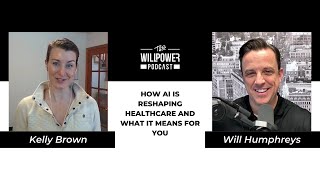
Will Humphreys interviews Kelly Brown (Director of Client Success, Prediction Health) about her transition from clinical PT leadership to a leadership role at an AI-healthcare startup. Kelly describes meeting Prediction Health cofounder Pedro in 2019, working as a client, then joining the company in 2022 to help scale their client success function. She explains a personal decision-making process (17-question / "lottery" framing), leadership lessons (enneagram, strengths, coaching), building remote culture (rituals, psychological safety, repair), and Prediction Health's products: an AI scribing/ambient documentation tool and an analytics platform for compliance, coding accuracy and administrative-burden metrics. Contact: Kelly on LinkedIn; email shown in transcript as kelly.brown@predictionhealth.com.
Chapters
Foreigners. Welcome to today's episode. Thank you so much for taking time to be with me. Today we're talking to Kelly Brown, who's the director of Client Success at Prediction Health. If you don't know what Prediction Health is, don't worry, we're going to talk about it here. It's an AI driven software solution for PT practice owners. But today's episode is about leadership development. Kelly is unique because she's a physical therapist. She became a clinic director and a regional director at a very prestigious private practice group. And then she had to make the decision to leave that world that she loved. She was very happy, made good money and had to go in, had to decide if she was going to go and change her whole world. So we're talking about how to make hard decisions using a process that she developed. And she's going to share, she also is going to share about how she has leveraged what she's learned in her leadership journey to not just being a powerful leader at work, but a better parent. So today's episode's very special. She is an expert leader and it's cool because she uses a lot of technical information that you can use in resource to help you learn and grow as you increase your impact not only at work, but at home. Enjoy the show.
So Kelly, I'm so excited to have you on the show. Obviously a powerful leader and a physical therapist who has tons of pelvic floor health. How did you end up going from being a leader of this multi location larger PT practice into your current company, Prediction Health, an AI tech company?
Yeah, Great question. I get this question a lot actually because it's a little bit of a challenge for a lot of those that are trying to get into a non clinical role. But for me, my journey really started with meeting people in Prediction Health and being a client of Prediction Health at the beginning. So. So I was lucky to have met Pedro, one of our co founders in 2019. And I met him because he was interested in using their technology which at the time was an AI scribing tool that they were working with physicians and they wanted to branch out into physical therapy. So he happened to connect with the CEO of the company that I was with. So that CEO reached out to me and said, hey Kelly, would you open up your calendar just a little bit to meet with this guy? He's got some super cool tech. Love to chat with you. So I ended up meeting with Pedro for two hours and he told me all the things that they were doing. And so then the next Two years he and I worked together to use their technology in the company that I was with. So through that, he met different people I worked with. And so I had known him for two years. Then personal things happened. Covid was, you know, 2020, obviously 2021. I was pregnant with my second child in 2021 and realized that running a practice, living where we were living was just really challenging and also trying to see my two young children. So. So my husband and I did some, like, super deep soul searching, which. Which I could do a whole podcast on. This in itself because we did all sorts of questions with each other on, like, ideal life. What are we looking for? What does that look like? Down to, like, our yard, our house, our jobs, how many hours a week we spend with our kids that we spend with each other. I mean, just like, really, really, really detailed questions about an ideal life. So we started kind of writing all that stuff out, and I realized that it wasn't where we were living, so that was one thing. So we wanted to be in a different place, so different locations. So then once we decided that, we thought, okay, well, how are we going to make that happen with our jobs? So my husband is a therapist as well, so both of us can really find work anywhere we want to go. But it just mattered of what we wanted to do. So we were in a position. We were lucky enough to be in the position that I could actually do something different, which I was really excited about, which was really, really hard for me. I get emotional talking about this because the company I was with, I loved desperately. They were just my family. I had been with them for about a decade. They were part of my. I mean, I became who I was with them. I met my husband. Through them, I met my best friends. I have so many dear, dear people that I love in that company, still do to this day. I was a shareholder in that group, and I left that because I wanted to be able to spend more time with my family and I wanted to actually do some. So when we talk about, like, my journey in that company, I really got to a point where I felt like I couldn't expand any further into helping the profession in a larger capacity. I feel like we are so often in our, you know, we. We treat patients, we help with legislative stuff as much as we can. We might join the APTA or join different groups or, you know, advocate or whatever it might be, but it's really, really hard to change the hard things that are happening in healthcare, the system, problems that are happening. And so I really Saw Prediction Health, and I still do today as a means to actually solve larger scale issues within health care in general, starting with pt. And so I felt like it was an opportunity to do that. I knew them. I basically called Pedro up and asked for a job. He was very kind to give it to me. So I knew they didn't have a PT on staff. They're trying to sell these things to pt. I have a good perspective on the PT industry so they brought me on board. So I've been with them now for almost three years. And so that's kind of how I got into it. It's definitely a different journey than a lot of people entering into client success entering into the tech world. It's a challenging transition. I really did get lucky. But I always tell people I just said yes to opportunities. I cleared my schedule to meet new people. I was always willing to say yes to something. And that was where many of us as therapists really struggle with that because we are burdened with documentation, we're burdened with administrative stuff. We, we have to get out because we gotta go see our families. Like if we take our lunch, we can't get our notes done. So then we have to do stuff. And I just kind of, I didn't worry about that stuff. I just took opportunities when I could and met people that I could. Knowing you never know what door is going to open for you. So that's like my big thing that I continually do today which is just you never know who you're going to meet or what that's going to lead to. So which is obviously why you and I are now friends. Will. So yeah, absolutely.
That was a great background. So Rockstars, as you're listening to Kelly, she said a number of really powerful things I want to punch. First and foremost I wanted to highlight to anyone listening that our industry is so much bigger than we think it is. There's so many more opportunities besides the traditional like patient care when you were as a, as a licensed professional. We have so many different avenues to help all these new merging companies. The physical therapy outpatient space in particular is getting flooded with all sorts of new tech based companies that could go anywhere they want, but they're hyper focused in our industry because they know we're not just going to be this $36 billion PT industry. We're leading the future charge of the $600 billion musculoskeletal industry. And so Kelly's personal journey and we're going to give you her contact information including her personal cell Phone. I'm just kidding. We're going to give her her personal contact information so you can reach out to her to ask. But Kelly did a number of things along her journey that I want to highlight and even dig on a little bit. Kelly, the first thing is she really owned where she was. She loved her current company. She was never just like she made the most out of where she was. I'm sure the company was amazing, but I also believe it was amazing because of Kelly. So as a hiring technique, just something that kind of seems left field for my audience, but I want them to hear this. The number one way to qualify if we have a really good person that we're going to hire is through something called torque, the threat of reference check. Someone like Kelly, who's an A player. She will be an A player wherever she goes. She is always going to want to talk about her previous jobs. She is always going to want to share those. And so a true A player, when we are interviewing them, we say, hey, listen, we want you to provide us with setting up a meeting between your last direct reports for the last one to two companies. Someone like Kelly would be thrilled to do that because she keeps in touch with them. She's smiling right now like, she would be thrilled to show you, like, hey, this is this person because they're amazing and she knows they're going to brag on her. And it was probably devastating when she left. So it's a little bit left field. But the main thing, I want to follow up a little bit more before we dive into your current leadership journey. Kelly, was this thing that you said we could do a whole different episode on. So I don't want to obviously monopolize this here, but you briefly mentioned this process that you created to search your soul and to make a decision. And I just again, I want to highlight. You weren't in this place of scarcity where you were burning out and you're like, I got to get out from underneath this horrible job. You were coming from a place of open mindset, maximizing opportunity. And that's a totally different place to begin with. But you went through and you analyzed. First of all, where did you learn that process of high level decision making? Was that something you just figured out?
You know, funny enough, one of my very, very dear friends who of course I met through my previous company, she this is something and I would do for fun, which is just exposing the level of nerd that I am. But, like, I've always been very much, like, into personality tests and into Strength finders and just like, learning more about me. And she was like, hey, I came across this 17 question, like, questions that she's like, I'd love to do this with you. And it's just kind of like talking about an ideal life. And. And actually, this is even sillier if I dive in further into this. What really kicked this off was discussions about the hypothetical question of what would you do if you won the lottery? Now, this seems so ridiculous, but we started. It was like, Covid, you have your small bubble of people. You see them multiple times a week because you are starved for. For social interaction. We had young. A young daughter at the time. We needed her to be around lots of people, as many as we could. And so we would have that conversation like, what are you going to do if you want. What would you do if you won the lottery? And it turned into a regular conversation that we would add on to, and we'd add on to it. And then pretty soon it was like, well, wait, why do we have to win the lottery to do this stuff? And so then it started getting smaller of like, oh, well, maybe we could do this, or maybe we could do this. So. So we just kind of started doing these, like, instead of talking about this hypothetical that will never happen, we talked about, oh, here's a hypothetical, and how can we take small steps to actually make that reality? So that's like, we first started kind of changing our mindset. I'm lucky in that I'm extraordinarily blessed in my friend group. They're broad thinkers, you know, big, just a lot of stuff like that. So it was. It ended up being a process that was kind of a fun thing for us to do. And so that's kind of how I stumbled into it. But I think setting my brain up to kind of start doing that started years before in just like, learning. I took leadership courses through the company that I worked with. Did a lot of, like, introspection on who I am, how my personality works, good and bad. There's a balance there. And knowing, like, what does, well, what I. Where I don't do well. And. But yeah, so that's where we kind of started, which I always think it's silly. I. I have funny conversations around, like, well, how did you decide to do that? I'm like, actually, it started with a conversation about a lottery winning, but never won the lottery. Haven't won the lottery yet, but maybe, maybe in other ways in my life.
Well, that's a powerful thing. I actually heard a very brilliant speaker Once talk about that. I can't remember their name, but they talked about that, like, imagine your life as if you've already won the lottery. And imagining unlimited funds forces our brain to think in a growth mindset, because we're thinking of having unlimited potential and unlimited resources and power. So when we think about that, it allows us to create things intentionally instead of reactively. And that's where you were. This whole thing with Prediction Health, as it was coming through, was like an option. And so the biggest challenge I've ever found, Kelly, and I love this quote came from a guy named Chris Smith, is that clarity equals power. Without clarity, we can't distinguish between opportunity or distraction. And leaders like you and me, we are constantly flooded with, like, all these opportunities, and sometimes we do the shiny object thing where we're chasing them all. So, like, in your case, you have this grounded perspective of 17 questions. While you were talking, I googled Tim Ferriss has a 17 questionnaire. Like, there's all these different questions, but it sounds like in this thought of, like, if I won the lottery, you were able to position yourself into more of like, a who, what, when, where, why? Like, you know, who do I want to spend more time with? Where do I want to be? What kind of impact do I want to make? And you. And by answering those questions, it helped encourage you to take this massive leap out of patient care into leadership at a tech company. So, yeah. So obviously you've. You've. You've been grateful that you've made that decision.
Definitely, yeah.
So talk to me a little bit now, because you and I were chatting before this, that your leadership growth journey in this process has been pretty accelerated. Talked a little. Obviously it's because Prediction Health is. Is doing amazing things. Talk a little bit about that growth and then what your. How that's impacted you and your leadership.
When I came on in 2022, so early 2022, I was the only PT. I think we had a total of maybe like 10 people on our team, period. Like, the whole team. And I was in sales, and I worked with our Andrew, who's been on your podcast before. Andrew and I were first guests.
Totally.
Yeah. Andrew Schaefer is a wonderful man, a dear friend of mine, and he taught me a lot. I'm not a salesperson, and he taught me a lot about cold calling and all the different things you have to do to get yourself in front of people in a business that we weren't known yet. So he really helped cultivate that. And then we got enough clients that needed somebody to be the client representative. And so that was a really obvious step for me. The one thing though about that is that as obvious as it was, it was still a choice for me. So my, the leaders in the company, you know, Prediction Health here said, hey, Kelly, do you, do you want to do this? And so as obvious as it was that I should do it because I am the voice of the client, I understand the pain points, I understand our product, I can help, you know, all that stuff. As, as much as it was obvious, there was still the question of Kelly, is this the decision that you want to do within our company? Is this where you want to go? So I mean, for me, when I realized, you know, stepping into this role is I really like a startup type of environment, whether that's a de novo clinic or just something where I could wear a lot of hats, I could do a lot of things, I can solve a lot of problems. That's really attractive to me in a job. And so, so having the ability to fill in holes in a startup is really, really fun for me. But then also having a leadership that is not defining what I do, they're collaborating with me on how I can move forward in the company best. And so that was really obvious to me early on. So then I stepped into Director of Client Success, but I was the only client success, so it was a title. And so I had leadership experience, I had, you know, clients relation experience, obviously working with pts and working with clients and patients and things. And then our team has grown. So since then, so about two years ago, our client success team here at Prediction Health has now grown to eight people beside me. So we have a total team of nine. So we have support, we have multiple client success managers, we had, have operations specialists and we have an onboarding specialist. So we've grown that out so very, very quickly. So what has been nice about that is that I've got to step into, back into more of a leadership role of helping develop new folks. And most of them are PTs who have made the transition. So I'm bringing in people who are PTs by trade, but they are passionate about technology, passionate about the industry, and they want to expand their knowledge and their skill set into something that we're doing here at Prediction Health. And so it's been a lot of fun because I've been able to actually take my previous leadership skills that I did with clinical director, regional director and things like that and now bring it into Prediction Health in a little bit different environment. We're remote, so I don't see these, you know, I don't see these people in person all the time. So that's an interesting challenge, a fun one. We also are busier and I say that in the sense because we're so rapidly growing with Prediction Health, which is fantastic. And so and processes change. We have new clients, we have new products, we have new integrations, new partnerships. The variables that we deal with on a day to day basis make whack a mole real. Like so real. And so that's an interesting and fun leadership challenge because we all have to stay cool, calm, collected, under a little bit of like, who knows what's going to happen today. Which luckily as a PT you kind of naturally do that because you just never know what's going to happen when your patient walks in the door. But that's been the journey with Prediction Health and so it's been a lot of fun. And I have an upcoming one, but I'll pause there, but yeah.
Hey Rockstars, Are you having a challenging time recruiting, retaining or training your people? Then, man, am I excited to tell you about the Rockstar Summit guys. This is my personal event that we are launching on March 1st and 2nd. It is going to be two full days of nothing but workshops on how to solve recruiting, training and retaining problems. It's very heavy on the recruiting side. We're going to show you where to find candidates that no one else is accessing so that you can get a leg up in the industry and grow the business that you deserve. So again, that's March 1st and 2nd. Please go to www.rockstar-summit.com to learn all about the details. I will be there in person teaching some of the classes. But we have experts from across the country coming as well. You do not want to miss it. I hope to see you there. Yeah, it sounds like Prediction Health is growing so rapidly that it's creating its own pressure. But it's very different in terms of like a PT owner or a leader in a clinic that is like overwhelmed with patient care. Because you know, in a SaaS version, like the service based PT industry, there's very low profit, very low growth in that regard. You know, things are, I've been told multiple times that if you can become a leader of an outpatient private practice, you can be a leader in any kind of industry because everything else is much easier in that regard. But the con. The other side of that coin is that because like a SaaS can scale in a way a service company could never, you guys are in a position where it's unprecedented how much I think it's exciting and it's all very positive, but at the same time, that creates a totally different stress. One thing I want to highlight for the rock stars as well, Kelly, was the way that your wonderful leadership team approached you. You know, guys, I've had the privilege of starting three multimillion dollar businesses. And what I was taught was what your guys did, which is that you get with the great people and say, where do you feel called to go once there's trust? You created your niche based on what you ch and then as a result. And their job was to make sure that you were rewarded appropriately and given the space and the resources you needed, knowing that you're going to solve problems that they can't even foresee. And one thing I do want you to speak into before we go into your future growth is, well, really two things. Number one, can you please tell people what Prediction Health does? And then because, I mean, people are listening. Who. I'm guess we're all like, we're assuming everyone's already heard of you guys, so let's define that. But then secondly, can you talk about the fun challenges of leadership in a virtual environment? I would love to hear that piece of it from you.
Yeah. So first, Prediction Health. So we are an AI tech company. We explicitly work in. Well today we exclusively work in the PT OT rehab setting in an outpatient world. So we have two products. We have a scribing, an AI scribing tool. That list is an ambient listening tool or a dictation tool that helps you write your documentation. And we also have an analytics platform that does retrospective analysis both for compliance, for coding accuracy and for, you know, I always call it like the burnout metrics, like time to sign off over documentation, things like that. So we kind of attack PT admin burden on all sides, right. So our whole goal is to reduce the administrative burden on practice owners, on compliance officers, and on the physical therapists themselves.
So yeah, I love that. That's amazing. Can I jump in real quick? Because as you were talking, Kelly, guys, from a PT owner perspective, the thing that me lit about this is I, I met Andrew at the very first PPS conference you guys had were ever at. It was a small booth. One of our common clients was like, you need to talk to these guys. And what I've seen what you guys do, especially, I mean both products are amazing. The scribe. And then you have this other compliance tool, but the compliance tool, guys, it pays for itself. And I get nothing for saying this I'm not getting paid to say this like they literally have this system set up to where people are able to see how their chart. It's like it's almost this feedback system to make sure that you're covered because if you under or over document you can cause real liability for yourself. But then secondly, billing how many what units and charges were used for each visit? Dude, the complexity of that is so insane. And your software has this built in tool that helps almost give the feedback and train the people for the leaders so that they can see, wow, I'm charging less than I should. And it solves in my opinion one of the biggest overarching problems which is under billing in our industry. Of course there's burnout and all these things. In my mind profitability unlocks that. But in your guys's case, you have this really cool, you know, tool that when I saw that I turned to Andrew and I immediately said, can I invest in your company? That was the first thing I said to him and he goes, yeah, we get that all the time.
No.
And so, yeah, okay, so now that we've kind of punched the prediction health button a little bit, how, how has virtual leadership been different for you and how have you adapted to that?
You know it took me, it took me some time to identify the largest differences and like in anything, right. I didn't come into it and go, oh, I wonder how this is going to be really different. And so that was the challenge. And so my first foremost thing was that I myself had to reorganize my own time management skill set in a virtual and at home environment. And so I was used to a forced.
Forced attention to be the length of my patient visits. And so most pts work on you know, 30, 40, 60 minute attention spans. And that's what I was doing. So if I had a two hour block to do a task, I can do it. I can only focus for like 40 minutes. And so I had to train myself not to do that. First I identified as a problem and then I had to fix that. But what I found is that.
For me in my relationships and my leadership style is very personal. I want to know who I work with. I, I have a dear leader that I have worked with quite a bit. I was with the confluent family for a long time. Daphne Scott, she's, I learned a lot from her and she always talked about this like she would talk about it as the using the L word in work. Like that you love your colleagues. I love that she's like, you Know, you have to remember you actually do love these people and you should because they are, they are part of your relationship, they're your friends, they're your colleagues, things like that. So, so she would always talk about it in an interesting way which I, which I really enjoyed. But I do find that building relationships beyond just what can I do for you today? How can I serve you today? How can I help be successful? But like the small things that help our day to day things, right? Like, like how's your son doing? I saw you were out sick, like what's going on there? So, so I have touch points with my, my folks that I work with quite a bit so I can keep a handle on those things. There's a lot of non, you know, communication on slack, giving, you know, kudos on slack, making sure people are getting visibility into the good things people are doing. So there's a little bit extra effort in that type of a thing because you're not just there, right? Like you're not just in the same office or in the same clinic. It's a little different in that sense. So we do have to like and cross teams wise, we do that too. So you know, our sales leader Curtis, he'll say, hey leadership team everybody, like so and so on the sales team has been killing it this month. Make sure you guys, you know, shout them out on stack. And so, you know, we, we really try to make sure that people feel appreciated because it's really easy in our company right now to go from one awesome thing to the next awesome thing to the next awesome thing, which is one of the best problems I've ever had for sure. But you still want to pause and celebrate things, right? And say like holy cow, like let's recognize this, this is really, really important. So that's, that's been a really interesting challenge is how to create relationships that are meaningful with your team, make sure that each of your team members are doing the same thing and provide this kind of opportunity that everyone feels like they're a part of something bigger than what they're doing on a day to day basis. And so we expend a lot of energy to do that. We always, Pedro and Robbie, our co founders are very, they have this thing we do. We do a fun thing which, which is fun. It's like a, we do a chant at our team meetings. We have a monthly team meetings where we go over like how we're doing, what the next kind of like how we did last month, how that's looking, you know, on the Year basis, where's our trajectory, how are we doing? And then at the end of it, we have a chance and we do just a cheer and it's like a 2, 4, 6, 8, who do we appreciate? And we all scream patience because we always, always, always want to come back to what is the purpose of what we're doing, right? And so if you can keep the big picture in focus, the day to day grind of being really busy and having a lot of things to do can be really easy to overlook because you see the big picture. So we do a lot of that here. That's not just me, that's our whole company. I just happen to be a part of that. And it al with how I like to work with my team too. So yeah, it's, it's, it's a lot of fun. The virtual thing is definitely different. And then it makes the times when we are together even more special because we get to see each other in person, we get to have dinner with each other. Like we, you know, things that you would kind of take for granted, like working in a clinic with people, you know, where you have lunch sitting next to them every single day. So, so we get to do things like that which end up being special. Conferences are especially like fun because not only do we get to see our clients in person, which is really wonderful, but also our team members too. So it ends up being even more exciting than it already is.
I love what you said because it makes you guys do the things that you would take for granted if you were around each other all the time. And the thing that I would say is how many of you listeners, rock stars, are taking advantage of those times with your teams. Assuming most of you are probably in a service based clinic where you see your team every day, how often do you guys grab dinner together? Truly, it reminds me of a family. They did a study as a side note to show what is the one action a family can take that produces children that become the most self reliant. It was like what they analyzed every different kind of family dynamic and they had their guesses. This was in the early 2000s and it was published in the New York Times. It was called the do you know study. And what they found was that families that met together for dinner every day had the greatest predictive indicators of kids that were gonna launch and have the highest self esteem. And it was because they could answer questions about their family history and like where grandma and grandpa met and all these things. And the reason I bring it up is because what you Were highlighting there is connection. And, you know, my biggest passion, as you know, is I love helping take teams and turn them into families so that I can go home and turn my family into a team, which was my journey. And I think that, like, what you guys do at Prediction Health, I've seen your culture. I've been in that group. I've even been included for short spurts of time. It's a family. And that dinner is like, for example, you guys can't obviously grab dinner frequently. Work families aren't going to grab dinner every night. But what is the equivalent for that in a team? Well, it's probably something around a meal once in a while. And it's not lunch while we're trying to get notes done. It's pulling things aside to show people how much they feel seen and heard. And it's all those little things you mentioned in the middle, like all the slack shout outs, the 2, 4, 6, 8. On the purpose when we can create a movement in our companies the way that Prediction Health has, that's where you create a culture of people who really do love each other. And I think that's the power of what you guys are building over there is that cultural connection, which is led, of course, by leadership going back to you and your journey. So any thoughts on that as I was talking through that?
No, I think you're so right. I mean, you know, we, we, we bring on new people a lot. We're rapidly growing. We bring on new people and every person that we've hired in the last year, even we had, we hired a new engineer and I was meeting with him, you know, kind of one on one, get to know Kelly, you know, what does she do? And I'm meeting this dude and he goes, he goes, I don't understand how you guys possibly have the culture that you do. He's like, I've worked in a lot of places. I've never come on and had the CS team, the engineering team, the sales team, the R and D team. Like, everyone works together so well. Like, how do you do that? And it's the small things every day. And I think this is one, one, like, key phrase that I talk to our team about a lot because there are frustrations, right? A salesperson brings us a new deal for the CS team and we have no information on this. We were going in blind, right? Not the best scenario for us. But I, and I do this, I try to do this with my family and I bless him. I try to do this with my husband as much as Possible, but give the benefit of the doubt. Give them the benefit of the doubt that they're not trying to do something wrong, that they make a mistake because they're human, and that if they get the information that they did a mistake, then they'll do better next time, and that they care about you as much you care about them, so that therefore, they want to make your job easier, just like I want to make their job easier. So those are things, when we get into those moments where it can lead to frustration, it can lead to resentment, we have a lot of pressure on us. There's a lot of things that we're working toward, and we have to keep together as teams. But fundamentally, we have to believe that the other teams want us to be as successful as they are. And so we have to work together to make sure that that does happen. But it has to come down to the fact that I believe that person made a mistake and they didn't do it on purpose versus the opposite, which creates resentment, creates a feeling of negative energy about that person is like, oh, my God, every time they do this, like, this is. This is. They always do this to us. And it's like, first of all, speaking in absolutes, it never leads to anything good. And even though I just said never leads to anything good, realizing I did speak in absolutes about that. No, I know what you mean.
I'm going to jump in on that, because, like, the absolute thing was taught to me by a coach, too. We know when we're lying to ourselves and others when we use absolutes. Now, there are times, like I have. You know, there are times where absolutes are appropriate. Like you were just saying, you're just calling yourself out. But, like, whenever I had the employee sit down and go, john always thought that thought. I just know immediately they're not seeing the full truth, because everything we measure should be objectively measured if we're going to address it, and it makes it easier. But in your case, yeah, giving the benefit of the doubt, that is so big, Right?
Yeah. Well, back to the absolutes thing. Anytime I find myself speaking in absolutes, it's because I'm emotionally affected by what's happened, and I have some sort of emotion tied up around that that I'm feeling. Feeling really acutely at the time. And so that's something that I. And I. I'll bring in my husband again. I always do this when I'm on podcasts, but our marriage is like our. Our marriage and our relationship with our spouse is like. Is like a blown up version of every relationship we have, right? Because it's like the extremes of everything. And so with my husband, it's like, you always do this. And he looks at me and he goes, you're speaking in absolutes, Kelly. And I'm like, oh, yeah, I am. And I'm like, it's because I'm tied up in emotionally around whatever that is. And so it's the same for our work environment too. And we can be emotional and we can feel things and we can have all that stuff, but we just got to know, like, okay, I'm feeling emotional about this for some reason and I can dive into that. And that's important for me to understand, but I don't need to go to my team and say, you know, whatever it might be about that. And that's another thing I always tell my team too, is like, listen, if you're feeling a particularly snarky or you are, whatever it is, come to me. I'll take it. Just. Just let it all go. Like we need outlets for that stuff too, right? Like, I'll take all the snarkiness. You don't have to filter for me. Just, like, let it all out. And then we'll step back for a second and then we'll rehit. What? Okay, how do we need to communicate this to whatever team or whatever client or whatever it is and whoever we need to talk to, but having a space too, where I don't have to be perfect all the time. Like your kids, right? Like your kids need a space where they can be little turds and they can be, you know, they can let out their not perfect little well behaved things which parents always get the brunt of, right? But I have to remind myself that that's what I'm here for, for my children. And not to compare being a leader to being a parent, but there are.
A lot of things, I think they're the same. And I'll tell you, I. Especially after. After having raised two grown kids, I think they're so. I love that you're talking about your spouse and the kids, because I think that's the whole point in my world at least, was the idea that everything I did at work mattered, but it was so much smaller compared to what I did at home. The analogy I've heard before is that we're juggling the various balls of our life in the air at the same time. And some of these balls are made out of glass and some are made out of rubber. And work is a rubber ball. It bounces. But that glass ball at home. So we get to practice these things at work, learn about absolutes, learn about leadership, holding space so that when I go home where the emotional risk is so much higher, if I get it wrong, to be able to be better at it in that space. And yeah, I think it's so wonderful that you hold the space for people to be imperfect. It made me realize that is such a great solve for what I think cancer is to a culture, which is people talking to each other about their concerns. Like, if John and Mary go to the water cooler and John's complained about his pay and Mary's complained about her hours, they both walk away feeling underpainted, overworked. And so they have a direct report that is going to hold a space and let them just get it all out. Then they can objectively analyze that. I've never heard that. And I think that's great that, that you're able to do that. So you've. You've obviously love your team now a whole bunch.
Oh, yeah. It's like, I've worked with a lot of teams. I've had, you know, clinics, multiple different teams in the clinics that I've run. I had been a regional director of multiple clinics. And, you know, and the team I have today is. It's the best team I've ever had. Like, every new person we bring on, I'm just like, how is this team getting even better? Like, how are we not striking out yet? Like, this is. This is just. It's. It's just awesome. And I want to share one more thing about. About, like, having a space to, like, fail. So, so we have. And this. This is not me. This is our. Our. Our sales team actually has a phrase with our sales leader that's you don't lose a loan. And so, like, meaning, like, if you feel like you're going to lose a deal, bring somebody on their team. So that's how they're kind of viewing it. But I view it as, like, if you have a failure, you need to share it with the team because. Because likely we've all had something like that. And so this isn't a place of shame. It's not a place of anything like that. It's that, yeah, you're likely going to, you know, get on a call and have the wrong EMR that you're showing or, you know, but how do we. And this is something that I think about in parenting too. But how do we repair? Because repair is where. And there's some really great parenting things about Repair and in the parenting world is really where I was thinking was kind of looking into that with my children. Of, like, I. There are times where I snap or I'm like, oh, man, that I shouldn't have said that. That was not. Not a plus mom going on there. Right. But repairing that and showing your children that I'm not perfect. But I'm here telling you that I'm sorry. You know, this is what I want to do better. This is how we can be better today than we were yesterday. And so I think with our teams doing something the same thing, right? Like, how can we help them? Like, let's take this and repair it. Repair it on a relationship basis, but also, like, getting better in what we're doing for our clients and for our. For our clinicians that are using our tools. You know, we do that all the time. And so. And that's a. That is a company culture. Like our. We always tease our co founder Pedro, that he's like a superhero. Like, any therapist in need, like, anybody who's not using Sidekick, he's like, I want to hear their feedback. He's like, like, the best feedback we can get is negative feedback. Because, I mean, what. I think Bill Gates said that, right? Like, we. We need to be able to have negative feedback, because if you only get positive feedback, there's no way to improve. And so we. We're firm believers in that here as. As hard as it can be sometimes to do that. But. But we don't feel alone either. And that's been a big thing for our teams.
Yeah, it goes down to safety, right? Like, how do we feel? How do our people feel? Do they feel safe? Do they feel like they can be themselves oftentimes? I know early on when I was not a good leader, I remember being threatened by my team and not knowing how to hire good people that would talk trash behind the scenes. And a great indicator of how our culture is in terms of safety is how we feel as leaders and owners, in my opinion, like, if I can I comfortably go to my team and be myself? Can I be silly and serious and all those things? And if I don't feel like I can do that, then. And then I have some work to do around that. And you mentioned some books on the parenting side of things. Were there any resources that you've used over the years that have helped you develop yourself as a leader? Obviously, you've had good mentors in your different companies, but have you ever had any coaching? Or is there any books that you recommend?
Yeah. So My first thing that really helped me was the Enneagram personality test. So if you're familiar with the Enneagram. So just learning more about myself of, like, who I am, how I work specifically, and what my.
Kind of, like, triggers are in the sense of, like, irritants, like, what irritates me. So learning about myself is really helpful. And then I have my team members take that too, so I can understand what their personality type is, how I can best communicate with them, how I can set them up for success, what I may do that might irritate the crap out of them because I'm opposite, you know, to them. I make decisions super quickly. They like to really, like, you know, muddle on things and really process and think about it and talk through it. And I'm like, boom, boom, boom, let's go, let's go, let's go kind of thing. So that's helped me a lot. I did go through some professional coaching when I was back at my previous job that actually probably really aligned me on this, like, thing of, like, aligning my ideal self. So Rob Wehner, he's a gentleman in the PT world. I worked with him. I'm blessed to know that man. He. He impacted me so much again through the confluent health, family. And he had this thing where he would talk about your ideal self and your actual self and like, how close they are and that you, You. You'll never achieve it, right? Like, you'll never achieve your ideal self because the closer you get to it, the further it changes a little bit, right? Like, it gets. Gets a different you. It becomes different. And so. But understanding that you strive for it, you're never going to reach it, and it's okay. That's helped me a lot. So I did that. The Enneagram, I'm a strengths finders person too, so that's always been something that's super, super helpful.
And then to be honest, there's a Jordan Peterson, if you're familiar with him, he's a very much. Yeah.
He'S so wonderful. I've got to see him speak before. But his book 12 Rules of Life and then his subsequent book Beyond Order, that was substantial to me. I just think, like, understanding the human problem, right? Just human life is challenging and getting in touch with yourself and who you are and what really helps drive you. And to your point, decisions that you make in your life don't have to be surprises.
I had two children under the age of three. I changed careers. My husband, both of us changed careers and we Moved to a different place and we had a four month old and a two year old.
That's crazy. Like, you look at that like objectively, that's craziness. But it was the obvious next solution because we knew where we wanted to be. So it was like it was literally the only thing we could do because we had these next things to do. So I think like having an idea of where you want to be, how you want to be there, how you want to make decisions. What does integrity mean to you? Like all those kind of things, just the building blocks of your life just start to line up and you just kind of see where you're going. Even though you may not know where it takes you, it's easy to know how you want to walk that path kind of thing.
Yeah. Kelly, I love it. I can't thank you enough for being on the show today.
I feel like you've covered so many powerful concepts. I think that's just to highlight that point and I think we're at a good pause for today because I definitely would love to have you back. Is the idea that working on yourself, the passion that you've had in terms of being willing to look at your own feedback through these tests, as well as getting mentorship and stuff, and as you grow and learn, I think it's really obvious that you're going somewhere special. And that's what I'd like to do down the road is maybe a follow up episode and you're using your path of leadership as a literal example for people to see. Because one of the things, again to summarize what your journey has entailed is a lot of being curious around what does matter to you. Asking 17 questions in one case around what is it that you want and then building as best you can one step at a time, even though it looks crazy with two kids under three and changing careers and locations. But look where you are. Whereas a lot of pts are burned out, a lot of owners are just at their wit's end, you're in a place where now you're affecting thousands and tens of thousands of PTs across the world, helping them do their job better, making them more profits and helping them grow through prediction health. And you've built this wonderful team. And I'm really curious. It's something that I'd like to follow up on as, as you continue to progress and grow. You and I both know as we were talking that you're going to be continuing to grow in your current company and those challenges and opportunities that it will provide I think will serve as further.
Information for people to learn as they develop. But I think there's nothing greater than that work that you've done on yourself just to know who you are and what it is that you want out of life. So, Kelly, thank you so much for being on the show. I sure appreciate it. If people wanted to get ahold of you to learn about Prediction Health or if they wanted to learn just to have you in their network and ask you questions about your leadership journey, how can they get ahold of you?
Yeah, so they can follow me on LinkedIn. So I'm on LinkedIn. Following Prediction Health on LinkedIn as well is a really great resource. And then my email address is kelly.brownredictionhealth.com so Kelly k e l o y dot brown, like the color. So most straightforward name on the planet.
I was going to say, man, I cannot do that with Humphreys without like sounding like I'm spelling a long word out. So I'm grateful that Kelly Brown is. Is who you are. But thank you, Kelly, for being on the show. It's been so great to have you.
Yeah. Well, this has been a pleasure. I really appreciate your time. Thank you.
Thank you for listening, rockstars. And if you're one of the many medical professionals and leaders who have had it dealing with the drama of hiring and training people that you think are overpriced, then let's think about how virtual assistants can offload you to do what you love, which is changing people's lives. In the show notes, there's a link to jump on our calendar so that we can show you why LinkedIn shows that virtual assistants is the second fastest growing trend in healthcare next to artificial intelligence at no obligation. We'll see if this is a fit for you. I hope to talk to you soon.
More from Will





Highbar PT’s Blueprint for Culture, Brand & Growth With Michelle Collie and Dave Pavao

Highbar PT’s Blueprint for Culture, Brand & Growth With Michelle Collie and Dave Pavao




