How Head & Heart Alignment Creates Lasting Success with Bryan Wright
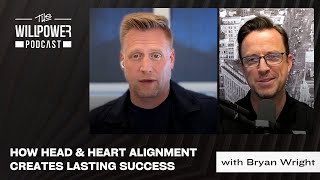
A Willpower podcast interview with Bryan Wright exploring leadership, mindset, and the interplay of head (vision, deliberate thinking) and heart (trust, receptivity, gratitude). Wright argues that durable success arises when vision and execution align, abundance replaces scarcity, and leaders intentionally shape inner narratives (meanings, identity) to change emotions and external outcomes.
Chapters
Foreign.
Welcome to Willpower podcast, guys. We're here to free you up with today's very special guest. We're going to be talking to Brian Wright. He is a leader's leaders leader. He's a physical therapist. He has Wright physical therapy in Idaho, which is a massive company. I don't even know how many locations he has at this point. And the crazy thing is that's not the only business he does. He is helping tons of other PTs start their own practices in addition to an EMR. And so listen, this is one of those few 1% people we get to spend some time with today to really dive deep into mindset. Today we're going to change how we think in a completely new way. We're going to show you how to think from a place of abundance so that you can pull these wonderful things in your life into your world.
You.
He's literally going to show you the roadmap of how you can go from being stuck and busy all the time and super overwhelmed to free and how you start all these companies and what that looks like. And that roadmap is so inspiring. I can't wait for you to listen. Enjoy the show. So, Brian, you've got your hands in so many powerful things. You know, leadership. I've said this last time you were on the show, and I mean this for everyone who's tuning in, who may not have heard that I put you at the top of my best leaders list. In your case, how does the head and the heart translate into execution for you? Let's get into that space a little together.
Just jump right in. Yeah. Well, first of all, thank you. I mean, you always, always tug on my heartstrings as a leader. I look to you for all the things that I gain so much from meaning and purpose and, you know, those can be buzzwords for people, but I do, when I think of head and heart, they work hand in hand. They do. They work so, so well together that I think that for me, what's really. And when I look back at anything I've ever done that's been worthwhile, will I think that understanding that it's neither been just all heart nor has it been just all head, it's got. It's gotta be this kind of balance. And so this balance for me is when it's both working in tandem as they should and knowing when the head should not cross over into the heart space and when the heart should not cross over to the head space. And when you balance that with precision and skillset, that's when the magic happens. And so, yeah, it's interesting because I.
Think most of us get real, like, step, process oriented when we think about success and future growth as leaders. And this could be the leader who's just trying to improve their personal world. It could be the leader who owns a business, who's trying to grow their company. They think about, like, the five steps they need to take. But what you're saying is different than that. You're saying that, like, yeah, steps are there and those are important steps, but you're saying mindset behind the steps is a lot more powerful than knowing what those steps are.
Yeah, I really appreciate what you're saying there. And it cues me to think through this. You might have heard this before, but vision without execution is what it's daydreaming and execution. Yeah. Execution without vision is drudgery. And so what is it when you put vision and execution together? And I, I just would like to say it's magic. And magic sounds like something that people do not do in business. But when I've ever done the best parts of business, when it's been fun, when it's aligned with my lifestyle, congruence the things that I want out of my life, and it's not just, again, a set of mechanical things that have to be done, that's when it feels like magic. It literally feels like things come together even with problems. Problems are just a. They're just a signal that we're doing the right things instead of just being something that just like, hits you in the chest and knocks you down. And that's really when we start talking about leadership in any space. You want to feel like it's magic. It's a litmus testing for me. Will, if you're really doing vision and execution in tandem, what I think it should feel like is it should feel like you're growing. You yourself.
Yeah.
The people around you are helping you develop just as much as you're helping them develop. There's this sort of ebb and flow. You. You don't feel inner de. Energized. You feel energized. You feel like. Like you could work into the wee hours of the night and you're good. That's what, what I mean by magic. Like, how is it that some days I feel like I get to 4:00 and I just want to crash.
Yeah.
In other days it goes to 11, 12 o' clock and I just feel like, does this day have to end? I probably should go to bed, you know, and. And really the same kind of problems can occur in both types of days. What is it that activates that? Go till 12 o' clock with people and love every moment of it versus go to four and just feel like, is this day over yet?
Interesting. It sounds like alignment is what you're saying between the head and the heart is what helps you propel into those energy giving days versus the energy sucking days. It's interesting because I've heard that concept of a vision without execution being a dream, but I'd never heard the reverse. I'd never heard that till you said that thing about execution without a vision is drudgery. And it's so that to me is what I identified the most with as an early entrepreneur. Like, for me, in my medical practice, I was in this place of like just, you know, I think part of the problem was identified as the service I was giving. I'm a physical therapist. So like that's so. And I loved it. And I still love treating my family. I haven't treated a patient officially in over 10 years. But that back when I was stuck, it was a headspace of like, what I'm here to do is treat patients. And so it was this vision of limitation. I only wanted to treat without having to deal with headaches from my team. That was kind of where I lived. And I, and I. That was why most of my clients have been stuck. That I've seen. That's why most of us are stuck, because we don't understand what you just said about vision and execution. We're all good exit. We're all good at executing when we're passionate about something, like in healthcare. But I think understanding how to like expand the vision is my. It might be, in my opinion, where we're struggling a little bit, like in your journey, what expanded your vision and. Or like how do you help people expand their vision outside of like that drudgery stage?
Oh, wow, that's powerful. Yeah. Well, so a couple of thoughts. Number one is when you're in your head, you're dead. This is such a nice little mnemonic. Right? But what does that even mean? Well, I'll answer your question first and then I'll get to my question second. Okay, so your question was like, you know, how did I get to this thing where my vision would expand? One of the best words that I use inside of my mind or soul if I, if I need to really get out of a space where I feel constricted and I want to feel expansive is trust. Now I have a deep belief That I was created for more than just this life. I just. I believe that our creator created us with many faces of intention that are beautiful. A few that come to mind are he created me for beauty. Right. Our creator created us for expansion, for unlimited abundance, for receptivity. That's a key one, like receiving, too. Because sometimes, you know, when I think about, like, oh, I need to give, give, give. I think when I realized that my creator created me for receptivity, that immediately when I get in the state of receiving, that immediately expands the vision. It's like, oh, why not? Bigger than what I was thinking? Why am I Not even why. But what would be better than what I'm thinking now? What would be even more exciting? What would be even more fun? Perhaps some other things that I think of with regard to those faces of intention would be love. My creator created me for love. And I don't just mean loving other people. I mean, you know, some days you don't love everybody you come across, but there's still love inherent in the fact that I can honor the good inside of every single person or. Or the magnificence I see in them.
Yeah.
And something happens when a person honors the magnificence in other people, especially if they understand that I think automatically when we.
When we.
When we honor the magnificence in other people, automatically, it unleashes our ability to do so in ourselves. Now, it goes both ways. If I honor the magnificence in myself, which some days it's harder than others, but if I intentionally work to do that, what happens to the outside world, too? I'm automatically honoring the magnificence in other people, too, because I don't. And I don't think people should see us as all these distinct people kind of doing our own thing. And I got to get mine. You got to get yours. For me, when I do that process, my vision expands, because now I find that every time I see that in other people and something changes for them that's positive, it somehow affects me in a very positive fashion. So I just can't help but try and see how can I get more and more good, not only into my space, but into the space of everybody around me. And that begins to start to make you think in terms of all these different things. And so trust is the key word for me. There's.
Yeah, there's so much to unpack from what you just said, Brian, because trust being this foundational element of being able to, you know, from a foundation of giving and receiving the Receiving part of vision. Blew my mind when you said that, because in my mind, in rock stars, as you're listening to this, like, the reason that's so powerful is, I think so often we limit what we can receive. I remember setting goals, Brian, for years where I just, you know, someone years ago told me if I put a goal and stick it on a mirror, it's like 80, 90% likely I'm going to hit it. It was, I don't even remember the statistic or even if it was a statistic, but it landed like truth. So I've been doing that since I was like in my mid-20s. And I look back at the papers I've had and those early goals were so like, you know, if I just, I remember if I could just get a hundred patients in my clinic a week and make a hundred thousand dollars, life will be great. And there's something beautiful about not wanting more in the sense that, like, you know, I'm, you know, I'm happy with what I've got kind of thing. But that's not what we're talking about here. Being willing to trust God or the universe, depending on how people look at that. But for us, God, like, being able to trust God and knowing that he wants to receive, wants us to receive so much. Abundance means that when we go out as, you know, children of the Creator and create our own future, I don't think he wants us to think myopically. I think to your point, he wants us to think big so that he can bless us big and if our heart is in the right place, so that we can bless others big, which will in turn bless us. So when you were talking, that was the cycle that I was experiencing around all this. My favorite book of all time is the Speed of Trust by Stephen Cuffy. That's not my favorite book of all time. It's my favorite business book of all time. Excuse me?
Yeah, yeah, yeah.
But like, business book wise, nothing. To me, I think everything feeds off that word trust. The way that you describe it in terms of like, trusting from a place, of how it shapes the way we experience the world and how we see things. And yeah, like, I don't know, how did you come up, like, how did you get to that point, though? I love that. But how did you see that that way?
It's a journey, right? Like I've, I've seen as things come into all of our lexicons and sometimes I hear people say, what is a lexicon? And I was about to ask you.
What a lexicon was. I was like, I don't know what that is.
Yeah. So we live in a world right now where people understand AI to a degree. Plug in all the data that you have into AI and AI spits out certain outputs.
Yeah.
I think that there's an si, a spiritual intelligence. So AI would be artificial intelligence. I think there's an si, a spiritual intelligence. And when we plug in certain things into us, whether it's reading the Speed of Trust or listening to a podcast from Willpower or talking to a friend, what we get is we get all these inputs that go into our lexicon. If I learn Spanish, if I learn German, if I learn how to play the piano, I listen to a song that I really like from Wonderwall or something like, know I'm Oasis singing Wonderwall or whatever it is. These things affect us in a way where now when we speak, it comes into this input, and then there's a spiritual intelligence that allows us to speak about our own experience. So for me, I would say it's just the lexicon of all life's experience now to get more specific so that it's not so esoteric.
Great.
I read a book called the Power of Intention from Wayne Dyer. I've read the Speed of Trust, and I understand the dividends and the taxes that you have regarding relationships. And for me, I guess, reading also foundational books that a lot of people would consider to be like, the best books, whether it's scriptures or things of that nature.
Yeah.
Fundamentally, I believe that the very greatest leaders that I've ever learned from believe in this concept of ask and receive. Now, traditionally, I would have thought of asking and receive is just sort of like this gift. But what if they're commands? What if they're commands from. From a Creator who wants for us to be beautiful, who wants for us to have unlimited abundance, who wants for us to be expansive, who wants for us to be creative, to receive. What if he wants all these beautiful things for us? Because I know for me and my children, I want to see that for them as well. And if he does, trust has a little bit different meaning for me. If I really believe that identity. You see, if I have a different identity of what my Creator wants for me, like he wants me to suffer through and get through this life so that by the time I'm done, I proved that I could suffer. Well. Well, guess what? If I'm trusting that it has a completely different way of looking at life than if I trust? He wants for me beautiful, creative, expansive, receptive things. I Think at the core, identity matters. Now your identity as a child of your creator is a huge piece of that. The absence of that does change what you're trusting. But secondly, the identity of your creator matters. How do you identify that? Where did it come from?
Interesting.
Yeah, yeah. If you have a different identity, trust might mean something different for you. So for me, I'm trusting that if I get to a hundred thousand dollars and I get to a hundred patient visits per week and trusting that that's a piece of the journey, it's not the end. If I can keep going here for a minute, Will.
So went to Ink Grow co back, gosh, I don't know how many years ago, five, ten years ago, whatever it was in New Orleans. And when I got there, growth conference.
Right.
Remember the grow. It was a growth conference. It was inc. Like, like, like the magazine. Yeah, yep. The magazine Inc. Yep. And was there. And I happened to get off break and I called one of my buddies here from my hometown and he was like, where are you at? And I'm like, well, I'm in New Orleans at this conference. And he just stops and he goes, dude, when is enough?
And it wasn't sad to inspire. It was said to, it was critical. It was kind of put me in my place, you know, And I was like, well, I don't know. My creator doesn't stop, so I don't think I will.
Wow.
And that. So it's identity matters, right? If I believe that I am first of all a child of the Creator. And this doesn't even have to be a religious conversation at all.
No.
If your creation is agnostic, spiritual, it's spiritual man. Call it the universe, call it God, but I'm calling it Creator. Because I was not created from absence. I was created. Everyone can agree to that concept that I am a piece of my creator, period. Now you got to decide what the identity of your creator is. You got to decide what your identity is. I prefer and I actually have found a lot of magic and power from thinking my creator is my father. Right. And there's more to it than that. Doesn't need to get into that here. But like it's an expansive concept that identity helps me because if I'm a seed of that, if I not if I have some of that DNA in me spiritually, then it starts to unleash what I'm thinking of. Now, going to a pragmatic example. How do you get out of your head in order to understand identity? If all I ever see is the mess ups that I do. And I'm not really a leader. I don't even know how I got into this position. I feel like I've been faking it this whole way. When are people going to figure me out? When's it fight? When's the house of cards going to fall and people are going to figure out that I'm not really a good leader? You know, there's really a very scientific approach to the fact that we have two thinking minds. We have the, you know, the, the basis of the thinking mind called the spontaneous thinker. And then we have the deliberate thinker, and that composes our consciousness. Spontaneous and deliberate. And then there's the magic mind, which is the unconscious. And we all have it. It's not just in some of us, it's in every single person. So I get to control whether or not I have the spontaneous thinker takeover or the deliberate thinker. The deliberate thinker has a lot to do with shaping what it is that I want. The spontaneous thinker has a lot to do with saying, hey, yo, you're in the wrong place. You really don't belong there. If you just stop here, you'll be good.
So that's more than reactive is what you're saying. Because I was thinking as you were talking about reaction versus proactive, but it sounds like that's a little bit different. I've heard in other terms, like the critical parent versus the nurturing parents and those types of things. None of that is hitting exactly what you're saying, but it feels to me like you're saying that that first thinker, that was the name of that person.
A deliberate thing or the spontaneous, spontaneous.
Thinker is reactionary and judgmental and critical. Is that right?
Oldly. I think that's a very good application. I've never thought of it like that, but yeah, I think it makes sense.
Okay, so that's what I heard from that. So you can control whether or not you're that person or the deliberate thinker.
Yeah, I mean, I'm the CEO of my Life Enterprises. Right, you're the CEO of your Life Enterprises, and the conscious mind is that CEO. And so you have the opportunity to say, is this thought that's coming in kind of like this rogue employee coming into my life saying, hey, just so you know, I want to talk smack the water cooler about your life and are you going to fire that person or are you going to let them keep on talking smack at the water cooler because you're not sure who to replace them with? Well, the deliberate thinker gets to come in and say, you know what I want for my life? I'm going to be values driven. You see, oftentimes the spontaneous thinker is reactionary because it's time driven. Time pressure fires, boom, boom, boom. But the deliberate thinker is compass driven. It's driven by values. It's compass driven. It's like if you don't know what your values are, or maybe you do, but you haven't written them out. And if you don't know what it is that you're trying or that you want for your life, not even trying what you want for your life. And if you feel like I shouldn't want too much, it's going to be hard to be more and more expansive. You're going to limit yourself to that identity and you're going to limit yourself to whatever it is that you're seeing in the outside space instead of flipping the script, creating it on the inside space, and then watching it unfold in the outside space. This is why I say psychology is 80% of success and the mechanics are 20%. A human body is a great metaphor. The human body has the head up in the sky. It's got the heart in the center, it's got the hands that reach out to others, and it's got the feet square on the ground doing work, moving. Right. It's a beautiful metaphor or how we move in life. I can't just have my head in the cloud because that's daydreaming. Where's my feet? My feet are on the ground. It's a drudgery if I don't have my head somewhere in the clouds.
Execution and vision.
Yeah. I mean, we are beautiful metaphors for how a business, or even if you're not a business owner, you're just a leader. And I wouldn't even say jest. You're a part of a leadership team, and you become part of a leadership team that gets to reach out to other people and their hearts as well, through their hands. I think it's just a powerful way to consider that we are made for more than sometimes we allow ourselves to identify with. So if you have embarrassment, shame, or guilt that makes you feel like you're not worthy of something that you want.
That right there is probably the first place to start to resolve. And you can resolve it in a number of ways, but you don't have to live with an identity that says, I'm not worth that, or I don't deserve that, or I don't want to be greedy or right there's.
Shame around. Sometimes shame doesn't look like I don't deserve it. Sometimes it looks like, well, I don't want to be greedy. I like that you said that again. That was more me. Like early stage mirror, goal setting. It was kind of like, listen, it's. It's selfish and wrong for me to want more. And that's not what you're saying. You're saying that actually aligns more with our capabilities of what we were built for.
Yeah. I mean, I think about my children. If they're like, dad, would you be upset if I was prolifically successful and I did good for people and I was able to make tons and tons of money, and with that money, I had margins and time, energy and money for my life, and I gave that to so many people. Would you be mad at me? I'd be like, yes, I'm terrif, terribly mad.
Yeah, right. How dare you?
How dare you want more? Why don't you stay where you're at? And. And of course, with my identity, my father, I can't imagine, I can't imagine the creator who created me to be beautiful, expansive, unlimited abundance, you know, create, you know, all those things. Dole of love would want that. And by the way, the more I gain and receive, the more I give. A person receiving doesn't identify what they do with it. A person can receive and choose to do whatever they want with it. They can choose to turn it to light, they can choose to have it be a lack of light. But either way, whatever we do with what we receive is what we magnify. So if I'm going to receive more and I have an intention to do good for the world, I have this really strong belief that I'm going to keep on receiving as a result of that intention. That's just where I sit.
Yeah, it's interesting, I think, because the mindset piece of this is fascinating as I'm listening to you talk, because I believe that a lot of us just see examples of abundance in negativity, people who are getting greedy. When we think of big business, for example, companies that are making lots of money, there's an inherent label of they're dark, they're selfish, they're evil. And there are true examples of those individuals who do you know, the story that's gone on forever of people who come from nothing, become successful, who end up becoming a little bit fallen is like almost a cliche to some degree. But in real terms, I will tell you, and I'm sure you'll agree with this but the people who have meant the most to me, and these are people who I actually know, the most successful people that I, in person know typically love the most, serve the most, give the most, are the least selfish. So I do think that there's, like, illustrations in media and in life of people who have a lot and don't use it for good. But for most people, especially if they've had to come from nothing or little and they've had to build that from scratch so to, you know, bootstrap their businesses or whatever they're going to do, in my experience, those are some of the most amazing human beings that I want to be like. And it's like. And they embody all the things that you're talking about. A big belief that they matter no more than anyone else, but that they matter and that they're unique in the same breath, and that what makes them so effective in life is how they can help and serve others. So as you're talking about this thought of abundance, I think it's. I just wanted to mention that for my rock stars, because as they're listening to this, that was what I had to get over if I was in that place of where I was ever going to want more. I had to get over the fact that wanting more was right, not wrong. It wasn't even neutral. It was the right thing to do, and that was what created a greater vision. Then my. My capability started shifting because I listen. I don't think there's anyone listening to this show who's dreaming and not being boots on the ground, like their feet are moving. If they're listening to a podcast because they're. They're doing extra steps to try to make an effort to improve their life. So if anyone on this show is listening who needs to hear a message, it's highly probable, if not guaranteed, it's the. It's the person who's working really hard and wondering why they're stuck. And I think that's why it's so great that you shared what you did. How did you. How did your mind. What was it in your world that shifted your mindset, Brian? Like, what was it for you that shifted things? Because I'm doing the intro, as you know, at the end of this, this meeting, I'm going to talk about all your companies, all that you're doing, but so the social proof will be there. But what shifted for you? What was it that shifted? Was it a person? Wasn't an experience? Where was the beginning of this journey of Brian that the Beginning. Yeah.
Well, I want to make a comment about abundance just briefly here, just because it's on my mind, and that is that scarcity versus abundance is something that I had to grapple with and wrestle with. Being raised in a very competitive environment and hearing a lot of phrases growing up. I grew up in, I don't know, I would call it abject poverty. It wasn't like the end of the world. It wasn't third world country, but, you know, one pair of jeans to my name and, you know, I didn't even have a bedroom to myself. We had to staple blankets to the ceiling to get bedrooms in the basement. You know, whatever. I was happy. I was happy. But I had a lot of things that fed my mind growing up. That, that fortune in life, whether great relationships or, you know, really healthy body or wealth in the terms of financial wealth, that those things were a function of almost like the cosmic roulette table, you know, is. Is it going to drop in your favor? You know, gosh, one day maybe we could win the lottery and buy that, and we can't afford it. But. And that was really like 20 years of my life. And I didn't enjoy that space very much. And then I went out of my household. And again, this wasn't all just. My family taught me a lot of really good things, but there was a lot of that going on. And as soon as I moved out of that space and went and learn from people outside of that space, I. I served it to your mission. And there were a few people who were prolifically generous, they were abundant, they were energetic. And they would say, like, yeah, I mean, just you can choose whatever you want for your life. And I was like, choose whatever I want. Like, you mean I can choose my fate? Well, you do choose your fate. Not you can you do you choose it. Whether you go one way or another. I was watching that and I watched the people that. Because I got to see a lot of people in a mission place that you go. You go and meet a lot of people. And I started watching the. Not only the missionaries that I was paired with, but also the people that I would go to their houses and I would hear the different stories and there was these patterns that would start falling from that. That space, the golden thread. And that golden thread was the people who really were generous and giving and abundant. And I'm not saying the people who didn't have financial welfare weren't as well, but there was this general sense of what they. What they could do, mindset shift.
There was a Mind you could. There was a pattern of a mindset that you were observing between the two in scarcity or in abundance.
And what I started to see was that those that had abundance mindset that was like, there's so much and more for everybody. The more that I share, the more that I get. The more that I get, the more that I share. And these other people are like, look, there's only so much. I can only afford so much. And there's only so much that's going to happen for me. This is just how it is. This is my luck. There was two different languages. Then I started to notice scarcity mindset in a certain group and abundance mindset. And there was rarely in between. Some people tried to dabble in both.
Yeah.
Usually there was a separation. And I said, I want to be abundant. I want to feel like. Like if I give somebody a huge piece of the pie that I have, they're just going to take that and they're going to make another pie with me, you know? And that's how I wanted to start to view things. Then when I got, you know, it's just life keeps compounding that and it keeps proving that over and over again. So if I move to a scarcity space after I decided I was going to be a creator of habit instead of a creature of habit, did you see the difference?
Yeah, totally.
A creature of habit is somebody who's acted upon. A creator of habit is somebody who's deciding what the deliberate mind to create with that mindset. Then I started to say, okay, when is it that I fell into being a creature of habit? It wasn't like I changed altogether, but I was like, oh, I see the possibility. Start to be a creative habit. Whoa, look at the stuff that's happening. Start to fall into creature of habit. My emotions drive my decisions, my urgency, my clock. And I watched what happened to my life. And I started to say, I want to be over here more. I want to be in this space where I'm a creator of habit, where I don't see people as persecutors and just coming down on me, but rather as challengers. And I don't see a person needing to save me or rescue me as a hero, but rather what I want is somebody who can mentor me like that, that helps me walk through that, like Yoda. Now, Yoda didn't save Luke Skywalker, right?
Yeah.
Yoda guided him. So. So I. I wanted to be a sort of in this triangle. I wanted to see people as mentors, me as a creator of habit and persecutor as a challenger and sort of shift that mindset, Then you start to just experiment upon that life and you see, well, shoot, when I went this way, it didn't help. And my emotions certainly didn't help guide me. Why don't I guide my emotions to how I. How I'm going to intentionally think about things when I say a word. Yesterday was tax day. I don't mean to date this, but hey, yesterday, I know it's gonna be really soon.
No worries.
And traditionally, tax day has got this native connotation. What if I change the meaning of tax day every time I pay my taxes? Not only do I do a civic duty, I don't care what the government does with it. That's not up to me. I pay my civic duty. And every time I do that, I get prolifically more wealth. What if I do that? Guess what? When April 15th comes around, I get a positive emotion.
If I celebration of what you accomplished.
There you go. So, yeah, so there's ways to look at that. So anyway, that's how it started, and that's how it continues to start. Because every day is a new journey for that. For that, for me.
Yeah, it's cool because you had it modeled and then you started trial and airing it yourself. And as you started to get more abundance, it became easier and easier for you to. You know, it's interesting because the, the analogy. There's two things I want to mention on, on what you just said there. The first is that, um, the. The analogy that I've heard that I really like, that describes that is that if we're in a room and we. We have two dollars, that's all our. Our money, and someone comes and takes a dollar, it's devastating. But if. If in that room there's. There's millions of dollars and someone takes a dollar, it means nothing. And I don't mean that financially only. There's like an emotional equivalent of that when we're feeling accepted and loved and we have this like spiritual abundance that when challenges come, it gives us that point of reference to where it is easier to shape that mindset. And I remember, so at the conference we were both at recently when I was speaking, the thing that I said that I got the most responses on, it was shocking. Brian. I said from stage, I said it was a side comment. It was a throwaway comment. I was talking about investments and failure. And I said, well, yeah, but you can always make more money. And I kept going, you can always make as much money as you want or something like that. I had people coming up to me challenging it. I had other people come up to me inspired by it. Like it was, it was for you. It probably wasn't even something you noticed, but in that room of people, it created this response because it spoke, it spoke into people's mindset. For some, it opened up possibility. For others, it challenged them in a way that was invalidating. And, and it was. So this abundant mindset really, really does shift things. And then there was this TED talk that talks about, like, you're talking about the meaning of tax day. There was a TED talk I will have to find and stick in the notes of this episode. It was so powerful because it was talking about stress. And they did a study and they looked at people who live high stressful lives, people who are intentionally creating lots, or maybe they were just in a place where they were receiving lots of stress because they had lots of personal things going on. And then they studied their health. And there was a percentage of the group that had strokes and heart attacks and died young and all the things. And then there was this other group that had the best health and they were. Their diets and all these things were being monitored to be somewhat similar. And they, they were able to test it down to one thing. It was what stress meant to them. Like the meaning they assign stress is what determined their physiological response. So, like, if someone was like, well, this stress is an indicator that I'm doing some good and I'm telling myself, I'm just excited about this. It's hard because it's going to be worth it and I'm going to help people. Those people physiologically literally created a different physical health versus people who are like, well, this is stressful, this is negative. I don't like this. Heart attack, stroke, like, truly amazing that these things that we're talking about now, they might come across as ethereal, but there's actual physiological proof now. And the world is getting more concrete with this. And as we start to test these concepts, much less in our own world, as we test things on our own.
Yeah. Wow. Thank you for sharing that. Because, you know, I, I am a big believer that words don't describe things, they create things. Wow. I think that words are powerful and meanings to them. So there in my, in my mindset, in, in the way I see things now, if I want to create something in the physical, then there's some things that I can change. Number one, if I have a negative emotion about something, again, can I see that negative emotion? As a messenger or a signal, can I see the physical representation of what I'm looking at? Whether it's dollars in the bank or weight on the scale or, you know, whatever it is that I see as my physical environment, can I see that as a representation of what's going on on the inside? And that's been a helpful thing for me to look at the physical representation, my five senses, you know, smell, sight, taste, test, sound, and see that as a reflection to me of something on the inside that's helpful. Not. Not that the reality that I see out there is not real to me, but that I can use it as a resource. So when you say the word stress, if stress is to a person negative and that's the emotion you feel with it, there's a third part to this called the story. So there's representation in the physical, there's the signal, which is the emotion, and then there's the story or the meaning. So if stress equals.
Hard life or stress equals it just isn't going my way, then guess what? The emotion will follow and the physical representation will follow whenever I change that meaning. If stress equals.
Mike, I'm a physical therapist too, right?
Yeah.
So when I stress the body, I get stronger. If stress equals strength, potential. Yeah, strength, or. And you can, you can provide whatever meaning you want. You are the creator of habit, Right. So if stress equals, oh, this is a messenger telling me that I'm putting too much work in the physical and not enough work of the non physical. Think about that. Stress and overwhelm often shows up as a result of people putting a lot of work into the physical and not enough work in the non physical. Which would be that, you know, like, how do I view things? What story am I telling myself? What state or, you know, what state do I want to have? Like, those are all non physical things that you can work on to change the entire cascade of the rest of it, you know. And so, yeah, so what does stress mean to you? And if I get a negative emotion from that, I can actually change that. That's why I say psychology is 80% of the success and 20% of IT mechanics. And again, it could be 70, 30. Doesn't matter.
It's just frustration.
Yeah, just don't lose that. I think that there's been some references to this and I'm going to go ahead and quote them. Anywhere from 10 to 20 million bits per second of processing power in our unconscious mind. Now, how you measure that, There's a lot of different ways they measure that, but 10 to 20 million bits per second. Now, if you can compare that to what the conscious mind can process, the CEO, the thinker, that's about 126 bits per second by some estimations. Some people say 50 bits per second. But just from a ratio perspective, let's say it's 12 million bits per second for the unconscious and 126 bits per second for the conscious. You're around a 1 to 100,000 ratio. In my mind, the way I view that is I'm a CEO and I have a hundred thousand workers that are going to bat for me every day, 365, 24, 7. They don't sleep and they don't ever take PTO. If that's the case, and I have a program running to those employees that stress equals upset equals my life is hard. Those workers are going to work non stop on that and not all of them will. Some of them are like, well, you have another program that says you want to be happy, but they're duking it out in your company. And you can't figure out why your stat line isn't going very well from a, just from a metaphorical standpoint. But how's your life looking in the outside? Because I would tell you, you change the meaning of things that make you feel negative. You change the meaning of it, you change your life, truly. Change the meaning, change the story that you tell yourself. Well, you know, I just have an underactive thyroid. And this isn't mocking anybody who has thyroid issues. I have this underactive thyroid so I can't lose weight. Well, what if you change your story too? Well, okay, people who have passed away and I'm not, again, this is, I want to be sensitive to it, but people who have passed away have very underactive thyroids. They don't work at all and they still lose weight. You know, indicating that like you're trying.
To show an example of how like the truth around these things.
Yeah, yeah. Like if you have a story that says my underactive thyroids are overactive or whatever is what's causing this issue with my weight. Well, guess what, your emotion's gonna follow and your physical representation is going to follow if you do that in your business. Well, you know, it just took me six years to get to this point and so it's going to take me another six years to get to the point that's double if I ever get there. Or you know what, I had this much hell to pay to get here, I don't want to double that. The next place I Go. Well, your meaning is going to guide that entire gestalt, right?
Yeah, man, that's so powerful. It reminded me when you were talking about, I used to take my oldest two sons to karate years ago, and this guy was like, truly great. It wasn't just a foo fooey karate. Like, this guy competed and he used to teach these life lessons and we were talking about self defense, and he's like, you know, guys, when. When you're trying. When someone's attacking you and you're trying to dominate that physical conflict, he goes, you want to grab the head and manipulate it because. And then he goes. Where the head goes, the body follows. And he goes, that's true in every aspect of life. And then he kept going. And I remember that stuck with me. And it's kind of had some meaning for me. But when you said that whole idea about how our subconscious just rules supreme and how that really dictates the creation of our environment intentionally or unintentionally, depending on how we choose to see it, that where the head goes, the body follows. In this case, where the head goes, the team follows, the company follows, the family follows. Like, it's such a beautiful thing to think about, just being aware of it, like, because knowledge is power in that sense, you know, And I think what you've done today is really help expand our knowledge and perspective of these things, because, you know, I will, you know, like, one of the last things I'll say is, for me, it's heartbreaking when I have a son and I have four boys who, who says something derogatory about themselves. Like, I'm a. I'm a loser. I'm stupid. Like, they, you know, little things. And I just, you know, I try to, like, pull them aside and grab them and say, you, you, you are not stupid. You are special. But you have to say that you. That language isn't like just worthless words we're throwing out there. We're programming this celestial brain of ours, you know, computer that can help dictate our future. So, yeah, Brian, what, What are your. What would you say would be your. Your. Your closing thoughts on this topic as we, as we wrap up?
Thank you for having me here. First of all, I think that. I think that a few things. Let's get practical with all this. Never, ever, ever complain. Never, ever, ever complain. Because complaining, we use this concept of words create. They don't describe complaining. Whether it's about yourself or other people or other things, it's creating in real time what it is that you don't like. So if you're complaining about something, you're using words to create what it is that you don't like. Because words create, they don't describe. The second is gratitude. I mean, these are just. It's like, well, yeah, okay, of course. But when I'm in a state of wanting, it really is in some ways the antithesis of a state of having.
So the state of having is a state of gratitude for me and for many others. Right. When I'm thankful, what it is I have, I accept.
More from Will





Highbar PT’s Blueprint for Culture, Brand & Growth With Michelle Collie and Dave Pavao

Highbar PT’s Blueprint for Culture, Brand & Growth With Michelle Collie and Dave Pavao




