How to Scale Your Practice & Reclaim Your Time with Bobby Curtis & Casey Russell
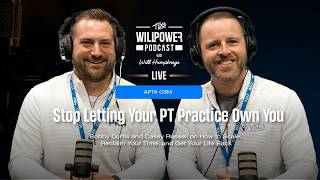
Bobby Curtis and Casey Russell, Directors at PRN, explain how their company helps independent physical therapy owners scale practices while keeping local brands intact. PRN handles billing, staffing, and compliance so clinicians focus on patient care. They emphasize teaching PTs to link quality outcomes with profitability and building community through high-school athletics partnerships.
Chapters
This is the Willpower Podcast live at APTA CSM. We're here with physical therapy leaders and practice owners from across the country talking about where the industry is going and what it takes to grow in today's landscape. So today I'm joined with Bobby Curtis and Casey Russell, Directors of Operations and Business Development at PRN, discussing how PT owners can scale their practice, reclaim their time, and build real wealth without losing the brand and community relationships they've worked so hard to create. Let's get into it. Well guys, welcome back to Willpower. I am so excited to have Casey and Bobby from PRN on the show. Guys, welcome. We're here at CSM and what a great opportunity to talk. Great to see you guys.
Awesome, thanks for having us.
Absolutely, thanks for having us, bud.
Yeah, and we have such a great connection because when I sold my, my practice in Arizona, the company that was buying us was merging not just my business locations but all of my friends. We had 26 locations that came together with 5 owners, and they needed someone to be the CEO. And so they looked far and wide, and they found the COO of PRN, which is Steve DiPaola, who came over as CEO. So I know a lot about you guys simply because I had the privilege of working with Steve, who's an amazing leader, very talented clinician. And, uh, that's where you guys are currently at. So how's— what was it like working with Steve?
Yeah, you know, I mean, honestly, I kind of came in a little bit post-Steve, but I do know him from kind of common connections, right? And we partner with where he's currently at as well. So just great relationships. I think obviously the culture that he drives has been that of like partnership and how do we work together and grow together. So it's really been just positive and fantastic through and through.
So great. So let's talk about PRN. First of all, I'm sure you guys come to CSM every year. Yeah.
Yes, sir. No doubt.
What do you look for here at CSM? What is it? What's the main focus while you're here?
I'd say the main focus whenever we come to a place like CSM, number one, is we always looking to recruit and retain top talent. Right. And we're looking for great people to come join our organization and do something a little bit different. Yes, we are a large organization, but we also are at a size right now where we have a lot of lateral freedom and we can create a little bit more autonomy in a new clinician's life or even a seasoned clinician's life. It could be a practice owner looking to do what you did. And sell and, you know, join our team. But again, with the size that we're at, we always look— are looking for great people with great integrity, great character, and just something that can, you know, join our organization.
Yeah, that's awesome. I think that makes sense because there are 13,000 people here at CSM and I think half of them are students. And I love them because they walk around in little like pods. And so, so I love that you're here and I'm a big believer in PRN and what you guys do. So talk a little bit, Casey, about what it is that PRN is and what you guys do.
Yeah, so, you know, PRN, we're kind of a national brand of outpatient PT clinics right now. We're, we're kind of a brand of brands, a family of brands. So what we really like to focus on is where can we find partnerships with clinician owners to have a financial interest in the clinic.
Yeah, right.
And we help them to operate that, right? I love talking to practice owners saying, what are the challenges you're having and how can I help you solve those things? So we've really over the years built ourselves up to the point now where 16 states, about 270+ clinics.
Wow.
And a lot of, a lot of owners within that structure that again gives the freedom and I think wealth building opportunity of being an owner.
Yeah.
But limits a little bit of the stress because we've got a lot of all of the back office stuff kind of handled for that owner.
That's a powerful message there. And it sounds like you guys are really passionate about it. What is it about it, Bobby, that you love about what you do at PRN?
So having gone through that exact path that Casey just, just spoke about, right? I think when people get into the field of physical therapy, we do it because we truly love spending time and treating patients and getting great outcomes, right? But one of the challenges as you start to grow your practice is, like he said, the back office stuff, finding, you know, insurance companies or just getting all of these little things that are taking up so much of your time. That's really taking time away from the patient care and really what you got into this for.
Right.
So by partnering with Peerin, one thing, one reason we're so passionate about it is we really give people a lot of their freedom back, you know?
Yeah.
And saying like, hey, if you want to sit here and just be an amazing physical therapist with great community relations and you want to still continue to grow your business and grow your brand, let us help you do that because we're absolutely about backing you and helping you grow to whatever size you would like to go.
Okay, so the people that you are passionate about working with are usually PT owners who are doing most of the work themselves, who are really hitting those growth stages of burnout maybe not burnout, but just like they're limited to the hit what they could do if they weren't so busy trying to figure out all the backend stuff from medical billing to managing front desk to all the different elements of compliance. I'm guessing that's who your ideal client is?
Absolutely. Yeah, in fact I just talked to a practice owner last week and it was that kind of exactly, you know, he manages all the patient care and all the clinical side, his wife does all the admin side.
Yeah.
It's a family deal and they make it work and he's like, I would love to grow, but we just can't get over that hump, right? Because there's just not enough time in the day between, you know, the two of them running this practice.
And how are they doing now?
Oh, they're doing great. Yeah, they're doing, they're doing great. Um, we're still having discussions with them.
Oh, they're early stage. They're early, they're early. So tell me about someone who's been through your process. Tell me about a case study of someone who's been through it and what that's like for them.
So I know we have a couple, uh, practices up north in Wyoming and Montana specifically, right? And I think kind of like Casey was talking about, it's the same story just different people that are— that we're talking with, right? And what he's alluding to as well is like giving back the bandwidth to do what you want to do, right? Like you said, compliance is a huge, huge thing, especially in 2026.
It's getting worse.
It's getting harder. Insurance authorizations, uh, following up, following up on additional auth after your initial pre-authorization, making sure your codes are going out in a timely fashion, making sure you're getting reimbursed. And it can just really eat up a lot of your time, especially if you're a single shingle guy or girl, or it's a family-owned affair, there's just only so much you can do. And so you are really capped about, hey, how you can grow, the money you can make, things of that nature. And by allowing us to help you, we can actually give you back a ton of that bandwidth to do what you truly love doing, which again, getting into the community, providing patient care, great results, great relationships.
Yeah, I got— you know what, having someone who's sold his practice before, one of the things I love about PRN is how you guys do a good job of keeping those brands intact. And the reason I think that's so important, guys, is because it's my belief that it's the entrepreneur who's going to transform healthcare and that we in the PT, OT, SLP space should be the leaders of the musculoskeletal industry. We shouldn't be some service that gets referred out to. So the reason that's important, you guys keeping the branding intact, is because that leaves that personalized doctor-in-the-community feel in that world and you really are empowering people to do that. There's very few companies who are doing that these days. It's usually like a whitewash of a big national brand that just bleeds over everything and we lose the essence of who we are if we don't retain that mom-and-pop direct connection. You know, 'cause you're not replacing these partners, you're allowing them just to be more effective with their patients.
I mean, listen, like a big part of why we do that too, like We believe, yes, we're a large national organization, we believe healthcare is local. You have to be integrated in the community. Like, if you're not, you're not doing, you're not completing that mission.
Right.
Right? Like, it's important. Like, I agree, you know, you look at, you look at an individual brand, well, it's there and successful and we want to partner because of something that they grew, right?
Yes.
Not, why would I take that away? It doesn't, it seems a little bit illogical from my viewpoint. Again, having the the spirit of the entrepreneur, keeping that alive, and local healthcare. It's just so important.
So let's get into what you guys do individually. Let's start with Bobby. Sure. What is it that you do within that organization? You're both PTs, you're both very happy. When I saw you, like, you're just very happy people, which is always— I know it sounds silly, but like Warren Buffett said this, he's like, the 3 things you want to look for when you're hiring is only integrity, energy, and intelligence. It's hard to measure some of those things, but energy comes right out of the gate. And both you guys were like, what's up? Like, there's no, there's no world that you would be miserable in this company because you're so happy. So what do you do specifically, Bobby?
Now, so I'm our director of operations. I oversee about two-thirds, almost three-quarters of our Texas portfolio from the operations side. I also help with still seeing patients in clinic often. I do still Friday night light coverage with our local high school team. We talk about, which is really local relationships. It's massive.
So it's big everywhere. But I mean, Texas is like, I'm from there, as you know, they won't shut up about it. But there are so many like intense They're born and groomed for football.
Every Friday night we're playing in front of about 10,000, 15,000 people. And that's, you know, it's just unreal with the local high schools. And so I help with that. I've also helped with our sports residency. PRN has a national sports residency because of a lot of our relationships that we've built in Texas. We've allowed that model to kind of flow out and extrapolate across the entirety of the country, you know, finding these local high school relationships, finding great relationships with athletic trainers, local surgeons. Who think like we think, right? Simon Sinek, like, do business with, you know, those who believe what you believe. That's what we're after. And so we're constantly trying to find those people and develop those relationships. So primarily, yes, I am in the operations side, but I still also handle like sports residency, patient care, Friday night flight coverage, stuff like that.
That's cool. If I was a PT owner who had any sort of imprint in that world to know that there's like a real care for that part of my business, because yeah, man, that's a very personal side, the high school connections and all those sports programs are some of the most impactful things we do.
They do, no doubt, because, you know, whenever a, a kid gets injured, you know, unfortunate as it is, it's just the reality. You can't prevent everything, right?
Right.
But when that happens, you have an amazing medical team like we've built locally in the Dallas Metroplex. It puts the parents at ease to where you can come over there calmly, like, just tell them what's going on, what we're seeing, and you can help them through that whole con— continuum of care from initial triage by the, by the athletic trainer and the team surgeon. We're there to help if need be. If for some reason they need to have surgery, they're having surgery, then they're coming straight to us and getting, you know, quality rehab. Um, and not just, you know, crackerjack protocols. Things that we really look at day in and day out on movement patterns, strength and conditioning, biomechanics. Like, we do all of those analyses in our practice.
That's exciting. It's a ton of fun. I love that element. It just— you can tell it lights you up. Yeah.
This is what I nerd out on every single day.
It sounds like, you know, it's funny because there's this big movement within physical therapy of people leaving the industry because it's not worth it and all these things. They don't realize there are guys out there like you two who are living their best lives doing exactly what they got into the industry for and loving it.
No doubt. I mean, I told someone the other day, I said, yeah, I put in a lot of hours, but trust me, make no mistake about it, if I didn't love what I did, I would not put in the hours that I do. And I, and I, again, it's, I always talk about it as like a good type of a drug, right? Yeah, that, that's my good drug that I get every single day from like, again, seeing the positive outcomes in the clinic, positive outcomes with our physical therapists, local relationships. I mean, that's kind of what we talked about. My personal belief, we always talk about having that eternal impact, right? And so that's what we always want to leave with our legacy is that eternal impact of like, hey, we found this profession better than when it came in, or sorry, we left it better than whenever we found it. And that's just a good passion of ours.
Yeah. So Rockstars, as you're watching this, I want to highlight something that Bobby said. I think it's really powerful. To reconnect with that passion that we got in this— into the industry in the first place. We're here right now with all these students, and all these students are walking around with big smiles on their face, big dreams in their eyes. And there's that cynic in me that partly goes, oh man, they don't know, right? But there's the hope in me and the hope in these guys and others who recognize this is the greatest profession in the world. And when we can connect to products and services, whether it's whether it's PRN or anything else, that has found that ability to connect with that passion and reignite it, that's where we're gonna overcome the challenges in our industry and become profitable, and not just like be happy at work, but have the profits to match it, right? So let's get into your world, Casey. What do you do over at PRN?
So I'm a Vice President of Operations, so I kinda joke, I kinda treat spreadsheets now. That's kinda my, I'm getting really good at Excel. But in that, so I oversee our Texas and Oklahoma footprint from the clinic operations and coordinate between the departments, right? Make sure that our clinicians and everybody has the support they need to be successful in the field. The other big piece of what I do is kind of operationalize our relationships with other healthcare organizations, you know, physician offices, those sorts of things.
Sure.
Specifically in the Dallas market, we have a joint venture with Medical City Healthcare HCA brand there. So I came in responsible for kind of operationalizing that relationship, which ties directly into all the work that Bobby does. He's talking about coordinating care between those injured athletes, or a lot of times direct access patients that end up needing to go see an ortho or whatever. Well, we have super tight relationships with those ortho groups so we can really coordinate care and close the loop on the patient life cycle.
Amazing. And what do you love about that?
I love when you see exactly that patient story, you know, that goes from whether it's injured on the field or maybe they go to an urgent care with a musculoskeletal issue and we're able to kind of be the quarterback as the PTs, which I think is super valuable for us to be frontline providers. And we say, listen, we can get you fixed up back on the field. Or you know what, you need to go see this doc because I think you got something else going on. And to see that whole story, that patient, success, when everything is connected and people are really working interprofessionally, is something that I think is incredibly valuable for our field that doesn't always happen as smoothly as it should. So being able to smooth that out, say, hey, listen, yeah, that's great. They went here, they came, saw me, I got them to the doc, they had surgery, they came back to me, and they're back on the field.
It's great. And it's so neat to see that you're passionate about that, and the spreadsheets hasn't sucked any of that joy out of you, I see.
No, because I still, I mean, I still go to clinics, I interact with patients and therapists. It's very important to me that I do that even though like they don't need me there and sometimes I'm just in the way, but I just love being in the environment so much that I never want to be disconnected from, from why I got into the field.
Yeah, I will tell you, I grew a great passion for metrics in my entrepreneurial journey. Once we learn that, which is a horrible drop in our profession, we do not train PTs to know anything about production numbers, which is the greatest reason why we are unprofitable. Because if we could understand the connection between production and profits, the thing that you guys are training those people on every day, we would be as a profession worth more because we'd be fighting for every dollar and getting more contracts. So I love that you do that because what's odd, and I hope people are listening to this, is like there's a passion in terms of measuring these things. It's not about the money, it's about measuring results. It's like football teams, right? They're not about the score on the scoreboard, but the scoreboard measures the results of their effort. And that's what money is for us. If we're not measuring that and seeing how we're doing, we're going to be losing by default.
No doubt about it.
Yeah. So how do you guys incorporate money? I want— this is like a big, like, for both of you. Okay, this is maybe more for Casey.
No, we'll both talk about it. I'm gonna let him lead on it though.
Yeah.
So how do you change the mindset of new PTs to think about money? How do you help them see that differently?
Yeah, it's a, it's a, a process that we've seen is incredibly important, especially for the newer PTs coming into the market. They just don't have that exposure, right? You get DPTs coming out like, I want to be paid X amount. I'm like, cool, tell me how you're gonna get there. Like, let's, let's develop a path. Like, well, I don't know, I'm just gonna see patients. Like, so it's really important. And what I like to do is, is the money, right, it's a report card. Yeah, right. So we go, okay, what are we doing to, to properly kind of advocate? And really, to me, I take a clinical mindset to it where it's an output of, are we dosing the patient's properly? Are we delivering the right amount of care in the right sequence, right? Because if we take care of the patient well, the spreadsheets work themselves out. Like, it is really aligned in PT. If you take great care of the patients and properly bill and properly document or compliant, it all follows through.
It's neat how you tie it into the whole life cycle of the patient journey in that piece. What about you, Bobby?
Uh, echo what he's saying. I'll take out— take it from a little bit different perspective. We always talk about, you know, especially our brand in Texas and PRN across the country We always talk about quality before quantity. And I think when you have a new grad that comes out and says, hey, I want 80, 90, 100, whatever their number is, right? Like Casey said, hey, we'll help you get there, no doubt about it, but let's teach you along the way. And I think so many students are so concerned with getting like as much money as possible out of the gate. And I said, hey, get your quality metrics down first. Learn, like he said, how to dose the patient correctly. Sets, reps, strength and conditioning. What are the movement patterns we're looking for? What's the manual process that we can do to fix this patient fast? Faster, right? Are we spending enough time with the patient, um, in, in the gym, right? So there's a lot of therapists out there who like, they'll have a PT session for like 30, 35 minutes, and I was like, what are we doing? We can't— you can't get better in 30 or 35 minutes. You can't go to the gym in 30 or 35 minutes 2 or 3 times a week and expect to lose X amount of pounds or put on X amount of pounds of muscle, right? We have to dose it properly. So teaching them how to really understand a plan of care and the pathology and how to get them from A to Z, like he said, The metrics and a lot of that stuff takes care of itself if you're able to get the outcome first. And as you have great quality, efficiencies are built in there along the way. The more efficient that you are in treating patients of a high quality, you're gonna start to get more quantity of patients. And again, what follows that? More money in your bank account.
Yeah, it's— they're all tied together. I always tell the Rockstars, remember guys, it's two sides of one coin. The outcome of what we are is one side purpose, the other side is profit. Profit, why we do what we do, and how we measure it against the money we make. We're not doing this to make money. We are making money to do more of this. And when we can get that mindset right, it's— we're not going to get the burnout. Because the two things that make us happy, according to Tony Robbins, is growth and giving. So when we are able to grow and become more powerful, and in terms of understanding those elements, we can give more. And all of this is why you guys don't look stressed, you know what I mean, or aren't stressed, because I see You know, there's people around here I can see when they're faking a smile. I know energy. Like, you guys come up, I'm like, these are guys who love what they're doing and are doing very well at it. So I am so excited, guys, to have you on the show. I'd like to wrap things up with the rapid-fire set of questions. Are you guys ready for this?
Okay, let's do it.
All right, so how long you guys been in PT?
13 years.
13 years.
That's it. Just kidding. So after 13 years, what's something right now that you would say you love about what you do that you never would have on. Like when you come out, you know, you're thinking you're gonna love— what's something you're doing now? Like, well, I didn't know I was gonna love doing this.
Learning new Excel formulas.
Hey ladies, did you hear that? I'm just kidding. That's so— that's so— that's so—
take it.
Sorry, he's taken. People are screaming around here for something. Uh, okay, so Excel formulas, that was a surprise for me too. What about you, Bobby?
All right, so came out, wanted to, uh, be the best sports therapist there was. I didn't know how much I would enjoy working on and growth and empowering young leaders because they always ask me questions. Hey, how do you get what you— how do you understand this? How do you anticipate all of these things in the chessboard? And I was like, man, let me tell you how we do that. So I get as much joy and fulfillment out of just mentoring young leaders as I do helping an ACL on the field on Friday night.
Let's go. Because that's about growing your impact.
Absolutely. That's the eternal impact we talk about, right? What— that's your legacy.
Eternal impact, man. Okay, next question. What's a movie, book, TV show, anything that you've consumed recently that you were really excited about? Doesn't have to be educational. It can be, but it can be entertainment-based. What's something that you guys have seen or, or read or whatever that's really impacted you recently?
Um, you know, I recently just finished, uh, The Infinite Game by Simon Sinek.
Oh, good for you.
Um, and it's just totally thinking about that mindset every day. I'm like, am I trying to win tomorrow, the quarter, the year, like, or am I trying to continue on and to continue my purpose? Right. And that feeds itself. So that's been a great kind of read for me recently.
Goes back to that eternal impact, doesn't it?
Yep.
I love it. What about you, Bobby?
Just finished The House of David on Amazon Prime. And one thing I love about that, right, is not just a story that it tells, but it talks about servant leadership. Right. And I think a lot of people downplay those two words put together, and you'll have a lot of psychologists, you know, that are very black and white. Like, well, leadership truly isn't servant-based. And I say, well, I promise you, if you look, if you look at the best companies and their leaders that serve the people that work for them, they will go to hell and back for you. They will bust their rears for you. And again, it's not just about trying to maximize all you can, all the water out of that sponge, right? But giving back, right? And that, that's really, I think that's something that really has an impact on me, is that servant leadership.
That is such the, the flagship of what I believe I believe that leadership is service.
Yes.
I don't think it's a type. I think that's the literal definition. And the thing I always tell people is that the person who loves the most in any room is the person who's the best leader. And because they think of love is like this flowerly term, right? But look at the Bible. Look at great leaders and how they stood. They had to take a stand for what they believed. They had to do hard decisions, but they was always coming from a place of what was best for all, a pro-life type of element of like, how can I support make what's best for all of us at the same time, right?
Exactly. I mean, Casey and I talk about it all the time, right? Just because we, you know, we feel that we're good leaders, that doesn't mean that we don't have hard conversations. That doesn't mean that we don't have to lean on somebody every once in a while. But it's out of love, it's out of growth. It's not just trying to just maximize the profitability out of it, right? That's gonna happen whenever you're doing a great job.
Absolutely.
And it's those quality conversations as leaders that we have to keep having day in and day out.
Absolutely. Love that. Great answers, both of you. So now let's get into something fun. Where have you guys been in the world or want to go in the world?
One of my favorite places in the world I've been to is Prague. Beautiful city, ton of history. I had an opportunity to play football there with my college team, so it was awesome. Just great experience. Culture is great and would love to go back.
Love that answer.
Yeah. Italy and Costa Rica. Been there this past year and I'm actually going back to Italy in a couple of months. So I love just both of those cultures. Vastly different, but just amazing people. Salt of the earth people.
Okay, very cool. All right, guys. Now for the legacy piece of our program. What is something that you would go back in time and tell yourself about where you are today? What would you want your younger self to know about something you wish you had known or something that you want to reinforce? What's something that you would tell a younger version of yourself?
Take the leap. I think a lot of times change is scary, or committing to something different is a little bit scary. Scary. Luckily, I have an amazing wife who has always kind of helped push me over the ledge and, and kind of be like, no, this is like, you're gonna go do it. So sometimes it's like, you might not know for certain, but a lot of times when your gut is telling you, like, just go ahead and take that leap, and, and you're gonna end up 3 steps ahead of where you are today.
Love it, love it. What about you?
Should have married my wife earlier.
All right.
And then the second thing is, hey, with, with mentors, ask the hard questions, ask for the criticism. Earlier than I did, right? Instead of trying to figure it out yourself, ask for that hard feedback, right? And I'm not talking about like the fluff stuff. Hey, you're great, Will. You're great, Casey. Great, Bob. Like, I want the hard stuff. Tell me where I can improve and get better. When I learned how to do that, um, about 3 or 4 years in, that's when it really accelerated my career.
I agree. You know, when we get feedback that feels uncomfortable and makes us feel insecure, that's the right feedback, you know? And I'm so grateful that you say that because 'Cause I think our industry, another thing that's starting to turn is that we're starting to look towards mentorship and coaching for business owners. We're trying to look for partnerships with companies like PRN because that's not a sign of weakness, it's what the greats do. Steve Jobs had a coach. Like all these things happen, people merge with companies because they are so sick of feeling like they have to figure it out 'cause they don't. They can have an increased impact if we work together. My greatest bit of advice to my sons, I have 4 boys, is I tell them, they go, "What's the biggest piece of advice?" Your network is your net worth. I don't want— I know it's not how, it's who.
Yep.
So I am so grateful to have the right who. Bobby, I feel like you're gonna say something.
No, I just couldn't agree more. Couldn't agree more. I'm just smiling because I'm like, it's just nice to meet people and who truly understand that, right? Yeah. It's just awesome.
Guys, such a pleasure to have you on the show. What would you guys leave in terms of information for people who are like, yeah, I want to be a servant leader, or I want to learn more about PRN. How do they get ahold of you guys?
Yeah, probably the best way is just go to prnpt.com. And look at our opportunities that we have there. There's contact information if you're a partner and want to join, or if you're a therapist that just was looking for a new gig. We'd love to help support you and give you the next opportunity for you to take the leap.
Love it.
Same thing. We're also on Instagram. We're on LinkedIn. Send us messages. We're happy to chat with you and we'll get on the phone, the phone with you same day. I'm not going to sit there and waste time. Casey knows this. I hate email. I hate text. I'm old school. I like to get on the phone and talk to people. And so we're always willing to do that for you.
Love it, guys. Hey, rock stars, thank you so much for tuning in. Before you, before you turn off, please, I'm not done. One more thing. I— you guys know I wouldn't have anyone on the show that I wouldn't support. It's rare that I give an actual validation recommendation. I know these, these guys, this company, even though I just met Bobby and Casey today. I've known of this company for a long time. I fully validate that this is a company to consider. I've known people who've worked with them. I've known people who've worked for them. And this is a great one. And I don't get anything for saying that, as you guys know. I only give these things honestly and openly when I feel that from my heart. So as always, rock stars, thanks for tuning in. Remember to lead with love and never give up. Until next time.
More from Will





Highbar PT’s Blueprint for Culture, Brand & Growth With Michelle Collie and Dave Pavao

Highbar PT’s Blueprint for Culture, Brand & Growth With Michelle Collie and Dave Pavao




