Mentorship, Money & Mastery with Mark Figueroa
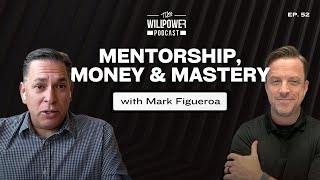
Mark Figueroa, a physical therapy practice owner for 23 years, argues the profession needs structured mentorship to retain new graduates. He teaches clinical mastery, emotional intelligence, and financial literacy, aiming to develop master clinicians in three years. His staff includes therapists who've stayed 17 to 23 years.
Questions this video answers
Del Valle Physical Therapy and Hand Therapy (New Mexico).
23 years.
1997.
He offers to make them a master clinician in three years (formal mentorship program).
Emotional Intelligence; The Psychology of Money.
Chapters
Foreign.
Welcome back to the Willpower podcast. Our guest today is Mark Figueroa. He's a physical therapist and private practice owner who owns Del Valle Physical Therapy and Hand Therapy in New Mexico. He's been around for a number of decades and this guy knows how to hire. He hires through a mentorship program that not just builds their clinical skill set, but builds them as human beings. It's a very different approach in mentoring that has resulted in unbelievable retention. We're talking top industry retention. And our discussion begins with this new generation of providers that are coming up. Some of the misconceptions of how they're negatively viewed and the opportunity of how we can mentor them to not only better our business, but but change the profession. Enjoy the show, Mark. This is such a fun topic. Let's kick it off right away with where you feel the problems are in the rising generation of PTs and OTs. Like, where do you see those problems?
You know, obviously, again, thanks for having me. It's great to be here. It's the first time I've done this and.
I hope it is what you think it should be. So great show.
Amazing. And you've got such a powerful background. The people who are listening just heard your introduction. They know they relate to you because the people who are listening are mostly owners going, wow, this is exactly who I am. So I love that. Where do you think those problems are with this rising generation?
So, you know.
I think as a private practice owner, and I've been a private practice owner for 23 years, you know, you see the. You see how the business has shifted. You know, I come from a different time. I'm a bit of a dinosaur. But, you know, you learn a lot. So what I see today, that is maybe, or not maybe new is obviously we have a great demand for pts for our businesses and the. I think what they're getting taught to some extent is tough because they're entering a market where, you know, we as owners talk about obviously the ability to bill, the ability to collect, the ability to keep our businesses running and also providing some semblance in all of our part to educating these new people coming out and helping them to develop a career. I say this a lot, a career, not a job. So what I think is probably one of the biggest problems is the rising cost of education and what it costs for them to go to school. And then obviously they're going to demand a very, very high salary coming out. Rightly so when you look at what your debt is to what you can earn, those tipping Points are getting closer. And as a business owner, what we have to look at is what is our reimbursement and what's going to be the level of responsibility and the requirement of that person in your workspace in order to cover the cost of having them there. And again, I don't want to turn this all into, you know, spreadsheet 101. But, you know, and I'll be honest, one of the things that really, I guess I could be a little bit honest and kind of speak my mind because I've done this for so long, but I kind of have a problem with, you know, the school almost unfairly charging these really exorbitant prices when. When, you know, you've got a group of kids that are all. I say kids, and I apologize, everybody. You're not kids.
I'm just older. So, Mark, I just was interviewing. I was working with some students. Some students, yeah. Right before this call, I had the Arizona student sigs, and I kept calling.
Them kids, and I'm like, I'm sorry, I apologize. And I mean no disrespect. The generation's awesome. I'm just a bit older.
Yes. But, you know, they go to school and they come out and they're all really competitive. Right. But there's only so many slots at maybe the more affordable schools, the state schools, the state's programs. And so when they don't get in there, they almost feel like they have to go to these colleges. And I'm not going to name them, but we all know who they are that are charging the, you know, 200, $250,000 a year to get a PT degree. So you're not coming out as an orthopedic surgeon and the ability to repay back those loans. I think it's at least it's what I hear, you know, you're going, I'm going to be paying $1,200 a month for the next 15 to 20 years, you know, and it just sets off a really contentious relationship when we go out and look for jobs. So I think. I mean, if you. If I had to lean into one thing, that would be part of it. Obviously, we have a lot of people that retired after the pandemic that were older, that just didn't want to deal with a change in the way we worked.
A lot of folks I've talked to out and about, when I've been at different conferences, they talk about there's a new change in the way that this new group want to work.
You're saying work Ethic is that there's been at least some buzz with some owners that maybe the work ethic, Is it work ethic? Am I saying that right or is it something else?
What I would say it's just, again, it's different in the way that they want to work. All right, so what we can do is we can grumble, we can gripe, we can get upset, we can say, hey, look, I worked every Thanksgiving, I did all these things in a different time. But we have to get creative to understand what did they come up with and what was presented to them? What did their generation provide? I mean, we didn't have to grow up with an iPhone. We didn't have to grow up with, you know, the things that I think have been a bit detrimental to society. But that's another two hour conversation that we won't have. So I think we have to get creative and start trying to understand. So I tell my management staff all the time, you know, let's be curious, not judgmental. Be curious, not judgmental.
Good wisdom, you know, soccer coach of all time.
Yeah, well, you know, and so that, that to me tells me that, yes, we have these, these changes and it's never going to be the way it was, you know, and again, this is just my little take on it because I've seen it. We have basically hospital and medical administrators that are graduating, that taking the place of all these older folks that had learned a few things in the administration of what we do, and they're going back to this concept that we can sell health care like we can sell tires. Well, that's what it was like when I came into the business back in the 90s. There was acquisitions going on. You know, HealthSouth and NovaCare dominated the market. I worked for NovaCare right out of school. I got laid off. Can you imagine being a physical therapist and getting laid off as a result of the Balanced Budget act of 1996? They were going to put the therapy cap on. No one was going to make any. So companies just got lean.
So there were no jobs. There were no jobs when I was in school, there were no jobs. It was one of those things where this generation, I tell them about. We don't talk about that enough. Mark. This generation should know there are cycles and there was a period where there were no jobs.
Absolutely. And I mean, I had to get creative. So, yeah, I mean, I think that there are these challenges. I think we could all verse them a certain way. Some people would just lean right into. This generation has no work ethic. And I think that is a misrepresentation. I think what they value is different than what I value. But we need to mark, what do they value? In my opinion, I think it gets very. It's very interesting because I think that they do value time. So if we think about what are my assets when I'm 20 years old, what is my asset? My asset is I can work hard, I can find a way to get what I need. So I talk a lot about wants and needs, right? So you don't want to get wants until you have all your needs covered. So let's make sure your needs are covered. And what does that really mean? So I drove my Honda Civic for three years after I graduated. I didn't buy a new car. I didn't buy anything. I bought a stereo. I bought an amazing stereo that sounded incredible. That's it. Because I needed to get out of debt, and that's my legacy. Those are my heroes. My parents, my grandparents, they taught me this idea of, let's be careful with debt. So that's the first thing. And I talk a lot about that to our people at our clinics. So we provide that. We provide some education and life skills. So I think that's one of the other things I think that people should always understand. When you're trying to bring people into your culture, what does your culture stand for and can they engage in it? And I'm sure everybody has that conversation, and everybody goes through it, but financial hygiene, we talk a lot about that. So, you know, when I graduated from school, I didn't. I worked hard because I had that. I had the ability. I was excited. I wanted to help people. Sounds kind of lame, maybe, but that's really why I wanted to do it. And I didn't need a lot. I didn't need a whole lot at the time. I think today I have groups that come out and.
I have very weird thoughts, maybe, about this, but I think that being so connected to these things that. That they see this lifestyle that maybe they want to live. But have you got all your needs covered? I mean, you have this debt. So they struggle with that because they want time. All right? So they really do need some time, and they feel like they've earned some time. Where I never thought in those terms, I never saw in my. When I came out in the world, time wasn't an asset to me. I didn't view it as that. So I think they're more sophisticated in understanding that time is an asset.
So they need time. They want a great living. So that they can have some of these things.
I think that that's where the lines don't shift. I might have said, I'm going to work harder and I'm going to do everything possible, and I don't need time.
I don't need that balance right now because I know that I'll get it on the other side as long as I kind of stay true to my plan. And that's, again, paying off my debt and as fast as I could and feeling like I could. I think that's another thing that really gets into this, is that sometimes we talk to people, and I don't know if it's because, you know, we had the pandemic, it stunted maybe some growth and development, but there's like, this almost feeling that it'll never happen for them. Like, I can't get there. I can't pay off all this debt. I can't work that hard. I'm stuck, I'm lost. So I kind of see that as well. And when I came out of school, it was like, the world is your oyster. Go get it. Everything that you want in this world is attainable. And it doesn't matter what it is. If you want to be a staff therapist, if you want to work, whatever it is, if you want to own a business, there were no limits. And by no means did I think that whatever choices and decisions I had previously made that I couldn't play my way out of them. So I kind of feel like that's something else I get from some of our younger folks.
Yeah. Mark, I love that you're talking about this because I get a strong sense that. I love that we started this with this bold statement of a different work ethic that's not the case.
I love that you talked about value and what they value and how their experiences have shaped it differently from ours. And the big problem isn't that the problem is the debt. It's the focus on the money that they have to have because they have taken so much ridiculousness around that to get to the point where we were with much less debt, with way more opportunity. So that when I hear. When I hear owners talk about this next generation being lazy, I get really defensive. Yeah. They are actually more passionate because they wouldn't have signed up for this if they weren't. And there is this other thing that you hit upon that I agree, which is that, like, there's a different value in terms of time where people are legitimately wanting to have this whole thing about PTs not wanting to work Full time. That's a real common thing that we're seeing. A lot of people are coming out of school saying, I just want to work 20 hours a week. And the owners are like, well, how are you paying your bills? We still don't know the answer to that.
I don't.
But they're valuing time and flexibility above anything else, possibly for what you said, which is that they've got this money thing that's overhanging them to the point where they can never get out from underneath it. So they might as well enjoy life while it is. And then, yes, they have cell phones which are promoting lifestyles of like, if you're not this, you're trash kind of.
Right?
Yeah. I mean, it's.
There's so much. It's a lot of noise. It's a lot of noise. I think there's, there's far more noise in the background than we've ever had in our lives.
It's just, there's so much gloom and doom.
I'm trying to get away from that. Again, what I'm trying to offer to at least us and what we're working on is we're trying to show definitive pathways with multiple tools and get them to understand that you have needs. Let's help you get those needs out of the way.
What are the tools that I can give you that will help you be successful to gain those needs? So as a business owner, I have to be more dynamic than I ever thought I could be and I have to provide those types of opportunities. Right.
Let me circle back to this because I did this a little bit backwards in my kind of deal. I practiced for about five years before I decided I'm going to go out on my own. And then I practiced for another five years before I decided, okay, I really need to be a master clinician. So I went and studied with NIOPT and went through their whole track and did everything with them and along the way met some great people. I mean, we could tell some stories. I've met the rock stars of physical therapy and I doubt your audience will know many of them. But anyways, so I did that. So if I could do it all over again, it's what I'm trying to teach the graduates that I'm dealing with. And they don't have to be graduates. It could be a five year seasoned physical therapist that is asking, okay, what do I want to do with the next? I'm trying to offer them a career, not just a job. And what I mean by that is to have the experience that I did to some extent. They're all unique. But I would definitely become a. I would at least be offering, and I do offer, I will help you become a master clinician first. I think if you do that, you have set the table to be able to understand everything else you need in your business because you'll understand how to treat a patient. And that's invaluable because you can attack every problem in your business the way that you attack a patient. If you treat your business.
If you attack your every problem the way you attack a patient, the way that we were trained to do an evaluation.
They go hand in hand. And so then it doesn't become intimidating to say, okay, I'm going to run a business now, or I want to run a business. Because I think that if you're in the debt that you are today and you're a new graduate, you're going, how on earth am I ever going to get out of this? Well, I would say you have a few choices. And life is about choices. Bottom line, you made the choice to go to that school, you made the choice to take that debt. Let's own that, okay? Let's not shy away from it. Let's not say I got talked, I didn't know what I was getting. You made that choice, all right? For right or wrong, you made that choice. All right? So now let's make some choices moving forward that are going to help you to get to that next place. So really, what is that? And again, I think this is hard for them to define and I kind of believe the pandemic had a little bit to do with this, is that there's not as much maturity at that moment. And I don't mean that in a bad way. I have a 20 year old daughter and we go through this and she's the one telling me this, she's telling me this, dad, I'm learning these things. And so she's a little bit of my test subject. Right. Because she's in that age group. But let's really find out. Where do you want to be? Okay, you want to be debt free in 10 years? You want to be debt free in eight years? Perfect. But what are you willing to do to do that? Because I will tell you, in my opinion, one of the greatest gifts that you can be in this world, I don't care what your field of study is to be debt free, that's freedom. I think that we need to start talking about that. But if that's not what their goal is, they say, okay, look, I've got a 12 year window, perfect. Well, let's look at what are the options on the table to do that. Because obviously you have a skill set that allows you to get that. But you cannot just look at this as my whole life goal is to pay off debt in 12 years. It also should be what kind of clinician am I going to be? What kind of experiences am I going to garner? Because, and I'm sure you, somebody has said this out there, money is not happiness. Money is choices. Money is just choices. It's not happiness. It has nothing to do with happiness. And by the way, you want to get happy, lean into gratitude. Gratitude is where happiness begins. Money gives you choices, gratitude makes you happy. And I'm teaching this. These are the things that, this is not a pt, you know, mobilization technique. This is something that's a life skill that I think you got to be engaged in these kind of conversations with your people to retain and to recruit, but also to set a place where you want to work.
Because it's.
If I can jump in.
Please do, because I'll keep going unless you do.
Yeah, I love it because what I hear in this is this idea of like, because we started with the initial problems that we see and a lot of the listeners are just like, of course the second. I think the shift was the mindset. Because when we start thinking of, of what it's like to be them versus just say that they're lazy. It's not, it's not, they're not lazy. I will tell you, as you and I both know, they are the heart. There's, I would argue they're actually more, there's a greater work ethic just to get to where they started than we ever had to. But this idea of like, there is a gap and you're saying to help the profession, we should fill that gap with leadership above our clinical skills. You were saying.
Absolutely.
The way we perceive life. Let's talk about our relationship with money is what you just said. Like, there's these elements of leadership that we are doing to help upgrade and that's what you're doing in your current practice. So let me ask you, Mark, like in your current practice, as you're upgrading, as you're working with this next generation of physical therapists, it is pts, right?
PTS and ot.
Yeah.
So we've got hand therapy, hand therapy as an OT specialty, and then we're an outpatient orthopedic clinic. A lot of what everybody else is trying to do.
Awesome. So when you like, what is. So you have these life lessons. Is it organic? Meaning, like you're just constantly looking for opportunities. Is there structure where you like? Well, every year I sit down and we take them to lunch and we talk about, like, tell me about what it looks like for you to mention the leadership of this generation so that we have a rising tide and that the profession is better. What do you do?
So, first of all, physical therapy has been so good to me. I could not have picked a better thing for me to do with my life. So that gratitude that I have to the profession makes me want to give back to the profession. Because I want all of us on this podcast that you talk to your friends about is that there is some real power in what we do in the medical world, that we live in this country. And I feel like if you aren't walking out of the house every day going, I make a difference. I know, again, that sounds kind of hokey, kind of corny, but we do, and we do it because we get to spend more time. There's that time again. We spend more time with our patients than a lot of different clinicians do. So what are you going to do with that time? So back to your original question, though. Besides just being so grateful for what we have and what we've accomplished, I'm putting together a structured mentorship program with everybody in my clinic, not just new grads. I have a couple therapists. I have a therapist who's been with me 17 years. I have another therapist that's been with me 20 years. So what I've decided to do with my clinic is I'm mentoring on all levels. So my management team, we mentor on the business side. And that's been great for me because I didn't go to business school, but I ran a business for 23 years, so I better know a few things. It just doesn't happen. And, you know, we've made some great decisions and we made some not so great decisions. So that mentorship has been great. And then when we brought in our new graduates, this new group, we have put together a defined package and that's what was offered to them to come work for us. I said, you know what? You don't have to come to work for me and be 20 year veteran, 17 year veteran, come work for me for three years, and here's my deal, and here's what I'm offering. I will make you a master clinician in three years, and I will make sure that you are versed in financial hygiene, in how do you really find more time? And again, I'm not butting into their personal lives. It's as much as they want to offer to me to help them with. But all those things that seem to get in the way of them kind of, I don't know, having the fullness that they want. We're going to have a formal program that we do that is part of the mentorship. The very first, and this is kind of fun and I really like this. The first lesson that we teach in the mentorship program to this new grad group is emotional intelligence. So they have to read Emotional Intelligence.
In the very first part.
That's the first thing. Because you and I both have read the book that both says, and we all know this, that the level of success that you will attain in life has nothing to do with your degrees and what's after your name. It's your level of emotional intelligence. That's it. So that's the first gift we give them that. The very first. And I've given that to everybody else in the clinic on top of it.
How's it gonna seem? Are people look back on it? Does it change their lives? What does that look like?
It really depends on what they're going to do in terms of how they use it. So I've got that. I've had some people that are like, wow, that's powerful. Never thought of it that way. I have others that are like, it's nice, I'll think about that. It really is. And we don't force feed anything, but it's really your level of how you want to interact with it. But we've had, in my opinion, we've had great results, but not only from our clinical staff, but from our back office staff and just understanding again, the culture that you are.
Evolving into. And then this gives them a way to engage. You can have the world's greatest culture in the world. I learned this the hard way. You could have the absolute flipping great culture, but if your staff won't engage in it, you've done a lot of work for nothing.
I start with emotional intelligence and that's why.
Yep.
That's a cultural piece for you. You're talking.
Absolutely.
And I'm guessing, so you're saying it depends on the person, how they receive it, what's some of the feedback you've had after they've gotten into it.
So the great thing is, and I forget the name of the author, it's the book title. Right on top is Emotional Intelligence. I'm sure you've Read it and then they've got a test. Right. So you can go take this test.
By the way, for anyone who's listening.
Yes, please.
It's an essential because it talks about like where you have your gaps in there. It helps you identify your actual gaps in emotional intelligence.
Absolutely.
It's a game changing book.
So they take the test and then, you know, obviously the way that it works is, you know, you take the test, read the book, work on some of the activities and then retest. That's the fun part. When, when. And again I kind of put it on them to say, look, in the next six months I want you to retest. But then I'll bring it up just like in passing. Hey, did you retest? Yeah. Did it look any different? Yeah, it looked a lot different. And I mean, some people are very willing to share that with you because it's such a. I think that piece, it's very personal journey for people because, you know, when I took it, I went, man, I'm the most emotionally intelligent cat there is. I own a business. I'll talk to the guy on the street. There's. You're never a stranger if I'm in the room.
Yeah.
So, but, but I took it and went, whoa. You know, there's some things that I could get better at. And, and that's what it is, right? It's getting better. Not will never be perfect, but to get better. So that's the first thing we do with our mentorship program is we talk about emotional intelligence and then we can reference that in every program we put in every tough moment. That, that has nothing to do with, with clinical decision making, just the interaction. We have better problem solving abilities when we bring a new program on or we ask people to do new things and change because change is the hardest thing in any situation. We think if we've at least primed them with this new weapon, we can have a better outcome. Again, it's not perfect and I certainly do not mean to put out there that we've developed utopia in my clinic because we have just as many problems as you do. But we have tools to really solve those problems as they come and we learn from them every time. So we have got a formal way to teach and that's what I'm doing. I'm heading up the mentorship program. Give me three years and we will get you in a place where you can see a real path to whatever it is that you want to do in this field. Now again, I need some buy in from you though. So it may be a lot of work if this is your timeframe, but let's be clear about that. We're not, you know, when we hire somebody, we tell them you want to command the salary. Well, then this is the amount of work I need for all of us to work symbiotically. And I think those are great conversations to have in terms of expectations. Yeah, I think that, I think that that's, you know, if you're coming in commanding this huge salary, great.
Well, this is what I'm gonna path to get there. And Mark, I'll tell you, I'm gonna talk to the rock stars for a second because rock stars. What I like about what Mark is saying at this point is that it is a powerful concept to give them an end in mind when we hire the next generation where people are horrible at recruiting. By the way, that was me forever. So no judgment. If this is you, which, cause it probably is, if you're listening, is that we could do a much better job of telling the person we're hiring what the outcome is and when to expect it. So rockstars, as owners, we already are owners and leaders. We already understand this concept of like when a patient comes into the clinic and we're talking to them and they're saying they're looking to us to help them and we say there's a difference in buying. When we say, well, let's treat you for three to four, two to three times a week for three to four weeks. And after a month, let's take a look. Versus Susan, I want you coming three times a week. In four weeks we will resolve this. If by any chance it's not resolved, we'll understand what we're missing and make a new plan. So as owners, when we're hiring, I love how Mark's talking about culture to begin and this thing called the end in mind. In three, what did Mark say in three years? If you give me and he's really clear on the agreement, here's what I expect from you. And this is the salary you want. But here's what the path looks like. The number one reason why people leave a company is because they don't see a future in it. And so if we can create that future in it and have markable outcomes, in three years, you will be able to pay down your debt, feel in charge of your career, have work, life, balance. And by the way, it's not just clinical skills you're going to get. You've got to get emotional intelligence. You've got to get this other thing called leadership development. And Mark is competing in a world of one when he recruits. So his problem then becomes messaging. If he. Maybe you've got that mastered, Mark. But like, no.
Most people, where they really. Where people struggle, they're like, where do I begin? It's like, begin with the offer, Start with the end in mind of who you want, and then build towards that person with an offer. And then when you're as far along as Mark is, see Mark, I'm willing to bet you struggle with retention a lot less than others. And where we could all improve is on that thing called messaging of, like, how do we get people who've never met Mark or know any of his team members, right, to know about this product because it's not a fit for all, but for the people, it is. They're going to move mountains to move to New Mexico to go work for him. So I'm sure recruitment. So retention, I'm guessing, is a much better situation in your role than the average therapist. Tell me about retention for you.
It's great. You know, last year.
We had two people that we got from a school in Arizona, and they came out, and one of them is still with me. Within about nine months, a person left. She was a new grad, 24 years old, and her exact thing. And so for us, what we deal with is where we're located. We're about 100,000 in terms of a city. We're not the hotbed of.
A real young generation in our town. We're a retirement city. Really.
When they're younger, yeah, a lot of.
People will go to school here and leave New Mexico. And I did. And I want to circle back to that because there's a point to that as well. But anyways, so she came. She was great. She bought in. She wanted the mentorship. She met somebody who was in Phoenix and decided to move to Phoenix to be closer to him. But on her exit, and I'm sure everybody does that, especially on the people that leave that you don't have to get. I mean, maybe say, fire the people that leave. Like, in this situation, boy, we scrubbed as much as we could to get as much information from her. What are we doing right? What can we do better? How did we recruit you? Did you like the way you recruited? Did we? I mean, were we competitive? Blah, blah, blah. You can get so much information. And she said, you know what, Mark? If you had a Del Valle in Phoenix, I'd be there Monday morning. She goes, I just need to be closer to this person. That she wants to get close to. So that's the kind of things we can, we compete with. But like I told you, we've got 20 years, 17 year. I've got one employee. My chief operating officer has been with us for 23 years. Been here since the inception of the company. So there's, there are things that, that you can't put on paper, that you can't put in a metric that are going to get buy in and retention. But you got to do them and they're going to be different for everybody. It has to resonate with your values first. And you need to know what that is. I would say when we interview folks, we have a very funny, not funny way of interviewing, but we interview. But when they get to me and I'm the last person, I ask them three questions. I don't ask them to resolve problems. Or did you, you know, what's your greatest strength? I asked them three questions. I said, today we're going to talk about three things. Your story, your value and your vision. Tell me what your story is, tell me what your values are. Tell me what your vision is. And if those resonate with what mine are, then we might be able to be Navy seals of physical therapy together. And then we get excited and we start having fun immediately. So that's how we approach this. A little bit different. But you know, going back to what.
We were you figured out on your own, with experience. Pardon me, did you just figure out that line of questioning on your own? Because I'll tell you directly, I hired coaches when I couldn't hire years ago. And I literally ask those same three questions in a different way. I have a six question interview when I was hiring for 26 locations. And that was my superpower. Literally that was, those were three of my six locations questions was like this idea of like, purpose, being history, values, present, vision, future. And I love how you get that. Did you just figure that out on your own?
Yeah, I mean it's pretty, it's pretty, pretty, pretty simple. But you know, I'm gonna stop, I'm.
Gonna get coaching companies for years. It is not that simple for people to see. So I want people, rock stars, to listen to what he did there. And just as a side note, Mark, I want to get to this story about how you left and came back. Is this idea that like we started the episode talking about the problems of physical therapy. This episode is all about how to build a brighter future for the profession through our practice. So what we're learning is it comes back to Leadership, because there's a gap that we identify between the students and the current generation. Then you bridge it by building their future with them in mind around the values of the company, but also like giving them a distinct product at the end of it. But here's what's cool. When you provide as an owner, in my opinion, when every owner in the, in the, in the whole profession is able to provide a distinct product and a path for their students to become powerful, independent leaders. That's how we save the profession. That's how we rise the tide across the board. So I think it's cool because you are a living example of that piece. I'm sure you have your problems like you said, but absolutely, you have people who are with you for 20 some odd years, Mark, that tells me that you are in a position of having absolute mastery of learning how to build leaders and that if we could do a better job of across the end. Yeah, I mean, it doesn't solve recruit, it doesn't solve marketing messaging, it doesn't solve a few other issues and solve reimbursement yet. But I would even argue over time that would eventually solve those other problems. Can we jump a little bit? I'd like to hear the story of how you left and why you came back, because I think it really ties into this.
Let me tell you just really quick. And I hope that maybe we've got a few young therapists, maybe a new grad or two that might pop on here. So this might. And I'll try to be as succinct as possible. So I graduated from UNM University of New Mexico in 1997. My first job was in Las Cruces because I needed. I needed the same thing that everybody else did. I needed a job and it was a good opportunity. So I came here instead of staying in Albuquerque, which was going to be a lot harder, but it really fit a lot of the pieces of what I wanted. After about a year and a half, I got laid off, basically. But the company I worked for, which was NovaCare, they also staffed a hospital here in town. So they just pushed me into the hospital and I was not going to work in a hospital. So I had resumes out all over the place and within about a week in the hospital two weeks, they sent me to Santa Fe here in New Mexico to run a clinic for them in Santa Fe. It was an outpatient office there. So there's a little bump in salary. So. And if I told you guys what my salaries were back then, you would just go, why? Would on earth would you do this? But anyways, so I went to Santa Fe, got a little bump there, and was there for about nine months, and then I ended up in western New York. I met a girl, moved out to western New York. Actually, I was living in Canada, but then western New York through another friend of mine, Mike Adesso. There's a shout out to. Mike Adesso was working for a company, Western New York Physical and Occupational Therapy Group, the worst name on the planet. And they brought me in, and I took about a $25,000 pay cut to work there and take on twice the responsibility. So this is what I want to kind of make the point of. I took a big pay cut, and, yeah, there was a person there that I was going for. So we'll do things for that emotion, you know? But.
What I got from that was the people that owned the company I was working for, they were great friends with many of the pioneers of physical therapy. Dick Earhart would come from Pennsylvania to do.
Con ed classes because there was not a con Ed requirement in New York. But he would come so he could drink beer with his old buddies and show us a few manips on a weekend. And anybody that knows Dick Earhart, he's a legend. I got to ride around in a golf cart with Mike Rogers, who was Gulf States physical therapy back 100 years ago, one of the first manual therapy certifications. I didn't even know who these giants were, but I got to know them through this. I was at an AMP meeting in 2001 when Earl Pettman was the keynote speaker. And if you don't know who Earl Pettman is, Earl Pettman is definitely one of my heroes. So I got to listen to Earl Petman. I'm sitting on a couch with Dick Earhart. Asked Dick, what would you do if you were me? I'm four years out of school. I want to become a master clinician. And he was talking about University of Pittsburgh, where he was at. We're doing this, that, and the other. And he stopped cold and said, forget that. Go learn from that guy. So I got the world's greatest advice from some of the greatest physical therapists in our orbit, and I got in touch. I took every one of my NIOPT courses with Earl Pettman. What a joy. So I got a career, and had I not taken that measly $20,000 pay cut, and I say measly now, at the time, it was. Oh, my gosh, it was awful. But had I not. Had I not done that, I would not have had part of the life I have today. So when you're looking at offers and you're looking at the money and you're going, man, I got to make the most money possible. This is why we're talking about these things right now, is what is that person going to do with you? And are you going to work with them or are you going to work for them? I think that's a huge distinction between your next job. Are you working for somebody or are you working with somebody? And if you don't know the difference, then you have some questions to ask. Because everybody that works in my clinic works with me and I work with them. And like I said, you want to have these things figured out before you even get into that negotiation. In that, yes, you're going to make money and you got to make some money. I get that you have needs and we got to get those needs taken out of the way. But you, you also have a life. And this goes back to what I was talking about earlier. You can't just look and say, okay, because I'm going to help you do that. 12 years, get rid of your student debt. This is what you do. Boom, we've got it. But what kind of person are you going to become from point A to point B? What kind of clinician? What are you going to have? Because the other gap that these kids don't have, again I said kids that these young professionals don't have when they leave school is they don't have the level of experience treating a patient. There's going to be some anxiety when somebody walks in and they've never seen the diagnoses. In three years, you can be a master clinician and you will not have that level of anxiety any longer with what we're going to teach you. So those are the kinds of things that I think as a student or a new grad, or a five year grad for that matter, those are the kinds of things that I think you should want to hear. If you're on this arc and you haven't got to a point in life where you can say, my life is about wants now, and it's no longer about needs, there is an arc that you have to go on. And then in order to really make your time an asset, that's the arc you have to go on. Because at some point that time is going to be more valuable than money. And the only way you turn your time more valuable than money is you got to get all those needs taken care of. And let's have that conversation and let's be clear about it and let's not pussyfoot around it. And for every owner out there that wants to play the nuclear arms race of how much we pay these kids that are coming out of school, think about that every single time you go, well, I guess we could pay them 140,000.
But we got a decrease in Medicare. And again, if you're a private practice, this does not apply to you. I understand that. But if you are in the world that I'm in, third party reimbursement, most.
Of our audience is private practice.
We all need to be responsible to this idea of what are we paying these people, because it's not sustainable. We are going to hit a tipping.
Point when we don't honor, like, the income that we're making. We're perpetuating the problem. When you were talking to the students directly, Mark, I loved it because it was like, yeah, that's cool you ended up going there. But my thought was like, this is great for owners to hear because if we can stop doing the nuclear arms race of competing, because students, when they don't know, they don't have that clarity of they're going to work with us and there's an end in mind and a product for being there that goes beyond a skill set.
We'Re leaving it to them to go, well, you have a lot of debt, so you're going to take this job for $1,000 difference. Your story, the big takeaway I got out of that was this idea that, like, what we want to invest in at a school, money is a big part of that, but it's not the biggest part. The biggest part is who we become and who we. This is, I guess I mentor students across the country. I speak at universities all the time. The thing I say to them is, stop worrying about passing the boards and start, start focusing on who you should work with. Because when you graduate, the thing that will matter is the company you work with and the leaders you learn from. If you can get that right, you'll be fine. You pass the boards. I said, you're all eventually going to pass the boards, even though you and I both know that race.
Absolutely.
Like, it's like, you know, yeah, pass the boards, worry about it. But you've got to invest time now to start figuring that out. Because they pass the boards, they're like, everything's going to be fine. No, this is where the hardship comes in. So listen, Mark, you've been phenomenal. I think we've hit a really hard point and a very powerful point that I want to end on because we have completed a cycle of, of defend identifying the main issue in the industry and we've really built out this whole beautiful. You just unloaded tons of value around this thing around how we create an experience for our next generation that will serve us in recruiting by the way, but also build them to be leaders to think about profitability, how we as owners should take a stand against just like marginalizing the business by trying to pay more as our only differentiator and how that changes the industry as a whole. So Mark, I would love for a couple of parting questions before we end.
And number one, is there besides emotional intelligence, what's another book that you recommend to people?
The Psychology of Money. That's the one that I think everybody should have that book in their library. I don't care if you are a 20 year veteran of this, if you're a new grad. My daughter, I'm paying my daughter $100 to read this book and to write me a two page summary of this book. It is very simple, it's a great read. And I think that in our society people have to understand that money does not equate to happiness. It gives you choices and options. And I think we. There's nothing wrong with money. I'm not villainized, there's nothing. I mean make as much money as you can. But I think the psychology of Money is really interesting. I think it's a great, it's such an easy read and you walk away going, man, that's awesome. And this is what I would have told somebody when they were 20 years old. This would be the advice I would have given them. The greatest asset that all these young people coming out of school, their greatest asset. I'm going to ask you, Will, what do you think the greatest asset of that new graduate walking out of school? What is their greatest asset? If they're 24 years old, what's their greatest asset?
Their time.
Their time. Absolutely, man. I like you, Will. This has been a lot of fun.
I like you too.
I've had a great time. They have time. So when they're stressing and really worried about this whole thing, they're on this journey of they've got time and if you make the right decisions, boy, I wish I'd have made a lot better decisions with my financial world at those early years, you know, because time is your greatest asset. You know, my 20 year old daughter now when I ask her what's your greatest asset? She says, dad, it's my time, Madison. There you go. Perfect. What's your next question?
I want to finish on that one. I think you hit it so hard. Mark, you were phenomenal. Thank you so much for being a guest on the show, guys. Like I said, the intro. Go check out his clinic, his website. Go learn about more. But if they wanted to, if they do want to get a hold of you directly, Mark, how do they do that?
I think we have.
My email address that I gave you. It's my personal email address, and you can blast that.
I spoke at CSM earlier this year, and this is my challenge to everybody listening. I spoke at CSM this year to a group of 100 students, and I gave very similar things in my talk. I said, look, what I'm giving you that I won't give anybody else is I give you 100% access to my experience. You can ask me any question. I will help you with anything. I got zero responses. And that was about six months ago. And again, I'm not going to tell you. I know everything, but if I knew somebody that was willing to give me advice without having to subscribe or have to, you know, do something in order to do, I'm going to bombard your email box with things. No, I just want to share what I can to help you be better and to make our profession better. That's how much I believe in this. So I challenge your audience. If you have a question, please ask and I will tell you. And if I don't know the answer, I've got great resources. Can I throw a couple of shout outs real quick before we leave, please?
Of course.
So these are people that are just great in my life, and I feel like I've never had a venue to say, say great things. So my buddy, Mike Adessa, that got me my job for Western New York Physical Therapy. Mike, Steve Allred, our buddy, Jamie Schreier, our friend. Love that guy. Practice Freedom. If anybody needs a little help in your practice, go look at Practice Freedom with Jamie Shire. Good stuff. Linda John. Do you know Linda John? If you don't know Linda John, you need to know Linda John. How about Eva Norman? Do you know Eva Norman? Ira Gorman. How about Ira got to know Ira. Drew Contreras at Apta. Oh, my gosh. If you see Drew sitting at the bar, go sit, have a drink. The guy's got the best stories. Smart dude. If Drew and I are drinking at the bar together, sit there for two hours, we will have a ball. Paul Welk. If anybody needs a great attorney Talk to Paul. If you don't know Paul, Paul is phenomenal. Good friend of mine. And then I want to, I want to say anybody that knew Phil Tygel, Phil passed this year and he was a giant in our PT community in the legislative side. We didn't even get to that. We do. I do a whole other legislative side to what we do. I go to Congress a couple times a year and all the good people. If you want to talk about, hey, listen, I'm huge on advocacy. I could talk for an hour on advocacy and why. So anybody that is not a member of the apta, if you don't want to be a member, I respect that. But if you email me, let's have a conversation and let's talk about why we're not. And if you're not giving a little money to the pack, tell me why and I'll tell you why it's important that you do so. I mean, we could do this all day. Will. You didn't give me enough time, Will. I have a whole section.
I'm glad to have you back, Mark. That's all it means.
Hey, listen, I really enjoyed today and I really appreciate what you're doing for the profession. And you know, when we get off, when we're finished, if I could, I got something else for you.
Oh guys, I can't wait to tell you what that is. So listen, Mark, you've been phenomenal. Such a great guest. Rockstars. Take this man's up, Take this advice up. Really reach out if you have any questions. Those people you mentioned are phenomenal. And I just reiterate that Mark is a great place to start. If you don't have a network, if you have someone like Mark in your corner, there's nothing you can't overcome. So rockstars, thanks for tuning in to the Willpower podcast. As always, this is Will Humphries reminding you to lead with love, live on purpose, and never give up on your freedom. Until next time, thank you so much for taking the time to listen to today's episode. As a thank you, I have a gift. In today's show Notes, there's a link for you to join the Stress Free PT Newsletter. This is a comedy newsletter for anyone who works in health care. And of course we're going to have comedy bits. We're going to have inspirational stories, leadership tidbits. It's going to be a weekly newsletter just to lighten your week to help you do what you love with more passion. So click that link below and join that newsletter and we'll see you in our next episode.
More from Will





Highbar PT’s Blueprint for Culture, Brand & Growth With Michelle Collie and Dave Pavao

Highbar PT’s Blueprint for Culture, Brand & Growth With Michelle Collie and Dave Pavao




