The $8 Million Truth: Tim Spooner's Raw Journey to Freedom and the Future of PT
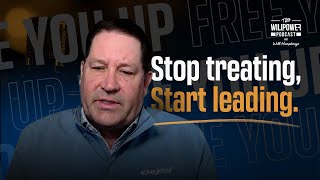
This content was created by Will Humphreys. This content was uploaded by Will Humphreys. This is a YouTube video titled "The $8 Million Truth: Tim Spooner's Raw Journey to Freedom and the Future of PT" created on July 15, 2025. It features a conversation between Tim Spooner and Will Humphreys discussing Tim's journey in the physical therapy industry, his business challenges, and innovations in healthcare, including AI and predictive analytics. The discussion highlights Tim's leadership in Spooner Therapy and SALT Global, focusing on freedom, healthcare costs, and the future of physical therapy.
Chapters
Foreign.
Next on the real pts of cuck.
6 county paperwork crazy insurance and patient care can make you lose your mind. Dude, I haven't been this stressed out since I found out Chick Fil A's closed on Sundays.
Dude.
What you need to do is get on to 202, take it to Moholland and subscribe to the stress free PT newsletter.
Dua.
I know how to get on a Mulholland. What I need to know is how this stress free PT newsletter which comes out weekly. Outlet D Don't you know stress is the new smoking? You need to take the antidote. The newsletter comes out every week and totally provides you with fun information ways to de stress. It totally blows your mind.
So subscribe to the stress free PT newsletter today.
Stress PT newsletter made by PTS4PTS launching.
On July 21st I think it's gonna get better than that.
He nailed it.
Hey, rock stars, I got a riddle. What do you call a physical therapist who almost bankrupted his company and then turned it into a 600 employee powerhouse across two states? You call him Tim Spooner. In this episode, Tim is going to go back behind the curtain on his journey from treating full time across multiple clinics to leading Arizona's largest independent PT group and launching Solve Global. That's a tech powered game changer for our industry that's transforming corporate healthcare. We're going to talk about freedom, real freedom. Not the kind that you post on Instagram, but the kind that comes after asking for help, hitting rock bottom and then building something that lasts. And yeah, we're going to go into AI and artificial intelligence and VAs. Tim shares how predictive analysis are helping prevent injuries before they happen and why he still misses the party in the back of his clinic. This one's for every clinic owner, every private practice leader, so that you can have a bigger dent in healthcare without losing your soul. Let's dive in. It's almost like a trap, right? It's a trap. People get passionate about treating, but they choose to become an owner and then they stay in the business because they're treating and they just burn out.
Pam, thank you so much for being on the show as a repeat guest. Your last episode did so great. And this new season that we're doing with AI and VAs and freedom, I was so grateful that you were willing to come back on the show.
Thank you, Will. It's. It's a pleasure to be here. And I especially like the concept of. Of exploring what freedom should look like to a therapist. Yeah, I looked forward to having that Discussion.
Me too. I just think you and I are super connected about the, the bright future of our industry which was their last episode. And yeah, freedom has to be in play because I would say that's probably why a lot of people aren't in our, in our profession that used to be or even considering maybe that's not why I should join the profession. But let's talk about you. Tell us about your businesses.
Sure. Well, first of all, I'm a CEO of Spooner Therapy. Spooner has been around for 35 years now and we have 27 locations in Arizona and two in Texas and we have roughly 600 plus employees and we have specialists of basically any type of specialist you can think of in, in therapy from hand to women's health to breast cancer to neuro impedes. So there's, and especially we emphasize sports and orthopedics.
So there's not any helping the Arizona state private practice section. So it's really cool to see how you've done that. But that's not your only company either. Tell us about your other company.
So I'm also the CEO of SALT Global, which is a tech enabled human maintenance organization. And what that means in, you know, in just simple speak is that we work directly with employers to help them with their musculoskeletal care and take care of their people. We have a complete system that utilizes technology including AI and predictable or predictive analytics to determine the risk in an employee population and then go and intervene. So we're working upstream from what we would normally see in an outpatient clinic. And for as a therapist, to me it's like the embodiment of why a lot of us get in is to prevent a lot of injuries. But catching them early and being able to help them is just super fun. And then what it does though is give our practitioners who are doing it tremendous freedom because they are extremely autonomous. Working with an employer and taking care of a thousand people. And if you told me I'm going to take care of a thousand people in an outpatient clinic today or they.
Jump off a bridge.
I don't know how I would do that. But if I have technology that says, hey, of these thousand people, you should touch base with these 15 today and maybe may have some type of communication with these other 10 and so I can keep in contact, I can still use my hands on skills, but I can have.
Extremely positive inner interaction with an employee base for an, for a company which helps the company, it helps that individual, that employee have access to physical therapy services. And by doing that, we help them feel and move better. And ultimately it lowers health care costs because of the fact that 80% of musculoskeletal things should be taken care of by a conservative primary care provider. And that's what we do.
Yeah, Rock stars. I really can't emphasize enough how big this concept is that Tim is developing. And first, for multiple reasons, you know, the vision of the profession being doctors in the community, that's what this is. It's a different, it's a completely different model because the pts here are the doctors in the communities over these companies. And there's so much to that because it's more profitable for the business owners and, and the pts can make more money and have more freedom. And we're doctors. And I mean, like, think about how it affects the population, the industry and the individual therapists. It's, this is a game changing business that you have. And I get nothing for saying this, let's be clear, because it sounds like I'm selling it already, but I'm just super passionate about anything that's pushing our profession forward. And in this case, I just want to highlight Rockstars as well, that Tim and I are having this conversation while he is at his cabin in the mountains. Not only like preserving life for his family, but also like you're seeing clients up there. Like you're, you have because of the way that you've created Spooner Physical Therapy, the core business you have, what did you do with your time and your profits? You're, you're helping more people and moving the profession forward. It's not like you're laying on the beach 24, 7 and it's in.
We have, we have, we take care of firefighters across the Arizona landscape and we take care of two districts that are up here, the Pinetop and the Timber Mesa district up here. And as such, I get to stop in, see them, talk with them, strategize on how we can help keep our first responders healthy and safe and what we call, you know, ready. You know, we want to help them from hire to retire and beyond. And, and when we, and when we think of that.
We want to make sure that they are ready and fit for fire. You know, are they fit for duty? And that is a huge, huge thing because they're being healthy is a safety thing. And you know, if they have to run into a burning building, if they can't do something that could put not only themselves but others in jeopardy. And so it's fun for us to take care of them and really hear what they need. And I'll just tell you that it broke my heart that I talked with one last week and he said, yeah, I just don't, I don't like going to XYZ place because they treat me like a 75 year old.
A physical therapy place he's going to.
Yeah. And this is a 40 year old athlete, you know, that has to do physical things. So we, you know, we have to make sure that we are meeting him and meeting the demands of his job where, where he's at.
Well, one thing that you mentioned, thank you Tim for sharing all that. I think one thing that you mentioned that I'll dig into later is how AI plays into that because you mentioned that artificial intelligence is leveraged. So Placeholder Rock Stars, as you're listening that later we're going to hit on this AIVA discussion debate that we're having right now. Tim, I think as people are listening to you, especially any private practice owners, they're probably feeling a little disconnected because they're like, wow, look what Tim's doing. I could never do that. Share with me. What, share with the audience what you're talking to me about. One of those moments when you really were struggling in your business and how and why you were struggling and what you ended up doing about it to help you kind of get to where you are now.
Well, before we go there, if you, if you don't mind, let me, you know, know, for those who are feeling like they want to do something in this space, I talk with therapists literally all over the country on a weekly basis. You know, I talked with one last week and he, and he said, yeah, I just don't, you know, I don't like going to XYZ place because they treat me like a 75 year old.
A physical therapy place he's going to.
Yeah, yeah. And this is a 40 wife, 40, 40 year old athlete, you know, that has to, has to do physical things. So we, you know, we have to make sure that we are meeting him and meeting the demands of his job where, where he's at.
Well, one thing that you mentioned, thank you Tim for sharing all that. I think one thing that you mentioned that I'll dig into later is how AI plays into that because you mentioned that artificial intelligence is leveraged. So Placeholder Rock Stars, as you're listening that later we're going to hit on this aiva, this debate that we're having right now. Tim, I think as people are listening to you, especially any private practice owners, they're probably feeling a little disconnected because they're like, wow, look what Tim's doing. I could never do that. Share with me what, share with the audience what you're talking to me about one of those moments when you really were struggling in your business and how, and why you were struggling and what you ended up doing about it to help you kind of get to where you are now.
Well, before we go there, if you, if you don't mind, let me, you know, know, for those who are feeling like they want to do something in this space, I talk with therapists literally all over the country on a weekly basis. And what I ask them is, do you want to turn your relationships into revenue?
And that's essentially what we do. So their relationships, they're taking care of their community, they're seeing patients. And undoubtedly some of them may be business owners. And there is not a business owner that I know of in the United States that is not being affected by healthcare costs. And you have a solution for them. And so I help them understand how to have those conversations, but also how to implement, you know, a solution, a direct to employer solution such as Salt Global. And so it's, it's fun for me to help somebody in Kansas City, to help somebody in Texas, to help somebody, you know, in Minnesota. You know, we're in a multiple states now and it's, what are we doing? Well, we get to do what we went to school to do, which is help people. But now I'm getting some freedom from the nickel and diming of the insurance world and I'm having a direct conversation with an employer who values what I can provide. And it's not, it's not the same as putting a PT on site.
Right?
Because putting a PT on site without technology and without understanding the risk of where the risk is in that employee population, you're going to treat the loudest hangnail. And you know, and that's not really helpful to the employer. You provided some access, but you didn't take care of. You left a lot of chips on the table is what I would say.
Very powerful stuff. Thank you, Tim, I appreciate that. And actually, before we even get to that breaking point and how you pivoted into this freedom, I love that you said that because you highlight the real suppressive causes as to why many private practice owners, not just PTs, but healthcare providers in general, are struggling with their freedom. So from, from, from before we get to the whole, like, when did you pivot? Why did you choose this path and why do you keep choosing it? As you scale, many people like you mentioned, smaller than you tap out and sell. Why did you choose and why do you keep choosing? What's your purpose and passion here?
Yeah, you mentioned, you know, getting together with Mike Bastin and we formed the Arizona Rehab alliance and we had several private practice members in Arizona that were, that were part of that. And I learned a ton from that. And what I learned most was that we need to work and collaborate more as a profession I versus working in isolation. And that the abundance of, of patience means that other practice owners aren't my competition. My competition is what limits my ability to get paid. And so as we're going through that, I kept noticing that my healthcare costs for my own company, I was in a fully insured program at that time, kept rising up, you know, at a 10 to 15% every annual rate. And I know therapists that it's risen as high as 30 to 40%. You know, I know annual jump. And at the same time, the same company that I was paying those premiums to was lowering my re. Lowering my reimbursement. So I noticed this huge spread and I said this seems raw. And so I took it upon myself over the last 10, 11 years to really educate myself on healthcare, on what the insurance industry looks like and to dwell deep into that, to say number one, how can I fix my own problem in my company?
Yes.
And then second, how can I play in that space? Because I feel like I have something valuable to provide the community, but I want to do it on a scale basis. You know, I want to be able to help more people. And that's what led me down the path of direct to employer and the self global solution.
Got it. So very passionate about helping that industry drives you forward. So let's now hear about a time that you didn't have it all figured out. Let's go back to a time. What was there a stage of your business that maybe you felt the stress and overwhelm and recognized some key things there?
Yeah, I'll name a couple of them. And one of them was we just moved, we just gone to four clinics. We were jumping from 2 to 4 million annual revenue and getting ready to probably double that again. And I realized my skill set as a leader weren't there. And so I enrolled myself in a. It was called Tech back then, it's called Vistage now, which is executive training leadership. And it was very helpful for me to meet with other business owners who essentially acted as my board. And they held me accountable to running a business. And it was instrumental in my development. And we'd bring in expert speakers on everything from how to interview, how to run operations, just every gamut of. Of business, how to do a, you know, strategy and do some strategic planning, things that were not common or very easy for me to do because I'd never been fully trained in them. And so I learned from people who are running three $400 million businesses. And they would come, we'd meet once a month, and they would poke me in the chest and say, how's your business? And everything from, you know, how you introduce yourself to how you run a business to.
Understanding.
You know, what cash is in the business. So at this same time, we were rapidly expanding and going from four to eight clinics, and we were busy. Things were, you know, know, we're. We're seeing a lot of patients, but I made a couple mistakes, and my mistake was I. I outgrew my cash. We were busy in the clinic.
You didn't have enough money?
I had zero cash. And when I did that.
Again, this board was very helpful to me. They peppered me in the chest and said, look, you know, without cash, you have no business. And I said, no, but look all these people in my clinic that, you know, look at. Look at all this ar. And they couldn't believe the state of my ar, which was a whole nother. Whole nother scenario because, yes, we were busy, but we weren't collecting the money. And I had to pay people every. Every two weeks. So it. It was a rude awakening. After 15 years of being in business, I essentially bankrupt myself. And I had to go into my own pockets to keep the company going. But I believed in what we were doing, and so I made a few strategic changes there. One of them was bringing on experts in the arenas with which.
They function. So operations people, accounting agencies.
Were these employees that you hired?
Yep. Okay. I made that decision to move that route because I realized that the aspect of being a good practitioner and an operation or just having a office manager was only going to take us so far. Yeah, we need more structure, we needed more systems in order to scale and standardize a few things. And that was a key point. And so when we did that, you know, in the beginning, it was just myself and another person who wore several hats apiece. And meanwhile, I'm still treating full time, too.
So you're treating full time with all this going on?
Yeah, and a bankrupt the company. So I would see patients, I would go home, see my kids, and see my family for a couple hours, and I would come Back and do accounting at night. I mean, it was not the best of times, let's put it that way. But when you dig in and you go through those tough things, I think you really learn your business, number one. And you, the reason that you got into private practice comes to bear. I didn't come, I didn't get into private practice to make a million dollars. I get into private practice to be creative, have freedom that you mentioned earlier, but also to take care of people. And so we were taking care of people. I just need to figure out some of these other things so that we can, we could continue to do that.
Man, I feel more connected to you. I wanted you to share that so that the audience could be more connected because you and I are buddies. But at the same time, I never knew that. And it's something that is so paralleled in my journey.
I don't go around saying how I bankrupt myself very often.
But what's ironic about that, Tim, is that I think people who are listening are starting to really pay attention. Because when we see what you've accomplished, and this is true for all very successful people, it can feel out of reach in terms of like, well, that's great for them, but I'm not that guy. So when, when someone says, wow, he went from that to that, then it becomes inspiring. It's like, well, maybe I can do more. And I would say, you know, what you said there was so inspiring because it's so relatable to this. The fact that most people probably listening who've struggled in their companies have been in that position where like cash stinks or is non existent, but business is so overwhelming that they're stressed on both ends and in a way that you would think would line up. So as people are listening, what would you, what advice would you give to, to young private practice owners in maybe one to two location stages? Like what, what, what would be the two or three freedom creating tips that you would give them?
There's gotta be some standardization and some structure. There's, there's that old adage that structures, you know, set you free. Yeah, and that was especially true for me in the person that I hired is still with me today is, you know, provided structure and provided systems. They basically downloaded a lot of the ideas and stuff I had in my head, but put structure on them so everyone could understand them and we could have systems and things in place. And so I think it's really important to look at that and understand.
Before anyone goes into private practice, I always ask them like, why Are you doing it? What is. What is your. What is your passion point? And because there will come a time when things happen and you're going to have to rely on. That's why I'm doing it. Because if you go into it for financial reasons, there'll be a time when it may not work out. And if that's the only reason you're into it, then it becomes, I think, a shallow, shallow thing. Your passion has to be something, I think, deeper than a material object.
Yeah. It's almost like a trap, right? It's a trap. People get passionate about treating, but they choose to become an owner, and then they stay in the business. Cause they're treating and they just burn out.
Yeah. And I think that the key things I would tell them is that, you know, surround yourself and find great mentors, people that you trust that will give you honest opinions, whether that is, you know, an executive training group, someone outside of the business. So when you're. When you're the leader in your business, there's certain things you can't talk to your other employees about. And this is why it's important to have other collaborative leaders that you can talk to and not be threatened by it.
That's amazing. I love that advice. Anything else you would add for people.
The other thing is that your. As your business grows, your skill set will have to improve in different areas. And whether that is, you know, for me, I mean that when I started the business, we didn't have computers. Let's put it in perspective. It was a pegboard accounting system, you know, so all through that, I had to upgrade my computer skills, spreadsheets, understanding, all of this thing. You have to continually adapt and grow.
You have to grow as a. As a communicator, as a. As a leader. It's one thing to be in front of 10 people. It's different to be in front of 100, and it's certainly different to be in front of 600.
Got it. So here's my question to you. You're at this stage. Where do you. Are you still like learning these things that you talk about? You have to increase your skill. Are you still increasing your skill or have you hit a skill level where maybe the focus isn't on improving the skill as much as just expanding what you're doing? Like, I'm curious at your stage what that looks like now.
There's always something to learn. I would say right now, the skills that I'm passionate about working on are how I can relate better to CEOs. So I can solve their problems. So it's sales techniques, it is understanding relationship level sales techniques, it is understanding how to communicate a bigger problem to a bigger audience.
Ultimately, I want to fix healthcare and I believe that therapists can have a huge role in that. And doing it as a one off is going to take us a long, long time. Doing it as a collector of hundreds of thousands of therapists who can take care of people, I think there's something very powerful in that.
Yeah, that's inspiring too. I just saw the connection too of your purpose of fixing health care. And you're in this company, Solve Global.
Yep.
I have to like slow down because I say solve global. I can't can say it so quickly, people can't hear it. So I like solve Global because it's like we're solving this global healthcare issue. And truly, like, I love that you're still working on the skill set, Tim, because again, I think when you're down here looking at other people's accomplishments, it's easier, easier to not connect with that. And it's, it's almost like what you said, those pieces of advice you gave to people at that one to two clinic stages. You're still living, you're just living at a different level, doing it differently. So it's not like you've stopped learning, it's just what the context is, has shifted. Maybe, maybe expanded might be the better word than shifted.
I don't know. I've always believed in asking why? And so as a practitioner, we asked, you know, why did the rotator cuff tear?
Yeah.
You know, who are his friends that didn't come to bail him out? And why did that one tear not the other one? You know, and so as you ask why, you learn a deeper solution. You learn deeper answers to where the problem in the biomechanical source may be. It may be that the rotator cuff tore, but the biomechanical problem may be down in the left ankle. And if you don't understand how to connect things, that's a big issue. And so you apply that. I apply that same aspect to how to work with people, but also how to work with business. Because there are problems out there. And you ask, well, what are there? What are they? You look at healthcare, for example, it's a $5 trillion industry. Why isn't it better? Why is it costing more every year?
Yeah.
And we're not getting a good return on investment because of walking down the streets of America. I don't see 10% healthier people.
Yeah, we're Getting sicker. Going up. We're getting sicker. Although I did heard yesterday from a practitioner that last year was the first year, thanks to Ozempic and. And Triazepatide. That is the first year where obesity actually started shifting the other way. But anyway, I mean, to your point, this massive expense that we have is not. It's not showing up. If anything, it's getting worse. And we know that the musculoskeletal people who are listening, the PTOTs, SLPs, like, we are the solution. It's not like, oh, we should be doctors. It's like, no, we are the solution. And I love that your passion is helping them at this stage. What about this? Did you ever. Tim, did you ever have guilt as you were starting to step into leadership more? Did you ever have guilt not treating or not being over the team directly as you've gone through these different stages? That's something I know I have had at different. Okay, so you've had that. How do you handle the guilt of becoming more free in your business?
It's a fabulous question, and it's one I honestly struggle with all the time.
Yeah, absolutely. I still, you know, in my garage, I have a little workout area, but I have a table and stuff because I bring people in and I treat them here because it's. It's easier for me to just to bring them in and treat them.
So I always. I always likened it to a smoker. You know, smokers always got that little twitch. You know, they. They want.
More from Will





Highbar PT’s Blueprint for Culture, Brand & Growth With Michelle Collie and Dave Pavao

Highbar PT’s Blueprint for Culture, Brand & Growth With Michelle Collie and Dave Pavao




