The Identity Crisis of a Private Practice Owner and Shifting Mindset with Dr. Jamey Schrier
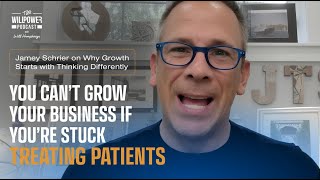
A recorded conversation (podcast/YouTube) between Will Humphreys and Dr. Jamey Schrier about mindset shifts for private practice owners in physical therapy. Major themes: mindset over skillset (think differently to act differently), three common mindset buckets to address (control/letting go, identity, and limiting beliefs—especially around money), coaching and community as change levers, time management and rejuvenation, and the ‘lighthouse’ leadership metaphor. Practical takeaways include delete/delegate/automate, protect your calendar (only add things aligned with your strengths), take deliberate time off as prerequisite to success, and the Practice Freedom Community as an entry point for private practice owners.
Questions this video answers
September 24, 1999.
Practice Freedom Community.
"I transform lives by helping private practice owners align their business to create an amazing life."
Chapters
What?
You're a big proponent of this idea, Jamie. Of us having to think differently before we can learn to do things differently. Right. The mindset over skill set.
Guys, we're letting you jump into this podcast right out of the gate. Jamie and I are diving into the American Physical Therapy Association. And I didn't know that his wife's father, your father in law, was the president of the apta.
Yeah, so my father in law, Frank Mallon, quick funny story, was CEO. So when I met Colleen. Oh, way back, 1999. September 24, 1999.
You remember the moment you met your wife? Man, this is cool.
I remember we were at a bar and I met her, and her birthday is October 8th, so this is two weeks before her birthday. So we, you know, we talk, we hit it off, we start. We start dating. And she takes me to. They do dinners. That's what they do for their birthdays, these special fancy dinners down in D.C. so we go to Washington D.C. and that's the first time I meet her mom and her dad and her brother. And all I know about her dad is she said, he's a lawyer. So, you know, we're talking and I go, you know, after we're done, we're driving home and I go, man, he asked a lot of questions about physical therapy and the apta. I go, what does he do? Like, you know, I know.
Were you a PT at the time? Were you in for context?
I was a physical therapist at the time and I recently just started my own practice or. No, I was. I started my own business, but I didn't have my own physical space. I was working out of someone else's space. And your hustle. Yeah, yeah. So. But yeah. So she goes, oh, well, he's the CEO. And I go, wait a minute. What? Well, he's the CEO of the apta. I go, you told me he was a lawyer ago. He is, but he's been doing that. I go, you could have said something during dinner because I'm not a member. And he didn't say very nice things about the apta. I would just young and very like, what are they doing for me? I'm trying to grow a business, you know, what are they really doing? So, yeah, that's the story of. Needless to say, I became. I became a member.
Are you a member now?
Yeah.
That's great because you're not treating so. But you're obviously influencing the industry through coaching and all those elements. So I was just curious. That's great. I am too. I still have My membership there.
And.
I have my membership, have my license. I'm not gonna, not going to give up that. But yeah, but we also have independent minds and independent thoughts, or I guess we try to have independent thoughts. That could be an interesting topic for today.
Independent thoughts. Are you talking about the thing that might separate us a little bit and how we think differently or what do you mean by that?
Yeah, I think that's exactly what I mean. I mean, you and I, you know, we share behind the scenes and we share now in the scene here is, you know, you connect with other people. You connect with people that force you to think outside of your comfort zone, force you to think differently. And what I find, you tell me your experience, what I find that happens more outside of this bubble that we're in, this physical therapy or even healthcare bubble that we're in, because everyone tends to think very similarly. And it's hard to be different when we are conditioned, yes, for survival, to be together, to be a tribe. You go out on your own, you know, few million years ago, you're going to get eaten, you better be together. But in, in, in this world, when you just do and think like everyone else, that doesn't necessarily help you get where you want to go.
Well, it's killing the industry. Like, the fact of the matter is way something has to change. And what. You're a big proponent of this idea, Jamie, of us having to think, think differently before we can learn to do things differently.
Right.
The mindset over skill set. And the reason I say that is because I just heard Brandon Siegel, a common friend of ours, talk at TherapyCon, which was last week here in Phoenix, and his whole talk was like, we have to start thinking differently. It's funny that you mentioned that as the idea because his whole presentation was, let's look at the model. He said, think of your business or think of your life in terms of a formula of like, inputs and outputs. And he goes in the physical therapy industry and he was talking about ptot, slps, like, and I'd say this is true for all healthcare, is that when we put the same kind of effort in and reimbursement declines and our output goes down, so we keep doing more of the input to solve for that. He's like, it's not hard to see what's going to happen to people and what's going to happen to burnout and all those elements. So his whole concept was we have to start thinking differently, to pivot and change. And, you know, with you and your clients and your Coaching. What are you seeing with people in terms of that mindset? Are you seeing more people starting to think differently? Or is that something you spend a lot of time helping them understand?
Like, it's interesting you're touching on something near and dear to my heart because I've been preaching this for, for so many years, because this was the transformation I went through when I was in private practice. Knowledge is everywhere. Knowledge is a commodity. You know, with the AI and ChatGPT, I mean, who wants another course? Who wants another. This is a three steps of how you do something like that is so outdated, yet the way we think about things, it's almost like if you go into schooling and I have a conversation with you, I already know how you think pretty much about everything because we are conditioned to think, believe and act and have the way that people want us to. So I already know you have issues around money. I know you have issues around letting go. Issues around no one does it the way you do. Yeah, I know you believe in this altruistic quality care, but no one yet has defined quality, what that actually means to me. There's so many things that.
We start this world already losing because everyone that is influencing us in the bubble that we are in, the academic bubble, the apta bubble, you know, the conferences that we go to, pretty much everyone, not everyone everyone, but pretty much everyone, 90 something percent are all operating with the same thought process, value props process and.
Influence process that if you look around.
Who'S actually making it right now? Who's actually making it right now, very few people are making it and every single one of them are making it are all doing the same exact thing. The problem is everyone else is everyone else is operating in this idea of, oh my God, I'm just so overwhelmed and burnout. I go, yes. So everyone else, do you think there's something going on that every single person is saying they're burned out? Will, I never heard you say you're burned out or overwhelmed. No, I've heard you say you're busy.
I am super productive. I don't even like the word busy. I am crazy productive right now and I am so much less stressed than I've been when I used to own a practice. It was such a different game because it was a very lose lose situation. The only thing I got out of it, which was a big thing for me, was the patient care experience of that connection of like, wow, I, I changed that. I had something to do with changing that person's life because everything else around that was a Struggle. And you said something. There are very few people who are making it. And my personal opinion, Jamie, is that the people who are accelerating, like, who are doing well in the current model, represent a small fractional percentage of people who just learned business at the highest level. Like, there are numerous. I have dozens of friends who have 30 plus locations. They're relatively killing it, but they're playing within a certain rule set. And they are just Excel. They're just. They represent a small margin of people in terms of, like, what they were either capable of doing or. I honestly don't know how they got to where they were. Yeah, I don't.
I mean, we have clients that don't have 30 locations that I would say are. Are doing extremely well. They're doing well financially. They're doing well just in their life. Like, I look at.
Private practice, I look at business as a vehicle. Yeah, Business is a vehicle. Right. And in order for this vehicle, this vehicle has to provide us the life that we want. So just imagine this. You're thinking about this. You're like, okay, here's my vision. Here's what I believe in, my values, my standards. So my vision and my value is going to help architect this vehicle. This vehicle, if done well, is going to provide me the life and the lifestyle I want, which will revolve around, well, we need money to live. We need money to do things. Money's choice. We also need time. And it's not just we have time, but we're doing things we love to do. We do things that light us up. We do things that are meaningful and impactful. So we have that money, time, and purpose. So imagine this. You have this business that's in line with who you are, what you're about, what you believe in, that creates the life that you want, in the impact you want, and the relationships you want. You tell me one person, one person that does not want that.
Yeah.
So the question is, in order to create that, you have to think differently than 99% of the people out there, because 99% of the people out there are operating within a construct that they're told, this is how you do things, this is what you should do. Just work harder. Just keep working harder. You're the smartest person in the room. No one can do better than you. Hold on to everything. There's no collaboration. There's no idea of. I want everyone to win. There's no, like my employees, I want them to win. I want them to show up and do the work that they love to do. That Helps us reach and change people's lives in business and personal. Like, if you're not showing up with that, then why are we doing this? Just to draw a paycheck. But if you, as the owner, do not believe that, if you think there's winners and losers, and if you look at the polarization of the world today, it's getting bigger and bigger. There's winners and there's losers, and everyone decides which one is which. But I look at, well, I want my staff to win, I want my patients to win, I want my community to win, I want to win, I want my family to win. So whatever I do, it has to check all those boxes or I'm not interested in doing it. This is where the problem that when people chase money, obviously it's not too much in our fields, but there's people out there in other fields that they chase money. And then you're like, look at me, I have the cars, I have the houses, I have the boats. And then you go behind, you know, behind the curtain. And their fricking personal life is a mess. They're on their third divorce and there's all kinds of things, because there wasn't alignment there. There was only one caveat that they were measuring themselves by, and they're miserable inside and they're lost inside. And I think as these, these healthcare practitioners, I, I look at people in our world. These are healers healing the world. And yet in order to do that, you have to take care of you. And people have will. People have a hard time looking in the mirror and saying, you deserve to be blank, successful, wealthy, healthy, filled with joy, having amazing relationships. And if you don't operate in that perspective, then everything, every decision you make is going to be clouded around what other people have told you. You are, remember, you are only going to have a say in this. It's been put in you from early childhood, a lot of schooling. It's been put in you by other people. And if you're on Facebook and you're on all these social medias, believe me, they are here to do two things. One, make money. Two, grab your attention by any means necessary, which will shift how you think about things. This is the depth, that's what's happening. And if people don't wake up, oh, this is going to get a lot worse. When you add AI a lot worse.
Why do you think that's going to get worse?
Well, I think it's going to get worse because it's, you know, AI is going to be the biggest disruption we've ever seen in this world.
Yeah.
It's going to completely disrupt and remove so many jobs, so many things. But if they're like you and me, we look at AI and we're like, wait a minute. So AI is going to take over all of this junk that we don't like to do anyways to allow me to do what I love to do. Easier, more seamless. Oh, my God, this is fantastic. Let me see how I can look at this new technology to create something that is going to help me impact the people I want, make the money I want, have the time I want, have the relations I want. Like, all the boxes are checked. But you can't just keep holding on to what's been. First of all, it's not even working. But yet we stay in the bubble. We don't like to go outside the bubble because it's risky.
Yeah.
You know, it's even more risky staying in the bubble, staying in the comfort zone. Or you think it's the comfort zone and being safe. And we're fighting this. So many people are fighting this. But what I'm seeing now, more, More and more people. And again, these are people that have, like, they're just tired of the same old same old. They have something meaningful, they have something bigger. They have this vision. They're like, jamie, I want to create this thing. And I just feel everyone's just giving me more and more stuff that's the same old stuff. And I said, well, we need to help you shift how you're seeing this. Once you see something differently, you think differently, you take action, you get better results.
What are some of the main shifts that you've helped your clients achieve? Is there any categories of shifts that you help people just to kind of. For the audience when they're talking about mindset shifts, is it completely individualistic or are there. Are you other trends of like. Yep. I commonly see this kind of mindset and I help it shift to this kind of mindset.
Yeah. So there's, there's, there's, there's three, primarily. One is control will. Nobody can do better than me. If you have that subconscious, like, that's what you believe. It will come out at. So many things you do in your.
Business subconsciously, you'll sub sabotage in hiring. You won't actually look for the person who can be better than you, or.
You won't fully empower them to do the job. You'll micromanage them. You'll tell yourself, this is my favorite story. You'll tell yourself well, they really want me there. They want me to be there. They just feel good when I'm there. And I go, I've never heard any employee ever said they want you there unless you being there makes their life better.
Yeah.
So if you created a culture where you, the owner's there and they can, you know, do their job and it's kind of fun and easy and they make money with you being there, I don't want you leaving. But the reality is if you're not there and you're. And you train them and you're very clear on expectations and you support them and there's meetings and communications and all of that, do they really need you there just watching you? No, they don't. So if you have a strong belief of I can't let go, they just can't do it better than me, then it's going to show up with you being trapped in your business, period. Anyone that says I'm overwhelmed, I go, well, you're only overwhelmed because you're doing a bunch of things in your business that you don't particularly like to do and it's eaten up all your time.
Yeah. I go, that's a gold statement right there. I really want to hit that again. Because as you're talking about this idea of burnout, what it comes down to is the energy giving or draining functionality of the activities we spend our time doing. And if most of our time is spent in doing that, there's no other time. Like, there has to be recovery when we spend time doing things that drain us. I'm. I have more things on my plate now than I've ever had. But the reason I don't feel burned out, the reason I don't feel burned out is because I love what I do. So not every little thing, but I work really hard, Jamie. And this might be a mindset shift difference to tell the audience is like, I, for years, because of great coaching, have been working hard at like, oh, I'm getting burned out. What's going on? My sleep score is actually something I look at because I'm like, oh, my sleep score isn't as good as it used to be. What am I tolerating in my life? Cause you can only be as great as you tolerate. And I look at things I don't do that I don't want to do. And then there's the three things, delete, delegate, or automate. I either delete, delegate or automate, whatever those things are. And it's a constant, like, effort. So much so that it feels like a job, but it's the job that keeps me sane. So that mindset shift of, like, I will say that when you were talking, I hear it from people like this when they don't feel like they can trust or they can't let go of control. I see people, people who are like, literally like, well, I have to be there. It's like this victimization. If I don't show up, what in the world? Like, if I. If they. They. It's almost like this thing of, like, my team sucks. It's an implication my team sucks. So they're great, but they suck so bad that if I don't show up, everything just falls apart and everything goes to crap. And there might be elements in that case where it's true, but, you know.
Well, Will, you said a couple things there. So the first thing you said is, I have such high levels of self awareness. Self awareness is awareness of oneself. You're aware of your body, you're aware of things that trigger you. Like, self awareness is like the number one component of emotional intelligence. Not iq, but eq. And you have a high level of eq. So you're aware of when your body and your mind is telling you, you know what, something's off. It doesn't mean you can't get completely exhausted even doing things that you love.
Absolutely.
But it also means you're putting time in for rejuvenation. Yeah, you're putting time in. It's not a reward. See, people look at time. So many of our colleagues look at time as a reward. Yeah, you put your. You put your, you know, pto. What is pto? You work for me for six months, then you get rewarded for a few days off. And then that mindset goes to an owner who can take time off whenever they want. And they look at, I haven't had a vacation in two years. I go, you were better off when someone else said it was okay to you. Take off. So the first thing that I do when I'm working with someone who is, like, overwhelmed and burnt down, I said, yeah, I want you to take a, you know, a half day off this week. I can't do that. I go, who owns the business? I do. I go, take it. And of course, what happens is they realize, first of all, when they take some time off and they just pause. They realize how much they're dealing with. Yeah, they start getting a different perspective and they realize they start to feel a little bit better. It's like they're operating at almost like in an Empty tank. Then they go home, go to bed, they get up to a quarter of a tank and they start tomorrow at like a quarter of a 10. It doesn't take much to get depleted. So to me, time off is not something is deserved. It's something that is pre orquisite to success.
Yeah, absolutely. That's a major mindset shift that was big for me, was recognizing that if I do not go walk by the sea, if I do not go to the mountains, just like totally separate out that that is. It's not like, okay, it is required for me.
It's required. So I show a lot of videos of me, like going to the beach and just being with myself. And they go, oh, what are you, just retired? You don't understand. I get more clarity, more ideas, more just being dialed in in that half hour, 45 minutes than I ever would just doing a bunch of stuff in the office. Yeah, like that's, that's not creative time for me. And when you walk in with clarity and you have the skill of knowing how to communicate and doing these other things that we talk about, your business starts to move you. You start to go where you. Where you want to go. So this idea of no one can do it better than me. This idea of, I'll tell you the other one. The mindset. Yeah.
There's three buckets. You talked about control being the first one. Before we jump into that control bucket, out of that bucket. The last thing I want to say is my coach just told me two weeks ago, and I think I want everyone in the audience to hear this because it really emphasizes what you're saying. He said you have to get your world so quiet in order for your business to thrive. He said the way that your business will thrive is when you get really quiet, when there's not a lot coming down your lines. When there's nothing. And again, I'm playing a slightly different game than I used to in terms of complexity, but it's still the same output. I have to focus on getting my world quiet if that's my focus. The output is that the business becomes incredibly profitable. And it has a lot to do with this idea of recognizing that when things are quiet, that's when the genius arises and our systems are in place and people are empowering. Okay, so what's the other buckets? When I hear about this.
No, no, I love what you just said about that. And that's where taking time away, just taking a walk. Right. Like just quieting, quieting your mind, because your mind is talking a Lot and just being connected, like, connected in nature, you know, take your shoes off, just be connected. Most people say, oh, you can't do that. You got to go, go, go, go, go. The other bucket, if you will, that I spent a ton of time on is this idea of identity. I call it an identity crisis. We are in an identity crisis, meaning private practice business owners. So what does that mean? You have been told, you have been conditioned to believe who you are. Like someone told you who you are. You are a physical therapist.
Yes.
And this is what it means to be a physical therapist. And you are this and you are that. And if you start a business, then you are this. So you have all of these other people and influences society dictating who you are. And then here you are deep inside saying, I'm more than that. I'm not just that. I remember fighting this myself when I owned my business and I went to PPS and talked to some of the powers that be and I told them my idea. And when I said this, this was foreign, it isn't like it is now because it wasn't the level of technology. And I said, I just don't see how I need to be in the office day in and day out. I go, I just don't want to do that anymore. Like, you want to stop treating. I go, well, I just think there's other talented people that want to treat, and I just want to explore what the next thing for me is. And they're like, yeah, you're not going to be able to do that, Jamie. Your staff needs you. Your referral sources aren't going to refer to you. That's what I'm being told as a young private practice owner by people who I will see at PPS this year.
Sad.
And it just stays with me and it pisses me off because this is what we are telling people. We are telling people. I. So I wrote this, this blog the other day about what does it mean to have 30 letters after your name? I don't know if you saw it.
I did.
It garnered the most views I've ever had. It garnered the most comments I ever had. I don't know, there's like 60 or 70 comments. And I just thought about it. I just said, you know, I saw someone with all these letters after a name. I go, you know, I'm going to write something real quick. And I just put like two lines and then the picture. I crossed out their name because it wasn't about them, it was about the idea of letters.
Yeah.
And then I was like, why do we feel we aren't validated enough? Because there's only one reason you have that many initials out of your name. Because you feel a lack of.
Yeah.
You feel you have something to prove. Why are we all now doctorates? That came out of comparison. And jealousy of MDs. MDs don't think about us. We're not in the world of MDs. We're supposedly in our own world, and yet we get caught up in this comparison. We get caught up with this. Who are we? And this gets infused down to business owners.
Yeah.
And you start to be like, well, what do you do for a living? Well, I'm a physical therapist. I'm like, no, no, no, no, no. You got a degree. That's not who you are. It's not what you're about. So I remember when I started to, you know, I had the automatic, Jamie, what do you do on physical therapy? Oh, that's great. Can you hurt help? My shoulder. I started saying, well, you know, I'm an entrepreneur. I'm in healthcare. Really? What kind of healthcare? Oh, physical therapy. I have some private practices in Maryland. Oh, so you're a pt? I go, yeah, I'm a pt, too. Oh. They didn't say, can you fix my neck? They started looking at me differently. They started looking at me as a business owner because I started to look myself like that. And that took a long time to shift that automatic response of, I am this versus who I really was. I'm a business owner. I'm an entrepreneur. I change people's lives. When you start to think like that, you show up like that. But if you don't think like that, you stay in the identity you were basically conditioned to believe in. And that is a huge problem. And I think as a profession, we have that problem. And certainly as just individual private practice owners, we have that. So that's an area that, when we talk about coaching, we always look. And I always look for areas where there's a identity issue going on and addressing that, because that will certainly determine how you show up in your interviews, how you show up with, you know, referral sources, how you show up with, you know, podcasts and things like that. Like, if that's in you, then that's how you will show up, and that's how people will see you. When you start to see yourself differently, it's like. It's like a lighthouse. Our job is just continue to shine and create a brighter light and let people come and be attracted to that light, which is why one of our programs is the lighthouse leaders.
I love that. That's cool.
Lighthouses don't. Here's the thing about lighthouses. I know I'm a little off topic, but lighthouses, unlike tugboats, Tugboats go out to the ships, they throw the lines on, they bring them back into the harbor. Lighthouses say, screw that. All I'm going to do is shine the brightest light I possibly can, and I'm going to allow as many ships that they want choose to come back safely in the harbor. We are lighthouses. All we got to do is continue to shine and create a brighter light and stop trying to get things and do things and all that type of junk. Just be the badass person that we were meant to be. That's not easy to do when.
Well, I don't think a lot of people believe that they're that amazing when they're in this universe They've created of self identity that constantly invalidates them. I mean, there's nothing more invalidating as a business owner or leader than having team members quit. People don't realize, yeah, we don't get. We don't get fired technically, but we get technically more fired, in my opinion, than anyone else. When people quit, it feels like rejection, it feels like invalidation. So there's a lot of people I've known in the industry who are stuck in these cycles. They are powerful, they're lighthouses, but they don't believe that they're lighthouses. And one thing you said I want to hit upon was this idea of identity showing up in language. I think it's really interesting when you ask people what they do and they're conditioned to respond as, oh, I'm a doctor, I'm a physical therapist, whatever that identity is. And that Alphabet after their name is this thing. And think about how powerful it is. That's my name. That those letters represent my existence on earth. And those letters afterwards, look how much longer there is. There's a mass to it that means I am more. I really believe I have felt this way historically with, like, letters behind my name. That that increased physical mass of my signature was a validation for me that I actually am more. But the truth is, is that at the end of the day, it doesn't increase profitability, doesn't increase those things. I had a coach named Chris Smith who talked about when people ask what you do, you always share the passion or the outcome. And so, for example, like, you know, if someone asked a physical therapist what they do, instead of saying physical therapist, they could say if their Light was shining in their lighthouse. They could say, I transform disability. I help people overcome pain and limitation to explore their best lives. Oh, how do you do that? Physical therapy. It's this complete shift in how things operate. Jamie asked me what I do.
What do you do?
Will I build and strengthen families? That's what I do. I, I am about families. I, that's all. And the reason how that, how does that relate to my business as well? A lot of the work that I do, and I won't go into details because I don't want this to actually be like a self promotion, but what I do is I help complete teams. I help build the actual connections within team members to recruit, training and retaining and I help that become a work family which by the way then feeds their personal families and helps raise the tide of, of leadership. So what do you do, Jamie? What do you do?
I transform lives by helping private practice owners align their business to create an amazing life.
Isn't that amazing? Isn't that I. The word coach is like physical therapist at least has a clear definition. Well, not really. If you say physical therapist, people think massage therapist, they think chiropractor. When people hear coach, it's all over the place. But that's what you do. You transforms lives by, through alignment and these words like lighthouse. So as people are listening, I hope they're questioning the language they use or at least inspect the language they use as a reflection of the heart set that they're in and the mindset they're in as to like the identity crisis that you describe the described.
Yeah. So I, I, I like, I like using myself as an example. A lot of times I can use my clients too. But I, I do that because I want people to realize I've been where you are. I've made all the mistakes. Right. I'm not perfect. I'm on a journey just like you. I just started my journey a long time ago and I remember, you know, sitting.
Coming back from the beach, we were on a, a getaway weekend, my wife and I and my son. And this was a rarity. And we're coming back from the beach and the phone race and I'm driving, the sun's down. You know, this is one of my rejuvenation weekends that I was told to have. And it did work. I felt good. I mean, I couldn't remember the time before that that we got away, especially since my son was born and my wife's smile just disappeared and I went, what's wrong? And it was my father in Law. It was Frank, and Frank was watching tv, and he says, I think it's Jamie's building. I think his building's burning down.
Oh, my God.
And I've shared this story before, but I want to give it a little different context. So Colleen looks at me, and I'm driving along. I go, what? She goes, it's our building. I think it's burning down. And I went, really? I hope it's my suite, and I hope it burns to the ground. And I keep driving along with a smile because prior to that, I was already wrestling. I already had so much anxiety because, Will, I wasn't happy. Yeah, I didn't feel alignment and joy in my life, although everyone told me I should. I had a business. Yeah, we were, I guess, successful. I mean, we were doing whatever. A million dollars, which was really good. Personally taking home, not too much. I had a staff that drove me bananas. But I'm supposed to be grateful. I have a family that's healthy. I'm supposed to be grateful. And yet I didn't practice gratitude, really, at all. And I just wasn't happy. And I went to the building, and, yes, it was on fire, and they threw out all my stuff. And I just went, good, I don't have to go to work tomorrow. And this forced me to look at myself, and I said, you know, whatever way I've been doing it isn't the way that works for me. I don't like to use right and wrong. I like to use. It doesn't work for me.
I like that, too.
So no matter what, I need to go in a different direction now. I was going to leave physical therapy altogether, and I realized it isn't the industry that's the problem. Like, the reason my life is the way it is. It's, I need an upgrade. I need help. And my attitude was, jamie, you don't need help. You're one of the smartest people in the world. You have all these degrees. I have OCS certifications, doctorate certifications, master's certifications, all this other stuff. And that was really the turning point for me of, I need help who can help me create this image that I want. All I wanted to do was just not to have to go to work on Monday. That was it. Because Mondays were the worst. And that kind of went on my journey. Everyone has a moment. I've had more than one moment, but that was a big one. But everyone I've talked to has a moment. So right now, if you're listening, just kind of take a break, sit Alone somewhere, coffee shop or outside on a bench. And just ask yourself, is this is what it was supposed to be like for you? Is this is what you dreamt it would be? Be careful of jumping in with the reasons why. Don't go there. Don't go. Well, the reasons why is because the insurance companies are doing this. And don't go victim on me and don't go blaming anyone. Just ask yourself honestly, is this is the way it's supposed to be? And then ask yourself, what do you really want? If anything was possible, what is it that you really want? And just leave it there and see what happens. Because we are very resourceful people. If we want something, we will get it. If I said 15 years ago, well, guess what you're going to do? You're going to spend $1,000 on a phone and you'd be like a phone, like a flip phone that cost 20 bucks. I'm like, yep. You're like, no way, I'll never do it. I go, you're going to do it?
I just did it last. I did it last week for the iPhone 17 promo commercial sponsored by Apple. And I'm so. And I'm glad I spent that thousand dollars. Made me. Made me very happy.
And now it's even more so how many people that are broke still have a great phone? Yeah, we're resourceful. If you are not happy, if your business isn't resonating with who you are and you have something bigger, if you're meant for more, these are the type of people that come to us. These are the people that saying, ego. Put your ego at the door, put your pride at the door and just say, I'm ready. I'm ready for something more. And I'm open to coach, I'm open to listen, I'm open to tap into the power that I know I have. But it's not working over here because I'm not here to fix anybody. You already have it within you, Will. Your coach is there to bring it out of you and your coach is there to say, you know what, Will, I love your enthusiasm. You may want to go a little left turn here, not a right turn because this is going to take you down this path. That alone could be life saving. This isn't some. I'm going to help you step by step with every decision. That's not what real coaching is. That's amateur hour shit. This is. This is about changing your operating, upgrading your operating system. Let me get to the third bucket, because bucket number one was this idea of control and the fear of letting go. Bucket number two, it was this idea of identity, right? We're in an identity crisis. Who are we really not? Who were we told who we are? And bucket number three is probably the biggest one is beliefs. It's really about what we believe. And most of us have beliefs that are not personally inspected, not personally.
Experienced. We have beliefs that we have been told that maybe have been.
Passed down from generation to generation. And this idea of beliefs, for instance, we have beliefs around money. We have deep seated beliefs around money. I have spoken with a number of people. The number one belief issue when I speak with clients is around their belief of they don't deserve it.
Ooh, that's a big one.
They don't deserve to be successful, they don't deserve to have money. They, they don't deserve to be happy. It's deep. You're not going to find it at a conference. You're probably not going to find it in a mastermind or a small group, peer to peer. Your people aren't going to go there because they're going to protect themselves. But when you get one on one, and that's the power of private coaching. Yes, there's group coaching components and they have a purpose, of course, but you and I will have a personal private coaches. I will never not be without a coach.
Me neither.
Because we're all so close to our business and we need an outside perspective, but an outside perspective that understands us, that understands our values, that understands our triggers so they can help guide us through that maze and this area. And I had my coach, I've done a ton around money, money blocks. And my coach says, I want you to read this and I want you to tell me what this meant to you. And I read a book. I read a book. One of my favorite books is the Big Leap by Gay Hendricks. One of the most powerful books ever written. It's probably 10, 12 years old now. He talks about this idea of upper limiting ourselves, which goes beyond money. But money was a big one. And when you have been told from a young age, when you've been told money's the root of all evil, right? You know, don't let money ruin you. Money grows, you know, money doesn't grow on trees. And all these kind of negative connotations about money, they stay with you. And then all of a sudden you start to repeat that. And that's what happened to me. This was one of my eye openening moments is I yelled at my. It was either my son or my daughter around Something they wanted. And I said, stop, we can't afford that. And I caught myself and I went, holy shit, this is exactly what my parents told me. Yeah, we can't afford it. And I kept that. I kept those words, we can't afford it, slice it. And I can tell you right now, since then, this is probably going on 12 years, I've never said the words, I can't afford it ever again. Even if I'm not in the means to purchase a yacht, I won't say those words because those words have a different connection.
Well, that's a different meaning. It was a. There's a shame, not a shaming, but maybe of, of like. And this whole concept of like, no, we can't afford that. How dare you ask kind of thing. And so those words can be very loving. It's like, you know, hey, we can't afford that. You know, like, yet there could be the same words, could have a totally different meaning with a different heart set behind it. But that's what you're saying is that there's a.
How about this? My kids were pushing my upper limiting issue. That's what they were pushing. Because what they were asking, I mean, they weren't asking to buy $100,000 car when they were 10. They were asking for something. And my immediate response, could I purchase, I could have purchased it, but it was an automatic condition. We can't afford it. Because that's what you're supposed to say. That's what I've been told, we can't afford it. Which just squashes it. And you know what I'm doing? I'm then putting that limiting belief around mindset around money onto them. And even today they're older now, they're 21 and 19. They said, you know, dad, I want to do this. Can we afford it? I go, do you want to do it? I mean, is it going to make you feel good about it? Yeah. Oh, then let's figure it out. Yeah, like it's, it's always a possibility, it's always an opportunity. And I don't, I don't, I want to stop that, at least with my family, stop that generation to generation of this deep money thing. Because money is just an idea. Money doesn't have any emotion towards us, but man, we have a lot of emotion, a lot of stuff towards it.
Yes.
So that is the third deep seated mindset is belief specifically around money. But there's other beliefs as well.
I love that you hit those. I think that money one's a big one. Because it goes back to self worth and the way that we've been conditioned to believe about like that upper limit that you mentioned. And there's, you know, I wish people would really look at how selfish that mindset actually is. And I'm not, guys, I'm not saying this for those of you who are listening to make you feel bad, but here's the thing is there's a misconception around wanting more money as it being directly tied to selfishness. And the truth is it's a tool. And you know that, right? Like, it's a tool. We can do with it many different things. When we can tie money to the outcome of service and impact, then we should want as much money as possible and we should believe that we're capable of generating no limit in terms of what we can earn. And I just wish people who are listening could see that the fact that they're even tuning into this show is an indication that they're athletes. They're professional athletes in development. And that's why you guys, like you and me, we hire the coaches. We do. Because I believe that what my capabilities are, are endless when I'm with that person who's helping me see what's possible. And here's why that matters. It's not because I think I'm great. I really don't. The more successful those things go, the less I think about myself because I'm in pursuit of helping more people and the outcomes are helping others. Like, I'm going to Africa. Like I mentioned before, we hit record in a month. I'm taking a week off to go help rebuild an orphanage. And this isn't self promotion. I'm just saying, like, everyone who's listening is, is that type of person who, if they had the right, the right person backing them, they would be able to expand their mindset. I can't. I can change my own mindset. I don't have to have a coach. It's just easier for me. Like, for me, it's a much better process to invest in people. And I think the biggest thing I've learned, Jamie, working with the right coaches is how it collapses. Time. Time for me collapses. It's not this, this finite, never enough asset. It's this never ending, eternal element of like, why can't we make $100 million next year kind of mentality. I'm not quite there yet on that one. But like, this idea of time can collapse when we're open and people call it universal connection or something, serendipity or whatever. But what I've just come to learn is that I believe that God's going to use me to help others. And he. And money is a part of that equation. So I better invest as much as I can in this tool that hopefully will be used by God to help others. That's it.
Yeah. And you know, when you believe and you speak, there's, there's an energy that, that goes out there and people connect with the energy. I was at a conference recently and they said the future predicts how you think and act today. Not your past, the future. And this was Ben Hardy talking. Ben Hardy wrote a bunch.
Benjamin Hardy. I get to be with him in January. Love this guy. His new book is out as a selfish promotion.
Yeah, yeah, yeah.
The Science of Scaling. Transformative book.
Yeah. So he was. So it's in the book. So he was talking about that how, you know, we look at the future and when we picture a future, especially a future that is just beyond our. Like you, you talked about. I'm trying to go to 100 million. 100 million doesn't necessarily mean 100 million. It's the construct that it's way beyond anything you could possibly figure out right now.
Exactly.
But the question becomes, who do I have to be today? How does, how does someone that have a hundred million dollar business assets, how does that person have to think, how to handle things, how to communicate? Like you start to ask different questions and what powerful coaching really is, it's someone asking questions you would otherwise not ask. And you said something earlier, I slightly disagree or I don't slightly. I completely disagree that you were like, well, we could do this on his own, but the coach would help us get there faster. And I would say, I don't think we can do it on our own. I've never met anyone successful in any industry, athlete that didn't have a coach or multiple coaches helping them. Who would want to try to do this on our own? People that have been conditioned, you're the smartest, you're the best, you're better than everyone else. So who could possibly help you? You're smarter than everyone else. And it's that conditioning that is the double edged sword. Yes. We have a level of intelligence. We have to use its intelligence to create amazing breakthroughs in medicine and science.
Sure.
But again, those people are typically not the business owners. Those people in research are looking for people like us to write them checks so they can do research that transforms the world. So if you're not successful in your practice, that is the worst thing you can possibly do for anyone. You're not doing anything. I think you're. You said it. I think you're selfish if you are not striving to be successful. And I do mean financially because I know that's the biggest trigger for people financially.
Like wealthy.
Yeah. However you define it. I don't define people's numbers. I let them define their own numbers. 100 million. I've had people say billion. I've had people say 2 million. I don't care. Like this is you. I'm not. I don't have an emotion towards anything you say. What I want is something that resonates with you. Someone that lights the fire within you. So we can start doing the work to create this to impact people. But that starts with you. Yeah, it's all about you. And that's probably the biggest thing that, that people that we talk to in discovery calls and talk to on, on the phone and people that I talk to is they start to realize and they say something like, Jamie, this isn't about any kind of thing I need to know or some, some program or some tool or some resource. This is really just about me, isn't it? I said, yeah, there's lots of tools. I mean there is a damn Home Depot out there of tools. Your. What you provide virtual assistance is a tool. Now you can purchase a tool or not. You can purchase tool and use it to free you up or not. You can do whatever you want with the tool. But the certain people are going to use those VAs as a way in their business to free them up to then double down on that time to create something amazing. So of course the way you think about it is this is a part of that bigger picture. The way I see it is. But it's one tool of so many different tools that you may or may not need. Personally, I think a VA is a critical tool because it just helps free up time and it's at a significant discount and you get amazing people. But, but look at so many other things out there. Here's what's going to happen at PPS this year. And I always have fun with this. Every time I go to a conference like this or anything, I always sit and write down in my journal, what is it that I want to get out of this? What is it? What, what burning question do I have? What problem do I have that I want an answer to? Right? Who do I want to meet? Like I'm intentional of what I am going there for and when I leave, I then journal all this and it's so much more than I ever imagined. Most people, like practice owners, are going to go there. They're going to go into the exhibit hall, and you know how big that exhibit hall is, and they're going to go there going, I just kind of want to see what's out there. You know what's out there. Every single person selling you and persuading you on why you should be using their widget, their tool, their thing. And if you're not prepared, you're going to walk out of there more confused, or you're going to walk out of there writing checks for things, but you're still walking out there with the same mindset. And you walked in there, and that's the problem. It isn't the thing. You're purchasing most of that stuff, if.
Not all of it.
It's all good, but it doesn't mean all of these things is what you need and need right now. There has to be a plan. There has to be like this right now, phase one, this later. How are we going to figure out how to make sure this fits into our budget? But, like, this is what it takes. Nobody's doing that.
Yeah.
Nobody's spending the time doing it because we're within our own construct of how we think and make decisions. And until that changes, you're going to continue to make decisions the way you've always made them. And unfortunately, you can continue to have the same problems and the same challenges. They're just going to be dressed in a different dress.
Yeah. I think that's such a powerful statement. You know, when we get energy and motivation, oftentimes when we're not in the right mindset, we look at growth as like, fixing. So we go purchase services and products, and then we're. So then we overwhelm ourselves trying to implement those, which we never do successfully because we've overtaken things when we're inspired, which leads to greater burnout. Because now we're beating ourselves up because we've spent money on things that we're not maximizing or using correctly. And then. Or we take that energy, we project it as like, the tool sucks, and sometimes the tool sucks. But ultimately it's all these things that you're talking about going back to those limiting beliefs and mindset shifts. Because when we can have that mindset shift, that we are limitless, that we are. And all those, like, flowery things that people think are just out there to motivate for the sake of motivating and don't see them as the Eternal truth that they are is that when we really believe that we're capable of endless possibility and that we know that we're doing it for a good reason. Like when we say a hundred million, for example, it's, it's. Here's what it means. For example, the reason that is actually a goal of mine and the reason that's a specific goal for me is because what that means is that we've brought 4,444 families out of poverty overseas. That's what gets me out of bed every day. The money itself wouldn't do that. But what's interesting about having a goal that, like, scares the crap out of me from time to time is this idea that, like, there's only so many things I can choose to do if that's the goal. I can't chase every shiny object. And within my own world, there's a. There's a very narrow set of priorities. If not one thing that matters more than anything else at any given time. And if my attention is, Is not only on that one thing, I am not going to achieve what other people I believe are unconsciously leaning on me to do, who are hoping that I'm going to achieve. And I think that when that, that mindset shifts, you know, you stop looking at tools, you start looking at, you look, start. You start seeing the world very differently. And, and truly, what I would, I would say as well is that when we go to these conferences, if we could change that mindset to be like, yeah, I'm, I'm here. What, what can I. What's.
What.
What do I want to get out of it? And what do I want to give to others? In this space is where we shrink time, collapse it, and make the biggest impact. Yeah.
No, you're, you're, you're, you're spot on. And what, what I see when you say 100 million is. And someone else says whatever they say, what I see is you are creating the filter by which you make decisions.
Yeah.
Right. So I have something that I wrote down that it just stays here. And every time you and I are talking about doing something together, I will look at this thing. So I want to show you and everybody, I want to see this what it is. Here's the question I asked myself. Let me make sure.
Beautiful yard.
Can you read that?
Will it make any. Something simpler, more something. Can you read it?
Will it make my business simpler, more profitable, doing what I love and enhancing my life? Wow.
That's your filter.
That is my filter. So when you know somebody was talking to me today about possibly doing something and all that. And I just look at that and I take that. Is what I'm doing going to make things simpler, more efficient, Better. Right. Easier. Is it going to be profitable? Right. I'm okay with. With money and profitability, but the key on that is, is it going to be doing things that I love? You see, burnout comes from doing things you don't like.
Yeah.
And I've learned enough that doing this with you will. This is energy, man.
Yeah.
I could do this all day long. And tonight I'll sleep like a rock and I'll be freaking exhausted with a smile on my face. Right. So I know what I do well, Jamie things. And I also know what I don't do well. That clarity. And knowing that you are intentionally waking up and putting yourself in a position to do things that light you up, your business will exponentially grow. It will absolutely grow. So I have to make sure, even if I see big dollar signs on something.
Yes.
Will it be Jamie thing? Because if not, I know I'm not going to be happy and then enhancing my life. I have a simple life. Right. I love doing what I do. I do my sports and. And I take walks with my wife and have fun with my kids and my friends and, you know, go on vacations, take trips and do that stuff. Like, I am totally cool. Doesn't mean I wouldn't love, you know, a bunch of money and more money and all that's fine. Right. But I will never not give that up. So it has to come. And this. This is the mindset that I've explored. So I'll take you inside the Jamie world of my own limitations is can I have 10, 20 million and do what I love to do and create the life I want? Because I know a ton of people in my neighborhood that have a fortune. Tens of millions of dollars. A couple of them, I would say hundreds. But I look at them and say, I wouldn't switch because the life isn't, it seems to me, a little empty. They've sold their business for a bunch of money. Now they just play golf. Like, there's no. Like, there's no reason.
There's no reason to get out of bed and, like, purposely drive. Yeah.
And I don't judge. No, I just. I just. I just. I just look at them and I go, maybe. Maybe that's what it is. So that's my own real life as we're talking. This is live. As we're talking. I am exploring that I'm Exploring. If it creates a simpler way of doing something and it's profitable and it does what I do, what I love to do, and enhances my life, then I am all for exploring that. Jamie, a few years ago would even entertain it because I would have said no. I've seen people that have a ton of money. You can have a little bit of money, but a ton of money. I've seen the sacrifice and they start taking away who they are. So that is me exploring my own limitations.
I love that.
I love and I haven't scared that.
Anywhere, you know, And I really appreciate you sharing that because I think oftentimes when people are talking on podcasts like this, we're trying to teach lessons from a place of passion, but it may accidentally invalidate. The truth is, like you said earlier in the conversation that you more explicitly described right now is that we are on our own journey. We are making those mistakes in real time. And no one is more important or more valuable than another human being. We are all equal in this journey. So, Jamie, this has been a phenomenal podcast. I'd like to end with a rapid fire set of questions. Are you ready? Sure. You may have answered some of these already. I'm looking at. But what's a top book that's blown your mind?
A top book that's blown my mind. I will give a plug to my boy Joe who says this guy and what he's done. It's an amazing book. Who says? Joe McClitzkey. He just talks about what we talk about. Questioning. Who says this is the way it is. Who says this is the way it should be. So he's a, he's a local guy here. That, that is a friend of mine that wrote that book and it's.
Great book, great book. Good answer. What's. What's on your. One of your top time saving hacks?
Time saving hats.
I have learned to only put on the calendar what is aligned with what I do best. If it's not, I don't. Something was on there the other day and this guy wanted to talk to me because everyone, of course will wants to pick your brain. And I had a. I don't know how he got hold of the calendarly that I had and he put it on there, but it wasn't a practice owner. And I just, I just told my assistant, I said tell him no, I'm not doing that. So I'm very protective of what goes on my calendar and the only thing that goes on my calendar are things that I love to do. So it's either going to be a coaching call, a podcast, or a conversation with someone that, you know, I really want to have. Which is interesting because what happens, it opens up a ton of time on my calendar when you start taking all those busyness stuff away. That's certainly a simplistic hack that I do.
I love that. I love that. I even like that buffer of having someone in between because it's nice to not have to respond directly. It's nice to have. Oh, sorry, that was a mistake. You can't meet with Jamie. All right, so what's one thing that you wish you had stopped doing way sooner in your business.
And I stopped doing way sooner in my business?
So some of the. Kind of. Some of the administrative stuff.
You know, like, trying to reconcile, like, you know, I have a. You know, my business is a coaching business now. And, you know, I do. I used to do some of the reconciliation things and. And I was just caught up and I'd be like, man, this. This sucks. And it took me, you know, a little bit of time, and I finally said, why am I doing this? So a lot of that busyness, bookkeeping and. Yeah, monitoring some SOPs and stuff. Like, there's other people that could do that a lot better than me. So I wish I did that earlier.
I love that answer. That's a good one. Okay, what is the most time consuming task that you secretly enjoy? This is like a guilty pleasure of something that maybe you should delegate. But you're like, I kind of like doing this thing.
Oh, this is a good one. Because you can go either way with this, especially with AI. I enjoy writing personal blogs. Ooh.
Yeah, I get that confusion.
And.
It doesn't mean we don't use AI. We use AI for ideas. And I use it as just like a thinking assistant with me. And the more AI knows me, the more it produces things. But I could sit there for an hour and a half and write one Facebook post. Yeah, I've done. But when I'm done writing it, it just feels so good. It just feels so aligned. It feels me. It's unique. It isn't AI driven. And I could easily have an AI write it and one second and put it out there, and people be like, oh, oh, that's fine. That's Jamie, whatever. But there's just something about, like, I want people to feel and resonate with. We were talking about energy earlier. I want people to feel and resonate my frequency, my. My vibrational energy. And I never said words like that before. Like, this is like 2.0 or 3.0, Jamie and I realized AI is not going to do that ever. And yes, it may be an hour and a half today, but I have the time and I feel good when I'm like, this was pretty cool. I really like this. They're impactful.
I see your post, man. Especially on Facebook. They're impactful.
Yeah. I mean it's. But I have to get over that with myself because I'm like, what the hell? I spend here, hour and a half. I wrote like two posts. That isn't going to make a difference, so to speak. You know, you get mechanical in your work. It's not really going to make a difference. But I'm like, you know what, I'm just speaking to that one person that just needs to hear this message right now. And when I tap into that place in my heart.
And right from that place, I get, I really get feedback. Not that I need feedback, but it really is nice connecting with someone that says, Jamie, I really needed to hear this, so thank you. And I'm like, that's cool, I enjoy that.
Okay.
But yeah, it could easily be delegated and probably save me a few hours a week.
Well, what I love about that answer is that I think a lot of times there are things we just know we shouldn't be doing. There's things that are these energy giving things that aren't necessarily black and white. I have no opinion about whether you should or shouldn't. I could make a case either way, just like you can. But this is the, this is the final question and this is the first time I'm asking this one and I'm really excited to try this on you. What, what character of a movie, a book or a play do you most identify with? Who is, what character is the most like you is the better way of asking that. So think of movies, think of plays, think of books. What's a character out of any of those that you feel like most aligns with you and who identify who's the most like you.
Dude.
Yeah, I mean I love movies, but all my movies are going back to some stupid 80 movies that I can recite.
Man, I, I don't know. That's, that's a lot of your time.
It's funny because like I've been doing this with friends and family. I learned this from a psychologist and it's, it's a game, but it actually helps people really know and it, it's actually self serving as well. Like when you do this and it was funny because you can do this with Chat GPT. My wife went through this process and she went. She identified. She knew her answer pretty quick, which was scary. From Pride and Prejudice. She identified with. With Jane. Not the main character, but the. The real quiet, pretty one, which my wife is super pretty and super quiet, but all the same. And then when I pl all this information into chat GPT, the chat said the exact same thing about my wife, her. Her agent, because it knows her so well. It literally said the same thing she came up with. So, yeah, if you need to use chat, you're welcome to. But like, what do you think?
So it came up with three. And. And it's funny, I kind of use all three. One of them I use openly, which would be kind of the obvious one. Morpheus from the Matrix.
Okay. Yeah.
Shifting who you are, what you're about. Taking the red pill. But I don't particularly care for that movie. Those sci fi.
There's a heaviness to that that's not on brand for you for sure.
Yeah, yeah. The first one that came up was Tony Stark and Iron man. And I do resonate with that a little bit. Because you're pushing against the establishment.
Yeah.
And how things are done and the bureaucracy and him creating stuff and all of that. So I'm like, all right, that kind of resonates. But then there's another one. It just happens to be one of my favorite movies. It's a little bit local for me, even though I was alive, but it was much younger, which was. Remember the Titans?
Oh, yeah.
So Coach Boone. Right.
Coach Boone.
I feel like you're a mix between Morpheus and Coach Boone.
I really see that. And it's all about, you know, tough love and strict. But he has a bigger plan, so that's not really me. But the idea is. So, yeah, that would be something I'd have to kind of explore, but is a cool psychological question. And I always know your questions have a deeper perspective, so I always appreciate that.
Well, Jamie, I can't thank you enough for being on the show. It's been so great. I think this. I love the fact that we had zero preparation in terms of. We intentionally do that where we want to be in the moment and create, capture what's there. I thought it was a beautiful reflection of those things. So thank you so much for being on the show, man.
Yeah, you're welcome. One more thing. When, when. When this is who you are and this is how you show up, there's no need to prep. It's already within you. I love that this is who we are.
It's who we are. Well, and everyone who's listening, if you need to reach out to Jamie, how do they get a hold of you? Jamie?
Yeah. So just started a new community because I realized there's not a community for people like us. So it's called Practice Freedom Community.
Love it.
And it's free. Just ask a couple questions before we let you in. We're looking for private practice owners that are looking to create this level of practice freedom that we're talking about and getting out of the day to day. So isn't just the community to talk to one another? I'm in the community. All my coaches are in the community. You're going to get help and guidance and this is all just, I want to give and help people start shifting the way we show up and shifting this industry. So just go to Facebook, Practice Freedom Community, and love to have you. That's the best way. And we'll go from there.
Got it. All right. Well, listeners, rock stars, thank you so much for tuning in. I am so grateful that you were able to tune into this special episode of the Willpower podcast. As always, this is Will Humphries reminding you to lead with love, live on purpose, and never give up. Until next time.
More from Will





Highbar PT’s Blueprint for Culture, Brand & Growth With Michelle Collie and Dave Pavao

Highbar PT’s Blueprint for Culture, Brand & Growth With Michelle Collie and Dave Pavao




