The Impact Machine: How Scaling Your Business Scales Your Soul with Will Humphreys
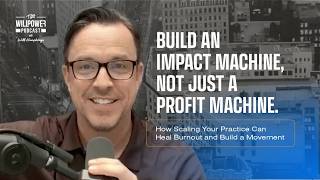
Will Humphreys argues that charitable partnerships drive business growth by boosting culture, retention, and client trust. He shares how his company started with team packing events for Feed My Starving Children and expanded to board work with Care for Life in Mozambique and relief funds for Filipino typhoon victims. Small, repeatable giving actions reshape a founder's mindset and fuel better business decisions.
Chapters
You know, one of the challenges of being a business owner is that you always wish you had more time for charitable initiatives, but you're too busy trying to keep your own business afloat. So in this episode, Nathan Shields and I are going to talk about how partnering with charities can directly strengthen your business while giving you that satisfaction of doing more. We're going to break down how giving back improves company culture, increases retention, attracts value aligned clients, and creates stronger recruiting advantages. You're going to hear practical examples of how to start small all the way to larger initiatives and how to tie these charitable efforts into your purpose. So if you've ever wondered how to build a business that makes money and increases your impact, this is your blueprint.
It feels like it's been a long time since I've had you on.
I was just thinking that. That's really funny. And by the way, since we have. Now you're in Arizona, we have to do some shows together in person.
We need to do more of them together, together. But I will say it is totally dependent on Mr. Will's schedule, who is busy pants all the time.
That. That is actually my official name. I've changed it to Mr. Busy Pants. And I don't. I don't love it. But. But it's. Listen, we're all busy. We're all busy. I just got to this point where I was just kind of like, hey, I have executive assistance. Maybe I should let them control my calendar. It's amazing how they don't let me abuse my time the way I do. It's crazy.
Good, good. Well, I think last time we talked about, we talked about either AI or the virtual assistant stuff. Super valuable.
Sure.
Whatever it was. And that had to be probably six months ago.
Oh, my gosh, that's ridiculous. We will. We have to make space for, for us getting together. I think that would be great because I know if. If the audience doesn't care, I know we would love it. That's all.
Well, I just want to sit in your studio. You actually have a podcast studio, which I have never been. I've never been in a podcast studio. So to be, like, somehow formal in a. In the appropriate setting would be. Would feel very nice to me, which is so ironic.
You have the most impactful podcast in our space, which is funny because I also have a podcast in our space, but you have the most impactful, and you don't actually have a studio. Like, you know, I think, I think you would love it.
You're talking to a guy, if you recall, that used to do it out of his closet. I look at those videos now and look at the, like, the clothes hanging up behind me, and I'm like, what was I thinking? What was I thinking?
Is that a trench coat? What is that behind?
Nathan, you're in Arizona. Why do you have a trench coat? Ideas?
Yeah. Right?
Yeah. So anyways, at least we had fun listening to that. Hopefully everyone else got through it the last few minutes.
I know everyone else is like, are we gonna have a show today? Is this.
Are you guys gonna tell us anything significant whatsoever?
Yeah. I don't know. Maybe they're lonely. They're like, need some friends? Because that's how I feel all the time. So you're welcome to join Nathan and I's chaotic discussion.
Yes.
Over nothing.
Yeah. Well, okay, so what we're talking about today, and I know this is near and dear to your heart, because a lot of what you, Mr. Busy Pants, are doing has to do with charity and giving back, and not just in your professional life, but also in your personal life. And so we did a bit of this in our organization. And considering where you're at and what you're doing personally, professionally with charities, I thought maybe there is a way we can do a podcast as to how people can leverage their businesses to have a greater impact in their community, if not the world, by collaborating with charitable organizations. Right.
Yeah.
And so speaking to that, why don't you share initially just a little bit about what you're doing, and then we'll tie it back to what some of the things that we weren't super charity focused most of the time during our ownership, but towards the end, we got a lot more. Right?
Absolutely.
Yeah. And so talk to me, talk to the people a little bit about what you're doing, both personally, professionally, highlight those, and then we can tie it back into business.
Yeah, absolutely. And to frame this for everyone who's listening, you know, this is an incredibly impactful. This is one of the single greatest secrets in terms of developing our business that there is, which is supporting and partnering with charities. It's. It's the kind of thing that on paper, you don't see the connection. And so as I go through this, I want you to recognize that, first of all, first and foremost, this was a journey. So when you hear what I'm doing. Listen, listen. I just. This has been an evolution over time, and as a result of spending time in this space, it's been bizarre to me to see the benefits of how much I put into these charities and how much we grow as a result of these things. And so just to give it some context. So there's.
Let me just add, if I could. You talked about the product of what this does for people, but you're. You're not seeing the benefits of it on paper, as you say. But I think I can speak for you that you feel so much more fulfilled.
Yeah.
And living out your personal purpose by combining your work with these organizations.
Right, exactly. That is. That's a great way to frame it, Nathan. So for everyone who's listening, I thought it'd be useful because I like to get to the point. I'll go into it more in detail. But here are just a handful of the most impactful reasons why partnering with a charity are good for you. The first thing is what Nathan mentioned, which is this thing called perspective and creating meaning and purpose. The heart set and the mindset that working with charities creates is a game changer that actually results in greater growth in business. And we'll talk about that in detail. Number two, and this is where it seems more tactical, is that you also build the culture of your company to the same degree because then you have people who are aware and collaborating and helping support this, which makes them feel like where they work matters more and.
Yeah. So they're part of a bigger purpose. They're part of a bigger thing.
Yes. The whole point of culture is to turn our company's existence into a movement. Like the specific byproduct of a well created culture is that people feel like they're going somewhere to work, that it's going to make a difference in the world, that every healthcare provider in particular feels super grounded on that concept. So when you create this charitable partnership, you retain better, you recruit better, all these things, and these are measurable things that if people start doing it, creates these impacts. You can't do it for the intended per. Like the purpose of partnering with charities can't be about that product, but it is the natural consequence of you focusing on it.
Right.
So number two would be the cultural shift within the company. Number three is the community shift and how they experience you. This is what helps us get clients, whether it's patients or in my case, you know, people who are looking to hire VAs when they understand that partnering with you as a customer drives these. Again, this isn't the reason why we do it. The reason we do it is because we want to help other people. It's just a natural product of what happens when we do it. Right. And then, and then there's the fourth product, which is like kind of a full circle, which is that the people you're serving that have nothing to do with your business, like, we're going to talk about Africa here in a second. But like, these people that you're going to, they get better or supported or whatever it is that they need because of these efforts. So think about it in terms of impact, starting internally with your soul outward to your closest group, which is your team. Then you go to the public that you're serving, and then the world at large, the people you're actually doing charity for. And then of course, you get those benefits of, of being a father or a mother who have, who, if you have kids or a spouse, they see this and it changes how they view your professional work. But that's, that's kind of a bonus feature. So that would, that would be the overview in terms of why they care about this before we even get into it, because that's, that's the end result.
And have you found that? So I'm, I'm imagining an owner listening to this, and they're like, yeah, cool. I'm working 60 to 80 hours a week already in my business. Yeah, how am I, how, how do I ever fit this? How do I ever make those kind of collaborations and what kind of the time suck that it could be? I need to get my next therapist first. And. And of course you do. But I, I think what we're saying is spending. It doesn't take a lot of time. Have you found?
No. And it's like eating an elephant. It's one small bite at a time. You know, what we prioritize has everything to do with the way that we grow our companies. And so if we prioritize giving to others in a charitable format, we are in a position where we do end up creating better space. I've learned that by focusing on charitable efforts, the mindset shifts of the owner and the employees to allow for it, which allows for other growth as well. Now, one caveat, there are people listening to this who are driving into work burned out with no energy left, who have zero profits or very little profits, or they're upside down. For you guys who are listening, this isn't another thing you should feel bad about not doing. What you should hear is that it's the reason why it's worth going through what you're going through. I want everyone to hear that no matter how much you're, if you're in that lower level of suffering and you're hearing this, I want you to really hear this. That Just by having a desire, a heart that wants to do that will eventually create the space for it when it's time. And you'll look back and thank the you of today for struggling through these things and listening to Nathan's podcast and doing the work so that later you can make the impact. Because I wouldn't do what I did today without a younger version of me struggling through it as well.
And from our experience, we had people on our team that we're more than willing to take that off our plate.
When it was that, yeah, when we
were struggling with the day to day and I mean we weren't struggling financially, but we had plenty of things on our plate. It was so uplifting to me to reach out to my team and say, who would like to like lead out on finding our next charity? And maybe it's not like, like we're going to do a year long effort, but right now we're talking in the holiday season. I know this is coming out in January, but like who wants to find a charity that we and the patients and involve the patients in it, right? What can we do? What can we give? I remember this was back when in my first clinic, a few years being open, I think one of one of the people on my team found a crisis center, a house where for women who are abused were living, right. And they had this laundry list of items that were needed, especially items for their children. And so all we did was like we put a big bin off to the side of the waiting room or in the treatment room, I don't remember where, and someone decorated it with wrapping paper and we made this list of items that were needed by this local crisis center. And we would hand it out to patients and they'd bring their things in and we'd tell them we're donating on this date, so make sure you get these items, any of these items in, into the bin by this date. And we took, I mean something simple like that just. It felt good, right, that you were supporting the community in that way. Such a minor thing. I mean there's so much more that you can do that ends up being calendared and just an ongoing relationship with a particular charity. But that, that was an easy place to start for me. That didn't take a lot of time.
I agreed. Charity is like water. It fills every vessel. It doesn't matter how big the vessel is. And think of your vessel as your time or your knowledge or your capability. Anything we do at any time to help anyone blesses the lives of everyone associated with it or even hears about it. So maybe it's a small, you know, project, or maybe it's a huge initiative, but it all starts with one bite at a time. As my East Texas grandmother would say about eating the elephant, we have to just take one bite at a time. Time. And so maybe we could talk about where those good first bites could be, if you want. But I just think it's important for everyone to hear that, you know, we can't approach it like a tactic. And it's the most incredible tactic there is. Like, if we do this the right way, with the right heart set, very few things we can do as business owners can dramatically improve every element of our business more than partnering with a charity.
Tell everyone a little bit about the charities you're working with right now, that I'm sure they'd be intrigued.
Yes. So this is an end in mind, not something to feel overwhelmed by as you're listening to this. So the end in mind, this is where I'm living now is first, I'm on the board of directors of a company called Care for Life that specializes in developing tribes in the poorest countries of Africa, which are the poorest countries in the world. Mozambique is their primary target right now, where they are teaching community members seven different principles of leadership that have to do with sustaining life. So these are villages where greater than 40% of the children are dying from malaria. Simple, easy to control things that they don't have access to. So this group doesn't bring people in from America to be the saviors. What they do is they have educational groups in Africa, Mozambicans in particular, that go to the tribes and they are employed and on the payroll of the charity and then go into the tribes and teachers leadership in those villages. They've been around for 20 years. They have completely hacked and systematized how to bring villages out of poverty and into sustainable growth states, which, by the way, are based in entrepreneurship, which is a fun thing I always get to see.
I was going to say they teach leadership and entrepreneurship, don't they?
Yes. I think again, these things that these owners that are listening to your show are like thinking about as they're driving to work. They don't realize how much capability they have in helping others as they struggle through the challenges of owning their own business, because that's very much what they do at Care for Life. So I'm on the board of directors of that charity. We go down to Africa for that group roughly once a year. We might be going back in June by The way to where we go down there more to just train the employees and then the employees help the villages. So that's one element. The second thing that we do is that we're starting to create our own initiatives in different kinds countries in Africa. So my wife and I were just, as you know, in Kenya six weeks ago. And this, this wasn't an organization. I have a friend now that I'm in that world who just goes there to help different orphanages. So there's so much need for help that this woman just started organizing. Hey, I'm going to go there. Who would like to come with me? Let's raise some money. And so I have a. I have a religious podcast that you know of that raised over $10,000, over 8,000, excuse me, dollars. And we went down there and started buying new land for an orphanage that got washed away with the flood. And so we went down there and spent time with the children and looked for places for this orphanage to go and those types of things. And, and so that's the extreme side of it, you know, but those, those are my two main efforts that I'm currently connected to. But through my company, Virtual Rockstar, we have also built a fundamental where we are putting money in to. To help provide a relief fund for Filipinos when the typhoons wipe out their houses, which happens on a regular basis. So for our employees, we're developing a charitable fund that they can contribute to with their American counterparts that will serve as a fund so that if ever someone loses everything, we can actually rebuild that with them. And, and what's cool. And this is Nathan. So here's the, here's the vision right now. This global impact. And this is, by the way, not a tactic. This is the reason I own what I own. I've come to realize this is my purpose personally, is that I am leveraging my company, Virtual Rockstar, and the Americans to help benefit the Filipinos and their virtual assistants. It's the owners and the Filipinos that contribute towards the African charities. So Filipinos aren't the recipients of charity alone. They're getting to create their own efforts to help people who are worse off than they are in the poorest countries in the world.
That's what was so cool when you shared with me about that, is that these Filipinos not anywhere near American standards in terms of standards of living, right? No, but they, they want to give to these African communities as well. And so you're providing them an opportunity to bless African lives.
Yes. So Philippines is about Guatemala level. That's where I served my mission for my Church of Jesus Christ Latter Day Saints. I was in that Guatemala area. So that's like the, that's the charitable level that they're at. And, and I can't remember the exact placement but like they're. Honestly, it's almost exactly halfway between the developed countries and these five countries in Africa. So it's funny because they're like directly in the middle. So there is a need to help them, but they are way better off than these in these poor people in Africa. And so they all help each other. But here's the key thing, and this is something I want to leave. I don't want to like leave this episode like we're finishing. But the key thing I want people to walk away from is that we need to be in touch with those people overseas who are struggling as much as they need to be in touch with us. They are in financial poverty, we are in social poverty. When we go over to these places where people have nothing and they have found a way to be peaceful and happy, it changes us forever. So it's not a one way cycle of charitable giving. It literally changes us. And like I told you when we met, I came back, I got on the plane coming home, going, first of all, never feeling happier and being like, I don't have any problems. I got on the plane going over there, going, what am I doing? I'm taking a week and a half to go to Africa.
So many things to do.
Yeah. Oh my gosh, I've got four kids. And then I get on the plane coming back and you would think I was high because I'm just, I'm just sitting there like, amen. It's all good. Because it's all good. We're going to come back and if those people who are suffering can find joy and peace, I have no excuse. And guess what happens? I come back and I have all these ideas for my company because I'm in this outward mindset that I wouldn't have been if I hadn't been served charitably by this little boy named Victor. I'm going to like get emotional, but he next to my computer I have this note that he wrote me that I'm showing to the screen. For those who says, dear will always know that God loves you and that you are a great man in this world. Victor. And you know, Victor lost both of his parents, suffered abuse of every kind, and now he's safe in this orphanage. Then at the time that I was visiting Victor, while we were looking for their new orphanage, Nathan. They, they were, there were 72 kids living in a 3,000 square foot home with two beds and two baths with big open floors that everyone slept on the floor. This 24 year old woman named Vanessa was raising them by herself. So you just come back like, hey, we all need each other equally.
Right. So impactful. And the, you shared that, that same experience with me. You're like, dude, I have nothing to complain about. I and you, and you also said the same thing. I wish some of these people in America who are truly, whether in terms of anxiety, stress, you name it, which are legitimate could see what, how blessed they are. Right. Compared to what is out there in the world.
Absolutely.
It's transformative.
Absolutely. And be really clear audience, at the end of this I'm going to have some calls to action to support these charities that I don't benefit personally at all. It's all for you helping them. But there is a call to action I wanted to shout out right now. Is that as you are sitting there or driving there or exercising, listening to this, if this is calling to you, I'm going back and I'm bringing people with me. I want to hear from you. I, I there. You know, people have all sorts of questions before they get into charitable worlds. Like, you know, aren't there bad charities out there? I don't want to waste my time and money and those kinds of things.
How much of this money is going towards the, the non profit executives and you know, what percentage of every dollar is going to the actual people in need. There's always those questions.
Absolutely. And I'd love to have those conversations with you because at the end of the day those are the things I think that hold us back when we're so busy that we don't know if there's space. Remember, we only go through very short amount of times with high levels of motivation. So when you are feeling motivated to do something like this, this is something to act on. Look through Nathan's show notes, leave a review while you're there for his show and then, and then reach out to me.
Yeah. How do they reach out to you?
My email will@unlockhba.com okay. And just, just email me, email me. Honestly, my virtual assistant will be the first person to respond to you because she controls my world. But, but just say that you were on, you heard me on Nathan's show that you want to learn more about how you can go to Africa. And I'll have other calls to action and later in the show about like, what else you can do if you're like. If you're like, dude, there's no way I'm going to build time to go to Africa or anywhere else. Remember that Charities don't have to be that. That far away. Our first charity, Nathan, was Feed My Starving Children in Arizona.
I was going to ask you to explain that a little bit about how we got together with them and what that looked like, because I think I was in Alaska during that time.
Yeah, but you were doing things before you left for the Parkinsonian. You know, charities that exist.
Yeah.
And so very similar to what you said regarding the Parkinson's charity that you guys were sponsoring at Pinnacle. I got together with the team, and it was one of those where it's like, we should. We should support a charity. It wasn't coming from this, like, I'm a good guy and I want to help others. It was like, we have a business. We should probably do something with charity.
Right.
You know, that's how the whole thing started. That was the first bite. And then what we did that was smart was ask the team what they wanted to do. And of course, they had lots of ideas. But someone suggested this thing called Feed My Starving Children here in Arizona. And it's a great charity where it's not just about feeding hungry children around the world, which everyone can get behind. They have a packing experience where you go down with your team and then you pack for the charity.
So you actually pack the food.
You actually pack the food so you have, like, a team bonding experience. It's perfectly systematized to where by the time an hour hits and you're just getting physically tired, they're done. You get to see on a scoreboard how many kids you fed. You walk away closer to your friends. There's a great spirit in that packing experience. Here's how it. This is what it was at the end, before we sold at the end. Audience. The way it. It turned out was that it evolved to where Nathan and I had these four clinics. And they knew at January 1st that by the end of that year, we were going to make donations based on their ability to promote the company purpose. So our company purpose was to be the light and hope in the lives of others. And so every clinic director was given these sticky notes. And anytime anyone saw anyone do something that they thought provided light, maybe it was a patient's attitude, or maybe it was the guy who brought in the water. Like, they would write it on a sticky note and stick it on the wall. And at the end of the year every sticky note represented a dollar that would be in a check that we would give to feed my starving children. At the end of the last packing event, which was this big packing event where they rent out the downtown Phoenix Convention center and Chase bank would be there. So there's thousands of people packing food. We'd all attend that in December and we, at that time we'd take, we'd hand a check over to the director and take a picture and put it in our, our promotions. But what was funny, Nathan, is how it evolved. Every clinic started getting specialized sticky notes. They started getting their patients involved and the sticky notes started taking shape on the walls. Maricopa Clinic had a giant dinosaur one year where it was just like this T. Rex, all out of sticky notes of people showing the light and hope. Patients were coming in, they were writing it down. They knew think about how the charity tied to the purpose for all people. And this was again, this. I didn't create this team's evolution of it.
Right.
They literally, like the patient walks in, they know the company purpose, be the light and hope. They're like, oh, my therapist was my light today. They stick it on the wall. That therapist sees it, they feel touched, they look for someone else, they put it on a sticky note. Pretty soon their contributions are being meshed into these beautiful shapes. And at the end of the year, we walk and hand over this check that was in the thousands of dollars. After a full day of packing together, I have a picture on my desk. I'm going to show this for the people who are watching. There's a picture I got when we sold our company. And in it is one of the packing days of rise rehab.
Oh, so cool.
And it was so special. I keep this next to my desk. You know, it's been almost eight years or it's been over eight years since we, we exited.
Right.
And like that's the stuff, man. Like we look backwards and it's like, you know, all the stuff that we suffer through, it's the people that we get to work with in those types of moments that you're like, whoa, I just said one day maybe we should do some charity. We should probably do something. And it turned into the thing that I remember most about that experience.
Yeah. And when has ever a few thousand dollar check ever been more impactful or that you even remember, Right?
Yeah. How many times do we drop five grand on a service or product and it does something for us? But that money, oh man, I don't even remember how much we spent. But it was like whatever it was, wasn't enough. We should have done more, you know.
Totally worth it.
A hundred percent.
Yeah. Did you find that it brought also the team members together as you were doing some of this stuff?
It's, I believe there was nothing more impactful to our team's culture other than defining and communicating our purpose, vision and values than the charity. So it had.
Well, that's, that was living it out. That was living out our purpose. Right.
That's a great, that's a great perspective. I never thought of it like that, like the defining of it and talking about it. The charity was the living of it. I never thought of that. That's exactly.
Yeah. We put the words to action. Right? Totally. And the cool thing, you tied it back to culture, of course. But it's those kind of things that attract value aligned people. So we're not here to talk about recruiting and retention and all that kind of stuff, but we definitely saw that in that the people who aligned with us, they, they were with us till the end. They were hardcore risers. Right.
Yeah.
And it attract other like minded and like valued individuals.
It really did.
It made it really fun.
It changed recruiting completely because it's like, hey, this is who we are. It's because very first of all, no one, very few practices really incorporate charities because being in healthcare you're already in a service and in a way a charity. And I want to say that's true for me and people own donut making companies. It's not the same thing as healthcare providers provide impactful charity every day when they love their patients. Right. And that's not the same thing as a company of people coming together and picking something that's not in the vein of what we're doing day in and day out. Something that we can look outward that takes our heart set almost externally from the things that we're struggling with within their company to go. That's why we're here. So yeah, they go and they make the difference in the lives of their patients. But what was best was when we could tie all three, my company per our company purpose with the look like the individual's purpose to a greater expression of that purpose outside of the company. And, and then when we talked about profits again, I never meant this as a tactic, but it was always like, hey guys, one of the reasons we want to have a high profit margin is that we can give more to this charity. And we, we were very transparent. That wasn't a tactic. It was if you guys want raises, if we're going to give more to feed my starving children. We've got to make this work. This isn't about making a profit machine. It's about making an impact machine. But it needs profits to do that, and people can get behind that very easy. Versus, like, well, why would I make your pockets fat? That's how they see it.
Yeah. You could imagine that they, they have a different perspective about when it comes to productivity conversations.
Absolutely.
If they see you living out this kind of charitable and experience with the whole company. Right. If they're witnessing the charity, it's hard for them to say, well, you're all about the money. I mean, because they do default to that, unfortunately, many times. But when you show such a strong charitable backbone to the organization, living out your purpose, you could say, yeah, you could think that I could. I could see where you're coming from. But I don't know. Were you there when we gave that $6,000 check to the charity last week?
Yeah. Yeah, I think. I think if someone on the team saw a very organized and focused effort to give back from a charity perspective, if they still push on you for being about the money, that is your greatest indication. What a blessing to know that you should fire that person immediately. That they are a bump, a bump to your company's culture. And it's not that they're bad people. They just need to go somewhere else and be happy. Because if your company is actually engaged in that and they still think you're about the money, it's like, oh, this. If they, Especially if they criticize it, like, well, he's using this as a. Yeah, goodbye. It was thank you for making it evident that you are literally the reason I'm not successful and goodbye.
Right, right. Yeah, exactly. I love it. Well, you have some calls to action. What are your calls to action?
Listen, so first, no, the big one was if you're gonna. If this is calling to someone to go to Africa, come, like, just. You're not committing. If you reach out, like, if you reach out to me and you're like, hey, well, I'm interested in learning more. I'm not gonna be like, ah, you're coming. I mean, you are, but I'm not gonna force it on you. I really believe this is why I'm so intentful about this, Nathan, is because they, they need it. It's. It's. It is so hard to me right now. We're raising money for my organization. My, my. The, the. The Care for Life charity that I'm on the board for. That's 100% outbound cold sales. I'll get on a call and talk to people. My wife will, who's really good at it by the way. Big shocker for me but it's one of those where I know people who are literally. I have one friend who's making, I think It's. He makes 30 million a year and really good guy. This is not a criticism of him. I just said hey can we get a donation from you? And I was looking for like $500, $1,000 in my mind hoping he'd give like a 10 grand pop or something. And he turned to me, he goes, you know, well I'm in the earning stage of my, my life, not the giving stage. And I just went, oh, you haven't met Victor who or, or the. We went to one rehab center over overseas that is completely run on the charitable giving of the Kenyans who are already poor themselves. And these kids have the worst equipment and they're, they're screaming in pain and they're being fed four times a day and all their clothes are being washed by these women who are just volunteering, they're not getting paid. And, and I'm like oh if you saw that you'd realize like that how silly of a comment that is. Yeah, like I'm going to give later when I have a certain level of quote financial security which is a load of crap is, is only something we adopt mindset wise if we haven't seen it firsthand. So I am so the people need that not because they'll give. It's because when you go over there it's what you get by giving that time and space. It's like there's a healing that these, these individuals were born in the humblest and most horrific circumstances can give us just for by existing 11 orphanage we visited and I shared this with you, the hardest one we visited was the center rescue center for girls who were rescued from sex trafficking. And these 1358 year old girls would stand up and tell their horrific stories of going through what only can be described as hell. For people who believe like in a heaven and a hell, there is no hell after this life worse than what these girls have experienced. And to sit with them after earning their trust as a man which took some time and to hear them talk about love and forgiveness and happiness and the choice that it is, there's, there's a lesson to be learned at the feet. Of these angels that can only be experienced in person. And so we need, you need them and so I'm all about trying to get Heather, and I've made the commitment that our goal is to get as many people over there as possible. You'll be spending the money you spend just to get there. There's no, like, expedition fee in some cases. If you go to Care for Life, there is because you, You're. You're. There's. That. There's different options I can go over with people, but for sure, there's just that piece of it. So the other call to action or just to make financial donations, honestly, I'll put those in. I'll send those links to you.
Okay.
And the main one I'm just going to promote is Care for Life. That is such. Such a vetted, experienced, proven charity that every single red cent that is going to that charity is going to make a difference in someone's life. And I. I just can't promote that one enough as a. As a board of directors.
The beauty of that one is it's tied to our small business ownership, so we can totally relate with the leadership and entrepreneurship skills that they're teaching.
Yeah.
What I also really appreciate and respected about them is they expect to go into the village, teach them those things for however many years, and then pull out.
Yes.
Three years.
They're in there for three years and then they pull out. And they thrive after they leave.
And so they expect them to go. They. They teach them how to fish and then let them fish, and they thrive. And that's so cool. So cool that they don't have to set up a center and put down roots. And so we're here for the next century. No, but they make their impact, they teach their people, and then they leave. That's amazing.
You know, we were there a year ago, honestly. The reason that started, by the way, was because a year ago, a year and a half ago, my sister came back from Africa from doing, like, safari vacationing. And I love to travel. And I'm like, we should go to Africa. And so you can't. It's such a long trip. I was like, well, let's stay there for some time. And Heather and I were like, we should. It was kind of like the old Rise days. I'm like, we should do some charity, you know, as attack on. Like, it was, we're in Africa. There's got to be an opportunity for us to do something charitable. And so I did research, tons of research, because I'm like, super weird about research. And I found Care for Life, like, this is my company, and I set up to Go do an in person expedition. And the expeditions usually cost 2 to $3,000 per person in addition to your travel.
Sure.
And we were already going, so I thought, you know what? We'll do four days of that. And it turned into like a full week and I was dreading it. I had four boys with me and I just thought they were going to hate that week. So we had two weeks of really cool vacation, then one week of charity giving with this, this thing. And so we go to the village. We spent all week digging holes and helping create latrines for this family that had earned the right to develop a latrine. But the last day they took us to the villages that they were pulling out of. And it was, it was black and white in terms of the difference. You wouldn't believe how different it was to go into these villages where people had been like graduating from care for life. There was all these business, first of all, everyone's smiling. I don't want to paint a picture of utopia, but it was just joy and, and they were just like thriving. The kids were in school and had uniforms on. There was a thickness to their physical physique of being healthy because they had clean water because that's one of the first things that they put in is like a well. And so you see that, that difference and you're like, oh my gosh, this is so useful. And this is a true story. You've probably heard me say, but one of the days we were digging this hole in, my youngest son, Van, he's my fourth son, admittedly I didn't put a lot of effort into teaching how to work hard. We're in the African sun, he's just digging away and he gets out of the hole that he's digging, literally, and he starts crying. And I'm like, my assumption is you're learning how to work hard. I'm sorry, you know, I didn't really prepared you for this. And, and I go over and put my arm around him like, hey buddy, how you doing? What's going on? And he goes, I just never have been happier. I never want to leave. My, my 12 year old son said that. And I didn't think he even knew what was going on. And I don't think we can appreciate especially taking kids or grandkids to these experiences how, yeah, it immediately helps them come out of their social poverty. And again, I'm not trying to compare these things. It's just literal. There's a financial poverty and then there's a social poverty that developing Countries are experiencing through social media. And if you don't think that's a real problem, go look at the suicide rates of the youth today that have tripled in the last 10 years. If you don't think that those are actual diseases, go look at those numbers. And then again, I'm not trying to compare. I'm just saying we need them. We need them as much as they need us. And it's. This is all part of God's plan. By helping each other, we can grow and thrive and find peace as a. As a global family. So, yeah, well, put that link for the Care for Life donation piece. If this is calling to you, please, every donation matters. And every donation. I'll say this. Every person who's listening, this, that makes a donation, I'll match it. I'll match it. That comes through your. That comes through Nathan's podcast.
That's awesome. Thanks, man. Well, you're doing great stuff. It is inspiring. It's so cool to hear your stories and. And see the work that you're doing. It's so cool. Thanks for sharing.
Yeah, you're welcome. Thanks for letting me talk about it. And let me just say that, like, I appreciate that. And it just doesn't feel enough. I feel like this urgency. The one thing I'll warn people about is once you start getting into this world, it changes your. Your perspective so much that it's just like you never feel like you can do enough. It's just. It's so warming and life is joyful. But you just, like, as we're talking about, I'm just thinking, what else can I do? And it's. It has nothing to do with me being a good guy. It's because I believe everyone who listens to the show has a heart set that if they were just exposed to this, they'd be in the same vein in a way that would bless them. Right? Like, it's just such a shift in perspective. And. Yeah, I just hope all of you guys are listening. Just know that wherever you are in this journey, how much I appreciate what you're doing. Nathan and I are so grateful for you listening to this episode and getting to this part for sure.
Thanks for joining me today, dude. I appreciate it, as always. Okay.
More from Will





Highbar PT’s Blueprint for Culture, Brand & Growth With Michelle Collie and Dave Pavao

Highbar PT’s Blueprint for Culture, Brand & Growth With Michelle Collie and Dave Pavao




