The Paradox of Self-Service and the Customer Experience with Will Humphreys
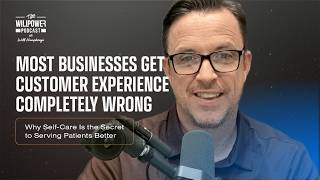
In this recorded staff training for his billing company, Will Humphreys guides his team through a deep exploration of what it truly means to "go above and beyond" in customer experience. He begins by prompting the group to recall personal moments when a business exceeded expectations, gathering stories from Tammy, Esperanza, Heather, and others that illustrate empathy, personalization, and unexpected kindness. The discussion expands the definition of "customer" beyond external clients to include patients, insurance companies, coworkers, family, and ultimately oneself. Will emphasizes that self‑care and self‑service are paradoxically essential for serving others effectively. The team identifies core qualities of above‑and‑beyond service—compassion, empathy, personalization, and proactive communication—and brainstorms concrete actions such as more frequent follow‑ups, recognizing front‑office staff, meeting clients face‑to‑face, and internal appreciation. Throughout, Will weaves in personal anecdotes about his own physical therapist, a helpful police officer, and a former Arby’s employee, reinforcing the impact of genuine human connection. The session culminates in a challenge for each participant to practice intentional self‑service (mirror affirmations, quiet time, treating oneself) and to consider one specific act of empathy they can extend to a difficult person. The training blends storytelling, philosophical reflection, and actionable ideas to reshape the company’s culture around holistic, self‑centered customer service.
Chapters
In today's episode of the Willpower Podcast, I'm pulling back the curtain and letting you in on an actual training I gave to my billing company. This is a real private, intimate look on how I train my people and why they're so successful. We're talking about what it truly means to go above and beyond, not just for our clients, but for our clients' patients, for each other, and even for ourselves, because customer experience isn't just external. It's how we show up and how we communicate. At the end of the day, it's how we serve. So if you want to grow as a company, it starts by raising the standard of how we care, starting with ourselves. Let's jump in. Think about an experience you had when you went to a company as a customer. So this could be a restaurant, but it could be anything. It could be, I don't know, getting your oil changed. Can anyone think of an experience that they had that they'd be willing to share around— actually, let's not even worry about sharing it. Can everyone just take a second and think about a time when you were at a business and you felt like they went above and beyond? Like your experience of that was like, whoa, kind of mind-blowing. You know, sometimes it's not even the big ones. Maybe it's someone who served you fast food. I don't know. Like, does anyone have an example that they'd be like— did anyone have anything come to mind they'd be willing to share? It would help me a lot.
So I recently had to go to Discount Tire because, you know, as it gets colder, everybody's air pressure light comes on, right?
Yeah.
Um, and the guy that filled up the air in my tires was like, he first brought up Rick's name. He goes, oh, and I go, no, it's under Tammy. And of course, you know, it hit my heart.
I'm like—
and I told him, I go, no, Rick passed away, you can take that off. And he was like, I'm so sorry. And he was just so sweet. He was like, well, Rick obviously took very good care of your car, which he doesn't realize I'm the one that And I'm like, thank you so much. But he just went out of his way to make me feel comfortable and to compliment Rick as well.
Wow. Thank you for sharing. That was really powerful, Tammy. Just out of curiosity, did that change how you viewed the company discount tires? I'm not looking for an answer. If it didn't, it didn't. It—
I always didn't trust my tires with them. So now it just made me made my day that someone really cared.
I love that. That is such a great story. Thanks for sharing. Esperanza, I have a feeling you were about to share something. Did you have something to share?
I was. So I had where I had taken my mom to the doctor and she had some— she has a couple injuries to her legs. She has trouble walking and, you know, she had been working on physical therapy and chiropractic and she tried to go do some warm massages for my sister's advice and the place was just so sweet. They made sure she felt comfortable, and then they went out of their way just to make sure that she had all the information she needed. When she was walking out, the person walked her all the way up to the car, which we normally get out and help my mom get out, but he was already ready and prepared. He told her, "Let me know when they're almost here." They held the door for her, and then they followed up and checked on her like a week later. So that meant a lot for me, just because normally, how I said, we're the ones that get out, we help her into the car or anything like that. I mean, she's doing a lot better where she can walk on her own, but in that moment in time, that's not the place where she was at. So it just meant a lot to have that. And it definitely made me see them in a different light in the sense that they went above and beyond for somebody they had just met because it was her first visit.
Yeah. What did that— what do you think that meant to her, your mom?
I think it meant a lot, again, because they took the courtesy to do simple things like opening the door and walking her to the car or helping her walk to the car. And so I think she felt like she was getting really well taken care of.
Oh, that is such a great story. Does anyone else have anything else? Yes, Heather, please.
So I have one. When I was homeschooling Ryder, when I first started his preschool, I went with a curriculum called My Father's World and super amazing curriculum, by the way. But I did it for the first year and I thought it was amazing because even though I didn't like go forward with them for kindergarten and all that stuff, I still to this day get phone calls from them and they leave like full prayers on my, on my voicemail. And they're very, very personal. And they're just like, you know, we just want to check in, see how your family is doing and how your homeschooling journey is. And I just, if you don't mind, I just want to say a quick prayer for you and your family. And she goes every time, goes through just an amazing prayer. And I don't know, that right there just makes me think that company just, you know, it goes above and beyond because that's, that takes a lot, you know. So, yeah.
I love that phrase that you said. Thanks for sharing that story. That phrase you said at the end, above and beyond, is a really interesting thing that we're going to focus on today. I can, you know, as I was thinking through this training, it was hard to think of examples at first, and then they started coming, you know, all the way from a coach that we're working with, with one of my kids, who is just kind of At a coaching level, they just, you kind of expect them to go above and beyond because they're so personally invested. But when I look back, I'm like, wow, that was so big. I thought of this one girl at an Arby's drive-through 15 years ago that was so kind and asked me how my day was and really like was so genuine that I hired her to go work for one of my physical therapy practices. I think of a police officer who helped us when we were having a family crisis. Who, when the crisis was over, went above and beyond with someone that I loved and said some things and taught some things that only he could have in a way that were very impactful. And then my mind went to my, my physical therapist Connie Clemens that you've heard me talk about ad nauseam. I mentioned my accident too much. And just, but that, when you think about how that therapist loved me and served me and, and changed my life in that way. So what distinguishes these experiences that we shared from a normal experience? I'm not thinking of negative experiences. I'm thinking of like average experiences. Who here can share what they think is the difference between going somewhere and having a decent experience, maybe even forgettable, but like it meets expectation, versus going above and beyond? What's, what's the difference? Any—
well, I'm sorry, I was just going to say compassion and empathy.
Okay, speak into that. How so? Like, what— how does that— how does that make it go above and beyond?
Because they're putting more effort and thought into it and caring about you more as a person rather than— we've all been to the store where the cashier is like, they don't even want to be there. It's like, well, I didn't drag you into this job, you know, but just that extra personal touch.
Yeah, the personalization, the humanity, the empathy of it. That is one— Penny, that was a great share. Anything else come to mind? You know, it's amazing. Please share if something does. Be the first to share. So like, it's one of those things where Penny may have hit the main one on the head, right? The individualization, the seeing and hearing of somebody totally shifts the experience. And I think that's something that we want to talk about today is the customer experience. It's a phrase that you hear in business quite a bit, but it's so much deeper than that. First, you talk— so we're going to be talking about the customer experience at In The Black. And I really want you guys to think about this from a— I want you to leave this training from a different perspective of what that looks like. But let's talk about, first of all, identifying who our customers are. We've done this a few times in the past. Maybe you guys already know all the answers, but I'm going to throw it up to you guys. Let's, let's name all of our customers. Who are the customers at In The Black?
The clients and the patients.
Interesting. So Penny went a step further. So it's the people who are paying us, the businesses, Right? But it's who they serve as well. And we interact with them, don't we? Do we have interactions with their patients? Man, do we. Do we. I can't tell you how many times as a physical therapy practice owner, I'd have a patient come to me complaining about a bill saying, you know what, I didn't know this bill was coming. And guess what? I didn't even get better anyway. I look back at their chart, all goals met, no pain reported. Isn't that interesting? You know, who else are our customers? I want you guys to think a little bit outside the box. And for those who've been around, you can throw out the answers. Shelley?
The insurance companies.
Man, that's a hard one, isn't it? The insurance companies, you know, these entities that in my mind are crazy corrupt. You know what I mean? Like the entity itself is corrupt. So wouldn't it be easy to vilify the people and their companies? So how are— Shelly, how are, how are they our customer?
Well, because we have to speak to them constantly and try to get the claims processed. We have to. So I think just interacting with them, they're part of our customers.
I do love the fact that we have to interact with them, so we do serve them in a way. Do you feel the people you talk to from the insurance companies are bad people?
No, the majority of the ones that I talk to are pretty good. Um, they're really nice. Some are helpful, some are not. Yeah, depends on the insurance company.
Some don't really focus on an experience. They don't think of us as their customers, but they're still human beings, and therefore we can create an experience for them. Interesting. Who else are our customers?
Each other.
We are each other. Our CEO, of course. Katie, talk into that, please.
I think sometimes we forget that the people we work with are our customers, but I think that's some of the most important people. We're working together as a team. We care about each other. We're trying to lift each other up. It just, it's a really important aspect of customers.
Yeah, this team, we are each other's customers. Isn't that interesting? We're there to help each other. Jessa is my customer, right? Like, you know, and so starting to see that from that different light. Love that, Katie. Thank you for sharing. Who else are our customers? In your life, maybe not in the black.
Our family.
Our family is our customers. Isn't that interesting? Because customers are— what is a customer? A customer is someone we serve, right? Do you serve your, your, your son, Heather?
All the time.
You serve Matt?
All the time.
Yeah.
Do they serve you?
All the time.
Yeah. Isn't that great? Hey, we're missing one really big, important customer of your, in your life. And they're on this call right now.
Yourself.
Yourself. We are our own customers. We serve ourselves. So, so when we talk about the customer experience, what we're talking about is this idea of how we can create an experience that goes above and beyond, using Heather's language, going above and beyond, and we define going above and beyond as this concept as seeing someone's humanity, empathizing with people. In some cases, it's easier than others. Like when you think about someone who has always served you well and loved you, it's easy to be a good customer to that person. The real challenge in this life And I believe this goes above and beyond anything that we talk about here in this workspace, is this personal focus on being the light for all people. And some of those people make it really hard, don't they? I'm thinking specifically certain insurance employees, insurance company employees. I'm thinking of that person who cuts us off on the side of the road. I'm thinking about On certain days, for me, everyone. Like, I can be in such a pissy mood that, like, everyone's an obstacle to me, at least if I let myself just stay in that mode, right? So it takes work and effort and caring and a focus outside of ourselves. And this is the thing that's so great. And you guys know me, I'm always going to talk about God very openly, is that when we can focus outside of our existence onto other people's existence, Ironically, that's when we become happier. When we can be in the service of others. When we can be the light on a hill of God's love. Just to do something as simple as make someone smile. I mean, the power that we have as human beings, as creators, sons and daughters of the ultimate Creator, to be able to go out into the world and make someone smile. Have you ever thought about how significant that is? Like in Esperanza's case, the smile that her mother probably experienced instead of the fear of where she was is not a small thing. I would argue it's probably the most important thing that we can create, are areas where we can help people smile. And sometimes that's a joke, sometimes that's just being empathetic with somebody or sitting in the mud with them. So before we start talking about how we're going to do this, because obviously it's going to— you guys are smart people, you know, we're going to lead about— we're going to lead this conversation like how we can do more for our clients. But I, I want you guys to understand that the most important customer that you serve ever is yourself. Isn't that ironic? You have to like serve yourself. And how do you do that? By being selfless. It's like this really weird paradox, but it's true. You have to serve yourself. How can you guys be a better customer to yourself? Because until you are, you will, you will never be able to serve another greater than you can serve yourself. That's not the same thing as being selfish, right? How can I want you guys to tell me examples of how you can serve yourself as a customer first? And if that's all we ever figure out today, power to you.
I feel like taking care of your health is a huge thing. You know, not only for you, but for your, your family and for everyone around you, you know, making sure that you're healthy and you go to your doctor's appointments and you take your medicine, your vitamins and all that good stuff.
Love that. That's a good one. I would love to hear from Jessa. Jessa, what do you think?
Yeah, so for me, I like to take myself out. Like, for example, I'm craving something just to lift up myself. So I'll cave into that cravings. And because I deserve it and I know I'll be better once I treat myself.
Treat yourself. I love that. That's so great. For those of you who know that Parks and Rec reference, that is so smart, Jessa, because self-love is like a real thing. You know, like, it's weird when you think about it because it looks insane talking to yourself or thinking of yourself as like two separate people, but you really have to. You have to in order to care for yourself. Otherwise you're just like this existence. You know, when I look at myself as an individual that needs attention from me, people might think I'm crazy, but this is actually how we develop that service. Love that. I'm going to Crystal. Crystal, what do you think? How do we, how do we, how do we serve ourselves as customers?
For me, I think maybe it's a bit of a spiritual answer, but Love it. Or it doesn't have to be spiritual, I guess, like just having a quiet time with yourself. Because sometimes, because, you know, life gets so busy, work is busy, your family life is busy, everything's so busy. Sometimes you just need time for yourself and just like that quiet time to help you like, um, get together like, uh, mentally, physically, spiritually. Yeah, that's it. That's it for me.
I love that, Crystal. I want to challenge each of you. This is our big focus right now, and then we'll talk about some things we can do in the company. But I want to challenge each of you to do something for yourself in a very intentional self-service way, developing love for yourself. And that's going to be hard for some of you. Some of you, based on where you're at, might not be in a position where this even feels authentic or real, but I'm going to ask you to try anyway. Like we read in the scriptures, the time to pray is when we don't feel like we should be praying. Like, it's that kind of concept of if you don't feel like you should love yourself, express or communicate love with yourself, then you need— it's the time, it's the best time. And there's different ways to do that. It can go for a long walk, it can sit in the quiet, it's maybe enjoying a movie and not feeling guilty, or a snack or a treat and being like, I love this stuff, who cares. Maybe for those of you who want more of an advanced challenge. This is for those of you who really— this isn't for everyone, but I would love it if we all did. I want you to stare in the mirror at yourself, in the eye, and I want you to repeat the following phrase over and over. Like, if it was me, I'd be in the mirror and I'd say it out loud: Will, I'm sorry. Will, I forgive you. Will, I love you. You might feel insane if you start this. If you do, good, you're in the normal. But do it a few times. Keep going, keep going until you feel something, because you need to hear it. And so it's that concept of like, we can't be as good for others until we know how, until we're good enough within. We can't serve others any more than we serve ourselves. We can't love others any more than we love ourselves. Ironically, you know, when we develop that base of self-care, then we have a sharp tool, which is our existence to help and serve others. And that's when it really gets good because that's where we can make a difference in other people's lives. So each of you, as we're talking, I want you to just kind of ponder in the back of your heart and your mind the following question. So first of all, Take that challenge. I'm not going to ask for any volunteers. You make that commitment right now. Am I going to do that challenge and do something for myself? And if someone does an advanced acceptance of that, fantastic. The next question I want you to ponder in your heart and your mind is I want you to think of one person that you love, maybe one person you struggle with, maybe someone that irritates you a little, and then think about what would being What would it look like to go above and beyond and empathize with them? And what can I do for them? Maybe it's just one simple act, one simple act. It, it, maybe it's a text, maybe it's something bigger. One of my good friends, Greg Todd, who's one of the most powerful leaders I've ever met, and he's actually in the physical therapy space, which is kind of cool because there's not a lot of us out there. Did you like how I put myself in there with him? Anyway, not all of us in there, but he's amazing. Like, this guy is truly powerful. He was on my podcast and he talked about how one of the most powerful things he's ever learned to do is just to go outside and start conversations with strangers. He was taught this by a coach and it was challenging because he was struggling with depression. Like, go out there and just talk to somebody with the entire purpose of just like connecting and empathizing. And so he was— he went on a daily walk and there was this man that he saw every day. And, you know, it was just like, hi, hey, I see you every day. I just want to introduce myself. My name is Greg. What's your name? They started talking and like, you know, there's all— there's a big story behind it because there's lots of cool things that happened. But like, the point was he left that conversation so much happier and he had a lot that was going on in his life, very sad things. So there's just this opportunity to serve others because ironically, when we serve and help others, we help ourselves. So that's the second thing. The thing I want to talk about finally is I want to take a second and acknowledge what do we feel like we do well here at In The Black that goes above and beyond? How do we think we are going above and beyond currently at In The Black with our customers? And in this case, I want to talk about groups. I want to talk about each other, like Katie mentioned, and then how are we going above and beyond for, like Penny said, the actual clients and their patients? Let's start with our, our group. How do you guys think we go above and beyond from a customer service perspective with each other? And if we don't, that's okay too. But does anyone have any?
Yeah, Penny, I was hoping we'd have at least acknowledging each other and showing appreciation for the help. When someone reaches out.
Do you feel like that's— is that true for everyone, what Penny said? Yeah, so we reach out and we support each other and we acknowledge each other. I think that's huge. Yeah, Heather.
I feel like too, even if it's not like our area that we're in all the time, like AR or whatnot, we're always willing to jump in and like, you know, help and figure out, solve a problem, you know, that maybe another team member is having, even if it's not our area.
So you guys are willing to just jump into anywhere to help each other. I feel like this group does this really well. I think we serve each other fairly great. Okay, now let's switch gears. How do we, where do we feel like we go above and beyond with the actual PT or the medical companies and their patients? How do you guys feel like we do that? Maybe it's more of expert, maybe it's more like you sharing what you do. If there's something that you're doing that you feel like goes above and beyond. No pride. This is not humble brag. This is— I want you— I want to know.
I think reaching out to the clients and the patients and being supportive and try to be understanding, but being polite and respectful.
I love that. So good manners, being respectful, communicating. I had multiple billing companies that never did any of those things. That's not a small thing. Thank you, Penny. What else?
I think even if we don't know the answer, we supply them with as much information that we can and then guide them to where they can find the answer if they reach out for any questions and just being open to the questions that they do have.
Yes. And Esperanza would never say this, but where Esperanza goes above and beyond, because I used to see her in this, this place, is that she She can take bad information and angry people and turn them into happy people. I honestly— this woman has been dumped on for years by our clients in such an intense way, probably more than anyone. And many of you have. I've seen Heather do that. Obviously, I've seen Katie do it. But Esperanza has been this shield and protector for Katie in so many capacities that when it came to like if I had to pin them in the middle of the person who's probably had the most dumped on her in terms from clients, in terms of anger or whatever, it'd be hard to choose between Katie and Esperanza. It'd be hard because of how much that she's taken on. So that's a huge customer service above and going beyond, because frankly, most people in the billing space don't even make themselves available for any of it. They just get the angry emails and delete them. You know, Esperanza's been on calls, and many of you have too. I'm not trying to minimize, I'm just saying She's done a lot. Great. What else do we do above and beyond? Oh, Esperanza, what are you gonna say?
Oh, I was saying thank you.
Oh yeah, you're welcome. I mean, I can't thank you enough. Anyone else? You all do it in different ways. I think that's the problem is that we've got a team of really selfless people. I know you all do in different ways and you probably wouldn't feel— and because this is a billing company, you probably don't feel super comfortable sharing them out loud. So I could probably go around. Better than you could. I think the main thing I wanted to really emphasize in this training is to shift the way that you think about you and how you interact with each person every time. I would love for the next 4 minutes for us to do a company brainstorm on what we could do. Not saying we're going to do it, because maybe we don't have time or money, right? But like, if we, if we could wave a magic wand and do anything to impact people? And I want you to think about each other, and I want you to think about our paying customers. What could we do? Just as ideas. This is just a brainstorming. We're not committing to doing anything. What could we do to make that experience memorable? What could we do to go above and beyond for people? This is rapid-fire. Don't worry about raising your hand politely. Just shout out any idea. There's no bad ideas. Got my marker. I'm going to give you guys 30 seconds to think about it quietly, and then we're going to go. So take your time and start to think. No, no comments. I'll let you guys know when it's time.
I think following up on items— we already do it, but maybe do it twice a month— on items like credentialing or EFT or AR or patient accounts, anything like that. I know I said our team already does it, but maybe doing it twice a month.
Okay.
Something like that.
Love that. That's a great idea.
I think reaching out to the owners and the front office people when we notice the front office people doing something that went above and beyond or just doing a good job, just recognizing people.
That's a huge deal. I wonder how— I've literally never had that from a billing company in my life. Hey, I just wanted to call and let you know, I thought so. It's like, especially like if it was like a front desk that was killing it, sending a call to the owner. Hey, I just gotta let you know, this person's doing so well. We love them. I wonder how that would change the relationship. It makes us look like coaches, by the way, not billing company, which is really cool. Love that.
I think meeting our clients as well. I mean, we talk to them all the time, but we don't— we haven't seen them. Like, I just finally met Henry the other day on a call, and I've been working his account for a long time. So I think just putting a face with the name, because we talk to so many every day, and just to be able to see who they are.
I think that's massive, Shelley, having that communication of just like, hey, can we just jump on a quick call? Like, I just wanted to meet you. You know, I love Disney. Here's my kids situation. I'm really passionate about what I'm doing for this reason. Tell me about you. I wonder what that would be like to have a billing company have that feeling and connection. And I would say from the Philippines, how much more special that would even be just because you're coming from across the world. It's kind of awesome. What else? I think sending cake, like to each other for a Mr. Birthday, like, uh, back in the day when we would do our gift baskets for, like, at the clinics, you know, on their favorite things. I thought that was super fun. So for each other, we could do like a gift basket or a cake or something, or someone could make some cinnamon rolls or something, and we could send them to each other. Love that idea. That's a great, like, internal customer service thing that we could do for each other? I want you guys to hear that as customer service, right? What else? This is getting really good. Charlene, what do you think? If I, I only have one in my mind. Be kind. Be kind. How can we be kind? I love that idea. How could we express being kind? Either to each other or to our customers? Yeah, I think whenever there are, um, customer or clients complaints, uh, we respond in respect. I mean, yeah, respectfully. Yeah. And it costs nothing to be kind. So, costs nothing to be kind. We'll put that as a tattoo that we'll pay for all of you to get on your back after this, because it costs nothing to be kind. What does that say? So we've had a great brainstorm. I would love to take the next step on this. I'm going to ask for Trish's help on this. Trish, since this is recorded, do we have a transcript of this meeting when it's recorded? Like, does it produce like the actual written of it, or is it just the recording of it? Just the recording. I didn't choose the transcript. Sorry. Okay. Okay. If you could do me a favor and send me an email with the things that we mentioned. Just the list of those things and send it to the entire team. And then that way, as things come to mind over the next week, let's add to those. Because when we get together in person, for those of you in the United States, we're going to be getting together in January to do our strategic planning. I want to have that list right there with us. I want to build on the list. There's one last group that we didn't mention in terms of who our customers are. And that's all the people out in the world that aren't yet customers of In The Black, specifically people that would— who desperately need us and they don't even know it. We are going to take as a focus for 2026, we're going to be focusing on growth. We've been doing internal development and the foundational creation for the last year to 2 years. It's actually just been a year, a year and a half. It's time now to start adding layers of new clients to the company. It starts with us, how we care for ourselves, the team, our current clients, raising the bar to go above and beyond. And then, and what do we do with our purpose? Creating life and liberty, right? And freedom. We do these things for ourselves, for each other, for our current clients, and then we extend that invitation to others. That's such an important piece because when we do that, we will be happier. When we find the right clients. We're going to talk about strategies and how to do that. We've got some really cool things in the works that we're going to do together that day. And ironically, not only will we be happier, but we'll have more money. And money helps give raises and bonuses and growth that right now we're a little bit constricted on that we want to be able to create for you guys. People say money doesn't buy happiness. I think that's a load of crap. People who say that— there's a quote— the people who say that I've never given money away or helped others create a better life for themselves. That's why we want more money. But it comes on the heels of being better stewards of the relationship. So that's my training for today. I want each of you to make that commitment to yourself, one other person, maybe someone who irritates you, and then commit to adding to this list of how can we be better stewards and customers to each other and our clients. And by the time we get together next time, you'll have a full list to build off of. Thank you for all you do. And, uh, that's the show, gang. That's it. Pass it back.
More from Will





Highbar PT’s Blueprint for Culture, Brand & Growth With Michelle Collie and Dave Pavao

Highbar PT’s Blueprint for Culture, Brand & Growth With Michelle Collie and Dave Pavao




